A lady who had spent over half her life serving at the temple passed away unexpectedly. She had remained unmarried, having lost her family quite early on. In search of solace, she dedicated all her spare time to various activities to ensure the temple ran smoothly. She ensured that even the most minor details were attended to.
One day, she passed away in her sleep. Nobody realised. The daily operations continued as usual. Nobody missed her. There wasn’t even a mention of her death in any of the temple communications. Only the local gossipy housewives had something to discuss during their daily tête-à-tête. They believed she was in a better place and held a higher status in the karmic cycle. But nobody knows…
During one of my weekly cycling routines, I chanced upon a lady who had pulled over her SUV by the road. She gave a gentle honk. As if responding to some intergalactic mothership, I noticed a pack of stray dogs and a troop of wild monkeys hurrying towards the SUV. They gathered around the vehicle patiently as the lady began rummaging through the backseat and distributing food.
I believed this to be the finest form of non-verbal interspecies communication I have ever witnessed. The cynic within me proposed that her actions were not in the best interest of the natural order. Wild animals are meant to hunt for their daily sustenance. By feeding them, they become overweight and less agile, ultimately diminishing their mobility. What will occur when the gravy train halts? Will they resort to attacking passersby for free meals? Nobody knows…
Here I am, cycling and running, hoping it will help me live longer or make me less of a bother to those around me in my twilight years. On the other hand, could exposure to the elements and the dangers associated with the outdoors be the actual cause of my malady? Nobody knows…
The individuals gathered in Prayagraj, India, for the Kumbh Mela share a common belief. The alignment of the Sun, Moon, and Jupiter in a straight line is thought to hold cosmic significance. The Kumbh occurs every 12 years in four locations across India—Prayagraj, Nashik, Haridwar, and Ujjain. This year, in 2025, a rare celestial alignment that occurs once every 144 years[2], offers a unique spiritual renewal and liberation opportunity.
Can a lifetime of wrongdoing and accumulated karma debts be washed away in a single dip at Triveni Sangam[3]? Can one attain moksha so easily? Yet, nobody knows… none who have been there and returned to provide a field report.
The take-home message is that just because no reproducible and tangible proof can be provided does not mean it does not exist. To each their own. Rather than attempting to undermine their beliefs or corner them into adopting our views, we should simply leave them be. Let everyone believe they are making a difference in the world they inhabit during their lifetime.
Photo Courtesy: Farouk Gulsara
[1] Eleanor Rigby is a Beatles song from 1966 about a lonely woman who found solace in the church.
[3] The Triveni Sangam in Prayagraj (formerly known as Allahabad) is the confluence of three rivers: Ganga, Yamuna, and the displaced Saraswati.
Farouk Gulsara is a daytime healer and a writer by night. After developing his left side of his brain almost half his lifetime, this johnny-come-lately decided to stimulate the non-dominant part of his remaining half. An author of two non-fiction books, Inside the twisted mind of Rifle Range Boy and Real Lessons from Reel Life, he writes regularly in his blog, Rifle Range Boy.
.
PLEASE NOTE: ARTICLES CAN ONLY BE REPRODUCED IN OTHER SITES WITH DUE ACKNOWLEDGEMENT TO BORDERLESS JOURNAL
The title plunges us into the sacrality of resonant words, the Nadistuti sukta being a hymn in the Rigveda in praise of rivers. Poet, novelist and translator Lakshmi-Kaaveri equates the flow of the waters with ‘the flow of poetry’, the quiet mingling of streams of remembrance and phrases that shape into lines of verse. Her book is dedicated to Jayanta Mahapatra ‘who lives on’ and an exordium titled ‘Naman’ offers gentle tribute to H.K. Kaul, who was among the founders of the Poetry Society of India and passed away during the recent pandemic. Nadistuti is a brilliant and thought-provoking collection of poems that charts the timeless continuums while being aware of the fragility of human existence.
The book begins with a prayer to the River Narmada (meaning ‘the giver of pleasure’), which divides the north from the south of India. Yet the rippling waters have no boundary—a philosophical observation that I find marks much of this remarkable volume. Remembering Ganga, Yamuna, Godavari, Saraswati, Narmada, Sindhu, Kaaveri, devotees recite the shloka[1] at their morning bath seeking the blessings of the rivers. Though such rituals are mostly forgotten in modern times, the climate crisis should remind us of the consequences of such amnesia. The invisible Saraswati is possibly a metaphor for such “forgetting” simply because of her partial invisibility. Lakshmi Kannan’s vibrant lines recall the disappearance of the river as also of Saraswati’s appearance in another form as a revered Goddess invoked by “students, writers, musicians, dancers, painters”. From the Nadistuti I learned the word— ‘potomologist’—the study of rivers, but the book is far greater than an academic enquiry—it’s a recognition of the civilisational bloodline that is linked to the ancient rivers which were the earliest cradles of humankind.
Some extraordinary and innovative aspects Lakshmi’s book deserve special mention. First, the remarkable prose- poem called ‘Ponni Looks Back’ which stretches the boundaries of imagination in a charming manner. Ponni is the name of the river Kaaveri in classical Tamil Literature. It flows through Tamil Nadu and Karnataka and is always perceived as a woman. Lakshmi tracks Ponni’s autobiography as though writing a Bildungsroman, the education and growing up of an innocent girl and her experiences along the way. Therefore, Ponni is born as a small unobtrusive stream on the Mysore-Coorg border. Then she becomes prominent and significant, and a vital witness to history—the Hoysala kingdom, the classical arts of Belur, Halibid, Somnathpur, then carrying on further to wrap around the islands of Srirangapatnam and Srirangam and so on. I enjoyed the autobiographical voice of Ponni reveling in her centuries of testimony to all the changes she has observed and imbibed—till we come to the new politics that is destroying rivers and society today. Ponni says, “One day I heard different voices floating over my waters…they sit around tables, shout at each other and refer to me dryly as the Kaaveri dispute, wrenching my waters apart”. Like yet another goddess, Sita, she chooses to end her journey. Ponni merges with her mother, the Bay of Bengal —her love and amity having completed what tasks she could undertake towards humanitarian goals. The world of manmade disasters is a chapter River Kaaveri would rather not participate in.
My question here is: “Do poetry and politics merge?… Can poets continue to be as Shelley called them ‘the unacknowledged legislators of the world’?” This brings me to another significant aspect of Nadistuti: Lakshmi’s brand of subtle feminism. Predictably, I am drawn to the poems that argue against son-preference, challenge gender stereotypes, and poke gentle barbs at unenlightened men.
Second, I cite a longish poem called “Snake Woman” from the section titled Chamundi, because it combines rituals, dream imagery, gender prejudice and the paradox of son preference. The ritual is called Nagapuja and has strict rules of abstinence from certain foods like snake gourd, and it entails hours of prayer—the chant being:
Please grant me a male child
Oh, King of Cobras
I will name him Nagaraja
In your honour.
Something strange started happening that the pregnant woman could never dare reveal to the world. She dreamt every night of a female baby cobra wearing jhumkies (long earrings) and a jeweled girdle and sporting a red dot on her forehead. Well, the baby born was female—and the happy mother, though a little fearful, called her Nagalakshmi. The mother-in-law showed acute displeasure: “She can have any name. Who cares!”
Another pregnancy, again the rituals of Nagapuja—more stringent than before. No dreams this time. And an eagerly welcomed boy-child is born, enthusiastically named Nagaraja. And guess what? As he grows up, he ‘hissed at is mother’, ‘bared his fangs at his father’ and ‘spewed venom on his sister’. These are poet Lakshmi Kannan’s vivid vocabulary for the revered son! And the snake woman sister, what happened to her? She sloughed off her skin seasonally, grew strong, capable and emerged as a “lustrous one”.
I selected this poem for more than just Lakshmi’s clever reversal of gender prejudice. Snakes have a central place in the folktales and folklore of India. The word used, “theriomorphic”, denotes situations, where animals and human beings interchange bodies and identities. Snakes are not evil—they are often the progenitors of good deeds and the shapeshifting happens for many commendable reasons. The figuration of the snake as exclusively evil does not derive from Indian mythology. Lakshmi’s poem, this one and several others, tread this beautiful territory of humans and non-humans sharing a common abode, the Earth, and there is an implied lament that we have ignored this vital connectivity.
And finally, I am delving into the emotive, personal poems that end the collection. Called ‘Fireside’, it invites memories of WB Yeats’ classic lines:
When you are old and grey and full of sleep,
And nodding by the fire, take down this book…
Lakshmi addresses many members of her family; they are named, thanked and remembered for their acts of love and compassion. Because Lakshmi believes in history and continuities, as we have seen in ‘Ponni Looks Back’, and the Nagalakshmi reference, these too are poems about lineage, heritage, respect and love—the attributes that make life worthwhile. Lakshmi’s mother (addressed in the poems as Amma) was Sharada Devi, an acclaimed painter in Mysore and Bangalore whom the daughter remembers with her easel-mounted canvas gently acquiring colours, the landscapes emerging from the contours of her imagination. Today, Lakshmi Kannan, the poet of Nadistuti, looks at a blank sheet of paper and compares that to her Amma’s canvas—the words will surely incarnate. Another poem has a redolent title ‘In Search of Father’s Gardens’, upturning African American writer Alice Walker’s book In Search Of Our Mothers’ Gardens, but for me it’s a tale reminiscent of Lakshmi’s early novel Going Home that I had reviewed decades ago. It was a book about ancestral homes and families breaking up. In the reconfigurations over time, Nadistuti’s final section presents poems to members of Lakshmi’s immediate family, named, but not too personalised, making this an exemplary template for those who hesitate to present the private in public poetry. With beauty, grace, gratitude, humour, irony—each person emerges as a tributary in the flow of the poet and writer we know and love as Lakshmi- Kaaveri. The last poem ‘If You Want to Visit’ is deeply poignant. It’s not a farewell poem—instead it’s an invitation to an eternal companionship:
Come
Visit me now
I’ll not have a word of complaint
I’ll gather all of these and leave with you.
Here is the confluence of all that Nadistuti says: the day’s prayer in the morning, the Ponni River encapsulating history, the rituals that pass through many generations, and the legacy of a poet’s words embedded in the annals of time. An exquisite and meaningful collection of poems, Lakshmi has introduced concepts of poetic writing that are evocative of the ancient Rigveda and equally provide the guiding lamps for modern choices.
Malashri Lal, Former Professor in the English Department, University of Delhi, has published twenty one books of which Mandalas of Time: Poems, and Treasures of Lakshmi: The Goddess Who Gives are the most recent. Lal has received several research and writing fellowships. She is currently Convener, English Advisory Board of the Sahitya Akademi.
.
PLEASE NOTE: ARTICLES CAN ONLY BE REPRODUCED IN OTHER SITES WITH DUE ACKNOWLEDGEMENT TO BORDERLESS JOURNAL
The year was 1881. The city — Kolkata. Its people, caught in the throes of a social and spiritual awakening the like of which they had never seen before, were sharply divided. Spinning between two worlds—one dying; one struggling to be born–they were all protagonists, all engaged in battle. Some to keep alive and perpetuate the old; others to hasten its death and bring about the birth of the new. But there were also those who felt the pull of both. Old and new. Traditional and modern. Science and faith. One such was Narendranath Datta, eldest son of Advocate Bishwanath Datta of Shimle.
Eighteen-year-old Naren was a fine figure of a man already. Tall and muscular, with broad shoulders and a heavy frame, his large, dark eyes flashed with spirit and intelligence from a strong, handsome face. He was a brilliant student and an even better sportsman. He could fence and wrestle and was an excellent boxer. Only last year he had won the Silver Butterfly at a college contest. With all this he was a fine singer and could play the pakhawaj and esraj[1].
PakhwajEsraj
That afternoon, he was pacing up restlessly up and down Hedo Lake Park under a sullen monsoon sky. Classes were over for the day, but he didn’t want to go home.
Naren: “What shall I do? Where shall I go? Home? Na! Na! Ma has filled the house with matchmakers. But I… I can’t even think of marriage just now. Life is short. Life is precious. I must discover the truth of it first. The worth of it.
“Shall I walk down to the Brahmo Mandir? I’ve gone there often with Dipendra. I like the prayers and sermons. I even join in singing the hymns. But…the experience remains on that level. Once, unable to control the curiosity that burns continually in my breast, I was guilty of a grave impertinence. ‘Have you seen God?’ I asked the Maharshi. But he had evaded the question. ‘You have the eyes of an ascetic,’ he had replied. ‘Abandon all enquiry and give yourself over to Him. With prayer and meditation, you will experience Him some day.’ The answer told me nothing.
“I’ve read the works of Western philosophers–Descartes, Hume and Herbert Spencer and have tried to make Logic and Reason my watchwords. I’ve tried to dismiss religion as the prop of the blind and weak. But…but certain religious customs have entrenched themselves in our culture from time immemorial! Can we wipe them out in an instant. And, even if we could, wouldn’t that create a terrible void?”
He laughed self-consciously. Was this a consequence of my meeting with Ramakrishna? Na Na. Not that. Never …
A few days ago, his uncle Ramchandra Datta had asked him to accompany him to Dakshineswar. And Naren, eager to escape the matchmakers, had agreed. He had been charmed with the place. The wide flight of steps rising from the river! The immense chataal[2]dotted with temples! The river itself — vast and unending as the sea! And, then, he had been led to a tiny room in the north west corner where, on a simple wooden chowki[3], sat a little dark man with a gap between his teeth and tiny, twinkling eyes. His hair and beard were unkempt and his coarse, half-soiled dhuti[4]rose to his knees. But the sacred thread that lay across his bare torso was thick and shining white. “Thakur,” Ramchandra Datta led the boy forward, “This is my nephew Naren. He sings well.” The man smiled and nodded encouragingly. And Naren, who enjoyed singing, dropped to the floor and sitting cross legged, a hand at one ear, commenced in a rich baritone…Mono Cholo Nijo Niketane…mind go to your own abode …
Ramakrishna in a trance
Ramkrishna went into a trance. He returned to consciousness and rushed up to Naren.
Ramakrishna: “I know you, my Lord! You are my Narayan! Why did you take so long in coming to me?”
Naren: (to himself) “The man is mad. Stark, raving mad! What do I do now? (Aloud) Let go of me. Please let go…”
Ramakrishna: “I will. If you promise to come again.”
Naren: (sternly) “I promise but I want to ask you a question first. Have you seen God? Tell me the truth.”
Ramakrishna: “Yes. I have seen God. As clearly as I see you standing before me.”
Naren had promised Ramakrishna that he would go to him again. But he had no intention of keeping his word. His reasoning told him that the man was a liar and a lunatic. But why was his heart saying something else? Why was it urging him to redeem his promise? He made a fresh resolve. He would go to Dakshineswar one last time and tell Ramakrishna, politely but firmly, that their worlds lay apart and he had other things to do.
A few days later Naren and his friends were enjoying a meal in an English hotel when he suddenly rose to his feet and walked out leaving everyone gaping in astonishment. Walking all the way to Dakshineswar, he barged into Ramakrishna’s room.
Naren: “I have just eaten what Hindus call forbidden meat. (His eyes challenged the priest) Now do what you need to do with me!”
Ramakrishna: “O re! Do you think My Mother will peep into your stomach to see what you hide in there? Beef and pork? Or vegetables and greens? She looks only into the heart. And yours is as pure as gangajal[5].” He put his arm around Naren’s shoulders. “See. I have touched you. Am I changed in any way?”
Naren: (aggressively) “How do you know where Your Mother looks or does not look? You claim you see Ma Kali and talk to Her. But I say your claim is false. I believe, like the Brahmos, that God is an abstraction–neither seen nor heard.”
Ramakrishna: (murmurs) “God? …. God is akin to a vast sea; an unending stretch of water. But when true faith is breathed upon it the water congeals and turns into ice—solid, tangible. And only then one sees God. Don’t I see you, one of the seven rishis, standing before me?”
Naren came home and thought long and hard. What did it all mean? Why had Ramakrishna called him one of the seven rishis[6]? Was the man mad? Or did he truly believe what he was saying? And, as the boy groped, his heart beat out the answer — dim and muffled but consistent. He, Naren, had assumed that faith and logic were polar opposites, and one could survive only by denying the other. But what if the two were one and the same? Ramakrishna saw faith as empathy in any relationship — human or divine. He saw Naren as that part of himself he considered his Godhead. Which was why his faith in him was unassailable. What a wonderful concept that was! Could he, Naren, ever establish that kind of empathy with anyone? Man or God? Wouldn’t his spirit deepen; grow richer if he could?
And now Naren understood one thing clearly. He was special because Ramakrishna thought him so. And he would have to carry the burden of love and faith placed on him, throughout his life, and make himself worthy of it…
A few months later Naren’s life changed dramatically. His father died and, as the eldest son, the responsibility for the family fell on him. Bishwanath Datta had been a prosperous advocate but, having always lived beyond his means, had died a pauper. What was worse he had left a trail of debts. Death had come to him so swiftly and suddenly — his wife and children reeled under the blow.
Vivekananda or Naren’s ancestral home in modern day Kolkata
With the creditors baying like a pack of wolves outside the door, Naren was forced to look for employment. He had no idea it would be so difficult. The streets were flooded with job seekers. Naren ran from pillar to post then, weak and exhausted with starvation and fatigue and crushed under a sense of defeat, he decided to run away from it all; to become a sadhu[7] and wander among the mountains. People would blame him for evading his responsibilities. They would call him an escapist. But he didn’t care…
Dakshineswar
Somehow, he didn’t know how, Ramakrishna got wind of his resolution and sent for him. Naren didn’t want to go. The man aroused all sorts of strange sensations in him. His body vibrated violently to Ramakrishna’s touch; his head swam, and his limbs felt weightless. Waves of rapture passed over his soul. Then, suddenly, he became his old, tormented, doubting, questioning self. He couldn’t bear these contradictions and decided to keep away. But Ramakrishna drew him like a magnet. Naren struggled against a current he didn’t understand for days, then succumbing, went to Dakshineswar. Ramakrishna took the boy’s hands in his and burst into tears. Something like a giant wave of light passed from those gripping hands and washed over Naren’s soul. His body trembled with ecstasy, and, in an instant, the truth lay bare before him. This little priest of Kali knew everything; saw everything. He sensed Naren’s suffering and suffered with him. The fire went out of the headstrong, stubborn boy. Loud sobs racked his chest and he clung to Ramakrishna’s hands as if they were his only hope.
Ramakrishna: “Naren re! It’s been so long since I’ve seen you. S-o-o long!”
Naren: (blubbering like a child) “You say you talk to Ma Kali. Why don’t you ask her to give us some food? I’ve heard you call her the Goddess of Mercy; the succour of the poor and wretched. Am I not poor and wretched? Why doesn’t she cast her eyes on me? My mother and brothers are starving…”
Ramakrishna with Naren
Ramakrishna: “Why don’t you ask her yourself?”
Naren: “How can I do that? I don’t know her.”
Ramakrishna: “You don’t know her because you don’t care to know her. I have an idea. Today is Tuesday. Go to her quietly when she’s alone and tell her what you want from her. She’ll give it to you.”
Late that night, when everyone was asleep, Ramakrishna sent Naren, practically by force, to the temple of Kali. The torch of knowledge trembled as enlightened India took her first cautious steps into an unknown realm. A vision, dim and shadowy, of something beyond the tangible world was driving out judgment and debate. Reason was about to surrender to faith, logic to intuition, as Naren stepped into the womb of the temple where Ma Kali stood. An earthen lamp, flickering in a corner, cast a soft glow over the naked form, black as night and of breath-taking beauty. A pair of glittering eyes gazed intently into Naren’s as he walked on unsteady feet and sank to his knees before Her…
Suddenly, a tremor passed through his limbs, making the blood leap up in his veins. He had seen — yes, he was sure he had seen the exquisitely chiseled lips part in a smile. He shut his eyes and opened them again. Yes — there it was. A smile of love and tenderness. And was it, could it, be… triumph? He thought he saw the image sway gently. But the room was full of shadows. Perhaps he was imagining it all! In his desperation he tried to revive all his old arguments; to summon up the logic and reason that had sustained him all these years. But he felt them slipping away. His eyes were glazed. Strange currents were running in his blood — sweeping him away. In the poorly lit room, swaying between patches of light and shadow, the image of the smiling goddess was trembling into life.
Naren: “Ma…Ma… Ma go![8]” Naren called again and again; stopped and looked around as though puzzled. “Why am I calling out to her? What do I want from her? Ah! Yes. I want food for myself and my family.” He shook his head vehemently. “Na Na. She’s the Mother of the three worlds! And she has smiled on me. How can I ask her for mundane things like food and clothes?” Naren knocked his head on the floor and cried out wildly. “Give me knowledge! Give me faith! Give me light! And above all these give me strength. Strength to suffer and endure! Strength to renounce!”
Ramakrishna was ill. He had been suffering from a bad throat and violent fits of coughing for some months now. His disciples had moved him from Dakshineswar, where the river air was cold and clammy, to a house in Baranagar. They had also sent for several doctors who diagnosed his ailment as Clergyman’s Sore Throat. But their treatment wasn’t working. Ramakrishna’s health was deteriorating day by day. His tongue was bloated to twice its size and was covered with sores. And to drink even a drop of water was agony.
At length Dr. Mahendralal Sarkar was called in. He was the most reputed doctor of Kolkata. He was also the harshest and most unpredictable. Yet, looking at the slight figure lying on the wooden chowki, he asked with a rare gentleness, ‘Where does it hurt?’
‘I feel a swelling in my throat the size of a rose apple.’
‘Open your mouth. Let me take a look.’
Ramakrishna obeyed, his eyes fixed fearfully on the stern face above his. Looking down at the torn, bleeding, ravaged organ the doctor’s eyes softened and he shook his head thoughtfully. “What is the diagnosis doctor?” Naren whispered, drawing him aside.
“Karkat Rog.” A shadow passed over Mahendralal’s face. “The sahebs call it cancer.” But within seconds he was his usual cut and dried self. Turning to the patient he said roughly, “I’m leaving some medicines. Take them regularly. And talk as little as possible. The world can do without your eloquence…”
Naren’s face reddened. “He’s our guru,” he said angrily, “Our link with God. He merits your respect.”
“Hunh!” The doctor gave a snort of contempt. “Why can’t man leave God alone and do his work on earth as best as he can? Why…”
“His work is the discovery of God,” Naren interrupted, his face flaming, “Just as yours is the spread of Science.”
Mahendralal laughed. “Has any man obsessed with God, be he Jesus, Chaitanya or Buddha, been content to make it a personal quest? No. He has to scream his lungs out and pull crowds along with him. Anyway– they were not my patients so what they did is none of my business. But this man is.” Fixing his large, fiery eyes on Ramakrishna he said sternly, “Remember what I said. No sermons and homilies. Give your voice a rest — for the present at least.”
Two days later Ramakrishna vomited blood — great globs splattering on his clothes, bed and all over the floor. Groaning with pain he beckoned Naren to his side, and holding his hands, looked deep into his eyes. “I give you all I have,” he said in a hoarse whisper, “From this moment I’m a pauper. I have nothing left. Nothing.” Then, his glance falling on his wife, Saradamoni, as she stood weeping in a corner, he said, “I leave her in your care.” Fixing his eyes on his wife’s pale, drawn face he said, “Do not weep. Naren will be to you the son you never bore.”
At these words something stirred in Naren’s brain. An image rose before his eyes — of a bleeding, battered body hanging from a cross; a pale emaciated brow crowned with thorns; a dying voice murmuring… “Mother…Behold thy son.” Sharp, scalding tears rose to Naren’s eyes and he wept like a child.
Ramakrishna died after midnight, two days later. His disciples thought he was in bhav samadhi[9]. For his eyes were open and his fingers twirled in the air. A thin whirring sound, like that of a clock work toy, was coming from his half open mouth. They moved around him chanting mantras and singing kirtans[10] — all except Naren, who jumped to his feet and ran all the way to Mahendralal Sarkar’s house. But the doctor, when he came, didn’t even touch the patient. “Start making arrangements for the cremation,” he said quietly, “He’s gone.”
One of the disciples, fearful of a sharp rebuke, murmured nervously, “He’s in bhav samadhi Daktar Babu.”
The doctor’s eyes were somber and his voice gentle as he answered, “I’m an ordinary physician who was given the privilege of ministering to a great soul. But I recognise the end when I see it. He is not in a state of bhav samadhi this time. It is maha samadhi[11].”
Swami Vivekananda and other disciples at the Mahasamadhi of Ramakrishna on Sunday, August 15, 1886.
There were a few distinctive features about the funeral procession that wended its way to Neemtala. One of the mourners held a Hindu trident, another a Buddhist spud. A third had a Christian cross in his hands and a fourth a replica of the crescent moon and single star– symbol of Islam. Ramakrishna had preached the concept of jata mat tata path (there are as many paths to God as there are faiths) and, even in their hour of desolation, his disciples hadn’t forgotten it.
Not many people had heard of Ramakrishna. Consequently. the number of mourners was pitifully small. The funeral processions of some other sadhus of the city had contained thousands. Ramakrishna’s numbered a little over a hundred. But one of them …was equal to a million.
Exactly four hundred years ago, to the day, a Italian sailor named Christopher Columbus had set sail on a discovery of India and landed, instead, on the shores of America. To mark that epoch making event a great festival was being organised in the city of Chicago of which an important feature was the coming together of spiritual leaders from all parts of the world. Invitations had been sent to Jews, Muslims, Buddhists, Confucians, Taos, Shintos and Zoroastrians along with representatives from the Roman Catholic, Greek Orthodox and Protestant Churches. Even Brahmos and Theosophists had been invited. The only religion left out was Hinduism. And that was because Americans knew nothing about it. From what they had heard, it was a savage, primitive cult whose members worshipped monkeys, elephants and rivers. The speakers sat in rows on either side of Cardinal Gibbons –Head of the Catholic Church of America. There was a young man among them; a youth in his twenties with strong, handsome features and dark, flashing eyes. He wore a loose robe of orange silk and a turban of the same material. There was something riveting about his appearance and many eyes turned to look at him.
“Who’s he?” Someone whispered from the audience.
“A Hindoo.” Another whispered back, “From India. His name is …let me see…S-o-a-m-i…very difficult to pronounce…S-o-a-m-i Viv…Viveka…Ananda.”
Naren’s metamorphosis from a whimsical lad to a representative of Hinduism at the Parliament of Religions was owing not so much to his own efforts as to a sequence of events that had carried him on its wings. After Ramakrishna’s death he took serious stock of his situation. ‘Who am I?’ he asked himself, “And what should I do with my life?” The answer came to him readily. He was an ascetic. And the true ascetic was rootless and free like a river that needed to flow to keep its waters pure and clear. He took a decision. He wouldn’t stagnate in this little Bengal. He would explore every inch of this huge country and see what it was like.
And thus, Naren’s travels began. He went from place to place without aim or direction. If anyone gave him food, he ate it. If not, he went hungry equally cheerfully. Sometimes someone bought him a railway ticket. But, more often than not, he had only his legs and lathi to take him forward. Everywhere he went he impressed everyone with his knowledge, dignified bearing and fluent English. Gradually his fame spread. More and more people were talking of the scholarly young man who was steeped in the wisdom of the East yet as liberated in thought and spirit as any European. He started receiving invitations from the royals of India. From Hyderabad, Alwar, Kota and Khetri.
While staying in the palace of Raja Ajit Singh of Khetri, Naren had an experience he would never forget. One evening, on entering the Durbar Hall, he was surprised to see a woman sitting on a carpet facing the Raja who lay sprawled on satin cushions surrounded by his courtiers. She was beautiful, though somewhat past her youth, and dressed in rich silks and jewels. She was singing a love song with smiles and provocative gestures. Naren’s back stiffened and his nostrils dilated in distaste. The choleric temperament and intolerance he had taken such pains to subdue flared up in him and he turned to leave the room. Suddenly the woman rose to her feet. Abandoning the song, she was singing she started on another. The song was a bhajan[12], Prabhu avagun chitta na dharo — Lord, hold not my sins against me.
Naren stood at the door, his feet rooted to the ground. His heart thudded painfully and a voice within him whispered, “You call yourself a sadhu! Yet you judge this woman!” Suddenly Ramkrishna’s eyes swam into his vision. Soft and sad. Holding oceans of mercy! And, in a flash, he saw the woman — not as she stood before him, wanton and voluptuous — but as a human being who carried within her a spark of that same godhead that irradiated his own soul. His eyes softened. He entered the room and took his place with the others.
Naren wove back and forth like a shuttle over the vast tapestry that was India. And, wherever he went he saw illiteracy and superstition, poverty and abuse of power. The caste system was like an insidious web trapping and choking the life breath out of the people. “To hell with Hinduism!” he muttered bitterly. “What is the worth of a religion which humiliates and rejects its own followers? True morality lies in feeding the hungry, nursing the sick and comforting the comfortless.”
Kanyakumari with the Vivekananda rock Memorial, where Naren attained enlightenment
It took Naren four years to tour the whole country. Then, one day, he came to the end of his journey. Reaching Kanya Kumari, he sat on a rock jutting out of the sea. A vast expanse of blue green water stretched, as far as the eye could see, on three sides. Behind him was India. Sick, starving, suffering India! Burying his face in his hands he wept; deep harsh sobs racking his starved, fatigued body. But his mind was clear. He had to find food for his countrymen. He could think of their souls and his own afterwards. But how was that to be done? Science was the answer. Scientific knowledge and modern equipment had to be imported from the West and used to grow more food for the masses. But no one gave anything for nothing. What could his country give in return?
He thought for hours and, slowly, the answer came to him. Weak and enfeebled though she was, India had something the West had lost. Christianity was under severe stress, reeling under a weight of doubt and speculation. Despair was setting in. But India had a spiritualism that went back thousands of years. It had survived the shocks and traumas of innumerable invasions and still stood firm. Give us food and we will give you a philosophy. That could be India’s slogan. He would take this message to the West. But how? Suddenly an idea struck him the enormity of which made him spring up, trembling, to his feet. He would go to Chicago and speak at the Parliament of Religions.
Implementing the decision was easy. Funds were raised by his admirers –the largest donation coming from Raja Ajit Singh of Khetri. And it was the latter who designed the costume he would wear at the Conference and gave him his new name. And thus, Narendranath Datta became Swami Vivekananda[13].
Swami Vivekananda at the Chicago Parliament of religions (1893)
And now the hour, for which he had undertaken a long and hazardous journey, was at hand. Naren walked towards the rostrum his heart thudding violently, his mind blank. Looking with glazed eyes at the sea of faces before him he tried to think of his guru Ramkrishna, tried to recall Ma Kali’s face as he had seen it on the night of his first spiritual experience. But, strangely, another face swam before his eyes — the face of Saraswati, the Goddess of Learning. “Have mercy on me Ma!” he prayed, “Unlock my tongue and give me speech.”
Taking a deep breath he began: “Sisters and Brothers of America.” As an opening sentence, this was an unusual one. People started clapping, a few at first, then more and more joined in. Naren was puzzled. Western audiences were generous with their applause. He knew that. But this was something more than ordinary applause; something he couldn’t fathom. Stirred by an emotion he had never experienced before, his fears fell away. His voice rose sonorous and strong:
“I am proud to belong to a religion which has taught the world both tolerance and universal acceptance… As different streams, having their sources in different places, all mingle their water in the sea, so Oh Lord, the different paths that men take through different tendencies, various though they appear, all lead to thee…”
The applause rose to a crescendo. Like a mighty storm it washed over the vast hall, in wave after deafening wave. People rose from their chairs and ran towards the rostrum. The other speakers stared at one another. What had the young man said that they hadn’t? Everyone had, at some point or the other, advocated tolerance of other religions. What they didn’t realise was that their discourses had been academic exercises. Naren had spoken from the heart and, in doing so, had won over the hearts of the Americans.
Swami Vivekananda was in a fix. As soon as it became evident that the young ascetic had the power to draw crowds the go-getting Americans lost no time in making a few dollars out of it. A Chicago firm, The Sleighton Lysium Bureau, offered to organise tours in various towns and cities of the United States for the dissemination of his message. Vivekananda signed the three-year contract with alacrity but regretted his decision within a few months. His managers drove him relentlessly from forum to forum and what began as a joyous interaction soon became a painful drudgery. He also found himself out of sync with the average American mindset. They attended his meetings in thousands but most of them looked at him as though he were a rare and exotic animal and asked absurd questions.
“Hey Mr Kanand!” A man addressed him once. “Is it true that in your country mothers throw their babies into a holy river to be eaten by crocodiles?”
“Well,” Vivekananda smiled, “If my mother had done so would I be standing here before you?”
“Boys are not thrown,” another voice was heard. “Only girls…”
“Is that so?” Vivekananda’s lips twitched. “But if all girls are eaten by crocodiles, I wonder how males are born. Perhaps one of you can enlighten me.”
“Even if you deny female infanticide,” an angry voice boomed, “Can you deny suttee?”
“No. But sati has been punishable by law for many years. Now, may I ask you a question? Have you heard of Joan of Arc of France? Or of the thousands of women who were branded as witches and burned at the stake in all parts of Europe? You haven’t? That’s what I thought. The West has conveniently forgotten its own history. You will never question a Frenchman about Joan of Arc. But the moment you see an Indian you’ll make it a point to ask him about sati.”
However, not all Americans were this insensitive. Some came in a genuine spirit of enquiry and listened to him with interest. One of them was a wealthy widow named Ole Bull. Another was a charming, vivacious woman in her thirties. Josephine Macleod, for that was her name, attended all his lectures and, over the years, became a good friend and an ardent admirer.
But, in faraway England, another young woman was waiting for the call. A woman whose destiny would become synonymous with Vivekananda’s, who would, in time to come, make India her home, imbibe her spirit and culture and work for her people as though they were her own…
Margaret Noble was thirty years old–the daughter of an Irish clergyman and a spinster. Love had come to her drab, lonely existence twice but she had been robbed of them both times. Once by death and once — desertion. This last blow was harder to bear than the first and it was in this frame of mind that she first saw Vivekananda. Listening to him, she felt herself transported to another world. She saw herself standing by a well beside a banyan tree under which an ascetic, bathed in the hues of sunset, was murmuring verses in a strange, exotic tongue. The spell broke in a few seconds, and she went home. But, for days afterwards, his face swam before her eyes– a bright golden face with large dark eyes burning with power and passion. She tried to shake it off, but it kept coming back.
After this she started attending Vivekananda’s lectures regularly — though in a spirit of non-acceptance. Her education had given her rational views and she was atheistic by temperament. But though she rejected the Hindu yogi’s doctrines, she couldn’t stay away from him. Vivekananda was amused. Perhaps he heard in the young woman’s vehement denials, an echo of his own. He had ranted against Ramakrishna but gone to him again and again. Margaret, he knew, was going through a similar experience.
There was one thing, though, that had a profound impact on her. Vivekananda never once touched on the negative aspects of the human race. The word ‘Sin’ was missing from his vocabulary. He always appealed to the highest and noblest instincts of humans. “The world needs men and women,” he said once, “who can find the courage to…abandon their own small families and seek out a larger one…” These words fell like blows on Margaret’s heart. She had sought love; a husband and children–a family of her own. But they had eluded her. She didn’t desire them anymore. She would answer Swamiji’s call. She would walk in his footsteps and seek out a larger world.
Vivekananda returned to India after four years — a conquering hero! A special Reception Committee, set up by the Maharaja of Dwarbhanga, met him at Khidirpur dock and escorted him all the way to Sealdah. As the train chugged its way into the station, the air rang with a tremendous cry and the platform shook under the feet of thousands of people pushing, jostling and treading on each other’s toes to catch a glimpse of the man who had left the country as obscure, penniless Naren Datta and returned as the universally acclaimed Swami Vivekananda. Not that everyone came in a spirit of respect. Many were mere onlookers. Some others came to carp and criticise. “The man is no longer a Hindu,” they whispered to one another. “He has eaten forbidden meat and slept with mlecchha[14] women. Besides, what call has a Kayastha to don a sadhu’s robe? What is our great religion coming to! Chhi! Chhi! Chhi!”[15]
Vivekananda was unfazed–touched neither by adulation nor censure. He had his work cut out. The first thing to do was to go to Alambazar and seek the help of his co-disciples in opening a mission in Ramakrishna’s name.
“A mission in Thakur’s[16]name!” the inmates exclaimed, “Like the Christians?”
“Yes.” Squatting on the floor and taking deep puffs from a hookah, Vivekananda said, “I intend to put together a band of committed workers who will go from village to village, providing succour to the poor and needy and educating the masses especially the women of the land. And by education, I don’t mean literacy. That too. But the need of the hour is the inculcation of self-respect and self-worth in our people. India must awake from her stupor.”
From that day onwards Vivekananda turned all his energies into establishing the Mission of his dreams. It couldn’t have come at a better time for plague had broken out in the city and a severe famine was raging in many parts of Bengal. The disciples formed groups and moved from slum to slum and village to village, distributing rations, nursing the sick, burning the dead and teaching the unafflicted how to protect themselves from the dread disease. As for Vivekananda–he drove himself relentlessly though the strain was unbearable. After four years of living in a temperate climate, his body had lost its ability to cope with the heat and humidity of Bengal. He suffered from bouts of fever and dysentery but wouldn’t let up for a second.
He had his misgivings though. Funds were being organised by Ole Bull and Josephine Macleod. But how would he organise a band of women? Women, in this conservative society, refused to interact with males. He wondered what to do. Should he send for Margaret Noble?
The first glimpse of grey was paling the inky darkness of a winter night when a great ship inched its way into the estuary. Margaret Noble stood on the deck shivering, not so much with cold as with apprehension. She had severed all her links with England and come out to India. But would her new country accept her?
After Swamiji’s return, he had written to her a couple of times. Short, dry missives informing her that the Ramkrishna Mission had been established and that Ole Bull and Josephine Macleod were already there supervising the work. Not a word about her joining them. Then, six months later, the letter she had longed for and awaited, had come. A letter that had set her pulses racing despite the formal courtesy of its tone:
“Dear Miss Noble,
“I am now convinced that you have a great future in the work for India. India cannot yet produce great women, she must borrow them from other nations. Yet the difficulties are many. You cannot form any idea of the misery, the superstition, the shunning of the white skin. Then the climate is fearfully hot, not one European comfort is to be had in places out of the cities. You must think well before you plunge in. If you fail or get disgusted, on my part I promise you, I’ll stand by you unto death–whether you work for India or not.”
I will stand by you unto death…– a tremor of ecstasy passed over Margaret’s frame every time she thought of the words. Now, with doubt and fear gnawing at her heart, she repeated them over and over again like a mantra.
Belur Mathh
On alighting she sought his face eagerly in the crowd. Suddenly, a deep musical voice came from behind her. “Margot!” She spun around and got a shock. It was Vivekananda but how he had changed! He was only 34 but he looked close to 50! She didn’t know that he had been extremely ill. Diagnosed with diabetes he had been advised to make substantial changes in his diet, take a lot of rest and keep his mind calm and free. But he had shrugged off the doctor’s counsel particularly the latter part. The mathh[17]in Alambazar had been gutted by a fire and another one was coming up in Belur. Tension and anxiety had become part of his life. There was nothing he could do about it.
Sister Nivedita (1867-1911)
One evening, as they sat together looking out at the river in Belur, Vivekananda fixed his large dark eyes on Margaret’s clear blue ones and said softly, “I’m giving you a new name Margot. A new identity. From henceforth you shall be known as Nivedita. Do you know what that means? It means One who has dedicated herself.”
Fortunately for Vivekananda, the pestilence disappeared from the city as suddenly as it had come. But the grinding work and sleepless nights had taken their toll. He became very weak and had difficulty in breathing. The doctors were alarmed and ordered him to leave the dust and fumes of the city and go to the hills where he could imbibe some pure, clean air. Vivekananda had wanted to go on a pilgrimage to Amarnath for many years and he decided to do so now. Nivedita insisted on accompanying him. He was reluctant at first. It was an arduous, dangerous climb over steep jagged rocks and ice-covered terrain. The weather was wild and inclement, while the most basic amenities were missing. But Nivedita stood firm. She hadn’t come to India to enjoy a holiday, she pointed out. She had abandoned her own country and was trying to put down roots in this soil. She wanted to gain all the experience she could; to merge with the people and become one with them. Why couldn’t she do what he; what so many others were doing? Hadn’t she given herself to this country? Was not her name Nivedita?
On a dark cloudy day at dawn, a party of about three thousand pilgrims set off for Amarnath. Vivekananda and Nivedita walked side by side for a while. Then, suddenly, he left her and strode off to a ledge where a group of ascetics were flailing their arms and crying, “Hara! Hara! Bom! Bom![18]” Nivedita craned her neck to catch a glimpse of her guru. But she couldn’t see him. A throng of pilgrims had swallowed him up.
And thus, it was throughout the journey. He avoided her most of the time. Occasionally he would appear to make a gentle enquiry about her well-being or to bark out a command to the porter to secure her tent against the wind and rain and put a hot water bottle in her bed. Then he would be gone again. Nivedita walked in a crowd but alone. Footsore and weary; limbs aching with exhaustion; heart heavy as lead.
Along the mountain path the pilgrims walked, the line winding and unwinding like a giant snake. And now the path wound upwards, dramatically, over slippery snow-covered rocks for about two thousand feet. This was the last lap and the most dangerous part of the journey. Nivedita’s heart beat fast. Would she be able to negotiate it without him by her side? What if she failed? So many pilgrims lost their footing and fell down the treacherous precipices to lie there forever — buried under drifts of snow. What if she too…? Even as the thought came to her a voice, rich and resonant as a roll of thunder, called out her name. Startled she looked up to see Vivekananda leaning against a boulder smiling down at her. “Look Margot,” he said, “Look ahead of you.”
Following his pointing forefinger, she saw a stretch of level ground covered with a blanket of freshly driven snow which glimmered like a ghostly sea of silver in the light of the fading moon. At the same time, a shout of jubilation came to her ears. Singing and ululating, the frenzied pilgrims ran forward, slipping, falling, helping each other up. The perils of the journey lay behind them. Amarnath was less than a mile away.
Nivedita wanted to wait for Vivekananda. But the crowd engulfed her carrying her along on its waves. On and on she went propelled by the force of faith behind her, feet flying, arms outstretched; deafened by cries of “Hara! Hara! Bom! Bom!” Was this the merging she had envisaged and yearned for? Then why did she feel so restless? So empty?
Amarnath Temple with its shining pillar of ice
Nivedita entered the cave. In front of her was the shining pillar of ice that was the phallus of Shiva. But all she felt was a sense of anticlimax. Was this all there was to see at the end of this seemingly endless, nightmarish journey fraught with so much pain and peril? Water dripping from a crack in the roof of a cave and solidifying into a column of ice?
Vivekananda came in after a while. He had bathed in the river and his dripping body was naked except for a flimsy bit of saffron that covered his genitals. His eyes were stark and staring and his feet unsteady as he ran towards the linga[19] and flinging himself, face downwards, knocked his head on the ground. Then, rising, he stood eyes closed, head bowed over his hands, lips moving in a silent chant. Nivedita noticed that his body was swaying from side to side. As though he would lose his balance, any moment, and fall to the ground. But Vivekananda did not fall. He turned and, fixing his large bloodshot eyes on hers, cried out in a wondering voice.
Naren: “I saw Him Margot. He revealed himself before me. He who is the first in the pantheon! Deb Adideb Mahadeb[20] stood before me in a cloud of blinding light…. And you…you Margot?”
Nivedita: (shamefacedly) “To tell you the truth, I saw nothing and … and felt nothing. Nothing at all. The famed linga thousands come to see is nothing but a natural phenomenon. I’m sure there are dozens of such ice pillars in Europe.”
Vivekananda: “The eyes of your mind are shut like a newborn child’s and your soul sleeps within you. You understand nothing. Yet the great pilgrimage you undertook will not go waste. You’ll receive its fruits when you awaken–older and wiser.”
Returning to Kolkata Vivekananda flung himself into all his self-appointed tasks. But the old energy was gone. He looked and felt like a ghost of his former self. The doctors told him that his heart was severely damaged. It had gone into a shock and stopped the moment he had plunged his body, steaming and quivering with the rigours of the strenuous climb, into the icy waters of the river at Amarnath. He could have dropped down dead that very minute. But, since all organs have a way of recovering themselves, his heart had started beating again on its own. However, the muscles had slackened and it was, now, hanging an inch longer than it should. It was a dangerous condition and his condition could not improve. It could only deteriorate.
Vivekananda had lost touch with his family for many years now. But these days he found himself thinking of them often. He yearned particularly for his mother and went to see her one day. The old lady was shocked to see her son looking so sick and frail and insisted that he rest, excusing himself from his excruciating schedule. Extracting a promise from him to take her on a pilgrimage to Langalbandha, on the banks of the Brahmaputra, where Parasuram had been absolved of the sin of matricide, she cooked a meal for him and fed him with her own hands as though he was a child.
On his way back from Langalbandha, at Dhaka, Vivekananda had an unforgettable experience. It was a hot humid evening and, exhausted from meeting streams of people, he was standing on the balcony in the hope of catching some cool air when he noticed a phaeton at the gate surrounded by people clamouring in agitated voices.
A few minutes later, two women entered the room. One was stout and elderly; her face coarse and darkened with the ravages of her profession. The other was young and a ravishing beauty. “Sadhu Maharaj,” The older woman knocked her head on the ground at Vivekananda’s feet. “This is my daughter. No one would guess, looking at her, that she is very sick. She suffers from asthmatic attacks so severe–she screams with agony. We’ve come to you from very far with a lot of hope.”
“But I’m not a doctor,” Vivekananda smiled. “I try to cure the ills of the mind. And even in that I’m not very successful. I know nothing about the body.”
“Everyone says you are the greatest sadhu living. Read a mantra over my child’s head and release her from her suffering.”
“If I knew such a mantra, I would read it over myself. I’m an asthma patient, too, and suffer excruciating pain at times.”
“You’re testing me my lord!” The woman burst out weeping –harsh, racking sobs rasping out of a chest congealed with years of repressed grief. “I’m a lowly woman led astray in my youth…”
“I’m not testing you Ma,” Vivekananda shook his head sorrowfully. “Sadhus are human like the rest of mankind. If they had the power of bestowing life and health would they not be immortal themselves?”
The woman continued to weep and plead. “Touch my daughter and give her your blessing,” she begged. “That will be mantra enough for her.”
Suddenly the girl rose to her feet and pulled her mother up by the hand. Hate and anger flashed into her beautiful surma-lined[21] eyes. “You’re wasting your time Ma,” she said. “We’re fallen women–despised by everyone. He won’t touch me.”
Vivekananda smiled. Stretching out his hand he placed it on the girl’s head. “If by blessing you I can soothe your pain away I do so with all my heart. Now you must do something for me. If you find a doctor or a sadhu or anybody who can cure your asthma be sure to let me know. I suffer such terrible agony at times– I would be grateful for some relief.”
Nivedita was on a tour of Europe and America to collect donations for the Ramakrishna Mission. Away from the country she gained a clearer perspective. She saw India’s poverty, ignorance and subservience under an alien rule. She felt her pain and humiliation as she had never felt before. She told herself that the first task before anyone who loved India was to rid her of the foreign yoke.
While in America she heard of the great Japanese philosopher, Count Okakura, and his dream of creating a vast Asian race that could overpower the European. Okakura was in India, already, meeting people and pledging support on behalf of his own and several other countries of the east — not moral support alone but military and financial as well. An overjoyed Nivedita decided to abandon what she was doing and throw herself into Okakura’s movement. Swami Vivekananda heard about Nivedita’s return and felt disturbed and angry.
Nivedita: “Count Okakura is launching a movement for the independence of India. He wants me to accompany him to Mayawati. I’ve come to take your permission.”
Vivekananda: “Independence. Hmph! Is it a piece of candy you can snatch away from the British? Who doesn’t know or admit that living under a foreign rule is humiliating? But backwardness, ignorance and superstition are deep rooted social evils which have to be removed first. Freedom will follow. You’re chasing a mirage, Margot.”
Nivedita: “Why do you say that? Count Okakura…”
Vivekananda: “The most important task before you is to educate the women of the land. And that is what you should be doing.”
Nivedita: “I’m not a simple school teacher. I’m a daughter of India. You have dedicated me to her service. That is why I am Nivedita.”
Vivekananda: “No. I haven’t dedicated you to the service of any country. You’re a disciple of my guru Ramakrishna Paramhansa. I brought you here to serve humanity.”
Nivedita: “I haven’t strayed from the path of service. Is not freeing the enslaved service to humanity?”
Vivekananda: “We are ascetics. Politics is not for us. You have two options before you. To stay with the order and obey its rules or sever your connections with the math and follow your own inclinations. I cannot allow the Mission to be threatened.”
Nivedita’s face turned a deathly white. Stooping she touched Vivekananda’s feet and walked out of his presence. Two days later she left for Mayawati with Okakura.
Vivekananda was stunned on hearing the news. But strangely, what he felt most was neither outrage nor a sense of betrayal. He was overwhelmed by a feeling of loss. Nivedita had left him. Not because she had wanted to but because he had compelled her. Had he been too harsh? Too intolerant? He wanted to go to her and soothe her with a few kind words. But every time he thought of crossing the river his spirit quailed. He felt acutely exhausted and breathless these days and the slightest strain brought on severe palpitations. Yet, one day, he went. Dropping into a chair he said with a desperate urgency in his voice. “Come to the mathh Margot. Come as soon as you can.”
Vivekananda meditating
Nivedita went, early one morning, a few days later. She looked very beautiful in a flowing dress of white silk and a string of rudraksha[22] beads around her neck.
Vivekananda: “You came because I asked you. Not because you wanted to.”
Nivedita: “I wanted to with all my heart,” She murmured with tear-filled eyes.
Vivekananda: “You must be hungry. I’ll cook you some breakfast.” He went out and returned with a thala[23].
She ate. He washed her hands and wiped them tenderly finger by finger.
Nivedita: “What are you doing Swamiji? It is I who should be serving you.”
Vivekananda: “Jesus washed the feet of his apostles…” he murmured so low that it sounded like he was almost speaking to himself, “on the last day… “
Nivedita: (shocked) “Why do you say that? There are many years before you. You have so much more to give…”
Vivekananda: “No Margot. I’ve given everything I had. I’ve nothing left.”
Nivedita: (bursting into tears) “Who else but you? Who else but you?”
Vivekananda: “Sometimes it becomes necessary to cut down a large tree to enable the smaller ones to grow. I must make room for you.”
Vivekananda woke up, the next morning, feeling as though he had never been ill in his life. Rising he walked to the balcony without any pain or breathlessness. And, strangest of all, it seemed to him that his vision had improved. Was the sky really as blue as it looked today? The grass and leaves as green? Then a sensation, long forgotten, stirred in his belly. He was hungry. Prodigiously hungry. He yearned for ilish –thick wedges of the delicate fish — some fried crisp in its own fat, some nestling in a rich spicy mustard curry and some in a sweet and tart sauce. He fell hungrily on the food as soon as it was served. Pouring the fried fish along with its oil on a mound of smoking rice he crushed some sharp green chillies into it and ate big handfuls with noises of relish. When the last course, the sweet and sour fish, came he cleaned the thala with his fingers and licked them, “Yesterday’s fast has left me very hungry,” he said, “I’ve never enjoyed a meal so much.”
He spent the whole afternoon talking to some visitors, who had come to the mathh, without betraying a trace of uneasiness or fatigue. But the moment he retired to his room for a rest he exclaimed, “Why is it so hot in here? And so dark? Is there a storm brewing outside?”
His face was streaming with sweat and he was breathing in loud painful gasps. Throwing himself on the bed, he commanded his young disciple Brajen, “Open all the windows, Byaja, and fan me.” Despite the strong breeze that blew in from the open window and Brajen’s frenzied fanning, he cried over and over again, “I’m sizzling all over. This heat is killing me.” Suddenly his head slid from the pillow and fell over the edge of the bed. Brajen leaned over his guru and shrieked in fear. And now, before his amazed eyes, Vivekananda straightened his head slowly and lay on his back. A deep sigh escaped him…then all was still.
In a few minutes the room was full of people. The doctor was sent for. But no one thought of informing Nivedita…
The news reached her the following morning. Snatching up a shawl she ran out of the house, just as she was, and came to Belur. Swamiji’s room was crammed with people, weeping, chanting Ramakrishna’s name and talking in agitated whispers. They made way for her as she walked in softly, on bare feet, and knelt by the bed. He looked exactly as he had yesterday except that his eyes were as red as hibiscus and runnels of blood had congealed around his nose. Asking for some damp cotton wool she wiped the blood tenderly away.
Around two o clock in the afternoon someone said to her. “You must rise now. It is time.” Nivedita moved away without a word. Fingers of ice clutched at her heart as she watched the disciples bathe the body in gangajal and dress it in new saffron robes. Then they carried their guru to a sandalwood pyre set up under a huge bel tree in front of the mathh. Nivedita looked on as the sanyasis[25] chanted mantras and placed his belongings, one by one, on the pyre. Among them was the shawl he had worn the day he had come to see her. “Can I have that?” Nivedita asked the senior most disciple, Saradananda, timidly. “As a keepsake?” Saradananda hesitated a little. “Everything a sanyasi had used in his earthly life is supposed to burn with him. But if you are very keen…”
“No, no,” she said hastily. “There’s no need to break the rule.”
The pyre was lit, and the flames rose to the sky. Nivedita noticed that no one was talking to her. No one had offered her any consolation. She was an outsider already.
Hours went by. The sun changed from a white-hot blur to a ball of fire that resembled the dancing flames on which Nivedita’s eyes were fixed. Suddenly she felt a warmth, a melting in her ice locked heart. Startled, she looked down. A piece of the shawl she had wanted as a keepsake had come flying from the pyre, grazed her breast, and fallen into her lap.
Aruna Chakravartihas been the principal of a prestigious women’s college of Delhi University for ten years. She is also a well-known academic, creative writer and translator with fourteen published books on record. Her novels Jorasanko, Daughters of Jorasanko, The Inheritors, Suralakshmi Villa have sold widely and received rave reviews. The Mendicant Prince and her short story collection, Through a Looking Glass, are her most recent books. She has also received awards such as the Vaitalik Award, Sahitya Akademi Award and Sarat Puraskar for her translations.
.
PLEASE NOTE: ARTICLES CAN ONLY BE REPRODUCED IN OTHER SITES WITH DUE ACKNOWLEDGEMENT TO BORDERLESS JOURNAL
A conversation with Nirmal Kanti Bhattacharya, the translator of Samaresh Bose’s In Search of the Pitcher of Nectar, brought out by Niyogi Books.
In 2017, the Kumbh Mela (the festival of the sacred pitcher) was declared an Intangible Cultural Heritage. A Times of India report read: “The committee noted that as the largest harmonious conclave in the world, Kumbha Mela stands for values like magnanimity and patience that are very beneficial for the modern humanity. Moreover, the concept of Kumbha Mela goes well with the current international human rights tools because the festival welcomes people from all corners of the world without any differentiation.”
Five years down the line, Niyogi Books brought out a translation of Samaresh Bose’s[1]In Search of a Pitcher of Nectar, an epic travelogue translated from Bengali by Nirmal Kanti Bhattacharjee on the festival at the confluence of the three rivers, Ganga, Saraswati and Jamuna — in Allahabad. An eminent acknowledged writer, whose stories won not just literary acclaim like the Sahitya Akademi award but were translated to prize winning films, Bose’s solo voice stands alone in the translated version — as that of Kalkut, one of the pseudonyms he assumed.
In the early part of the book, Bose gives the reason for his journey into this crowded event which even in the middle of the pandemic (2021) had 3.5 million visitors: “Observing this great variety of humankind on the move is a thirst that is not easily quenched.” Bose’s exploration came long before the pandemic as his book was published in 1954. Then a Bengali film was made on it in 1982.
The writer claimed to have set out to look into the heart of the nation: “I would dive deep into that heart of India. I would identify my own face in this strange mirror of India. That face is my mind. My religion.” And he discovers, “the poor India was there like a faded cloth by the side of a muslin chunni.” While peeling layers of poverty and ‘respectability’, he introduces us to a bevy of characters which include not just Godmen, but also women, who evolved from wifehood to prostitution to godwomen, to young girls forced to marry polygamous octogenarians, to people in quest of lost family members, to men in search of the intangible — and all united together for a dip in the holy ‘sangam[2]’ of three rivers, the ultimate panacea for all ailments and ills for believers. That the author is not part of the believing crowds, but a sympathetic, humane commentator is obvious from his conversations with various people and his actions, which defy boundaries drawn by the respectable god minding devotees thronging the festival. He uses the event to pinpoint the flaws of socially accepted norms and to find compassion for the less fortunate. He laces his narrative with love and compassion for humanity.
The title itself both in Bengali and English conveys the quest for nectar or the divine amrita of immortality which led to a festival that washes away sins with a dip at the confluence. Legend has it that the gods and the rakshasas worked together to draw out the ambrosial drink at this sangam and then, the gods cheated and consumed all of it, judging the other party as too evil to be handed eternal life in a cup. The unbreachable walls had started and perhaps continue even to this date.
The real origin of the festival as Bose contended remains disputed like that of many other cultural lores, though people do continue to quest for miracles in the waters that were supposed to have thrown up the ambrosia. The narrative implies the educated and schooled rarely participated in this event. There is a mention of the prime minister at the festival, but that would be as a dignitary, and not as part of the crowd.
The crowd in its urgency to take a dip at the holy hour, results in a stampede and many deaths. It is a sad and philosophical ending which clearly takes us back to the questions raised at the start of the narrative. “If lakhs of people are blinded by faith, then why not search for the reason? What is that celestial blinker which can blind lakhs of eyes?”
While questioning faith, the narrative exposes the gaps in society with compassion — even between the educated and uneducated that has become a severe point of contention as more fissures into society and creating more boundaries. At the end of the book, one wonders have things really changed from the 1950s when Bose wrote the book to the current experience where the UNESCO, a modern-day construct and belief, has dubbed this festival as a juncture where all humanity congregates? Do they? To enlighten us on this issue, we conversed with the eminent translator of this powerful book, Nirmal Kanti Bhattacharjee.
Nirmal Kanti Bhattacharjee
What led you to translate Samaresh Bose’s In Search of a Pitcher of Nectar?
Samaresh Bose was a celebrated novelist. Th social relevance of his novels can never be over-emphasised. But when he started writing travelogues under the pseudo-name Kalkut, he invented a new creative trajectory. Amrita Kumbher Sandhaney, Kothay Pabo Tarey[4]are all classics in Bengali literature. I have been reading and rereading Amrita Kumbher Sandhaney for decades and always felt it should be presented on a national and international platform. Hence, when time and opportunity arose, I took up the translation work and the result in In Search of the Pitcher of Nectar.
There was a Bengali film (Amrita Kumbher Sandhaney, 1982) made with the story of this book. Did you use this as a resource too for your translation? What do you think of the film? Did it capture the book well?
Yes, I have watched the film when it was released. I don’t remember the details now, but the impression remains that it was a reasonably well-made film. But I don’t think it has acted as a resource for my translation work. On the contrary whenever I tried to think of Shyama, the sophisticated face of Aparna Sen[5] would appear in my vision.
In 2017, UN declared the Kumbh-mela as an intangible cultural heritage. And yet, here Samaresh Bose mentioned a stampede within the Mela that killed many people. Do you think things have changed since he wrote this travelogue?
Definitely. Now, the Kumbh-mela is an extremely well-organised event. The way in which the administration handles the flow of lakhs of people is something to be seen to be believed. Even Harvard University researchers had undertaken a study to analyse how an ephemeral city comes up with all the civic, municipal and medical facilities for a temporary period of time. The stampede that Bose mentions are things of the past.
Have you ever been to a Kumbh-mela? Is it as he describes?
Yes, once; obviously inspired by the reading of the book. It was in early 70’s. I found it tallying with Bose’s description to a large extent. It was a lifetime experience for me, because I also went with an open mind, an agnostic as I am.
What in this book strikes you the most?
Two things struck me most in the book. One, unlike all other visitors, Bose’s was not a pilgrimage. He did not even take a dip at any of the auspicious dates and moments. He was in quest of understanding man’s urge for piety. It was as if an atheist’s search for the godhead. Secondly, the technique of writing was a unique blend of travelogue and fiction. His character sketches are something unparalleled in the history of travel writing anywhere in the world. I hope I am entitled to give this opinion, having a modest exposure to the world literature.
You are a felicitated translator. When you translate from Bengali to English, what strikes you as the biggest hurdle? And how do you get over it?
The biggest hurdle in translating from Bengali into English is the problem of culture specific transfer. Here one is not translating from an Indian language into another. Here translation is not just linguistic transfer, but culture transfer also. One has to be very careful where to valorise the source language and where to make some sacrifice for attaining compatibility to the idiom of the target language. I guess I have learnt to strike a balance between the two.
You have translated the Bengali portions fully in this book but not always the Sanskrit or Hindi? Why not?
The Sanskrit and Hindi portions in the text are very well-known quotes from Tulsidas and other celebrated poets. I thought they would communicate even without translation. More importantly, they are all in rhymed couplet or quartet. If the rhyming is done away with, their linguistic impact will drastically reduce. And maintaining a semblance of rhyming in English was beyond me. So, I left them as they were. The case of the Bengali quotes is totally different. There I could confidently take some liberty and attain the desired impact.
Do you think a translation is better if it is closer to the text or if it captures the spirit of the piece and conveys it to the readers, though it departs from the text as in Edward Fitzgerald’s translation of Omar Khayyam’s Rubaiyat?
It depends on the motive of the translator. Gayatri Chakravarty Spivak in her celebrated essay ‘Politics of Translation’ suggested that we should approach the text with love and empathy. If that is achieved, the translator remains as close to the text as possible; and yet he/she can take occasional liberty to capture the spirit of the original. But if the motive is to sanitise the text to cater to a particular reading community, as Tagore wrongly did or civilise the text from the point of view of master-slave attitude, as Fitzgerald did, then it is wrong. We now know how much of Tagore or Khayyam is lost in these English versions.
You have translated major writers from Bengal like Mahasweta Devi, Sunil Gangopadhyay, Sirshendu Mukhopadhyay and Samaresh Bose. Which has been your favourite author to translate and why?
Well, all the authors I translated so far are my favourite authors. I can not translate unless it is so. I greatly enjoy Sirshendu Mukhopadhyay’s young adult stories, Sunil Gangopadhyay’s romantic novels, Samaresh Bose’s dexterity in narration and characterisation, Mahasweta Devi’s socially conscious works. I have translated two novels of Tagore also for their universal appeal and extremely thought-provoking themes.
After translating this many novels, are you planning one of your own?
Oh no, I am not a creative person. I hopelessly lack imagination.
Do you have any advice for upcoming translators?
Well, I don’t feel entitled to give advice to anyone, I can only say that a wannabe translator should live with a book for some time before venturing into translation. You should not take up any translation work unless the book resonates with you or speaks to you, so to say.
Thank you for bringing the book to non-Bengali readers and also your time.
[3] Translates to ‘ On the Golden Peak’, part of Kalkut Rachna Samagra (Kalkut’s collected writings), published in 1957 and made into a Bengali film in 1970
[4] Translates to ‘Where will I find Him?’, published as a part of his collected writings in 1957
[5] Aparna Sen, the legendary actress from Bengal, acted as a character in this film
(The book has been reviewed and the interview conducted online by emails by Mitali Chakravarty)
PLEASE NOTE: ARTICLES CAN ONLY BE REPRODUCED IN OTHER SITES WITH DUE ACKNOWLEDGEMENT TO BORDERLESS JOURNAL
“The 19th century Oriya novelist Fakir Mohan Senapati was a most oblique writer — he hardly said or meant anything in a straightforward manner. Much of his work is ironical and satirical, and of course irony and satire work through indirection, by way of the meaningful glance rather than the plainspoken word. Yet irony, while aiming to surprise, can sometimes be applied too predictably, and then it becomes as unsubtle as the more homespun narrative mode it disdains. Thankfully, this is not the case with Senapati: he worked with a very light and delicate hand.“
Father of modern Odia literature, Fakir Mohan Senapati’s birth anniversary is around the festival of Makar Sankranti (mid-January) every year. There are a bevy of festivals by various names celebrated across India during this period.
As a novelist, short story writer, poet, philosopher, social reformer and forerunner of Odia nationalism, Senapati (1843-1918) played a foremost role in establishing the distinct Odia identity. But for his sweat over a lifetime, Odia — which is today India’s sixth Classical language — wouldn’t have survived the onslaught by adjoining vernaculars. The life of Fakir Mohan is undeniably the story of the “resurgence” in Odia literature. He protected the Odia language from near extinction.
Mallikashpur village of Balasore district neighbouring West Bengal is where Senapati began his formal education — when he was nine years old. Since he could not pay for his tutoring, he is said to have even worked at his teacher’s house to pay the fee. Balasore’s Mission School was his Alma Mater, and he went to become a teacher where he served until 1871. Still later, he rose to become the headteacher. Around this time, he started teaching Odia to the Balasore Collector John Beames.
Fakir Mohan learnt English all by himself with the help of a dictionary. He readto read several famous classics — Arabian Nights, Robinson Crusoe, the English Bible, and Bengal Peasant Life by Lal Behari De — he started learning English at twenty-three. Fakir Mohan’s instinctive wisdom was recognised even by foreigners.
The early life of Fakir Mohan was one of courage and dexterity. His accomplishments were amazing. A multi-tasker, Fakir Mohan, even worked as a labourer in a port. He ventured into the wood and paper business having worked in a press only to become an editor. Besides being a teacher, Fakir Mohan became a dewan of Athagarh and later of Tekkali in Srikakulam district of Andhra Pradesh.
In the second phase of his life, Fakir Mohan worked as administrator in the princely states of Nilgiri, Dampada, Dhenkanal, Daspalla, Pallahara and Keonjhar. As a manager, Fakir Mohan was very efficient and successful. During Keonjhar Praja Meli (people’s agitation against the feudal lord), he escaped cleverly writing a symbolic letter to the king.
Mayadhar Mansingh, another celebrated, Odia called Fakir Mohan the ‘Thomas Hardy of Odisha’. He had the ability and expertise in whatever arena he laid his hand on. These prodigious abilities were reflected in his later-day writings as well. Although Senapati translated from Sanskrit, wrote poetry, and tried numerous forms of literature, he is known primarily as the father of modern Odia fiction. His four novels, written between 1897 and 1915, mirror the socio-cultural conditions of Odisha during the eighteenth and the nineteenth centuries.
The time in which Fakir Mohan lived was the darkest period in the history of modern Odisha. The infamous ‘Naanka’ Famine of 1866 — which one third of the region’s population — hurt the economic and social condition of Odisha beyond recovery. The deprivation during this period has been documented in many of his stories and novels. In course of time, he emerged as a novelist of rare caliber not only in Odia but also in a pan-Indian setting.
Senapati’s Rebati (1898) – recently translated into thirty-six Indian and foreign languages — is widely recognised as the first Odia short story. It is the tale of a young innocent girl ‘Rebati’ whose desire for education in the context of a backward conservative society went beyond the ordinary. The village where the protagonist lived was hit by the killer epidemic, cholera. Rebati’s grandmother – the last survivor — believed that it was the craving for education that brought misfortune to the family. In fact, ‘Rebati’ was one of the earliest stories in the realm of world pandemic literature.
‘Randipua Ananta’is a story of a very notorious, errant youth who in the end transforms himself. While the flood water entered the village through a hole of the river-embankment, Ananta pulled the wooden door of his house and covered the hole standing as the supporting pillar and asked villagers to pile soil onto it. Gradually, his body heaped-up up and at last he was buried. Ananta dedicated his life to the welfare of the village and was a rare character in the Odia short story genre.
‘Dak Munshi‘(The PostMaster), ‘Sabhya Zamindar‘ (The Educated Feudal Lord), ‘Patent Medicine’, ‘Adharma Bitta‘ (The Ill-gotten Money) are the other famous stories for which Senapati is known far and wide. But, it is the three novels — Chha Mana Atha Guntha (Six and a third Acres,1902), Mamu (Maternal Uncle, 1913)and Prayaschita (Penance, 1915) — which have made Senapati immortal because they explored the realities of community life in its manifold dimensions.
Chha Mana Atha Guntha is the first Indian novel to deal with the exploitation of landless peasantry by the feudal system. The importance of this novel is that it was written much before the October revolution and even before the emergence of Marxist ideas in India. Set in Orissa in the 1830s, it is about village politics, caste oppression, social malpractices, and land-grabbing under the zamindari system in colonial Odisha. Both a literary work and a historical document this novel provided a unique ‘view from below’ of Indian village life under colonial rule. Ten years after this novel came Mamu.
Prayaschita was the last of Fakir Mohan Senapati’s ‘trilogy of crime and justice’ novels — to use the epithet coined by the eminent Senapati scholar John Boulton. It was published just three years before the death of Fakir Mohan. The novel is unique because it sheds light on Senapati’s increasingly dark and tragic perception of colonialism. The novel was a defender of the traditional values and the Hindu way of life which the writer saw was gravely threatened by an alien value system of the British which had made huge inroads into Indian society.
Lachhama is another novel by Senapati dealing with the anarchic conditions of Odisha in the wake of Maratha invasions during the eighteenth century. It narrates the historical romance of Rajput lady Lachhama and her husband Badal Singh, in the backdrop of the political disturbances between the Mughals and Marathas to gain supremacy in Odisha. The story is set in a period of early advent of the British in India during which Nawab Alivardi Khan was Governor of Bengal. The depiction of love, honor, courage and revenge of the woman protagonist Lachamma is significant.
Fakir Mohan also wrote the first-ever autobiography in Odia – Atma Jeevan Charita. It gives a socio-cultural account of Odisha along with the novelist’s own life spanning over half a century and makes for prodigious reading.
Senapati wrote a long poem, Utkal Bhramanam, in 1892. Literally meaning Tour of Odisha, this poem is not a travelogue but a commentary on the state of affairs of that time, written satirically. He has also translated the Mahabharata, the Gita, the Ramayana and Boudhavatar Kavya into simple Odia verse.
Fakir Mohan’s innovative technique, ineradicable characters, humour, imaginativeness, and the insights into the rural milieu had few parallels. His contribution to Odia language and its revival was immense.
Senapati was a great genius, a versatile personality and an ardent literary artist who breathed his last on June 14, 1918, when Odisha hadn’t become a separate province for which Senapati fought relentlessly. He is unsurpassed and commands great respect among the authors. In the words of Dr. J.V. Boulton, Fakir Mohan is the Gorky of Odisha. The Dhammapada estate conferred on him the enviable title Saraswati. He was also endowed with the title of Katha Samrat (Emperor of Fiction) and is rightly called Vyasakavi.
His fiction and short stories reflected the theme of social realism, societal reform, and preservation of cultural values. Fakir Mohan dedicated his whole life to the development of the native language in the late 19th and changed the course of Odia literature.
Fakir Mohan is to Odia what Prem Chand is to Hindi and Rabindranath Tagore is to Bengali literature.
.
Bhaskar Parichha is a journalist and author of Unbiased, No Strings Attached: Writings on Odisha and Biju Patnaik – A Political Biography. He lives in Bhubaneswar and writes bilingually. Besides writing for newspapers, he also reviews books on various media platforms.
.
PLEASE NOTE: ARTICLES CAN ONLY BE REPRODUCED IN OTHER SITES WITH DUE ACKNOWLEDGEMENT TO BORDERLESS JOURNAL
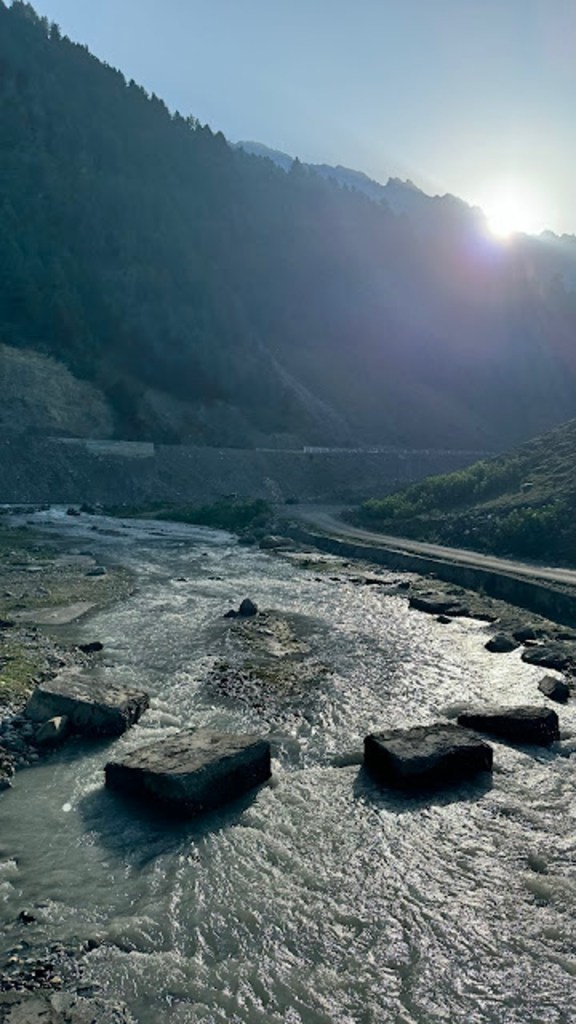


 Borderless