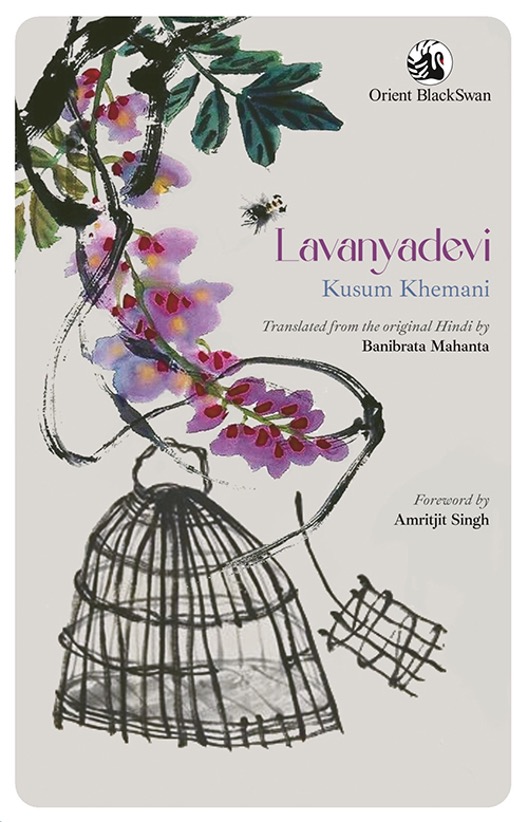
Author: Kusum Khemani (Translated from Hindi by Banibrata Mahanta)
Publisher: Orient BlackSwan Private Limited
Lavanyadevi is an award-winning 2013 novel by Kusum Khemani written in Hindi that chronicles five generations of a traditional aristocratic Bengali zamindar family as it transitions into modernity from British India to the present with the eponymous protagonist as its principal focus. Lavanyadevi—a compelling woman of perfection, extraordinary vision, qualities, and grace—remains real and credible because she is self-aware, self-critical, open to others, and to change. As a Marwari (people originally belonging to Marwar in Rajasthan) living in Kolkata, in Khemani’s fiction the schisms between ‘Bengali’ and ‘Marwari’ blur to reveal a delightfully plural, composite, and distinctively Indian ethos. Lavanyadevi is a story about women and their search for self, about shared laughter and friendships that endure across generations, beliefs and cultures—between mother and daughter, grandmother and granddaughter, and Marwari and Bengali women. Khemani’s women protagonists are strong, clear-sighted, both worldly and sublime, embodying a larger-than-life idealism while being grounded firmly in the everyday.
In his introduction to his novel Kanthapura (1938), Raja Rao had defined it as a sthala-purana[1], which he defined as a “legendary history” in which the old lady narrator in the village took recourse to the traditional Indian narrative technique, digressed at will to bring forth her point. Somehow the way Kusum Khemani takes recourse to multiple narrative techniques in Lavanyadevi and binds the different digressive stories and incidents into one contiguous whole when she tells us about the history of five generations of the Bengali zamindar family, reminds one of Raja Rao’s theory. She uses diverse narrative strategies like flashbacks, diaries, letters and emails, history, memory and the third person narrator to enrich its telling, lending it depth and range. A large part of the narrative revolves around telling us about past history when Lavanyadevi manages to lay her hands on her mother Jyotirmoyidevi’s diaries and finds great pleasure and thrill of reading one’s own family history. Not only do they offer a wonderful eye-witness account of the private and public sphere of Kolkata of those times, but they also make her easy transition into reading about her mother’s youth, her elaborate description of her magnificent wedding and the rituals that spread over almost a month.
The diary as metanarrative and the protagonist as reader/narrator are particularly effective, offering a telescopic perspective. Though at times it rambles a bit, the polyphonic structure of the novel engages Lavanyadevi the granddaughter, the daughter, the wife, the mother and the grandmother in conversations with her preceding and her succeeding generations. One must sometimes go back to the family tree and chart provided at the beginning of the novel to place people in proper perspective.
From the very beginning of the novel, Khemani portrays the character of Lavanyadevi in superlatives and this continues in different phases of her life till the end when she decides to remain incognito in the mountain ashram and yet control the lives of her descendants, well-wishers and others. From a child who always stood first in school and remained wholly ignorant of the real world, to her unusual marriage to a gentleman who moved over to Rangoon and then to London where she acquired many more degrees, till she came back to Kolkata, to rear her three children successfully, she seemed to excel in everything. This is how she is described at one place:
“Lavanyadevi was indefatigable. She administered the work of several institutions, her college and her home efficiently and with ease. She was never seen to panic. She was like Goddess Durga with her many hands – untiring in her zeal, handling all her duties unfailingly, responsibly and meticulously. No one could ever complain of being ignored by her. She loved all and treated everyone with the same degree of love and warmth. Scrupulous and hardworking, always upholding truth, Lavanyadevi was the unmatched standard of excellence in all aspects of life, her words worth their weight in gold.”
After judiciously assigning different welfare projects in the city as well as in far-flung places like Dhaka and the hills in Uttarkashi from the immense money she inherited from the family, and after her husband’s demise, Lavanyadevi decided it was time for her to leave the family premises and go and live in an ashram in the hills. There she did not stay in hibernation but her travels for work grew even more frenetic.
From the very beginning her rootedness and belief in the philosophical framework of Hinduism formed the core of her being. They propelled her to seek answers to questions of satya (truth) and mukti (liberation) that confronted her in the latter half of her life. She decided to transcend immediate personal concerns and address larger universal issues. Her transition from grihastha (householder) to sanyasa (renunciate) harkens back to the Hindu ideal of human life divided into four phases. However, contrary to the conception of life in isolation, Lavanyadevi, free of any kind of worldly considerations in this final phase of life, marshaled material and human resources to create a strong network of seva (social service) across the country and even beyond its borders. The list of her welfare schemes is too long to mention in the purview of this review, but ranged from renovating brothels in Kolkata’s red-light areas, creating self-help centres for rural women in Dhaka, de-addiction centres, eco-friendly schools in the hills, organic farming in South India, etc.
In the latter half of the novel, we find Lavanyadevi successfully transmitting her values and ideals to her children and grandchildren who are called the “Saptarshi Mandal friends” and who carry her legacy forward and emphasise that progress does not always mean breaking from the past. Here the novelist becomes too idealistic and brings in too many issues that seem a bit far-fetched. Issues of inter-caste and inter-religious relationships apart, the list of social welfare missions seems endless. Her “soul-children” unobtrusively usher in change and create space for diversity in relationships and ways of living. Harmonious cohabitation with nature became the foundational principle of all the education centres she built in the hills but the way she invisibly controls the activities of all her soldiers through emails and emphasises the middle path of life makes the advocacy of humanitarian concerns a bit overemphasised. She becomes larger than life for ideas and wish-fulfilment.
A Hindi novel about a Bengali family by a Marwari woman from Kolkata became significant when it was commissioned for translation into English. Winner of the PEN/Heim Translation Grant 2021, the jury called Lavanyadevi an ‘ambitious, far-reaching’ novel, lauding Khemani’s ‘energetic prose, deadpan sense of humor, and exquisite control’, and Banibrata Mahanta’s translation that ‘stretches and manipulates language to produce a vivid text’ and a must-read for lovers of Indian literature. Here one needs to mention the seriousness with which Mahanta gives us the ‘Translator’s Introduction’ at the beginning of the text and again ‘Translator’s Note’ at the end. This reviewer feels that both these could have been combined into one general essay highlighting the significance of the evolution of the Marwaris in Bengal, how Khemani’s novel is a hybrid artefact born out of multiple linguistic and cultural encounters, how the characters in the novel speak in languages other than Hindi produces dialogues in Bangla, Marwari, Haryanvi or Punjabi; and how between a breezy translation and a linguistically nuanced one, wherever possible the translator has eschewed the former and gone for the latter. As he rightly admits, translating this complex narrative into global or even a pan-Indian English is always risky, but Mahanta should be given due credit for overcoming all obstacles and bringing this immensely readable novel to a wide readership.
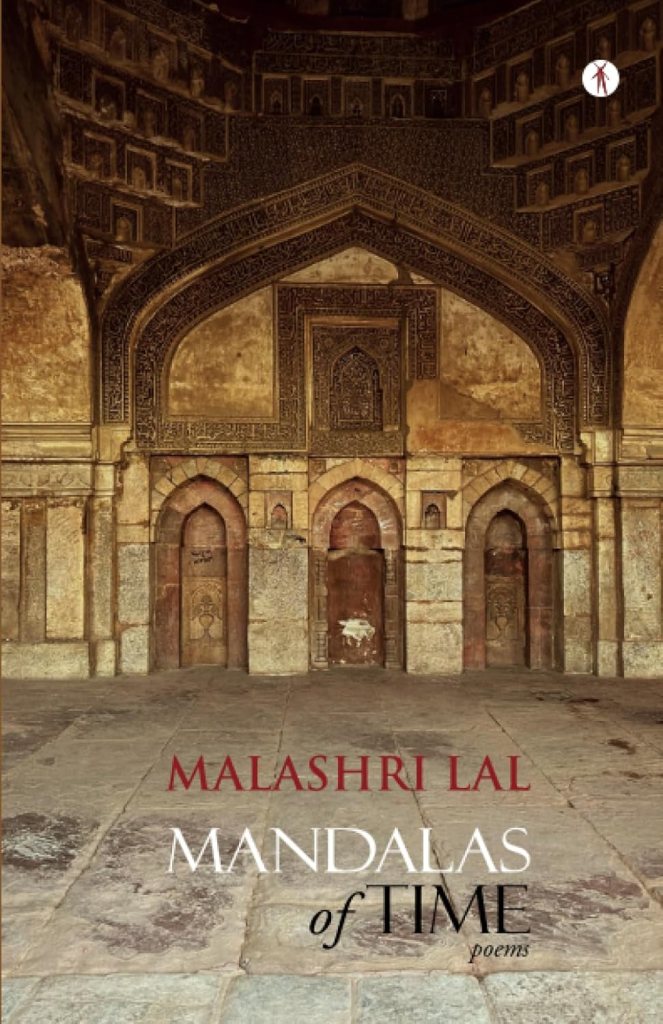
In Conversation with Malashri Lal, about her debut poetry collection, Mandalas of Time, Hawakal Publishers
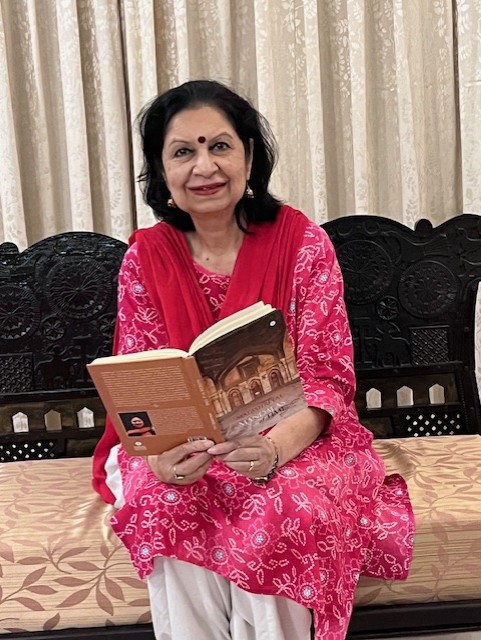
Professor Malashree Lal
Time present and time past Are both perhaps present in time future, And time future contained in time past. If all time is eternally present All time is unredeemable.
‘Mandalas’ means circle in Sanskrit, the root, or at last the influencer, of most of the Indian languages in the subcontinent. Sanskrit belongs to the Indo-Germanic family, which homes Latin and Greek among other languages. Malashri Lal, a former professor in Delhi University, has called her poetry collection Mandalas of Time.
Her poetry reiterates the cyclical nature of the title, loaning from the past to blend the ideas with the present and stretching to assimilate the varied colours of cultures around the world.
Embracing an array of subjects from her heritage to her family — with beautiful touching poems for her grandchild — to migrants and subtle ones on climate change too, the words journey through a plethora of ideas. Nature plays an important role in concretising and conveying her thoughts. In one of the poems there is a fleeting reference to wars — entwined with the Pilkhan (fig) tree:
The Pilkhan tree thinks of its many years
Of shedding leaves, bearing inedible fruit, of losing limbs
But smiles at his troubles being far less
Than of unfortunate humans
Who kill each other in word and deed
But gather around the tree each Christmas
With fulsome gifts and vacant smiles
To bring in another New Year.

--Another New Year
Amaltas (Indian Laburnum) or Bougainvillea bind her love for nature to real world issues:
Only the Amaltas roots, meshed underground
Thrust their tendrils into the earth’s sinews below.
Sucking moisture from the granular sand, desperately.
The golden flowers pendent in the sun, mock the traveller
Plump, succulent, beacon-like, they tease with
The promise of water
Where there is none.

--Amaltas in Summer
And…
The Bougainvillea is a migrant tree, blossom and thorn
That took root in our land
And spread its deception
Of beauty.

--Bougainvillea
Her most impactful poems are women centric.
Words crushed into silence
Lips sealed against utterance
Eyes hooded guardedly
Body cringing into wrinkled tightness
Is this what elders called
‘Maidenly virtue?’

--Crushed
There is one about a homeless woman giving birth at Ratlam station during the pandemic chaos, based on a real-life incident:
Leave the slum or pay the rent
Who cares if she is pregnant,
Get out — go anywhere.
…
Ratlam station; steady hands lead her to the platform.
Screened by women surrounding her
A kind lady doctor takes control.
Pooja sees a puckered face squinting into the first light.
"This is home," she mutters wanly,
"Among strangers who cut the cord and feed my newborn,”

-- Ladies Special
In another, she writes of Shakuntala — a real-world migrant who gave birth during the covid exodus. She birthed a child and within the hour was on her way to her home again — walking. It reminds one of Pearl S Buck’s description of the peasant woman in Good Earth (1931) who pauses to give birth and then continues to labour in the field.
Most interesting is her use of mythology — especially Radha and Sita — two iconic characters out of Indian lore. In one poem, she finds a parallel to “Sita’s exile” in Italy, at Belisama’s shrine. In another, she finds the divine beloved Radha, who was older to Krishna and married to another, pining after the divinity when he leaves to pursue his life as an adult. And yet, she questions modern stances through poems on more historical women who self-immolated themselves when their husbands lost in battle!
Malashri Lal has turned her faculties post-retirement to literary pursuits. One of her co- authored books around the life of the poet Michael Madhusudan Dutt, received the Kalinga award for fiction. She currently serves on the English advisory board of Sahitya Akademi. In this conversation, Lal discusses her poetry, her journey and unique perceptions of two iconic mythological women who figure in her poetry.
When did you start writing poetry?
Possibly my earliest poetry was written when I was about twelve, struggling with the confusing emotions of an adolescent. I would send off my writing to The Illustrated Weekly which used to have pages for young people, and occasionally I got published. After that, I didn’t write poetry till I was almost in my middle age when the personal crisis of losing my parents together in a road accident brought me to the outpourings and healing that poetry allows.
What gets your muse going?
Emotional turmoil, either my own or what I observe within the paradigms of social change. With my interest in women’s issues, my attention is arrested immediately when I hear or read about injustice, violence, exploitation or negligence of women or girl children. It doesn’t have to be a dramatic or extreme event but even the simple occurrences of decision making by a husband without consulting his wife has me concerned about the dignity and agency of a woman. Some poems like “Escape”, hint at such inequality that society takes for granted. On the other hand, my poems about migrant women giving birth on the long march to a hypothetical village “home” during the pandemic, are vivid transferences from newspaper stories. “Ladies Special” is about Pooja Devi giving birth at Ratlam station; “The Woman Migrant Worker” is based on a report about Shakuntala who stopped by the roadside to give birth to a baby and a few hours later, joined the walking crowd again.
Why did you name your poetry book Mandalas of Time?
To me ‘Mandalas’ denote centres of energy. Each node, though distinct in itself, coheres with the others that are contiguous, thus resulting in a corporeal body of interrelatedness. My poems are short bursts of such energy, concentrated on a subject. They are indicative of a situation but not prescriptive in offering solutions. Hence the spiritual energy of ‘Mandalas’, a term used in many traditions, seemed best suited to my offering of poems written during periods of heightened consciousness and introspection. The poems are also multilayered, hence in constant flux, to be interpreted through the reader’s response. Many of them end in questions, as I do not have answers. The reader is implicitly invited to peruse the subject some more . It’s not about closure but openness. See for instance: “Crushed”, or “Shyamoli”.
Today, I rebel and tug at a
Divided loyalty —
The feudal heritage of my childhood
Fights off the reformist Bengali lineage,
My troubled feminism struggling
Between Poshak  and Purdah
White Thaan  and patriotism
Can one push these ghosts aside?

--Shyamoli
*Poshak: Rajasthani dress
*Thaan: White saree worn by the Bengali widow
You have written briefly of your mixed heritage, also reflected in your poem dedicated to Tagore, in whose verses it seems you find resolution. Can you tell us of this internal clash of cultures? What exactly evolved out of it?
My bloodline is purely Bengali but my parents nor I ever lived in Bengal. My father was in the IAS in the Rajasthan cadre and my mother, raised in Dehradun, did a lot of social work. In the 1950s and 1960s, Rajasthan was economically and socially confined to a feudal heritage and a strictly hierarchical structure. Rama Mehta’s novel Inside the Haveli (1979), describes this social construction with great sensitivity. Elite homes had separate areas for men and women, and, within that, a layout of rooms and courtyards that were defined for specific use by specified individuals according to their seniority or significance. Such hierarchies existed in Bengal too — the ‘antarmahal[1]’ references bear this out — but the multiple layers in Rajasthan seemed more restrictive.
In my “mixed heritage” of being born of Bengali parents but raised in Rajasthan, I started noting the contrasts as well as the similarities. I recall that when my father went on tours by jeep into the interior villages along rutted roads, I would simply clamber on. At one time I lived in a tent, with my parents, during the entire camel fair at Pushkar. I would listen to the Bhopa singers of the Phad painting tradition late into the evening. So my understanding and experience of Rajasthan is deep into its roots.
Phad paintingBhopa singersFrom Public Domain
Bengal– that is only Calcutta and Santiniketan–I know through my visits to grandparents, aunts and uncles. My cousins and I continue to be very close. I saw a fairly elite side of Calcutta—the Clubs, the Race Course, the restaurants on Park Street, the shopping at New Market, and sarees displays at Rashbehari Avenue. Santiniketan though was different. I was drawn to the stories of the Santhal communities, visited their villages, attended the Poush Mela[2] regularly and knew several people in the university. After Delhi, the wide-open spaces, the ranga maati (red soil), the Mayurakhi River, and the tribal stories were fascinating. I am fluent in Bengali and because of my relatives in Calcutta as well as Santiniketan, I never felt an outsider. My father’s side of the family has been at Viswa Bharati since the time of Rabindranath Tagore. So, I felt comfortable in that environment. And through an NGO called Women’s Interlink Foundation, established by Mrs Aloka Mitra, I had easy access to Santhal villages such as Bonerpukur Danga.
Poush Mela, started by the Tagore Family in 1894Santhali Performance at Poush Mela
However, in summary, though I lived with both the strains of Bengal and Rajasthan, the daily interaction in Jaipur where I received all my education till PhD, was more deeply my world. The fragmented identity that some poems convey is a genuine expression of figuring out a cultural belonging. Poems such as “To Rabindranath Tagore” helped me to understand that one can have multiple exposures and affiliations and be enriched by it.
Do you feel — as I felt in your poetry — that there is a difference in the cultural heritage of Bengal and Rajasthan that leads you to be more perceptive of the treatment of women in the latter state? Please elaborate.
Indeed, you are right. Bengal has a reformist history, and my family are Brahmo Samaj followers. Education for women, choice in marriage partner, ability to take up a career were thought to be possible. My paternal grandmother, Jyotirmoyi Mukerji, was one of the early graduates from Calcutta University; she worked as an Inspectress of Schools, often travelling by bullock carts, and she married a school teacher who was a little younger than her. They together chose to live in Rangoon in undivided India, heading a school there. These were radical steps for women in the late 19th century. My father grew up in Rangoon and came to Rajasthan as a refugee during the Second World War. My grandmother, who lived with us, was a tremendous influence denoting women’s empowerment. But what we saw around us in Jaipur was the feudal system and purdah for women in Rajasthan.
Fortunately, Maharani Gayatri Devi had set up a school in 1943 in Jaipur to bring modern thinking in the women, and I was fortunate to study there till I went to university. Let’s recall that Maharani Gayatri Devi was from Coochbehar (Bengal) and had studied at Santiniketan. She brought Bengal’s progressive ideas to the privileged classes of Rajasthan. My classmates were mostly princesses. I visited their homes and families and delved deeply into their history of feudalism. Without being judgmental, I must say that Rajasthan’s heritage is very complex and one must understand the reasons behind many practices and not condemn them.
You have brought in very popular mythological characters in your poems — Sita and Radha — both seen from a perspective that is unusual. Can you explain the similarity between Sita’s exile and Belisama’s shrine (in Italy)? Also why did you choose to deal with Radha in a post-Krishna world?
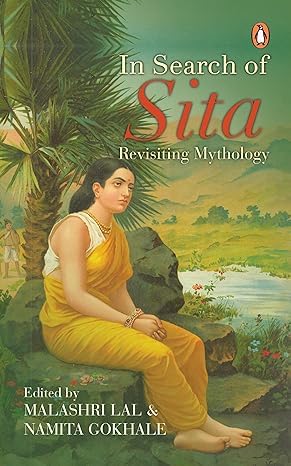
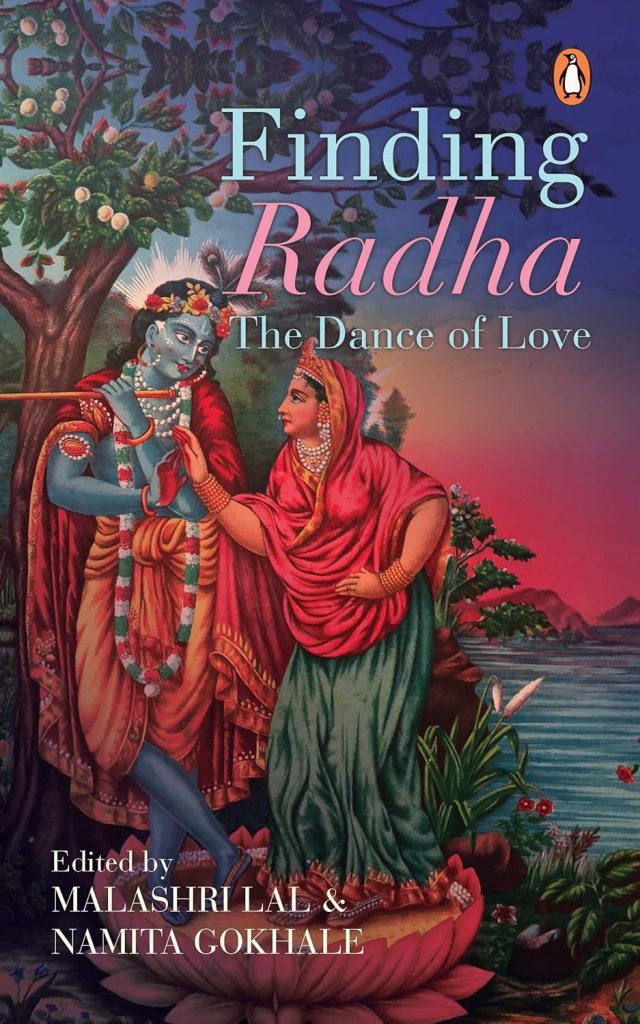
Namita Gokhale and I have completed what is popularly known as the “Goddess Trilogy”. After In Search of Sita and Finding Radha, the latest book, Treasures of Lakshmi: The Goddess Who Gives, was launched in February 2024 at the Jaipur Literature Festival, and the Delhi launch was on 8th October 2024 to invoke the festive season.
Version 1.0.0
In answering your question let me say that myth is storytelling, an indirect way of contending with issues that are beyond ordinary logic or understanding. Sita and Belisama coming together is an illustration of what I mean. The backstory is that Namita Gokhale and I had a joint residency at Villa Serbelloni in Bellagio (Italy) and we were revising the final manuscript of our book In Search of Sita. The thrust of that book is to recall the strength of Sita in decision making, in being supportive of other women, in emerging as an independent minded person. Our research had unearthed a lot of new material including oral history and folklore. In Bellagio, we started enquiring about local mythical stories and chanced upon Belisama,[3] a Celtic goddess known for her radiant fire and light, and in the village we chanced upon an old grotto like structure. Unlike in India, where we have a living mythology of commonly told and retold tales, in Italy the ancient legends were not remembered. The poem “Bellagio, Italy” took shape in my imagination bringing Sita and Belisama, two extraordinary women, together.
As to my poems on Radha, I cannot think of a “post-Krishna” world since Vrindavan and Mathura keep alive the practices that are ancient and continuous. Radha is the symbol of a seeker and Krishna is the elusive but ever watchful divine. They are body and soul, inseparable. The stories about “Radha’s Flute” or “Radha’s Dilemma” in poems by those names have an oral quality about them. The craft of writing is important, and for me, the theme decides the form.
Interesting, as both the poems you mention made me think of Radha after Krishna left her for Rukmini, for his role in an adult world. You have a poem on Padmini. Again, your stance is unusual. Can you explain what exactly you mean — can self-immolation be justified in any way?
This is a poem embedded in the larger query about comparative cultural studies. Rani Padmini’s story was written by Jayasi[4] in 1540, and it described a ‘heroic’ decision by Padmini that she and her handmaidens should commit Jauhar (mass self-immolation) rather than be taken prisoners and face humiliation and violent abuse by the men captors. You will note that my poem ends on a question mark: “I ask you if you can rewrite /values the past held strong?” Self-immolation has to be seen in the context of social practices at the time of Padmini (13-14th queen in Mewar, Rajasthan). The jauhar performed by Rani Padmini of Chittor is narrated even now through ballads and tales extolling the act if one goes into oral culture. But there is counter thinking too, as was evident in the controversy over Sanjay Leela Bhansali’s film Padmavat (2018) which stirred discussions on historicity, customary practice and oral traditions. Sati and Jauhar are now punishable offences under Indian law, but in recording oral history can one change the storyline? It’s not just self-immolation that comes under such a category of questioning the past — polygamy, polyandry, child marriage, prohibitions on widows and many other practices are to be critiqued in modern discourse, but one cannot rewrite what has already been inscribed in an old literary text.
This is a question that draws from what I felt your poems led to, especially, the one on Padmini. Do you think by changing text in books, history can be changed?
“History” is a matter of perspective combined with the factual record of events and episodes. Who writes the “history” and in what circumstances is necessary to ask. The narration or interpretation of history can be changed, and sometimes ought to be. To take an obvious case why is the “Sepoy Mutiny” of 1857 now referred to as the “First War of Independence”? In current discussions on Rana Pratap[5] in Rajasthan’s history, there are documents in local languages that reinterpret the Haldighati battle of 1576 not as the Rana’s defeat but his retreat into the forests and setting up his new kingdom in Chavand where he died in 1597. The colonial writers of history—at least in Rajasthan– were dependent on local informers and had little understanding of the vast oral repertoire of the state. Even Col. James Tod’s Annals and Antiquities of Rajasthan (1829) about the history, culture, and geography of some areas in Rajasthan, is often reproducing what he has heard from the bards and balladeers which are colourful and hyperbolic renderings as was the custom then. In Bengal, the impact of Tod is seen in Abanindranath Tagore’s[6]Rajkahini (1946), which is storytelling rather than verified facts. I feel history cannot be objective, it is author dependent.
Nature, especially certain trees and plants seem to evoke poetry in you. It was interesting to see you pick a fig tree for commenting on conflicts. Why a Pilkhan tree?
The Pilkhan is an enormous, bearded old fig tree that lives in our garden and is a witness to our periodic poetic gatherings. Mandalas of Time is dedicated to “The Poets under the Pilkhan Tree” because my book emerged from the camaraderie and the encouragement of this group. I see the tree as an observer and thinker about social change—it notes intergenerational conflict in “Another New Year”, it offers consolation against the terrors of the pandemic in the poem “Krishna’s Flute”. It’s my green oasis in an urban, concrete-dominated Delhi. In the evening the birds chirp so loudly that we cannot hear ourselves speak. Squirrels have built nests into the Pilkhan’s wide girth. It’s not a glamorous tree but ordinary and ample—just as life is. By now, my poet friends recognise the joy of sharing their work sitting in the shadow of this ancient giant. There are no hierarchies of age or reputation here. We are the chirping birds—equal and loquacious!
You have successfully dabbled in both poetry and fiction, what genre do you prefer and why?
Mandalas of Time is my first book of poems and it comprises of material written unselfconsciously over decades. During the pandemic years, I decided to put the manuscript together, urged by friends. Meanwhile my poems started appearing in several journals.
As to fiction, I’ve published a few short stories and I tend to write ghostly tales set in the mountains of Shimla. Its possibly the old and the new that collides there that holds my attention. I’ve been urged to write a few more and publish a book—but that may take a while.
Should we be expecting something new from your pen?
Mandalas of Time has met with an amazing response in terms of reviews, interviews, speaking assignments, and online presentations. The translation in Hindi by 13 well known poets is going into print very soon. Permission has been sought for a Punjabi translation. I’m overwhelmed by this wide empathy and it is making me consider putting together another book of poems.
I hear the scents whisper. Familiar fragrances of clove and cinnamon, imbued with spicy notes of pepper and eucalyptus beckon and tease. Elusive murmurs of mysterious oils and herbs tinge the air as I walk along a narrow-paved lane in Old Dhaka, overshadowed by looming walls on either side. I ignore the press of prying eyes and inquisitive bodies that accompany my passage. The call of the scents is irresistible, and I feel strangely unafraid of what lies before the next turn in the path ahead. These were the scents of my childhood — of summer afternoons spent secretly exploring the forbidden depths of my grandmother’s closet, the kaancher almarih[1] where her medicines were stored in shiny glass bottles with peeling labels.
The narrow lane spills into a small courtyard hemmed by buildings on three sides. Everything is closed because it is Friday, the day of prayer in Bangladesh. Peering through grimy windows, I see gigantic iron cauldrons, cavernous kansa kadhais[2], their gold gleaming in glimpses amidst sooty splatters, huge ladles and enormous tongs. Some vessels perch on hand-crafted mud stoves, their sides smoothened and baked by fires. Wooden logs are stacked in the corner along with bulging sacks of coal. Nearby, some large pieces of cloth, perhaps used for straining, are hung out to dry. In the shadowy recesses, shelves stacked with glass bottles glisten with reflected light. It seems almost staged, like a theatrical representation of a medieval kitchen and yet the evidence of daily use is undeniable.
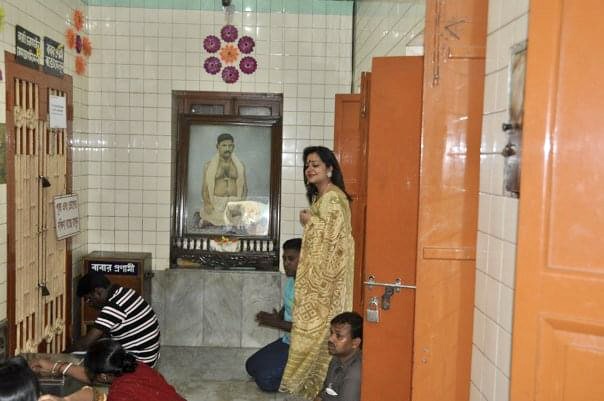
The fourth side of the courtyard has an open doorway. A sudden urge, an inexplicable pull, lures me towards it. I feel I know what lies beyond its brink. Yet how could that be? In this alien city, situated in a land scarred by a brutal Partition, from where does this knowing come? Concentrating on lifting the edge of my saree as I step across the threshold, it takes me a moment to lift my eyes to see what lies ahead. A painting of a pot-bellied man seated cross legged on an asana[3], a sacred thread adorning the vast expanse of his chest, looks solemnly back at me. Before me was the same face I’d seen on countless bottles in that medicine cupboard of my childhood — the same glossy hair, oiled and parted with precision, the same curled moustache, the same narrow bordered white dhoti[4].
The author with her great grandfather’s portrait in Dhaka. Photo Courtesy: Ranu Bhattacharyya
I find myself before a life-size portrait of my great grandfather, Mathura Mohan Chakraborty, founder of Shakti Aushadhalaya, the Ayurvedic pharmacy famed in the streets of Dhaka, Calcutta, Patna, Benaras and Rangoon at the turn of the 19th century. The kitchen behind me was the pharmacy’s karkhana[5] to prepare medicines of his formulations. His portrait hung before the inner sanctum of the temple he had dedicated to the revered Bengali saint, Lokenath Baba. Legend claimed that the mystic had whispered the recipe of the first medicinal formulation to his most faithful disciple — my great grandfather.
Ever since I arrived in Dhaka as an expat, I had been searching for the Shakti Aushadhalaya premises. Everyone knew of the company; yet nobody seemed to know where it was located. I was introduced everywhere as a young scion of the family. And though whispers followed me at gatherings and smiles broadened on hearing I was the great granddaughter of Mathurababu, my questions regarding the whereabouts of the company drew blank stares and confused responses. In horticulture, the word scion, refers to the detached living part of a plant that is cut to be grafted onto another plant. The sundering of this particular scion had been so complete, over so many generations, through such a series of violent events that it seemed my search for the original plant would remain elusive.
It was only through persistent enquiry that I found myself in Swamibagh Road in Old Dhaka where the manufacturing unit of Shakti Aushadhalaya was located. Mathurababu had founded the company in Patuatuli, Dhaka, in 1901. Family lore suggests Lokenath Baba inspired him to venture far from his origins as a schoolteacher in Bikrampur. The ascetic recognised his potential, unusual in those times, as a graduate versed in three languages — Bengali, Sanskrit and English. Starting from humble beginnings in the family kitchen, peddling hair oil and tooth powder in his neighbourhood, Mathurababu’s prescient business acumen saw his enterprise flourish. The company produced and supplied quality Ayurvedic medicines at low prices. Mathurababu also established an Ayurvedic institute, attached to his manufacturing unit to popularise Ayurvedic knowledge. The institute taught Ayurveda and philosophy in Sanskrit. Students were offered free tuition, boarding, and lodging.
Ayurveda, considered the oldest existing health science in the world, is believed to have originated in India 5000 years ago. The journey of Ayurveda from ancient times to its present incarnation is a fascinating story that follows several simultaneous trajectories, embracing geopolitics and history, trade and commerce, science and industry, technology and travel.
It is with a sense of wonder that I encounter my great grandfather’s name in journals and books that describe the history of Ayurveda in India. He was among the earliest entrepreneurs to transition towards production of Ayurvedic drugs for the market. Directly involved in all aspects of his company, Mathurbabu immersed himself in the study of Ayurveda and had an extensive library of rare treatises on ancient Indian medical traditions, including a prized copy of Susruta Sanhita[6].
He noticed that Western medicines advertised their products in newspapers and journals. Following this model, he embraced a similar practice for his own company. An advertisement published in Muhammadi in February 1940 included endorsements from freedom fighter Chittaranjan Das, Lord Lytton, the Viceroy of India, and Lord Ronaldshay, the Governor General of Bengal. In the vintage advertisement, Lord Lytton wrote: “I was very interested to see this remarkable factory which owes its success to the energy and enthusiasm of its proprietor Babu Mathura Mohan Chakravarty B.A. The preparation of indigenous drugs on so large a scale is a very great achievement. The factory appeared to me to be exceedingly well managed and well equipped &c. &c.” In the same advertisement, in Bengali, Chittaranjan Das endorsed that nothing could surpass the production processes for medicines at Shakti Aushadhalaya.
Since the mid-19th century, several eminent leaders of the Indian freedom struggle visited Mathurbabu’s factory in Dhaka. On June 6, 1939, in the company’s visitor’s book, Subhash Chandra Bose wrote, “I visited the Sakti Oushadhalaya[7], Dacca, today and was very kindly shown around the premises. Indigenous medicines are prepared here on a large scale and in accordance with Ayurvedic principles. The institution reflects great credit on Babu Mathura Mohan Chakravarty, whose enterprise has brought Ayurvedic medicines within the reach of the poor. I wish him all success to the institution which he has built up after so much enterprise and hard labour for a long period. The success of Sakti Oushadhalaya, Dacca, means the popularity of Ayurveda throughout the country and this in its turn means the relief of suffering humanity.”
When my parents visited us in Dhaka a year after our arrival, we went back to Swamibagh Road. Our visit included a trip to the shop where the medicines of Shakti Aushadhalaya were sold.
Despite being taken over by the Pakistan government in 1971 and subsequently acquired by a private entrepreneur, the company remains operational in Bangladesh to this day with 37 branches nationwide. Though Mathurababu’s portrait is no longer on the medicine bottles in the shop, the names of the formulations inscribed, are still recognised by my mother. As we browse through the offerings, a crowd begins to form around her, hailed and welcomed as Mathurababu’s direct descendant. Much to my mother’s delight, the crowd guided her to his house, a now derelict mansion hidden in the by-lanes of Old Dhaka.
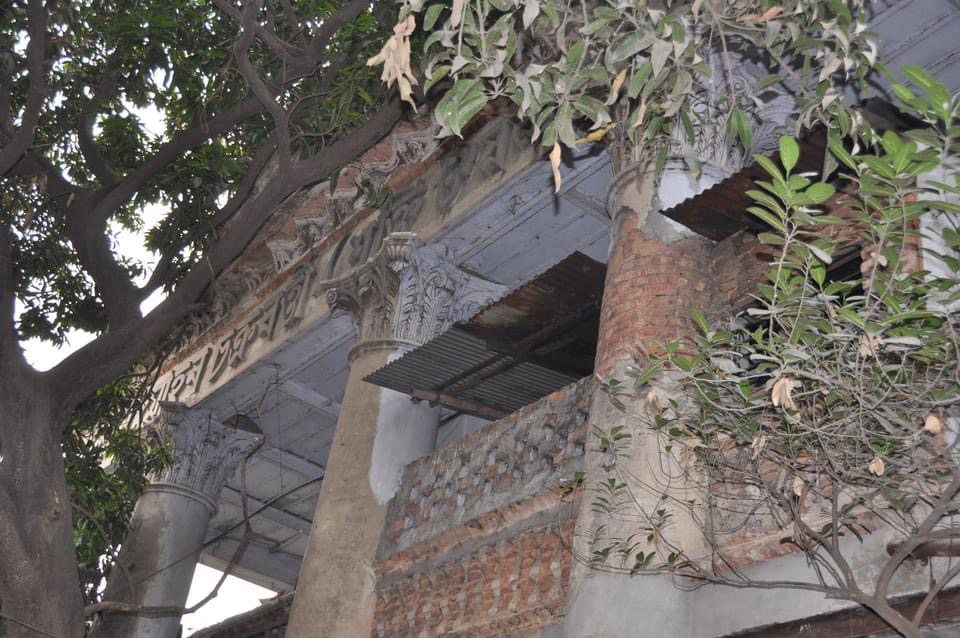
We entered the property through an ornamented gatehouse that opened to a large courtyard. On one side was the Baithakghar, the public receiving room with the Nat Mandir, the family temple in front of us. On the other side was the majestic mansion with tall columns, topped with ornate capitals. Next to the Nat Mandir was a small doorway that led to a shaded courtyard with a well, meant for the family’s private use. Beyond was yet another courtyard, enclosed with buildings on three sides.
Parts of the ancestral home. Photo Courtesy: Ranu Bhattacharyya
As I climbed the stairs leading to the second floor, I had a feeling of déjà vu. I felt I had been here before through my grandmother’s stories. Her small feet must have climbed these stairs. There was the arched windows she had said she gazed out of, and the vast veranda with colonnades, where she played with her eight siblings. Wandering through the rooms, I hear her voice narrating tales of her childhood — kite races on the terrace, indolent boat rides on the Padma, and the indulgence of choosing sarees from the weavers who came all the way from Benaras.
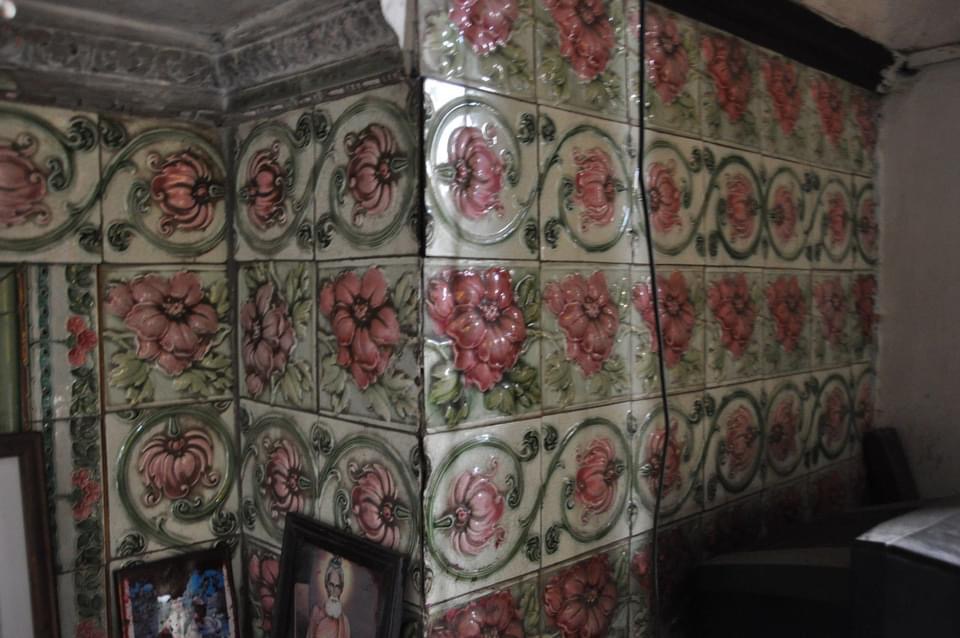
The house is now home to several families who regard our arrival with wary welcome. “Where are the Italian painted tiles?” I ask eagerly. The story of the tiles imported by her father from Italy were amongst the kaleidoscope of stories that my grandmother had shared with me. Whisperings and murmurings ensue amidst the crowd and then a hefty cupboard was pushed aside to reveal the tiles in all their faded glory.
Slowly it dawns upon me that the silent bottle in my grandmother’s cupboard had encoded stories that belied its seemingly mundane materiality. To uncover these lost stories, I embark on a renewed search for those old medicine bottles of my childhood. Their fragrance lingers at the edges of my memory, offering tantalising glimpses to fragments of knowledge. The sense of smell is our oldest sense. My memories of stories narrated by my grandmother were inextricably connected to the scents locked in that bottle. Would holding the bottle in my hand peel back the layers of my memory, answer some unanswered questions about my grandmother’s roots, help me map the route of our family’s journey? But alas! Those bottles are lost to time. My grandmother’s generation is gone and I search among Mathurababu’s scattered grandchildren and great grandchildren to no avail.
My grandmother left Dhaka in 1936, never to return. Mathurbabu’s house on Calcutta’s Central Street was completed that year, and it is there he moved with his wife and three youngest unwed daughters, including my grandmother. His older son remained in Dhaka to oversee the factory and drug production, while Mathurbabu focused on controlling the distribution from a central office in Calcutta. Till his death in 1942, despite his ailing health and flagging energy, he visited the company’s distribution centres spread across Calcutta everyday, accompanied by his faithful retainer Nathu. Probing for reasons for this abrupt migration, my uncle gave me a solitary clue. He recalled that my great grandfather had felt his family was unsafe in Dhaka. With this obscure clue in hand, I delved into history books for elaboration. I read about the rise of communal tensions in Bengal from the mid-1920’s. The Dhaka riots of 1930 targeted several well-established businessmen and involved loot and arson of their business and personal properties.
In 1947, there was yet another wave of migrations far more existential and grimmer. After the borders were drawn between the newly formed nations of India and Pakistan, the remaining family fled Dhaka overnight, leaving behind the factory, the mansion, in fact, all their material possessions in a land suddenly hostile to their continued habitation. Unable to exercise control over their properties in East Pakistan, there was an initial attempt by Mathurbabu’s heirs to establish a factory in Chandernagore. Without my great grandfather at the helm, this nascent enterprise floundered and ultimately sank. Cut from its moorings in Dhaka, Mathurbabu’s inheritors could not keep the business afloat in India. Slowly his legacy dissipated. The Shakti Aushadhalaya head office in Calcutta’s Beadon Street closed and the shops in Calcutta, Karachi, Kabul, and Colombo lowered their shutters.
Through generations of migration and resettlement, we are left with only scattered memories and fragmented stories. These intangible remains are my inheritance today. These intangibles are bound neither by form, nor by time. Instead, they offer limitless possibilities for exploration, crafting and archiving. Memory, nourished by the repeated telling of stories, provides continuity. These intangible wisps of legacy — a remembered glimpse of a peeling label, the stories heard from my grandmother, the whispered whiff of a familiar fragrance, open a door to the past and invite me to connect it to the present. “Listen to us,” the scents call. “Let us tell you our story.”
Ranu Bhattacharyya, author of The Castle in the Classroom: Story as a Springboard for Early Literacy, Stenhouse, 2010, is an educator and writer who has lived and worked across the world, exploring and archiving narratives that connect people and cultures.
.
PLEASE NOTE: ARTICLES CAN ONLY BE REPRODUCED IN OTHER SITES WITH DUE ACKNOWLEDGEMENT TO BORDERLESS JOURNAL
Ratnottama Sengupta gives a glimpse of the life of a woman impacted by the Partition, spirited enough to be a celebrated performer and to have a compelling saga written on her life posthumously, Zohra: A Biography in Four Acts by Ritu Menon, published by Speaking Tiger Books. This feature is based on the book and Sengupta’s own personal interactions with the aging Zohra Sehgal.
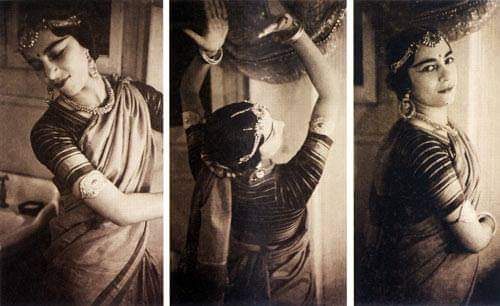
Zohra Sehgal. Photo provided by Ratnottama Sengupta
Zohra Sehgal[1] mirrors, in a strange kind of way, the story of the Indian subcontinent.
Born a Khan in 1912, raised in purdah by the Nawabs of Rampur in palaces and mansions in Lucknow and Dehradun, educated in Queen Mary’s College of Lahore; trained in Western dance in pre-Hitler Germany; whirling through the globe and basking in limelight as the dancing partner of the phenomenal Uday Shankar; setting up her own dance school with husband Kameshwar Segal in pre-Partition Lahore; rising to carve a niche for herself as a member of Prithvi Theatres; dominating the screen as a nonagenarian cast against the legendary Amitabh Bachchan… Sahibzadi bestowed with an impulse to find her way in the world, made of her life what she would.
So, was it all sunshine and moonlight in the life of the lady who, when she turned 100, had the wit to say, “You are looking at me now, when I am old and ugly… You should have seen me when I was young and ugly…”? No. She had seen the failure of Uday Shankar Cultural Centre in Almora; the closure of her own dance school in Lahore. She’d relocated to Bombay and be a less appreciated ‘side-kick’ to her ‘prettier’ younger sister in Prithvi Theatres. She performed in makeshift stages more often than in the Opera House; traveled in third class compartments with the troupe, slept on trunks, washed her own clothes. She had to worry about providing for her children and their father. She had to cope with the whimsicality, alcoholism, depression and finally, the suicide of her husband… But the caravan of misfortunes never dampened her spirit. “If I were to be reborn, I’ll be back as a blue-eyed, five feet five, 36-24-36,” she could repartee with humorist Khushwant Singh.
But then, much of the tragedy unfolded around the Independence cum Partition at Midnight. And I thank Ritu Menon’s ‘ABiography in Four Acts’ for lifting the curtain on this side of Zohra Segal – the phenomenon I had the good fortune to know through the years we spent in Delhi’s Alaknanda area.
Zohra’s father, Mohammed Mumtazullah Khan had descended from Maulvi Ghulam Jilani Khan, the warrior chieftain of a clan of the Yusufzai tribe[2] and a religious scholar of repute who came to the Mughal court in Delhi possibly in 1754. Along with infantry and cavalry and the title of Khan Saheb he was given Chitargaon Pargana in Bihar, but since the British rulers were taking over Bengal and Bihar, he fled to Rohilkhand and joined the Rohilla chieftains who survived the battle against the Nawab of Awadh and rose to become Nawab of Rampur.
Zohra’s mother, on the other hand, descended from Najibuddaulah, another Rohilla Pathan[3] in the service of Ahmad Shah Abdali and the Mughals, who founded Najibabad in 1740 and received the hereditary title of Nawab. By 1760, the tract of land he ruled included Dehradun, Najibabad, Meerut, Muzaffarnagar, Badayun, Bijnor and Bulandshahar. After 1887 his descendents, being incharge of the Regency Council that looked after the affairs of the Nawabs, set up schools to teach English, impart western education, encourage education of girls…
So, like many of India’s Muslim royalty and landed gentry, the Mumtazullahs were largely liberal, often westernised, and mostly secular. Their daughters, educated in English medium schools, went on to become hightly qualified professionals, including as ophthalmologist or Montessori teacher. Their sons went abroad for further studies, as did Zohra’s betrothed Mahmud — her maternal uncle’s son who went to school in England, graduated from Oxford, became a Communist, married a comrade and distributed all his inherited land in Moradabad to the peasants. Her elder sister Hajra married Z A Ahmed, an alumni of the London School of Economics who, as a committed communist, organised railway coolies, press workers, farmers and underground members of the then CPI[4].
Yet, even for such a family it was unusual to send the daughter to a boarding school — Queen Mary College, founded in 1908 — in a distant city like the cosmopolitan Lahore. It was a purdah school for girls from aristocratic families from where Zohra matriculated in 1929. By then she had imbibed the secular, broadminded values of her mostly-British teachers, and of an education that placed equal emphasis on physical activities – sports, to be precise. Here Zohra was initiated into both, art and acting – two passions of Uday Shankar who proved providential in her life.
It wasn’t so surprising then, that after matriculating, she set out on an arduous, even hazardous, overland trip across Afghanistan, Iraq, Turkey and Middle East, with a kindred spirit: her strong willed maternal uncle Memphis who, being a maverick much like Zohra herself, endorsed all her unconventional choices. He enrolled her in Mary Wigman Tanz Schule in Dresden; he financed her stay as too her owning a teeny-weeny car so she wouldn’t have to travel by train! None of this, however, ruled out her performing Namaz five times a day or reading the Koran. Years later, it was he who unreservedly stood by her decision to marry Kameshwar Sehgal when her own family was wary of the choice. And they spent their honeymoon in his house ‘Nasreen’ – now well-known as Welham Girls’ School. Built by an Irishman on five acres of land, it had pointed roofs, gables and half-timbering with extensive lawns, gravel pathways and exotic trees…
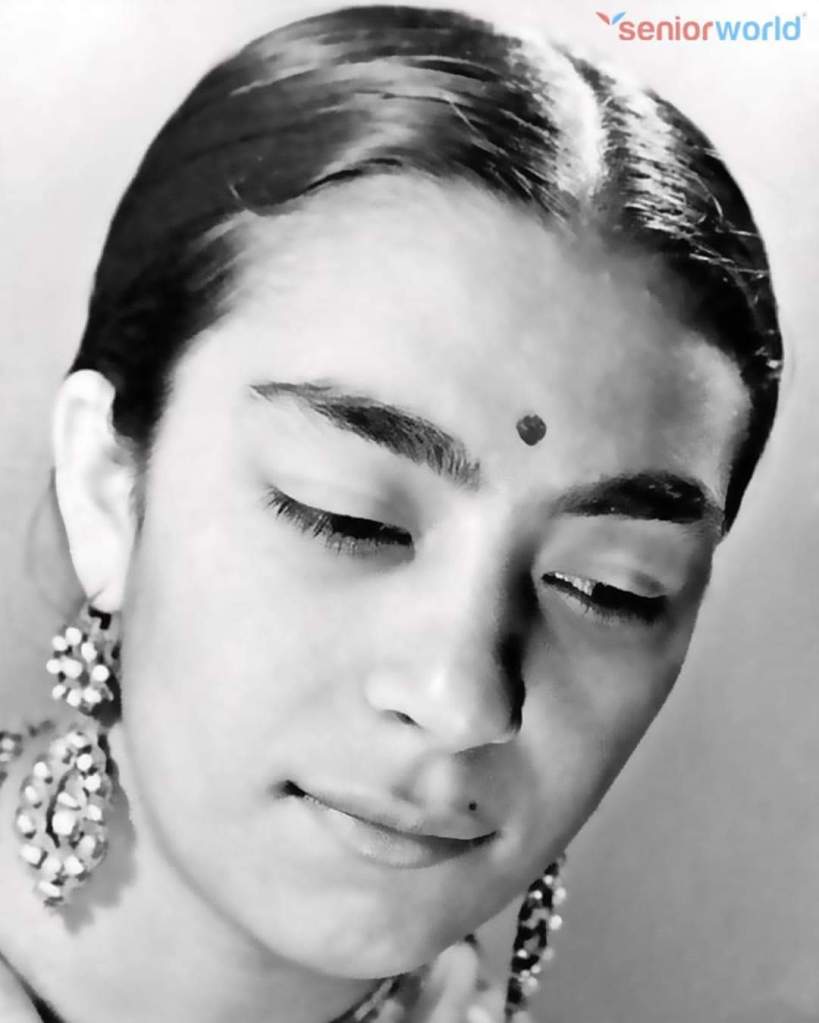
Young Zohra. Photo provided by Ratnottama Sengupta
‘Can you dance?’ Mary Wigman had asked Zohra. It wasn’t to her disadvantage that her sheltered childhood did not have the scope for that. A radical artiste herself, Wigman had rejected formal technique in favour of improvisation although Zohra had to master theories, alongside choreography and dramatic pieces that entailed limbering up exercises for the whole body, from fingertips and wrists to arms and shoulder, neck, head, back, chest, hips, knees, legs, toes… There were no mirrors: the training did not allow them to look at themselves while composing since, Wigman held, “consciousness and awareness should proceed from within rather than from an external image.”
All this was different from the grammar of classical Indian dancing – and by the end of her third year, when Hitler was hovering on the horizon, she was nimble on her toes dancing foxtrot, waltz, polka and tango. When she returned to Dehradun, she enjoyed a newfound freedom that expressed itself in cutting all her silk burqas to make petticoats and blouses!
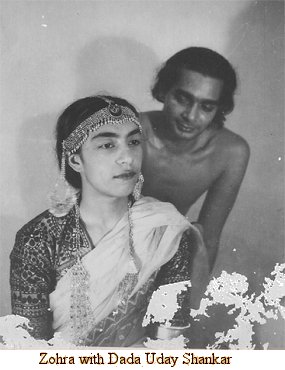
Zohra delighted in the adventure of travel, in discovering new places and people. She sought out travel agents, pored over brochures, spotted packages to travel with groups, by trains or buses, walked with friends, rucksacks on their back and sandwiches in their pocket, to Norway, Austria, Hungary, Switzerland, France. This was the time when Uday Shankar and Simkie – Simone Barbier[5] – were crisscrossing Europe. These stars of the Uday Shankar Dance Company were rapturously received by audiences who were mesmerised by the oriental exotica that had little to do with classical or folk dances of India. Instead, it offered romance and sensuousness wrapped in myth and mysticism. The blithe Adonis and his graceful energy cast a spell with his ‘physical beauty,’ ‘transcendental expression,’ ‘grandness’ and ‘command of muscles’. The ‘deep charm of the indescribable nobility’ of his dance became the face of ‘the rare yet mysterious personality of Modern India.”
When she joined Shankar in Calcutta as he prepared to tour Rangoon, Singapore, Moulmein and Kuala Lumpur, Zohra not only learnt to apply western make-up on an Indian face. She had to adapt if not unlearn her training at Wigman’s, to discipline her body and rehearse, rehearse and rehearse. For, at Shankar’s, there was no rule or theory. Instead, there were parties and dinners, meetings with the Viceroy and the Governor of Bengal, driving fast cars and boating, ballroom dances and cabarets too! If Zohra reveled in this, she also soon imbibed the almost religious atmosphere of Shankar’s performances that required them to travel regardless of the time of day or night and be in the theatre well before the hour in order to shed every thought other than the dance — one in which movements radiated from a concept and merged back into it.
Most of all, Shankar’s physical beauty and creative iconoclasm proved irresistible, and Zohra happily succumbed to the dancer and his stage lights. She saw how his unorthodox dance imagination reveled in sensuality and she marveled at its potential. None in India then was experimenting with form and movement nor choreographing for an ensemble. And then, Shankar was using a unique orchestra of violin, sitar, piano, sarod, gongs, drums and cymbals. The musicians composed for the dance, the dancers in glittering costumes moved on dazzling sets to their music. This transported audiences to unexplored aesthetic heights and conquered the world.
With Shankar, Zohra performed in Palestine, Syria, Iraq, Egypt, Greece, the Balkans, Czechoslovakia, Italy, Switzerland. Belgium, Holland, Poland, Italy, France. By now, the company included Allauddin Khan[6], Ravi Shankar, Kathakali artiste Madhavan Nair, and Zohra’s younger sister Uzra. Names, all, that would go on to shine long after Shankar set up the Almora Dance Centre – modeled after Dartington Hall, a country estate in Devon, UK that promoted forestry, agriculture and education too, besides the arts. Before that, however, Zohra toured America performing love duets with Shankar, in New York, Chicago, Boston, Philadelphia. Wherever they went, they were greeted by applause and bouquets, photographs, reviews and receptions. Besotted audiences treated them like rockstars and on one occasion Pearl S Buck presented ‘the princess’ an autographed copy of The Good Earth.
On a subsequent visit to Bali with Shankar, she had the heady experience of romance and passionate discovery – of the splendours of dance and music on the island as much as her very being. The magnetic field that was Shankar aroused her senses thrilling awareness of her body. And on her return to India, she met Rabindranath in Santiniketan…
*
When the Uday Shankar Cultural Centre opened in 1940 at Almora, there were only ten students. As its repertoire kept growing, so did its popularity. Soon they were joined by Nehru’s nieces, Nayantara[7] and Chandralekha[8]; Guru Dutt who would one day become a celluloid maestro; Shanta Kirnan — later Gandhi — who’d shine on stage; Sundari Bhavnani who’d become Shridharani, the founder of Delhi’s Triveni Kala Sangam; and Shiela Bharat Ram, of the industrial family, who gained stardom as Baba Allauddin Khan’s disciple. Classes in technique combined with training under gurus of Kathakali, Bharatanatyam and Manipuri — Sankaran Namboodiri, Kandappa Pillai, Amoebi Singh — and to music by Shankar’s brother Ravi, and Baba’s son, Ali Akbar.
Zohra, besides assisting Shankar just like Simkie, also prepared a five-year course for the learners to improvise intricate movements. If theories of Shankar’s art gave form to his dreams, Zohra also learnt the importance of walking elegantly, suppleness of facial expression, and relaxation of mood, prior to dancing. The training evoked in his dancers the consciousness of the body as a whole. A body that moved in space to form patterns of intrinsic beauty.
Kameshwar Segal, a Rossetti-like boy, slim and fair with curly locks, slender hands and feet, fitted right into the scenario. The great grandson of one of the dewans – prime ministers – of the then princely state of Indore, he was well versed in Urdu and Hindustani besides his mother tongue, Punjabi. Soon he was a painter, set designer, light designer, mask-maker, handyman. Though Zohra, being involved with Shankar, had decided never to marry, she admired Kameshwar’s ingenuity, loved his humour and responded to his banter. Soon he proposed to his teacher. Zohra, senior to him by eight years, was aware of the odds against them. Yet she responded, perhaps because by now, the air in Almora was thick with romance and its byproduct, jealousy. Besides Simkie, so far recognised as his prime dance partner, there was Amala Nandi, whom Shankar would garland as his life partner. Simkie herself settled down with Prabhat Ganguly; Rajendra Shankar married Lakshmi Shankar, and Ravi Shankar married Baba’s daughter, Annapurna.
Photographs provided by Ratnottama Sengupta
Uzra, who had met Hameed Butt in Calcutta, also married the same year – 1942 – as Zohra. But, unlike Uzra she had to reconcile with a vegetarian, orthodox Hindu family of Radha Soami sect. Surprisingly, her uneducated mother-in-law welcomed the alliance more readily than Zohra’s own father who was used to the interfaith marriages of his own communist sons but didn’t wish for either Zohra or Kameshwar to convert. Jawaharlal Nehru was to attend the civil wedding which took place on 14 August 1942, in Feroze Gandhi[9]’s mother’s house in Allahabad, Zohra had learnt from his secretary. Her brother-in-law being Nehru’s secretary, the future prime minister of India had even shared that he would gift them Persian rugs. But two days before that the Quit India Movement[10] started, and Jawaharlal Nehru was jailed. Zohra, ever her sprightly self, had revealed her own story to me: “My brother received him on his release, and the first thing he asked was ‘Where is the young couple?’ I asked my brother, ‘Why didn’t you ask him where are the Persian rugs?’”
*
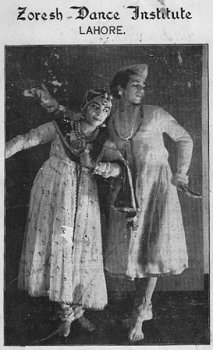
However, the dream wedding may have been the peak moment of happiness in the life of Kameshwar and Zohra. There on the WW2 gained in intensity, transportation became difficult, food and money too got scarce. In a couple of years, Shankar downed the shutters at Almora and went on to film his dream project, Kalpana. Simkie soon left India never to return. Sachin Shankar set up his ballet unit in Bombay. But before that, when Zohra put her all into starting Zoresh Dance School in Lahore of 1943, Kameshwar staked his claim as director.
Photo provided by Ratnottama Sengupta
When the school was inundated with students, she was forced into motherhood. When she returned to the stage, they went on a national tour with boxes and curtains from Lahore to Amritsar, Bareilly, Dehradun, Meerut, Lucknow, Allahabad, Patna, Asansol and Calcutta. Artistically a huge success, the school, however, left the coffers dry. More importantly, at the end of the Big War in 1945, Britain didn’t rule the waves and India was restive. The Muslim League was at loggerheads with the Congress, equations between the Hindus and Muslims had soured, their Muslim friends were looking at them with misgivings. Lahore clearly was not an ideal place for a couple like them. Kameshwar and Zohra relocated to Bombay, where Uzra and Hameed had set up home.
But in the city of celluloid dreams Zohra did not stand a chance in cinema. Not only was she short, somewhat plump, not quite a beauty; in cinema, a nachnewali was merely a nautch girl. In fact, she did not ever dance on stage again. She re-invented her fluidity of movement and expression to make her mark as a choreographer in Prithvi Theatres where her sister was already a leading lady. Eventually, in mid-1950s she choreographed for a few films such as Navketan’s Nau Do Gyarah and Guru Dutt’s CID.
Their bungalow on Pali Hill – a neighbourhood that was home to British, Catholic and Parsi families — was surrounded with Uma and Chetan Anand, his brothers Dev and Goldie, Balraj and Damayanti Sahni, Meena Kumari, Dilip Kumar, the Kapoors… Frequent visitors included Guru Dutt, Raj Khosla, Mohan Segal, Geeta Dutt, Nasir Khan[11], writers Sahir Ludhianvi, Sardar Jafri, Vishwamitra Adil, Amita Malik, composers S D Burman, and Ravi Shankar … Names that would in the next decade become Bollywood royalty.
Cinema was of course the big thing in Bombay of 1940s. Bombay Talkies had already heralded glory days with titles like Achhut Kanya (1936, untouchable maiden), Kangan(1939, Bangles), Bandhan (Ties, 1940), Jhoola(Swing, 1941), Sikandar(Alexander the Great, 1941). Devika Rani, Ashok Kumar, Leela Chitnis, Sohrab Modi, Prithviraj Kapoor were stars who would soon be joined by Punjabis from Lahore such as K L Saigal, Jagdish Sethi, B R Chopra, F C Mehra. Partition wasn’t a certainty yet, in the city of the political beliefs of Right and Left, mixed with industrialists and progressive writers and struggling artistes, the cry for freedom had created a ferment of ideas and the house resounded with scripts, arguments, reading, dancing, painting. K A Abbas, Sajjad Zaheer, Sadat Hasan Manto, Ismat Chughtai, Shahid Lateef[12] – they would associate with Utpal Dutt, Ritwik Ghatak, Salil Chowdhury, Hamid Sayani, Ebrahim Alkazi, Balraj Sahni and Prithviraj Kapoor[13], to pledge that they would present the crisis of the times through the medium of theatre.
*
Prithviraj[14], although a superstar on screen, believed that theatre should proliferate every city, not temples and mosques. Instead, he urged, “spend on theatres that would become centres for cultural education.” After the first election, when he was nominated to the Rajya Sabha in 1952, he’d said, “In that temple called theatre, a Hindu, Muslim, Christian, Jew, Parsi and Sikh all come together. No one cares whether it’s a pandit or a mulla [15]sitting next to them. Communists sit with communalists, to laugh together and cry together. It would be the biggest temple for the benefit of the nation.”
Such a person could not reconcile to the Partition of the subcontinent. It meant, in his own words, that “You will turn me out of Peshawar, and leave my unfortunate Muslim brethren here in the lurch, with their roots uprooted from the soil!” His protest took the shape of four plays that started in 1945 by underscoring the folly of dividing lives on religious basis.
The quartet began with Deewar (Wall), an original play thoroughly contemporary in its politics and communicating its message in a language everyman could follow. The Partition was symbolised by two brothers who, egged on by the foreign wife of one brother – played by Zohra – insist on dividing their ancestral home into two halves by erecting a wall. At a time when Jinnah was raising his pitch for a Muslim nation, the play interpolated the dialogue with speeches by him, Gandhi and Macaulay. So prescient was the message that the British government refused to allow the performance without a green signal from the Muslim League, despite the go-ahead by its CID and the IG Police.
Eventually, despite objection by certain Urdu papers, the play continued to play till 1947 with the peasants pulling down the wall in the climax. In reality, though, the Radcliffe Line concretised the division on the midnight of 14/ 15 August, unleashing bloodshed and misery for millions. On that fateful day, the play was exempted from Entertainment Tax for one full year. Deewar was performed 712 times between 1945 and 1959, until Prithvi Theatres folded up.
The secular credentials of the company is summed up in one practise: The actors began their days with voice production handled by Prithviraj himself, and singing rehearsed by the music director Ram Gangoli. And what did they sing? The base tones were practised by singing Allah Hu! While the high pitches intoned Ram! Ram!
In another expression of his secularism, after the Direct Action Day[16] riots unleashed on August 16th by Jinnah’s demand for Pakistan, leaving 5000 dead and 15000 homeless in Calcutta alone, Prithviraj drove through the city in an open truck with Uzra and Zohra on either side. However, this Hindu-Muslim amity resulted in death threats for them.
And on the eve of Independence, the entire company gathered in the compound of Prithvi Theatres, unfurled the Indian Tricolour, sang Vande Mataram, then took out a procession. Zohra danced with abandon on the streets of Bombay, while Prithviraj’s son Raj Kapoor played the drum. The euphoria did not last: at a personal level Kameshwar was annoyed; on a larger level, death and destruction stalked the streets and the country was engulfed in the horror of untold violence.
Prithviraj’s immediate response was to stage Pathan, the story of two friends – a Muslim Pathan and a Hindu Dewan. When Tarachand dies, Sher Khan promises to look after his son as his own. Local feuds result in a revenge killing where Vazir is implicated. When tribal custom demands an eye for an eye, Khan sacrifices his own son, Bahadur. And when this scene was enacted, there would be no dry eye in the auditorium. Uzra and, in particular, Zohra immersed herself in the play along with Raj and Shammi, the two sons of Prithviraj, who played the two boys. Raj, then only 23, also travelled to Peshawar to design and redesign to perfection the single set of the play. The play was staged 558 times between 1947 and 1960, when curtain fell on Prithvi Theatres.
When rehearsals for the play were on, so was rioting in the cities and towns across India. Prithviraj would, without fail, visit the affected mohallas[17]and hold peace processions. The one dialogue that resonated long after the play ceased to be staged is still pertinent: “Do you want that Hindus should sacrifice their lives for Muslims and the Muslims should not sacrifice their lives for Hindus? Why should they not when they know they belong to one country, eat the same food, drink the same water, and breathe in the same air? Knowing this, you still raise this hateful question of Hindu-Muslim?”
Prithviraj truly believed that religion does not make for conflict, only the abuse of religion, turning it into the handmaiden of vandals, created conflict. “And it is the responsibility of art to present the true aspect of reality.” So, his next production, Ghaddar (Traitor) covered the period from Khilafat Movement to 1947 to deal with the question of the four million Muslims who had remained in India. If they were traitors, who had they betrayed – Islam or Pakistan? Prithviraj as Ashraf and Uzra as his wife join Muslim League but remain staunch nationalists. Shattered by the violence unleashed in Punjab after August 15, he vows to stay back and serve his motherland. He is therefore shot dead by a ‘friend’ Muslim Leaguer.
Zohra loved the cameo she played of a maidservant who refuses to go to Pakistan. Fully identifying with the sentiments of the character — whom she crafted after the family retainers in her mother’s home — she would add extempore dialogue, and these endeared her to the audiences. She was deeply pained that the Partition created personal loss in her family as many of her own people moved across while she, married to a Hindu, never even considered it. But, in covering the thirty-year span of the play she had to enact an old woman – and “feeling old from within” was against the grain of the ever-exuberant lady who, even at 102, would go to bed with a smile on her lips as she whispered to her long dead husband, “Wait just a little longer Kameshwar, I’m on my way to be with you…”
As with Deewar, Ghaddar too faced problems with censor board clearance. The chief minister of Bombay asked Prithviraj to approach the Central government. Sardar Patel introduced him to Nehru, who sent him to Maulana Azad. The Education and Culture minister not only gave him a letter of clearance but also a 50 percent reduction in train fare for all cultural troupes. But the Muslims boycotted the play; Muslim Leaguers in Cochin threatened to burn down the theatre; and some crazy elements wanted to shoot Prithviraj. When he invited people from Bhendi Bazar to watch the play, they concluded that, “People who have been shown as Ghaddar deserve to be shown as traitors.”
Meanwhile the entire population of villages — where their neighbours were their community, their family — were being uprooted in Punjab and Bengal. They were going crazy trying to decide, “To go or to stay?” People who didn’t know any borders were figuring out if, by crisscrossing the imaginary line, they would remain Indians or become Pakistanis. Would they forego their lifestyle by going or ditch their religion by staying? The questions assumed frightening proportion as two of Zohra’s brother, one of her sisters, and even her dearest Uzra relocated themselves in Lahore and Karachi.
However, the real tragedy in all this for Zohra was that Kameshwar had distanced himself from her. Never having found a foothold for himself in Bombay, he had taken to alcoholism, substance support, and perhaps occult activities. Her touring with the Theatre did not make matters easy. But the need to put food on the table combined with the draw of footlights, and acting became Zohra’s calling and, yes, her second nature.
Ahooti (Sacrifice), Prithvi’s final play in the Partition Quartet, was the story of Janki, who is abducted and raped on the eve of her wedding. She’s rescued by Mohammed Shafi and reconciled with her father in a relief camp. But when the family moves to Bombay, she is subjected to slander, and although her fiancee is willing to marry her, his father forbids that, compelling her to commit suicide. The story mirrored the life of countless ‘Partition widows’ – on either side of the border — who have found place in literature and, much later, in films like Shahid-e-Mohabbat Buta Singh(The Sacrificing Lover, Buta Singh, 1991) and Gadar:Ek Prem katha (Rebellion: A Love Story, 2001)too. The published estimates of the number of women abducted by the governments of both the fledgling countries put the figure at 50,000 Muslim women in India and 33,000 non-Muslim women in Pakistan. The enormity of the problem led the two governments to enter into an agreement to locate, recover and restore all such women to their respective families. But what of the women who had, in the meantime, acquired a new family?
In the original script it was to be the story of a mother and daughter but since Uzra had left the country, Prithviraj rewrote it as the story of a father and his daughter. Zohra did not have her heart in the play: first, becaue Uzra was not there; then, because her original role had been altered. Here too, she discerned Prithviraj’s self-indulgence. The play opened in 1949 to tepid reception and dull reviews that dubbed it ‘boring’. But the Deputy Genral of Bombay Police was moved by the girl’s plight and offered his services to help all such women. Prithviraj introduced him to one refugee whose daughter had been separated in the chaos of fleeing – and within days the daughter was found and restored to him. That is not all: at the end of the play the larger-than-life personality would stand with shawl spread out to collect any donation dropped into it, to help the relief work. Such was the emotional response that women even dropped their jewellery in the shawl – which Prithviraj soon requested them to desist from doing.
The Partition Quartet was to first perhaps to see where the rhetoric of religious difference can lead, the contest over territory can entail, the violence and violations that can result. Whatever the quantum of success or criticism they earned, they certainly provoked debate and affected political discourse that still hasn’t lost its sting. Zohra’s heart would swell with pride when Prithviraj rose to address conventions; call on people to turn his moves into a movement for peace. Through him she found herself performing in Punjab’s Firozpur jail, for prisoners who sat with hands and feet in chain… and she also got to witness the hanging of a man scheduled for the next dawn.
All this changed Zohra in a fundamental way: she shed her arrogance; she learnt to respect the dignity of everyone she worked with; she understood the transformative power of theatre. And perhaps she came to love her country, her people, her roots a little more.
Ratnottama Sengupta, formerly Arts Editor of The Times of India, teaches mass communication and film appreciation, curates film festivals and art exhibitions, and translates and write books. She has been a member of CBFC, served on the National Film Awards jury and has herself won a National Award. Ratnottama Sengupta has the rights to translate her father, Nabendu Ghosh.
.
PLEASE NOTE: ARTICLES CAN ONLY BE REPRODUCED IN OTHER SITES WITH DUE ACKNOWLEDGEMENT TO BORDERLESS JOURNAL


 Borderless