Categories
Contents

Borderless, September 2025

Art by Sohana Manzoor

Editorial

Seasons Out of Time Click here to read

Translations

Nazrul’s Karar Oi Louho Kopat (Those Iron Shackles of Prison) has been translated from Bengali by Professor Fakrul Alam. Click here to read.

Five poems by Ashwini Mishra have been translated from Odia by Snehprava Das. Click here to read.

The Dragonfly, a poem by Ihlwha Choi,  has been translated from Korean by the poet himself. Click here to read.

Tagore’s Aaj Shororter Aloy (Today, in the Autumnal Light) has been translated from Bengali by Mitali Chakravarty. Click here to read.

Poetry

Click on the names to read the poems

Ryan Quinn Flanagan, Onkar Sharma, Ron Pickett, Arshi, Joseph K Wells, Shamim Akhtar, Stephen House, Mian Ali, John Grey, Juliet F Lalzarzoliani, Joseph C.Obgonna, Jim Bellamy, Soumyadwip Chakraborty, Richard Stimac, Sanzida Alam, Jim Murdoch, Rhys Hughes

Poets, Poetry & Rhys Hughes

In Soaring with Icarus, Rhys Hughes shares a serious poems. Click here to read.

Musings/ Slices from Life

Parenting Tips from a Quintessential Nerd

Farouk Gulsara relooks at our golden years and stretches it to parenting tips. Click here to read.

Instrumental in Solving the Crime

Meredith Stephens takes us to a crime scene with a light touch. Click here to read.

What’s in a Name?

Jun A Alindogan writes about the complex evolution of names in Phillippines. Click here to read.

Bibapur Mansion: A Vintage Charmer

Prithvijeet Sinha takes us for a tour of Lucknow’s famed vintage buildings. Click here to read.

Musings of a Copywriter

In Demolition Drives… for Awards?, Devraj Singh Kalsi muses on literary awards. Click here to read.

Notes from Japan

In Contending with a Complicated History, Suzanne Kamata writes of her trip to US from Japan. Click here to read.

Essays

The Bauls of Bengal

Aruna Chakravarti writes of wandering minstrels called bauls and the impact they had on Tagore. Click here to read.

The Literary Club of 18th Century London

Professor Fakrul Alam writes on literary club traditions of Dhaka, Kolkata and an old one from London. Click here to read.

Stories

Looking for Evans

Rashida Murphy writes a light-hearted story about a faux pas. Click here to read.

Exorcising Mother

Fiona Sinclair narrates a story bordering on spooky. Click here to read.

The Storm

Anandita Dey wanders down strange alleys of the mind. Click here to read.

The Fog of Forgotten Gardens

Erin Jamieson writes from a caregivers perspective. Click here to read

The Anger of a Good Man

Naramsetti Umamaheswararao makes up a new fable. Click here to read.

Feature

A review of Jaladhar Sen’s The Travels of a Sadhu in the Himalayas, translated from Bengali by Somdatta Mandal, and an online interview with the translator. Click here to read.

Book Excerpts

An excerpt from Jaladhar Sen’s The Travels of a Sadhu in the Himalayas, translated from Bengali by Somdatta Mandal. Click here to read.

An excerpt from Prithvijeet Sinha’s debut collection of poems, A Verdant Heart. Click here to read.

Book Reviews

Somdatta Mandal reviews Aruna Chakravarti’s selected and translated, Rising From the Dust: Dalit Stories from Bengal. Click here to read.

Rakhi Dalal reviews Mohua Chinappa’s Thorns in My Quilt: Letters from a Daughter to her Father. Click here to read.

Pradip Mondal reviews Kiriti Sengupta’s Selected Poems. Click here to read.

Bhaskar Parichha reviews Kalyani Ramnath’s Boats in a Storm: Law, Migration, and Decolonization in South and Southeast Asia, 1942–1962. Click here to read.

.

Click here to access the Borderless anthology, Monalisa No Longer Smiles

Click here to access Monalisa No Longer Smiles on Amazon International

Categories
Notes from Japan

Sneaky Sneakers

By Suzanne Kamata

So there I was, jacket zipped, MP3 player charged and loaded, sneakers laced and tied. Just as I was about to go out the door to embark on my power walk, I realised that I’d left the keys on the table in the other room. No one else was in the house. What a bother!

I considered my options. One, I could go out and leave the house unlocked, but I didn’t want to do that. Two, I could try to crawl on my hands and knees to the table without letting my feet touch the floor. Three, I could take off my jacket, lay it down like a carpet, and step on that instead of the bare wooden floor. Four, I could untie, unlace, and step out of my shoes and, in my socks, go get the keys.

I’ve lived in Japan for over 20 years, so I know better than to wear shoes in the house. After all this time, I can’t bring myself to wear shoes indoors in the United States, either, though I was brought up treading on carpet while shod. Most of my footwear is of the slip-on variety—clogs, flip-flops, pumps, loafers—but I still prefer lace-up athletic shoes for exercise.

On this day, I managed to walk on my knees to the table, grab the keys, and get back to the entryway, all without letting my soles touch the floor.

Shortly after that, I was again standing in an entryway while visiting an American friend in Kamakura. My shoes were laced and tied. She had just pulled on her boots and zipped them when she discovered that she had forgotten something. I was prepared to commiserate with her about the nuisance of taking off one’s shoes when, to my surprise, she re-entered the house with her boots on, to retrieve the forgotten bag.

My jaw dropped. This friend had also lived in Japan for a very long time. “You go into your house with your shoes on?” I asked.

She shrugged. “Sometimes. It’s too much trouble to take them off.”

Perhaps this was common. Maybe all over Japan, people were secretly stepping onto the floors of their homes in spike-heeled sandals and hiking boots, and who knows what else!

Curious to know, I asked a Japanese friend—an older woman, with grown children—if she’d ever done such a thing.

“Well,” she said, leaning close, “sometimes in winter, when I’ve already got my boots on, I quickly step inside and hope no one’s watching.”

Again, my jaw dropped. “And what about your children?”

“If they did it, I would scold them,” she assured me. “We’re not supposed to wear shoes in the house.”

Suzanne Kamata was born and raised in Grand Haven, Michigan. She now lives in Japan with her husband and two children. Her short stories, essays, articles and book reviews have appeared in over 100 publications. Her work has been nominated for the Pushcart Prize five times, and received a Special Mention in 2006. She is also a two-time winner of the All Nippon Airways/Wingspan Fiction Contest, winner of the Paris Book Festival, and winner of a SCBWI Magazine Merit Award.

PLEASE NOTE: ARTICLES CAN ONLY BE REPRODUCED IN OTHER SITES WITH DUE ACKNOWLEDGEMENT TO BORDERLESS JOURNAL

Click here to access the Borderless anthology, Monalisa No Longer Smiles

Click here to access Monalisa No Longer Smiles on Amazon International

Categories
Notes from Japan

In Praise of Parasols

A classic way to keep cool

By Suzanne Kamata

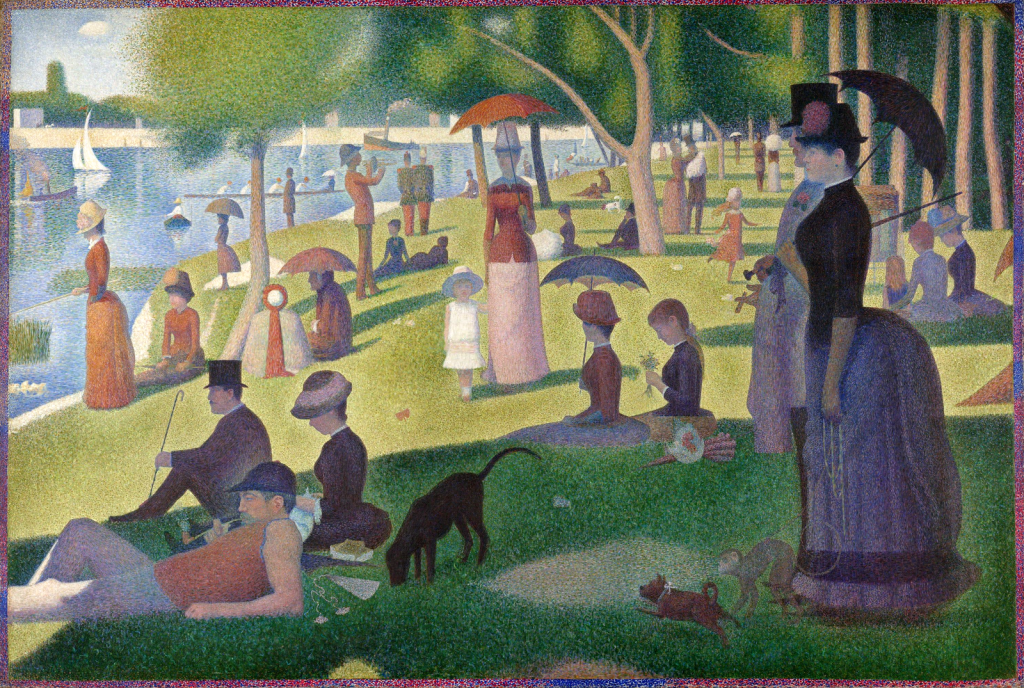
Painting by Georges Seurat(1859-1891). From the Public Domain.

Parasols? Seriously? Such were my thoughts when I first arrived in Japan one summer over twenty years ago. How quaint, I thought. How old fashioned! If a lady was worried about preserving her lily-white complexion, why not just slather on sunscreen and wear a hat?

In South Carolina, where I’d just come from, the only time I ever saw women wielding parasols was when I visited antebellum mansions. There, tour guides flounced around plantations in hoopskirts, twirling parasols as part of their period costumes. In real life, no one used them.

Back then, many of my friends spent hours laying out in the sun, in pursuit of the perfect tan. In the United States, people found my skin to be too pale, but in Japan women wore long white gloves and smeared their faces with whitening cream. And they carried parasols to ward off the sun.

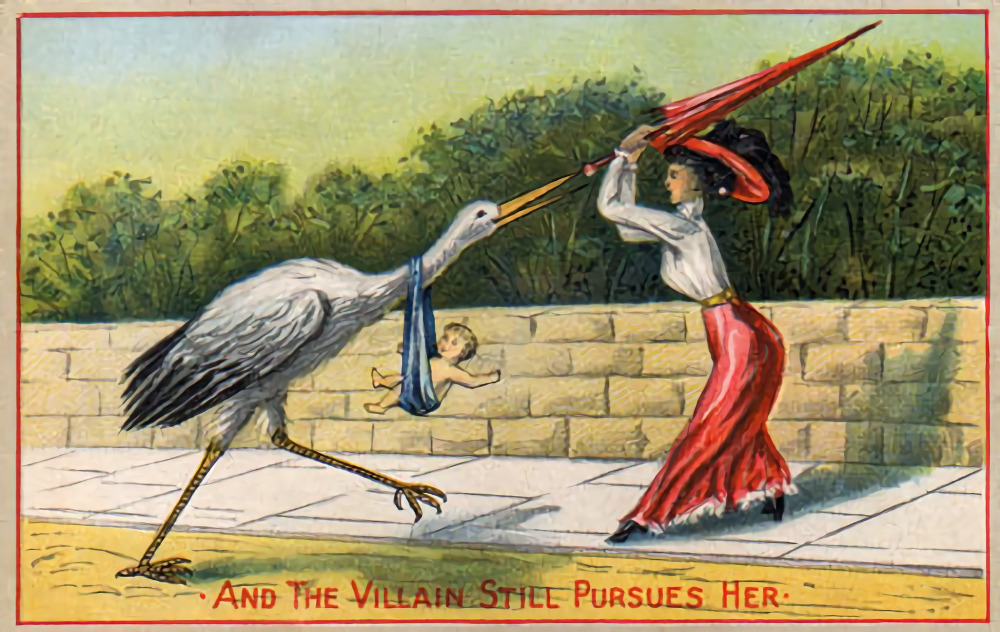
Parasols have actually been in use in the Middle East and Asia for a very long time. They are depicted in ancient art in India, Egypt, Mesopotamia, and Greece, and are mentioned in a divination book from the Chinese Song Dynasty printed in 1270. Although alternative uses have been discovered for the parasol – for example, in 1902, ladies were advised by The Daily Mirror to use their parasols to fend off ruffians — the basic design is much the same as that of first century China.

A postcard from the turn of the 20th century. From the Public Domain

The only parasol I’d ever owned was a bright red one made of paper, bought from a souvenir shop in Southeast Asia, which I displayed in a corner as an ethnic accent to my home décor. I never thought of using it outside.

Parasols were fussy and cumbersome, I thought. How could you do anything with your hands if you were holding one? They were a nuisance, and yet when I went to a baseball game with my mother-in-law in mid-summer, and the hot sun beat down upon us, I was grateful to share the shade of her black umbrella.

Ever conscious of my carbon footprint, I walk to the neighbourhood store with my eco-bags. One sweltering day last summer, I started to reach for my hat on my way out the door, but grabbed an umbrella instead. It really was cooler underneath! And carrying a parasol helps cut down on the new freckles. Today I browsed online for a new parasol. A number of new vendors have popped up in the West offering a variety of designs – Battenburg Lace for outdoor weddings, solid team colours for stadium sports, and more. Could it be that the parasol is about to come into fashion again in my native country? Here in Japan, it has never gone out of style. 

Suzanne Kamata was born and raised in Grand Haven, Michigan. She now lives in Japan with her husband and two children. Her short stories, essays, articles and book reviews have appeared in over 100 publications. Her work has been nominated for the Pushcart Prize five times, and received a Special Mention in 2006. She is also a two-time winner of the All Nippon Airways/Wingspan Fiction Contest, winner of the Paris Book Festival, and winner of a SCBWI Magazine Merit Award.

PLEASE NOTE: ARTICLES CAN ONLY BE REPRODUCED IN OTHER SITES WITH DUE ACKNOWLEDGEMENT TO BORDERLESS JOURNAL

Click here to access the Borderless anthology, Monalisa No Longer Smiles

Click here to access Monalisa No Longer Smiles on Amazon International