What can be more scary and life-threatening than the risk of getting Covid-19? Keith Lyons finds how his daily joy has menacing dangers
Cycling in New Zealand. Photo shared by Keith Lyons
“When the spirits are low, when the day appears dark, when work becomes monotonous, when hope hardly seems worth having, just mount a bicycle and go out for a spin down the road, without thought on anything but the ride you are taking.”
While out cycling recently with a friend on a weekend ride, I was reminded that the Covid-19 pandemic has been raging waning and morphing for the last two years. With Covid cases set to peak this week in my part of the world, optimistically we hope that we’ll be in a post-pandemic world by the time 2023 starts.
Many of us are wishing for a return to normal, to the good old days of 2019. But we know deep down that while enterprise and everyday life may resume again, there is no return to normal. We can’t turn back the clock. My parents in a retirement village and rest home are still shielded to ensure the virus doesn’t spread. I have people I’m close to who have died from Covid. On both hands I can count how many friends and acquaintances continue to live despite the pandemic.
Looking back on the last two- and a-bit years, one of the good things to come out of it was that I bought a bike and got into cycling. The first bicycle I found abandoned during my lockdown walks. The second one, an e-bike, I bought in mid-2020, and last year got its mountain-bike sibling, With public transport more inconvenient as well as slightly hazardous, biking would seem to be an ideal solution for commuting and recreation. I do like the freedom it gives me, though as I found out yesterday, cycling in the rain loses its romantic notions when your every item of clothing is sodden.
Cycling has been a great vehicle of joy for me, not just for the quick run to the greengrocer, or an outing to a beach, a cafe or the hills. So today when I met a buddy for an easy ride beside a meandering river to the sea, I couldn’t but feel happy to be freewheeling along, appreciating the clarity of the river, the trees turning into autumn colours, the pleasantness of it all.
However, for me, the joy of cycling has a flip side. Even in a flat city like the one I live in, which seems so well suited to cycling. Even with its network of cycle lanes and dedicated cycle paths. I’ll be honest with you, cycling scares me like nothing else in my life. What terrifies me is the vulnerability I feel when on my bike in traffic. I feel small, insignificant and sometimes invisible.
Cars, buses and trucks speed by at 50-80km/hr within touching distance away. Not only are they travelling three or fours times faster than me, but they also weigh 15 or so times my weight. If a driver is inattentive or distracted (for example, on the phone), and I get hit or clipped or rammed by a vehicle, I know that I will unlikely be able to walk away from the crash.
My rational mind fights with my fearfulness. After all, studies show that cycling is more likely to extend your life than to shorten it — physical inactivity contributes to 1-in-8 deaths. And cyclists can fall off bikes by themselves with no other vehicles around. Yet almost every time I venture out on my bike, I have a near-miss. It could be a motorist running a red light, making a turn cutting me off, opening a car door without checking, or exiting a driveway too fast.
It is not just cyclists who are vulnerable. Walkers, children, the elderly, and motorcyclists are all neglected in transport planning, where motorised vehicles are given priority over other users who aren’t shielded or protected from impact. Recent research estimates that an adult pedestrian has around 20% of dying if struck by a car at 60km/hr. The odds are worse if it is a truck. Have you ever heard of a cyclist crashing into a motorised vehicle and causing damage or injury? Probably not.
Yet, for health and fitness, for reducing emissions and for the good of the planet, getting on your bike is good for your being, your body and the world. I cycle cautiously, wishing that my fellow road users are exercising the same alertness and consideration.
Keith Lyons (keithlyons.net) is an award-winning writer, author and creative writing mentor, who gave up learning to play bagpipes in a Scottish pipe band to focus on after-dark tabs of dark chocolate, early morning slow-lane swimming, and the perfect cup of masala chai tea. Find him@KeithLyonsNZor blogging at Wandering in the World (http://wanderingintheworld.com).
Rakibul Hasan Khan explores death and darkness in Fakrul Alam’s translation of Jibanananda Das’s poetry
Jibanananda Das: Courtesy: Creative CommonsProfessor Fakrul Alam
I
Literary translation is a creative work, and the literariness of a translated work reflects the creativity of the translator. From a reader’s perspective who does not know the language of the “original”, the more the translated work reads “natural”, the better is the translation. But it is very intriguing from the viewpoint of someone who has access to both the original and the language of the translation. Reading the translation for such a reader is sometimes like reading the same poem in two languages at the same time, which is often a very enriching and exhilarating experience. But it is not always the case, for such readers may show a critical attitude to the translation for having a “bias” towards the original, especially if the latter is written in their first language. Then their reading turns out to be more an evaluation of the translation than enjoying the work in translation. It is a difficult task for such readers to overcome this predicament.
I also face this predicament while reading Fakrul Alam’s translations of Jibanananda Das’(1899-1954) poetry in Jibanananda Das: Selected Poems with an Introduction, Chronology, and Glossary (Dhaka: UPL, 2nd Ed, 2003). To keep aside my evaluative concerns, therefore, a middle course was necessary, while still comparing the translations with the originals. To this end, I read some of the most “popular” poems by Das in Alam’s translations with a particular focus on the latter’s recreation of the images of death, dread, and darkness.
There is a personal preference for my choosing of the dark images, for I always find Das’ grotesque or dreadful images as appealing as the beautiful ones, but more important reason for my choosing of the dreadful than the beautiful is to underscore the experience of a poet who lived under the dark shadow of colonial rule. Initially, I thought it would be very intriguing to read Das’ poetry postcolonially in Alam’s translations because of the latter’s reputation as an academic in the field of postcolonial studies. But while reading the translations, particularly the erudite introduction that he has included at the beginning of the volume to introduce the salient features of Das’ poetry as well as to offer a very insightful and resourceful discussion on others’ and his translations of the poet, I felt that Alam almost altogether suspended his postcolonial self and fully activated his own creativity to capture the sights and sounds of the works of a poet who is extraordinarily famous for the aesthetic and artistic qualities of his poetry. Alam seems to have embraced this challenge enthusiastically and has succeeded with flying colours, but his emphasis on the art may have cost him thematically on certain occasions, although it has not diminished the overall quality of the translations. His translations also continue to bear the mark of his academic background as a scholar in English studies.
In spite of discovering that Fakrul Alam does not highlight the postcolonial elements in Jibanananda Das’s poetry, I did not abandon my initial plan of reading his translations through postcolonial lenses. Therefore, I resort to Edward Said, whom Alam considers his “guru”, to adopt the former’s concept of “contrapuntal reading” and apply it on the latter’s translations.
Said theorised contrapuntal reading as a technique of reading the texts of English literature, particularly the novel, to unravel the unrecognised and unarticulated elements of colonisation which are ostensibly absent in those texts. I adopted this technique for reading Alam’s translations to examine the images of death, dread, and darkness in Das’ poetry as the expressions of the poet’s experience as a colonised person. To view translation as an act of interpreting a text, I invoked Frederic Jameson’s formulation that interpretations of literary texts could bring to surface the repressed political unconscious in the narrative. Although Jameson’s theory is essentially a Marxist reading strategy, for my postcolonial materialist reading of Fakrul Alam’s translations, a reworking was necessary. Alam’s translations brought to light the repressed political unconscious in Das’ poetry, giving clue to the poet’s rendition of the grotesques as a result of the material realities of his time under the British Empire.
II
The first poem of Jibanananda Das that I read in Fakrul Alam’s translations is “An Overwhelming Sensation” (“Bodh”) – a deeply engaging poem that highlights the extraordinary sensibilities of a poet that separate them from the multitude. There are two “dreadful” images in this poem, and the first one is as follows:
In my head!
Walking along beaches – crossing shores
I try to shake it off;
I want to grab it as I would a dead man’s skull
And dash it on the ground; yet, like a live man’s head,
It wheels all around my heart!
(26-31, p. 30)
The image of death and dread in the above quotation reminds me of Shakespeare’s the “grave diggers scene” in Hamlet as well as “Lady Macbeth’s persuasion scene” in Macbeth, although the original poem does not allude to Shakespeare so noticeably. Similarly, the second dreadful image of the poem resonates a Shakespearean diseased imagery in Alam’s translation:
Eyes whose nerves have dried up,
Ears which cannot hear,
And like that hump – a goitre erupting on flesh
Rotten cucumber – putrid pumpkin –
All that have grown rank in the heart –
All that.
(101-106, p. 32)
Is it a mere coincidence that Alam’s translations of the above images of death and dread remind me of Shakespeare? Do they have any connection with his academic background of English studies that must have included Shakespeare? It is also not a coincidence that Das himself was a student of English literature, who also pursued a teaching career in English. The colonial connection of English studies in the Indian subcontinent is a historical fact, which occasioned for the poet, the translator, and me to study the Bard, but more important is to note on how the presence of Shakespeare becomes more obvious in Alam’s translation than it is in the original. To me, the dreadful images recreated by Alam reflects the tormented mental state of the colonised poet. If we keep in mind that the original poem was written around the death throes of the colonial rule in India, we cannot overlook the link between these images and colonisation.
“Camping” (“Campe”) is another poem that contains some extremely poignant and dreadful images. In Fakrul Alam’s translation, this poem’s connection with colonisation becomes more recognisable than it is in the original. The poem describes a hunting night in a forest where the speaker of the poem is camping: “Somewhere deer are being hunted this day; / Hunters have moved into the heart of the forest today” (6-7, p. 32). The night for the speaker is both enchanting and mysterious – “a night full of wonders” (60, p. 34), but it turns into a horrible one due to the presence of the hunters. In Alam’s translation, the anxiety of the speaker reflects an acutely sensitive mind of a person who is restless by what is happening around him:
I can sleep no more;
Lying down
I hear gunshots;
And then more guns firing.
In the moonlight the doe in heat call again.
Lying down here all by myself
I feel a heaviness in my heart
Hearing gunshots
Hearing the doe calling.
(42-50, p. 33-34)
Alam’s use of the words, “gunshots” and “guns firing”, perfectly captures the dreadfulness of the night and clarifies the heaviness of the speaker’s heart. He makes the anxiety of the speaker palpable. As he informs the reader with a footnote at the beginning of the poem, Jibanananda Das wrote this poem as an expression of “the helplessness of life” (p. 32), the above lines represent that helplessness of the speaker.
Interestingly, this is a love poem – seemingly. The speaker compares himself with the fallen lovers of the doe who tempts the stags to come out of their hideouts by calling them passionately but deceivingly to be shot by hunters. According to the speaker, the doe has learnt this art of deception and cruelty from humans: “Lessons she has learnt from humans!” (51-54, p. 34). In Alam’s translation, the cruelty of hunting and the agony of the speaker become obvious:
I hear a double-barreled gun thunder,
The doe in heat keeps calling,
My heart can’t get to sleep
As I lie down all by myself;
(79-82, p. 35)
Here the doe is a symbol of deceptive love. The speaker himself is also a victim of such love. His heart bleeds at the sound of gunfire. The innocent death of the stags reminds him of his own wretched state, but he is aware that he needs to learn how to negotiate with this wretchedness: “Still I must learn to forget sound of guns going off” (83, p. 35). This realisation gives the speaker the composure to reflect on the identity of the hunters:
They who own the double-barreled guns that destroyed the stags this day,
They who brought the relish of deer flesh and bones to their dinner
Are like you –
Lying in camp beds they are drying up their souls
Reflecting on their feast – reminiscing – remembering.
(84-88, p. 35)
The hunters are those who “own the double-barreled guns”. Does it ring a bell? Although the first Mughal Emperor Babur introduced guns in India in the sixteenth century, it is the British who made use of guns the most in the Indian subcontinent. Thus, there is a strong association between the British colonisers and the hunters in this poem.
Alam’s translation brings to surface the repressed political unconscious of the poem. If the poem is an expression of “the helplessness of life”, he heightens that helplessness, demystifying some of the obscurities of the original poem in the process of translating it. He succeeds in recreating the atmosphere of horror that does not let the speaker sleep. The anxiety of the speaker over the helplessness of his fellow people and of the animal world as a whole make us think about the time and place of writing this poem.
The dreadful images of death and dread recreated by Alam using words and phrases like “gunshots”, “guns firing”, and “double-barreled gun thunder” present before us a troubled world where the serenity of the natural world is shattered by the sound of gunshots. Yet, the speaker realises that he needs to negotiate. The colonised also had to negotiate with the colonisers. Therefore, if we situate the poem against the backdrop of its writing during the colonial period from a colonised location, can we overlook its colonial connection? Does Das portray the tormented state of the colonised through this allegorical love poem? This allegory of the hunted existence of the colonised becomes more perceptible than the original through Alam’s interpretative translation – translating as interpreting. Alam’s translated version of the poem reveals the material realities of the poet’s time which are largely concealed by symbols and imageries in the original poem.
III
To write on the theme of darkness, the poem “Banalata Sen” first comes to my mind, for I consider it as one of the darkest poems by Das. The poem’s darkness is very subtly camouflaged by a tapestry of extraordinary images. Its astonishing popularity as a love poem also often hides the darkness. Alam’s translation largely unveils the camouflage, and brings to light the overwhelming darkness of the poem. In the Bangla version, Das deploys the word “darkness” by somewhat screening it with other associated images and allusions. Alam also does so without using any synonym for “darkness” in his English translation, understandably for not affecting the poetic quality of the poem. As a result, the word “darkness” appears as many as five times in his translation, which is the same number as in the original. Here, the recurrent word has been put on bold typeface.
From Sinhala’s Sea to Malaya’s in night’s darkness,
…
Was I present; Farther off, in distant Vidarba city’s darkness,
…
Her hair was full of the darkness of a distant Vidisha night,
…
Did I see her in darkness; said she, “Where had you been?”
…
What remains is darkness and facing me – Banalata Sen!
(2, 4, 7, 11, 18, p. 61)
Fakrul Alam does justice to the original while translating this “difficult” poem, and exposes the dominance of darkness in it. Probably any other translator would also keep the word “darkness” the same number of times, but Alam’s success lies in his maintaining a similar artistic sublimity that we find in the original poem. It is evident in his coining or use of the phrases like “the ways of the world”, “ash-grey world”, “foaming ocean”, “the soft sound of dew”, “fireflies light up the world anew”, and “life’s mart close again”. His successful recreation of the images of darkness opens up the opportunity to explore the political potentialities of the poem.
“Darkness” (“Andhakar”) is another poem of overwhelming darkness. Fakrul Alam’s translated version of this poem also testifies my claim of his interpretive translation. He also explains in the introduction of the volume the process of his using self-explanatory words for retaining Bengali names to honour Jibanananda Das’s preference for this: “[t]he sensible option, it appeared to me, was to use Bengali names when an exact English equivalent was not available, and then to use a Bengali word in such a way that the meaning could be conveyed where possible within the line” (p. 21). Alam’s explanatory use of two Hindu mythological rivers’ names in the following lines of “Darkness” may also clarify my point:
I looked up and saw the pale moon withdrawing half of its shadow from that river of death, Vaitarani,
As if gesturing towards the river of mutability, the Kirtanasha. (2-3, p. 72)
Alam supplements the meanings of the rivers by using the phrases “that river of death” and “the river of mutability” before Vaitarani and Kirtanasha respectively, while in the original poem, there is no such explanatory “notes” preceding the rivers’ names, assumingly because the Bengali readers of the poem are supposed to know the names of these mythological rivers, although I think many Bengali readers are also not fully informed of the significance of these rivers. Therefore, Alam’s innovative use of these rivers’ names becomes self-explanatory, without undermining the poetic quality of the lines. Similarly, the following line of the same poem is another example of his explanatory translation: “O Moon whose brightness has faded to a faint blue” (6, p. 72). In this line, the part following “O Moon” is clearly an attempt by the translator to explain the faded colour of the moon. However, Alam’s translation of this poem, like “Banalata Sen”, enhances the deep darkness manifested in the original.
If we go back to the time of publication of the volume Banalata Sen (1942) where the two poems “Banalata Sen” and “Darkness” were included, we can get an explanation to the poet’s obsession with darkness. It was indeed the darkest time for the people of the Indian subcontinent under British colonisers. The colonial rule affected the Bengal province (where Jibanananda Das is from) so severely that it resulted in the worst famine in the subcontinental history in 1943. The Bengal famine of 1943 has been called a “man-made holocaust” by Gideon Polya, for which the then Prime Minister of England Winston Churchill’s policy of hoarding food supplies for the British soldiers fighting in the Second World War by depriving the colonised. Apart from the effects of the famine and the World War, communal conflicts also ravaged the peacefulness and harmony of life in this region. The optimism of anti-colonial movement was soon to be marred by the proposal of partitioning India on the basis of “two-nation theory”. All these must have affected Das while writing “Banalata Sen” or “Darkness”, and Alam’s translations give us a clear view of the unfathomable darkness that engulfed the poet’s world.
IV
In this section, Fakrul Alam’s translations of the poems of Beautiful Bengal [Ruposhi Bangla], one of Jibanananda Das’ most loved poetry collections, will be discussed. The poems of this collection reflect the poet’s deep attachment with his land as well as his meditations on death and reincarnation through picturesque and sensuous portrayals of the flora and fauna and the landscapes of rural Bengal. The first poem of this volume that appears in Alam’s translations reveals the poet’s musings on death. The very title of the poem, “Knowing How These Fields Will Not Be Hushed That Day” (“Shei Din Ei Math”), alludes to the day after the poet’s death. In Alam’s translation, the poet’s sense of grief imagining the day when he will be no more becomes as poignant as it is in the original:
Because I will disappear one day
Won’t dewdrops ever cease to wet chalta flowers
In surges of soft scent?
(4-6, p. 43)
These lines demonstrate the poet’s wistful imaginings of the time after his own death, but at the final stanza of the poem, he perceives death from an objective viewpoint. Alam perfectly captures this transition from subjective to objective, and presents it as authentically as possible:
Quiet lights – moist smells – murmurings everywhere;
Ferryboats moor very close to sandbanks;
These tales of earth live on forever,
Though Assyria in dust – Babylon in ashes – lie.
(9-12, p. 43)
In Alam’s translation, the poet’s contemplation of the inevitability of death and the impermanence of everything, including great civilizations, appear in a perfect state of semblance and equipoise as in the original poem.
“Go Wherever You Want To” (“Tomra Jekhane Shadh”), one of the most famous poems of Beautiful Bengal, bears evidence of the poet’s deep desire to stay eternally in the lap of Bengal amidst its unique beauties, refusing the prospects of moving to elsewhere, especially to any foreign land. The poet asks those fascinated by the attractions of foreign lands to go wherever they want to, but he himself wants to remain in Bengal eternally, justifying his decision by describing its bewitching beauty. Fakrul Alam is at his best as a translator in recreating the sights and sounds of the poet’s beautiful Bengal, where the sestet of the sonnet implies the poet’s eternal connection with this land:
Ready to take her grey-coloured duck to some storyland –
As if the smell of Paran’s tale is sticking to her soft flesh,
As if she has risen from her underwater kalmi reed abode –
Silently leaving herself in water once – then disappearing
Into the fog far, far away – but I know I’ll never lose sight of her
Even in the press of the world – for she is in my Bengal evermore.
(9-14, p. 44)
Apparently, this poem is free from the heaviness of death imageries, but a close examination may bring to surface the poet’s embedded desires for death and rebirth. His yearning for remaining in Bengal eternally is only possible through his reincarnation in this land after his death.
The poem “I Have Seen Bengal’s Face” (“Banglar Mukh Ami Dekhiyachhi”), another sonnet of Beautiful Bengal, further justifies the poet’s decision to stay in Bengal for good and to go nowhere else. In his translation of the poem, Alam shows outstanding artistic skills to emulate the aesthetic and poetic beauty of the original. The octave quoted below may clarify my point:
I have seen Bengal’s face, and seek no more,
The world has not anything more beautiful to show me.
Waking up in darkness, gazing at the fig-tree, I behold
Dawn’s swallows roosting under huge umbrella-like leaves.
I look all around me and discover a leafy dome,
Jam kanthal bat hijol aswatha trees all in a hush,
Shadowing clumps of cactus and zeodary bushes.
When long, long ago, Chand came in his honeycombed boat
To a blue Hijal Bat Tamal shade near the Champa, he too sighted

Bengal’s incomparable beauty.
(1-9, p. 49)
Alam’s innovative use of native tress and legends appear as spontaneously and effectively as possible to make the piece apprehensible to non-native readers. The poem gestures to the poet’s desire to glorify his land and culture, and Alam’s translation further accomplishes that glorification.
The poet’s desire for rebirth in Bengal is emphatically expressed in the poem “Beautiful Bengal” (“Abar Ashibo Phire”). Since the poems of the Beautiful Bengal are untitled, the first line of each poem is mostly accepted as the titles of the poems in Bangla original. Fakrul Alam also mostly follows this tradition, but often makes use of his freedom as a translator to change the title. The title of this poem “Beautiful Bengal” in Alam’s translation is another example of his applying that freedom. Perhaps he translates the title so differently from the “original” title, which could be something like “I Will Come Again”, to emphasise the extraordinary popularity of the poem that could easily be rendered as the titular poem of the volume. While I agree with this position, I feel it is deviating from the sense of reincarnation that the “original” title evokes. However, Alam does not deviate from the idea of return used as a refrain in the whole poem, and maintains the same stature as a translator that I find him in most other poems. I quote first few lines of the poem to support my view:
I’ll come again to the banks of the Dhanshiri – to this land
Perhaps not as a human – maybe as a white-breasted
shankachil or a yellow-beaked shalik;
Or as a morning crow I’ll return to this late autumnal rice-harvest laden land,
Wafting on the fog’s bosom I’ll float one day into the jackfruit tree shade;
(1-4, p. 51)
This poem can be read as a companion piece to the two other poems I have discussed above: “Go Wherever You Want To”, and “I Have Seen Bengal’s Face”. The idea of reincarnation and the feeling of an inseparable connection with the homeland reverberate in these poems with exquisite descriptions of the beauty of Bengal.
The poems of Beautiful Bengal are perhaps most passionate “postcolonial poems” by Jibanananda Das, where he glorifies his native land and culture as an attempt to recuperate the damages done to those by colonials. Fakrul Alam’s translations bring to surface the repressed postcoloniality of these poems by making the poet’s postcolonial sensibility more prominent than they are in the originals. Das’s deep rootedness in his land and culture expressed in the poems of Beautiful Bengal exemplifies his unequivocal stand on the question of belonging. During a time when the colonial effects occasioned for many of his contemporaries to leave their homelands and embrace diaspora identities, Das’s unwavering utterance like “Go Wherever You Want To” reflects his resistance to colonization. It remains as a source of inspiration for many in the days to come, particularly at the wake globalization when the lure of a transnational identity complicates the questions of home and belonging.
V
In the final section of the essay one of Jibanananda Das’ most overtly time conscious poem entitled “1946-47” will be discussed. As the title suggests, this poem reflects Das’ deep observations on the contemporary sociopolitical issues of his time during and preceding the year of partition of India. Fakrul Alam adds a brief note to the poem to brief his readers the poem’s background. I find that note as a very helpful starting point for those who are not informed of the history of the Indian subcontinent. I quote it entirely to demonstrate how meticulous Alam is to make his translations comprehensive as well as comprehensible, particularly for non-native readers:
” “1946-47” is the longest poem by Jibanananda Das that I have translated and is one of his most impressive meditations on contemporary history. In it, he broods on the communal strife, chaos, and diasporas that accompanied the partition of India in general and Bengal in particular. Das himself had been uprooted by historical events, and had moved from the Muslim majority district of Barisal to Calcutta, where Hindus were in a majority. But Calcutta too was in tumult and riven by religious riots; the names and places mentioned in the poem represent Hindus and Muslims and localities associated with these communities.“(p. 115)
With this note, the translated version of the poem becomes self-explanatory and more transmissible than the original, but it may surprise one that neither Das nor Alam directly mention the culpability of the colonization for the tumultuous historical events that the poem foregrounds. Perhaps both of them skip this deliberately, for the role of the British colonisers is too obvious to mention.
The long history of colonial rule culminated in the partition of India, which was preceded and followed by communal riots and dispersion of people from their homelands, resulting in deaths, dreads, and destructions. Therefore, the poem is replete with images of dead, dread, and darkness that best describe the time it represents. In Alam’s translation, the horror of human atrocities becomes as poignant as in the original:
Somewhere someone’s house will be auctioned off now,
Possibly for a song!
And so you must cheat everyone else
And be the first to reach heaven!.
…
Thousands of Bengali villages, drowned in disillusionment and
benighted, have become silenced.
…
The children now are close to death, trampled
By ignorant exhausted rulers of an era of misgovernment;
Their ancestors had once laughed and loved and played,
And had gone to rest in dark after raising permanently
The swing landlords had them make from tall trees for charak festivals.
They were not that well off then; yet compared to present-day villagers,
Blinded and tattered by famines, riots, darkness and ignorance,
They lived in a distinct and clear world.

Is everything indistinct today? It is difficult to speak or think well now;
The rule is to keep everyone in the dark, full of half-truths;
The practice is to infer the other half of truth
All by yourself in the dark; all are suspicious of each other.
(3-6, 31, 49-60, p. 115-17)
The implications of the lines I have quoted above from Fakrul Alam’s translation of the poem “1946-47” are so obvious that they do not require further explanation. Das’ political consciousness is relatively more apparent here than his most other poems. In Alam’s translation, that political consciousness resonates very loudly. Like a typical postcolonial poet, Das highlights the miseries caused by colonial rule, comparing the present with a “better” past. While making this comparison, he refers to the exploitative system called “Permanent Settlement of Bengal” introduced by Earl Cornwallis on behalf of the East India Company in 1793 to settle a deal between the Company and the landlords, causing enormous oppression and deprivation for the peasants and those at the margins. Fakrul Alam aptly explains this reference with a footnote that “[t]here is an allusion here to the system introduced by Lord Cornwallis in colonial Bengal in 1793 which created a class of landlords and let to the impoverishments of peasants” (p. 116). Notes like this and the glossary he has added to the volume makes the poems very much accessible not only to the non-native readers but also the native readers of the translations.
In fine, I repeat that translating is a process of explaining a text, and often it is on the discretion of the translator how explanatory the translation would be. In the case of Fakrul Alam’s translations of Jibanananda Das’ poetry, sometimes his attempts to explain the texts are explicit. He even points out where the intertextuality of a particular poem is quite obvious by quoting some lines from the “original” poem that inspired Das to write that poem. In my discussion, I have so far deliberately avoided this point of intertextuality because I find those poems so authentic in expression that the “originals” seem to replicate those, but it is an important point that I cannot avoid altogether. The Western “influence” on Das’ poetry indicates the Western education and culture in which he was exposed to through colonization. As a poet, he and his contemporaries of Bangla poetry were “benefited” from that exposure, which makes it clear that to oppose European colonisation or Western imperialism does not necessarily mean to reject their artistic, cultural, literary, or scientific achievements. But it is also not to be forgotten that the artistic, cultural, or literary matters were often used by the colonizers to maintain their hegemonic dominance by relegating the same originating from the native societies to an inferior status. In Orientalism (1978), Edward Said categorically explains the basis of cultural supremacy of the European that prompted them to colonize. Therefore, a critical awareness is necessary to approach those even at this age of the so-called postcolonial period. In the case of Jibanananda Das, whereas he mostly succeeded in maintaining his originality while writing poetry being inspired by Western poets, many of his contemporaries merely imitated them as blind devotees, which makes him truly “a poet apart”. However, Fakrul Alam’s all-encompassing translations help his readers to access the poems with much ease than it is in the case of the originals, foregrounding the repressed political unconscious of the poems. And in spite of this “explanatory translating”, he succeeds exceedingly in maintaining the poetic qualities of his translations, and that makes the volume so special.
Author Keri Hulme (1947-2021) was the first New Zealander to win the prestigious Booker prize for the bone people*. Keith Lyons recalls times he spent in a remote coastal settlement with the humble writer, who remains a divisive enigma.
“You want to know about anybody? See what books they read, and how they’ve been read…” Keri Hulme
I was in high school when I heard the news that Keri Hulme’s the bone people had won the 1985 Booker Prize, literature’s most prestigious award for a novel in English. At 38 years old, she was the first New Zealander to receive the prize. Hulme became the first author to win with their debut novel. Later, in 2013, Eleanor Catton became the second Kiwi, the youngest winner of the Man Booker Prize, and also holds the record for the longest novel, 832 pages.
The following summer while hitchhiking around the South Island, I visited the small settlement of Okarito on the West Coast, where Keri had built her own house and lived since the 1970s. A converted schoolhouse in the former 1860s gold mining town was the main accommodation available: a youth hostel with bunk beds. I’d been attracted to the area because of the rugged coastline, placid tidal lagoon, mountain views and the elegant white herons which nested in the nearby forest.
Even though I’d struggled through an early edition of the bone people, I wasn’t as enthralled about the book as some of my fellow travellers who occupied bunk beds in the spartan hostel. Several European visitors carried copies of the book, which had been translated into many languages, several with different covers. It seemed that every day I went out walking along the main street of the settlement (population: 13 permanent residents), there would be an earnest woman from Cologne clutching Unter dem Tagmond or a young couple from Aarhus plodding along the road in the hope of finding Keri’s octagonal tower two-story house. Visitors wandered over the sand dunes desiring to encounter the acclaimed pipe-smoking author, beach combing for driftwood or gemstones washed up on the high tide.
The first edition of the bone peopleGerman translation of the bone peopleCourtesy: Creative Commons
There for the scenery and sanctuary of the coast, lagoon and native forest, rather than to spot the world-famous author, I did locate her house further along the settlement’s main road. A sign on the gate read “Unknown cats and dogs will be shot on sight”. The hostel warden Bill Minehan, who lived next door to Keri, told me she didn’t really like the attention or surprise visitors. Some of the other residents, protective of the community’s drawcard, would give wrong directions, so visitors after sightings of the elusive author could be seen pacing up and down the rutted grass airstrip — signposted Okarito International Airport and flying the Okarito Free Republic flag — or sidestepping around sheep grazing on the settlement’s rough golf course.
Often, after rains, Keri’s front yard flooded, creating a moat to protect her from rubberneckers. The Okarito Free Republic flag sometimes fluttered from a flagpole at Keri’s house, along with an alternative New Zealand flag, with a stylised spiral fern frond, made by Austrian painter and artist Friedensreich Hundertwasser. She moved to Okarito after winning a ballot for a section of land in 1973, building the house herself, lining bookcases with some 6,000 books, and setting up her writing desk with views out to the sea.
Keri was increasingly portrayed as reclusive. Rumours were that she’d spent all her Booker Prize thousands on alcohol from the Whataroa Hotel, some 25 km away. She didn’t like meeting strangers. She was reluctant to give interviews, and very rarely did she allow anyone into her house. She preferred solitude. “A large part of my life is the surge of the sea, listen to the sea, the pulse of the sea,” she once said.
I did catch a glimpse of Keri on my last day when returning a key to Bill — she was wielding a hammer, fixing the side of her house. The sweet aromatic scent of pipe tobacco floated in the humid air. Then I realised it was probably her I’d seen surf-cast fishing while on a long coastal walk towards the lagoon’s outlet into the Tasman Sea.
Bill let slip that Keri was formidable, but not unbeatable, at Scrabble. Having told him I had been at a Catholic boys’ school in Christchurch, and that I was also a writer, he asked if I knew any good high-scoring Scrabble words. I gave him ‘exorcise’ and ‘queazy’.
One of Keri’s favourite Scrabble words, I later found out, was ‘syzygy’, meaning the alignment of three celestial bodies. Three main characters make up ‘the bone people’. Keri said the characters for her book first came into her imagination when she was eighteen years old. After dreaming about a mute child with strange green eyes, she mused over the vision, eventually developing it into the character of the shipwrecked boy Simon Peter, whose life is intertwined with what one critic described as ‘his child-battering stepfather and a virgin feminist’.
The eldest daughter of a carpenter, whose parents came from Lancashire, and a mother who came from Orkney Scots and Māoris, she grew up in my hometown Christchurch. Her father died when she was aged eleven. After leaving school she dropped out of university part way through a law degree. She worked as a tobacco picker, in a woollen mill, delivering mail, cooking fish and chips at a takeaway shop, as a pharmacist’s assistant, a proofreader at a local newspaper, and in television production.
It took her almost two decades to finish the novel. She spent a dozen years trying to find a publisher. All New Zealand’s main publishing houses rejected the manuscript outright or insisted on extensive heavy re-writing before they would consider taking on the book.
In the end, it was published by a small obscure three-woman feminist collective (it was only the second book they produced), and typeset by students at a university newspaper, with an initial print run of just 2,000 copies. The book, which contained numerous typographical errors, was launched at an event at a teacher’s training college.
The year after its humble beginnings, the bone people won the Oscars of world literature, against the odds and against such literary heavyweights as Peter Carey, Doris Lessing and Iris Murdoch. The somewhat controversial win showcased writing from New Zealand to an international audience, who would perhaps only be aware of the likes of modernist short story writer Katherine Mansfield or Janet Frame, who explored madness and language.
Hulme’s contribution, blending indigenous myth and Celtic symbology, and set in a distinctly wild coastal New Zealand setting, is described as “an unusual story of love”’ or in the Amazon blurb “a true evocation of loneliness and attempts by deeply flawed people to connect to each other”. The main character of three, part-Māori artist Kerewin is convinced that her solitary life is the only way to face the world. How autobiographical is it, you ask? The more you delve into it, the more you find similarities with the unusual literary star, who increasingly got dubbed “reclusive” by the media because she wished to remain out of the limelight.
Part of the legend around Hulme is about the surprising success of her debut novel. She didn’t fancy her chances of winning the Booker Prize, so was in the US when the awards ceremony was held in London (plumes of cigarette smoke swirled up in the film footage) — she was the only contender not in the audience at London’s Guildhall. When she was called in her Salt Lake City hotel room during the event, she didn’t believe the news down the phone line. “You’re pulling my leg, aren’t you?” she said, “Oh, bloody hell.”
She was full of self-doubt. The literary world had a mixed response to her breakout novel. “Set on the harsh South Island beaches of New Zealand, bound in Māori myth and entwined with Christian symbols, Miss Hulme’s provocative novel summons power with words, as a conjurer’s spell,” wrote one New York Timesreview. “She casts her magic on three fiercely unique characters, but reminds us that we, like them, are ‘nothing more than people’, and that, in a sense, we are all cannibals, compelled to consume the gift of love with demands for perfection’.
Another review in the same publication was more critical. “It’s not so much that the novel offers ‘a taste passing strange’ as the author notes in the preface — interior monologues, disjointed narratives and vulgar language, after all, are hardly news these days. It’s more that the novel is unevenly written, often portentous, and considerably overlong.” The Guardiandescribedthe bone people as “a morass of bad, barely comprehensible prose.”
Even one of the Booker Prize judges, Joanna Lumley, was against it being picked as the winner, saying its subject matter was ‘indefensible’. A recent article described the bone people as one of the most divisive novels in Booker Prize history. The four words to sum up the book were violent, disturbing, poetic and striking.
While dismissed by some as unreadable and pretentious, in New Zealand the novel combining reality with dreams was seen as a masterpiece by others with its vision of a society regenerated by the adoption of Māori values and spirituality. For some, it challenged their worldview and sense of place at home in the world. Author Joy Cowley wrote, “Keri Hulme sat in our skulls while she wrote this work . . . she has given us — us.”
Keri said she wanted the novel to harmonise New Zealand’s two major cultural influences, indigenous Māori and European-descendent settlers (she herself shared both heritages). If you were to discover other authors who have explored in new ways what it means to be Māori, look up works by Patricia Grace and Witi Ihimaera, or for a raw look at the debilitating effect urban life has had on Maori, Alan Duff’s Once Were Warriors.
By the time I returned to Okarito the following August holidays to write a story for the Youth Hostel Association, the secluded hamlet had grown in population with the addition of a few more hardy souls and holiday houses, I only saw Keri a few times. One time, after gutting some snapper, she was off to clear the mailbox and collect the newspaper at the highway junction (there was no shop in the township). Another time she was cleaning a gun, bespectacled, and wearing her trademark red bush shirt. Like Hemingway, Keri liked hunting, (she favoured a .22 Ruger rifle among her collection of guns, swords and knives), and often took to the forest in search of deer.
Another time she was assembling poles, screens, nets, waders and buckets for the official start of the white baiting season. My father had worked in marine administration for decades, which included the monitoring of whitebait jetties and official seasons, so I knew a few things about the obsession. “Are the whitebait running yet?” I asked as she made the finishing touches to repairing nets. “Any day now,” she replied, looking expectedly towards the clouds billowing in the west. The season officially started the following day, and she had already checked her favoured locations for a 5am start. Normally a night owl and late riser, even her writing routine was swept aside for the ten weeks of the season when she was out trying to catch the coveted tiny fish. While throughout the year she might be catching rig or kahawai in the surf, netting for flounders in the lagoon, or trying to land salmon or trout in the rivers, her main springtime preoccupation was catching whitebait, the prized juveniles of migratory Southern Hemisphere fish.
I helped Bill load up driftwood onto the back of his vehicle before the rains set in, for use as firewood at the hostel (with a load for Keri too) and found some fool’s gold in quartz rock. Bill confirmed my folly. I gave him some more Scrabble words: Quartzy and Quickly.
That next summer I returned again to ‘The Big O’, hitching on the dusty corrugated gravel road to the coast with its pounding surf, driftwood sculptures and star-filled nights. Just before Christmas, with Bill away, Keri asked me if I could look after things at the hostel and check her place while she visited relatives on the other side of the South Island. The only other person staying medium-term was a German dwarf actor, who joked with me that he was a big man in European television and movies. Before she left, she dropped off a carton of a dozen beer, and some frozen whitebait, silvery eyes glistening through the plastic bag, with advice on how to make a batter for fritters with beer, flour, salt, and fresh parsley growing outside the hostel. “You could spice it up with some chilli pepper,” she said, pointing to a half-full jar of pepper left behind in the communal pantry by a Chilean backpacker.
Later, as we drank beer and watched the sunset from the old wharf, I mentioned to Manfred that even though Keri showed typical West Coast conviviality, we never once talked about writing. We’d talked about the moods of the weather, birdcalls from creatures seldom seen, what remedies protected vegetable gardens from slugs, and strange things which washed up on remote beaches. Having lived in that place for so long, she had plenty of stories about incidents, characters, or her own eccentric foibles. And I think that seeing her as a three-dimensional person (almost ignoring that she was a Booker Prize winner) rather than a 2-D writer made a difference, because it took away the pretensions and the expectations. She was direct, and also had a dry sense of humour. Manfred liked her rugged independent spirit, and kindly nature, not just because she had given us a box of beer. “She is like a good Kiwi bloke, yah?”
However, in the literary world, there was an expectation that a second novel was due. Her debut novel was on track to sell over a million copies. She’d retained the film rights, as its form couldn’t be easily adapted to the big screen. She believed that some stories work best ‘behind human eyes, not in front of them’. Surely she wasn’t going to be a ‘one-hit wonder’ like the band who sang the Macarena, Harper Lee’s To Kill a Mockingbird or The Catcher in the Rye by J. D. Salinger?
She finally announced her second novel, about fishing and death, she finally announced. And it would be called BAIT. She published a second collection of poems in 1992, and two collections of short stories appeared in 1986 and 2005. As for BAIT, it later would be published along with its twinned novel, On the Shadow Side.
She once declared she didn’t believe in writer’s block. “I know about distractions, laziness, daydreaming, stressful events that push writing to the background, and the sheer enjoyment of doing other things for a change … I am a slow, but very, very persistent writer.”
I can’t exactly recall when the last time it was I saw Keri. I just remember seeing her heading out on a fishing trip, along the windswept beach towards the lagoon and its ever-shifting outlet to the sea. She gave me a nod, and gradually faded into the misty greyness of the day and the distance. That night, after sunset at the beach, I witnessed the rare phenomena sometimes seen when the surf glows neon-blue from a bioluminescent algal bloom or plankton. Above it and beyond, the stars twinkled.
A decade ago, after almost forty years at Okarito, Keri left to move to the other coast, where she felt more at home. She had been dismayed by the development with ‘very ugly McMansions’ holiday homes visited by outsiders who would fly in by helicopter or plane. Her council rates were becoming unaffordable. She was also suffering from arthritis in her hips, back and elbows.
A few years ago, I went back to Okarito with a friend, but it felt different without her being there. We both hold the wish to buy her house, mainly in memory and tribute to Keri’s life and work, and also, to inspire our own writing. Though we both admit that Keri has fished all the best words, and woven the most compelling tales.
The much-anticipated second novel was never published, nor was the promised third. She died in late December last year. A family representative said she wasn’t after fame or fortune. “There were stories of her being this literary giant. It wasn’t really something that she discussed. It was never about fame for her, she’s always been a storyteller. It was never about the glitz and glam, she just had stories to share.”
*Please note ‘the bone people’ all lower case is the correct version of her title
A view over Okarito and its lagoon and beach. Photo Courtesy: Keith Lyons
Keith Lyons (keithlyons.net) is an award-winning writer who gave up learning to play bagpipes in a Scottish pipe band to focus on early morning slow-lane swimming, the perfect cup of masala chai tea, and after-dark tabs of dark chocolate. Find him@KeithLyonsNZ or blogging at Wandering in the World (http://wanderingintheworld.com). .
PLEASE NOTE: ARTICLES CAN ONLY BE REPRODUCED IN OTHER SITES WITH DUE ACKNOWLEDGEMENT TO BORDERLESS JOURNAL
A Maori family in European dress (nineteenth century). Courtesy: Creative Commons
The indigenous Maori people of New Zealand, like many other first nation people including the Aboriginal tribes of Australia and Native Americans of North America, have a differing view of family to dominant mainstream Western culture. Maori culture prizes the family over the individual, a person gains the most respect through their commitment to their community, not through their individual accomplishments.
The Maori word: “Kaumatuatanga,” is concerned with keeping families and the Maori community together, and “Whakawhanaungatanga” relates to the Maori belief that family bonds should always precede other matters in life, and benefit the whole, again rather than the individual. A good friend, adopted by Anglo-New Zealanders but biologically Maori, and taught in the Maori ways, explained that; “Maori’s respect the White man’s ways, but have their own, especially where family is concerned. To Maori, family is history and future, the individual must work to strengthen their future collectively and respect their history, or their individuality has no value. In other words, family guides the individual and each individual Maori is made aware, irrespective of adoption or other circumstance of his/her history.”
My Maori friend, Esther explained that while she was adopted, given up by her birth mother who at sixteen did not feel she could care for her child, she was embraced by the Maori when she sought them out years later, and was taught of her ancestors, whose record of arriving in New Zealand, in minute detail, was recorded in the Maori tradition and passed on from generation to generation. Esther was able to find out the name of her specific tribe, the head of that tribe and the name of the boat her tribe took when they embarked for New Zealand from Polynesia, years prior to any Anglo settlers. Esther explained that; “Having such a rich history, knowing not only where I came from as an individual but as a people, gives me more security than any Anglo child I know, irrespective of my adoption. Even if my birth mother had not embraced me, my people, my extended family, did, and I have always felt accepted and welcomed by my culture. This leaves me feeling less dislocated and unaware of my history than most people and I find it impossible to be insecure with such a rich extended family.”
Contrast this with the story of Susanna from Toronto, a Canadian 33-year-old single-mother. Susanna’s family is of English/French descent. Her mother lives in Vancouver, she has never met her father who left her mother soon after Susanna was born. At 25, Susanna, in a relatively stable relationship at the time, became pregnant and had Emily. Soon after Emily was born, Susanna’s partner got a job offer in the US and chose to leave with another woman whom he had been seeing. Devastated by the loss of her partner both financially and emotionally, Susanna was unable to support herself and sank into depression. She continued to struggle financially and received little assistance from her mother who has remarried and her half-sister from that marriage.
“At times, it feels as if I have no family,” Susanna says, smiling at her daughter who she reports, has lots of friends at school and is doing well. “I fear for Emily’s future because she has no support network, she doesn’t see any of her grandparents, she has no brothers and sisters and if something were to happen to me, I really don’t know who would take care of Emily. I didn’t think in 2007 anyone would be as isolated as I feel, but then I talk to other single moms, and they tell me they’re struggling too. Sometimes I don’t think anyone really considers us, or the impact of our isolation and what effect that has on our kids. I know Emily is getting old enough to notice when I get depressed and be adversely affected by the state our finances. I want to give her so much more, but I never feel I have anyone to turn to for help. My social life died as soon as I had Emily because I couldn’t afford a babysitter. I’m only 33 but I don’t remember the last time I had a night out, sometimes my frustration gets really bad, and I lose my patience with Emily. It’s not her fault but it’s not mine either, I didn’t know I was going to be dumped, I didn’t think my lack of own family would impact me as negatively as it has, I used to have a lot of friends and now I only know other single parents who like me, struggle to make ends meet, we’re a lonely bunch.”
Susanna is only one of the roughly 1 million (Statistics Canada, 2001) single-mothers in Canada today, juggling a full-time job and full-time childcare with radically different support networks. No longer able to rely upon an extended family for baby-sitting; Susanna has had to adapt to the changing face of Canada’s traditional ‘family’.
It may be ironic that developed countries have significantly higher rates of single-parent family households, with the US leading the way at 34%[1] and Canada close behind at 22%. Historical reasons for single-parent families have been replaced with modern-world explanations linked to the evolving social and cultural demographic changes especially in the last 30 years. Despite cultural shifts, many negative connotations remain associated with single-parent families, and “non-traditional” families, despite this “non-traditional” model eclipsing the old normative two-parent, two-gender nuclear family. Today it seems, anyone can be a family, and the word “family” is associated more with an experience of (family) than a tightly fitting model. The question then becomes multifaceted; Have we identified what needs these new family structures have? Are those needs of the individual being met by the new family dynamic? And are the needs of these differing faces of family being met by social institutions?
Single Mothers by Choice (SMC) founded in the US is the largest advocate and networker for single mothers in North America. Statistics compiled by SMC show that many single-mothers are electively having babies by themselves, for a variety of reasons including a wish to have children outside of a marriage, by oneself, or in a same-sex coupling. Motherhood is, likewise, no longer restricted to marriage, nor do women have to abide to the old-fashioned concept of having their children in their twenties ‘just to besafe’. Career women in particular, are finding, motherhood later in life, fulfills their maternal instinct and equips them with greater financial resources to meet the needs of single motherhood. Many women are eclipsing their male partner’s earnings and as such, some men are opting to share if not take over the rearing of children, whilst other women find job-sharing roles with their counterparts a more practical way of meeting motherhood responsibilities while remaining in the work force. The 1980 comedy film, Nine-To-Five, exemplified the struggle that began in the 80’s with women entering the work place in increasing numbers due to emancipation, a wish for a career and financial necessity often the result of divorce. In the film, a character is fired because she misses work due to her child’s illness. Later on, she is reinstated by a female boss, and permitted to job-share so that she might work and have time for her children. This trend extended to childcare facilities being available onsite and special incentives for mothers.
Despite progress, women continue to earn less than men, typically being responsible for the children and often receiving little or sporadic financial support. While the French Government, concerned with falling birth rates, recently instituted a programme to incentivise women to have more children, paying them more per child and “rewarding” them for having children, as well as making it easier for them to work, this program and others like it do not cover the issue of a spartan or non-existent family network. Can we really hope to replace the extended family with social institutions?
Out-dated theories of the ‘ideal family’ continue to be quashed by the ever-evolving modern reality of today’s family structures. Kids born in the 1960’s and 70’s may have directly experienced divorce and thus, have different perspectives of what a family structure entails, and how best to form it. Laws in Canada allow same-sex couples to adopt, and prior to that, same-sex couples who had children from previous unions, did so anyway. The law cannot dictate a family, it can only work to support those families that emerge from its society and hope to be effective in meeting those changing needs. Stacy, growing up in the 70’s was reared by her father, at the time a very unusual move. Her mother, a die-hard careerist, had little interest in children and left Stacy in the care of her father. At the age of six, Stacy was questioned by school social workers who were concerned that Stacy might become the victim of sexual abuse, simply on the basis of her living with her father.
Stacy’s father never abused Stacy and she grew up to campaign for the rights of single fathers, who Stacy says, often receive unequal treatment at the hands of biased social institutions who favor a mother’s rights over her children. Adults like Stacy are the parents of 2007, bringing with them a different perspective of what is permissible and acceptable child-rearing. “I never felt like a boy just because I didn’t’ grow up with my mother. My father can still sew better than I can, and he wanted to parent me, my mother wasn’t interested. To me, an interested parent is far more valuable than a disinterested one, irrespective of gender,” says Stacy, now actively involved in the Canadian Equal Parenting Group, with her own family, Stacy decided not to marry because she prefers the; “Goldie and Kurt” model.
When Susanna found herself abandoned by her partner, pregnant and unable to hold down a well-paying job, she turned to online message boards and found that she was not alone. “I felt like such a failure but began to see that we condemn ourselves the worst and if we can believe we’re capable of doing a good job, maybe society will catch up and not condemn us. I wasn’t a 16-year-old ‘welfare mom’ as many young moms are called, but even if I had been, I’d like to think I’d have been given a chance, people are quick to judge but who is judging the fathers who leave? Or the social institutions that fail to provide?” In online communities, Susanna found groups of single mothers who networked to provide childcare and support, as well as a healthy dose of information about how to get through the sometimes-confusing system of healthcare and welfare available for single parents.
Recently Susanna has connected with single-parent camp organisers for Emily. Although most are private and can be expensive, there are reductions based on income and plenty of notice available for planning and saving. Likewise, the organisation Canadian Parents Without Partners (CPWP)[2] offers friendship and support for those parents like Susanna and also those parents who actively chose to become single parents. This said, in an article entitled: Navigating Family Transitions: Evidence from the General Social Survey (Beaupré, Pascale, Cloutier, Elisabeth)[3] points at both positive and negative consequences for changing families in Canada, including resources available to young families with less familial support than ever before and the economic consequences of divorce. In The Divorce Revolution: The Unexpected Social and Economic Consequences for Women and Children in America (1985) by Lenore J. Weitzman[4], studies confirmed societies worst fears, despite the liberising effect of divorce, women were suffering, with 14% of female divorcees seeking Welfare during the first year of divorce and divorced men seeing a 42% increase in their standard of living versus a 73% drop in living standards for the average divorced woman. Over ten years later, the same author wrote in the American Sociological Review an article named ‘The Economic Consequences of Divorce Are Still Unequal’ (1996)[5] and today they remain gender biased. What can Canada’s services do to support those families still falling through the cracks?
In the article, ‘Social Support and Education Groups for Single Mothers’[6], authors Lipman and Boyle report that one in eight Canadian children live in a family headed by a single mother, “vastly overrepresented by families living below the poverty line.” The studies exiting research showed an increased need for societal support and social assistance to improve the educational and mental-health outcomes of single-parent households. Further, it pointed to the vast improvement in status for those individuals who did receive adequate social support and education. This link between education, social support and family success for those headed by single women, only reiterates a pressing need for more resources and greater attention given to the needs of these family units. Human Resources and Social Development Canada (HRSDC) claims responsibility for Canadian citizens from the cradle to the grave and aims to improve the quality of life and skill set of every Canadian. This aim must continue to adapt with the changing face of family today, to ensure no Canadian is left behind, neglected by the slow turning wheels of a bureaucracy.
Few Canadian women today will believe their future will be that of housewife, not in the work force, unskilled for that work force, with children, while her husband supports them through a job. Many families today require a dual income, women want to work, husband’s might not, husband’s may not exist, couples may not marry, marriage does not guarantee safety! These and other considerations have factored into the evolution of the face of Canadian families today, we may have temporarily lost ourselves in this metamorphosis, as often happens when change is not matched with response to change, but as with any evolution, we will recreate the face of family in Canada and find new and continually evolving ways to meet the needs those new families present through programmes like JumpStart, a Canadian community-based charitable programme that helps kids in financial need participate in organized sport and recreation. The Government and its social bodies must be swift to anticipate the trends and directions Canadian families take, and in lea of such agency support, women make their own connections, online, in groups and through networks of like-minded women, doing what they do best, surviving and building.
Look around you. Women are doing it for themselves. Fathers are rearing children and joining together to have an informed parental voice, same-sex and transgender couples flourish as the rainbow families of diversity, mixed-race families continue to educate their children about discrimination and the pride of being multicultural. Studies indicate no harm to children brought up with the absence of one gender, or in mixed-race households. Much of what has historically held us back and limited acceptance is our own unwillingness to embrace change or try to understand it. Scores of children have lost parents for a variety of reasons, and will continue to, with the ravages of war, divorce, abandonment. Change is ever-increasing. We can never impede change. It is part of our biological destiny.
Children will continue to bear witness to ever-new forming families, with step-siblings, step-parents, different cultures, traditions and genders, complex extended families that cannot be measured in neat categories but are perhaps the building blocks of any social structure, the purpose being, for people to come together and support one another. The key is to find extension if not in our immediate family but those we make, and to avoid isolation, the real cause of depression and loss. Children can grow as long as they are loved and cared for. If we find ourselves lost it is our role to build a ship and invite others aboard. As Esther, my Maori friend, said:“My family is all around me, and my adopted family remains in my heart also. I can share my family with everyone because they share my pride in my heritage and where I came from. Everyone should have some pride about where they came from so that they may dream and have somewhere to place that dream so that it continues safe.”
[5]The Economic Consequences of Divorce Are Still Unequal, Lenore J. Weitzman, American Sociological Review, Vol. 61, No. 3 (Jun., 1996), pp. 537-538
[6]A Randomized and Controlled Trial of a Community-Based Program, Ellen L. Lipman, Michael H. Boyle, published at www.cmaj.ca November 17, 2005
Candice Louisa Daquin is a Psychotherapist and Editor, having worked in Europe, Canada and the USA. Daquins own work is also published widely, she has written five books of poetry, the last published by Finishing Line Press called Pinch the Lock. Her website is www thefeatheredsleep.com
.
PLEASE NOTE: ARTICLES CAN ONLY BE REPRODUCED IN OTHER SITES WITH DUE ACKNOWLEDGEMENT TO BORDERLESS JOURNAL.
Rakibul Hasan Khandiscusses Sofiul Azam’s poetry collection Persecutionfrom a postcolonial perspective
Soiful Azam
Sofiul Azam is one of the most important English language poets from Bangladesh. Persecution (2021) is his fourth poetry collection, which has recently been published by Salmon Poetry (Ireland). His poetry has already appeared in some of the leading poetry or literary journals across the globe, including Prairie Schooner, North Dakota Quarterly, The Ibis Head Review, and Postcolonial Text, to name a few. In Persecution, Azam shows an astonishing poetic talent, offering some wonderful poems on the themes of love, war, and politics, among others. If we read the poems of this volume purely from an artistic viewpoint, we will find most of them as what might be called “perfect” poems, but we may find the same poems somewhat problematic if we read them from certain political perspectives.
The volume has recently come to me travelling a long distance from its publishing house in Ireland to my present residence in New Zealand. This journey, which began in Bangladesh where Azam lives, has covered three different countries of three continents. Such a transnational breadth is the main motivation for writing in English for many South Asians today, who have internalised English as a language of their own for their creative expression, inherited from their colonial past.
These poets capture the complexity and multiplicity of South Asian life with the common thread that binds them all — the language, English. Their expressions are somehow distinctly South Asian. This fact makes Azam stand apart from many of his counterparts in Bangladesh. Very few English language poets from Bangladesh, especially those who were born and brought up there, write such “perfect” poems in English. But Azam’s perfectly written poems in “native” like English with somewhat Western outlook and a poetic expression deriving from Western literary canon make some poems of Persecution incongruous in the South Asian context. In this essay, I will shed light on this incongruity while exploring some other features of his poetry.
The most obvious influences on Azam in this collection are Eliot (1888-1965), Auden (1907-1973), and Walcott (1930-2017). Perhaps, among them his true poetic inspiration is Walcott, who is sometimes alleged to be more an English poet than a Caribbean. This is somewhat true about Azam as well, but his situation is, of course, unlike Walcott. Azam is a self-made poet who has mastered his art of writing poetry in English through reading, overcoming his spatial “limitation” of living his whole life in a Bangla dominant country like Bangladesh where English is no more than a foreign language. Therefore, it would be an injustice not to recognise his extraordinary achievement in mastering the language to write like a ‘native’. But his poetry is not all about language. Azam’s success in Persecution lies in the fact that almost each poem is neatly written, maintaining outstanding poetic and artistic expressions. If the poems were decontextualised from their social, political, cultural, and historical backgrounds, this would be a collection of “perfect” poems. Azam in Persecution is like Walcott – more an English poet than a Bangladeshi! It is, of course, an overstatement, but there are some truths behind this assertion. To illustrate my point, I quote some lines from his poetry:
I tell myself that I can afford to be happy
like a grizzly bear only having to feast on salmon
moving upstream through shallow creeks to lay eggs and die.
I need to act like a hiker does, getting all he needs
On the wild shrubbery dense paths in Yellowstone.

(“The Capitoline Wolf,” 14-18, pp. 15)
In the quoted lines, no one can doubt the mastery of Azam’s versification. If one is not informed of who is the writer of these lines, it would be hard to imagine these were written by a Bengali (English) poet. Objects and images like “grizzly bear”, “salmon fish”, “hiking” and “Yellowstone” are so foreign in the Bangladeshi or even in South Asian context that they seem to be incongruous in an otherwise perfect poem.
But Bangladesh is not untraceable in Persecution, particularly in the part entitled “Heat of Interrogations”, where Bangladeshi landscapes reappear time and again through the poet’s nostalgic recollection of his childhood life in his hometown near the Garo Hill. The hill and a backyard pond in his grandparents’ house are the two most frequented places for the poet to escape from the complexities of metropolitan life of Dhaka where he lives. There is a clear undertone of English romantic poetry in the poems of this section. The quoted lines below may clarify my point:
I grew up picnicking in the Garo Hills.
In summer, I saw trees and clustered vines
dance in the wind and get covered with red dust.

One day we will go there, to see together
the rain falling and washing the dust
off their green foliage.

(“Rain,” 28-33, pp. 17)
This superb poem somehow reminds me of Yeats, especially the early Yeats of romantic phase. I quote some lines from “Coming of Age,” another poem from this part, which casts a shadow over a nostalgic recollection of childhood event through the experienced poet’s realisation of its innocent cruelty:
Even as a child, I did atrocities like floating rat pups
in a coconut shell on a pond’s calm water.
I hear their sqeaks though I’m not degaussed
to such evils yet, drifting far from atonement.

(11-14, pp. 12)
Such memories are the backbone of his poetry. In retrospect, he offers a profound insight into his life, which has a general appeal: “What am I but an accumulation of memories, / each of which is surmounted with unsuccess?” (16-17). It is true that every individual is an accumulation of memories.
This is a prominent feature of Azam’s poetry to attempt to give vent to some sad truths of human lives in general terms, especially in this part of the volume. The following lines from “The Pond at Grandpa’s House” may support my claim:
                       But I
Remain tensed like a hyacinth
Worrying about the lowering water.

(17-19. pp. 19)
This “lowering water” perhaps makes all of us tense, humans whose existence is as uncertain as that of a hyacinth and threatened by the drying up of water – the most vital source of existence. It is more so for Azam who does not want to strike his root in any particular place:
                              I don’t ever relish
the singular idea of being rooted in just one spot;
I rather feel like a rhizome branching out new roots
from its nodes, trying out its various potential climates
for the plurality is itself a self-renewing adventure.
Losing faith in those too preachy about the singular,
I prefer to be an unpaired jerk lusting for the plural.
If I say this planet is where I began and my windows
open into the universe, would I be allowed to belong?

(“Earth and Windows”, 22-30, pp. 30)
This is an unequivocal statement of Azam’s internationalism or transnationalism, renouncing any specific national identity.
Azam’s preference for a transnational identity is a common choice among many poets and writers of the so-called postcolonial world. It makes them different from the traditional postcolonial poets who usually express their deep desires to be rooted in their lands and cultures. Therefore, Azam’s choice of a transnational identity, against the backdrop of his ancestral home that he often revisits, can be interpreted as the conscious choice of a poet whose writing in an adopted language opens up before him an outstanding opportunity to explore other horizons. But there are scopes for raising questions about the intention of such transnationalism. Is it an opportunity for the poet to make his poetry more presentable to an international audience, since creative writers in English from Bangladesh and South Asia in general inevitably sense the shadow of an international as well as an unknown readership at the back of their minds?
I am aware that I am making a clichéd and contentious claim, and I may even be charged for being a nativist for raising such questions. Therefore, I must clarify my discomfort in coming to terms with the idea of transnationalism, which I think is largely confined to privileged people who can afford to assume multiple identities. This is perhaps a narrow and simplistic view of transnationalism, but it cannot be denied that those who adopt transnational or multinational identities are generally from privileged social positions. However, one particular feature that intrigues me the most is Azam’s romantic recollection of the past often with a profound attachment to nature. It makes him, to me, the last romantic of the post-postmodern age!
Part two of the book, “The Flames of Desire,” also exemplifies his romanticism. It is the spiciest part of this volume, but some of the poems in this part slightly disappoint because they do not fulfil my expectation of capturing the complexities of human relationship that I expect from the twenty-first century love poems. I am quite sure that many readers will differ and I admit that what makes me critical of Azam in this volume is essentially because of our ideological differences; his poetry as a form of art has mostly nothing to do with it. However, an exciting feature of this part is Azam’s experiments with metaphysics. This part brings out the influence of English canonical literature in shaping his poetic sensibility and artistry. On the one hand, the erotic and sensual images that he creates with an abundant use of conceits may remind one of John Donne, on the other, the rendering of the metaphysical elements in a modernist vein will remind one of T.S. Eliot who rejuvenated metaphysics in modernist poetry. The following lines from “Krishna’s Return Home” show evidence of his use of metaphysics:
As I reluctantly walk out of your woolen warmth
far worthier than the promise of a kingship
in heaven, I see washing on the line under the sky
with a few stars peeping like pot-bellied spies
through the curtains of dark clouds. (1-5, pp. 37)
These lines, once again, reflect the impressive craftsmanship of Azam who succeeds in matching the poetic talents of the English poets who influence his poetry.
The extramarital sexual trysts that Azam accumulates in this part may titillate readers. But while emulating the erotic art of a seventeenth century poet like Donne who is notorious for his misogyny, Azam also falls into the same trap of presenting women as an object of men’s sexual pleasure, without any agency. The poem “Who Doesn’t Want to Make Love to Someone’s Wife?” is a case in point, from which I quote the following lines:
Could I borrow you?
I promise you will be returned unhurt to him
who’ll know nothing of rain’s work on a taro leaf.

(10-12, pp. 47)
This wonderful poetic expression is problematic for its gendered undertone. Although it may sound like making a gross interpretation of a love poem, I cannot overlook the fact that the quoted lines’ that show women are men’s possessions and they can be borrowed like any other objects. It sounds like a very offensive idea to me. Similarly, in some other poems, he compares different parts of a female body with fruits to be consumed by men.
The third part of Persecution, “Embers of Disappearance,” contains the most politically conscious and powerful poems. I enjoyed the poems of this part the most, but some of those are, unfortunately, problematic for being Eurocentric in outlook. One example of Azam’s Eurocentrism or a Western attitude is his treatment of wars, which is a recurring theme of this part. Surprisingly, Azam does not look beyond the world wars of the twentieth century to reincarnate the horror of war, assumably because of his politically apolitical and liberal humanistic Western outlook. Here lies the main incongruity of his poetry, at least from my ideological perspective. I think it is incongruous of a twenty-first century Bangladeshi poet to rely so heavily and uncritically on the World Wars to reflect on the horrors of wars, whereas there are so many ongoing and past wars in his part of the world, so many struggles of the oppressed.
Even his so-called transnationalism and lack of belonging to any particular place perhaps do not justify his stand because there are also many poems in this volume that reflect his awareness of place and time. Therefore, his position is curiously ambivalent in relation to his homeland. This kind of ambivalence is often considered to be a quintessential characteristic of the so-called postcolonial poets, but the paradox is that Azam does not seem to be very keen to identify himself as a postcolonial poet.
Azam’s treatment of wars also indicates the influence of modern English poets on him. The following lines from “Requiem for the Undead” reflect his reminiscence of Eliot’s rendition of the horror of the First World War in “The Wasteland”: “A desert greens with corpses planted as seedlings. / Did dry sands wish to be washed out with blood?” (11-12, pp. 76). In the same poem, Auden’s account of his devastating experience of the Second World War in “The Shield of Achilles” is echoed:
Weary footfalls, the oars knifing the watery flesh.
The dreams that linger are burst-out bubbles
or hollowed-out conches washed on alien shores.
Batons, barbed wares, and the cold greet the future.

(21-24, pp. 76)
Similarly, in another poem, he echoes the final line of Walcott’s famous poem “A Far Cry from Africa.” Walcott writes “How can I turn from Africa and live?” and Azam writes “How can I write poems and think of beauty alone?” (“Worries at a Hilltop Resort”, 27, pp. 89). Such kind of “intertextualities” are often intentional. They are undoubtably very artistic and evocative expressions, but the problem is neither the intertextuality nor the art, rather the context of the time and place when he wrote these poems. Do I sound like a nationalist now? I would rather call myself a postcolonialist. However, the influence of classic English war poets like Wilfred Owen or Keith Douglas, or the Cold War period’s poet Boris Pasternak, or the holocaust theme of Auschwitz in his poems indicates not only his inclination to present twentieth century modernist themes but also his Western point of view of meditating on his own experiences and perspectives. In this sense, he is a twenty-first century modernist poet from a postcolonial location, although it is not unusual among the Anglophone postcolonial poets to embrace Western modernism as Jahan Ramzani explains in his comprehensive study on such poets in A Transnational Poetics (2009). The irony is that Azam and many others seem to reject the identity of the “postcolonial,” but that identity persists to hang stubbornly around their necks like the dead albatross.
The most ambitious poem of this volume is “Prayers to the God of Jihadists.” In this poem, Azam deals with the issue of Islamic radicalism, which is a pressing concern for the contemporary world, particularly for the West. Azam also writes the poem largely from a Western perspective, which is evident in his use of the word “jihadist” – a popular Western coinage to describe the radical Muslims, and it is sometimes indiscriminately used to label Muslims in general. For many in the West, Islamophobia has ominously led to suspect every Muslim as a potential jihadist, and by writing this poem from their perspective, Azam seems to simplify a complex issue. The poem thus turns out to be a problematic one despite having enormous potentialities to become a great poem.
Nonetheless, there are many poems or short expressions in Persecution which save Azam from doing injustice to his poetic merit. “Persecution” and “The Photographer” are two such poems. In these poems, Azam offers exemplary political consciousness, being fully aware of his time and place. I quote some lines from “Persecution”:
In the wake of the Confederate flags flying
o’er the land of the free and the home of the brave!
I know brown won’t ever be de-browned to white.

I’m a genealogist, cracking the encryption codes
of all those suspicions under my critical lenses.
Oh, don’t let colour and culture make distance between us.

Elsewhere lines of sanity are now increasingly blurred.
Erich said Hear, O Israel! A new Holocaust is raging on.
So between an anvil and a hammer I stammer:

For Jews in Hitler’s war my sad tears drip,
Also for kids bombed out in the Gaza Strip.
Not anti-Semitic but you know Zionists never get it.

(43-54, pp. 93)
Whereas the above lines from “Persecution” express Azam’s consciousness of international politics, the “The Photographer” represents his awareness of national politics. In the latter poem, Azam makes a bold statement about political persecutions in Bangladesh. The photographer in the title of the poem alludes to a renowned photographer and political activist in Bangladesh named Shahidul Alam, who was arrested on the ground of sedition during a time of political unrest in 2018. In the following lines from the poem, Azam asserts his support for the photographer, protesting the repressive political regime that restricts freedom of speech:
                         I want caged birds
to sing their dreams out loud so that captors

feel the horror of wings being of no use.
Palmyra palm trees, though rooted,
make wings of their fronds. And only freedom

gets us on the wing. But in this country,
rules from their laboratory rain down on us
clay subjects and wash away what we made

solid with labour. I wonder if they’ll wise up
to the light brewing under darkness.
Those mute photographs will be vocal soon.

(“The Photographer”, 17-27, pp. 104)
Thus, Azam expresses his solidarity with an artist who fights for freedom of thoughts and expressions through photography. This poem of a national subject matter has an international significance, for nowadays persecutions for dissents are very common everywhere around the world. It also justifies the titling of the volume.
In fine, I repeat that Persecution is a collection of “perfect” poems. There are some problematic areas in this volume, but those are hardly because of any artistic weakness of the poems; rather, Azam’s ideological position sometimes weakens his political stance. His over cautiousness with form and expression is probably another reason of his political compromise. There is hardly any contemporary issue that he does not deal with in this relatively thin volume. Though I have not mentioned it in my discussion, his ecological consciousness is another highlight of this book. Therefore, I warmly accept this collection, keeping in mind the way the speaker of one of his poems asks his beloved to accept him with all his imperfections:
                        I am not

requesting you to accept me as a gem
you might have lost by mistake on the way,
rather as one humanly rife with imperfections.

(“Who the Hell Benefit from Denials?,” 51-54, pp. 60)
Rakibul Hasan Khan is a PhD Candidate in English at the University of Otago, New Zealand. He can be reached at rakib.hasan82@gmail.com.
.
PLEASE NOTE: ARTICLES CAN ONLY BE REPRODUCED IN OTHER SITES WITH DUE ACKNOWLEDGEMENT TO BORDERLESS JOURNAL
CJ Fentiman & the much travelled cat. Courtesy: CJ Fentiman
CJ Fentiman is a writer, an entrepreneur, and an animal lover, originally from the UK, but currently living in Australia with her partner and two cats. She runs the Australian website, Pet Friendly Accommodation, and published a handy guidebook Travelling with Pets on Australia’s East Coast now in its fifth edition. Regarded as an expert on pet travel, CJ’s memoir The Cat with Three Passports: What a Japanese cat taught me about a old culture and new beginnings tells the story of her adventures as an English teacher in Japan, a fateful encounter with a homeless cat, and her own personal journey of growth and discovery, Fentiman and her partner, Ryan, lived in Japan from 2004 to 2007, but as we’ll learn, some of the biggest challenges came from CJ’s past and their future after working in Japan.
What attracted you to live and work in a place which is very foreign?
When a teaching opportunity came up in Japan, complete with two cats in the work apartment, I jumped at the chance. At first, Japan offered a way to travel and make money, I never thought I’d fall in love with the culture as much as I did, and that I’d learn so much from living there.
Do you think living in a strange and foreign place, and living as a couple, focused more on you, how you are in the world, and past patterns?
It can be quite a culture shock with regard to the work ethic and way of doing things in Japan, but the longer I was there I developed a real appreciation for the attention to detail to things, the politeness, respect, and courtesy. It also made me appreciate how fortunate I am to have the opportunities I have as an English speaker to work and study abroad without too many visa restrictions. I love the anonymity that Japan provided me. There I was just another ‘foreigner’.
Living as a couple in Japan was attractive to many employers, as I guess they saw you as more stable than a single person, so it actually helped when applying for jobs.
One of the themes is about your running away from things in the past. What do you think was behind this flight/escape urge?
That’s a good question. Three generations of women in my family have all emigrated internationally for one reason or another, so I guess I was following in their footsteps. The main temptation in living away from home offers you the opportunity to reinvent yourself and start afresh.
How did Japan, travel and cats (and Ryan) help you deal with this instinctive response?
Being able to just be the gaijin (foreigner) was really liberating for me, I was able to shed a lifetime of labels and reboot myself in a very positive way. Having a cat also meant a commitment, so I couldn’t just flit off when I chose. It gave me a reason to stay in one place and put down some roots and by doing so, connected with local people on a much deeper level, and was warmly welcomed as part of their community.
What do you think makes your book a little different from the standard foreigner goes to Japan travel memoir?
I like to think that it has a message of hope that no matter how bad things get, there is a way out. Changing your location and your surroundings can have a huge impact on how you see the world, and for me travel has been the greatest teacher.
How did your experiences in Japan and then moving Gershwin develop into articles and then your book and website?
It happened very naturally. Seeing people take their pets on holiday in Japan, was the inspiration for my first book, which is about ‘Travelling with Pets’. I remember seeing a couple at Lake Inawashiro in Fukushima Prefecture with a cat and dog, thinking that’s exactly what I want to do! The inspiration for my second book, The Cat with Three Passports, was the experience of relocating internationally with a pet, and all the amazing people I met along the way.
How was the process of writing The Cat with Three Passports, given that it was your first book of that kind?
It was a challenge because I had so many positive experiences while living in Japan that I felt would be good material, I almost had too much, so I had to spend a lot of time editing. My first book pretty much wrote itself, but as a travel memoir is much more personal, I had to dig a lot deeper, which wasn’t always easy!
Who do you think your book will appeal to?
It will definitely appeal to people interested in going to Japan, cat lovers, and even Japanese people themselves. Recently, I received a lovely message from a Japanese lady, who said how much she enjoyed the book because she was living in New Zealand during the lockdown and couldn’t return home to Japan, she said my book helped her with homesickness. It was a very special moment for me.
How are sales of your book going, and in what countries is it selling?
It seems to be hugely popular in the USA at the moment, and it even won an award there at the International Book Awards for American Book Fest in the narrative non-fiction category for animals.
What have been the highlights and lasting experiences of having your book appear in print and in bookshops?
I would say the biggest highlight has been the people that I have met, to hear that people have felt connected to the story is amazing. It’s nice to know that there are others out there that have had similar experiences in life.
The comments I get from different people around the world about how much people related to my story are beyond rewarding and make it all worthwhile.
You’ve lived away from the UK for quite some time — where are you now, and what are your plans for future, such as going back to the UK?
Never say never – but the older I get, the more I realise how lucky I am to have lived in many countries. I love the UK and will always consider it home, it’s just there are so many other places I’d love to visit and live in. We currently live in Australia, and although I do have a romantic idea of living back in the UK, I’m unsure when that will happen at the moment.
Keith Lyons (keithlyons.net) is an award-winning writer, author and creative writing mentor, who gave up learning to play bagpipes in a Scottish pipe band to focus on after-dark tabs of dark chocolate, early morning slow-lane swimming, and the perfect cup of masala chai tea. Find him@KeithLyonsNZor blogging at Wandering in the World (http://wanderingintheworld.com).
.
PLEASE NOTE: ARTICLES CAN ONLY BE REPRODUCED IN OTHER SITES WITH DUE ACKNOWLEDGEMENT TO BORDERLESS JOURNAL
Jibonanada Das (1899-1954) was a writer from Bengal, who has now joined the pantheon as one of the greats. During his life he wrote beautiful poetry, novels, essays and more. He believed: “Poetry and life are two different outpouring of the same thing; life as we usually conceive it contains what we normally accept as reality, but the spectacle of this incoherent and disorderly life can satisfy neither the poet’s talent nor the reader’s imagination … poetry does not contain a complete reconstruction of what we call reality; we have entered a new world.”
Motorcar

A motorcar
Fills the mind with misgivings.
A motorcar is always a thing of darkness,
Though its name is the first
Among the children of light
In the bright streets of daylight
And glowing gas lamps at night.


It's a creature of the dark:
In clear dawn light
While walking past green corn fields
I look at a motorcar in amazement
And see a 1934 model --
Glimmering, causing a dust storm,
Rushing on a red brick-built road
Going underneath two hijal trees;
Streets, fields and dew disappear.
The morning light suddenly vanishes,
Like a shy bride
Faced with a contrary view,
The field and river, as if, lifeless,
Suddenly lose poise.
This motorcar is a trailblazer,
It's rushing in the direction
Where everyone is supposed to be going;
The course of a motorcar
Fills the mind with misgivings,
Just like darkness.
In the stands

Beside footpaths
On the East and West sides of the city's main field
Are motorcars;
Soundless.
Heads covered,
Seats decorated and cavernous
Steering wheels and headlights polished;
Why are they so still?
A tree of a Kolkata park is still as well
But for other reasons;
I too am still but for another reason;
The stillness of a motor is for some dark reason


It is a dark thing:
In night's darkness, thousands of cars
Dash past
Paris-New York-London-Berlin
Vienna-Kolkata
On this and that shore of the sea
Like myriads of wires,
Like meteors of night,
Like endless enigmas
And with the endless resolve of men and women
They also run
But where they head to I don't know.


The destination of a motorcar – a motorcar itself
Has always been a mystery to me,
It seems to move towards some darkness.


I don't want to go anywhere so fast;
I have the leisure to walk to wherever I want,
The leisure to wait and lounge for a long time after reaching my destination.
Let other people be excited
About all kinds of amazing feats – I don't feel the need for them!
I am a hopelessly outdated man
In this new century
Underneath the stars!
Rakibul Hasan Khan is an academic, poet, and translator. He is currently pursuing his PhD in English at the University of Otago, New Zealand.This translation was first published in Daily Star, Bangladesh.
.
PLEASE NOTE: ARTICLES CAN ONLY BE REPRODUCED IN OTHER SITES WITH DUE ACKNOWLEDGEMENT TO BORDERLESS JOURNAL
‘Did life change or did I change from the events of the last year,’ ponders New Zealander Keith Lyons who was in the southern state of Kerala when the first cases of Covid-19 were detected in India last January.
Everything shifted last year. Priorities. Energies. Focus.
Well, actually, there wasn’t much focus for me last year. For much of 2020, I felt unfocused, scattered, reactive. I was not achieving peak performance or being proactive going forward, if we were to use business language. I doubt if I was being the best version of myself either. I definitely needed to ‘pivot’, whatever that meant.
What was initially a short holiday ‘back home’ to catch up with family and friends turned into something without a clear ending, as it dawned on me maybe I wouldn’t be travelling again for years perhaps, why, even ever.
Usually, by May, I would be like the snowbird and migrate to warmer climes. I would head to my base in Bali’s Ubud, and then later in the year to southwest China and Myanmar, the three locations in Asia where I have caches of cotton shirts, swimming goggles, cycle shorts, hot water kettles, tea strainers and rice cookers.
By November, I would surely be back in the country termed ‘the land of mystery, mysticism, mythology, miracles, multiculturalism and mightiness’ — India.
When I left Kerala’s Varkala Beach near Thiruvananthapuram in February last year, after my last dip in the warm breaking waves, I always thought I would be back for chai at one of the cliff top cafes overlooking the gleaming ocean, the lunchtime Rs.90(US$1.25) thali at True Thomas and falling asleep to the whirl of the fan and the shushing of the Arabian Sea.
But it didn’t happen last Indian winter, and I doubt if it will happen this year or even next. The seasons turn, the tides come and go, the waves roll onto the main Papanasham beach and the less-visited Black Sand beach. True Thomas is ‘temporarily closed’ according to Google. In fact, the Kerala beach destination was already impacted by Covid-19 in March 2020, when an Italian tourist visiting for a fortnight tested positive for the virus. The English boss of Coffee Temple Cafe had got in trouble with authorities for his blackboard offering of ‘Anti-Coronavirus juice’ (150 Rs) made from ginger, lemon, gooseberry.
I wonder how the Tibetan and Nepalese who work in eateries during the season, November to May, are surviving.
Mid-2020 I found myself unable to continue my digital semi-nomadic existence of following mild weather and hopping on AirAsia flights I’d booked up to a year earlier. Instead, because of travel restrictions during the pandemic, and my own wish to stay safe, I was lock-downed in my hometown in New Zealand, cohabiting with my parents in the house I’d lived in since aged eight years old.
A friend on Facebook sent me a message saying she couldn’t wait to walk down the aisle, with a photo of an aeroplane aisle. Another sent an image showing the perfect Covid-19 sport which requires masks, gloves and 2m distance: fencing.
In the post from China, I received a couple of full-face snorkelling masks. In between the time of ordering and the arrival of the goods, on YouTube, there was a video on how to convert to meet the N95 respirator standards, or how to modify for use as an emergency interface with a ventilator. Researchers even had a paper in Nature about using Decathalon snorkelling masks. I wouldn’t believe much else on Youtube. What a shame that many do.
From Bali last year, there were claims that it was one of the safest places in the world as the recovery rate was high, and mortality rate low, compared to other places. This was attributed to a mix of sunshine, high temperatures, and a better (superior) immune system.
Sound familiar, my friends in India? Later someone posted a graph showing exponential growth, with the caption ‘Bali, what happened?’
New Zealand, as it turns out, has been largely protected from the ravages of Covid-19, thanks to closing the borders, a short lockdown, and citizens acting together as a ‘Team of 5 Million’.
This time last year I went on lots of walks, I gazed at cloud formations, and watched sunsets. I cut down scraggly trees, sorted through books, and gave away many of my parent’s possessions as part of downsizing. Of the bounty of childhood books I distributed, one was the beguiling ‘The Owl and the Pussycat’ by Edward Lear, penned 150 years ago, which my father would read to us when we were young:
The Owl and the Pussy-cat went to sea
In a beautiful pea-green boat,
They took some honey, and plenty of money,
Wrapped up in a five-pound note …
I even sold the family silver.
My parents didn’t get Covid, and just last week, got the first of two Pfizer pricks in the upper arm (so far, only 10% of the population in New Zealand have received their first shot).
What changed dramatically was their circumstances. An operation in hospital for my 85-year-old father to reverse a previous insertion of a stoma didn’t work out as expected, and in late June last year the one night back home after his surgery proved to be his last night in the house they bought in 1976. He left in the back of an ambulance. He is now in hospital-level care in a rest home, and his wife, my mother, lives nearby in a retirement village.
Before his surgery, they considered selling the house and moving to the retirement village together, but undetected earthquake damage from 2010-2011 was discovered by the real estate agent, and I had to initiate a claim to have the damage repaired.
Being back home, many things were familiar, some things had changed, a few things were strange. I had become the parent of my parents. My days revolved around sorting out their problems. Instead of my independent existence and free lifestyle, I found myself taking on family responsibilities. Yet I was glad that in a time of need, I had been there to do the things they couldn’t do easily.
The year 2020 was unprecedented (and UnPresidented), with so many unknowns, so many surprises. Sharing a birth date with a friend from journalism school, we went for dinner with her family. Little did I anticipate it was the last time I saw her husband, a blood doctor, who died suddenly during a video consult with a patient.
My side hustle — a small travel agency working with ethnic minorities in southwest China — got its first inquiries in June last year. Several guides urged me to keep it open, as it was their main source of income. Before that, I hadn’t received any inquiries for the first part of 2020.
Several of the publications I usually write for have gone into hibernation, and some projects are on hold indefinitely. Before a job interview last week, I had to reflect on what I have been doing with my life. Or at least, the last 15 years.
But what do I do these days? I swim most days, some days join a friend at the gym who wants to improve his heart. I drink one cup of coffee a day, recently, made from green coffee beans I’ve roasted in a popcorn machine. At least once I week I go out to have an Indian meal. This week it was a Kerala thali of a dozen delicious parts. Last week my friends ordered a family dosa, which had to be carried to the table by two waiters.
My parent’s house is now my house, and each day I attend to its restoration and renovation, learning new skills of skim-coating, tiling, and concreting. Each month I get an email reminder that most of my AirAsia BIG Loyalty points are expiring soon.
Spending time with those I love is more important for me these days. We speak more frankly about what really matters. I’ve even started attending Death Cafe events, where anyone can share about their fear of death.
Through it all, I feel like I am becoming a better friend to myself. I am my own guru. I am my own Jedi Master — it was just that I didn’t realise it before. I’ve learned to better cope with the challenges of life. As Jedi Master Yoda once said: “Named must be your fear before banish it you can”.
All I have to do is breathe. Breathe in. Exhale. Repeat.
Last year, just a week after traditionally the coldest day of the year (one month after the shortest day), I saw my first golden daffodils, the yellow trumpets signalling that the winter had been mild, and that the warmer days of spring were not far away.
Today on my way to the swimming pool, weeks before the solstice, I spied a row of daffodils in a neighbour’s garden and had to smile. I don’t know what the future holds, and I acknowledge that things will not return to normal like before. Yet I walk on, carrying in my heart hope, not so much as wishful thinking or expecting a positive outcome, but knowing that whatever the rest of 2021 and beyond throw up, no matter how disruptive, that the only way out is through it.
Keith Lyons (keithlyons.net) is an award-winning writer, author and creative writing mentor, with a background in psychology and social sciences. Keith was featured as one of the top 10 travel journalists in Roy Stevenson’s ‘Rock Star Travel Writers’ (2018). He has undertaken writer residencies in Antarctica and on an isolated Australian island, and in 2020 plans to finally work out how to add posts to his site Wandering in the World (http://wanderingintheworld.com).
.
PLEASE NOTE: ARTICLES CAN ONLY BE REPRODUCED IN OTHER SITES WITH DUE ACKNOWLEDGEMENT TO BORDERLESS JOURNAL.
Four Seasons isn’t just a high-end hotel brand or an iconic piece of classical music that features in luxury car ads. The four seasons — spring, summer, autumn and winter — follow one another regularly over a year. But as Keith Lyons shows with his camera and narrative, this isn’t a universal rule, and the passing of each year is bringing new changes and challenges.
In the Dry Valleys of Antarctica, one of the few places which isn’t covered in ice or snow. Photo Courtesy: Keith Lyons
There are probably a few places on Earth that technically have no seasons, but even that is stretching the definition. The one I went to isn’t really a country, and when I was there, it was at the peak of summer, with days lasting almost 24 hours. On calm clear days, I could wander around in just a t-shirt and shorts. A high SPF sunscreen and Clinique’s Dramatically Different Moisturising Lotion were my constant companions on any outdoor adventures to cope with the sun’s rays and the dry air.
It was too cold and too dry for any trees or shrubs to grow, so I couldn’t get the visual clues about the seasons either.
Williams Field airfield in Antarctica with an artificial Christmas tree the only vegetation. Photo courtesy: Keith Lyons
Which place, you ask? Wherever you are, travel south. More. More still. Right to the bottom of the globe. Antarctica.
A natural ice sculpture formed by melting ice in the middle of summer at Bratina Island, Antarctica. Photo courtesy: Keith Lyons
Actually, the southernmost continent, which is pretty much ice-covered, does have two seasons: Summer and Winter. It is not in a perpetual winter year-round. Summers are short and cold, and full of sunlight, with the sun above the horizon most of the time. Around mid-summer, it never gets dark. These endless days of summer, from November to February, can play havoc with your circadian rhythms, your ‘inner clock’, interfering with regular sleep patterns, as many scientists, support staff or military personnel discover.
In summer, even rock climbing is possible in Antarctica in the Dry Valleys. Photo courtesy: Keith Lyons
For the few that ‘winter over’ on the inhospitable polar region, from March to October, have to endure long, dark nights before they experience twilights.
An equally intriguing exception to the four-seasons-in-a-year rule can be found along the Equator with some places in the tropics only having two seasons: wet and dry. Regions near the Indian Ocean experience three seasons, with a short winter, then summer, and then, the monsoon. The nation of Bangladesh goes one step further in claiming to divide these three seasons into six, with summer, monsoon, autumn, late autumn, winter and spring.
As desirable tourist destinations, once Covid-19 is contained, there are a number of places whose climate satisfies the traveller seeking blue skies, sun, and warmth, including Cape Verde in Africa, Mexico, Malta, Dubai, Thailand, the Maldives, Hawaii, Florida, Brazil and of course, India. Even countries such as Singapore and Malaysia have no distinct seasons, at least to outsiders, who just know the island for its heat and humidity and the chill of air-conditioning.
The country of my birth, New Zealand, can claim to have four seasons — four seasons in a day. Due to its remote location surrounded by the ocean and in the path of winds from the west, and a spine of mountain ranges, as well as some volcanoes, New Zealand’s temperate climate, is never too extreme, but as band Crowded House once sang, there are ‘four seasons in one day’. For example, tomorrow’s weather forecast for Christchurch is for a high temperature of 24C but dropping down to 4C with a cold southerly change with winds and rain, and possible frosts the following mornings.
In New Zealand, because the ever-changing (and at times, unpredictable) weather plays an important part in our lives, particularly agriculture and tourism, everyone watches the weather, tuning in for 6.55pm TV forecasts, or checking the MetService app with its severe weather warnings, rain radar maps, and advice. Right now, the app tells me it feels like 12C outside, two layers of clothing are recommended, and the sun which went down at 5.22pm won’t rise until 7.30am.
The weather can influence us in many ways, including our mood. One remedy for malaise is to spend more time in Nature, even if it is in a public park, garden, or in these times of Covid-19 lockdowns, hanging out with a pot plant.
Some people have a preference for a particular season. Overseas tourists often visit over Christmas-New Year and in the warmest months of summer, while others wait until the first snows have fallen in the ski fields. Spring with its daffodils blooming and newly born lambs bleating seems to be a time of promise and hope. Shoulder and off-peak season visitors, along with many retired folk, like March and April for travel, when students are back studying, and the weather can be more settled.
Many hope there will be an ‘Indian summer’. No, this isn’t a derogatory term or even a reference to the second-most populous nation. Its origin may have come from North America a couple of hundred years ago referring to a period of unseasonably warm, dry and calm weather, perhaps associated with haziness from prairie fires set by Native American Indians. The term ‘Indian summer’ may have been picked up and mistakenly associated with the Indian subcontinent during the time of the British Raj in India in the 19th century. Basically, it means a late summer. Or a pleasant early autumn.
For me, this is one of the special times of the year, as I notice the changes happening all around me. In particular, I see the leaves of trees change colour, and eventually fall to the ground. For me, even though the signs are of death and decay, there seems to be more of a link to a deeper purpose, the cycle of life, and the order of the universe, assured by the warm, orangey tones, and the golden highlights.
This time last year, at the end of March, New Zealand went into a lockdown to combat the spread of Covid-19, but while people were urged to stay at home, households were allowed to go out for exercise each day. Many residents re-discovered their neighbourhoods, venturing out to parks or walking down leafy lanes, as the late summer morphed into early autumn. Facebook posts featured landscapes, trees, leaves, and even the veins of leaves silhouetted against the sun. I recall one long walk I took, to escape doom-scrolling the bad news about Covid-19’s contagious spread. On my headphones I listened to Vivaldi’s Four Seasons, while still in my head I held the words of the accompanying sonnet for Autumn, which reminded me to pick up a bottle of Merlot for my parents:
“Celebrates the peasant, with songs and dances,
The pleasure of a bountiful harvest.
And fired up by Bacchus' liquor,
many end their revelry in sleep.
Everyone is made to forget their cares and to sing and dance
By the air which is tempered with pleasure
And the season that invites so many, many
Out of their sweetest slumber to fine enjoyment.”
In tandem with a new appreciation for life — and being alive — there was also another growing awareness of something far bigger than the pandemic sweeping around the globe. Climate change.
Whether you call it global heating, or human-induced climate breakdown, warmer, polluted air is affecting us all.
There are links between stances about climate change, and the pandemic. Covid-19 has been described as climate change in fast motion. Both have their science deniers and sceptics, who tend to be more conservative and individualist.
The words of the Greek philosopher Heraclitus have never been more relevant:
“Nothing in life is permanent, nor can it be, because the very nature of existence is change.”
The challenge for us all is to be present in the moment, acknowledging our fears and anxieties, and action the Latin phrase to ‘seize (or harvest) the day’. My friends, ‘Carpe the hell out of this Diem’.
Not all of Antarctica is covered in ice, as seen around the American McMurdo Base
A historic hut remains preserved by the dry environment
Photo Courtesy: Keith Lyons
Keith Lyons (keithlyons.net) is an award-winning writer, author and creative writing mentor, with a background in psychology and social sciences. Keith was featured as one of the top 10 travel journalists in Roy Stevenson’s ‘Rock Star Travel Writers’ (2018). He has undertaken writer residencies in Antarctica and on an isolated Australian island, and in 2020 plans to finally work out how to add posts to his site Wandering in the World (http://wanderingintheworld.com).
.
PLEASE NOTE: ARTICLES CAN ONLY BE REPRODUCED IN OTHER SITES WITH DUE ACKNOWLEDGEMENT TO BORDERLESS JOURNAL.
There are two things we all need going into the new year 2021, one is the temporary painful prick of a needle where your arm meets your shoulder, the other is an optimistic state of mind expecting and wanting things to change for the better.
Growing up in the 1970s and 1980s, the year 2020 seemed far away.
Yet it held so much promise.
That future date, boosted by science and technology, would usher in a high-tech world of chatty robot servants, human jetpack suits and anti-gravity flying cars. By 2020, I had somehow come to believe the notion that telepathy would be the main form of communication, and that books and newspapers would be a thing of the past. I might even get bored by the slowness of personal jetpacks, so would (naturally) prefer teleportation.
By the year 2020, nobody would have to work, everyone would have so much leisure time, and life expectancy would be over 100, I surmised from young adult sci-fi books from the library and Popular Science magazines.
So how did 2020 work out for me?
Probably pretty much the same way it worked out for you.
The year 2020 proved to be a big year, or as President Trump said ‘bigly’ — or was it is really ‘big league’.
Either ways, the year brought together the world’s 7.6 billion human inhabitants and also kept us apart. Not since the Second World War has the entire globe’s population been so affected by a global event: a pandemic.
The actual coronavirus, also variously known as ‘the China Virus’, ‘the ‘Rona’, ‘the boomer remover’ so tiny and small it can’t be seen with the naked eye. It is way smaller than a single red or white blood cell. But like a mosquito in a room with an elephant, coronavirus has been the main irritant as it has spread beyond Wuhan to our communities, aged-care facilities, hospitals, and loved ones. Only a few remote spots on Earth have so far evaded COVID.
The virus, which is new on the scene having probably come from bats in a Yunnan cave via the Chinese live animal trade network, is not just extremely infectious and contagious in its transmission from human-to-human, but its fatality rate is much, much higher than influenza, possibly as high as 3%.
With only 13 months of study into the impact and quirks of this new virus, it is still too early to know the extent of the havoc coronavirus causes, but already we are seeing not just many deaths (coming up to 2 million worldwide), but also far-reaching consequences for those that get it and those working to treat the afflicted. Already there’s talk of ‘Long COVID’, with the effects of the virus lingering for months beyond the initial illness. While in late 2020 several fast-tracked vaccines were released for general use, there is still no cure with no drugs proven to treat or prevent coronavirus.
You don’t need me to tell you this, but for most people, the universal experience of the pandemic has meant 2020 has been dubbed ‘a roller coaster’ by many, others preferring the oft-used ‘unprecedented’, while some call it like it is — ‘dumpster fire’. Amid the fear and the losses, we have all asked ourselves some serious questions about our life and the meaning of life itself.
“Most of all, perhaps, it is the year of not knowing,” wrote J.M. Berger in The Atlantic. These were the questions he brought up. Is it safe to send my kids to school? Can I go to the store? Do I still have to wipe down the mail? The quandary for many in 2020 included ‘is it safe to go to work’ (do I still have a job?), ‘is it safe to exercise’, and ‘can I trust the government/public health officials’?
I’ve got to confess, even though at the start of 2020 I was travelling in India, Thailand, Myanmar and Indonesia, by mid-February, I arrived in my homeland of New Zealand. The following month we were put under lockdown which lasted five to seven weeks, effectively ‘flattening the curve’ and eliminating the virus from community transmission. I am one of the few people to watch the movie Tenet in a movie theatre surrounded by other audience members. Over 2020, and into the first week of 2021 with the attempted coup by Trump, watching the news has been surreal and disturbing.
As we tend to do, the year-end is a time for reflection on the past 12 months, and a looking forward to the new year. But it is safe to say that few people have had a stellar 2020, with most wanting to get it over with and welcome in 2021. There’s been an interesting reaction I have noticed among some, who somehow thought that if we just make it to 31 December 2020, everything will be alright. As if the bad things from 2020 will not carry over. Yet it did.
We go into the new year with rising infection rates from the pandemic, many countries clocking up record days for infections and deaths. Let’s not forget the backdrop of economic crisis and of course, climate change. And on top of that the technical problems for the first-time users of Zoom.
There are two important ideas that many are carrying into the New Year. The first is a technical solution to our problem, a vaccine which will not only possibly prevent individuals from getting the infection, but also lead to more immunity in our communities.
Actually, there’s more than one vaccine, with around 50 vaccines currently in trails, and some have already rolled out since December. The aim is for 70% of populations to be vaccinated to stop the pandemic. Already some 24 million shots have been given across 41 countries, according to the Bloomberg tracker. That’s quite impressive in a short time. Think of all the bodies now building up their natural immunity to be able to prevent contracting the illness and also passing it on to others. However, in the last year nearly four times as many people — 90 million — have caught COVID.
As well as the prick in the arm of the vaccine, there’s another associated concept many expectantly have carried from 2020 into 2021, and that’s hope. While for some it is the belief that surely this year can’t be any worse than last year, for many there is some light at the end of the tunnel, and the prospects of 2021 being a re-set year when we move towards a world that is more equitable, sustainable and just. After a year of postponement, suffering, hardship and despair, there’s some momentum going forward, a cautious optimism, an empowered sense of resilience, and a belief that together we’re not going to be defeated by a deadly virus.
Looking back on the last year, which saw some questions raised on whether lockdowns infringed on freedoms, and was the wearing of masks a political statement, there seems to be a very ugly side of humanity and human nature which has been exposed.
Before, conspiracy theories tended to be the domain of weirdo uncles and ‘know-it-alls’, but now this minority is more vocal and manipulative in spreading outlandish falsehoods using social media, in particular Facebook and YouTube, linking Hollywood elites, child sex trafficking, 5G causing coronavirus, deep state, compulsory vaccinations and microchips. As we have learnt in the last twelve months, those gullible enough to believe these wacky theories can’t be swayed by rational arguments, evidence, or myth-busting. Often these made-up stories, fake new hoaxes and ‘alternative facts’ can be used to fuel violence, terror or racism.
But as well as some unsavoury aspects of human behaviour clearly evident in 2020, we have also seen the other side; the respecting of public-health guidelines, the revelation that some low-paid jobs are actually the most essential, a sense of community unity and shared responsibility. My wish is that through the ‘life and death’ wake-up call we’ve had in 2020 with coronavirus, that we reflect on what we have learnt and make small steps in making the changes real in our lives. After all, the events of 2020 have impacted not just on how we live, work and play, but on our health, wealth and global security.
There are other stories that have come out of 2020, a new resolve, an awareness of things previously taken for granted, and the discernment that the most important things in life can’t be bought online. These more personal learnings are shared among many, with the realisation that what you thought you once wanted isn’t necessarily what you need.
As well as sorting out what’s important, a number of my friends have grown to value the importance of self-care, or at least the need to stop doom-scrolling to avoid getting easily triggered and upset.
Lockdown and time alone have heightened the importance of relationships, the choice to slow down, and what benefit there is in appreciating the small things. Connection with the natural world has been a green cure for many too, as demonstrated in numerous studies including one titled: less screen time and more green time. And if there is an idea that has come out of the harrowing times of 2020, it might be the desire for a kinder world, starting from loving oneself, and extending out to all.
Keith Lyons (keithlyons.net) is an award-winning writer, author and creative writing mentor who has been based in Asia for most of the 21st century writing about people and places. Find him at Wandering in the World (http://wanderingintheworld.com).
.
PLEASE NOTE: ARTICLES CAN ONLY BE REPRODUCED IN OTHER SITES WITH DUE ACKNOWLEDGEMENT TO BORDERLESS JOURNAL.

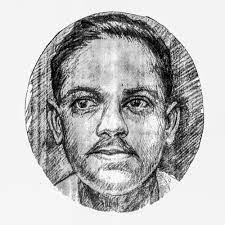


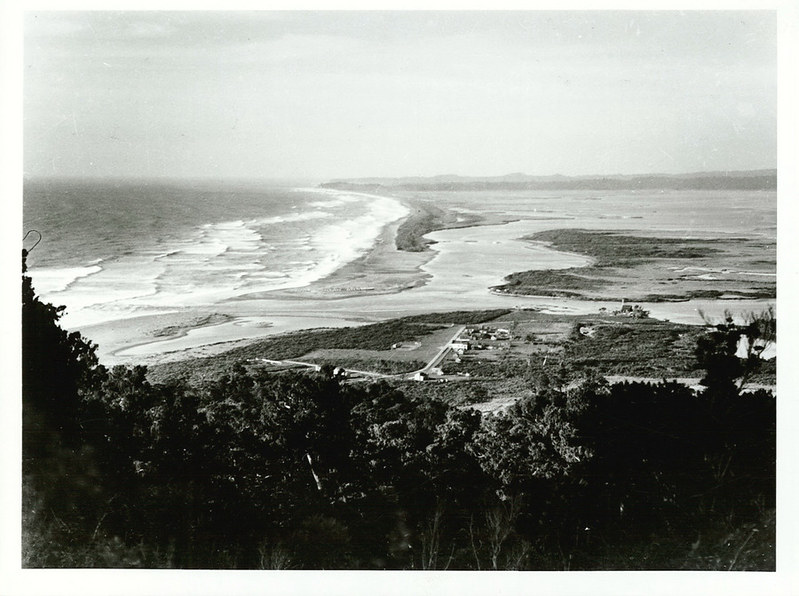


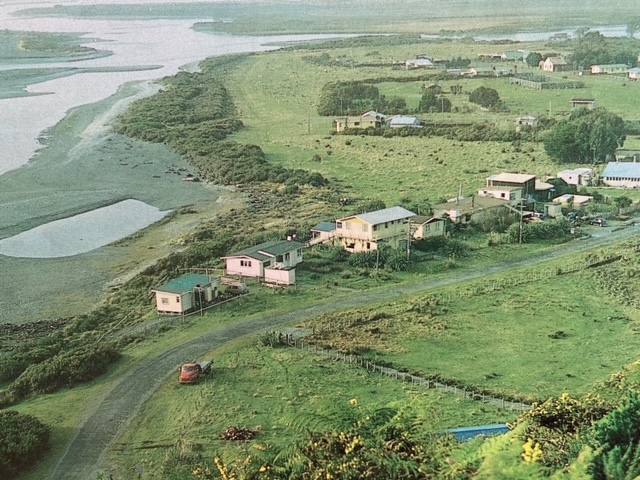
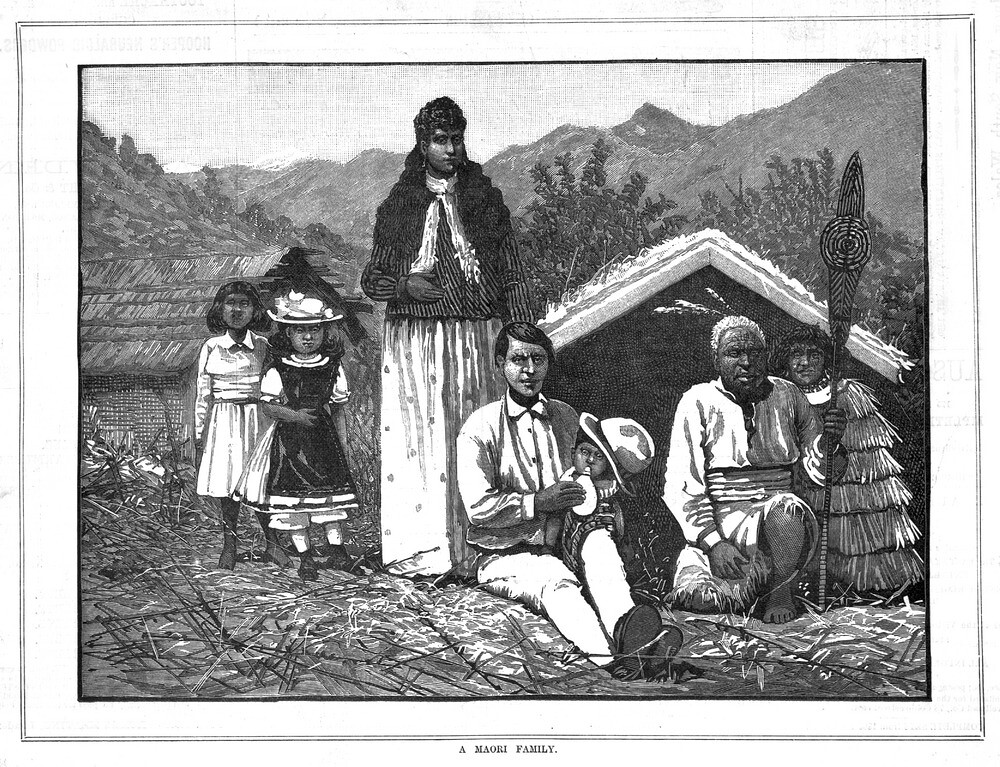


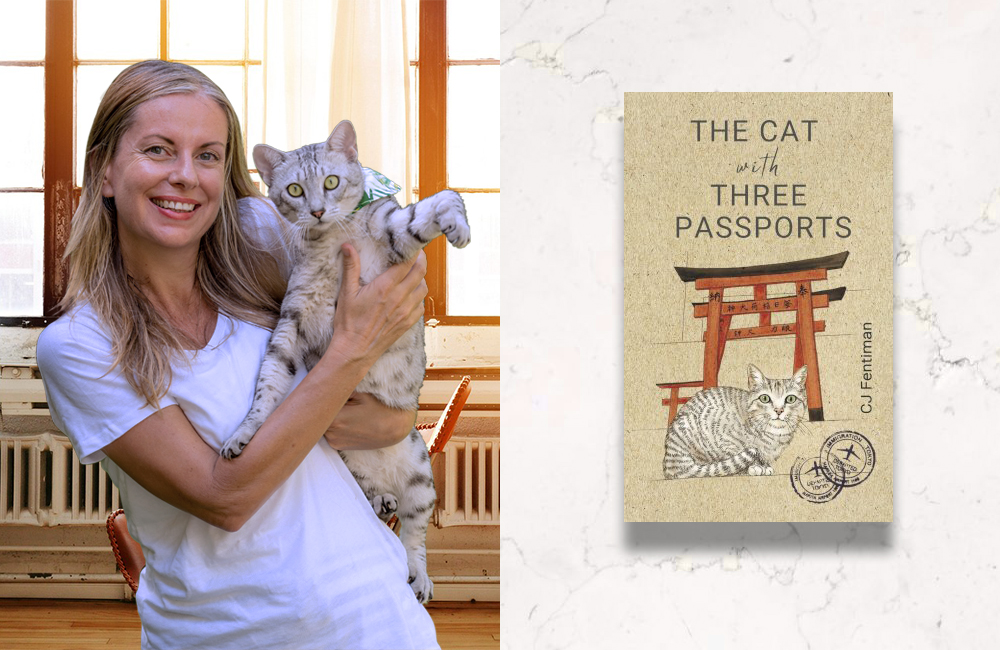
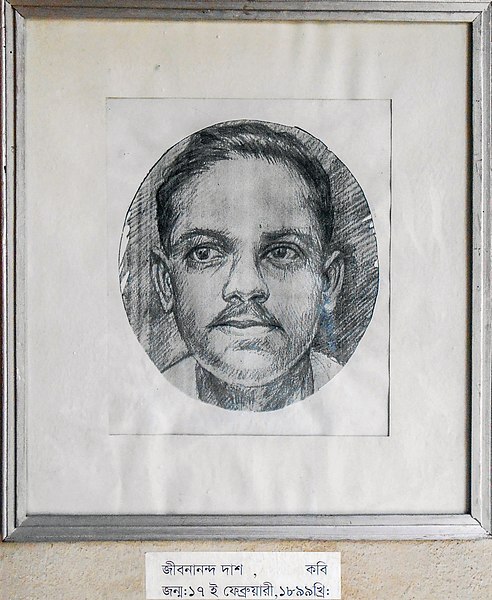

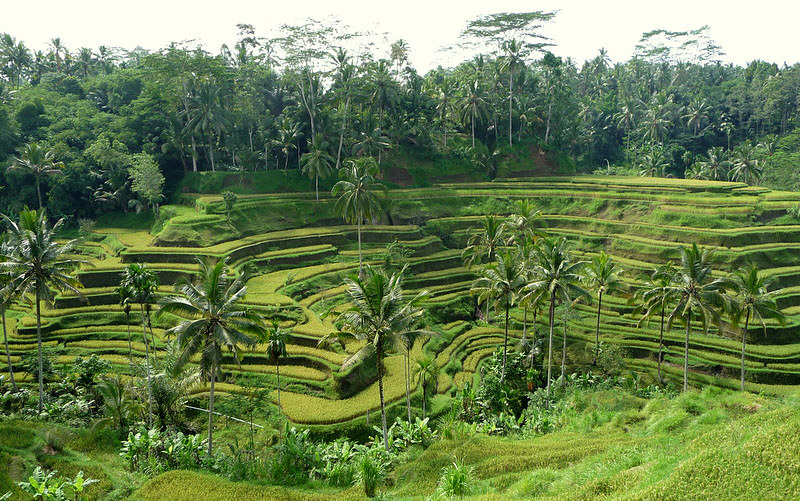
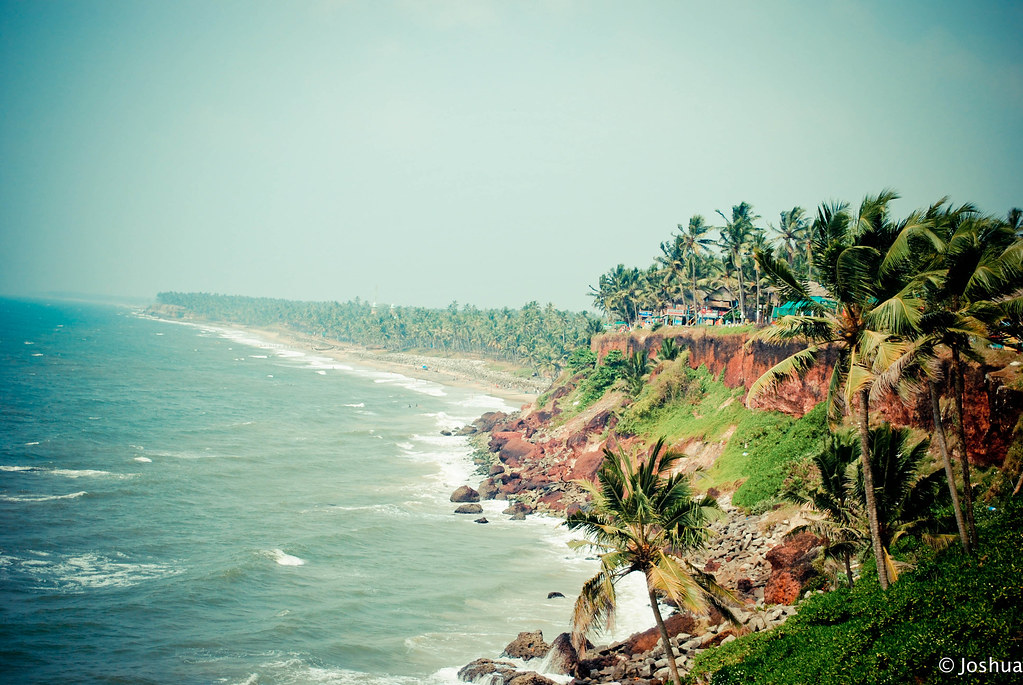
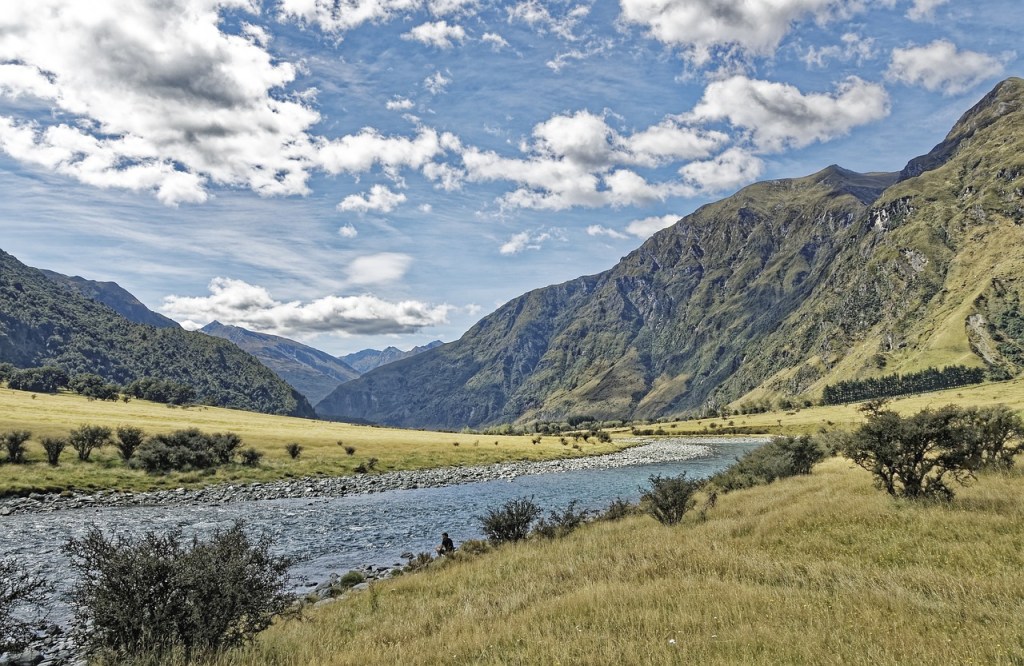


 Borderless