Categories
Essay

Chandigarh: A City with Spaces

By Ravi Shankar

I was apprehensive. I had spent time in New Delhi when I was very young. But after that, I had never travelled to the north of India. I was traveling by chair car on the Rajdhani Express to Delhi and from there, by bus to Chandigarh. Sleeping on a chair is difficult though the coach offers enough legroom, and the seats are wide. The time was December, and the weather would be cold. The bus journey to Chandigarh from New Delhi took a long time. I was moving through the flat plains of Haryana with fields on both sides of the road. The sun set early during winter in the north. By 5 pm, it was beginning to get dark. The sun had truly set by the time I reached Chandigarh.

The cold was a de novo experience. Using a quilt was something new though later I began the appreciate the gentle warmth provided using the body’s own heat. Coming from the claustrophobic confines of Mumbai, the wide-open spaces of Chandigarh were a welcome change. Some of the traffic circled the roundabouts that were larger in this city than apartment complexes in Mumbai. Space, space, and plenty of space was my first impression of the city.

Chandigarh is believed to have been named after the Goddess Chandi whose temple is located near the city. Garh means a fort. This was India’s first planned city. Various teams of architects had been commissioned and the Swiss-French artist, Le Corbusier was the last in the series. Le Corbusier designed several buildings in Chandigarh including the secretariat, the high court, and the Palace of Assembly. He created an open-hand sculpture like he had done in the other cities designed by him. He designed many structures at the Postgraduate Institute of Medical Education and Research (PGIMER) where I was a resident doctor. His influence was also seen in Panjab University across the road in Sector 14. One of the challenges with a sprawling low-density design was services were located far away and you required a vehicle to access services and go to different areas. In high-density areas like Mumbai, you can just step down to access shops and services. This was in the days before online ordering and e-commerce platforms.

The city is divided into sectors. I settled in the Old Doctor’s Hostel or ODH in Sector 12, where the institute was located. I eventually shifted to the D block of ODH, the newest to be constructed. This had the benefit of a wash basin within the room reducing your trips to the shared restrooms. The research blocks and the college canteens had the trademarks of Le Corbusier’s design. He was fond of using primary colours like blue, yellow, and red as evidenced in the bright hues of the doors and windows of the hostel. The original structure was good but was constructed in the 1960s. By the late 1990s, living standards had improved and the rooms began to feel inadequate. He was also fond of using curves in his buildings and each room had a curve and there was a specially made wooden table to fit into the curve. Most of these had been destroyed over the years. The hostel rooms were single occupancy. This was especially important for the residents in clinical departments as it allowed them to rest after long hours of duty.

Sector 17 was the main commercial hub of the town and had several high-end restaurants and shops. People were fashionably dressed though the cold weather during winter required a lot of clothing. Winter mornings could get very foggy. In those days air pollution levels were still low and winters were generally pleasant. The food was good — ranging from aloo parathas (Indian flatbread stuffed with a spicy potato mix), gobi parathas (made with a stuffing of cauliflower), mooli parathas (Indian flatbread stuffed with a spicy radish mix), tandoori chicken (chicken grilled in a clay oven called the tandoor), tikkis (a small cutlet made of potatoes, chickpeas and different spices), chole bhature (a type of chana masala and puris) and samosas (triangular fried pastry with a savoury filling). Punjabis love their food. The food is wholesome but may be high in saturated fats. There were several tandoori chicken restaurants and chicken was a perennial favourite. The tandoor is a great invention though it may be difficult for the person making rotis in the heat of peak summer. But tandoori rotis eaten piping hot dipped in a spicy gravy on a cold night are a pure delight.

The sector 11 market was the nearest to PGI and there were two or three dhabas (roadside eateries) serving Punjabi delicacies. There was also a more upscale restaurant serving variations of the dosa. These had been modified to north Indian tastes and this was my first introduction to chicken dosa. The taste was good, but the stuffing was very unconventional. The buses were old and had seen better days. I usually took the bus to Sector 17 and to The Tribune colony in Sector 29. Started in 1881, The Tribune is one of the oldest newspapers in North India and one of my father’s acquaintances worked at the newspaper.                 

The Panjab University had a sprawling campus just across the road at Sector 14. I loved to roam through the beautiful campus. The market at the university had shops selling delightful Punjabi samosas. These were large, the covering was crisp, and the stuffing of potatoes and chickpeas was spicy and tasty. Those days a samosa cost around one rupee and fifty paisa — light on the pocket though wages were lower those days.

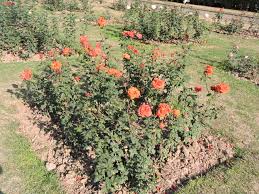
The northern sectors of the city including 12 where PGI was located were the older ones and more prosperous. The Zakir Hussain Rose Garden in sector 16 was named after India’s former president and had over 1600 species of roses. I used to visit occasionally, especially during the winters when the roses were in bloom. Summers in Chandigarh are hot but less than in many other places in the plains due to the closeness to the hills.
The Rock Garden is a major attraction. The garden was begun to be built by Nek Chand in 1957. The garden was built illegally but later became world famous. It is built entirely from discarded household and industrial waste. There is also a doll’s museum inside the garden. One of my fellow residents knew Nek Chand very well and he used to play with his son when he was young. Models of rock gardens have since been built in several Indian cities.

Summers in Chandigarh are difficult. The sun is relentless. The institution timings change. Before the onset of summer, one visits the desert cooler shops to buy new grass screens for the coolers. The cooler is a great invention with a water pump and screens moistened by water through which air is drawn to cool the room. They work well but when there were power outages in summer, they stopped functioning. The onset of the monsoon in late July makes things difficult. The humidity is high, and the temperature is still above 35 degrees celsius. October to December and March to April are usually pleasant. Late December, January, and February are cold and there is a threat of western disturbances that bring rain and cold damp weather. The city has two satellite townships, one in Punjab (Mohali) and the other in Haryana (Panchkula).

Chandigarh has one of the highest human development indicators in India. I enjoyed my three years in this planned city at the foothills of the Himalayas and I look forward to a visit in the future!  

Dr. P Ravi Shankar is a faculty member at the IMU Centre for Education (ICE), International Medical University, Kuala Lumpur, Malaysia. He enjoys traveling and is a creative writer and photographer.

.

PLEASE NOTE: ARTICLES CAN ONLY BE REPRODUCED IN OTHER SITES WITH DUE ACKNOWLEDGEMENT TO BORDERLESS JOURNAL

Click here to access the Borderless anthology, Monalisa No Longer Smiles

Click here to access Monalisa No Longer Smiles on Kindle Amazon International
Categories
Review

Poetry as Palliative

Book Review by Basudhara Roy

Title: A City Full of Sirens

Author: Sanket Mhatre

Publishers: Hawakal Publishers

I wait
weighing words against memories
memories against poetry
poetry against noise
noise against feeling
feeling against time
only to arrive
at the deepest homecoming of words 
-	‘Homecoming’

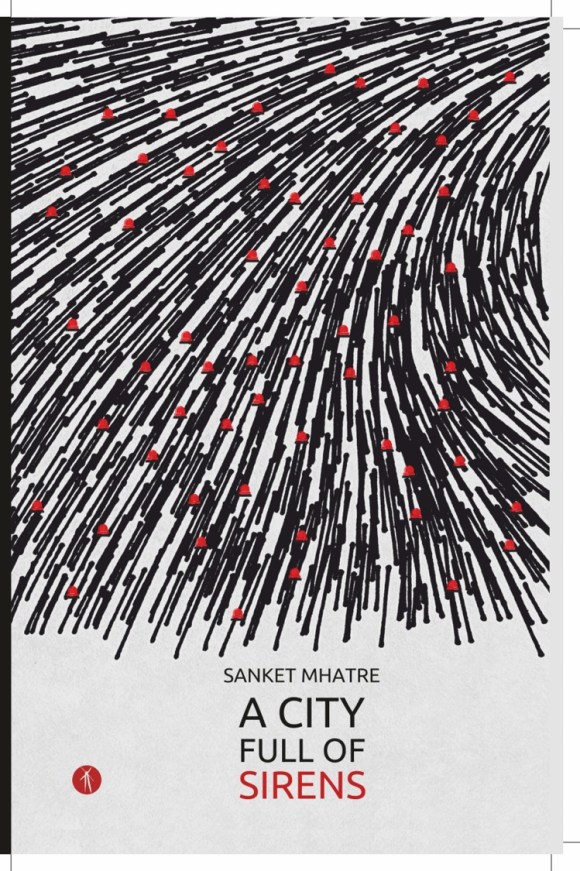
Something irreplaceably urgent yet inconsolably fragile commands the readers’ attention in Sanket Mhatre’s A City Full of Sirens. There is, to begin with, the orderly chaos of the book cover that with its startling depiction of noise and alarm, summons us to a danger that is as neurological as it is existential, as concretely physical as it is metaphysical, and as identifiable as it is, ultimately, anonymous.

Darkness asphyxiates
shifting the axis of your soul
madness froths
bubbles of hurt
shadows of shards
inserting lost files of remembrance
pulse rising –
raising a question at boiling point

Here is an understanding of the city as both protagonist and witness, as conquistador and vanquished, as healer and diseased. Mhatre is mostly talking about Mumbai (“Andheri East doesn’t realize/ that it is sleeping in a belly of void/ It is only a matter of time/ until all the lights go out”) but his city could be “the broken arteries of Kolkata” (‘Mid-flight’) or precisely any cityscape where life routinely unravels amidst disillusionment, betrayal, threat and hope, every poem to it being “a wound or a flower or a piece of sunshine” “written on the threshold of vulnerability and despair” as “a letter trying to find its own footprint on the shifting axis of time and circumstance” (‘Introduction’)

Tortuous and tortured, Mhatre’s city is a site of bereavement, uncertainty, imperilment, disease, derangement and more, its inhabitants choiceless in their compulsion to wear its frayed fabric upon their skin. But this is not all. Lurking within these poems is also the decisive realisation of the city as a human construct, a mirror that reflects rather than distorts or imposes human irresponsibility and disorder. In the title poem of the collection, for instance, the city is a patient incapable of being saved by its nonchalant dwellers:

the city has been suddenly diagnosed with Stage 3C
and all of us who matter to her:
slum dwellers, middle class, uber rich
upper caste, sub-middle-sub-lower, lower,
converts, casteless, outcasts, pimps and city planners
were late by a minimum of ten months in pre-empting this disease

Mhatre’s cities emit steady sirens of disaster – biological, ecological, technological, moral and aesthetic. But redemption, too, is to be found here alone (“Clay hands in a relentless prayer to -/ everything the earth stands for/ and everything that rises upwards from it.” – ‘A Kiss of Cotton’) for only what hurts has the ability to effectively transform – “anything that doesn’t change our body can never change us”. (‘Culture of Transience’) What, chiefly, reconciles the city as wound to the city as mirror, is the imperative of language and its expressive potential for love and poetry. (“A verse could be an open road” – ‘These Years with Her’)

A City Full of Sirens is a dense interrogation of the city, its sirens of overpopulation, congestion, capitalism and climate change, and an exploration of the fullness or plenitude of language that can somehow soften all of this and make it more bearable for life and time. Firmly rooting this collection is a momentous faith in the capacity of words to resist postmodern fragmentation by building bridges across emotions, cultures, and epistemologies. Mhatre’s imagination in poetry is luxuriantly metaphorical. In almost every poem, words defy ordinary appearances to transform into winged images in deep conversation with a reality tangential to the page. In ‘Anuvaad[1]’, as the poet says, all languages are born “from the same birdsong”. In ‘The Concept of Distance’, every stanza offers a new perspective into distance – “The space of pain between two alphabets, now divorced,/ looking on either side of a sentence”. In ‘Morphing into Everything’, the beloved and the city coalesce into one:

my fortresses crumble
dissolve mid-sea
rebirth as an archipelago
sink into her navel
populate her mind
germinate on her dermis
disintegrate into a thousand birds
taking early flight 

In each of the fifty-six poems in the collection, is a seamless interweaving of self and space. Most of Mhatre’s sirens are symbolic, conjured through the weight and immediacy of metaphor. In each poem is this sense of something that must be overcome — a lurking claustrophobia, an unnamed distrust, a haunting faithlessness, a constant suggestion of order tipping into anarchy.

An acute precariousness, marked by a vital need to thresh out feeling on the floor of language, is the signature of this collection.

Very significantly, many of these poems are about poetry itself —  its genesis, composition, structure, and its relentless shapeshifting ability to weld disparate worlds and subjectivities into a coherent experiential whole. Unravelling within this book’s narrative arc is an empathetic journey of the body and spirit, its goal being to discover “the completeness of existence…Time. Tide. Man. Woman. Humanity. Age. Difference. Distance”. (‘Rain Being’) Passion configures these poems in various ways and not least through the erotic of language. In the best poems here, love, poetry, woman and city become indistinguishable from one another, permeating ontological and aesthetic boundaries and accomplishing a spiritual surrealism that marks the distinctness of this collection.

A City Full of Sirens is, thus, about cities that are both germane and antithetical to poetry, about a “confabulated planet” and mutating geographies “stretching/ through thick mesh of bones and arteries/ pulp synchronized to our heartbeats/ birdsong to a breath/ while ink sprawls/ on a dream of half-slept pages”. (‘Vertical Forests’) It is equally about the inhabitants of the cityscape, the reconciliation of their numerous fragments and roles – “a new you added everyday/ an old you subtracted”. (‘The Queue’), intending “to geolocate/ the fulcrum of our absolute feeling/ outliving erasures”. (‘Synthesis’)

The collection remains remarkable for its obsession with language, its authentic emotional inflections, its charged candour, and its oscillations across a wide thematic range of existence, estrangement, erosion, and redemption. Annihilation, disease and death watermark these poems in undeniable ways but the energy of the book lies in its refusal to be contained within scripts of hopelessness or pain. Summoning optimism to thought and agency to action,  A City Full of Sirens makes a palliative of poetry and crafts an entourage of life’s resilience to learn from every setback –

I was never the rain.
Until you cloud-burst me with words.
You gave me the first drop.
It’s my turn to take you in. 
--‘Rain Being’

Click here to read the excerpt

[1] Translation, Hindi

Basudhara Roy teaches English at Karim City College affiliated to Kolhan University, Chaibasa. Author of three collections of poems, her latest work has been featured in EPW, The Pine Cone Review, Live Wire, Lucy Writers Platform, Setu and The Aleph Review among others. 

.

PLEASE NOTE: ARTICLES CAN ONLY BE REPRODUCED IN OTHER SITES WITH DUE ACKNOWLEDGEMENT TO BORDERLESS JOURNAL

Click here to access the Borderless anthology, Monalisa No Longer Smiles

Click here to access Monalisa No Longer Smiles on Kindle Amazon International

Categories
Poetry

If Heaven, If Hell

By Akil Contractor

IF HEAVEN, IF HELL

I would ascend on angels wings
(the safest mode being tandem),
the take-off would be smooth as silk,
the landing site not random.

If hell is where I’m meant to go,
I need a map to travel
since angels will not venture there,
how else will hell unravel!

There’s no one who can tell me yet
to which one I am headed —
I’m betting on CHATGPT
Its scope will be extended!

Akil Contractor is a writer from Mumbai, India. He has a number of poetry books online. His recent book of poems, Rhyming Verses – Sense and Non-sense, is now available on Amazon.

PLEASE NOTE: ARTICLES CAN ONLY BE REPRODUCED IN OTHER SITES WITH DUE ACKNOWLEDGEMENT TO BORDERLESS JOURNAL

Click here to access the Borderless anthology, Monalisa No Longer Smiles

Click here to access Monalisa No Longer Smiles on Kindle Amazon International
Categories
Review

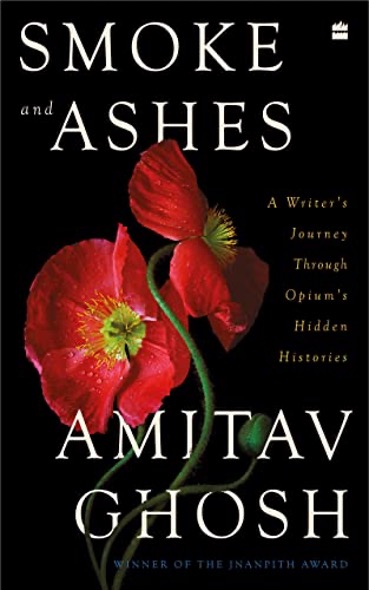
Smoke & Ashes

Book Review by Somdatta Mandal

Title: Smoke and Ashes: A Writer’s Journey Through Opium’s Hidden Histories

Author: Amitav Ghosh

Publisher: HarperCollins India

Amitav Ghosh has been traversing the boundaries between fiction, non-fiction, history, anthropology with ease for a long time. After the publication of his Ibis Trilogy [Sea of Poppies (2008), River of Smoke (2011) and Flood of Fire (2012)] more than a decade earlier, he has been primarily focusing on issues related to environment, global warming and ecology in his later novels like Gun Island (2019), The Nutmeg’s Curse: Parables for a Planet in Crisis (2021), a non-fiction like The Great Derangement (2016), and two slim volumes of fables, Jungle Nama (2021)  and The Living Mountain (2022). Now in his latest book Smoke and Ashes: A Writer’s Journey Through Opium’s Hidden Histories (2023), he blends travelogue, memoir, and historical tract into a multi-textured narrative that tells us about how ‘opium is a historical force in its own right’ and ‘must be approached with due attention to the ways in which it has interacted with humans over time.’ When he began his research for the Ibis Trilogy, he was startled to find how the lives of the nineteenth-century sailors and soldiers he wrote of were dictated not only by the currents of the Indian Ocean, but also by a precious commodity carried in enormous quantities on those currents: opium. Through both economic and cultural history, Ghosh traces the transformative effect the opium trade had on Britain, India and China; the trade and its revenues were essential to the Empire’s survival.

Of the eighteen chapters of the book, the first two enlighten the reader about little knowledge of China and the way tea (cha or chai) became an inevitable part of living both in the West and in India. It was after Ghosh’s first trip to Guangzhou (anglicized later to Canton) that the epiphany occurred about the very subtle influence of China and how the British actually stole the technology of tea plantation to make it flourish in the colonies. Thus ‘tea came to India as a corollary of a sustained contest – economic, social and military – between the West and China.’

From the third chapter onwards Ghosh gives us the history of the opium poppy and how social conventions that had developed through centuries of exposure to opium may have helped to protect some parts of Eurasia from highly addictive forms of opioid use and also how the drug was instrumental in the creation of a certain kind of colonial modernity. We get to know how it was the Dutch who led the way in enmeshing opium with colonialism, and in creating the first imperial narco-state, heavily dependent on drug revenues. But in India, the model of the colonial narco-state was perfected by the British. In the entire region of Purvanchal, the British created a system that was coercive to its core. The growth and cultivation of opium poppy was entirely controlled by them and the drug was mass produced in the two largest factories in Patna and Ghazipur. Though the dangers of opium were certainly no secret to the British government, yet they did not bat an eyelid in exporting the drug to China, knowing fully well it was a criminal enterprise utterly indefensible by the standards of its own time as well as ours.

Ghosh then gives details of the poppy cultivation in Malwa and the western provinces of India. By thwarting the British efforts to impose a monopoly on the trade, Malwa opium sustained Bombay and left a large share of the profits to remain in indigenous hands. Throughout the colonial era therefore, Calcutta and Bombay defined the two opposite poles of India’s political economy; the way in which business was conducted in the two cities were completely different and soon the Parsis turned out to be the maximum number of the non-western merchants who were present in Guangzhou in the years before the First Opium War. Thus, Bombay and its hinterlands benefited from Malwa’s opium in multiple ways. From Mumbai’s Parsis we go to the horticulturists and weavers, potters and painters of China, especially of the great city of Guangzhou. The intricacies of the Parsi Gara saris are traced back to weavers of Guangzhou, and so are the origins of an artistic ferment in Bombay when Jamsetji Tata, the founder of the Taj Mahal Hotel in Mumbai, brought back many paintings to India from China. The idea for an art school in Bombay came to Jamstjee Jejeebhoy after his Guangzhou visits, and the JJ School of Art came about.

Ghosh describes how opium money seeped so deeply into nineteenth century Britain that it essentially became invisible through ubiquity. After Britain, the country that benefited the most from the China trade and therefore, the global traffic in opium, was none other than the United States and the beneficiaries included many of the prominent families, institutions, and individuals in the land. By 1818 Americans were smuggling as much as a third of all the opium consumed in China thereby posing a major challenge to the East India Company’s domination of the market. Known as the Boston Concern, all the rich families from Boston, Massachusetts and the fortunate Americans were a series of names from the Northeastern upper crust — Astor, Cabot, Peabody, and so on. The young returnees from China ploughed their opium money into every sector of the rapidly expanding American economy. Even the opium money used in the railroad industry also came from China. “Opium was really a way that America was able to transfer China’s economic power to America’s industrial revolution”. In the United States the connection between opium and philanthropy has endured till the present day. It also left a distinct stamp on American architectural styles, modes of consumption, interior décor, philanthropy, and forms of recreation. Interestingly, Ghosh’s narrative keeps circling back to the present, when in the US as well in many countries around the world including India, the opioid crisis has reached epic proportions and the American government is bullish about its “War on Drugs”. Ghosh candidly states, “The ideology of Free Trade capitalism sanctioned entirely new levels of depravity in the pursuit of profit and the demons that were engendered as a result that have now so viscerally taken hold of the world that they can probably never be exorcised.”

Ghosh reiterates through the book that binary narratives about countries and culture — like, China is evil — that is entrenched in popular perception is misleading and takes away the historical context of trade relations among nations. “The staggering reality is that many of the cities that are now pillars of the modern globalised economy — Mumbai, Singapore, Hong Kong and Shanghai — were initially sustained by opium.”

There are many places in the book where Ghosh skilfully refers to his actual borrowing of historical details in his Ibis trilogy and these interjections add flavour to the non-fiction narration. Chapter Eight again is a memoir of Ghosh’s own lineage and how that has connections with the opium trade. Moving away from their ancestral home in East Bengal, it was the opium industry that took his ancestors to Chhapra in Bihar and kept them there. Like the millions of people that opium trading affected, uprooted, and dehumanised, his father told him stories of growing up in Chhapra and seeing opium ruin as well as make lives. These digressions add zing to the often-monotonous narration of facts and figures of the opium trade.

Ghosh goes on to devote pages to the nature of grassroots psychoactive substances and how opium was different in this class of psychoactive because it became a mainstay among pharmaceuticals too: “The reality is that all other efforts at curbing the spread of opioids have failed: the opium poppy has always found a way of circumventing them.” Towards the end of the book, after Ghosh finds that the wealthy and powerful people of the world to be suicidally indifferent to the prospect of a global catastrophe vis-s-vis the drug scenario, he asks a seminal question: “In such a world does it serve any purpose to recount this bleak and unedifying story?” Apparently, this question had haunted him since he first started working on the book, many years ago. It was the reason why, at a certain point, he felt he could not go on, even though he had already accumulated an enormous amount of material. It seemed to him then that Tagore had got it exactly right when he wrote: ‘in the Indo-China opium traffic, human nature itself sinks down to such a depth of despicable meanness, that is hateful even to follow the story to its conclusion.’ So persuaded was he of this that he decided to abandon the project: he cancelled the contracts he had signed and returned the advances he had been paid by his publishers.

Now we are happy that the story of the opium poppy had its cathartic effect upon Ghosh and in retrospect, after a period of more than a decade, he could give us the story from multiple perspectives today. Like his other books, this text is also accompanied by voluminous end notes which will deter the layman reader from enjoying the book. The amount of material and the different issues that Ghosh mentions is fit for at least four books but it is to his credit that he manages to present to us this world-roving tale in his signature method of weaving diverse narrative strands together into this book. How Ghosh establishes the interconnectedness of economic agency with geopolitics, a plant with human flourishing and wreckage and produces a narrative as luxuriant as it is painstaking in detail and density is his mastery as a prose writer and thinker.

.

Somdatta Mandal, author, academic and translator is former Professor of English at Visva-Bharati, Santiniketan, India.

PLEASE NOTE: ARTICLES CAN ONLY BE REPRODUCED IN OTHER SITES WITH DUE ACKNOWLEDGEMENT TO BORDERLESS JOURNAL

Click here to access the Borderless anthology, Monalisa No Longer Smiles

Click here to access Monalisa No Longer Smiles on Kindle Amazon International

Categories
Poetry

In 1947

By Masha Hassan

Art by Amrita Sher-Gil (1913-1941)
It is the beginning of a saffron day.
She tinges her white salwar with colour.
The walls are thin and we listen,
Offered prayers to Sikh Saints,
Inside a room of crippled faith.
We wait,
We wait for the devotion to finish,
For her to step out,
To tsk at our negligence,
To sigh at us heretics…
Chiffon is what covers her head,
Falls over so elegantly onto her shoulders,
Only to be quickly put back to its position.
She bends over in much pain.
‘Nanak’ she says is the medicine --
Handing out the sacred sweet.
We roll our eyes but stretch our hands,
Whilst scuffling her salwar,
Remembering the sun of 1947
She’d narrate,
 
In silent murmurs and naked
Soles,
 
She had covered miles to feel
Uninhabited,
 
She remembered intervals
On makeshift mornings,
 
Toppling over bodies with
No sound,
 
On footpaths familiar she remembered
Runnels painted with blood,
 
Leaving behind dupattas* and flags,
Flying spirits in the sky,
 
She was certain she’d return,
To unlocked doors,
 
To obscure meanderings
 
To Bitter-sweet memories
Of abandoned and burnt
Homes,
 
Rest assured,
She never did
 
She found refuge in language. 

*Veils or Scarves that are almost the size of stoles
This poem is about the journey made by the late Kuldeep Kaur (seated on the left). She was originally from Rawalpindi (now in Pakistan). As a child, she had to travel on foot, stepping over heaps of dead bodies from Rawalpindi to an army base camp and finally settled in New Delhi, Patel Nagar. This photograph was taken in 1993. She is seated next to her daughter, both of who also witnessed the 1984 Sikh-Hindu riots, another face of fundamentalism. Photo provided by Masha Hassan.

Masha Hassan is a PhD student at the University of Bologna, Italy. Her research entails identity constructions at the margins, the ‘liminal identities’, focusing on the South Asian diaspora.  You would occasionally find her wandering in Kebab shops in Italy talking in Urdu, Hindi or Punjabi with the shop owners, listening to their journeys. Her articles have been published in The Speaking Tree, Times of India, Jamhoor Magazine, and online Italian magazines such as OgZero and connessioneprecarie. Her first poem, ‘Main, Junaid’, (dedicated to Hafiz Junaid who was lynched on a moving train on the suspicion of carrying beef) was published on the cover of a local Marathi magazine called Purogrami Jangarjana, Mumbai, India in June 2017.

PLEASE NOTE: ARTICLES CAN ONLY BE REPRODUCED IN OTHER SITES WITH DUE ACKNOWLEDGEMENT TO BORDERLESS JOURNAL. 

Click here to access the Borderless anthology, Monalisa No Longer Smiles

Click here to access Monalisa No Longer Smiles on Kindle Amazon International

Categories
Essay

In Search of the Perfect Dosa

Ravi Shankar trots around the globe in quest of the perfect dosa

Dosa is a speciality of South Indian cuisine. Courtesy: Creative Commons

I was intrigued by the filling of the masala dosa. I had never come across a beetroot-based filling before. The dosas of my childhood used potatoes coloured yellow with large doses of turmeric as the filling. The dosa (a thin pancake made from a batter of fermented lentils and rice) was nice and the strong coffee enhanced the flavour. Indian Coffee House (ICH) is an institution in the Southern Indian state of Kerala though they have a few branches outside. The coffee workers’ cooperative operates over 400 outlets in India. The dosa is good and the chain serves decent food and has an old-fashioned vibe with turbaned servers and solid wooden furniture. There are several restaurants run by ICH in the town of Thrissur (Kerala’s cultural capital). There has been one operating for several years at the Government Medical College campus and two at the Swaraj Round in Thrissur.

Bharat is today a very popular hotel in Thrissur, Kerala, and is packed from morning till evening. People crowd all around you as you eat, waiting for you to finish and vacate your table so that they can enjoy their repast. I find this very disturbing and am unable to enjoy my food when someone is waiting in the wings. Bharat had introduced a triangular dosa in the nineties and they offered a good selection of chutneys and powders to accompany the dosa. The huge crowds mean that the server may not always be able to bring your dosa to the table at the optimum temperature.

Dosa should be served at the perfect temperature. Within a minute or two it should be on your plate from the griddle. Too long a wait and the dish become cold and soggy. Not all establishments are able to commit to this tight time frame. Serving a dosa at large gatherings may be challenging as people have to wait patiently for fresh dosas. Creating a perfect dosa requires expertise, commitment, patience, talented people, and maybe a little bit of magic.

In my opinion, there are two main varieties. The restaurant one is crisp, thinner, and larger while the home-made variety is thicker, smaller, and less crisp. There can be a variety of batters ranging from white rice, a combination of different varieties of rice and pulses and millets among others. Making dosas can be a tough task in hot climates. The kitchen is hot, the griddle is sizzling and the flame a glimpse of the fires of hell. Hot weather is needed for fermenting of the batter. Chefs in cold climes face challenges in this regard.

I have always preferred dosas right from childhood. My mother used to make one from a batter consisting of different types of rice and pulses and the thick dosa went well with spicy chutneys.

A dosa uses the nutritionally sound combination of cereals and pulses used by humans throughout the planet since ancient times. The oil required to roll out the dosa from the pan could be a worry for some. But with non-stick pans, the amount of oil required can be very much reduced.  

Our hostel mess at Thrissur used to make good dosas though we often had to rush into the kitchen to get it piping hot. We also visited a local tea stall where we had the more homely variety with onion chutney and coconut chutney. Pathans, an old restaurant and hotel in Thrissur serves great dosas as do several other hotels.  

Neer dosa with chicken curry. Courtesy: Creative Commons

During my residency in Chandigarh, I was introduced to more unconventional fillings. In sector 11 next to the Postgraduate Institute there was a restaurant that served a chicken dosa with a spicy filling. Punjabis love their chickens. For a brief period, the hospital canteen at Manipal, Pokhara, Nepal was run by a group from Mengaluru, India. I got to taste the neer[1]dosa that goes well with spicy chicken curry. Neer dosa uses water, true to its name. In Nepal, Marwaris carry on the Indian food tradition but their dosas usually are not up to my standards. I used to visit Coimbatore in Tamil Nadu, India as a FAIMER[2] fellow and faculty and this city has a rich tradition of dosa making. The PSG[3] Guest House has a famous dosa maker whose skills and reputation are legendary

The island nation of Aruba in the Caribbean may not be in your mind when you think of dosas. However, the Taj Mahal Indian restaurant in the capital, Oranjestad, would serve dosas every alternate Tuesday. The masala dosas were quite good and filling. I visited with my colleagues from the University. In Saint Lucia in the West Indies, the college canteen made good dosas and these were available in the mornings and afternoons.

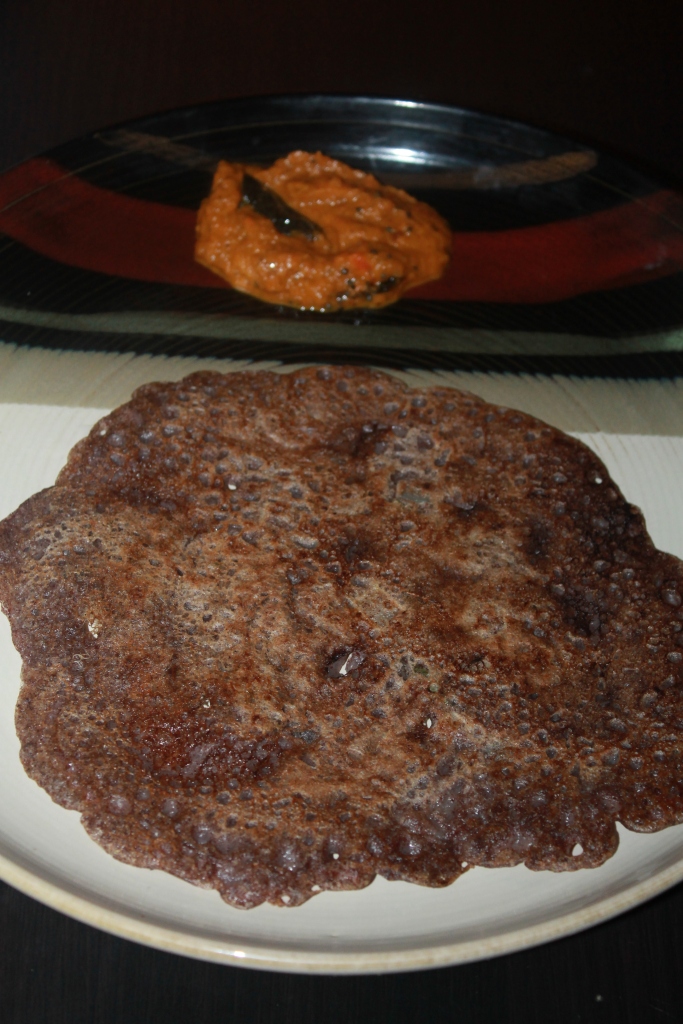
Ragi dosas Courtesy: Creative Commons

I was introduced to the ragi dosa in the town of Kolar in Karnataka, India. Ragi and millet have gained a formidable reputation as miracle foods. The ragi dosa is darker in color than its rice cousin, thicker, and may be more filling. I really enjoy ragi dosas. These days I occasionally go to MTR[4] in downtown Kuala Lumpur to enjoy this treat. The MTR ragi dosa plate has two delectable pieces with a small dollop of clarified butter and two chutneys and sambar. Filling and nutritious!In KL, I usually ate dosas for breakfast at the Sai Canteen in the International Medical University. The dosas are crisp and go well with the freshly ground chutney. The Indian restaurants in Brickfields in downtown KL serve very good dosas. Saravana Bhavan, Adyar Ananda Bhavan, and Sangeeta are a few examples. There may be a shortage of servers and the dosas may not always reach you piping hot and ready to eat. Making and serving dosas is labour intensive.

In Mumbai, the Udupi restaurants usually serve good quality dosas and these restaurants have become synonymous with South Indian food. I recently had a Mysore dosa at the Ram Ashraya restaurant in Matunga Mumbai. The Mysore dosa has a spicy lining on the inside and is a delightful concept. The waiting lines were long, and the restaurant was old-fashioned. I felt distinctly uncomfortable. The dosa however was delicious.

Pesarattu is a dosa mainly from Andhra and Telugu-speaking areas of south India made of green gram, ginger, cumin, and chillies. I was first introduced to this delight during lunch at PSGFAIMER, Coimbatore. Each afternoon there were specialties from a particular South Indian state. In KL, I can taste pesarattu at the Green Chillies restaurant near my apartment.

The accompaniments play a huge role in enhancing the taste of the dosa. A perfect sambar with drumstick and other vegetables, different types of chutneys, chamandi (a thick condiment made from chillies, coconut, ginger and a variety of other ingredients) and idli powder (termed gun powder). Chutneys can be made from red chilies, green chillies, and mint. There is also a gunpowder dosa, where a paste of gunpowder is smeared on the inner side of the dosa like a Mysore dosa.  

Spanish Masala movie poster

I remember watching the dosa-making skills of the actor, Dileep, in the Malayalam film Spanish Masala. Dileep was an illegal immigrant in Spain and invents a new filling for the dosa and names the dosa Spanish Masala. With a dosa batter, a hot griddle, cooking oil, clarified butter and passion you can create magic in the form of a rich, thin, crackling dosa. In many ways, the dosa is as adaptable as a pizza. Various fillings and batter can be used, and the dish can be adapted for various tastes. However, maintaining a dosa piping hot may be more challenging, which may account for its lesser popularity as a takeout item. I may have tasted perfection in a dosa only around twenty times in my life. Often, the dosa was not crisp enough, was not served at the optimum temperature, the accompaniments were not of good quality, or the place was too crowded. I often dream of the perfect dosa, thin, crisp, dark brown, and piping hot, just waiting to melt in the mouth!    

.

[1] Tulu word for water

[2] Foundation for Advancement of International Medical Education and Research

[3] PS Govindswamy

[4] Mavalli Tiffin Rooms, a restaurant chain started in 1942

Dr. P Ravi Shankar is a faculty member at the IMU Centre for Education (ICE), International Medical University, Kuala Lumpur, Malaysia. He enjoys traveling and is a creative writer and photographer.

.

PLEASE NOTE: ARTICLES CAN ONLY BE REPRODUCED IN OTHER SITES WITH DUE ACKNOWLEDGEMENT TO BORDERLESS JOURNAL

Click here to access the Borderless anthology, Monalisa No Longer Smiles

Click here to access Monalisa No Longer Smiles on Kindle Amazon International

Categories
Poetry

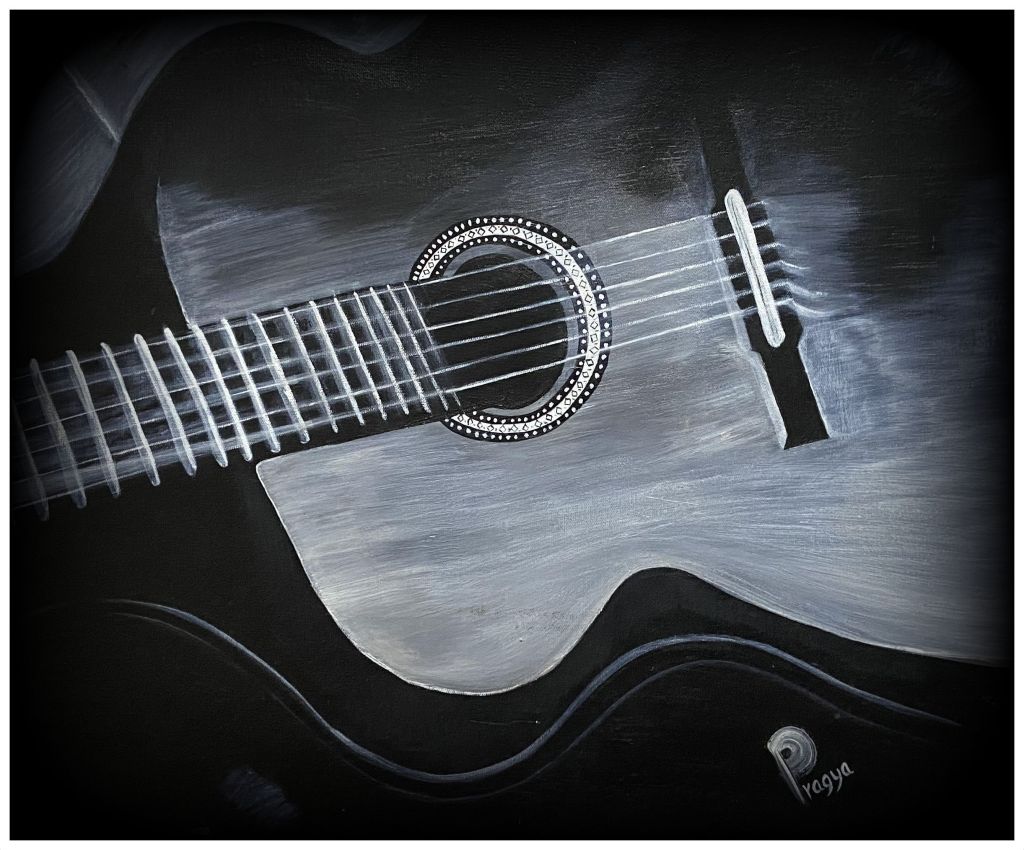
Right Strings

Poetry by Ashok Suri

Art by Pragya Bajpai
Right Strings

Life, at all stages, even in a difficult hour,     
Is never without dreams, joy and beauty.
If you have a heart to wonder,
Eyes to see and mind to think positively.
Flowers wither and seasons fly,
But passion for life never dies.
There is eternal spring in the human heart
And bliss even in small things
If you strike the right chord, 
And play the right strings.

Ashok Suri is a retiree and is settled with his family in Mumbai. He tries to convey in simple words what he wants to say.

.

PLEASE NOTE: ARTICLES CAN ONLY BE REPRODUCED IN OTHER SITES WITH DUE ACKNOWLEDGEMENT TO BORDERLESS JOURNAL

Click here to access the Borderless anthology, Monalisa No Longer Smiles

Click here to access Monalisa No Longer Smiles on Kindle Amazon International

Categories
Essay

A Solitary Pursuit: The Art of Suhas Roy

Ratnottama Sengupta journeys with the signature art of Suhas Roy as it transformed in theme, style, and medium

Suhas Roy = Radha.

Correct.

Suhas Roy = Crows.

Right. 

Suhas Roy = Jesus.

So true.

Suhas Roy = Sensuality.

Yes. Witness the Mistress of the Moon.

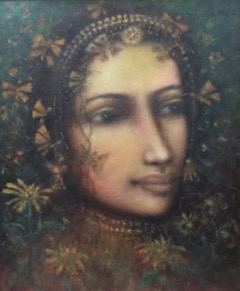
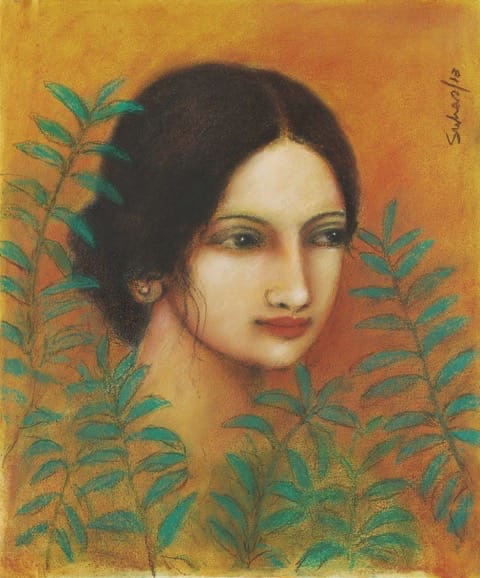
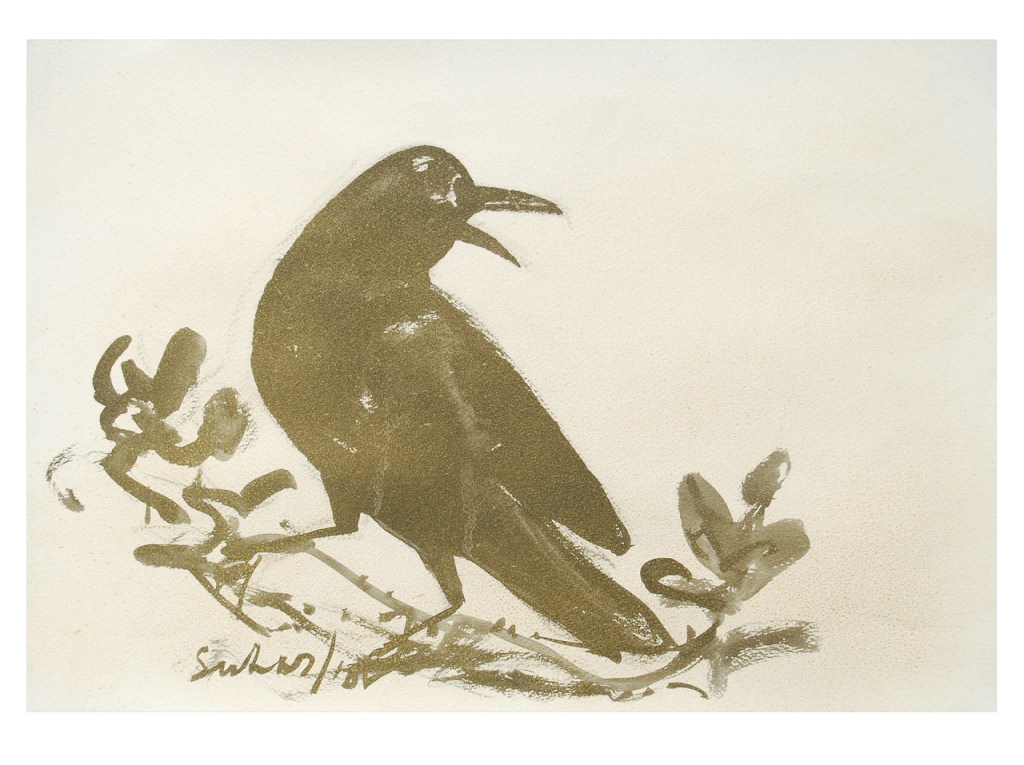
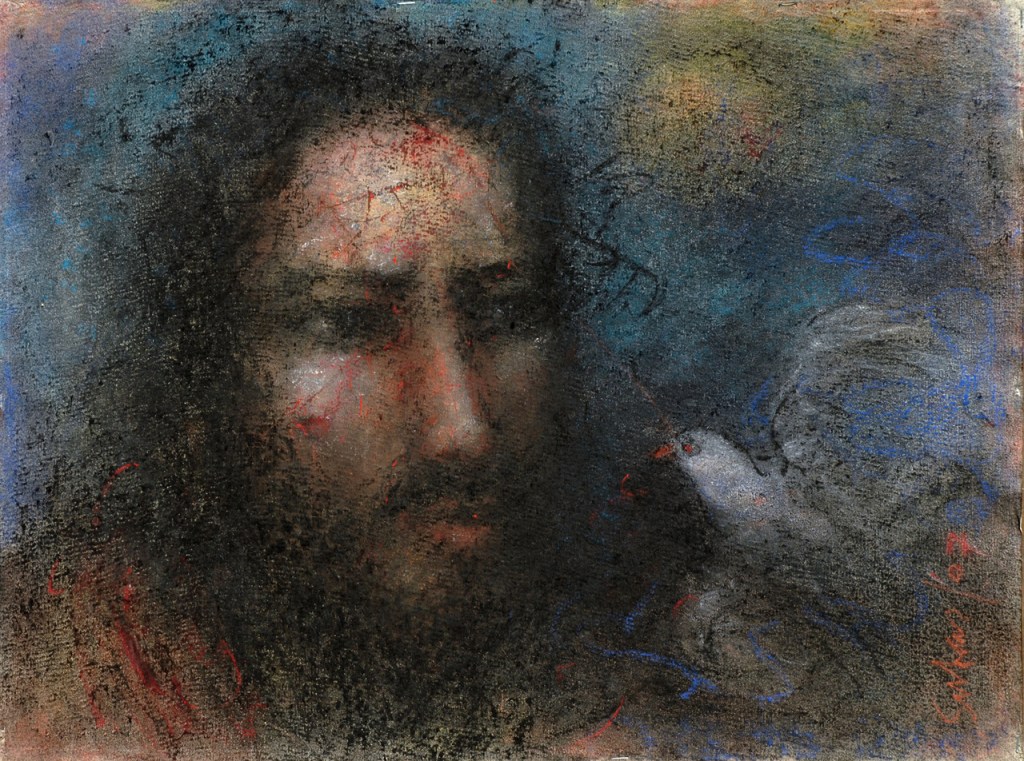
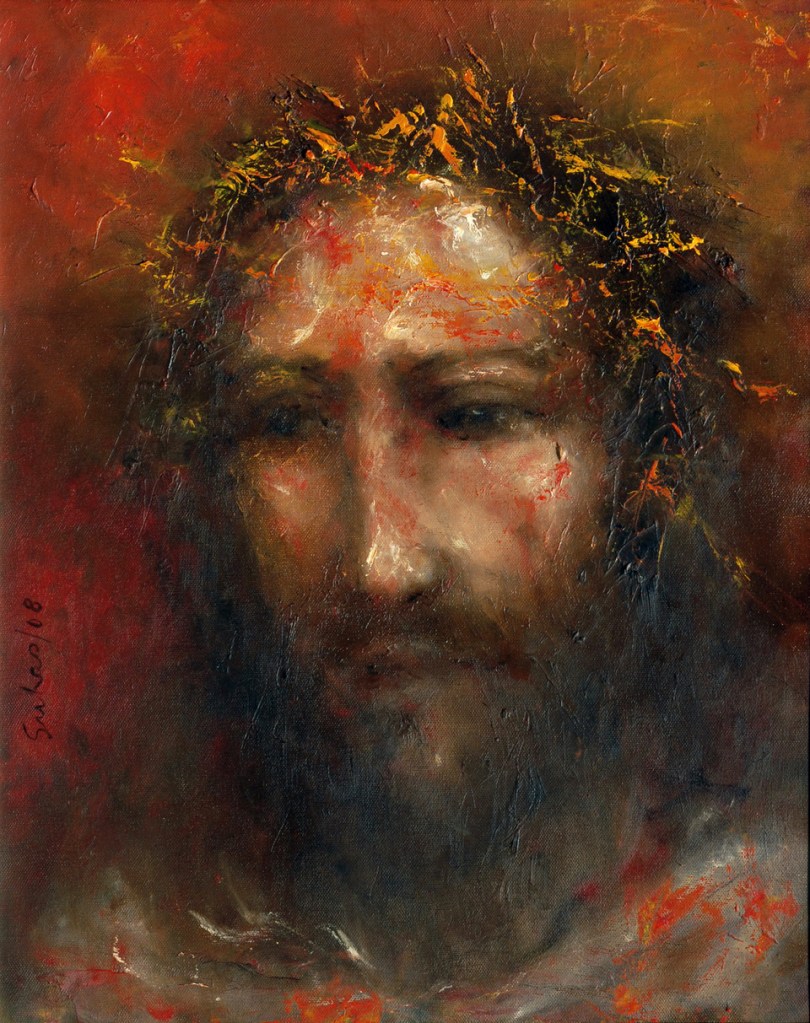
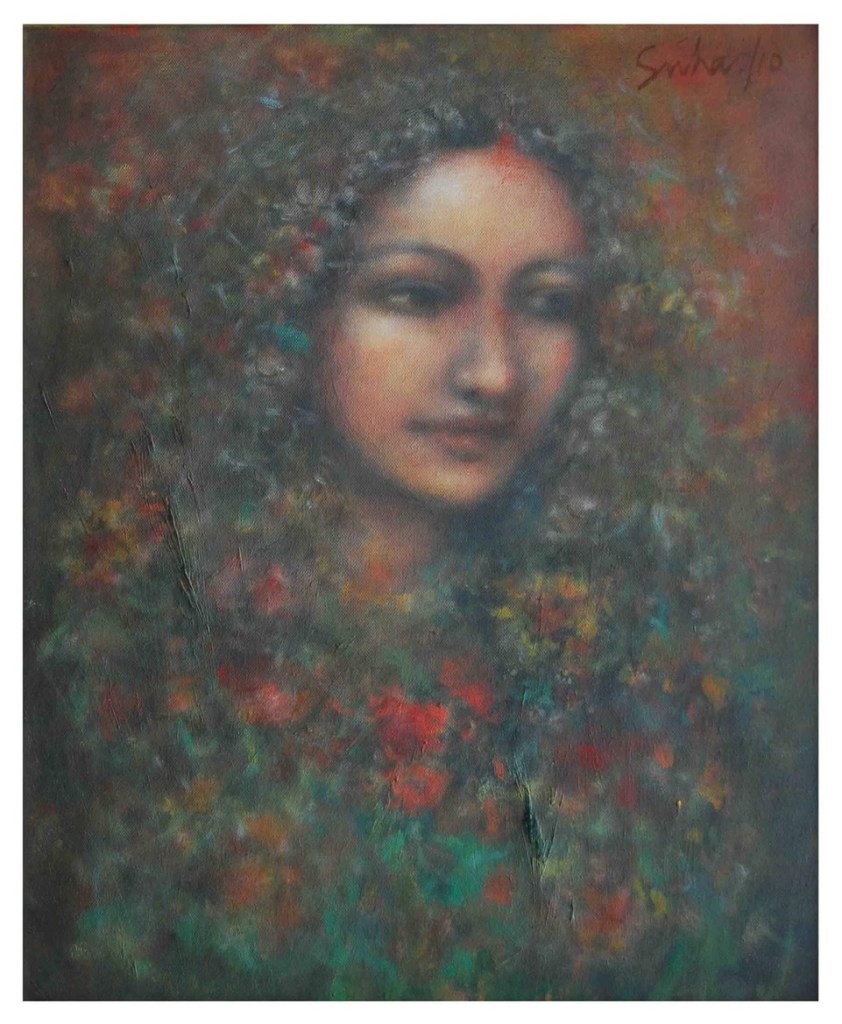
For each of these Suhas Roy (1936-2016) was chased by galleries and collectors. His works have been widely exhibited and are well documented. Many of them on view at Mumbai’s prestigious Jehangir Art Galley (January 17 to 23, 2023) are not on sale. The intention is to train viewers on the diversity and skilfulness of the much loved artist from Bengal. In short, to hold up the totality of the artist who enriched Contemporary Indian Art with sketches in Western Academic style, graphics, landscapes; with his series on Crow, Jesus, Radha, The Seductress of Khajuraho; with aluminium paint on glass, acrylic on paper, egg tempera on canvas…

So where do we start? Where did he? There’s a story at every turn in the journey, so let’s start at the very beginning.

A little boy in Tejgaon, now in Bangladesh, had lost his father when he was not even two. One Kaji Saheb, who taught geography in the village school and doubled as the art teacher, took the child under his wings. If the boy learnt to outline India on the blackboard, he could also draw papayas and brinjals. And everything he drew scored 10 on 10. His teacher would say, “It seems you’ll grow up to be an artist!”

The boy loved to spend all his hours drawing and fishing. “How will these pleasures serve you in life?” the family elders would admonish him. The youth would smile in reply and go on, eventually to join the Indian Art College, study new methods of printmaking under Somenath Hore and S W Hayter, visit Paris and Florence to study Michelangelo’s David and Pieta…

Suhas Roy

However, Paris post WWII was an eye-opener for artists like Suhas Roy and, a decade before him, for Krishna Reddy, who had graduated from Santiniketan. Both India and Europe had come out of prolonged periods of turmoil. But, poised on the threshold of an independent existence as a sovereign nation, India was looking back to its roots for defining its identity, whereas England and France and Germany – which were eager to get over the bitterness left by their recent history – were looking for a complete break with the past. For Suhas Roy, returning home meant returning to his cultural roots. And Venus emerging from the Water became kin of the image of goddess Lakshmi emerging from the lotus-laden pond closer home.

*

This Indian-ness was reinforced when he joined Santiniketan as a painting teacher. The lush green environs, the ponds and rivulets, the chirping birds and rustic villagers took him back to the childhood haven snatched away by the politics of religion that had culminated in the Partition of the Subcontinent. Suhas Roy, raised in the British Academic mood, with undying admiration for the values of the Italian Renaissance and the visions of the French Classicists, riding the high tide of Modernism, debating whether to go Abstract or Semi-Abstract, started painting landscapes!

Yes, landscapes. Regardless of what the critics said – just as they did for the Bengal Masters – Suhas Roy was not being ‘regressive’. For, he did not paint any particular spot with fidelity to topography – as John Constable did. Instead, his landscapes were an expression of his yearning for a paradise lost: his place of birth. When he moved from Kolkata to Santiniketan, in a reflection of spatial reality the neighbourhood palm trees started putting their heads up in his paintings. His sensitive foliage, the birds and animals and ponds were all in answer to his quest for the luxuriant green he had left behind, across the Radcliffe Line.

“Santiniketan gave me back the opportunity to go fishing as I used to in East Bengal, and I rediscovered the beauty and calming effect of Nature,” he had said to me when I curated the Living Santiniketan exhibition in Delhi of late 1990s. “It came as a relief to me, burdened as I was with the constant thought of ‘What to paint?’ For, Nature constantly changes.” Additionally, he realised that appreciation of beauty is not confined to a class or profession. “Doctors and poets alike love flowers. So, I decided to go back to landscape, taking no note of whether it was in fashion or out of it.”

*

The crow, very much a part of the Bengal landscape, then became his signature in the 1970s. The scavenger was an attraction because of its black feathers. Japanese water-colourist Yokoyama Taikan (1868-1958) — notable for his role in creating the painting technique of Nihonga — had come to Bengal in early 20th century with scholar Okakura Kakuzo (1863-1913) and helped Abanindranath Tagore master the medium. He had done a series of Mount Fuji in black-n-white. Chancing upon that in the Santiniketan library, Suhas was so impressed as to reach for the austere palette. The crow readily lent itself to the scheme. Spraying the canvas with acrylic paint before construing the image in watercolour, Suhas would use a Japanese colour stick to create tones and dimensions. The Far Eastern concept of an object in a wide open space came to be highly appreciated and widely collected – including by philanthropist politician, Karan Singh.

In Indian philosophy and literature, Nature is the Eternal Feminine. That could be why, after ten years of doing landscape, Suhas Roy’s imagination sought out the allied image of tribal girls. It was a natural progression, for women – especially tribal women – have a symbolic if not symbiotic link with trees. Often, he would counterpoise a tree with a woman. Taru[1], he titled one done in an art workshop.

From a woman in a landscape to Radha was just one step away. For an exhibition on Krishna organised by Gallery 88 of Kolkata, Suhas Roy played with the concept of the Blue God being the Ultimate Being. Melding Purush and Prakriti – the Male and the Female forces of the Universe – his canvas sported a nude woman against a dark blue background. The painting, titled ‘Radha’, not only sold for an enviable sum, but it also set in motion an astonishing demand for the image that shows no sign of abating.

Truly he basked in the adulation of resolved collectors, one of whom said, “When I am tossed and tired of problems, I look at your paintings. They act like balms.” Yet, for painting these very ‘balms’ the artist had to hear the criticism that he was feeding the appetite for calendar art. His Radha was a concept no better than the ‘mass produced’ icons ubiquitous in Indian spaces.  But the master was far from apologetic. “It is the very definition of icons,” he had pointed out to me one afternoon. “Images of personalities deified by popular imagination, be they mythical, historical or social, are repeated again and again, generation after generation, in different styles and contexts.” If one age worshipped them as bronze figurines and gold paintings, another flaunted them in oleographs and calendars. It has been so with Radha-Krishna, Ram-Sita, Buddha-Jesus, and even with Gandhi-Tagore-Teresa, I realised.

*

Jesus, though, had entered Suhas Roy’s world long before Radha. Sometime in 1969 he had visited Florence to see David. He found the sculpture epitomising masculine beauty “too proportionate”, and wandered into the church next door preserving Dante’s Divine Comedy in parchment. There, in one corner, he saw the last work of Michelangelo – an unfinished Pieta. Such infinite pathos! The artist could not brush it off his memory even after he returned to Calcutta and one day its picture postcard inspired him to paint a Jesus. When he stopped, the canvas was sporting a contemporary pieta – Jesus without the head, his body descending from the heavens.

As a persona, Suhas Roy had deep regards for Jesus. He was, to the Bengali artist, a symbol of forbearance. Perhaps he also saw the serene visage of the Prophet sporting a Crown of Thorns as a reflection of his own self – or was it of his country, that had been crowned with an Independence bloodied by Partition? Somewhere Suhas, a father who in his own lifetime lost both his children to Eternal Sleep, saw Jesus as a redeemer who showed mankind how to bear every suffering and pain that was a mortal’s lot. That is why such palpable love, even when tinged with sorrow, pain or sadness, flows out of His veins. This must have prompted even Vatican to acquire his Jesus in 2006.

Suhas Roy arrived at ‘Khajuraho’ in the mature years of his well lived life. He was intrigued by the carvings on the walls of the temples in central India that have embarrassed some and outraged some. Considered the descendants of the celestial Moon, the Chandela rulers had celebrated love in every expressed formation. Love, the invincible bonding between man and woman, man and man, indeed between man and all living beings, is made explicit here. Surely Suhas Roy was not equating love with lust. Was there a spiritual pursuit layering the physicality of the actions immortalised in stone?

No doubt there was. For Moon has always been equated with romance, love, passion. The artist was exploring the mysticism that wraps the ascetic deity inside the temple. Much like the sculptors of yore, his ‘Seductress’ is a quest for the sublime. If the ancients believed that you must leave all your worldly longings outside the temple door if you seek moksha, deliverance, the contemporary artist continually sought nirvana, redemption from conflict, in the beauty of peace.

*

Rigidity was unknown to Suhas Roy. The changes in his art came spontaneously, and every good result goaded him to go on. He dwelt on a theme only until another creative urge besieged him, be it Khajuraho, the series he titled Mistress of the Moon, or Cappadocia in Turkey. Never shy of experimenting, his foremost concern – always – was meticulous quality. His temperas would have egg yolk with oil and Japanese porcelain, gelatin with resin and tamarind seed. If it held the promise of a finer texture for details, he would use a watercolour brush for oil paintings. For, he would repeat, “Good art will never lose its demand just as diamond will never lose its market.”

For Suhas Roy, the aesthetic and the spiritual were one and the same. And even the hurly-burly of political turmoil had to adhere to his norms of aesthetics. Did Suhas Roy, then, live in an ivory tower away from social realities? No, he insisted, he “never ran away…” Once, on a fishing trip outside Santiniketan, he witnessed dead bodies being fished out of water following a flash flood in Ilam Bazar. Haunted by that image he had painted the Disaster series, depicting landscapes with shrouded bodies. Indeed, when the Naxalite period gave rise to despondency, he was tossed by the political reality of his land. But he prophesized that “every turmoil, be it social or political – including the ongoing one at Singur – would be short-lived.” So, if contemporary art became mere documentation, then that too would be short-lived!

“Only when it transcends the here-and-now can art have lasting value,” maintained the artist even when disturbed by the dark side of humanity. So, though distressed by cruelty, he chose to decry war by showing not blood-spill but the meditative power of peace and sublimity of love. “I focused on what has lasting appeal. Flowers blossom in the same fields that are crushed by battling soldiers. I speak of the war through the Buddha who transcended war.”

This sublime pursuit of Suhas Roy explains the unending appeal of his Seductress, his Radha, his Jesus.

Bonophul

[1] Translates to tree

*All the photographs have been sourced by Ratnottama Sengupta

Ratnottama Sengupta, formerly Arts Editor of The Times of India, teaches mass communication and film appreciation, curates film festivals and art exhibitions, and translates and write books. She has been a member of CBFC, served on the National Film Awards jury and has herself won a National Award. Ratnottama Sengupta has the rights to translate her father, Nabendu Ghosh.

.

PLEASE NOTE: ARTICLES CAN ONLY BE REPRODUCED IN OTHER SITES WITH DUE ACKNOWLEDGEMENT TO BORDERLESS JOURNAL

Click here to access the Borderless anthology, Monalisa No Longer Smiles

Categories
Slices from Life

Keep walking….

Ravi Shankar recommends walking as a panacea to multiple issues, health and climate change and takes us on a tour of walks around the world, including in the Everest region and the island of Aruba in the Caribbean

Walks in Kuala Lumpur where the author is located currently.

The Government Medical College, Thrissur, Kerala, India has a sprawling and densely wooded campus. The old TB sanatorium at Mulangunathukavu (quite a mouthful even for Malayalis) had been taken over and modified to establish a medical college. There were villages on the outskirts of the vast campus. My undergraduate medical education days at the sylvan campus introduced me to the joys of walking. There were several quiet spots, and you could easily get among nature. The campus was rocky in places and may not have been prime agricultural land. The place could reach 40 degrees Celsius during the peak of summer in April and May.       

We occasionally walked to the tea stalls located in the villages and the walk along unpaved roads among blooming nature was interesting. The campus was much less crowded than it is today, and we enjoyed a relatively sheltered experience. Many of us eventually took to jogging in the early morning. Hitting the tarmac early before the activities of the day begin is a cleansing experience.

The Postgraduate Institute of Medical Education and Research (PGIMER), a premier health science institution in the city of Chandigarh, north India, hosts a number of attractive sites for walking.  Chandigarh was the first planned city in the country and sector 12 where the institute is located is congested but just across the road, the vast expanses, and the green lawns of Punjab University were inviting. The city is spread out and expansive and offers good opportunities for walking. The rose garden and the rock garden are vast. The heat during summer can be a challenge but even at the peak of summer, Chandigarh is a bit cooler compared to the cities on the plains and lovely to explore on foot.

The lakeside city of Pokhara is situated in the middle of the Himalayan country of Nepal. The city and the surrounding hills offer plenty of opportunities for walking and hiking. I occasionally walked between the two campuses of the Manipal College of Medical Sciences (MCOMS). We had to walk through the Prithvi Narayan (PN) campus and cross a suspension bridge across the milky Seti River. Rivers cut spectacular gorges through the soft limestone rocks in the valley. Later PN campus blocked access to outsiders and we had to take a longer way. There are also magnificent walks to Damside and Lakeside. The walk to the village of Batulechaur from the Deep Heights campus of MCOMS is also spectacular. The city is full of magnificent walks and hikes. Winter is the best time, and the views of the snow-covered Himalayas are spectacular.

Walks along the Himalayas

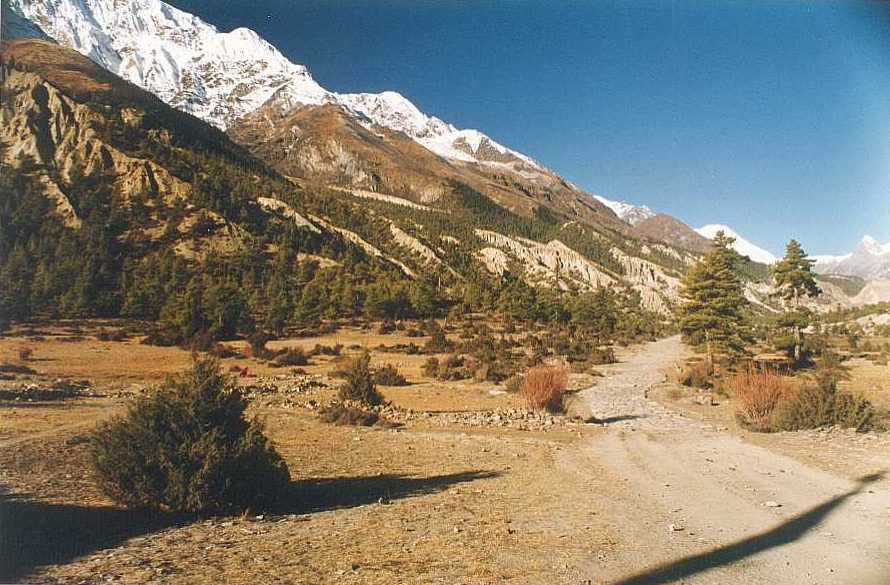
Hiking in the hills of Nepal is a unique experience. Change is coming slowly to the hills. For city-born and bred folks stepping into the hills may mean stepping out of one’s comfort zone. It can often be a journey back in time to a simpler existence. The ascents and descents are long and steep. The trail can deteriorate very quickly, and landslides are common. New trails have been created and some have eventually become rough jeep friendly roads. The trail to Manang north of Pokhara is now blasted through solid rock. The trail passes very close to Annapurna II and in bad weather, the trail can seem threatening.  Walking through the magical Manang valley provides you with a view of the back side of the Annapurnas. The flat trail is mostly easy but can get very dusty. The trail climbs steadily uphill and after Manang village climbs through barren hillsides.  

View from Pokhara

Weather changes quickly in the mountains and can transform from bright and sunny to cloudy and snowy within an hour. Sunny weather elevates the mood while cloudy and snowy weather seems threatening. A trail with a risk of avalanches is the one to the Machapucchare base camp (MBC). The classical pyramidal fishtail (Machapucchare) seen from Pokhara is seen as two separate peaks from MBC. I had hiked to the base camp in March and saw avalanches coming down on the other side of the river.

The Everest region Nepal

In the Everest region, the hike to Everest Base Camp (EBC) from Gorak Shep is a rocky one along the moraine of the Khumbu glacier. I had done this hike while I was staying at Lobuche for a high-altitude research project. The weather was cloudy and low-lying clouds soon closed in. It started snowing steadily and fresh powdery snow soon covered the rocky trails making walking slippery and difficult. The psychological effect of bad weather and the threatening silhouettes of the highest mountains on earth made me deeply uneasy.

Dusk at Wilhemina Park. Photo Courtesy: Ravi Shankar

The island nation of Aruba like most other parts of the world is becoming increasingly obese and overweight. Aruba created a network of walking paths to encourage physical activity. Aruba advertises itself as ‘One happy island’. I used to walk along the Caribbean coast from Wilhelmina Park to the airport. Rains are rare in Aruba and the paved trail is well maintained.

The Sun can be hot though the trade winds keep the temperature bearable. The plan is to extend the linear park from palm beach in the tourist area to the airport. Aruba has beautiful sandy beaches, and a lot of effort is expended on their maintenance and care. The Atlantic coast is less settled, and the waves crash against the rocky shoreline. There are excellent walks among the barren hills and along the old gold mine.

The city of Kuala Lumpur in Malaysia also has good walking paths. The Bukit Komanwel (Commonwealth hill) near my apartment has inviting walks. Due to the constant rains, the trail can be slippery in places, and caution is needed.

The city is green and the Perdana Botanical Garden in the heart of the city is well-maintained and has several walking trails. The pavements are usually maintained though due to the constant heavy rains they may be wet and covered with moss.  

One of the most difficult cities for a walker in my opinion would be the city of Mumbai, India. It is crowded, the traffic is chaotic, and the pavements are blocked by hawkers, stalls, and parked vehicles, and most shop owners keep their goods on the pavements. The concept of the pavement as a protected area for pedestrians seems to be lacking. The pavements are often dug up and the perpetually ongoing metro railway projects ensure more than half of the road may be unusable. Most open areas and woodlands have long been converted into housing projects and/or slums. The situation has steadily deteriorated during the last four decades.

The modern age has several conveniences and labour-saving devices. With increasing prosperity most people now own cars. Families have multiple cars. Cars can be a double-edged sword in reference to health. I think cars are addictive and the convenience makes you take them everywhere. You end up waking less and less unless you properly plan and stick to your exercise routine. Studies now indicate that all steps taken by a person are useful and can add up over the course of a day. In Malaysia recently there have been several virtual races motivating people to accumulate steps over the course of a day and month. The university where I work has a corporate wellness program and several virtual races are held over the course of a year.      

We are facing one of our biggest challenges in the form of climate change. A steady increase in carbon dioxide emissions since the start of the industrial revolution has caused global temperatures to rise. Sea level rise, super hurricanes, extremely heavy and concentrated rainfall, forest fires, and scorching summers are all being experienced. We seem set for at least a two-degree celsius rise in global temperature and we are still learning the catastrophic changes this can bring. Walking results in insignificant carbon dioxide emissions and helps us do our bit to save the planet. We are only taking care of planet Earth for future generations as, currently, humanity does not have a planet B.

Though I am a teetotaller a good quote promoting walking may be the one provided by Johnnie Walker, the whisky distillery. After the shutdown due to the pandemic, they launched a new campaign to get the world moving again. Keep walking!

.

*All the photographs have been provided by Ravi Shankar.

Dr. P Ravi Shankar is a faculty member at the IMU Centre for Education (ICE), International Medical University, Kuala Lumpur, Malaysia. He enjoys traveling and is a creative writer and photographer.

.

PLEASE NOTE: ARTICLES CAN ONLY BE REPRODUCED IN OTHER SITES WITH DUE ACKNOWLEDGEMENT TO BORDERLESS JOURNAL

Categories
Review

An Aesthetic Rebellion set in Mumbai

Book Review by Gracy Samjetsabam

Title: Half-Blood

Author: Pronoti Datta

Publisher: Speaking Tiger Books

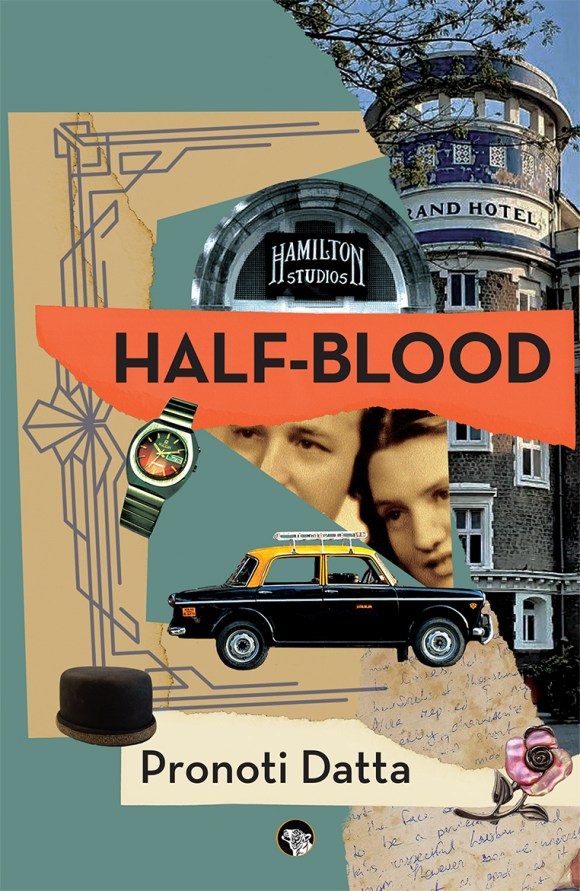
Half-blood by Pronoti Datta is a gripping noir-fiction that speaks about the harsh realities of urban settings, morally negotiated characters, dysfunctional families, and atypical individuals with dark secrets and surprises. Pronoti Datta was a journalist for about a decade and a half, covering culture and society in Bombay, the city from which she draws inspiration. She resides in Bombay and works as an editor of digital content. Half-blood is her debut novel.

The novel starts with a letter from Burjor to Moonie (Maya), the two main characters of the novel. In the letter, Burjor clandestinely explains his reason for disappearance by writing, “You see, Moonie, I did a terrible thing for which I had to leave Bombay. I don’t want to burden you, in this letter, with the details of my deed – or my life. It’s a long story and I’m not a man of words.” The prologue with this letter sets the tone for the story. The book has thirty-two   chapters with an ‘Epilogue’ that gives the new order of things and “a sense of having created meaning” to life, or rather to newer ways of looking at life.  

The story gives a glimpse into the lives of the dwindling Parsi population of Mumbai. The narrative spanning generations, time and space is a perfect read for those who love city stories, or love to know more about multicultural India. Most importantly, it is a fascinating story for those who love crime and suspense with a touch of history and culture. Datta brings to fore snippets specific to the lives of people and places in the then Bombay and now Mumbai. The author successfully addresses the failures, shortcomings, and the uglier side of life with wit and humour.

Maya, a journalist, who is young, talented, confident, ambitious, and disillusioned with life suffers from an existential crisis. She resurrects the past in search of her roots and meaning in life. Through the limited clues left in the “letter” from her biological father, she traces her bloodline. She embarks on a journey, stumbling upon unexpected facts and fiction on the life of Mumbaikars and Parsis some of who are poor and sometimes half-blooded or of mixed ethnicity. This is a story of rags-to-riches, underrated heroes and people in the sidelines. Burjor Elavia, a half-blood, a “fifty-fifty” is an “Adhkachru” — an illegitimate child of a Parsi man and a tribal woman. He accepts poverty and bondage to resist being pushed aside as a non-existent bastard.

Through the story of Burjor and Maya in Mumbai from the seventies, at the time of the prohibition till the 26/11 attack in 2008 in recent times, Datta weaves the  less explored facets of history of the city into her fiction. The characters in the novel range from different religions, language backgrounds, and communities residing and crisscrossing paths to give voice to the culturally diverse mega-city.

Maya, born to Mini and Burjor, is adopted by an unusually matched Bengali parent. Brought up in Mumbai, she grew up in a locality with a good mix of residents from different communities and religions. Moved by stories of those who “persisted in their beliefs, fielding scorns and disapprobation, and emerged victorious,” she goes on to study Philosophy in Delhi and mingles with friends from across the country. Datta presents a realistic picture of a young girl of mixed descent from Mumbai, pursuing her path of self-discovery by connecting the past with the present. In this quest, she unravels smaller plots that add to the larger picture. As she unravels her own past, Maya describes her situation as similar to that of the Prince of Denmark — Hamlet. She says, “I am Hamlet looking into my father’s ghost.” Datta grinds a story that carries a peek into the time and gives a space to those at the margins and the unconventional like the infamous “Aunty Bars,” savage liquor barons, Adivasi women, scandalous navjotes[1], and children growing up in multicultural society

The novel is an aesthetic rebellion as it delves into the Parsi way of life including that of poor Parsis, good-hearted rogues, crime and punishment in defiance of pigeon-holes and labels about a community or group. Half-blood as the title suggests, reveals wider horizons and deeper nuances of identity. A fiction about modern India, this book takes us on a tour of less revealed nooks of history and culture to unearth beauty in diversity. Elegantly presented with a cover design by Maithili Doshi Aphale, which speaks for itself, the Speaking Tiger book, Half-blood breaks through stereotypes and clichés to win your heart.


[1] A religious initiation to Zoroastrianism, the religion followed by Parsis

.

Gracy Samjetsabam teaches English Literature and Communication Skills at Manipal Institute of Technology, MAHE, Manipal. She is also a freelance writer and copy editor. Her interest is in Indian English Writings, Comparative Literature, Gender Studies, Culture Studies, and World Literature. 

.

PLEASE NOTE: ARTICLES CAN ONLY BE REPRODUCED IN OTHER SITES WITH DUE ACKNOWLEDGEMENT TO BORDERLESS JOURNAL