Categories
Slices from Life

Kindred Spirits

By Anjali V Raj

“Two birds balance on the top branches of a tree. Together they fly into the sky”
--Snow flower and the Secret Fan by Lisa See
Courtesy: Creative Commons

Friendship is a perennial river of comfort where we can dive and swim throughout our life. Growing up, I was a silent student at school with not many friends and definitely no close companions. I was neither amicable nor bright and made little effort to change this attitude. I spent my teenage years trying to be inconspicuous to my classmates like they were some predatory animals. I didn’t own a personal phone until my undergrad years hence even if I made friends I couldn’t keep in touch with them, which I rarely did even after acquiring a phone. Communication technology especially mobile phones and social media plays a vital role in connecting people and maintaining friendships. At some point in one’s life, everyone finds someone who knows them better than the rest of the world, with whom they share a bit of everything from their life.

I remember the first time I met her; she was sitting across from me — two seats ahead in the institutional shuttle. I could only see a part of her little face, but I could make out the charming smile she wore. It was the second day at my first job. I was still intimidated by the new place and faces. Later that day, she came into our lab, a short affable girl and had the same charming smile. Apparently, she was also working on the same project as me but in a different team. She spoke to my colleague in English. However, I noticed the Malayalamaccent lingering in her words. I wondered why they spoke in English when they were both Malayalis; given that Malayalis have an inherent tendency to communicate with each other in Malayalam wherever they go. I observed her a little longer; definitely bold and smart, I concluded. Who knew then that this smart young woman was to be my north star?

With few joint project meetings, our acquaintance grew from colleagueship to friendship. She often visited our lab. Whenever she came, the gloomy chemical mood of our lab would transform into a jovial garden of fragrant flowers. She would laugh at almost anything and believe me her laughter was very contagious. The silent lab except for the perfunctorily grumbling instruments would suddenly mimic a rackety town hall. Her laughter made me wonder if it was hidden for a long time and finally finding its freedom made up for the lost time. I could see my stoic and altruistic friend find solace in the smile and laughter of others. After a few field trips together, I found a close companion in her. I didn’t know all of her. One can never know the whole of a person however close they are but I felt proud that I knew more of her each day. She was a popular smart friendly face at our institution and now, my friend. There was a sense of happiness and pride in finally finding someone who could bring warmth to your heart and to whom you were more than just a random person.

We had our differences and similarities, arguments and opinions, mischief and complaint — all as the part and parcel of our friendship. We never shared our deep secrets or fears, yet we knew the existence of such buried inside us. Importantly, we knew, if need be, we had each other’s shoulders to lean on and could confide in each other. She made a continuous effort to make me smile by sharing pictures of beautiful flowers, landscapes, hilarious memes, cute animal videos and such. She had inspired the scared timid mind inside me to come into the light. She encouraged me to discover the unmolded writer in me, inspired me to write and share my silly poems. Moreover, she educated me on certain domains of knowledge I lacked and she continued to inspire me every day. She encouraged me to fly with her into the unfathomable spread of the sky. I owe it to her for all my accomplishments in the past three years while all I could be was a listener.  She was and is my laotong, the sister of my heart.

We are not perfect people in the perfect world and yet sometimes, our shortcomings drew us closer together. We are two overthinkers with our disconcerting opinions, who can never put a firm foot on the ground. Sometimes when she consults me for my opinion on certain matter,s all I provide her is obscure suggestions making the matter more ambiguous.  But my dear friend is always pleased and content with whatever outlook I provide. Even with the continents separating us now we are still the ‘old sames’ close within our hearts.

I have only countable friends, of which there are very few that I still maintain communication. A strange sense of detachment grows in me when the common grounds of friendship alter and are separated by large physical distance. The connection through electronic devices usually wouldn’t suffice to regain my earlier attachment. Hence, I avoid any communication at all. However, I hold them, dear, within my heart even if I constantly fail to express this in person. Strangely with her, I have been able to communicate freely with no detachment as if no distance separated us, mostly due to her persistent efforts rather than mine. And still, she continues to inspire me, spread joy and bring laughter to my face. Like the two birds that return to the same tree branch to share the stories of their daily adventure, we share our daily bits through the electronic branch connecting us. I hope our friendship grows and travels beyond the grasp of time.

Anjali V Raj is a natural science researcher from Kerala, India. She currently works as a researcher at Azim Premji University. Her poems and short essays based on thoughts cultivated from observation of surrounding, lifestyle and society. She has published few of her works in the Down to Earth, The Wire, Café Dissensus Everyday, Borderless Journal and Times of India Reader’s Blog.

PLEASE NOTE: ARTICLES CAN ONLY BE REPRODUCED IN OTHER SITES WITH DUE ACKNOWLEDGEMENT TO BORDERLESS JOURNAL

Click here to access the Borderless anthology, Monalisa No Longer Smiles

Click here to access Monalisa No Longer Smiles on Kindle Amazon International

Categories
Poets, Poetry & Rhys Hughes

India Pale Ale

Courtesy: Creative Commons

I thought that I didn’t like India Pale Ale until I came to India. I wasn’t pale at the time but I was certainly ale (and arty)[1] because I had just spent three months in Sri Lanka and had acquired something of a tan. Maithreyi, my companion, took me to a place that sold ‘craft’ beers and I changed my mind about the merits of India Pale Ale and my mind has been changed ever since.

The notion of a ‘craft’ beer is one that intrigues and baffles me. I think of a craft as something involving working with wood, chiselling it, shaving it like an orthogonal chin with a plane, drilling it, fitting it together into a chair, table, ark for animals, or something beautiful but useless that looks like furniture but also might conceivably be a petrified tree stump.

Therefore, how can one ‘craft’ a beer? The foam on the surface of the brew once it has been poured into a glass can be removed with a flat tool, the blade of a knife or a metre long ruler or even a credit card. Yes, that is plausible and once or twice I have seen it done. But what other crafty actions remain to be taken in regard to the beer in order that it should be regarded as ‘crafted’? Drilling a beer is a futile exercise. We have all done that with our noses and understand the lack of permanent effect. Who among us has never surrendered to the temptation to dip our noses into the meniscus of our beers?

Let me adjust that hasty statement. Many or at least some of us have done that with our noses, at one time or another, probably long ago when we were the callowest of youths, students at some college or other and fairly new to the rite of drinking beer. The dipping of the nose might even have been accidental. Who can be a harsh judge in such circumstances?

So, it is settled that beer can’t be drilled, nor can it be sawn in half. We have all heard the wise saying that the optimist regards the glass as ‘half full’ and the pessimist regards it as ‘half empty’ and we instinctively know that the liquid in those philosophical glasses is beer. What kind of beer is less clear. If it is totally unclear then it must be a dark beer, but I suspect it is only unclear with a foggy opaqueness, which tends to lead me to conclude it is India Pale Ale. It becomes easier now to picture the scene in the drinking den, whether that den is posh and plush or crude and rude. We see the optimist and the pessimist, good friends but mismatched, holding up their depleted glasses.

Both are drinking India Pale Ale and have consumed exactly fifty percent of the contents of what once were brimming vessels. The optimist looks down at his glass with a large smile, “Ah, it is still half full. What excellent luck!” while the pessimist looks at his own glass with a deep frown, “It’s half empty already, what a blasted nuisance the world is!” But something strange has happened, and we have only just noticed it. We suppose that a ‘half empty’ glass contains beer in the bottom half and air in the top half.

Because this is a vision we are having, and visions aren’t subject to all the laws of physics, especially not gravity, we are amazed to peer closer and see the beer in the pessimist’s glass is confounding our (unreasonable) expectations. It contains the air at the bottom and the beer at the top. The optimist is impressed and cries, “What marvellous luck! You don’t need to tilt your glass at a steeper angle anymore in order to receive the India Pale Ale into your mouth. You can slurp it up from the summit of the glass.”

I am sure the pessimist will object to this positive interpretation of a beery situation and find some convoluted reason why this defiance of gravity is a bad outcome. But I am weary of these two fellows now. Let us leave them in peace to get drunk together, the optimist thinking that being drunk is good, his friend concluding that it’s not as good as he was led to believe it is, and head to a quite different location for a drink of our own.

The place Maithreyi took me to that sells ‘craft’ beers, including the India Pale Ale that is the subject of this small essay, was somewhere in Bangalore not far from Blossom Book House. We had bought books in that house, as we often do, a decent haul, and went to celebrate with beer and nibbles, and later, when we were just a little tipsy, we hurried back to Blossom Book House and bought more books. But this isn’t an article about books. It’s an article, or what passes in my mind for an article, about beer, specifically about the type of beer that is known as India Pale Ale. Where was I?

Oh yes, I was in that place that sold craft beers, and I have decided at this point to stop writing the word ‘craft’ in inverted commas. There were too many craft beers on offer for an easy selection to be made, so we ordered a sampler of many kinds, and they came on a big tray. They were in small glasses, dark beers and golden, reddish beers and greenish, fizzy beers and still beers, and perched on the end of the rectangular tray, two glasses of the mythic India Pale Ale. My reluctance to try these hangers-on is comprehensible when one considers how dreadful a non-craft India Pale Ale can be.

Back in Britain, decades ago, when first I allowed beer to pass the gates of my lips without turning it back, IPA was fairly popular among those unfortunate drinkers who lacked taste buds. Why they lacked taste buds was never explained to anyone’s satisfaction. Presumably they had lost them overboard while sailing from the Far East on packet steamers. It was a long time before I knew that IPA was an acronym for India Pale Ale. I assumed it was a word in its own right and that its own right was wrong. I would say that most beers sold in pubs in Britain in the 1970s were abominable, but this suggests that the Abominable Snowman would like them, and I doubt that he would.

I have done a little research (a very little, almost too little to be regarded as anything other than mildly faffing around) and I learn that India Pale Ales were once a noble style of beer, invented in the 18th Century for export by the sneaky imperialists of the East India Company. It was flavoured with hops, lots and lots of hops, more hops than a kangaroo would do, if it had a chance, and the adding of these extra hops had some effect that meant the ale would mature or whatever the word is during the difficult sea voyage.

I don’t really understand the chemistry of it, and I don’t really want to, I am merely repeating what I found out just now. IPA was an EIC product, proving to my own satisfaction that acronyms aren’t relatively modern inventions but have been around for a very long time. The decline in the quality of IPA, and all beers for that matter, during the 20th Century, is perhaps a mysterious one or maybe it has something to do with the big breweries rapaciously wanting to increase their profits by using less lovely ingredients and processes. I don’t especially like the taste of hops at the best of times. At the worst of times hops make me wince and frown like some kind of wincing frowner, a very lazy comparison, true, but my powers of simile and metaphor are temporarily on hold, for I haven’t recovered from a rather severe bout of acutely remembering the IPA and other beers of my early days on this gracious planet of ours.

A strongly hopped beer tastes, to me, like mouldy bread. The IPA of those long-gone days tasted like a sack of mouldy loaves swung around the head of a gorilla and used to bash one on the bonce. My powers of simile and metaphor, such as they are, seem to have returned. And yet when I took a cautious gulp of the IPA in the place that Maithreyi had guided me to, my preconceptions and established prejudices melted with the delightfulness of the taste that confronted me. What a magnificent India Pale Ale! I tried the other IPA on offer. Golly, this was even more wondrous! Let’s order more!

I say, my dear, we have bought books in our favourite bookshop. Isn’t it an astonishingly beneficial way to pass the time, obtaining books? And it’s not as if we buy them but never read them. We read them! Wouldn’t it be a jolly romp to return to the bookshop, once we have consumed more beers here, and engage in the act of purchasing more books? Indeed!

A final observation from an unobservant chap (myself). Any British fellow who guzzles IPA with gusto and ends up with a sodden moustache and beard as a consequence can be regarded as a ‘Pale Ale Face’ which is what ‘Indians’ in old Westerns almost called cowboys on occasion. Anyway, this essay appears to be over now, and the page on which this final paragraph has been written is an empty glass at last, the brew of its words fully consumed by your eyes, leaving only the dregs of a footnote at the bottom.

[1] Hale and hearty, a description used frequently in my youth, but which seems to have fallen out of favour. Falling out of favour is easily done if the speeding favour brakes to a sudden halt and the thing that was in favour isn’t strapped in properly. When it falls out of favour it often lands with a painful bump and favour drives off with a monstrous laugh. Even flavours can fall out of favour or back into it.

Rhys Hughes has lived in many countries. He graduated as an engineer but currently works as a tutor of mathematics. Since his first book was published in 1995 he has had fifty other books published and his work has been translated into ten languages.

.

PLEASE NOTE: ARTICLES CAN ONLY BE REPRODUCED IN OTHER SITES WITH DUE ACKNOWLEDGEMENT TO BORDERLESS JOURNAL. 

Click here to access the Borderless anthology, Monalisa No Longer Smiles

Categories
Review

A Thinker who Fought for an Inclusive India

Book Review by Bhaskar Parichha

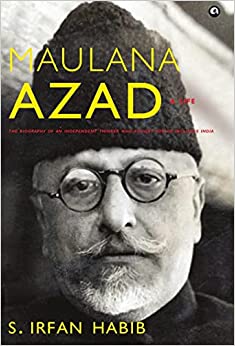
Title: Maulana Azad – A Life

Author: S.Irfan Habib

Publisher: Aleph Book Company

At a time when India is celebrating its 75th anniversary of independence, it is only fitting that Maulana Azad’s contributions to the country should be remembered. He was one of the most prominent Muslim leaders in India’s freedom movement, whose contribution to the establishment of the education foundation in India is recognised by observing his birthday across the country as “National Education Day”.

Azad became the youngest member of Congress to hold a presidential post. Using his position to work to re-unite the Swarajists and the Khilafat leaders under the common banner of the Congress. He opposed the Partition of India because he thought Muslims would be more powerful and dominant in a united India. After independence, he became the first Minister of Education in the Indian government. In 1992, he was posthumously awarded India’s highest civilian award, the Bharat Ratna.

Maulana Azad – A Life by S. Irfan Habib is “the biography of an independent thinker who fought for an inclusive India”. In this in-depth chronicle, historian Habib takes the reader through some of the most decisive moments in Azad’s life.

 A widely published historian of science and modern political history, Habib was the Maulana Azad Chair at the National University of Educational Planning and Administration, New Delhi. He has authored To Make the Deaf Hear: The Ideology and Programme of Bhagat Singh and His Comrades and is the editor of Indian Nationalism: The Essential Writings.

Says the blurb: “Born into an orthodox family of famed Islamic scholars, Azad was deeply influenced by the pan-Islamic philosophies of Sir Syed Ahmad Khan and Jamaluddin Afghani. Azad had no formal education, but he was an autodidact who taught himself about culture, philosophy, languages, and literature. As a teenager, he successfully published several magazines and newspapers and went on to publish the immensely popular Urdu weekly Al-Hilal through which he tried to persuade Indian Muslims to shake off the shackles of British rule. He became inspired by Gandhi’s non-violent civil disobedience movement and was extremely critical of the Muslim League’s communal politics.”

Azad’s unusual upbringing, his illustrious family, upheavals in the Islamic world, and the initial inklings of Azad’s freethinking outlook on life. ‘Maulana Azad and Critical Thinking in Islam’ examines the various schools of thought, ethical questions, and pan-Islamic debates that shaped Azad’s religious attitudes and his approach to the idea of nationalism. ‘Azad, Islam, and Nationalism’ looks at Azad’s political career and his unwavering belief in composite nationalism and staunch opposition to the Muslim League’s sectarian politics. ‘Ghubar-i-Khatir Beyond Faith and Politics’ lays bare Azad’s philosophical moorings and personal likes and dislikes through a collection of epistolary essays written during his imprisonment in the Ahmednagar Fort prison in the 1940s. And, finally, ‘Building a New India’ charts Azad’s efforts to strengthen the country’s weak education system through initiatives aimed at primary and adult education, his efforts towards the scientific and cultural advancement of the country, and his contribution to the arts and culture of a newly independent nation.”

As Habib writes, “justice is all the more relevant to education as a process of harmonious nurture. Indeed, social justice commands a pivotal place in Azad’s general perspective, which influenced his educational outlook quite profoundly. He was conscious of the fact that a class or caste-ridden education system needed to be replaced by a more inclusive and just educational order. In 1948, while addressing the educational conference, Azad again reiterated that education, at any rate, must be pushed forward as rapidly as possible. We must not, for a moment, forget that it is the birthright of every individual to receive at least the basic education, without which he cannot discharge his duties as a citizen.”

Writes Habib : “With a view to gearing education towards the cause of democracy, he, in his very first official statement, referred to Disraeli’s verdict: ‘A democracy has no future unless it educates its masters.’” In independent and democratic India, with universal franchise as the key principle, the voter was truly the master of democracy, and Azad wanted this voter to be educated and aware. He was conscious of the sad inheritance of colonial inequalities, where 85 per cent of the country’s population was illiterate on the eve of Independence. Several classes and caste discriminations were discussed for the first time, and it was necessary to eliminate them immediately.

Azad was convinced, according to the biography, that the state had to play a key role in combating such social afflictions and provide everyone with the means to “the acquisition of knowledge and self-betterment”; however, the most disconcerting factor was the lack of necessary funds to carry forward the state’s responsibilities. Azad conceded with a sense of guilt as minister of education that the central government had allotted only 1 per cent of the funds in the budget for education. He therefore urged the Constituent Assembly to raise expenditure to 10 per cent.

Maulana Azad pursued the issue with passion and was able to raise the allocation from Rs 20 million to around Rs 350 million during his tenure as minister of education. On September 30, 1953, Azad addressed the nation on All India Radio, reiterating that “every individual has a right to an education that will enable him to develop his faculties and live a full human life.”

In about three hundred pages of inexorable text, Habib reconstructs the life of the remarkable man while arguing that Azad is more relevant now than ever before. An essential read for understanding India’s pre-independence history and the significance of a dedicated life.   

Bhaskar Parichha is a journalist and author of UnbiasedNo Strings Attached: Writings on Odisha and Biju Patnaik – A Political Biography. He lives in Bhubaneswar and writes bilingually. Besides writing for newspapers, he also reviews books on various media platforms.

PLEASE NOTE: ARTICLES CAN ONLY BE REPRODUCED IN OTHER SITES WITH DUE ACKNOWLEDGEMENT TO BORDERLESS JOURNAL

Click here to access the Borderless anthology, Monalisa No Longer Smiles

Categories
Poets, Poetry & Rhys Hughes

Climbing Sri Pada

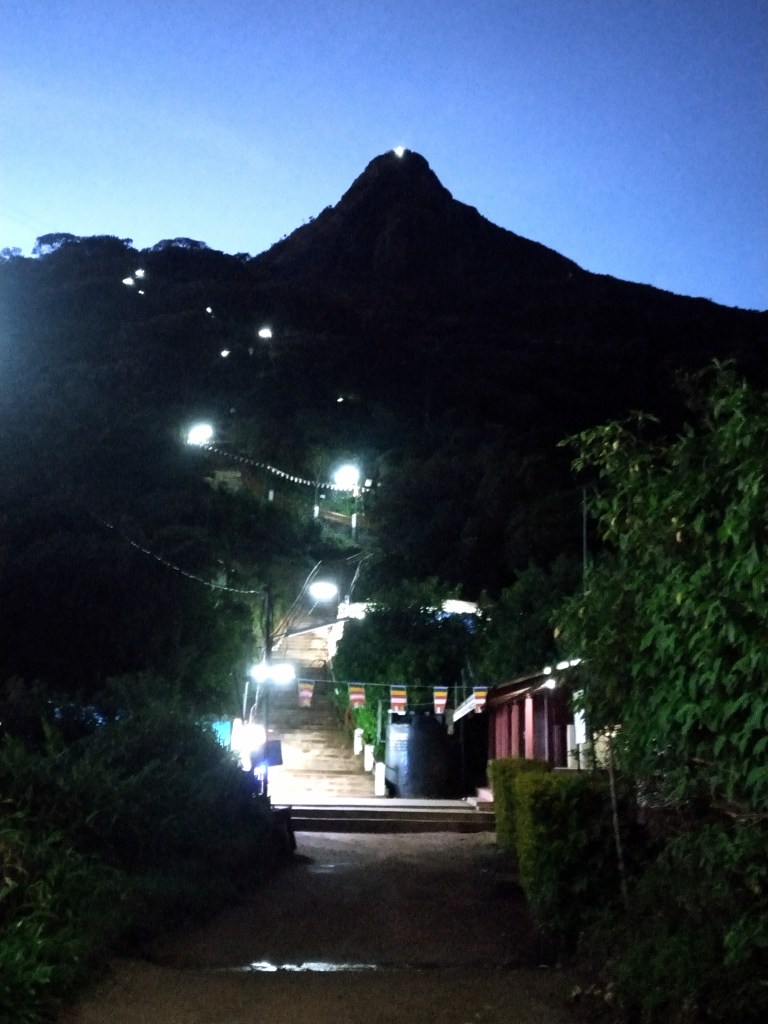
I climbed Sri Pada on the 10th of January of the year 2023. I was still calling the mountain Adam’s Peak when I went up it, but on the way down I decided that it was more respectful to call it by the name the locals use. I had first glimpsed the mountain during my first visit to Sri Lanka, a year earlier. I saw it through a car window in the distance. “One day I will return and climb it,” I told myself, but I never imagined that I would do so just twelve months later. I often create lists of ‘things to do’ and items on those lists tend to remain on those lists for decades. I can be slow at compiling these lists and I found myself in the position of having to scratch out the words ‘Climb Sri Pada’ before I had even added them. Life is full of such ironies, luckily or unluckily.

Climbing mountains is one of the greatest delights of my existence, but the number of mountains I climb per year is low, on average just one, and I attribute my lack of drive to the typical mountaineer’s ‘peak lassitude’, which isn’t like the ‘peak performance’ of other kinds of athletes. You go up a mountain, stand on the summit and take a good look, then you climb down and look up, to see where you have been, and it is the theory of the climb, which has just been done in practice, that seems to be so exhausting. That’s my theory, anyway, or maybe it’s not quite deserving of the name ‘theory’. Perhaps it’s just a speculation or an excuse. But as I’ve always said, an excuse is as good a reason as any. I climbed Sri Pada and am still enjoying my fatigue.

Having arrived in Colombo by modern jet aeroplane, as one usually does, I caught a bus to the village of Maskeliya in the Central Province of the island, or rather a series of buses, as I couldn’t work out how to catch a direct bus there.

In fact, I first went to Kandy, a city on the way, or almost on the way, and stayed in a pleasant and cheap hotel for one night. I went to the Royal Bar for a meal and a drink, one of my favourite pubs in the world, and a place with strong nostalgic overtones for me. It’s a restored colonial building and I often feel like a restored colonial man, so it matches me perfectly. What I mean by this is that I’m getting old and cranky, but my foundations are solid, and my façade can be regarded as a noble one. There was a power cut while I was sitting at a chair on a balcony that overlooks an inner courtyard and the chef wasn’t able to prepare hummus in the dark, so I made do with chips and ketchup.

Sri Lanka was still reeling from the effects of economic mismanagement. I was expecting food and fuel shortages and disruption of public transport, as well as frequent power cuts, but I experienced little inconvenience, and I wouldn’t complain even if I had. Stiff upper lip and all that. A few days later, my British legs were stiffer than any lip has any right to be. But now I am jumping ahead. I couldn’t jump anywhere when my legs were stiff. I could hardly walk. But now I am drifting off the point, just as I drifted off the route when I was hiking to the base of the mountain. I am jumping ahead again. Let me go back a little and let me explain that all the inconvenience I didn’t experience because of economic mismanagement is still there, adversely affecting the people of the island, even if visitors don’t notice it. It’s important to be aware, even if the only thing we’re aware of is that we aren’t really aware.

From Kandy I caught a bus to Hatton. Every seat of this bus was occupied, and I had to stand. I wasn’t alone in standing, many other passengers were doing the same thing, and it was only the pressure from all these other standing bodies that prevented me from falling over on the winding road to the town of Hatton. I say ‘road’ but in fact it was just a series of bends that climb higher into the hills, an impressive drop on one side, no barriers, and a driver who liked to accelerate on those bends, presumably to teach them a lesson, or to teach us a lesson, about inertia and maybe some other laws of physics. It is cheaper than paying to use a rollercoaster and rather more sociable.

But the landscapes are beautiful. Tea plantations on undulating slopes with mountains in the background, and plenty of lakes. We reached Hatton and I tried to find another bus that would carry me the remaining distance to Maskeliya but I failed in this endeavour and caught a tuk-tuk with a talkative driver who acted as a tour guide on the way. “That’s a mountain over there, don’t know its name, and down there you can see a lake, not sure what it’s called, and reflected in the water is that very mountain. Imagine!”

At the time I had no idea that Hatton was the birthplace of one of my mightiest heroes, the explorer Eric Shipton, a man who climbed for real all the mountains I just gape at in picture books, and who probably found genuine evidence of the yeti, unless he was playing a prank and made the footprints himself. Who knows?

The tuk-tuk arrived in Maskeliya, which turned out to be a small place in which all the restaurants were closed, and it was impossible to secure a cup of tea or coffee. The fact we were surrounded by tea plantations and innumerable coffee bushes meant little, for all the tea and coffee was exported to Britain. I should have had a cup before I left my own country, I was informed. I replied that I had come from India where tea and coffee are daily occurrences, or even hourly occurrences, if necessary. There are numerous similarities between India and Sri Lanka, but also some differences. No snow-covered mountains on the island, for instance, therefore no yetis.

My tuk-tuk driver dropped me off on a dusty street full of holes over which his vehicle had been bouncing like a distorted rubber ball, and I found the place where I was staying. I was warmly greeted by my hosts and their two dogs. My room was above a garage and this building was the very last one in the village. I was given a pot of tea and a plate of biscuits to celebrate my arrival in such an obscure location. So, there was tea to be had in Maskeliya after all! I found it to have a pleasant but unorthodox flavour.

After I had drunk half a pot of the stuff, I was told it was coffee. So, there was coffee to be had in Maskeliya after all! Coffee that tastes like tea. Or rather, coffee that tastes like tea that doesn’t taste quite like tea. I learn something new every day, or nearly every day, even if it’s only that I don’t learn something new every day but only once a week. Does that make sense? I won’t say the altitude had affected my mind, because although we were quite high, we weren’t really very high. Maskeliya has an elevation of approximately 1205 metres. Nothing to write home about. But I only have an elevation of 1.74 metres, so who am I to pass judgement? I drank more of the tea.

For a few days, I prepared myself mentally and physically for the coming climb. I played with the dogs and read some books. One of the dogs had a habit of sunning himself on the roof of the house and I couldn’t work out how he got up there, onto the corrugated iron. Maybe he turned into a monkey by the light of the moon and turned back to a dog once he reached the roof. Magic is always a useful explanation for such mysteries.

At least it is useful until we know better. And often that ‘better’ turns out to be worse. Whatever the solution to the mystery, he was a nice dog and that’s what ultimately counts. An abacus also counts, but rarely ultimately, because it is limited by the number of beads on its wires. I went for a walk at a waterfall on the far side of the enormous lake that dominates the region horizontally, in the same way that Sri Pada dominates the region vertically. That was also part of my preparation. I drank more coffee.

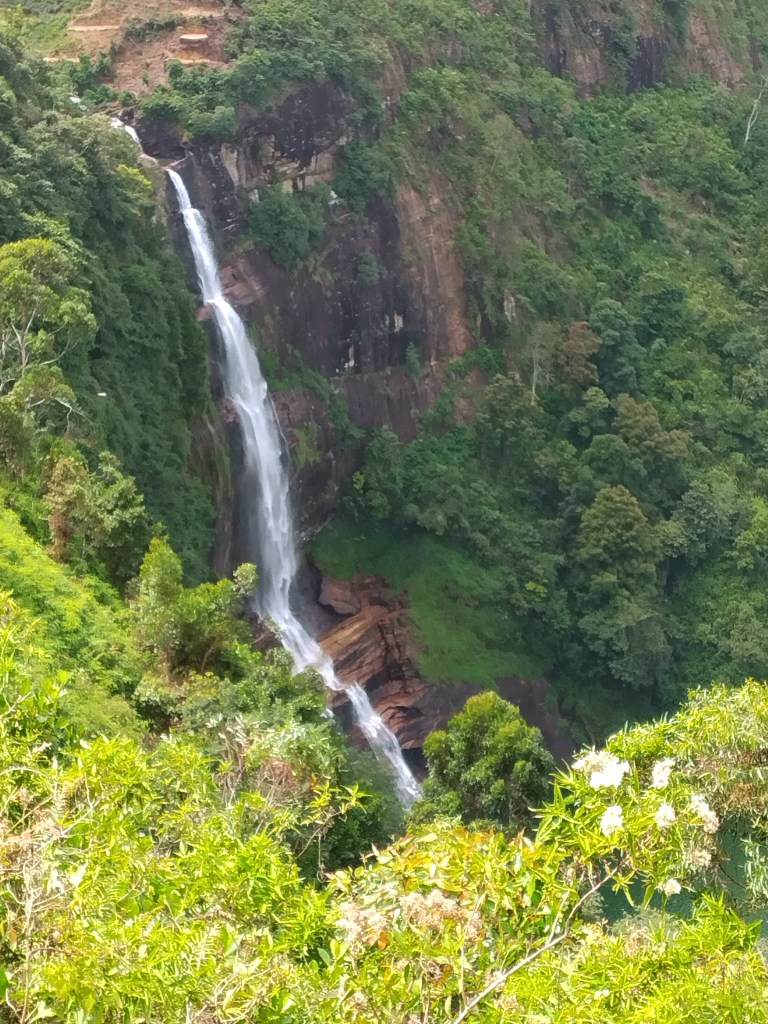
During my walk to the waterfall, it began raining and I ran for shelter. It’s a terrible thing to get wet on the way to a plummeting column of water that fills the air with spray and wets the onlookers. Almost as if the sky is trying to spoil the surprise. I found shelter too, in a lookout point with a roof. Two young men were sheltering there and they had a drum with them and they invited me to play it, which I did, while they did a peculiar dance. Perhaps it was the opposite of a rain dance? I didn’t think to ask, but I should have. The rain stopped. We left the shelter and went our separate ways. I ambled along a narrow path to the top of the waterfall and looked down.

Lots of gushing water making a roar. The world is God’s bathroom and he had left the tap on. That’s what it was like, a little anyway. I ambled back the way I had come and caught a bus to Maskeliya. An old man waiting at the stop thanked me for being British. It was the British, he told me, who brought tea to Sri Lanka. Before we came along, they only had mango juice and coconut water to drink. Appalling! I am uncomfortable when I am thanked for being British, and it does happen, more often than one might suppose. When the bus arrived, he was too emotional to board it and decided to wait for the next one. Personally, I like mango and coconut.

The day of the big climb arrived, or rather the night, for I had to depart my comfortable room at 2:30 in the morning and sit in a less comfortable tuk-tuk for an even less comfortable ride to a mountain that I could very uncomfortably climb to the top. I later wrote a poem about my climb which asked the question, why do I climb mountains at night in order to see the sunrise? The punchline of my poem was that I didn’t know the answer until I reached the top and then it dawned on me. Many or most poems don’t have punchlines, mine do. But this doesn’t mean mine are in the right. Sometimes I imagine they are punch drunk and that’s surely wrong. Punch can be made with mango and coconut as added ingredients, but probably not with tea.

The tuk-tuk stopped and I dismounted and began my hike to the base of the mountain. There are several routes to the base of Sri Pada. Some are easier than others, and some of the easier ones are much longer than the harder ones, making them harder in some ways. That’s mountains for you. I walked up a stony path and into a forest. I began to suspect that this was the dry bed of a stream rather than a proper path and I thought of my own dry bed in my room in Maskeliya. Too late, I was committed to the climb. It was a forest where leopards and elephants roam, but I didn’t know that until later, for there was no sign of them as I trudged up the inclines.

After a few hours I wondered if I had taken a wrong turn. The mountain should have loomed above me, but it wasn’t to be seen. That was weird, but I am used to getting lost on hikes and climbs. I even get lost in cities when I have maps. I’m not saying that I am a terrible navigator, but I would be very unlikely to employ myself as a guide to anywhere. I decided to push on in order to see how lost I actually was. The only way of doing this efficiently is to become even more lost and then compare the degrees of lostness, if lostness is a real word, which probably it isn’t. Ah well! I noticed a light far ahead that was a beacon of hope, and I increased my speed.

The light belonged to the isolated hut of a tea picker. At least I assumed the hut was a worker’s shelter, but it might have been something else, of course. I had hiked out of the forest and into a tea plantation. Yes, I had taken a wrong turn somewhere, and now I needed to go back and find that somewhere. But if I looked for it, I probably wouldn’t find it. Best not to look for it and stumble on it by pure chance. That was my strategy.

And it worked. I wandered off the path again, the wrong path, and luckily managed to end up by accident on the right path. The Buddha told us to follow the middle path, but there were only two paths here. I would worry about this at the top of Sri Pada, where there is a shrine to him. Incidentally I am extremely interested in Buddhism, it’s a religion I find most compelling, the one with the most reasonable ideas, but what do I know?

I can’t honestly say that my attempt to climb Sri Pada was a pilgrimage as well as a minor adventure. It would be nice to make that claim, but it would be dishonest. Maybe one day I will return in a more spiritual frame of mind and try again. I finally reached the 5500 steps that led up the side of the mountain and I climbed them and was rather astonished to find tea shops on the way, tea shops open all night. So, this is where the tea really went! Then I asked myself, how are these shops supplied? The tea must be carried up on foot, step by step, as there’s no other way of doing it, unless it is dropped by parachute, which is so improbable an option we can disregard it.

Five thousand five hundred steps up and five thousand five hundred steps down makes eleven thousand in total, and that’s a lot of steps. At first it seemed easy, because it was easy, then it began to seem more difficult, because it was more difficult. When things are exactly the way they seem, I find that it focuses my mind acutely. My legs were tired halfway to the top, but I told them to take heart and not let down the other parts of my body, which still wanted to get to the summit and were relying on them. I also told my heart to take heart. It didn’t really require that advice, as it happens.

Finally, I reached the top. The sun came up. It came up effortlessly, without the need for steps. The sun is five billion years old but acts like a youth, setting a good example to us all. Funny how it sets this example when it is rising. But I am wandering off the point, and the point is not a path. I took off my boots and approached the shrine, which stands on a small area at the very apex of Sri Pada and overlooks the other mountains and hills in every direction. Inside this shrine is the footprint, but it has been covered over with a golden seal in the shape of a foot and I can’t report on what it actually looks like. I also rang the bell that has been provided for the use of summiteers.

I don’t know if ‘summiteers’ is a real word. I could check but I worry that it might not exist in the lexicons and then I would feel obliged to change it, and I don’t want to do that. Musketeers is a real word, so I don’t see why lexicons should feel a need to pick on summiteers. If they picked on musketeers, they’d soon be sorry! The bell at the summit of Sri Pada should be rung the number of times the ringer has climbed the mountain. I rang it once. Then I began the long descent. I found this harder than the climb because my knees were sore, and my legs were shaky. They wibbled and wobbled like jellies in the shape of limbs, a very cunning pair of jellies no doubt, but a feeble set of legs. Nonetheless, down I managed to go, slowly, surely, puffingly.

On the descent, two boars crossed my path. They were very casual, a more nonchalant couple of wild pigs can hardly be imagined. They trotted out of the undergrowth on one side, stopped to admire the view, then carried on into dense undergrowth on the other side. I noticed that their legs didn’t wibble or wobble. It’s true that I might not be able to tell a wibble from a wobble when it comes to a pig because I’m not a trained vet. I’m not even a wild vet. I am no kind of vet. That goes without saying. I went without saying too, downwards again, until at long last I reached the bottom, exhausted.

All the photographs have been provided by Rhys Hughes

Rhys Hughes has lived in many countries. He graduated as an engineer but currently works as a tutor of mathematics. Since his first book was published in 1995 he has had fifty other books published and his work has been translated into ten languages.

.

PLEASE NOTE: ARTICLES CAN ONLY BE REPRODUCED IN OTHER SITES WITH DUE ACKNOWLEDGEMENT TO BORDERLESS JOURNAL. 

Click here to access the Borderless anthology, Monalisa No Longer Smiles

Categories
Musings

Wanderlust or Congealed Stardust?

By Aditi Yadav

We are but stardust, swirling and travelling eternally across the universe. The interweaving of matter and energy in the cosmic space-time tapestry has always struck us with wonder and curiosity. As the Japanese poet Basho resonates in his Narrow Road to the deep north, “The months and days are passing wayfarers through endless ages, and travelers too the years that come and go. Those who float their life away on boats or meet old age plodding before a horse- they spend their days in journeying and call the journey home.”  Humans have marched on, often quite literally so, in the journey of life’s evolution.

To evolve one needs to survive despite all odds. It is an enterprise in desperation, driven by the basic instinct for survival. For several millennia, wandering to forage for food, moving on for a safe shelter and fleeing away from inclement weather or wild animals was the only way of life — on one’s toes, on the run, hanging on to dear life. Braving through raw and ruthless nature — the scorching sun, blistering winds, numbing snow, bone-chilling blizzards, tempests on seas, ravenous typhoons– what an extraordinarily heroic travelogue has been the journey of homo sapiens!

When the ‘wanderer-hunter’, settled as a farmer, the new sense of settlement brought in the novel element of ‘belongingness’ to a certain place, and the consciousness of possession or ownership. A brand-new idea of life bloomed. A settled and relaxed idea of ‘home’ now formed a part of new civilization. As a consequence, resource ownership in itself gave rise to trade, conflicts and wars. All of this entailed travel.  The merchants traveled distances to barter and earn. Many religious leaders travelled around to propagate and preach faith and worship – perhaps, as service to humanity, or maybe, as an attempt to know human consciousness. In another dimension, the ambition to rule over land and capture resources drove people in leaps and bounds on land, and establish colonies across oceans. What was once a globe of free vagabonds turned into a battlefield of fragmented land, air and water masses with contest for boundaries.  Most of it were accompanied by bloodshed and colossal loss of human life and bio-spheric devastation.

But there was a class of travellers of the other kind — the ones who travelled for the joy of travel, excitement of discovery, to pen a new story, or write a new song. Freebirds like Alberuni, Fa-Hsein, Hyecho, and their ilk left behind valuable records and are documented in history. I often wonder about the history of female travellers. Who was the first female who ventured forth all by herself? What became of her? Did she disguise herself as a male? There is no way of knowing. Maybe she could not document it due the lack of knowledge of the written word, or perhaps, she did not want to be discovered at all. Although in my heart, I do pray she had a safe and happy journey.

The eternal flame to travel has propelled us to reach escape velocity and launch travel into space. The space programs, the Mars rover, the moon missions are our most fascinating travel adventures. Sun light or star light that we bask in at any given time is a light from the past travelling toward us. The future light may be travelling too, waiting for us to reach out perhaps.

Even with such incredible progress, there is so much that suffocates us. What is home, when the soul does not feel at ease? The Vedic sages taught that for those with open hearts, the world is but one country — everywhere one goes is home. The earth we know, owes its existence to migrating populations. It’s ironic how immigrants are discriminated against in the modern times. May be the suffocation we often feel is only the pettiness that has crept in.

Travel to free yourself of these shackles, dear heart! Despite the constraints of finances, opportunities, fetters of the 9-5 schedule, travel – what are you living for, if not for the liberation of the self? My thoughts don’t wait for spring. They forever bloom and fall off like the petals of cherry blossoms. Yet, there is joy in visualizing how they blow with the wind, rest on someone’s shoulders or gently settle on the surface of river, drifting along without a thought about the destination. They die somewhere, without even knowing. To have blossomed and traveled is fulfilling enough.

The instinct to wander and travel, is as old as life itself — for that’s how life has propagated. The roots of life find nourishment through the peripatetics of body and mind. It is a malady that humans are born with; a melody in sync with one’s heartbeat. “Travel inside out and outside in. That’s the fate humans are born with”, sings the systole-diastole of the heart, resonating the cosmic big bang-big crunch. A whole world lies outside your window, and several worlds live inside you. Traverse the infiniteness of yourself, measure the earth in your stride while Keats sings on, “Let the winged Fancy roam, Pleasure never is at home.”

.

Aditi Yadav is a public servant from India. As and when time permits she engages in creative pursuits and catches up her never-ending to-read list. Her works appear in Rain Taxi Review of books, EKL review, Usawa Literary Review, Gulmohur Quarterly, Narrow Road Journal and the Remnant Archive.

PLEASE NOTE: ARTICLES CAN ONLY BE REPRODUCED IN OTHER SITES WITH DUE ACKNOWLEDGEMENT TO BORDERLESS JOURNAL

Click here to access the Borderless anthology, Monalisa No Longer Smiles

Categories
Stories

Balak or the Child by Munshi Premchand

Translated from Hindi by Anurag Sharma

Munshi Premchand. Courtesy: Creative Commons

Premchand is the pen name adopted by the Indian writer, Dhanpat Rai Srivastava (31 July 1880- 8 October 1936).  He was a pioneer of modern Hindi-Urdu literature which focused upon contemporary social issues including caste, the treatment of women, day labour and other socio-political concerns. He remains one of the most heralded writers in South Asia. His oeuvre includes more than a dozen novels, about 300 short stories, numerous essays as well as translation of foreign literary works into Hindi.

Balak or the Child

1

All the servants greeted me from afar, as soon as they saw me. Gangu being the only exception, he never greeted me. He probably expected a palagan [1] salute from me. Everyone said he was a Brahmin. I bet he was because he never touched my dirty utensils [2]. Even in the hot and sweaty summer, I never dared to ask him to fan [3] me. When Gangu saw that I was sweaty and there were no other servants around, he picked up the fan on his own. But his posture made clear that he was doing me a favour and I snatched the fan away from his hand.

Gangu could not tolerate disrespect from anyone. He had few friends. He didn’t mix with my other servants. He couldn’t socialise easily either. He was full of contradictions. Unlike my other servants, he neither smoked, nor drank. On the other hand, despite being called a Brahmin, he seemed illiterate. I never saw him worship like most Brahmins do, nor take a vacation to visit pious rivers. He still expected the respect generally offered to a Brahmin, which seemed reasonable. When non-Brahmins have rights to material assets inherited from their ancestors as if they had earned those themselves, then why would Gangu renounce the prestige and honour that was earned by his forefathers through selfless dedication and sacrifices of many generations? That was his proud legacy.

Being an introvert, I spoke very less to my servants. I didn’t want them to approach me without being called. And I didn’t like calling them for simple tasks. It was much easier to pour water from a pitcher myself, light a lamp, put on my shoes, or take out a book from the shelf without waiting for a servant. My servants had also become accustomed to my personality, so they didn’t approach me without need.

They generally came to me for advance payment of wages, occasionally to complain about another servant. I despised both actions. I paid everyone’s salary on the first day of the month. I hated anyone asking for something extra in the middle; I couldn’t keep an account of two or four extra rupees. Besides, when a person had a full month’s wages, he had no right to spend it in fifteen days and beg for a loan or an advance? I was equally disgusted by their complaints. I considered these complaints to be a sign of weakness, or the petty gesture of toad-eating.

So, one morning when Gangu entered my room and stood in front of me, it made me unhappy.

Shrugging my shoulders, I asked, “What’s wrong? I didn’t call you.”

I was struck by the unexpected humility, and hesitation on Gangu’s normally sharp and arrogant face. It appeared as if he wanted to answer, but he couldn’t find the right words. I paused, and asked again, with a little humility this time, “What is the matter? Speak up. You know that I am getting late for my walk.”

Gangu sounded disappointed, “No problem, sir, please go and enjoy fresh air, I will come later.”

His response worried me. If he told his story then and there, I could ask him to finish quick as he knew that I was in a hurry. Postponing it to another occasion could cause a disturbance in my writing and reading later since the servants may not even have considered that as serious work. They may have just considered my thinking time, which is the most difficult practice for me, as my rest time. I didn’t want him to come and irritate me while I was working on a plot. Considering all these consequences of delaying the discussion, I relentlessly said, “If you come to ask for advance payment, the answer is no.”

“No sir, I never asked for an advance payment.”

“Well, do you want to complain about anyone? I hate complaints.”

“No sir, that’s not my nature.”

Gangu stood up straight. It was clear from his gestures that he was gathering all his strength to make a move. He paused and spoke in a faltering voice, “Let me leave you sir. I can no longer work here. I want to quit.”

His proposal surprised me. It hurt my ego. I considered myself a reflection of humanity, I never insulted my servants, I tried to be as humble as possible. I was shocked at this proposal. I asked in a curt voice, “Why? What’s your complaint?”

‘I have no complaints sir. You have got a good temperament. You are the best master a servant can get. But I can’t work here anymore because I don’t want you to feel upset because of me.”

I got confused. My curiosity flared up. I sat on a porch chair and asked with a sense of surrender, “What’s going on? Speak up clearly?”

Gangu said very humbly, “The thing is… that… Gomati Devi, the woman, who has just been expelled from the widows shelter home …”

He paused. I got impatient and said, “Yes, she was fired, then what? What does she have to do with your job here?”

Gangu paused for a moment as if he was trying to remove some heavy burden from his head, “I want to marry her sir!”

I stared at him with astonishment. This illiterate Brahmin of antiquated ideas, who never caught the breath of modern civilisation, was going to marry a woman of such questionable character that she would not even be allowed to enter any gentleman’s home.

Gomati had caused a bit of a stir in the peaceful atmosphere of her locality. After her husband’s death, she was moved to the shelter housing widows. She was made to marry by the staff of the shelter thrice, but each time she returned within 10-15 months. The last time she returned to the shelter, the minister of the home for widows threw her out. After being banished from the shelter, she lived in a closet in the neighbourhood. She soon became the centre of gossip for the loners of the entire locality.

I was angry after hearing about Gangu’s poor choice. This idiot couldn’t find another woman in the whole world to marry. I also felt sorry for his simplicity. I was sure that the woman who ran away from three comparatively rich husbands wasn’t going to stay for long with him. Had he been wealthy, the relationship would probably have lasted for six months. This naïve man didn’t even have a chance for a week.

“Do you know the life story of this woman?” I asked him with a sense of warning.

“All lies sir, people slandered her,” Gangu replied with the confidence of an eyewitness.

“What are you talking about, didn’t she run away from three husbands?”

“What if they kicked her out of their homes?”

“Are you foolish? Why would a man who comes to the shelter to marry abandon the woman after spending thousands of rupees?”

Gangu said passionately, “No woman can live in a place where there is no respect for her. A woman deserves some love and affection, not just bread and clothes. Those men would think that they had done a great favour by marrying a widow. They wanted to own her body and control her mind. They don’t understand that you can’t enslave other humans. To make others your own, you need to surrender first. Moreover, she has some health issues too. Sometimes she passes out suddenly. Those men considered her a burden because of her sickness.”

“Do you really want to marry such a woman?” I shook my head, “Understand that such a marriage would make your life bitter.”

Gangu said excitedly like a would-be martyr, “I understand everything sir, God willing!’

I insisted, “So you have made up your mind?”

‘Yes, sir!”

“In that case, I will accept your resignation.”

I was not afraid of futile conventions. But keeping a servant who married a wicked woman was a complicated problem. Every day could throw up new issues, new problems, and possibly police cases, and lawsuits. There could also be an accusation of domestic violence, or theft. It would be good to be away from this swamp. Gangu appeared to act like a monkey jumping at the sight of bread without realising that the bread was greasy, stale, dry, and completely inedible. I explained him the situation, but he didn’t care. It was difficult for him to work with thought and intelligence.

2

Five months had passed since Gangu married Gomati. They lived in the same locality in a tiny house. Whenever I saw him in the market, I checked to ask how he was. I had developed a curiosity about his new life. It was a test of psychological as well as social issues. I wanted to see the result of his bold action. I always found him happy. He appeared to be careless, somewhat prosperous, and confident. He had a daily sale of 20 to 25 rupees resulting in a saving of approximately 10 rupees. This was a meagre livelihood; But he certainly had a boon of some God. Because he had no sign of poverty, shame, or disgrace. There was a glimpse of self-development and joy on his face, a reflection, perhaps, of his peace of mind.

One day, I heard that Gomati ran away from Gangu’s house. I was strangely delighted. Not that I was jealous of Gangu’s contented and happy life. But I was waiting for something to happen to him – a bad thing, a catastrophe, a shameful event. I warned him earlier because I had my own doubts. Now my fears had been confirmed. Gangu had to bear the brunt of his short-sightedness. He, then lunged as if he was getting a rare substance. As if the gates of paradise had opened for him. Alas, now he would realise that those who tried to prevent this marriage were his true well-wishers. We warned him about that woman’s character. We reminded him that she had not been faithful in her earlier relationships, and he too would be cheated ultimately. But he didn’t pay any attention. I was eager to meet Gangu and remind him of his mistake in confusing this woman with a boon from the Goddess.

By chance, I ran into Gangu in the market that same day. He appeared depressed, anxious, and totally lost. On seeing me, he started crying. He didn’t cry out of embarrassment when he saw me; he cried out of grief. “Sir,” he said when he approached me, “… Gomati left me.”

“It’s your fault Gangu. You didn’t listen to my advice. I warned you, but you didn’t care. Now tell me, what can you do except bearing the pain patiently?” I showed him superficial sympathy, “Did she take all your money or left something?”

Gangu placed a hand on his chest as if my question pierced his heart.

‘No sir! Please don’t say that … she took nothing. She left everything behind, even her personal belongings. No idea what evil she perceived in me. I guess I was not worthy of her. She is educated, and I am as illiterate as a buffalo. I am fortunate that she stayed with me for so many days. Had she lived with me for some more time, she would have turned me into a fine man. I will be indebted to her forever. She was like a divine blessing of a deity to me. I must have done something seriously wrong because she always ignored my everyday mistakes with grace. After all, I am a man with no status. She managed the home so well with my petty earnings.”

I was deeply disappointed to hear these words. I thought he would tell the story of her infidelity and I would get a chance to express sympathy for his blind devotion. But the fool’s eyes had not opened yet. He was still reciting her mantra. Of course, he was still in shock.

“Are you certain she didn’t steal anything from your house?” I teased him.

“Not even a rag, sir,” he replied.

“But she left you…. And you think she really cared about you?”

“You’re right, sir; I’ll cherish her love until I die.”

“She abandoned you despite all the love?”

“That’s the mystery I can’t decipher, sir. “

“Have you ever heard the term ‘Triya-Charitra’ [4]?”

“Hey sir, don’t say that. I will sing her praise even if someone puts a knife on my neck.”

“Then go and find her.”

“Yes, sir. I am not going to give up until I find her. I’m confident that once I find her, I can convince her to come back to me. And sir, my gut tells me she will return to me without a doubt. She didn’t run away from me out of rage. I will go and look for her, even if it means wandering for several months. I will search for her everywhere –the woods, the mountains, and the deserts. I’ll come back to see you if I succeed in my mission.”

Before I could reply, he quickly walked away from me.

3

After a few days, I had to go to Nainital for a month-long assignment. I had just returned from Nainital when Gangu approached me holding a new-born infant in his lap. He exuded fatherly pride and joy in every aspect of his appearance, including his walk, posture, face, and eyes.

I asked, “Maharaj [5], you went to find Gomati, did you find her?”

“Yes Sir, with your blessings, I found her in a maternity hospital in Lucknow. Before leaving, Gomati instructed a girlfriend of hers to keep checking if I started getting too nervous about her absence. That friend told me where Gomati was. I ran to Lucknow and met her in the hospital, where she gave birth to this adorable child.” He raised the child with pride and came closer to me. As if a player is displaying the trophy after winning the match.

I asked sarcastically, “Well, she gave birth to this boy? Perhaps that’s why she ran away from here. Is this your child?”

“This is God’s gift for me.”

“So, he was born in Lucknow, right?”

“Yes Sir, he is just a month old.”

“How many days have you been married exactly?”

“… nearly seven months sir.”

“So, he is born within sixth month of your marriage?”

“Correct sir.”

“And you think of him as your son?”

“Yes, sir.”

“Have you lost your mind?”

He either ignored, or completely missed my intention. He exclaimed, “She had almost died sir. For three days and three nights, she kept on suffering. I can’t tell more but it’s like a new birth for her.”

I got a bit sarcastic now, “This is first time that I saw a child born in six months.”

He got my point this time, and smiled, “Okay, I understand! I did not even notice it earlier. Gomati ran away from home because of this fear only. But I told her not to care about what people say.”

He continued, “I told her she was free to leave me if she got tired of me. I would leave so as not to bother her ever again, but I would always be available should she require assistance. I told her that I had married her because I loved her and believed she wanted me, not because she was a Goddess. I am the parent of this child. He was born to us after our marriage.” saying this, he laughed loudly.

My eyes started to shine. I forgot how exhausted I was after the long trip. All my inherent hatred was suddenly washed away by a fresh shower of love. I kissed that little boy as I held him in my lap. Probably I didn’t show that much affection to my own children as I did to the helpless child in my lap.

“Sir, you are a wonderful gentleman.” Gangu continued, “I keep mentioning you to Gomati. I’ve asked her to come here with me so we can meet you once. But she is hesitant to meet new people.”

Me and gentleman? The innocent demeanour of Gangu had just opened my eyes. I was ashamed of my narrow-mindedness, my voice was filled with devotion towards him as I uttered, “No, I am not a gentleman, you are one. And this child is the fragrant flower that results from your kindness. Why would Gomati come here to meet a shallow man like me? Come on, I’m coming with you to see her.”

I walked towards Gangu’s house, holding the child close to my chest.

Translator’s notes:

[1] Palagan was a common respectful greeting offered to the brahmins in Hindi belt of North India

[2] Indian culture is very particular about purity of kitchen and observance of cleanliness of food and utensils. Any utensil that has been used once for serving or eating food or touched by someone is considered unfit for use until washed and cleaned properly.

[3] Except for a few princely states like Mysore, most Indian homes didn’t have access to power supply during British rule. Hand fans were commonly used during summer months in every household.

[4] Triya-Charitra – Complex character of a women, as discussed in Indian literature.

[5] Maharaj – Literally king of kings, a respectful address for the brahmins throughout India and Nepal

Anurag Sharma is  a writer and the co-founder of Radio Playback India. Anurag has been instrumental in podcasting over 300 short stories, radio dramas and Vinoba Bhave’s lectures on Gita. He is the editor-in-Chief of Setu, Pittsburgh.

PLEASE NOTE: ARTICLES CAN ONLY BE REPRODUCED IN OTHER SITES WITH DUE ACKNOWLEDGEMENT TO BORDERLESS JOURNAL. 

Click here to access the Borderless anthology, Monalisa No Longer Smiles
Categories
Poetry

In the Coldest Desert

By Swati Mazta

Waking up at dawn, raise the curtains,
Gaze at the snow-capped mountains
From the Arctic room window.
It seems a true treat for your eyes and your soul.
 
Scan the mountain through plastic-insulated windows
For Himalayan brown bears, snow leopards or ibex goats.
May luck be with you next time!
Till then, enjoy your love with fur on four paws.
 
Relish lip-smacking hot black coffee
In a beautiful ceramic blue cup!
Munch on some coconut cookies
All the time, think of the glee club.
 
Hear the chirping of pigeons and magpies.
As the breeze flows, the wind chimes tinkle.
It feels pretty comfortable and soothing,
Like someone pouring honey into the ears.
 
As the day begins,
Flush the body of toxins,
Dry clean your body with warm water-soaked muslin
Apply a little oil massage to rejuvenate your skin.
 
Put on insulated, comfortable clothing --
A woollen cap, socks, fur boots.
Keep yourself warm on this day --
A new day, a new beginning.
 
Let go of tomorrow...
Today is your day to shine.
Oh, my dear, the little things keep you going.
These little longings are tinkling!

Swati Mazta is an Assistant Professor in the department of English at the University of Ladakh, Kargil Campus, Khumbathang, Kargil, UT Ladakh, India.

PLEASE NOTE: ARTICLES CAN ONLY BE REPRODUCED IN OTHER SITES WITH DUE ACKNOWLEDGEMENT TO BORDERLESS JOURNAL

Click here to access the Borderless anthology, Monalisa No Longer Smiles

Categories
A Wonderful World

Exploring Colours

On 26 th January, 1950, India was declared a republic, an independent entity with the complete withdrawal of colonial support of any kind. The country adopted an independent constitution. The Republic Day celebrations conclude on 29th January with ‘Beating the Retreat’,where more than seven decades ago the British withdrew all armed support from India. 

In this edition, we will explore how the idea of an independent India has evolved over the decades. We have poetry by Asad Latif that celebrates the Indianess across borders. On the other hand, Beni S Yanthan from Nagaland explores the republic in the shadow of displacement, which makes one wonder if cultural hegemony can help make a country? Ukraine is faced with a war over it.

Tagore’s poem builds empathy around human suffering as does Premchand’s story, translated by C Christine Fair — these are texts written at the start of the turn of the last century. Have we come out of that suffering? Perhaps, the answer can be found in Bhaskar Parichha’s review about a book that spans almost the whole of twentieth century in India. He tells us the author, “MA Sreenivasan (1897-1998) lived through almost the entire 20th century and was among the very few people who witnessed at close quarters the enormous changes that took place in India during this period.” This has been recorded in his book and its review. Rhys Hughes’ humour winds up this edition where he recounts the differences in the cultural ethos of India and a region of the country that despite losing an empire where the sun never set, still retains its sense of humour! 

Poetry

An India like You by Asad Latif. Click here to read.

What if I Uproot You by Beni Sumer Yanthan. Click here to read.

Ebar Phirao More or Take Me Back by Tagore, translated by Mitali Chakravarty. Click here to read.

Prose

Pus Ki Raat or A Frigid Winter Night by Munshi Premchand has been translated from Hindi by C Christine Fair. Click here to read. 

Bhaskar Parichha reviews MA Sreenivasan’s Of the Raj, Maharajas and Me. Click here to read.

In Some Differences Between Wales and India, Rhys Hughes makes some hilarious comparisons. Click here to read.

Courtesy: Creative Commons

Click here to access the Borderless anthology, Monalisa No Longer Smiles
Categories
Poets, Poetry & Rhys Hughes

I Went to Kerala

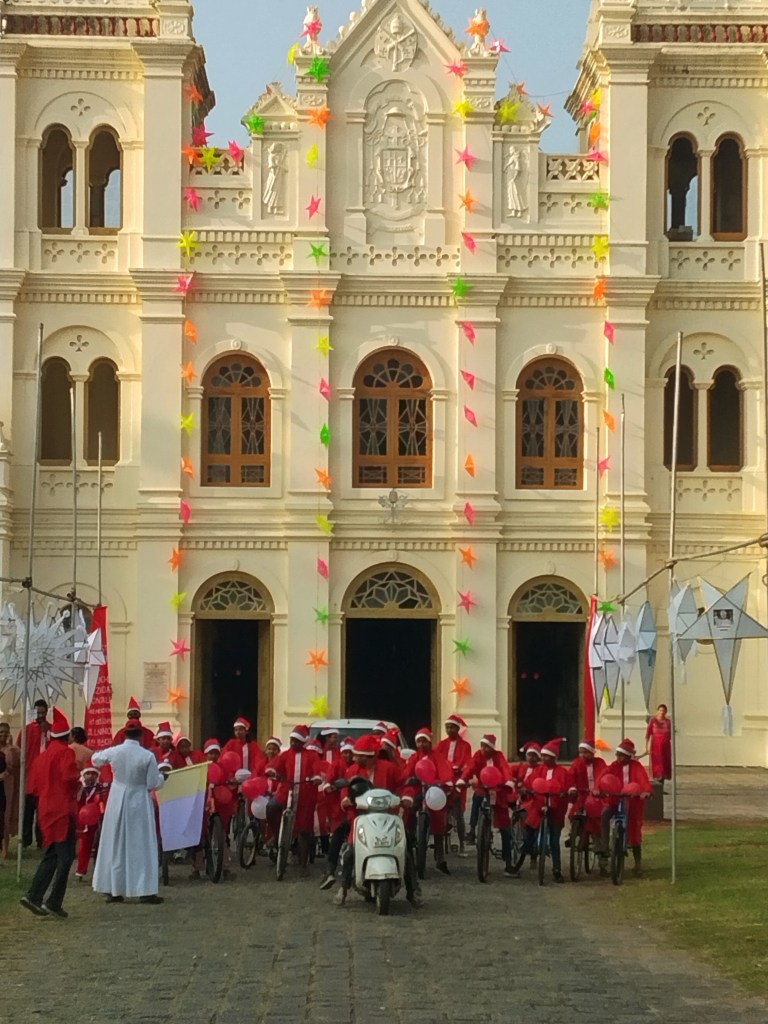
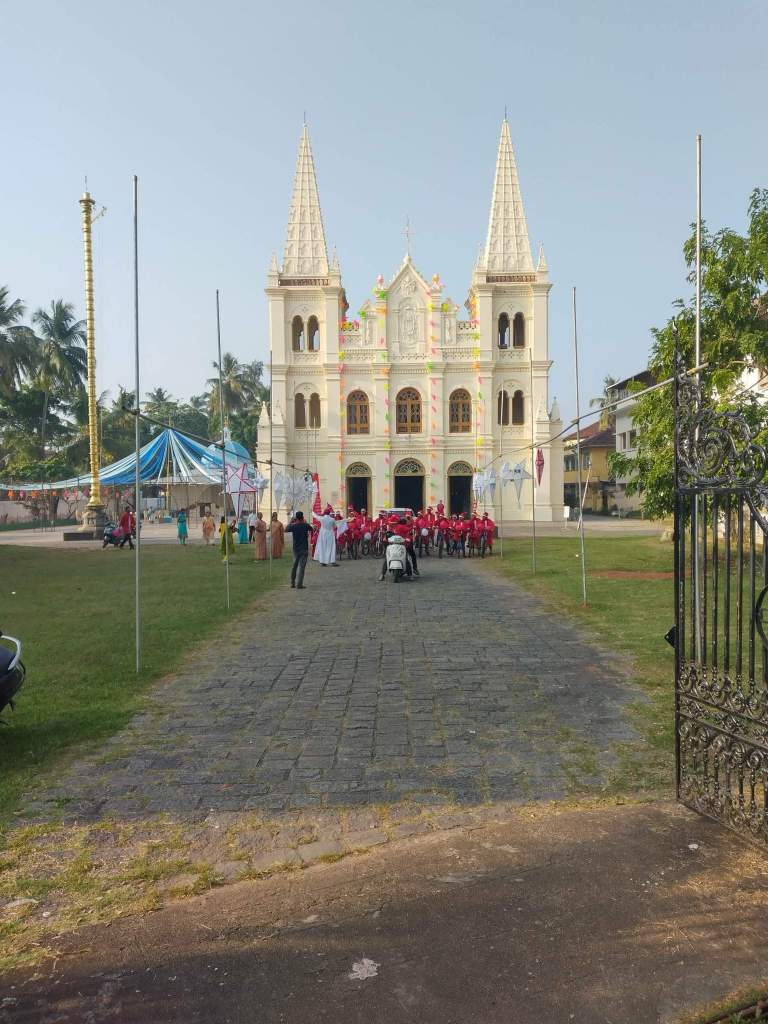
Photo provided by Rhys Hughes

I went to Kerala for Christmas, travelling from Bangalore on the night bus. It wasn’t the first time I had taken a night bus in India. The first time was when I went to Madikeri, high in the hills of Coorg. That bus was one with berths that one can lie completely flat on. In fact, you have no choice but to lie flat because there are no seats. It should be more comfortable than sitting upright all night, and I am sure many passengers find it so, but the vibrations of the engine made my body vibrate in sympathy and every bend in the road made me slide around the berth uncontrollably and when the bus climbed a slope all the blood rushed to my head, which was oriented towards the rear of the vehicle. I decided never to use this restful method of travel again.

This is why I chose a more old-fashioned style of bus in order to journey to Kerala. I understand seats. Your head is always up and your feet always down, and if this happens not to be the case then it quickly becomes obvious that some disaster has happened. Head up, feet down, seems to me the natural order of the universe when travelling a great distance. It was a twelve-hour journey. In India that might not be so remarkable, but I come from a small country where twelve hours on a bus is sufficient time to drive right across the land and a fair way out to sea. “Captain, there seems to be a bus overtaking us!” “Have you been at the rum again, bosun?” The immensity of India is something I doubt I will ever get used to. It is big even in terms of bigness.

Not that the bus with seats was completely free of problems. The seats had a lever by the side of them, and if this lever was pulled, the seats reclined. I was expecting something of this nature, but I was completely taken by surprise at the extreme angle they adopted. They reclined to an excessive degree. All was fine for the first fifty kilometres or so, then the young lady in the seat in front of me decided it was bedtime. She reclined the seat so precipitously that it whacked on my knees, and I was given no choice but to stare directly at the top of her head which was almost touching my chin. The only solution was to recline my own seat. I did so and heard a yowl from behind. I had taken my turn to crush some other innocent knees. And so I lay in this absurd position, sandwiched between two sleepers as the hours slowly passed.

The bus was soon filled with snorers and all of them were out of time with each other. I am a jazz aficionado, I love music with complex rhythms, and I also love polyrhythms, but the point of such intricate music is that there is resolution at some point along the melody lines. The contrasting rhythms ought to come together at least sometimes, in order to provide structure, but the snoring was far too avant garde for that. It was atonal and without time signatures. A man in a forest of lumberjack gnomes probably feels the same way I did, as the sawing takes place and the trees topple with a crash. There was no crash for me during that night, thank goodness, but plenty of jolting as the bus ran over potholes in the highway or swerved around unseen obstacles or accelerated to overtake rival night buses also full of snoring passengers.

Well, all this is a nuisance but one that is necessary for travellers to endure. I reached my destination safely and that’s what really counts. It was morning in Kerala and the heat was already intense. Bangalore is at altitude and altitude is a restrainer of temperature. The landscape shimmered and the port city of Kochi pulsated under the sun. No matter! Time to find my hotel and rest for a while in order to catch up on all the sleep I had missed on the night bus, whose motto is ‘sleep like a baby’, which turned out to be accurate, for I slept not at all and felt like wailing for hours. I went to the correct address and found that the hotel had been closed for the past two years. Ah well!

We are always advised to expect the unexpected, and we do this well, but I don’t think we are ever prepared for the types of unexpectedness we encounter. I was ready for the bus to break down, or for me to lose my way in the narrow entangled city streets, or for crows to swoop and peck my head. I wasn’t ready for a hotel to not exist. I soon found another and it was a better establishment with two ceiling fans instead of one, a balcony, even a fridge that was on the verge of working. That fridge later held two bottles of beer and cooled them from hot to lukewarm, and I drank them one evening and regretted it because I have no stomach for beer. Because of that warm beery incident, I missed out on sampling the palm wine that Kerala is so famous for.

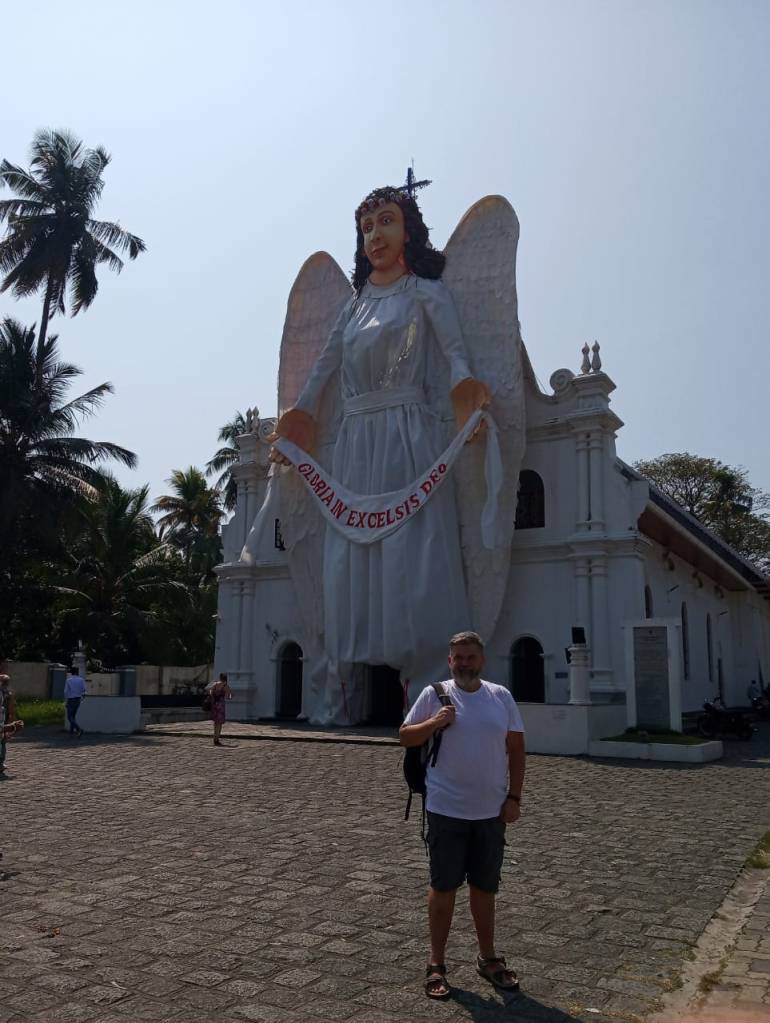
The old part of Kochi is picturesque and labyrinthine. I wandered where I would and ended up somewhere, but I’m still not sure where. Christmas lights were strung between the buildings, large glowing stars had been erected on the summits of walls, on roofs, or dangled from gables. One church I passed had a façade in the form of a gigantic angel. This was really quite surreal. We tend to think of angels as radiant beings with a human form, perfect men and women, but if you read the Bible you will soon see that most angels have an appearance that is not human at all. The highest rank of angels, the Ophanim, resemble sets of interlocking gold wheels with each wheel’s rim covered with eyes. They float through the air without needing wings. A church façade based on one of these angels would be an example of experimental architecture. But the church in the shape of a personable angel was endearing.

I walked past another church and saw a fleet of Santa Clauses mounted on bicycles about to set off. Is ‘Clauses’ the plural of ‘Claus’? I have no idea, for it has never occurred to me that there might be more than one of them. This fleet consisted of children in costume and I have no notion of where they were going or what they would do when they arrived. I strolled onwards and they rode past me, guided by two men on a scooter, one steering and the other holding in his arms a loudspeaker and facing backwards, like a Pied Piper who has entered the Electronic Age. One by the one, the Santa Clauses pedalled past, laughing, waving, generally enjoying themselves.

This was Christmas at its most gentle, innocent and benevolent, a far cry from the Christmas ritual I witnessed exactly thirty years ago in Prague, where the tradition involves a saint, an angel and a devil chained together who stalk pedestrians in order to give them lumps of coal that represent the sins of the year. Prague was freezing, Kochi was broiling, and I know which I prefer, but the beer in Prague is certainly better. I reached the waterfront and sat under a tree and wondered if the mass migration of Santa Clauses I had seen was truly a fleet. Maybe it was an armada instead, or a division? Is there a collective noun for Father Christmas? A Splurge of Santas?

Kochi is riddled with waterways, and it feels like an excellent location for a port, which it is. No wonder it was established at that spot. I felt a small connection to the ancient mariners who had sailed here from the West long ago, from Europe and around the tip of Africa and across the Indian Ocean. One day I will travel from this very place to the islands of Lakshadweep. This has been a dream of mine for a long time, since I was eight or nine years old. I had entered a competition run by the Twinings tea company and I won. A map of the Indian Ocean was given with the names of islands removed and the entrants had to fill in those missing names. I consulted an atlas to do this, as I imagine every other entrant did, but I had an unknown advantage.

My atlas was very old, a green battered thing, and the Lakshadweep islands were marked by that very name. In other atlases the island chain was apparently named as the Laccadives. The administrators were looking for Lakshadweep and that is how I won a year’s supply of tea. It came regularly via the postman in an endless series of little tubs, Earl Grey, Lapsang Souchong, Peach Oolong. But in the end, this endless series finally ended, and my tea luck turned out only to feel inexhaustible rather than to be so. I have never won a competition since or even come close. But I have had a fondness for tea and Lakshadweep ever since, so it is imperative that I sail to those islands one day.

During my time in Kochi, I travelled on a boat only once, from Fort Kochi to Vypin Island. A battered rusty ferry crammed with foot passengers, cars and motorcycles. Cost of ticket? The equivalent of three British pennies. This is far cheaper than the cost of any ferry I have ever been on, with the exception of the occasional free ferries that I have encountered around the world, such as the one that takes passengers across the Suez Canal from one side of Port Said to the other, or the ferry that travels back and forth between Mombasa, which is on an island, and the African mainland. Sea travel is something special and I have done too little of it in my life. If I could have sailed back to Bangalore, I would have. As it happens, I went back on another night bus, but this time the person in the seat in front of me only reclined their seat to a reasonable angle. My knees were not crushed, and in return I did not crush the knees of the person behind me. I like and admire reasonable angles. They make geometry sweet.

.

Rhys Hughes has lived in many countries. He graduated as an engineer but currently works as a tutor of mathematics. Since his first book was published in 1995 he has had fifty other books published and his work has been translated into ten languages.

.

PLEASE NOTE: ARTICLES CAN ONLY BE REPRODUCED IN OTHER SITES WITH DUE ACKNOWLEDGEMENT TO BORDERLESS JOURNAL. 

Click here to access the Borderless anthology, Monalisa No Longer Smiles