Food and shelter make things right— they’re useful—
truths are takers not givers and ask way more of you
than they ever cough up in exchange. So, a bit like cats.
POETRY, ONE POSSIBLE DEFINITION
Intent and Expectation— both masochists— meet up, find they have nothing to say to each other and struggle to hide their disappointment.
Jim Murdoch has been writing poetry for fifty years for which he blames Larkin, who probably blamed Hardy. He has published two books of poetry, a short story collection and four novels.
PLEASE NOTE: ARTICLES CAN ONLY BE REPRODUCED IN OTHER SITES WITH DUE ACKNOWLEDGEMENT TO BORDERLESS JOURNAL
Grudges are like hedgehogs. Be careful how you hold them. And never juggle with them.
Seriously, don’t.
Hide and Seek
[I]t’s harder for him to mean something than say – A.R. Ammons
Meaning hid in the words. The last place anyone would look. These days anyways.
And no one looked. No one looked. No one ever looked.
And that… hurt.
Tuesday (or in might’ve been a Friday)
Wrote a little poetry. Made no difference. Same ol’ same ol’.
Actually, I think it was Sunday,
Quotidian
Every day I forget a little. I eat a little, sleep a little, forget a little…
actually, sometimes I do forget to eat but
I never forget to forget. Either way it gets a little easier every day.
Jim Murdoch has been writing poetry for fifty years for which he blames Larkin, who probably blamed Hardy. He has published two books of poetry, a short story collection and four novels.
.
PLEASE NOTE: ARTICLES CAN ONLY BE REPRODUCED IN OTHER SITES WITH DUE ACKNOWLEDGEMENT TO BORDERLESS JOURNAL
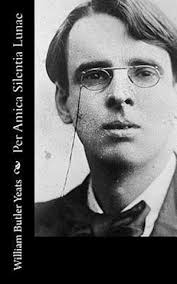
In the last section of that book with the most beautiful of titles, Per Amica Silentia Lunae,[1] the Irish poet Yeats, addressing Iseult Gonne, refers to those moments when he becomes happy – when poetry over brims on the page, and things turn luminous, and time seems to “burn up” in the sense of no longer mattering, no longer having the power to detract or diminish.
He is writing about lyric poetry, of course, and about those special moments that may come upon us at any age or at any time, but which become more recognisable to the poet as he or she grows older, and more experienced and knowledgeable – although they are also becoming, in actuarial terms, more rare.
But perhaps not. Perhaps, with wisdom and insight and acceptance, they actually increase in frequency. Recently I told an old friend, a visitor to my home, that after all these years I have finally begun to understand how to write poems. Put simply, I have gotten better at being patient, and at waiting until they appear. I have learned the necessity of silencing my own thoughts in order to hear the brushing of their wings as they pass overhead.
Or, to change the metaphor – only when the wind dies down can the bee or the butterfly land on the blossom. Genuine lyricism comes only after the self has been quieted. Not put to sleep, or – least of all – “put on hold,” in that ugly modern phrase.
Rather, shifted into neutral. Allowed to drift, and possibly to become something rich and strange.
“It may be an hour before the mood passes,” Yeats writes, in a completely disarming, unexpected passage, “but latterly I seem to understand that I enter upon it the moment I cease to hate.” He goes on to say, “I think the common condition of our life is hatred – I know that this is so with me – irritation with public or private events or persons.”
He attempts to define what he means by not hating, and it is not necessarily loving. Rather, “in those brief intense visions of sleep, I have something about me that, though it makes me love, is more like innocence. I am in the place where the Daimon is, but I do not think he is with me until I begin to make a new personality.”
This new personality is a paradox. Recognisably human – fragile, perishable, transient – it lacks the negative aspects of selfhood. It is no longer selfish or greedy or hateful. It has accepted its present state of being and its eventual death and dissolution.
We are speaking, then, of neither comedy or tragedy, nor their dramatic manifestations in verse, but of the lyric temper in poetry, and of the manner in which the poem is its abode – just as the moth or butterfly, as it seeks to gather up the pollen, finds its momentary resting place in the flower. But there is a dark side to this metaphor, and in any such discussion it cannot be avoided. Even the purest lyric voice is, by its very nature, transitory and perishable.
Honeybees, too, gather up pollen, but these are worker bees, who venture far from the hive, and who overcome all manner of risk in doing so. Within the hive itself, the drones partake of the bounty, but they do nothing to earn their keep. Only one of them will bed the queen. The others, whether they know it or not, are doomed. By autumn, as part of the very nature of things, the workers, understanding that only a finite amount of food is available to see them through the winter, push the drones out of the hive, where they perish amid the thorns and brambles.
Sappho
The works of many a lyric poet, who has dined the summer long on the ambrosia of the imagination, will eventually be subject to sheer circumstance, and drop away from the hive. Sappho[2]’s main works are lost; Keats[3]’s productive years were pitiably few. Madness overtook Smart[4], Hölderlin[5], Clare[6], and dozens more. We know this, and thus each lyric poem we have managed to preserve from past centuries speaks to us in an especially poignant way. However lovely, however evocative, we know it will not last.
The philosopher and poet George Santayana[7] has summed up the situation: “Even the most inspired verse, which boasts not without a relative justification to be immortal, becomes in the course of ages a scarcely legible hieroglyphic; the language it was written in dies, a learned education and an imaginative effort are requisite to catch even a vestige of its original force. Nothing is so irrevocable as mind.”
This is why lyric poetry retains its power to speak to us, down through the ages: because it is perishing before our very eyes, even as our own eyes are perishing. And yet it does not matter. “I am in the place,” Yeats explains, “where the Daimon is.”
And what might that be – the presence of “the Daimon”? Such a term can mystify, but surely this refers to some fundamental antinomy of human existence, some intuition of paradox that lies at the heart of being. Keats called it “negative capability”; F. Scott Fitzgerald[8] praised “that ability to hold two opposed ideas in the mind at the same time, and still retain the ability to function.”
The two ideas? The notion that art itself, in all its fragility, strives to endure. Perhaps another poet, Edwin Arlington Robinson[9], best described the paradox, in his tribute to Walt Whitman[10]: “When we write / Men’s letters on proud marble or on sand,/ We write them there forever.”
To be with the Daimon, to participate in timeless awareness, is why we write lyric poems, why we return to them – and why we revere the great periods of lyric achievement. Undoubtedly there have been many, in different cultures around the world, but we have managed to record only a few.
We treasure the lyric writings of the Sufis and the Elizabethans. We hark back to the time of Wordsworth and Hölderlin, to the T’ang Dynasty [618-906] and to that amazing stretch from Baudelaire to Mallarmé in the second half of the nineteenth century, a time that included Tennyson, Dickinson, Verlaine, Hopkins, Housman, Hardy, and Yeats himself.
Eventually, in the course of time, all these will slip away and be forgotten, which is why they now seem so lovely and memorable. They are that which has managed to survive and come down to us in spite of everything. Wang Wei knew this quite well. As the glories of the T’ang began to crumble and fall away, he paid tribute to that bittersweet awareness that we have come to know as the lyric temper:
Be not disquieted either by kindness or by insult –
          empty joy or sorrow.
Do not count on good or evil – you will only
          waste your time . . .
And why seek advice from the Yellow Emperor
          or Confucius?
Who knows but that we all live out our lives
          in the maze of a dream?
“Per amica silentia lunae” is a line from the Virgil[11]‘s Aeneid. Yeats translates it as “Through the friendly silences of the moon”. It is a most pregnant line. The moon never speaks; its very essence is change. And yet each of us considers it a friend, and we invariably greet it with our innermost being, each time we see it in the night sky. We have carried on this friendship since childhood. Lyric poetry deals with such verities.
The following is by Witter Bynner[12], taken from his masterful introduction to The Jade Mountain: A Chinese Anthology: “. . . if we will be honest with ourselves and with our appreciation of what is lastingly important, we shall find these very same poems to be momentous details in the immense patience of beauty. They are the heart of an intimate letter. They bring the true, the beautiful, the everlasting, into simple, easy touch with the human, the homely, and the immediate.”
A key phrase in this passage is worth repeating and remembering: “The immense patience of beauty.” Surely it is to this that the poet must surrender if the lyric temper is to be made manifest.
[1] Translates to ‘Through the Friendly Silences of Moon’, was written by Yeats (1865-1939) between January and May of 1917, and consists of a Prologue and an Epilogue for Iseult Gonne
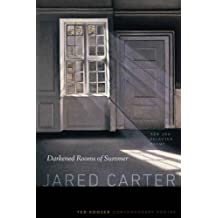
Jared Carter’s most recent collection, The Land Itself, is from Monongahela Books in West Virginia. His Darkened Rooms of Summer: New and Selected Poems, with an introduction by Ted Kooser, was published by the University of Nebraska Press in 2014. A recipient of several literary awards and fellowships, Carter is from the state of Indiana in the U.S.
.
PLEASE NOTE: ARTICLES CAN ONLY BE REPRODUCED IN OTHER SITES WITH DUE ACKNOWLEDGEMENT TO BORDERLESS JOURNAL
Instead of Narnia we wound up in Oz which was fine aside from the lion who took some getting used to. PTSD is no joking matter.
The tiger on the other hand…
SIMPATICO
Quite often I finish my wife’s sentences. It’s not such a big deal.
I get it right too, well, every ten or twelve goes. I call that a win.
’NUFF SAID
There are many things not in this poem but that is how it should be.
Not everything belongs in a poem even if it can be made to fit.
Jim Murdoch has been writing poetry for fifty years for which he blames Larkin. Who probably blamed Hardy. He has published two books of poetry, a short story collection and four novels.
.
PLEASE NOTE: ARTICLES CAN ONLY BE REPRODUCED IN OTHER SITES WITH DUE ACKNOWLEDGEMENT TO BORDERLESS JOURNAL
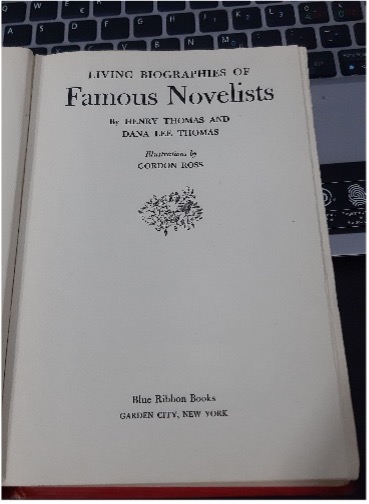
G Venkatesh writes about a book from 1946. What is interesting is no women writers are featured in it despite their being a phrase which he quotes in his essay, ‘a stepdaughter of the Muses’…
Photo graph by G Venkatesh
There is this book published in 1946 in New York, that I picked up at a Red Cross charity shop in Karlstad (Sweden) of late. A compilation of micro-biographies (make that ‘nano’ if you will) of 20 novelists (fiction-writers in other words) from Italy, Spain, France, England, Scotland, the USA, Russia and Ireland, who graced the world of literature in flesh between the mid-14th and the mid-20th centuries, and will continue to do so, in spirit, forever.
Pillars of fertile imagination, seeded from the idea-realm Visual by G Venkatesh
I venture in this article to present some gleanings from this little gem of a book, to enlighten, motivate, inspire, educate and rekindle interest in the classics of yore. Ralph Waldo Emerson wrote that all writing happens by the grace of God. We witness that in the lives of the twenty writers profiled in the book. Some had an inborn urge to write, some developed the penchant to do so as if the idea floated in from the idea-realm beyond the astral, and some others were blessed by the Divine to transmute their pain and suffering to the written word that has stood the test of time, and will continue to do so, into the distant future. Condemnation paved the way to commendation for some, while rejections emboldened others to transcend the limits of human judgement and rejoice in the sunshine of hard-earned glory.
At its perigee, the ‘novel’, as observed by Henry and Dana Lee Thomas, is an epitome of philosophy as applied to life. The Thomases ask readers to consider the life of every novelist profiled to be a magnum opus in itself – each adorned with facts stranger than fiction.
Boccaccio, Rabelais, Cervantes
This is an Italian-French-Spanish trio (encompassing the 14th to the early 17th century), and perhaps most of the readers may be familiar only with the third-named. Giovanni Boccaccio was a contemporary of Alighieri Dante (whose biography he wrote). A ‘friendly sinner’, he was a devotee of the here and now, while also being profoundly interested in the hereafter.’ Novelists, well and truly, leave behind accounts of their times, couched in fiction (and that, read alongwith factual history, helps us readers to visualise and understand better how things were in the past). The ‘poets’ in them, simultaneously dwell on and dream about how things can, must and will be in the future. Many of them refrain from including a semi-autobiographical element to their novels, and the Thomases have identified Francois Rabelais as being one such. To the Frenchman, all life was an anecdote with a bitter ending, a truth he based his limited fictional creations on.
Miguel de Cervantes, the Spaniard, is presented as a disappointed, shattered and disgusted man, who was chiefly motivated by his own trials, travails and tribulations to pen the famous Don Quixote. This knight who fought windmills, was perhaps what Cervantes thought himself to be – blessed with the good fortune to live in folly and die in wisdom.
Defoe, Swift, Sterne
From the simple Quixote and the clumsy Sancho Panza to the resourceful Robinson Crusoe and his helpful Man Friday, characters created by Daniel Defoe in a novel eponymous with the protagonist. Defoe was a paradox of moral integrity and material ambition (if you can visualise one such blend), who by virtue of the fact that he donned the mantles of businessman, pedlar, politician, pamphleteer and spy (not necessarily in that order) in his life, could interpret mankind expertly in his fiction. A kind of ‘been-there, seen-that, done-that, can-write-about-all-with-authority’. Jonathan Swift, of Gulliver’s Travels fame, was gifted with a supreme intellect and a spiritual-religious leaning, but encumbered by physical weakness. God gives but also deprives at the same time, a mystery which humankind has not been able to solve. Fatherless when barely half-a-year old, he was verily a titan (like the character Gulliver he created) among pygmies (like the Lilliputians). He abhorred injustice and thought and prayed forever for the felicity of humankind. He lived to be 78, but contended on the basis of his experiences that the gift of a long life is bought at a very high price.
Laurence Sterne, the preacher-poet Yorkshireman, left behind several nuggets of wisdom in his novels and a couple of them can be cited hereunder:
“I laugh till I cry, and I cry till I laugh” (reminding one of the Yin and the Yang which feed into each other)
“Give me all the blessings of wisdom and religion if you will, but above all, let me be a man.”
Scott, Balzac, Dumas
Sir Walter Scott, while being a prodigy like Swift, also had to contend with physical disabilities like him. He tided over them marvellously, prudently, gallantly and tirelessly, en route to a knighthood and immortality in the realm of English literature. Dreamy Honoré de Balzac, obdurate and uncompromising, believed that man’s destiny and purpose in life was to “rise from action through abstraction to sight” – a deed-word-thought ascent in other words. “Life lies within us (spiritual), and not without us (material)”, he averred. He never got the glory he deserved when he was alive, and his soul perhaps got the peace it richly merited when fame showed up posthumously.
Athos, Porthos, Aramis and D’Artagnan – characters from The Three Musketeers, a novel by Alexandre Dumas which presents the facts of 19th century France through the medium of fiction – were known to school-goers in the 1970s and 1980s, like yours sincerely. Dumas, as the Thomases have noted, met praise with a shrug and insults with a smile – stoically in other words. However, he had a penchant for sarcasm and trenchant wit which were unleashed whenever required. “I do not know how I produce my poems. Ask a plum tree how it produces plums,” is verily a testimony to his transatlantic contemporary Ralph Waldo Emerson’s “All writing happens by the grace of God.”
Hugo, Flaubert, Hawthorne
Two Frenchman and a New-Englander American comprise this trio. Viktor Marie Hugo, of Les Misérables fame, was born in the same year as Dumas, and was regarded widely as the ‘Head’ of the 19th century to Abraham Lincoln’s ‘Heart’. His crests of hard-won success coincided with the troughs of ill-deserved sorrow (he had to contend with the deaths of his wife and children). The Divine Will strengthened his mind, soul and fingers to move quill on paper, enabling the much-bereaved Frenchman to cope and conquer. “Sorrow,” he wrote, “is but a prelude to joy.” A stoic would however add, “and vice versa”. Quite like Sterne’s “I laugh till I cry, and I cry till I laugh”. Despite all that he had to endure; Hugo always believed in God and the purposes he lays out for human beings in their lives.
Hugo’s friend Gustave Flaubert considered the written word to be a living entity, with a voice, perfume, personality and soul. A concoction of realism and romanticism, if ever there was one, Flaubert was also a peculiar amalgamation of poet-cynic, artist-scientist and humankind’s comforter-despiser. He ardently believed that though the soul is trapped within a mortal corpus on the terrestrial realm, it (which is the actual identity of a human being) lives in the idea-realm, and finds its rewards therein.
Hawthorne, on the other side of the ocean, was charmed by the sea and surf and sand in his childhood and youth, having spent a lot of time along the New England coast in north-western America. That led him to dwell on the mysteries of the human soul (which continue to be mysteries at the time of writing), while rebelling against the Puritanic influences that had engulfed the region. He was on an eternal quest, an intellectual and moral pathfinder in his own right, and a pioneering rebel with the pen and quill in his arsenal.
Thackeray, Dickens, Dostoyevsky
William Makepeace Thackeray, readers will be interested to know, was born in Calcutta (now, Kolkata). A sentimental cynic who glimpsed the stupidity of life through the fog of sorrow, he believed that foolishness of the past is a pre-requisite to wisdom in the present and the future – in other words, simply put, we learn from our errors as we move on. ‘Gifted with a bright wit and an attractive humour’, in the words of Charlotte Bronte, he contended that literature was more a misfortune and less a profession. His cynicism helped him to grasp reality, and feel empowered in the process –“How very weak the very wise; how very small the truly great are.” Kind and wise humans often lack the power to change things for the better, while the powerful ones lack the conscience, will and goodness to want to do so.
Thackeray rivalled with Charles Dickens for fame and glory. Dickens, similar to Scott and Swift, had to contend with physical discomfort in his childhood and adolescence, in addition to a father who was not responsible with the money he earned. These experiences would later feed into the stories he churned out prolifically; semi-autobiographical some of them, while informing readers at the same time about the times that prevailed – “the best of times and the worst of times” (A Tale of Two Cities). His humble beginnings made him burn the midnight oil later in life, fuelled by the ambition to succeed, which he sustained all along. Quite like it was Hugo across the Channel, the troughs of torment annulled the acmes of accomplishment. Yet, he remained grateful to God and fellow-humans for the life he lived, and bade one and all a ‘respectful and affectionate farewell’, before ascending to the astral realm.
Reclusive Feodor Dostoyevsky, like Hawthorne in America, struggled to shake off a Puritan upbringing and sought fodder for his literature among the common man – the suffering proletariat who visited liquor shops to drown their sorrows in alcohol. Man, he believed, was responsible for his own salvation…and not God. He however did believe at times that God saved those whom men punished. But then, he also contradicted himself or seemed to do so, when he said that man is saved only because the Devil exists. But perhaps that was not a contradiction after all – God saves man from what he has to be saved from! The meaning of life, according to Dostoyevsky, was the brute-to-angel and the sinner-to-saint transformation of man; quite on the lines of Balzac’s action-abstraction-sight prescription.
Novelist
Lifespan
Selected works
Giovanni Boccaccio
1313-1375
Filocolo, Filostrato, Teseide, Fiammetta, Amorosa Visione, Ameto, Decameron, Life of Dante
Francois Rabelais
1495 – 1553
Pantagruel, Gargantua
Miguel de Cervantes
1547 – 1616
Galatea, Don Quixote, Novelas Exemplares, Persiles y Sigismunda
Daniel Defoe
1661-1731
The True-Born Englishman, The Apparition of Mrs Veal, Robinson Crusoe, The Dumb Philosopher, Serious Reflections, Moll Flanders
Jonathan Swift
1667 – 1745
The Battle of the Books, The Tale of a Tub, Gulliver’s Travels Children of the Poor, Directions to Servants, Polite Conversation
Laurence Sterne
1713-1768
A political romance, Tristram Shandy, Sermons by Yorick, The Sentimental Journey
Sir Walter Scott
1771 – 1832
The Lady of the Last Minstrel, Ivanhoe, Kenilworth, The Lady of the Lake, Waverley, The Monastery
Honoré de Balzac
1799 – 1850
The Country Doctor, Eugenie Grandet, Jesus in Flanders, Droll Stories, Louis Lambert, Seraphita, A Daughter of Eve, The Peasants
Alexandre Dumas
1802 – 1870
The Three Musketeers, The Count of Monte Cristo, The Black Tulip, The Prussian Terror, The Forty-Five, Chicot the Jester, The Queen Margot
Victor Hugo
1802 – 1885
Les Misérables, The Toilers of the Sea, The History of a Crime, Legend of the Centuries, The Hunchback of Notre Dame, The Supreme Pity
Gustave Flaubert
1821 – 1880
Madame Bovary, The Sentimental Education, The Temptation of St Anthony, Bouvard and Pécuchet, Salambbô
Nathaniel Hawthorne
1804 – 1864
Twice Told Tales, The Blithedale Romance, The Scarlet Letter, Mosses from an Old Manse, The Marble Faun, Tanglewood Tales, The Snow Image
William Thackeray
1811 – 1863
The Great Hoggarty Diamond, Vanity Fair, The Book of Snobs, Henry Esmond, The Virginian, Lovel the Widower, The Newcomes
Charles Dickens
1812 – 1870
Pickwick Papers, Oliver Twist, Nicholas Nickleby, Barnaby Rudge, David Copperfield, A Tale of Two Cities, Great Expectations
Feodor Dostoyevsky
1821 – 1881
Crime and Punishment, Poor Folk, The Double, The Landlady, The Family Friend, The House of Death, The Gambler, The Idiot,
Leo Tolstoy
1828 – 1910
War and Peace, Anna Karenina, Childhood, The Cossacks, Two Hussars, Three Deaths, A Confession, Master and Man, Resurrection, What is Art
Guy de Maupassant
1850 – 1893
Une Vie, The Ball of Fat, Mademoiselle Fifi, The Necklace, Yvette, Our Heart, Bel-Ami, Pierre and Jean, A Piece of String
Emile Zola
1840 – 1902
Doctor Pascal, Therese Raquin, The Dram Shop, Nana, Germinal, The Earth. The Dream, Rome, Paris, Fertility, Work, Truth, Justice
Mark Twain
1835 – 1910
Huckleberry Finn, The Adventures of Tom Sawyer, Joan of Arc, A Connecticut Yankee, What is Man, The Prince and the Pauper
Thomas Hardy
1840 – 1928
A Pair of Blue Eyes, Under the Greenwood Tree, Far from the Madding Crowd, The Trumpet-Major, The Mayor of Casterbridge, Jude the Obscure, Tess of the D’Urbervilles
Table: The novelists profiled, and a list of their selected works
Tolstoy, Maupassant, Zola
Leo Tolstoy, also a Russian like Dostoyevsky, unlike Dickens, was not guided onward and forward by ambition. He believed in stooping to conquer and was motivated in his life’s journey by compassion. Orphaned when not yet a teenager, haunted by an inferiority complex pertaining to his ‘unprepossessing appearance’, and disgusted with organised religion (the Orthodoxy which prevailed in Russia), he discovered his purpose in Rousseau’s philosophy and in ridding the human heart of evil and helping it to live in peace, in communion with Nature. His dissent, rebellion and dissatisfaction with extravagance (of the nobility), bigotry (of the clergy) and tyranny (of the royalty), were the seeds, water and fertiliser for his contributions to Russian literature. Readers know that Mahatma Gandhi was inspired by the philosopher-prophet-penman Leo Tolstoy to set up the Tolstoy Farm in South Africa. Some nuggets which will serve as parts of vade mecums for readers:
“Death, blessed brother death, you are the final deliverance.”
“There are millions of human beings on earth who are suffering. Why do you think only of me?”
Guy de Maupassant was one of those millions who suffered a lot. Reading about the tragic short life led by him, with constant physical and psychological afflictions which led to autoscopy in his 42nd year, and death in the 43rd, makes one sad. It also makes readers turn to his short stories – of which he is known to be a master – more eagerly. Flaubert and de Maupassant knew each other well, the former being a ‘guru’ guiding the latter on from time to time, along his literary journey.
Another Frenchman – Emile Zola – a contemporary of de Maupassant and Flaubert and a good friend of the painter Paul Cezanne, progressed through pitfalls and serendipitous godsends to profile the poor people of France, and ironically rise to richness thereby. A man who defended justice and spoke up against all forms of unfairness, Zola is known for standing up for the French army captain Alfred Dreyfus, a Jew who was wrongly (and knowingly so) accused of treason in 1894, and playing a key role in clearing the Jew’s name in 1906 (four years after Zola passed away). His last written words –“…to remake through truth a higher and happier humanity.”
Twain and Hardy
The man most readers know as Mark Twain, was born Samuel Clemens in America. Though it would not be right to compare and contrast the travails endured by the novelists profiled by Henry and Dana in this book, it can at least be said that a peep into Twain’s life tugs at your heartstrings and the vibrations linger on for a long time. Indeed, as a natural consequence, respect and admiration well up in the heart, for this novelist. He suffered an awful lot, but also learnt to laugh at his own agony as an ‘onlooker’ – the soul observing the pain of the body and the trauma of the mind it enlivens, from a distance, without being affected in any way. Like Hugo on the other side of the ocean, he endured what can be considered as possibly the greatest sorrow a man can face – burying/cremating his own children, one after another. Twain always supported the underdogs while voicing his disgust at the pompousness of the rich and powerful, in his own unique brand of sarcasm. The following words of his may sound cynical, but they are open to interpretation:
“Nothing exists but you. And you are but a homeless, vagrant, useless thought, wandering forlorn among the empty centuries.”
Without letting these words deter you, link them with the other sufferer Viktor Hugo’s “Nothing is as powerful as an idea whose time has come”, and soldier on.
The last of the twenty, Thomas Hardy, is yours sincerely’s favourite (I happen to read all his important works in my twenties, if I remember right). Hardy like his fellow-Britons Swift and Scott was born with a “frail body, strong mind and compassionate soul”. He was compassionate towards and appreciative of the forces and elements of Mother Nature – winds, clouds, bees, butterflies, squirrels, sheep etc., as pointed out by the Thomases. The manner in which he moulded his protagonists in his novels was catalysed by this compassion. Most of them are compassionate themselves, and evoke compassion in the hearts of readers, quite easily. Hardy wanted to teach his fellow-humans how to “breast the misery they were born to”, by using his fictional protagonists as instruments. His life was an exercise in “subduing the hardest fate” and “persistence through repeated discomfitures”. As it often happens with true geniuses, he was much ahead of his times, and the glory that illumined his soul in heaven posthumously, more than compensated for the disappointments which had to be endured when it was encased in his mortal corpus.
Not the last word by any means
Serendipity, it must have been, which made me stride into the Red Cross charity shop in Karlstad in June, wherefrom I purchased this 280-page treasure. To quote Longfellow (who incidentally was a college-mate of Hawthorne’s),
“Lives of great men all remind us/We can make our lives sublime/And departing leave behind us/Footprints on the sands of time.”
The 20 authors profiled in this book represent a huge family of writers who converted fiction from ‘a stepdaughter of the Muses’ to an ‘epitome of the philosophy of life’, except that there were no ‘daughters or stepdaughters of men’ listed among the novelists in this volume.
.
G Venkatesh (50) is a Chennai-born, Mumbai-bred ‘global citizen’ who currently serves as Associate Professor at Karlstad University in Sweden. He has published 4 volumes of poetry and 4 e-textbooks, inter alia.
.
PLEASE NOTE: ARTICLES CAN ONLY BE REPRODUCED IN OTHER SITES WITH DUE ACKNOWLEDGEMENT TO BORDERLESS JOURNAL
“Beauty is truth, truth beauty — that is all
                Ye know on earth, and all ye need to know.”

John Keats (1795-1821), Ode to a Grecian Urn
‘Beauty is Truth’ : The Potato Eaters(1885) by Vincent van Gogh (1853-1890). Courtesy: Creative Commons
What makes for great literature? To me, great literature states the truth — the truth that touches your heart with its poignancy, preciseness, sadness, gentleness, vibrancy, or humour. If Khayyam, Rumi, Keats, Tagore, Frost or Whitman had no truths to state, their poetry would have failed to mesmerise time and woo readers across ages. Their truths – which can be seen as eternal ones — touch all human hearts with empathetic beauty. Lalon Fakir rose from an uneducated illiterate mendicant to a poet because he had the courage to sing the truth about mankind — to put social norms and barriers aside and versify his truth, which was ours and still is. This can be applied to all genres. Short stories by Saki, O’ Henry or plays and essays by Bernard Shaw — what typifies them? The truth they speak with perhaps a sprinkle of humour. Alan Paton spoke the truth about violence and its arbitrariness while writing of South Africa — made the characters so empathetic that Cry, My Beloved Country(1948) is to me one of the best fictions describing divides in the world, and the same divides persist today. The truth is eternal as in George Orwell’s 1984 (1949) or Suskind’s Perfume(1985). We love laughter from Gerald Durrell or PG Wodehouse too because they reflect larger truths that touch mankind as does the sentimentality of Dickens or the poignancy of Hardy or the societal questioning of the Bronte sisters, George Eliot, and Jane Austen. The list of greats in this tradition would be a very long one.
Our focus this time is on a fearless essayist in a similar tradition, one who unveiled truths rising above the mundane, lacing them with humour to make them easily digestible for laymen – a writer and a polyglot who knew fourteen languages by the name of Syed Mujtaba Ali (1904-1974). He was Tagore’s student, a Humboldt scholar who lived across six countries, including Afghanistan and spoke of the things he saw around him. Cherished as a celebrated writer among Bengali readers, he wrote for journals and published more than two dozen books that remained untranslated because his witticisms were so entrenched by cultural traditions that no translator dared pick up their pen. Many decades down the line, while in Afghanistan, a BBC editor for South and Central Asia, Nazes Afroz, translated bits of Mujtaba Ali’s non-fiction for his curious friends till he had completed the whole of the travelogue.
The translation named In a Land Far from Home: A Bengali in Afghanistan was published and nominated for the Crossword Awards. This month, we not only run an excerpt from the translated essays but also have an interview with the former BBC journalist, Afroz, who tells us not only about the book but also of the current situation in ravaged Afghanistan based on his own first-hand experiences. Nazes himself has travelled to forty countries, much like our other interviewee, Sybil Pretious, who has travelled to forty and lived in six. She had been writing for us till she left to complete her memoirs — which would cover much of history from currently non-existent country Rhodesia to apartheid and the first democratic election in South Africa. These would be valuable records shared with the world from a personal account of a pacifist who loves humanity.
We have more on travel — an essay by Tagore describing with wry humour vacations in company of his niece and nephew and letters written by the maestro during his trips, some laced with hilarity and the more serious ones excerpted from Kobi and Rani, all translated by Somdatta Mandal. We have also indulged our taste for Tagore’s poetry by translating a song heralding the start of the Durga Puja season. Durga Puja is an autumnal festival celebrated in India. An essay by Meenakshi Malhotra explains the songs of homecoming during this festival. It is interesting that the songs express the mother’s views as highlighted by Malhotra, but one notices, never that of the Goddess, who, mythology has it, gave up her life when the husband of her own choosing, Shiva, was perceived by her family as ‘uncouth’ and was insulted in her parent’s home.
In spirit of this festival highlighting women power and on the other hand her role in society, we have a review by Somdatta of T. Janakiraman’s Wooden Cow, translated from Tamil by Lakshmi Kannan, where the protagonist upends all traditional values ascribed to women. Another book which is flavourful with food and would be a real fit on every festive occasion is Mohana Kanjilal’s A Taste of Time: A Food History of Calcutta. Bhaskar Parichha tells us in his review, “In the thriving universe of Indian food books, this clearly stands out.”
Aruna Chakravarti’s review of Shazia Omar’s Golden Bangladesh at Fifty also stands out embracing the colours of Bengal. It traces the title back to history and their national anthem — a Tagore song called ‘Amaar Sonar Bangla – My Golden Bengal’. Gracy Samjetsabam’s review of Suzanne Kamata’sThe Baseball Widow, a cross cultural novel with an unusual ending that shuttles between America and Japan, winds up our review section this time.
As Kamata’s book travels across two continents in a pre-covid world, Sunil Sharma in reality moved home from one continent to another crossing multiple national borders during the pandemic. He has written an eye-opening account of his move along with his amazing short story on Gandhi. Another unusual story creating a new legend with wonderful photographs and the narrative woven around them can be relished in Nature’s Musings by Penny Wilkes. This time we have fiction from India, Malaysia, Bangladesh and America. Steve Davidson has given a story based partly on Tibetan lore and has said much in a light-hearted fashion, especially as the Llama resumes his travels at the end of the story. Keeping in step with light humour and travel is Devraj Singh Kalsi’s account of a pony ride up a hill, except it made me laugh more.
The tone of Rhys Hughes cogitations about the identity of two poets across borders in ‘Pessoa and Cavafy: What’s in a Name?’ reminds me of Puck or Narada! Of course, he has given humour in verses with a funny story poem which again — I am not quite sure — has a Welsh king who resisted Roman invasion or is it someone else? Michael Burch has limericks on animals, along with his moving poem on Martin Luther King Junior. We have much poetry crossing borders, including a translation of Akbar Barakzai’s fabulous Balochi poetry by Fazal Baloch and Sahitya Akademi winning Manipuri poet, Thangjam Ibopishak, translated by Robin S Ngangom. A Nazrul song which quests for a spiritual home has been translated from Bengali by no less than Professor Fakrul Alam, a winner of both the SAARC award and Bangla Academy Literary Award.
Former Arts Editor of Times of India, Ratnottama Sengupta, has shared an essay on how kantha (hand embroidered rug) became a tool to pass on information during the struggle against colonial occupation. The piece reminded me of the narrative of passing messages through mooncakes among Chinese. During the fourteenth century, the filling was of messages to organise a rebellion which replaced the Yuan dynasty (1271-1368) with the Ming (1368-1644). Now the filling is delicious lotus paste, chocolates or other edible delicacies. Women were heavily involved in all these movements. Sameer Arshad Khatlani has highlighted how women writers of the early twentieth century writing in Urdu, like Ismat Chughtai, created revolutionary literature and inspired even legendary writers, like Simone de Beauvoir. There is much more in our content — not all of which has been discussed here for again this time we have spilled over to near fifty pieces.
We have another delightful surprise for our readers – a cover photo of a painting by Sohana Manzoor depicting the season titled ‘Ode to Autumn’. Do pause by and take a look at this month’s issue. We thank our writers and readers for their continued support. And I would personally like to give a huge thanks to the team which makes it possible for me to put these delectable offerings before the world. Thank you all.
"Beauty is truth, truth beauty,—that is all
Ye know on earth, and all ye need to know."
Ode to a Grecian Urn, John Keats, 1819
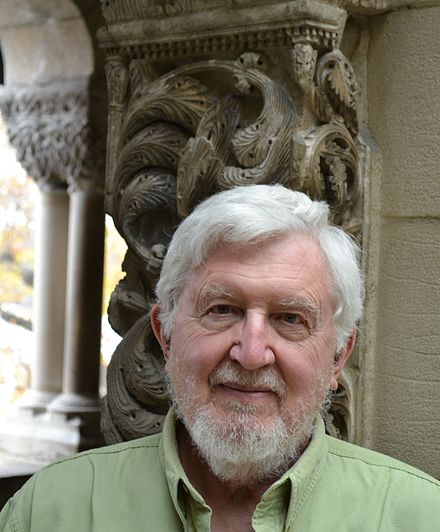
It was a challenge to interview a poet who does not want to talk of his work or of himself. And yet, here was a person whose poetry moved me and from who, I was sure, we had much to learn. I am talking of an acclaimed poet from America, Jared Carter. He permitted me to introduce him with this: “Jared Carter is an American poet who has published seven books of poetry. His volume of new and selected poems, Darkened Rooms of Summer, was issued in 2014 by the University of Nebraska Press. He lives in Indianapolis, Indiana.” If you are more curious about him, his achievements, education and awards, visit his Wiki Page.
Jared Carter
Carter’s poetry is remarkable in giving us glimpses of American life and thoughts, especially as he talks of the wind, the snow and cicadas, as he wrenches poignancy in the hearts of readers bringing out the cruelty in the slaughter of cattle. He draws from the life of common people and their work. At times, he could write of changing a lightbulb and yet create a sense of wonder with his crafting. Despite his obvious Western outlook, he has written of the elusive Yeti – a most beautiful composition. He does tell us in the interview how he wrote it. One would also wonder why he selected to represent ephemerality with such a mythical creature from the East when most of his poems reflect life in America. The poem strangely captures the quality of elusiveness perfectly with extensive crafting.
For him, poetry is more than the first part of the Wordsworthian concept , “the spontaneous overflow of powerful feelings”. It is about working on the concept further “in tranquillity” and making it exquisite, like an artifact. We started this interview by reflecting on artifacts that impacted him. Despite his reluctance to speak of himself, Carter does tell us much about his Victorian upbringing and the impact it has had in making him who he is and writing as beautifully as he does. And perhaps, we can also get a glimpse of why he wrote of the “Yeti”. Let us now step into the world of Jared Carter.
You are fascinated by certain artifacts from India and China. Tell us the story around those. Why do they move you?
I mentioned those two heirlooms — a chess set made of ivory, from China, and a carved wooden box, from India — because they provided my first introduction to those two great cultures, when I was a boy growing up in a small town in Indiana, a state near the center of the United States.
My father had purchased the chess set in September of 1945, in a pawnshop in Chicago, when he was on the last leg of his journey home from serving three years in the war in the Pacific. It was a set of delicate white and red figures, in elaborate costumes, the white side in Victorian dress, the red side in traditional Chinese robes, and on both sides, horses rearing and elephants carrying castles.
If my memory is correct, the attire of the pieces was the very embodiment of colonialism. I was told much later that the set was among several that had been made for the export trade in the nineteenth century.
As a child, of course, I had heard the word “China” and the country was mentioned in school, which I was just beginning at the age of six. But in those days, I had no strong impression of China, nor even much interest in it. In contrast, my father’s ivory chess set was a tangible object that I could look at and admire, and sometimes even be allowed to touch. It had traveled many thousands of miles, from the other side of the world, to be in our home, and was held in great esteem by my father and my older brother, who were both avid chess players.
Once a year, on my father’s birthday, as I recall, they would take down the set from the glass case they had built to display it and play a game of chess with those fantastic pieces. This was always a solemn occasion in our household, and a memorable one. In my young mind, it was an almost ceremonial way of being in touch with a mysterious land that lay far across the seas.
If today, almost eighty years later, I try to think back to my first awareness of China — what it was, where it is, what it might be like — I return to my memory of that chess set. I return to the sight of those delicately carved pieces, in their remarkable formality and fragility, arranged in rows on a chequered board. That image is suspended now, and outside of time, and yet in my mind’s eye, the figures are still waiting to be moved, in ways that will begin once more that most ancient and traditional of games. In this way I was first introduced to the very idea of China’s existence.
By our best estimates, chess was originally invented in India, although I did not know this at the time. In a way, as I look back now, perhaps my memory of the ivory chess set puts me in touch, even now, with something great and lasting about the contributions of both of those cultures.
The elaborately carved box from India had a similar effect on my young imagination. It was a box in which my father’s mother kept her few items of simple jewelry. Sometimes she would let me and my two cousins take it down from her dresser and examine it more closely. There were already a few books in my grandfather’s library about India. We were familiar with the name of that country, and we knew it was quite distant. But the box was an actual object that had come all the way from India, we were told, and that made it special.
The box had been given to my grandmother by her only brother, who was an artist, and who had purchased it sometime in the 1930s, along with a great many other art objects and artifacts with which I would become familiar as I grew older. But this box — again, something made in the nineteenth century — spurred my first awareness of India. I could peer into its carvings of elephants and monkeys and exotic plants and imagine that I was seeing into the heart of that mysterious, far-off place.
India and China of course constitute much, much more than what was suggested by those two objects. But we are speaking of first impressions here, which are precious to a child, and which, in my case, have proved to be lasting.
You had an interesting story about your aunt being in India. Can you tell us about that?
The artist mentioned, my grandmother’s only brother, took as his second wife, in the 1930s, after the death of his first wife, a teacher of English literature, who taught for the Baltimore school system. She had been brought up in India and was evidently the child of missionary parents.
She may actually have been born in India, and most likely left it in about 1923, to attend an American university. She lived until 1959, and I was taken to visit her on several occasions, and when I was old enough to drive, I would ferry my grandmother down to visit her, in a summer studio located in southern Indiana. She spoke with a British accent — perhaps the first I had ever heard — and preferred tea rather than coffee. After the artist’s death, in 1946, she would speak knowingly of his own works of art, and of the various items and artifacts he had collected during his lifetime.
Those things were from many cultures, many eras — a handsome 15th-century refectory table from Italy, a pair of large, nineteenth-century ceramic jars from China, an unglazed wine vessel that may have been Etruscan, a variety of pieces in English pewter, and so on. The spacious, high-ceilinged, two-story building had been a lodge hall before it was converted into the artist’s studio by my father and grandfather. It was utterly chock-a-block with beautiful objects and gorgeous paintings.
On a number of occasions I was allowed to wander through those rooms on my own, and to consider those different objects. There was no teacher, no guidebook, except for the widow’s occasional comment about where this or that artifact had come from, or when he had acquired it. I simply looked at what was there. This was a part of my informal introduction to art, and exotic places, a tutelage that had begun with the chess set and the carved box. If nothing else, the experience may have made me into a lifelong museum goer, especially when museums of art are available.
But you asked about my Aunt Carolyn, as we called her, and her origins in India. She sometimes referred to that Indian childhood, although unfortunately I remember little of what she said. I do recall her speaking of a time in the early 1920s when she witnessed a crowd of Indian nationalists demonstrating in a non-violent manner. Raj policemen carrying lead-weighted wooden cudgels waded into the crowd, shattering the kneecaps of the demonstrators with their clubs. The authorities knew, she said, that a broken kneecap was not a mortal injury, but that it would render a demonstrator unable to walk for months on end, thus preventing that person, for a time, from joining future demonstrations. To say nothing of discouraging him from joining any demonstrations at all. Aunt Carolyn seemed to have a very low opinion of the British.
Are you familiar with Indian and Chinese literature?
Only as a reader and an amateur. In about 1961 a younger sister brought home from college, as a houseguest, an Indian student she had met. He was very polite and serious, and generously gave me a copy of a translation of the Gita, which I still have, and which was my first introduction to the classic literature of India. I’ve been sampling that literature ever since, reading essays and an occasional book, attending a lecture or two, taking in a traveling exhibition. So, I have a layman’s understanding of subcontinent history and culture, but it is no more than that, and I am far from being well-versed.
My introduction to the history, art, and culture of China came slightly earlier and has been a bit more extensive. As an undergraduate at Yale, I studied history of art with the scholar Nelson Ikon Wu. It was an introductory course, but he placed special emphasis on landscape paintings of the Southern Song, and with that influence, in later years, I seem to have gone on to develop an interest in many things Chinese, especially art of the T’ang dynasty.
Also while an upperclassman at Yale, I had the good fortune to make the acquaintance of a young graduate student from Clare College, Cambridge, named Jonathan Spence, who subsequently became a well-known scholar of Chinese history and culture. Over the years, my conversations with Jonathan, and my having read his numerous books, have formed an important part of my informal education.
For two semesters in the 1980s I served as a visiting writer at Purdue University in West Lafayette, Indiana, where I met and talked with Professor Sanford Goldstein, the eminent Japanese scholar and specialist in tanka, who for many years now, following his retirement, has resided in Japan. Thanks to Professor Goldstein, and one of his students with whom I am still in touch, and not immediately, but gradually, my awareness of Japanese literature in translation has increased, along with my curiosity about haiku and tanka in English. I have published a few haiku and tanka, and have corresponded with other scholars in that field, such as Professor Bryce Christensen, who is only recently back from a year of lecturing in Taiwan. By virtue of my acquaintance with these talented individuals, I hope I have developed a better understanding of both Japanese and Chinese literature — especially the poetry of the T’ang dynasty, in translation, for which I have a great liking.
Do you read translations? What is your opinion on the role of translations?
Without translators and translations, we would be utterly lost. For example, whatever I am privileged to know about the poetry of Li Bai (701-762) and Du Fu (712-770, also spelt as Tu Fu) and all of their marvelous contemporaries, I know their poetry only because they reach me through various translations. So, I have accumulated a small library of translated works by the major world poets — Sophocles through Dante, Basho to Neruda. Every serious poet does this. I would like to think we are perhaps the wiser for it.
Any poet writing in English is immeasurably indebted to Arthur Waley for his masterful translations. Another translator I might mention is the American, Kenneth Rexroth, who happens to have been a fellow Hoosier — which means he was born in the state of Indiana. Rexroth emigrated eventually to California, where after World War Two he became an eminent poet, scholar, and translator of poetry from both the Chinese and Japanese traditions.
I possess a number of Rexroth’s books, and thanks to them, and to other translations by many different hands, I have come to have a great admiration for the T’ang poet Du Fu. He is my favourite, perhaps the poet that I return to, most frequently, in my own reading. In the following quotes, Rexroth, in a book published in 1971, employs a transliteration of the poet’s name different from the one in general use today. Rexroth alleges that Du Fu is
in my opinion, and in the opinion of a majority of those qualified to speak, the greatest non-epic, non-dramatic poet who has survived in any language. Sappho, for instance, can hardly be said to have survived. He shares with her, Catullus, and Baudelaire, his only possible competitors, a sensibility acute past belief.
I agree with that, except the part about his competitors, since there are a few more who might be mentioned. But the remark about Du Fu having “sensibility acute past belief” — surely that is apt. And for me, as for Rexroth, there is even more to Du Fu. It is something almost personal. Rexroth attempts to sum it up:
Tu Fu comes from a saner, older, more secular culture than Homer and it is not a new discovery with him that the gods, the abstractions and forces of nature, are frivolous, lewd, vicious, quarrelsome, and cruel, and only man's steadfastness, love, magnanimity, calm, and compassion redeem the night bound world. It is not a discovery, culturally or historically, but it is the essence of his being as a poet.
Rexroth goes on to say how Du Fu’s writing has affected him as a person, an admission with which I happen to agree, and have found to be true in my own life:
I am sure he has made me a better man, as a moral agent and as a perceiving organism. I say that because I feel that . . . the greatest poetry answers out of hand the problems of the critic and the esthetician. Poetry like Tu Fu's is the answer to the question, "What is the purpose of Art?"
What writers do you read? Why?
As a young person, in university and later, dreaming of becoming a writer, I read a great many novels and short stories, and was initially drawn to the work of the American novelist, William Faulkner.. The world he created seemed recognizable to me, and authentic. I hoped to create a similar world. Other American authors I have admired, and tried to learn from, have been Sara Orne Jewett, Willa Cather, and Sherwood Anderson. But there are dozens more, and dozens more European and world writers whom I admire.
I have been fortunate, too, in having known Joseph Love, a prominent historian of Brazilian history, and author of a splendid study of a remarkable moment in Brazilian history, The Revolt of the Whip. He and I were undergraduates together (he was at Harvard), and I have known him ever since, and through his many gifts and thoughtful recommendations, I have been introduced to a great deal of the literature and culture of Central and South America.
In the last few years most of my reading has been in history. I am a great admirer of the British historian Richard J. Evans, whose history of the Third Reich is unrivaled. Another of my favorites is John Julius Norwich and his history of the Byzantine Empire. I am extremely fond of Shelby Foote’s history of the American Civil War. And at the moment I am reading the late Tony Judt’s Postwar, a history of Europe from 1945 to the near present and am finding out how little I knew about that period, even though I lived through it.
These days I spend much more time reading history than either fiction or poetry. I have a large bookcase full of nothing but books about classic Egyptian history and art, and I have a smaller group of books about Meso-American prehistory and culture, and particularly Mayan art. I am simply curious about such matters.
Which are your favourite poets? Why?
I would have difficulty naming even a few. I have attempted to read them all, which of course is impossible, since new ones appear every day, and one is constantly discovering earlier ones. It has never seemed acceptable to me to list the names of poets who “influenced” me or the way I write. There are a few poets whose work I keep at my bedside, and whose books I still read. Two in particular are poets writing primarily in German, Rilke and Hölderlin. Among Americans, Frost. Among the English, Hardy and Larkin.
What do you learn from these writers? Do they impact you in any way?
I really don’t know. They’re just writers that I particularly like, and find myself re-reading, over the years. Kafka is another. So is Flaubert. I continue to read Henry James and Turgenev — all of those persons on whom, as James pointed out, “nothing is lost.”
Why is it you are reticent to talk of your work and poetic sensibilities?
I seem to be naturally reticent, even introverted. As a child I spent a certain amount of time with my grandmother and with a great-great aunt, both of whom were born in the 1870s. Both were thoroughgoing Victorians who exemplified the traditional virtues — thrift, honesty, industry, steadfastness. And perish the thought of anything vainglorious. I think a bit of that rubbed off on me.
I’ve done a little talking about myself in this interview, but only because you asked. My parents, too, taught me that one should avoid talking about oneself to others. It is also a professional attribute — physicians and attorneys traditionally do not advertise or promote themselves — and although I do not consider myself a professional in that sense, I can understand the reasoning. Professionalism in any undertaking is not a matter of office, title, or entitlement; it is a standard to be lived up to.
At university, it was explained to me that in polite society one does not discuss politics, religion, or how one earns a living. Ezra Pound says somewhere that you can always spot the bad critic if he focuses on the poet and not the poems. Add all of that up, and I seem to have little to say about myself or what I do.
I really loved your poem “Yeti”. You had said that while writing “Yeti” you disposed of a number of lines and picked a few. Would it be possible to share this part of your poetic process with us?
Well, again, “poetic sensibilities,” “poetic process” — I am not a critic, scholar, or professor, and I have no insights to offer about such matters. It is not my business to do so. Instead, I make poems, and I have been privileged to have published a few of them. So that our readers will know what we’re referring to, here is my poem “Yeti,” which your journal kindly published, for the first time, in its May 2021 issue. The poem conjures up the mysterious creature of the Himalayas, whose existence has never been verified, but which continues to haunt the imagination:
            Yeti

Tell me again that nothing’s there,
          that never was
At all, except in places where
          things slip, or pause,

Yet register, on some high ridge
          where something moves
And then is gone. As though a bridge
          of snow should lose

Its grip, and drop away, but leave
          a shadow where
Such vanishing might still deceive
          in that thin air.
The first thing one notices about this poem, which is in a relatively new form called an Alexandroid, are its formal aspects — its lines end with rhymes, and it has repetitive stanzas and lines of a predictable length. A second thing one notices is its brevity — twelve lines in all, and a total number of syllables amounting to half of those in a typical sonnet in English. It is a small poem, then, in a range of length favoured by the American poet, Emily Dickinson. Longer than a haiku or tanka, but still very brief.
A third characteristic, perhaps not immediately apparent, is the way in which the “sh” sound in the closing lines — should, shadow, vanishing — suggests the texture of something slipping away. Or the sound of a bridge of snow suddenly collapsing into a crevasse. In certain cultures, it is the same sound we make when we put a forefinger to our lips to signal for silence — shhhh.
That sound is followed by the stark, icy i’s and e’s, at the poem’s very end, of might, deceive, thin, and air. The trail has gone cold, the Yeti has disappeared. That poetry can suggest strange moments like this, with such minimal input, is one reason why I like it so much.
In the making of such a poem there is, literally, no place to hide. Whoever reads it will be affected, consciously or not, by the smallest detail. It goes almost without saying that to make a poem within these parameters, the writer must, to borrow your phrase, “dispose of a number of lines and pick a few”. This is inescapable. There is simply no room in which to say whatever one likes, or to run on interminably. No room for the vainglorious.
Somewhere there may be a poet who can write a similar poem without hesitation, as though copying it out, not pausing to substitute or change a single word.
I suppose I do the opposite. I experiment and try out many different words, many lines, many drafts, in order to arrive at what I believe to be a poem. In doing this I don’t think I am any different from most other poets.
It has been pointed out that one interesting thing about poems is the way they can talk about one thing while implying something entirely different. “Yeti” is presumably about an elusive, folkloric creature, but at the same time it is talking about poetry, and how it disappears even while you are reading it, and sometimes you are not sure about what you have just read. Something still seems to be there, even while it vanishes into thin air.
What is it you look forward to?
I look forward to making more poems, and more books of poems. There’s an old American saying, from the days of vaudeville, which holds that “You ain’t seen nothing yet.”
But clearly I am an old man of the forest now, and I think the best claim from an aging artist, about what can still be accomplished in the years ahead, is by the Japanese painter and printmaker, Hokusai. Since we’re discussing art and culture of the East, I’ll suggest that his marvelous statement, in his colophon to One Hundred Views of Mount Fuji, is a perfect way to end this interview:
From the age of six, I had a passion for copying the form of things and since the age of fifty I have published many drawings, yet of all I drew by my seventieth year there is nothing worth taking into account. At seventy-three years I partly understood the structure of animals, birds, insects and fishes, and the life of grasses and plants. And so, at eighty-six I shall progress further; at ninety I shall even further penetrate their secret meaning, and by one hundred I shall perhaps truly have reached the level of the marvelous and divine. When I am one hundred and ten, each dot, each line will possess a life of its own.
In some translations, Hokusai adds, at the very end, with reference to what he has just affirmed, this invitation: “I beg those who live as long as I to see if I do not keep my word.”
Hokusai lasted until he was 88. That final sentence has always seemed to me to be a blessing he is bestowing on readers and admirers — a wish, for whoever might be listening, that those persons too might have long and fruitful lives.
I would hope Hokusai’s spirit still lingers, and that I might join him in wishing that for you, Madame Chakravarty, and for all of your journal’s most admirable readers, there on the other side of the planet Earth. Thanks to all of you for allowing me to come into your world.
Thank you very much Mr Carter for your kind words.
Click hereto read the more from Jared Carter in Borderless Journal.
(This is an online interview conducted by Mitali Chakravarty.)
.
PLEASE NOTE: ARTICLES CAN ONLY BE REPRODUCED IN OTHER SITES WITH DUE ACKNOWLEDGEMENT TO BORDERLESS JOURNAL







 Borderless