Spring, summer, and autumn, while the birds sang their seasonal tunes humans beat loudly their own drums.
The bees collected their nectar well while swans in the lake nearby found their life-long mates and yapped their love notes,
while sound and sights captured much of the yearly gifts to bless, while in silence, a rose bush gave her cloying fragrance and red flowers.
In life, we give of ourselves: the best of what we have.
HOPES AND DREAMS
The year 2025 found the world at a crazy stage on which life danced.
Amidst the maddening politics, natural calamities and wars took the hardest hits. In the turmoil, I feel like an ant under an elephant
When I wish to make a difference in life for someone in need — what have I to give?
Mother Teresa’s advice echoes “If you cannot feed a hundred people, then feed just one.” I get up and venture out.
Surely, since I am alive and well; there is something I can do for someone?
When hope for a better world crumbles like sand, I send prayers up to heaven--- I know, they can move mountains. And with prayers, I plant new seeds of dreams for a peaceful world of tomorrow.
Tulip Chowdhury, a novelist, poet, and columnist, writes from Georgia, USA. Her books are available on Amazon.
PLEASE NOTE: ARTICLES CAN ONLY BE REPRODUCED IN OTHER SITES WITH DUE ACKNOWLEDGEMENT TO BORDERLESS JOURNAL
This is where we draw the line between the etch and sketch of happiness
all up and down the mountain scrawled on cave walls
OF TORN LIMBS AND TARGET PRACTICE
Getting closer then casting off
we’ve been in the pull of waves and woes for ages
but inhalation precedes an exhale
and entropy follows creation before the next spin of spiral
cushion the blow expansion in shade of cover
expulsion of the venom by my own syringe inserted
softening the thorny scales a salve upon peeling flesh
help soothe this boil alkalize the primal pulses
the torch is scorching fingertips, held like a cockroach at the last burning
only wizened sorcerers enter the portal without hesitation
one misstep of paranoia and you’ll become a hobbled sheep in the herd primed for slaughter
OF PAWNS AND BOILED PEANUTS
mounting pressure cauldron bubbles
the portal was opened even before you begged at the altar
plasma intuitively folds into necessary creases
we’re in the humble process known as smoothing over
often cited following acts of love and war
condolences to all the egos scattered in the wake
Scott Thomas Outlar originally hails from Lilburn, Georgia. He now resides and writes in Frederick, Maryland. More about Outlar’s work can be found at 17Numa.com.
.
PLEASE NOTE: ARTICLES CAN ONLY BE REPRODUCED IN OTHER SITES WITH DUE ACKNOWLEDGEMENT TO BORDERLESS JOURNAL
Is it appropriate to speak of transnational glee as a legitimate audience response to a film? If so, that might be a fitting label for the global spectator reaction to the blockbuster Indian film, Jailer, released worldwide on August 10, 2023. The film whose OTT rights were purchased by Amazon Prime is streaming online while simultaneously playing to packed theatres in India, Sri Lanka, Malaysia, China, the Middle East, Australia, Canada, the US, the UK, France, and other countries. In its first month of theatrical release, Jailer brought in an impressive 300 crores in India alone with over 600 crores and counting (just shy of 22 million US dollars) as its worldwide earnings. Many Indian blockbuster films have had a worldwide high-performance index recently with the likes of Ponniyin Selvan, Pathaan, Bahubali etc. thriving on an exoticised glamour of an India of kings and queens and palaces and freedom fighters and medieval breakdance routines, a sort of mystified enchanting India of the travel brochure version for viewers both inside and outside India. Even a mediocre film like RRR had a localised transnational success in the United States during the academy award season as well.
Unlike these historical and revisionist costume dramas, Jailer is a full-on pop culture phenomenon, a movie of the moment, a tale of its time; it is as au courant as cellphones and police corruption. It is full of attitude, and packed chockful of allusions and homages to both Indian and western movies in what is essentially a fun romp. Shot mostly in sumptuous wide shots and rhythmic cuts, it establishes an onscreen India, dry and dusty, with industrial warehouses running forgery, guns and knives, roadside ice cream vendors, fly-by beheadings, and struggling gardens along with elementary school YouTube influencers. Its real distinction is that people all over the world get it. But it is as Indian, specifically, it is as Tamil as a Tamil can be, and it puts a smile on the face of anyone anywhere who watches it. The international blockbuster with no pretensions to anything other than cinematic entertainment is back, thanks to Jailer and its vibrant young director Nelson Dilipkumar.
Jailer tells the story of two men, a hero and a villain, a retired police officer Tiger Muthuvel Pandian, the eponymous jailer, and a criminal mastermind Varman who runs an art forgery ring. They make counterfeit Indian statuary and sells them in the international market. Their encounter becomes complicated when the jailor’s son, a corrupt police officer, starts working for the villain, the male melodrama of father-son conflict being a favorite trope in Tamil cinema from older films like Thangappathakkam (The Golden Badge,1974) that starred an earlier era’s superstar Shivaji Ganesan. Jailer belongs to the same pedigree of male melodramatic films. The hero is played by the Tamil superstar Rajnikanth and the villain, the psychopathic leader of the forgers by Vinayakan from the nearby Malayalam film industry in Kerala.
Both Rajnikanth and Vinayakan belong to the highly successful world of mainstream, commercial Indian cinema with strong populist reception while also maintaining a certain level of middle-class entertainment sophistication. When compared to Rajnikanth, Vinayakan is relatively a newcomer, but one who has very quickly claimed his own space in Mollywood, Kerala’s film industry that produces Malayalam language-based films.
Vinayakan’s breakout performance as an underworld operative, an executioner and strongman, a complex character who is right, wrong and everything in between in Kammatti Padam[1] (2016) earned him a Kerala State Film Award for Best Actor. Jailer sees him as a criminal psychopath with unpredictable ticks like instructing his lackeys to dance for him, drowning his enemies in big vats of sulphuric acid, delivering his Tamil-Malayalam pidgin with menacing comic timing etc. The overall excesses of his character have the potential to turn him into a stereotypical villain, especially since the sulphuric acid dunking trope has a colourful cinematic legacy in Indian popular culture. (The “sulphuric acid joke” is an instantly recognisable film joke in Indian pop culture attributed to the persona of an outlandish villain played by the erstwhile Bollywood star Ajit who is credited with asking his henchman Raabert (Hindi pronunciation of Robert) the following purely apocryphal lines: “Raabert, is haraami ko liquid oxygen mein dal do; liquid ise jeene nahin dega, oxygen ise marna nahin dega” (Robert, drown him in Liquid Oxygen; the Liquid won’t let him live, and the Oxygen won’t let him die!”). Jailer abounds in many such recognisable “quotation marks” throughout the film, including an ear-slicing scene, an evident homage to Quentin Tarantino’s Reservoir Dogs(1992), and “Stuck in the Middle with You”. These artfully placed allusions create an enjoyable self-reflexive layer in the film where Jailer talks to film materials that have provided evident inspiration. The self-conscious scripting and direction, and the sheer enjoyment and abandonment with which Vinayakan embraces the deranged psyche of Varman makes him a bonafide villain and not a caricature.
Rajnikanth who plays the title role of the jailer is the 72-year-old veteran superstar of Tamil cinema known to his massive adoring fan base as thalaivar (“Leader/Chief” in Tamil). Rajanikanth started his film career with the 1975 romantic drama Apoorva Ragangal (Rare Melodies), a far cry from the action crime thriller genre which would soon become synonymous with his name in the industry. With his trademark moustache, lopsided pursed lips, thick mop of straight black hair swiped across the forehead, lean frame, and long lanky legs, Rajnikanth from the 80s onwards played the righteous underdog on both sides of the law who took on the snobbish elite as well as the violent underworld players and won. He played orphans, rickshaw drivers, underworld consigliere, police officer, milkman, engineer, writer, grandfather, father, son, brother, husband, lover – he played the full spectrum of masculine roles in mainstream Indian cinema.
There is an underacknowledged colour line in Indian films where the relatively whiter-complexioned actors and actresses are considered stardom material. Rajnikanth with his dark-complexion and Midas touch at the box office demolished this industry practice and became the mirror for the ordinary darker Dravidian face on the Indian silver screen. Jailer sees him aged but fuller and lighter than his earlier years, though what has not changed are his instantly recognisable dance moves; underworld or the penthouse, underdog or the aggressor, Rajnikanth’s dance moves set the tone in his films. The standing jogs, the high kicks, the hip shake, the robotic arm movements and hand props like dark glasses and hand towels showed a new definition of “cool” to his fans. His tentative dance performance in Jailer is reminiscent of another accomplished dancer who exhibits a pretend stage fright; John Travolta in Pulp Fiction dancing with Uma Thurman to Chuck Berry’s “You Never Can Tell.”
Other significant performances include Vasanth Ravi as the jailor’s corrupt and clueless son, Ramya Krishnan as the jailer’s visibly irritated wife, along with hilarious cameos by Malayalam superstar, Mohanlal, Bollywood star, Jackie Shroff, and Kannada star, Shiva Rajkumar — all of them act as outlaws who help the jailer in his fight against Varman. An equally hilarious subplot involves a love triangle between the dancing beauty Kamna, her lecherous costar “Blast” Mohan, and her lover, the timid film director.
The film clocks an impressive two hours and fifty minutes on the strength of these men and their vivacious performances, smart, sharp, and funny dialogue, over-the-top violence, and a sizzling cameo dance sequence, popularly known in Indian film lingo as an “item number” by the alluring Bollywood actress Tamannah. The single “Kaavaala[2]” composed by the music director, Anirudh, is a proper earworm turned worldwide viral hit with the young and the old alike shaking their hips to its mood altering percussive rhythm, the latest being a Japanese version of the song. Perhaps as a testament to the song’s instant infectious popularity, the original dance features dancers of multiple ethnicities, a global potpourri as it were, with a set reminiscent of the production design of Raiders of the Lost Ark[3] (1981) as well as a flute intro that calls out to Andean musicians. If any song can bring the world together, “Kaavaala” can.
Indeed, the multiple references to Quentin Tarantino, Reservoir Dogs and Pulp Fiction are unavoidable while watching Jailer. As with Tarantino, director Nelson (as he is popularly known) too operates inside a similar vision of cinematic storytelling.
The proper subject of Jailer is cinema, cinemas of India, cinemas of the world. Tamil melodramas of the 1970s, the middle class Tamil comedies of the eighties and the nineties, Bollywood action flicks, Hollywood adventure films, the black crime comedies of Quentin Tarantino, the epic blood splatter of Robert Rodriguez, the bumbling and menacing sociopathic capers of Guy Ritchie films – Jailer tips its hat to all of these crime-as-entertainment influences through its multilayered dense scripting, the large cast of characters, and the no holds barred display of gory violence. It is a refreshingly confident film without any false notes though some of the repeated explosion scenes could be tightened.
Jailer tells an old story familiar to the Tamil audience, a story as old as Shivaji Ganesan in Thangappathakkam(1974)—the upright police officer father and the fallen corrupt son. The film chugs through its dense thicket of plot and counterplot towards an inevitable moral resolution to this impasse. This is where the power of the star system in Indian cinema, a status equal to that of gods, plays its trump card. With Rajnikanth playing the jailer father there can be only one moral resolution, son, or no son. It is a formula that never fails, and speaks of a justice perhaps unique to cinema.
.
[1]Kammatti Paadam — is the name of a slum in Kochi, Kerala. It is a place name. Kammatti is a proper noun without any traceable etymology. Paadam means “field” in Malayalam. “The Slum Fields” of “The Slum” could be an appropriate translation.
[2]Kaavaalaya — A Telugu phrase, “I Want You, Man”
THE SWARM


When night passed and came the morning
blackbirds enveloped the grass,
smothering green moss across the street,
moving as a synchronized cluster of fluttering wings.

I switched my position in bed to gain a better view,
squatting on the mattress while staring out the window
as the dark wave gained a new tide…
shrieking and soaring as one blanket mass
headed straight toward me.

For a brief moment, I feared that the yawning grave was calling me
back to the dust, dirt, and ash from whence I once came;
but then, in unison, the wave broke,
the aggressive wings grew calm, and
the swarm settled down as it landed again,
this time in my front yard.

I exhaled with a smile.
The beauty of chaos shifted
as order was reclaimed in my respite -
the reaper had granted a reprieve;
and though I now realise that he will surely
one day come hunting for me,
whether with a murmuration of blackbirds,
a flock of starlings, a flutter of sparrows,
an unkindness of ravens, a murder of crows, a wake of vultures,
or one-on-one, all alone, with a scythe in hand,

at least for the moment I can lay back
safely and soundly in my warm bed,
knowing that while I dream about the future
it will be the worms outside in the cold
that serve as today’s sacrifice to the cycle.

FATHOMED PERCEPTIONS


You are neon electric
diamond gypsy thunder

You are passion incarnate
dreaming whispered caresses

You are focus ignited
dancing fiery atom

You are depth personified
dazzling magic moments

You are light ablaze
drifting smoky signals

You are crisis averted
dangling lusty kisses

You are power raptured
daunting crystal visions

You are truth pulsed
damning fallen systems

You are peace perfected
demanding creative explosion

You are sight opened
drenching weeping eyes

You are flesh experienced
dispersed energy released

ALPHA (ADRENALINE) /OMEGA (SATURATION)


I saw you blinking/pulsing/glowing
on the far side of chaos
with whispers of light
guiding/cajoling ships out at sea
to come home and roost
on the shoreline (of your sweet salvation).

I heard you singing/weeping/wailing
from a ruptured sky
with diamonds of fire
torching/igniting hearts of the dead
to burst forth into life
with yellow resurrection (of your primal passion).

I felt you loving/lusting/longing
in the empty bed of loneliness
with purest intentions of night
exciting/enticing thoughts of the truth
to dream their way to flesh
and taste the core (of your open bleeding heat).
Scott Thomas Outlar is originally from Atlanta, Georgia. He now lives and writes in Frederick, Maryland. His work has been nominated multiple times for both the Pushcart Prize and Best of the Net. He guest-edited the Hope Anthology of Poetry from CultureCult Press as well as the 2019-2023 Western Voices editions of Setu Mag.
.
PLEASE NOTE: ARTICLES CAN ONLY BE REPRODUCED IN OTHER SITES WITH DUE ACKNOWLEDGEMENT TO BORDERLESS JOURNAL.
Adamov led an introverted life. Perhaps because everyone, both friends and foes, thought he was ugly. In fact, he himself, when looking in the mirror that hung lopsided on his peeling wallpaper drew the same conclusion. An ugliness that drove him deeper into his own world, and which would lead him to become the foremost collector of books in the Kalmak region of the Caucasian mountains, and even beyond … This intense activity, which began at a very early age until his violent, and I may add, mysterious death in a dingy New York City hotel room, took him to the four corners of the earth, buying, bartering, stealing manuscripts, first published books, political pamphlets, rare essays. He even possessed, heaven knows how, an incunabulum[1]: a Lutheran Bible! Adamov also acquired, as a picturesque pastime, miniatures of Mughal, Kangra and Rajput stamps, Tibetan thankas, Buddhist prayer masks, mediaeval Chinese scroll paintings. It was said that he amassed more than 25,000 books at the humble two-storey lodging of his home village in the mountains of Daghestan ! But this, I will not confirm …
In short, books became his very existence, his raison d’être. His trusty companions and faithful, consoling friends in his many moments of maniac depression. His book-hunting transformed Amadov into a detective, snooping out the scent of an affair, flaring the odour of yellowing pages, crispy to the touch, invigorating to the smell, pleasing to the eye.
For Adamov, it was not just a question of tracking down a book like a hunter hunting his prey, but of locating the author’s place of residence, his or her favourite haunts. He would spend weeks, months in cities and towns, even after having procured his book, following the daily footfalls of those illustrious or obscure writers. If the writer happened to be alive, he would trail him or her from his or her home to a restaurant, a hotel, a library or book-shop, but never like a sleuth. If caught red-handed, this might have caused him some embarrassment. Adamov was afraid of direct confrontation, especially if it involved the law. To tell the truth, Adamov had no real intention of meeting an author, however famous. He reckoned that authors never measure up to their books, so why waste time actually meeting them? What would they talk about anyway: the birds and the bees? The weather?
It was during those moments of utter dolefulness on the road that Adamov recalled his childhood with a faint smile: He recollected rummaging through the dilapidated homes of his village in search of maps, pamphlets, books, picture cards or any scribblings that caught his eye, classing them in files either by theme or by date of their finding. For example, in 1960 he found 345 miscellaneous documents; in 1961, only 127. He had such a wonderful childhood, in spite of the periodic bombings from above, parental scoldings or beatings, visits from the neighbouring village militia that demanded money, food or young blood for the ’cause’ … A ’cause’ which he never adhered to, nor was ever recruited for, given his frail body and nervous disposition …
Finally he left his home village in search of bigger game, although he promised his parents that he would always keep in contact with them by his book trade; that is, every book purchased, after having read it, would be sent to their two-storey home … A home which became legally his after their deaths in the 1970s …
In 1974 we find our book-hunter in Amsterdam, lodged at the Van Acker Hotel, Jan Willem Brouuersstaat 14, just opposite the Concertgebouw, the famous concert hall, where he had been listening to Beethovan’s symphonies during that delightful month of May. It was in that hotel, in his room, that he arranged an appointment with a Dutch book dealer, a pasty-faced, unscrupulous dwarf, who negotiated hard for his wares. He clutched in his chubby, wrinkled arms an XVIIIth century first edition of Dom Bedos’ L’Art du Facteur d’Orgue[2], that Adamov had been tracking down for years. And finally, there it lay in the hands of that despicable dwarf who wanted more than 7,000 guilders for it! Adamov knew this was an illegal purchase, being classed as patrimonial property, probably having been stolen from the National Library by this slimy sod, but he had to possess it ! They haggled over the price for hours and hours well into the night. Following a rather violent squabble, the dwarf suddenly clutched at his chest, gurgled a few irrelevant syllables, and fell stone dead at Adamov’s shoeless feet. He wretched the priceless treasure from the still clutching arms of the dwarf, slipped on his shoes, checked the street from his window, then the corridor from the door, noiselessly. Adamov quickly packed his meagre belongings (he always travelled light), locked the door behind him and silently crept out into the soothing blackness of the street. In his flight, he threw the hotel door key in a rubbish bin, then made a bee-line for the bus station, where at six o’clock in the morning he was already headed for Berlin, and without wasting a moment, on a train for Istanbul where he was expected by an Armenian seller (or reseller ?) who possessed several Armenian illuminated manuscripts of mediaeval stamp, costly indeed, but since he paid nothing for Dom Bedos’ invaluable treasure, after an hour or two of desperate haggling, bought two manuscripts. The Armenian threw in two or three miniatures from Herat and Tabriz in the hope that his client would return for the other four illuminated manuscripts … Adamov never did: He was murdered sixteen years later …
Now the incident in Amsterdam caused our book-hunter much discomfiture; not any pangs of conscience mind you; Adamov felt no grief over the sudden death of that dwarf. He feared rather police enquiries about the death, and the overt fact that he fled from his hotel without assistance to him, and without paying the bill to boot! The police might accuse him of the dwarf’s death … As to the manuscript, that posed no particular problem since the dwarf had undoubtedly had it stolen or had stolen it himself. Wherever he went now, the hunter would have to look over his shoulder, staying at the grottiest hotels imaginable to avoid the police or their hired henchmen, travelling on night-buses or trains or on cargo ships when crossing oceans or seas.
The Amsterdam incident happened three years ago. Since, Adamov had eluded local police and Interpol not by any Arsène Lupin[3] tactics or strategies, but perhaps by some lucky star or a guardian angel, if the readers are inclined to believe in these wardens of the wanton. But still our book-hunter remained on the qui-vive[4]! Since that unfortunate (or fortunate?) incident, Adamov had been seen in Georgia, Armenia, Iran and Uzbekestan, where he spent over a year, illegally (his visa having expired after three months!), in Bukhara haggling over a XIVth century publication of Hoca Ahmet Yesevi’s Hikmets (Strophes of Wisdom)in the original Chagatai language, a language that he learned to read in three months.
How he slipped out of Uzbekistan is anyone’s guess. He probably bribed the custom officials. In any case, we find traces of him in the Yunnan, at Lijiang, southern China, bargaining hard for three colourful Naxi pictographic manuscripts from a Dongba priest, manuscripts which the Chinese government absolutely forbade to be taken out of the country, but whose exorbitant estimated price on the black market, a cheery sum of 25,000 yuan, persuaded the wily priests to take the risk. Besides, the priest could always imitate the three XVIth century manuscripts : it was all a question of time and patience … And he had both! Who would ever know? Adamov sensed the abysmal greed of his vender, and promised him 10,000 yuan more if he would relinquish two more of the forbidden scriptures, but payable in two days since he would have to wire back to Daghestan for the money. The plucky priest, all agog, smiling a wicked smile, handed the two booklets over to him without hesitation. Adamov never returned. He disappeared, travelling quickly through Nepal to the Himalayas via Sikkim, Ladakh and Zanskar, where, at last, at the Phuktal monastery he sojourned for five months, reading a first edition of James Hilton’s LostHorizons whilst ploughing through the Hungarian philologist and Tibetologist, Alexander Csoma’s Tibetan-English Dictionary. Before he bid farewell to his kind and generous hosts, he had filched six illuminated prayer books in Tibetan, two festival masks and a thangka[5]. By the time the good monks noticed the theft, the incorrigible thief had trekked to Kaylong, bussed it to Manali, finally arriving in Karachi, where he boarded a cargo ship for Japan, then on to Oakland, California.
Aboard the cargo the thief had time to mediate upon his book-hunting existence. He admitted it wasn’t particularly glamorous — abandoned parents, a dead dwarf, stolen patrimonial property, false passports and bribery of officials. Nevertheless, these unsavoury moments of his hunting never dampened his enthusiasm. His lust for sweet-smelling tomes, his craving to possess, at any cost, more and more of them. To tell the truth, Adamov had become completely obsessed by his collection. Oddly enough, the more he accumulated the uglier he became ! In fact, he not only became uglier, he became fatter … Adamov had no qualms about this ponderous load; indeed, it enveloped him with a sort of pompous aura, whose fleshy freight he swaggered about the decks of the ship like some august, stately sultan. It added to the mystery of his past, present … and future. A future that had little cheer and much disquiet. He was running out of money, for he refused to sell what he bought. Even the many stolen books he dreaded to forswear. How many times had he asked himself why he hoarded such a vast treasure without really capitalising on his assets, without developing a trading-network throughout Asia, without, at least, rereading his precious volumes two or three times, sniffing their illuminated contents, inhaling the strange forms of their letters and signs, touching ever so lightly, again and again, the brittle paper of their pages or the calfskin vellum of their covers … To these questions he had no clear answer. He felt trapped in a conundrum, out of whose meshes Adamov, the hunter, gradually fancied himself the hunted!
But by who? The few passengers aboard hardly looked at him, much less spoke to him. He ate his meals with two or three burly fellows, perhaps Koreans, who beyond a good morning, afternoon or night, never pronounced a word to him, nor amongst themselves for that matter.
So he churned these thoughts over and over in his head as the days went by on the never-ending Pacific Ocean. What he needed was a project. Yes, a project that would offer him a meaning to his collecting … to his cherished collection. He resolved to go to New York City once disembarking at Oakland. Why New York City? Because Adamov had read about a Jewish New Yorker, named Louis Wolfson, who spoke many languages and wrote in French because he hated his mother speaking English to him. An odd chap indeed, but this is what he read. The idea fascinated him. The fact that Wolfson was still alive, in spite of the many sojourns in psychiatric wards and clinics. It was his book : Le Schizo et la Langue[6]that he would find and read. This posed no real problem, having been edited and re-edited since 1970. Yes, this book would put him on the trail of something enormous … Something worthwhile. Adamov looking out to sea gazed complacently into his future. A piercing crimson glow hollowed out a widening hole amidst the thick, grey clouds … He spun on his heels. The hunter sensed a pair of eyes bearing down on him. Yet, when he searched out the deck and the bridge high above him there was not a soul in sight. He sighed, padded his paunch, and casually shuffled off to his cabin as the swells lifted the ship high into the crests of the grey sky, only to drop with tremendous speed into the black, oceanic valleys below …
Six months later, Adamov had reached New York City on a greyhound bus from Atlanta, Georgia. He took up his lodgings at a sleezy hotel on the Lower East Side, Water Street, number 9. It wasn’t long before Adamov, weaving in and out of the 8 million New Yorkers day after day, night after night, had purchased a cheap 1970 edition of the aforesaid book by Louis Wolfson, with a preface by Gilles Deleuze, a French philosopher of some renown in Europe. He pored over this odd book as if he himself had written it. His fascination over such a contemporary edition unnerved him. This Wolfson grew on him like a drug-addiction — not for his writing, which indeed proved rather drab, but to the singularity of his method to achieve a written work through strenuous exercises of self-neglect and utter detachment from maternal infringement. The schizophrenic maniac had managed to create his own sphere of reality through the myriad experiences of listening to such diverse languages as Yiddish, French, Russian and German on his make-shift Walkman whilst strutting through the streets, sitting in parks, at the table when eating with his obnoxious mother, ensconced in the public library as he read or wrote in all the languages he knew … except English, that accursed language that his mother tortured him with like a sadist would when ripping out fingernails! That language which he hated as much as he hated his mother …
Adamov bought a Walkman and had recorded Persian, Arabic and Mongolian on it, which he listened to as he strolled about the same streets that Wolfson had strolled. Or, he sat in the same New York Public Library where Wolfson had sat for hours and hours until closing time. He couldn’t give a biscuit where Wolfson was now living, probably locked up in some clinic for the alienated in a straitjacket. He had nothing personal against English. However, these dippings into ‘alien tongues’ hour after hour, day after day, lifted him out of the ‘New World’ into one of his own making … his own created polyphonic world. His excitement grew as he shifted from Wolfson’s book to the many languages that he repeated over and over again …
It was more or less at this time that I penetrated Adamov’s world. I, too, had my grotty lodgings at the same hotel, a room right next to his. At night I heard his wild, inflamed exclamations about things I hardly deciphered. However, one day we met in the low-lit, begrimed corridor as he dawdled to his room. He had shaved his head and let grow a beard down to his chest. He wore a skullcap of pure white. Adamov’s black, beady eyed bore into mine with some suspicion at first, but my soft spoken, causal demeanour put him immediately at ease. I introduced myself, and he invited me into his room for an evening chat …
It was the first and last discussion I had with this odd fellow, and it lasted well into the night. The oddness lay not so much in the subjects that we touched upon, but the dream-like atmosphere that Adamov somehow created. There he sat enthroned behind his reading and writing table near the unclean window like Genghis Khan himself, stroking his beard, turning the pages of Wolfson’s book that lay before him, his pudgy fingers smearing coffee grinds on page 40, heavily marked with pencilled notes ! He would address me in English, then after several minutes switch to Spanish and Italian with the utmost ease, an ease that I echoed since I was well versed in those languages. My host appeared to be pleased by this hollow echo in the night. After a drink or two of some cheap red wine, Adamov would burst into a soliloquy in Turkish, afterwards slipping into Russian, German, Dutch and French, attempting to throw me off the chase, to deviate my beating. And in this, I must confess, he thoroughly succeeded. Oftentimes the sly polyglot began a sentence in Russian and finished it in Chinese or Tamil, a feature that linguists call ‘code-switching’. I was flabbergasted …
But what really stupefied me was this strange man’s ability to alter his speech patterns and accents. Now he would impersonate, linguistically, an American from the deep South, now one from New York City. Now a Frenchman from Paris, now from Marseilles! When he fell into speaking Spanish, he conversed ever so casually with a Mexican ‘gaucho’[7] accent, only to follow up with a ‘caballero’[8] one from Barcelona or Madrid … All these inflections and modulations left me swooning, to say the least. At length, at four in the morning, I rose and retired to my room, having learnt absolutely nothing of importance about this amazing creature. In short, I felt more ignorant of this man than before I ever laid eyes on him …
Everyday Adamov spent over ten hours at the public library. It was there that his great project suddenly took form, looming larger and larger in his excited mind. Why not write stories myself ? Why not write stories in many languages and not just read or listen to them ? Yes, different stories written in different languages, signed by invented names! Twelve stories – fiction, each bearing a style of its own, a flavour and texture of its own, yet signed by twelve different writers. Adamov grew more and more agitated, fidgeting in his chair much to the annoyance of two elderly readers opposite him, poring over a William F. Buckley essay and Eric Lux’s 1991 edition: WoodyAllen: A Biography.
But what languages could he choose? French, Spanish, English, Turkish, Italian and German … Any. How about Russian and Chinese? That would make eight. “I can get on all right with Tamil and Persian … and Armenian?” Adamov paused, collecting his thoughts. What would be the twelfth language ? His own ? Never. It was his mother’s tongue, and besides who would ever read it? But was being read all that important, vital to his existence? No. This project was beyond a reading public … beyond mankind’s expectations of what writing and literature meant to him.
By this time, Adamov’s eyes seemed to pop out of their sockets. The two elderly readers rose from their chairs and left with many a smirk and sneer. What did he care? Still, he needed one last language: “I got it, I’ll invent a language from all the languages I know! That will be my twelfth story; a story to end all stories …”
He mapped out his plan of action mentally. Our future short-story writer shot out of his chair and made a bee-line for his hotel. He would put his plan into action that very night … He set to work at his reading and writing table, having decided to begin the Twelve with English, the language that Wolfson loathed! He cringed under that delicious stroke of inspiration. Let the bugger loathe all he might! Adamov could love his book, but he harboured no devotion towards its writer. Besides, he was residing in an English-speaking country and there he wanted to write in English. He would write French in France or Belgium, Spanish in Spain or in Latin America, Turkish in Turkey, and so on.
Hours went by as Adamov pressed on and on, burning oil of the midnight lamps, filling sheets of cheap notebook paper as quickly as his imagination spiralled out. Coffee after coffee kept pace with his hand, à la Balzac, amidst the screaming police sirens, the bickering of pimps and their whores below his window, rubbish bin cans crashing on pavements as stray cats or vagrants rummaged through their contents. Through the thin walls of his room he heard coughing, sneezing, cursing, snoring and sleep-talking.
As the sun broke through the thick, colourless skies of a New York City morning, Adamov, thoroughly exhausted, threw down his mighty writing tool. He had finished the first of the Twelve: The Gardenof Enchantment, signed Hilarius Eremita …
Just at that triumphant moment a sudden hammering at his door rocked him out of his reverie. He rose sluggishly and shuffled to the unlocked door. As he grasped the knob the door burst open in one forceful thrust. Two hooded men seized Adamov by the throat, pinned him against the wall and strangled him with their bare hands. The ponderous writer slid limply to the floor, mouth ajar, eyes open in tragic astoundment. The hooded men fled, vanishing into thin air, as the expression goes …
Hearing hurried footsteps, I waited until they had died down, then tip-toed to his room. For some unknown reason his premeditated murder, for premeditated murder it undeniably was, did not surprise nor move me. I swiftly, however, rushed to the writing table : Nothing had been touched ! I gathered all his papers then returned briskly to my room …
And this was how I was able to salvage from the malevolent hands of Adamov, or Hilarius Eremita, the story called, The Garden of Enchantment …
When I think back on this whole affair there is no shadow of a doubt that the hunter had become the hunted for reasons that we shall never really know. In light of that, I departed from New York City the day after the murder on a flight to Buenos Aires, then on to Madrid …
.
[1] A book printed on a Gutenburg Press before 1500.
[3] Famous French ‘gentleman’ robber who steals from the rich to give to the poor, and in doing so, always outsmarts the police, but without ever shedding any blood. Arsène’s adventures were written by Maurice Leblanc (1864-1941).
Paul Mirabile is a retired professor of philology now living in France. He has published mostly academic works centred on philology, history, pedagogy and religion. He has also published stories of his travels throughout Asia, where he spent thirty years.
.
PLEASE NOTE: ARTICLES CAN ONLY BE REPRODUCED IN OTHER SITES WITH DUE ACKNOWLEDGEMENT TO BORDERLESS JOURNAL
Across from the Char Minar

You see how one butterfly
left us a trace of its colour,
before killing itself
on this busy street.

Here one thousand people,
one then the other
crossed and walked on
without even looking.

Any afternoon, when the sun
smiles like a white flower
on the head of the Char Minar,
just walk straight into his look.

It’s not so hard
to pour one look into
an ever-burning oven,
a house of molten sights.

Here where the butterfly forgot
its colour and flew off into the dark,
stay and stare straight into life.
Tell me how it looks.

The thousand people who walked,
limped, and ran by this road
told me at least a thousand lies
but in innocent tongues.

Another Word

At the end of crying out,
my word is a dwarf.

How long can I live on a dwarf?

The tear that sang before my beginning
never leaves me a gasp of shore.

I can’t become your sea or sky.

I am just a tearlet
beneath your eye.

The drop
that can swallow a desert.


In the Middle of the Poem

The line gasps, interrupted.
Quick gulp of silence.
Someone pants at the rear.

The road flies back.
A scene flits past,
along with the footsteps.
Silence has so many faces.

Someone walks on either side,
hazy, indistinct.
Someone sighs behind the shoulder.
The poem stops.

A Rain Lost in Hyderabad
1

Since there is nothing like evening here,
I just dream an evening
in every bit of my sleep.

When the trees erase their shades,
when the sky dries out its final sunshine,
a cold wave scoops me.

I rush to my nest and hide in its wings
before the dark night takes me.

2

Never know if this was raining since morning
or just began this noon.
The lives that unfurl in the noons
don’t know morning breezes.

Getting up past noon,
I realise the alarm was tired
of alarming me and sighed itself off.

I am best at reading time
in reverse.

3

I am the crooked one

who is born when all the rains and winters
lose their hope of moving.

4

Hyderabad is my altered self —

a dreamless sleep,
a sleepless dream,

awaking slipped under a nap.
(Excerpted from Evening with a Sufi: Selected Poems by Afsar Mohammad, translated from the Telugu by Afsar Mohammad & Shamala Gallagher. Published by Red River, 2022)
About the book
Evening with a Sufi: Selected Poems volume brings together, for the first time in English translation (translated by the poet in collaboration with Shamala Gallagher) the selected, and often groundbreaking poetry of the celebrated Telugu poet Afsar Mohammad, known for his trendsetting poetry and literary criticism in the post-1980s Telugu literary culture. Beside an erudite translator’s note from Gallagher, Evening with a Sufi also contains two in-depth essays on Afsar Mohammad’s poetry by David Shulman and Cheran Rudhramoorthy, plus an interview with the poet by poet and translator Rohith.
About the Author
Born in a small village in the South Indian state of Telangana, Afsar Mohammad now teaches South Asian Studies at the University of Pennsylvania. Known as a trendsetting poet and literary critic in the post-1980s Telugu literary culture, Afsar has published five volumes of poetry, one collection of short stories and two volumes of literary theory essays. Afsar is also a distinguished scholar of Indian studies and has published extensively with various international presses, including Oxford and Cambridge. He is now working on a translation of Sufi poetry from Telugu to English. He can be reached at afsartelugu@gmail.com
About the translator
Shamala Gallagher is a mixed-race Indian American writer, community college teacher, and mother to a preschooler. She is the author of a poetry collection, Late Morning When the World Burns (The Cultural Society, 2019), and her writing has been published in several literary journals, including Poetry, Gulf Coast, Black Warrior Review, and the Missouri Review. She lives in a hundred-year-old house in Athens, Georgia, USA with her family and cats.
Lesya Bakun, a poet and writer, tells her story of escape from war-torn Ukraine. Her narrative maps the past and the present.
“I woke up around 4 am with the sound of a loud explosion. And I heard all around me people running. They were leaving as they knew it (war) had started,” said Lesya Bakun, an applied linguist who worked as a youth worker and Non-Formal Education trainer in Kharkiv, Ukraine. This was on 24th February 2022. The offensive that is devastating a huge country with a population of 43,273,062 had started.
Lesya faced bombs as she tried to get food to her mother from her home as supermarkets were not functioning. She went live on Facebook while the shelling continued, using the footage as a defence mechanism. She elucidates: “I have documented my trip to bring my mother some food. It was scary because I heard explosions all the time. I was partly doing that as a security measure so that if anything happened to me it would be caught live on video. I had told my friends, if anything happened to me, they had my permission to disclose it. I had been sharing the overall story of the war. Many followed me on FB live from different countries because I was involved in European Commission’s Erasmus Programme for nine years and I knew people from pretty much all around Europe. I had connections also because I was a moderator for Virtual Poetry Readings. I had friends from every continent. People were following my story. It is one thing to watch the events in news but another to watch someone live through it. Eventually, people started recommending me to journalists in other countries. I gave five interviews to Canada, USA, Lithuania, Georgia and Italy. I became a bit famous. Weird though, not on the basis of who I am but on the basis of where I was and what I experienced. Like I am doing right now.”
Born five years before the USSR was dissolved, Lesya lived the first part of her life in the city that has been ground to pulp with the bombing, Mariupol. She moved to Kharkiv when she was twelve. She has memories of her past growing up in a Ukranian-speaking home, she was exposed to Russian and English together at kindergarten.
She unfolds the story of the current aggression bit by bit. The war this time was anticipated, she tells us. “This (attack) was anticipated because pretty much the whole world warned us that this would happen. And I had been warned by my friends from Lithuania and Latvia. My friend from Lithuania warned me three days before the attack and my friend from Latvia, three weeks before the attack. Russia and Belarus had prepared troops nearby, but a lot of people did not believe it would happen as they believed the Russian propaganda for dozens of years. I could have left earlier but my mum was really ill. She had COVID and pneumonia in January. She was in hospital. Then we brought her home with the oxygen machine.”
She had been going through family crises when the war started. She tells us: “Even though I was warned, I had not packed at all. In December, my grandmother died of a long illness. Then in January, my mum got ill with COVID. I had formalities of the funeral and all that. I was definitely not mentally prepared for war. How can you ever be prepared? I think even Putin was not prepared though he knew Russia’s plan. But he definitely did not understand how the Ukranians would meet him and his troops. Because for some reason, he was sure Ukranians would be happy to meet them. But Ukranians were not happy at all. He anticipated welcome like in Crimea (2014) where people did not fight. Unfortunately, eight years ago, lot of Ukranian troops and Crimea just gave up and changed the flag just like that. So, they have broken their promise to the Ukranian nation.”
She spells out clearly that Ukranians want their identity respected and not annihilated. “It is not a clash of ideologies. It is a fight for our country and nation to exist.”
The sense of resentment runs strong. The feeling of being let down is evident. She talks of the Budapest Memorandum signed in 1994, which led to the denuclearisation of Ukraine, here as she did in her poem. “Budapest Memorandum is an agreement between Russia, USA and UK. It says these three countries will protect us if we are attacked. When Russia took away Crimea eight years ago, no one came to protect us. There was a war with people dying in the East of Ukraine. Now as Russia attacks us, will Russia protect us? The United States and United Kingdom did not protect us from Russia. Thank you for all the help, help to refugees, for weapons. But the world would not need to face millions of refugees if they had respected the Budapest Memorandum eight years ago.”
Lesya gives a backgrounder to elucidate the need to withstand the Russian forces: “Ukraine is a multi-ethnic country, we have ethnic Greeks, Germans, Hungarians, Belarusians, Poles, Jews, Tartars, many others — not only Ukrainians and Russians, so it was never about ‘evil Ukrainians want to forbid Russian language and oppress Russian-speakers’ as they said in propaganda for years. Ukrainian Constitution protects the right for every nation and language to exist — but for Russia, just the existence of the Ukrainian language is an insult and a ‘threat to their existence’ (that they apparently need to protect by bombing Russian-speaking cities among others).
“For centuries, massive anti-Ukraine politics have been lead, targeted to wipe out Ukrainian language, culture, and identity, in the Tsarist Russia, in the USSR, and even after the Ukrainian independence. People have been brainwashed, and even our own TV shows often made fun of Ukrainians. A lot of common people (in some regions, up to 50%) believed the Russian propaganda. Films and media were still in Russian despite our breaking away, for years, which made me — a Ukrainian speaker — feel like an unwanted element in my own country. Only Yushchenko — our third President – introduced the law that all movies had to be dubbed in Ukrainian. Poroshenko — our fifth President — introduced Ukrainian-speaking quotas on the Radio — and a lot of business owners opposed that, and from that point, rumours of ‘Ukrainians suppressing Russians’ intensified. Russia wanted Russian to be the sole ‘inhabiter’ of our narrative and media, and the mere existence of Ukrainian media in Ukraine was perceived aggressively as ‘Ukrainian Nazism’ and ‘Ukrainians hating Russians’, ‘oppression of Russian-speakers’ and ‘Russian language needing protection in Ukraine’ (by destroying kindergartens and maternity hospitals, apparently).”
She gives an example of a woman who believed the ‘Russian narrative’ just before the war started. Lesya had gone for a lung check up to the hospital as she was coughing. This is what she says she encountered. “Two days before (the war started), I went to the hospital. I went for a fluoroscopy of my lungs. Then I could not take my results because the war began. But I still went to see the doctor before the war. A patient waiting with me asked, ‘If you do not have the results of the flouroscopy, why are you waiting to see the doctor?’ And I told her, ‘What if tomorrow the war starts?’ And this woman was too scared to believe.”
Lesya comes from a family of academics and intellectuals. She tells us about her mother, who despite the shelling continues to live in Kharkiv. A university lecturer, a Slavist and a dialectologist, her mother researched on language policies. Lesya explains: “My mother researched the Habsburg dynasty language policy in Wien and saw the originals of documents and laws. The laws of the Austro-Hungarian Empire were issued in local languages — among them, Ukrainian, Polish, Czech. There were magazines and books published in Ukrainian — while in the part of Ukraine under Tsarist Russia it was impossible. The existence of Ukrainian press, theatre, education, independent thought was forbidden. While in the Tsarist Russia, there had been a sets of laws that gradually forbade the use of Ukrainian in all wakes of life. Under the Soviet occupation, the situation did not improve. While on paper you could use Ukrainian, but in reality, all ‘other-thinkers’ were executed, sent to Siberia or suppressed and mentally broken until they started writing only ‘Social realism’ and praise of the Soviet regime and Stalin.”
Lesya draws from the past to explain how long Ukranians have faced oppression and why they felt the need to stand up to Russia. “You could not tell the story of Ukranian oppression in USSR because then you would be killed. Both my grandparents’ families have lived through the genocide of Holdomor genocide of 1932-33. Food was taken from the children and sold to the West, creating an artificial famine. Millions of Ukranians died of hunger. My grandfather’s family survived that, but his aunts died of hunger. And my grandmother’s family went through that. Their whole life, they were together, but they only started speaking to each other about the Holodomor genocide and their families’ experiences after Ukraine got its independence in 1991. Speaking about all this was forbidden so that even within the family people were scared to discuss it.”
To explain the current crises, Lesya drew upon the past. “We wanted to exist. Ukranian history, culture and language had been destroyed for centuries. We wanted to exist as a nation. The weak and faulty Soviet economy was another reason why not just Ukraine, but most of the Soviet republics, wanted independence. That was very noticeable even to common citizens despite all the anti-West propaganda and the Iron Curtain. I only have faint memories of it as I was five when the USSR collapsed, but I heard and read a lot of stories, and saw photos of empty shells of Soviet shops — there was this huge deficit of even the most needed things. The ‘planned economy’ was a ‘disaster’. Like if you wanted to buy milk, you needed to wake up at 4 am and stand in queue for two hours. There was the Iron Curtain — citizens of Soviet Union were forbidden to go abroad, or Western products brought in. Only if you were thoroughly screened by the KGB, you would be allowed to go abroad, and that would mainly be to the ‘Socialist block’ countries, on a preliminary very thoroughly planned visit. The KGB would continue to follow each of your steps while you were on a visit abroad. Only several dozen people were allowed to leave USSR for a short period of time, on a route agreed by the KGB — mostly diplomats or huge cultural actors (like ballet dancers). No such thing as ‘travel’ outside of Soviet Union could even happen.
“Of course, we had notion of international friendships, India, African countries, Cuba. We were curious. One of my closest friends is Ukranian-speaking half-Cuban — one parent is Cuban and the other Ukranian. They fell in love when as a student, one of them came from Cuba to study in Ukraine. We have had international friendships but only with socialist countries.”
Lesya tells us more about the suffering within her family in the Soviet Union. “Individual businesses were forbidden in USSR. My grandmother’s uncle was executed for owning a windmill. Being an entrepreneur was impossible. In my family, we have lots of such stories. My grandfather from my father’s side (who I did not know because he died before my parents married) believed in the Soviet propaganda, and he crossed over from Poland across the border with Belarus on foot. My grandfather eventually got married and had a daughter. But he was convicted on false allegations that he was a Polish spy and sent for ten years to Siberia. When he returned, his family had forsaken him in order not to live under the black mark of a ‘family of an enemy of the state’.
“With time, my grandfather managed to create another family and have my father — I am carrying this grandfather’s surname. My father, despite being born in Belarus from a Polish person, was documented as a ‘Russian’ in order to save him from a similar fate. Now imagine how many people in the Soviet Union were written as ‘Russian’ despite not being such? When he met my mother and he told her the truth, but my mum was okay because she said her father was also ‘an enemy of the state’.”
Lesya’s pride in her heritage is strong. She talks of her city and grandfather, mingling it with the present. “My city of Mariupol is being ruined by the Orcs (as we call the Russians) so much so that now the city almost does not exist. The city is an important cultural, naval (port), technological and industrial centre. It is a city in which my grandfather, Nil Andriyovych Karnaushenko, was a professor of metallurgy. And he has 32 patents that have been used in the local metallurgical works.
You have heard about the tragedy of civilians and the military — sheltered and simultaneously trapped in the metallurgical factory Azovstal. One of them is my cousin, who has been captured by the Russians*. The metallurgical works of Illicha and Azovstal were working non-stop even during the WW2 and the four years it’s been fought on Ukrainian territory – my grandfather said if the blast furnace gets stopped, it takes a lot of efforts and days to start it again, with a risk you could not start it at all. So the furnaces were working even during the four years of war.
“And now – two months of war with Russia – the metallurgical works that used my grandfather’s 32 inventions, all of his life’s work – are being destroyed. The university in which he lectured until his last breath – has lost half if its personnel. The city almost ceased to exist. And this is a primarily Russian-speaking city (despite being created by Greeks and being surrounded by ethnic Greek villages).
“It is not just Mariupol, but multiple cities, towns, villages near the Azov and Black seas, were built by Greeks. We have many ethnic Greeks living in and around Mariupol, we have lot of villages that are mostly populated by ethnic Greeks — that are now either wiped out or seized (after being wiped out) by Russians. We used to have a Greek consulate in Mariupol. It was as important cultural city, and hopefully will be again — after we win and rebuild it. And each of the 24 regions and the temporarily occupied Republic of Crimea in Ukraine have their own centuries of history and their own distinct story to tell — which is not Russian at all.
“They came to ‘liberate the people of Donbas’. Apparently, by creating multiple mass graves, burning thousands of civilians in moving crematoriums and deporting tens of thousands to Siberia without documents and means of communication.”
She draws from the past and tells us, “I am not a historian but a linguist. But the stories that my family have lived through and passed to me are a work in history. The story of Ukraine has not started by breaking away from Russia in 1991. It has started much earlier than Keivan Rus’ (882-1240). Ukranian history began more than one million years ago when the first Ukranian settlers began to inhabit the terrain of Ukraine. Long ago, the first horse was domesticated in Ukraine along with wheels. The first metal was developed in Ukraine.”
Lesya explains from a linguist’s perspective. “We have many ethnoses living in Ukraine for centuries. Our Constitution has been protecting all of them since Independence. We have local minorities of Romanians, Hungarians, Greeks, Poles, Germans, Karaims. We have a local minority of Crimean tartars (an ethnos native to Crimea). They had been deported by Stalin to Siberia — thousands of people dying in trains travelling to this cold place. Some survived and continued to live in Siberia. Imagine, for example, all people from Spain being sent to Greenland, with barely any clothes or food. Stalin banned the return of Crimean Tartars to their native, warm Crimea from Siberia — and only when Ukraine got its independence, we allowed them to come back. People returned home, after generations to see their homes taken by the Russian military or people exported from all over Soviet Union into their empty homes. This tragedy has been depicted in Jamala’s Eurovision-winning song “1944”. Ukraine had given Crimean Tartars the status of ‘nation local to Crimea’. While the Soviet Union and Russia as its heir had expelled them from their homes and deported them, without the right to return home, for three generations. This is why Crimean Tartars are so loyal to Ukraine as a country, and vocal in support of Ukraine after Crimea was forcefully taken. And this is one of the reasons why the tale ‘Crimea has always been Russian’ is a blatant lie.
Jamala’s song — the 2016 Eurovision winner
“We have many Jews. Belorussians. So, there are many more languages spoken in Ukraine other than Ukranian, Russian and English. Some people in Transcarpathia speak a mix of languages, you can see traces of Hungarian and sometimes Romanian — not pure Ukrainian. Ukraine is a huge country, geographically the biggest in Europe. Historically, unfortunately, our territory has been often split between different countries, each with their own policy about ethnic minority nations and languages. Russia had been very efficient trying to exterminate the Ukranian language, history and culture for centuries. And downgrading our sense of self-worth and installing in us a feeling we are not anything. Also installing a myth that Ukranian language and nation does not exist. In my part of Ukraine, Russian has been spoken widely just because they have a policy of destroying other languages. Also, sometimes people who speak Ukranian switch to Russian because they want to ‘fit in’ and be perceived as ‘higher rank’ or better educated — all because of centuries of conditioning that if a person speaks Ukrainian, they are an uneducated villager, and Russian is ‘high profile’ and overall better.
“When the Soviets came to the western part of Ukraine, they were very repressive. People were executed just for speaking Ukranian, or simply having the blue-and yellow (Ukrainian) flag. The place in which thousands of people were tortured and executed by the Soviets, is now Lonsky Prison National Memorial Museum (the National Museum-Memorial of Victims of Occupation Regimes) in Lviv. And that is why people in the West of Ukraine fought against the Soviets during the World War II and till 1956 when the Ukranian Rebel Army was totally destroyed — the rebels called ‘Nazists’ by the Soviet propaganda in Ukraine for the fact they were fighting against Soviet oppressors — a lie that had lived on for dozens of years and manifested in war now.”
Some of this may sound unreal or perhaps surreal to the world that continues entrenched in their everyday existence where the pandemic protocols continue a major concern along with having enough money to sustain oneself. Perhaps, the majority of people are most hit by the rise in oil and food prices, a threat of widespread hunger and stocks going awry. But for Lesya, it is her very existence as she recounts how she got out of Ukraine to the safety of Lithuania. Her choice was made because a friend from Lithuania warned her about the upcoming war and offered her a place to stay three days before the bombing. She adds: “Also, Lithuania has had a lot in common with Ukraine historically — the countries being together in the Grand Duchy of Lithuania (1236-1795), old Ukrainian being one of the official languages there. Lithuania had also suffered under the Soviet occupation. When I finally reached Lithuania, I found that the country was very supportive of Ukrainians. Many Lithuanians were volunteering, gathering humanitarian help. There were lots of Ukrainian flags and messages of support everywhere.”
Her escape to Lithuania was an adventure that lasted for eight days. When asked if she could relate her experience, this is what she had to say: “I can disclose part of the escape — not all because it will put others at risk for no reason… Actually, for the first five days I was trying to convince my mum to leave, to pack. But it was almost impossible. One of the reasons is she is still connected to the Oxygen machine. She can stay only for some time without the machine, but a long time would not be a good idea. And then she could not find her documents. And she was definitely not in a psychological condition to pack and go somewhere. Neither was I — but she was in a worse condition than me. I had been trying to convince her for five days, but she did not budge.
“My mother was the first one who saw smoke really close to her home and she called her friends and acquaintances to find out if they knew anything about the source. That did not convince her to leave. But it convinced me. It was the day after the Kharkiv administrative building had been bombed. The next day the neighbourhood in which we lived, in the centre of the city, was bombed. That is when I started to blog and do Face Book live — something that I almost had never done before – to document my trip to carry some food to my mother from my home.”
She continued her narrative explaining how she got help to leave the country from a voluntary group formed by citizens to take people to safety out of Ukraine: “There are several organisations. In Kharkiv, I know of two. Probably there are more. They are helping people get out of Kharkiv. One organisation was taking people to Poland or wherever the person wants to go but it would have to be outside the city. There is also a group of volunteers who help people reach the train station to leave by the evacuation train because it is hard to reach the train station without public transportation. Public transport is no longer functioning. And the taxi drivers were asking for absurd prices — like a month’s salary where earlier it was a hundred now, they wanted 5000 or 7000 hryvnias. I did not know what to do, for it would take me about three hours to walk to the train station under normal circumstances. Now with my backpack and belongings under constant shelling, it seemed pretty much impossible.
“At that juncture, I got to know there is an organisation which I will not name till the war stops, that helps people out and I registered with them in a google form writing where I wanted to go. In the form, they asked us to fill the number of people who needed evacuation, the number of children, pets. Their priority was to get whole families out. I was just one person — that was one of the reasons why it took me so long to get to the border as families were a priority.
“One of the people affiliated to this organisation is a friend of mine. She is also a writer who used to document war crimes in the Donetsk region for eight years. So, that day she called me at 7 am and asked me if I could be ready in fifteen minutes, I said I could not be ready in fifteen minutes as I was at my mum’s. Then I rushed home and packed whatever I could. There was a chance that the cars with the fleeing residents would be bombed. The most important things needed to be in the backpack — money and documents and in my case, the laptop. Because even though I do not use it much, you can work anywhere if you have your laptop. I had thirty minutes to pack to leave.”
“One or two days before that, the electricity got cut for the evening. I was afraid the meat would be ruined. I did not know when the electricity would be back. So, I boiled all the meat from the fridge. Before leaving, I gave the two bowls of boiled meat to my neighbour who at that point had not planned to leave. I also gave her my massage cover that I had bought in December. In our tradition, leaving something behind is a sign you will return.
“At that point my neighbour did not want to leave as she had family near Kharkiv. But now, she is in Germany. When the war started, she was wondering when it would all end. I was looking at her and thinking how our grandparents faced war for four years during the Second World War. I bet they did not ask when will it all end! I knew that it will not be quick, that is not how wars are fought. At that point, it was the third day of full-scale war, and it was weird that she constantly asked, ‘When it will all end?’ and was eagerly waiting for the result of peace talks between our diplomats. I knew no peace talks were really possible: they would demand half of Ukrainian territory, we would not agree, end of discussion, the war continues. What peace talks? On the basis of what? Us surrendering? ‘Demilitarisation’? Why would we do that? There was no common ground for discussion. We want to be left alone, to continue being an independent country with a path towards NATO (North Atlantic Treaty Organisation) and the EU (European Union), and we want Crimea and the occupied territories of Donetsk and Luhansk regions back. They want Ukraine to cease existing (what they call ‘demilitarisation’), Ukrainians as a nation assimilated (what they call ‘de-Nazification’). These are their demands. There is no ground for discussion here.
“I took the dry food which would not go bad during the trip. I did not know how long the trip would take and what I would face. I took only the food that did not need to be cooked.
“I packed what I could and then I found my friend calling me. I had not heard the phone ring. I am really thankful she did not leave without me because people really need to leave the city very early as the bombing would start early, maybe at 9am, and then it repeats with pauses — every two hours, about five times a day. You hide in a self-created bomb shelter while the shelling continues. When it stops, you sit there for some time, trembling and unsure; and by the time you get your guts together to go buy some food or supplies (in my case, medicine or pulse oximeter batteries for mom), the shelling begins again, and you cannot leave. You just sit at home, frozen, in the constant state of crippling fear.
“My trip to Lithuania was nothing special. But I have never been not able to travel as I want. Also, I never had to travel with bombs and outside of curfews. I live fifteen minutes by bus from the airport. But the biggest airports of Ukraine were closed the night before the war started. That is why it took so long. Each city, each neighbourhood have their own curfews. You cannot be outside the curfew.
“I started my journey as, first, an internally displaced person, and then, a refugee, on the sixth day of war. My friend picked me up. I got in the bus and put my luggage aside. All you needed was your money, documents and your smart phone.
“I thanked my friend for taking me, but she said, ‘My dear how would I leave you?’ And I whispered under my breath, ‘I love you.’ I felt relieved. We started driving. Within five minutes, I saw several bombed buildings. I saw with my own eyes how real it all was.
“After that we went to the house of my friend’s parents, outside Kharkiv. That had been converted to a refugee shelter. It was a point where you waited for the next part of the transport. More people were waiting there.
“We made plans for our trip. My friend also arrived. She apologised that she could not take me as the next two buses were loaded with families and they do not part families. So, I stopped there with her family. I waited two days for the next transfer. It was nerve racking as it was close to Kharkiv and we heard warplanes flying. The bombs were exploding in our part of the town.
“You made connections with the people in the house because you do not know how long you would have to wait. You do not know if the bus would be bombed, if the bus driver will be alive. You do not know. You are in the complete dark. I managed to make friends with the people there. I slept on the sofa in the same room. My friend’s mother cooked for us free of charge. The people in the village had to stand in a queue for one and a half hours to buy food. The good thing was that at least there was food in the shops.
“There were no sirens because we were not in the city. The city defence system did not actually cover us. And the city air raid warning system also did not cover us. If you hear the planes and the explosions, you know it is time to go inside as the bombs can hit your house. Sometimes, you take shelter in the cellars which is used to store vegetables. One of the children in the shelter was a special needs kid and therefore restless and would scream. My coat was ripped but I did not have the inner strength to sew it. I had two foreign passports. I used the part that was ripped to hide documents and money, in case I’d need to run with no luggage. It is legal in Ukraine to have two foreign passports. I had some money there which, unfortunately, I could not exchange after the war started.
“Finally, we left early in two buses. In Ukraine you travel between curfews. On the road, we had two stops in local kindergartens or schools on the borders of the region at night for the curfew. The bus driver had to monitor to navigate us safely — watching all the while where the road was destroyed, where the bridge was destroyed.
“We would start around six seven in the morning every day and then stop for shelter at 2 pm or 3 pm or 4 pm so as not to move outside the curfew. We were welcomed in kindergartens or schools. Sometimes we slept on the floor. We were not the first and we will not be the last. Lots of families with children waited. And we were brought to a refugee centre in the centre of Ukraine which is the office of the organisation that was helping us. In the city, I will not name till the end of the war and probably later, we stayed in a very old Soviet hotel with running water but no hot water. We had to hide in the bomb shelters three times a day just in case. It was a hotel full of people from Kharkiv. I have been in Lithuania now for almost a month. And this organisation is still helping people.
“We stayed in the centre of Ukraine. It was not modern, but it was a shelter, and they gave us food on a voluntary basis. So, some people decided this would be their final destination. Some refugees are now volunteering for arranging transportation, giving information, fund raising. They are trying to arrange buses but sometimes, there are buses but no driver, sometimes drivers but no buses, sometimes no petrol — it is war. So, we waited there two or three days. I cannot recall the number of days exactly. We waited for buses to take us to Warsaw as this organisation has an agreement with Poland. There is a hotel in which we could stay in Warsaw.
Food at the hotel without hot water. Photos sent by Lesya Bakun
“They gave us food three times a day and we did not have to pay anything. I spoke to two young women, mother and a teenage daughter. Their home was destroyed near the Constitution Square and they were living in the hotel. They had bombed the Constitution Square and the Independence Square… Those two women have been left without a home and stay in the hotel. I had given interviews to Canada, Romania by then and I went around asking people if they would like to give interviews, but people did not want to. So, in that sense, I am unique.
“Every person deals with stress in different ways. They were not ready to talk of their trauma. But for me it is natural to talk. So, this woman refused to talk about it. Their experience is their home did not exist anymore. The mother had to be dug out of the rubble when there was an explosion. The daughter was like the Terminator. The cupboard fell on her and she got up and put everything back to order and dug her mother out of the rubble in the bathroom. Her mother stayed in the hospital emergency care for one day as her face was covered with broken glass. Then the next day, their relatives came, helped dig out two suitcases and, mind you, it was February, and they had only two suitcases left. If you live in the centre of Kharkiv, it means your life is good. They lost everything.
“My friend from Lithuania was wondering if I were ready to go. When I told him I would probably have to go to Warsaw, he started searching for ways for me to get to Lithuania from Warsaw. Apparently, there are volunteers who are taking people from the border of Poland to Lithuania but not from Warsaw. So, he told me to go to the border of Poland and find this person and say that I need help.
“We arrived by bus to the border town of Lviv. My friend from Lithuania had a relative there whose wife worked in the school, which was used to house us. This relative’s wife helped me buy some cough medicine, as I was coughing, and a power bank… We spend the night in the village and started our trip. It was a green corridor bus so I thought it would go faster. They would not check the documents so thoroughly. But there was a huge crowd of buses and people. We had to wait at the border for eight hours. It was 1 am when we crossed the border. To get from the border to Lithuania was not easy. No one knew how long one has to wait at the border. Some people had been waiting two days at the border. Eight hours later, I got out and I felt my adventure had ended. But actually, it was just starting.”
Lesya Bakun at the Polish border
A special message from Lesya Bakun:
“If you want to help Ukraine in its hour of need, I urge you to donate to Ukrainian military — because if Ukraine loses, there will no longer be need for humanitarian help. You can support local humanitarian actions — things that are really needed in these specific locations in this specific time. You can donate to the fund “Come back alive/Povernys’ Zhyvym“. Please click here to donate. And you can help Ukrainian families, children, and pets get to safety by donating to the volunteers who bring people like me and all the people I met en route.
“I also urge you to support Ukraine by buying Ukrainian books, inviting Ukrainian artists to poetry, musical, and visual arts events – or offering residencies and shelter to Ukrainians fleeing from war, and learning more about the reach Ukrainian culture and the history of its fight for freedom.
“Together, we will win!” — Lesya Bakun
*Updated on 9th May, 2022, from an email message by sent by Lesya Bakun: “My cousin, the defender of Mariupol, has been captured by Russians.”
(This article is based on an online interview conducted by Mitali Chakravarty from voice messages and written texts on the social media platform of Telegram.)
Lesya Bakun has given a list of some places where donations can be made.
BENEFICIARY

RJABKO VASILIJ 64703, Ukraine,region Kharkivska,city Kharkiv,street Akhsarova,building 15a,flat 27

IBAN:
UA273052990262046400929572634

ACCOUNT

5169 3600 1722 8341

BANK OF BENEFICIARY
Банк отримувача
JSC CB PRIVATBANK, 1D HRUSHEVSKOHO STR., KYIV, 01001, UKRAINE
SWIFT CODE/BIC: PBANUA2X

CORRESPONDENT ACCOUNT

0011000080

INTERMEDIARY BANK

JP MORGAN CHASE BANK
SWIFT CODE/BIC: CHASUS33

Card currency:
USD

BENEFICIARY
Отримувач (П. І. Б. отримувача рахунку латиницею)
RJABKO VASILIJ 64703, Ukraine,region Kharkivska,city Kharkiv,street Akhsarova,building 15a,flat 27

IBAN:
UA513052990262016400929572635

ACCOUNT
Рахунок в банку одержувача (номер пластикової карти або поточний рахунок в Приватбанку)
5169 3600 1722 8358

BANK OF BENEFICIARY
Банк отримувача
JSC CB PRIVATBANK, 1D HRUSHEVSKOHO STR., KYIV, 01001, UKRAINE
SWIFT CODE/BIC: PBANUA2X

CORRESPONDENT ACCOUNT
Рахунок банку одержувача в банку-кореспонденті
623-160-5145

INTERMEDIARY BANK
Банк-корреспондент
J.P.MORGAN AG, FRANKFURT AM MAIN, GERMANY
SWIFT CODE/BIC: CHASDEFX

Валюта карти:
EUR

Riabko Vasyl 095 555 06 58
papakarlowas@gmail.com
For Western Union or PayPal
PLEASE NOTE: ARTICLES CAN ONLY BE REPRODUCED IN OTHER SITES WITH DUE ACKNOWLEDGEMENT TO BORDERLESS JOURNAL.
Disclaimer: The opinions expressed in this interview are solely that of the interviewee and not of Borderless Journal.
The streetlights would dim. The magic hour when the sun sets over the horizon was settling in. Everything bathed in golden light.
It was the time of day that always beckoned for one last toss of the ball, one last kick, one last run.
Soon I would hear, “Keeeeeeeennnnnyyyyyyy! Keeeeeennnnnyyyyyy!!”
My mama would be shouting from the porch calling me home.
Time to scoot home before dark.
Whatever we happened to be doing that day was coming to its finale.
If we were playing some sort of ball, we’d have one last run. Screaming wildly as we knew it would be the last epic play of the day.
If we were in the woods, we’d scramble down the trail giggling the whole way. Stumbling over tree roots and errant rocks we’d make our way home before it got too dark to follow the path out into the clearing where it would still be bright enough to get home before it was pitch black out.
That was our life as kids. We had no idea it could be any different.
If you had this lifestyle, you were most likely born before the late 1980’s or early 1990’s. Most folks born in the 60’s, 70’s and 80’s had a childhood growing up outdoors playing with other children.
Youngsters went to school until about 3 o’clock. After school, you changed clothes as fast as you could standing on one leg without falling over. You would gulp down some cookies and water and scamper out of the door not to be seen until the sun slid below the horizon.
That’s how it was.
We played all sorts of games. Half of them we just made up ourselves like stick ball, jump rope using a water hose, and plenty of variations of a ball game with the core theme to throw a ball up in the air and then pounce fiercely and tackle whoever caught it.
Gangs of youngsters voraciously roamed the neighborhood looking for fun and diversion. Boys and girls alike. Mostly from about age 8 to 12 years old.
If I recall correctly, the teens were just a bit too cool for our childish games. They had their own club.
If we weren’t playing ball games, we were fishing, exploring trails or building tree huts and forts of all size and manner.
I particularly liked fishing and exploring the pond and nearby creeks.
I was drawn to anything outdoors in the woods, really. A fascination for learning how nature works grew out of a natural curiosity to discover what might lie under half-decomposed logs, below the leaf litter or straddled on the creek banks.
Those days of endless outdoor play. Searching. Looking. Finding. With boredom as a major component of what spurred us into creating our own games and entertainment.
Those memories are burned in my soul like the Georgia sun on a sweltering August day.
We were always hot and sweaty. Perpetually looking for adventure. Seeking new ways to play and ultimately connect with each other and the earthy soil where we’d lie down in the shade of a massive oak tree collapsed from exhaustion.
I’m afraid children don’t get that sort of freedom anymore. Free to explore and roam and play with their peers unfettered, unsupervised and unafraid.
I am hoping we can recapture that. A time for kids to play and explore.
I wish we could see that it is necessary. We all need to get outside and connect with Nature.
I invite you to listen. Listen carefully and you will hear.
Our mama is calling. Shouting our names, she is calling us home.
She needs us to play in her forests and streams.
She beckons us to roam around seeking, searching and exploring the natural world.
The magic hour is once again upon us and it’s time to bathe in golden light.


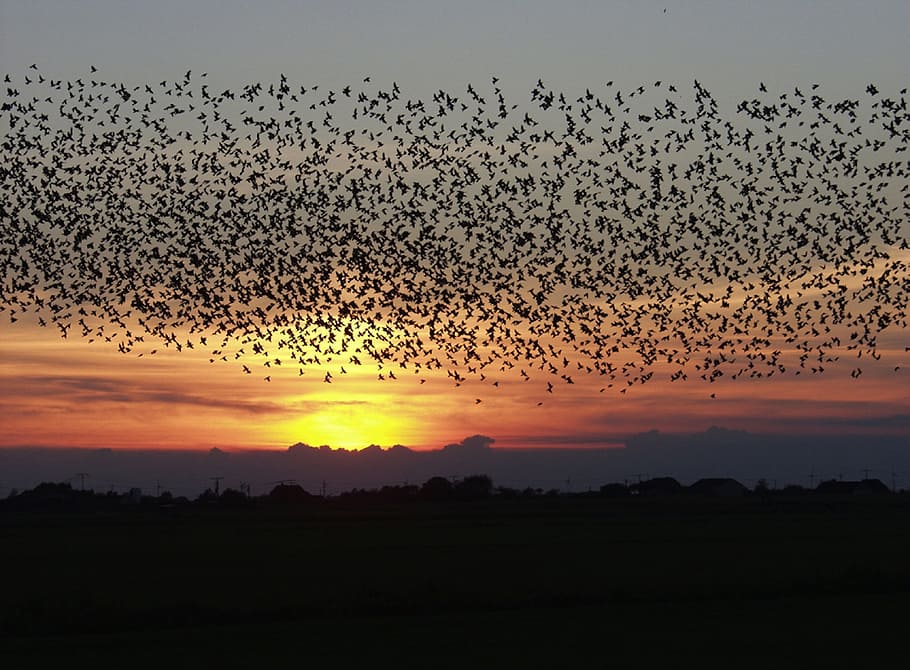

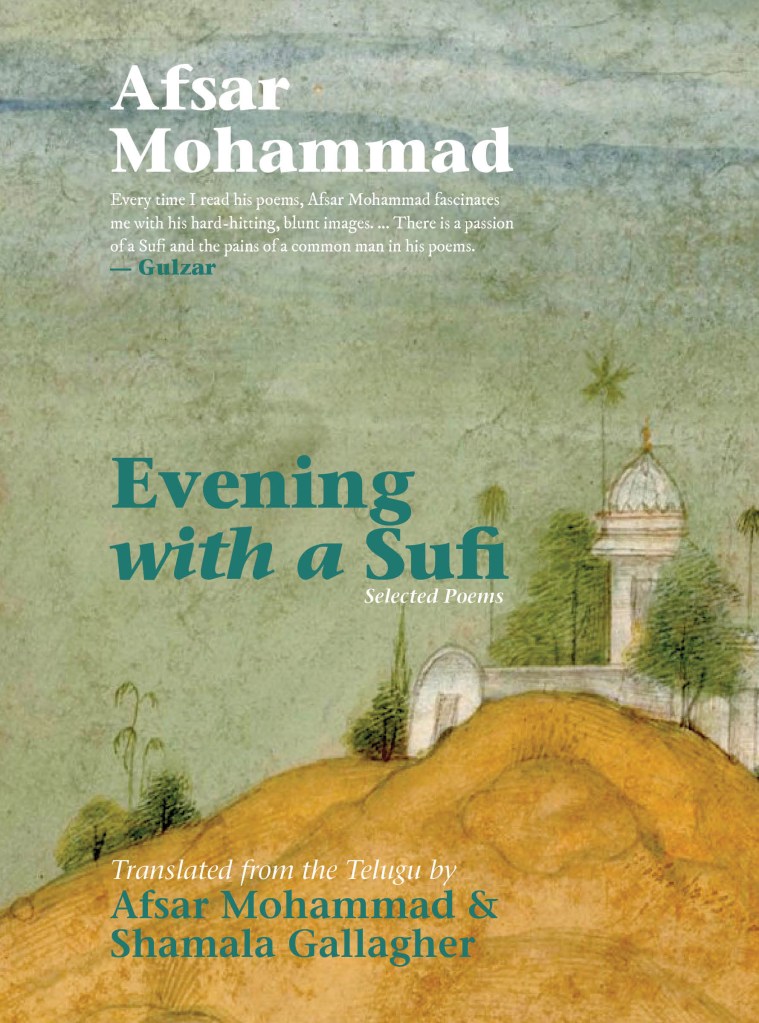


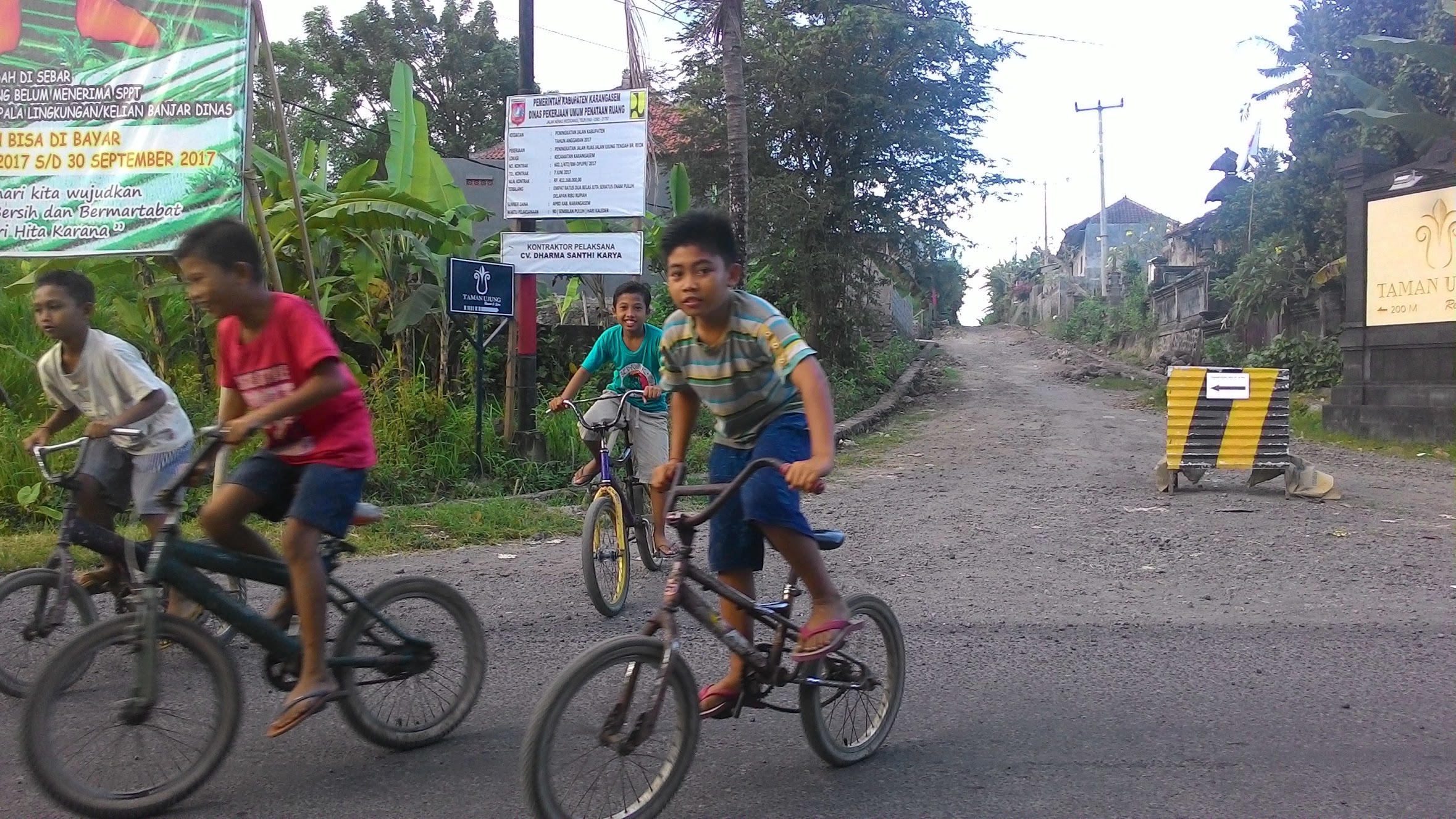



 Borderless