Categories
Poetry

The Rain Was Laughing Sideways

By Ryan Quinn Flanagan

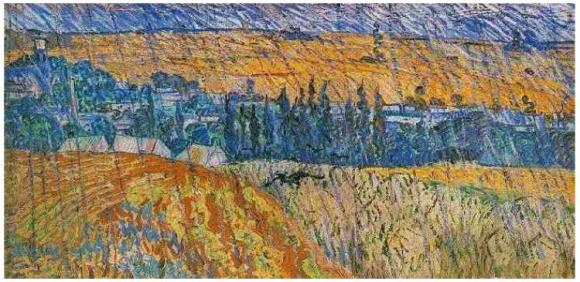
Rain-Auvers, Painting by Vincent van Gogh (1853-1890). From Public Domain
THE RAIN WAS LAUGHING SIDEWAYS(2) 

Looking down into the box,
back on everything,
back through
that wonderful maze
of things.

And it seems
that the rain was laughing
sideways.

Pernicious alligators
climbing up out of
New York bathrooms.

Though I have never been
the way of that buxom bridge.

Not once across the fancied millennia.

It's more of a faraway thing.
The teeming thunderous clap.

An inner drive
to ceremonial drums,
can you see it?

Back through
through the alluvial plain
with a walking stick
of hungry crows.

To stand over dirty shave water
with that new face.

To smile
like a king
of many well-kissed
things.

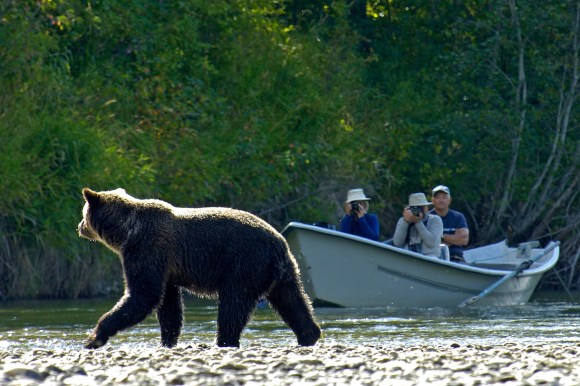
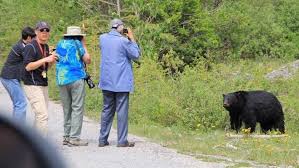
Ryan Quinn Flanagan is a Canadian-born author residing in Elliot Lake, Ontario, Canada with his wife and many bears that rifle through his garbage.  His work can be found both in print and online in such places as: Evergreen Review, The New York Quarterly, Borderless Journal, GloMag, Red Fez, and Lothlorien Poetry Journal

.

PLEASE NOTE: ARTICLES CAN ONLY BE REPRODUCED IN OTHER SITES WITH DUE ACKNOWLEDGEMENT TO BORDERLESS JOURNAL

Click here to access the Borderless anthology, Monalisa No Longer Smiles

Click here to access Monalisa No Longer Smiles on Kindle Amazon International
Categories
Poetry

Losing the Light

By Ryan Quinn Flanagan

From Public Domain
LOSING THE LIGHT 

The humming Coke machine, and I have lost the light.
The driving rains outside, and a most terrible truth.
The swelling of wet cardboard and that whoosh of darting high beams by the curb.
And tucked inside the asbestos house, I watch ceiling particles come to rest on the floor tile.
Leaning back in a chair made to brave its own hind legs.
A coke from the machine beside me, half-flat and half-finished.
The mistrustful eyes of the shop proprietor all over me.
I want to tell him the succubus train left her kisses three stations ago,
but he wouldn't understand. I want to keep him apprised of any sudden menu changes.
I want him to know of that Russian who made X-rays into records
and smuggled them to the masses. Paid the hospitals for the discards,
and handmade them into bootlegs of all the best banned American music.
I want to show him all the strange patterns on the soles of my shoes,
but the gophers of the earth have dug holes throughout my body.
A tiny troll with purple hair, taped to the back of the register.
And $1.50 slices of lukewarm pizza
under glass.
From Public Domain

Ryan Quinn Flanagan is a Canadian-born author residing in Elliot Lake, Ontario, Canada with his wife and many bears that rifle through his garbage.  His work can be found both in print and online in such places as: Evergreen Review, The New York Quarterly, Borderless Journal, GloMag, Red Fez and Lothlorien Poetry Journal

PLEASE NOTE: ARTICLES CAN ONLY BE REPRODUCED IN OTHER SITES WITH DUE ACKNOWLEDGEMENT TO BORDERLESS JOURNAL

Click here to access the Borderless anthology, Monalisa No Longer Smiles

Click here to access Monalisa No Longer Smiles on Amazon International

Categories
Excerpt

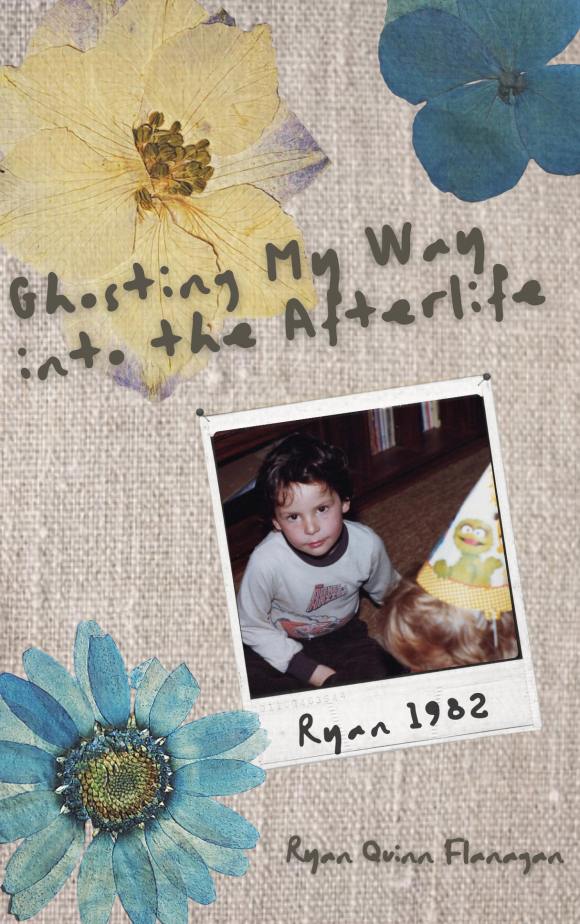
Ghosting My Way into the Afterlife by Ryan Quinn Flangan

Cover art by Shona Flanagan

Title: Ghosting My Way into the Afterlife

Author: Ryan Quinn Flanagan

Publisher: Nightcap Press

Coffee Bean

Coffee bean on the floor
split down the middle like surgical
ward incisions,
who put you all the way down there, friend,
as if starting a long climb from
the foot of a volcano?
You should feel lucky in many ways
to have escaped the grind,
your humming dark roast brethren
were not so lucky.
Now, the house smells kind as candy.
Stained lip of a personalised mug.
Coffee bean on the floor
I will pull up my socks,
kick you under the fridge
so we can both go into hiding.

(First appeared in BlogNostics)

You gotta be rich to die there

The rich and famous don’t even croak the same as us.
They have their own place.
The Motion Picture & Television Country House
and Hospital.

With plenty of generous donors.
George Clooney is one.
You gotta be rich to die there.

I guess the celebs see the others at the end
and figure it prudent to kick a little cash
that way for when it is their turn.

They have a stipulation that you have to
have worked “actively” in the film and entertainment
industry for at least two decades.

Then you get to be special.
Die with original Picasso’s adorning
the halls.

I’d imagine their bedpans are solid gold.
But Death being what it is, they never stay
that way for long


(First appeared in Terror House Magazine)

Marcel Duchamp’s Snow Shovel

Last time I checked
they didn’t get a lot of snow in Israel,
but they have Marcel Duchamp’s
snow shovel there
with an inscription that reads:
Prelude to a Broken Arm, 1915.
I think ole Marcel would have
quite a good laugh
if he knew his snow shovel
was stored in the Holy Land.
Seems like the kind of thing
you may want to store up
in these more arctic of
temperaments.
I have two snow shovels
and the Holy Land isn’t
asking for either.

(First appeared in Poetic Musings)

About the Book: This is a collection of recent poems by Ryan Quinn Flangan. He writes  on daily lives of people with a fresh pen and a soupçon of humour. 

About the Author: Ryan Quinn Flanagan is a Canadian-born author who lives in Elliot Lake, Ontario, Canada with his wife and many bears that rifle through his garbage. His work has been published both in print and online in such places as: The New York Quarterly, Rusty Truck, Borderless Journal, Evergreen Review, Red Fez, Horror Sleaze Trash and The Blue Collar Review. He enjoys listening to the blues and cruising down the TransCanada in his big blacked out truck.

.

PLEASE NOTE: ARTICLES CAN ONLY BE REPRODUCED IN OTHER SITES WITH DUE ACKNOWLEDGEMENT TO BORDERLESS JOURNAL

Click here to access the Borderless anthology, Monalisa No Longer Smiles

Click here to access Monalisa No Longer Smiles on Kindle Amazon International
Categories
Poetry

First of the Season by Ryan Quinn Flanagan

From Public Domain

Stabs of natural light
and the bears are woken
from winter.

Bony yearlings
on their own now.

Ambling down the street
with a laboured
chuffing.

Pulling down the early buds
of berry bushes,
looking for an easy meal.

Early risers, the first of the season.

The ones
out at the dump
live right beside the humans.

They are seasoned, more conditioned.

There is a loaded shotgun
in the back of the bulldozer
if there are any issues.

But there is seldom anything.
Old dryers broken down to scrap.

The long winter
has everyone stunted.

Our fleet-footed fox
brought to lumber.

The birds
in the songless
trees.
From Public Domain

Ryan Quinn Flanagan is a Canadian-born author residing in Elliot Lake, Ontario, Canada with his wife and many bears that rifle through his garbage.  His work can be found both in print and online in such places as: Evergreen Review, The New York Quarterly, Borderless Journal, GloMag, Red Fez, and Lothlorien Poetry Journal

.

PLEASE NOTE: ARTICLES CAN ONLY BE REPRODUCED IN OTHER SITES WITH DUE ACKNOWLEDGEMENT TO BORDERLESS JOURNAL

Click here to access the Borderless anthology, Monalisa No Longer Smiles

Click here to access Monalisa No Longer Smiles on Kindle Amazon International

Categories
Poetry

Dirt Magicians by Ryan Quinn Flanagan

From Public Domain
DIRT MAGICIANS

I go outside.
Bounding back into childhood.
Split melon in hand with infernal separation.

The fatherless sun above
rips dancing cornea from my eyes.

While the garden lice under rocks
ball up like dirt magicians.

And the balance girls walk the curb,
arms extended.

Trying not to fall off.

Ryan Quinn Flanagan is a Canadian-born author residing in Elliot Lake, Ontario, Canada with his wife and many bears that rifle through his garbage.  His work can be found both in print and online in such places as: Evergreen Review, The New York Quarterly, Borderless Journal, GloMag, Red Fez, and Lothlorien Poetry Journal.

.

PLEASE NOTE: ARTICLES CAN ONLY BE REPRODUCED IN OTHER SITES WITH DUE ACKNOWLEDGEMENT TO BORDERLESS JOURNAL

Click here to access the Borderless anthology, Monalisa No Longer Smiles

Click here to access Monalisa No Longer Smiles on Amazon International

Categories
Conversation

From Outhouse to Backwaters

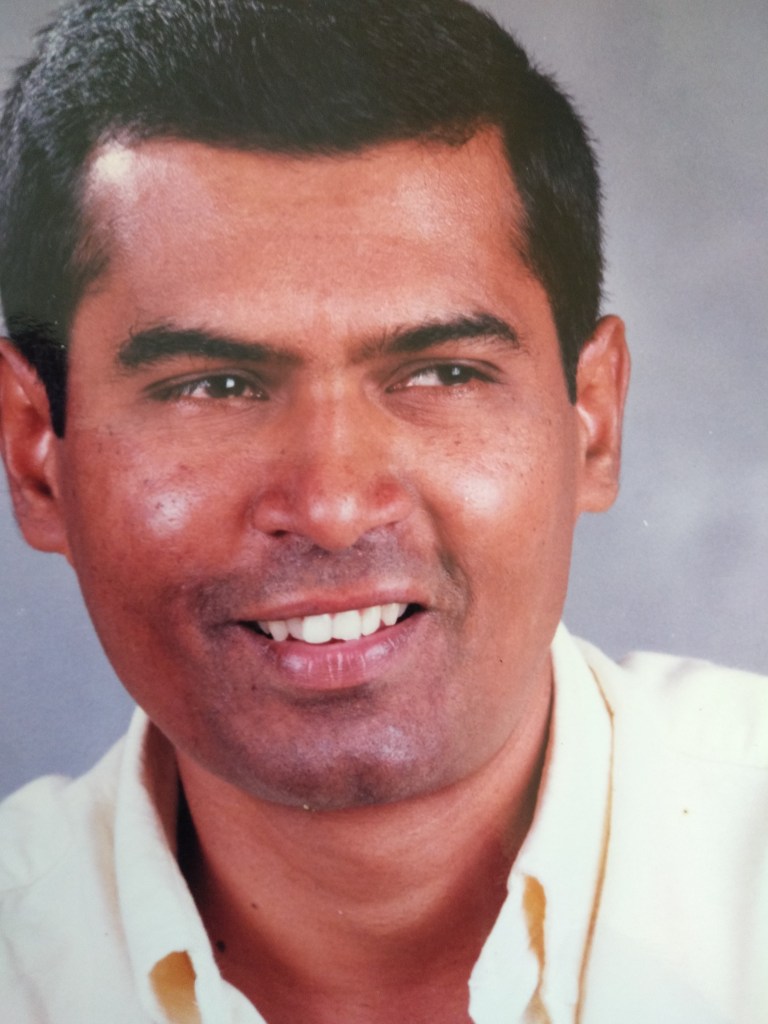
Ratnottama Sengupta tracks the journey of Leslie Carvalho over a quarter century

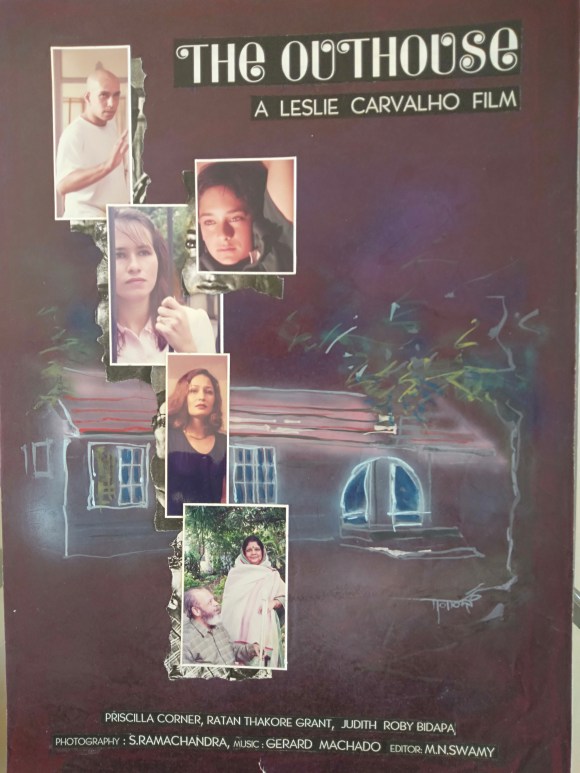
It seems like only the other day. The International Film Festival of India, IFFI, 1998 was on. Along with a colleague, I was seated on the steps outside Siri Fort I auditorium connected to a long corridor going to Siri 2. Someone introduced Leslie Carvalho. “Aha! The young filmmaker from Mangalore?”  I responded. “There’s a write up on you in The Times of India today. It says there’s a lot of expectation from The Outhouse.”

The “delightfully sweet” film had lived up to the expectation of the critics. It was bestowed the Aravindan Puraskaram, presented by the Kerala Chalachitra Film Society to commemorate the iconic Malayalam director, and the first Gollapudi Srinivas award, another national level award to recognise filmmakers marking their debut in Indian cinema. So I was not surprised to meet him next as a co-member of the jury for the National Film Awards 2000.

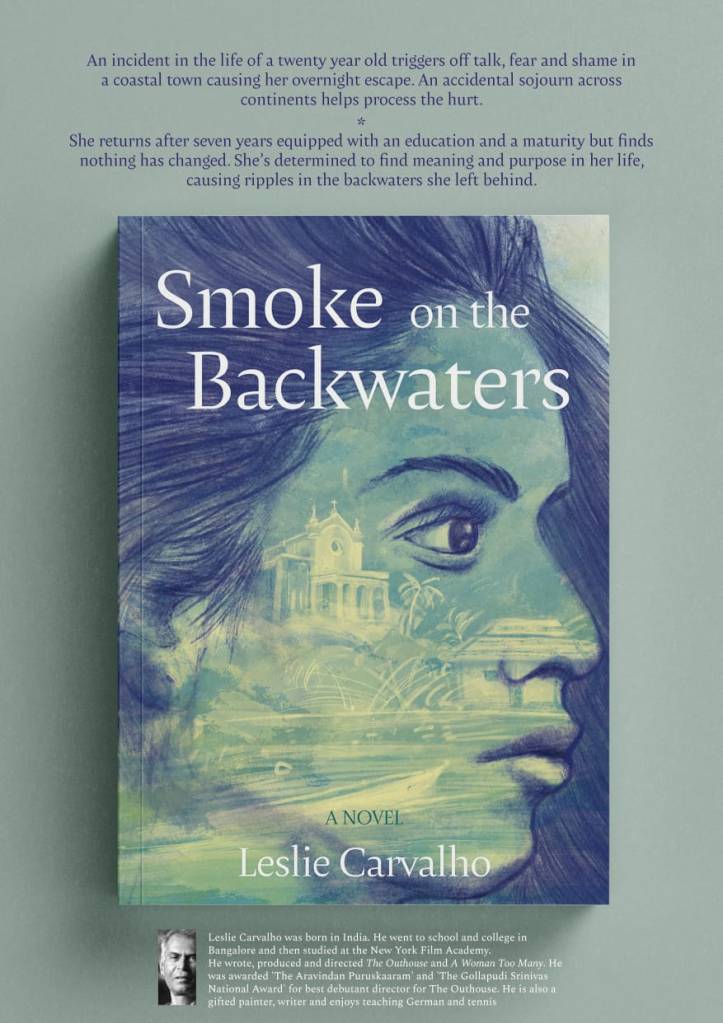
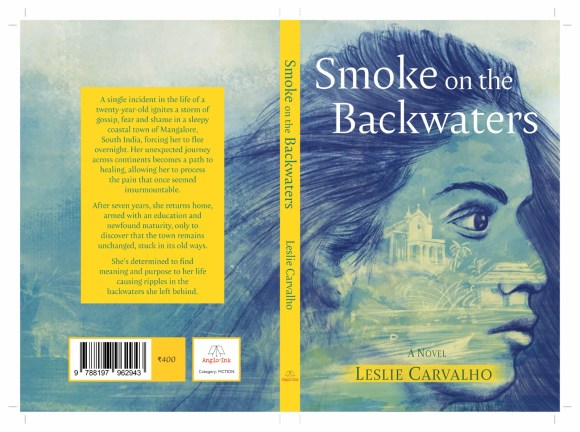
The Tennis coach who is also a German language teacher with a passion for painting has now published his first novel, Smoke on the Backwaters. It centres on Rosa, a twenty-year-old from Mangalore, who is forced to flee overnight because of the storm of gossip, fear and shame unleashed by a single incident in her life. Her unexpected journey across continents becomes a path of healing. Seven years later, armed with education and maturity, she returns home, determined to pursue her purpose in life. But how much had the town she left altered from its old ways?

RS: Leslie, before we talk Backwaters, can we briefly revisit The Outhouse? From where did you derive its content? And what was your compulsion for choosing that subject?

Provided by Ratnottama Sengupta

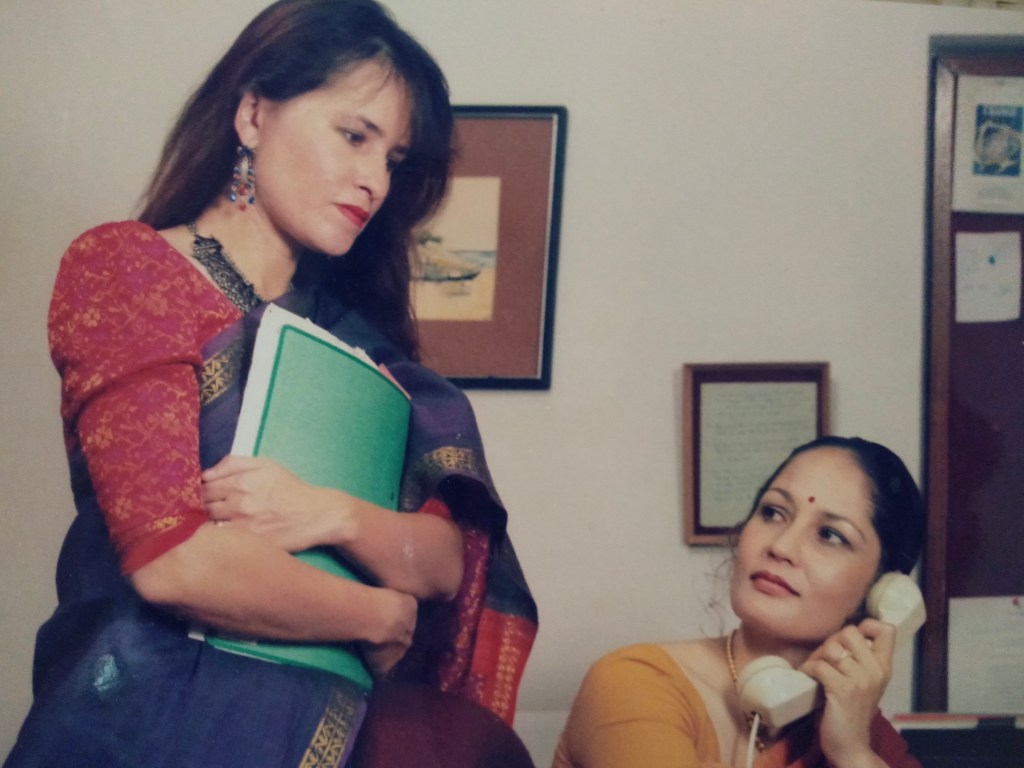
LC: The Outhouse was a simple, linear narrative about moving on in life despite the odds. A young mother’s need to gain economic independence to supplement the family income; the help she received from her financially independent sister; a kind hearted Bengali landlady’s generosity which causes stress and violence in the Anglo-Indian couple’s day to day life, and how it affects the two children growing up.

RS: Why did you choose this subject as your debut vehicle? If you were to travel in a time machine, would you choose a ‘mainstream’ subject?

LC: I chose this subject as my debut vehicle as I had seen quite a bit of violence in the Anglo- Indian community in the Lingarajapuram area of Bangalore I grew up in.

I was itching to make a movie after my six-month course at the New York Film Academy. As I was working on a very tight budget, I just stuck to what was taught — to keep it simple, straightforward and just tell a story using the various tools of cinema — in short, to make it cinematic.

If I were to go back in time, I don’t think I would have chosen a ‘mainstream subject’. I derived immense satisfaction along with the cast and crew as we felt we were working on something we were passionate about. We all felt drawn towards the characters, the story and the theme of the film.

RS: How did you get interested in cinema? And what were the problems you faced while filming The Outhouse – in terms of funding, casting, shooting location, distribution?

LC: I grew up watching Tamil, Kannada, Hindi, a couple of Konkani and lots of Hollywood films. My mother tailored clothes at home, and she taught a whole lot of women stitching. They were fans of Tamil cinema, especially of Sivaji Ganesan, MGR, and the heroes of Kannada cinema, Dr. Rajkumar and Vishnuvardhan. She also enjoyed the Hindi films of Rajesh Khanna, Dharmendra, Hema Malini, Amitabh Bachchan, Sanjeev Kumar, Jaya Bhaduri and Rekha — that is the popular cinema.

And my father, being an Army person, took us to see English films, like The Ten Commandments, The Bible, Hatari, To Sir, With Love[1]. Also, St. Germain’s School where I studied, screened English films every Friday afternoon in the Hall, from spools off a projector that made a jarring sound. It was an amazing experience — black and white Charlie Chaplin, Laurel & Hardy films and also Patton with all the bad words. Later, when in college, we would bunk classes to watch most of the popular Hindi and English movies.

At the New York Film Academy, I was exposed to an entire range of the world’s best in cinema. Satyajit Ray, Akira Kurosawa, Ingmar Bergman, Antonioni, John Ford, William Wyler, Fellini, Jean Renoir… And I watched a whole lot of films on the American Movie Chain (AMC). There I discovered all of Spencer Tracy’s films and fell in love with his sense of timing and under playing. It was also a time when I discovered Guru Dutt and marveled at his brand of filmmaking from Pyaasa, Kaagaz Ke Phool, Chaudhvin Ka Chand, Sahib Biwi Aur Ghulam to Aar Paar and Mr & Mrs 55[2].

It is hard to believe I began the shoot for The Outhouse on September 18, 1996, and completed it in 14 days – on October 1. After we went through the rushes, we required two more shots to link the gaps. Since I was on a shoestring budget of a few lakh rupees, I had rehearsals with the cast for close to three months. I doff my hat to them in gratitude as 90% of the film was canned on first takes. I could not afford retakes, and I worked with a brilliant cameraman, S Ramachandra, who was very supportive and encouraging. He shot most of B V Karanth, Girish Karnad, and Girish Kasaravalli films as well as the popular tele-serial Malgudi Days[3]. A number of first-time directors like myself, had benefitted immensely by his generosity and patience.

Since it was an independent film, whatever little finance I had, I sunk into the film. And then it took me a year to complete post-production for lack of finance.

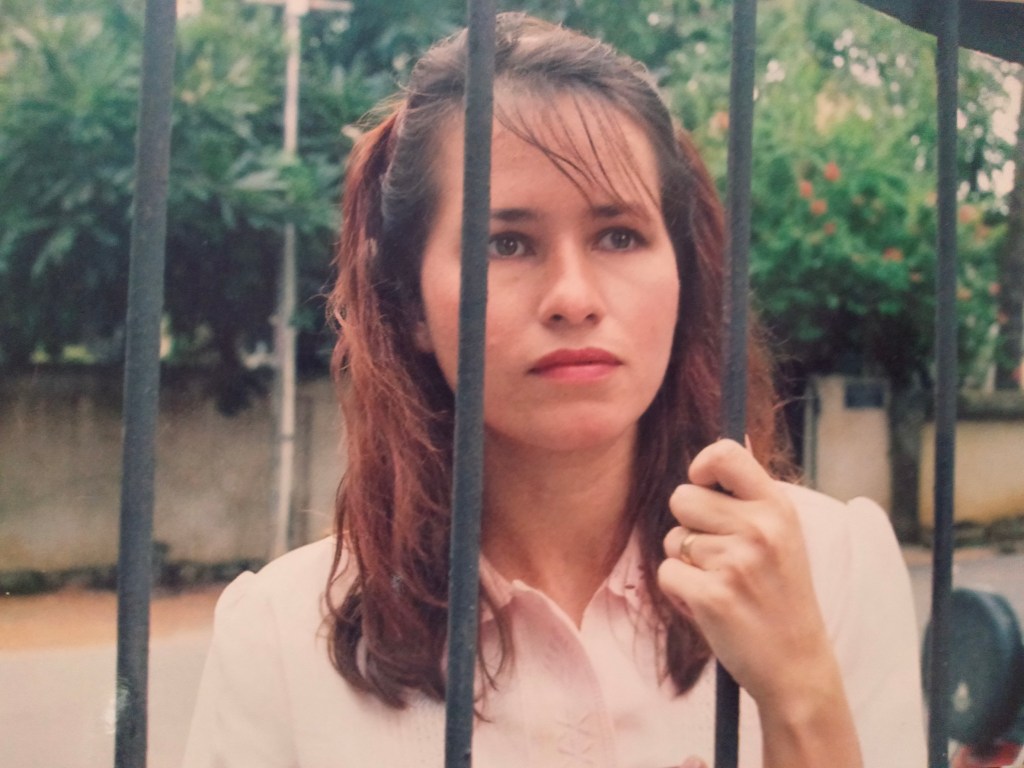
I was particular about the casting. I wanted the Anglo-Indian look, feel, mannerisms, costume, interiors to be authentic. I met each cast member and spoke to them at length about the vision I had for my film. Almost all of them were from the Bangalore English Theatre, and all of them were cooperative. Moreover, Cooke Town is a quaint little place with many English bungalows and outhouses. After some struggle, I found one on Milton Street which suited my story perfectly.

After The Outhouse was selected for the Indian Panorama in IFFI ’98 and received the two national awards, I just walked into Plaza Theatre on MG Road in Bangalore and met the owner, Mr Ananthanarayan. He had heard about the film and asked me to meet the distributor, Nitin Shah of Hansa Pictures in Gandhi Nagar, the biggest distributor of English films. He put it on for a noon show for three weeks while Fire was on for the matinee and evening shows. The distributor then put it in Mangalore and Udupi for a week. And when I received the Gollapudi Srinivas National Award in Chennai, Aparna Sen was one of the honoured guests. She saw a small portion of the film and said that she would speak to Mr Ansu Sur to screen it at Nandan in Kolkata — founded by Satyajit Ray to help screen small independent films. A theatre owner in Kolkata recommended a person who took the film to the North East. It was also screened in parts of Kerala.

Coincidentally, this April 30th, The Outhouse will be screened in the leafy neighbourhood of Cooke Town next to the outhouse where the film was shot.

RS: In the last 50 years we have seen films by directors like Aparna Sen, Ajay Kar, Anjan Dutt. Even before these, Ray had touched upon Anglo Indians in Mahanagar. These are all films made in Kolkata. Is it because this is the erstwhile capital of the Raj?

LC: Many of the films on Anglo-Indians were based in Calcutta. It was the influence of the British Raj and its culture that was so much a part of their long history of ruling there. Of course their influence was in other parts of the country as well like Madras, Hyderabad, Bangalore, Whitefield and Kolar Gold Fields, the railway colonies all over the country, the hill stations, and many other cities which has pockets of Anglo-Indians.

RS: I remember one Hindi film, Julie that had an Anglo-Indian protagonist. How has the community been projected in popular culture? Was it lopsided or biased?

LC: Throughout our film history Anglo-Indians have played bit roles here and there. Some significant roles came their way in Bhowani Junction, the teleserial Queenie, 36 Chowrighee Lane, Bow Barracks Forever, Bada Din, Cotton Mary, The Outhouse, Saptapadi, Mahanagar, Julie, and Calcutta I’m Sorry[4].

Some of the characterisations have been quite biased; some not well fleshed out; some in passing fleeting moments of drunkenness, prostitution. The song and dance sequences have not helped the community, sadly.

RS: What led you to writing? The screenplay for The Outhouse?

LC: I wrote the screenplay of The Outhouse on plain A4 sheets of paper, on both sides. This is not done but I did it to save on cost. I gave the screenplay to my cinematographer S. Ramachandra, and in his generosity he understood my purpose. I went by what was taught at the New York Film Academy. Of course, I had to combine all the elements to make it whole. The idea of the screenplay came to me while I was at the film school in 1995.

RS: What was the trigger for writing Smoke in the Backwaters?

LC: As an artist, filmmaker, and writer, I have tried to combine all the elements of story-telling – fact and fiction — keeping in mind the flow of ideas, pace and momentum to engage and interest my audience and readers.

I remember beginning to write the novel two decades ago when my mother — who studied in Kannada medium — said, “I hope you will write it in simple English so I can read it too.”

And I wanted it to be reader friendly with regard to the font size, the brightness of the paper, the spacing, the clarity and the size of the book. I was lucky my publisher ‘Anglo-Ink’ was supportive and combined well to find that centre.

Provided by Ratnottama Sengupta

RS: How are you marketing the book? Through Litfests? Bookstore readings? Airport bookstalls? A H Wheelers?

LC: Since Anglo-Ink is a small-time publisher, we’ve had a dream launch in my hometown Bangalore at the Catholic Club. My book seller is Bookworm on Church Street in the heart of Bangalore and for people in Cooke Town it is in The Lightroom’ library.

We are looking at launches in various cities as well, through book readings, LitFests, Airport book stalls, AH Wheelers, readings at schools and colleges.

Since a major portion of the novel is set in Germany, we are looking at translating it into German. I hope to get it translated in a few Indian languages as well.

RS: Since the sunset decade of 1900s, Anglo Indians have been migrating to Australia and Canada. What triggered this migration? Economics or politics?

LC: The migration of Anglo-Indians was inevitable. It was bound to happen for reasons more than one, be it political, economic or social. First under the ‘Whites Only’ policy, many fair skinned Anglo-Indians migrated — the brown and dark skinned were left behind. Slowly they opened up and even they left. Some felt they would adapt better to a western culture, and have adopted their new country as their homeland.

RS: You were a big support for me when my son joined NLSUI in 2000. Again, when I curated Anadi, the exhibition of paintings by Contemporary and indigenous artists from MP and Chhattisgarh. Bangalore has since become an international megalopolis. How has life changed for the locals?

LC: Bangalore has changed dramatically and drastically. The change was bound to happen because of its growing prominence of an International City. The IT industry brought jobs, slowly other industries, started picking up from real estate, fashion, digital technology and social media platforms, start-ups, academics, sports, games, recreational and tourism.

The moderate climate was a huge bonus that attracted people from all over. Bangalore has always been cordial, encouraging and accommodative of people from all over through their mild manners, hospitality and gentleness.

Today Bangalore is unrecognisable. Still, some pockets retain that old world charm of neat, clean and green Bengaluru from the old Pensioners Paradise of Bangalore.

.

[1] The Ten Commandments (1956), The Bible (1966), Hatari (1962), To Sir, with Love (1967)

[2] Pyaasa (Thirsty, 1957), Kaagaz Ke Phool (Paper flowers, 1959), Chaudhvin Ka Chand (The Full Moon, 1960), Sahib Biwi Aur Ghulam (The Master, the Wife and the Slave, 1962), Aar Paar (This shore or that, 1954), Mr &Mrs 55 (1955).

[3] From 1986 to 2006.

[4] Bhowani Junction (1956), TV miniseries Queenie (1987), 36 Chowrighee Lane (1981), Bow Barracks Forever (2004), Bada Din (1998), Cotton Mary (1999), Saptapadi (Seven Steps, 1981), Mahanagar (The Big City, 1963), Julie (1975), and Calcutta I’m Sorry (2019)

Ratnottama Sengupta, formerly Arts Editor of  The Times of India, teaches mass communication and film appreciation, curates film festivals and art exhibitions, and translates and write books. She has been a member of CBFC, served on the National Film Awards jury and has herself won a National Award. 

.

PLEASE NOTE: ARTICLES CAN ONLY BE REPRODUCED IN OTHER SITES WITH DUE ACKNOWLEDGEMENT TO BORDERLESS JOURNAL

Click here to access the Borderless anthology, Monalisa No Longer Smiles

Click here to access Monalisa No Longer Smiles on Amazon International

Categories
Essay

Where have all the Libraries Gone?

Professor Fakrul Alam writes of libraries affected by corporate needs… With this essay, we hope to launch a discussion on libraries as we knew them and the current trends

From Public Domain

Dhaka, 2003

Where have all those libraries gone?

Back in the ‘70s, in-between classes, adda[1], and sports, I used to spend most of my time in the USIS[2], British Council, or Dhaka University libraries. I would go to USIS for its collection of magazines and fiction, and to the Dhaka University Library for almost everything else. Despite the dust, the load shedding, the noise, the frequent closures of the university and the missing pages within the books, it was a splendid place for both adda and study. Some of my friends and acquaintances lamented that somehow, I had lost interest in “fielding” and had turned into a bookworm, but every book that I read made me thirst for more treasures of English literature. And then there was the British Council Library.

Perhaps memory always rose-tints the past, but it seems to me now that it was the friendliest part of the city then. The lush green lawn and the open spaces that surrounded the library, the access to stacks and stacks of books, the periodicals that you could leaf through, anything from the latest cricket news to reviews of books, the abundantly stocked reference section that was a source of special delight for me, the rows after rows of books that you could explore—here was God’s plenty! The Dhaka University Library had no doubt a much richer collection, but inside the British Council Library you could occasionally experience the bibliophile’s ultimate thrill: leafing through yellowing pages of a fairly old book, only to set it aside for another one; or merely reading surreptitiously through a page or two, secure in the knowledge that not all books are to be swallowed, chewed, and digested, that at least a few are to be tasted, and that was what the British Council Library was for! I would take a book or a periodical on a lazy day, sit down in one of the chairs, and then dream away, secure in the feeling that “there is no Frigate like a Book/ To take us lands away/ Nor any Coursers like a Page/ Of prancing Poetry.”

Everything about the British Council of this period seemed to be inviting. You got to know the staff after a few visits and they were all very friendly. I was still a student when I was on a “first-name basis” with the expatriate assistant representatives and librarians. In the middle of the decade, though only a lecturer at Dhaka University, I could claim the Librarian, Graham Rowbotham, to be a dear friend. In retrospect and especially compared to the library decor and staff now, everybody and everything associated with the library seemed to be amateurish in a way that was endearing and conducive to aimless browsing and long hours of lounging. Book of verse or criticism in hand, I loved spending my mornings here, although “thou” would be a few desks away, and to be glanced furtively in an essentially one-way traffic!

New books kept coming fairly regularly and were ordered by people of catholic tastes and wide-ranging interests. But most importantly, membership was cheap. I can’t remember what the membership fees were, but it must have been ridiculously low since even in those cash-strapped days I never seemed to have been bothered about renewing my membership from year to year. And yet you didn’t have to be a member to go in and browse, although I always preferred to be one so that I could always have books to take away and read at home.

Returning to Bangladesh after six years in Canada, I found the British Council of the ’80s not that different from the inviting, relaxed place I knew in the ’70s, although by now incoming books had slowed down to a trickle. Towards the end of the decade, I think, the library added a video section, but, on the whole, the Council seemed to be cutting back on everything. I had also heard that the library was going to be restructured; apparently, the “Iron Lady” was bent on making the British Council less of a burden on the British economy and more of a self-sustaining, income-generating unit.

But the full effect of the restructuring of the British Council into a self-sustaining, charitable organisation was obvious only by the middle of the ’90s. The Thatcherite assault on the arts, a heightened British concern with security after the Gulf War, and unrest in Dhaka University all must have played their parts, for in 1995 the British Council decided that they would leave the campus for the security of the Sheraton Annex.

The first casualty of what was surely an ill-conceived decision, like USIS’s move to Banani was the British Council’s wonderful collection of books. Row after row of books were given away for free. Indiscriminately. Thoughtlessly. Even some reference books and bound periodicals were distributed gratis since it was felt the Sheraton British Council would have very little space.

Thankfully, the British Council abandoned its move to the Sheraton, but the Fuller Road library never recovered from the book-giving spree. Instead, the library was redesigned to give it a contemporary feel on the outside as well as the inside, security was beefed up, and everything about the library redone to give it a “new”, packaged look.

A cyber centre was installed to make you feel that the ambience was au courant, and impressive graphics-brightened the walls. But what is a library without stacks and stacks of books? The British Council was always the repository of the best in British culture, but this one seemed to be as anaemic as the foreign policy of present-day Britain and nowhere representative of the nation’s past cultural glory. Indeed, where were the Booker Prize winners, the Nobel laureates, the Poetry Book Society choices, London Magazine, Granta, The New Left Review, The London Review of Books? Where were the bibliographies, the reference books that you could use to track an idea or pursue a stray thought to an ever-widening world, so that even within the confines of a library you “felt like some watcher of the skies/ when a new planet swims into his ken?”

The British Council has leased the best piece of property in town from the University of Dhaka. And what does it offer the university’s students? Forced to generate revenues for its upkeep, it had become, as my dear friend put it so memorably, the New East India Company, making money any which way it is able to. Thus, the Council was now more bent on offering exorbitantly-priced language courses and all sorts of examination services, trading on its Englishness and cashing in on the dismal state of our educational system set back by excesses of linguistic nationalism, than on stocking books that represented the best in British culture and that could be made available to the largest group of people. Library fees are ridiculously high—which middle class family can afford to make its children members at Tk 1,300 a year? And entry to the library itself is restricted—you have to be a member to browse! In fact, everything about the present British Council Library reinforces the feeling that it serves almost exclusively two groups of people: the upper class of Dhaka and people desperate about going to Britain for higher studies!

Significantly, the British Council Library now has remade itself as the Library and Information Services. What services? I stopped becoming a member in 1998 when I realised that the membership fees, which I could barely afford even then (the current fees are Tk 650 a year!), were entitling me to diminishing returns every year since the books and most of the periodicals I wanted to read were not there. The year I quit my membership after I had requested the library to procure a book on Burke and India for a research project but, despite repeated reminders to the librarian, that book never came (and I thought that they would listen to a professor of English literature at Dhaka University). The reference section was no longer stocking current bibliographies and sources of information about the world of books.

When I decided to write this piece, I thought in all fairness I should spend some time checking out the Library’s current state before I started critiquing its current library policy. To my dismay, I found that things had gone from bad to worse in the last few years. What services? There is now left only one shelf of literature books and another one devoted to reference items. The library looks pretty, and everything is neatly arranged but why does it remind me of the artificial, vacuous smile of the catwalk beauty? No doubt in line with modern concepts of interior design the library has more space than ever before, but all I see in it is emptiness! Yes, it is smartly done and for the smart people, but where is the world of knowledge in all this?

As my colleague pointed out to me in a note, “What services? How can the young come and request books they don’t know about? Knowledge comes from browsing the shelves, from looking at books and authors you have never seen before, and then you pick it up and read a new author, and perhaps you find a lifelong favourite and your mental landscape changes and that’s what a library’s function is, to widen, to broaden, to expose minds to superior stuff, not provide some crap ‘services’, some videos, some paper hangings, and then have the gall to call it ‘progress’ or ‘keeping up with the times’ or whatever!”

I should add that I have no real problem with the British Council cashing in on the O and A level market and IELTS[3] examinations, but I can’t figure out why it can’t plow back more of its surely substantial profits into establishing a proper library instead of the Fuller Road scam that now calls itself one. Let it charge the people who can afford its outrageously-priced language courses all it wants to, but why can’t it lower library fees so that anybody who wants to can use the library facilities, can browse and read in the library without having to pay anything? I am aware that the British Council is a registered charity and believe that it is supposed to spend its gains here, but can’t it become a leaner operation so that it can beef up its library services? Shouldn’t charity begin at home?

Our libraries have become shadows and shells of their former selves, and it is time we started to ask ourselves a very simple question: what exactly is a good library? And don’t we owe our children and ourselves at least one library?

(Adapted from the essay, ‘The British Council Library: The New East India Company?’ Published on November 8, 2003 in Daily Star)

[1] Casual sessions of tête-à-tête

[2] United States Information Service Library

[3] Internation English Language Testing System

Fakrul Alam is an academic, translator and writer from Bangladesh. He has translated works of Jibonananda Das and Rabindranath Tagore into English and is the recipient of Bangla Academy Literary Award (2012) for translation and SAARC Literary Award (2012).

PLEASE NOTE: ARTICLES CAN ONLY BE REPRODUCED IN OTHER SITES WITH DUE ACKNOWLEDGEMENT TO BORDERLESS JOURNAL

Click here to access the Borderless anthology, Monalisa No Longer Smiles

Click here to access Monalisa No Longer Smiles on Amazon International

Categories
Poetry

When I write a Poem About You

By Ahmad Al-Khatat

From Public Domain
When I write a poem about you,
I imagine us together—
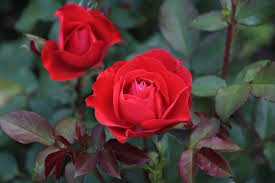
Two roses with green leaves,
You, a spark, an eternal inspiration.

My heart dissolves rapidly
On the papers of my homeland.
You are the pain I recognise,
The ink for my pens, the colour of my pencils.

Lovers erase their agonies with ease,
But my imagination is no fleeting illusion.
You are the brightness on every canvas,
My poem, the brush; my homeland, the water.

Small clouds of cigarette smoke rise above.
I respond to the locked doors of Montreal.
Baghdad throws me a bouquet of wildflowers,
As my pen trembles with nervous hands.

You are the day that will always smile upon me—
A laugh from you, a kiss from your lips, a privilege.
I admire you in the moment you ask me to pause,
To stop running into the night, swallowing poison.

Ahmad Al-Khatat is an Iraqi Canadian writer. His work was nominated for a Pushcart Prize in 2024 by Mad Swirl and Best of the Net 2019. His poetry has been translated into other languages and his work has been published in print and online magazines. He resides in Montreal, Canada, with his spouse.

.

PLEASE NOTE: ARTICLES CAN ONLY BE REPRODUCED IN OTHER SITES WITH DUE ACKNOWLEDGEMENT TO BORDERLESS JOURNAL

Click here to access the Borderless anthology, Monalisa No Longer Smiles

Click here to access Monalisa No Longer Smiles on Kindle Amazon International

Categories
Poetry

Changes by Ryan Quinn Flanagan

From Public Domain
CHANGES

Everyone was at each other's throats,
insistent that the world was ending.
But I felt differently, as though I were just beginning,
or just beginning again: wine and music,
that great belly of laughter -- an undefeated joy!
The inward turn, some said. And perhaps it was.
Affecting what could be affected, incremental changes.
Away from outside noises,
those petty monsters of division
that could no longer reach me
like they used to.

Ryan Quinn Flanagan is a Canadian-born author residing in Elliot Lake, Ontario, Canada with his wife and many bears that rifle through his garbage.  His work can be found both in print and online in such places as: Evergreen Review, The New York Quarterly, Borderless Journal, GloMag, Red Fez, and Lothlorien Poetry Journal

.

PLEASE NOTE: ARTICLES CAN ONLY BE REPRODUCED IN OTHER SITES WITH DUE ACKNOWLEDGEMENT TO BORDERLESS JOURNAL

Click here to access the Borderless anthology, Monalisa No Longer Smiles

Click here to access Monalisa No Longer Smiles on Kindle Amazon International
Categories
Poetry

As Time Exhales

By John Drudge

AS TIME EXHALES

Time twists
And folds itself
Like a silk scarf abandoned
In a room with no doors
The air heavy with the scent
Of forgotten lilacs
Each moment spiraling
Inward
Faces blurring into mirrors
And footsteps echoing
With the weight of things
Unsaid
Where the sky
Is not a sky at all
But a watercolour dream
Spilling across
An invisible page
Clouds moving languidly
Whispering secrets
To a teacup trembling
On the edge of a table
Filled with shadows
Of conversations
Where nothing
Is as it seems
Feeling the world
Tilt slightly
As existence
Exhales

John Drudge is a social worker working in the field of disability management and holds degrees in social work, rehabilitation services, and psychology.  He is the author of seven books of poetry: March (2019), The Seasons of Us (2019), New Days (2020), Fragments (2021), A Long Walk (2023), A Curious Art (2024) and Sojourns (2024). His work has appeared widely in literary journals, magazines, and anthologies internationally. John lives in Caledon, Ontario, Canada with his wife and two children.

.

PLEASE NOTE: ARTICLES CAN ONLY BE REPRODUCED IN OTHER SITES WITH DUE ACKNOWLEDGEMENT TO BORDERLESS JOURNAL

Click here to access the Borderless anthology, Monalisa No Longer Smiles

Click here to access Monalisa No Longer Smiles on Kindle Amazon International