Categories
Excerpt

From Ukraine to America: A Refugee’s Narrative

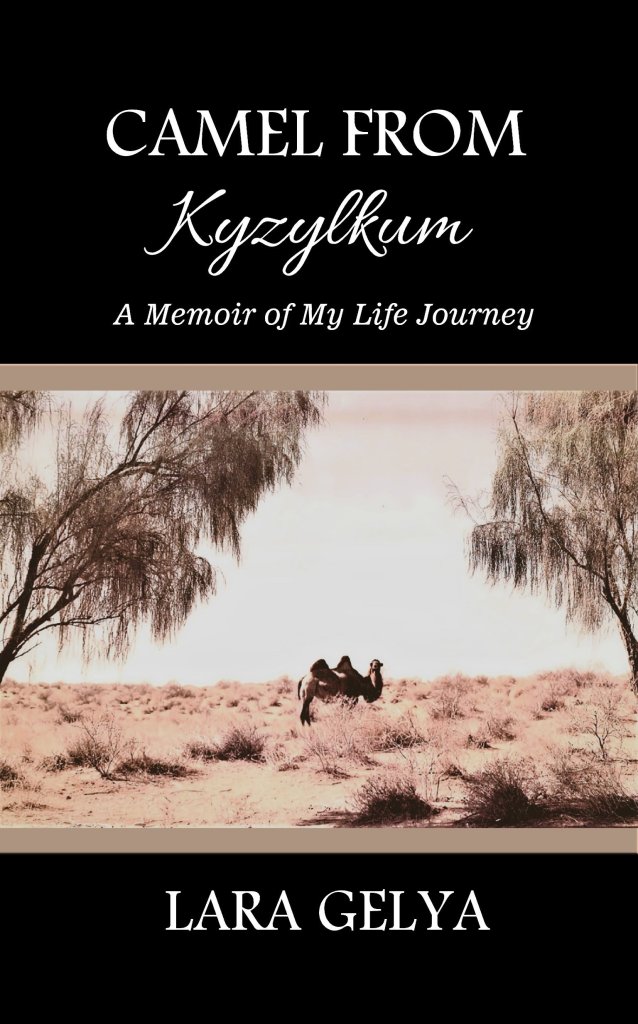
Title: Camel from Kyzylkum

Author: Lara Gelya

Publisher: Life Journeys Books

In Italy – Now and Then

The first time I visited Rome was in early 1990. I was on a mission to find a better life after escaping the Iron Curtain of the Soviet Union. As punishment for my escape, my USSR citizenship was revoked, leaving me stateless, with the status of ‘Refugee of the World.’ I traveled light across continents, with just two suitcases filled with family photos, a few books, spoons, and small pots. I had almost no money in my pocket, but Rome and Italy were still a wonderful discovery and a source of immense cultural enrichment for me in 1990.

During that time, I visited Rome and its historical landmarks such as Vatican City, the Colosseum, the Roman Forum, and the Trevi Fountain, to name a few. I also had the most important interview of my life in Rome, at the American Embassy, where I received the green light to go to the USA!

In May of 2024, during our Mediterranean odyssey, we spent some time in Rome. It was a deeply nostalgic and memorable experience for me! Revisiting Rome after so many years brought back a flood of memories and allowed me to see familiar places with new eyes.

I would like to share with you a chapter about my life in Italy in 1990, from my memoir Camel from Kyzylkum:

Italy

My first impression of Italy was that it was quite dirty and noisy. After I got used to the spotless cleanliness of streets and places in Austria, it disappointed me to see trash on the streets and in public places, along with graffiti. For the first time, I saw homeless people sleeping on rags on the marble floor of the subway in Rome. I also noticed how Italians get pretty animated when they talk, compared to very restrained Austrian people. But with time, my opinion about Italy changed—I fell in love with the country, and I grew to love the warmth of Italian people. I came to love Italian bread. The Italian language was like music to my ears, and I even learned how to speak some basics.

For the first two weeks in Italy, we were stationed at the bungalow summer camp south of Rome. It was January, and even during the day it was pleasantly warm outside, but at night it was cold. These bungalow houses did not have heat and were not equipped for the wintertime. I remember I was sleeping in my warmest clothes and even covered myself with a mattress from a spare bed in my bungalow. Nevertheless, I got very sick with a cold, so sick that I thought I would not survive it. During the day I walked to the seafront and sat there for long hours—the warm Mediterranean sun and fresh, salty sea air helped me to slowly recover.

After two weeks in the bungalow summer camp, we were told that we needed to rent apartments for ourselves in the nearby city of Torvaianica, a city south of Rome that was founded in the 1940s and is best known for its beaches. It has a population of about 12,700 inhabitants and extends for about eight kilometers along central Lazio’s coast. The refugee organization, HIAS, gave us money to cover rent and food. I do not remember the exact amount it was per person, but it was just enough for us not to be on the street dying from hunger. Later on, when I was already in the United States and working, I was required to reimburse HIAS for what they’d spent on me. I paid it back gradually, a small amount each month.

There were plenty of apartments available for rent in January. Many of them were at the seaside. Refugees from the Soviet Union usually shared one apartment—a two-room apartment for two families, a three-room apartment for three families. I was alone and in no way could I afford to pay for a room on my own. Someone from the group introduced me to a young fellow who was traveling alone, too. His actual name completely escapes my memory at present, but I’ll call him “Misha.”

Misha was in his early twenties. He was very smart and even knew English. For the first time in his life, he was separated from his parents whom he had left behind in the Soviet Union. Misha and I rented a room in the two-room apartment on the first floor of a building at the seaside. We could sit on the balcony and look at the beach and the Mediterranean Sea in front of us. The enormous wardrobe that was in the room divided our room into two halves to give each of us some privacy. Misha was absolutely unprepared for everyday life. He did not know how to manage the little money we had, how to do grocery shopping, or how to cook food. I felt sorry for him and suggested that he contribute some amount of money for food and I would shop and cook for both of us. Misha was happy to do that.

When I went for an interview for the first time at the American Embassy in Rome, I was asked a lot about places I had worked in the Kyzylkum Desert. They had a detailed map of Uzbekistan on the table and asked me about Zarafshan, Navoi, Uchkuduk. I was surprised; I thought they already knew more than I did.

After the first interview, I had to wait for the second one, a very important interview, after which a decision would be made on whether to allow my entrance to the United States. Many families were denied the entrance visa to the United States without being given any specific reason or explanation. These people had stayed in Italy for six months, for a year, or even longer. They found some jobs to support themselves and their families. Some of them decided to stay in Italy for good. It was an unsettling time.

Every day at 6:00 p.m., all Soviet refugees who stayed in Torvaianica gathered together at the central square of the city. There were a lot of us, and while I do not know the exact number, I remember how the square was filled with a Russian-speaking crowd, to the amazement of the local population of Italians. We were waiting for the messenger, usually a man who would stand in the middle of the crowd and read the list of people who had gotten permission to go to America. Even though I had not yet had a second interview in the American Embassy, these daily meetings were the biggest entertainment of the day and a learning experience—people mingled together, told stories, shared news, and made friends.

Misha always found me in the crowd after the announcing part was over and asked, “What’s for dinner tonight?” It seemed that he was always hungry. Even though I did not want to go home yet, I felt an obligation to serve him dinner. I thought he was acting like a little baby and since I was not his mother, it was bothering me. There was only one time when I sent Misha to the store to get something for me while I was cooking. He returned with an ice cream cake, our money for two weeks of our food ration gone. We divided the cake among all of the people who lived in both rooms of the apartment. This was the last straw for me. I canceled our contract and let Misha be on his own. Our living arrangements in the apartment remained the same, but I did not cook for him anymore. Meanwhile, we got a new tenant in our room. Another woman, approximately my age, joined us. Three of us shared the room up to the time of my departure.

The distance between Torvaianica and Rome was about 40 kilometers (25 miles), and there was bus transportation. I used the bus a few times. The ride was about 50 to 60 minutes. I did not go often, because the bus was usually packed with people and reminded me very much of the buses in the Soviet Union. Also, traveling by bus costs money I could not spare. Very soon I learned I could get to Rome by hitchhiking—every car driven by an Italian man would stop when they saw a young, pretty woman hitchhiking on the road. Several times I even hitchhiked with Misha. When the car stopped, I told the driver that he was my brother. I must say that most of the time Italians were very reckless drivers, and I felt uncomfortable in the car quite often.

I loved my outings to Rome. I enjoyed exploring the beautiful city where every stone has a history. Once or twice a month, all museums in Rome were free and I took advantage of this. Visiting the Colosseum, St. Peter’s Basilica, the museums of the Vatican, including the Sistine Chapel and the Trevi Fountain, to name a few, all became unforgettable experiences and cultural enrichment for me.

On the days when I was not traveling to Rome, I was discovering Torvaianica. Some items and events from my time there will be engraved in my memory forever.

For instance, there was a shoe and leather accessories store across from our apartment. In the Soviet Union, Italian shoes and leather accessories always were part of every woman’s desirable outfit, but they were difficult to get. In the store across the street was everything I could only dream about: elegant leather shoes, hand purses, belts. I visited the store quite often—not to buy, just to look. The store seemed to me big and exceptional. Years later, in 2001, Sparky and I traveled to Italy and visited Torvaianica. We found the beachfront apartment where I lived at the beginning of 1990 and a shoe store across the road. To my amusement, all at once, I saw an ordinary little store where I calmly browsed —it did not give me the excitement that it had in 1990. Perception is everything, and I was a very different person by 2001.

The main drag of Torvaianica with its famous Italian bakeries, restaurants, and shopping sprawled along the Mediterranean coast. On the snuggly, warm Italian evenings of January and February, I liked to stroll the street, window shopping and people watching. Italian people did not like to hold back their emotions—they laughed, they talked loudly, helping themselves with gestures, and I loved the music of the Italian language. I always stopped at the window of one particular bakery to examine all of the wonderful baked goods on display, though I could not afford to buy any. One of these baked goods was filled with a mix of rich semolina and ricotta cheese, and was a shell-shaped pastry called Sfogliatelle; Zeppole was another pastry consisting of a deep-fried dough ball dusted with powdered sugar and sometimes filled with various sweets; there was also biscotti, Venetian cookies, and hot chocolate cake—I could not take my eyes off of these beautiful culinary arts. One evening, the owner of the store, a middle-aged Italian man wearing a white chef’s coat and hat, with a lush body, dark mustache, and kind, laughing eyes, came out carrying a plate with a few biscotti and Venetian cookies and offered it to me to taste. Bewildered by his offer and the fact that he, probably, had been watching me evening after evening in front of his window, I did not have the strength to refuse his marvelous-looking, tasty Italian pastries.

Finally, the day came when I received a letter from the American Embassy in Rome with the invitation for the second and most important interview of my life. As I struggled with the English language then, I clearly understood the date and time of my interview, but I completely missed the location. Besides, I was pretty sure that there was only one location for the American Embassy in Rome and I knew where it was. But I was wrong.

The interview was scheduled for 12:00 p.m. I wanted to be collected and prepared. To eliminate any possibility of being late, I arrived at the American Embassy in Rome at 11:00 a.m. It was a sunny, beautiful, spring-like day; I lost myself for a short time (while waiting) on the fascinating streets of Rome. The sidewalk cafes were full of business people enjoying their lunch hours. I was thinking, “Is there going to be a time in my life when I, like them, can sit leisurely at a sidewalk cafe and have lunch? And feel myself as confident, relaxed, and happy as these people?” I wanted to believe that this time would eventually come in my life.

At about 11:45 a.m., I returned to the American Embassy expecting to soon be called by the guard. There was a good crowd of people waiting, like me, to be called. One by one they went inside until only I was left waiting. It was after 12:00 p.m. I got anxious—I began to wonder why I was not being called. I showed my paper to the guard. He explained to me (mostly by gestures and with some Italian phrases) that my interview was in a completely different location on the other side of the city. I was shocked. First, I had no money to get a taxi. Second, I thought my life was doomed. With this realization, I stood on the curb of the street in the center of Rome and sobbed bitterly. Tears rolled down my face.

Well, the Italian people did not easily tolerate this scene. Soon enough, a taxi stopped by me. The driver got out of the cab and asked me what had happened. Continuing to cry, I showed him my paper invitation for the interview and tried to explain to him that I had come to the wrong location. He looked at the paper and then at me and started vigorously gesticulating, pushing me inside his cab. Even inside the taxi, I could not stop crying. The driver turned around to me shouting some equivalent of “Shut up” in Italian. I became quiet. I realized he was going to drive me to the address where I needed to be. While he was driving, I feverishly thought about how I would pay for my ride as I had very little money in my pocket. But I was wearing a gorgeous silver ring with a gemstone on the ring finger of my left hand. The ring was handmade with an intricate Gothic design and a big, beautiful, pink, tourmaline stone—it was my favorite ring! I bought it during my vacation in Latvia, a country on the Baltic Sea—Latvia was a part of the Soviet Union from 1940 to 1991. I immediately decided to pay for my ride with the ring.

We arrived at the address of the second location of the American Embassy. I paid for the ride with the ring. The grounds of the Embassy were surrounded by a high fence and the gates were closed. I was not sure how I could get inside. However, the gates opened for an incoming cab and I just sneaked through the gates and ran towards the main building. I entered a room full of people waiting to be called for their interviews. My face was red, mascara smeared across my face, and my hair was messed up. Immediately, I heard my name being called. I walked into a smaller room where two men asked me questions. Then one man with reddish hair said to me how he had grown up in Buffalo, New York. He asked me if I knew how severe the winter could be in Buffalo. I said, “Probably not worse than in Siberia.” They both laughed. With this, my interview was over. From that point, I would have to wait for the Messenger at the Torvaianica square to call my name and give me an official paper with “Yes” or “No” written on it.

After two weeks or so, the Messenger at the 6:00 p.m. gathering at the Torvaianica square called my name. I was not nervous; for some reason, I was sure that it would be “Yes”. I calmly opened the envelope—there were dates for my flight from Rome to New York City. It was exciting news for me, and in anticipation of big changes in my life, I started to prepare myself for the trip.

About the Book

Camel from Kyzylkum is an award-winning memoir that chronicles the remarkable journey of immigrating from the Soviet Union during the late twentieth century. It delves into themes of hope, struggle, family, and loss, offering a profound exploration of the human spirit’s yearning for freedom and self-determination. Through the author’s compelling narrative, readers gain a deep insight into life within the Soviet Union and the immense sacrifices and risks individuals undertake in pursuit of a better life.

The memoir traces a gripping path from Ukraine to the Kyzylkum Desert in Uzbekistan, and onward through Austria, Italy, and finally America. Along this journey, the author navigates personal truths and aspirations, illustrating the resilience and determination required to forge a new path in unfamiliar lands.

Camel from Kyzylkum is not just a memoir; it’s a transformative narrative that opens doors to unfamiliar worlds, encouraging readers to broaden their perspectives and empathize with the challenges and triumphs of others. It stands as a testament to the enduring human spirit and the universal quest for identity and belonging.

About the Author

Born and schooled in Ukraine, Lara Gelya spent the next two decades in the Kyzylkum Desert of the Republic of Uzbekistan, working at geological sites and expeditions of the Mining Industry. At that time Ukraine and Uzbekistan were parts of one country — the Soviet Union.

In 1989 Lara left the Soviet Union, lived in Austria and Italy before she, at last, found her way to the United States in 1990. Starting her life from ground zero again, and trying on so many hats, she was able to make a lengthy professional career that led to her eventual retirement on the shores of sunny Florida.

Now, enjoying her retirement, Lara fills her days with enriching activities like writing, creating videos and pictures, reading, gardening, cooking, traveling, and immersing herself in nature or entertainment. Her diverse interests and active lifestyle after retirement show a deep appreciation for life’s pleasures and a continuing curiosity about the world around her.

.

PLEASE NOTE: ARTICLES CAN ONLY BE REPRODUCED IN OTHER SITES WITH DUE ACKNOWLEDGEMENT TO BORDERLESS JOURNAL

Click here to access the Borderless anthology, Monalisa No Longer Smiles

Click here to access Monalisa No Longer Smiles on Amazon International

Categories
Essay

To Be or Not to Be or the Benefits of Borders

By Wendy Jones Nakanishi

Art by Sohana Manzoor

It may seem perverse to submit an article advocating the benefits of borders to a journal entitled Borderless. I hasten to explain that I agree with the guiding principle of this publication – that the human spirit should be encouraged to soar, transcending cultural limitations and national boundaries. But I’m also reminded of the observation made by the American poet Robert Frost that high fences make good neighbours.

Borders! It’s one of those words that has developed an almost completely negative connotation in recent years, having taken on the emotive sense of exclusion and unfairness. A second example of this phenomenon is the term patriotism, which now is denigrated for similar reasons. Borders and patriotism refer to values and beliefs valorized in the past that are currently under vigorous attack. Their stock has plunged dramatically in this modern globalised society.

It’s no wonder. We inhabit the age of EDI – equality, diversity, and inclusion. Few voices are raised to question its tenets. Most people seem, for example, unreservedly to believe in multiculturalism as an undisputed good, and love of one’s own country has become a questionable – often dismissed as a deplorable – sentiment.

The present disdain for borders and patriotism is unsurprising. We are witnessing the mass migration of people from one part of the world to others on a scale unseen since the post-1945 refugee crisis, when an estimated 175 million people were on the move, in part because of the defeat of the Axis powers but also because of new civil wars. Nowadays, the US, the UK and Europe are proving particularly attractive destinations for individuals fleeing countries troubled by violence, corruption, poverty, religious persecution, and social discrimination. I would like here to explain why I believe in the benefits of borders while acknowledging their potential demerits.

I think the propensity to erect borders is an essentially human trait, coexistent with human existence. The world’s first walls originated with its first cities – places like Jericho in the Bible, constructed twelve thousand years ago – where Joshua waged his famous battle to bring them down. The ancient cities had walls for defensive purposes. Walls intended to divide countries came much later, with the first instance originating in Mesopotamia in 2000 BC.

David Frye observes in his book Walls: A History of Civilization in Blood and Brick that the idea of constructing barriers to keep people out is as ancient as human civilisation. It is only the people excluded that has changed. In the past, it was invading hordes of armed warriors. Now barriers are erected to control immigration, to keep out terrorists, and to halt the flow of illegal drugs.

In Frye’s opinion, borders originated as a means of creating a safe space where civilization could develop and flourish. Walls gave people the security to sit and think.  Frye links the building of the Great Wall of China in the late third century B.C. with the creation of the ancient Chinese state. In Britain, Hadrian’s Wall was constructed around 112 A.D. by the Romans to keep out the ‘barbaric’ tribes in the north while they ‘civilized’ the inhabitants further south.

Borders seem to be coming back into vogue. Donald Trump’s vow to expand and reinforce the Mexico-United States barrier was a crucial component of his successful 2016 presidential campaign platform. But in January 2021, the newly elected president Joe Biden halted construction of what had become known as ‘Trump’s Wall’. Since that date, the southern border of the States has been swamped with illegal migrants, and in July 2022 Biden backtracked, announcing a plan to fill in four gaps in the barrier in Arizona that had seen some of the busiest illegal crossings. Some might argue it’s too little too late. In July 2022, there were reports of four thousand Mexican family encounters at the border; a year later, that number had quadrupled. And that’s only Mexican immigrants. Economic and political turmoil in such countries as Venezuela, Haiti, Ecuador, and Columbia has seen large numbers of people trying to escape to the States: their near neighbor where they seek not only safety but a place where they can aspire and thrive.  

Similarly, the EU is in the process of having to reconsider what it once identified as one of its guiding principles: the unrestricted movement of people (in particular, workers) within its twenty-eight EU member states. Countries such as Austria and Denmark have significant percentages of their populations who are opposed to this policy. It has been argued that citizens in richer member states are more likely to have negative views. Until the 2000s, only one percent of EU citizens lived in a country other than the country of their birth. That situation has changed dramatically in recent years with the EU’s enlargement to central and eastern Europe. Now intra-EU migration involves millions of EU nationals who are, in general, their countries’ best and brightest – their most highly educated or highly skilled workers – moving from poorer to richer EU member states. What some EU nationals see as an opportunity, others regard as a threat.

Borders not only keep people out but also keep people in. That is one of their least attractive features. The barbed wire that was the first manifestation of the structure that came to be known as the Berlin Wall appeared almost overnight in August 1961. But this wall had an unusual purpose. It was erected to prevent immigration from East Germany to West Germany when the economy of the former was on the verge of collapse because of the many people fleeing to the west. The Berlin Wall staunched that flow of emigration, leading President Kennedy to observe that ‘A wall is a hell of a lot better than a war’.

Arguably the Korean Demilitarized Zone constructed after 1953, which is 250 kilometers long and five kilometers wide, separating the north and south of what was once a single country, has similarly acted as a deterrent to armed conflict. It has been described as a ‘comfortable wall’ that ensures an ‘uncomfortable peace’. For the North Korean government, it acts as a barrier to invasion from the far more prosperous and less repressive government of South Korea. But it has also trapped millions of people in a state that increasingly resembles a huge prison camp. North Koreans are among the poorest people in the world as well as the least economically free. It is estimated that a tenth of the population died during a famine that lasted from 1995 to 1998. While a thousand escape the country every year, many are imprisoned, tortured, and even killed while making the attempt. But they are willing to brave the danger, reluctant to remain in a country where they are systematically denied any civil, religious, or political rights.

Borders are not limited to the demarcation of cities and countries. Physical structures indicating property limits are a fact of everyday life for people throughout the world. In my native America, fences are a prominent feature, indicating boundaries for houses and fields. In Japan, where I lived for many years, the traditional family compound – including farmhouse and storehouse and courtyard – is enclosed within clay walls. In the corner of northwest England where I am currently residing, the countryside of rolling green hills is crisscrossed by dry stone walls and hedges. Hedges in Britain have their origins in the Bronze Age (2500-700 BC), when they were used to manage cattle and to keep them separate from crops. There is speculation that some hedges of sufficient age, density and size may even have once served as military defenses. But while their first function was to act as barriers, they now serve an important role in the environment, as the preserve of insects and wildlife, including sixty species of nesting birds.

A house itself represents a kind of delimitation: a declaration of private space as opposed even to the yard or garden, which are semi-public. Americans tend to be house-proud, their dwellings often boasting large picture windows that afford a view to passers-by of the carefully decorated front room. Japanese, on the other hand, are sometimes ashamed of inhabiting a cramped small house sometimes separated only by a matter of inches from their neighbours’ homes on either side, and they tend to use opaque rather than clear windows to preserve their privacy. Even the big traditional Japanese farmhouse is somehow secretive – bearded in heavy shrubbery, stooping under the weight of a heavy tiled roof. Of course, there are many types of houses in Britain, but I happen to live in one of the most common – a terraced house with a tiny garden out front and a cement yard at the back. My bay window looking out onto the street has its lower half shrouded in a thin net curtain. When I stand nearby, I can look out at my domain – my little plot of earth densely planted with bushes, flowers, and shrubs.

Living in the UK, I’m often reminded of the saying ‘An Englishman’s house is his castle’. The typical British home has an emphasis on the cozy and comfortable, and while few still have coal fires, many retain the old fireplaces as a decorative feature. Alas, nowadays, many British people pave over their little front gardens to use the space for parking. But traveling by train affords wonderful views of long strips of narrow gardens backing on to the tracks, and I sometimes think their owners are like public benefactors, entertaining us with the sight of their patios and pergolas, their beds of flowers and rose trellises as we speed to our destinations.

The observant reader may have noticed that I have begun this short essay on borders by examining those surrounding countries and cities, and then continuing with an ever-narrowing perspective. I would like to conclude by looking at the barriers we put up between ourselves and others.

As I noted at the beginning of this piece, the American poet Robert Frost wrote a poem eulogising high fences for ensuring good relations with our neighbors. Because the States is a relatively new country – and one of considerable size – many Americans can enjoy the luxury of living in houses surrounded by a good deal of land. Driving through any suburb you can see large expanses of grassy lawn separating the house, often a ranch-style dwelling, from the road. In that sense, Frost’s high fences aren’t needed. Unlike the Japanese, crammed into close quarters with each other, or Europeans, fond of renting flats, Americans are used to having their own space. The pioneer spirit lingers on with a focus on rugged individualism.

This can be a curse as well as a blessing. There have been shocking instances in recent years of abducted American women and children spending years as captives in houses so remote or so barricaded against the outside world that their kidnappers could act with near impunity.

Such a situation is unimaginable in Japan. Many Japanese, and especially those in Japan’s cities, live in what they call ‘mansions’ – huge buildings with apartments the inhabitants own rather than rent. Few secrets can be kept in such an environment. In towns and rural areas, the strong emphasis on community activities means that there is constant interaction between households.

While many Americans like to preserve a physical distance from others, the Japanese have developed ways to preserve their privacy in public places as a sort of psychic skill. During my long residence in Japan, I often marveled at how the Japanese can make a virtue of necessity, and this is a case in point. On packed trains, the Japanese self-isolate by reading or dozing or using their phones. In dense crowds in cities, they manage to retain personal space by skillfully skirting each other, scarcely touching, as they walk. Whenever I find myself in one of the huge subway stations in Tokyo or Osaka, I occasionally pause to marvel at what looks like a carefully choreographed dance. Throngs of well-dressed people silently rush past me. They are dignified, intent on their own business, and no confusion or chaos is perceptible. Despite the closest proximity imaginable to each other, they somehow manage to preserve their own personal borders.  

The situation in the UK is between those two extremes. Despite inhabiting one of the most densely populated countries in Europe, the British can enjoy incomparable scenery preserved as so-called ‘green belt’ areas around cities as well as landscapes protected by their designation as national parks or as areas of outstanding natural beauty. Unsurprisingly, the British are great walkers. As an American, I’ve had to learn that when a friend suggests a stroll, it can easily mean a four or five-mile hike. The British can escape to the great outdoors when they feel a need to be alone.

There are those who dismiss national stereotypes as nonsense, but I’m inclined to credit them with at least a grain of truth. I think, for example, there are affinities between the Japanese and the British that are perhaps attributable to their both inhabiting island nations and being, as a result, insular. They are bad at learning other languages. They are traditionally characterised by a certain reserve – lacking, for example, the American fondness for confessing details of their private lives to complete strangers.

Borders. Patriotism. The two are connected. It is often said that those who do not learn from the mistakes of the past are doomed to repeat them. The lesson we might be tempted to draw from the bloody history of the twentieth century is that nationalism is reprehensible and that borders can lead to wars.

But I prefer to draw another moral. It can be argued that the world was plunged into two world wars because evil, opportunistic leaders like Hitler chose not to respect national borders while also twisting patriotism felt by Germans and Austrians into a perverted version of what is a normal human impulse to love one’s own country. As I write this piece, I can’t help but think of how topical it is, with the tragedy unfolding in the Middle East which concerns borders and contested land. I pray a just settlement can be reached and peace achieved as soon as possible.    

Finally, I believe we all resort to a variety of measures to define ourselves. We are individuals; we are residents of a certain neighborhood; we are citizens of a particular country. I believe that it is by respecting each other’s borders – personal and public – that we can achieve the ideal of living together on this crowded globe in harmony. Public borders – such as the political boundaries of our own country – can inspire altruism by leading us to identify with an entity greater than ourselves. Private borders – those parameters for conduct and behavior we draw for ourselves, in our daily lives – can confer peace and a sense of individual self.

Wendy Jones Nakanishi has published widely on English and Japanese literature and, under her pen name of Lea O’Harra, has written four crime fiction novels available on Amazon.

PLEASE NOTE: ARTICLES CAN ONLY BE REPRODUCED IN OTHER SITES WITH DUE ACKNOWLEDGEMENT TO BORDERLESS JOURNAL

Click here to access the Borderless anthology, Monalisa No Longer Smiles

Click here to access Monalisa No Longer Smiles on Amazon International

Categories
Essay

The Story of a Land at War with Itself

If religion has bound people of different lands, religion has also crafted gulfs between people who shared the birthplace and spoke the same language. If religious hatred led to the holocaust, religion became the cornerstone of India’s Partition. The crimes against humanity in Bosnia also were rooted in religious intolerance, as Ratnottama Sengupta retraced when her brother, Dr Dipankar Ghosh wrote to her from Bosnia-Herzegovina, as part of the peace-keeping forces in 1996.

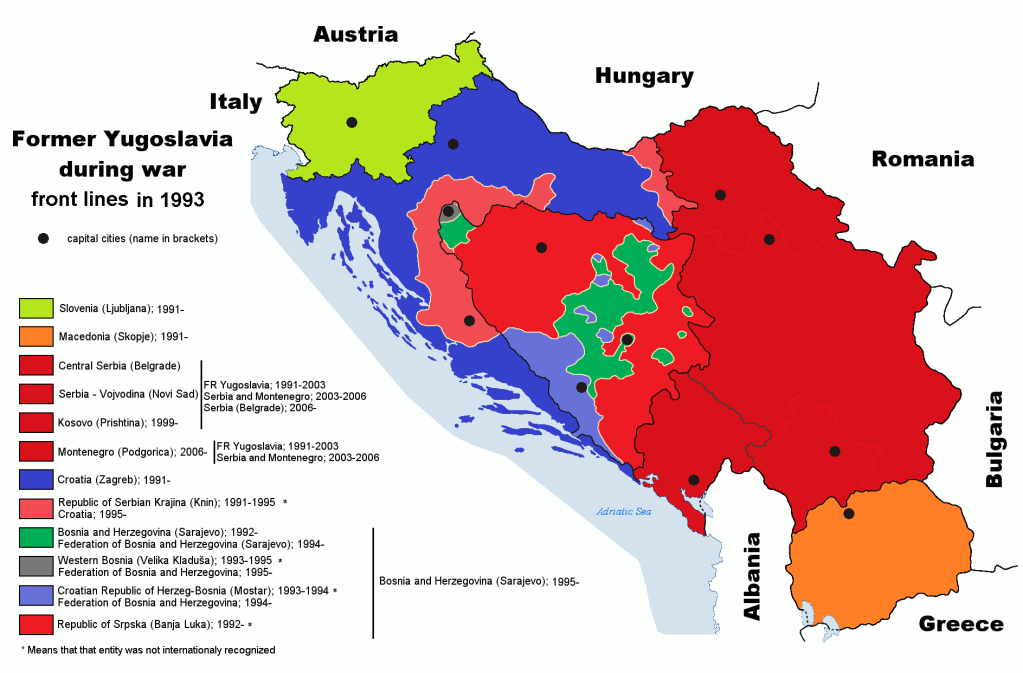
Map of former Yugoslavia in 1993. Courtesy: Creative Commons

The Bosnian War (1992-1995) was an immediate fallout of the break-up of the Socialist Federal Republic of Yugoslavia. It began to disintegrate when Slovenia and Croatia seceded in 1991. Serbia, the largest constituent in the Republic of Yugoslavia, did not want Croatia’s independence as a large Serb minority lived in Croatia. But the rest of the state declared national sovereignty in October 1991 (two years after the fall of the Berlin Wall) and held a referendum for independence on 29 Feb 1992.

Bosnia, the largest nationality, was home to Muslim Bosniaks – they wanted Bosnia to be a unitary multi-ethnic state. The Serbs wanted to be independent if not to unite with Serbia. Likewise, the Croats wanted significant autonomy for their majority areas or secession to Croatia.

The referendum favoured independence, but the Bosnian Serbs opposed this, as they aimed at creating a new state – Republika Srpska (RS) that would include Bosniak majority areas. So, their political representatives boycotted it. And a day before the outcome of the referendum, on 28 February 1992, the Assembly of the Serb People in Bosnia and Herzegovina adopted the Constitution of the Serbian Republic of Bosnia and Herzegovina.

Eventually, the European Union formally recognised the newly constituted Republic, as did the UN. It was inhabited mainly by Muslim Bosniaks, Orthodox Serbs, and Catholic Croats. As this Republic gained international recognition, the earlier Cutiliero Plan proposing a division of Bosnia into ethnic cantons collapsed.

Now the Bosnian Serbs, led by Radovan Karadzic and supported by the Serbian regime of Slobodan Milosevic and the Yugoslav People’s Army (JNA), mobilised their forces inside Bosnia and Herzegovina in order to secure ethnic Serb territory. Soon war spread across the Balkan land, accompanied by ethnic cleansing.

Siege of Sarajevo (1992-1996): The Bosnian Serbs who would settle for nothing less than a new state, Republika Srpska (RS), now encircled Sarajevo, the capital of Bosnia-Herzegovina. With a siege force of 13,000 stationed in the surrounding hills, they assaulted the city with artillery, tanks, and small arms. The army of RS, which had transformed from the Yugoslav Army units in Bosnia, fought the army of the Republic of Bosnia and Herzegovina (ARBiH).

Inside the city ARBiH, which was the Bosnian government’s defence force composed of Bosniaks and Croat forces in the Croatin Defence Council (HVO), was poorly equipped. It could not break the siege and for six months, the population of Sarajevo lived without gas, electricity or water. It is estimated that of the 13,952 killed during the siege, 5434 were civilians.

Within a year increased tension between the Bosniaks and the Croats led to escalation of the Bosnian war, in 1993. Here on, the war was characterised by bitter fighting, indiscriminate shelling of cities and towns, ethnic abuse, forcible transfer and systematic mass rape of Bosniak Muslim women – perpetrated mainly by Serbs and, to a lesser extent, by Croat and Bosniak forces. Events such as Markale massacre and Srebrenica genocide, perpetrated to raze the Bosniak’s morale and willingness to fight, became iconic of the conflict.

Markale Massacre: In February 1994, the open-air market in the historic core of Sarajevo. Mortars were shelled. This act of targeting civilians in the marketplace was carried out, it was later confirmed, by the Army of Republika Sprska (VRS).

Initially the Serbs were militarily superior due to the weapons and resources from the JNA. Eventually they lost momentum as the Bosniaks and Croats allied against RS following the creation of the Federation of Bosnia and Herzegovina in 1994.

The repeat shelling of the Markale Market in August 1995 prompted the NATO airstrikes against Bosnian Serb forces and eventually led to the Dayton Peace Accord. The peace negotiations were held in Dayton, Ohio and signed on 21 November 1995.

Srebrenica Genocide: In July 1995, more than 8000 Bosniak Muslim men and boys in and around the town in eastern Bosnia were killed by the Bosnian Serb Army of Republika Srpska (VRS) under the command of Ratko Mladic. Prior to the massacre UN had declared the besieged enclave of Srebrenica a “safe” area but had failed to demilitarise the area or break the siege of Sarajevo.  By 2012, close to 7,000 genocide victims were identified by DNA analysis of the recovered body parts.

Some Serb accounts say that the massacre was in retaliation of civilian conflicts on Serbs by Bosniak soldiers from Srebrenica. This claim has been rejected by the UN and ICTY as “bad faith attempt to justify the crime against humanity”.

US Inaction: The United States took no action till 1995 against the smuggling of arms that had become rampant. It was widely believed that the CIA funded, trained and supplied the Bosnian Army. EU intelligence sources maintained that the US organised arms shipment to Bosnia through its Muslim allies. Pakistan, for one, ignored the UN ban that declared it illegal for other Muslim countries to supply arms in the war. It not only supplied arms and ammunition to Bosnian Muslims, it also airlifted anti-tank missiles.

Serbia did not fight but supported RS with money, arms and volunteers. Croatia too did the same for Croats.

The war ended with the signing of the General Framework Agreement for Peace in Bosnia and Herzegovina in Paris on 14 December 1995. British soldiers were first deployed in 1992 to protect aid convoys in Bosnia during the vicious civil war. They stayed on for peacekeeping duty.

War Crimes: Radovan Kradzic, the first President of Sprska during the Bosnian war, was a trained psychiatrist who was also known for his poetry. But the co-founder of the Serbs Democratic Party was declared a War Criminal. He was hunted down after 12 years as a fugitive in Belgrade and Austria, and extradited to the Netherlands which was then heading EU. There the International Crimes Tribunal for Yugoslavia (ICTY) convicted him on 11 counts of crimes against Bosniak and Croat civilians. Found guilty of the genocide in Srebrenica, he was sentenced to 40 years imprisonment.

Reportedly hundreds of people had demonstrated in his support. Others pleaded that Bosnia and Serbia could not move ahead economically as long as he was at large.

By 2008 ICTY had convicted 45 Serbs, 12 Croats, and 4 Bosniaks of War Crimes against Humanity. Estimates suggest that around 12,000-50,000 – mostly Bosniak – were raped, mainly by Serb forces. About 1 million people were killed and 2.2 million were displaced. This makes the Bosnian war the most devastating conflict in Europe since the end of World War II.

Net Outcome: The Bosniaks accomplished their goal of independent Bosnia. But the Serbs preserved their territorial gains a change in the demographic and self-rule in Republika Sprska. Also, the ethnic cleansing led to changes in the demographic composition of the Bosnian region – with the Serbs gaining the most.

History of the Conflict: The roots of the Bosnian War lies in the history that dates back to the 6th and 7th century when the region came to be inhabited by Slavic tribes. Bosnia was conquered in 1463 by the Ottoman Turks. Under their rule, large sections of the population converted to Islam while the rest remained either Orthodox Christians or Catholics. The Christian Orthodoxy came to be associated with Serbian nationality and Catholicism with Croat nationality. It is interesting to note that all these people spoke the same Slavic language.

Ethnic violence has been endemic in Bosnia and Herzegovina that had been under Austrian rule (1878-1918) before becoming a part of Yugoslavia. Violence engulfed it during WW2 when it was under Croatia, a puppet of Nazi Germany. In 1943-44, most of Bosnia was conquered by Serb-dominated Communists. Consequently, when WW2 ended, Bosnia became a constituent of the Socialist Federal Republic of Yugoslavia. It was led by Josip Broz Tito (1892-1980), an ethnic Croat who tried  to create a common Yugoslav identity based on adherence to Communist ideology. When that glue wore off, the nationalist separatist forces surfaced again.

*

Dipankar Ghosh, since he went to Pune’s Shivaji Preparatory Military School as a teenager, was mentally equipped to face the tribulations a war brings in its wake. His graduation from Kolkata’s Neel Ratan Sircar Medical College armed him to care for the ailing. And, being the firstborn of celebrated writer Nabendu Ghosh, he had a flair for writing.

All three qualities surfaced whenever the doctor, who retired as a Colonel in Britain’s Royal Army Medical Corp, put pen to paper. And he did that whenever he felt the urge to touch base with his parents in Bombay. From wherever he was camping — Belize, Belsen, Brunei, Cyprus, or in the Gulf War…

In the process, he breathed life into the now lost art of writing letters — which often became travelogues… like this letter to his father:

*

Mrkonic Grad. Photo provided by Ratnottama Sengupta

Lt Col D Ghosh, RAMC

RMO, 1 WFR

SHOE Factory, Mrkonic Grad

BFPO 551.U.K.

5th July 1996

Dear Baba,

I have just received your last letter from Bombay. I was worried about your health, which is why I rang you last night. Sorry it was so late. There was quite a queue for the phone, so I had to wait for my turn, Lt Col notwithstanding! I am reassured that you are okay.  

I am sorry the line was so poor, but it is a satellite line, which travels from Bosnia to the USA then is beamed on to India — hence all the static. Mind you, it is full of static when I speak to Lesley and Children in the UK too. Sadly, it is only an outgoing line, which takes call out, but no incoming calls. If you need to get in touch with me urgently, the best thing would be for you to ring Lesley and she can get in touch with me via the Ministry of Defence. 

We have been out in Bosnia for just over three months now, and the problems here seem to be in a state of very uneasy peace, now that Dr Radovan Karadzic has finally handed over the reins of power (Oh Yes!?). We are somewhat concerned that the proposed elections in September might bring about fresh unease and disturbance, even without Dr Karadzic at the hustings, and we might be, willy-nilly, dragged into a situation of tension to try to maintain peace.  Nonetheless, the Bosnians are making some efforts to keep the peace, albeit because we are waving a big stick whilst holding out a carrot.  

The position is especially delicately balanced for us at the moment, due to the ICFWCB’s (International Commission for War Crimes in Bosnia) declaration of the good Dr Karadzic and his General, Ratko Mladic as ‘War Criminals’ for genocide against the Muslims of Bosnia. There’s little doubt, this is due to pressure from the countries with more than a few spare billions of petrodollar in western banks. We are hoping that we will not need to confront the Bosnian Serbs by having to arrest these two persons (since this was not a part of the Dayton agreement that has laid the framework last year for ending the war ravaging Bosnia for more than three years). These two still hold considerable political sway, and have a significant following in this country. 

It seems likely that we (British Army as well as the Americans, much as they might dislike it) will have to stay on in Bosnia for quite a while longer than we’d initially made allowance for. If the yanks want out, I hope we shall pull out as well. The Serbs seem to prefer having us around, to maintain the peace, than any other European nation, as they feel the British army of IFOR has, so far, been fair and reasonable in their dealings with them. (IFOR, you do know, is the NATO-led multinational peace enforcement force here under a one-year mandate). 

This was not the feeling they had about us last year though!

The biggest single problem at the moment, which might cause a major flare up for us, is Mostar. The people of this divided town straddling the river Neretva in south-east Bosnia have selected a Muslim majority council: this, the minority Croatian population are unwilling to accept, and have been boycotting. So far the town, which is known for its mediaeval arched bridge Stari Most, has been run by a peace committee from the European community with the help of IFOR, but they have threatened to hand over the council and resign from running it. 

This would effectively ring the death knell for the first election in Bosnia. Which would mean that the results of all the country-wide elections, due in September, may be an exercise in futility. 

The sad news this morning is that the iconic bridge, which connected the two parts of the city, was blown up by ‘unknown miscreants’ – very likely to have been Croats. Thankfully, Mostar is in the French sector of IFOR overall, so let’s hope and pray.

*

Now to give you some idea of all the other things that I’ve been up to, here in Bosnia. In May we started what we call a G5 project, a ‘Hearts and Minds’ operation to try and persuade the people at the grassroots about the benefits of Peace. This is in a small village called Podrasnica, with medical logistic support — essentially, medicines — from Medicine Sans Frontier (MSF), an international humanitarian organisation that provides medical assistance to people affected by wars, epidemics or other disasters.

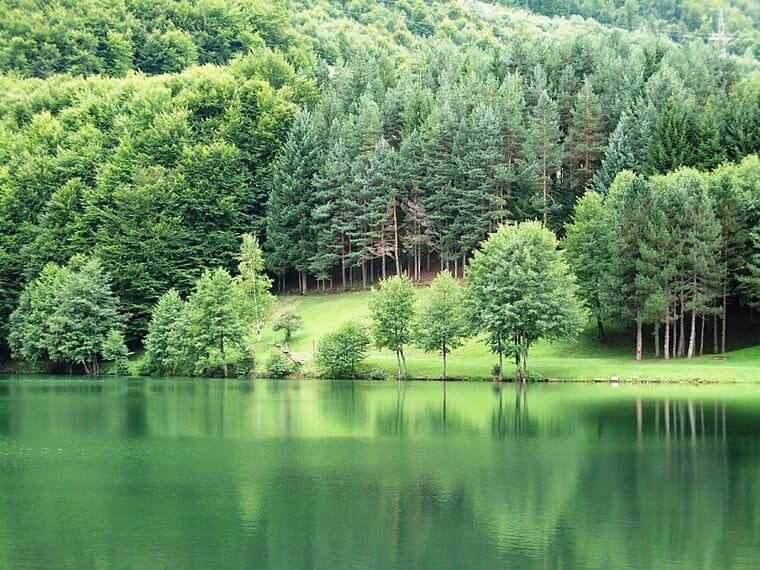
Podrasnica is a village of some 950 people and is, like most places in the Balkans, nestled in a valley, about ten miles from our location in Mrkonic Grad. 

The people are mostly poor agrarians, eking out a living on small land holdings, or are involved in the logging industry. I run a Primary Health Care Clinic here, twice a week. The locals and also some people from the surrounding villages (though they never let on they are from another village!) are very grateful to have this facility, as they are very poor and many of them are unable to afford the price of medicine, or have transport to travel to Mrkonic Grad, and certainly not to their only surviving big hospital at Banja Luka. We do the basic medical care and also provide them with medicines which are given to us by MSF. 

Most of my patients are elderly people and small children, as the majority of young healthy men and women go to other places, bigger cities or towns, to earn a living  as best as they can. I’ve never come across so many people, in such a small community, with so much Hypertension amongst them. How much of that is the result of the stresses of war and how much of it due to the Turkish coffee they drink, would be interesting to investigate.

The majority of people are by and large sick of the war, and this is the first time, in five years, some of them will be able to harvest their own crops. The vast quantity of what they grew in the last few years was either commandeered by their own Army or looted by the opposition (Muslims and/or Croats). 

The clinic is now quite popular, but it is time consuming as we have to use an interpreter, and I am lucky if I can get through more than 15-20 patients per clinic.  

I have a special admirer called Milija (Serbian version of our dear Emily!) who brings us Turkish coffee. She was one of my first patients. She is sixty-two years old, and is a real darling. She doesn’t believe I’m fifty, which is wonderful for my morale! 

Later this month, possibly on the 16th, we will ‘hand over’ the clinic to the local Serbs, to continue the clinic with ongoing Medical support from MSF and support from us, if they want it. If they do take over the clinic completely, I shall miss seeing the patients. I’m hoping that they will be happy to allow me to continue the clinic, at least once a week. 

The clinic work sustains me through the boredom and the non-events (in real life terms) of the remainder of the week. So far I have had one bottle of ten-year-old Brandy, and a bottle of the local firewater called Sliivo — a fruit brandy they make out of plums). I’ve found out the hard way that it is safer to keep a hand over the little glasses they offer the slivovitz in, otherwise it gets automatically topped up! Even better, so that I don’t drink whilst on duty. 

The vegetables are coming on a treat in Milija’s garden, and the palm trees are loaded with fruits, as are the apple trees next to the clinic. Milija thinks they will have a decent harvest, if the peace holds, and she’s trying hard to dissuade her oldest son from drinking too much — otherwise, she says, she will force him to come and see me! 

The men who do not have regular employment, and there’s a lot of them about, have become apathetic. So alcoholism is rife, and hence, I think, Hypertension and Peptic disease. All my boys have now developed a taste for Milija’s Turkish coffee, but I try to dissuade Milija, as I am fairly certain that the coffee beans must cost quite a bit. 

We always have an interpreter for the clinic, who are generally Bosnian girls, or fellers. They are generally chary (maybe even contemptuous) of the local yorkels, as is normal in all developing nations, and certainly in India. But the vast majority of them seem to have developed a special protective shell, to help them cope with the business of dealing with the needs of their poorer country folks, as the vast majority of them (the interpreters) get paid some DM 1000–12,00/ a month. This is eight to ten times what the ordinary folks in the country earn.  

There are some really bright students amongst these interpreters, who have given up career courses in order to take up jobs with IFOR, so that they can look after their families. One of the girls we have with us in Mrkonic  Grad was a second year medical student when the war broke out. Another girl, the daughter of a Chemistry Professor (her mother), is a graduate Electronic Engineer. She is trying to get funds organised so she can do a Master degree, and then probably a PhD. What will happen to all these blighted lives eventually, who knows?

I am constantly amazed how well these girls cope with living amongst all of our sex-starved, often foul mouthed soldiers. Some, of course, cope better than others, the youngest being just over 16 years old! IFOR has arranged a free scholarship for her, to study in the UK after she’s done her stint with the Army.  

It is hard to be surrounded by so much tragedy and not be repulsed by war and the people who lead nations into them. But draw the experiences of N Ireland into the reckoning and you realise that humankind has still some way to go before being called truly civilised. Amongst all this, when one has to cope with the petty point scoring of the self-seeking people, and self-aggrandizement of personalities around you, then it can get somewhat wearying. 

So far I am managing to cope with the changes that have occurred in my life, and find it comforting to accept that “This too shall pass”. Your letter was a solace.

I hope that my dear mother is keeping well. Please convey my pronam and love to Maa. Hope you are both well when this gets to you. I’ve rambled on too long for now. 

With pronam and love, 

Yours, as ever, Khoka

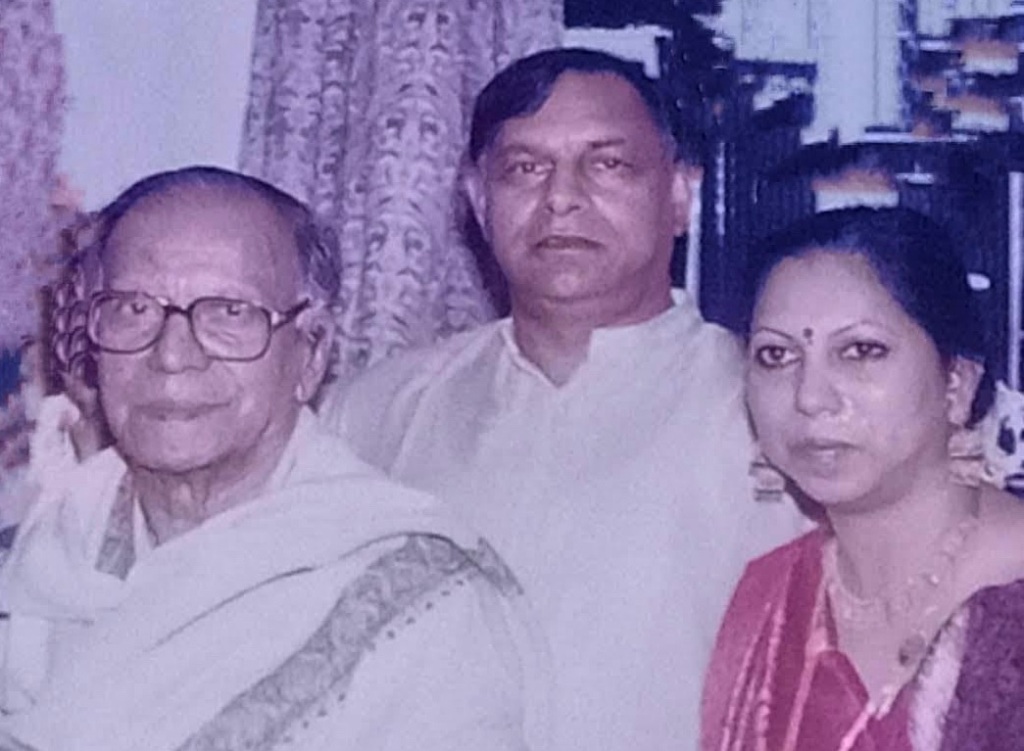
From left to right: Nabendu Ghosh, Dipankar Ghosh and Ratnottama Sengupta. Photo provided by Ratnottama Sengupta.

Ratnottama Sengupta, formerly Arts Editor of The Times of India, teaches mass communication and film appreciation, curates film festivals and art exhibitions, and translates and write books. She has been a member of CBFC, served on the National Film Awards jury and has herself won a National Award. 

.

PLEASE NOTE: ARTICLES CAN ONLY BE REPRODUCED IN OTHER SITES WITH DUE ACKNOWLEDGEMENT TO BORDERLESS JOURNAL

Click here to access the Borderless anthology, Monalisa No Longer Smiles

Click here to access Monalisa No Longer Smiles on Kindle Amazon International
Categories
Musings

Istanbul

By G Venkatesh

Istanbul Airport. Courtesy: Creative Commons

The Schengen visa did not help much, being as it was on one of the pages of an Indian passport. I was told I could not get an on-the-spot transit visa to walk out of the airport and see the city of Istanbul, formerly Constantinople, which was one upon a time Byzantium, which in turn was known as Nova Roma when the Romans ruled it. Well, that meant spending 24 hours at the Kemal Ataturk airport – waiting for the Turkish Airlines flight to Oslo the next day in the morning. Memories of Tom Hanks in Terminal flashed past the mind’s inner eye.

Coffee and vegetable burger later, I sat down to test if a free wireless connection was available in the precincts of the airport. It was, and I could check my e-mail; not just that, I could also thereby shoot across some crosswords’ designs that I do for a magazine. Great way to spend time, I thought. Time was, is and will always be money!  My focus on the laptop screen was disturbed when a man walked past on my left, proferred his right hand and asked “Indian?”

“Yes,” said I, accepting the handshake.

“Pakistani, Shakeel,” he responded and sat down on the chair next to mine and immediately asked me if he could use my laptop for 5 minutes. I had heard about instances of threat mails being sent from cyber cafes or from laptops or desktops of totally-innocent, unsuspecting friends or acquaintances. Wariness did creep in instantly, but then I decided that I would not leap before looking… looking at the screen as he was accessing his mail. I did not wish to play into the hands of the ‘enemy’ as a noble do-gooder. There would have been nothing more disconcerting than that!

He spent more than 5 minutes and an edgy yours sincerely had to butt in with, ‘Boss, I have some urgent work to do; if you have finished.’ When I got back ‘possession’, I vowed to work on till the battery ran out, designed a crossword in the process, and then on the pretext of my fear of using unsecured wireless networks for too long, strapped the laptop back in my backpack.

After a long silence, I devised a means of dissociating myself from his company. “Okay then, I think I will just take a walk around the airport. It was nice meeting you.” I held out my hand.

He looked up and said, “I guess I shall also join you. What will I do sitting here all alone?”

I wanted to say, “That is none of my concern.” I did not. I would be saddled with Shakeel for the next 24 hours!

From my side, the ice was not broken. Hence, when he quizzed in Punjabi about what I did for a living, where I worked and how much I earned, I was a bit startled. I recalled being in the situation of the protagonist (played by amnesiac Aamir Khan) in the film Ghajini and wanted to say exactly what he says when a woman tries to get very informal with him – “I do not think I have known you so well as to be obliged to answer those questions.”

I brushed aside the questions however and decided to be as wary as wary could be. Shakeel, it turned out, had been living in Austria for seven years, managing a restaurant with his uncle. He had missed his Austrian flight in the morning, as the Emirates flight which got him into Istanbul from Dubai was delayed by 15 minutes. He had now asked his agent to rebook a seat for him on the flight to Austria next morning.

Shakeel talked of Indo-Pak business partnerships in Europe and lamented at the tension that has gripped the relations between these two neighbouring countries. I had the book, Wings of Fire with me. He pointed at Dr APJ Abdul Kalaam’s picture on the cover and commented that he is a very competent individual and wondered why he could not continue for a second term as President. During the conversation, mostly one-sided, he also said that people in India and Pakistan are more engrossed in producing babies while the rest of the world is pulling up its bootstraps and progressing fast. This statement, coming from a Muslim, took me aback a bit.

I treated him to Turkish coffee, after which he excused himself to go to the in-airport mosque, requesting me to mind his bags. “Risky undertaking,” I thought. What if…

He returned after a while though, and I scolded myself for having succumbed to paranoia and subsequent suspicion.

At around 6.30 pm, Shakeel insisted it was time for dinner and wanted to repay me for the coffee I had treated him to, by buying me dinner. I told him to carry on and said that it would be too early for me to dine. He looked at me and said, “Okay then, we will dine whenever you want to.” This was surprisingly very heartwarming and as we had known each other for just about 12 hours or so, seemed a bit too unreal. Such acts are the prerogatives of brothers and good friends.

As the day petered to a close, we decided not to sleep-starve ourselves anymore. Shakeel, still unsure of whether or not his agent would be able to confirm his booking on the next morning to Austria, dozed off and slept soundly. They say that anyone who can sleep without burdens or worries on his mind, has a clean and pure conscience. I, with a confirmed ticket, could not sleep for more than four hours – unclean and impure conscience?  I was up at 5.00 am, and at 7.30 am when I headed to board my Turkish Airlines flight to Oslo, Shakeel was still sleeping! I did not want to wake him.

Once in Norway, I sent him an e-mail. At the time of writing, it has been quite a while since I did that, and there has been no response, Maybe, he will not respond. Maybe, he is a good person who was upset with my not having the courtesy to bid him a proper ‘Khuda Hafeez’. I would never know.

Strange lessons learnt at the Kemal Ataturk Airport.

.

G Venkatesh (50) is a Chennai-born, Mumbai-bred ‘global citizen’ who currently serves as Associate Professor at Karlstad University in Sweden. He has published 4 volumes of poetry and 4 e-textbooks, inter alia. 

.

PLEASE NOTE: ARTICLES CAN ONLY BE REPRODUCED IN OTHER SITES WITH DUE ACKNOWLEDGEMENT TO BORDERLESS JOURNAL

Categories
Review

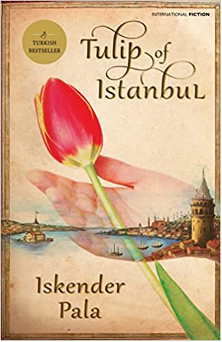
Tulip of Istanbul by Iskendar Pala

Book Review by Gracy Samjetsabam

Title: Tulip of Istanbul

Author: Iskender Pala

Translator: Ruth Whitehouse

Publisher: Niyogi Books

Tulip of Istanbul was originally written in Turkish in 2009, is a historical novel by Iskender Pala. The translation to English by Ruth Whitehouse and its publication by Niyogi Books in December 2021 has put it within the reach of the larger community of Anglophone readers.

Iskender Pala is a professor of Turkish (Ottoman) Divan Literature, an author, and a columnist. He is a recipient of the Turkish Writer’s Association Prize (1989), The Turkish Language Foundation (1990), The Turkish Writer’s Association Essay Prize (1996), and was honoured with The Presidential Culture and Arts Grand Award in literature in 2013. He has been conferred the title of “The People’s Poet” by popular vote in Usak, Turkey. Ruth Whitehouse is a scholar of Modern Turkish Literature and translator with multiple translations from Turkish.

Tulip of Istanbul , a fictionalised historical romance, is a murder mystery that is woven to highlight the period that followed the Treaty of Passarowitz in 1718. The story spans 1729 to 1730. Also known as the Tulip Age, this was a time when the glory of the peaceful period since the 1718 treaty was interrupted by an outbreak of a public revolt that showed resentment to over-indulgence and wastage, leading to social and economic downfall. The book has 66 brief chapters that seek to answer a question that is set as the title of each chapter. In the ‘Preface’, the author claims he wrote the book under the influence of a handwritten anthology of Turkish poetry by an anonymous compiler from an “Auction of Stamp Collections and Old Books” outside Istanbul’s Marmara Hotel. Impressed by the book, he wanted to showcase part of the Ottoman history as a storyteller. Thus was born the One Murder, Sixty-six Questions in Turkish translated as the Tulip of Istanbul.

The ‘Prologue’ reveals that “truth must not remain concealed” and so, the story is told two weeks after the October Revolution that deposed Sultan Ahmet III and slayed his son-in-law Grand Vizier Ibrahim Pasha of Nevsehir. The book opens with the question, “Is There No Limit to Self-Sacrifice?” The mysterious murder of Naksigul, the bride with heavenly beauty on the first night of the wedding, left the husband, Falco, distraught and deranged. The death of his wife had him thrown to prison as the prime suspect. Naksigul was holding a rare and beautiful purple twin bud tulip when she died. Two lovers were brought together by fate when Falco escaped the jailors. They jointly set out to solve the mystery.

In the story, Pala beautifully alludes to the rich culture and history of Istanbul. He manages to introduce the readers to the ninth-century music therapy called “Farabi”; historical figures who visited the empire of the time, the poet Nedim, the painter Van Mour and dignitary Lady Wortley Montagu; and to the Empire’s culture of maintaining insane asylums, prisons, lodges, and coffee houses. The narrative is interestingly infused with plots that are a story-within-a-story about the social life of the Ottoman Empire, the accounts behind the architectural beauties of the walled city of Istanbul, the picturesque sunsets of the Turkish straits be it by the Bosporus or sea of Marmara, the magnificent domed mosques, and palaces with fashionable gardens.

The action peaks to an important juncture at the house and garden of the most coveted tulip cultivator Hafiz Celebi. In the story, Pala includes mesmerising tales on the nomenclature, symbols, and meanings of the “Tulip” flower, which metaphorically and literally relate to the flourishing business, architectural beauty, and exchange of politics, art, and aesthetics of the Empire with the countries like Iran, Austria, Holland or Crimea. Through the story, Pala aptly accommodates how the Horticulturist community indirectly played a role in the policies and well-being of the state. Tulips are strewn through the story binding it into a poetic whole. Pala mentions the upgrade in information sharing with the coming of the first printing press in Turkey and succeeds in connecting it to the ongoing social unrest and the gruesome revolt that ensued in the Tulip Era. The mystery livens up till the end of the story where love guides and transforms, its own meaning and the seeker.

The language used by the translator in the story aids in understanding the appreciation for elegance and perfection in the art and aesthetics of the Ottoman Empire. Tulip of Istanbul is a potent read with a capacity to broaden the perspective about a culture one knows less about, a perfect springtime read. Changing seasons and social change serve as the backdrop to the dreamlike story filled with intrigues of royal secrets and suspense wreaths with those that pursued power alongside those that pursued love.

.

Gracy Samjetsabam teaches English Literature and Communication Skills at Manipal Institute of Technology, MAHE, Manipal. She is also a freelance writer and copy editor. Her interest is in Indian English Writings, Comparative Literature, Gender Studies, Culture Studies, and World Literature. 

.

PLEASE NOTE: ARTICLES CAN ONLY BE REPRODUCED IN OTHER SITES WITH DUE ACKNOWLEDGEMENT TO BORDERLESS JOURNAL

Categories
Essay

The Idiot, Goethe, and the Comet

By Helga Neumayer

I believe in stories. I am looking for stories.  And, yes. I can describe myself as a story lover. But, naturally, there are some stories I don’t want to know anything at all about. “Net so genau-au (Not too many details)” as Austrian artist Ostbahn-Kurti used to sing.

Stories have a life of their own. Suddenly, they come and bewitch you. It is useless to ignore them. You are surrounded by them. When you close your eyes, they come back in dreams.

Failing

Offended and frustrated, I left “my” German class. I had offered a proper elected lesson out of a textbook dated 2015 with exercises. The class did not participate.  They made fun of my lesson. They now wanted to learn something about love, etc. One of them complained noisily in front of the class:

“Teachings would be out-of-date!”

That hit!

There was some consolation in the trainers’ room.  My colleagues understand such situations. Anyhow, it affected me. 

I had some questions stashed away into my backpack:

“Do I do antiquated work?”

“What can I still expect from teaching classes?” 

“Is it worth the expenditure?”

Diversion

Anyway, I had to go to the public library.

I had to be surrounded by books. I needed to gaze on the soft hills of the Wiener Wald — the Vienna Forest. They calm me down.  For me, it has the same effect zapping through TV channels.

I can beam myself away, for example, among the bookshelves between I and K, let’s say, between a new Kaminer and an early Kaestner.  Then, I can glance at the DAF/DAZ shelf, at the textbooks for German as a foreign or second language.

Something new?

There was: The Complete Idiot. Simple speech. 

One guy does everything wrong. A drunkard.  Always talking about sex, something that he does not have.  No friendships to care about. Impolite. No luck in life.

Hefty language.  

I took the book. It helped.  For the next lesson, after a weekend of stomach ache and migraine, I had three different proposals for the class. In the so called “open-learning class,” participants are motivated to choose their own learning matter; they will choose what they like to learn at the moment. At the end, they are even allowed to play cards. Cards are in vogue — and, even at break times groups of card-players can be seen focussing on the game at hand.

Not this time. The participants concentrated mainly on the three stories of The Complete Idiot which I had offered them in copy form.  By themselves, they came to ask for expressions in detail, to be sure to understand everything properly.

Two close friends finished the three stories quickly and asked for the whole book, to retire with it in the leisure corner on the sofa. At the end of the lesson, they asked me where to buy the book.

A book!

With this experience, I gathered new courage. Finally, I was not at a very wrong spot.  Not old-fashioned. Not entirely in the wrong universe. 

The story could go on.

A few weeks passed.  The borders of The Complete Idiot — thus mine — could expand, furthermore, in the area of language.

The rail of love is a rail, which does not know limits.

Next time, I found Goethe’s Werther on the shelf.

 An audio book.

I cannot claim that in my younger years classical literature spoiled my love for literature, in general.  Those years just passed by. Consciously, I read one or another text as considered “advanced” only. For example, Goethe’s West-East Divan, after having inhaled Hafez.

It was pure joy.

Werther, however, fell into my hands for the first time now.  It was a simple version for the young people from Africa, Asia, and Eastern Europe whom I had to bring closer to the German language. So, we started with the beginning of the story when you can already adumbrate a passionate approach, but you already feel that the darling sweetheart is in other hands.

Listen two times.

Re-narrate once.

Read once. 

And then it was getting exciting.

How would the story proceed?

The feedback was gorgeous.

Stories over stories.

They embraced continents, generations, and fiction.

Exactly what turns out to be literature.

Prevailing tenor: love is surely no reason for suicide!

The quiet young man from the Ivory Coast in the back row got very emotional. He recounted about his brother, who left all his kin, because his love for the woman of his heart was refused by his family.  He emigrated to Germany and does not even answer the phone when a family member calls. 

A young Syrian woman believes that an arranged engagement with an unloved person can surely be cancelled, and everything will work out fine. And the young Ukrainian — the most radical of all — without further ado — navigates a comet out of the infinite nothing into the ballroom of the society of lovers, and extinguishes the whole raunchy bunch and brings the story to an early end.

And myself?

Well, me, I am now complying with the standard requirements of Marcel Reich-Ranicky,  a canonical literary critic, who in 2002, declared that every literate German speaker must have read Goethe’s “Werther”.  But quite possibly, my version, in simple speech, an audio book, would not have been acceptable to him …

(Translated from the German original to English by the author and Carol Yalcinkaya-Ferris)

Helga Neumayer (Austria) is an ethno-historian, author, editor, translator and multilingual radio activist. She edited a number of anthologies. For more than a decade she has been editing a renowned Austrian feminist magazine ‘Frauensolidarität‘.( Solidarity among Women) She is the co-founder of the radio editorial ‚Women on Air, a multiligual magazine that coveres issues on global power relations. She is a member of P.E.N. Austria and on editorial board of Words &Worlds. Helga Neumayer lives and works in Vienna.

Categories
Poetry

Happening and more…

By Vasile Baghiu

Happening

Yesterday, I met poetry 
on the stony Loch Long shore,
near Ardpeaton.
The place was empty, and I think
she felt very well as she was: ignored, 
neglected, abandoned among the wood pieces 
and dry sea wracks.
Though I had suspected for some time 
she was not just the kind of a thing written 
on a paper sheet, 
it was at that moment 
I viewed the truth.

The waves looked like real sea;
the breeze, kingfishers, 
the insistent wind bringing clouds, 
by heaps,
carrying them further away, like in 
a movie shown with high speed,
yet other details, not very easy 
to be described - 
all made me recognize her 
from the distance. 

I had my camera close at hand, so I took 
many photos 
thinking to impress my friends later, 
as I knew they would not believe my story.

In the evening, when 
the images were downloaded, 
nothing could be seen 
on the monitor.
I resigned then to sadness and insight,
and I confine myself to write here. 

Still I am sure I really met 
poetry yesterday.

Under Wave

It is as if I were ill sometimes,
feverish, lonely, 
abroad.  

I do not share myself between
me and my own person.

The world swishes inside;
and the heart, 
agreeing secretly with the brain,
makes waves to show I am still alive.

Despite the smile, 
I am not on the wave --
quite under it. 

Maybe I am in vacation
and try to take advantage of
the good weather. 

Striving to be at least 
a part of what I will never be,
I dare not venture too deep
but splash a bit with the oars here,
where I suppose the shore is nearby
helping me feel safe.


I Do Not Write
Today I do not write. 
I wish I could live a bit more than I do 
in normal circumstances. 
I put aside all the pencils and papers,
close the computer
and come into the midday sun. 
I do not write, 
so I go for a walk,
and think of the things 
concerning me closely
these days:
the life at home,
and the new British poetry
at “Bloodaxe”
I spent all the last evening.

This morning I sent e-mails 
to two persons who 
do not get along very well, 
hoping they would make up 
when seeing
they have a mutual friend in me. 

Wordsworth was right: long and solitary 
walks are good for inspiration,
but today I do not write. 
I feel good, but I would not pretend this 
comfortable feeling will infiltrate 
my writing too, 
in case tomorrow I begin
the story again. 

I get a bit more distant from myself
so that I can see me better. 
A fit of laughter seizes me. 

Today I do not write.

(First appeared in the volume Cât de departe a mers/ How Far Have I Gone, 2008)

Vasile Baghiu (b. 1965) is a Romanian writer, author of eight books of poetry, a collection of short stories and three novels published in his country. He has been awarded a few writers-in-residence grants, in Germany, Austria, Scotland and Switzerland. Some of his works have appeared in translation in magazines and anthologies such as Penmen Review, Magma Poetry, Southern Ocean Review, The Orange Room Review, Stellar Showcase Journal, L.A. Melange, Poetry Can, Banipal, Cordite Poetry Review, The Aalitra Review, Bordertown. Co-author of the poetry collection Transatlantic Crossings: The Constant Language of Poetry, (TJMF Publishing, USA, 2006). Vasile had in the past diverse work experiences as a nurse, including a sanatorium. A psychologist and a teacher now, married, he has a daughter and a son. He currently is working simultaneously on a new novel, a new collection of poems and a non-fiction book.