Categories
Slices from Life

Spring Surprise in the Sierra

Narrative and photographs by Meredith Stephens

Grief was something I thought I could run away from. If I created as much physical distance as I could from my place of loss, surely I could find healing. I had just lost my beautiful sister Stephanie after more than five decades of sisterhood and hoped that I could find healing in travelling to distant climes. There couldn’t be anywhere more distant than the Sierra Nevada Mountains in California. The time zone is sixteen hours behind Adelaide, and the season is contrasting. Surely by distancing myself in time and space I could recover from my grief.

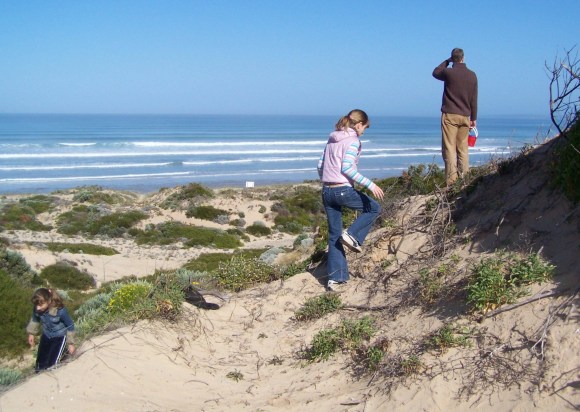
My partner Alex’s chief pleasures are planting trees, sailing, and hiking. In the Sierra Nevada, he could indulge his passion for hiking. We arrived in the Sierra in early June and stayed in a cedar house surrounded by ponderosa pines, Douglas firs and junipers, yawning into the sky. Every day we planned a hike along the numerous trails winding through the mountains. Even in June, it was pleasantly cool. Alex lit a fire in the fireplace every evening, and I donned a thick jumper. On our third day, our chosen hike followed a trail alongside the northern shoreline of Shaver Lake.

“If a bear approaches, the worst thing you can do is run away. Hold your ground and shout at them. Otherwise, they will think you are prey,” warned Alex.

Till then, I had been enjoying my stroll through the mountains at an elevation of almost 1800 metres, and it never occurred to me that we could cross paths with a bear. In Australia we often crossed paths with kangaroos, who would hold our gaze for a few seconds before gracefully hopping away. I had never considered that wild animals could be predators. Then, on second thoughts, I thought it would be nice to see a bear, and with Alex alongside me, felt less vulnerable.

“You have encountered wild bears before in California, haven’t you?” I quizzed Alex.

“Oh yes, several times,” he confirmed.

“Wasn’t there one time when you were alarmed?”

“Yes. That was when I was hiking alone in Montana. They couldn’t hear me. If a bear can hear you, they are more likely to stay out of your way. Some people use whistles.”

I started scanning the hillside for signs of large moving creatures, but instead my attention was drawn to the abundant wildflowers that I had never seen in Australia. I noticed bright red flowers protruding beneath the huge pine trees, known as Snow plants.

Snow plant (Sarcodes sanguinea)

I kept longing to spot a bear, but instead continued to notice wildflowers. The most common wildflowers were sensed by smell before I sighted them, small creamy flowers with a heady fragrance of rich honey. I wished I could photograph the smell.

Buck brush (Ceanothus cuneatus)

The nearby town of Shaver Lake had been saved by the firefighters in the 2020 wildfire known as the Creek Fire, the largest fire in California’s history. You could see the line where the fire had been stopped. On one side were scarred mountains which had lost their vegetation, and on the other remained majestic pine and fir trees.

Fire Devastation

On the side that had been spared, some pink flowers, known as mountain pride, asserted themselves through a crack in a boulder.

Mountain pride (Penstemon newberry)

I had been looking for bears, but instead found myself in the midst of a North American spring. Splashes of colour of ever more exotic wildflowers emerged along the roadsides and the trails.

Path through the forest

My hope to overcome grief through travel to a distant land had been in vain. Moving from a southern hemispheric autumn to a northern spring, and moving back sixteen hours in time to yesterday, was not enough to relieve me of my mourning. I missed phone calls and text messages from my sister Stephanie, and especially the opportunity to recount the tales of my travels when I returned home. Stephanie was my most avid listener, and never expressed any envy when I regaled my travel tales. Her concentration propelled me to provide ever more details of my travels. Now, I honour her memory by continuing to pursue the kinds of activities that she took delight in and writing the kinds of stories that she enjoyed.

In Loving Memory of Stephanie, Entrusted to God’s Care

Meredith Stephens is an applied linguist from South Australia. Her work has appeared in Transnational Literature, The Muse, The Font – A Literary Journal for Language Teachers, The Journal of Literature in Language Teaching, The Writers’ and Readers’ Magazine, Reading in a Foreign Language, and in chapters in anthologies published by Demeter Press, Canada.

PLEASE NOTE: ARTICLES CAN ONLY BE REPRODUCED IN OTHER SITES WITH DUE ACKNOWLEDGEMENT TO BORDERLESS JOURNAL

Click here to access the Borderless anthology, Monalisa No Longer Smiles

Click here to access Monalisa No Longer Smiles on Kindle Amazon International
Categories
Slices from Life

From Gatwick to Kangaroo Island

Phtographs & Narrative by Meredith Stephens

When I recently flew from Australia into Gatwick Airport, London, I was struck by the ease of passing through customs and immigration. Once I exited the plane, I was ushered to an empty lane and directed to a machine to present my passport. As I had nothing to declare I walked through the green lane. A group of four customs officers were engaged in conversation and did not notice me. I had entered the UK seamlessly in about five minutes without making eye contact with a single person.

Not so when travelling within my home state of South Australia. Alex, Verity and I were on our way from Adelaide to Kangaroo Island, situated across Investigator Strait off the southern coast of South Australia. We would have preferred to sail there, but Alex’s boat was high and dry, awaiting repairs to the mast and windows in Yaringa, eight hundred kilometres away in the state of Victoria. We had made a booking for the three o’clock ferry from Cape Jervis to Penneshaw, on Kangaroo Island. We left Adelaide at 1 pm, allowing ninety minutes for the drive and thirty minutes to board, as we always do.

Half an hour into our trip, we were stuck in a traffic jam along the arterial roadway heading south. We had never been trapped in a traffic jam in this direction before, because it was leading away from Adelaide towards sparsely populated farmland.

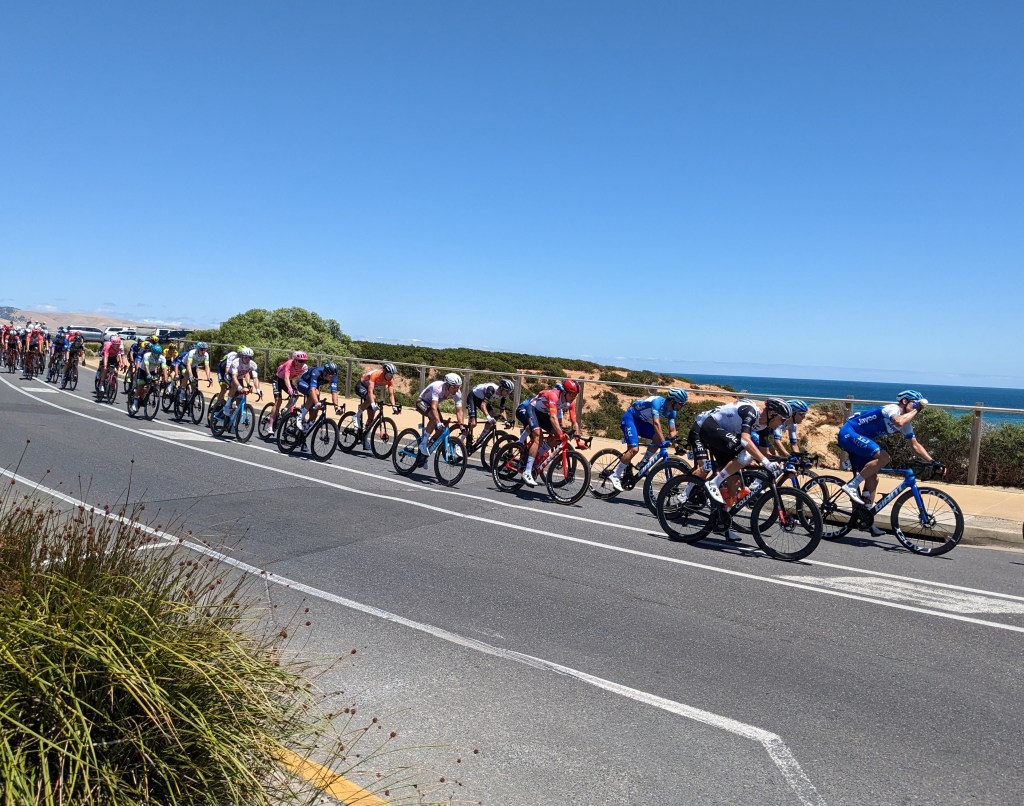
“Oh no! It’s the Tour Down Under! The road is closed for the cycling race,” lamented Alex.

He did a U-turn and headed west to the side streets in the hope of finding an alternative route along the Esplanade. After winding through the coastal suburbs, we arrived at a T junction facing the Esplanade, and were greeted by a woman in a bright orange vest holding a prominent sign saying ‘Stop!’

Onlookers lined the streets holding their cameras ready to snap the cyclists. We waited, all the while nervously checking the time on our phones, wondering whether we would miss our ferry. A few minutes later we heard an excited murmur run through the crowd, and sure enough, a group of cyclists whizzed past.

We glanced at the woman in the orange vest, hoping she would let us pass. She was on her walkie talkie and shook her head at us. Soon another group of cyclists raced past. Then the woman let us on to the Esplanade and we headed south. Soon after we were stopped by a police officer on a bicycle, who directed us away from the Esplanade. We turned east to weave our way back to our original route.

“We won’t make it to the ferry on time!” complained Alex, pressing heavily on the accelerator.

We arrived back on the highway that we had originally departed from and tried to turn right so that we could head south to Cape Jervis. A line of cars from the north were trying to turn right into our street.

“We’ll be here for hours. Best turn left and then do a U-turn,” announced Alex.

Alex turned left, accelerated, and braked when he found a gap in the oncoming traffic. He quickly did a U-turn and then headed south, passing the line of cars waiting to turn right onto the road where we had been waiting.

Would all of this be in vain? Would we get to Cape Jervis just after 3 pm to watch the ferry departing, on its way to Penneshaw? I held my phone to check the distance to Cape Jervis and noted that the estimated time of arrival was 2.54 pm. Alex tried to make up time by driving to the speed limit. A truck was labouring up the hill in front of us. Alex waited until we reached a passing lane, and then floored the accelerator. The estimated time of arrival was now 2.52 pm. Sitting next to Alex as he sped along the highway was more exciting than rides on a fairground had been when I was a child. I trusted his judgment and felt safe all the while enjoying the exhilarating speed. Next, there was a red car dawdling in front of us. Again, Alex waited until we reached a passing lane, and overtook them. The estimated time of arrival was still 2.52 pm. At least we had not been losing time as we were delayed by the slow coaches ahead of us. We entered the township of Cape Jervis, rounded the hill, and then descended to the ferry port, arriving as predicted at 2.52 pm. We expected boarding to be well underway. Instead, four lanes of cars were waiting in the line-up to board the empty ferry, which was running late. We slid into the shortest lane and turned off the engine. A biosecurity officer approached Alex’ window, his curly auburn ponytail blowing in the wind. Alex wound down the car window.

“Do you live on Kangaroo Island or are you just visiting?” he asked.

“We’re just visiting.”

“Oh, lovely! Do you have any honey?”

“No honey.”

“Do you have any bee-keeping equipment?”

“No, definitely not.”

“How about fruit?”

“We have some apples.”

“Are they from the supermarket?”

“Yes.”

“Where did you buy them?”

“In Adelaide.”

“How about potatoes?”

“No.”

“Do you have any plants?”

“We have some caper plants in the back.”

He looked at the back of our vehicle in acknowledgement.

“Oh capers! They look nice. Where did you get them?”

“From a business in Port Adelaide.”

The biosecurity officer seemed satisfied and waved us on.

“Have a lovely trip!”

Shortly after we boarded the 45-minute ferry for Penneshaw. We had been asked more biosecurity questions than at any other place on our travels, and we hadn’t even left our home state. I yearned for the ease of passing through immigration at Gatwick Airport. I had felt perversely miffed at Gatwick for having been ignored by immigration and customs officials.

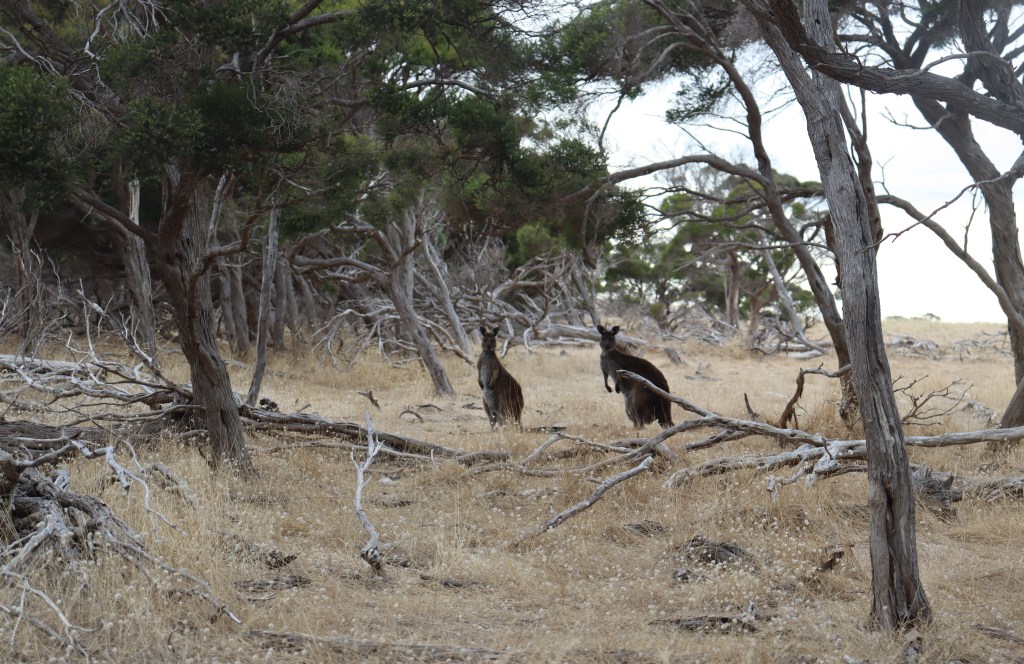
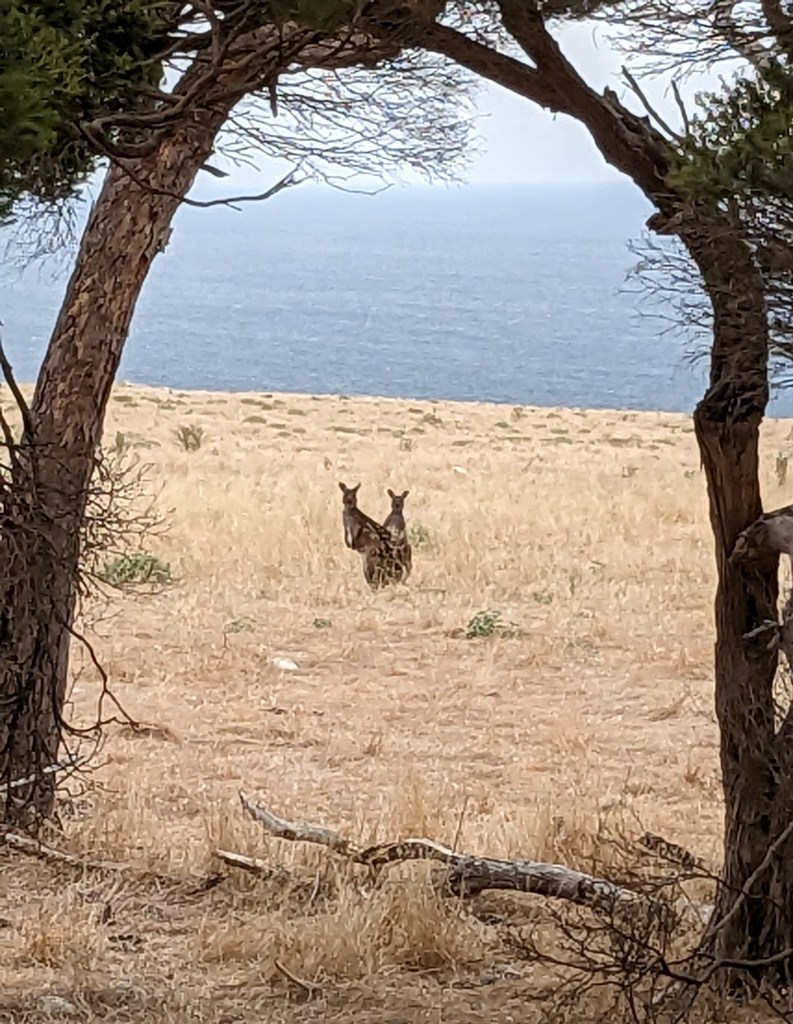
No sooner had we arrived at our destination though, did we spot a marvellous mob of kangaroos bounding across the property.

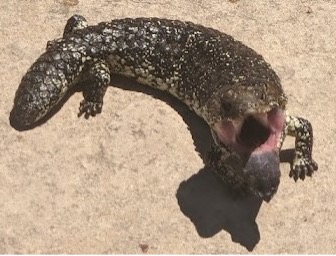
Then the following day we had a charming encounter with a Rosenberg’s Monitor looking for a drink of water – a species that is endangered on the mainland.

Rosenberg’s monitor lizard

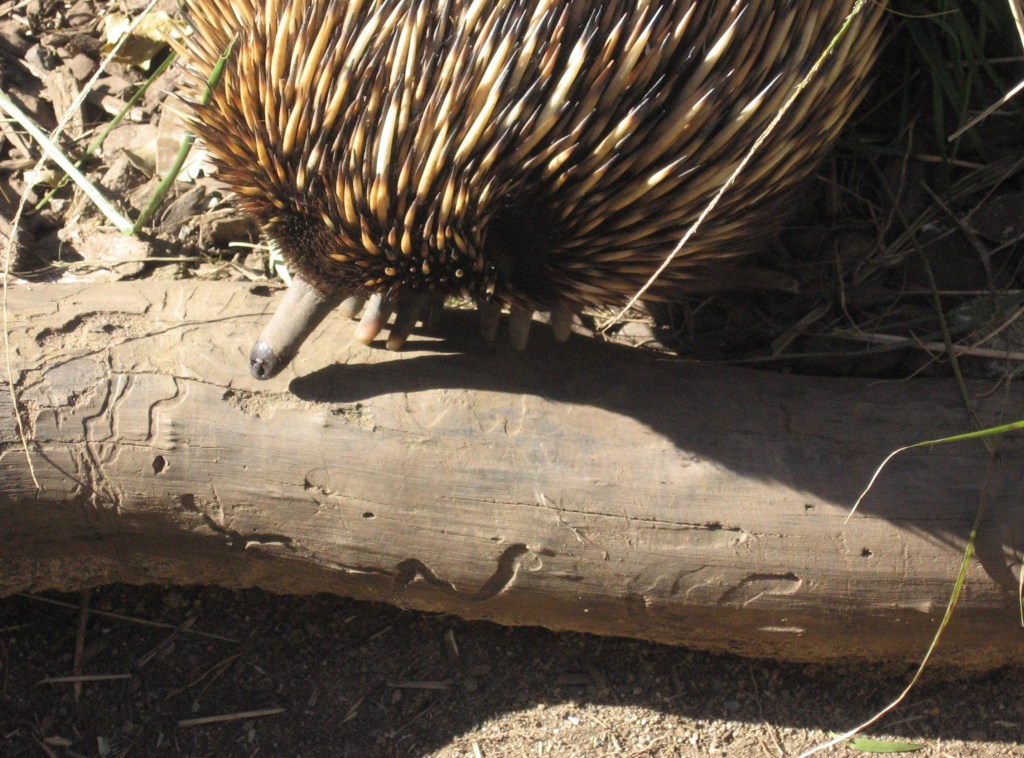
Verity later came across an elusive short-beaked echidna.

Short-beaked echidna

At last I could appreciate that protecting the fauna and flora of Kangaroo Island was important and necessary, and well worth the interrogations of a biosecurity officer.

Meredith Stephens is an applied linguist from South Australia. Her work has appeared in Transnational Literature, The Muse, The Font – A Literary Journal for Language Teachers, The Journal of Literature in Language Teaching, The Writers’ and Readers’ Magazine, Reading in a Foreign Language, and in chapters in anthologies published by Demeter Press, Canada.

PLEASE NOTE: ARTICLES CAN ONLY BE REPRODUCED IN OTHER SITES WITH DUE ACKNOWLEDGEMENT TO BORDERLESS JOURNAL

Click here to access the Borderless anthology, Monalisa No Longer Smiles

Categories
Essay

The Good, the Bad, and the Benign: Back across Bass Strait

Photography and Narrative by Meredith Stephens

“What! A text message at this hour,” exclaimed Alex, reluctantly looking at his phone.

Then his expression turned to concern.

“Gregory, our boat neighbour in George Town, says the boat hatch is open.”

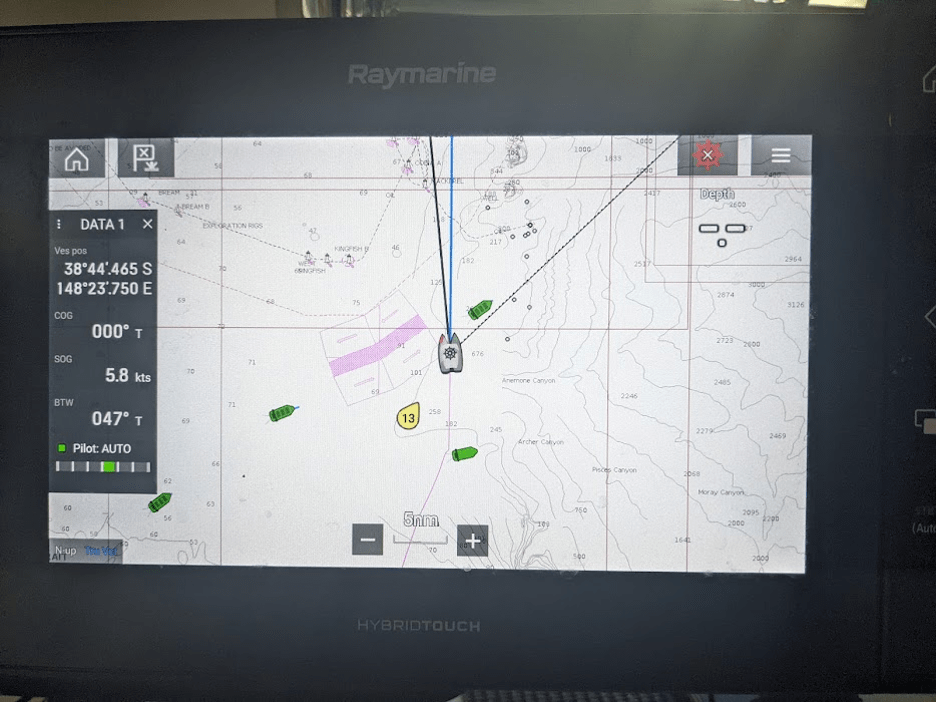
George Town, Tasmania, was a two-hour flight and a one-hour bus ride away from Adelaide. Who could have entered the boat from the hatch? They would have to be both slim and lithe. What could they have taken? Could they have taken the chartplotter – used to navigate, the Emergency Position Indicating Radio Beacon (EPIRB) – used to aid search and rescue or the Automatic Identification System (AIS) – used to track other vessels? We couldn’t sail without them.

“I can’t really bring our flight to Hobart forward because all the seats are gone during the Easter break. We’ll just have to hope for the best.”

Meanwhile, Alex decided to text Gregory back and ask him to take a look through the hatch to determine what might have been stolen. Gregory kindly obliged, and sent Alex a photo of the interior of the boat. The equipment appeared to be in place.

Alex checked the location of the boat on the AIS. It should have been updated daily, but it had been inactive for a few days. That did not bode well.

We spent the next day packing our bags as carefully as possible to avoid excess charges. On Friday Alex, Verity, Katie and I caught the plane from Adelaide to Hobart, and then picked up our rental car. We drove north through the centre of the island to the lush agricultural lands of the Tamar River, passing through towns lined with Georgian buildings constructed with convict labour.

Sculpture at Evandale

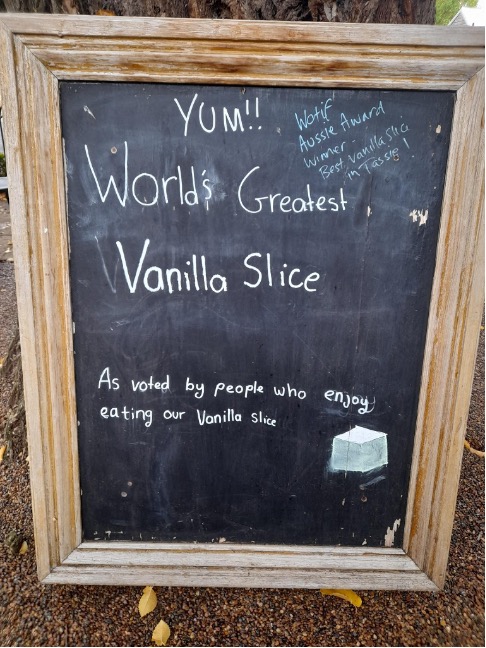
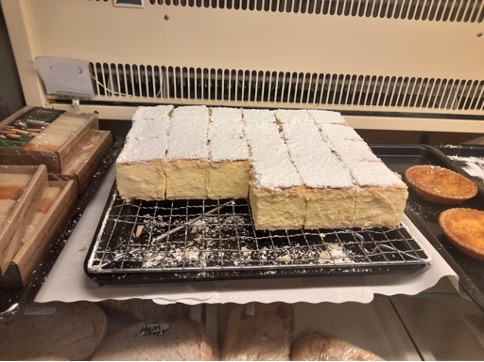
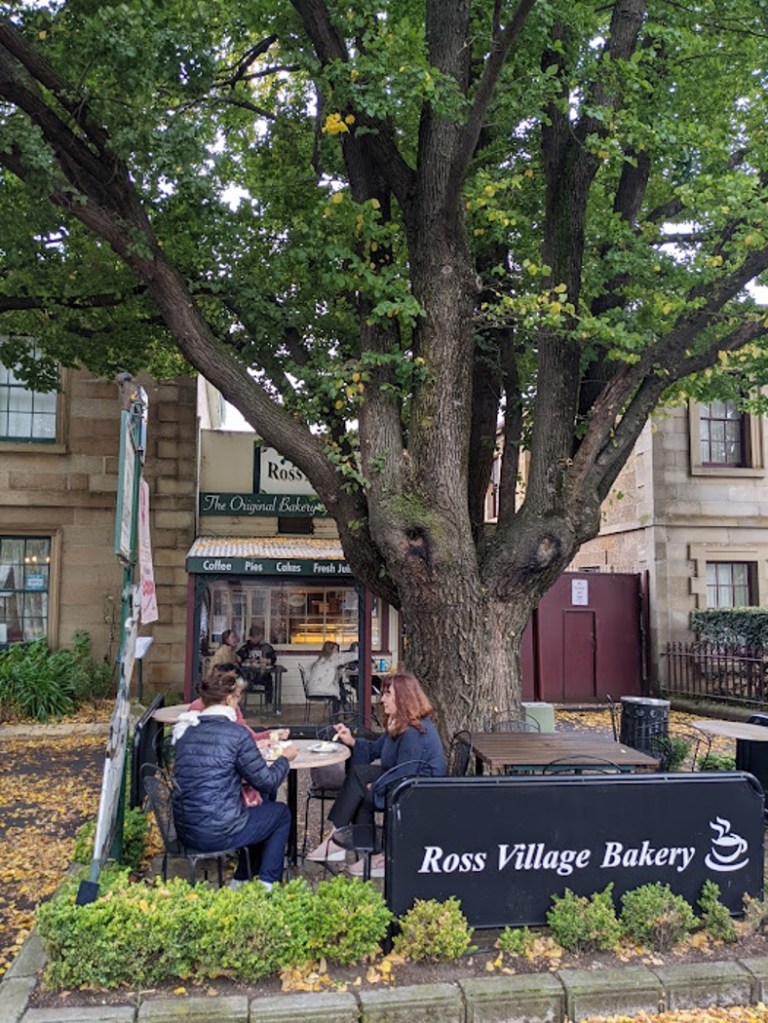
We were particularly looking forward to partaking of the best vanilla slices in the world, located in the township of Ross, and I confess that this distracted us from our concern for the safety of the boat equipment.

We sat outside the bakery savouring the vanilla slices as slowly as possible. Who knew whether we would ever be able to come back to Ross?

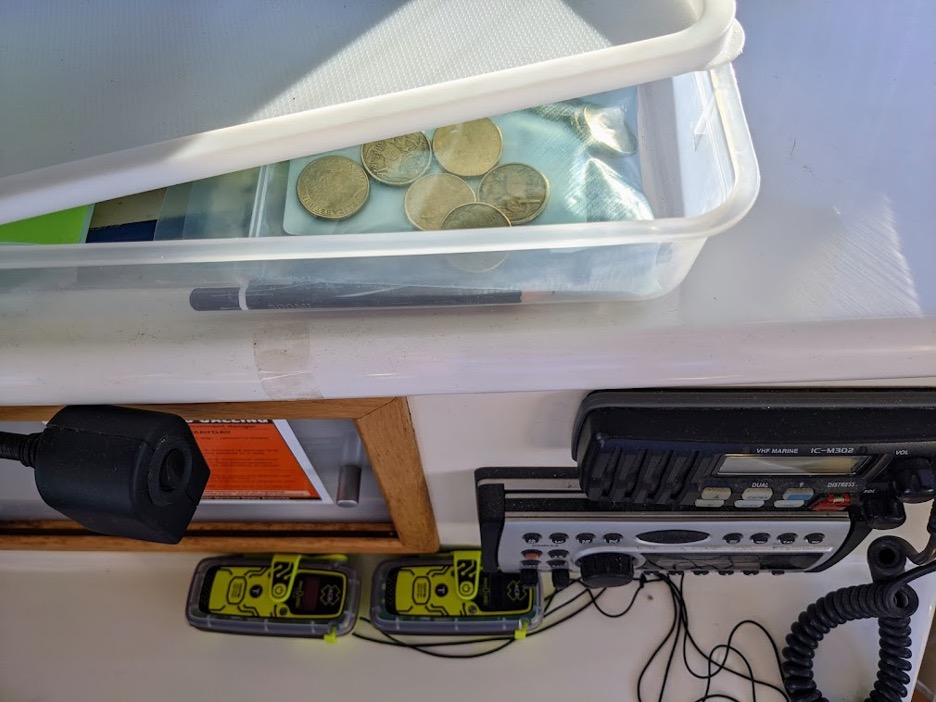
Then we continued our drive northward to George Town, Australia’s third-oldest settlement, meandering through other towns lined with Georgian buildings. As night fell, we arrived at George Town to our boat home. My fellow crew members were able to climb on the boat from the wharf unaided but I wasn’t tall enough to do this. Alex positioned an upside-down bucket on the wharf so that I could clamber on board. With trepidation we opened the door, now unlocked, and ventured inside. The equipment was still there but it had been unplugged. The lid of the clear plastic box under the monitor was open.

“They’ve taken the spare keys. The gold coins have gone too!” Alex observed.

Alex had prepared a collection of one and two dollar coins in a plastic bag in the clear box to be used for laundromats on shore. So this is what the thieves had been after!

Next Alex checked his wine collection in one of the bilges, “the boat cellar”. This was untouched. The thieves must have entered through the hatch and left through the door. Other than the keys, the only goods that had been stolen were the gold coins for the laundromat – or so we thought. Perhaps they were planning to return, next time through the door.

The theft of gold coins reminded me of advice I had received at the beginning of my teaching career in the 1980s in the city of Whyalla in South Australia. I had been assigned teacher housing by the education department. I was advised by a colleague that when I was away from home, I should leave gold coins in obvious places for youngsters who might break in.

Alex was relieved that they had not taken any navigational or safety equipment, and I was relieved that they had not taken my boat slippers. We were well into autumn and it was cold underfoot.

Despite the break-in we were very fond of George Town, not least due to the camaraderie of our boat neighbours.

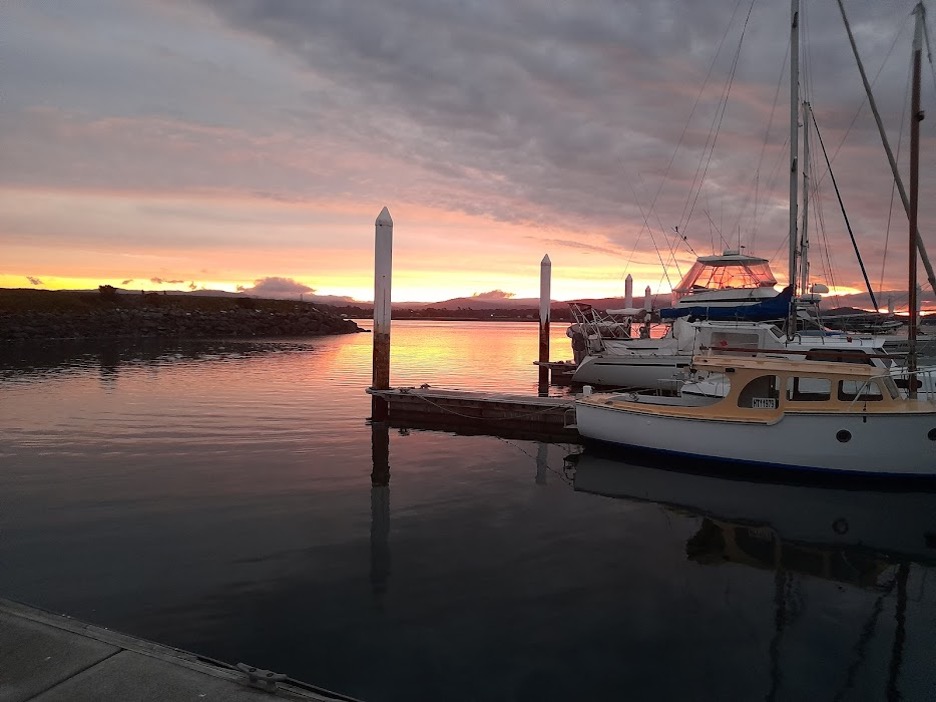
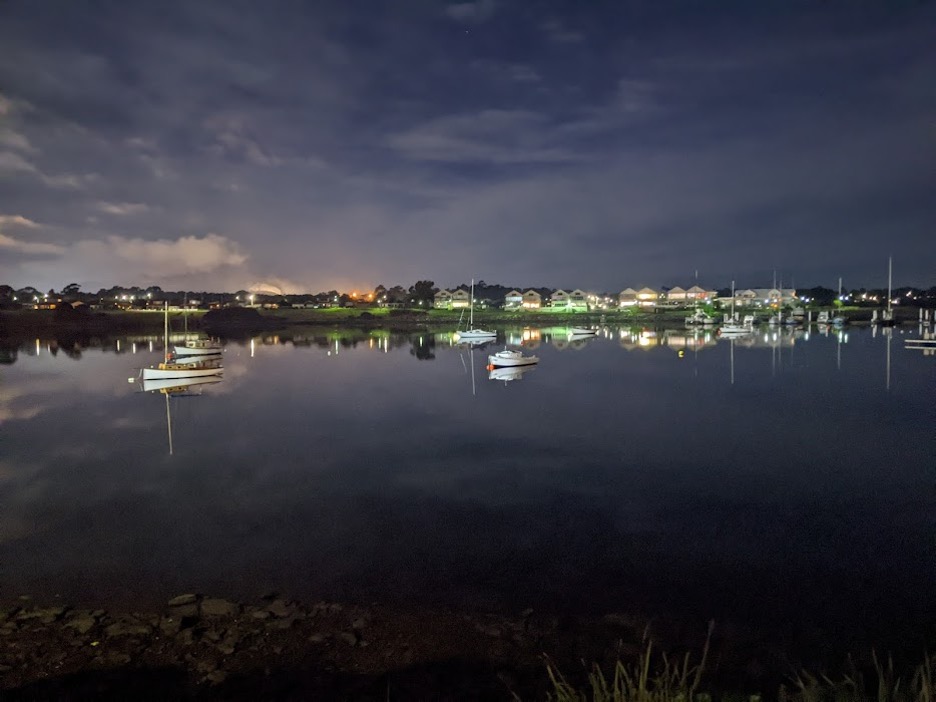
On the day of departure, as always, Alex got up before the rest of us to commence the day’s sailing. We were due to head north across Bass Strait towards the mainland. The harbour was generously lit up by the lights in the supermarket carpark on the other side, facilitating the safe exit to the Tamar River.

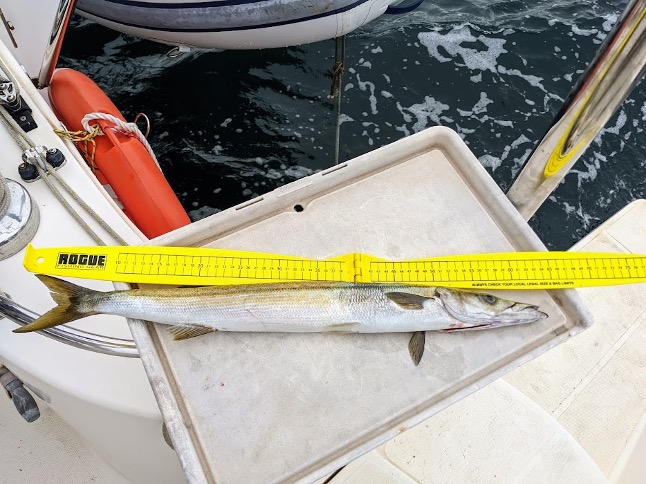
One of our favourite boat meals was freshly caught fish. Only when looking for a rod one evening did we discover yet another item had been stolen — a heavy-duty tuna fishing rod. This time, rather than using the rod we trolled with a hand reel, and had no trouble catching smaller fish.

Meanwhile someone in George Town was enjoying spending our gold coins and fishing with Alex’s special rod. At least we had our technology to guide our decisions as we crossed Bass Strait, where identifying marine traffic and the right weather conditions was critical. We followed the course Alex had plotted, stopping at the offshore island of Badger Island overnight, East Kangaroo Island and Whitemark for a few hours the following day, then anchoring at Settlement Point for our second night. Based on the Predict Wind forecast, we decided to tuck in for shelter at Outer Sister Island for two nights to wait out a front bringing strong winds. The shore looked tantalisingly close. I asked Alex if we could take the dinghy ashore but, pointing to the shore break, he told me that if we did we would likely capsize. We stayed indoors for the day, reading, writing and longingly looking at the forbidden shore. My preferred pastime is writing, but every now and then I had to force myself to stop and fix my eyes on the horizon as the boat danced over the anchor, to recover from bouts of seasickness.

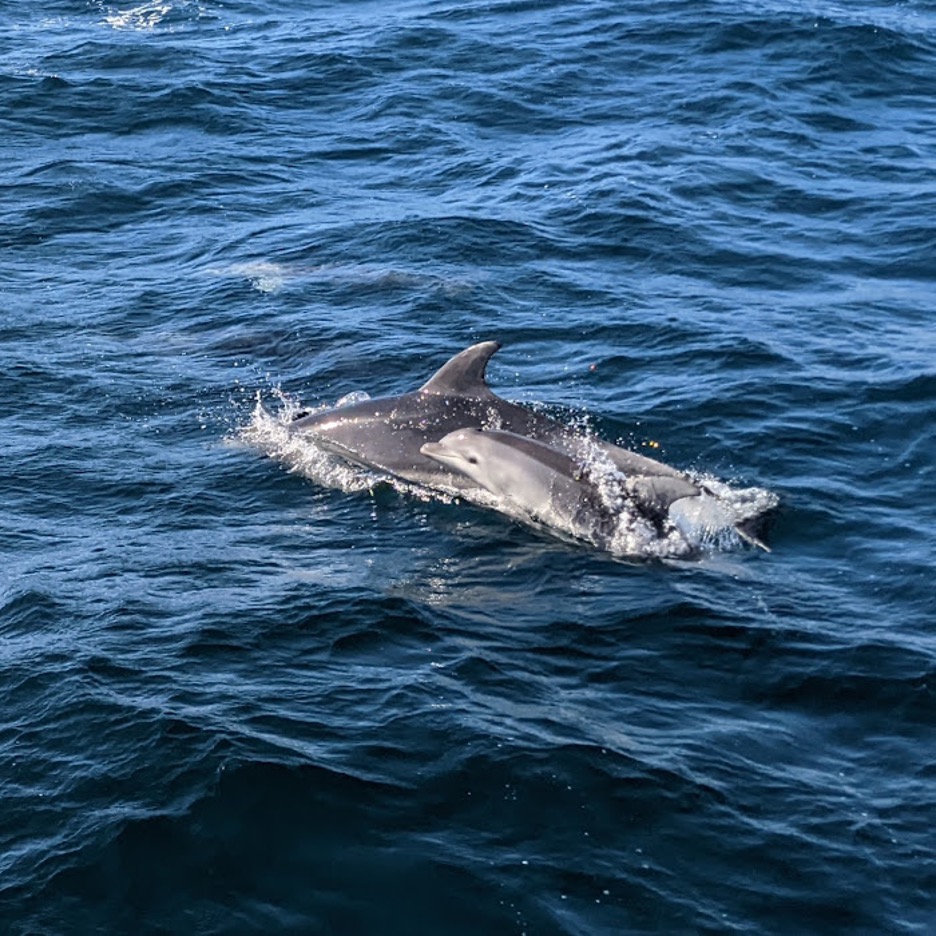
The forecast was for calmer conditions the following morning. We were ready for the long stint to the mainland, during which there would be no more coves in which to shelter. Alex got up first and departed Outer Sister Island at 6.38 am. We persevered sailing through both day and night. During the day we were rewarded by dolphin sightings as they played alongside and in front of us for about ten minutes a time, before suddenly veering away. During the night Alex and I roused ourselves at midnight to take our turn on the three hour shift until 3 am. Well, to be fair, Alex did the night watch while I forced myself to keep my eyes open.

We arrived at Eden, New South Wales, at 4.20 pm, and secured the boat on a public mooring. Too tired to venture ashore that evening, we relaxed on the boat, ready to explore Eden the following morning.

We had crossed Bass Strait availing ourselves of the technological support of the chartplotter and the AIS. Although the equipment did not spare us the trials of the night watch, it did help us avoid commercial trawlers and container ships in the shipping lanes. If it weren’t for our boat neighbour Gregory back in George Town, the thieves may have returned to steal the crucial equipment which made our crossing of Bass Strait safer. No less importantly, the notorious Bass Strait had been kind to us.

Meredith Stephens is an applied linguist from South Australia. Her work has appeared in Transnational Literature, The Muse, The Font – A Literary Journal for Language Teachers, The Journal of Literature in Language Teaching, The Writers’ and Readers’ Magazine, Reading in a Foreign Language, and in chapters in anthologies published by Demeter Press, Canada.

PLEASE NOTE: ARTICLES CAN ONLY BE REPRODUCED IN OTHER SITES WITH DUE ACKNOWLEDGEMENT TO BORDERLESS JOURNAL

Categories
Slices from Life

Messages through Space and Time

Meredith Stephens explores letter writing as an art that can stretch beyond a person’s lifetime and across borders of all kinds

I walked out to the end of the driveway of my Adelaide house, unlocked the letter box, and among the flyers and political brochures, I found a New Year’s card from a Japanese student called Mutsumi. It had been two years since the beginning of the pandemic, and I have been teaching on Zoom ever since. I have never met Mutsumi in person but have taught her for the two years online. When I taught in person in Japan, students would sometimes send a New Year’s card to my local Japanese address, but I had never received one at my Australian address.

New Year is just as important in Japan as Christmas is in my home country of Australia. In the pre-digital age we would send Christmas cards to friends and family destined to arrive on December 24th at the latest. They never arrived on Christmas Day because it was a public holiday. In contrast, in Japan, New Year’s cards are delivered on New Year’s Day and never any earlier. They may arrive later though, as receivers scramble to reply to those from whom they had not anticipated receiving a card. Although I had often received cards as late as the end of the first week in January, I had never received one in February. During the pandemic, international deliveries were experiencing considerable delays and some were even returned to the sender. I was grateful the New Year’s card had traversed the seven thousand kilometres to reach me at the southern coast of the southern Australian continent.

I looked at Mutsumi’s card and realized that the presentation of calligraphy was just as important as the message. Written Japanese is not just a means of relaying a message but also an art form. Primary school children must purchase a calligraphy set and are issued a calligraphy textbook to be used in their weekly calligraphy lesson. Fifteen years ago, when my daughter was in primary school, her homework was to create a piece of calligraphy which read Yama nobori, or ‘Climbing a Mountain’. The image below shows her doing her homework on the kitchen table, carefully pressing the calligraphy brush into the ink before she writes the characters on the rice paper.

English handwriting was also elegant in the writing of our forebears, although it wasn’t written with a brush. Here is a postcard written by my great great grandfather to my grandmother when she was about five, around 1907 when they cost only one penny to send. It reads, “Dear Emilie, Hope you had a good sleep last week and that you are feeling fit for school again next week. Love to all, From Grandfather.”

Although the writing is ornate the content is quotidian. The affection for his granddaughter is revealed not just in the message but also in the handwriting style.

A handwritten postcard, whether it is written in Japanese in 2022 or in English in 1907, may be considered an aesthetic work. Handwriting conveys both the literal meaning of the words and the feelings for the recipient. As Kathleen Parker reminds us[1], the pleasure of receiving a letter is that both the sender and the receiver have touched the same piece of paper. The postcard above has been touched by both my great great grandfather and me, at an interval of 115 years. I am sure that when he was writing to his granddaughter asking after her health in 1907, he never imagined that his great great granddaughter would be touching and reading it in 2022.

I rarely have a chance to put pen to paper these days, other than when writing a shopping list. My fingers fly across the keyboards almost as quickly as I can think, in a qwerty fingertip language. That’s why I appreciate those who take the time to select and purchase a postcard, and choose a fine pen or brush to produce an elegant written message that I may fondly linger over for years to come.

[1] Kathleen Parker, 2010, as cited in Baron, S. (2015). Words onscreen: The fate of reading in a digital world. Oxford University Press.

.

Meredith Stephens is an applied linguist in Japan. Her work has appeared in Transnational Literature, The Blue Nib, The Font – A Literary Journal for Language Teachers, The Journal of Literature in Language Teaching, The Writers’ and Readers’ MagazineReading in a Foreign Languageand in chapters in anthologies published by Demeter Press, Canada.

.

PLEASE NOTE: ARTICLES CAN ONLY BE REPRODUCED IN OTHER SITES WITH DUE ACKNOWLEDGEMENT TO BORDERLESS JOURNAL

Categories
Slices from Life

Forsaking Distant Hemispheres for the Immediate Locale

Meredith Stephens introduces us to the varied fauna found in South Australia with vivid photographs clicked by her

We seize every opportunity to travel around our home state of South Australia, searching for unexplored towns and dramatic seascapes. These do not disappoint, but the highlights of our trips tend to be unanticipated, such as the flora and fauna that surprise us with their fleeting appearances en route.

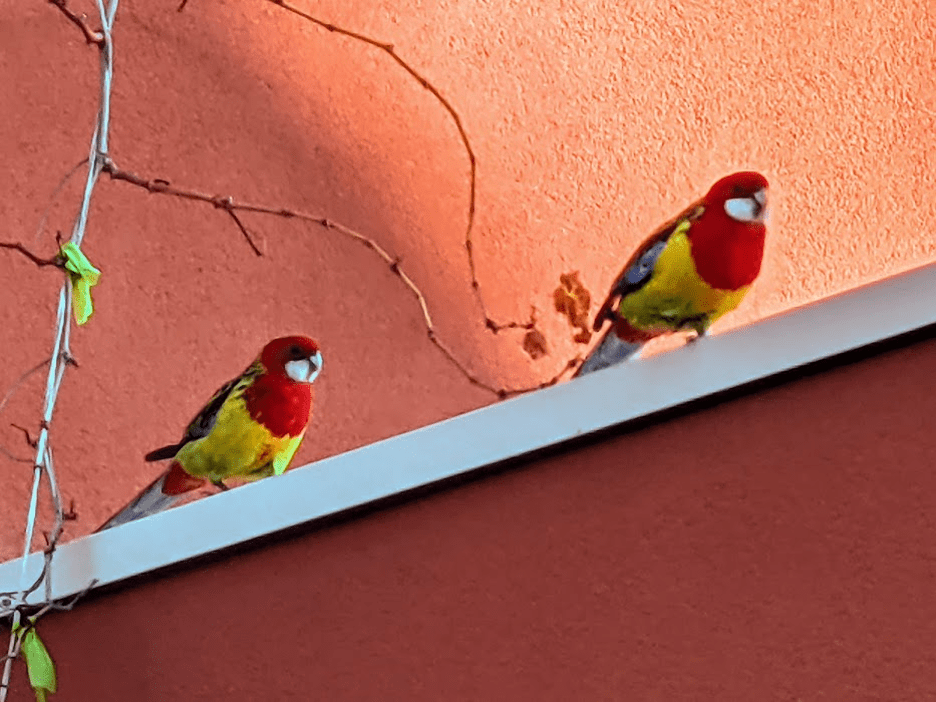
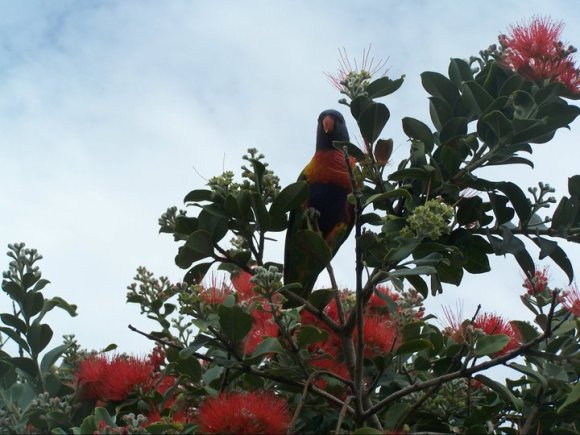
We did not necessarily have to leave the house to be surprised by native fauna. Rosellas descended into the garden and perch on the roof to show off their crimson heads, yellow bellies and the blue plumes on their tails. Their visit is especially treasured as it is rare.

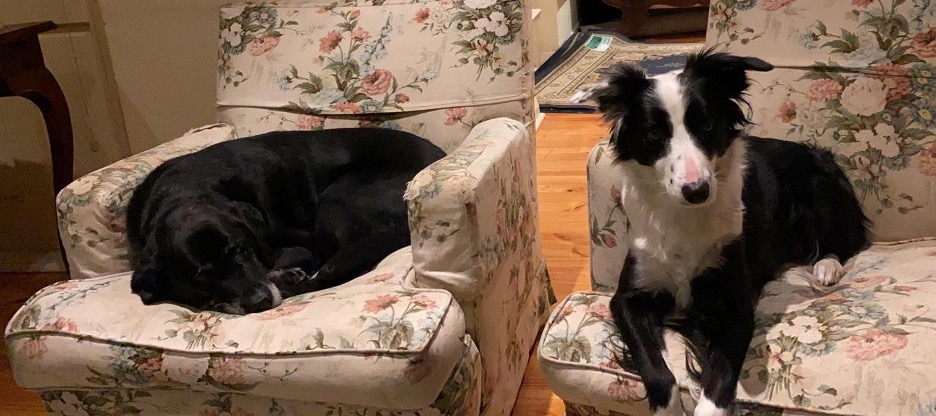
Our canine companions’ presence is anything but fleeting. They listen carefully to our instructions, judging our intentions through the direction of our gaze, and the intonation of our voice. If we want them to accompany us in the car, we call them to the garage, open the car door, and urge them to jump in. If we want them to stay in the house when we leave, we tell them so, and they sit with their eyes fixed on us as we go through the door. This eagerness to please is what makes them such easygoing travelling companions.

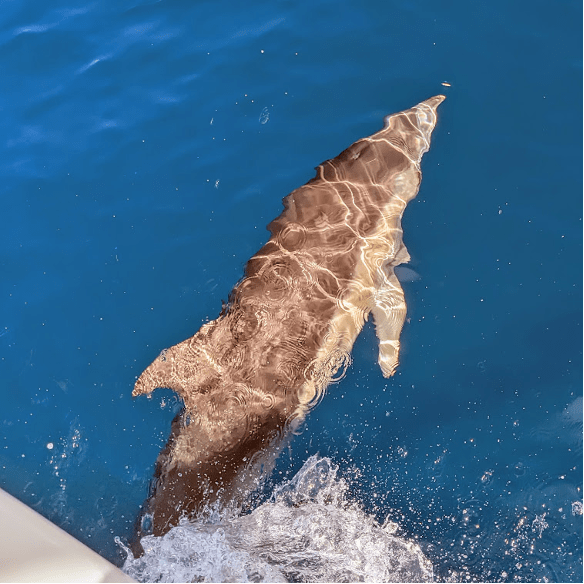
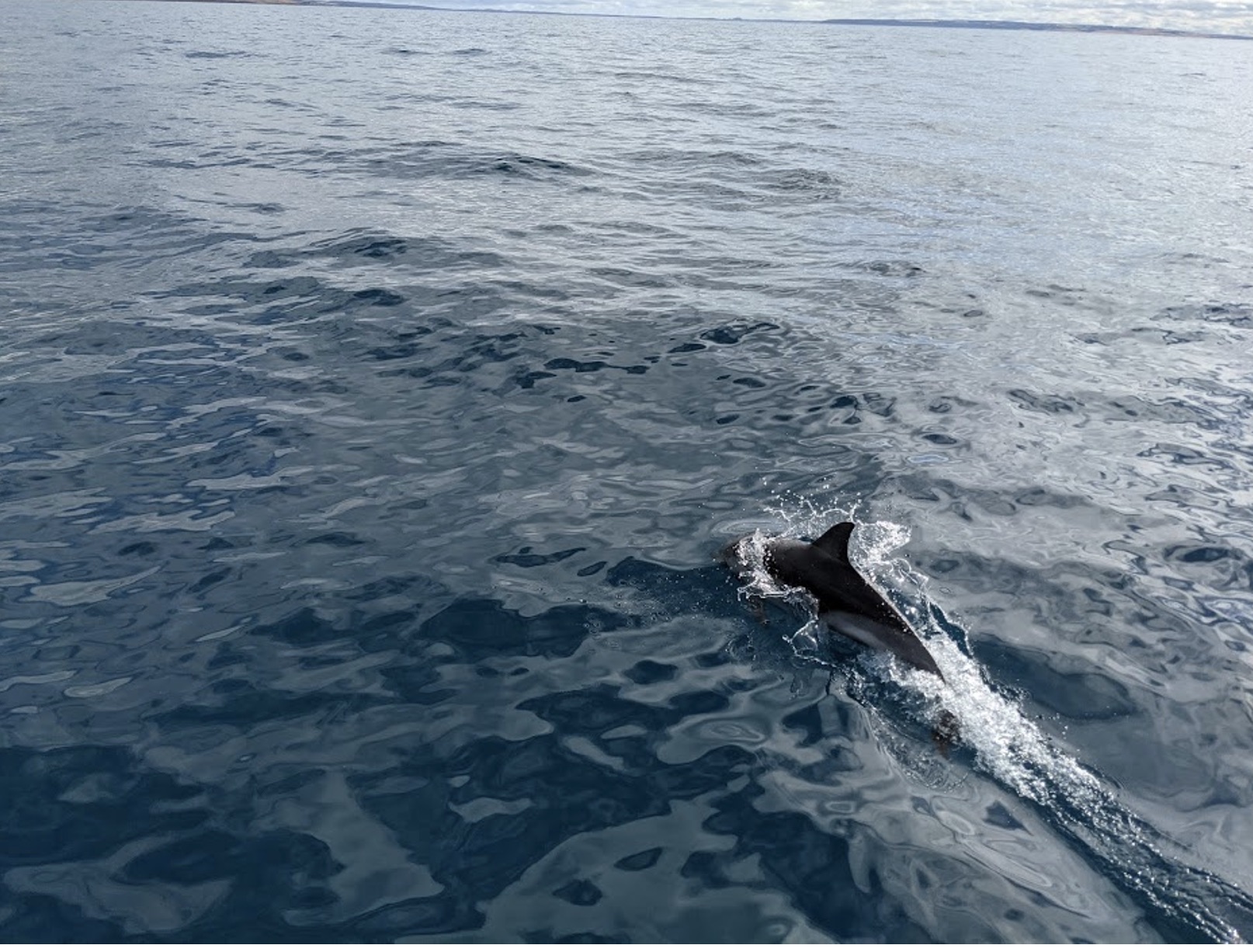
When we sail to Kangaroo Island, we are frequently accompanied by pods of dolphins. They are curious about the sound of the engine, and swim towards the bow. They swim back and forth in front of the boat, diving in and out of the water and keeping pace with the vessel in a performance for the sailors. They accompany us for about five minutes before disappearing. We hardly have time to feel bereft, because before long another pod approaches and provides the same performance.

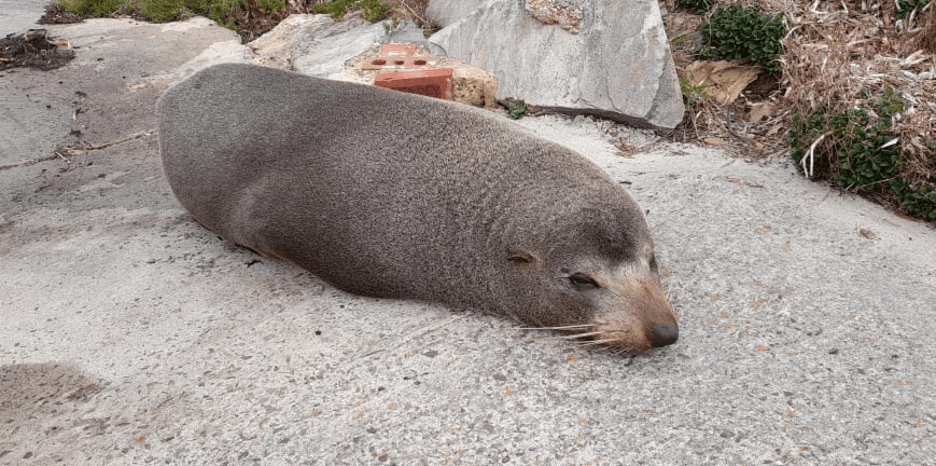
Once on Kangaroo Island, we drive to the township of American River, named after American sealers who visited in 1802.  No sooner do we park at the wharf, than we spot seals on the rocks. We had thought that we would need to visit Seal Bay and pay an entrance fee to see seals, but here they are lazily resting in the bay in American River.

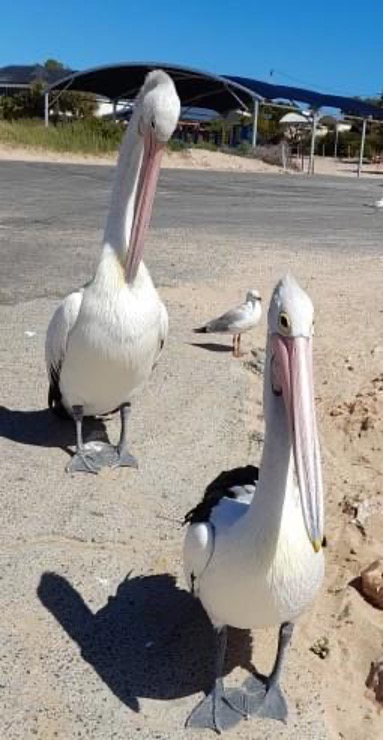
Once back on the mainland we decide to drive to the distant Eyre Peninsula in order to view the majestic seaside cliffs at Elliston. We enjoy strolling along the top of the cliffs and witness the ocean relentlessly pounding into the shoreline. We are just about satiated, but nevertheless decide to visit nearby Venus Bay. Here we are greeted by pelicans sunning themselves on the beach.

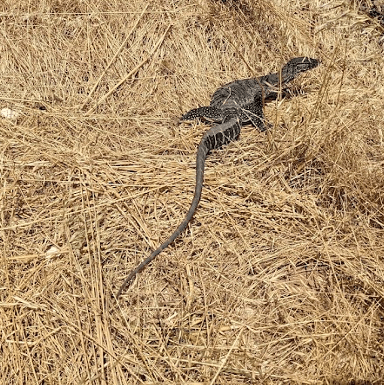
Driving back on the long dusty roads crisscrossing the peninsula we spot sleepy lizards slowly making their way across the roads. Every time we spot one we have to break and gently swerve to avoid them.

Then, as we approach the shore, a Rosenburg’s Monitor rustles in the grass. After detecting our presence, she makes a hasty retreat.

Finally, closer to home, in the undulating hills south of Adelaide, our attention is taken by a Clydesdale horse in a paddock. We stop the car so I can greet him. He walks towards me hoping to be rewarded by a carrot or an apple, but I am empty-handed. His forelock sweeps across one eye and is about the same length as my hair.

We have not had to visit a zoo or an aquarium. The tourist brochures have been helpful but none could have prepared us for the fleeting appearances of rosellas, dolphins, seals, pelicans, sleepy lizards, Rosenberg’s Monitors and a Clydesdale. As Alain de Botton reminds us in The Art of Travel. “Try, before taking off for distant hemispheres to notice what we have already seen.” Due to the pandemic, taking off for distant hemispheres is no longer straightforward. I am forced to pay attention to what I have already seen.

Meredith Stephens is an applied linguist in Japan. Her work has appeared in Transnational Literature, The Blue Nib, The Font – A Literary Journal for Language Teachers, The Journal of Literature in Language Teaching, The Writers’ and Readers’ MagazineReading in a Foreign Languageand in chapters in anthologies published by Demeter Press, Canada.

.

PLEASE NOTE: ARTICLES CAN ONLY BE REPRODUCED IN OTHER SITES WITH DUE ACKNOWLEDGEMENT TO BORDERLESS JOURNAL

Categories
Travel

Planes, Trains & Automobiles

I should like to rise and go
Where the golden apples grow;—
Where below another sky
Parrot islands anchored lie...

-- Travel, RL Stevenson (1850-1894)

December is often a time when we look forward to a vacation and travel. Through the pandemic ravaged years, moving out of the house itself had become a challenge. Now as the world opens up slowly (hopefully the Omicron variant of the virus will be more benign), travel stretches its limbs to awaken to a new day with new trends and rules. Borderless invites you to savour of writing that takes you around the world with backpackers, travellers, hikers, sailors and pirates — fantastical, imaginary or real planned ones in a post-pandemic world. Enjoy!

Poetry

In the Honduran Dusk

Lorraine Caputo takes us on a visit to a small Garífuna village on Honduras’ Caribbean coast. Click here to read.

The Voyages of Caracatus Gibbon

Rhys Hughes time travels back to the first century voyaging vicariously with his imagination and a Welsh king who resisted Roman invasion. Click here to read.

Pirate Blacktarn gets Lost

Have you ever got lost while traveling like Pirate Blacktarn? Who can help the pirate find his way… Narrated by Jay Nicholls, click here to read.

Classics

Travel & Holidays: Humour from Rabindranath

Do you enjoy babysitting nieces, nephews on trips and have you ever traveled with ‘hundreds of pieces of luggage, a few coolies, five women and only one man’? Tagore did. Somdatta Mandal translates hilarious writings from young Tagore on travel. Click here to read.

The Witch

Travel through Bengal with Shorodhoni, a woman dubbed a ‘Daini’ or witch, in her quest to find a home in Aruna Chakravarti’s translation of Tarasankar Bandhopadhyay’s poignant story. Click here to read.

Gliding down the Silk Road

“Stories that tell us about human lives and human emotions highlight one simple thing: Humans are the same everywhere.” That is what Ratnottama Sengupta concludes as she vicariously travels through the famed route from the past. Click here to read.

Around the World

Antarctica

Click here to read Keith Lyon’s travels in Antarctica and savour the photographs he clicked.

Adventures of a Backpacking Granny

Sybil Pretious takes you on her adventures that start at sixty years of age with photographs and narration.

St Petersburg, Russia

Click here to read.

Mount Kiliminjaro

Click here to read.

Lake Baikal in Siberia

Click here to read.

Baoying, Rural China

Click here to read.

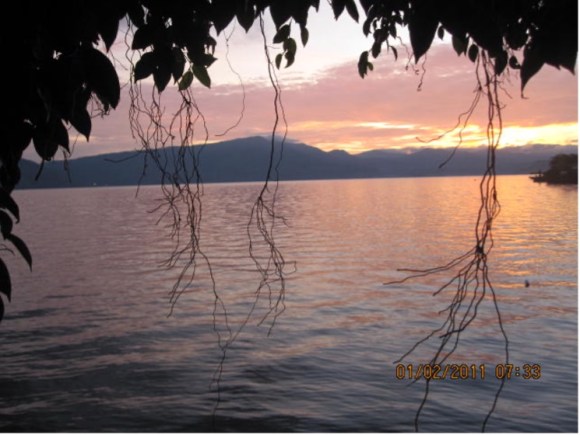
Volcanic Lake Toba. Photo Courtesy: Sybil Pretious

Philippines, Volcanoes & More

Click here to read.

Indonesia

Click here to read

Myanmar

Click here to read John Herlihy’s exhilaration with Myanmar in a pre-pandemic world in four-parts.

Australia

Click here to read Meredith Stephens’ sailing experiences between Adelaide and Kangaroo island.

Pandemic Diaries

Click here to read how Sunil Sharma moved continents, pausing in Maldives to find a new home in Canada.

Categories
Musings

Distant Worlds Converging on Screens during the Global Pandemic

By Meredith Stephens

Adelaide is half an hour ahead of Japan, and today while in lockdown in Adelaide I keep an eye on the clock so I can join a meeting over 7000 kilometres away in Japan. Ten years ago this would have been a scene in a science fiction novel (at least for me), but now I just have to click a link and I can participate in meeting in a distant place and in a different language. Until now my worlds of Australia and Japan have been hermetically sealed. It has been impossible to be simultaneously present in both, but this crisis has brought them together for the first time. I can sit in front of the screen and attend a meeting in Japan, with the comforting presence of my ageing Labrador snoozing at my feet in Adelaide.

Until now my worlds have been separated by distance, language, culture, friends, acquaintances, food, pets, seasons, flora and fauna. Despite these innumerable differences we share one important commonality — the time zone. Adelaide shares its longitude with Japan and is only thirty minutes ahead in the Australian winter, and ninety minutes ahead in the Australian summer. Few have shared my two worlds other than family, a few friends, and a few students. When I go to check in at the airport in Adelaide the ground staff have never heard of the Japanese city where I live. I am the sole person regularly making this particular commute. I rarely tire of having parallel lives in locations which don’t intersect. My work is in Japan, and when I am there, I commute to the workplace, visit the shops and go to the doctor by bicycle. In spring I can enjoy plum blossoms, cherry blossoms, azaleas, irises and hydrangeas. What’s more, nothing rivals the stark beauty and symbolism of Japanese gardens.

I have Japanese friends, so I can enjoy daily conversations in their beautiful language. I can exchange emails in a language which is flexible enough that it can be written both horizontally or vertically. I also have English-speaking friends, mainly Americans and Canadians. It’s very exciting to make North American friends from such distant places as Arkansas, South Carolina, Philadelphia, New York and Spokane in the US, and Quebec, Ontario and Vancouver in Canada. I could never hope to meet such friends in Adelaide, which is in the southern hemisphere and faces the Southern Ocean. So my world has expanded not just because I am in Japan but also because of my ex-patriate friends.

In Adelaide my world is characterized by immediate and extended family, my doggie, and native birds with distinctive birdsong that you will not hear anywhere else. It is always a great pleasure to arrive in Adelaide back from Japan and be woken early in the morning to a family of cackling kookaburras, magpies, and lorikeets.

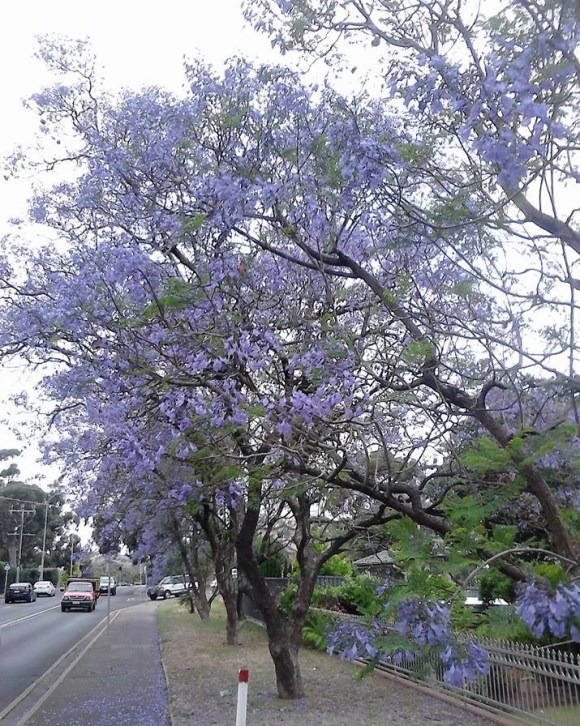
In the older suburbs, the spaces between houses are wide enough that you can forget that you have neighbours and imagine you are living in the country. Japan has taught me to be alert to seasonal change, and has enhanced my enjoyment of the Australian spring, when I can enjoy golden wattle, bottle brushes, eucalyptus flowers, jacaranda and roses.

It’s gratifying to participate in two different cultures and landscapes as I commute between Japan and Australia. However, each side is pulling my allegiance in a different direction. My colleagues in Japan think that I take off to Australia too often, and my family in Australia tell me it is time to come home. Each side seems to be unaware of how important the other side is to me. I feel guilty that I cannot please both parties, but I can give up neither. I hope the decision will be taken out of my hands. There is a word in Japanese to indicate the struggle between two children when they fight for a toy and neither will let go- toriai – and I feel like that toy which is being pulled in two directions.

It has taken a global pandemic for these two worlds to converge. Protecting people’s health has led to Australia’s international and state borders being closed. International flights have been cancelled. My lifestyle of commuting to Japan has come to an abrupt halt. Social distancing has been imposed. Shops, other than supermarkets and pharmacies, are closed. Most medical appointments are now by telehealth. Meanwhile my employer has entreated me to return to Japan and I feel guilty for refusing, but I am frightened of both the trip and being marooned in a country where I have no family.
A hurried solution to this has been online participation in meetings. This has been facilitated because of sharing a common time zone. If I were in America or Europe I might find myself participating in meetings during the night. My hitherto mutually irreconcilable worlds are finally converging. I have been able to click on a link and hear the familiar voices of Japanese-speaking colleagues from the comfort of my Adelaide sofa, with my faithful doggie at my feet. Never has participation in a meeting been so pleasurable. I can listen to my sweet Labrador’s regular deep breathing, progressing to gentle snoring as she rests, oblivious to this international communication. When I rest my eyes on the computer screen during the meeting I see the familiar Japanese writing, and watch the movement of the mouse as the moderator indicates the progression of the agenda. Meanwhile the intense Australian sunshine forces its way through the slats in the blinds. For the first time I might be able to hear kookaburras competing for my attention during a meeting which is being held in Japan. The hermetic seal between these two worlds over 7000 kilometres apart has been punctured, and I feel a sense of relief that the familiar voices of Japanese colleagues can reach me not only in the southern hemisphere, but also on the southern coast of this Antipodean continent.

Meredith Stephens is an applied linguist in Japan. Her work has appeared in Transnational Literature, The Blue Nib, The Font – A Literary Journal for Language Teachers, The Journal of Literature in Language Teaching, The Writers’ and Readers’ MagazineReading in a Foreign Language, and in chapters in anthologies entitled What’s Cooking Mom? Narratives about Food and Family, The Migrant Maternal: “Birthing” New Lives Abroad, and Twenty-First Century Friendship, all published by Demeter Press, Canada.