Mount Parnassus in Greece, where the muses were said to gather, was regarded as the home of poetry: From Public Domain
For the longest time, women were uncomfortable occupants of the house of poesy[1], particularly where there were existing canons of poetry established by the institutional gate-keepers and male custodians of literature. At best, they were viewed as Jane-come-latelies who sought to transgress the hitherto hallowed domains of high verse, interlopers to the hallowed heights of Parnassus who dared not “drink the milk of paradise”.
This ‘absence’ of women from the terrain of poetry is in spite of the fact that women have always written poetry, from ancient times to now. Sappho in the western tradition, was a Grecian poet from 5th-6th century BCE who was the pioneer of lyric poetry, a genre which apart from being set to music, also inaugurated the poetic ‘I’. In India, Buddhist nuns in the Mahayana and Theravadas who wrote poems known as the therigathas were early precursors of female poets. These early women poets engaged in the sometimes forbidden, sometimes lascivious charms of verse and versification. Down the ages, there were many others who joined them and kept the lamp of women’s versification lit. However, if women have always been versifiers, why has there been a resistance and grudging admission for women to the poetic domain, which becomes a sort of “No (Wo)man’s land”? Why do women poets have only a token presence in traditional poetic anthologies?
Some reasons have been offered, not least among them being the preponderance of male poets who have often also been self-proclaimed and self-appointed guardians, legatees and arbiters of poetic tradition. Canonical poetic traditions, many claim, require a knowledge and understanding of Latin and Greek in the West while a knowledge of Sanskrit/Persian in the Asian context was deemed necessary. Thus women, who, for the most part, lacked formal education and had but small Latin and less Greek, could only hover around the margins and fringes of poetry. The situation with Sanskrit and Persian was similar and women remained mostly absent from or shadowy denizens of poetic terrains. Even if and when women were writing, they were doing so in colloquial registers and in the languages of the common people and not in formal or decorative language, deemed essential for poetry, for the most part. Almost the first group of women writing poetry in India were Buddhist nuns who wrote in Pali, one of the many ancient languages in the ancient Indian subcontinent, which enshrined its own scholarly tradition. Sappho wrote in the Greek Aeolic dialect, which was difficult for Latin writers to translate.
Between 12th and 17th century, there was an advent of devotional mystic poetry called “Bhakti” and “Sufi” poetry. While the poems were uttered/written in a devotional idiom, the poems and songs were often rebellious and iconoclastic, rejecting institutional religions and social norms. This poetry was rooted in personal and unmediated devotion and rejected formal languages and established societal norms. Some of this poetry was in an informal register, colloquial language and performative with a strong dramatic quality. Thus we have lines in Kannada from Akka Mahadevi (1130-1160) who rejects her earthly husband:
I love the handsome one: He has  no death decay nor form… no end no clan, no land.
Take these husbands who die, decay, and feed them to your kitchen fires.(Vachanas)
Women poets for the longest time had a crisis of identity, identification and non-belonging. They laboured under the anxiety of authorship where they felt the absence of precursors and fore-mothers and the lack of a poetic tradition to which they could belong. They were often made to feel as if they lacked genuine poetic talent or that they were transgressors against womanhood and femininity.
In Aurora Leigh (1855) by Elizabeth Barrett Browning, the eponymous title character, considers the diverse fields of literature where women can exercise their talent and claim a space. The field of dramatic writing poses a challenge because the former demands that the woman writer be in the public eye in order to promote her plays. Further, to achieve or even aspire to the rank of Poet, Aurora must become capable of “widening a large lap of life to hold the world-full woe”. Over the course of the long epic poem, she tries to reconcile her femininity with her artistic aspirations. In both cases, she is denied emotional fulfilment. She refuses to accept the role of an obedient wife, since it would mean foregoing the intellectual independence needed to develop as an artist, but then she must also refuse the love of a husband. In Book Five, she mentions three poets, none of whom she admires for their “popular applause”. Yet she admits that she envies them for the time they can devote to their chosen vocation and the adoring women that surround them and provide emotional support and fill their days with glory.
Another issue with women’s writing and poetry is the uncomfortable positioning of women in relation to patriarchal language or male centred language. If as Dale Spender declares in “Man-made Language”, the masculine is asserted as the norm, where do we position women’s voices? While language is a universal medium of communication, man-made language is full of sexism and chauvinism and expresses reality from a predominantly masculine and patriarchal perspective. If language is a social system which women are persuaded or co-opted to use, how do they work within its confines to express their poetic aspirations? How do they stretch, bend, subvert language to express their own realities? Can we read techniques of irony, satire and other figurative and metaphoric strategies of defiance and subversion and an attempt to undermine from within?
Juliet Mitchell in her essay on ‘Femininity, Narrative and Psychoanalysis’ states that the woman writer/novelist must of necessity be a hysteric, straddling two opposed worlds. One world is that of male definitions and conceptions of femininity and the other, a resistance and defiance of such conceptualising, accompanied by an attempt to undermine from within. Her defiance and resistance makes her character that of a hysteric, one who defies accepted notions and standards of femininity and is therefore considered transgressive. She troubles fixed gender categories, roles and definitions. She also disrupts and challenges the symbolic order of language, one which insists on rules of grammar and linguistic structures through the semiotic order which uses word play, repetitions and childish rhymes, in order to express inner desires and drives. The symbolic order deals with the denotative aspects of language and the semiotic order with the affective aspect.
Women’s poetry often houses and accommodates the semiotic, seeming psychobabble that plays with and disturbs fixed notions of femininity and binary gender identities.
What are the popular themes that inform women’s poetry? Some themes are to with women’s search for authentic self-hood and identity, their search for roots and a space of their own. As we see in Aurora Leigh, much of women’s poetry is self-conscious and self-reflexive, about the act of writing itself, the “awful daring of a moment’s surrender which an age of prudence could never retract.”(T.S.Eliot)
Many contemporary women poets, across continents, have evinced a substantial interest in exploring their poetic self through their poems. On the one hand is the confessional poetry of Sylvia Plath and Anne Sexton, on the other the brief gnomic utterances of Emily Dickinson. Before the advent of the twentieth century, one hears of Barrett Browning, Emily Dickinson and Christina Rossetti, among many others. Names like Aphra Behn and Anne Bradstreet have been included in many syllabi, often as a token inclusion in an otherwise male centric course.
Women poets have talked about the horrors of war including rape, pillage and destruction. In their critique of war and violence, we find the forging of transnational solidarities, whether it is women’s poetry from Sri Lanka or Birangona (War heroines).
In India the many names that come to mind are that of Kamala Das, Eunice D’Souza, Meena Alexander, Sujata Bhatt and Sunuti Namjoshi. Women poets have employed effective means to explore the entire gamut of experience.The private and the public domain, their process of self-analysis; the process of poetic creativity and a probe into poetic identities are all significant fields of exploration. For these women writers, analysing the creative process becomes much more than just a poetic theme. As they unravel the mystery of their poetic psyche in their writings, it becomes an epiphanic journey for the poets and their readers.
Dr Meenakshi Malhotra is an Associate Professor of English Literature at Hansraj College, University of Delhi, and has been involved in teaching and curriculum development in several universities. She has edited two books on Women and Lifewriting, Representing the Self and Claiming the I, in addition to numerous published articles on gender, literature and feminist theory. Her most recent publication is The Gendered Body: Negotiation, Resistance, Struggle.
.
PLEASE NOTE: ARTICLES CAN ONLY BE REPRODUCED IN OTHER SITES WITH DUE ACKNOWLEDGEMENT TO BORDERLESS JOURNAL
Professor Fakrul Alam writes of libraries affected by corporate needs… With this essay, we hope to launch a discussion on libraries as we knew themand the current trends…
From Public Domain
Dhaka, 2003
Where have all those libraries gone?
Back in the ‘70s, in-between classes, adda[1], and sports, I used to spend most of my time in the USIS[2], British Council, or Dhaka University libraries. I would go to USIS for its collection of magazines and fiction, and to the Dhaka University Library for almost everything else. Despite the dust, the load shedding, the noise, the frequent closures of the university and the missing pages within the books, it was a splendid place for both adda and study. Some of my friends and acquaintances lamented that somehow, I had lost interest in “fielding” and had turned into a bookworm, but every book that I read made me thirst for more treasures of English literature. And then there was the British Council Library.
Perhaps memory always rose-tints the past, but it seems to me now that it was the friendliest part of the city then. The lush green lawn and the open spaces that surrounded the library, the access to stacks and stacks of books, the periodicals that you could leaf through, anything from the latest cricket news to reviews of books, the abundantly stocked reference section that was a source of special delight for me, the rows after rows of books that you could explore—here was God’s plenty! The Dhaka University Library had no doubt a much richer collection, but inside the British Council Library you could occasionally experience the bibliophile’s ultimate thrill: leafing through yellowing pages of a fairly old book, only to set it aside for another one; or merely reading surreptitiously through a page or two, secure in the knowledge that not all books are to be swallowed, chewed, and digested, that at least a few are to be tasted, and that was what the British Council Library was for! I would take a book or a periodical on a lazy day, sit down in one of the chairs, and then dream away, secure in the feeling that “there is no Frigate like a Book/ To take us lands away/ Nor any Coursers like a Page/ Of prancing Poetry.”
Everything about the British Council of this period seemed to be inviting. You got to know the staff after a few visits and they were all very friendly. I was still a student when I was on a “first-name basis” with the expatriate assistant representatives and librarians. In the middle of the decade, though only a lecturer at Dhaka University, I could claim the Librarian, Graham Rowbotham, to be a dear friend. In retrospect and especially compared to the library decor and staff now, everybody and everything associated with the library seemed to be amateurish in a way that was endearing and conducive to aimless browsing and long hours of lounging. Book of verse or criticism in hand, I loved spending my mornings here, although “thou” would be a few desks away, and to be glanced furtively in an essentially one-way traffic!
New books kept coming fairly regularly and were ordered by people of catholic tastes and wide-ranging interests. But most importantly, membership was cheap. I can’t remember what the membership fees were, but it must have been ridiculously low since even in those cash-strapped days I never seemed to have been bothered about renewing my membership from year to year. And yet you didn’t have to be a member to go in and browse, although I always preferred to be one so that I could always have books to take away and read at home.
Returning to Bangladesh after six years in Canada, I found the British Council of the ’80s not that different from the inviting, relaxed place I knew in the ’70s, although by now incoming books had slowed down to a trickle. Towards the end of the decade, I think, the library added a video section, but, on the whole, the Council seemed to be cutting back on everything. I had also heard that the library was going to be restructured; apparently, the “Iron Lady” was bent on making the British Council less of a burden on the British economy and more of a self-sustaining, income-generating unit.
But the full effect of the restructuring of the British Council into a self-sustaining, charitable organisation was obvious only by the middle of the ’90s. The Thatcherite assault on the arts, a heightened British concern with security after the Gulf War, and unrest in Dhaka University all must have played their parts, for in 1995 the British Council decided that they would leave the campus for the security of the Sheraton Annex.
The first casualty of what was surely an ill-conceived decision, like USIS’s move to Banani was the British Council’s wonderful collection of books. Row after row of books were given away for free. Indiscriminately. Thoughtlessly. Even some reference books and bound periodicals were distributed gratis since it was felt the Sheraton British Council would have very little space.
Thankfully, the British Council abandoned its move to the Sheraton, but the Fuller Road library never recovered from the book-giving spree. Instead, the library was redesigned to give it a contemporary feel on the outside as well as the inside, security was beefed up, and everything about the library redone to give it a “new”, packaged look.
A cyber centre was installed to make you feel that the ambience was au courant, and impressive graphics-brightened the walls. But what is a library without stacks and stacks of books? The British Council was always the repository of the best in British culture, but this one seemed to be as anaemic as the foreign policy of present-day Britain and nowhere representative of the nation’s past cultural glory. Indeed, where were the Booker Prize winners, the Nobel laureates, the Poetry Book Society choices, London Magazine, Granta, The New Left Review, The London Review of Books? Where were the bibliographies, the reference books that you could use to track an idea or pursue a stray thought to an ever-widening world, so that even within the confines of a library you “felt like some watcher of the skies/ when a new planet swims into his ken?”
The British Council has leased the best piece of property in town from the University of Dhaka. And what does it offer the university’s students? Forced to generate revenues for its upkeep, it had become, as my dear friend put it so memorably, the New East India Company, making money any which way it is able to. Thus, the Council was now more bent on offering exorbitantly-priced language courses and all sorts of examination services, trading on its Englishness and cashing in on the dismal state of our educational system set back by excesses of linguistic nationalism, than on stocking books that represented the best in British culture and that could be made available to the largest group of people. Library fees are ridiculously high—which middle class family can afford to make its children members at Tk 1,300 a year? And entry to the library itself is restricted—you have to be a member to browse! In fact, everything about the present British Council Library reinforces the feeling that it serves almost exclusively two groups of people: the upper class of Dhaka and people desperate about going to Britain for higher studies!
Significantly, the British Council Library now has remade itself as the Library and Information Services. What services? I stopped becoming a member in 1998 when I realised that the membership fees, which I could barely afford even then (the current fees are Tk 650 a year!), were entitling me to diminishing returns every year since the books and most of the periodicals I wanted to read were not there. The year I quit my membership after I had requested the library to procure a book on Burke and India for a research project but, despite repeated reminders to the librarian, that book never came (and I thought that they would listen to a professor of English literature at Dhaka University). The reference section was no longer stocking current bibliographies and sources of information about the world of books.
When I decided to write this piece, I thought in all fairness I should spend some time checking out the Library’s current state before I started critiquing its current library policy. To my dismay, I found that things had gone from bad to worse in the last few years. What services? There is now left only one shelf of literature books and another one devoted to reference items. The library looks pretty, and everything is neatly arranged but why does it remind me of the artificial, vacuous smile of the catwalk beauty? No doubt in line with modern concepts of interior design the library has more space than ever before, but all I see in it is emptiness! Yes, it is smartly done and for the smart people, but where is the world of knowledge in all this?
As my colleague pointed out to me in a note, “What services? How can the young come and request books they don’t know about? Knowledge comes from browsing the shelves, from looking at books and authors you have never seen before, and then you pick it up and read a new author, and perhaps you find a lifelong favourite and your mental landscape changes and that’s what a library’s function is, to widen, to broaden, to expose minds to superior stuff, not provide some crap ‘services’, some videos, some paper hangings, and then have the gall to call it ‘progress’ or ‘keeping up with the times’ or whatever!”
I should add that I have no real problem with the British Council cashing in on the O and A level market and IELTS[3] examinations, but I can’t figure out why it can’t plow back more of its surely substantial profits into establishing a proper library instead of the Fuller Road scam that now calls itself one. Let it charge the people who can afford its outrageously-priced language courses all it wants to, but why can’t it lower library fees so that anybody who wants to can use the library facilities, can browse and read in the library without having to pay anything? I am aware that the British Council is a registered charity and believe that it is supposed to spend its gains here, but can’t it become a leaner operation so that it can beef up its library services? Shouldn’t charity begin at home?
Our libraries have become shadows and shells of their former selves, and it is time we started to ask ourselves a very simple question: what exactly is a good library? And don’t we owe our children and ourselves at least one library?
(Adapted from the essay, ‘The British Council Library: The New East India Company?’ Published on November 8, 2003 in Daily Star)
A stock taking of women in Bengali cinema – as protagonists, actors and directors – by Ratnottama Sengupta
Actress Rituparna SenguptaLate actress Kanan Devi (1916-1992)From Public Domain
“Mother, allow me to go and get a slave for you,” this conventional line may have been uttered by the husband essayed by Anil Chatterjee in Mahanagar (The Big City, 1963), as he set out to marry Aarati alias Madhabi Mukherjee. Women of those years had no problem accepting such husbands as their Lord and Master. But the lead actress of Ray’s film evinced determination of a different order. That’s why even today, 52 years after its release, Mahanagar remains so contemporary.
Time was when women in Indian — rather than just Bengali — films were typecast as mother, sister or beloved of a male character. The mother would sacrifice her creature comforts, her career, her every happiness for her son — but if she cared for her brother, she would be rebuked (Mejdidi, Second Sister, 1950; 2003). If she offered shelter to her orphaned sister, she would have to ‘repay’ her in-laws for the favour by making her work overtime (Streer Patra, The Wife’s Letter, 1972). It was ‘her’ responsibility to stay ‘pure’. If she were ‘tainted’, she had no option but to embrace death. The long-suffering Indian woman has left way behind her ‘helpless’ (abala) definition: No Nirbhaya needs to die of shame if she’s the victim of rape. The silver screen is reflecting this transformation. She’s no goddess (devi) nor a slave (dasi) — she’s proud to be what she is: a woman (nari).
But a woman is always more vulnerable, more fragile compared to a man. Reason? Could be biological, economic, social structure, or her lack of confidence born of mental malnutrition. Perhaps that is why women have provided material for intense human drama. At times she is Lady Macbeth or Lady Chatterley, at other times she is Mrinal (of Streer Patra), or Ashapurna Devi’s Subarnalata (1981). Besides, Bengal worships Goddess Durga — in this state, women are simultaneously Saraswati, the goddess of learning; Lakshmi, the deity of prosperity; and Kali, the icon of destruction. That may be why, from the beginning of Bengali cinema, lead personalities have enjoyed multidimensional projection. Sometimes a mere ‘actress’ becomes a mouthpiece for a socially sensitive and relevant issue, sometimes she is the face of psychological conflict, sometimes she is a philosopher, preacher.
Un-Covered
There are many different ways to approach the projection of women in Bengali films. Literature has always been the first to convey their self-sufficiency — be it on this soil or elsewhere. Gems mined from Bengali literature provided the raw material for pioneers like Naresh Mitra (1888-1968), Pramathesh Barua (1903-1951), Debaki Kumar Bose (1898-1971), Nitin Bose (1897-1986), Bimal Roy (1909-1966) — giving us landmarks such as Jogajog (Connections, 1943; 2015), Durgesh Nandini (Queen of the Fortress, 1956), Bishabriksha (The Poison Tree, 1922; 1983), Debi Chaudhurani (1974; upcoming 2025), Biraj Bou (Biraj, the Wife, 1972), Pather Dabi (The Right of Way, 1977), Udayer Pathey (Towards the Dawn, 1943). However, the minute we utter the two words — ‘women’ and ‘literature’ — in one breath, we think Pratham Pratishruti (The Early Promise, 1971) and Subarnalata (1981). Together they are a flawless portrayal of social transformation and women’s emancipation.
Dinen Gupta had filmed Pratham Pratishruti even before Ashapurna Devi had won the Jnanpith Award. Its protagonist Satyawati kept at it but did not succeed in altering the social dynamics of Women’s Education. Her daughter Subarnalata is married off in her childhood, into an urban family with rustic mindset. Alone, unsupported she fights the male chauvinists (and this includes the women too!) who were unfamiliar with the word ‘self-identity’; whose only understanding of women’s honour, sanman, comprised of ghomta-sindoor, the veil and the vermilion. Despite her efforts, how often do we hear of a Bakul (Subarnalata’s daughter) who rides a bike to drop off her elder brother to his college?
Streer Patra devolves around ‘Mejo Bou’ Mrinal (Madhabi Mukherjee). She has the freedom to offer shelter to her sister-in-law’s sibling but not to love, educate, and honour her. When the sister, pushed into marriage with a mentally deranged person, commits suicide, Mrinal leaves home in protest. But her protest is not a sentimental reaction, so she does not end her life in the ocean. Nor does she sign off her letter as ‘Mejo Bou’ — the Second Bride of the joint family – which was till then her only identity. She is now ‘Charantalashray Chinna Mrinal’, one who has lost the protection of her husband’s feet.
*
Long before Purnendu Pattrea, Bimal Roy had set an example in ‘deconstructing’ the well-entrenched structure of male domination even in wealthy families. When it came in 1943, Udayer Pathey had broken several norms: Jyotirmoy Roy was an unknown writer, Binata Roy was not a conventional beauty. As the daughter of an industrialist — read, a 20th century princess — she takes up the fight for labourer’s rights and leaves the shelter of her father and brother to make a home with a ‘hired’ writer. She was emboldened by her predecessors like Kanan Devi who became a star in Mukti (Liberation,1937).
Rebellion need not necessarily be a battle — won or lost — as Sujata (1974) showed. Litterateur Subodh Ghosh, who created the character, imagined her as a sweet, caring persona, who is alert to every little need of her foster family. But, despite all her care and love, she doesn’t become ‘a daughter’ to the parents she dotes on. Her fault? She is born of ‘untouchable’ genes. An even bigger fault? She is loved by the man whom the foster parents want to see as the husband of their biological daughter. Film director and writer, Pinaki Mukherjee, fired away with this double-barrel gun although he knew it was impossible to overshadow Nutan’s performance in Bimal Roy’s Sujata (1959).
Director is Special
Follow the director and you land at the door of Satyajit Ray. If his filmography opens with Pather Panchali (Song of the Road, 1955), his depiction of the mother, Sarbajaya, opens the pantheon to women who are found in any middle-class home. Women who are not dressed like the shiny stars of saas-bahu shows but cringe nevertheless when it comes to feeding their aged mother-in-law. Women who have no big dreams for their children but to protect them from any hint of slander by the neighbours.
Half a century later Mahanagar remains a head-turner. Its protagonist Aarati is a working woman whose pay-cheque keeps the kitchen fire going. But this does not place a halo around her head. Instead, society crinkles its brow at her. Still, she does not shy from protesting a wrong done to her colleague. Still, she does not think twice before turning in her resignation. She is not scared of the dark days ahead — because she has light within. She has confidence in her own entity.
Prior to that Ray had etched with care the homemaker Charulata (1964). She too is a housewife but from another world, in terms of both time and social status. The educated wife of a wealthy intellectual — an editor who has no time to chat with his wife or hear her out — she sews, she writes, she is published in journals… If the devotion of such a woman finds an anchor in her brother-in-law, what would the world say of the ‘homebreaker’?
Charu’s husband Bhupati must shoulder the blame for wrecking the marriage, but Nikhilesh (Victor Banerjee) of Ghare Baire (The Home and the World, 1984)? The zamindar stood by his wife when Bimala (Swatilekha Sengupta) stepped out of the inner courtyard and wedded herself to the nationalist fervour of Sandip (Soumitra Chatterjee). Perhaps that is why, when she realises that Sandip loves himself far more than his motherland, the disillusioned wife returns to her original ‘guru’ — her husband. There is no shame nor despondency of defeat in this, for this is not regressive, it is merely a ‘course correction’.
*
Ritwik Ghatak, a contemporary of Ray, envisaged women as the Lakshmi-Saraswati-Kali of a partitioned Bengal.
Nita (actress Supriya Devi) in Meghe Dhaaka Tara (The Cloud Capped Star, 1960) earns to feed her parents, marry off her sister, build her brother as a vocalist… But who cared for her love? Her dreams? Her sheer desire to live? At the other end of the spectrum is Sita (Madhabi Mukherjee in Subarnarekha, 1965). She had held her fatherly elder brother’s hand when the child had to seek refuge across the barbed wires. She sacrificed that secure shelter (of her brother) to her love. When that love proved ephemeral, she sought survival in the world’s oldest profession. When that profession placed her face to face with a fallen angel — her brother — she turned into Kali, the destroyer.
Mrinal Sen’s Baishe Shravan (The 22nd of Shravan, 1960) was an essay in marital discord in the disjointed times of war. But times change, and with that going out to work becomes routine for women in Bengal. No one looks askance — so long as she returns home by nightfall. For, that is one routine that hasn’t changed: even today, exceptions to it are meant only for men. Even today, if a Nirbhaya is gang-raped, many react by asking, “Why was she out so late?!” So, when the breadwinner daughter in Ekdin Pratidin (And Quiet Rolls the Dawn, 1979) does not return home, she is branded a siren even before she is given a hearing.
Tapan Sinha has repeatedly pointed to women’s vulnerability. His Nirjan Saikate (The Desolate Beach, 1963) depicts the barren lives of single women, be they widows or spinsters. Jatugriha (The Inflammable Home, 1964) paints the pangs of legal separation and divorce. Adalat O Ekti Meye (The Law and a Lady, 1981) highlights the legal ‘molestation’ of a rape victim. Aapanjon (Dear Ones, 1968) bestowed a new kind of dignity on the uncared for senior widows. Wheel Chair (1994) became the symbol of struggle when a chairbound woman fights the injustice of a rape that leaves her incapacitated for life. Antardhan (Missing,1992) opened our eyes to the base trade in human flesh. And the Daughters of This Century (Satabdir Kanya, 2001)? Better not talk of them, Sinha might say, for like Kadambini of Jibito O Mrito (Alive and Dead), they have to die in order to prove they were living!
Aparna Sen, as a popular actress, did characterise some women of substance. She charmed us in Ekhane Pinjar (Caged Here,1971)as she slaved to provide her family a life of some worth. Much seen? Yes, it was a much seen reality in our midst. Shwet Patharer Thala (The Marble Plate, 1992), Prabhat Roy’s adaptation of Suchitra Bhattacharya, showed that despite the changed times, a widow’s is still a solitary struggle. A single shot in Paramitar Ekdin (House of Memories, 2000), under her own direction, makes her unforgettable. As the mother-in-law who loves fish, she’s chewing on a fishbone with deep satisfaction when she learns her husband is dead. “Over,” says the blank expression on her face, in her eyes, in her entire being, “no more fish.” That single look bespeaks sadness, disappointment, vacuum in the life of a Bengali widow. Why is it that a man does not stop having fish when his wife dies?
As a director Aparna uses the same fish, to establish a progressive mindset. When her daughter-in-law, Paromita (actress Rituparna), takes her to a restaurant and treats her to a fish fry, we viewers are delighted. She herself has suffered, so the daughter-in-law understands the mom-in-law’s suffering. Not for her the ‘revenge’ story of family dramas.
At the very outset Aparna Sen had given a fair indication of the road ahead. Elderly and lonely, Ms Stoneham in 36 Chowringhee Lane (1981) is poised against her ebullient, self-centred, even ruthless student Debasri Roy. The two worlds of seniors and youth clash again in Goynar Baksho.(The Aunt Who Wouldn’t Die, 2013). But this child widow, Pishima (the aunt), extracts every inch out of life. Even after death she demands her pound of flesh: she smokes, she bikes, she zealously guards her dowry, streedhan. She even encourages extramarital love! But, perhaps, Aparna Sen’s boldest statement is Paroma (The Ultimate Woman, 1985). Should a woman bury her sexuality simply because marriage has turned her into someone’s aunt or a sister-in-law? “No” — comes the unflinching reply.
*
Women are deprived, exploited. They protest, they rebel. They stride ahead alone and draft a path for others to follow. Their confidence gets a boost, they enlighten hide-bound males, transform mindsets. This is how we see women in Rituparno Ghosh’s oeuvre. He drew our attention towards several issues, but the empathy in his tenor led us beyond the immediate pre-occupation and endowed his scripts with such universality that free-thinking men, too, had no issues with them.
In Unishe April (Nineteenth April, 1994), the national honour of a Padmashri for Sarojini angers her daughter. Because? She chose to be a danseuse rather than a homemaker, and sent her daughter to a hostel so that she could dance on. Dahan (Crossfire,1997)sees Ramita molested by strangers on the street, but the man in her bedroom? What about him? Surely you won’t construe a ‘husband’s conjugal right’ as ‘marital rape’?! On the other hand, Jhinuk has to pay a price as the witness. She is put in the dock by the law of the land, and dropped by her boyfriend. Banalata in the Bariwali (The Landlady, 2000) has aged but not married. Her dreams of a family are somewhat fulfilled when a film unit comes to shoot in her ancestral mansion. She drapes a red-bordered sari and dons sindoor in her hair too, for a single shot. But that’s mere acting! The director’s praise and love for her too was acting! Kiron Kher as Banalata realises this when she sits in the darkened theatre, and finds the scene has been clipped out of the film. How many times will you be shortchanged, lady, emotionally too?
In Antarmahal (The Inner Chamber, 2005), Zamindar Jackie Shroff authorises a sacrificial yagna to ensure the continuity of his line with the birth of a son. And what is that sacrifice? In the presence of his first wife (Rupa Ganguly), he will copulate with his child bride (Soha Ali Khan). Night after night. Isn’t this mental as well as physical torture? So what! Isn’t he a zamindar and the husband too!
Dosar (Companion, 2006) sees the husband (Prosenjit Chatterjee), a corporate bigwig, returning with his secretary from a weekend retreat in his love nest. A massive accident leaves the woman dead, the husband bedridden, and the wife in a fix. Should she leave the helpless man, or restore life in the faithless marriage?
Even when All his Characters are Fictitious (Sab Charitra Kalponik, 2009), Rituparno Ghosh speaks an Eternal (Abahoman, 2009) truth: Women’s efforts to create an identity for themselves have been wrecked by men. Women have had to confront layer after layer of inhibition, prejudice, agony. But it is much worse to be a woman trapped in a male body, Rituparno showed in his last film, Chitrangada (The Crowning Wish,2012).
*
Bengali cinema was meant to be thus: modern, lively, brilliant. Viewers have said this time and again. After the release of Anuranan (Resonance,2006) Antaheen (The Endless Wait, 2009), Aparajita Tumi (You Undefeated, 2012) this was said for Aniruddha Roy Chowdhury. He has continuously shown that women ‘culture, nurture, explore’ life. Viewers had applauded when Bappaditya Bandopadhyay (1970-2019) handed over the right to ‘give away the daughter’ in marriage to the mother in Sampradan (The Offering, 2000). The director of films like Kaal (An Era, 2005) on human trafficking and Kantataar (Barbed Wire, 2005) on illegal migration, Bappaditya was ecstatic that in the present century, women are being recognised as ‘Researcher in Child Development and Interpersonal Relationships’. Women are morally superior, declares Srijit Mukherjee in Autograph (2010), when the jean-clad Srinanda (Nandana Sen) leaves her live-in partner (Indraneil Sengupta), for encashing the accidentally recorded confession of the star Arun Chatterji (Prosenjit) in an inebriated moment of weakness. Somnath Gupta projects a mofussil girl in Aadu (2011) who does not hesitate to write to the President of America to find out the whereabouts of her immigrant husband who went missing in Iraq after the outbreak of Gulf War 1. With Shunyo E Buke (Empty Canvas 2005), Kaushik Ganguly raises a question that still seeks an answer: Is a big-hearted woman less attractive than a big-chested one?
We have watched films that break stereotypes in startling ways. The protagonist of Atanu Ghosh’s Rupkatha Noy (Not a Fairy Tale, 2013) is a bride who flees home; an IT professional who admits to taking a life, and a gritty though little educated delivery girl at a petrol pump. Judhajit Sircar’s Khasi Katha (Saga of a Goat, 2013), centres around Salma, the motherless daughter raised in a convention bound Muslim family who works in a leather factory to feed her unemployed father and brother but fights to become a professional boxer!
The Actor is the Star
Irony, thy name is cinema. For, here, the deception of ‘acting’ must turn imagination into ‘real’. The personas are imagined, but they are rooted in our soil. Naturally, some characterisations remain with us forever. Thus, some actresses become the voice of women’s fight for emancipation. Suchitra, Supriya, Madhabi, Arundhuti, Aparna, Rituparna, Paoli –any of these actors in the central role promises a powerful document in the fight for women’s rights.
* It started even before Suchitra Sen (1931-2014), when Kanan Devi (1916-1002), Bharati Devi (1922-2011), Chhaya Devi (1914-2001) and Sabitri Chatterjee (1937) were playing at New Theatres, Chhayabani, Radha Films. We will return to Kanan Devi but meanwhile, let’s revisit Suchitra Sen. A married woman, mother of one, Mrs Sen became — and still remains — an icon, not only in the two Bengals but pan India. No gossiping with unit members, the detailing of her character, its costume, its co-actors kept her busy as long as she was in the studio. Understandably, her fame ignited jealousy and she was tarnished as temperamental, aloof, selfish…
Yes, unwilling to compromise in matters pertaining to her role, Mrs Sen would not spare even haloed producers like R D Bansal or Haridas Bhattacharya. But her glamorous dignity ensured a so-far unknown respect for actresses in Bengali filmdom, especially when her name was printed above Uttam Kumar’s, in posters pasted all over the town. Nylon sari, sunshades, short hair, sleeveless blouse — every expression of ‘modernity’ became Mrs Sen. She came to personify the middle-class Bengali woman who — married or not — could be a professional: journalist, nurse, doctor, singer, lawyer… On the other hand, the single-minded determination that characterised courtesan Pannabai and her hostel-educated daughter Suparna (Uttar Falguni, In Her Autumn, 1963), Rina Brown (Saptapadi/ Seven Steps, 1961), Archana (Saat Paake Bandha, Knotted by the Vows, 1961), and Radha (Deep Jwele Jai, To Light a Lamp, 1959) only reflected Mrs Sen’s own firmness of intent.
One Meghe Dhaka Tara alone was enough for Supriya Devi to shine through the annals of Bengali cinema. Add to that the appeal of Komal Gandhar (Soft Note on Sharp Scale, 1961). In many a film she is the beloved of matinee icon Uttam Kumar. What firmed her position was her boldness in accepting roles with negative shades. Be it Lal Pathar (The Red Stone,1964), Sanyasi Raja (The Monk Who Was a Monarch, 1975) or Mon Niye (All About Her Heart, 1969) — her presence gave a shine to both, the persona and the film.
* Sharmila Tagore went away to Bombay and Bollywood gobbled her, but she remains evergreen as Aparna of Apur Sansar (The World of Apu, 1959), the newly wedded bride in Devi (Goddess, 1960), the journalist in Nayak (The Hero, 1966), the questioning eyes in Seemabaddha (Company Ltd, 1971) and the irrepressible, dark-complexioned tomboyish Ghetu of Chhaya Surja (Overshadowed, 1963). If Ray films cast her as the silent conscience speaking mainly through her eyes, Partha Pratim made her unforgettable in casting her in an opposite role.
* For a while, Tanuja ruled the Bengali heart from the theatre chain of Minar-Bijoli-Chhabighar. The frothy actress from Bombay became a hit with the superhit musical romance, Deya Neya (Give-n-Take, 1963). Uttam Kumar’s Antony Firingee (1967) immortalised her as Saudamini. And Nandini of Teen Bhubaner Pare (Beyond Three Worlds, 1969) broke new grounds in a society where it was customary for men to marry illiterate women, but unthinkable for an academic woman to marry an unlettered, alcoholic blue-collar worker. Husbands, after all, had to be superior, right? That’s why the highly educated princess of Ujjain during the Gupta period (3-4 CE) was ‘taught a lesson’ by being fooled into marriage with the worthless Kalidas, who eventually rose to be the peerless poet of Sanskrit classics like Abhijnana Shakuntalam and Meghdoot!
* In recent decades, Debasree Roy bagged the Golden Lotus through significant films like 36 Chowringhee Lane (1981),Unishe April (19the April, 1994), Asukh (Ailing, 1999), Ek Je Achhe Kanya (There’s This Girl, 2001), Dekha (Vision, 2001), and Nati Binodini (The Actress, 1994). Her contemporary, Rupa Ganguly scored nationally as Draupadi in the television serial Mahabharat (1988). The riveting beauty of the epic had ruled the five Pandava brothers who took on the male order of the Kauravas — the clan that de-robed her — even as their patriarchal head remained a silent spectator. Rupa endowed the persona with a rare dignity that came to the fore again in Antarmahal (The Inner Chamber, 2004) saving it from becoming voyeuristic. Instead, she evoked pathos and a certain sadness in us when her husband proceeded to copulate with a younger wife in front of her eyes. Again she won our applause and institutionalised laurels in Abosheshey, (Finally, 2011) as the mother whose separated son, raised in America, comes to know her heartbreaking love for her child after her death. And in Sekhar Das’s Nayanchampar Din Ratri (The Tale of Nayanchampa, 2019) she breathes life into the marginalised character who epitomises the multitudes that travel from the suburbs to serve as maids in urban homes.
Rituparna Sengupta, the first of the divas from Bengal today, wears the mantle of Kanan Devi. Like the icon, she excelled in acting, bagged the Golden Lotus for her performances, and then started a production house, Bhavna Aaj O Kaal. This has enabled her to get a veteran like Tarun Majumdar to direct her in Aalo, (Light, 2003) and a young Ranjan Ghosh to explore her creativity in Aaha Re! (Wow! 2019).
Form and Content Too: Actor Turns Director
Roopey tomay bholabo naa – I will not entice you by looks alone, women directors have been saying for long. Thus, Manju Dey (1926-1989) not only starred in Jighansa (Blood Lust 1951), Neel Akasher Neechey (Under the Blue Sky, 1959), ’42 (1942, 1951),her Abhishapta Chambal (The Blighted Ravine, 1967) based on Tarunkumar Bhaduri’s accounts. recounted the life of legendary dacoits of Chambal who paved the way for Phoolan Devi.
Arundhati Devi, (1924-1990) the unforgettable Bhagini Nivedita (1962) who lives on through Tapan Sinha’s Kshudhita Pashan (Hungry Stones,1960), Jatugriha (1964), Harmonium (1976), turned director with Megh O Roudra (Clouds and Sunshine, 1969) to highlight a young widow’s quest for education. Apart from making Chhuti (Vacation, 1967) and Padipishir Bormi Baksho (The Burmese Casket, 1972), she also composed music for Shiulibari (The House of Jasmines, 1962) and produced Bicharak (The Judge, 1959). In her personal life the independent minded actress-director had divorced writer-director Prabhat Mukherjee to marry Tapan Sinha — later highly decorated — in the-then convention-bound Tollygunge. Prior to her only Kanan Devi, the singing star of New Theatres classics who was celebrated across India, had taken upon herself the onus of producing films, by setting up Srimati Films.
Coming after them, Madhabi Mukherjee did not produce films. But the “beautiful, deep, wonderful … (lady who) surpasses all ordinary standards of judgment” justified the praises heaped on her Charulata by not merely acting in Baishey Shraban (22nd Srabon— July-August, 2011) Mahanagar, Subarnarekha, Kapurush (The Weakling, 1965), Dibaratrir Kabya (The Poetry of Everyday Lives, 1970), Streer Patra, Biraj Bou, Utsab (The Festival, 2000). She also took on the then chief minister Buddhadeb Bhattacharya in an election.
* Aparna Sen has been an inspiration to an entire generation of women directors. Satarupa Sanyal has garnered praise in the multiple roles of an actor, producer, director and editor. Her Anu (1998) exemplifies an idealist who is raped by the political opponents of her incarcerated fiancee. It is a crime they perpetrate, but a greater crime is perpetrated when her fiancée, Sugato, refuses to marry her because she has been raped!
* With financial help from NFDC, Urmi Chakravarty made Hemanter Pakhi (Autumn Bird, 2003). It offered another new experience. A housewife shoots into the limelight by authoring a book, but her middle-class husband and sons are not thrilled. They would rather she remained the demure housewife, cooking and caring only for them.
* Aditi Roy won Rupa Ganguly a Lotus through her Abosheshey. Meanwhile Anumita Dasgupta won awards with Jumeli (2012) that tells the story of a tribal woman whose husband turns her pain of losing her child into a business commodity. How? The only balm for her pain lies in breastfeeding newborns. So? Get her pregnant, repeatedly, and get her to abort, again and again! The impact on her health? Her morale? Her childbearing ability? Who cares!
* Now we have Nandita Roy and Sudeshna Roy. Both are creating a buzz with their co-directors Shiboprasad Mukherjee and Abhijit Guha respectively. Nandita-Shiboprasad have come out with Icche (Desire, 2011), Muktodhara ( The River of Freedom, 2012), Accident (2012), Alik Sukh ( Unreal Happiness, 2013), Ramdhanu ( Rainbow, 2014) — all of which including their latest Amar Boss (My Boss, 2024) focus on various walks of our social life, be it education, accident, medical ethics, or jail reforms.
* Sudeshna-Abhijit started with focusing on the sexually free relationship of gen-next, or the unrestricted use of abuses by urban youth, and graduated to Jodi Love Diley Na Prane (If There’s No Love, 2014), which shows that even undying love, once behind us, should be left behind. They used Chaplinesque spoof to tell the story of Hercules (2014), the power within us, which alone can give us the strength to fight bullies. Their latest Aapish (Office, 2024) recounts the plight of working women, whether they belong to the upper class or come from the suburbs.
Post Script
To conclude: Be it men or women, as director or actor, or even a writer like Suchitra Bhattacharya — they have all made it clear — that women in Bengali films are not mere sex objects. Yes, many films still use ‘item-numbers’ to titillate the male fantasy. But then, with Takhan Teish (When He Was 23, 2010), Atanu Ghosh records the attitudinal change in our men — through a woman protagonist who is a professional porn star. Rightly, then, we may say that Bengali films carry on the tradition of Kanan Bala who outclassed her humble origins to become the revered Kanan Devi.
.
Ratnottama Sengupta, formerly Arts Editor of The Times of India, teaches mass communication and film appreciation, curates film festivals and art exhibitions, and translates and writes books. She has been a member of CBFC, served on the National Film Awards jury and has herself won a National Award.
.
PLEASE NOTE: ARTICLES CAN ONLY BE REPRODUCED IN OTHER SITES WITH DUE ACKNOWLEDGEMENT TO BORDERLESS JOURNAL
MF Husain at the opening of the exhibition “A Tree In My LIfe” in 1995. With him are Dolly Narang (who conceptualised the show) and others. Fifty one artists from all over the country were invited to participate. The exhibition included M.F. Husain, Raza, Ganesh Pyne, Paritosh Sen, Arpana Caur, Vivan Sundaram along with promising and emerging artists. Photo provided by Dolly Narang
It was 1989 when I turned my passion for art into reality by opening The Village Gallery. My experience from conceptualising till the launch of my new initiative, as I negotiated unchartered waters, brought me in contact with artists and the art world. And I had some interesting experiences as I began to fathom the nuances of this unique field.
Growing up, I was a dreamer living in my own world of happy make believe. Enveloped by the warmth and attention of my joint family I was the cherished firstborn of my parents and my grandfather, Bauji[1]. Their adoration wrapped me in a cocoon sheltering me from the outside world. I grew up safe, protected and loved in our home in East Patel Nagar in West Delhi.
My mother laid claim to my creative spark. She revealed one day that while she was in the serene hills of Shimla with her parents as she carried me, she was learning how to paint. My mother proudly attributed my artistic side was all because of the genes passed on from her. Her creativity much later matured into fashion design and she became a successful fashion designer in the 1960s opening a high fashion boutique catering to New Delhi’s expat and diplomatic community. Her design skills were honed. She was much ahead of her time.
My Naniji[2] embroidered sequins and beads (maternal grandmother) on small evening clutch bags as gifts. That was her passion as it helped to overcome the grief of the loss of my grandfather who passed away suddenly in his mid 40s following the Partition and the trauma of 1947, when the Indian subcontinent was split into two. My Uncle, my father’s youngest sibling, unleashed his photographic skills to capture my childhood. He won a prize for one of these photographs.
I remember as a child being fascinated by Bauji making decorative paper lanterns. He used fragile kite paper of vibrant green, pink and yellow, slowly and meticulously applying glue on the paper to paste them onto thin bamboo sticks. I must have been four or five years old. The memory is so clearly embedded in my consciousness. He was a banker with a hectic work schedule involving travel. Our family had been uprooted during the Partition from Lyallpur in 1947 and we were in the throes of resettling ourselves. Yet, he found time to follow his creative calling.
As a child, I was fascinated by art and spent hours by myself doodling and drawing. Growing up, I have fond memories of my art class when I was in 7th or 8th grade in school. This was my happy space. My art teacher, Mrs. Dorothy Rahman, I remember was helped me to nurture my creativity with kindness and patience. She gave me special permission to work in art class during lunch hour. I loved working with my hands. Feeling the clay between my hands was exhilarating so clay was my chosen medium. Mrs. Rahman gave me a piece of soapstone a soft material and chiselling tools to chisel. This new medium opened up thrilling moments of more exploration.
My class had some students who were naturally gifted. Their effortless creativity left me feeling somewhat inadequate. At the same time, this pushed me to work harder to hone my skills. The confluence of my family’s creative influences and the circumstances unfolding before me led me to dream of starting an art gallery and I did do exactly that.
I nurtured a desire to start my gallery with the art of the famed MF Husain. Though it seemed an impossible dream, it happened. I went ahead and I shared my idea with Arpana Caur, my childhood playmate and college mate who had made a niche for herself in the art world and received recognition as a painter of great talent and promise. Caur encouraged me to chase my dreams. The first one person show at my newborn gallery was of Husain serigraphs and lithographs. It was a coup of sorts if I may say so myself for a new and unknown gallery and it stirred some excitement.
When I tried to contact him, Husain Sahib finally answered the phone. The conversation was polite and formal. He gave me appointment at his Canning Lane residence in Delhi, a charming colonial style government accommodation.
I had been warned of his proclivity for not arriving on time or not showing up at all. I reached his house expecting in all probability not to find him there.
His single storey home lay in a verdant environment. I was seated in a simple and well-appointed living room surrounded by vibrant colors of his paintings adorning the walls. Without keeping me waiting, a towering, calm and dignified figure emerged from the adjoining room. I introduced myself somewhat timorously trying to read his expression as I spoke. I remember saying, “Husain Sahib, I am planning to open a gallery in a new location, Hauz Khas Village. I would like to have a show of your limited-edition prints. I won’t be able to buy your works though. I was wondering if it would be feasible to pay for the prints once they are sold at the exhibition.”
This was the general tone of my brief monologue as he listened politely and patiently. I waited anxiously for his response. There was none.
Our meeting must have lasted fifteen minutes with mostly me muttering something to prove my credentials and at the same time trying to gauge his reaction as I continued with my monologue.
Once I finished talking, he stood up and walked into a room attached to the living room where we were sitting. I waited, confused by his disappearance. Soon he emerged with a thick roll of black sheets and handed it to me saying you can have a show of these prints. I accepted it in complete disbelief. Thanked him and left. I thought later that I did not give my contact details and neither did he ask for them. This was my first meeting with MF Husain.
Once the gallery interiors were ready I requested Husain Sahib if he could come to see the new space and give his suggestions before the inauguration. He arrived on the appointed day accompanied by his son Mustafa, a tall and dignified young man who came with a camera slung around his neck.
Both father and son walked around the gallery silently. It had a raw rustic interior with a cement floor and lime washed walls. I waited for their reaction, not quite sure how they would respond to the raw rusticity of the environment both internal and external. To make matters worse, a buffalo belonging to a villager put its head through the entrance door and snorted loudly. ‘This is all I need,’ I thought, ‘especially when I am trying to make an impression.’ Just as I was going to apologize, to my surprise Husain Sahib smiled and softly said, “That’s nice.”
Mustafa added: “My father loves the rustic environment”. Both lingered for a while enjoying the peaceful and unpretentious village setting as Mustafa took photographs.
While planning the execution for the show of his graphics, I had the opportunity to interact more frequently with Husain Sahib. He wanted the show to have the title ‘Husain Graphis 89’. “The word graphics to be spelt without a ‘c’, as it is spelled in French,” he said. Cards were printed announcing the exhibition of “Husain Graphis 89”. As the exhibition cards were delivered to their addressees, I was inundated with calls advising me that the word “graphics” had been misspelled in the card. I had a lot of explaining to do in call after call.
Photo provided by Dolly Narang
The prints were up on the gallery walls. A few days before the opening of Husain Graphis ‘89, the artist himself visited the gallery. As he made himself comfortable in the midst of his serigraphs and lithographs, he said something that has stayed with me as a source of guidance ever since. He waved his hands gently across the wall and said: “Make the walls of your gallery something that every artist will be proud to hang their works on.” These words illuminated my path forward as I was inspired to conceptualise a series of shows which went onto make history.
The inauguration of Graphis’ 89 was done by SK Misra, the Secretary of Tourism at the time and a close friend of Husain Sahib’s. He had wanted him to inaugurate the show. Husain Sahib flew off to Bombay the same evening so was not present at the inauguration. Of course, we were all disappointed. The inauguration was on schedule with Misra painting a lamp on a canvas. This unique idea was suggested by the eminent scenographer, Rajeev Sethi. Misra was caught off guard when asked to paint a lamp instead of lighting it. However, he painted with the flourish of a seasoned artist.
There was a self portrait of Husain on display in Graphis’89 exhibition which had a thick red line running down the face. It generated much curiosity and many queries from viewers who wanted to know the deeper meaning behind the red line, expecting a profound philosophical response about the artist’s thoughts or his life experience behind this. During a visit to the gallery, I mentioned to Husain Sahib that I was being asked repeatedly by visitors what was the meaning behind this thick and bright red line. He simply said: “I liked it and I painted it.”
The next exhibition that I curated in 1989 was ‘Self Portraits’. Twenty-four artists, from masters to beginners, were invited to showcase self-portraits in this exhibition held in October 1989. Husain Sahib loaned his self-portrait, an oil on canvas. Fortunately, Husain Sahib was in Delhi for the opening. He arrived walking barefeet down the kuccha[3] path leading to the gallery. Just a few feet ahead of the gallery he saw the Choudhry[4] of the village reclined on his charpai[5] smoking his hookah. Husain Sahib was so excited by this sight that he requested for the charpai to be shifted outside the gallery. I conveyed his request to Choudhry Sahib who immediately agreed and pulled his charpai over. Both Husain Sahib and Choudhry Sahib sat together on the charpai savoring the experience.
The guests at the opening, several of them old friends of Husain Sahib were surprised to catch him here. There was rambunctious camaraderie and backslapping in full public view on this village street. It occurred to him that he wanted to have his good friend and gallerist DV Chawla there. He requested that I send the car to pick him up from the Oberoi Hotel where his gallery was located. Delhi being free from the dense traffic that the city is afflicted with today, he arrived soon enough.
As Mr Chawla arrived, there was more lively celebration of old friendships. they all enjoyed the exhibition. The self-portraits were replete with humor or marked by self-mockery. Some were self-effacing while others, thought provoking
Husain Sahib joked that the real Husain was in the painting hung on the wall of the gallery and the flesh and blood sitting outside was fake.
The exhibition of self-portraits was followed by ‘The Other Ray’ in 1990, an exhibition of the graphic design, children’s drawings, and film sketches, set design drawings, film posters by Satyajit Ray. Together, we selected the works for the exhibition. In the process Ray was surprised to see all the work that he had created compelling him to remark: “I had forgotten I had done all this work.”
Husain at the Village Gallery. MF Husain liked walking bare-feet. Photographs provided by Dolly Narang
The opening was in October 1990. I met Husain Sahib to invite him for the preview. When he heard of ‘The Other Ray’ exhibition he asked me where the works were lying as he wanted to see them. I told him that they were lying at home and suggested it would be better to view them once they are properly hung in the gallery. But he was insistent on seeing them right away and didn’t want to wait for the opening. So, we drove to my house from AIFACs. He was overwhelmed to see the works and started to reminisce of his association with Ray. Unfortunately, I did not have a tape recorder at the time to record his thoughts but fortunately The Illustrated Weekly carried these reminiscences as an article in an issue. It’s a truly poignant piece filled with precious memories.
We got into the car to drive him home and had driven away for just a few minutes. All this while it was churning in my mind. Should I, should I not. But finally plucked up courage to tell him that it was my birthday a few days later and could I request him for a drawing.
He asked the driver to turn back to the house. He asked for sketch paper. And resting the paper on the bonnet of the car made a drawing.
These are some of the memories I am penning down here. There are many more…
The sketch made by Maqbool Fida Husain for Dolly Narang on her birthday: Husian signed himself McBull, a humorous take on his first name, Maqbool. He was known to sign his name in various ways. Photo provided by Dolly Narang
.
[1] respectful address for an elder patriarch of the family
Dolly Narang , a gallerist, has conceptualised innovative pathbreaking exhibitions. A recent student of sculpture, she has the satisfaction of experiencing both personal and spiritual evolution as a Pranic healer and as a grandmother.
.
PLEASE NOTE: ARTICLES CAN ONLY BE REPRODUCED IN OTHER SITES WITH DUE ACKNOWLEDGEMENT TO BORDERLESS JOURNAL
Ratnottama Sengupta writes she does not junk all the old Calendars and Diaries…
The dawn of every New Year brings with it the need for a new calendar and a couple of new diaries. So, wholesale markets in every major city on the map flourishes with these items in every shape and size. In the years of my growing up, a government organisation calendar, with only the dates and simply no illustration, was routine. Forget 12 images for as many months, even half that number was a rarity. This, even though in the previous decades Raja Ravi Varma’s [1] evocation of Saraswati, Shakuntala, Nala Damayanti or Lady with a Lemon, were coveted adornment for the walls. In certain instances, these images were individually dressed up with sequins and pearls too! Oleographs and mechanical reproductions had, by this time, won past hand paintings that once covered the mud-plastered walls with stories of Ram-Sita Vivaha[2], among others.
Calendars by Raja Ravi Varma (1848-1906). Photos provided by Ratnottama Sengupta
Since the turn of this century, which saw dealings in art skyrocket, galleries have made it a custom to bring out calendars on either a theme that’s tackled by a number of artists, or on works by one chosen artist. Simultaneously artists themselves became proactive in bringing out calendars sporting images of their own work. These are not driven so much with the need to publicise their creativity as to lend a personal touch to the annual give and take of ‘Season’s Greetings’.
I particularly cherish the textile scrolls published annually as calendar by my friend Subrata Bhowmik, one of India’s leading graphic designers. This ‘Design Guru’ has eighteen awards from the President for accomplishments in textiles, publications, advertisement, photography and craft communication. He was motivated to do these calendars in order to share what he learnt in Switzerland as also from his experience in the Calico Museum of Ahmedabad. And they spread a deep understanding of the contextual framework of design in the real world. I still cherish one such tapestry designed with Ajanta style beauties, though the year rang out seven years ago.
My friend Jayasree Burman’s desk calendar with detailed images of Laxmi Saraswati or Durga have, likewise, remained in my collection years past their expiry dates. Sohini Dhar used to regularly commemorate the memory of husband Ramlal Dhar with images of his landscape that shared pages with her own Bara Maasa, miniature style narration of the seasons. Ajay De’s limited-edition calendar published by Art and Soul gallery this January is in line with this custom.
Photos provided by Ratnottama Sengupta
The passion in Ajay’s charcoal paintings of bulls and the stamina of his stallions bring to mind the energy of Assam’s wild boars that Shyam Kanu Borthakur familiarised; the vitality of the horses Sunil Das studied in Kolkata’s stables; the vigour of Husain’s much auctioned equines; even the animation of Paris-based Shahabuddin’s abstractions. However, the amazing vibrancy of Ajay’s treatment of a black and white palette acquires a touch of magic, with a red dot here or a wash of yellow there. And when he places the charging bull against a wall dripping the salsa red of blood, I recall the vivacity of a ‘Bull Fight’ that I had a chance to witness in Southern France a quarter century ago – before its forceful evocation in Pedro Almodovar’s Talk To Her (2002).
*
Prabal Chand Boral, as his name suggests, boasts kinship with Raichand Boral, a pioneer of Indian film music in 1940s. Not surprising that Prabal oftentimes breaks into songs on the terrace of his Kolkata home. Every Durga Puja finds him dancing with earthen dhunuchi[3]. And his diurnal routine finds him painting. Sketching. Outlining. Portraits. Flowers. Supernatural creatures. Illusive figures. Capricious forms. He creates videos to involve attentive viewers. And every year, out of his own pocket he brings out a wall calendar for private collection. “An artist craves to express himself in so many ways,” he told me last year when his calendar had sported six portraits in his signature style.
Thakurmar Jhuli (1907). From Public DomainDakshina Ranjan Mitra Majumdar’s illustration. Provided by Ratnottama Sengupta
This year Prabal pays an ode to Thakurmar Jhuli (Grandma’s Satchel). Written in 1907 – year 1314 of Bengali calendar — by Dakshina Ranjan Mitra Majumdar this landmark in Bengal’s pre-Independence literature compiles stories that have been orally handed down from one generation to another in the villages and backwaters of undivided Bengal. This was in the manner of the Brothers Grimm who wrote and modified Germanic and Scandinavian tales that have been translated, like Hans Christian Andersen, into every language spoken in the world. In the process they embedded in the collective consciousness of the West lessons of virtue and resilience in the face of adversity.
Much like them Dakshina Ranjan had gone around mechanically recording the tales of Lalkamal Neelkamal, Buddhu Bhutum, Dalim Kumar and Byangoma Byangomi. When first published, Nobel Laureate Rabindranath had written the foreword because he felt that publication of these legends was a need of the hour in order to counter the sense that only the European rulers had fairies, elves and ogres, imaginary beings with magical powers, to entertain and educate their young. Educate? Yes, because the dark and scary beings, even when they did not metamorphose like the Frog Prince, were metaphors for a state where the victim, though less powerful, always overcame the tormentor. Not only children and young adults but grown-ups too liked the stories that broke down the boundaries of time and culture. They encouraged and even emboldened the readers to look for wonder in their own lives.
Prabal had long cherished the desire to reinterpret the illustrations by Dakshina Ranjan himself. He has brought this to fruition with a touch of his own imagination. The result might not be a fairy tale – read, decorative – but none can deny the originality of this calendar.
*
I have personally felt happy to write for a diary – rather, a notebook – that has been published by Nostalgia Colours, a Kolkata based gallery that holds an annual exhibition in other metros of India. A number of the 17 exhibited artists are no longer with us in existential terms. K G Subrmanian, Paritosh Sen, Suhas Roy, Sunil Das, Robin Mondal, Prakash Karmakar — they do not eat-drink-chat with us across the dining table as they once did. Or as Anjolie Ela Menon, Jogen Chowdhury, Ganesh Haloi, Subrata Gangopadhyay and Prabhakar Kolte still do. But their watercolours and gouaches, contes and temperas continue to bring us as much pleasure as when these majors of art signed off their canvases. Only our viewing now is tinged with a certain sadness at the thought that they will no longer add new dimensions to Indian contemporary art scene with their thoughts, their arguments and their palette.
This precisely is what heightens the joy of an undated notebook richly decorated with aesthetic reproductions of not six or twelve but 52 works of art.
A thing of beauty, be it a calendar, a diary or a notebook, is joy forever. Raja Ravi Varma (1848-1906) can vouch for that.
.
[1] Raja Ravi Varma, an artist from the nineteenth century who mingled Indian and European styles
Ratnottama Sengupta, formerly Arts Editor of The Times of India, teaches mass communication and film appreciation, curates film festivals and art exhibitions, and translates and write books. She has been a member of CBFC, served on the National Film Awards jury and has herself won a National Award.
.
PLEASE NOTE: ARTICLES CAN ONLY BE REPRODUCED IN OTHER SITES WITH DUE ACKNOWLEDGEMENT TO BORDERLESS JOURNAL
The very last words my mother had said to me constituted the question, “What is your name?” We were in the VIP lounge of Dhaka airport and she had just been wheeled in from an aircraft with one of my sisters. Another sister and I had gathered there to receive her, perhaps knowing as well as her, that she was close to dying. And yet she had managed a smile as she said to me, “What is your name?”
The words, indeed, amounted to a kind of game she would play with me whenever I would meet her at my sister’s house in Dhaka. It was what we call a rhetorical question since she most certainly did not have to be told what my name was. It was her way of reminding me that while I might be professor of English at the University of Dhaka, I — Dr. Alam, as she would also sometimes teasingly call me — should never forget that I had learned English from her, sometimes literally at her feet as she did housework, and on other occasions, when she had done the day’s work, at the table where all of us siblings would gather to study once we were old enough to do so.
On International Women’s Day, I would like to pay a tribute to my mother, her fierce belief in the importance of education, especially women’s education, and the rights of women to study and work and have parity in every sphere with men.
My mother was an outstanding student. Recorded as well as oral family narratives enable me to reconstruct her brilliant performance as a student as well as her aborted student life and its consequences. From one of my aunts’ contributions to the 100th anniversary commemorative volume of Feni Government Girls School, I am reminded that both in Class Four and Six she had made it to the All Bengal Merit List and had been awarded scholarships for her achievement.
From an uncle’s autobiographical narrative, I have an explanation of why she had to stop studying when she was in Class Eight. The only Muslim girl studying in a very conservative town, she had become an obvious target of their religious concern. “Why must a Muslim girl study after a point?” they would say. My mother would go to school properly veiled, but these men reminded my grandfather, who had once been a progressive Swadeshi[1]but was then embracing a very conservative Islamic position, that there were Hindu male teachers teaching in the school. And, they noted, educated women tended to be immoral. For good measure they added, “Is your daughter going to become a judge/barrister after studying?” What was the point of female education, after all?
Persuaded, my grandfather withdrew my mother from school. The clinching point for him, I learnt from my uncle’s narrative, was his own father telling him with finality, “Your daughter has to stop studying. It’s enough that she can write letters and read them!” My grandfather tried to placate her by saying that she could sit for the matriculation examination as a “private” student.
Both my aunt’s account and my uncle’s narrative l record my mother’s intense grief afterwards. For a while, she tried to concentrate on studying for “private” matriculation. But then the First World War broke out; everything was disrupted in Feni, and she was married off after a couple of years. Not only was she grief-stricken at that time, as my aunt notes in her piece, but she would carry her grief at being cheated out of an education almost to her grave.
However, my mother was nothing if not a fighter. My uncles would tease her and call her a “communist”, and if the word had been fashionable in the late ’50s and ’60s when they would always be visiting us in our Dhaka house, surely they would have also called her a “feminist”, although I am sure she would have detested the sanctimonious and self-serving ways in which the word is at times bandied.
What my mother missed in formal schooling, she made up by reading voraciously, whenever she could spare the time. A lasting memory I have of my mother, both after lunch and dinner, and after all the housework was done and our studies supervised, was of her going to bed, day after day and night after night, with the Bangla newspaper, the current issue of the weekly Begum, and some Bangla novel, usually by Sarat Chandra or some other best-selling Bengali author.
Always feisty, and despite being immensely religious and completely devoted to God and the Prophet, she would never miss the opportunity to berate ‘holier than thou’ Muslim priests and men for the way they treated women. Because she knew the religion well, she would always cite examples of how the place of women was not what it was made to be by patriarchal Muslim men of her generation and how veiling beyond a point was totally unnecessary and the ghomta and orna[2]were good enough, if one knew what was prescribed in the holiest of books.
But the most eloquent way that my mother protested against the deprivation she and her generation of Muslim women suffered because of their fathers and their friends and mullahs at large, was in her single-minded dedication to the cause of women’s education. Not only did she teach us and my four sisters the English and Bangla alphabet, but she also ensured that her four daughters as well as her one son had equal access to education. She insisted that her daughters earned the highest degree possible in the field of their choice and was proud when they became working women. She was saddened when a couple of them did not go beyond an MA degree and when one of them gave up her job. And she did everything for them as long as she could to ensure that they could combine not only higher studies but career goals that would help them realise their dreams. When I told my wife I would be writing a tribute to my mother for International Women’s Day, she reminded me that my mother had told her when we were leaving for Canada, where I would be doing higher studies, that she should not come back without earning a higher degree in some field or the other.
Moreover, my mother’s preoccupation with women’s education went beyond her family. She would help any woman wanting to advance herself, through education and through jobs. Whether it was her sisters or her relatives, or even their friends, she offered our house as a home to them and would become their “local guardian” or counsellor, if not a surrogate mother. She also went way out of her way to help any woman she felt was remotely in distress, or lonely, or deprived in any way, with whatever little she could do to help or comfort them. And she would teach anyone, male or female, she could get hold of, believing that education was above all!
There is a lot more that I could say about my mother but I must end here by saying that I took this occasion not really to give you the feeling that my mother largely made me what I am, but mostly to convey to you how she had pledged herself to parity and worked for the emancipation of women in her own way all her life. In that respect, and in so many ways, she was an exemplary woman and truly ahead of her time and thus worth remembering on this day.
[1] Freedom fighter – active in the struggle for independence of the subcontinent from British rule
[2] Covering the head with the loose end of a saree or an orna (shawl or large scarf)
(First published in Daily Star, Bangladesh, on March 9, 2016)
Young lamas, or monks, appearing for their annual examinations in the monsatry of Simtokha Dzong, Thimphu.
Bhutan, 2024
The sun sets far too quickly for my liking in Phuentsoling. There is little to no entertainment to speak of that is worth its name. The town, by and large, presents itself in its entirety and goes to bed by the time my friend, S, and I crisscross our way to our hotel uphill. It does not help that we enter Bhutanese soil on its National Day, celebrated to mark the coronation of their first king Ugyen Wangchuk in 1907, and find most places of public convenience closed.
The stark contrast that the Indian border town of Jaigaon offers to its Bhutanese counterpart Phuentsoling is remarkable. The lack of men — and their wherewithal — on crossing the north-eastern frontier is welcome, as is the steep upkeep that the Himalayan kingdom pushes upon its citizens.
*
The Phuentsoling-Thimphu highway has improved by leaps and bounds since Queen Mother Ashi Dorji Wangmo Wangchuck made her initial foray into the hills of Kalimpong from the village of Nobgang in the 70s. I try my best to spot a mule — or its track — but am left disappointed by the presence of a modern-day state-of-the-art business college in Gedu[1] instead.
The lower reaches of the Himalayas that surround us to the east act as forbidding barriers into the hidden crevices of the hidden kingdom we are attempting to climb in a motor vehicle, the likes of which were first seen in this country in the 1980s. The light — of which I had been so painfully deprived in Phuentsoling — seeps in with zeal I have seldom seen in the plains of the Deccan, and the lifeblood that flows inside me is roused enough to taste the incandescent flavours of kewa datsi[2]with red rice. And before I know it, a lifelong love affair has begun with this enticing dish.
*
We are welcomed into Bhutan proper only after arriving in Thimphu the next day, or so it seems. The capital city of this virgin kingdom has evolved significantly from Pico Iyer’s assumptions in 1989 that all of it could be explored over the course of an afternoon. That the Druk Hotel in which the legendary essayist stayed remains steadfast beyond the clocktower that shows no change of hands is a testament to the art of stillness that the Bhutanese so pride themselves upon; at 11 AM on a weekday at a laundromat not far from the main street hangs a signboard proclaiming, ‘closed for lunch.’ Iyer is not too far off the mark even thirty-five years later.
That the people smile easily takes me by surprise; I have seldom known a populace so unburdened by the weight of living that they have overtaken all their consternations and settled finally upon the art of being. Jigme Khesar Namgyel Wangchuk, Bhutan’s present king, finds himself immortalised in pictures across every restaurant, hotel and store across the country.
The fervour seems, to me, all the more in Thimphu, where the local masses try to outdo their neighbours in anticipation of the gentle 44-year-old stepping out of the Tashicho Dzong grounds (his palace) to inspect these pictures and possibly reward their owners for their loyalty. I suspect this ardour stems as much from devotion to their ‘living God’ as to the fear of missing out or merely keeping up with the Joneses — or Wangchucks. Some modern predicaments seem to have crept into Druk after all.
It is not without these frailties that one’s mornings in Thimphu are strewed. Gather and scatter, as the bard Vikram Seth[3] was wont to have mentioned, applies less to the hounding of the dogs mid-street all night than to the karaoke bars that pride themselves on staying open when the rest of the world sleeps.
Had Nehru not arrived in Paro from Nathu La in 1958 on the back of a yak, this journey would have seemed almost romantic to that of the least fatalistic of Indian prime ministers. It is not known whether the venerable freedom fighter from Allahabad shared any of his midnight oil burning advice with the Bhutanese during his state visit; it appears for certain that the karaoke bars sprung up like mushrooms much later and took his guiding directions to heart.
*
If it is not the baying of the foolhardy dogs, it is the crowing of the late-night suppliers at the fifty shops selling similar products on the Thimphu main street that keeps me — and my journalistic tendencies — awake. Onitsuka Tiger [4]rubs shoulders with Adidas Samba[5] with a glee that one forsakes in favour of the warmth that a bowl of tofu thukpa[6]offers; before long, a handsome policeman in his impeccable uniform including a heartening jacket and betel-stained teeth joins me for a cup of tea. He has just finished his duty of acting as the traffic signal in a city that has no traffic signals.
With the precision best described as that of mimicking an archer — of whose credulity there is a lot in Bhutan — my newfound friend diverts the few cars that choose to make the hike into Thimphu’s central business district on this cold night. He tells me about how gently the tea goes with the thukpa I have with me, all while seated on the plank of a wooden crate left behind by the Adidas doppelgangers.
A plate of momos — beef for him, and cabbage for me — soon arrives from Kinley Tsering, a lady who sells home-cooked food at night after tending to her household all day to augment the family income. In a horror mixed with incomprehension of protocol, my friend in livery whips out his wallet to pay; I am stunned by an act I have never seen uniform-clad men do in the past. The temperature plunges to minus six degrees Celsius as I walk back with the numbing, tear-inducing breeze on my face. I feel exhilarated.
*
The Paro airport is considered to be one of the most dangerous places in the world to land in.
Paro[7], imperious, meek and all-abiding, comes too soon and whisks away any perceptible delight that one feels at having escaped the wrath that Thimphu denotes upon those who cannot see. The dzong, located several miles outside of town, is the only real attraction besides the museum on the way down; modern tourists — and locals besides — tend to find enjoyment in climbing up the steep hillocks to gain a view of a Druk Airplane taking flight from what is considered to be among the most dangerous airports in the world. Back on the main strip that connects this valley to Chuyul in the north, dinner consists of dried ema (Bhutanese chilli), vegetables and rice, with accompaniments of dumplings.
The Taktsang Lakhang[8] stands upright on the shoulder of a cliff the next day; I am perplexed as to how I could be so close as to see the finer details of its inner sanctum in my mind yet far enough to appreciate the impossible angle at which it is perched. The monastery, which had dominated so many of my dreams about Bhutan in the past, is often referred to as the ‘Tiger’s Nest’ by the West. It takes its name from a spot allegedly visited by the Indian guru, Padmasambhava[9], on the back of a mythical flying tiger in the eighth century to flay a demoness who was tormenting the locals of the area.
The Taktsang LakhangSunset at Taktsang Lakhang
The climb is demanding, but the panoramic views of the valley to the east make it seem less so. The ardour of the fellow pilgrim is contagious enough for me to push past the mental barriers I have erected for myself without even trying, and before I know it, we are at the halfway point where the government has been kind enough to let an eatery ply its trade. The Local Train’s Vaaqif[10] accompanies us as Taktsang appears all the more closer, and all the more dangerous.
The ascent, dusty and translucent though it is due to the lack of rain for several months, troubles me with its penchant for nonchalance. I loathe to fall into the reverie that takes me over every minute while glimpsing at a branch of the hundred-year-old rhododendron that has stood firm while men have grappled past their anxieties. I awaken soon enough with the realisation that my worries and physical ailments may seem impotent to the staunch Buddhist who makes the six-kilometre hike to the monastery by prostrating himself full-length, getting up and repeating the feat till he gets to the top a week after he has begun.
The top is still way off from where one reaches the monastery proper. Perched dangerously on the edge of this cliff, the monastery virtually hangs into oblivion attracting gusts of wind, who somehow choose not to play to the gallery. Yet, it has survived for centuries, and if faith were one’s sole determinator, it shall survive for several more. The inside has temples dedicated to Padmasambhava in his various forms: astounded, wrathful and compassionate.
Propitiating the gods — and as an extension, their other halves, the demons — is commonplace in Bhutan, and the same holds for ParoTaktsang. While the inordinate thangkas[11] and artefacts collected over the years provide the inner sanctum sanctorum of the monastery with its sheen, it is the historical hostility that the local deities have displayed towards demons that make it eerily attractive. Indeed, folk tales observe that several local, protective deities were demons won over by the Buddhist dharma when Padmasambhava arrived on the back of his mythical tiger.
And so it is that I find myself in the dark, indistinct crevices of the cliff on which the monastery proper is located but beneath which is the original Tiger’s Nest which the Bhutanese claim to have a pug mark of Padmasambhava’s beast. The descent into the darkness, almost as if plunging into the unknown, requires one to be on his back and flatten himself along the rocks to reach the acute angle where the pug mark is located.
A lonely candle blows in this unventilated corner of the cliff, and only a sliver of light to the east remains to remind me of the vast world outside, that which I have forsaken to witness this tiny fraction of hope at Taktsang. This hope flutters unabated, almost as if without any beginning or end, and for a moment, I am suspended in the brilliant sunshine overlooking a valley fit for the heroic landscapes I so fervently pursue. Might this be the only time when I forsake my attachment to life in search of a glorious future, real or imagined?
There is no end to the ruminations that I have while being assailed by the light that peeps in almost as if it is too shy to ask for permission. The way out may be more difficult than the way in — as in life — but how do I respond to the call I have heard inside, the one that compels me to sing the songs of my fathers in the temples of my gods?
The thought strikes with a speed I had not known I possessed until I see the boulder above me swerve in its position in a quarter of a millisecond; with an equal lack of precision and comfort, I come out of the cave, for all the world a dishevelled a youth with an abrasive attitude towards the world, but in my own estimation, a changed man. I did not need new eyes, but merely a new way of seeing.
*
The magnificent Punakha dzong is surrounded by the river Mo Chhu.
The dzong[12] of Punakha is a magnificent object of interest to lovers of history and architecture alike; straddled on an oasis that one must reach after crossing the timid-looking Mo Chhu River, it looms large into the thoughtful sunshine all the while immersed in a meditative calm that only its altitude has any makings of. Like all dzongs in Bhutan, the one in Punakha too is much more impressive from the outside. Tall, gaunt and imperial in its outlook, it acts more as a presence of the godly authority that the king and abbot enjoy in Bhutanese society, the former only matched in his regal bearing by the latter.
Even more impressive, if the word is right, is the suspension bridge that takes one across the river Po Chhu (the male consort of Mo Chhu) behind the dzong. There is little to look at but the other end as one sways with the wind — and the breeze is far too strong for my liking even at three in the afternoon here — while praying to the Gods, both Indian and Bhutanese, that the bridge does not give way and deposit me into the freezing waters of the river about three vertical kilometres below. The 160-metres bridge span seems more than a mile to me; awake finally at the reality of life slipping away from my grasp in the blink of an eye, I experience the innards of a fear that I thought I had buried deep inside myself.
For the entire time that I cross the bridge — and return — for there is nothing to see on the other side but an eatery that sells delightful ice cream, this fear flares in a bid to reignite my passions for a world I had once deeply cared for and strongly felt like changing. For all the lack of consideration that I display, either in terms of material or intangible riches, there is little that stays on par with this kind of fear, the one that reminds me at every step that I am virtually playing with my fate, and that everything I have with me, most perceptibly my heartbeat, could drown in a second if the heavens so choose. A strong gust of wind and I can finally sense what Matthiessen[13] meant when he wrote:
‘This is a fine chance to let go, to win my life by losing it…’
I am driven back to life when a local teenager rides across the heavily swaying bridge and into the sun — with the mildly flowering dandelions emitting a heady scent ideal for such gallant terrains, on his bicycle — too young to care about life’s intricacies, yet old enough to realise that everything one wants is on the other side of fear.
It is in such heroic landscapes that I change my stance towards the heavens; where I drink the water from the stream gurgling past the Po Chhu and gulp in the air that promises a revival of a dream seen long ago. Such dreams deserve their rightful places in a world shorn of temerity in a way that human emotions can seldom fathom. And yet the dandelions, by now competing with the rhododendrons that shall have to wait till spring, promise a tomorrow that may not get swayed by this incredible afternoon breeze.
*
When I wake up a month later in the arid plains of the Deccan, unsure if such dreams are still worth chasing — or life still worth living — I remember that the dandelions would soon be in bloom in the hidden kingdom I so arduously seek within myself.
The gently flowing Paro Chhu river makes one lie down beside it and do nothing.
[13] Peter Mattheissen (1927-2014) novelist, naturalist and CIA Agent
Mohul Bhowmick is a national-level cricketer, poet, sports journalist, essayist and travel writer from Hyderabad, India. He has published four collections of poems and one travelogue so far. More of his work can be discovered on his website: www.mohulbhowmick.com.
PLEASE NOTE: ARTICLES CAN ONLY BE REPRODUCED IN OTHER SITES WITH DUE ACKNOWLEDGEMENT TO BORDERLESS JOURNAL.
Morning walks, or rather ambles, tiptoeing towards the rest of the day. One’s day gathers pace seemingly hour by hour after one wakes up, like a typical Bhairavi[1] performance in Indian classical music, starting slow and accelerating in tempo till the end. The world seems so tranquil in the morning; the Dhaka air smells so relatively fresh (how fresh depends of course on where you are!) at that time. I think indolently most days now (even before the alarm rings!), why not walk at an easy pace and even lazily at first, at least for a while, before picking up speed afterward?
It was not always thus with me; time was when I used to greet the morning impetuously. Like Donne in ‘The Sun Rising’[2], albeit sans a lover next to me, I would, once upon a time, feel like chiding the sun— “busy old fool, why disturb my sleep so? Why not light up some other world and break someone’s sleep in continents far, far away?” My mother, stirred by the call to prayer she always heard in her conscience (for those were days without alarms), would try to wake us up. Or she would scold and cajole us till my siblings and I would eventually arise, rubbing our eyes and getting up from bed for another schoolwork-filled day in practiced disbelief and simulated foot-dragging.
Mother would tell us of fabled early risers. “Take Rabi Thakur[3],” she would say, “never missed a sunrise!” Or formulaically, “Morning shows the day!” My father would do his bit: “Early to bed,” he would recite ritually, “and early to rise/ would make a man healthy, wealthy and wise!” But the man who made me take up morning walks seriously and regularly was my physician. Gravely, he said, while writing blood pressure pills for me when I was well past 50, “You must walk regularly too—half an hour every morning at least!” Setting out for my “prescribed” morning walks initially, I would think, “How boring! How slowly does the body warm up this way!” For someone who had played contact sports requiring a lot of running around/movement (basketball, football, cricket and tennis) for decades, walking was decidedly dull when I began to do the needful in my 50s. One missed the excitement and emotions generated when like-minded boys of all ages competed with each other intensely in games. But like everything else in life pursued regularly, walking soon became a habit for me. In no time it became an activity I began to like and even looked forward to. After all, morning walks, I soon found out, have their unique attractions.
Fuller Road Morning Walks
I was lucky that I first began to do my constitutionals on Fuller Road and the Mall part of the Dhaka University campus. The walks my doctor had prescribed soon began to feel pleasurable in the still lovely parts of the DU campus. How could I not like the early morning sights and sounds in that green and quiet world then? In spring and early summer flowering krishnachura, radhachura or jarul trees presented a visual feast even as mango blossoms and other flowers scented the air; the solitary cuckoo bird, at its most insistent in the early hours, too, was unforgettable. In the rainy season, everything looked lush green while the fragrance of kodom or kamini flowers suffused the air; in autumn, delicate sheuli blooms embellished mornings imperceptibly for us walkers.
Krishnachura treeRadhachura treeFrom Public Domain
February morning walks were made colourful by “early bird” couples all dressed up for the occasion of Bashanta Utshob[4] or Valentine’s Day dates. Ekushey February[5] and December 14[6]— Martyred Intellectuals Day—mornings, in contrast, were mournful occasions when walkers appeared touched by the solemnity of events they were heading towards. Eid days saw only scanty early morning traffic, but soon after seven in the morning, kurta-clad people could be seen rushing to the central mosque of the campus. But most days, Fuller Road mornings seemed to us walkers in sync with a relaxed, unhurried mode of existence.
Other scenes caught my attention during morning walks for often unusual reasons. The wild dogs of night would disappear in full light, but one would occasionally come across pack members intimidating one another or chasing solitary, skinny squirrels or stray cats who would fight back in their own fierce or wily ways. A not uncommon and sobering scene was that of a rickshawallah parked on the street, precariously perched on his seat, attempting to steal some sleep anyhow before heading for his next back-breaking assignment. Certain times of the year, the neighbourhood madman would attract one’s attention with his manic display. And not infrequently and sickeningly, one would encounter a bedraggled drug addict every now and then. Looking doped and possessed, his eyes turned away from prying gazes, he was inclined to slink away.
I, for my part, got addicted quickly to my early morning campus walks. There was the heady feeling of the fresh air charging up my veins; it was pleasurable too to walk with people with whom I could share the twists and turns of university politics and vent my indignation at the way campus politicking was vitiating the atmosphere day by day. And after 45 minutes of brisk walking and a quick shower, I had a healthy appetite and a mind relaxed for the day’s work.
Dhanmondi Morning Walks
In 2017, I moved to Dhanmondi to begin life in the city outside the DU campus after 20 or so years in it. One reason this seemed a fit place for retired life was the walkways edging the lakes, built thoughtfully for walkers, traversing Dhanmondi and winding their way through parks and open spaces. I felt in my mind in choosing a new flat, that this would be an ideal place for morning walks for people like me so dependent on constitutionals. I was not really disappointed by what I experienced in my Dhanmondi morning walks initially. We were surrounded by greenery. The water in most parts of the lake was reasonably clean and quite greenish blue; scattered bits of reflected sunlight here and there made the water even more attractive during the morning hours. If I was able to get up really early, I could watch the glowing sun ascend above Kalabagan from the road 32 bridge. One lucky day, I was even able to capture the crimson-daubed rising sun reflected in the placid lake water.
Unlike the Fuller Road-Mall areas of DU, the Dhanmondi lake walkways and the park areas fill up in no time at all with morning walkers. It was good to see people doing calisthenics in groups daily, or playing badminton (in winter and early spring). Occasionally, I came across a man or a woman on the mobile, rapt in intimate conversation, no doubt with a significant other with whom talking is essential even that early. All alone in my walks now, I, on the other hand, found early morning walks a good time to think about things or think through things—solitude is sometimes the best company! Ideas for papers I was writing or projects I hoped to undertake seemed to become clearer by the bend in my walks. And soon I discovered Dhaka FM radios that performed from 6 to 7 am with little or no commercial or smart-talking DJs intervening for long stretches and with music that synced with my Bhairavi mood.
But there are aspects of Dhanmondi life that make morning walks here much less relaxing than the Fuller Road ones—despite the lakeside ambiance and the abundance of greenery. The park becomes so crowded within half an hour or so of sunrise that a common experience is people jostle one another on the walkways after a while. The lake water is quite polluted in places; a common sight is the garbage littered in the lakeside or plastic bags floating on tucked away parts of the lake or even near bridges. Almost immediately after seven, never-ending honking and noxious fumes emitted by cars swarming to the main and neighbourhood roads to drop children to the innumerable schools of Dhanmondi can mar morning moods easily. Irritating, too, can be professional beggars placed strategically on walkways and on intersections. For instance, shortly after I start my walk every day from road 27, I encounter the conscience-clouding gaze of a beggar woman clad in a black burqa, peering at the passer-by purposefully, reminding one of the figures playing death in western medieval morality plays. And then there are the vendors lined up to sell food or this or that inside as well as outside the park. Truly, Dhanmondi is now an area where the line between the residential and commercial is close to disappearing. In many ways, Dhanmondi morning walks are nowhere near the ones I would set out for on almost always serene Fuller Road.
And yet I find much to like in my morning walks even now. Dhaka still appears a nice place to live at that time of the day. The morning breeze, if and when flowing, revives me. One morning recently, when I was walking by the lakeside where the palash flowers blazed against the greenery and the greenish blue lake water, I heard on my mobile FM radio lyrics of a song that said it all for me then: “Emon manob jibon ki hobe/Eto shundor prithibe te ki ar asha hobe?” (Will there be another life like this one/ Will I come back to another world as beautiful as this one?”)
[5] Mother tongue day. On 21/2/1952, the Bangladeshi movement started against the imposition of Urdu
[6] December 14 was observed as a Martyrs’ Day to commemorate the large number of Bangladeshi intellectuals killed during the Bangladesh Liberation War.
Statue of Begum Roquiah in the premises of Rokeya Hall, University of Dhaka. From Public Domain.
Recently, near Shamsun Nahar Hall, the second women’s hall of the University of Dhaka, a resident student defaced graffiti depicting Roquiah Sakhawat Hossein – popularly called Begum Rokeya. Black paint was used to smear her eyes and her mouth. Later, the student apologised for her action and promised to restore the image.
I do not know what upset the young woman. The picture is not offensive. The woman has her hair modestly covered. However, the manner of the defacing is troubling. The eyes have been painted over so that the woman cannot see; the mouth has been painted over so that the woman cannot speak. Why was the young woman denying the rights that Roquiah fought for, that the women of my generation demanded as their fundamental rights, and that the young women of today take for granted? Why was the young woman who defaced the picture denying the rights that the students against discrimination were claiming?
But, then to my surprise, I learned that this was not the only picture of Roquiah’s that had been defaced after August 5. In this other picture she had been given a beard and the derogatory word “magi[1]” written across it. What had Roquiah done to be dishonoured? What had made her controversial? Why was a young generation denying the changes that Roquiah had brought in young women’s lives by sheer perseverance and strength of will? On October 1, 1909, only four months after her husband’s death, Roquiah Sakhawat Hossein started a school in his name at Bhagalpur where she had been residing at the time. It was with great difficulty that she was able to persuade two families to send their daughters to her school. Of the five students, four were sisters.
Forced to leave Bhagalpur for personal reasons, she moved to Calcutta. However, she did not give up her dream and, two years later, on March 16, 1911, she re-started Sakhawat Memorial Girls’ School with eight students. At the time of her death on December 9, 1932, there were more than 100 girls studying at the school. Apart from teaching, the school encouraged girls to take part in sports and cultural activities. In recognition of her contribution to women’s education, the first women’s hall of the University of Dhaka was renamed “Ruqayyah Hall” in 1964.
From Public Domain
More than a century has passed since Roquiah’s Sultana’s Dream was published in the Indian Ladies Magazine in 1905. In Bangladesh, in recent years, more than half of SSC graduates have been girls – who have also outperformed the boys. Though the female to male ratio goes down at the university level, women are working in different professions. Nevertheless, the danger to women that led to the institutionalisation of purdah and its extremes – which Roquiah questioned and decried for its often fatal results and which in Sultana’s Dream she reverses to put men in the “murdana” – still persists.
According to the UN, “Violence against women and girls remains one of the most prevalent and pervasive human rights violations in the world.” It is estimated that almost one in three women has been subjected to physical and/or sexual intimate partner violence, non-partner sexual violence, or both, at least once in her life. Numbers of women’s deaths in 2023 reveal that a woman was killed every 10 minutes.
Sadly, many of the killings are within the family, by husbands, brothers, fathers, mothers-in-law, and mothers – who have internalised the concept of honour and allow their daughters to be killed by those who should protect them. In early November, the murder of five-year-old Muntaha shocked the nation. We learned to our horror that her female tutor has been charged with the murder.
Neither education nor empowerment is proof against violence. What is the answer? Was Roqiuah wrong?
Had Roquiah been here today she would have been surprised to see so many young women wearing jeans but also hijabs – very different from the all-enveloping burqas of her times. Perhaps she would have been happy to see that the young women in the crowded streets were not afraid of the young men, and that, in August, when the traffic police were absent, they were confidently directing traffic. She would have been happy to see that the burqa had changed – as she had once suggested in an essay on the subject that it should.
However, she would have been shocked to see in recent months young men beating each other up with sticks – some even fatally. She had believed in education, believed that education was the answer to improving lives. She had striven to educate girls because she believed that it was education that would change their lives for the better. She would have been horrified to know that most of the young men beating each other up were students. She would perhaps have asked, Was I wrong? If education is not the answer, what is?
It is not enough then to educate women and to empower them. The tutor was educated and empowered. Perhaps what is important then is to realize as Roquiah did that one must have proper values. In “Educational Ideals for the Modern Indian Girl,” she stressed that India[2] must retain what is best about its traditions. Acquiring education did not mean that Indian women should discard their familial roles or forget their cultural values.
Though in this essay Roquiah emphasised traditional roles for women, she also believed that women had roles outside the family. Thus, in a letter to the Mussulman, dated December 6, 1921, she noted that four of the Muslim girls’ schools in Calcutta had headmistresses who had studied at Sakhawat Memorial Girls’ School.
Roquiah has been an icon for the generation of early feminists in East Pakistan/Bangladesh, many of whom like Shamsun Nahar Mahmud and Sufia Kamal were inspired by her and others like Nurunnahar Fyzenessa and Sultana Sarwat Ara who had studied at her school. She was one of the heroines for the generation of women activists of the mid-1970’s who made her call for emancipation their rallying cry. Women for Women, a research and study group, has a poster which quotes lines from Roquiah’s essay, “Subeh Sadek”: Buk thukiya bolo ma! Amra poshu noi. Bolo bhogini! Amra Asbab noi…Shokole shomobeshe bolo, amra manush. Proclaim confidently, daughter, we are not animals. Proclaim, sister, we are not inanimate objects… Proclaim it together, we are human beings.
Many people are frightened of the word feminism and believe it means a radicalism that would destroy society. But in reality, feminism is a call for equality and justice. Yes, Roquiah was a feminist, who saw the positive side of Islam and decried the absurdity and injustices of society. Roquiah would not have radically changed gender relationships but in both Sultana’s Dream and her novel Padmarag (1924), she suggests that women can have identities that are not dependent on their relationships to men. Yes, she was bound by her times, but the courage with which she lived her life – refusing to be shattered by personal tragedies and trying to make the world better for others – is still relevant today. As is the rationality that she stressed at all times.
Fuller Road, the short and winding road in the middle of the University of Dhaka campus, is quite legendary, not only as far as the history of that institution is concerned, but also in the annals of Bangladesh. It must also be one of the most beautiful of Dhaka city’s roads, having till now mostly escaped the degradations other old roads of the city have been subjected to due to rampant urbanisation. It is steeped in history, but still looks as if it was built not that long ago. Undoubtedly, it has real character and a distinctive place in the city’s life.
Bampfylde Fuller[1] was the first Lieutenant Governor of the province of East Bengal and Assam but he held that position for less than a year. Fuller Road must have been named to acknowledge his indirect role in the creation of Dhaka’s university. A controversial administrator and a very opinionated man, he had quit his position in a huff after less than a year at his job. The Partition of Bengal had been revoked in 1912, and all Fuller left behind then in his brief stint seemingly was the beautiful Old High Court Building of the city (whose construction he had initiated) and the splendid, sprawling rain trees of the university he had apparently imported from Madagascar. Nevertheless, the naming of the road indicates that he was part of the historical current that would lead not only to the building of the University of Dhaka in 1921, but also to the Partition of India in 1947, and the birth of Bangladesh in 1971. Fuller Road is thus replete with history.
Enter it from Azimpur Road and you will see it flanked on one side by Salimullah Muslim (or SM) Hall, and on the other by Jagannath Hall. The former, of course, is named to honour Nawab Salimullah, one of the university’s founders, and someone who had donated a lot of land to the university. Built in 1930-1931, SM Hall is a splendid building, incorporating features not merely of Mughal architecture and gardens, but also of design elements of the colleges and halls that echo another venerable university, Oxford (one reason why the University of Dhaka was once called the “Oxford of the East”). Jagannath Hall comes with an overload of history as well. It, too, was originally modelled after the halls of the University of Oxford and was named after a zamindar of Savar who had contributed to the founding of Jagannath College, which had an organic connection with the university for a long time.
Fuller Road, in fact, is also steeped in the history of Bangladesh. If you enter it from its Azimpur Road entrance, you will see the Swadhinata Sangram, a group of sculptural busts by Shamim Sikder that commemorates the legendary names associated with the university and the birth of Bangladesh. If you care to enter the university staff quarters from either the left or right of the road, and if you then ask the guards to show you around, you will find the graves of intellectuals (or plaques honouring them). These were men martyred in 1971 due to the single-minded determination of the Pakistani army and its Bengali collaborators to eliminate dissident intellectuals who had worked for the birth of Bangladesh, thereby crippling the country at the moment of its birth.
If you exit the road on Nilkhet road, you will find a solemnly built commemorative area in another island, containing plaques listing university teachers, staff members, and students martyred in 1971. The sculptures and the plaques are testaments not only to the sheer bloody-mindedness of the Pakistani forces of yore but also to the major contribution made by the university’s people to Bangladesh’s independence. I grew up listening to snatches of the history of the University of Dhaka and Fuller Road that are relevant here.
One of my uncles, for instance, is still fond of retelling an incident when he escaped from the Pakistani police’s bloody assault on demonstrators protesting on February 21, 1952, against the imposition of Urdu as the sole national language of the nascent state by (West) Pakistani administrators and their cohorts. He had taken refuge at that time in the Fuller Road flat of an European Jewish academic, who was then a faculty member. A few of my teachers have either talked about or written about the movements that continued from that memorable incident till December 16, 1971, describing their involvement with the various other movements that led to the emergence of Bangladesh. They highlight, in the process, noteworthy moments in the road’s history and the roles its denizens played in our country’s pre-liberation stages, as well as the memorable transitional historical moments they had either witnessed or were part of.
As I move in from the Swadhinata Sangram island on the Azimpur Road entry point of Fuller Road nowadays, I can see only a few remnants of the natural beauty the road once boasted. Gone is the basketball court placed in a picturesque setting that SM Hall once possessed, or the lush green grass tennis court of the Hall that my uncle reminisced about. He played there before my time. For a long time, there were many statuesque and lovely trees on the SM Hall side of the road. However, the distinctive architectural features of the SM hall building still strikes me as very impressive.
On the other side, however, the first clear signs of the uglification of Fuller Road are visible in the drab features of the newly built extension of the Jagannath Hall complex. In addition to these two halls, Fuller Road is flanked on one side by the British Council and university staff quarters, and on the other by Udayan Bidyalaya (aka Udayan School/College), some faculty and staff quarters, the residences of one of the pro-vice chancellors and the treasurer, and the vice chancellor’s house. The two buildings of the pro-vice chancellor and the treasurer are pretty nondescript, as are the Udayan buildings, but the British Council setup is quite notable. I have written about the British Council’s transformation from an open access center for intellectual and cultural pursuits and my own memories of stimulating as well as adda[2]-filled days in anguished as well as indignant remembrance elsewhere, but let me just reiterate what I say in that piece briefly here: This new British Council is, indeed, sleekly designed and has state-of-the art security, but it is no longer the vibrant centre of intellectual exchange it once was, and is now mostly a place visited by those who can afford its wares of British education.
The Vice-chancellor’s residence, however, is undoubtedly still striking. If you have had the privilege of going inside, you must have been impressed by the building as well as the grounds, containing krishnachuras and jarul trees, which when flowering, make Fuller Road look vibrant and colourful—almost a garden in Dhaka city. Indeed, the rain trees, the krishnachuras and jaruls in bloom, one or two shirish and a solitary sonalu trees and (still) numerous mango trees play their part in making Fuller Road a distinctive floral phenomenon of the cityscape. Fuller Road is indeed as beautiful as you could expect any road to be in a bustling, bursting-at-its seam, and unsparingly chaotic city like Dhaka.
It is a road that also has many moods and that you can see in many lights—literally. I lived in Fuller Road for over two decades and frequented it for two more, and thus have had the privilege of viewing the road at different times of the day and on diverse occasions for at least four decades. When I now reflect on what I saw, I am struck by the immense variety of the experiences the road affords to those who live in it and even to passersby.
It was during my prolonged stay in Fuller Road that I got frequent glimpses of the wondrous place it once must have been. Even now, a nature-lover can take delight in its birds, for although the cacophonic crows still reign supreme amongst the bird population of the locality, throughout the day, and especially in the evening, you will see swiftly flying flocks of pigeons, tribes of parrots, and incomparably beautiful yellow-breasted holud pakhi[3]couples, in addition to the sad-looking, ubiquitous shaliks[4] and evening’s surrealistic bats.
When I first started living in Fuller Road, I would occasionally see snakes slithering by on monsoonal days; mongooses darting away at the sight of walkers is a not uncommon experience even now. Wild dogs roam in parts of Fuller Road at nights and early mornings. The foxes have disappeared, and I have seen a stray monkey only once or twice, but there is still enough flora and fauna around to make you feel an intimate connection with nature in this neighbourhood of the city. But of course, in addition to its nonhuman residents as well as its human ones, Fuller Road is now frequented mostly by people who find its free and open spaces appealing for different reasons at different times of the day.
Early in the morning or late in the evening, for instance, you will find men and women chatting away as they do their constitutionals; during the day students saunter across the road while vehicles fill the free and plentiful parking spaces; come evening lovers sit down discreetly in its dark spots, trying to be as close as possible and as far away as they can from prying eyes; with nightfall nouveau riche youths park faux sports and/or sleekly painted cars, trying to impress the girls who stroll across the road. Nowadays you will see with irritating frequency in evenings the parked motorcycles of busy-seeming student leaders. At night, Fuller Road can have a surrealistic feel to it—lit up but deserted, desolate as in some dreamscape, and as in a dreamscape, hauntingly familiar.
What surely makes Fuller Road truly distinctive, though, are the festival days that it hosts throughout the year, and the processions and parades that cross it throughout the year for one reason or the other. If you list them by the English calendar, you can begin with the new year when celebrations continue from the final hours of the dying year and end till the first nightfall of the new one. February is a truly distinctive month in the road—first Bashanta Utshob[5]and then Valentine’s Day see it fill up with young men and women in bright, warm colours and obviously romantic, flirtatious moods. Even solemn Ekushey[6]February, when night-long Fuller Road residents hear the doleful notes of the Ekushey song commemorating our language martyrs, and when from dawn to afternoon the road is closed to all vehicular traffic, switches to a festive mood by late afternoon, as those crisscrossing it seem bent on leaving the sad notes behind to celebrate all things Bengali. But the most exuberant display you can see in and around Fuller Road is during Pohela Boishakh[7], when the road turns into a conduit for festival-loving people flowing from fun-filled event to event. Eid days and Durga Pujas, and Saraswati pujas too witness suitably dressed young people walking across the road in obviously celebratory moods, lighting up themselves and the people around them, as they either stroll by or stand in pairs or groups here and there in the curving road’s embrace.
And the processions and parades? Suffice it to say that they are motivated not only by politics but this or that reason or cause. In the three Fuller Road flats I lived in for twenty or so years, I felt the kind of contentment and ease that I did not experience in the many neighbourhoods of Dhaka I had lived in before, or the Dhanmondi flat I live in now. Mango-filled trees exuding mango blossom scents, kamini flowers with overpowering fragrances, wide open spaces where children and boys play to their hearts’ content and neighbours greet each other familiarly throughout the day made my life on Fuller Road incomparably pleasing.
Towards the end of my Dhaka University career, I moved to a flat on the ninth floor of the newly constructed faculty apartment complex. There I saw what I had never seen before—monsoonal cloud formations, magnificent sunsets (I would not get up in time for sunrises!), the moon in its full glory, and star-studded nights. Heaven seemed to come closer and closer to me then. I truly seemed to have ascended to celestial heights! But paradise has to be lost sooner or later and can only be regained in this world by willing the mind to vision it from exilic places every now and then. But to have had some close to it moments in this life through Fuller Road is truly something to be thankful for!
From Public Domain
[1]Fuller (1854-1935) held the position from 16 October 1905 until he resigned on 20 August 1906 after which he relinquished the position to Lord Minto (1845-1914).
[6] Twenty-first February has been declared the mother tongue day by UNESCO. One of the reasons Bangladesh was formed was its insistence on Bengali being its mother tongue while Pakistan tried to impose Urdu as the national language.
[7] Pohela Boishakh (first day of the Bengali month of Boishakh) falls on 14th April in Bangladesh and is celebrated as the start of the Bengali New Year with a holiday and fanfare.
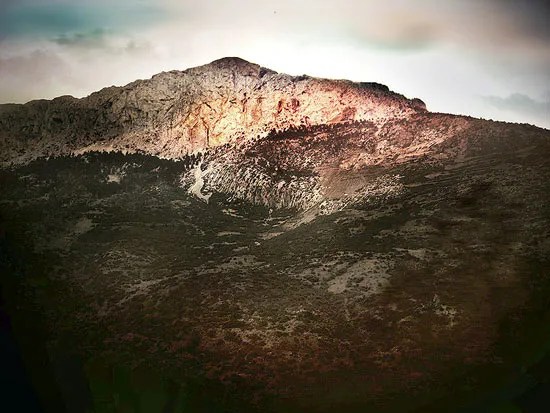


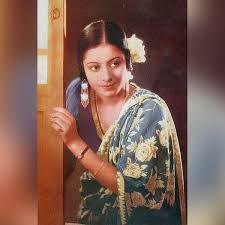

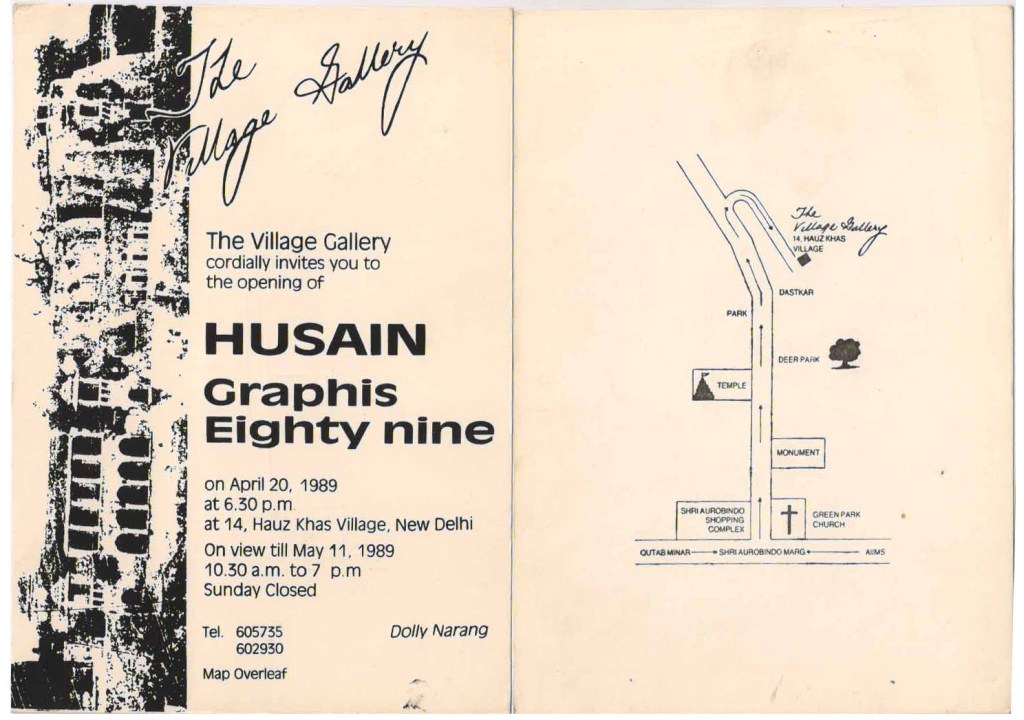
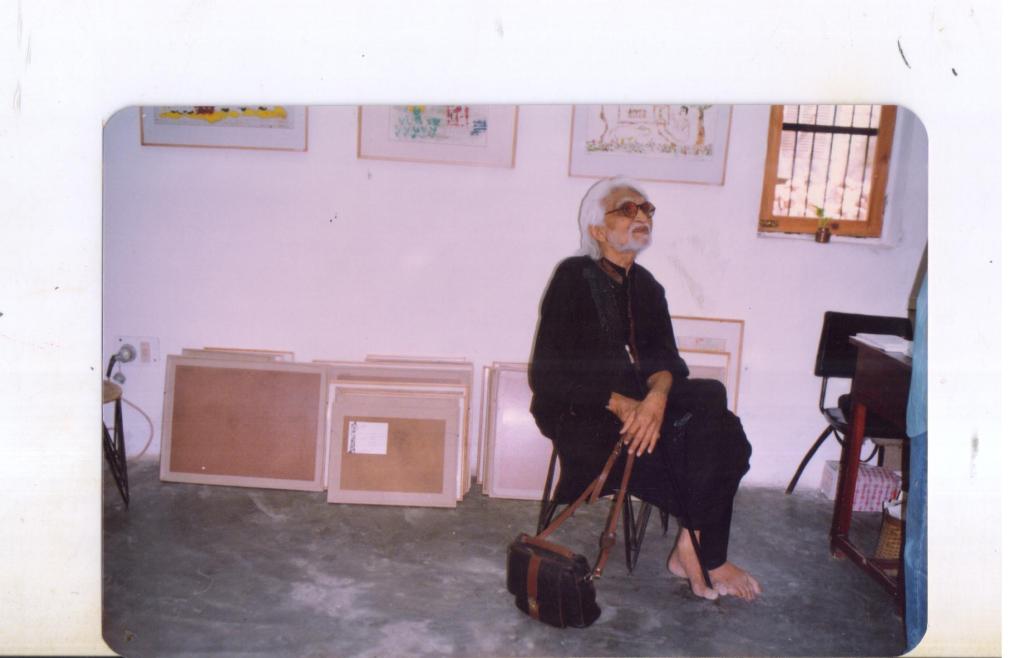
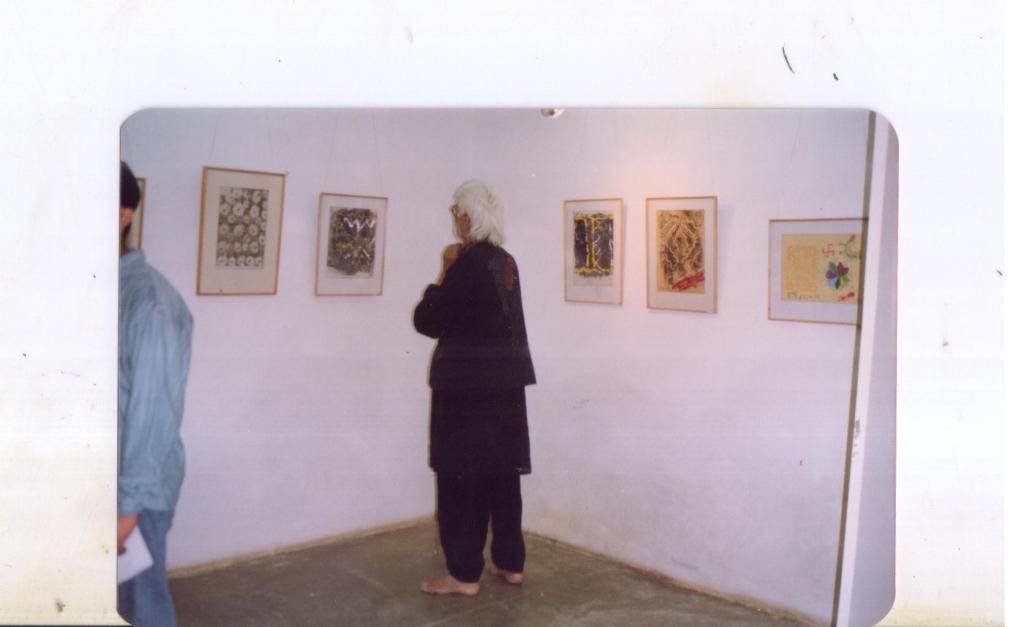
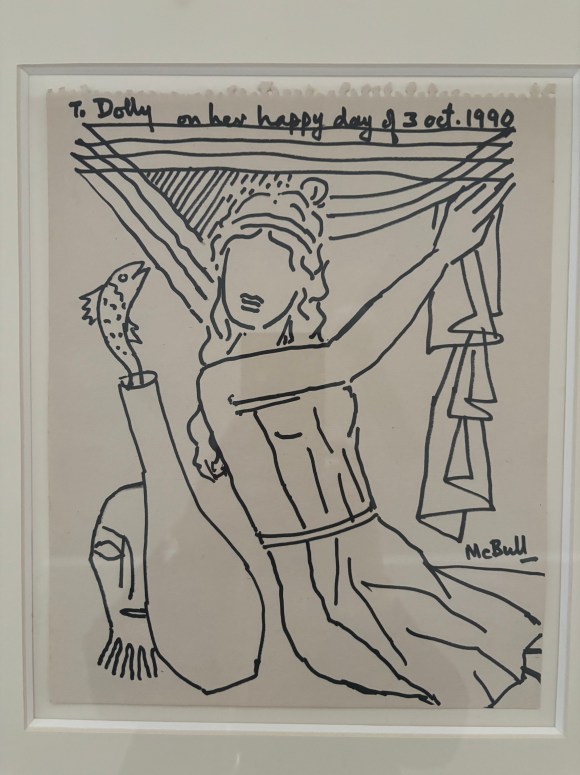
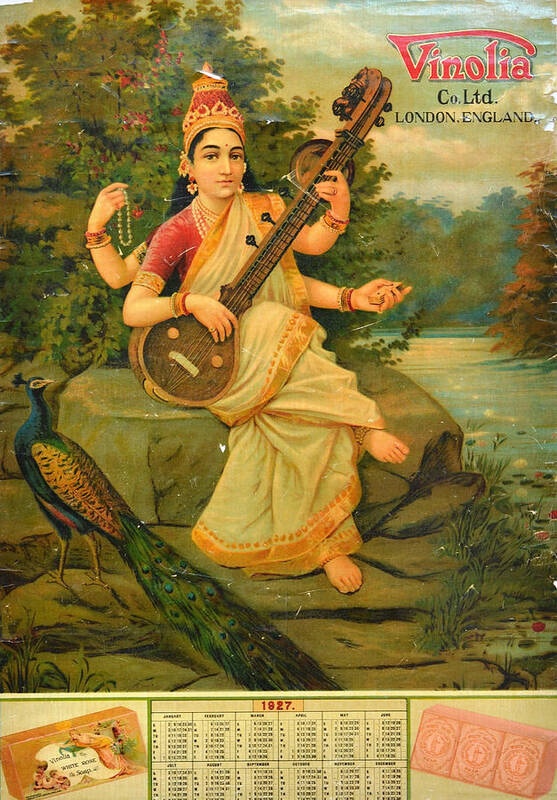
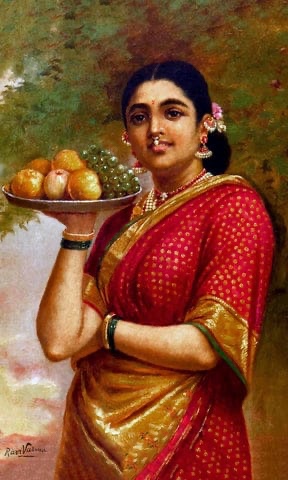


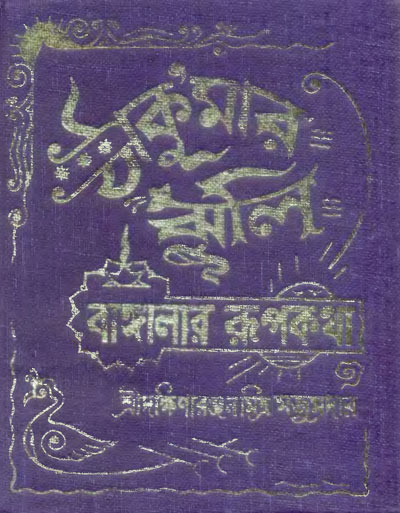
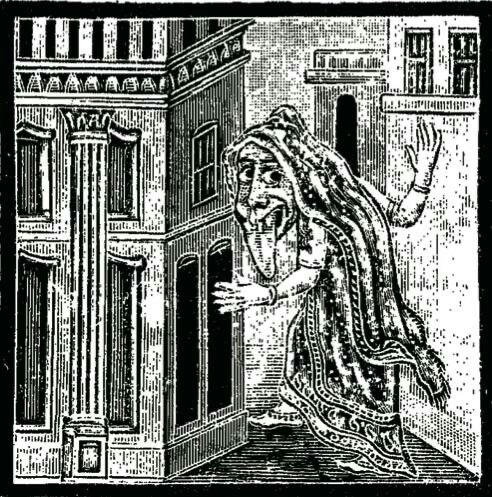
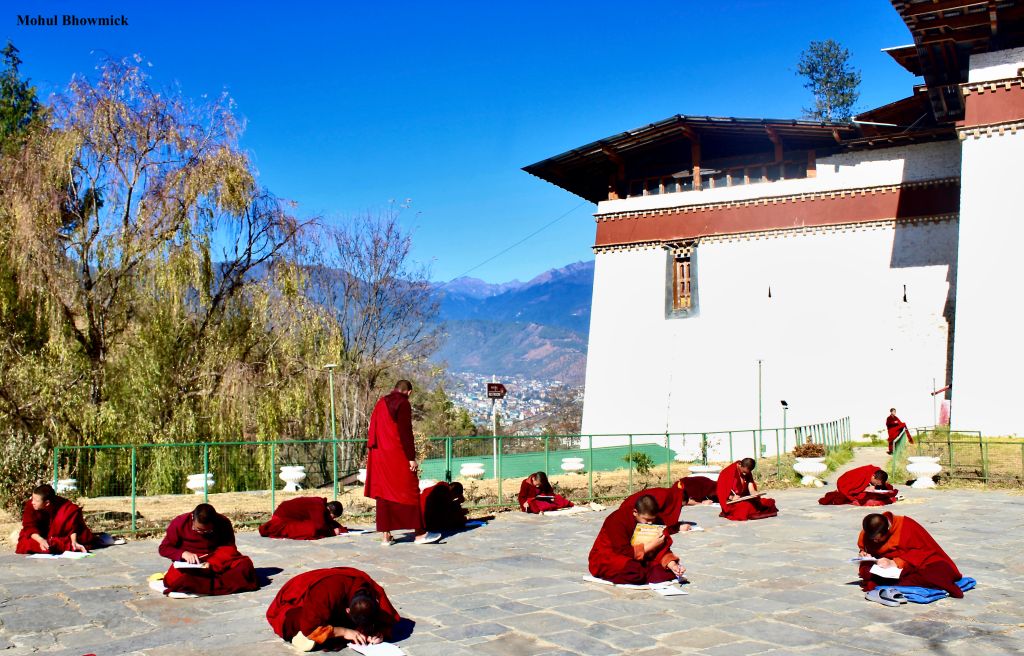
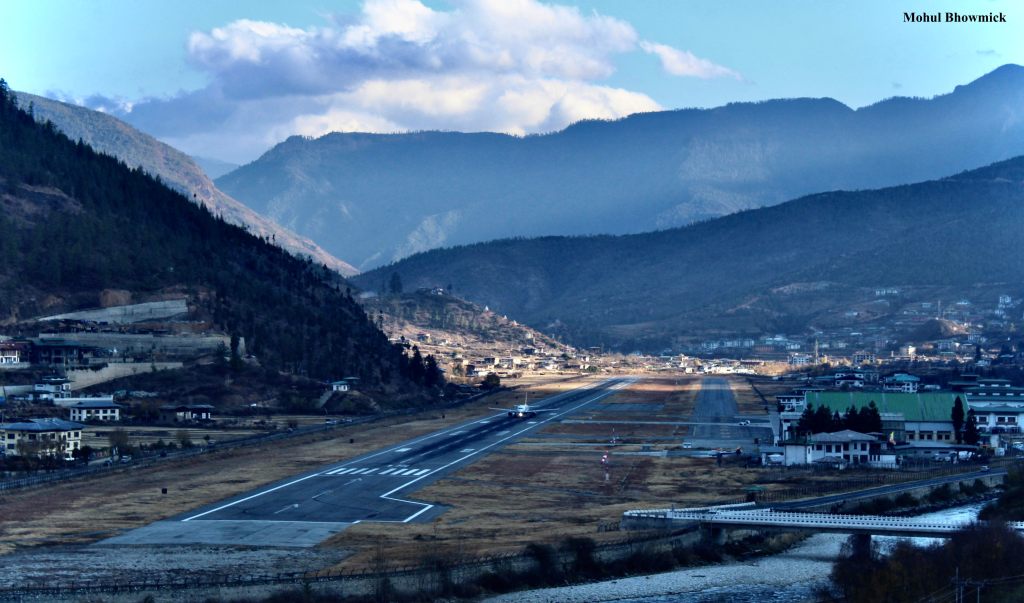
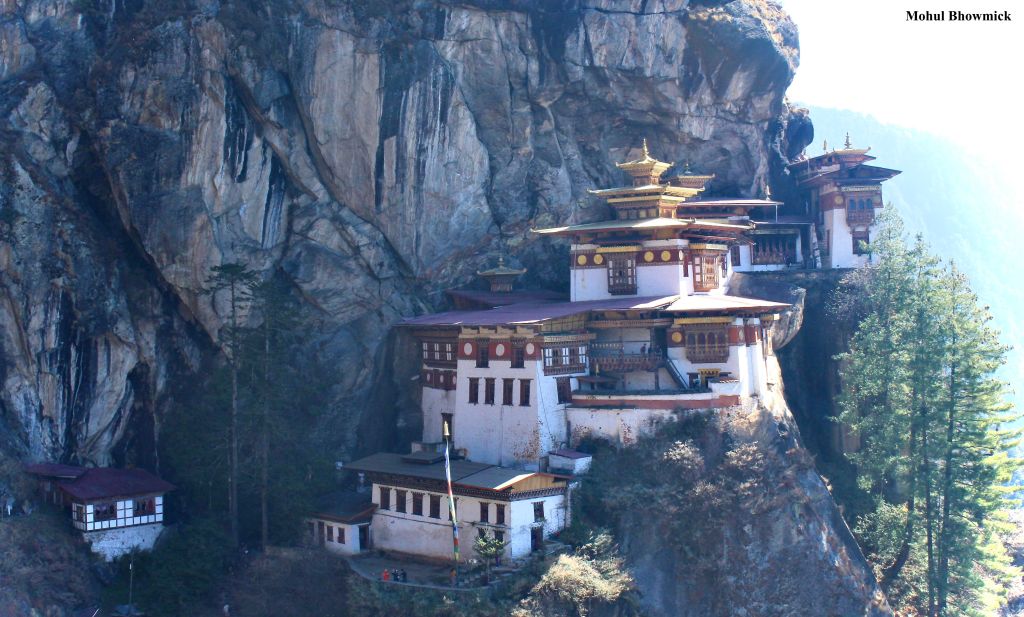
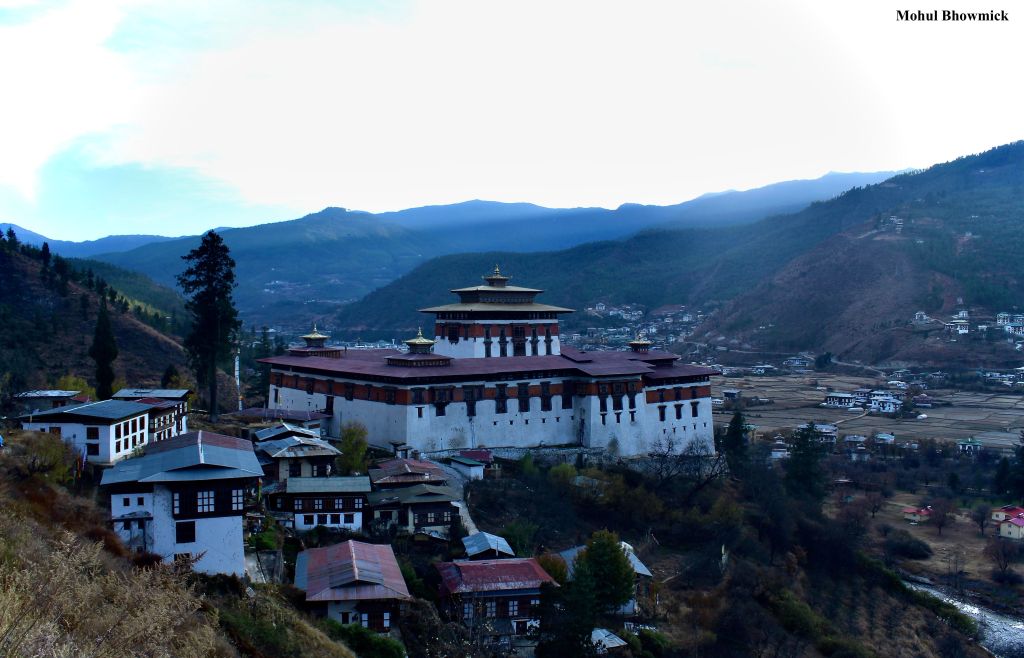
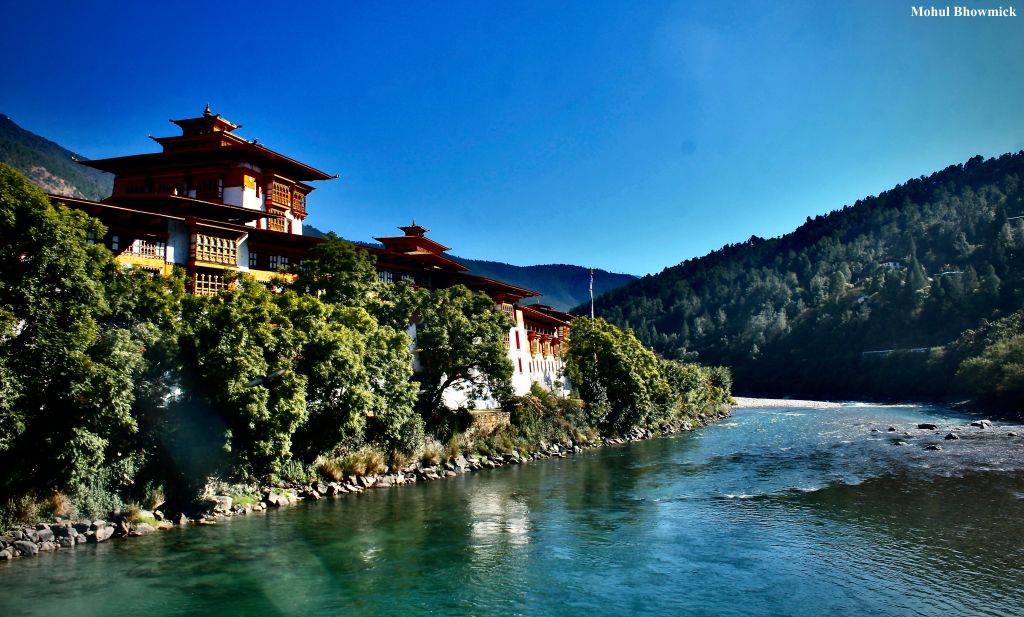
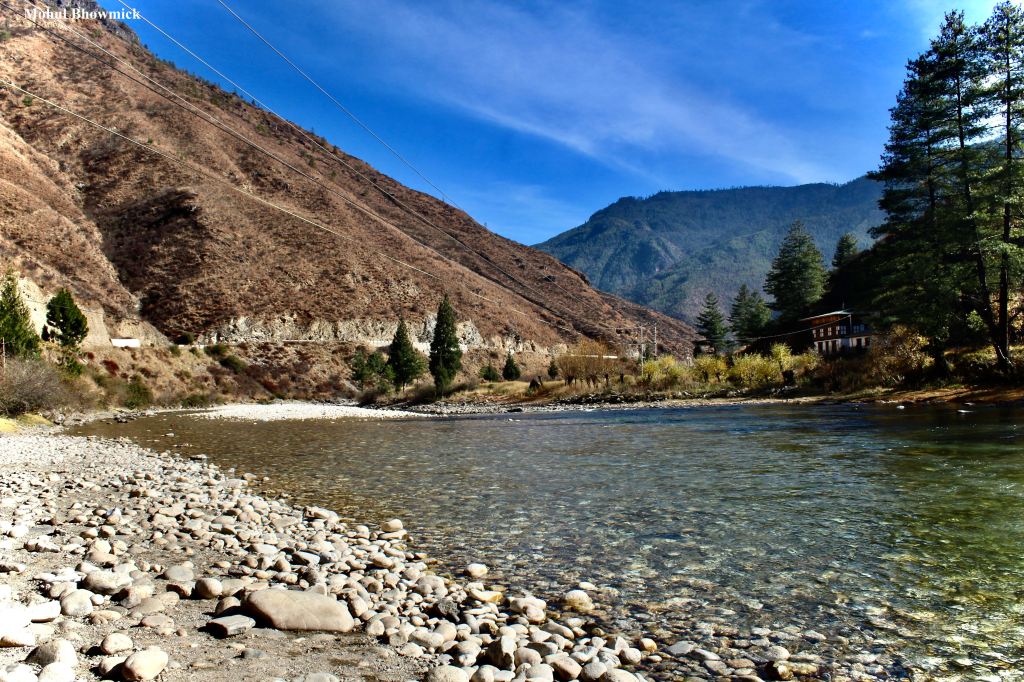


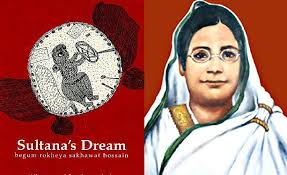
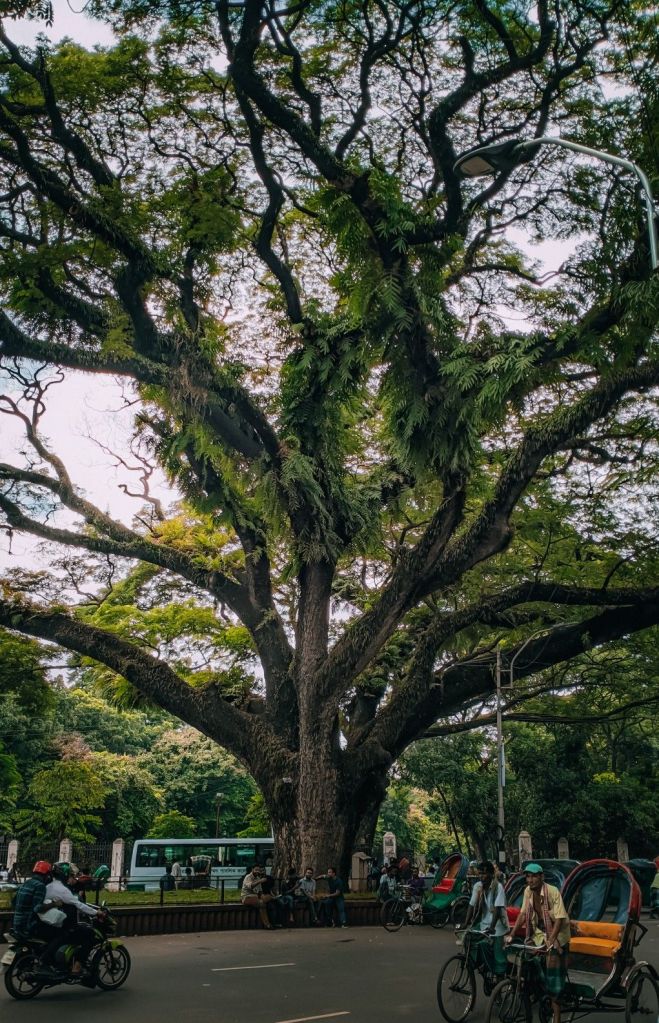
 Borderless