Categories
Essay

New Perspectives on Cinema & Mental Health

Between 1990 and 2017 one in seven people in India suffered from mental illness ranging from depression and anxiety to severe conditions such as schizophrenia. However, the depiction of this in cinema has been poor and sensationalist contends Shantanu Ray Chaudhuri.
‘In a lot of films there is the underlying message that all the patient really needs is love and affection. There is a tendency in films to try and normalise mental illness by saying that patients don’t need treatment, they need love. The audience gets the two extremes and what we are not getting are portrayals of people with chronic illness.’ – Dr Cleo Van Velsen, psychiatrist

A poet loses his mental balance on seeing his beloved fall to her death. And what do his family members do? They approach a dancing girl in a brothel to marry him in a bid to get him cured. In a fit of madness, he even rapes her, and she becomes pregnant. But the typical ‘good Indian woman’ that she is, she perseveres in her effort. A few convoluted plot-turns later, the poet gets into a brawl with the villain, resulting in the latter falling to his death, much like his lover. Lo and behold! He is cured, though now he has no memory of the dancing girl.

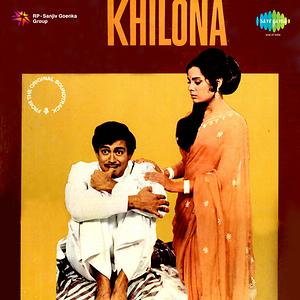
A nurse in a mental hospital is asked to take care of a patient as part of an ‘experiment’ that its dictatorial army doctor president wants to conduct. The patient is cured but it affects the nurse’s emotional stability. Insensitive to her turmoil, the doctor, preening with the ‘success’ of his experiment, more or less browbeats her into another one with a new patient. With disastrous consequences. Not only is the science/medicine of it dodgy (romantic love to cure a person), it also has the doctor spouting a line like ‘there’s nothing like a woman’s love and care to heal an unstable mind’, while the inmates going around the institute are, in the words of writer and critic Madhulika Liddle, the quintessential Hindi-film, “singing-screeching-long-haired lunatics in films like Khilona, Pagla Kahin Ka, Anhonee, etc”.

These are two of Hindi cinema’s most celebrated films, both huge commercial and critical successes: Khilona and Khamoshi. And both equally and criminally unaware of what mental health entails. Over fifty years later, on the evidence of films like Atarangi Re, Hasee Toh Phasee, Judgemental Hai Kya, Bhool Bhulaiyaa, Anjana Anjani, Tere Naam (in Hindi) and Hridpindo, Habgi Gabji and Bela Shuru (in Bengali), films continue to be as clueless about mental health conditions (MCHs) and how to deal with them.

As Vidushi Duggal, clinical psychologist and co-founder of Accept, says, “Mental health issues are grossly misrepresented in Hindi cinema. First, there is a tendency among filmmakers to select only the more overt (and hence the more ‘dramatic’) MHCs for portrayal, such as schizophrenia, bipolar disorder, dissociative identity disorder to name a few. Second, the lack of proper understanding and research, coupled with creative liberties aimed at sensational dramatisation, manifests as misinformed content.”

Her colleague and co-founder of Accept, Nikita Ramachandran, also a clinical psychologist, adds, “The depiction of mental health, despite advancement in literature, conversations and growing awareness remains largely uninformed. The core of this depiction is a viewing of mental health from the lens of chronicity and severity of illness. The scope of mental health has largely been limited to insidious mental health conditions such as depressive disorders, OCD, schizophrenia, with some focus on developmental disorders such as intellectual disability, autism or learning disorders. This depiction itself poses a problem, due to the association of mental health with illness/disease. The illness-lens fails to consider a fundamental truth – that mental health exists by virtue of being human.”

Leave alone such classic portrayals as A Streetcar Named Desire, Ingmar Bergman’s Persona and Hour of the Wolf, going back to the 1950s and ’60s, to more contemporary ones as One Flew Over the Cuckoo’s Nest, What’s Eating Gilbert Grape, A Beautiful Mind, Silver Linings Playbook, one would be hard-pressed to find one Hindi or Bengali film which addresses the theme with any verisimilitude till almost the new millennium.

There was the odd Mahesh Bhatt film like Arth and Phir Teri Kahani Yaad Aayi. One character that might escape attention when we talk of MHCs is the tenacious cop played by Boman Irani in Jijy Philip’s My Wife’s Murder, which has an interesting and understated subtext linking a food fetish with subtle melancholia.

Over the last couple of decades, films depicting mental illnesses have proliferated, sadly, with little responsibility and almost no understanding. While it is interesting that the films that managed to get some of it right were all made in the new millennium – reflecting a greater awareness about MHCs and greater acceptance in popular discourse – it is equally frustrating that some of the most pathetic films too have been made in the last two decades. As Vidushi Duggal says, “They depict an oversimplified and skewed portrayal of the MHCs in question, replete with stereotypical and insensitive portrayals that are magnified for dramatic effect.”

But this has been par for the course from, say, a Pagla Kahin Ka in 1970 and other films of the era which showed electroconvulsive therapy (ECT) as the cure for all symptoms of ‘madness’, to Krazzy 4 in 2008, where four patients suffering from every disorder possible escape the institution they have been committed to. Their experiences and conditions are then played out for laughs in a manner that is not only insensitive but also offensive.

The Films That Got It Partly Right

Dear Zindagi: That this Gauri Shinde film has been feted in the India media despite its problematic therapist-client relationship says a lot about how starved we are of responsible content. It needs to be applauded for its very nuanced take on mental health (Alia Bhatt[1] is a revelation), with none of the cliches that we are used to. It is also one of the few films that has its protagonist seeking therapy and that depicts sessions with a psychiatrist. As Vidushi Duggal says, “I can think of no realistic psychiatrist in Indian cinema. SRK’s[2] character may come close to a halfway decent portrayal of a psychotherapist in practice, but it too has problematic elements.” One major problem pertains to the relationship between the client and therapist with the latter even taking the former out to the beach for ‘sessions’ and talking about his own failed marriage and relationship with his son. A strict no-no as far as therapy is concerned in real life. As Anupama Chopra pointed out, the film offers a “Vogue version of therapy – a lovely expansive Goa house, sessions during walks on the beach, cycling together and dialogue like har tooti hui cheez jodi ja sakti hai[3]. It’s manicured and pat.”

Taare Zameen Par: This much-lauded film gave us the very real world of a dyslexic child and his relationship with a teacher who recognises his problem and inspires him and people around him to come to terms with and understand the very real gifts the child possesses. Though the child’s trouble with simple arithmetic is more a trait of dyscalculia than dyslexia, it remains a rare Hindi film that has found mention in peer-reviewed academic journals like Annals of Indian Academy of Neurology and Indian Journal of Psychiatry. These journals have praised the film for its general accuracy in depicting dyslexia which “deserves to be vastly appreciated as an earnest endeavour to portray with sensitivity and empathetically diagnose a malady”, blending ‘modern professional knowledge’ with a ‘humane approach’ in working with a dyslexic child. However, it needs to be mentioned that dyslexia is a learning disability and not a mental illness. That the filmmakers club it with other mental illnesses shows how mental health is not correctly understood.

15 Park Avenue: The story of a woman, Mithi (Konkona Sen Sharma[4]), conjuring a utopia in her mind – an imaginary house, 15 Park Avenue, that gives the film its name, happy mother of five imaginary children, wife of an imaginary husband – and living with it, Aparna Sen’s [5]film, shattering and affecting in equal measure, addresses mental illness with a sensitivity and accuracy that almost all Indian films lack. The telling moment when Mithi’s sister (played by Shabana Azmi[6]) tells the psychiatrist (Dhritiman Chatterjee[7]), “What right do we have to take away the happiness she gets from her imaginary world?”, raises an issue that is rarely addressed, the subjectivity of reality: hallucinations can be just as compelling as ‘reality’. Just because someone’s perceptions of reality is at variance from ours, does it give us the right to term the former ‘abnormal’ or object to it?

Death in the Gunj: Konkona Sen Sharma’s directorial debut is another rare film that addresses the unravelling of a fragile mind over a family holiday. Given that the film is set in 1979, an era when there was no conversation around the subject, there is no overt mention of mental health. Also, though Shutu (Vikrant Massey[8]) may be the one who comes across as prone to what could be called mental health issues, the film strips the veneer off the ‘loving family’ to show how we are complicit with our toxic masculinity and bullying in driving a frail mind off the rails.

Other films that got aspects of it right are Black, which despite going over the top in many crucial sequences offers a very nuanced understanding of Alzheimer’s, and Kartik Calling Kartik, one of the first Hindi films dealing with schizophrenia.

The Bad and the Ugly

Tere Naam: Leading the list would be this Salman Khan [9]starrer that featured a mentally unstable protagonist whose head is shaved, and who is tied in chains. The mental hospital sequence in the film is a gratuitous misrepresentation. In a gross failure of messaging, like Shah Rukh Khan’s Rahul in Darr, Radhe Mohan’s obsessiveness, in keeping with the tradition of ‘heroes’ stalking women in Hindi films, is presented as worthy of emulation. One aspect of Hindi films dealing with mental health issues that needs to be called out is the manner in which they position unrequited love/obsession as a trigger, often portraying that as a fashionable antihero statement. Which of course harks back to Saratchandra Chattopadhyay’s Devdas, the original ‘antihero’ who could have done with psychiatric consultation.

Vidushi Duggal says, “While many films have gone on to give this impression, I would be wary of making that connection as it is yet another example of misinformed sensationalisation. Mental health issues are complex and have multiple causal factors – genetic, biological, psychological and social/environmental. Nikita Ramachandran adds: “The depiction of someone unravelling or descending into a breakdown or developing a mental health condition is an inaccurate portrayal, as well as an overgeneralisation that caters to the general theme of love, attempting to add an ‘interesting’ dimension or layer to this portrayal of love. Equally problematic is the manner in which mental health has been pathologised for a long time. Behaviour seen as deviant, classified as ‘abnormal’, characters depicted with mental health issues were villainized. The violent death has been an age-old trope of a satisfactory ‘The End’, where closure has been synonymous with death and a general depiction of ‘good over evil’.”

Bhool Bhulaiyaa: A psychological horror comedy (!) that ostensibly deals with dissociative identity disorder (DID), this colossal hit makes a series of missteps about mental disorders. Hypnosis as a cure for DID, ‘treatments’ rooted in superstition (including a psychological condition that is cured when the doctor slaps the patient), ‘psychiatrists’ who applaud themselves as godmen – it is an endless list of shocking distortions. Akshay Kumar [10] as a psychiatrist. Need one say more?

Atarangi Re: ‘I am a psychiatrist, and I know women.’ That’s a dialogue a doctor mouths and that’s the level of discourse around mental health this film stoops to. In another sequence the doctor clubs together people with bipolar, psychiatrist disorders and schizophrenia in a manner that’s downright offensive. In one sequence, the ‘imaginary’ character Sajjad, a magician, is supposed to make the Taj Mahal disappear and fails to do so only because the patient has popped a pill immediately before the ‘act’. Filmmaker Aanand L. Rai is a serial offender when it comes to woeful depiction of mental health issues, with the protagonists of Tanu Weds Manu Returns shown consulting a marriage counsellor in an asylum! The man describes his wife’s irrational behaviour as an example of bipolarity to which the doctor responds: “In that case, every woman is bipolar.”  

Anjana Anjani: Writing about the ‘hollow space in my heart’ that made her use the term ‘death thoughts’, Therese Borchard says in her blog, “The most difficult thing I will ever do in my lifetime is to not take my life.” That is everything that is wrong Anjana Anjani, where two adults battling life crises enter a pact to take their own lives. A hugely problematic representation that romanticises suicide, it makes a mockery of the breakdown that drives people to such despair. 

Hasee Toh Phasee: The protagonist here, described as ‘mental Meeta’ in the film’s promotional material, blinks her eyes incessantly, twitches her nose, is extremely jittery – all of which are shown as symptomatic of ‘madness’. She is constantly popping pills to control these sensations which lead to odd situations.

The Situation in Bengali Cinema

Such is the paucity of characters dealing with MHCs in Bengali cinema that a few filmmakers I reached out to, could not come up with a single film on the subject. One pointed out Aparna Sen’s Paromitar Ekdin for its realistic and heartfelt delineation of the character of Khuku, a girl with intellectual disability who is referred to as ‘schizophrenic’ by other characters in the film. Uttam Kumar’s[11]1955 film Hrad, based on a novel by Bimal Kar, is another instance of a film that places its protagonist in an asylum. He seems to have forgotten parts of his life and behaves in a manner that make people feel he is ‘mad’. There’s of course Deep Jwele Jaai, the Bengali original of Khamoshi

Three recent films stand out as examples of how clueless writers and filmmakers are when it comes to depiction of MHCs. Shieladityo Moulik’s Hridpindo is the story of a woman who, because of an accident and the brain surgery that follows, is left with her fourteen-year-old self, with no memory of her life after, including her husband. However, her pronounced lisp and the way she behaves, constantly demanding attention, leaves you wondering if she is a child of seven! Not to mention that a film dealing with a brain surgery is called Hridpindo.

Raj Chakraborty’s Habgi Gabji, the title a take-off on PUBG, addresses the very relevant theme of gaming and mobile addiction and its frightening consequences on young minds. Bolstered by a good turn by child actor Samantak Dyuti Maitra, the film, despite its noble intentions, suffers from the same problems that beset many other films of the genre. The child is taken to a psychiatrist. However, the session does not take place in a professional space but in the doctor’s drawing room. There is little emphasis on understanding, prevention and cure, with a large part of the meandering script devoted to the child’s violence and alienation. Which is disappointing given that the WHO has defined gaming disorder as a “pattern of behaviour characterised by impaired control over gaming, increasing priority given to gaming over other activities” and has flagged the escalation of gaming as a major health risk.
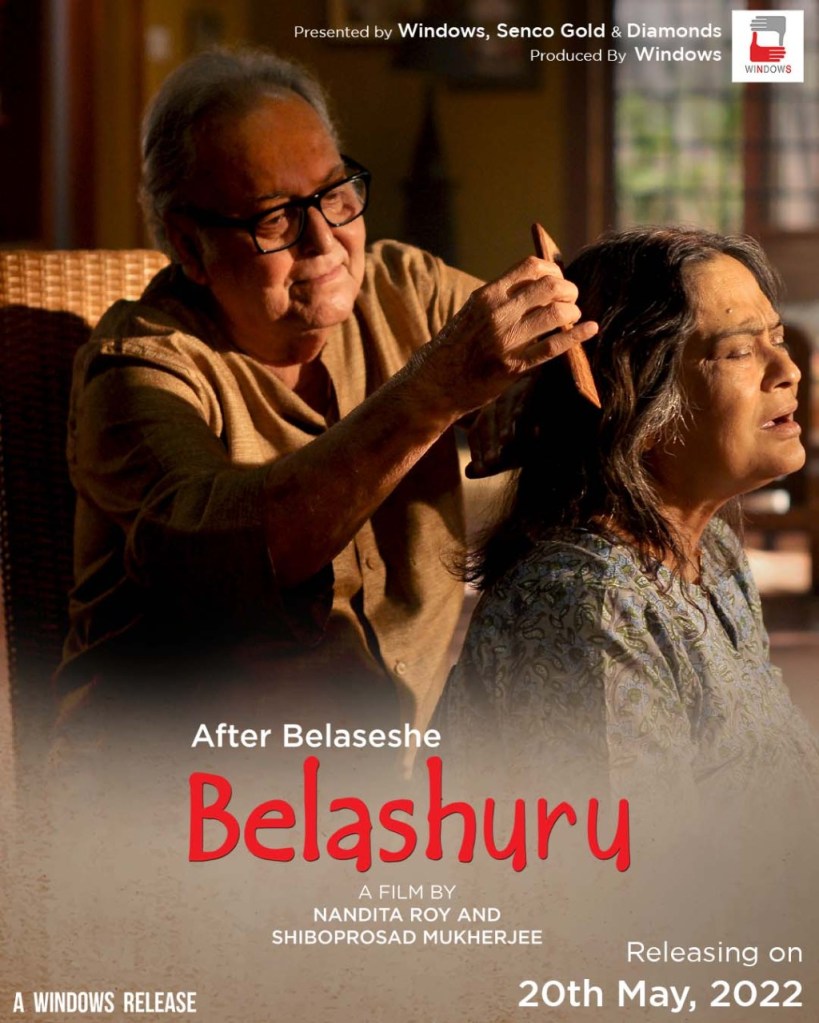
Bela Shuru, one of the biggest successes of 2022, is a high-intensity melodrama with a social message, typical of films by the filmmaker duo Nandita Roy and Shiboprasad Mukherjee. It addresses the onset of Alzheimer’s in the elderly but the symptoms that the wife displays – smearing her face with vermilion, among others – is more in tune with lunacy than the more insidious effects of Alzheimer’s. It is obvious that the filmmakers opt for the overdramatic and take creative liberties in the depiction of mental health issues, dumbing down the narrative, in the process bracketing different illnesses under the same umbrella and distorting the truth.

The lack of proper representation in Bengali cinema is also surprising given that its biggest icon, Satyajit Ray, introduced the world to many unheard-of mental health issues in his stories. Nakur Chandra Biswas in the Shonku books, for example, is a psychic who experiences flashes of the past and future. Barin Bhowmick-er Byaram is the story of a kleptomaniac who has been through therapy. The protagonist of Bipin Chowdhury-r Smritibhrom suffers from a curious case of memory loss, while Fritz explores the childhood trauma of its 37-year-old protagonist. In the Feluda story, Dr Munshi-r Diary, we have a patient who suffers from a persecution complex, an irrational fear or feeling that one is the object or target of collective hostility and persecution. What is fascinating is that Ray wrote about these conditions decades before they became part of the public discourse in India. However, none of these were adapted into cinema.

The Responsibility of Filmmakers and Writers

It is critical to note that cinema plays a significant role in shaping, creating and developing one’s understanding of reality. Films have of late started investing in an intimacy director/coordinator. Maybe it is time to have good psychiatric consultants too. Nikita Ramachandran says, “Mental health and emotional well-being are nuanced, and every story is different. It is challenging to depict the many layers, and also portray these in ways that will resonate or connect with the larger audience.” Vidushi Duggal is of the opinion that, “While acknowledging that an exhaustive depiction of all nuances of mental health is beyond the scope of a time-limited medium that is essentially designed for entertainment, as a community we need to remain cognizant of the potent and pervasive influence of cinema on creating awareness and developing/shaping attitudes. This calls for responsible filmmaking that involves adequate research on the mental health issues being portrayed.”

(Note: For Vidushi Duggal, who listened. Nikita Ramachandran, thank you for your inputs.)

A shorter version of this essay was published in Telegraph earlier

Shantanu Ray Chaudhuri is a film buff, editor, publisher, film critic and writer. Books commissioned and edited by him have won the National Award for Best Book on Cinema twice and the inaugural MAMI (Mumbai Academy of Moving Images) Award for Best Writing on Cinema. In 2017, he was named Editor of the Year by the apex publishing body, Publishing Next. He has contributed to a number of magazines and websites like The Daily Eye, Cinemaazi, Film Companion, The Wire, Outlook, The Taj, and others. He is the author of two books: Whims – A Book of Poems(published by Writers Workshop) and Icons from Bollywood (published by Penguin/Puffin).

[1] Indian film actress

[2] Indian film actor, Shah Rukh Khan

[3] Translates from Hindi as: “all broken things can be repaired”

[4] Actress and Director

[5] Actress and Director

[6] Actress

[7] Actor

[8] Actor

[9] Actor

[10] Indian film actor

[11] Actor (1926-1980)

PLEASE NOTE: ARTICLES CAN ONLY BE REPRODUCED IN OTHER SITES WITH DUE ACKNOWLEDGEMENT TO BORDERLESS JOURNAL

Click here to access the Borderless anthology, Monalisa No Longer Smiles

Categories
Essay

 Half A World Away from Home

By Mike Smith

Auckland downtown. Photo Courtesy: Mike Smith

I recently visited New Zealand, where I met up with writer Jenny Purchase, whose collection of short stories Transit Lounge  has just been published. I was fortunate enough to read an earlier version of this in manuscript form, and it was good to meet up face to face with her at last; and to get my own proof copy of the then not yet published volume!

Reading a book written in and about a foreign country (where, it has been famously asserted, ‘they do things differently’) is a bit like travel itself. We are hit simultaneously by not only what is dissimilar from our own patch and experience, but also what is, unexpectedly perhaps, amazingly similar. It’s not just Maori culture that Jenny’s stories jolt the outsider into, but the wider society of this modern democracy, which is said, at least here in my country, to be like stepping back in time into a version of our own past.

That’s true to a very shallow extent. Buildings are reminiscent of British structures: but who could tell skyscraper London, from skyscraper Hong Kong, or Dallas, or tower packed City Centre Auckland if they’d never been in any of them before? I used to think a good TV game might be to fly contestants into night clubs around the world and ask them to guess which country they were in. It crossed my mind more than once that you could do something similar with shopping centres, or malls if you prefer it. There would be clues, but often not in the appearance of the shoppers, nor in the brands they were carrying. But what we in the UK call charity shops are in NZ called opportunity stores, which implies differences that cut much deeper than mere labelling.

Yet those low-rise suburbs of New Zealand’s largest city, the wood-framed clapper boarded houses that I think of as ‘chalet chic’, and especially the oldest of them, and which look so alien to my eyes, were once common in the UK, and I could take you to a few still rotting gently in Lake District lanes under pine trees, oak and ash. One house we stayed in, at the resort town of Akoroa, settled by the French in 1840, is said to have been imported in kit form from Britain in the 1850s, and to be same kit as the more famous ‘Treaty House’ at Waitangi, except of course with an additional second storey.

The traffic, too, has that blend of the familiar and unfamiliar to European eyes, with the same private cars I would see on UK roads. But the lorries! Huge Mack trucks, often with trailers, that I’ve seen before only in the movies. There was the odd Chevy knocking about too. But they all drive on the left, just like in the UK.

When people get off the bus in Auckland, they thank the driver. Yet, I was told, the drive to get more people out of their cars and into public transport in the city was struggling against a deeply ingrained reluctance to take the bus. Snobbery was given as the explanation. And from the sound of engine noises in the night, and during the day, there are more drivers than I hear where I live who still think it’s clever to be audible three streets away. And don’t get me started on those who play their music louder than all the traffic noise within a hundred yards!

And what about the forests? Walking on the Queen Charlotte trail near Picton in South Island, it was the difference that struck me: the canopy of ferns and palms; leaf shapes that I couldn’t identify; the scars of recent landslips, which looked as if some giant had taken a massive ice-cream scoop to the hillside and peeled off a good helping, only to drop it a few hundred feet down the valley side, often into the sea where the path ran close above the shore. I got the feeling all along the coast that I was walking on sandcastles not yet reached by the rising tide. 

Yet, turn a corner and momentarily you could imagine yourself in an English glade or a Scottish glen, and in so many places the name given to it might well be of an English or Scottish general or politician, or any surname that you’re very familiar with. And, let’s be honest, in an English woodland I’m as likely to struggle with identifying those leaves except for a really obvious few! But the palm fronds and ferns exploding like huge green fireworks from an otherwise normal — to my eyes — New Zealand forest canopies always excite me!

Plants that at home are house plants on the windowsill, and never big enough to block the view are here growing outside, and above head height. Fruit that costs a fortune in English supermarkets falls here in back gardens like English apples and is left to rot.

The Fish and Chips are good, and celebrated both here and there, though it throws me for a second each time what we call crisps are referred to as ‘chips’. The coffee, ‘a long black a day keeps the senses in play’ is my take on the old saw, is the best I’ve ever had, though I’m doing my best to replicate it here in Cumbria!

Similarities and differences abound both in stories, and in the places they come from and reveal. They told me when I was young that travel broadens the mind, but I wonder if also, and perhaps more so, it sharpens our perception of where we’ve come from as well as that of where we’ve arrived, whether we travel by plane or on the page! 

Raising A Trowel

Seen from the Auckland waterfront, where the pedestrian swing bridge salutes the boats as they enter and exit the inner harbour, city centre offers an intense, almost intimidating backdrop of close-packed tower blocks of concrete and glass, overtopped by the sharp needle of the skytower a few blocks further up the hillside beyond the historical shoreline.

But turn around and follow the embedded railway tracks left over from the days of steam trains and sailing ships, all the way to where the old industrial silos have been decorated with lights and festooned with climbing plants and find the single track spur that slips away to the right, splitting almost immediately into two again before entering the double-track tram shed, and you will have arrived at what we were told is the last of the Auckland Community Gardens.

Lying alongside the long building are some forty raised beds, tended by volunteers, each bed that I saw, carrying the name of its gardener. Hard up to the tram shed wall (here decorated with images of old tickets), sits a row of composters for food waste and wormeries in plastic barrels. There’s a greenhouse and a traditional pallet-built compost heap. Water runs from the tap.

There were many such gardens in Auckland at one time. I recall encountering one unexpectedly on a small site on one of the steeper city centre streets during a previous visit. But I’m told that all save this one have gone now, the land taken for the far more valuable purpose, in monetary terms and for other reasons, of squeezing in another tower block. This last of them is fighting to keep its plot, and I hope it does. Buildings, from what I’ve seen, sit tight in their boundaries in Auckland. It’s a city that doesn’t seem to see the need for growing space. And perhaps, with a country more or less the size of the United Kingdom but with only about one fourteenth of its population, that shouldn’t surprise us.

Two tomato plants were pressed on us, for our daughter’s nascent garden out in the suburbs. My guess is that I will never eat tomatoes grown in such valuable land, on a dollar per acre basis. But the clue is in the name. This is a Community Garden, and the community, which it not only serves but also creates, is an inclusive one.

Community Gardens offer more than a source of ‘home grown’ food, paid for in care rather than cash. I would guess that even a city like this, which to the outsider’s eyes can seem remarkably relaxed and laid back at first glance, could use those benefits.

The names on those raised beds confirmed the story told by the volunteer who we chatted with on our stroll past. The garden brings together people whose languages and skin colour vary enormously, but they are united by their green fingers and that remarkable thing, the human smile, and much more.

Back on my own plot now, bound fast in winter frost, harsher and earlier this year than we have become used to over the last decade, I raise a trowel from the iron hard soil, in salute to fellow gardeners everywhere.

A Cacophony of Voices

The variations we hear around us, in accent and in language itself, I suspect, offer different perspectives of reality rather than merely alternative words for it. Perhaps that’s why I came home from my recent trip to New Zealand with a beginner’s guide to Maori!

‘Yis’ and ‘yes’ are both similar and different at the same time, and so are ‘iggs’, though the latter perhaps weighs more heavily on the difference side of the scale. But in the North of England, yes and aye carry a much older distinction, despite both being used without forethought locally. Though my skin is more or less the same colour as that of almost all my neighbours, and though I’ve lived in this part of the world for over half a century now, any school kid, and any old codger of my own age would know as soon as I opened my mouth that I’m ‘nut frum rahnd ‘ere’. Old codgers, fifty years ago, in a Cumbrian pub told me that during their childhood, people from villages only two miles apart could be distinguished by the way they spoke.

Only the outsider is fooled into thinking that rural England has a homogenous population, and perhaps that’s true elsewhere. But in the cities, it is cosmopolitan around the world, and visibly so. More interesting to me is the cacophony of voices, none of which I believe, have been genetically inherited. We speak as we have heard. We speak as we have listened, and in the accents of those we have listened to and consciously or unconsciously, copied.  Until a couple of generations ago that would have been limited almost completely to geographically close family and neighbours.

Several years after my visit to the Waitangi Treaty Grounds, it suddenly struck me what I had overlooked, though it was obvious from the beginning. The Treaty was signed by many Maori leaders in 1840, but on behalf of a single Monarch-Emperor. Our perceptions of others, and of ourselves, evolve over time. As part of that process we forget, deny, re-interpret and re-invent both our own narratives and those of people we have encountered. We redefine who ‘we’ are, and who ‘they’ are. ‘Us’ and ‘them’, are perhaps the two most unstable words in the English language.

Language itself is unstable. New languages are formed by the coalescence of older languages – English is a prime example of this, and not yet a thousand years old as a national, let alone an international tongue. They are formed too from the disintegration of an earlier single language – Scottish Gaelic, Irish, and Welsh among others, all derive from a single widespread early European language. Which process the language of any people is undergoing at any moment, that of coming together or that off moving apart, must be an indicator of wider social, political and religious evolutions.

The biblical story of Babel’s Tower, and its cataclysmic dividing of us, of being struck down as it were by the curse of having different languages rather than one, is a story that raises ideas we might do well to ponder and examine more than it seems to me that we have.  Harari’s book Sapiens makes the simple assertion that once upon a time a monkey had two offspring, with the astonishing addition that one was a human being. My question is did their offspring develop a single language from which all our languages grew? Or did they disperse into separate communities each of which developed their own languages?

A history of the North American Indian that I came across asserted that those first people had dispersed across the continent before the development of language, which implies that by the time we had spread that widely across the world we were still, apart from, perhaps, something like birdcalls, mute. Yet we all carried the genes that would predispose us to develop language, and that when the American Indians did so it was in quite as many unrelated languages. The Maori came to New Zealand less than a millennium ago and brought with them languages with shared roots despite their many tribes.

Of course, I have no answers, though it seems likely to me that communities and individuals who are open to strangers are more likely to see the amalgamation of languages, and that those who are not will encourage their disintegration. And I do have the suspicion that language, to use a modern analogy, is like a TV channel. Each one carries its own agenda and its own programmes. Each presents the world from its own perspective and its own focus. There may be overlap. There will be difference. But as language using beings we can, with varying degrees of competence and effort no doubt, tune in to any, and who knows, perhaps to all of them, if we wish to do so.

Mike Smith lives on the edge of England where he writes occasional plays, poetry, and essays, usually on the short story form in which he writes as Brindley Hallam Dennis. His writing has been published and performed. He blogs at www.Bhdandme.wordpress.com 

.

PLEASE NOTE: ARTICLES CAN ONLY BE REPRODUCED IN OTHER SITES WITH DUE ACKNOWLEDGEMENT TO BORDERLESS JOURNAL

Click here to access the Borderless anthology, Monalisa No Longer Smiles

Categories
Essay

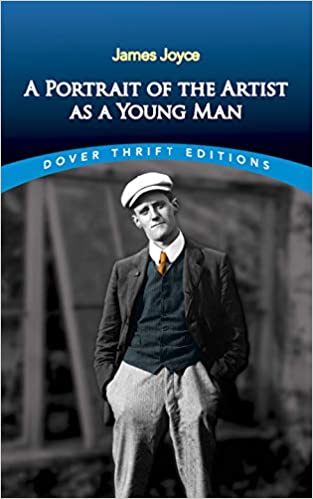
Ivory Ivy & Stephen Dedalus

Reflections by Paul Mirabile on James Joyce’s Stephen Dedalus who found fruition in A Portrait of the Artist as a Young Man (1916) & a key role in the 1922 classic, Ulysees

You have a queer name, Dedalus,” says Brother Michael to Stephen Dedalus, the hero of A Portrait of an Artist as a Young Man in the first chapter. Strange perhaps, but quite significant for this tale : Daidalos in Greek means ‘architect, wiseman, artist, craftsman’[1]. He was the universal artist in Greek mythology, the ingenious Athenian architect, who exiled to Crete, designed the labyrinth within which the terrible Minotaur was kept, a complex formation which analogues Dedalus’ intricate or labyrinth-like thinking patterns. A formidable name, thus, for Joyce’s protagonist, one in fact that evokes many of the author’s own traits.

James Joyce (1882-1941) once remarked that a male artist (writer, painter, musician) generally inherits many effeminate attributes from his mother (or from other female figures of the family), and as he matures and grows conscious of them, exploits them to create. Effeminate characteristics in a male engenders a sensitivity that overshadows the ‘virility’ of the father. This is certainly the case with Stephen Dedalus in our story, and perhaps too with James Joyce.

In chapter one, Stephen’s leanings towards his mother appear to be projections of Joyce’s, although the reader should be aware that A Portrait of an Artist as a Young Man, published in 1916, is not an autobiography per se. However, Stephen’s word-associations and flashbacks dissociate, and concomitantly link the ‘masculinity’ of his boarding school surroundings with happy memories which depict his mother and her daily gestures and occupations. There is little doubt that these depictions were drawn from Joyce’s own experiences during his boarding school years.

Stephen felt lonely at the boarding school, studying and playing with boys who were tough, hardened by their fathers’ stern discipline and rough language, many of whom were footballers, pranksters or schemers. He had been brought up by his mother. She never taught him to play football, be a prankster or a schemer. Should that have been his father’s task ? His mother would never have taught him to rub rosin in his hands to harden them against flogging. Fleming, a school comrade, did, and you can be sure that his father had counselled him on that point. When Stephen was flogged along with Fleming, we are witness to the differences in their domestic upbringing : Stephen describes his flogger Father Dolan with great vividness ”looking through his glasses”, those same glasses that were seen through by his father in the first passage at the beginning of chapter one. Had Father Dolan — his ‘brotherly’ father– a ‘tough’ man indeed, misunderstood the scorn that young Stephen’s artistic propensities led him to experience?

Perhaps it is the lack of sympathy and understanding on the part of the father-figures he encounters throughout life that transports Stephen into a lonely, private world dominated by the mother-figure. When he is ill in the infirmary he is quick to address a letter to his mother ; his mother who smells ”nicer” than his father. Joyce, the narrator, also informs us that she played the piano, whereas the father did not …

The boys at the school teased him because he would kiss his mother every night before going to bed, something quite normal for him, yet ”girlish” for the boys. And even if they did kiss their mothers they would never have admitted it in front of the other boys, a habit that their fathers probably told them not to disclose when at school. Stephen had no ‘official training’ in these delicate matters by his father.

He discovered this lack of ‘manliness’ in him through his sensitive, perceptive insight into all that he felt, heard, smelt and observed. His mother’s sensitive world was an innate attribute, one that he consciously cultivated in a creative fashion, examining all that took place, criticising what he felt had been unjust or false. In fact, the opening chapter draws a suggestive parallel of Stephen’s (Joyce’s?) life as an artist and his inner relationship with his mother (and his father to a certain extent) as if she were an inseparable ally on his path to artistic glory.

”He longed to be home and lay on his mother’s lap,” grieves the narrator, defending the downcast Stephen, for indeed the boarding school proved terribly trying for him, violent in many ways, even physically violent by the flogging administered by the brothers and the fights against his comrades. Stephen would reminisce : ”She was a nice mother but she was not so nice when she cried.” Did this prevent him from crying when flogged by the brothers or humiliated by the boys ?

Stephen opens chapter one by recounting what his father had told him when he was a baby. But his father’s language is a child’s, spoken exactly as a child would. On the contrary, Stephen’s childish attempts at communication : too many pronouns, the repetition of a song sung by Betty Byrne : “O, the green wothe botheth … ,” his insight into the ages of his immediate family : “[T]hey were older than his father and mother but Uncle Charles was older than Dante,” and his eventual intellectual developments and abandonment of a Jesuit education due to a very severe and masculine environment, all bespeak a precociousness of character inherited from his mother, which did not prevent him, however, from showing great respect for his father.

At the end of chapter two, he stumbles across a prostitute. Stephen is greatly distressed. He is drawn towards this female but, ”His lips would not end to kiss her. He wanted to be held firmly in her arms, to be caressed slowly, slowly.‘ Like his mother would do ? This being said, the poor, lonely Stephen yielded to the prostitute’s charms …

Stephen’s love for his mother is deep: when he ‘exiles’ himself to Paris to study medicine in the first chapter of Ulysses (1922) he receives a letter that his mother has taken to bed very ill. He returns quickly, but refuses to kneel at her bedside and pray for her : ” ‘You could have knelt down, damn it, Kinch, when your dying mother asked you,’ Buck Mulligan said.”[2] Buck even accuses him of killing his mother: “He kills his mother but he can’t wear grey trousers.”[3] It goes without saying that Stephen did not kill his mother ; he deeply regretted her death. However, this disgraceful act towards her pleadings is explained by the fact that to kneel down on both knees represents a Church rite, ”the Jesuit strain in him”[4]. The tortured Stephen disavows this ‘ecclesiastical’ gesture, this gesture of absolute obedience before authority. It were as if at that difficult moment his confused state of mind confounded the love of a mother and the hate of a Jesuit institution that Stephen (and Joyce) bore. It is true that the severity and pain of his seminary years had all but deadened the youth’s love for his mother. However, if he did feel a disliking at his mother’s bedside for those few moments, they should not be interpreted as hate for her, but rather as a transient absence of love. He will be redeemed of this absence of love by the love of languages, especially his ‘mother’ tongue, in spite of the sorrow he bore within him like some original sin.

Born from the mother, the mother breathes into her child the force and the will to live. Wrought from the womb, the child bathes in the sounds, accents and musical rhythms of his or her mother: the lullabies and nursery songs, the praises and reproaches. And a day will come when he or she must be weaned, and although the umbilical cord is cut the cultural cord continues to nourish the child, of which language is the most vital nourishment.

It is the mother tongue that motivates Dedalus/Joyce to desire his language … and the Others’ languages ! The desire to possess or master English, Italian, French, German, Norwegian, Latin and Greek. A polyglot’s desire to penetrate the womb of the Other out of which all languages have been wrought.

Throughout A Portrait of an Artist as a Young Man Joyce is very methodical in developing Stephen’s acumen in word usage. The hero’s pursuit of intellectual ‘purity’ oftentimes turns him into a pedantic perfectionist correcting a word used outside its proper context with the person whom he is addressing. This preoccupation with perfection in proper word usage is only natural for someone who studies languages and realises that verbal force can be a veritable weapon. A word, above all other linguistic features, can be an instrument of puissance and persuasion when wielded with accuracy and precision. Stephen’s effort to instrumentalise English and use it to overpower his ‘opponent’ is manifest in his attempts to seek the word which best fits the circumstances of his daily human intercourse.

In chapter one, even at an early age, Stephen is asking himself ethnico-linguistic questions, making word comparisons when used in idiomatic expressions. For example, ”that was a belt round his pocket. And belt was also to give a fellow a belt.” (page 9) Stephen’s extraordinary memory focuses in and captures the moment the word or expression is used from which he could then make his point :”Go and fight your match. Give Cecil Thunder a belt.”

He knew this was not a ‘nice’ word, as his mother had told him, but one which belonged to a certain class of people. The youngster would soon come to accept these ‘not nice words’ however, comprise the very beauty of language, their social realism and above all their power to persuade! These idiomatic expressions were surely not learnt from his mother; they were acquired from his daily brushes with the many folds of social commerce.

In the same chapter he utters to himself the word ‘wine’ ; it immediately gives him the image of ”… dark purple because the grapes were dark purple that grow in Greece…” (page 43). Uttering a word and conjuring up its ‘topographic image’ also developed his intricate word-image analogies.

Stephen Dedalus hears: ” You are McGlade’s suck. Suck was a queer word,” reports the narrator. Stephen learns the meaning of this word by observing dirty water going down the drain in a wash-bowl; it made a sound like a suck, and he resumes : “The sound was ugly.” Here he devises an ‘aural relationship’ to word signification which one may define as an ‘onomatopoeic analogy’.

Similar word-image associations emerge in the boy’s mind with expressions such as ‘Tower of Ivory’ and ‘House of Gold’ spoken by his father, and whose precise significance escaped his young mind. It would take some time before he understood their semantic impact. The occasion occurred when he stole a glance at the cool, soft ‘ivory-like’ hands of a girl, and at ”her fair hair streaking behind her like gold in the sun.” And he concluded : “By thinking things you could understand them.” In other words by ‘visual analogical’ efforts Stephen could relate to and grasp the meaning of words.

The first chapter of the book represents a young boy beginning his intellectual-linguisitc voyage, and as the story unfolds and Stephen’s mental capacities become more and more meticulous and keener, his discernment into word usage becomes more demanding when speaking to his peers or to elders.

The second chapter deals with his mental and physical vicissitudes : his father sells the house. The family moves to Dublin. Stephen goes to college. These changes affect his way of thinking, for he is a boy who is already conscious of his detachment from the rest of his schoolmates. He excelled in essay writing and was good in Latin. Stephen’s remark concerning his friend Heron is worthy of mention. Stephen ruminated over the fact that Heron, like the bird, had the same bird-like features. The name Heron suited the boy’s features quite nicely : ‘Vincent Heron had a bird’s face as well as a bird’s name. A shock of pale hair lay on his forehead like a ruffled crest.His forehead too was ”narrow and bony” and he possessed ”a hooked nose.” (page 70) Again, Stephen’s capacity to ‘see’ and associate, analogically, words, or as he says their ”logical parallel”, marks a perspicacious penchant for conjoining the signifier with the signified. In the case of Heron: the name fitted the face. For Heron indeed was the perfect heron.

On page 83, again, whilst attending a seminar in the anatomy theatre, Stephen found the word foetus carved into a desk. This made him suddenly concentrate deeply on the meaning of this odd word. Did it portray reality, a raw and life-like reality, beyond all formal study and ‘higher’ education ? Did this word represent mankind in both its primitive and highest stages ? Did it not evoke the image of the mother … his mother ? Indeed fœtus remained in Stephen’s thoughts for the entire day. He wrestled with it, coming to the conclusion that a word is what man is : ” in the outer world a trace of what he had deemed till then a brutish and individual malady of his own mind.” The words brutish and malady are significant inasmuch as they actually do go far beyond the formal education that Stephen was pursuing. In fact, fœtus provoked yet another urge in the need for reality in language, which his studies in Latin certainly strengthened by discovering the origins of words and their semantic impact on human communication ; they taught him to train his mind to think in terms of precision, brevity and beauty. However, Stephen’s plunge into reality was more often forged outside the sacred walls of that ‘manly’ institution, amongst his myriad frequenting with the world of words uttered by the ‘womanly’ creatures of the whore-filled Dublin streets. This remarkable double-life, in chapter three, manifests itself sharply when Stephen is torn from those ‘womanly’ streets and is plunged into a ‘manly’ Jesuit retreat, where by the force of many well-delivered Hell-fire sermons a multitude of salacious temptations put his semantic perspicacity to trial.

In the Jesuit homilies or sermons during mass, the power of word usage is fully revealed to our heroic hero. So powerful is this usage that he confesses his previous dealings with prostitutes to a father confessor after listening to the ravings of a Jesuit concerning Judgement Day, death, hell, brimstone, fire and other Catholic-contrived image-filled words. The barrage of religiously-orientated words left him reeling in disbelief, which in turn obliged him to ‘believe’ the meanings of all the words which resonated clearly in his mind: judgement, death, soul and heaven. Yet, where were their true meanings? Were they what Stephen really thought them to be, or were they the Jesuit brothers’ invention, forcing themselves upon his young mind? Indeed, the answer becomes clear at the end of the book: Stephen sought his own definitions, his own knowledge, not the knowledge delivered from the books or the sermons of erudite Jesuit priests and brothers. Every word preached were weighed carefully to suit the disposition of the students, to create an ambiance of need, of weakness; a weakness to be satisfied in the pure thought and ‘word’ of God. Every ‘priestly’ word declaimed during mass weighed heavy upon Stephen’s mind. It only lightened when our hero was able to ‘think it through’ and not fall into an abominable, guilt-riddled contempt of himself.

A decisive step in Stephen’s life occurs in chapter four. Instead of accepting a career as a novice, then as a Jesuit priest, he strides out into the world on his own, knowing well his method of attaining knowledge would never have found favour in the eyes of the Jesuit brothers. To give an example, during a long conversation with a Jesuit priest, Stephen again scrutinises word usage. The priest mentions his journey to Brussels. He remarks that the people there wear ‘jupes[5]‘, and when they ride bicycles, it makes them look ridiculous. The mention of this foreign word causes Stephen to smile : ”The vowel was so modified as to be indistinct”. Stephen’s thought was obviously an attack against the priest’s pronunciation of the French word, an attack that went far beyond this one priest to humiliate the Jesuit institution as a whole. The word ‘jupe’ also emitted an olfactory sensation ; a perfumed fragrance. Stephen says that when articles of clothing were mentioned he could actually smell perfume. Here again we read another indication of a word’s power upon Stephen’s mind, whether it be aural, visual or olfactory ; that is, the ‘femininity’ of the image-sensation overrides the ‘masculine’ pronunciation of the word.  The loquacious priest’s voice faded into the background as Stephen’s innate linguistic conscious rose to the surface : ”As the priest spoke, Stephen’s mind erred : ‘The echoes of certain expressions used in Clongrowes[6] (his boarding school) sounded in remote caves of his mind. At this point he was interrupted …”’ Stephen’s linguistic prowess acts like an etymological Time Machine, now straining back in intellectual pleasure, now fixed in the present which creates a spiral movement to his thought patterns. Chapter four ends with this beautiful passage which depicts the young artist’s sagacious ability to put into motion that spiral rhythm. I shall quote the passage in full.

”He drew forth a phrase from his treasure and spoke it softly to himself.

 “-A day of dappled seaborne clouds-

“The phrase and the day and the scene harmonised in a chord. Words. Was it their colours ? He allowed them to glow and fade, hue after hue ; sunrise gold, the russet and green of apple orchards, azure of waves, the grey fringed fleece of clouds. No, it was not their colours ; it was the poise and balance of the period itself. Did he then love the rhythmic rise and fall of words better than their association of legend and colour ? Or was it that being as weak of sight as he was shy of mind, he drew less pleasure from the reflection of the glowing sensible world through the prism of a language many coloured and richly storied than from the contemplation of an inner world of individual emotions mirrored perfectly in a lucid supple periodic prose ?”

Here the past has been contracted into Stephen’s present circumstances: And no doubt, Joyce’s, too.

“Bous Stephaneforos!” mock his comrades. Yet, Stephen took great pleasure in the distorted orality of his name: did not ‘Bous’ in Greek mean ‘cow’ or ‘bull’ and his first name ‘Stephen’, ‘crown’? He was indeed the ‘crowned bull’! The ‘engarlanded bull’! ”His strange name seemed to him a prophecy. […] He would forge a legend, his name a symbol of the artist forging anew in his workshop out of the sluggish matter of the earth a new soaring imperishable being?” Was Stephen not the sacred bull of distant mythological or legendary heroes? Could he also be the victorious bull in the Irish epic tale the Tain Bo Cuailngy ? Whatever bull it be, Stephen knew his Destiny would be a glorious one, bathed in golden aura. Did his comrades know it?

Chapter five opens with Stephen’s acute criticism when reading poetry; certain verses arrest his attention: “Whoever heard of ivy whining on a wall ? And what about ivory ivy ? […] The word now shone bright in his brain, clearer and brighter than any ivory sawn from the mottled tusks of elephants’. Perhaps this poetic oddity of ‘ivy’ reminded him of the ‘Tower of Ivory’ that his father had mentioned, and recalled, too, those of the girl’s soft hands. Could analogical processes elicit such linguistic associations ? In Stephen’s case they certainly did.

Chapter five also initiates the beginning of Stephen’s literary career, his life as an artist, dedicated to ”putting words on paper”. Although the spiral rhythm of his mind abets him in his linguistic and poetic quests, he realises, too, that words belong to the epochs in which they were couched. Whilst reading Ben Jonson: ”He thought : ‘The language in which we are speaking is his before it is mine. How different are the words home, Christ, ale, master on his lips and mine ! I cannot speak or write these words without unrest of spirit. His language, so familiar and so foreign, will always be for me an acquired speech. I have not made or accepted its words. My voice holds them at bay. My soul frets in the shadow of his language.’”

How perspicacious Stephen has become at the end of his formal education : He understands that words of past literature, however potent or poetic, are acquired speech, whereas his present tongue, his ‘mother’ tongue, is innate. It would seem that once again he refutes the authoritative voice of the past, its literary ‘fixedness’, its stringent rules which must be acquired — as if these usages were quite artificial, dead — museum pieces for show and admiration. Stephen strains towards the future … towards horizonless linguistic freedom: His own invented Discourse because now innate (his mother’s), now acquired in the daily social practice of language production or creation.  

Indeed his comments on word usage reflect a growing intellectual acumen, and permits us to comprehend fully his overpowering knowledge of ‘innate’ language. Stephen defines beauty and art in this chapter, surpassing Artistotle and Thomas d’Aquinas (or so he believes!). He rebukes his father’s ”curious idea of gender‘ ; Mr. Dedulas calls his son ”a lazy bitch”. Stephen muses mockingly: ”he has a curious idea of gender if he thinks a bitch is masculine” (page 259). A snippy remark aimed at his father’s linguistic ignorance, which in fact represents a critique of authority : the church … the father-image … the Jesuit priest. Only art will triumph. Art as a spiral cadence of an alternating succession of static and kinetic energies that leads us ”to action, to do”. Static energy holds or arrests our attention, as do words said by others that arrest Stephen’s attention. Kinetic energy thrusts words into our present circumstances which in turn sends them hurtling into the future. For example, further on in the chapter, Stephen is speaking with a Jesuit priest about his decision to take leave of the school ; the word ‘funnel’ is brought up in their conversation pertaining to the pouring of oil into a lamp. Stephen is quick to point out that funnel is out of place here, and that the word ‘tundish’ should be employed in this function. The priest confessed that he had no idea that the word existed and promised Stephen that he would look it up. Stephen insisted on its semantic veracity as if the priest did not take him ‘on his word’.

It is at this moment in the book where Stephen’s expanding linguistic knowledge runs parallel to his diminishing reverence towards those who had educated him.

Again on page 227 we read the word tundish, only this time written in Stephen’s diary : ”… that tundish has been on my mind for a long time. I looked it up and find it English and good old blunt English too. Damn the dean of studies and his funnel! What did he come here for to teach us his own language or to learn it from us? Damn him one way or the other!”

This plain-spoken critique and rejection of authority, and Stephen’s meticulous manner, had made him a better man than even his mentors. Is our hero then a self-sufficient snob ? An overweening upstart ? A pompous prig ? No doubt he can be characterised by all three … Yet, his passion for language spurred him on to become the artist he longed to be after experimenting with the tools of empiricism, since language, being both innate (the mother) and acquired (schooling/social intercourse), can only be learnt with the tools with which it had been forged. Language is human ; it is an integral part of humanity and not the sole property of an authoritative elite.

Stephen plunged into the complex world of word usage at all levels, a sort of socio-linguistic adventure and scrutiny, and like his narrator, James Joyce, emerged from it in all his ‘graphic’ self : The young writer-artist who rebelled against ‘good grammar’, refusing to put hyphens between nouns, or nouns and qualifying adjectives to create compound words ; it was his way of rebelling against prescribed grammar ; that is, against authority. Here is a short list of the ‘rebels’ taken at random : “moocow, hornpipe, terrorstricken, softhue, priestridden, seventyseven, seventysix, whitegrey, granduncle, strangelooking, deathwound, ironingroom, slateblue, rainladen, priestlike, darkplumaged, carriagelamps, suddenwoven (anger), freshfaced, hollowsounding, curtainrings, etc.” The long ligatured or hyphen-less words contrast greatly with Joyce’s use of short, choppy, racy, sentences; sentences devoid of detail. The characters are description less. ‘Literary’ or Dickension-type interpolated clauses are rare (he ejaculated, she ruminated, etc.). Joyce oftentimes has recourse to the simple ”he/she said”.

The rhythm of writing is a flux of Stephen’s verbal consciousness or series of dialogues with brief, curt responses or questions. We are no longer reading ‘classical’ literature but not exactly something that Joyce will experiment in Ulysses or in Finnegans Wake (1939). Something perhaps unfamiliar, estranged from the reading habits of the early twentieth century reader, not the story-plot, but the form in which the story-plot has been cast. It were as if Joyce turned to the languages of the Other in order to express both his own mother tongue and a discourse of his own, embedded within that mother tongue. As if the mature writer-artist in trespassing the rules of ‘good’ English grammar, not only trespassed the authority of the ‘father-figure’, be it his father, Father Dolan or any Jesuit priest, but also instituted an invented discourse which distanced him from the mother tongue (the mother?) only to come back to it in a creative attempt to strike out on his own.

There is no doubt that Stephen Dedalus/ James Joyce is indeed the ”prince of words” …[7]

James Joyce. Courtesy: Creative Commons

Bibliography

Joyce, James, A Portrait of an Artist as a Young Man (Penguin Modern Classics, London, England) 1931.

Joyce, James, Ulysses (Yilin Press, Nanjing, China) 1996.

Burgess, Anthony, Re Joyce Here comes Everyone, (W.W. Norton Company, London England) 1965.

[1]    The verbal form in Greek of the proper name is ‘daidallo’ ‘to work, adorn’, the nominal form ‘daidalon‘ ‘a work of art’ and the adjectival form ‘daidalos’ ‘cunning’. These forms have given the French noun ‘dédale‘ ‘maze, labyrinth’.

[2]    Ulysses, Yilin Press, Nanjing, 1996, page 4.

[3]    Ulysses, page 5.

[4]    Ulysses, page 8.

[5] A short coat in English, skirt in French

[6]    Located thirty kilometres from Dublin.

[7]    Anthony Burgess, Re Joyce. Here comes Everybody. Faber and Faber, 1963.

Paul Mirabile is a retired professor of philology now living in France. He has published mostly academic works centred on philology, history, pedagogy and religion. He has also published stories of his travels throughout Asia, where he spent thirty years.

.

PLEASE NOTE: ARTICLES CAN ONLY BE REPRODUCED IN OTHER SITES WITH DUE ACKNOWLEDGEMENT TO BORDERLESS JOURNAL

Click here to access the Borderless anthology, Monalisa No Longer Smiles

Categories
Essay

Orangutans & a School in Sarawak

By Christina Yin

Up up, SK Nanga Delok, up!

“Up up, SK Nanga Delok, up!” Clambering up the steep steps from the jetty and over a windy pathway, we reach the administrative office to be greeted by the school’s cheerful motto pasted outside the wooden door. Our small team is made of conservationists from the Wildlife Conservation Society Malaysia Programme, a local artist and myself, a writer and university lecturer of English academic and communication skills. It’s taken five hours on the road from Kuching to Lubok Antu and forty minutes with the sun beating down on us on a longboat navigating the lake created by the Batang Ai Dam and the River Ai’s tributaries that feed it. We’ve arrived at Sekolah Kebangsaan Nanga Delok, a government boarding school where 41 children ranging from seven to twelve years come from homes scattered around the national park.

We are deep in Sarawak, Malaysian Borneo at the fringes of two contiguous protected areas, Lanjak Entimau Wildlife Sanctuary and Batang Ai National Park, where the state’s largest known population of orangutans live untroubled by human activity. Encouraging messages about knowledge, virtue and wisdom are painted in English and Malay on the wooden walls of the school buildings constructed on slopes overlooking the river. Their water dispenser is a simple two-litre plastic capped bottle on a wooden shelf and three green plastic cups hanging from hooks outside different classrooms. A simple message in Malay with a picture of a smiling teacher in a baju kurung, the national dress, says: “Sila basuh cawan selepas minum, Terima kasih.” (Please wash the cup after drinking. Thank you.)The national flower, hibiscus, is painted on the wall right by the water dispenser with the 14-pointed yellow star against the blue as well as the red and white stripes of the Malaysian flag within its petals.

The children are curious and excited to see us: conservation through art and English after-school activities! They are wondering what these could be. But the most stunning message comes to me when I see the t-shirts these young boys and girls are wearing deep in the Bornean tropical rainforest. The names on their backs are bold — foreign and yet familiar: Hazard, Torres, Messi, De Bruyne, Messi[1].

The Dining Hall at SK Nanga Delok

In the dining hall, there are many colourful pictures and messages in Malay and English on the walls. “Welcome to Dewan Sri Nadala” in beautiful calligraphy is posted prominently on the green wall above the open counter that separates the kitchen from the dining area. It’s Tuesday, we’re told in Malay and English. Iban is the mother tongue of most of the student population, but at school, the medium of instruction is Malay and the second language is English. Coming to the boarding school from homes scattered on the banks of the Ai and its tributaries, the children are learning the national language, Malay, and English, the acknowledged lingua franca and the language of the White Rajahs and the former British colonists. Happy smiling cartoons of children urge the pupils to wash their hands before eating. Prayers are posted up on laminated paper framed with attractive borders and cartoon tiger cubs perched above the lettering. There are no tigers to be found in Borneo. The largest indigenous cat is the clouded leopard, but the children learn about tigers from schoolbooks, cartoons, television and the national crest of Malaysia.

The children stand and recite prayers, giving thanks for sustenance before every meal. When they have eaten, they stand and say an after-meal prayer of thanks as well. Indeed, there is much sustenance at the boarding school — so many meals! Breakfast, morning tea, lunch, afternoon tea, dinner, supper are served on the wooden tables covered with red and yellow flower patterned cloths protected by plastic for easy cleaning. Red and white checked cloths skirt the tables, matching the blue and white curtains that shade the glass louvres windows.

It is no wonder that many parents are happy that their children attend school, even if it means they have to be away from home at such a young age. At SK Nanga Delok, the government supplies the children with books, pencils and erasers, mattresses and pillows, and meals. Especially meals; six times a day: milky tea, bread, crackers, eggs, chicken or fish, rice, vegetables, fruit, Milo.

Talking about Orangutans

Art and English activities take place after the children’s regular school lessons. So, they are out of their dark blue and white school uniforms and in shorts or light track suit pants and t-shirts. Their hair is damp from baths and they are eager to find out what we’re all up to. The artist Angelina is teaching the older Primary 4-6 children to cut out shapes to make collages of orangutans and forests in one half of the dining hall.

In the other half, with the Primary 1-3 children, I have a plush orangutan on my lap. I give it to the child on my right and it is passed on from one child to another. We are sitting in a circle, telling a story together about Lucy, the orangutan. Each child continues the story with one sentence in English. This is how the story goes: Lucy is lost, but a big kind orangutan helps her find her way back to her mother. Of course, they have a nice meal of fresh fruits together on the way. A little boy named Rio Ferdinand is the one I remember the best. With a name like that, how could I not remember him?

Then it’s my turn with the older children. The story they tell is darker. It is about a “saviour” who takes the orangutan to a new home in a zoo. The orangutan escapes, taking his son with him, but is brought back to the zoo. One day, a scientist comes to the zoo and takes the orangutan and his son back to the forest where they eat durians and rambutans. Students come to the forest and take photographs. They go back to the city telling people that the orangutans are happier in the forest because it is their natural home. We see that some of the children really think that the animals belong in zoos. Our orangutan research team explains that wildlife belongs to the wild, in their natural habitats. We hope they understand that animals don’t belong in zoos.

At that point, the children ask to be excused because they must bring their foam mattresses in. It’s going to rain and their mattresses are airing in the sun. When they come back, we write Cinquain poetry[2] about wildlife. Their English is minimal, but they are happy, excited to learn new things and to talk to us. We talk about orangutans with the help of the Iban-speaking conservationists. The children know about orangutans. One 12-year-old tells us he saw an orangutan when he was five. He was with his father who told him he must never kill orangutans because they are protected animals. Another speaks of a traditional story she knows about orangutans becoming humans. Some of the children have seen orangutans near their homes at Mawang, Nanga Jambu, Sumpa and in the hills at Palak Taong. What, we ask, is the orangutan’s favourite food? The children shout happily: Durians!

Orangutan Stories and the Children of Nanga Delok

There is a group photograph of our team with the 41 children and their teachers at SK Nanga Delok. It was taken shortly after we had arrived and had signed the Visitor’s Book at the school’s office. The children and teachers were proud to have us visiting their school in this remote part of the state and we were honoured to be welcomed as guests. It was a happy moment for all of us.

It’s been four years since the photograph was taken. The children in the four oldest classes, Primary 3, 4, 5 and 6, would have moved on to one of the boarding schools for secondary school-aged children nearby at Lubok Antu or Engkilili. The tiny ones would be moving up the scale, now considered seniors to the new pupils. I wonder about the children and their stories and collages of the orangutans, their Cinquain poems and their shirts honouring their favourite European football players.

Dominic Helan Eric, the Park Warden at Semenggoh Wildlife Centre twenty minutes from the capital city, Kuching, tells me that his colleagues at the Forest Office at Lubok Antu reported that the number of orangutans at the Batang Ai National Park has grown. This is good news. I hope that the stories the children have heard about orangutan ancestors and lessons they have learned from their parents about protecting the red great ape will continue to be passed down to the future generations. And I hope that they will remember our stories about the orangutan belonging in the tropical rainforest and not in the enclosures of a zoo.

We know that the young people are leaving the rural towns, lured by jobs and the modern lifestyle in the cities. It is a natural consequence of development and progress. In a way, this will be good for the wildlife because there will be fewer people competing for the land and the food that can be found among the flora and fauna in the forests. But I wonder, like others do, what might be lost when the young people no longer return to their villages and longhouses. We ask ourselves, is it worth the gain of modern life, technology and progress? But it’s not a question we can answer, we who are city folk, the so-called educated and modern ones. For we live in urban areas and have access to that progress and development, so it’s not for us to say what’s best for those who live in the villages and longhouses far from modern amenities and the hubs of technology.

Although European football superstars may have reached far into the Bornean rainforest, all the way to Nanga Delok, and the lure of the modern connected city life beckons, not all of the young people have left Batang Ai. Some remain to be guides and porters, boatmen and cooks for research teams that seek to study the elusive red ape and conservation education teams that come to meet the longhouse folk. Eco-tourism brings adventurous travelers to the area as well, so there is an alternative livelihood for the villagers who choose to live on their ancestral land. Hopefully, our visit and the stories of conservation and the orangutans help to remind the children of their primate neighbours and how they can live peacefully and safely in the shared habitat.

As we push off from the jetty and the longboat putters out onto the open water created for the Batang Ai Dam, I look back at the boarding school high up on the hill hidden by the trees. I remember the school’s motto, “Up, up, SK Nanga Delok, up!”. I see the children passing Lucy, the plush orangutan to one another, adding to the story of the young red ape. I see them creating collages of orangutans and writing their Cinquain poems. But clearest in my mind is the memory of the children in their incongruous football t-shirts, imitations of the jerseys of European football stars. We are leaving this area where humans created a dam to provide electricity for the modern world; a place where some of the Iban still live the way their ancestors did, but where their children are given an education in two foreign languages, with a glimpse of a world beyond the River Ai and its tributaries.

We are heading for Lubok Antu and the long drive back to the capital. Somewhere in the forest on the far side of the river or behind us, there are orangutans. We hope that the national park and the neighbouring wildlife sanctuary will stay protected and untouched by human avarice. And we hope that the children of Nanga Delok will live happy useful lives wherever they eventually settle, whether it’s near or far from their birthplace where the orangutans still live freely in the wild.


[1] Football players

[2] A five-line poem popular among children

Christina Yin, PhD, is a Senior Lecturer at Swinburne University of Technology, Sarawak Campus. Her fiction and nonfiction writing have been published in eTropicNew Writing, and TEXT, among others.

PLEASE NOTE: ARTICLES CAN ONLY BE REPRODUCED IN OTHER SITES WITH DUE ACKNOWLEDGEMENT TO BORDERLESS JOURNAL

Click here to access the Borderless anthology, Monalisa No Longer Smiles
Categories
Essay

Taiping of the Raj Era

Travelogue & Photographs by P Ravi Shankar

Lotuses in Taiping

We were traveling at over 140 kmph. The train felt stable and comfortable. We were just entering the state of Perak, just north of Selangor state in Malaysia. Perak means silver in Bahasa Melayu. Getting out of Kuala Lumpur (KL) was slow with several stops for signal clearance and the train was now making up for lost time. The Electric Train Service covers the distance between Bandar Tasik Selatan and Taiping in around three hours and ten minutes. The train is an electric multiple unit and accelerates and brakes quickly.

My friend, Binaya and I were on the evening train to Butterworth scheduled to reach Taiping at 9.22 pm with a bunch of students. We were making excellent speed. Watching the progress on Google Maps reminded me how far we had come technologically. We pulled into the new Taiping railway station only about two minutes behind schedule. The creation of the railway line right to the Thai border was a major technological achievement and the electrified line offers quick and reliable transportation. The old railway station was next door and we resolved to come visit this heritage property during our stay.

By the time we reached the hotel, it was after ten at night and our first task was to grab some dinner. We thought the huge shopping malls would offer us some choices. A chain restaurant called Nasi Kandar Pelita was open. We ordered rice with chicken curry and vegetables there. While waiting for the food, we noticed they had a website giving the origin of the name — nasi kandar. This was the name given to hawkers who would walk through the streets, door to door, bearing rice (nasi), vegetables, curries and meats in vessels suspended on a yoke (kandar). Eventually many of these hawkers settled down and opened their own stores.

Old lores always interest me. I tried researching the name of the town. The name is said to be derived from two Chinese characters, tai (great) and ping (peace). The discovery of tin in the nineteenth century attracted immigrants from China. For several years, there was a bitter war between rival factions. The colonials eventually restored peace and named the first capital of the state of Perak.

Taiping was among the first town established by the British in Malaysia and was near important tin mines. The first railway was constructed to transport tin ore to the coast. The abandoned tin mines were converted in the 1880s to Malaysia’s first public gardens. The gardens have a well-earned reputation of being well-maintained.

We started by visiting the Taiping War Cemetery. Over 800 soldiers, who lost their lives during World War II, are commemorated here. We visited the Burmese pool and slowly walked back to the Lake Gardens. The area was vast, the sun was becoming hot, and I was soon tired. The garden, spread over 64 acres of land, is famous for the rain trees and angsana trees. Many poems have been written about the splendid rain trees. After wandering through the gardens, we took a ride to the Perak Museum. The museum is the oldest in Malaysia and was founded in 1883 by the British resident, Sir Hugh Low. The museum mainly concerns itself with natural history and the history of the area. There are some excellent assembled animal skeletons. The museum is located in a heritage building opposite the Taiping goal. There are four galleries, Nature Gallery, Cultural Gallery, Indigenous People Gallery and a Temporary Gallery.

 The sun had grown very warm, and the weather was humid throughout our stay. Taiping is famous as the place with the highest rainfall (over 400 cm) but we did not see much of a downpour.

Dataran Warisan

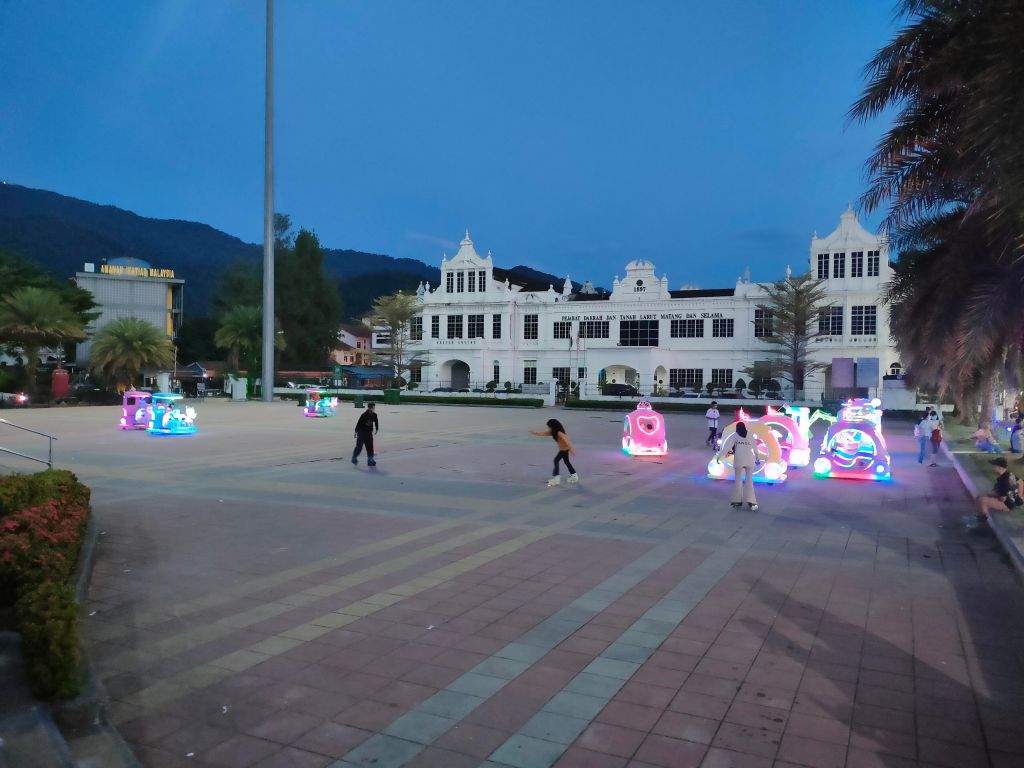
In the evening we went to the Dataran Warisan Taiping, the main public square. The land and district office across the square is a heritage building completed in 1897. Across the street was a lively market with many photo opportunities. As one of the first towns to be established by the colonials, Taiping has several other old institutions including the King Edward VII school and the St George’s institution. Our dinner was again at Nasi Kandar Pelita.

The Taiping Zoo was our primary focus the next morning. The zoo was established in 1961 and is the oldest zoo in the country. The zoo is spread over 36 acres and has over 180 species of animals. We opted to walk around the different enclosures. The orangutang were a major attraction as were the tigers and the giraffes. Animals have enough space to move around, and care has been taken to recreate their natural habitat as much as possible. The zoo also conducts a night safari with animals seen in lighting that replicates natural moonlight. We debated whether to take the night safari, but we did not have our own vehicle and we were not sure if taxis would still be operating at 11 pm when the safari ends. Discretion won and we stayed back in our hotel. 

 After the zoo we went to the Lake Gardens in Kamunting. The gardens are still being developed. The Lotus flowers growing in muddy water are a major attraction at both lake gardens. In the evening, we went to the old railway station and were glad we did. The first railway in Malaysia was built in 1885 to the port of Kuala Sepatang to transport tin. The current old station was built in 1893. The old signalling equipment and the old photographs transport you back in time. Most of the station has been transformed into cafes. We had a wonderful cendol[1] at one of the cafes. Binaya was reminiscing about his university trip to Melaka. The girls in his student group had cendol while he stuck with watermelon juice. We also had a roti tisu [2]at one of the stalls and bamboo puttu[3]. Puttu never fails to transport me back to Kerala.

We were taking a bus to KL next morning. We went to the bus station at Kamunting but our bus was around twenty minutes late. The ride along the expressway was smooth as highways in Malaysia are excellent. We had spent a delightful three days in the oldest town in Malaysia with several firsts to its credit. The town is not on the circuit of most tourists but is well worth a visit due to its historic attractions, old architecture, the lake gardens, the zoo and the friendly people!  


[1] Iced dessert

[2] Sweet flatbread from Malaysia

[3] A South Indian food made of portioned rice and sweet or savoury filling

.

Dr. P Ravi Shankar is a faculty member at the IMU Centre for Education (ICE), International Medical University, Kuala Lumpur, Malaysia. He enjoys traveling and is a creative writer and photographer.

.

PLEASE NOTE: ARTICLES CAN ONLY BE REPRODUCED IN OTHER SITES WITH DUE ACKNOWLEDGEMENT TO BORDERLESS JOURNAL

Click here to access the Borderless anthology, Monalisa No Longer Smiles

Categories
Essay

My Favourite Book by Fakrul Alam

Professor Fakrul Alam

My favourite book? Over the years, I have had many favourite books, and have been totally captivated by at least one of them at any one period of time. Indeed, once I began to take literature in English seriously, I was completely swept away by one book or the other that I came across at the University of Dhaka B. A. (Hons.) and M. A. English department syllabuses year after year. In my first year as an undergraduate, for instance, I read D. H. Lawrence’s Sons and Lovers (1913)compulsively, finding in its protagonist Paul Morel’s growing up into a young man’s storyline parallels with mine—although he was a miner’s son in Nottingham in the early twentieth century and I a boy growing up in Dhaka in the 1950s and 60s and the son of middle-class parents. A couple of years later, it was Jane Austen’s Pride and Prejudice(1813), for the story of the Bingley girls and their marriage encounters sounded familiar to me, for I too had four sisters whose marriages had become central to my parents’ thinking in all kinds of ways. And in my M. A. I read a book which harpooned me fully for many a decade—this was Melville’s Moby Dick (1851)—a whale of a book, I’m sure many of you in the virtual audience will agree. In all three cases, I read not only the novels I mentioned but almost everything by Lawrence, Austen and Melville I came across. Indeed, Melville’s fiction became the subject of my M. A. dissertation at Simon Fraser University.

But in the 1990s, I began to pay attention to Bangla writing seriously —something I had neglected for long, thanks first to an English medium education exclusively geared to the “O” levels that scanted our own literature and then my specialisation in literature in English afterwards. I began to read Bangla poetry intensively for the first time in this decade, although I had read some fiction in the language over the years. And it was sometime in the middle of the 1990s that I came across Jibanananda Das’s verse in an edition of his selected poems by the Bangladeshi poet-critic Abdul Mannan Syed. I would like to stress that this poet was born in 1899 in Borishal, a very green district crisscrossed by innumerable rivers all heading ultimately for the nearby Bay of Bengal; he died in what seemed to be an accidental death in Kolkata in the mid-1950s. Das’s verse possessed me completely, leaving me, who had till then read only some Bangla poetry but had concentrated mostly in fiction and non-fictional prose in English, with the urge to translate his verse into English. For the next three years, I kept going back to Das’s poems for their beauty, for the way they immortalised in verse the beauty of Bengal, and for the way they made me the poet’s intimate, for it is only when one translates intensely, all caught up in the source text, that one comes closest to the mind speech as well as the deep emotional life of the poet.

Having translated Jibanananda Das—surely the greatest modern Bengali poet—I felt I had to try to translate Rabindranath Tagore’s poetry—the greatest poet and literary personality Bengal has produced. Even though in the 1960s and 1970s, I had only paid sustained attention to poetry, fictional and nonfictional prose and plays in English, how could I have escaped Tagore then? He was everywhere in the Dhaka I experienced and very much part of the mindscape of us Bangladeshis as we moved towards becoming citizens of Bangladesh. His work was championed in the media; his songs were sung in events such as the Bangla new year festivities in mid-April; cultural events everywhere spurred by nationalism highlighted him in one way or the other. Besides, my father was addicted to Rabindranath’s songs and listened to him on the radio whenever he could, making us share his delight in the melodies then. My mother, for her part, quoted him all the time to give her children a sense of what we should be emulating and where we were going wrong.

In other words, Rabindranath was very much part of my consciousness, although I had occluded him till now. As I began to read him in the turn of the decade after translating Jibanananda, I felt I had to read as much of his works as I could. Inevitably, I began to translate many of his poems. By the time his sesquicentenary came up in 2011, I was invited to co-edit an anthology of his works and that led to the extensive reading of the myriad-minded writer’ work and increasing familiarity with this wonderful personality as well as writer.

And this is how I came to my favourite book of the last decade or so—Tagore’s Gitabitan. It is a book that is always on my study cum desktop computer table’s shelf over ten years now. It is something I resort to every time I listen to a Rabindranath song on YouTube in my desktop’s audio system. Sung melodiously and passionately by a favourite singer, a song by Tagore so allures me into rendering its spirit in another language that I feel I have to come as close to it as possible by translating it to the best of my ability. This means not only listening to the song again and again but also reading it on the printed page repeatedly, word by word, line by line, and stanza by stanza, time after time, till I feel I have been able to capture every aspect of it nuanced by Tagore by blending the tune and the song lyric as well as I could in the English language. In the end, of course, I fail to do so after a point, but the fascination of what is so appealing when heard, even if in the last analysis the task is an impossible one, induces me to render it into an alien language system after repeated readings and attempts to come up with a version that is close to the original in every way. I hope thereby to come to the heart of the song and am content to spend an hour or so on a few lines so that I can make its meaning clear to myself and then to others.                

Truly, there is a magical quality in the songs collected in my favorite book of this time—Tagore’s Gitabitan. It is a book that has also kindled the imagination of quite a few people—singers, musicians and translators— over eighty years now, making them represent the song-lyrics either as songs to be sung or as translations meant for foreign and even Bengal language speakers who might otherwise listen to a song swept away by the tune and opening lines without bothering with the later lines or making no attempt to understand its content.  The net result at the end of a few hours spent first reading many of the song closely, then reading my own translation again and again, is the satisfaction that I have been able to capture its essence in English through my translations. After all, and as Tagore himself has said, “the essence of a song is universal, even if its dress is local and national” (77). Why should I as a translator then not attempt to translate his songs for the world at large as well as myself even if their loveliness is uncatchable in the last analysis? He himself had led the way, and had learnt lessons along the process that were worth considering for later translators. I am hoping to bring out my own collection of translations of 350 plus songs by Tagore by the beginning of next year.

Let me point out that the title Tagore gave to the volume indicates that Gitabitan is meant to invite readers and musical devotees of the poet-composers to his “garden of songs.”  In all, the volume contains over 2,300 songs, nearly 1800 of whose tunes can be found in the musician-poet’s Swarabitan with their musical notations. In fact, there are sites now that you can google and access where you can find the Bengali words, some English translations, and notations, and even brief histories of the origins of the most commonly heard songs.

Let me point out too that Gitabitan itself is divided into six sections—songs of devotion, love, the six seasons of Bengal, patriotic songs, songs for festive and miscellaneous occasions, songs written for his plays and other publications. In their final form, the Gitabitan was published in 1941—the year the poet died. By now it has been reprinted, with new inclusions from scattered sources, innumerable times.

To conclude, why is Rabindranath Tagore’s Gitabitan my favourite book? He had himself said to Bengalis in 1939, “You can forget me, but how can you forget my songs?” Tagore’s collection of songs connects me to him endlessly, becoming a way of linking me as well with the universe and the Supreme Being and even my departed parents. They stir my patriotic side and make me one with the seasons of my country and its landscape and whatever is still romantic in me. And as I head towards the Great Unknown, they console me that there are possibilities of communion after we depart from this world as well!   

Fakrul Alam is Supernumerary Professor of English at the University of Dhaka

Click here to access the Borderless anthology, Monalisa No Longer Smiles

PLEASE NOTE: ARTICLES CAN ONLY BE REPRODUCED IN OTHER SITES WITH DUE ACKNOWLEDGEMENT TO BORDERLESS JOURNAL.

Categories
Essay Interview Review

The Ultimate Genius of Kishore Kumar

An exhaustive essay by Shantanu Ray Chaudhuri, one of the best film critics from India, an editor and writer along with an interview with the writers of the book, The Ultimate Biography, on the film legend and genius called Kishore Kumar

Kishore Kumar

Introducing the Genius of Kishore Kumar

Singer, composer, lyricist, director, writer, actor — Kishore Kumar was all this and more. Apart from Satyajit Ray, I can think of no other person in cinema whose talents ranged across so many departments. As a playback singer, he had no parallels – not Mohammad Rafi, not Hemant Kumar, no one came close. As an actor, he was almost surreal in comedies like Half Ticket and Chalti Ka Naam Gaadi[1]. It is only because we do not view comedy as an artform at par with tragedy and melodrama that his contribution as an actor has not been acknowledged. As a director and writer, he balanced the almost surreal Badhti Ka Naam Dadhi [2] with the minimalist Door Wadiyon Mein Kahin[3]. It is immensely sad that he did not have more films and songs to his credit as a composer and lyricist.

Take a look at these dialogues —

Kya dekh rahe ho, Prashant?

(What are you seeing Prashant)

Uss raaste ko jo duur pahariyon ke beech kho gaya.

(I lost myself in that distant road among the hills)

Haan, musafir aur raaste ka gehra sambandh hai. Shayad uss raaste ko dekh kar tum apni naye safar ke shuruwat ke barey me soch rahe hogay.

(Yes, the traveller and the road has a deep relationship. Perhaps seeing that road, you are thinking of a new start for yourself)

Jindegi ek safar hai, Joseph sahab, aur uss raaste ka koi anth nahin. Har purani raah ek nayi raah ko janam deti hai aur manzilon ke silsile kabhi khatam nehi hote. Sirf uska saath denewale musafir badal jatein hai.

(Life is a journey, Joseph sahab, and that way has no ending. A new path is born of old roads and the stories never end. Only the traveller changes.)

Theek kaha tumney, Prashant. Saath denewala musafir hamesha badal jatey hain. Magar na jane kyon log phir bhi jazbaati ho jatein hai. Darasal zindagi ka maqsad hai zindagi ka saath nibhana, par tum in raston ka saath nibhakar chaltey ho. Aisa kyon?

(You are right, Prashant. The travelling companions always change. But people for some unknown reason become emotional. Actually, the goal of life is to be with life, but you walk along the paths. Why?)

Unhi raaston mein hi toh zindagi hai, Joseph sahab … kahin khushi, kahin ansoo, kahin dukh, kahin hahakar, kahin itni bhook aur lachari ki insaan par zindagi bhari hain, aur kahin itni khushiyan ki aadmi sambhal hi nahin sambhalta. Hamein in sab ka saath nibhatey chalna hai … uss anjaney andekhe path par … jiska koi anth nahin…

(Those paths is where you find your life, Joseph Sahab… Our Life is full of happiness, tears, sorrows, despair, sometimes it is full so much hunger and desperation that life becomes a burden and sometimes there is so much happiness that it spills over. That unknown, untrod path knows no end.)

– A sequence from Door Ka Rahi[4], 1971

So entrenched is his reputation as a comic star that it might come as a surprise that this exchange above was scripted, directed and acted by Kishore Kumar in one of his most atypical roles.

In the wake of his madcap antics in Chalti Ka Naam Gaadi (1958) and Jhumroo (1961), and the sustained lunacy of Half Ticket (1962, where he plays Vijaychand vald Lalchand vald Dhyanchand vald Hukumchand alias the child Munna, as also his own mother, in a performance that has no parallel in Hindi cinema), Door Gagan Ki Chhaon Mein [5](1964) was probably what audiences and critics of the era might have least expected from Kishore Kumar.

Why only audiences and critics? As film folklore has it, even elder brother Ashok Kumar was sceptical of his ability to deliver the emotion required for serious songs. Composer Chitragupt had reportedly composed the beautiful ‘Itni badi yeh duniya’ [6](Toofan Mein Pyar Kahan[7],1966) only with Kishore Kumar in mind and even recorded it. Only to have the star of the film, Ashok Kumar, on whom the song was to be picturized, veto it. Ashok Kumar felt that his younger sibling did not have it in him to give the song the pathos it required and that only Mohammed Rafi could do it justice. The song was recorded again, this time by Rafi who did a brilliant job.

And yet in his directorial ventures, Kishore Kumar time and again presented a facet of himself that other filmmakers never tapped and no other producer had the vision to explore. Which is why each of these films had the singer multitasking as producer, director, actor, writer and composer.

Door Gagan Ki Chhaon Mein

Based on the 1958 Western The Proud Rebel, starring Alan Ladd, Door Gagan Ki Chhaon Mein is the story of a soldier, Shankar (Kishore Kumar), who returns from a war to find that his wife and father have perished in a fire that has destroyed his house. The trauma has robbed his ten-year-old son Ramu (Amit Kumar in his maiden film appearance) of his voice. Shankar sets out on a quest to treat his son and restore his voice. On the way, they are waylaid by a villainous Thakur (Raj Mehra) and his thuggish sons (played by Iftikhar and Sajjan). They are rescued by the kind-hearted Meera (Bengali superstar Supriya Devi), who shelters them and becomes a surrogate mother to Ramu.

It is unlike any film that Kishore Kumar had starred in (barring probably Hrishikesh Mukherjee’s Musafir[8]). And though the inspiration may have been James Edward Grant’s story directed by Michael Curtiz, it is the influence of Satyajit Ray that is apparent in the making. The singer-director had reportedly watched Ray’s Pather Panchali[9] thirteen times before embarking on his directorial debut. The setting is rural (barring one sequence set in the city) and the director gives us a close look at the landscape, the ramshackle hutments, the swaying fields, the water rippling in the ponds, even the dog that follows Ramu every step of the way.

The film is of course now part of Hindi film legend because of its songs. Kishore Kumar himself wrote that ultimate father-son anthem ‘Aa chal ke tujhe’, a sequence that in the bonding between the two recalls the final sequences of Ray’s Apur Sansar[10]. Shailendra penned the other classics, including Koi lauta de meray[11]and Jin raaton ki bhor nahin hai[12]and two Asha Bhosle gems. But it is in the way that Kishore Kumar eschews all trappings of his comic persona to capture the little moments around the characters that the film stands out in the midst of the fluffy entertainers that characterised the era. Interestingly enough, Iftikhar, who plays the main villain, also designed and painted the film’s title cards.

The film was critically well-received, with even the impossible-to-please Baburao Patel of Filmindia calling it a film that “just misses out on being a classic”. Though not a big commercial success, the film did well enough, and Kishore Kumar had the last laugh vis-à-vis another film at the time which was expected to be a blockbuster. As Kishore Kumar narrated in his now-cult interview with Pritish Nandy, “It started with an audience of 10 people in Alankar. I know because I was in the hall myself … Even its release was peculiar. Subhodh Mukherjee, the brother of my brother-in-law, had booked Alankar for 8 weeks for his film April Fool[13], which everyone knew was going to be a blockbuster. My film, everyone was sure, was going to be a thundering flop. So, he offered to give me a week of his booking. Take the first week, he said flamboyantly, and I’ll manage within seven. After all, the movie can’t run beyond a week. It can’t run beyond two days, I reassured him. When 10 people came for the first show, he tried to console me. Don’t worry, he said, it happens at times. But who was worried? Then, the word spread. Like wildfire. And within a few days, the hall began to fill. It ran for all 8 weeks at Alankar, house full! Subodh Mukherjee kept screaming at me but how could I let go the hall? After 8 weeks when the booking ran out, the movie shifted to Super, where it ran for another 21 weeks! That’s the anatomy of a hit of mine. How does one explain it? … Can Subodh Mukherjee, whose April Fool went on to become a thundering flop?”

Door Ka Rahi[14]

With Door Ka Rahi (1971), Kishore Kumar goes a step further with his character. Hindi cinema seldom has a drifter as the protagonist. As a people, we do not take to characters who do not have a definite goal in life – in the world of Hindi films that either means pursuing the girl you love or avenging the death of your family and loved ones. Prashant (Kishore Kumar) is unlike any hero in Hindi cinema. He does not have a love interest. He has no family of his own. He refuses to settle down at one place. Prashant reminds me of Larry Darrell, the protagonist of Somerset Maugham’s Razor Edge[15].

The film opens with a sequence of an old man trudging his way through the snow before collapsing. As he breathes his last, he reminisces about his life and the many people he has known and whose lives he has touched. There’s Karuna who wants to set up home with him, there’s a group of orphans he takes care of, there’s his friend Vimal (Abhi Bhattacharya) and his family that includes his wife and her brother Jeetu (Amit Kumar) who are being exploited by their local zamindar and moneylender. In the final episode of the film, he comes across a widow Monica (Tanuja) and her father-in-law Joseph (Ashok Kumar). He reminds them of George, Joseph’s son and Monica’s husband. Even as Joseph proposes that he stay back and make a life with Monica, Prashant has to take a decision on the larger calling that beckons him.

If one thought that Door Gagan Ki Chhaon Mein would be a hard act to follow musically, Door Ka Rahi goes one better with what are possibly the finest philosophical numbers in any Hindi film ever. No other Hindi film in my view has songs that so evocatively capture the essence of a film. If Shailendra’s ‘Chalti chali jaaye[16]’, rendered by Hemanta Kumar in a splendid baritone, echoes the eternal journey that is life, Irshad’s words in ‘Panthi hoon main’, ‘Khushi do ghadi ki’ and the ephemeral ‘Beqarar dil tu gaaye ja’ evoke a spirit that few lyricists in Hindi cinema have managed. There’s also Manna Dey’s ‘Ek din aur gaya’ and the Kishore songlet ‘Mujhe kho jaane do’.

Door Wadiyon Mein Kahin

While Door Gagan Ki Chhaon Mein and Door Ka Rahi marked a break from the standard film fare of the times and Kishore Kumar’s image as an actor, Door Wadiyon Mein Kahin (1980) demonstrated his penchant for experimentation – one that earned the filmmaker plaudits from none other than Satyajit Ray himself.

He not only did away with songs – in itself a huge creative decision given his stature as a singer – he decided to shun music altogether in the film. Thus, you have that rare Hindi film that does not have a background score. Instead, there is a remarkable array of natural sounds filling in – the crunch of feet on snow, the rustle of leaves, the soughing of the breeze, and silences which accentuate the bleak and forlorn ambience of the film. 

The film begins with an extreme close-up of a pair of eyes watching a bird in flight against the vast expanse of the sky, accompanied by the azaan[17] on the soundtrack. The camera pulls back to reveal a man holding on to the bars of a prison window. Aslam (Kishore Kumar) is serving a term in this jail set in the middle of inhospitable mountainous terrain. He talks to the warden (Raza Murad – who is nameless in the film and is always addressed as ‘Inspector Sahab’) about how suffocating imprisonment can be for a man, and how envious he is of birds. At the first opportunity he gets, Aslam makes a run for it with his prison mate Ghulam Ali.

While Ghulam Ali dies during the escape, Aslam finds himself in a farm inhabited by a mother-daughter duo, Olivia (Bindu, in quite a turn with her grating voice, in one of her rare starring roles) and Jennifer (Shyamalee). His presence sets off a chain of events involving the women, both of whom take a fancy to this man from nowhere. Interestingly, if in Door Ka Rahi, Prashant is a free spirit refusing to be tied down to one place or any human attachment, in Door Wadiyon Mein Kahin, Aslam seeks to break free but fails. The escape from the prison only leads him to another one in the form of Olivia and Jennifer’s house. As he tells the inspector at the end, the world, life itself, is a prison. The only difference with his erstwhile prison is in scale. And the only escape lies in death.

Mamta Ki Chhaon Mein[18]

The last of these atypical films that he directed was his final outing too – Mamta Ki Chhaon Mein (1989). Unfortunately, Kishore Kumar passed away while the film was in production and it was Amit Kumar who completed it. Unlike the others in this list, Mamta Ki Chhaon Mein is not a very distinguished piece of filmmaking with a dated story celebrating the greatness of motherhood that belongs more to the hoary 1950s. It is surprising that Kishore, who broke away from established mores in the other films, zeroed in on this hackneyed theme for his swansong, which looks more like a love-letter to wife, Leena Chandavarkar.

The film tells the story of Gauri (Leena Chandavarkar) who brings up her son Niranjan (Amit Kumar) single-handedly. She nurses a secret about Niranjan’s father which forms the crux of the film. Niranjan grows up with the question about his father haunting him all his life. He travels to the nearby town for his higher studies, and it is here that he comes in contact with a man (Raj Babbar) who claims to know Gauri and gives Niranjan an unsavoury take on her past. Niranjan confronts his mother, but she refuses to divulge her secret, leading to the two falling out. The rest of the film deals with the story of Gauri’s past and Niranjan’s realization that he has been unfair to his mother.

It’s a poor film in every respect but it’s impossible not to feel nostalgic about a film that recreates one of Kishore’s cult crazy songs, ‘Allah Allah … Bhagwan bhagwan’ (Hum Do Daku[19], 1967). Or one that has what is probably Kishore’s last playback for Rajesh Khanna (who has a cameo in the film), aptly titled ‘Mera geet adhoora hai’[20]. It was reported in the media at the time that the director had wanted Amitabh Bachchan in the role. However, the star was not forthcoming and that affected the relationship between the two. Kishore in fact hinted at this in an interview at the time and named Manmohan Desai as the one responsible for the rift between him and the star whose voice he was.

Then there is the music of course. A standout album, this has some of Kishore’s most lovingly crafted songs. He himself sings two gems while Amit Kumar has four numbers which count among his best, including ‘Main ik panchhi matwala re[21](which he had earlier rendered in Door Ka Rahi) and the life-affirming ‘Beeti jaaye[22](the mukhda[23] of which harks back to the antara[24] of one of his hits from Jhumroo, ‘Ge ge ge geli jara Timbuktoo’[25]. The composer in Kishore Kumar could not have asked for a better album to bid adieu.

The Call of the Distant Horizon

There are certain aspects that one finds in common across these films. An old man looking back on life. A loner as the protagonist – a man with a love for the road as well as the road less taken. A man with a unique philosophy of life. Time and again in these films you have the protagonist articulating that he does not know who he is, nor where he comes from or is bound for. As the character in Door Ka Rahi says – door ko apne qareeb bula leta hoon aur khud ko apne se door kar leta hoon (I embrace that which is faraway while I distance myself from me). There’s a lingering sense of the fleeting nature of life, a longing for a lost past. These lines from the film that Kishore hums hold true for almost all the protagonists across these films:

Mujhe kho jaane do duniya ki nigahon se parey

Jahan na dhoond sakey koi nazar mera nishaan

Koi awaaz na pahunche, koi aansoo na bahey

Kisi tinke, kisi zarre ko na ho mera ghuman

Meri laash par rakhde kudrat hi ek safed kafan

Rooh ko meri nazaron mein hi kho jaane do

Dastaan meri hawaon ko hi dohrane do[26]

There’s an affinity for birds and the freedom they epitomize, for animals roaming in the wilderness, and for people at the margins, for example, the madman who befriends Ramu in Door Gagan Ki Chhaon Mein. And a genuine feel for harmony. It says something that the protagonist in Door Wadiyon Mein Kahin is a Muslim (the climax has a beautifully understated sequence where Aslam offers namaz while the police officer waits to arrest him) while Christians are pivotal characters in two of these films.

None of these films is set in a city. The cinematography (Aloke Dasgupta in the first two and Nando Bhattacharya in the rest) captures the everyday sight and sound of the countryside. There’s a song in a bullock cart in each of these films (barring Door Wadiyon Mein Kahin) which articulate a philosophy of life and that of the film – Door Ka Rahi and Mamta Ki Chhaon Mein begin with such a song. There’s a feel for the topography that is very ‘Western’ in its look. Parts of Door Ka Rahi evoke Shane [27]as the man rides from one destination to the next (Shane was probably a favourite of the singer as his unfinished film Neela Aasmaan[28]has a song, ‘Akela hoon main is jahan mein[29]’, inspired by Shane’s theme). Door Gagan Ki Chhaon Mein is of course based on a Western and Kishore invokes the look of the original at many places. Door Wadiyon Mein Kahin stands out for some breath-taking shots of the barren snowy terrain against which the drama plays out.

These film of Kishore Kumar may not have been great commercial successes. And his craft as a filmmaker may not secure him a rank among the best. There is however no denying his desire to go out on a limb and give us films that leave you with something to reflect on. He was seemingly unperturbed by the fact that the films wouldn’t run. As he told Pritish Nandy, “I tell my distributors to avoid my films. I warn them at the very outset that the film might run for a week at the most … Where will you find a producer-director who warns you not to touch his film because even he can’t understand what he has made.”

And yet he made them. Why? “Because,” as he said, “the spirit moves me. I feel I have something to say.”

On the evidence of these films, despite their flaws, the spirit behind them has the power to move the viewer too.

Book Review of The Ultimate Biography

Given the range of his contribution and the eccentricities that defined his personal life, a biography of Kishore Kumar that adequately covers his life and times is a tall ask. Anirudha Bhattacharjee and Parthiv Dhar’s exhaustive biography of the legend, audaciously titled The Ultimate Biography, pulls it off – well, almost.

For one, it is a pleasure to come across a biography of a legend like Kishore Kumar that does not seem like an armchair hack job (refer to, say, Aseem Chhabra’s book on Shashi Kapoor, Yaseer Usman’s on Guru Dutt, Rajeev Vijaykar’s atrocious ones on Laxmikant-Pyarelal and Dharmendra and the many banalities that go for biographies these days). At close to 600 pages, this one is a painstakingly researched tome. And it does not even talk about his repertoire as a singer in that great a detail. As co-author Anirudha Bhattacharjee tells me, “If I were to make a selection of even a hundred of his songs – an impossible task – and talk about them, this book would have gone beyond 2000 pages.”

Despite that, what the book covers by way of the trajectory of Kishore’s life is commendable. The authors have gone to great lengths to get first-person accounts, supplementing that with a great eye for trivia and other obscure facts. They incorporate all of this in bite-sized chapters, most of them three to four pages long, so that the reading never gets tedious. It also gives the book that essential quality in an era of short attention spans: you can open to any page and start reading. Though it does come at the cost of a detailed analysis of any one aspect.

And it is a delight to have such detailed indexes – a general one and a song index – in a book. Most publishers have abandoned the index to cut costs.

If I say the authors ‘almost’ pull it off, it is because the language leaves something to be desired. It could have done with a more rigorous copy-edit. The book gets off to an unfortunate start with the preface whose first paragraph had me scratching my head. And the inelegancies continue to haunt the careful, close reader off and on, with erroneous words, wrong sentence construction, often the syntax at odds. The authors seem to get carried away with the information they have to share, and some passages are a trifle overblown.

One would also have loved to see the authors playing it a little less safe, assessing Kishore Kumar vis-à-vis his contemporaries, or providing a more comprehensive reading of his directorial ventures. Or for that matter talking of what accounts for his popularity in the years after his death. During my growing years, I distinctly remember reading about him being dismissed offhand – Naushad’s comments are part of cinematic folklore (he in fact left the jury when it was decided to honour Kishore with the Tansen Samman). I grew up with people who swore by Rafi and Manna Dey, Naushad and Madan Mohan. And Kishore, despite his popularity, was someone who always came off second best in these conversations. Something shifted in the last thirty years. It would have been fascinating to understand what did. In response to my question on this, Parthiv Dhar says, “Nothing changed. Naushad was an aberration.” He goes on to mention the crowds at Kishore’s funeral. Which is not the issue here. Something in the way we consume music has led to a Kishore and RD [30] fandom like it probably never existed during their lifetimes. Why is it that with the opening of the airwaves, so to say, Kishore and RD have ruled almost all channels broadcasting music? None of their contemporaries – not Rafi, not Laxmikant-Pyarelal, definitely not Naushad or Mukesh – have enjoyed the kind of revival they have. 

The authors do not leave anything out – but the text often tends to become a chronological litany of facts. Fascinating, no doubt. And invaluable. But I could never shrug off the feeling that a book that has so much history and offers such delights, with authors who know the subject so well and don’t stint on research, should have been a little more.

Interview

Tell us something about the process of writing the book. Given that all the dramatis personae are long gone, how difficult was it to put information together.

Parthiv Dhar: Anirudha-da and I go a long way. In fact, around 2004-05, we started a campaign for the Bharat Ratna for Kishore Kumar, and did quite a fair bit of work. Probably it was at that time that writing a book on Kishore Kumar crossed our minds. I remember, we were clueless on the structure of the book owing to the multidimensional persona that Kishore was. My visit to Khandwa in 2010 and Anirudha-da’s book on R.D. Burman (with Balaji Vittal) winning the national award provided the much-needed impetus. Graduating to Kishore was a natural progression.

The visit to Khandwa made me realise that it would be a crime not to write a book on him, given the paucity of knowledge. Kishore himself did not help matters much by being extremely economical with the press. The Khandwa and Indore visits brought me close to his friends and their families, his caretaker at the Ganguly House, his college professors who went out of their way in sharing with us breath-taking anecdotes and documents. Fittingly, the book is dedicated to Khandwa. Apart from that we had a fantastic time at Bhagalpur, interacting with his relatives like Ratna-di, daughter of his cousin Arun Kumar, getting a treasure trove of unknown events related to his maternal side. Meeting his secretary Abdul was also a high point in the making of the book.

The decision to structure the narrative by ragas and their times: dawn, afternoon, evening. You slot Aradhana[31] in the evening. I found that interesting.

Anirudha Bhattacharjee: The structure with ragas developed organically given the enormous amount of material we had. The first draft was over a 1000 pages long. Giving it the structure enabled us to get clarity. As for Aradhana appearing under an evening raga … Madhubala passed away in 1969. That was probably a setback. His mother too passed away after a year. Kishore’s tenure as a hero had almost come to an end. He was forty. If we go back in time, K.L. Saigal passed away at the age of forty-two. Critics were urging Lata to stop singing in the late 1960s. She withdrew from the Filmfare awards after 1969. Hence, we equated the time with the evening of their lives. And extrapolated it to Kishore Kumar’s as well. Kishore had great strength of character and turned the tide … but that’s another story.

Would you say that Kishore was the one true maverick genius of Hindi cinema, maybe even Indian cinema? The only other person who comes to mind is Satyajit Ray.

Parthiv Dhar: Kishore Kumar was a phenomenon, the likes of whom you rarely encounter. He was perhaps the only person in showbiz whose reel and real lives were mirror images of each other. Precisely why there was no reason for him to ‘act’. You never knew whether he was acting on screen or being his own self. That held true even for his real life. His ratio of hits to total songs composed must be one of the highest in the world. He tried everything that the camera and the studios offered but unfortunately there were occupational hazards that clipped his wings. Had some of his unreleased songs and movies seen the light of day, he would have been unassailable. That he did all these only by pure observations and without any formal training made him a genius. As Rama Varma told us in a chat, he had the ability to identify shortcomings in a particular guitar string in the midst of a session without even looking at the guitar or the guitarist. Genius would be too small a word for him. However, we have not assumed much in the book and left the readers to judge for themselves.

What in your view is his greatest contribution to the art of playback singing in India? The one thing that sets him apart from all the rest.

Parthiv Dhar: Definitely the fact that he made singing appear so easy that emulation became an everyday affair. The clones would, of course, realise that the songs were after all not everybody’s cup of tea. But everyone would attempt a Kishore song. The very fact that he was an actor made him think like one when he would playback. Also, he was perhaps the only one to develop his texture and baritone with infrastructural progress each decade after independence. This led to him being probably the only one to realize that tragic songs need to make the audience cry, not the singer.

Anirudha Bhattacharjee: All our male singers except Bhupinder and too some extent Yesudas have been tenors. Maybe the timber has varied, but they are tenors, nevertheless. In my opinion, K.L. Saigal, Kishore Kumar and Pankaj Mullick were tenors who had a unique quality in their voice: ‘dhaar’ and ‘bhaar’ (sharpness and weight). This they used to great advantage. For other singers, it was a case of either/or. Hence, Kishore could playback for Dev Anand using his ‘dhaar’ (Hum hain rahi pyaar ke[32]), complement it with some ‘bhaar’ and ‘mizaaz[33]’ when he sang for Rajesh Khanna (Kuch toh log kahenge[34]), and use his ‘bhaar’ when he sang for Amitabh Bachchan (O saathi re[35]). He also had a strong swarranth[36], which gave the songs resonance. Plus, his flux density was unique. Even with such a heavy voice, it would remain steady when negotiating long notes, something very difficult to achieve. I know from experience as I sing.

He sang Saigal’s ‘Dil jalta hai[37]in reverse, set the Malthusian theory to tune, introduced scatting, yodelling, nonsense/gibberish words (bam chik chik) to music in India … where would you place these innovations in his output? Do you think his comic genius came in the way of him being taken seriously as a singer for the longest time?

Parthiv Dhar: He was born to innovate, and his childhood is testimony to that. Lateral thinking and he went hand in hand. Domesticating jackals, singing in reverse, giving nicknames to almost every friend, composer … the list is endless. How he handled the goof-up in Baap re Baap [38]is a terrific example of his innovation. Similarly, making a wardrobe malfunction in Badhti Ka Naam Dadhi the reason for executing anything and everything as a director’s prerogative could be another.

However, it is probably not true that his comic persona had anything to do with his singing. He started his career with several serious songs while simultaneously making people laugh in his movies. He gained recognition as a serious actor courtesy his roles in Bandi[39] and Naukri and was known as a sufficiently good actor. He sang for all the top music directors till as late as 1958. That he had a long gap after that could be attributed to his preoccupation with Madhubala’s health.

Let’s talk about him as an actor … would you agree that as a comic he had no parallels in India? It is only because comedy is not regarded as a genuine art form in India that there has been little recognition of him as an actor.

Parthiv Dhar: A very difficult question and not proper to say that he had no parallels. It should not be forgotten that he was a hero in almost 99 per cent of his films, a fact renowned actors would be proud of. While reviewing Bandi, critics had placed him above his more famous brother (in those days). As mentioned earlier, he did not enact comedy, it was in his DNA although by nature he was an equally serious person. His comedy was a mix of slapstick, mimicry, antics. Very few would enact comic role as a hero for the entire length of time without appearing stale. Kishore Kumar had that quality.

Where would you rank him as a filmmaker? Do you think he tended to overcompensate for his madcap image with his own films which were ‘serious’? Door Wadiyon Mein Kahin is a rather daring experimentation, even if the execution is amateurish. Even Ray commended its sound design. Your comments.

Anirudha Bhattacharjee: As a filmmaker, he was a lateral thinker. He tried unique subjects. But the issue is that he got entangled in too many activities at the same time and could never devote himself properly to making films. Had he concentrated only on filmmaking, he might have made some great films. Door Gagan Ki Chhaon Mein and Door Wadiyon Mein Kahin could have been classics.

You devote an entire chapter to Laxmikant Pyarelal. His songs with LP are not spoken of as much. You correct that, though you focus on their early collaborations…

Anirudha Bhattacharjee: We focused on Mr X in Bombay[40], Sreemaan Funtoosh [41]and Hum Sab Ustaad Hain[42] primarily because these films gave him the dimension of a singer first and a hero later. Till then Kishore was viewed as an actor who also used to sing. People forgot Mr X in Bombay (it was a bad film) but remembered ‘Mere mehboob qayamat hogi[43]. Ditto for Sreemaan Funtoosh and Hum Sab Ustaad hain. Most did not even see these films. But ‘Yeh dard bhara afsana[44]’ and ‘Ajnabee tum jaane pehchane se lagte ho[45] became classics. So, on one side, Kishore emerged as a singer, while the actor gradually faded into the background. LP had a key role in this transformation.

(Originally published in The Telegraph, Kolkata)

Shantanu Ray Chaudhuri is a film buff, editor, publisher, film critic and writer. Books commissioned and edited by him have won the National Award for Best Book on Cinema twice and the inaugural MAMI (Mumbai Academy of Moving Images) Award for Best Writing on Cinema. In 2017, he was named Editor of the Year by the apex publishing body, Publishing Next. He has contributed to a number of magazines and websites like The Daily Eye, Cinemaazi, Film Companion, The Wire, Outlook, The Taj, and others. He is the author of two books: Whims – A Book of Poems (published by Writers Workshop) and Icons from Bollywood (published by Penguin/Puffin).


[1] 1958 movie produced by Kishore Kumar, also the lead actor.

[2] 1974 movie directed by Kishore Kumar, also the lead actor.

[3] In the Distant Valleys, 1980 film directed by Kishore Kumar, also the lead actor.

[4] The Distant Wayfarer, 1971 film

[5] Under the Shelter of the Sky

[6] Such a Large World

[7] Is there Love in Stormy Weather

[8] Traveler, 1957 film where Kishore Kumar played the lead

[9] Song of the Little Road, 1955 Satyajit Ray film

[10] The World of Apu, Satyajit Ray film 1959

[11] Someone return my… lyrics of a song sung by Kishore Kumar

[12]  Where nights do not have a dawn… lyrics of a song sung by Kishore Kumar

[13] 1964 film

[14] The Distant Traveler, 1971 film written, directed by Kishore Kumar who acted in the lead role.

[15] 1984 book with a title based on the Upanishads

[16] Let’s go on… lyrics of a song

[17] Prayers calls of the Muezzin

[18] In the Shadow of a Mother’s Love

[19] We, Two Bandits

[20] My song is half sung

[21] I am an intoxicated bird

[22] Past goes

[23] Middle of the song

[24] Start of the song

[25] Those who go to Timbuktoo

[26] Translation of the lines:

Let me loose myself from the sight of the world
Where no one can find me:
No voices reach me, no tears be shed for me, 
No straw, no inklings trace my thoughts.
Drape my body in a white shroud.
Even spirits should lose sight of me --
My being should only waft in the breeze…

[27] 1953 American film

[28] Blue Skies, 1961 film

[29] ‘I am alone in this world’

[30] RD Burman (1939-1994), Indian music director who composed film scores for more than 300 movies.

[31] Worship, a 1969 film

[32] ‘We are wayfarers of love’

[33] Mood of the song

[34] People will say somethings…

[35] O Companions…

[36] Ending of the song

[37] ‘The heart burns’ sung by legenedary singer KL Saigal(1904-1947)

[38] My God!, 1955 film starring Kishore Kumar

[39] Slave, 1957 film starring Kishore Kumar

[40] 1964 film starring Kishore Kumar

[41] Mr Funtoosh, 1965 film starring Kishore Kumar

[42] We are all Experts, 1965 film starring Kishore Kumar

[43] ‘My Sweetheart will be a astounding’

[44] ‘This moment filled with pain’

[45] ‘Stranger you look familiar’

Shantanu Ray Chaudhuri is a film buff, editor, publisher, film critic and writer. Books commissioned and edited by him have won the National Award for Best Book on Cinema twice and the inaugural MAMI (Mumbai Academy of Moving Images) Award for Best Writing on Cinema. In 2017, he was named Editor of the Year by the apex publishing body, Publishing Next. He has contributed to a number of magazines and websites like The Daily Eye, Cinemaazi, Film Companion, The Wire, Outlook, The Taj, and others. He is the author of two books: Whims – A Book of Poems(published by Writers Workshop) and Icons from Bollywood (published by Penguin/Puffin).

Click here to access the Borderless anthology, Monalisa No Longer Smiles

PLEASE NOTE: ARTICLES CAN ONLY BE REPRODUCED IN OTHER SITES WITH DUE ACKNOWLEDGEMENT TO BORDERLESS JOURNAL

Categories
Essay

T.S Eliot’s The Waste Land: Finding Hope in Darkness

By Dan Meloche

One hundred years ago, T.S Eliot wrote ‘The Waste Land’ to find meaning in troubled times. As we wrestle with trouble in our own times, an examination of Eliot’s paean to chaos can prove instructive. Horrified by the return of war in Europe, disturbed by the looming threat of environmental collapse, and fatigued by over two years of a resilient pandemic, we crave relief and inklings of hope. In Eliot’s poem, relief does not come without tarrying with the darkness. In his 433-line poem, slivers of hope are crowded by the ubiquitous memento mori, the constant reminders of death. With his own hope compromised by a series of personal crises, Eliot’s fractured self mirrored a Europe fractured by the incomprehensibility of the millions sacrificed on European battlefields. To heal the fracturing, the poem represents a therapeutic exercise not only for the poet, but also a generation. After the questionably named Great War, cultural revisions produced modernism, representing a significant departure from traditional poetic sensibilities. 

Before World War I, war retained a nobility exemplified in the “six hundred” of Tennyson’s ‘Light Brigade‘ (1854). After World War I, Tennyson’s sentiment of “Theirs not to reason why, / Theirs but to do and die” no longer reflected the misery and absurdity of millions sacrificed for a few acres of mud. As the world changes, so does its art. To restore both a fractured mind and a fractured generation, ‘The Waste Land’ assembles meaning from ruins and conflated mythologies to spring hope. Rife with allusions, sometimes obvious, often obscure, Eliot’s poem aligns with modernist principles as multiple narrative voices range freely across landscapes of time and memory.

In the poem’s opening section, hope does not sing forth as in a Dickinson (1830-1886) poem, but lays disassembled in the ruins of desolate imagery. A spark of hope is initiated by a female narrative voice recalling an idyllic childhood tobogganing episode: “In the mountains, there you feel free.” The pleasant recollection shifts dramatically into the middle of a land of “stony rubbish,” “broken images,” and a “dead tree (that) gives no shelter, the cricket no relief”. In a parenthetical note, a whispering narrator offers a hint to relief: “Only there is shadow under this red rock, (Come in under the shadow of this red rock).” The secret told in that shadow comes in the following four lines:

"And I will show you something different from either 
Your shadow at morning striding behind you 
Or your shadow at evening rising to meet you: 
I will show your fear in a handful of dust."

What you leave behind is the past and what rises to meet you is the future. The “something different” is what lies between: the eternal present. In ‘The Waste Land’, our reckoning with death produces a despair that can only be relieved by moving meditatively out of time.

In 1922, the war has ended, yet trauma echoes within the workers who return to re-ignite the engine of economic growth. In the final stanza of the opening section, the poet gives us London’s financial district (The City) and a crowd flowing over London Bridge. Emotionally wrought automatons, the men carry a despair that manifests their drudgery: “Sighs, short and infrequent, were exhaled, / And each man fixed his eyes before his feet”. Within this crowd, the narrator recognises his comrade and calls to him: “Stetson! / You were with me in the ships at Mylae!” He does not recognise him from Passchendaele or the Somme, but from the first Punic War between Rome and Carthage in 330 B.C. Whether in modern Europe or ancient Rome, war is inevitable, and solace is often elusive. The dead, “planted” and sustained in our collective memory, can serve to assuage our despondency: “That corpse you planted last year in your garden, / Has it begun to sprout? Will it bloom this year?” April is indeed “the cruellest month” as the lilacs bred “out of the dead land” are fertilised by dead soldiers. Such is the dubious shape of hope in the aftermath of industrial scale war.

To conjure further hope, Eliot assembles mythologies and merges fragments with references to the Hindu Upanishads, Shakespeare, and the myth of the Fisher King. In the poem’s final section, reference to the Upanishads serves as an incantation to “controlling hands” of a governing Thunder that gives, sympathizes, and controls. Like a “broken Coriolanus”, we are compelled to surrender on the path of cruel iniquities that lead to our “obituaries”. Without surrender, we may suffer the same fate as Coriolanus, whose excess pride cost him his life. As Thunder exhorts humility, Eliot, as narrator, assumes the place of the Fisher King, the wounded sovereign who governs his barren lands: “I sat upon the shore / Fishing, with the arid plain behind me”.  In ‘The Waste Land’, will a hero fulfill the myth of the Fisher King by arriving to restore both the wounded king and the “arid plain”? Eliot’s answer comes with the rhetorical question, “Shall I at least set my lands in order?” A hero will not come, and the fracturing of both Eliot and his generation endures as aridity persists. In the worst times, the only way to elicit hope comes with adjusting our expectations. For Eliot, his “fishing” is the resumption of his creative endeavours despite the prevailing aridity. To carry on, we must make peace with the circumstances of our time. Eliot invokes this in his final line with the chant that ends each Upanishad: “Shantih     shantih     shantih.”

In his notes on the poem, Eliot equates this final line with Philippians 4:7 and the “peace that passeth all understanding”. Sifting through the ashes of a destroyed Europe or diagnosing the causes of psychological fracture will not yield peace. Peace comes not from understanding why the trauma happened, but from reaching outside the chaos to a higher order. Eliot’s final allusion marks a harbinger to his conversion to Anglicanism in 1927, wherein he found community and peace for the rest of his life.

As the war continues in the Ukraine, memories of the dead live on in the trauma of the living. To cope with that trauma, hope sustains those huddled in the Kyiv metro stations. Below the missile bursts above, Ukrainians singing traditional songs and the national anthem will not bring back the dead, but it will limit the fracturing: “The glory and freedom of Ukraine has not yet perished.”

.

Dan Meloche is a full-time professor at Algonquin College in Ottawa. When he isn’t teaching English, social psychology, and economics, he reads widely and writes reviews and personal account essays.

Click here to access the Borderless anthology, Monalisa No Longer Smiles

PLEASE NOTE: ARTICLES CAN ONLY BE REPRODUCED IN OTHER SITES WITH DUE ACKNOWLEDGEMENT TO BORDERLESS JOURNAL

Categories
Essay

Epaar Bangla, Opaar Bangla:  Bengals of the Mind

Asad Latif

By Asad Latif 

If nations are imagined (but not therefore imaginary) communities, Bengal is a nation. The reality of nationhood rests on the quality of the imagination that goes into it. 

Calcutta, where I was born in 1957, provided me with a cartographic point of entry into the imagined geography of Bengal. My Bengal began with West Bengal, within which lay a rough face-to-face society rich in visual and oral provenance. The everyday homeliness of rural thatched mud huts were reflected in the high gabled roofs which contoured the spiritual skyline of Dakshineswar. Minstrel bauls walked through the soul, half-starved on their way to seeking salvation for everyone. The very soil of Bengal broke out in bhatiali song. The chau dancers of Purulia dramatised Hindu epics in a language emotively accessible to all. The energy of santhali dances invoked the performative agency of a tribal culture that refused to let pre-industrial and pre-state time lapse into contemporary irrelevance.   

Agricultural West Bengal encompassed the legacy of a land whose grasp was much longer and larger than the social circumference of middle-class life in Calcutta. In my own ancestral village in Hooghly district, a short train journey from Howrah station, boys my age could climb trees and run barefoot and naked across scorching soil, outpacing the shy urbanite in me. Young women, taught to avoid the roving gaze of male strangers, lowered their eyes to the ground in modest contemplation when men passed by. Farmers could bend unbearingly long to till the land, standing upright for only a few minutes before they resumed their toil. No one spoke English. No one needed to. No one needed me. I needed them.

To the west of West Bengal lay the rest of India. The “rest of the Indians” were decipherable. In Bihar and Odisha, once a part of Bengal Presidency, rump Bengal lived on in the linguistic and cultural traces of the colonial past. Farther west, West Bengal vanished into an eclectic Indian nationalism. I must say, though, that on a long train journey from Calcutta to Cochin in Kerala as a teenager, I thought (rightly or wrongly) that the particular shade of green found in the vegetation of West Bengal was lost till it was found in Kerala again. The renewed connection between Calcutta and Cochin made it possible for me to extend my Bengali-ness vicariously all the way to Kerala, making me quite a pan-Indian Bengali, I suppose. The connective nationalism of Indian Railways (like that of the State Bank of India) plays no small part in protecting the unitary reality of contemporary India. 

Farther to the west of the rest of India lay the lands of Islam. They began with forbidden territory: Pakistan. Pakistan embodied the Partition of India, the departure of space from Indian time. For me, West Pakistan was unknown terrain: No one I loved or hated lived there. But if, indeed, there was an “Islamic world”, then I certainly inhabited it subliminally. I was (and am) a Muslim. I belonged to the global efflorescence of a great faith that had spread into my birth and self-recognition. West Pakistan had nothing to do with it. My mother was a practising Muslim (after a fashion), my father was a practising atheist. As a five-day-old, I had been “adopted” by a childless Hindu couple who lived in the same block of flats as my parents. Nilima Kurup (née Bose) took me to temples, and Parameshwara Raghava Kurup, well-versed in the Vedas, stayed away from the Puranas. But no one made me anything but a Bengali indebted forever to the Islamic religiosity of South Asia, Central Asia, the Middle East, and beyond. Certainly, I belonged to the lands of Islam. There was nothing vicarious about this. It is just that West Pakistan had nothing to do with my identity. I respected its existence even as it stayed indifferent to mine (since it had no idea that I existed). That was all.   

East Pakistan was different. I had relatives there on both my mother’s side and my father’s. I remember a childhood visit to my paternal uncle’s home in Narayanganj. It was raining. Unlike West Bengal (where rain falls on people), the people of East Bengal fall on the rain. A female cousin, all of six years old, made an excuse of going to the bathroom: instead, she took a bath in a roomful of rain as wide as the skies outside, within sight of the elders, dancing with the abandon of the water that flowed through her tresses, kissed her eyes, drenched her frock, and caused an uproar that led her to be dragged back to lunch, laughing unrepentantly. Meanwhile, her elder brother wanted to go to the “bathroom” as well. He was held back by his hair and resisted violently, raining cries of recrimination on everyone. Watching my wild bangal (native East Bengali) cousins in righteous ghoti (native West Bengali) awe, I decided that East Pakistan was too Bengali for me. 

But it was not to be. 

Bangladesh

Baker-ul Haque came to live next door to our flat in Nasiruddin Road, Park Circus, Calcutta, in 1971. A year younger, he caught up with me in historical time with vivid stories of how he and his family had escaped Bogra, trudging through forests as the Pakistani air force strafed fleeing civilians, people fell dead on the left and the right, his mother held on his elder sister’s hand, he grasped his younger siblings firmly, his father led on, and all of them made their way — to me. I doubted specific details of his heroic journey, but not his visceral courage. I witnessed it when my pet dog chased him to the fourth-storey terrace, he climbed on to the parapet and kept walking on it calmly, I held the dog back, and I implored Baker to climb down. He smiled at me insouciantly. It was only when he saw tears in my eyes that he relented. Once he was safely down, I wanted to give him a hearty kick, but settled for a rib-shattering hug instead. Epaar Bangla[1]wins when Opaar Bangla[2]is safe. 

Baker and his family lived next door, in the third-storey flat which the writer Syed Mujtaba Ali had occupied briefly earlier. Given his literary reputation, I stayed away from him, but he was rather fond of me, and I invaded his rooms whenever I found the door ajar. The family which stayed with my own family was that of Lutfar Rahman, an Awami League Member of the National Assembly from Khulna. Chachaji[3] smiled a lot but was fierce, chachiamma[4] was benign to a fault, their elder son Ornob took after his mother and their younger son Tulu (his pet-name) took after his father. Both brothers, who were much younger than I was, became mini companions on laughing excursions to the same terrace on which Baker had reduced me to tears.         

The liberation of Bangladesh on December 16, 1971 (which happily and sadly soon saw Baker’s and Lutfar Chacha’s families returning to Bogra and Khulna) was my rebirth as a Bengali. I had been born into the bifurcated mythos of Bengal, which was first partitioned administratively in 1905 in an act rescinded in 1911, and then partitioned along national lines in 1947 to produce Pakistan. The partition of that Pakistan in 1971 produced an independent Bengali nation called Bangladesh. It is only in the years to come that I would understand the reasons for the ontological security of Bangladesh: it is a sated or satisfied nation because its borders guarantee the two conditions of its existence — that it be Bengali and Muslim in co-determinate measure — with provision being made for the rights of non-Bengalis and non-Muslims within its borders. Indeed, so successful has Bangladeshi nationalism been that its majority population finds it unnecessary to seek links with West Bengal to achieve cultural completion. That attitude is reciprocated in West Bengal, whose incorporation into the Indian ethos makes Bangladesh its closest neighbour, but a neighbour nevertheless. 

Yet, to look across the border within Bengal, to see its integrity, is to un-see its divisions. Bengal is named ground: To walk on it, even vicariously, is to recover the insights of Walter Benjamin [5]on his visit to Moscow. Benjamin’s delineation of Russia as named ground (in his Reflections) leads him to proclaim that “you can only see if you have already decided… Only he who, by decision, has made his dialectical peace with the world can grasp the concrete. But someone who wishes to decide ‘on the basis of facts’ will find no basis in the facts”. The facts are always too many. The facts are contested. The facts might not even be facts. But Bengal is decidedly one — not because of its successes but because of its vulnerabilities. 

The Refugee Within

The fragile figure of the refugee straddles the two Bengals. Achintya Kumar Sengupta’s[6] poem, Udvastu[7], rendered unforgettably in the recitation by Kazi Sabyasachi[8], is a part of an aural tradition without which it is impossible to re-imagine the Bengal that existed once. What makes the refugee central to the idea of Bengal as a state of mind is that she embodies the land’s biological unity and integrity in the very act of losing her place in its stolen geography. Bearing the scars of uprooting, dispossession and exile, the refugee socialises the pain which lasts long after the immediate displacement of enforced migration has passed. To seek refuge is to pass from basha to bariBasha is a temporary place of residence, no matter how long that temporarity lasts. Bari is an inherited abode which is both ancestrally personal and nationally interchangeable with desh, the native land. The udvastu or vastuhara[9] from East Bengal seeking refuge in West Bengal since 1947 had to contend with what Nilanjana Chatterjee calls “epistemological denial in India”, wherein those who had crossed the border were treated as an economic burden. 

The epilogue to the story of the refugees of 1947 was written in 1971, when it was the turn of Bengali Muslims from East Pakistan to join Bengali Hindus in seeking refuge in West Bengal. While the vast majority of refugees spent months in harrowing conditions, professional and other middle-class families were often hosted by middle-class families in West Bengal who could afford to do so. It was not unknown for the family of a Bengali Hindu, who himself had come from East Bengal in 1947, to share its basha with a Bengali Muslim family. The Bengali Muslim knew that he would return home if Bangladesh won the war. His Hindu host kept dreaming of a bari relegated forever to the nostalgic lay of a lost land. 

My family was more lucky. Our first trip to Bangladesh was to Lutfar Chacha‘s home in Khulna across the land crossing in Benapole. Of course, I enjoyed the royal spreads at breakfast, lunch, tea and dinner. But what filled my eyes was the sight of Ornob, Tulu and their little sister (by then), strutting about their home as if it was theirs. It was theirs. Bangladesh restored in me my extended sense of myself, my identity as a resident of Epaar Bangla who sought completion in the autonomy of Opaar Bangla. Soon after, I visited Baker in Bogra. At one dinner, his mother sat down just the two of us together. Naturally, I got the larger piece of fish in a bowl. I cooked up an excuse for Baker to go and look for something. I exchanged the bowls. He returned to eat. When we began with the vegetables, he exchanged the bowls. That insouciant smile again. I hate him. He has outwitted me always inspite of being a year younger.     

The refugee is the first citizen of imagined Bengal. She will also be the last. That is, without Bangladesh and West Bengal being the ultimate refuge of the transitional Bengali self, there will be no Bengal.  

There will be no me.

Birth matters. No one can be born in two places.

In his essay, “Englands of the Mind”, Seamus Heaney[10] registers the birthing role of place in the “interlacing and trellising of natural life and mythical life”; what a land does is to afford a man “nurture that he receives by living among his own”. Bengal forms a similar geography of the mind. It received me among my own. Life was material, which is to say that it veered from the banal to the brutal, but it was redeemed by the furtive companionship of the imagination.  The trellising which Heaney notes does not have to be idyllic. It rarely is. Australian writer Dorothea Mackellar’s[11] poem, “My Country“, written while she was homesick in Britain, captures the native lore of a land that her ancestors supposedly discovered for her. She writes: “I love a sunburnt country,/ A land of sweeping plains,/ Of ragged mountain ranges,/Of drought and flooding rains.” Australia is nothing without its enervating drought and its equally uncaring rain. Mackellar dismisses the pastoral epiphanies of a promised expatriate land, particularly “When sick at heart, around us/ We see the cattle die”. Natural disasters provoke her to reclaim art from nature. She redeems a wayward landscape by offering it refuge in her lines.

I am no Heaney or Mackellar. Bengal has no need to find refuge in my words. May these English words of mine find refuge in the lap of Bengal from which I sprung into life.  


[1] Epaar Bangla: This side of Bengal (West Bengal)

[2] Opaar Bangla: That side of Bengal (East Bengal or Bangladesh)

[3] Father’s younger brother is chacha and ji is an honorific in chachaji

[4] Father’s younger brother’s wife

[5] Walter Benjamin, German-Jewish man of letters and aesthetician (1892-1940)

[6] Achintya Kumar Sengupta (1903-1976), writer and editor in Bengali language

[7] Refugee in Bengali

[8] Kazi Sabyasachi (died 1979), a Bengali Elocutionist, Nazrul’s son

[9] Dispossessed in Bengali

[10] Seamus Heany, 1939-2013, Irish writer

[11]  Dorothea Mackellar, 1885-1962

 Asad Latif is a Singapore-based journalist. He can be contacted at badiarghat@borderlesssg1

PLEASE NOTE: ARTICLES CAN ONLY BE REPRODUCED IN OTHER SITES WITH DUE ACKNOWLEDGEMENT TO BORDERLESS JOURNAL

Categories
Essay

The Wabi-Sabi of Making a Living

By Aditi Yadav

When Magellan set sail on the seas in 1519, little did he know that his expedition would be the first to circumnavigate the earth. Unfortunately, he died midway and could not see the historic feat that his voyage accomplished. Human race has travelled an exponentially long way since then– locating places through GPS, hopping around on Google earth, planning voyages to solar system family and researching on galaxies far, far away.  In some inter-galactic bird’s eye-view, just like Carl Sagan(1934-1996) said, the earth is just a ‘pale blue dot.’ Yet, the ‘only home we’ve ever known’, is marred with myriads of conflicts across the continents. Major conflicts on global scale, time and again lead to wars and revolutions.

 The French Revolution which laid the foundation of democratic institutions of the world, was deeply inspired by the famous political philosopher Jean-Jacques Rousseau (1717-1778). As an enlightened man of his times, Rousseau famously said, “Man is born free but everywhere he is in chains”. I do not know if he considered women absolutely free or irredeemably enslaved that he put it down with a such male-centric perspective. Nonetheless, to celebrate the progress of civilization, let’s just rephrase it for modern times– humans are born free but everywhere they are in chains. Indeed, such are the repercussions of the said and unsaid social contracts we find ourselves tied to, that stir conflicts in everyday human life.

“Work” is one such social contract that involves exchange of labour and capital. But it is not just labour that one puts in — there is so much of one’s precious soul and time that goes into the process. Even if one gets capital or remuneration in exchange — more often than not, there is not enough time or energy to make fulfilling use of this compensation. Such is the conflict of ‘work-life’ balance. The internet these days is ablaze with reactions to a certain Indian CEO calling for ‘18 hours of work per day’ while the first world countries rethink working patterns with ‘four days a week’ option. In my personal experience, I recall many high-ranking corporate bosses saying how they have serious problems with non-working Saturdays. Oh, the conflict of losing one’s life while making a living!

Since the dawn of Industrial Revolution, the world has increasingly taken to machines and industrialisation. Humans have enhanced their control over nature while their own lives are controlled by the force of their inventions. Sociologically speaking as Karl Marx (1818-1883) propounded, this is the age of alienation. He theorised that this estrangement takes place on four levels: from the process of production, from the product, from the family and fellow workers and from the self. The last category of estrangement is indeed disconcerting.

The concept of work in post-covid scenario needs a serious rethink on the macro-level, with well-planned sustainable and flexible approach keeping in pace with the demographic scene. What would a physically sick and mentally stressed population accomplish anyway? In modern times nuclear families have become the norm, and the stakeholder-ship of women in work force is on the rise. The work policies, infrastructure and facilities need to be upgraded. Men and women should equally be given the environment where they don’t feel guilty about taking care of their families or themselves. All this needs systemic structural change and would take substantial time to be put into practice. Meanwhile, until the system overhauls or evolves, it is incumbent upon us as individuals to try a mind shift to address the conflict of everyday work and life. Moreover, any macro change will happen only when enough micro level consciousness lays its foundations.

Throughout school and college, one is continuously wired to focus on earning good credentials, and building up a brilliant CV, to rank high on labour-capital exchange quotient. When we join the work force as adults, there are bound to be troubles, because we haven’t been humane enough to ourselves.  In the face of multifold de-humanisation, Austrian philosopher Ivan Illych (1926-2002) even called for ‘Deschooling society’, wishing for a liberated humane model of education.

Let’s first come to terms with the fact that a human being is not a machine with the sole goal to be the perfect employee to maximise profits. Life as gift of nature should be valued and cherished. The chicanery of modern times is that your fears and dreams are exploited if you are not on your guard. That top spot, that super performer tag, that fear of failure and ignominy — are all factors that will make you vulnerable mentally and psychologically — more often than not leading to serious ailments. You will feel stuck in a rut and suffocated if your life pivots arounds this exploitation.

Although extremely recommended and desirable, not all of us are able to find regular time out for physical routine or yoga session. It instead seems more prudent to wire a change of perspective in day-to-day life situations to deal with conflict. In this regard, the spirit of Japanese philosophy of wabi-sabi [1]can be of comfort. There is inner peace and contentment in being kinder to oneself.

Wabi-sabi’ as a way of life is acceptance of simplicity, imperfection and transience. It reminds you that it’s okay to not be perfect (because perfectionism is elusive anyway). There is not one single word in the English language to exactly express this beautiful philosophy. The essence is to be grasped by inferred understanding. Literally, the kanji character for wabi (侘) stands for the feeling of desolation and solitude one experiences, especially midst nature. It sounds depressing at first. But the root feeling is that of humility and gratefulness, realising that in the scheme of grand nature, you are only one among billions of living forms. It the true essence of life, you come alone and go alone, as there is only so much you can do.  While sabi (寂) means to rust, wither or decay. It underscores the impermanence of life. How the cherry blossom petals wither away in spring after a brief dazzling display of ethereal pink! The transience of life should teach us better appreciation of aging, loss and celebration of little moments that we have in everyday life.

Erin Niimi Longhurst in her book Japonisme (2018) tries to elucidate what wabi-sabi encompasses. Applying the principles with a bit of thoughtfulness can be helpful for a lot of conflict resolution within one self.

  • “Asymmetry, not conformity or evenness”: There will be days you’ll be on top of things at work, but miss out on personal goals, while vice versa on other days. Lopsidedness of achievements is natural. Have some, loose some. Celebrate little joys that come your way. Reassess and reset priorities once in a while.
  • “Humble and modest, not arrogant, conceited or proud”: Humility is strength indeed. It helps you see and accept your flaws, and fix what can be fixed. It makes you a cooperative member of the society. The flexibility it instills, earns peace. Arrogance not only earns you toxic energy of those around you, it is self-defeating for personal growth where you are blind to you mistakes.
  • “Growth not stagnation”:  While one starts celebrating simple pleasures of life, chooses to opt out of blind race, is peaceful with being flawed, it does not mean stagnation. Impermanence of life means acceptance of changes. Working on weeding out toxicity in life is a life-long growth process. Once this takes roots, you connect will your priorities better.
  • “Natural decay, not synthetic nor preserved”: As a natural product, every thing has a natural life. Lifestyle choices make a great impact on mindset and vice-versa. Choosing to moderate processed and synthesized food, spending time in nature are little steps of consciousness with profound impact. Also, aging is inevitable. Practice kindness unto yourself– accept the onset of wrinkles and ward off chronic worry to look youthful. As time passes you by, you become a work of time you spend with yourself. Peace starts with you.
  •   “Slow not fast”. The implied meaning is slowing down enough to connect to your own pace of life.  Taking time to observe, appreciate and reflect, rather than storming headlessly through life.
  • “Abstemious, not gluttonous”: As much as it is important to know what you can do, it is crucial to understand your limitations too. It’s like knowing what your digestive system can take and what it is intolerant to. Just as overeating is dangerous, overcommitment at work or in personal relations to meet everybody’s expectations, can take a toll on your life — and before you realise you are caught in the vicious cycle of meeting people’s expectations at the expense of your peace. Limit yourself and cautiously expand the boundaries.
  • “Small moments not grand gestures”: The beauty of a well composed haiku is in its brevity to capture the moment. It conveys how epic emotions can be experienced in transience. Take a moment to congratulate others around you, compliment them, or immerse in brewing your coffee/ tea- little by little- profoundness of life begins to shine in mundane, everyday things. Each moment is a grand celebration of life. Do not wait for that grand day or promotion to hold a party. Be your own host, your own guest. Revel!
  • “Unfinished, not complete”: The uncertainty of life makes it all the more precious and mysteriously alluring. The best thing is to remember that the rest is still unscripted. There’s still more to come, and life always stays an unfinished project, even when one leaves the earth. Perfection or being best of the best are grand illusions. One always remains imperfect. With that understanding, take some time to look inward at what bothers you at work place or home, what irritates you, there so much toxic grass to weed out. Better still, search for anything that uplifts or makes you feel creative. Have yourself merry little breaks.  Merry little heart will go a long, long way.

The whole spirit of building micro-level consciousness is like kintsugi[2] to heal our broken parts. It tones down our toxic drive toward continuous competition, comparison, and excessive target planning. The approach is to know yourself better, and set work limits accordingly in your natural pace. Soon you realise the carrot that dangles is only a bait to bigger trap, and you start setting your boundaries as a human. Though this prima-facie[3] appears opposed to the socially perceived standards of success, the continuous practice earns you inner peace at your intrinsic pace-kind of negotiating your way through the matrix. Instead of perfection, you choose sustainability. You have raced enough, find a breather, connect with what relaxes you, comforts you, recharge time and again, live.

St. Augustine(354-453) contends: “There are many going afar to marvel at the heights of mountains, the mighty waves of the sea, the long courses of great rivers, the vastness of the ocean, the movements of the stars, yet they leave themselves unnoticed!” Magellan’s ship went on to circumnavigate the earth. Guided by the essence of wabi-sabi, there is much more adventure and fulfillment when one sets out to circumnavigate oneself. Bon Voyage, humans!


[1] The transient nature of life

[2] Repairing broken ceramics with gold

[3] Latin for apparent or self-evident

Aditi Yadav is a public servant from India. As and when time permits she engages in creative pursuits and catches up her never-ending to-read list. 

.

PLEASE NOTE: ARTICLES CAN ONLY BE REPRODUCED IN OTHER SITES WITH DUE ACKNOWLEDGEMENT TO BORDERLESS JOURNAL