Tomar Kachhe Shanti Chabo Na(I Will Not Pray to You for Peace) by Tagore is a part Gitimalaya (A Garland of Songs) published in 1914.
           I Will Not Pray to You for Peace

           I will not pray to you for peace.
           Let me stay with my feeling of grief.
Amidst this wave of conflict,
In the haze of the games you script,
            I will swing towards my own dream.

            Let the breeze blow off the lamplight,
            Let storms thunder in the sky —
Every moment in my heart,
I can sense your footfall.
             In darkness, I strive to find my stream.
You can listen to the song performed in Bengali by well-known artiste Swagatalakshmi here.
This poem has been translated by Mitali Chakravarty with editorial input by Sohana Manzoor on behalf of Borderless Journal
.
PLEASE NOTE: ARTICLES CAN ONLY BE REPRODUCED IN OTHER SITES WITH DUE ACKNOWLEDGEMENT TO BORDERLESS JOURNAL
Title: Climate Capitalism: Winning the Global Race to Zero Emissions
Author: Akshat Rathi
Publisher: Hachette India
Climate capitalism combines economic growth and environmental sustainability. This approach leverages market forces and capitalist principles to address climate change. Climate capitalism aims to create a system where businesses can thrive while reducing their carbon footprint and promoting clean technologies. A key driver of climate capitalism is the belief that the market will drive innovation and investment in sustainable practices. The transition to a low-carbon economy can be accelerated by creating economic incentives for companies to adopt clean technologies.
There are many strategies and policies involved in climate capitalism. Carbon pricing mechanisms, such as carbon taxes or cap-and-trade systems, put a price on carbon emissions to create a financial incentive for companies to reduce their emissions. The development and deployment of clean technologies can also be supported through subsidies or grants.
Climate capitalism also integrates environmental considerations into corporate decision-making. Sustainable business strategies include setting greenhouse gas emission targets, adopting environmentally-friendly practices throughout operations, or incorporating sustainability goals into business strategies. Climate capitalism advocates argue that businesses can drive economic growth while also contributing to climate mitigation and adaptation. A more sustainable and prosperous future can be achieved by aligning financial incentives with environmental objectives.
Critics, however, are concerned that greenwashing may result in superficial attempts to appear green. Climate capitalism may not go far enough in addressing the systemic changes necessary to address climate change, and more radical action is needed. Economic development and environmental sustainability are reconciled by climate capitalism. By harnessing market forces to create a more sustainable future, it acknowledges the role that market forces can play in driving change. Whether climate capitalism can deliver on its promises and effectively address climate change challenges remains a subject of debate.
In this context, this book is an excellent addition.Climate Capitalism: Winning the Global Race to Zero EmissionsbyAkshat Rathi is a fascinating book that sheds a fresh look at the issue. Akshat Rathi is a senior reporter at Bloomberg News. Bloomberg Green’s Zero podcast is hosted by him. A PhD in organic chemistry from Oxford and a BTech in chemical engineering from IIT Mumbai, he has worked for Quartz, The Economist and the Royal Society of Chemistry. His writings have also been published in Nature, The Hindu and The Guardian.
According to the blurb: “Our age will be defined by the climate emergency. But contrary to the doomist narrative that’s taken hold, the world has already begun deploying the solutions needed to deal with it. On a journey across five continents, Climate Capitalism tracks the unlikely heroes driving the fight against climate change. From the Chinese bureaucrat who did more to make electric cars a reality than Elon Musk, to the Danish students who helped to build the world’s longest-operating wind turbine, or the American oil executive building the technology that can reverse climate damages, we meet the people working to scale technologies that are finally able to bend the emissions curve.”
Through stories that bring people, policy and technology together, Rathi reveals how the green economy is possible, but profitable. This inspiring blend of business, science, and history provides the framework for ensuring that future generations can live in prosperity. It also ensures that progress doesn’t falter.
Which economic policies are most effective at reducing greenhouse gas emissions and combating climate change? Climate Capitalism examines the economics and politics of market-based climate change solutions. It is essential reading for all students and teachers, unionists and business leaders, grassroots activists and politicians.
.
Bhaskar Parichha is a journalist and author of Unbiased, No Strings Attached: Writings on Odisha and Biju Patnaik – A Political Biography. He lives in Bhubaneswar and writes bilingually. Besides writing for newspapers, he also reviews books on various media platforms.
.
PLEASE NOTE: ARTICLES CAN ONLY BE REPRODUCED IN OTHER SITES WITH DUE ACKNOWLEDGEMENT TO BORDERLESS JOURNAL
Translated by Vidyanand Jha from Maithili to English
Madhubani Painting or Mithila Art
TRANSLATION

My eyes made through swimming
in the waters of the pond full of algae
carry greenery, see greenery everywhere.

My blood made of the juice of Ladubbi mangoes,
flow in my veins continuously, sweet, juicy.

Made from pieces of Rohu fish,
made from Garai Garchunni fish,
my body is shimmering, slick.

The sound of the hooves of Salhesh’s* horses,
the reverberations of the sound of the Chaukitora dance,
the desolation of the consequences of Vidyapati*,
and my voice, my clear language
made from mixing all these —

Gets translated —
speaking an unknown language outside my home,
spending my life in an unknown place, some other place,
losing myself, making myself into someone else
making myself into a customer in a glittering market.

And my Maithil existence
gets translated
into Indian citizenship.

*Salhesh is a folk deity in Mithila(Nepal and Terai region in India)
*Vidyapati (1352-1448) was a Maithili poet


TOGETHERNESS

A filled in disused well reverberates with
the mumbled Sahajiya song of a Vaishanvi*,
mixed with your name whispered softly,
mixed with the sound of a thundering river flowing in full spate.
So many eager songs swirl,
straining to come out of our souls
to touch the heights of the sky.
Sounds are mumbled, words are mumbled
in a filled disused well.

On the banks of a water tank
under a tree with leaves falling,
in a locked old box
are kept for many years so many embraces, kisses so many,
pressed and folded for many years,
the touch of your skin on mine - quivering, exciting,
impulses so many, so many disappointments.
Everything is folded and kept inside.
A box that is rusting slowly is thrown away.
It’s becoming one with the earth slowly.

Routes to many cities utterly unknown,
paths to many villages deserted
wait to be measured
by your feet, by my feet.
Many fabulous scenes, strange scenes many,
sad scenes many, grotesque scenes many
await our eyes,
lost in an unknown corner of this Earth,
in a deathly silent lost village,
Or in an utterly unknown strange city.

Would my being be
yours?
Or maybe on the path of annicca*,
I would be, you would be
separately, alone.
Or is that that I wouldn’t be, you wouldn’t be?

*Sahajiya -- a form of Hindu tantric Vaishnavism; Vaishnavi -- a woman follower of Vishnu
*annicca—Buddhist principle of impermanence
Photo courtesy: Ira Jha
Vidyanand Jha is a poet, short story writer and literary critic in Maithili. He is also a translator translating texts from and into Maithili primarily to and from English. He has been publishing Maithili poems in literary journals since 1980s. He has three poetry collections to his credit: Parati Jakan (Like a Morning Song), published by Sahitya Akademi in 2002, now in its second edition; Bicchadal Kono Pirit Jakan (Like a Lost Love) published by Antika Prakashan in 2019 and Danufak phool Jakan (Like Danuf Flowers) published in 2021. He has received many prestigious awards for his poetry in Maithili. His translations from Maithili have appeared in journals like Indian Literature and Anthologies like The Book of Bihari Literature. He was awarded Katha Translation Award in 1998.
.
PLEASE NOTE: ARTICLES CAN ONLY BE REPRODUCED IN OTHER SITES WITH DUE ACKNOWLEDGEMENT TO BORDERLESS JOURNAL
    GAZE ON GAZA

Gaze on Gaza; and weep.                                                                                              See the child in A and E,                                                                                                       the child, alone, in A and E.                                                                                               See the man who stares,                                                                                                          the man who only stares.                                                                                                See the woman who screams,                                                                                         the woman who only screams.

The bloody bandage, discarded limb,                                                              the blasted street, all rubble.                                                                                               Thick smoke billowing; low down                                                                                    a tepid sun that strains to shine.

See another bloodied child,                                                                             the mother who still screams,                                                                             and a father who only stares.                                                                                              See what may not be unseen.                                                                                       Try, if you can, to avert your eyes.                                                                   Gaze on Gaza.                                                                                                             Gaze on Gaza. And weep.


     A DAY LIKE ANY OTHER

A birth of light on the skyline,                                                                                                                                   as keen as a glinting knife,                                                                                                                                                                                                                                                             seeps through the sky like red wine,                                                                                                                              a sweet celebration of life.                                                                                                                            So the sun rises at its preordained time,                                                                                              the world awakes, night is gone,                                                                                                                      as it continues its inevitable climb                                                                                                             in a sky far too blue for the Somme.                                                                                                              And a mutilation of light and sound                                                                                           destroys the day, destroys my brother,                                                                                              shells, shrapnel tear up the ground                                                                                                            on a day in France; a day like any other.

Once the days fell gently, like apples from a tree,                                                                              and all our summers gathered there.                                                                                               Older now, the kitchen, my mother here with me,                                                              where burning butter permeates the air.                                                                                   A bicycle on a country lane, church bells pealing,                                                                       a looming shadow, then a doorbell ringing,                                                                                a face, not quite a smile, eyes afraid of feeling,                                                                                 a shaky hand, a telegram and the news that it is bringing.                                                                   And a conflagration of bells and butter                                                                                   destroys the day, destroys my mother.                                                                                                  And my time, too, will come; complete and utter.                                                                                On a day in France; a day like any other.
Stuart McFarlane is now semi-retired. He taught English for many years to asylum seekers in London. He has had poems published in a few online journals.
.
PLEASE NOTE: ARTICLES CAN ONLY BE REPRODUCED IN OTHER SITES WITH DUE ACKNOWLEDGEMENT TO BORDERLESS JOURNAL
I’ve made it to the ball –
And I’m waltzing with the prince
But do I still reek of cinder?

With every move of his body
And every twitch of his nose
I wonder if he smells it too.

I’ve made it to the ball –
But do they all know I’m a fraud?

Why did I bother coming out tonight?
A princess among mice but
Pauper among royals.

Sometimes I feel like
I am my own stepsister.
My barrier to the glass slipper.

Even when they say my accomplishments
are no small feat –
I curse myself for not having
smaller feet.
Arshi Mortuza is the author of the poetry collection, One Minute Past Midnight. She currently resides in Toronto, Canada.
PLEASE NOTE: ARTICLES CAN ONLY BE REPRODUCED IN OTHER SITES WITH DUE ACKNOWLEDGEMENT TO BORDERLESS JOURNAL.
Since the idiomatic expression – hit the bottle – slipped into my word cabinet, I have woken up to the reality that certain words draw stunned silence from people when we falter in the usage because of misinterpretation or their striking closeness to other words or phrases. With my shaky command of the language, I visualised the violent act of hitting the bottle with a bare hand. But the brush with a newspaper article carrying the same headline made me sense its phrasal tipsy turn, prompting me to consult the dictionary.
My attraction for bottles had always been there — except that I do not recall much about the feeding bottle. I suspect I have never been in a dry state of mind since my childhood. There is a natural bonding with bottles from a tender age — irrespective of the labels attached. The glass cabinet displayed bottles with slender shapes and fancy English names like Old Monk or Old Tavern, which expanded the vocabulary of a young learner. I remember asking my father the meaning of the words when I first saw him unboxing these. As the liquid with a golden tinge rapidly flowed into designer-cut glasses and hit the bed of ice cubes, I was brimming over with a strong urge to hold the aesthetic bottle and clink glasses with him and his friends before they struggled to hold themselves after gulping a few pegs.
I do not have pictures capturing those moments of unadulterated joy holding such bottles in my hand. There was just one photograph showing me busy with a bottle of Waterbury’s Compound. Before it gets mistaken as another fancy English name for a heady drink, let me clarify its status as an immunity booster offering relief from cough and common cold. Without a faint idea of its medicinal value, the red label of the bottle attracted me a lot. It was clear from this indulgence that, during my adult years, I would have an intense association with bottles of all shades and trades.
As I grew up, the bottles soon became conspicuous by their absence. The usual places of stocking them wore a deserted look, and perfume bottles replaced them. The small imported bottles continued to allure me for their sleek design, colour and looks. But I missed the earlier appeal of wine bottles. Perhaps, my parents grew aware of the possibility of my tasting liquor in their absence or smuggling the bottles out of the house for my friends. The steady disappearance of the cocktail cabinet made me fond of standing in front of wine shops in the neighbourhood – to admire the variety of bottles on the shelves. The fear of being seen by a familiar face dampened my enthusiasm as it would earn me the tag of a teenage drinker. Nobody would believe I was eyeing them with an artistic bent of mind. I would never be able to scotch the rumour that I was damaging the reputation of the family by queuing up in front of wine shops if some archrivist or detractor got the chance to tarnish my image with the liberty of distorting the reality by taking me to the wine counter, with outstretched hands for a pint.
The sight of newspaper advertisements flashing liquor was another source of vicarious excitement. The bottle was the real hero and not the couple in the advertisement. For me, the satisfaction of drinking cannot surpass the joy and thrill of admiring the art of wine bottles. Drinking fine wine has an aristocratic and classy appeal, but the art of looking at fine wine bottles drew me closer to advertising while in school. The catchy lines written next to the visual always made me think of penning similar lines that would intoxicate readers. When I fumbled and stumbled into advertising with the desire to view fresh images of wine bottles and craft copies, the ban on liquor ads dashed my hopes, leaving me high and dry. Not a single line for a surrogate soda or mineral water ads from any liquor brands to date is how the reality stands pegged.
There was a keen urge to hold a bottle and drink from it, but it was limited to aerated drinks. I indulged in heavy drinking of the soft variant until the intestinal walls revolted against the toxic overflow. When it was time to repair the damage, I preferred to go for syrup bottles instead of pills and capsules. Flaunting a shelf of syrup bottles of various shapes with varied tastes helped alleviate my suffering. During a bout of cough, cold, or allergy, I demanded syrup. If there was a need to boost vitamin levels, I chose syrup. Whenever the liver or any other dysfunctional organ needed care or relief, I would request the doctor, as much as possible, to provide me with the scope to drink syrup, preferably with a fruity taste. Sometimes, the kind doctor added a syrup bottle to the prescription to address flatulence when I disclosed my regular preference for oil-rich, deep-fried intake. Having syrup made me feel less sick. It was more of an energy drink that gave a feeling of stamina and wellness.
Though nothing in life generates the feeling of purity like a bottle of fresh, toned milk – the only bottle that reminds me of my childhood compulsion to gulp down its contents as it arrived from the nearby booth. Spotting the flavoured milk bottles in shopping malls generates a similar scary feeling even today. But I see health-conscious young people drinking chocolate and strawberry-flavoured milkshakes, holding a cigarette in the other hand to balance tradition and modernity as opposed to those days when something needed to be added to the milk to ensure children did not complain.
With the arrival of non-alcoholic beverage bottles made of dark coloured glass, bearing close resemblance to beer bottles, the style factor has gathered fizz. Aping young folks standing outside large-format stores, leaning against decorative lamp posts, with a bottle in hand, I also went in for a similar drink that would charge me like a bull, ready to attack the sight of anything red. A taxi driver waving his red cleaning cloth – perhaps to suggest the breakdown of his vehicle or alert pedestrians to any danger like potholes on the road – was not worth reacting to in anger. Holding the empty bottle in search of an empty bin, I walked up to his yellow cab briskly, and asked him politely, “Sealdah chaloge1?” Before I could get his reply, a stray dog came rushing my way, making me run and jump the railing for safety.
.
“Will you go the Sealdah?” Sealdah is a neighbourhood in Kolkata ↩︎
Devraj Singh Kalsiworks as a senior copywriter in Kolkata. His short stories and essays have been published in Deccan Herald, Tehelka, Kitaab, Earthen Lamp Journal, Assam Tribune, and The Statesman. Pal Motors is his first novel.
PLEASE NOTE: ARTICLES CAN ONLY BE REPRODUCED IN OTHER SITES WITH DUE ACKNOWLEDGEMENT TO BORDERLESS JOURNAL
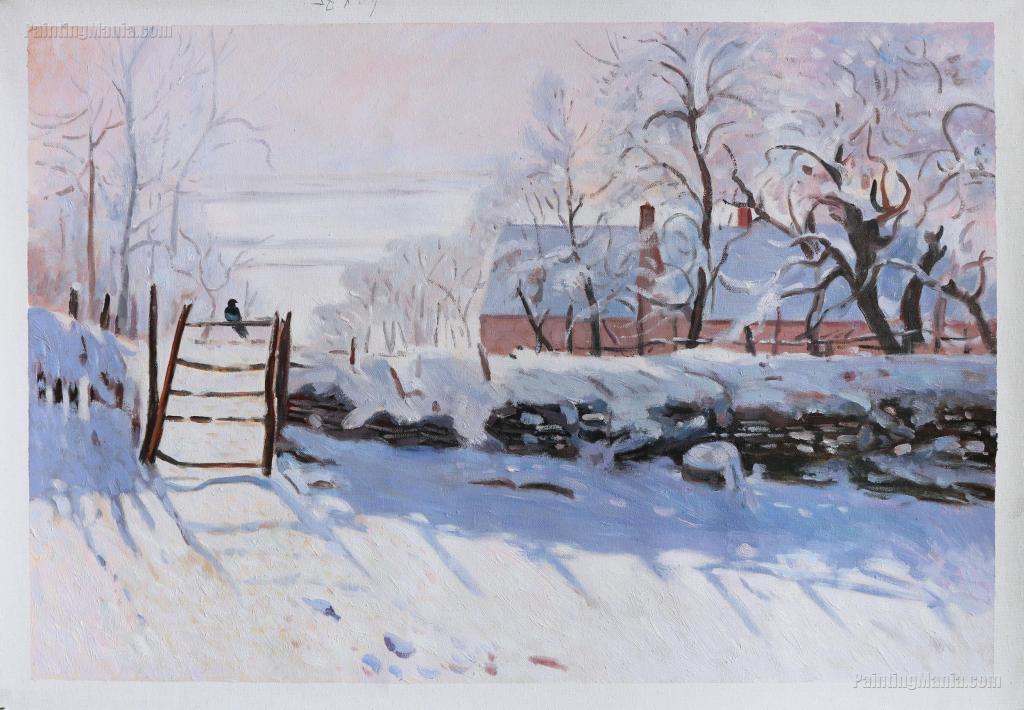
The Magpie by Claud Monet (1868),Musée d’Orsay, France
LIQUIDITY CRISIS

And so I have loved you, and so I have lost,
accrued disappointment, ledgered its cost,
debited wisdom, credited pain . . .
My assets remaining are liquid again.


ANALOGY

Our embrace is like a forest
lying blanketed in snow;
you, the lily, are enchanted
by each shiver trembling through;
I, the snowfall, cling in earnest
as I press so close to you.
You dream that you now are sheltered;
I dream that I may break through.


AS THE FLAME FLOWERS

As the flame flowers, a flower, aflame,
arches leaves skyward, aching for rain,
but all it encounters are anguish and pain
as the flame sputters sparks that ignite at its stem.

Yet how this frail flower aflame at the stem
reaches through night, through the staggering pain,
for a sliver of silver that sparkles like rain,
as it flutters in fear of the flowering flame.

Mesmerized by a wavering crescent-shaped gem
that glistens like water though drier than sand,
the flower extends itself, trembles, and then
dies as scorched leaves burst aflame in the wind.


ASHES

A fire is dying;
ashes remain . . .
ashes and anguish,
ashes and pain.

A fire is fading
though once it burned bright . . .
ashes once embers
are ashes tonight.


Am I

Am I inconsequential;
do I matter not at all?
Am I just a snowflake,
to sparkle, then to fall?

Am I only chaff?
Of what use am I?
Am I just a feeble flame,
to flicker, then to die?

Am I inadvertent?
For what reason am I here?
Am I just a ripple
in a pool that once was clear?

Am I insignificant?
Will time pass me by?
Am I just a flower,
to live one day, then die?

Am I unimportant?
Do I matter either way?
Or am I just an echo—
soon to fade away?

absinthe sea

i hold in my hand a goblet of absinthe

the bitter green liqueur
reflects the dying sunset over the sea

and the darkling liquid froths
up over the rim of my cup
to splash into the free,
churning waters of the sea

i do not drink

i do not drink the liqueur,
for I sail on an absinthe sea
that stretches out unendingly
into the gathering night

its waters are no less green
and no less bitter,
nor does the sun strike them with a kinder light

they both harbour night,
and neither shall shelter me

neither shall shelter me
from the anger of the wind
or the cruelty of the sun

for I sail in the goblet of some Great God
who gazes out over a greater sea,
and when my life is done,
perhaps it will be because
He lifted His goblet and sipped my sea.
Michael R. Burch’s poems have been published by hundreds of literary journals, taught in high schools and colleges, translated into fourteen languages, incorporated into three plays and two operas, and set to music by seventeen composers.
PLEASE NOTE: ARTICLES CAN ONLY BE REPRODUCED IN OTHER SITES WITH DUE ACKNOWLEDGEMENT TO BORDERLESS JOURNAL
A SONNET TO MAKE A WISH

I am a conflicted woman, my love.
I understand as strongly as I wish.
I understand there’s no world without war,
Only wish for a sliver of a niche.
I understand why the rivers run black,
Why smoked skies once blue, sends no more relish,
Why that man on the pavement sleeps hungry
While kings at feasts seldom touch their plenty.
I know why there’s no joy without sorrow.
All want more. They may beg, steal or borrow.
Everywhere I see, ladders of deceit.
Climb darling climb, in this farce you’re to fit.
Someday our love may cease, I understand.
Wish till the end, I am holding your hand
Suzanne AH is an aspiring writer from Assam with a passion for words.
PLEASE NOTE: ARTICLES CAN ONLY BE REPRODUCED IN OTHER SITES WITH DUE ACKNOWLEDGEMENT TO BORDERLESS JOURNAL
Autumn,
The bridge between nature’s seasons,
Summer and winter,
Heat and cold,
The cooling whites and the fiery oranges
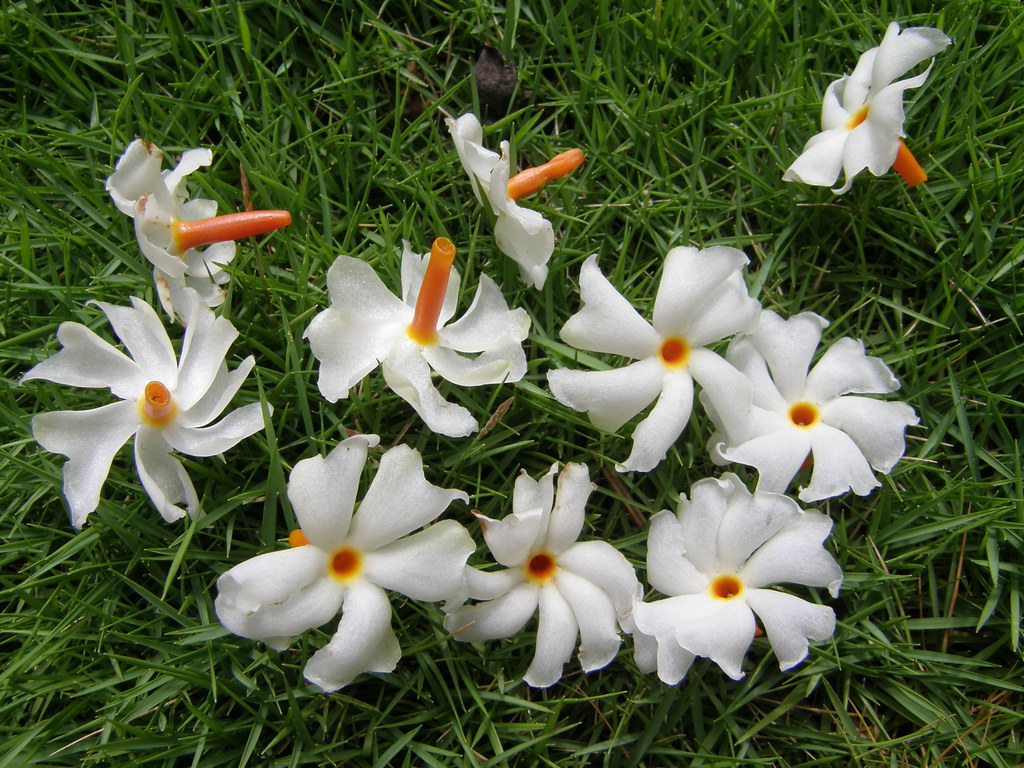
So beautifully reflected in the shiuli’s* colours.

Autumn, when the shiuli carpets the ground in legion,
Signifying the advent of the Goddess Durga in Sharad season,
Corresponding to the months of Ashwin (September-October).
Dusshera, too, comes in this season.
Both celebrate the victory of good over evil and corruption…
Maa Durga (the Goddess) triumphed over Mahisasur, the demon,
While Lord Rama triumphed over Ravana.

Autumn, that celebrates both festivals with great revelry
Turning our minds towards triumphing over evil
In our own lives, and evil within us.
The evil of ego that is the cause of suffering.
Ego, that is the demon that persuades us to discriminate with frivolity,
Between man and nature leading to a loss of biodiversity,
Between man and man leading to a false state of superiority.
Stemming from a mind of inferiority,
Judging against age, weight, skin colour, poverty and other such absurdity.

Autumn,
The time of the Shiuli flower
The time that reminds us to put our minds in favour
Of the divine and all that they have to teach us with fervour.
In the Guru Granth Sahib, the holy book of the Sikhs,
Guru Arjan says, that when we contemplate on the divine,
In our life manifest immense virtues with blessings combined
Akin to precious jewels like the flowers of the wish-fulfilling Harshringar*.

*Shiuli is also known as parijat, harshringar, and night jasmine.
Avantika Vijay Singh is the author of Flowing…in the river of Life and Dancing Motes of Starlight.
.
PLEASE NOTE: ARTICLES CAN ONLY BE REPRODUCED IN OTHER SITES WITH DUE ACKNOWLEDGEMENT TO BORDERLESS JOURNAL
QUANTUM


It was a miniature hemisphere
of chocolate ice cream,
in a silver chalice,
with a gleaming spoon.

When is enough, enough?
Having just one scruple?
The first four notes of Beethoven's fifth?
Taking four hundred pills like sprinkles?

I skimmed the dome with my spoon,
and licked off the coating.
Then I picked out the dark chips
and crunched down on them.

Finally, I anointed my mouth
with the frozen chrism itself,
That one scoop could have been six,
or ten, or a hundred.


NOCTURNE


I opened the blind to reveal the riches of the night…

Red of the roads
            Orange of the tree bark
                            Yellow of the moon
                                            Green of the cat’s eyes
                                                                  Blue of the grass
                                                                                        Indigo of the sky
                                                                                                          Violet of the clouds


Run from the high chroma of the day!

Roam in this rainbow instead.
Caroline Am Bergris is a half-Colombian, half-Pakistani poet living in London. Her poems have been published, online and in print, in Europe and America.
PLEASE NOTE: ARTICLES CAN ONLY BE REPRODUCED IN OTHER SITES WITH DUE ACKNOWLEDGEMENT TO BORDERLESS JOURNAL.










 Borderless