Categories
Excerpt

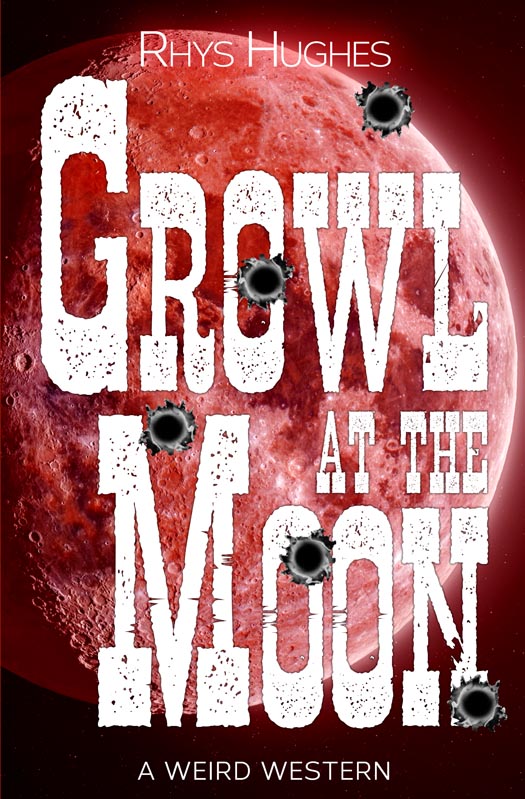
Growl at the Moon by Rhys Hughes

Title: Growl at the Moon, a Weird Western

Author: Rhys Hughes

Publisher: Telos Publishing Ltd

1.

She rode to the crest of the hillock and looked down. The other rider was a pale shadow on the trail below and in the moonlight his shadow was even paler than he was. That was because of the mica in the rocks which gleamed, glittered and shone and turned the landscape into something ethereal and strange. With a low snarl, she spurred her horse forwards.

She zigzagged down the slope and still the other rider didn’t hear her. Was he engrossed in his private thoughts? That must be the answer. Her Winchester was cradled in her arms and her low snarl turned into a stealthy laugh. Her prey seemed oddly incautious, but this was to her advantage. At the base of the slope, she spurred her mount to a fast canter.

The other rider finally became aware that something was behind him. As he turned in his saddle, she raised the rifle and aimed at his face. She slowed in order to be sure of hitting him square.

“Hey, what’s this?” he cried in astonishment.

His head, which was that of a giant rabbit, bobbed up and down, his nose twitched and his long ears undulated.

“Howdy, pard,” she said, and then she added, “I guess you think I’m just a bandit, some unwashed desperado who wants your money. But that’s not true at all. My name is Jalamity Kane and I’m hunting all the men who are part animal. I know what it means that you’re a man-rabbit, it means that you studied with a shaman, one of the Mojave wizards.”

“Well, yes I did,” answered the other rider.

“I make the same speech every time I find one of you people. When I was younger and full of hope and desire, I also sought out a shaman to study with. I found one. Seven years in a subterranean cavern, putting myself through horrid exercises, expanding my mind! But it didn’t work, I didn’t acquire the power. I failed and my soul became bitter. It’s not nice to be bitter and that’s especially true when I look upon your sweet little visage. Gonna blow a hole right through it. Say your final prayers, bunny boy!”

The other rider raised a paw to remonstrate with her but it was too late. Her finger squeezed the trigger and the canyon echoed with the shot. He slumped in the saddle and his horse bolted. He didn’t fall off but remained in place, his feet held by the stirrups. Jalamity watched him vanish into the crystalline darkness. She said to herself, “I’ll destroy all of you. I have no interest in money. I have no interest in anything, only in slaying every cat-man, owl-man, worm-man and cougar-man in the land. You’ll see!”

It was her mission in life. A cruel and futile mission, but a mission all the same, and a gal’s gotta have a mission.

2.

Jalamity was in position to ambush her next victim. She squatted in the shallow pit she had dug. The dry plain extended all around here, as flat as a tune played on a badly-maintained piano in a rotten old saloon somewhere in the worst kind of decayed ghost town where the railroad was supposed to come but didn’t. She had constructed her own cover because there was no natural cover available in the geography of the bland landscape.

The rider was a puff of dust at the limits of her vision. It was early evening and he was evidently trying to cover as many miles as possible before night fell and she chuckled at the malevolent thought that he was hurrying to his doom, a circumstance he would soon be aware of. The Winchester was firm in his grasp and she chewed a stick of licorice root.

This wasn’t European licorice or Glycyrrhiza glabra which also grew in a few places in a few states, having been brought over by settlers, but the harsher Glycyrrhiza lepidota that the Zuni people had liked to chomp as a medicine. Not that Jalamity needed a cure for anything. She just liked to chew on something at the end of a day and she hated tobacco.

She waited patiently as the cloud of beige dust that was the rider expanded in size and took on more of a familiar shape. His horse was tiring a little and his pace was slowing. As he approached, she saw that he wore a hood. All of these fools liked to cover their telltale faces!

She stood up straight, rising out of the pit like a snake about to strike, and strike she would, by which we mean attack and not cease working because of dissatisfaction with pay. She cared nothing for wealth. No ordinary bandit, this Jalamity, half woman and half man, the product of seven years’ meditation that hadn’t worked out the way she’d wanted.

“Hey, what’s this?” he cried in astonishment.

His head, which was that of a giant squirrel, bobbed up and down, his nose twitched and his jaws chattered.

“Howdy, pard,” she said, and then she added, “I guess you think I’m just a bandit, some unwashed desperado who wants your money. But that’s not true at all. My name is Jalamity Kane and I’m hunting all the men who are part animal. I know what it means that you’re a man-squirrel, it means that you studied with a shaman, one of the Mojave wizards.”

It was the same speech, or nearly the same speech as before. It was a short speech but one she had made dozens of times. Very few people ever got to hear it more than once, apart from herself.

An occasional victim escaped her, but it was such a rare event that in terms of statistics it counted for nothing at all.

Jalamity was now reaching the end of the speech. “Gonna blow a hole right through ya. Say goodbye, squirrel boy!”

The other rider raised a paw to remonstrate with her but it was too late. Her finger squeezed the trigger and the plains absorbed the sound of the shot. First he slumped in the saddle and then he fell off. His horse didn’t bolt but remained where it was, looking confused. One day, Jalamity knew, she would meet a man who was half horse. What would the horse he rode on do then? Would he regard Jamality as an enemy of all horses and try to kick her? She had no idea. It was a riddle that only the future could solve.

Most horses didn’t care about their riders but that one might be different. It was better to wait to find out the answer for sure. Speculation was a waste of her time. She climbed out of the pit, moved to the side, leaned over and reached out with her hands and jerked her wrists.

An unseen blanket came up in her fingers. Her horse was beneath it, lying on its side, and now it got clumsily to its hooves. She had covered it with a sheet and covered the sheet with sand and gravel and grit so that it resembled only the smallest of humps in the almost featureless plain. There had been nowhere else to hide it. She could have dug a pit, as she had for herself, but that would have been very hard work. Alternatively, she could have covered herself with a sheet too, but that would have restricted her visibility. Everything had worked out for the best. The squirrel-man was dead.

And now she had his horse as well. She could maybe use his horse as some part of a trap for her next victim. Killing these beasts was her mission in life. A cruel and futile mission, as we already have been told, but yes, a mission all the same, and a gal’s gotta have a mission.

About the Book

Bill Bones was a normal human being until he studied under a Mojave Shaman and was transformed into a man-dog called The Growl. Now, driven by a keen sense of justice, The Growl is on the hunt for the villains who killed his boss, newspaperman Ridley Smart … and he’ll stop at nothing!

Crossing the deserts and forests of the American continent, The Growl searches for the men he must kill. Along the way he meets more beast-men, more magicians, the avenger Jalamity Kane who is seeking to rid the world of the beast menace, and other dangerous characters, from the artificial to the wild, from the robotic to the demonic.

In the deft hands of Rhys Hughes, this inventive tale becomes a masterpiece of twists and turns … exploring and questioning our definitions of humanity, discovering the very meaning of what life and reality might be.

About the Author

Rhys Hughes is a writer of Fantastika and Speculative Fiction.

His earliest surviving short story dates from 1989, and since that time he has embarked on an ambitious project of writing a story cycle consisting of exactly 1000 linked tales. Recently, he decided to give this cycle the overall name of PANDORA’S BLUFF. The reference is to the box of troubles in the old myth. Each tale is a trouble, but hope can be found within them all.

His favourite fiction writers are Italo Calvino, Stanislaw Lem, Boris Vian, Flann O’Brien, Alasdair Gray and Donald Barthelme, all of whom have a well-developed sense of irony and a powerful imagination. He particularly enjoys literature that combines humour with seriousness, and that fuses the emotional with the intellectual, the profound with the light-hearted, the spontaneous with the precise.

His first book was published in 1995 and sold slowly but it seemed to strike a chord with some people. His subsequent books sold more strongly as my reputation gradually increased. He is regarded as a “cult author” by some and though pleased with that description, he obviously wants to reach out to a wider audience!

PLEASE NOTE: ARTICLES CAN ONLY BE REPRODUCED IN OTHER SITES WITH DUE ACKNOWLEDGEMENT TO BORDERLESS JOURNAL

Click here to access the Borderless anthology, Monalisa No Longer Smiles

Click here to access Monalisa No Longer Smiles on Amazon International
Categories
Poetry

A Vignette

By Saranyan BV

A VIGNETTE

I let her place her hand on mine.
I let her rest it like a turquoise tailor bird.
I could feel my burdens lift.
We sat watching the kids in the monsoon park,
Playing, climbing over the slide board
And gliding down. The board was wet
where it joined the earth.
We didn’t need to speak.
Speaking always led to differences.
The marigolds had showered and withered
Everywhere like tapestried carpet,
I squeezed her hand gently, and she said, “Oh!”
She got up and walked in the direction of the gate.
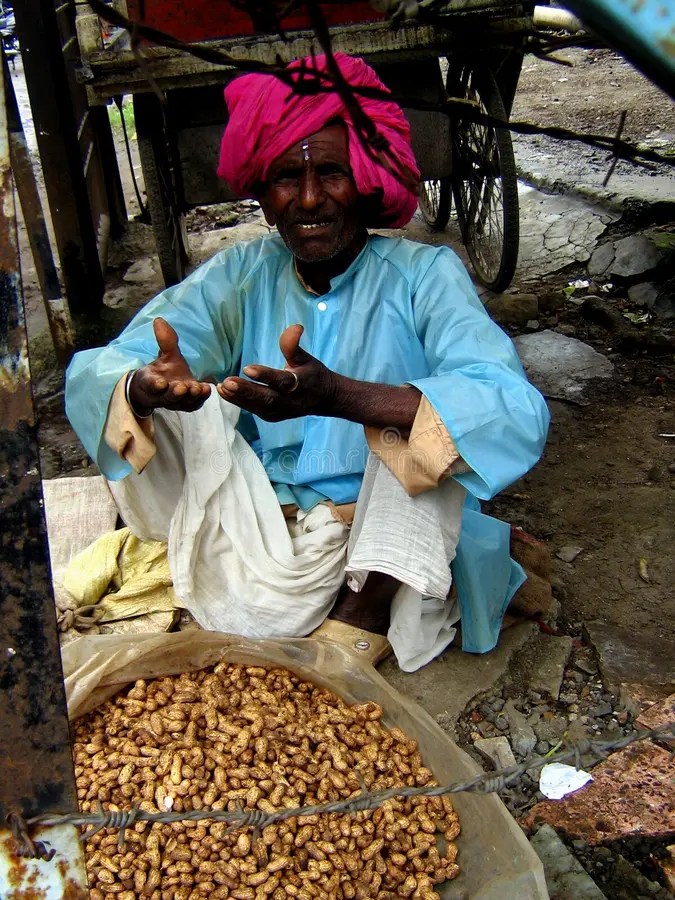
The man at the gate roasting groundnuts and selling,
Kept banging the skimmer
On the wrought-iron sand-filled pan. It made a lot of noise.
A Peanut Seller. From Public Domain

Saranyan BV is poet and short-story writer, now based out of Bangalore. He came into the realm of literature by mistake, but he loves being there. His works have been published in many Indian and Asian journals. He loves the works of Raymond Carver.

.

PLEASE NOTE: ARTICLES CAN ONLY BE REPRODUCED IN OTHER SITES WITH DUE ACKNOWLEDGEMENT TO BORDERLESS JOURNAL

Click here to access the Borderless anthology, Monalisa No Longer Smiles

Click here to access Monalisa No Longer Smiles on Kindle Amazon International

Categories
Stories

A Penguin’s Story

By Sreelekha Chatterjee

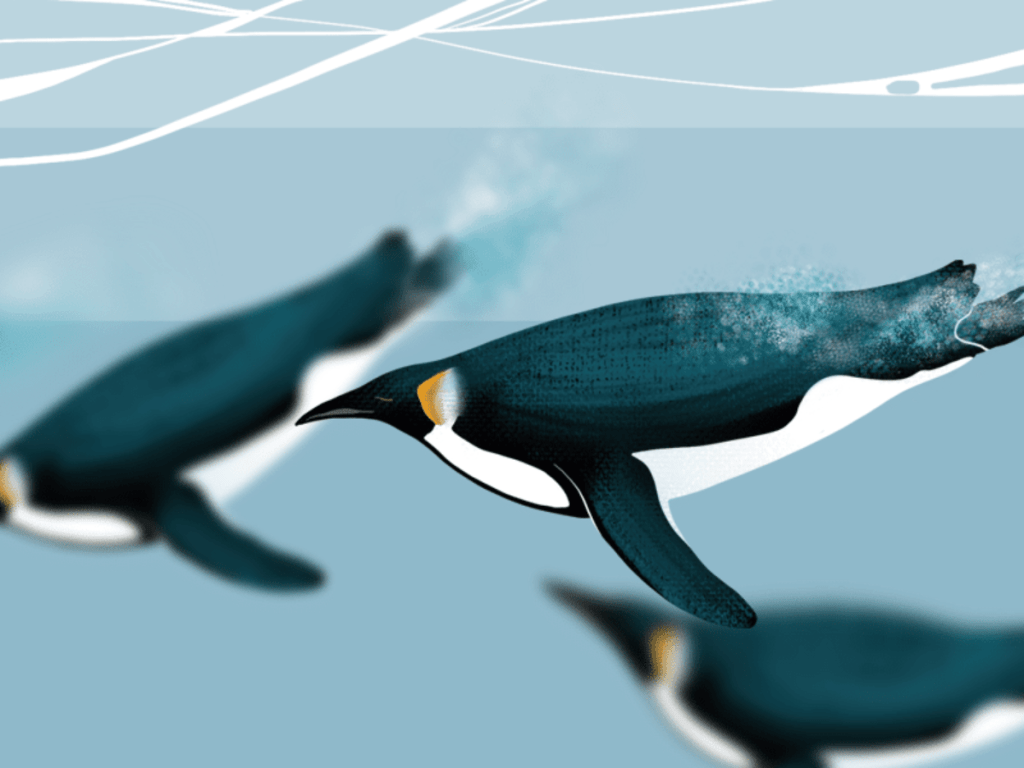
Along with a colony of huddling youngsters—at the threshold of adolescence—I gather at the edge of a giant ice cliff, from where the sea below appears like a distant dream. A prolonged weakening, retreat of the ice shelf has suddenly realised into the shape of water, as if its very existence has vanished into thin air. The occasional sprawling of luxuriant colonisation—a bulk of freshness in shades of jade—seems out of place in the otherwise stark white carpet all around. As always, a frontbencher, I station myself at the farthest point on the extremity. Behind me, the onlookers crane their necks to get a better glimpse of the liquesced pale-blue water.

As I am always draped in black and white, I notice the blue-grey hue near my throat when I eat. My siblings have additional golden-yellow ear patches. The wandering, winged creatures in the sky generate an indomitable desire in me. I wish I could fly. I galumph, leaning towards one side, a waddling gait with a lazy swag. My perspectives immobilise in the turbulent, sweeping wind chills.

Stranded on this towering cliff together with fellow earthlings, I gaze at the sky and contemplate the changes. Smitten by uneasy, unprecedented anxiety, without the comfort of the abundance of krill[1], till I decide it’s now or never. Unless we proceed, we will forever remain dependent on our parents. Though I am very close to my parents, I do not wish to be a continued burden to them.

Turning around, I look at my fellow beings for the last time. Their ocean eyes are like static travellers, their noses filled with unrelenting salty tears.

I take the colossal leap of faith, plummeting down like forever, holding my breath, and splashing straight into the icy water below. The biting, piercing hostile water smacks hard at my face in its embrace, as I feel its bitter presence in my shuddering bones. I resurface almost instantly, my heaving chest breathing in the tranquil air—my mind suddenly resorts to flight.

I swim with short strokes, flapping my preternatural wings, traversing the wild sea in style like a fish in known territory. The tiny spectators above remain quiet, admiring the victory ahead of the giant trepidation. A momentary eloquent sound of silence, followed by jubilant cheer. The celebration begins as one by one my mates plunge into the sea unhindered. Initial discomfort, followed by floating in the alien water—our very first step towards filling our bellies with krill, fresh fish and squid. The accomplishment that once bordered insuperability now rests parallel with peace.   

From Public Domain

[1] Krill is growing scarce due to climate change. https://www.cbc.ca/news/canada/saskatchewan/penguin-diets-climate-change-1.5383720

Sreelekha Chatterjee lives in New Delhi. Her short stories have been widely published in various national, international magazines, journals, and have been included in numerous print and online anthologies.

George Freek’s poetry has recently appeared in The Ottawa Arts Review, Acumen, The Lake, The Whimsical Poet, Triggerfish and Torrid Literature.

PLEASE NOTE: ARTICLES CAN ONLY BE REPRODUCED IN OTHER SITES WITH DUE ACKNOWLEDGEMENT TO BORDERLESS JOURNAL

Click here to access the Borderless anthology, Monalisa No Longer Smiles

Click here to access Monalisa No Longer Smiles on Amazon International
Categories
Poetry

Weeding and Gardens

Poetry by George Freek

From Public Domain
THE VALUE OF WEEDING MY GARDEN

People creep along the street.
I wonder what life
once moved beneath their feet?
It was there for billions of years,
before roses bloomed
and lilies grew here,
observed by these same stars,
which never grow old,
but I still continue my work,
because weeds
never stop growing,
and questions I can’t answer,
disturb my weeding.


AFTER AN EVENING WALK

After a warm rain the grass
stretches to the horizon,
where it meets the infinite sky.
The gardens are as brilliant
as Persian carpets,
but storm clouds like boulders
gather in that sky.
Turning away with eyes
looking firmly ahead,
I avoid a muddy weed bed,
and the leaves which hang
from sagging branches,
like soggy lanterns,
as they begin to fall
on my hatless head.

George Freek’s poetry has recently appeared in The Ottawa Arts Review, Acumen, The Lake, The Whimsical Poet, Triggerfish and Torrid Literature.

PLEASE NOTE: ARTICLES CAN ONLY BE REPRODUCED IN OTHER SITES WITH DUE ACKNOWLEDGEMENT TO BORDERLESS JOURNAL

Click here to access the Borderless anthology, Monalisa No Longer Smiles

Click here to access Monalisa No Longer Smiles on Amazon Internationa

Categories
climate change

More Frequent Cyclones to Impact Odisha

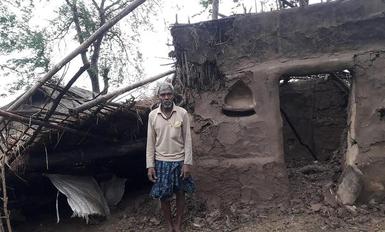
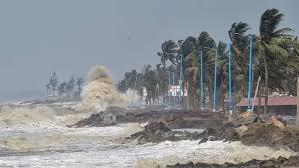
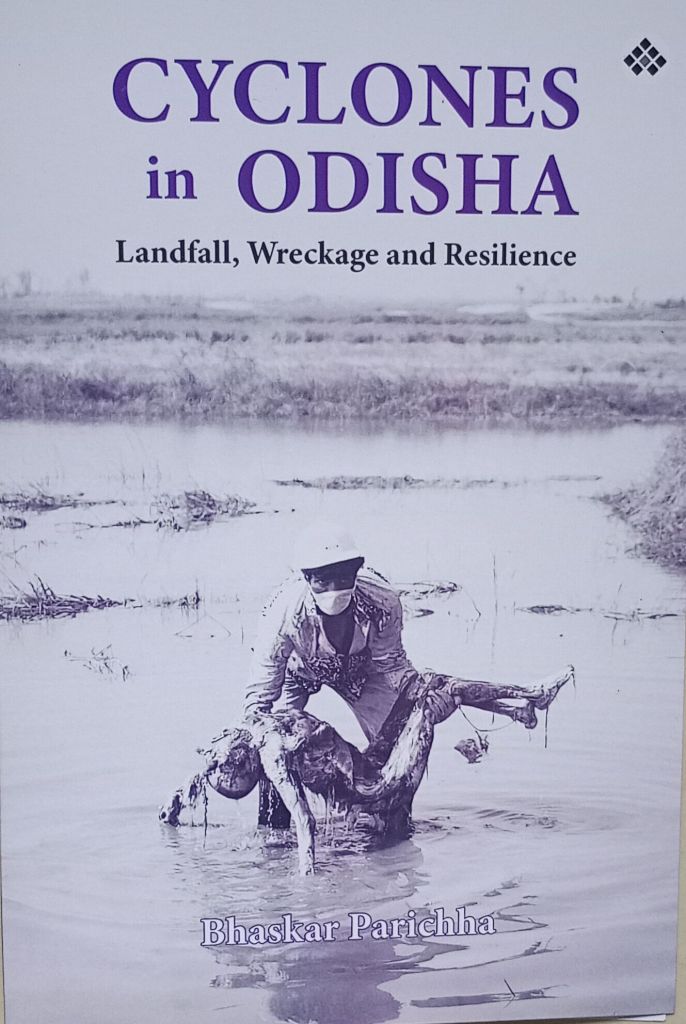
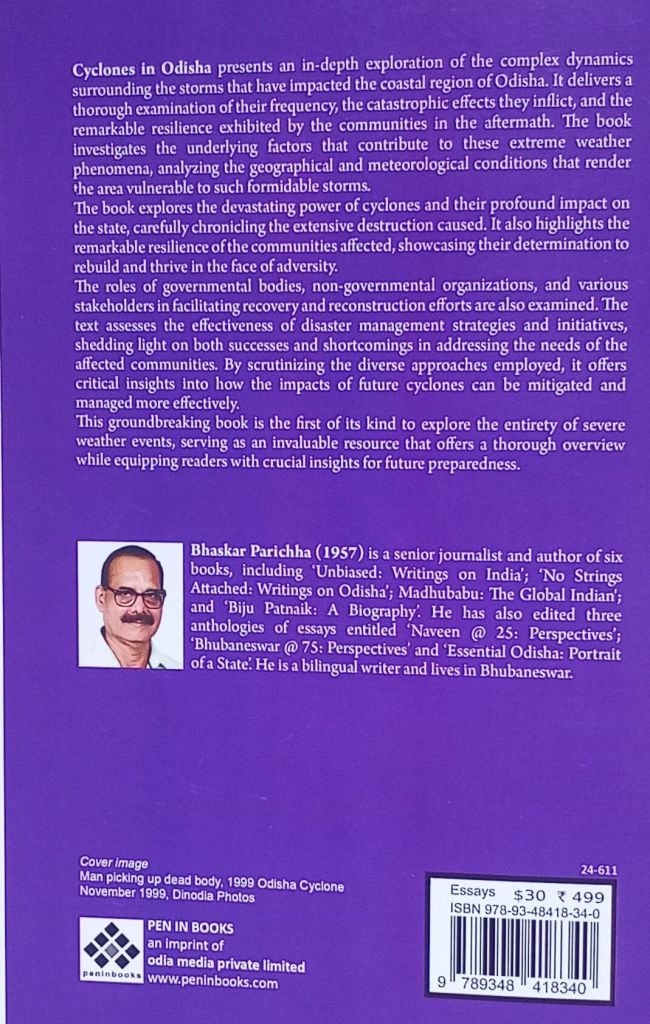
Cyclones in Odisha – Landfall, Wreckage and Resilience by Bhaskar Parichha cannot be underestimated given the recent impact of Dana (October 2024) which despite being  less aggressive than Amphan (May 2020) disrupted life as we know it. Bijoy K Mishra writes about the book and its relevance.

Climate Change will increase the incidence of cyclones in Odisha. Rising sea levels and warmer ocean temperatures create more favourable conditions for cyclones to form and intensify, posing a significant threat to the people of the state.

This has been clearly stated in the book, Cyclones in Odisha – Landfall, Wreckage and Resilience by senior journalist journalist and author, Bhaskar Parichha, “[C]limate change has a profound effect on Odisha’s disaster preparedness plans in various ways. The increasing temperatures and sea levels are contributing to more frequent and severe disasters such as cyclones, floods, droughts, and heat waves.” Published by Pen in Books, the book was released on October 29th to coincide with the Super Cyclone that struck the Odisha coast twenty-five years ago.

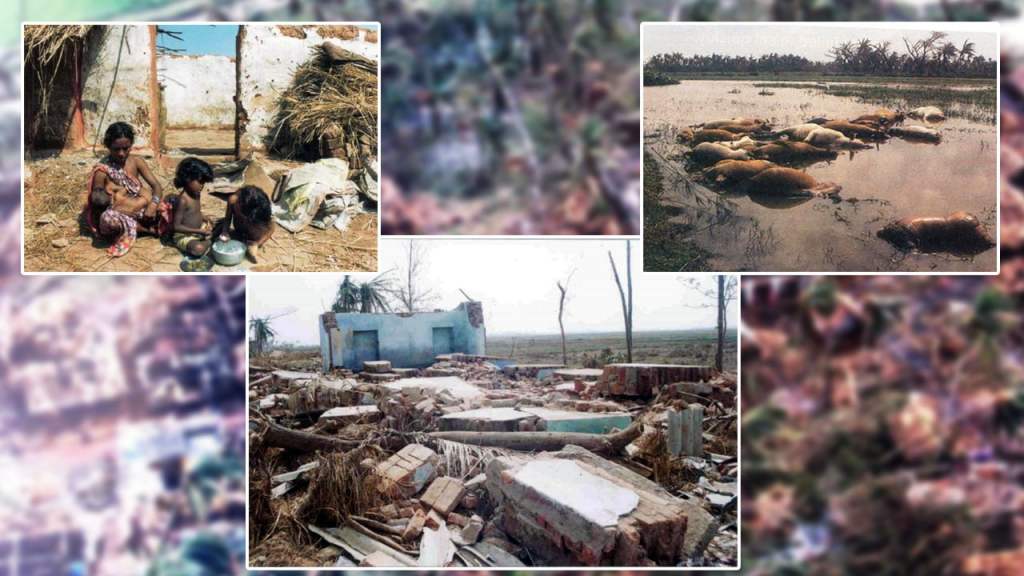
Odisha Super Cyclone 1999 (29/10/1999): 12.9 million people were affected by the storm. The India Meteorological Department indicated that around 9,887 were killed, 40 persons missing and 2,507 others injured. Photo from: Public Domain

The book, which traces the history of cyclones in Odisha in the past one hundred years, says: “The rise in sea levels due to climate change and the increased intensity of storms pose a threat to coastal infrastructure, including cyclone shelters and evacuation routes. Regular maintenance and improvement of these structures are essential to minimize the impact of climate change.”

Health Sector

While there is a need to ensure full-bodied evacuation drills, shelter maintenance, and emergency response planning more frequently, the prevalence of water and vector-borne diseases like malaria and dengue fever is worsened by climate change. The author suggests, “[T]he health sector must incorporate climate change considerations into health policies, enhance disease management, and implement measures to mitigate the impact of heat waves.”

With changes in monsoon patterns and more frequent cyclones resulting in widespread food and nutrition insecurity, the book has some precise suggestions; “Disaster preparedness efforts should prioritize ensuring access to nutritious food and promoting sustainable agricultural practices. Raising awareness about climate change and being prepared require ongoing community involvement and capacity building. This involves training volunteers, promoting safe migration practices, and increasing media coverage of climate change issues.”

Economic Impact

On the impact of the economy, the book says: “Climate change can negatively impact economic growth and exacerbate poverty. Disaster preparedness strategies need to address these economic risks by encouraging sustainable industries, renewable energy, and climate-resilient infrastructure.

“Odisha’s disaster preparedness strategies must evolve to ensure effective response and mitigation measures. This requires ongoing investment in disaster preparedness and response measures, as well as efforts to address the underlying causes of climate change. By taking proactive steps to mitigate the impact of cyclones and adapt to changing climatic conditions, Odisha can better protect its coastal region and ensure its safety and well.”

East Coast

The book emphasises financial investment in measures to reduce disaster risk and adapt to climate change is essential for the East Coast of India. This includes funding for the development and maintenance of early warning systems, the construction of resilient infrastructure, and community preparedness initiatives. Investment in research and development of new technologies and strategies for cyclone mitigation is crucial in building a more resilient and adaptive East Coast community.

Underlining the need for effective disaster management strategies and resilient infrastructure to protect the vulnerable populations of Odisha, we are told: “In the face of a cyclone, communities must come together to prepare and respond to the impending disaster. Early warning systems and evacuation plans can help to minimize the impact of a cyclone, saving lives and reducing property damage. In the aftermath of a cyclone, communities must work together to rebuild and recover, showing resilience in the face of adversity.”

(First Published in Political And Business Daily, Odisha)

Bijoy Ketan Mehta is the resident editor of Political and Business Daily. He can be contacted at bijoykm1259@gmail.com.

.

PLEASE NOTE: ARTICLES CAN ONLY BE REPRODUCED IN OTHER SITES WITH DUE ACKNOWLEDGEMENT TO BORDERLESS JOURNAL

Click here to access the Borderless anthology, Monalisa No Longer Smiles

Click here to access Monalisa No Longer Smiles on Amazon International
Categories
Poetry

We Sang Together …

Poetry By Michael R Burch

From Public Domain

WITH MY DAUGHTER, BY A WATERFALL


By a fountain that slowly shed
its rainbows of water, I led
my wond’ring-eyed daughter.

And the rhythm of the waves
that casually lazed
made her sleepy as I rocked her.

By that fountain I finally felt
fulfilment of which I had dreamt
feeling sublime breezes pelt

petals upon me.
And I held her close in the crook of my arm
as she slept, breathing harmony.

By a river that brazenly rolled,
my daughter and I strolled
toward the setting sun,

and the cadence of the cold,
chattering waters that flowed
reminded us both of an ancient song,

so we sang it together as we walked along
—unsure of the words, but sure of our love—
as the waterfall sighed and the sun died above.


HAVE I BEEN TOO LONG AT THE FAIR?


Have I been too long at the fair?
The summer has faded,
the leaves have turned brown,
the ferris wheel teeters,
not up, yet not down . . .
Have I been too long at the fair?


GONE

Tonight, it is dark
and the stars do not shine.

A man who is gone
was a good friend of mine.

We were friends.

And the sky was the strangest shade of orange on gold
when I awoke to find him gone ...

Michael R. Burch’s poems have been published by hundreds of literary journals, taught in high schools and colleges, translated into fourteen languages, incorporated into three plays and two operas, and set to music by seventeen composers.

PLEASE NOTE: ARTICLES CAN ONLY BE REPRODUCED IN OTHER SITES WITH DUE ACKNOWLEDGEMENT TO BORDERLESS JOURNAL

Click here to access the Borderless anthology, Monalisa No Longer Smiles

Click here to access Monalisa No Longer Smiles on Kindle Amazon International

Categories
Stories

Chintu’s Big Heart

By  Naramsetti Umamaheswararao

Chintu, a fifth-grader, was known for his intelligence beyond his years. Every day, he walked a mile to school by himself. When his parents offered to accompany him, he confidently replied, “I can go by myself. I’m grown up now.” Since their village, Seethanagaram, was a small town, there wasn’t much fear of children being abducted or harmed, so his parents didn’t object.

One day, Chintu woke up early and set out for school earlier than usual. He packed a small spade, a water bottle, and his books into his schoolbag and slung it over his shoulder.

His mother, who had been observing him, asked, “Why are you leaving so early? There’s still time for school.”

“I have some work, mother. I’ll tell you when I come back,” Chintu replied.

On his way to school, Chintu spotted some discarded mango seeds. He carefully picked out the good ones and walked a little further from the road. Using his small spade, he dug holes and buried the seeds. Then, he poured some water from his bottle over them.

As Chintu was about to leave, an old beggar woman sitting under a nearby tree called out, “Come here, boy.”

Chintu approached her and greeted her politely.

“I saw you planting those seeds. That’s a good deed. But who will water them every day?” she asked.

“I pass this way to school every day. I will water them,” Chintu replied.

While talking to the old woman, Chintu noticed she looked weak and was coughing frequently. Concerned, he asked, “Do you have a fever? Have you eaten anything?”

“I don’t have the strength to move. I haven’t gone anywhere and haven’t eaten anything either,” the old woman replied.

“Oh no, that’s not good,” said Chintu, opening his lunch box and offering her some food.

The old woman hesitated. “You’ll be hungry in school. Don’t worry about me, son. I’m used to this.”

“Don’t worry about me. My friends will share their food with me,” Chintu reassured her. He then gave her water to drink and asked some passersby to help take her to the hospital before heading to school.

After school, on his way back home, Chintu saw a small puppy being chased by a big dog. The puppy, terrified, ran in search of shelter, letting out pitiful cries. It squeezed through the gate of a house, but the house dog barked at it, causing it to retreat. The puppy then ran into an alley, where a pig scared it further. Not knowing what to do, the puppy let out a helpless whimper.

Seeing the puppy in distress, Chintu took out his spade and used it to chase away the big dog. He picked up the trembling puppy and comforted it, saying, “Don’t be scared. I chased it away.”

Just then, a woman from the house across the street came outside and noticed the puppy in Chintu’s arms. “Its mother died in an accident while crossing the road. You can take it home if you want to raise it,” she said.

Without a second thought, Chintu took the puppy home.

When Chintu’s mother saw him with the puppy, she frowned. “Why did you bring a puppy home? It will make a mess everywhere. Leave it where you found it.”

“Poor thing… its mother died, and a big dog and a pig were chasing it. It was so frightened. Let’s take care of it for a while. We can let it go later. First, give it some food and milk,” Chintu pleaded.

“You seem to be taking on more responsibilities than necessary. You should be focusing on school, not trying to act like a grown-up,” his mother scolded.

“But if everyone thought that way, who would help those in need? Grown-ups can’t always do everything, and if kids aren’t allowed to help either, then who will assist those in trouble? Remember when you asked me this morning where I was going early? Let me explain now. I heard my teacher say that many people throw away mango seeds after eating the fruit. He said they shouldn’t go to waste. So, I buried some seeds by the roadside, and I’ll water them every day. There was an old woman with a fever under a tree. I gave her my lunch, and she was so happy. She blessed me,” Chintu said, his eyes wide with excitement.

“Is that so? You did a good thing. Keep helping others whenever you can. I’ll get some food for the puppy. Don’t worry about it. We’ll take care of it for a while and then find it a good home,” his mother said kindly.

“Let’s do that. I didn’t tell you this morning because I thought you might scold me. But now I know you’re kind-hearted and will understand. From now on, I’ll tell you everything I plan to do,” Chintu promised.

“You’re my precious child,” his mother said, hugging him lovingly.

From Public Domain

Naramsetti Umamaheswararao has written more than a thousand stories, songs, and novels for children over 42 years. he has published 32 books. His novel, Anandalokam, received the Central Sahitya Akademi Award for children’s literature. He has received numerous awards and honours, including the Andhra Pradesh Government’s Distinguished Telugu Language Award and the Pratibha Award from Potti Sreeramulu Telugu University. He established the Naramshetty Children’s Literature Foundation and has been actively promoting children’s literature as its president.

.

PLEASE NOTE: ARTICLES CAN ONLY BE REPRODUCED IN OTHER SITES WITH DUE ACKNOWLEDGEMENT TO BORDERLESS JOURNAL

Click here to access the Borderless anthology, Monalisa No Longer Smiles

Click here to access Monalisa No Longer Smiles on Amazon International

Categories
Poetry

Hotel Acapulco

Poetry and translation from Italian by Ivan Pozzoni

Ivan Pozzoni
HOTEL ACAPULCO

My emaciated hands continued to write,
turning each voice of death into paper…
That he has left no will,
forgetting to look after
what everyone defines as normal business
of every human being: office, home, family,
the ideal, at last, of a regular life.

Abandoned, back in 2026,
labelled as unbalanced,
I'm locked in the centre of Milan
in Hotel Acapulco, a decrepit hotel,
calling upon the dreams of the marginalised,
exhausting a lifetime's savings
in magazines and meagre meals.

When will the carabinieri burst
into the decrepit room of the Hotel Acapulco
and find yet another dead man without a will?
Who will tell the ordinary story
of an old man who lived breaking wind?

Ivan Pozzoni was born in Monza in 1976. Between 2007 and 2018, he published 13 poetry books. He has written 150 volumes, 1000 essays and founded an avant-garde movement (NéoN-avant-gardisme). 

.

PLEASE NOTE: ARTICLES CAN ONLY BE REPRODUCED IN OTHER SITES WITH DUE ACKNOWLEDGEMENT TO BORDERLESS JOURNAL

Click here to access the Borderless anthology, Monalisa No Longer Smiles

Click here to access Monalisa No Longer Smiles on Kindle Amazon International

Categories
Review

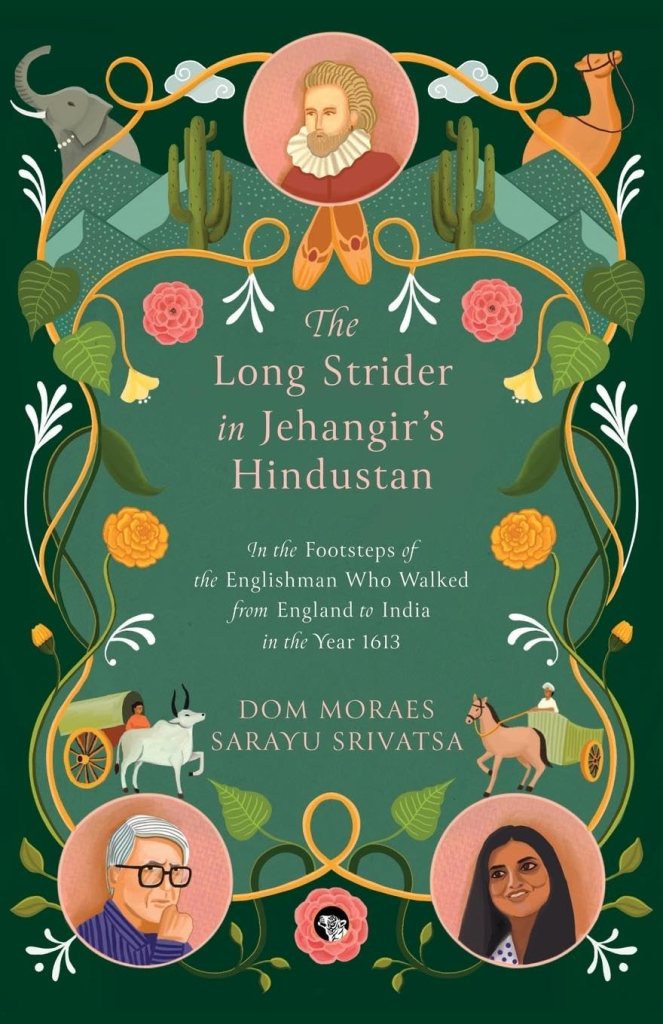
In the Footsteps of the Man Who Walked From England to India in 1613

Book Review by Rakhi Dalal

Book Title: The Long Strider in Jehangir’s Hindustan: In the Footsteps of the Englishman Who Walked From England to India in the Year 1613

Authors: Dom Moraes and Sarayu Srivatsa

Publisher: Speaking Tiger Books

During the years, in the early seventeenth century, when East India Company began a search for the possibilities of trade with India via sea route, Thomas Coryate of the village Odcombe in Somerset, England, made an ambitious plan to travel to the Indies, as he called it, on foot. This wasn’t his first undertaking. Having travelled across Europe on foot before, writing a travelogue Crudities on his experience which brought him some fame, he now wished to travel to a place no Englishmen had gone before. Motivated by the thought of gaining more fame with this venture so as to win the affection of Lady Ann Harcourt of Prince Henry’s Court, even the idea of traversing 5000 miles on foot as compared to 1975 miles that he did in Europe did not dissuade him.   

Known as ‘the long strider’, in 1612, Coryate set for his journey to the Indies from London. And in year 1999, more than three hundred years later, his journey and subsequent struggles, somehow inspired Dom Moraes to traverse the same route to correlate Coryate’s experience in the now altered places and its people. Coryate travelled alone, Moraes took the journey with Sarayu Srivatsa, the co-author of this book.

Dom Moraes, poet, novelist and columnist, is seen as a foundational figure in Indian English Literature. He published nearly thirty books in his lifetime. In 1958, at the age of twenty, he won the prestigious Hawthornden Prize for poetry. He was awarded the Sahitya Akademi Award for English in 1994. The Long Strider in Jehangir’s Hindustan was first published in the year 2003. Moraes passed away in 2004.

Sarayu Srivatsa, trained as an architect and city planner at the Madras and Tokyo universities, was a professor of architecture at Bombay University. Her book, Where the Streets Lead, published in 1997 had won the JIIA Award. She also co-authored two books with Dom Moraes: The Long Strider, and Out of God’s Oven (shortlisted for the Kiriyama Prize). Her first novel, The Last Pretence, was longlisted for the Man Asian Literary Prize, and upon its release in the UK (under the title If You Look For Me, I am Not Here), was also included on The Guardian’s Not the Booker Prize longlist.

Srivatsa, who travelled with Moraes to all the places Coryate passed through, writes diary chapters coextending the same routes subsequently. So, each fictive reconstruction of a period and place of Coryate’s travel by Moraes is followed by a diary chapter for the same place by Srivatsa. In that sense the book becomes part biographical fiction and part memoir. 

Coryate, son of a Vicar and dwarfish in stature, was seized by this desire to gain fame and respect. What desire seized the imagination of Moraes, eludes this reader. It, however, doesn’t escape the notice that both the writers shared somewhat similar plight towards the end.

Some of Coryate’s writing during the period did not survive as it was destroyed by Richard Steele, but the rest was sent to England and was posthumously published in an anthology in 1625. Basing his research on such sources, after extensive three years of investigation, Moraes managed to create an account of Coryate’s demeanour, his lived life in a new land with diverse people and customs at different places which he found both shocking and fascinating.  Coryate found the people of India loud and violent but he was also touched by their generosity and kindness. He witnessed the disagreements between Hindus and Muslims, the caste system where the upper caste oppressed the people from lower caste, sati, and the ways of Buddhist monks, Sikhs, pundits of Benaras and Aghoris[1], the lifestyle of Jehangir and the city of Agra before Taj Mahal. He was fortunate to have an audience with Jehangir, the main reason of his travel, but he failed in securing his patronage or enough money to continue to China which he had been his original intent.

In Moraes’ writing, the era comes alive. Vivid imagery and description makes the struggles and sufferings of Coryate palpable on one hand and on the other offer a view on the unfolding of history in a country where these many hundred years later, the echoes of a past similar to the present can be heard. In the preface, Moraes posits one of the reasons to take on the book — to compare the India then with the country during his times. As the reader proceeds with the story, the comparison becomes apparent in Moraes’ construction vis-a-vis Srivatsa’s entries.

Towards the end, an ailing Coryate succumbed to his illness and his body was buried somewhere near the dock at Surat. He could not make a journey home in 1615, but in 2003 a brick from his supposed tomb was sent back to the church in Odcombe by Srivatsa where a ninety six year old vicar waited patiently for the only famous man from Odcombe to return home. The epilogue by Srivatsa gives an account of Moraes’ own struggle with cancer and his demise in 2004, a year after the book was published. It is but right that the soil from his grave in Mumbai also found a resting place in Odcombe.    

[1] Devotees of Shiva

Rakhi Dalal writes from a small city in Haryana, India. Her work has appeared in Kitaab, Scroll, Borderless Journal, Nether Quarterly, Aainanagar, Hakara Journal, Bound, Parcham and Usawa Literary Review

.

PLEASE NOTE: ARTICLES CAN ONLY BE REPRODUCED IN OTHER SITES WITH DUE ACKNOWLEDGEMENT TO BORDERLESS JOURNAL

Click here to access the Borderless anthology, Monalisa No Longer Smiles

Click here to access Monalisa No Longer Smiles on Kindle Amazon International

Categories
Poetry

To Days that are Now Spent

By Shahalam Tariq

TO DAYS THAT ARE NOW SPENT 

No longer does this heart sing the way it did,
In those days of years past, when it's abode
Was in your arms; when in your eyes it lived
Or under the calm shadow of your locks.

It would sleep when the days got all too harsh.
Now it but murmurs rarely a few songs
From days of old, as the book of the past
Lies open on the table half read and torn.

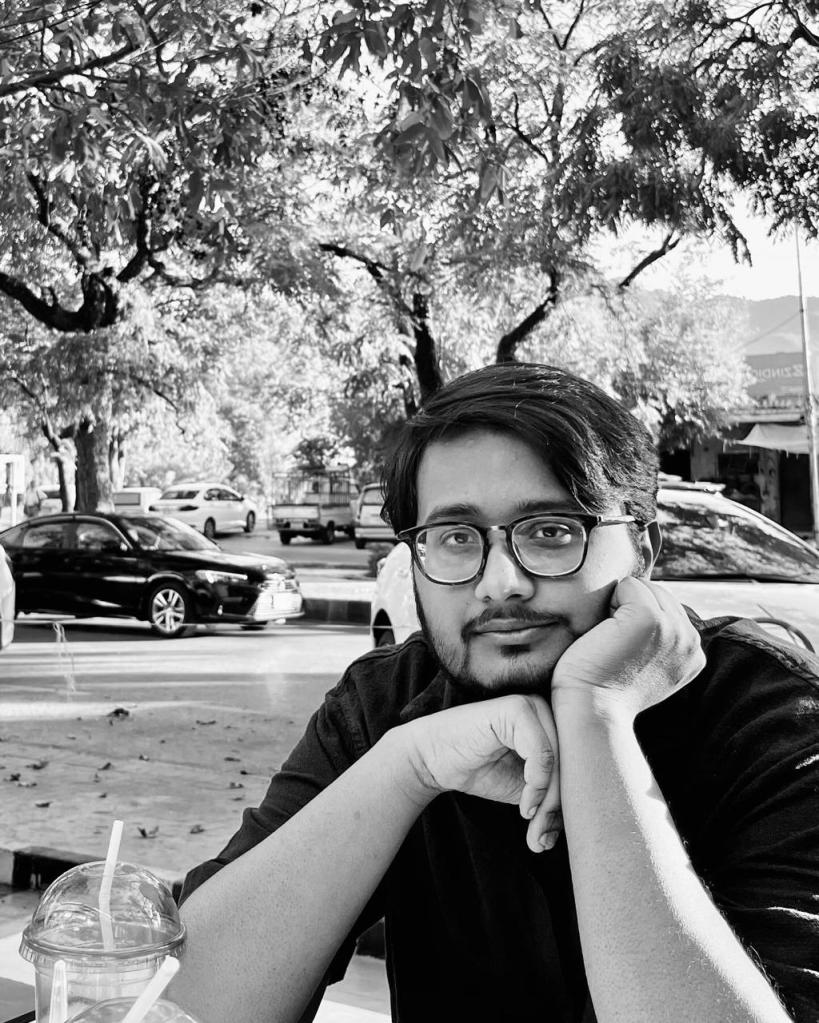
Shahalam Tariq is based in Rawalpindi, Pakistan. His writings on history, theory and literature have appeared in The Friday Times and Bazm e Dana. His poems have appeared in The Writers Sanctuary, an anthology of poetry.

.

PLEASE NOTE: ARTICLES CAN ONLY BE REPRODUCED IN OTHER SITES WITH DUE ACKNOWLEDGEMENT TO BORDERLESS JOURNAL

Click here to access the Borderless anthology, Monalisa No Longer Smiles

Click here to access Monalisa No Longer Smiles on Amazon International