Categories
Essay

Deconstructing Happiness

By Abdullah Rayhan

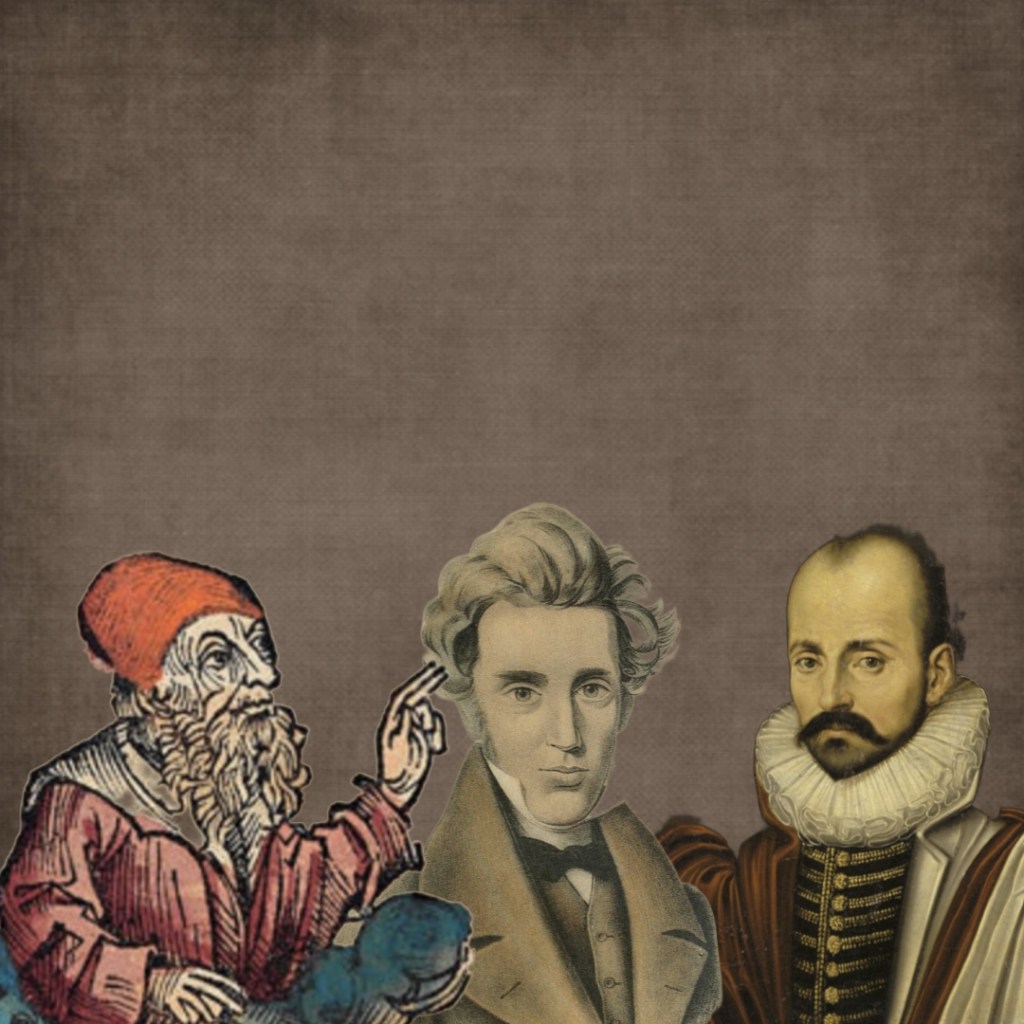
From Left to Right: Boethius, Keirkegaard and Montaigne. Courtesy: Abdullah Rayhan
“Do you hear the whisper of the shadows?
This happiness feels foreign to me.
I am accustomed to despair.”

-Forough Farrokhzad (1934-1967), Iranian Poet and Filmmaker

We seek psychotherapy to deal with the distress, sadness, depression, and psychological dimensions that are beyond our reach. Even after going through the medical procedure, we are seldom left with the satisfying sensation we deeply crave. This is where philosophy comes in.

To Socrates, philosophy was basically the way to live a life. He mainly observed how life functions and examined the influences that allocate life with certain affects. Other philosophical ideas too somewhat try to interpret the nature of existence in a similar manner. There are tons of such schools: from absurdism, to existentialism, nihilism, Hegelian, Kantian, and whatnot. But, apart from offering ideas and perspectives on existence, what else do they contribute? It can be a bit vague to trace the purpose of such philosophical ideas where the basic understanding, instead of leading toward fulfillment, can plunge us into the deepest pit of darkest despair. Existential philosophy will constantly remind you of life’s futility, ethical philosophies will keep painting idealistic portraits all to no avail. Finally, you are left with novel knowledge that does not necessarily help you deal with the struggles drowning your heart within a blurry tumult.

Fortunately, practical application of philosophy exists. Last year, when I was particularly at my lowest, estranged from everything I adored, all prospects of happiness ruined, abandoned to face monstrous adversities with a heavy bleeding heart, I found Boethius[1] comforting.

Camus, Sartre, and Nietzsche will comfort you with the assurance that you can construct optimism with your own effort. They tell your life has no inherent meaning, thus you are allowed to come up with your own sense of existence and give it any meaning you can conjure up at will. Bentham will tell you how to establish collective contentment. Kant will give you formulas to maintain peace. But none of them essentially gives a clear picture of what happiness really is. This makes Boethius unique. He doesn’t adhere to any false hopes, he rejects all things that are constructed, yet, through a transparent honesty, he shows a path that can lead toward organic satisfaction, not laced with any promises of universal fulfillment, just simple reasoning advocating for individual contentment.

Boethius basically inspires us to contemplate on our happiness. He directly questions the idea of happiness we so intimately endorse. Boethius asks you,

“Do you really hold dear that kind of happiness which is destined to pass away? Do you really value the presence of Fortune when you cannot trust her [Fortune] to stay and when her departure will plunge you in sorrow? And if it is impossible to keep her at will and if her flight exposes men to ruin, what else is such a fleeting thing except a warning of coming disaster?”

We consider ourselves lucky when we get our desired happiness. But, being lucky or ‘fortunate’ cannot be the standard that constructs happiness. In Boethius’ words, “happiness can’t consist in things governed by chance” mainly because there’s no guarantee it will last. He argues anything that is ephemeral, transient, and temporary cannot be of any value in terms of happiness as when that happiness evaporates, it is replaced by sorrow that is sometimes too much to bear. In this way, state of happiness is “a warning of coming disaster”. Happiness should not be the reason for despair and discontent. Thus, happiness brought by luck is not what it appears to be. 

He further asks if something that is temporary can really be claimed as one’s own. Boethius’s voice renders one mute when he states, “I can say with confidence that if the things whose loss you are bemoaning were really yours, you could never have lost them.”

A significant portion of Boethius’s argument is surrounding the transience of happiness. If happiness lies in what’s temporary, then isn’t misery temporary as well? Boethius puts it with much clarity. He comforts you, saying: “If you do not consider that you have been lucky because your onetime reasons for rejoicing have passed away, you cannot now think of yourself as in misery, because the very things that seem miserable are also passing away.”

Boethius inspires you to wonder about the nature of misery. We are miserable, sad, melancholic usually because we had a taste of happiness sometimes in the past, which is missing at the moment. We were happy once. But happiness is no longer part of our lives, and this absence is what’s causing our misery. Had we not had that happiness before, we wouldn’t have the misery that chokes our heart with a suffocating grip. This is the reason Boethius called happiness “a warning of coming disaster”.

Think about it. Someone who is currently living the same life as you may not be in similar misery as you because, as they haven’t had the happiness you had, they are not burdened to deal with the absence that you are compelled to plummet in. Thus, neither happiness nor misery operate based on any strict blueprint, rather it is something formed by one’s own experience and are inter-dependent. Boethius puts it very eloquently saying, “There is something in the case of each of us that escapes the notice of the man who has not experienced it, but causes horror to the man who has […] Nothing is miserable except when you think it so, and vice versa, all luck is good luck to the man who bears it with equanimity”. We lose our ability to “bear it (despair) with equanimity” because of our past interactions with pleasant experiences.

Perhaps you would relate to Boethius in terms of misery though not in an entirely literal sense. Boethius had everything. A beautiful wife, two affectionate children, popularity, respect, novelty, an amazing home, and enough money to live without any worrying. Yet, because of some false accusation, he was suddenly deprived of it all and was imprisoned. His happy life suddenly became a dark den overpouring with impenetrable despair. Many of our misery too is born because of its contrast to the time when we were happy. Now think about it for a moment. Boethius was devastated in the cell because he previously had a satisfying life. Had he lived like a homeless person with nothing of his own, the confined space of that very cell would appear satisfactory because of the roof over the head and chunks of food on the plate no matter how dim and damp the dark roof or how stale the smelly food. It shows how subjective the texture of happiness is.  

Boethius deconstructs the common perception of happiness, breaking it down to a rather ‘mundane’ prospect of life on the contrary to our belief of it being a significant one. He believes our idea of happiness itself is laced with misery. He proclaims, “how miserable the happiness of human life is; it does not remain long with those who are patient and doesn’t satisfy those who are troubled.”

So, if happiness indeed is of the nature that compulsorily leaves one unsatisfied, then does happiness deserves to be attributed with divine epithet? Boethius disagrees. He presents a compelling argument for this, saying, “[H]appiness is the highest good of rational nature and anything that can be taken away is not the highest good – since it is surpassed by what can’t be taken away …” It is the unreliability of our perceived idea of happiness that makes it a futile one with little or no value.

So, if happiness is something that is transient, unreliable, and can never offer the contentment it promises, then is happiness really something to chase after? “Happiness which depends on chance comes to an end with the death of the body,” propounds Boethius. Thus, to cling on to happiness is to cling on to a slippery rope dangling on top of a void filled to the brim with invisible abyss. You cannot do anything to make this notion of happiness fruitful in the sense you believe it to be. Boethius thinks it’s foolish to attempt to make this ineffective happiness endure and persist. He words it differently saying, “what an obvious mistake to make – to think that anything can be enhanced by decoration that does not belong to it.” Thus, again, the problem lies with the way we shape the notion of happiness.

As our immediate cognition tells us, the most apparent formula of happiness is a combination of romantic love and successful career. But is it really true? If you have understood Boethius, you probably realise that these temporary agents (romantic partner and career) cannot make you content for long. Something that is not entirely yours own cannot get you that contentment you crave. Kierkegaard too agrees how things that are not inherently one’s own are subject to loss, thus misery. Kierkegaard delivers the idea with a touch of subtle humour,

“Marry, and you will regret it; don’t marry, you will also regret it; marry or don’t marry, you will regret it either way. Laugh at the world’s foolishness, you will regret it; weep over it, you will regret that too; laugh at the world’s foolishness or weep over it, you will regret both. Believe a woman, you will regret it; believe her not, you will also regret it… Hang yourself, you will regret it; do not hang yourself, and you will regret that too; hang yourself or don’t hang yourself, you’ll regret it either way; whether you hang yourself or do not hang yourself, you will regret both.”

Kierkegaard and Boethius clearly intersect at certain points. Having happiness too, with its transience and all, is always the cause of a constant despair. Boethius very wittily points out that when we don’t have happiness, we strive and struggle to attain it. Once we have attained it, we become anxious to preserve it because no matter how much we enjoy happiness, at the back of our mind, we are aware of its temporary and fragile nature. This is why Kierkegaard says all our prospects of happiness are ultimately fated to end up in regret. Michel de Montaigne words this human tendency more concisely saying, “he who fears he shall suffer, already suffers what he fears”. In other words, as being in happiness always contains the risk of losing the happiness, this fear actually prevents one from ever fully attaining that state of mind.

Kierkegaard reaches such a conclusion because he too believed happiness as we know it is transient and fragile. The reason, as he locates, is its inorganic essence. Happiness modified with external force will never be permanent or make one content. He imagined happiness as an inswing door. He says, “the door of happiness opens inward, one should keep aside a little to open it: if one pushes, they close it more and more”. This is to say that one should not put any external force to influence happiness. That way, it’ll only cause more damage than good, or as Kierkegaard words it, the door of happiness will “close more and more”.

This overall means, our understanding of happiness, which is generally tied to external factors, can never bring within our reach the happiness we idealise with transcended romanticism. Thus, we are putting so much value in that idea of happiness in futile attempts, not knowing what it has in store for us while in reality it does not deserve to be the glorified item that sits at the epitome of human desire.

Interestingly, Boethius, Kierkegaard, and Montaigne have similar ideas on obtaining true contentment. They all agree that it’s not attainable with external properties and should be dug up from ones within. They commonly emphasise internal resources over external acquisitions.

Montaigne, for example, closely focuses on the nuanced foundation where the true happiness lies. Yes, material and metaphysical attainments can make us happy, he agrees, but not genuinely as we want it to be. He suggests, “[W]e should have wife, children, goods, and above all health, if we can, but we must not bind ourselves to them so strongly that our happiness depends on them. We must reserve a backshop wholly our own.” Similar to Boethius, Montaigne too recommends not relying our happiness on subjects that are subject to transience. Rather he advices to “reserve a backshop”. This “backshop” is the inner sanctum, a profound part of ourselves that remains untouched by the outer world, free from all kinds of external force. He designs this backshop as a space “wherein to settle our true liberty, our principal solitude and retreat”.

Kierkegaard too advocates for contentment that arises from within rather than from external influences whose essential nature is transient. In Kierkegaard’s perception, similar to Montaigne’s, it is silence, solitude, and introspection within us that can get us the contentment we idealise as happiness. He perceived all kinds of temporal gains as a reason for eventual dissatisfaction and advocated for things that remain untainted for eternity like intellect and truth.

Similar to Kierkegaard and Montaigne, Boethius agrees it is internal stability that overpowers the temporary shower of ecstatic sense of euphoria external fortune brings. Boethius advocates for this internal stability with better wording,

“If you are in possession of yourself you will possess something you would never wish to lose and something Fortune could never take away.”

This internal stability, according to Boethius, comes from one’s power of reasoning. Similar to Kierkegaard, Boethius prioritises intellectual resources because it has the ability to make one indifferent to their own fate. Intellect can make one recognise that there cannot be any prospect of contentment in things that are unstable, and everything that fortune brings is laced with this vicious instability. By fortune, Boethius does not mean a sudden stroke of good luck that potentiates all of our solvencies, but rather it’s everything good that happens to us without our own effort whether it’s a small gift from a loved one, or the smile of a baby. These make us happy, yet these are external forces. Fate intervenes in our life, leaving us with little to no control over our own selves. We can’t control a baby from smiling, and we won’t get out of our way and prevent a loved one from offering us a flower which they have invested so much thought in, but when babies do not smile at us, or when no one is left to offer even a stem of flower to us, that is when we experience a suffocation that could break our already shattered heart. Boethius asks us to realise all these with a clear conscience and allow our intellect and power of reasoning to locate what’s unstable and help us grip onto only what’s inherently ours.   

All these perspectives boil down to the fact that the reason we are not happy isn’t because we are constantly chasing it, but rather we have a wrong perception of what happiness is. Happiness is not the greatest good, nor is it anything to die for. It is, as clichéd as it may sound, something present within all of us with a very apparent eminence, and all one has to do to access it is have an open mind and reach ones within with honesty. Through this lens one doesn’t have to ‘imagine’ Sisyphus happy, rather Sisyphus is ‘happy’ for real and for eternity.

Works Cited:

On the Consolation of Philosophy by Anicius Manlius Severinus Boethius

Either/Or by Søren Kierkegaard

[1] Anicius Manlius Severinus Boethius (480-524), Roman statesman, historian and polymath

Essais by Michel de Montaigne

Abdullah Rayhan studies Literature and Cultural Studies at Jahangirnagar University.

.

PLEASE NOTE: ARTICLES CAN ONLY BE REPRODUCED IN OTHER SITES WITH DUE ACKNOWLEDGEMENT TO BORDERLESS JOURNAL

Click here to access the Borderless anthology, Monalisa No Longer Smiles

Click here to access Monalisa No Longer Smiles on Kindle Amazon International
Categories
Poetry

Trailing a Birdwatcher

By G. Javaid Rasool

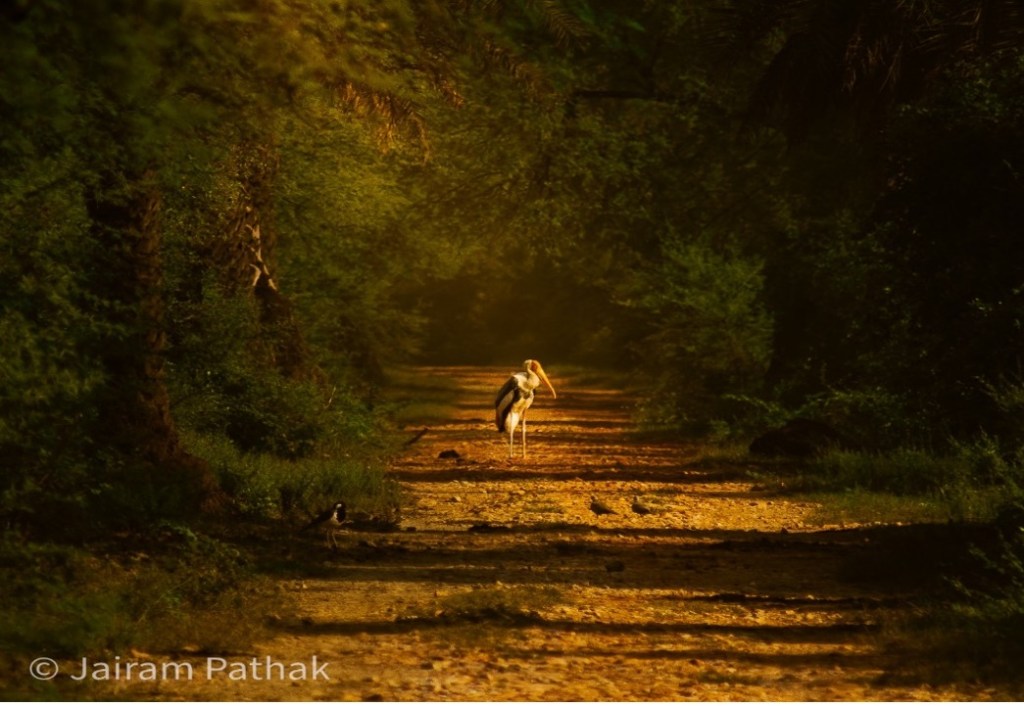
Photo Courtesy: Jairam Pathak, provided by G Javaid Rasool.
The impulsive flashes of a birdwatcher
Fills the birder’s ears with fluttering twitters.
Her chattering words
Begin to utter her vision.
The body is illuminated with the avian soul --

Longing to fly,
To be one among them, and
Discovering the façade of being
In yet another life for a moment.

Loud cheerful cackles flash
In amusing oddity.

The desperation for a shot from a proficient vantage
Is jolted when the subject moves hither and thither.

The birder’s wary eyes glow again and again, in other moments,
As though virtually seeing
From the bird’s perspective,
And gulps all the loud cravings
In a draught; shunning aside prudery
For creatures of sky leave in a tearing hurry.

Roaming around trivial flats on the hillside,
A piece of wet monsoon land dotted with scanty shrubberies,
The birder begins his ferreting, suspicious
Following bit by bit the hunch, the hope
To shoot avian frolic.

Experiencing the euphoria of spirit,
Yet wary of achieving some corporeal trance,
The birdwatcher turns back
And we begin going hand in hand
Into the midnight of a garden of virtuality.

The virtuality vanishes, assigning us
To discover the original clay in each of us.

G. Javaid Rasool, a self-proclaimed Lucknow boy, is a social worker. ‘The Wire’ has been publishing his poetic compositions. Besides, Varsity of Columbia, WCAR, etc. have carried his articles.

PLEASE NOTE: ARTICLES CAN ONLY BE REPRODUCED IN OTHER SITES WITH DUE ACKNOWLEDGEMENT TO BORDERLESS JOURNAL

Click here to access the Borderless anthology, Monalisa No Longer Smiles

Click here to access Monalisa No Longer Smiles on Kindle Amazon International

Categories
Musings of a Copywriter

Becoming a ‘Plain’ Writer

By Devraj Singh Kalsi

When a friend of mine glorified living in the hills and suggested I should live close to nature in order to nurture my creative side, I disagreed without showing displeasure as it would have appealed to me a decade ago. Instead of shifting to the mountains to forge a deep connection with nature, now I prefer to increase my interactions with nature and its elements in the nearby surroundings every day. Even if these exchanges are small and trivial, these are spread throughthe day and keep happening with amazing frequency.

Finding ample time to feel the presence of nature all around leaves me with negligible desire to relocate to the hillside where I would have the privilege to spread myself on a roadside bench and gaze and wave at newly married couples clasping their hands and walking down the road with melting ice-cream cones. I do not wish to turn into another such old man with a toothless grin, who never shies away from showing his naughty side whenever an opportunity arises.

Not considering such indulgences as effective remedies to stay young at heart during old age, the all-pervasive burst of energy actually comes from the bout of inspiration to produce a new creative work. The hills or the muse are just two known – and popular – sources while the fact is that there are infinite sources to explore. It depends on the individual embarking on this journey to awaken the creative self.

Hills are romanticised and considered to be the abode of purity with the power to trigger creativity like no other place. My recent visits to the hills did not prod me to write. While such a visit could be inspiring for many people who prefer the serenity of the hills to produce a masterpiece, I would consider myself an exception or a part of the small group holding a divergent opinion. Those who say you do not face writer’s block on the hillside are not telling the entire truth. Without contesting their belief, I am quick to retort by saying that I do not stare at the blank page and do not face any shortage of ideas here. I am happy to live in the plains and remain a plain writer without any complaints.

Those who live in the hills and write profusely get to write about nature and the people they observe closely during their long walks.  The hill towns also have a vast population of ghosts to write about since they prefer to live and breathe clean, fresh air and enjoy the mist and fog of the mountains. This category of dead folks brings so many stories to life. With deadpan humour, the writers relate engaging stories but if there is an abundance of paranormal tales from writers in the hills, it does not mean that the writers from the small towns across the country do not have spooky encounters to narrate. There is no dearth of ghosts to explore in the haunted, dilapidated buildings, cemeteries and treetops. If the emerging and established writers take a keen interest to spin bewitching tales, there can be a potpourri of ghostly delights to feast upon. Instead of trekking to the hills in search of lively characters where the human population is not dense, it is better to seek variety in the plains where the population is teeming with saints and sinners of varying degrees, climbing the heights of divine glory and plumbing the lows of depravity.

Abandon the idea of finding a goldmine of ideas in the hills and choose to focus on the world you live in. Relocating to get inspired involves disconnecting in the greed of enrichment. The ability to source the hidden treasures from the town or the locality comes to those who respect it unconditionally, just as we value the love we get unconditionally. There are many who leave for the hills to become fantastic storytellers, but their output fails to impress and loses consistency. Only when they come down and hit the mean streets, travel in crowded buses and trains, enter flea markets and dingy, narrow lanes do they become an integral part of the creative madness and their output shows that solitude is not the sole stimulant: a chaotic environment can also work its magic to stir creativity in wandering souls.

In case you have garnered a modicum of success and wish to experiment, you can try the hills or the beaches to measure the impact on your creative output. But in case you realise you can write well without changing your pin code, and all you need is a house with big windows providing a wide view of the verdant garden lined with trees and plants, offering a clear vision of quietness, then you can deliver a good creative work by sourcing material from the life lived, from the things you can imagine.

Taking a short break to tour the hills has left me disappointed once again. A depressed state of mind and boredom gripped me more than the lush green vistas. I missed the traffic, the mad rush for trains, and the tearing hurry to cross bridges, the restlessness to leave others behind. The sense of satisfaction found in the hill people seemed to infect me. With limited sources of entertainment, preferring to hit the sleep mode was the best thing to do. The idyllic scenery relaxed me for a few days and then the craving for frenzy took over. Depriving myself of it further would make me sick. So, I returned earlier than I had planned to, with the realisation that writing in the hills would be a challenging job for me. It could force me to quit writing forever. I could well be one of those seasonal types who retreat there to recharge their batteries and come back super charged to face the daily hectic grind of the real world.

How long would an ambulance take to reach me during a medical emergency in the hills also loomed large as a growing concern. Negotiating a sharp bend and thinking about such situations made me feel low. As I grow older, I refuse to be enchanted by apples and apple-picking. The childhood fancy of farm-picking sessions, of plucking litchis, berries, and cherries and apples and eating them in the orchards can be skipped or realised within a week. This charming activity cannot make a strong case to become a resident of the hills. Besides, the local market in the neighbourhood has good supplies throughout the year.

Dozens of markets, malls, bargain stores, eating joints, beauty parlours, and multiplexes are likely to be missed in the hills where consumerism is still not rampant. Aside from natural produce, other staple items are more expensive in the hills. Maintaining budgets would be an uphill task for an aspiring writer. Farmer markets would tempt me exploit those, but I do not want to join the list of discredited experts who exploit and then write about exploitation, thereby showcasing their hypocrisy to the world. Locating an advertising agency in a hill station would be another challenge as the clients think creative honchos from the ad world and film world live in the big cities. Agreed, having a second home in the hills for vacation purpose or weekend breaks is a good option. But writers cannot have this luxury unless they churn out bestsellers to finance a second home.

You could be a writer who is read not just in the hills but also read by those from the plains and beyond. Make your location immaterial for writing.  Junk the idea that a masterpiece with a universal appeal can come from a serene place alone. Writing thrives with speed, pace, and action. And the plains are remarkably good at offering this advantage, not just the slow-moving life and stillness in the hills that makes the mind race faster when the body is in a state of relaxation.

Devraj Singh Kalsi works as a senior copywriter in Kolkata. His short stories and essays have been published in Deccan Herald, Tehelka, Kitaab, Earthen Lamp Journal, Assam Tribune, and The Statesman. Pal Motors is his first novel.  


PLEASE NOTE: ARTICLES CAN ONLY BE REPRODUCED IN OTHER SITES WITH DUE ACKNOWLEDGEMENT TO BORDERLESS JOURNAL

Click here to access the Borderless anthology, Monalisa No Longer Smiles

Click here to access Monalisa No Longer Smiles on Kindle Amazon International
Categories
Poetry

Fear is a Paper Tiger

By Ananya Sarkar

FEAR IS A PAPER TIGER

It flaps and growls,
Gathering all its might.
But it's hollow like an empty can,
And the wind doesn't help either.

It looks fierce
But sways lightly
From side to side,
Unsure of its footing.

So, how long before you
Lift your head,
Look it in the eye
And then reach out to crumple --
The daunting paper tiger
Made of the sheaves of lies?

Ananya Sarkar is a creative writer from Kolkata currently living in Bangalore. Her work has been published in various ezines. She loves to go on long walks, cloud gaze and ponder upon miracles. She can be found on Instagram @just_1ananya and reached at ananya7891@gmail.com

PLEASE NOTE: ARTICLES CAN ONLY BE REPRODUCED IN OTHER SITES WITH DUE ACKNOWLEDGEMENT TO BORDERLESS JOURNAL

Click here to access the Borderless anthology, Monalisa No Longer Smiles

Click here to access Monalisa No Longer Smiles on Amazon International

Categories
Stories

Phantom Pain      

By Lakshmi Kannan

Mumbai. From Public Domain

 Gayatri got ready for the meeting. She stuffed her file covers and books into a tote bag, checked if her phone was completely charged, took the charger and put them inside her handbag. She recalled how she was both surprised and very pleased when her boss, the Chief Secretary, had called her on phone to inform her in advance that she would be required to attend this important meeting. “Save the date and keep it free of all other commitments,” he said. Given the agenda, the meeting could take a long time. Reaching the venue early would give her time to interact with her senior colleagues.

  She went to her mother’s room.

“Feeling better Amma[1]?” she asked but was alarmed to see her still writhing in pain. She was doubledup on the bed, clasping her stomach.

 “Oh God, Amma! Your pain has worsened. Wonder if it’s your appendix? Let me call our doctor.”

 “Gayatri, please don’t leave me.”

She stared at her mother, aghast. How very uncharacteristic of Amma! She was a strong matriarch who could manage many things in the absence of her busy husband, or even her grown sons, in sickness and crises. On the occasions she fell ill, she seldom asked her children to stay with her. Her general health had always been good, and she led a very active life. She was a pillar of support to Gayatri, helping her evolve as one of the most respected bureaucrats. Her parents were proud of her and she… she never voiced aloud her secret happiness about her parents’ tacit agreement with her choice to remain single so far. It was upsetting to see her women colleagues hit a roadblock the minute they got married. They had problems not just with the man who married them ‘for love’, but equally with their in-laws. What a waste of professional training!

“Massage my back,” said her mother. “It hurts so much.”  

Gayatri sat on a chair next to her mother’s bed. “Manni[2]!” she called, while gently massaging her mother’s back.   

 “Oh God!” screamed her mother.

“Where exactly does it hurt Amma, here?” she asked.  

Sujata rushed into the room. Suddenly, her mother howled in pain, holding her stomach.

Manni, please call our family doctor. Request him to come home immediately. Amma has too much pain.

Sujata nodded and rushed out with her phone.  

“Amma, don’t worry. Our doctor will here any moment,” assured Gayatri. “He may give you an injection that’ll control the pain. And check if it’s your appendix causing this pain.”  She made her lie down and continued to massage her till the doctor came in.

*

“Is it her appendix, doctor? At her age?” Gayatri inquired anxiously, waiting outside the door with Sujata. 

“I don’t think so, as she has no pain on the right side of her lower abdomen. She seems to be suffering from spasmsthat come on periodically. For now, I’ve given her a shot that’ll give her some relief. It has a mild sedativethat may help her sleep. I’ll come again to check,” he added.

“Thanks very much for coming doctor, at such short notice,” said Sujata, folding her hands.

Gayatri went in. Amma’s eyes were closed. When Gayatri got up, she felt a tug.

Her mother pulled at her dress. She asked her to sit down.

“Gayatri, please don’t go.”

Amma, Manni is here. Anna[3] may also come soon. This is a very important high-level meeting. I’m lucky to be asked to take part in the discussion,” she pleaded.

  Her mother nodded and patted her hands. “I know. I’m very proud of you, my girl, but today, I feel I may pass on. I want you to be around when I go.”

“What utter nonsense, Amma!  You never talk like this, and you scold all of us if we talk negatively.” She relented a bit and stroked her hands. “All right, I won’t go. Now sleep for a while.”
The sedative seemed to work. Her mother drifted off to sleep.  

                                                              *                                                                  

“Sujata Manni will take good care of her,” she thought. “I’ll inform Anna too. Now, let me call my colleagues to pick me up on their way to the meeting in Oberoi Trident.Gayatri gathered her tote bag, picked up her handbag and went to their living room. She tried their numbers repeatedly, but no one took her calls. Not even her brother. Let me call for a taxi then, she thought, when Sujata came in.

 “It’s Appa[4]. He called me because your phone was busy. Talk to him,” she said, giving her phone.  

“Gayatri, your phone was busy all the time,” said her father, petulantly.

“Sorry Appa. I wanted my colleagues to pick me up on the way for the meeting. But nobody took my call.”

“Their phones must be switched off.”

“What! And how can you tell?”

“Switch on the TV and see for yourself,” he said, hanging up.

*

The screen showed Taj Mahal Hotel, the Tower and Oberoi Trident in Mumbai. Then the camera panned over Chhatrapati Shivaji Terminus and the Nariman House and went back to Oberoi Trident with a fire blazing on the fourth floor. “Terrorists have ambushed the places from all around, holding people as hostages…,” said the newsreader. Gayatri and Sujata looked at each other, and then glanced at their mother’s room.

Gayatri froze. Sujata held her hand and whispered, “Your Anna called.:

“Where is he? And Appa?” Gayatri whispered back.

“They’re together in a place, far off from the scene. Ramesh is also safe, but no one is allowed to go out of the school, or enter,” she said. The two women huddled together on the sofa and watched. A lone man with a gun walked around Shivaji Terminus. He was to gain notoriety later  as the terrorist who went unrepentant to his execution in 2012.

.

[1] Mother

[2] Sister-in-law

[3] Elder brother

[4] Father and Father-in-law

Lakshmi Kannan is a poet, novelist, short story writer and translator. Her recent books include Nadistuti, Poems (Authors Press, 2024) and Guilt Trip and Other Stories (Niyogi, 2023). For more details, please see, please see her entry in The Routledge Encyclopedia of Indian Writing in English, or visit her site www.lakshmikannan.in

PLEASE NOTE: ARTICLES CAN ONLY BE REPRODUCED IN OTHER SITES WITH DUE ACKNOWLEDGEMENT TO BORDERLESS JOURNAL

Click here to access the Borderless anthology, Monalisa No Longer Smiles

Click here to access Monalisa No Longer Smiles on Amazon International

Categories
Poetry

To be a Mother…

By Vidya Hariharan

She carried twin rivers 
Within her,
One for herself,
One for her daughter.
Fluid states she embraced,
The change from one to another
Barely visible
To those who loved her.
Sipping water, gushing milk
And blood, precious nectar
from her womb,
surviving, barely surviving.

Vidya Hariharan is an avid reader and traveller. Her work can be found in Setu, Poetry Super Highway, Muse India’s Your Space, Glomag, Café Dissensus, and Under the Basho.

PLEASE NOTE: ARTICLES CAN ONLY BE REPRODUCED IN OTHER SITES WITH DUE ACKNOWLEDGEMENT TO BORDERLESS JOURNAL

Click here to access the Borderless anthology, Monalisa No Longer Smiles

Click here to access Monalisa No Longer Smiles on Kindle Amazon International

Categories
Musings

Elusive XLs

By Shobha Sriram

Yet another sop story on slimming woes from a fat woman, you might think. But, no, this is about an erstwhile slim woman trying to stay slim.

At the turn of the century, I had just discovered the art of slimming. But my smiles in front of the mirror turned to frowns at the dinner table. While following a strict diet: breakfast of two slices of plain bread, lunch of vegetable salad, and dinner of two chapathis[1], I used to motivate myself with images of me going as slim as those skinny girls, who we’d all admire for their hourglass figures. Finally, after loads of exercising, yoga, and dieting, I slimmed down to a figure my friends called “Chic”. In those six months, I also learned the art of dressing well—an exclusive knowledge only the affluent had back then.

As time went on, I went to work, married, switched jobs, made money, lost money, gained fame, and graced anonymity. I had found dealing with people — be they friends or relatives — unpredictably tough. Sandwiched between my parents and in-laws, my emotion too had its highs and lows. Moments of clarity could follow chunks of confusion. But, through all those tranquil and torrid times, my determination to follow my dietary routine and exercises never wavered. I was unbelievably steadfast in balancing feasts with fasts and idleness with mobility. I bought a lot of expensive dresses, well-cut and flowing, and prided myself in them. I stayed slim.

Pandemic happened. Recipes crowded the YouTube listings. Women doled out never-before-heard dishes. Kids, when not running around bringing the roof down, went about relishing and demanding varieties of snacks. Everyone I knew burst out of their blouses. Amidst all the pandemonium, I was overly cautious about—you guessed it—eating. For my part, I also doled out varieties of dishes, but not for me. My family savoured every last bit. To maintain my routine, I went for long walks in nearby parks to offset all the sitting that work brought along with it. While my friends graduated to buying XL-size dresses, I stayed slim. Although I looked wistfully at the expensive dresses I had bought earlier, I saved them for wearing to work after the lockdowns.

Alas, little did I know that that ‘wearing’ was never to come. Imagine my shock when I could not bring the kameez[2]down my neck! I felt like somebody had slapped the insides of my head. My vanity went for a toss. How could I not know I was putting on weight? Wait, was it some health issue? Checkups followed. No problems there. Then, what was wrong? Had I become complacent? By now, I knew all the tricks to staying slim, and they had never let me down. What happened? Was I overconfident?

Last year, a mischievous aunt’s comment on my getting fat made matters worse. Up until then, she had never acknowledged my slim figure—not that I had expected her to, relatives being what they are. But she was quick to point out that I had grown fat and hoped there was no underlying disease. The overfamiliarity on her part, especially when she had never bothered to interact with me, filled me with disgust. But the damage was done. My expensive dresses went to charity. I started buying XLs. XXLs were in the offing too. My blouse size matched my husband’s shirt. I began exercising with greater vigour. Every morning, panting and puffing, I would jog, do floor exercises, and yoga.

One beautiful morning, I was exercising with full energy, pushing in my tummy hard, and I sighed with defeat at my fat waist and protruding tummy. When I sat down with a huff, my husband said, “Why are you torturing yourself? Don’t exercise to lose weight. Just do it to stay fit.”

A great relief engulfed me.

He said, “Do you know you look really beautiful now? Your face has broadened. That makes you look pretty. The dark circles under your eyes are vanishing so fast.”

I realised then and there: Be fat but keep fit.

From Public Domian

[1] Flatbread

[2] Indian shirt

Shobha Sriram is a writer from Chennai and a former fellow at Amherst College, US. Her writing has appeared in print and online magazines and journals, including The Wire, The New Indian Express, Muse India, Funny Pearls UK, and others.

.

PLEASE NOTE: ARTICLES CAN ONLY BE REPRODUCED IN OTHER SITES WITH DUE ACKNOWLEDGEMENT TO BORDERLESS JOURNAL

Click here to access the Borderless anthology, Monalisa No Longer Smiles

Click here to access Monalisa No Longer Smiles on Kindle Amazon International

Categories
Poetry

Rain by Paul Mirabile

From Public Domain
RAIN


The rain fell forty days and forty nights,
Flooding forests, meadows and dells;
How hard it fell, dimming the daylight
While I, at my window, experienced peculiar delights.

For forty days and forty nights, a water-logged world sang
Hymns to the low, black clouds of cascading downpours,
Tear-filled verses rang poignant pleadings.

Yet, without respite, the rains fell and all seemed hopelessly lost,
As the deluge drowned out the chantings, poured forth its wrath.
The voices rose higher and higher vexing the Source.

At last one cloudless morning the tambourining droplets ceased,
Amok rivers, streams and brooks began to recede;
All agog people rushed to celebrate the Event with a grand feast
I, indolently, shut my shutters, rather indifferent to say the least.

Paul Mirabile is a retired professor of philology now living in France. He has published mostly academic works centred on philology, history, pedagogy and religion. He has also published stories of his travels throughout Asia, where he spent thirty years.

.

PLEASE NOTE: ARTICLES CAN ONLY BE REPRODUCED IN OTHER SITES WITH DUE ACKNOWLEDGEMENT TO BORDERLESS JOURNAL

Click here to access the Borderless anthology, Monalisa No Longer Smiles

Click here to access Monalisa No Longer Smiles on Kindle Amazon International

Categories
Stories

Headless Horses

By Anna Moon

When we were younger, we were always told to sleep in the afternoon so we would grow taller. I had always been a small child. I was 9 nine back then. I was already in third grade, but I was 119 centimeters tall and weighed only 19 kilograms.

My grandparents spoiled me. We usually ate boiled okra that my grandmother counted and tied up in bundles with colourful rubber bands from early morning until noon, while they fried one of the chickens, they had raised underneath the hut my grandfather built.

My grandfather worked in the rice field and returned home at 12:30 pm, carrying a huge watermelon. He went straight to the kitchen while my grandmother and I waited in the sala where we also slept, laughing with the host of the only noontime shows we could watch on TV since all the other channels were either static or blurry.

“It’s already ripe,” he said, putting the plate of thickly sliced red watermelon on the round table. I mindlessly took a piece, dipping it in white sugar while he sat beside me on the worn-out sofa upholstered in a brown striped fabric with its springs protruding like the bones under his wrinkled skin.

He bit into the watery pulp of the watermelon and swallowed the black seeds. Without taking his eyes off the screen, he held out his hand and let me spit the seeds into them.

“It’s time to sleep,” my grandmother said, rising from the sofa and then turning off the TV. She laid the old, torn, white blanket on the cold wooden slats while I held a flattened, hard pillow.

In the afternoon, I lay on the floor between my grandparents listening to the soft bamboo trees outside creaking. There was a momentary silence. I waited for the wind to blow and the bamboo barks to squeak again. The sand and dust outside made everything gray, and the bamboo trees swayed. It had always been cold and dreary, and it never failed to lull me.

By three in the afternoon, I was deep asleep, left alone dreaming about a herd of headless brown horses galloping freely but vigorously, aimlessly. They did not neigh, because they did not have mouths. The only sounds they made were their hooves hitting the ground.

It was not gore. It wasn’t out of the ordinary. It was just like they never had heads to begin with. Everything else in those dreams quickly dissipated as soon as I woke up. Everything else in my childhood was forgotten. I just knew once it existed. Deep in my heart, I knew it did even if I pretended it didn’t. On that afternoon, I was awakened by my grandfather deeply kissing me.

I never told anyone. I was just nine back then. I didn’t know much about the world. I pretended it didn’t happen. I was certain I was dreaming of headless horses. I turned and twisted, pretending I was still asleep.

These emotions weren’t fleeting. It felt like my heart drop to my stomach. I was sickened. I was confused. I was scared. I was angry. I listened to the bamboo trees creaking. It’s the sound of the bedroom door quietly opening. My grandmother used to sneak in and check if I was sleeping. “It’s colder outside,” she said and never let me sleep in the bedroom again.

I was awake for hours, but the dream wouldn’t fade. The dream wouldn’t disappear. I never slept in the afternoon again. Still, I grew taller.

.

Anna Moon was born in a small historic town in the Philippines. Growing up, she was fascinated with languages, traditions, and cultures. She loves to travel.

.

PLEASE NOTE: ARTICLES CAN ONLY BE REPRODUCED IN OTHER SITES WITH DUE ACKNOWLEDGEMENT TO BORDERLESS JOURNAL

Click here to access the Borderless anthology, Monalisa No Longer Smiles

Click here to access Monalisa No Longer Smiles on Kindle Amazon International

Categories
Poetry

Tyrant by Pulkita Anand

Pulkita Anand

TYRANT

There’s a new culture.
Did you notice it? I, nope.
Do you follow it? Of course.
There’s a game similar to it.
There’s a trend similar to it.
At times, even the rain is similar to it.
It’s silence. It’s silence
That’s covering all. That’s filling all.
That knows all. That’s everywhere
Voices knocking on doors to be heard
But overwhelmed by the silence
Hush! The footsteps are parting the silence.
The barbarians came, and they silenced
And they left silence.
At night, silence patrols the street.
It dances and sings in the heart,
Silence that sticks to the earth,
Silence that sticks on a stone,
Silence that rents ears,
The silence of archives,
Pebbles falling like a fountain
Leaving silence.
The moon is weeping over the lake.
And one can hear the silence in the houses.
The silence. The silence.

Pulkita Anand has translated a short story collection, Tribal Tales from Jhabua, authored of two children’s e-books, her eco-poetry collection is we were not born to be erased.

PLEASE NOTE: ARTICLES CAN ONLY BE REPRODUCED IN OTHER SITES WITH DUE ACKNOWLEDGEMENT TO BORDERLESS JOURNAL

Click here to access the Borderless anthology, Monalisa No Longer Smiles

Click here to access Monalisa No Longer Smiles on Kindle Amazon International