Categories
Stories

Going to meet the Hoppers

By Fiona Sinclair

The announcement of a ‘major retrospective’ sent Alice’s friends giddy with excitement. Reviews in The Guardian raved.  The five stars awarded barely seeming adequate.  

Alice remained silent. In truth she had never heard of the American artist. Her tastes were more European; Turner, Vermeer, Caravaggio.

Some friends raced to become early bird visitors. They had joined queues like static conga lines and came away gushing with praise.  But to Alice, the Hoppers became like an irritating family, who mutual friends declared “You will love’.  However past experience had taught her that when introduced, she had found no common ground.

“We must put it on the list,” declared Julia.  Her closest friend and partner for any such cultural initiatives.  Julia hated finding herself on the back foot at parties when the latest event was mulled over by guests who had already taken it in.

Alice nodded noncommittally, changed the subject by drawing attention to a stylish pair of shoes in a store window.  

Fortnightly visits to the Maudsley psych hospital in southwest London had become routine to her now. A years’ worth of psychotherapy was succeeding in untangling her past. She no longer entered the outpatients with eyes fixed on the squares of carpet tiles. A ploy in those early days to avoid any interaction with the human flotsam that mental health had beached in the waiting room.

But over time she saw that this was a place where calmness was carefully curated. Pictures of flowers bloomed on the walls.  The décor was always spruce and the staff — from receptionists to psychiatrists — treated the patients, however ramshackle, with respect.  

Now she and her therapist Margaret would chit chat as key codes where punched into pads, in order to gain admittance to each level of the labyrinthine building. The sounds like birds of prey that issued from the acute wing no longer made her start.

This particular Monday morning, her appointment was at a bleary eyed 8 am. Fine if she lived in London — however she was a two hours train ride away so her alarm clock blared reveille at 5 am.

Her session was finished by nine. “You’ve got the rest of the day to yourself,” Margaret remarked as she shouldered the final door whose second line of defence seemed to be that it always stuck.  Alice was at a loss as to how to spend this time. London brimmed with museums and galleries, but nothing tempted her. “You know what Dr Johnson said,” grinned her therapist.

“When a man is tired of London, he is tired of life,” responded Alice. “Probably not the best sentiments to quote in Maudsley,” they both agreed.

Since the peak hour ticket had been expensive Alice felt the outlay should reward her with more than counselling. She was not in the mood for aimless shopping.  But scrolling from memory through the current exhibitions, she found there was a dearth, except of course for the Hoppers at the Tate. It was a short tube ride away. “Well there’s always cappuccino and cake in the café afterwards.” She consoled herself.

On the Victoria line, as the train jolted to a halt at each station, her carriage never fully aligned with hoardings that trumpeted the event. And as the tube accelerated away, she only got a zoetrope impression of images that did nothing to ignite her enthusiasm.

“If it’s crowed,” she decided, “I won’t bother.” Envisaging hordes of retirees, school parties and tourists mobbing the entrance, all waiting for 10am like a starting gun.

In truth most exhibitions only admitted a hundred or so visitors every hour. But even so,  from past experience, she knew there would be a funeral pace past each picture as if it was laying in state.

Alice blamed those headphones that explained each painting down to the final daub. Visitors planted themselves in front of the picture until the recording told them to move onto the next image. “Just look and form your own opinion,” she would mutter whilst craning to catch a glimpse of the artwork.

The Thames accompanied her towards the Tate. There was a Monday morning feeling in this part of London, as if the area was drawing breath after a busy weekend. The district was dedicated to tourism with The Globe and The Turner being near neighbours.

The gallery was housed in a decommissioned power station designed by the architect Sir Giles Gilbert Scot, in a time when even functional buildings were given an aesthetic flourish. The conversion to art gallery had retained the original deco building but also made sympathetic modern additions. The brickwork was cleaned back to its original red and the towering chimney advertised itself on the London skyline.

With the internal machinery removed, the empty core allowed for spacious galleries ideal for art on an ambitious scale. The turbine hall alone was so vast that it dwarfed the escalators that bore visitors up to the galleries. Here even Michelangelo’s’ 17 ft David would look lonely.

Alice was quite accustomed to taking herself off to the cinema, theatres, exhibitions alone. Most of her friends were married, therefore had commitments. She was often too impatient to wait whilst they managed the logistics of their domestic lives, to find time to accompany her.

There was a freedom in being on her own, a spontaneity that meant she could hop on a train, and head to London whenever she felt inclined.

Friends found her ease at flying solo incomprehensible. “You’re so brave,” they would remark in tones that simultaneously managed to be admiring but also patronising, “I could never do anything like that on my own.”

“It’s practice,” she would explain. As an only child she had grown up used to her own company. Moreover, without a partner now, the fact was if she wanted the rich cultural life she craved, Alice had to take matters into her own hands.

Over time she had developed strategies that gave her confidence. Aware that even in the 21st , a single woman going to the theatre or cinema on her own still  garnered curious glances, she was, therefore, always accompanied by a book.

Arriving at the Tate’s ticket desk, Alice was surprised to find only a dribble of people. 10 am on a Monday morning was apparently too early even for the keenest of visitors.

Consequently, with extraordinary timing she had the luxury of being the only person in the exhibition. Grinning at her good fortune she placed herself in the centre of the largest room. She then made a 360 degrees turn to get an overview of the Hoppers before moving in on specific images that beckoned to be examined.

What she saw utterly contradicted her preconceptions of the artist and his work. These were not the cosy representations of American life she had expected.  

Human loneliness was delineated in every scene. There were no cosy family meals or girlfriends gossiping. Indeed, these people seemed to possess no faculty for laughter. Married couples who had run out of things to say to each other long ago, now gazed off into their own private horizons.  Solitary men sat on stoops smoking with blank expressions as if they had given up on thinking. Many eyes were cast down, or concealed beneath hats, so that all emotional cues were transferred to their body language whose droop spoke of hopelessness.

This despair was not confined to cityscapes. There were landscapes too, where forests growled at the edges of civilisation, and unkept grass prowled up to the stoops of solitary white wooden houses. These homes were personified as if conveying by proxy the emotions the characters in other pictures could not. Doors screamed and windows gaped.

Above all she had never seen an artist paint silence so effectively. It emanated from the pictures, seeming to seep into the gallery itself. 

In all the years of visiting exhibitions she had never seen one that reflected back her own experience of life. The images did not bring her mood down rather she felt exhilarated that she was able to look these pictures in the face without flinching.  

Alice returned home buzzing with a convert’s zeal. As a result, her friend hastily cleared a Saturday. She farmed her kids off to their cousins for the day and left a ready meal for her husband in the fridge. Of course, Alice was champing to revisit the exhibition, although she was savvy enough to understand that she would never be able to recreate the timely conditions or the wonder she had experienced on first seeing the pictures.

The two women arrived at the gallery early enough for there to be a lunchtime lull.  From past experience she knew her friend did not work her way methodically through an exhibition but liked to see the artist’s greatest hits first. Juila made for the voyeuristic 

‘Night Windows’, where a woman is observed in a bedsit,  her back to an open window from which curtains billow, a favoured image for fridge magnets and coasters.

Alice felt the same rush of enthusiasm for the pictures. She was desperate to enjoy again images that had particularly affected her, but good manners tethered her to Julia’s side. Nevertheless, she could not help breathlessly pointing out details in ‘Night Windows’ that had struck her before. Alice’s words tumbled out in her desire to share the image with her friend. However, Julia seemed to have left her enthusiasm with her coat in the cloakroom. She regarded the painting in silence. Alice grimaced inwardly wondering if her effusiveness was deterring her friend so turned off her gush of words.

Julia still did not engage with this painting or indeed any others. She paused before each image briefly without comment. Alice trailed behind her at a loss. She wondered if her friend had suddenly become unwell. There was a precedent for this when she had once passed out from a UTI at the theatre. And she knew her friend well enough that if she hated an exhibition, she was quick to speak her mind.

“Are you feeling okay?” she whispered.

“I’m fine,” Julia responded. But the ‘fine’ was loaded with a subtext Alice could not at that moment fathom.

Julia stood briefly before the artist’s other well-known pictures as if mentally ticking them off.  Alice desultorily picked out a detail here and there like offering titbits to someone who had lost their appetite. Her friend merely nodded or squeezed out a ‘hmmm’.

From her peripheral vision the paintings she ached to enjoy again beckoned to her. Finally, she made her way to them, hoping that by giving her friend some space she might find some way into the works. However, looking over her shoulder she saw Juia had begun to move past the paintings without pausing, barely glancing at the images. Eventually feeling as if she was abandoning her friend at a party of strangers she returned to her side. They had reached ‘Night Hawks’. “Surely she’ll respond now,” she thought. Her friend did but not with appreciation, instead she raised her hand to her eyes as if shielding her gaze. Alice was reduced to foolishly gesturing ‘the famous one’ as if trying to chivvy a child’s interest.

“Well I think we’ve seen enough,” Julia suddenly found her voice again, “Let’s get out of here.”  And without waiting for Alice, she bolted through the exit and plonked herself in a comfy armchair in the coffee shop and took a deep breath as if the atmosphere in the gallery had tried to choke her. In an effort to raise her friend’s spirits, Alice brought her a double shot cappuccino and a slab of cake. Seated by a large picture window looking down on the Thames, Alice commented on a few landmarks by way of breaking the silence. It was still a one-way conversation though until revived by the food, Julia began to join in.

Clearly there was not to be their usual post event discussion.  This was unprecedented. They could not even agree to disagree as they had many times before if they could not even discuss the exhibition.   During this smallest of small talk, Alice tried to make sense of her friend’s reaction. She began to feel as if she had forced Julia to accompany her. Then remembered it was actually her friend’s agency that had brough them to the Tate. Reasoning to herself that they couldn’t spend the rest of their lives avoiding all reference to the Hoppers she brushed the small talk aside, took a breath and blurted out, “Did you not like the exhibition?”

Julia paused before speaking, “Look, I know you love them but for me, there was no beauty in there.” She gestured with her head towards the gallery they had come from. “They are so dreary.” Her tone verged on whining as if the exhibition had got her there under false pretences. Alice was quick to point out that they had seen other exhibitions genuinely devoid of conventional beauty  — Rothko, Warhol, Gilbert and George. None of whose work could have comfortably inhabited a sitting room.

“But I know what to expect with abstract art,” her friend pointed out.  “I can stomach geometric shapes and dribbled paint because they engage my mind not my emotions,” she paused, “also somehow they don’t reflect real life.” The caffein had clearly loosened her tongue. “I expect at least some beauty in representational art.” She began to list Hopper’s faults. “Why are there so few people in the city? It looks post-apocalyptic. And they are so miserable. That picture of the psycho house seems to sum up the whole collection.” She added as a last shot.

Alice felt as if her friend’s criticism was aimed at her as well as the artist. She attempted to put her case for the paintings. “But don’t you see that they reflect the isolation of modern life?” Her friend’s face remained adamant. Alice searched for a comparison then had a brain wave, “Look’ we both studied TS Eliot at uni. Can’t you see it’s ‘The Waste Land’ translated into art?” She felt rather pleased with her analogy.

But Juila shook her head. “You can distance yourself from words, but pictures,” she grimaced. “Nothing erases an image, once seen it gets trapped in your mind.”

Alice pondered the two divergent responses to the Hoppers. Both were extreme in their own ways. She wondered if the roots of their reactions lay in their backgrounds. Her own history, even her therapist agreed, verged on the Gothic. Whereas Julia had enjoyed an Enid Blyton childhood. Throughout her life she had been adored by her father and encouraged by her mother. Her marriage to Jim was that rare thing, a pairing that lasted without a whiff of infidelity. Admittedly their life together had not been entirely charmed — ill health, a father’s dementia — redundancy had been faced down over time. Now their reward was a very comfortable life.

Her friend seemed to have read her thoughts. “I know I have a good life compared to most,” Juila admitted. “And I know there’s ugliness in the world. I just don’t want to be reminded of it on a day out.” 

Alice began to understand that the pictures were an uncomfortable reminder of less kind lives. Whilst they were not in the face brutality of war, instead they showed men and women recognizably modern whose lives were the playthings of circumstance and as such had visibly given up.

They seemed to have awakened some existential fear in her friend, perhaps a dread of feeling hopeless. The Hoppers were a reminder that even middle-class lives could falter and fall if fate gave a push.

Julia suddenly changed the subject with a hand brake turn. She gave a round up of her daughters’ careers and love lives, her husband’s progress on the kit car he was building. She seemed in this way to be deploying her family as a buffer against the images she had just seen.  

Making for the exit, it was usually part of their ritual to visit the gift shop. But whilst Alice turned to enter, eager to buy more Hopper related merchandise, Juila swept passed deep in describing  the minutiae of her family’s next trip to Italy . Alice shrugged, “I’ll pop in next time,” she thought.

.

 Fiona Sinclair has had several collections of poetry published by small presses.  Her short stories have been published in magazines in the UK, US and Australia. 

.

PLEASE NOTE: ARTICLES CAN ONLY BE REPRODUCED IN OTHER SITES WITH DUE ACKNOWLEDGEMENT TO BORDERLESS JOURNAL

Click here to access the Borderless anthology, Monalisa No Longer Smiles

Click here to access Monalisa No Longer Smiles on Amazon International

Categories
Poetry

Mesmerised by Kois

By Elizabeth Anne Periera

Peering attentively through the gated steel fence with astonishment,
I caught sight of the elegant Koi fishes swimming gracefully.
Splashing aimlessly in the rippling crystal-clear aquamarine pond,
Bold hues of orange, red, black and white paint their agile bodies,
Delicate, slippery and swiftly swimming in windy and circular motions,
Enchanting my hazel eyes with childlike wonderment and amazement,
Calming the turbulence of my beating heart with peaceful serenity,
A golden symbol of prosperity signifying these water dragons ravishing presence.

Elizabeth Anne Pereira is a dedicated educator and versatile writer contributing to national/global development and the broadening of the human mind especially in areas concerning children and youth. Her numerous creative works have been published in local and international publications.

.

PLEASE NOTE: ARTICLES CAN ONLY BE REPRODUCED IN OTHER SITES WITH DUE ACKNOWLEDGEMENT TO BORDERLESS JOURNAL

Click here to access the Borderless anthology, Monalisa No Longer Smiles

Click here to access Monalisa No Longer Smiles on Kindle Amazon International

Categories
Slices from Life

Social Media Repitition

By Jun A. Alindogan

I remember feeling tense when I opened my very first email account with the help of the friendly staff at a British registered charity office where I was a member of the learning resource centre in Manila. I thought that it would open a floodgate of privacy issues, including surveillance and compromise. The world’s technological landscape was changing, and I had to adapt. I have always held onto the belief that while technology has immense benefits, it also has a lot of unbridled consequences, including insecurities, pride, selfishness, egoism, shame, and individual and religious superiority. A number of digital platforms have continuously increased and evolved in various iterations, from its email function to TikTok, Facebook, Messenger, Viber, vlogs, WhatsApp, YouTube channels, Pinterest, Blogspot, WordPress, LinkedIn, ZoomInfo, and Threads. The list seems endless.

I have a personal and professional Facebook account, as well as Messenger and Viber, because I find these platforms to be the most helpful to me. I have limited comprehension when it comes to understanding why young people feel the need to be on every digital platform. In my opinion, less is more. Being overexposed can be toxic in terms of seeking external validation and interaction. Not every thought needs to be published on social media. Why do you have to drag your friends and family and even strangers into your rollercoaster of emotions and shifting ideas about life’s journey all the time? While it is true that social media is a tool for self-expression, it is also equally true that it is a medium for self-destruction, as transparency can be both good and evil.

Take, for instance, the case of a woman in her mid-20s who is active on various social media platforms such as Facebook, Instagram, LinkedIn, Twitter, Pinterest, Blogspot, WordPress, TikTok and X (Twitter). She lost her parents at a young age and had to work as a household helper in the city. Eventually, she received a government scholarship and was able to continue her college studies. She shared on one of her social media accounts that it has become a sort of diary for her, in addition to her voice notes and physical journal. What is the reason for this repetition? Perhaps it is an issue of validation. When an individual delves into an onslaught of social media accounts, it implies proving one’s identity and self-esteem to the world. This can become a form of spiritual superiority, indicating that the person is self-absorbed. We are not the world.

The same holds true for partners who must keep up with their significant others’ social media accounts. The rat race is not just physical, but also digital. For instance, decisions about getting married early are often swayed by image quotes or social media discussions that push boyfriends to give in to these pressures, even if it’s not the right time for those who have only been working for less than two years and have not established a stable and relevant career. Saving for one’s wedding becomes the priority when it should be the other way around – saving for one’s personal and professional growth and development first. Why is there a need for comparison? As a result, emotional manipulation and threats are common. Career concerns are also plagued by the pressure to amass wealth by a certain age. The repetition of social media posts may be a way for individuals to acknowledge their own shortcomings.

In the context of a close friend, I have often wondered why, in most of his photos with me and our other friends, he rarely smiles. Yet, in his photos with his girlfriend, he has a big smile all the time. Is this a result of social media pressure, causing him to appear serious with friends while showcasing happiness in his relationship? On the contrary, I believe that his consistent seriousness may be a reflection of both his and his partner’s insecurities and jealousy.

For years, I have developed a close bond with a friend who was orphaned at a young age. Our main forms of communication are face-to-face and online. However, a year ago, he unexpectedly unfriended me on Facebook. I suspect that this decision may be related to the social media pressure he faces regarding his relationship. Despite this, we still communicate and share stories on Viber and meet face to face, although not as frequently as before. I understand that his job at a global fast food chain keeps him busy, but the pressure from social media can be overwhelming as it becomes a cycle of repetition.

In a way, social media serves as an escape, so repetition is necessary to cope with both material and non-material stressors. To some extent, this coping mechanism may be healthy, but most of the time, it becomes detrimental to a person’s well-being. Being overly repetitive on social media always comes at a cost.


Manuel A. Alindogan, Jr. or Jun A. Alindogan is the Academic Director of the Expanded Alternative Learning Program of Empowered East, a Rizal-province based NGO in the Philippines and is also the founder of Speechsmart Online that specialises in English test preparation courses. He is a freelance writer and a member of the Freelance Writers’ Guild of the Philippines (FWGP).

PLEASE NOTE: ARTICLES CAN ONLY BE REPRODUCED IN OTHER SITES WITH DUE ACKNOWLEDGEMENT TO BORDERLESS JOURNAL. 

Click here to access the Borderless anthology, Monalisa No Longer Smiles

Click here to access Monalisa No Longer Smiles on Kindle Amazon International

Categories
Poets, Poetry & Rhys Hughes

Did He Ever?

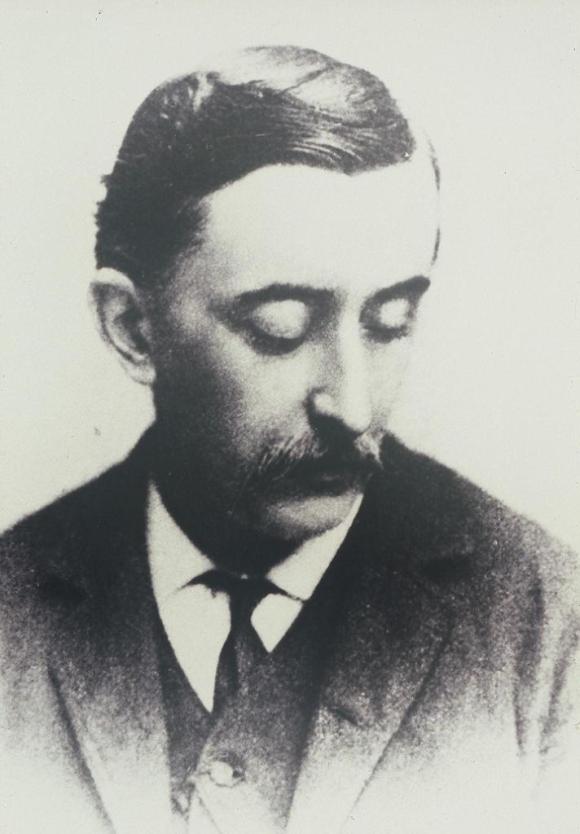
Lafcadio Hearn (1850-1904) was a British-Japanese national of Irish-Greek descent. Also known as Koizumi Yakumo, he was a writer, translator, and teacher who introduced Japanese culture to the West. From Public Domain.
Did Lafcadio Hearn
ever write about a worm
that went to
university in Tokyo?
I don’t think so.

Did he write about a fright
that coughed all night
in the loft of
a barn in Uzbekistan?
No, he didn’t.

Did he ever tell a tale
about a purple whale
who drank tea
with Yukio Mishima?
Of course not.

Did he dance
in France with a pig
named Nancy
in a fancy club in Nantes
while wearing a wig?
Even if he did,
I care not a fig.

Did he fancy Albert Camus
and take him
to a fair where he gambled
his underpants
for the chance to win a pear?
How should I know!

Did he surf with a flea
or row with a gnat
on tempestuous seas
while thunders boomed
and blunders
loomed in a volatile sky
that resembled a curtain?
Impossible
to be absolutely certain.

Did he acutely applaud
a cute fruit bat
that loved to sing songs
and bash gongs with twigs
in twilight hours
while the sleepy flowers
shut their petals
like silky eyelids? Beats me!

So what did he do?
What about him isn’t untrue
but genuinely odd?
Did he cavort with a frog or
plot with a toad
to overthrow the lords
of chaos and dismay?

Did he rummage his way
through the remains
of the day,
barking like a dog
balanced on a log
that is floating down a river?
I suspect not.

That’s the most curious thing
to learn about
Lafcadio Hearn: no one ever
finds anything
definite to say
about his strange experiences.

I don’t even know
if he ever kissed a ghost
on the lips
or played billiards
with a host who turned out
to be a vampire
or ate toast burned to a crisp
by dragon breath
and thereby ruined the health
of his breakfast.

Confirmation is hard to find.
Sometimes I think
that all these events are just
in my mind.

Rhys Hughes has lived in many countries. He graduated as an engineer but currently works as a tutor of mathematics. Since his first book was published in 1995 he has had fifty other books published and his work has been translated into ten languages.

.

PLEASE NOTE: ARTICLES CAN ONLY BE REPRODUCED IN OTHER SITES WITH DUE ACKNOWLEDGEMENT TO BORDERLESS JOURNAL

Click here to access the Borderless anthology, Monalisa No Longer Smiles

Click here to access Monalisa No Longer Smiles on Kindle Amazon International

Categories
Review

In the Waiting Room of Hell…

Book Review by Andreas Giesbert

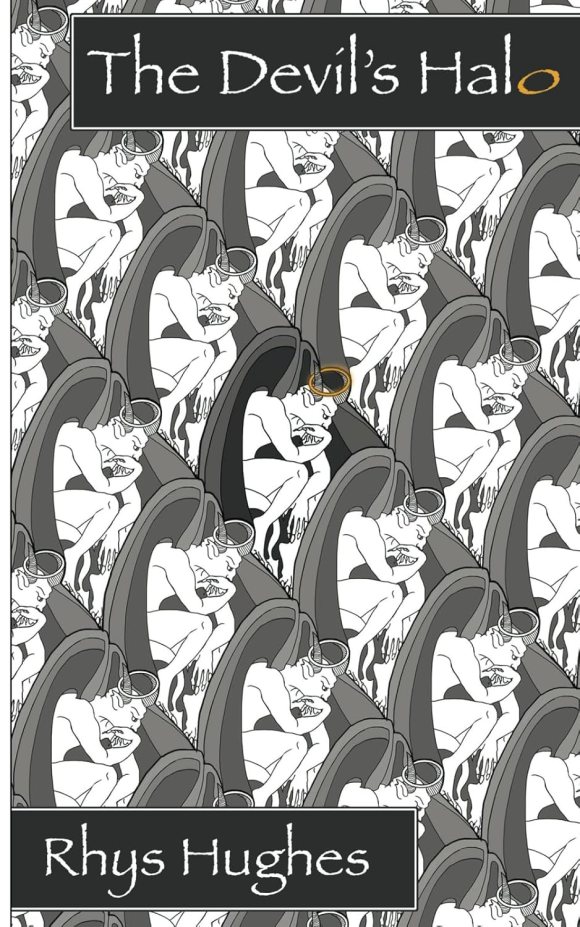
Title: The Devil’s Halo

Author: Rhys Hughes

Publisher: Elsewhen Press

Imagine standing at the gates of hell only to be told that you are not one of the clear cut cases that immediately get a circle of hell assigned. As the judgment of a life is “morality, not calculus”, this process can take some time. Not less than 24 Aeons in the case of our morally ambiguous protagonist. Quite a long time in the waiting room that is at least better than boiling in hell. His first task is getting to his place in line. As his name is Montgomery Zubris and the waiting spots are in alphabetic order, it’s only a matter of 380.5 years of walking. Thus our poor Monty invents a number of contraptions to hasten his journey. 

Hughes paints a surreal but somehow plausible image of an endless waiting room with its own logic. It is up to Montgomery to understand its innerworkings: the hatches that deliver food and drinks and the rules that the ever-watching angels enforce. “This afterlife is a riddle.” And even if death itself is of no danger anymore, “the afterlife [still] contains risks. People who say that the dead have no more troubles are talking nonsense. There are worries down here too, lots of them. Worries are one of the fundamental constants of the universe, just as photons and neutrinos are.”

The endless room itself and the unsettling surreal angels aren’t what make for the core of the book though. It is the stories that his chance encounters have to tell. As time is abundant and entertainment scarce, the inhabitants of this limbo indulge in storytelling. “Everyone tells tales down here. It’s a compulsion.”

The ten chapters are in some way a short story collection connected through the overarching theme of afterlife’s waiting room and how its inhabitants ended there. The range of stories is quite impressive. They range from the silly to the serious and all convincing by playing out a core idea to its full consequences. For instance, we have a fire fighter who sees fire as a living being and kindles it like a pet; an abbot who becomes a rocket scientist or the struggles of a migrant in a world that’s no longer welcomes those that cross borders. And then there is Marcus Fakus Aurelius, a perfect Stoic robot and of course in the end, awaits the devil himself …

In addition to a shared theme, the stories intersect. We learn different perspectives on the same stories and get to know characters that are part of other stories. It’s entertaining literature that is lightened up by occasional philosophical observations but mostly shares a humorous level of surreality. It’s safe to say that Hughes is a master of taking words and phrases literally. Whenever he catches an odd phrase he hoboes the train of thought and shovels deep for its meanings. That technique leads to a humorous and creative set of somehow surreal stories. The prolific author is truly one of a kind. His books are driven by a genius ability to connect dots between ideas that seem far apart and create a unique story by being blended together.

I have to admit though, that somewhere in the last third, I lost interest in some of the stories as I was looking for some deeper revelations. The last few pages do not disappoint in this regard, but it takes some time to get there and the stories don’t necessarily contribute to it. This is my subjective experience of a technically very well written and designed entertaining book though. With Hughes you get an original author with the unique ability to play out the surreal of our world, even if that means stretching the inner workings of our reality by some lengths. That’s no  issue though as Monty clarifies at the start: “If some of this seems unlikely or even a little silly, please bear in mind that you haven’t really yet questioned the fact I am dead and wandering through the astronomically long Waiting Room of Hell, and if you can accept that, then you should be able to accept anything.“ Welcome to a journey beyond our imaginative restrictions!

Andreas Giesbert is a reviewer of speculative fiction, board games and more based in the Ruhr Valley. He mostly writes for online magazines such as www.zauberwelten-online.de and  Lovecrafter-Online.

PLEASE NOTE: ARTICLES CAN ONLY BE REPRODUCED IN OTHER SITES WITH DUE ACKNOWLEDGEMENT TO BORDERLESS JOURNAL

Click here to access the Borderless anthology, Monalisa No Longer Smiles

Click here to access Monalisa No Longer Smiles on Amazon International
Categories
Poetry

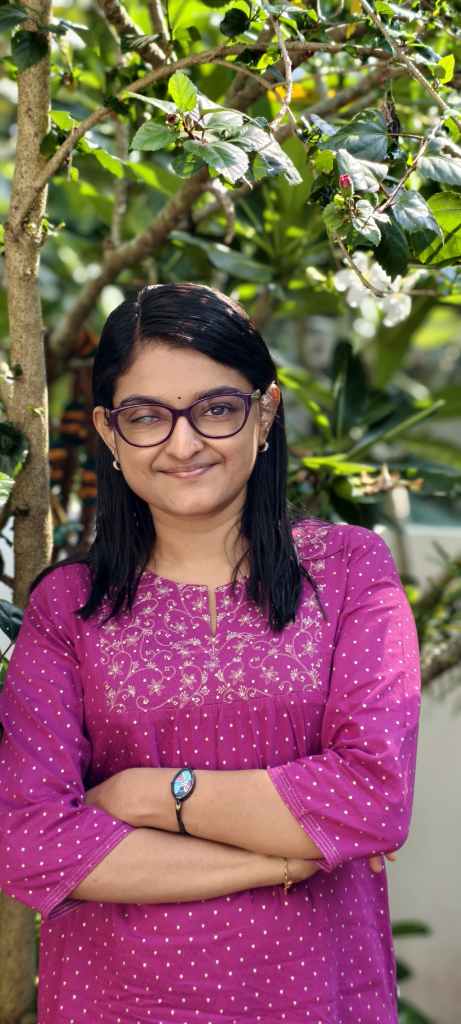
Glass-Bound by Ajeeti S

Ajeeti S
     I know this space.
Every side of it.
The plant in the corner doesn’t move.
The castle isn’t real.
I’ve been inside it a hundred times.

I turn.
I turn again.
Because that’s all there is to do.

They come close,
press their faces to the glass.
They look,
like they know me.
Then they leave.

I don’t.

I sleep.
I eat what falls from above.
I swim in circles.

The water is always clean.
Too clean.
No mud, no current, no sound.

But I remember something—
not a place,
it’s a feeling.
Like the world used to be bigger.

That’s what hurts.
Not being here.
But knowing
there was more--
once.

Ajeeti S is a banking professional with a passion for poetry and painting. She explores creativity beyond numbers through verse and visual art.

.

PLEASE NOTE: ARTICLES CAN ONLY BE REPRODUCED IN OTHER SITES WITH DUE ACKNOWLEDGEMENT TO BORDERLESS JOURNAL

Click here to access the Borderless anthology, Monalisa No Longer Smiles

Click here to access Monalisa No Longer Smiles on Kindle Amazon International

Categories
Musings of a Copywriter

My Writing Desk

By Devraj Singh Kalsi

From Public Domain

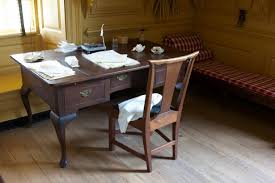
Since childhood days, I was offered what I believed to be an adult desk: a solid wood table with impressive dimensions suited for professionals instead of young learners. Introduced early to the grand furniture piece did not generate a sense of superiority until the day my close friend shot an envious look at it, ran his delicate hands on the smooth polished surface and rested his chubby cheeks to feel its naked coldness. Emulating him to derive similar pleasure from the wooden marvel, I realised the cold sensory bliss and fostered a special attachment to this possession, finding time in between the lessons to smother my hands on the table top or rub my thighs against its intricately carved supple legs. The sensuous awakening of entwined legs could be read differently but the innocence of the experience carried nothing except pure bliss.

The bonding with the study table was solid in more ways than one. A constant companion that absorbed my tears faster than any human hand could reach to wipe them off, the desk witnessed almost everything ecstatic and tumultuous that happened in those growing up years. It was the space that saw me pick up new tastes, new habits. From doodling on its surface with the dark pencil to highlight my drawing skills, the table allowed its body to be used as a springboard to catapult my imagination. I was immersed in the act of carving something new and permanent but most of my efforts shamed me, leaving me desperate to replace those with something funky, more in keeping with my inchoate artistic sensibilities.

Years of fiddling registered no marked improvement in my output but the flawless skin of the desk was bruised – and it never completely recovered from those childish, frivolous strokes. Both of us grew up together with scratches and bruises on the body – those on mine disappeared with the power of natural healing while those on the desk remained stark and etched, reminding me of what hell I had made it undergo just to keep myself engaged. Weird, non-existing creatures were brought to life even though I later felt shy to call them my creations or displaying them anywhere. I tried to hide those by spreading a tablecloth but the attractive wood looked marginalised with the desperate cover-up bid. 

Adorning it with a tablecloth embroidered by my mother worried me as the tutors were often served hot and cold drinks on the desk. My academic guides were often retired. With their shaky hands they could spill a lot of liquid that would damage the fine cloth, making her clean it repeatedly and vigorously to restore its sheen. Such accidental brushes could also happen due to my exciting outbursts – while casually picking up or placing something on it. Such a protective measure to safeguard the desk would display the beautiful tablecloth, but it would also spike the probability of damage to it.

When I asked whether she was okay with the lurking fear and nagging anxiety of damage to her embroidered creation, she said she had never indulged in negative thinking. Even if it got damaged, she would not fret or fume but simply replace it with her new work. Her readiness to put in extra effort to create another piece was a sign of confidence suggesting that the creator should always have the faith to create beautiful pieces instead of worrying about safe upkeep. This triggered a different line of thinking. I could be a risk-taker and would expose myself to the dangers of damage to creations instead of worrying about it all the time. Now, I felt mentally at ease and free. It made me enjoy the process of creation and its output to the fullest.

Among other benefits, the desk with the chair enabled me to sit erect and sometimes generated a sense of authority. I felt empowered there with the pen within my grip. It made me feel close to writing classical tales or passing legal judgments. The presence of a pen-stand and the variety of pens with refills ranging from blue to green to red to black, with fountain pens and dot pens co-existing harmoniously, gave the freedom to write with any colour and then to correct with red ink, thus,  combining the power of the learner and the examiner rolled into one. I loved to use red to strike out my verbose sentences like the teachers who used it to point out errors.

Resting my head on the desk amounted to brief lapses into the fantasy world as the mind journeyed to faraway lands. An hour of imagining a world where horses flew like birds and fish hopped on the grass could not rein in the wild impossibilities. The lack of logic provided laughter and immense joy – the world turned upside down was a thing of beauty as it strengthened my ability to make it grotesque. Sometimes I envisaged a cub sitting in front of me even though it was a cat pawing my geometry box. As I remained half-asleep and half-awake on the precious desk, I was navigating two precious but different worlds at the same time – the real and the unreal. The desk facilitated my first flight of imagination and inspired me to repeatedly indulge in that experience, nurturing the storyteller with half-baked ideas that required the firm support of reading to make a solid landing.

The desk witnessed the arrival of story books and allowed a dedicated space for non-academic texts. As the pile of relaxed reading material grew taller than the academic stuff, it was time for the family to express concern. A tough balancing act by pushing up the grades was the easiest way to address their fears, followed by inculcating a sense of responsibility that the syllabus was as important as the reading material for leisure.

The presence of current affairs and film magazines, apart from fables and mythological tales added genres to the desk, with my father stacking up his weeklies on my desk after he had finished reading them.  I loved to spend more time occupying this space. Soon I began to indulge in writing pieces that matured from paragraphs to essays. I had convinced myself if I had to write something interesting and worthwhile I needed adopt a proper, dignified posture to think clearly and then jot down ideas on paper. Imposing this self-discipline was easier with the lure of the wooden desk. I could sit there for long hours at a stretch – the first crucial requirement before one thinks of pursuing writing.

The realisation that the desk was wooden but my writing should not be wooden came my way when I was struggling to produce a lively short piece. I found much scope to improve after the first draft, but I softened the nasty blow on my ego which was beginning to acquire a fearsome form. I showed the piece to my tutor who had his own critical take on a teenager’s struggle to write, signing off with a cryptic good-effort comment that left me craving for clarity. The thoughts were scattered like fluffy cotton balls floating in the air. I wished to acquire better control to put them together. To put it briefly, the desk witnessed the despair and repair and everything else that celebrates the slow churning of a small-time writer. Placing a decent piece in a reputed publication and displaying it on the wooden desk that housed many great works formed a vague dream that translated into reality much later.

The attached drawer was a convenient space to hide personal items such as love letters and adult magazines. Since nobody came here to check the space, it was suitable for stashing pocket money and everything else that required secrecy. Being lockable, I could utilise it with full security and safety. When the tutors or guardians noticed I was maintaining a lockable space, it was a clear sign that the boy was growing up with his pile of secrets. Nobody tried to unearth what I was squirreling away even though they had perhaps imagined the predictable and worst possible things. I did overhear the elders hatch a plan to detach the drawer. They solicited advice from a carpenter, seeking his opinion regarding how to do it without causing any damage to the antique table. His suggestion not to tamper with it was accepted without further argument since there was a high risk of damaging one of its legs. Before they could think of anything else, I chose to remove the lock and offered them full access with the key, showing signs of intelligence that made them feel assured I was not misusing it in any manner. While my idea was to keep the beautiful piece look complete instead of amputated, it was surely an outcome of my attachment to the wooden piece that I believed should remain in my possession so long as I am alive. As two companions engaged in a mission to produce the best creative work, we chose to stay together and work together with the fond hope that this partnership would produce some magical work.

Showing no signs of ageing, the sturdy table still flaunts a youthful look, as if it has been just crafted. The ability to remain fresh over the years should be there in writing as well –the reader should be able to relate to the work even after ages. Even when it is read generations later, it should always stay mint fresh.

With the passage of time, more gadgets had arrived on the desk and demanded space – like the desktop computer. Keeping almost half of it clean and vacant was not a challenge as it was quite long and wide. The tall glass of water or a cup of coffee and a fruit bowl also remain on it without giving a cluttered look. I did not have to make hard choices or compromises – what to keep and what to discard. It allowed me the space to write long-hand and then type it on the keyboard without tumbling other objects.

The finesse of the wooden desk inspired me to strive for perfection. The intricate wood carvings and the perfect finish made me feel the need to attach these qualities to my writing. Getting the structure ready was similar to framing the wooden structure first. Chiselling it further to make the rough edges look smooth made me think of doing the same in terms of writing. When everything gets joined, it looks no less than a wonder: just like joining sentences and then adding paragraphs. The process of carpentry bears strong similarities with the process of writing. The art of beautiful writing and beautiful carving in wood blended in my psyche. Using it to create chiselled work touched a chord.

I have been told the table looks vintage – although it has retained fresh appeal. I have been told to think of replacements. But I have been stubborn on the topic of retaining it – not falling prey to engineered wood and all that new stuff that lacks the indispensable feature of durability. Like solid wood furniture, the writing should also survive the test of time. The desk has subtly groomed me to be strong and resilient like it since childhood days.

Both of us are capable of surviving umpteen rejections and we have shared moments of sadness. The drawer was the place where the rejected pieces were dumped. If any member of the family ever raided the place for something shocking, he would have found several letters from editors, suggesting my temerity to approach them with my pieces that could not be carried for multiple reasons. The creative bug bit me here and then one thing led to another in a chain of events that sucked me into the world of writing. I always felt that the wooden desk was sorrowful and consoled me that these gems of failure would sparkle one day. A silent motivator that did not allow the termites of depression to infest my soul. 

On days when I sat elsewhere to ideate or write, I did not feel in my element.  As if I missed out something valuable and I must return to its fold at the earliest – inspired to create something beautiful like the table. With this soothing thought relaxing the nerves, I felt a surge of confidence – of writing something compelling and long-lasting like the wooden desk and displaying the content right there to match or surpass its excellence.  

From Public Domain

Devraj Singh Kalsi works as a senior copywriter in Kolkata. His short stories and essays have been published in Deccan Herald, Tehelka, Kitaab, Earthen Lamp Journal, Assam Tribune, and The Statesman. Pal Motors is his first novel.  


PLEASE NOTE: ARTICLES CAN ONLY BE REPRODUCED IN OTHER SITES WITH DUE ACKNOWLEDGEMENT TO BORDERLESS JOURNAL

Click here to access the Borderless anthology, Monalisa No Longer Smiles

Click here to access Monalisa No Longer Smiles on Kindle Amazon International

Categories
Poetry

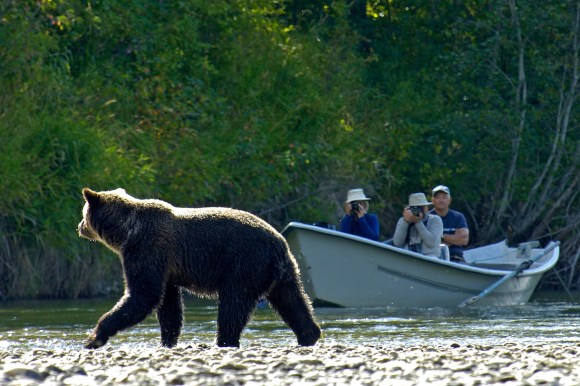
First of the Season by Ryan Quinn Flanagan

From Public Domain

Stabs of natural light
and the bears are woken
from winter.

Bony yearlings
on their own now.

Ambling down the street
with a laboured
chuffing.

Pulling down the early buds
of berry bushes,
looking for an easy meal.

Early risers, the first of the season.

The ones
out at the dump
live right beside the humans.

They are seasoned, more conditioned.

There is a loaded shotgun
in the back of the bulldozer
if there are any issues.

But there is seldom anything.
Old dryers broken down to scrap.

The long winter
has everyone stunted.

Our fleet-footed fox
brought to lumber.

The birds
in the songless
trees.
From Public Domain

Ryan Quinn Flanagan is a Canadian-born author residing in Elliot Lake, Ontario, Canada with his wife and many bears that rifle through his garbage.  His work can be found both in print and online in such places as: Evergreen Review, The New York Quarterly, Borderless Journal, GloMag, Red Fez, and Lothlorien Poetry Journal

.

PLEASE NOTE: ARTICLES CAN ONLY BE REPRODUCED IN OTHER SITES WITH DUE ACKNOWLEDGEMENT TO BORDERLESS JOURNAL

Click here to access the Borderless anthology, Monalisa No Longer Smiles

Click here to access Monalisa No Longer Smiles on Kindle Amazon International

Categories
Musings

Will Dire Wolves Stalk Streets?

Farouk Gulsara ponders over trends in scientific research which makes controversial claims about reviving extinct species…

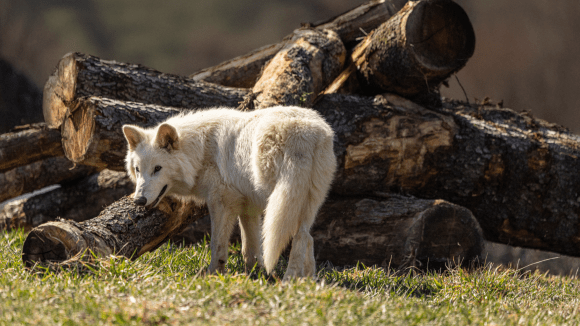
Dire wolves. From Public Domain

Life evolves. The new replaces the old, and fresh ideas overshadow previous ones. What was once an avant-garde style one day may appear unattractive the next. We sometimes feel embarrassed by the clothes we wear and the trends we embrace decades after models showcased them on the catwalk.

Trends come and go constantly. Species become extinct at a background rate of one species per million each year. Human activities, such as habitat destruction and chemical pollution, have accelerated this decline by hundreds or thousands of times. 

At times, cataclysmic accidents of Nature expedite this decline, such as meteoritic impacts and the extinction of the dinosaurs 65 million years ago. Neanderthals lost the survival game to Homo sapiens because they did not adapt to environmental demands, though not without infusing their DNA into the latter. Should we consider this an inevitable consequence of our existence, or should we strive to rectify it with our current level of scientific advancement?

It was recently reported that a rare species of wolf, the dire wolf, last roamed the Earth 13,000 years ago. Three dire wolves have been recreated using CRISPR technology[1] and surrogacy, allowing them to roam the Earth once more. Part of their DNA was extracted from an ancient fossil and transplanted into an artificial grey wolf egg. The grey wolf differs genetically from the dire wolf and is related to the domesticated dog. Dire wolves were fierce apex predators that existed before humans, when the world was a much more hostile place.

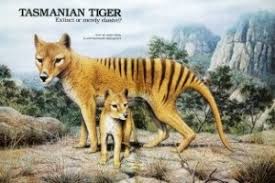
The scientists who embarked on this experiment thought it was a necessary first step towards preventing further species extinction. Their next objectives include recreating the dodo bird, which humans hunted to extinction due to its ease of capture, and the Tasmanian tiger. Scientists are particularly fascinated by Tasmanian tigers because they belong to a rare group of marsupials mainly found in Australasia. Additionally, rats with woolly mammoth genes are also being developed in laboratories somewhere.

Are these all really necessary? On one hand, humans pose the greatest threat to all living beings. We not only kill each other but also other species to assert our dominance. Our mere existence on Earth leaves a significant carbon footprint, which could potentially destroy the planet before its expiration date. Logically, we are a greater threat to the species than Nature’s natural selection. We should not exist at all. We only expedite doomsday. Yet, we carry the notion that the burden of preserving the third rock from the Sun for eternity lies squarely upon our shoulders.

A real example of the danger of our manipulation of Nature’s order can be seen in our irritation with pathogenic insects.  DDT[2] was introduced to control mosquitoes. We believed we were doing a great service by reducing arthropod-borne diseases, only to realise the crucial roles insects play in pollination and, by extension, our food chain. Rachel Carson’s [3]now-famous 1962 line, “the spring with no chirping birds”, serves as a grim reminder of Nature’s intricate web of interdependency and the detrimental effects of chemical pesticides. Every being has a specific role in the grand scheme of things.

Wolves regulate the overpopulation of large herbivores, such as elk and deer, which helps maintain plant health and diversity. Mosquitoes and many other insects may be pests, but they are also essential for plant pollination and are integral to the food chain that helps balance the ecosystem. Dodos and Tasmanian tigers may have had their significance at one time. Nature, the greater equaliser, must have its reasons for ending its existence. To act against Nature, to correct something we perceive as wrong, is foolhardy.

Hollywood offers a fictional reminder, as was seen in Jurassic Park, of what occurs when humanity meddles with Nature, regardless of how thoroughly we believe we have crossed the ‘t’s and dotted the ‘i’s. The seed of life possesses a mind of its own. Its innate drive to propagate may lead to the creation of dangerous hybrids, mutants, and chimaeras or even result in hermaphrodites within species to ensure continuity. 

Even before the dire wolves’ secret whereabouts are made public, Elon Musk has already expressed his desire to have one as a pet. This shows that these freak products will just end up as rich men’s playthings. It is unlikely that this technology will significantly change the day-to-day life of the average person. The tech moguls may view these baby steps as precursors to transhumanism, a better version of humanity, where human capabilities are enhanced synthetically through technology, bypassing Nature’s selection.

Anyway, the last thing we want to see in our lifetimes is new breeds of vicious, ferocious dire wolves joining forces with woolly-toothed mice and bloodthirsty Tasmanian tigers in our streets, searching for us as food in a borderless world as far as these beasts can see.

From Public Domain


[1] CRISPR technology, or Clustered Regularly Interspaced Short Palindromic Repeats, is a gene-editing technique.

[2] Dichlorodiphenyltrichloroethane, is a synthetic chemical compound that was once widely used as an insecticide and a key component in malaria control efforts.

[3] Rachel Louise Carson (1907-1964), Marine Biologist, whose books addressed conservation.

References and Notes:

1. https://naturalhistory.si.edu/education/teaching-resources/paleontology/extinction-over-time

2. https://time.com/7274542/colossal-dire-wolf/

3. https://www.genome.gov/genetics-glossary/CRISPR

4. https://npic.orst.edu/factsheets/ddtgen.pdf

5. https://en.m.wikipedia.org/wiki/Silent_Spring

6. Transhumanism is a philosophical and scientific movement that advocates the use of current and emerging technologies, such as genetic engineering, cryonics, artificial intelligence (AI), and nanotechnology, to enhance human capabilities and improve the human condition.

.

Farouk Gulsara is a daytime healer and a writer by night. After developing his left side of his brain almost half his lifetime, this johnny-come-lately decided to stimulate the non-dominant part of his remaining half. An author of two non-fiction books, Inside the twisted mind of Rifle Range Boy and Real Lessons from Reel Life, he writes regularly in his blog, Rifle Range Boy.

.

PLEASE NOTE: ARTICLES CAN ONLY BE REPRODUCED IN OTHER SITES WITH DUE ACKNOWLEDGEMENT TO BORDERLESS JOURNAL

Click here to access the Borderless anthology, Monalisa No Longer Smiles

Click here to access Monalisa No Longer Smiles on Kindle Amazon International

Categories
Poetry

Poetry by Christine Belandres

Public Domain
THERE IS NO POINT IN WRITING 

There is no point in writing when
misery isn’t in your ink. There is no magic, no denouement to wait, no
promises held and broken so hard,
our hearts are compelled to tug our
ring fingers to pick up our pens.

Christine Belandres is a writer from Cebu, Philippines. She studies Literature and is a Poetry/Prose Editor at Pen & Quill. She likes to read classical literature and drama in her free time.

.

PLEASE NOTE: ARTICLES CAN ONLY BE REPRODUCED IN OTHER SITES WITH DUE ACKNOWLEDGEMENT TO BORDERLESS JOURNAL. 

Click here to access the Borderless anthology, Monalisa No Longer Smiles

Click here to access Monalisa No Longer Smiles on Kindle Amazon International