Quack, quack!
Oh, what bad luck!
Pappu the duck
got stuck in the muck.
Flapped his wings,
kicked his feet,
but that thick mud
was his nemesis!
He was to attend
a birthday bash
with ‘Papri chaat’
and scrambled eggs...
his favourite.
Pappu sighed,
"This isn't fair!
I should be partaking
that birthday fare".
Then a cow walked by
and advised...
"Try harder, Pappu!”
So, he tugged and tugged
With all his might
and with one big SPLAT,
tumbled free
and waddled off
to the birthday party,
albeit with muddy feet
From Public Domain
Snigdha Agrawal (nee Banerjee) is a passionate septuagenarian writer with five published books, including Fragments of Time, her deeply personal memoir. A lifelong lover of storytelling, she blends fact and fiction with a keen eye for detail and emotion. Her works span diverse genres, reflecting her rich experiences and insightful observations.
.
PLEASE NOTE: ARTICLES CAN ONLY BE REPRODUCED IN OTHER SITES WITH DUE ACKNOWLEDGEMENT TO BORDERLESS JOURNAL
Entering the sherbet shop introduced me to an ambience I was not au courant with at all. Not the usual, expectedly flashy interiors greeted my bespectacled eyes. Instead, I was transported to another era, a kangaroo leap of a century in time, to witness heritage stir up breezy nostalgia. With old-fashioned teakwood tables, carved chairs, and antique lamp shades, framed, sepia-tone portraits of legends decorating the distempered walls chipped at various places, it was not difficult to guess that the outlet had retained a robust connection with the hallowed past.
As I walked in with the curiosity of an aficionado exploring an art gallery, there was so much else to engage myself with – apart from the listings on the laminated menu card. Before I sat down and ordered something to gulp down my parched throat, I chose to update myself with a walking tour of the entire sherbet joint. Driven by thirst to find enriching inputs from knowledgeable sources, I finally settled down and asked for assistance from the gentleman who served. He looked eager to share anecdotes about the quaint little shop, tucked away in a small, congested lane, that had managed to retain its client base with support from young students who made it their favourite haunt despite the easy availability of snazzy food kiosks and juice corners proliferating around their college premises. That the present generation – and the several earlier ones – had realised the need to patronise this outlet as a historical and cultural link was truly worthy of appreciation.
I trooped in at different hours of the day, and found that most of the seats were occupied by college and university students who were also lovers searching for a comfortable, affordable space where they could sit for long hours, sip their favourite sherbet, and slow down the passage of time while holding hands and making lifetime commitments. As the straw pipes in the two glasses made empty noises, couples ordered another tall glass of sherbet, of an untried flavour, to keep alive the flow of their discussions and personal plans for some more time without feeling remorseful that they were adversely impacting the commercial profitability of the century-old outlet with their prolonged stay. This sensibility was rare but precious and the sherbet store staff never disturbed such couples who preferred the rear seats, keeping themselves away from public glare. The front benches were readily available for fleeting customers of our kind who walked in casually to enjoy the chilled sherbet and walked out with a vintage experience.
Leading luminaries from diverse streams such as politics, arts, and literature frequented this shop over time. Their portraits on the walls were not only tributes to their contribution but also a part of cherishing the close association with the change-makers. A small conversation with the manager revealed snippets from the past – passed down the generations as heirlooms. Refreshing tales energised customers who felt delighted to be present here. Imagining this century-old world was recreated by the culturally conscious owners, who brushed aside upgradation requests only to preserve as much of the past as possible. The giant ceiling fans circulated not much air. So an air-conditioning system had been installed. But the slowly whirring fans were not dismantled. The wooden deer head wall mount above the door was a silent reminder of how much had not changed despite the lapse of time.
I chose to go with the manager’s recommendation – daabmalaisherbet[1]– for a hot summer afternoon. He called it the favourite summer drink of a famous city-based author from the last century. I should have thanked him for offering it to another wannabe writer – even though he would not have been much impressed with this disclosure. At a personal level, the writer inside felt motivated that two authors, from two different centuries, enjoyed the same cooling drink under the same roof. Talking about the merits of the sherbet, it was amazing to taste: authentic and traditional. The flavour was different if not unique and this outlet was proud to offer it to those who valued the past. When I asked him if I could get this drink anywhere else in the city, he was reticent for a while. After poring over its faint possibility, he set me free to explore the city to find something remotely close and comparable to this drink. There was a smirk on his face, which suggested I would fail in my mission to get an equivalent to what I was served here.
He suggested grapes crush sherbet as another specialty I would relish, and its taste was unique this time, with crushed grapes floating around the fragmented ice cubes to lend an authentic appeal. After consuming these two flavours, the flavours of the past came alive in my mind. I felt really close to the great artists on the wall, feeling the immediate need to write creative stuff. This was working at another level: offering me loads of inspiration and motivation to write. It was more effective and quicker than attending motivational workshops or literature festivals to boost up creative energies and overcome my writer’s block. Tuning into great speeches by life coach experts often failed to resonate with the audience. But my brief visit here seemed to have worked wonders as I was already feeling charged up to go home and write something powerful to move the cold, insensitive generals of warring nations to embrace peace forever.
The rapid flow of ideas made me insecure about losing them on my way home and I regretted not carrying a notebook to jot them down. When I visited the place again, I made it a point to carry my diary and pen and sat for hours to draft a story outline. It was not a matter of shame as I found the serving staff look happy to see my passion, to be added to their new list of great patrons. As our familiarity developed further, they showed me newspaper cuttings mentioning the sherbet outlet – how some journalists kept them alive in the print editions just as the young crowd made their outlet famous on the social media, with hundreds of Instagram reviews and top ratings of the place.
This was just one outlet that motivated me but I was sure there should be more in the city, not just sherbet shops. I looked for other outlets that were part of the lives of the great artistes. I made it a quest to look for them in order to experience a surge of motivation that always does not come from sitting idle in front of an open window. As I began my search for similar outlets, I came across several of them still operating from modest spaces.
There was a bookstore on the first floor of a ramshackle building where some leading film directors came to buy imported books. Climbing the same stair case evoked feelings of nostalgia. In an era when many bookstores have shut down, this family-owned bookstore had over the generations expanded its list to include vernacular and academic books to stay commercially viable. The wooden shelves and the cash counter manned by a dhoti-clad septuagenarian gentleman keeping a hawk’s eye like a surveillance camera suggested retirement was still far away. I was informed by the gentleman regarding the operational presence of another stationery store where many freedom fighters came to buy pens and ink. Holding a fountain pen bought from the store located in the next street, hidden behind a paan shop basking in the glory of serving great musicians of the country, I walked home to begin a new story with it.
As I continued with my search for such outlets to stir the pot of motivation, I realised, to identify closely with such landmark establishments, was indeed a powerful way to fill myself with zest and zeitgeist. During my next journey, I came across a sweet shop specialising in a wide variety of sandesh and its owner, standing beside a pedestal clock that was functional since the nineteenth century, spoke of the days of glory, with the intellectuals of the city dropping in the evening to pack boxes of sweets. They continued to keep the freshness of the sandesh alive without any compromise in terms of quality. They are not affected by modern shops making false claims of serving high quality traditional sweets. They proudly say those who value good taste and can differentiate between fake and original are their clients, always ready to pay extra to buy pure and tasty stuff. The melt-in-the-mouth experience of their sweets was heavenly indeed. I made it my preferred shop to buy sweets from to celebrate all successes in life. For festive occasions, there could be other shops, but to celebrate success I chose to bring home sandesh from this shop alone, even if it meant going an extra mile for their delicacy. It has been quite a while since I last went there – because the occasions to celebrate successes have dried up in the recent years, with tragedies and setbacks mounting allied attack since the pandemic. While the sherbet store has helped me regain a lot of confidence in the writing process, I hope the sandesh shop will soon find me at their glass counter, to order packets of sweets to celebrate literary success.
Devraj Singh Kalsiworks as a senior copywriter in Kolkata. His short stories and essays have been published in Deccan Herald, Tehelka, Kitaab, Earthen Lamp Journal, Assam Tribune, and The Statesman. Pal Motors is his first novel.
PLEASE NOTE: ARTICLES CAN ONLY BE REPRODUCED IN OTHER SITES WITH DUE ACKNOWLEDGEMENT TO BORDERLESS JOURNAL
No eyes to cry.
Only the weight of numb eyes.
Like a scream
That stopped just short
of the throat.
Somewhere, someone waits --
not to be found,
Just to be remembered.

There is a kind of loneliness
that doesn’t shout.
You sit in it.
Feed it.
Let it braid itself into your spine.
And when you try to speak,
even silence looks away.

The world keeps moving
like a feed you can’t pause.
It scrolls past your face,
your name,
your grief.
And you learn how to be present
without being anywhere.
Shahriyer Hossain Shetu is a Bangladeshi writer and researcher currently pursuing his Master’s in Sustainability Management at University of Waterloo, Canada.
.
PLEASE NOTE: ARTICLES CAN ONLY BE REPRODUCED IN OTHER SITES WITH DUE ACKNOWLEDGEMENT TO BORDERLESS JOURNAL.
The air at Patenga Sea Beach hung thick with salt and memory, a living weight that clung to Karim’s skin and settled in the grooves of his thoughts. He stood motionless, his feet half-buried in the damp embrace of sand, facing the heaving expanse of the Bay of Bengal. Each wave broke with a rhythm once known to him, a lullaby of youth and simplicity. Now, it rolled like an echo chamber of loss.
He didn’t just see the sea—he saw the absence it bore. Azimpur Union, a coastal village once nestled like a secret in the arms of Sandwip, no longer existed. The Meghna River had devoured it, inch by insatiable inch, until it was reduced to memory. His family, like countless others, had fled inland, displaced not by war or persecution but by the creeping violence of climate change. Halishahar became their reluctant refuge. Karim, now a climate scientist, carried the wound like a relic—not healed but honed.
Beside him, Anika traced idle circles in the sand with her bare toe, drawing galaxies destined to be washed away. Her short hair fluttered in the breeze, framing a face defined by quiet determination and dark, searching eyes. As a student of Environmental Sciences at the Asian University for Women, she viewed the beach not just as a source of beauty, but as a battleground.
“It’s getting worse, isn’t it?” she asked, not breaking her gaze from the horizon, where cargo ships floated like steel ghosts. Karim nodded. “It’s not just the sea creeping in. It’s the salt in our fields, the poison in our wells. My grandfather spoke of golden paddy fields in Azimpur. Now it’s all water. Still. Empty. Unforgiving.” A voice, crisp and clear, cut through the air. “That’s why your work matters, Bhaijaan[1].”
Hafsa had arrived, stepping into the wind like it obeyed her. Younger than Karim by a decade, she wore her uniform from Feni Girls Cadet College like a blade sheathed in pride. Her eyes, sharp and unwavering, carried a fire that scorched complacency.
“Understanding the science is our first defence,” she said. “You’re giving us a fighting chance.” Karim smiled—not the performative curve of lips, but the rare, involuntary kind that cracked through layers of grief. “That’s why I studied Oceanography. Not for grades. To learn the language of the sea. To understand the force that took everything from us.”
They drifted to the quieter banks of the Chittagong Boat Club, where boats bobbed like dreams tethered to fragile ropes. Here, the water lapped gently, less a threat, more a whisper.
“Sandwip’s shoreline is disappearing,” Karim said, leaning on the railing. “Sometimes by metres each month. It’s a perfect storm: rising seas, broken river systems, displaced sediments. The Bay of Bengal funnels it all into disaster. It’s not just nature. It’s a mirror of our neglect.” Anika picked up the thread like a weaver. “It’s a slow massacre. Salt invades the soil. Crops wither. Freshwater turns brackish. The mangroves—our final fortress—are dying. The Sundarbans are gasping.”
“And with them,” Hafsa added, “everything unravels. People flee inland. Cities like Halishahar swell and groan. Agriculture collapses. Food security frays. And without mangroves, every cyclone cuts deeper. Everything is connected.”
Karim nodded, the weight of data behind every word. “The models I build are no longer predictive. They’re prescriptive. They warn of what is already unravelling. Sea levels, salinity, erosion—they all spike. The IPCC[2] confirms it. But the tide doesn’t wait for consensus.”
At Foy’s Lake, serenity shimmered over the water like an illusion. But their thoughts grew darker.
“Bangladesh knows storms,” Anika said, her voice soft. “Bhola, 1970. Chittagong, 1991. Cyclones that rewrote our history in wind and water.”
“Those storms taught us resilience,” Karim said. “Shelters. Warnings. Community drills. However, the storms are now stronger. Hotter oceans feed them. And higher seas mean bigger surges—even from weaker storms.”
Hafsa’s voice quivered at the edges. “But how much more can we endure? Our grandparents rebuilt after every storm. But if this continues, is it resilience, or a kind of slow exile?” Anika nodded. “Traditional adaptation isn’t enough anymore. We need foresight. Long-term planning. Even planned migration. And that’s not just about moving people. It’s about moving lives, cultures, entire identities.”
They sat for a while, sharing silence, watching birds slice the air like omens. In that stillness, Anika said, “You know what hurts most? It’s not the loss of land. It’s the loss of certainty. The knowledge that what raised you, fed you, and shaped your memories is vanishing. And there’s no going back.”
Silence followed them to the War Cemetery, where white stones bore witness to another kind of war. One with bullets and borders. Karim saw it differently now: this, too, was a battlefield. But here, the enemy was time, water, and indifference. Later, among the blooms of DC Park and the Sitakunda Botanical Garden and Eco Park, their talk turned to life beneath the waves.
“Most people think of fish,” Karim said, gesturing to a flowering hibiscus. “But the ocean’s true wealth lies in biodiversity. Coral reefs, like those near St. Martin’s Island, are the lungs and nurseries of the sea.”
“And they’re dying,” Anika said. “Warming waters bleach them. Carbon dioxide makes the ocean acidic. Reefs dissolve before our eyes. It’s extinction, hidden by depth.”
Karim’s voice dropped like an anchor. “The blue economy—fishing, tourism, aquaculture—depends on healthy oceans. Without reefs, fish vanish. Livelihoods collapse. The sea becomes a graveyard.”
“So it’s not just conservation,” Hafsa said. “It’s survival. But how do we grow our economy without destroying what sustains it?” Karim didn’t hesitate. “Balance. Policy grounded in science. Marine protected areas. Sustainable fishing quotas. Eco-tourism. Stewardship over extraction.”
They spent hours walking through the botanical paths, discussing seagrass, kelp forests, and the future of ocean farming. Anika shared her dreams of working with community-led marine conservation, and Hafsa spoke of pushing climate policy debates in every youth parliament session she attended. High in the Chandranath Hill, where the wind carried the scent of leaves and legacy, their voices softened.
“There’s more to the sea than science,” Karim said, his voice almost reverent. “There’s a myth. Memory. Identity. That’s what the blue humanities teaches us. When Azimpur disappeared, it wasn’t just land. It was language. It was lullabies.” Anika blinked; her eyes were glassy. “I see it in displaced communities. They lose more than their homes. They lose stories. The names of trees, the tastes of festivals.” Hafsa, ever the compass, brought it home. “So blue humanities means recognising the ocean not just as a resource but as part of us. A mirror. What we take from it, we take from ourselves.” Karim looked at them and felt a surge rise in his chest, not of sorrow this time, but something like hope. “You’re right. This fight isn’t just scientific. Or economic. It’s human. And we can only win it together.”
As the sun dipped behind the Chandranath Hill, setting the sky ablaze in golds and blood-reds, they walked in a hush, not of despair, but of reverence. They were young, yes. But in their hearts, they carried the future—and it was heavy.
Then Anika asked, “What gives you hope?” Karim looked at her, then at Hafsa, and smiled. “You do. The fact that we’re talking like this. That we care. That we haven’t given up.” And Hafsa, eyes firm as stone, said, “We won’t. We’re the generation that listens to the tide before it screams.”
They turned from the sea, toward the uncertain shore of tomorrow. The water behind them was not done. But neither were they.
Sandwip beach. From Public Domain
[1] A respectful way of addressing a man, translates to brother
Painting by Egon Schiele(1890-1918) From Public Domain
NOTHINGNESS

Leaves fall in two and threes.
Where do they go
as the wind pushes them
down a deserted street?
No one will grieve.
As they disintegrate,
I walk the lake’s edge,
and watch a crow,
circle over my head.
Waves break against stones,
and it’s as if I can
hear their moans.
I gaze at nothing.
That’s what my mind sees.
The crow lands in a tree.
He doesn’t bother with me.
He’s unperturbed.
He’s an unknown,
so I leave him alone,
and I simply walk home.
George Freek’s poetry has recently appeared in The Ottawa Arts Review, Acumen, The Lake, The Whimsical Poet, Triggerfish and Torrid Literature.
PLEASE NOTE: ARTICLES CAN ONLY BE REPRODUCED IN OTHER SITES WITH DUE ACKNOWLEDGEMENT TO BORDERLESS JOURNAL
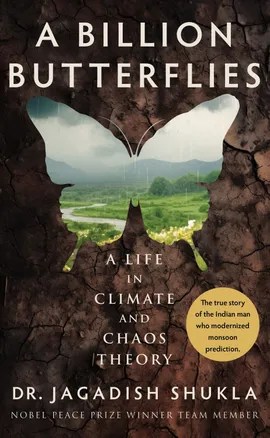
Title: A Billion Butterflies: A Life in Climate and Chaos Theory
Author:Jagadish Shukla
Publisher: Pan Macmillan India
This is a fascinating autobiography – autobiography of an Indian who revolutionised monsoon forecasting. Raised in a rural area of India devoid of electricity, plumbing, or formal educational institutions, he participated in classes conducted within a cow shed. Shukla’s upbringing was marked by erratic weather patterns, including intense monsoons and severe droughts, which resulted in unpredictable agricultural yields. His resolve led him to the Indian Institute of Tropical Meteorology, despite having limited experience. Subsequently, he embarked on an unexpected journey to MIT and Princeton, reaching the pinnacle of climate science.
His contributions have made it possible to forecast weather further into the future than was previously deemed achievable, enabling us to nourish more individuals, preserve lives, and maintain hope in an increasingly warming world.
A Billion Butterflies by Shukla offers a remarkable insider’s perspective on climate science, alongside an extraordinary memoir of his life. Grasping the concept of dynamical seasonal prediction will transform our experience of thunderstorms and our interpretation of forecasts; the incredible narrative of the individual who uncovered this will alter our perception of the world.
The fundamental concept of this heartfelt narrative revolves around envisioning a world devoid of weather forecasting. How would we determine when to evacuate populations in anticipation of fires or floods, or decide what attire to don the following day? Until four decades ago, we were unable to predict weather conditions beyond a ten-day horizon.
Writes Shukla in the Prologue: “In the past one hundred fifty years, humans chopped down many of Earth’s carbon-sucking forests and began burning fossil fuels to heat their homes, power their factories, and propel their vehicles, releasing unprecedented amounts of CO2, into the atmosphere. Like the glass walls of a greenhouse, CO2, admits energy from the sun but prohibits energy from leaving the Earth. And so pretty quickly, our nicely balanced climate became imbalanced. In the century, as the amount of CO2, in the atmosphere has increased, Earth’s global mean surface temperature has ticked up from 14 to 15 degrees Celsius.
“This is called climate change. Climate change due to human activities is now firmly established by the observed facts and the laws of physics. The consequences of the phenomenon are becoming self-evident, but so are, I’d argue, the capabilities of the new generation of scientists to find a way forward.”
Shukla says in the book, on average, the Earth expels approximately 122,000 trillion watts of energy into space annually, which is roughly equivalent to the energy it receives from the sun. This equilibrium between outgoing and incoming energy is what establishes the average climate on our planet. For nearly ten millennia, the balance between incoming and outgoing energies was so well maintained that the global annual average temperature remained a comfortable 14 degrees Celsius, allowing life to persist and humanity to flourish. On Venus, this equilibrium results in an annual average temperature of 464 degrees Celsius. This is not unexpected, considering Venus’s proximity to the sun. However, there is another significant factor, aside from the energy a planet receives from the sun that affects climate: the chemical composition of its atmosphere. On Venus, carbon dioxide constitutes 95 percent of the atmosphere. In contrast, Earth’s atmosphere contains approximately 0.04 percent carbon dioxide—or at least, it did.
The book is meticulously crafted and filled with complex details about climate events, representing a significant effort that the author labels as chaos theory. Its importance is evident in a world facing the pressing challenge of addressing the devastating impacts of climate change.
For anyone who cares about the health of our planet, this book is a must-read.
.
Bhaskar Parichha is a journalist and author of Cyclones in Odisha: Landfall, Wreckage and Resilience, Unbiased, No Strings Attached: Writings on Odisha and Biju Patnaik – A Political Biography. He lives in Bhubaneswar and writes bilingually. Besides writing for newspapers, he also reviews books on various media platforms.
PLEASE NOTE: ARTICLES CAN ONLY BE REPRODUCED IN OTHER SITES WITH DUE ACKNOWLEDGEMENT TO BORDERLESS JOURNAL
A grey mountain moves Trunk packed, no passport needed Ears cooling tall trees Flapping theatre curtains On the fruit flecked wordly stage
A dart in shadows Whiskers twitching cello strings Cake crumbs are quavers On the stave of his visage A sunbeam the resined bow
Long nose elegance Termite dance futility Twilight adventures Strong claws a gratuity On the equator's tightrope
Nut nibbler furtive Turning his breakfast slowly Watchful sequined eyes Centres of spiral galaxies Bushy tail a semaphore
Cooling the burning Depths of a green muddy pool Drowning memories Leopard bested hours ago Bear digested yesterday
Down the forest path Someone dropped a walking stick A green stick that lives And moves without needing legs Faster than a hobbling man
Broad sail on his back Scaly schooner majestic Like an arrow shot From the horizon's bowstring Over the curve of the world
Drumming on the ground Building a many arched bridge Across the sand sea As it hurries to escape all possible pickpockets
Emerging from bushes Ears longer than crescent moons Feasting on soft grass Dressed with sweetish evening dews And dozing on small flowers
Perched on sloping roofs Of buildings that mimic cliffs Cuboid cave studded And shrieking at each other While the troglodytes study
From Public Domain
Rhys Hughes has lived in many countries. He graduated as an engineer but currently works as a tutor of mathematics. Since his first book was published in 1995 he has had fifty other books published and his work has been translated into ten languages.
.
PLEASE NOTE: ARTICLES CAN ONLY BE REPRODUCED IN OTHER SITES WITH DUE ACKNOWLEDGEMENT TO BORDERLESS JOURNAL
Prithvijeet Sinha muses…with his narrative and his camera
The chronology of monuments and historical continuum in Lucknow are affixed to the Nawabi realm, tales of opulence and benevolence or narratives that pivot around the First War of Independence in 1857 and its enduring imprints. All of these features mark the city. But they can also become dog-eared markers and signifiers that can prevent one from looking at modern marvels.
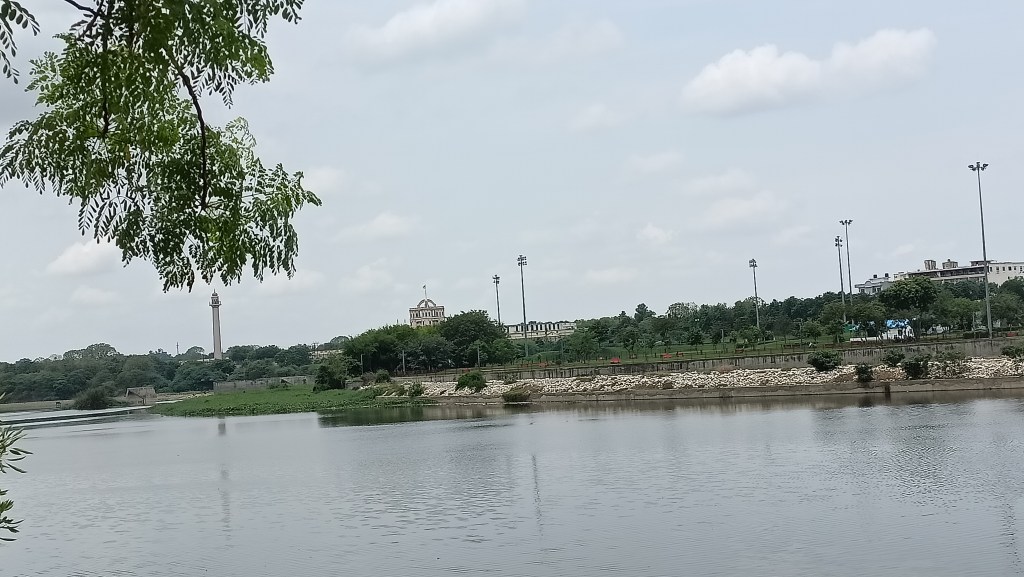
That being said, the most serene corner of Lucknow has yet to complete a full decade of its existence but has already become an indispensable part of the cityscape buoyed by nature and beautiful landscaping. For if mortal hands gave shape to beautiful, everlasting monuments of Awadh, modern visions have given the city the Gomti Riverfront Park.
Situated at the heart of the city just before unveiling the expanse of Gomti Nagar and intersected by Hazratganj and Cantonment on its primary stretch, it complements the River Gomti’s function as the city’s lifeline with remarkable fervour. It is easily accessible and is a personification of the natural beauty that Lucknow exemplifies for millions. In fact, in the current day and age, it serves as a common unifier for those many faces who visit it for leisure or as regular joggers, walkers and wanderers.
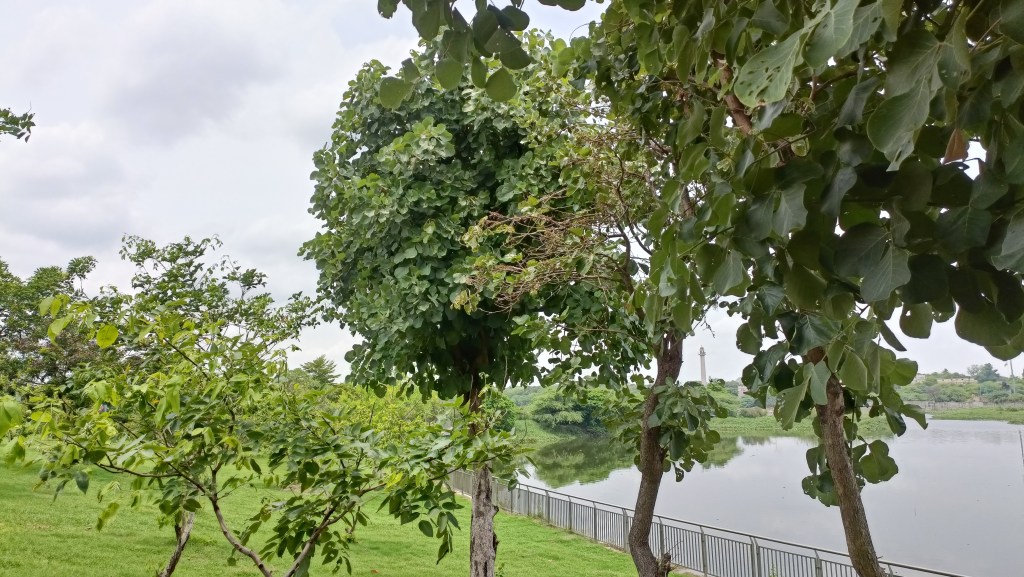
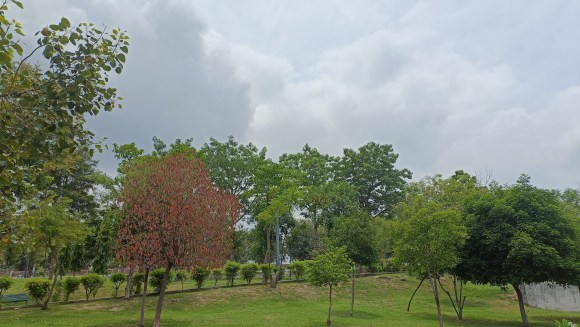
It has consistently maintained its pruned gardens, verdant slopes leading to its open avenues and the trees and plants cover this stretch. It’s not just about the idea of exemplary maintenance, the river is near some classical monuments facing it such as the Ambedkar Park, the majestic La Martiniere Boys College and the gorgeous Dilkusha Bridge. All this is already set in motion as rolling fountains, little dome-shaped pavilions serving as seating spaces and the red stone walls on its upper reaches welcome the visitor.
On a deeply personal level, Gomti Riverfront Park has something that leaves one swooning. It’s about the way the gardens are spread out, the song of the sparrows that can often be spotted here on some rare occasions and how the gulmohars shed their red flowers, leaving footprints of earthly vermilion as one takes a reprieve and beholds mynas with miles of yellow eyeline perched atop navy-blue lamps navigating left and right.
On many mornings in monsoon, I have been saved by the protection of the trees here and tasted the rain on my tongue. I have watched sprinklers rise like a spray of rejuvenation on the grass as a pretty wooden seat or those painted in green look on. I have seen joggers initiating a tryst with good health here, cyclists enjoy the joy evinced by these stretches and others practicing yoga to the soundtrack of birdsongs and rustling winds. I have felt myself breaking free from mundane rhythms and anxieties while traversing its meaningful miles and have composed many pivotal poems inspired by its imagery hence solidifying my omnibus of individuality in conjunction with the cityscape.
The Riverfront Park gives silence and tranquil charms in droves and moves far away from the urban bustle so that the green cover and unrestricted steps stretching all the way to the fabled Dilkusha Bridge dispenses with the conventional crowds and makes one experience true serenity.
There are many landmarks like Bibiapur Mansion, Vilayati Bagh a little far ahead. So, history wraps it all around but never to smother its unique identity. Marking the riverfront as a hub of activity and interior space for soaking nature’s humble bounties, this park has so much to offer all at once. It marks the chronology of water and its neighbourhood of riches in the heart of Lucknow.
Prithvijeet Sinha is an MPhil from the University of Lucknow, having launched his prolific writing career by self-publishing on the worldwide community Wattpad since 2015 and on his WordPress blog An Awadh Boy’s Panorama. Besides that, his works have been published in several journals and anthologies.
PLEASE NOTE: ARTICLES CAN ONLY BE REPRODUCED IN OTHER SITES WITH DUE ACKNOWLEDGEMENT TO BORDERLESS JOURNAL
Every time I write to you a letter,
I pray it won’t be the last.
Why is my love so unstable?

If I look away for just a moment,
it feels as if you might fly far away.
I hope this letter isn’t the last.

But if the seasons change,
and I hear nothing back from you,
this could become the last letter.

That word — last — brings sorrow.

If I receive no reply from you,
and this letter is
the final one I ever send,
then winter will come,
and I’ll watch the snow fall alone.
Spring will come again,
and I’ll walk the blooming fields by myself.
Ihlwha Choi is a South Korean poet. He has published multiple poetry collections, such as Until the Time When Our Love will Flourish, The Color of Time, His Song and The Last Rehearsal.
.
PLEASE NOTE: ARTICLES CAN ONLY BE REPRODUCED IN OTHER SITES WITH DUE ACKNOWLEDGEMENT TO BORDERLESS JOURNAL.
The city hummed in the distance, a restless body of lights and shadows. From the 10th-floor balcony of an aging apartment building, the sound of honking cars, barking dogs, and occasional train whistles formed a chaotic symphony. The night air was thick with the scent of rain-soaked pavement, diesel exhaust, and something else, something old, unspoken, waiting: like the breath of a forgotten tomb.
Flat 10-B faced east. At dawn, sunlight strained through grime-caked windows, pooling weakly on floors that hadn’t seen polish since Madhavi’s husband died. The walls, once eggshell white, had yellowed like ancient newspaper clippings. Cracks branched across the ceiling in fractal patterns, mapping silent histories of monsoons absorbed and endured.
Madhavi Bose had lived in this apartment for twenty-seven years. She had moved in as a young bride, her heart brimming with the quiet satisfaction of middle-class security. Her husband had been a government officer with a voice like a rusted hinge and hands that smelled always of mustard oil and ink. She’d learned to love him through ritual: starching his shirts, packing his tiffin, listening to his stories of petty office politics. Her world contracted to the geometry of his needs, his nap times, his preference for fish on Thursdays, his mother’s backhanded compliments about Madhavi’s rice.
And then, suddenly, he was gone. A heart attack at forty-five, slumped over a stack of tax files. No time for goodbyes, no time for regrets. Just the scent of his hair oil lingering on pillowcases, and the pension that arrived every month like a condolence card.
Left with a sixteen-year-old daughter and a life halved, Madhavi had done what was expected of her. She survived. She woke each morning, brewed tea for one, and scrubbed the balcony tiles until her knuckles bled. She learned to kill cockroaches without flinching. She stopped wearing sindoor.
And then there was Riya.
Riya, now twenty-four, had been a bright, sharp-eyed child, full of questions, full of hunger. At eight, she’d torn maps from schoolbooks to tape above her bed. Patagonia! Istanbul! Marrakech! Places whose names rolled like marbles in her mouth. At fourteen, she wrote stories about women who rode motorcycles through deserts. Too restless for a city like this, too impatient for a life like her mother’s. She devoured novels as if they were contraband, hiding Rushdie under her mattress, scribbling poems in the margins of math notebooks.
University had been a brief reprieve. For three years, she’d rented a hostel bunk near campus, subsisting on muri[1]and the euphoria of all-night literary debates. She fell in love twice, once with a Marxist poet who quoted Faiz, once with a biology student who sketched ferns in her notebooks. Both left for Delhi. Both promised to write. Neither did.
Her first job interview had been at a glossy magazine office where the editor yawned while she spoke. The second, at a publishing house, ended when they asked her to fetch chai for a visiting author. “You’ll start as an intern,” they’d said, though she’d graduated top of her class. Soon, she found herself in a cubicle the colour of wet cement, editing corporate brochures about cement. The future is built on solid foundations. Her colleagues wore polyester saris and discussed baby formulas. At lunch, she hid in stairwells, nibbling canteen samosas gone cold, scrolling through friends’ Instagrams: New York! Berlin! — until her eyes burned.
And so, she returned to Flat 10-B. To her mother. To a house where the only real conversations happened in the spaces between words.
The apartment’s rhythm was metronomic. Madhavi rose at 5:30 AM, the click of her alarm clock splitting the dark like a dry twig. She brewed Assam tea, the pot whistling two precise notes. The newspaper arrived with a thud; she read it front to back, circling typos in red pen. By 6:45, she descended the ten flights (the elevator had died with her husband), her cane tapping each step like a metronome. She walked exactly three laps around the park, nodding at the same widows on the same benches, their saris fading to identical shades of ash.
Riya woke at 8:00 AM to the smell of cumin seeds burning, Madhavi’s eternal attempt at breakfast. She dressed in the dark, avoiding mirrors. The corridor to the front door felt longer every day, lined with family photos fossilized in time: her parents’ wedding portrait, Madhavi’s smile stiff as starched cotton, Riya’s fifth birthday, half the cake uneaten, her father’s garlanded graduation photo gathering dust.
Evenings condensed into separate silences. Madhavi parked herself before the television, absorbing soap operas where women wept over stolen inheritances and switched-at-birth babies. The flickering blue light etched her face into something statue-like, immovable. Riya retreated to her room, headphones blaring punk rock, rereading The Bell Jar[2] for the twelfth time. She’d marked a passage years ago, I saw my life branching out before me like the green fig tree, but now the figs seemed rotted, the tree petrified.
Dinner was a sacrament of avoidance. “There’s dal in the fridge.” “Okay.” They passed each other like shadows, careful not to touch. Once, Madhavi’s fingers brushed Riya’s wrist while handing her a plate. Both recoiled as if scalded.
They never argued. Arguments required collision, and collision required caring enough to crash.
Then the sleepwalking began.
It was Riya who noticed it first. She woke one morning with grit beneath her nails, the taste of soil sharp on her tongue. Her legs ached as if she’d climbed mountains. On a hunch, she checked her shoes, the soles caked with mud.
The next night, she hung her mobile around her neck. The footage, grainy and green-tinged, showed her move out at 2:17 AM. Her movements fluid as that of a marionette. She glided past the cracked full-length mirror, her reflection blurred, as if out of focus, turned the doorknob with eerie precision. Moments later, Madhavi emerged from her room, eyes milky in the dark, nightgown billowing like a sail. Together, they drifted into the hallway, bare feet soundless on cracked tiles.
Riya didn’t speak of it. Words would make it real. Instead, she began stealing glances at her mother, really looking, for the first time in years. Madhavi’s hands fascinated her: long fingers calloused from scrubbing, nails pared to the quick, a silver band still indenting her ring finger. Once, she caught Madhavi humming a Rabindra Sangeet tune while chopping onions, her voice girlish, almost playful. The sound froze Riya mid-step. By the time she exhaled, the humming had stopped.
One rain-heavy evening, Madhavi broke the unspoken rules. “I wanted to be a teacher,” she said abruptly, ladling dal onto Riya’s plate.
Riya’s thumb hovered over her phone screen. “What?”
“At Bethune College, I’d been accepted. History. Your grandfather said educated wives were headaches. So.” She shrugged, a single lift of the shoulder that contained a lifetime of folded dreams. “Your father preferred my fish curry to my opinions anyway.”
The admission hung between them, delicate as a cobweb. Riya thought of her own application to Columbia’s MFA program, buried under a strata of rejection emails. She wanted to ask, Were you angry? Did you ever scream? Instead, she muttered, “The dal’s good.”
Madhavi stared at her, eyes glinting with something that could’ve been pity. Or recognition.
The sleepwalking intensified. Riya began waking in strange tableaus: perched on the fire escape, her toes curled over the edge; kneeling in the building’s puja[3] room, marigold petals stuck to her knees; once, standing in the parking lot, arms outstretched as if awaiting crucifixion. Her phone footage revealed nightly pilgrimages, down ten flights, through the lobby’s broken turnstile, into the skeletal garden behind the building. Always, Madhavi followed.
Then came the monsoon night.
Rain sheeted the balcony grilles, the wind howling through gaps in the window seals. Riya was sleepwalking, mud squelching between her toes, her nightdress plastered to her skin. She stood in the garden’s center, lightning fracturing the sky. To her left, Madhavi hovered, drenched and spectral, her gaze locked on Riya.
Sleepwalkers: From Public Domain
A current passed between them, not a spark, but a surge.
Madhavi spoke first, her voice unspooling like smoke. “At last. At last, my enemy.”
Riya’s jaw clenched. The words came out involuntarily. “Hateful woman. Selfish and old. You want my life to be your epilogue.”
“You devoured my youth.” Madhavi’s hands flexed. Her eyes had a glassy look, but they were inanimate. Still. “You, who blames me for her cage.”
“You never fought! You just… folded.”
“And you?” Madhavi’s laugh was a dry leaf crushed underfoot. “You run, but only in circles. You think I don’t see your applications? Your hidden bank account?”
Riya’s breath hitched. The garden seemed to pulse, neem leaves trembling, earth exhaling decades of buried words.
“I could’ve left,” Madhavi whispered. “After he died. Gone back to school. But you-”
“Don’t.”
“– you needed stability. Security.”
“I needed a mother, not a martyr!”
Lightning flashed. For an instant, Madhavi’s face was a mask of cracks. Then, a dog barked, the neighbor’s irritating new resident, and the spell snapped.
Madhavi blinked, rain dripping from her lashes. “Is that you, darling?”
Riya hugged herself, shivering. “Yes, Ma.”
And then, as if nothing had happened, they went back inside. They climbed the stairs in silence, leaving wet footprints that evaporated by dawn.
Spandan Upadhyay is a new writer whose work captures the vibrant nuances of everyday life. With a deep appreciation for the human experience, Spandan’s stories weave together subtle emotions and moments of introspection. Each of his stories invite readers into a world where ordinary occurrences reveal profound truths, leaving a lasting impact.
.
PLEASE NOTE: ARTICLES CAN ONLY BE REPRODUCED IN OTHER SITES WITH DUE ACKNOWLEDGEMENT TO BORDERLESS JOURNAL.









 Borderless