The world asks of us what we are least willing to give, least willing to give up.
Most times the world takes no matter what. Sometimes we give willingly or give in.
Either way, we are always required to give something up as the clouds float on by,
the sun pitiless over our predicaments, its shadows dragging along wherever we go.
If at night the stars take notice, are sympathetic, they remain silent, do not speak or sing.
Only the moon follows us with such devotion we taste its howls at the back of our throats.
Lana Hechtman Ayers lives on unceded lands of the Yaqo’n with her beloved husband and fur babies. On clear nights she can hear the Pacific ocean whispering to the moon.
PLEASE NOTE: ARTICLES CAN ONLY BE REPRODUCED IN OTHER SITES WITH DUE ACKNOWLEDGEMENT TO BORDERLESS JOURNAL
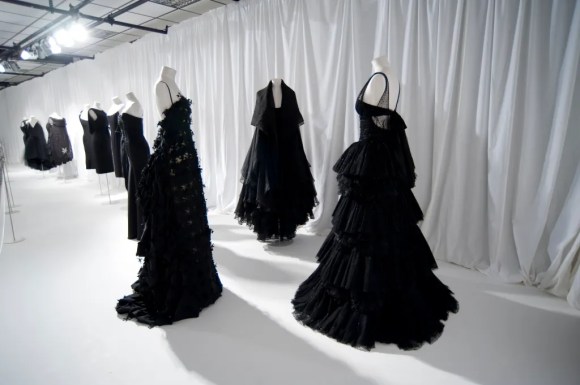
Every day at three o’clock, as the afternoon sun fought through the dusty windows and escaped the obstruction caused by the high school down the street, a teenage girl would slip quietly into a boutique. She never spoke, never bought anything, just wandered to the same rack and lingered over a particular black dress. Minerva watched her, recognising the weight of grief in the girl’s eyes she knew too well.
The girl would lift the simple black satin dress off the rack and wrap it around her as if embracing somebody very special.
After a few moments with the dress, the girl returned it to the rack and quickly left the store without a word spoken with tears streaming down her face.
*
Minerva used her late husband’s life insurance money to buy a little boutique she’d admired for years. The shop sold consignment women’s clothing and served as a sanctuary for Minerva to pour her sorrow into something tangible, to help women and girls find joy in clothing and accessories. The shop was a fragile haven built from a life including love, loss, and longing. Every shelf, every dress, every faded photograph tucked behind the register was a thread in the tapestry of her survival, but a lump found during a breast self-examination ignited anxiety which weighed heavily upon her.
Each morning, Minerva opened the shop, she was certain the lump was a “call” to “fold her hand” as the world felt like it was determined to break her.
*
One afternoon, as the bell tinkled above the door announcing a customer, Minerva looked up from her ledger. The girl was there again; her gaze fixed on the black dress. This time, she hesitated, then approached the counter, clutching the black dress including a second, almost identical dress but in a different size.
“Could I try these on?”
“Of course, dear.
“The fitting rooms behind me.”
A few minutes later, the girl emerged, the black satin dress draping heavy over her small frame. She looked at her reflection in the mirror, then turned to Minerva, uncertainty clouding her face.
“How does it look?”
Minerva stepped closer.
“May I ask, why this one?
“It doesn’t seem to fit you properly.
“I believe the black cotton dress will fit you perfectly.”
The girl hesitated, her fingers twisting the hem of the satin dress.
“My friend and I… we wanted to dress up and go to the prom together. She was killed in a hit-and-run accident. I can’t stop thinking about her. This black satin dress… it’s the only thing she tried on here. It’s all I have left of her.”
Minerva’s heart clenched. She spoke as if embracing the girl, her voice soft.
“I’m so sorry, sweetheart. Loss is a heavy thing to carry.”
The girl’s eyes shimmered with tears.
“I just… I wanted to feel close to her again. I thought maybe, if I wore the black satin dress, I could remember what it felt like to laugh with her.”
Minerva nodded, her own memories surfacing including her daughter’s laughter, a husband’s steady presence, and the ache of their absence.
“I can only imagine the emotional trauma you’re suffering, but please, allow me to share my sorrow with you, and together, we might lessen our heartache and move forward, stronger. I lost both my daughter and husband. Once, my world included a loving husband, Paul. He was a hard as nails career Marine whose stern exterior hid a heart that beat for his family. Marrying Paul provided me an opportunity to escape the role of only daughter to dysfunctional parents rooted inside a small town offering no prospects for self-fulfillment or escape.
“Marriage to Paul included a patchwork of military bases and hurried goodbyes, of late-night phone calls and the constant ache of uncertainty whether he’d be called to war. I learned to be strong; to pack up our life at a moment’s notice, but I also learned to find beauty even inside environments built for war. I found work inside clothing stores wherever we landed because I was drawn to the way fabric could transform a person, and how a simple dress could make a woman feel alive, special, or different even for one occasion.
“I apologise for tearing, but you remind me of our daughter, Emily, the light of my life. Emily’s spirit was wild and restless, her laughter echoing through the cramped military apartments and purring inside my heart. Emily drifted away to somewhere unknown inside her mind as if being pulled by currents I couldn’t fight including Paul’s ’tough love’ and frequent physical admonishments also inflicted upon me.
“The phone call came on a cold November morning: Emily was gone, lost to a Fentanyl overdose on a bed inside a stranger’s home. The grief rolled over me like a tidal wave, relentless and suffocating. Paul tried to be strong, but the loss hollowed him out like no weapons he’d ever known.
“Less than a year later, his heart stopped forever, leaving me with nothing but memories and the silence of an empty house we purchased after Paul retired. Some days, the memories are all that keep me going.”
The girl looked up, surprised.
“Does it ever get easier?”
“Not easier, but you learn to live with the pain of loss. I’ve learned kindness helps stitch the pieces back together.”
The girl glanced at the price tag, her face disappointed.
“I can’t afford both dresses.”
“You don’t have to. These are my gift for you.”
“But… why?”
“Because I know what it’s like to need something to hold onto. Giving is the only way I can heal.”
Tears spilled down the girl’s cheeks.
“I don’t know what to say.”
“You don’t have to say anything,”
Minerva carefully folded the dresses and placed them inside a gift box including a pink ribbon adorned with small hearts around the box.
“Promise me you’ll remember the good times and let yourself laugh again, when you’re ready.”
The girl nodded, clutching the box to her chest.
“I will.
Thank you.”
Minerva watched the girl slowly leave the shop and turn towards her before exiting. She mouthed the words,
“I love you.”
The girl left and the slight spring in her step signaled to Minerva signs of hope flickering in the ashes of her sorrow, and although Minerva didn’t get her name, she instinctively knew it was a brief encounter with her beloved Emily which gave her the final contact she desperately needed.
*
The doctor diagnosed Minerva with metastatic breast cancer. Minerva remembered staring at the ceiling in the doctor’s office, feeling as if her body was telling her the fight against grief was soon to be completed and she could join Emily and Paul in the afterlife.
The hardest blow came when the doctor informed her,
“The treatments will include a double mastectomy surgery, chemo, and radiation. If you want a chance of beating the cancer, it will require your complete devotion to rest and recovery. You won’t be able to keep up with the demands of operating the business.”
*
The words echoed in her mind as she stared at the racks of dresses, the sunlight struggling to pour through the fabrics mirroring the tears behind the black veil Minerva wore at two funerals and today, a struggle for her own life. Closing the shop felt like losing another piece of herself.
She lingered by the window, watching the sun dip below the horizon. She thought of her daughter, husband, all the moments lost, and the memories that remained. In giving the girl those two black dresses, Minerva was reminded that even in the depths of loss, kindness could stitch together the torn fabric of a broken heart. She had hoped to hear the familiar chime above the door open one final time and reveal the lovely girl. Minerva knew she was off chasing her own life which would reveal twists and turns. Minerva prayed the girl would be guided by kindness and knowing loss and misery is universal.
Recalling the happiness in the girl’s face carrying both dresses helped Minerva find the resolve to survive. She turned the sign on the door to “Closed,” knowing she would never open it again. But as Minerva locked up, she felt, for the first time in a long while, that she was not alone and would confront her illness head on with a newfound resolve to live.
From Public Domain
Jonathan B. Ferrini is the published author of over seventy fiction stories and poems. A partial collection of his short stories may be found in Within Hearts Without Sleeves. Twenty-Three Stories at Amazon. Jonathan also writes and produces a weekly podcast about film, television, and movies named, “The Razor’s Ink Podcast with Jonathan Ferrini.” Jonathan received his MFA in motion picture and television production from UCLA. He resides in San Diego.
.
PLEASE NOTE: ARTICLES CAN ONLY BE REPRODUCED IN OTHER SITES WITH DUE ACKNOWLEDGEMENT TO BORDERLESS JOURNAL
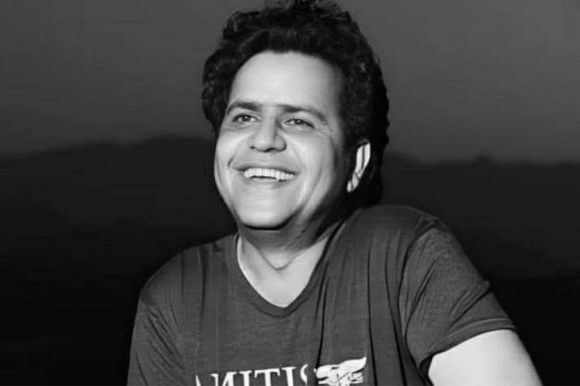
Majeed Ajez (1977-2026) was a remarkable Balochi poet. He started his poetic journey in the early 1990s and soon established himself as a prominent ghazal writer. Although he also wrote free verse and experimented with other forms, the ghazal remained his true forte, a form through which he expressed his poetic vision with remarkable ease and finesse. In a literary journey spanning nearly three decades, Ajez published three anthologies of poetry.
                 (1)
Each night the sun is lifted on a bier,
No wonder shadows live but briefly here.
The earth lies hushed, no whisper in the air,
And darkness, like the god, stays silent there.

                 (2)
No green fruit, nor any cooling shade
The jungle echoes with a dove’s mournful cry
As fire is bound to wood in flame
So too is the bond between the world and I

                 (3)
Your scarf waved softly and moonlight flowed.
Your lips stirred and flowers kissed the air.
The flock wanders and faints upon the plain.
The shepherd’s eyes are caught in honeyed glare.

                  (4)
A melancholy song descends in melody,
I wonder to whom your bright bangles confide.
Your morrow and the day beyond gleam radiantly,
While my yesterday and today lie dark as a grave inside.

                  (5)
To death and pain unfamiliar I stand.
In each breath an apocalypse unfolds.
Here kohl is worth far less than dust and sand.
Here tears and blood alone are sold.

                  (6)
Not even the thinnest comfort warms my children’s bowl,
The famished fishermen no longer venture to the sea
To flee the ravenous wolves haunting the darkened wilderness
A poor shepherd feeds his herd on water at the sea.

                  (7)
You walked this path with quiet grace and elegance,
I breathed a heavenly breeze, spread far and wide.
Leave Ajez be—he’s mad, indeed, quiet mad—
He wept for long, then laughed through all the pain inside.


                 (8)
No one looks this way anymore,
For whom should I turn my head and see?
Who knows what fate the coming day may store—
Today’s but yesterday’s echo to me.
Fazal Baloch is a Balochi writer and translator. He has translated many Balochi poems and short stories into English. His translations have been featured in Pakistani Literature published by Pakistan Academy of Letters and in the form of books and anthologies.
PLEASE NOTE: ARTICLES CAN ONLY BE REPRODUCED IN OTHER SITES WITH DUE ACKNOWLEDGEMENT TO BORDERLESS JOURNAL
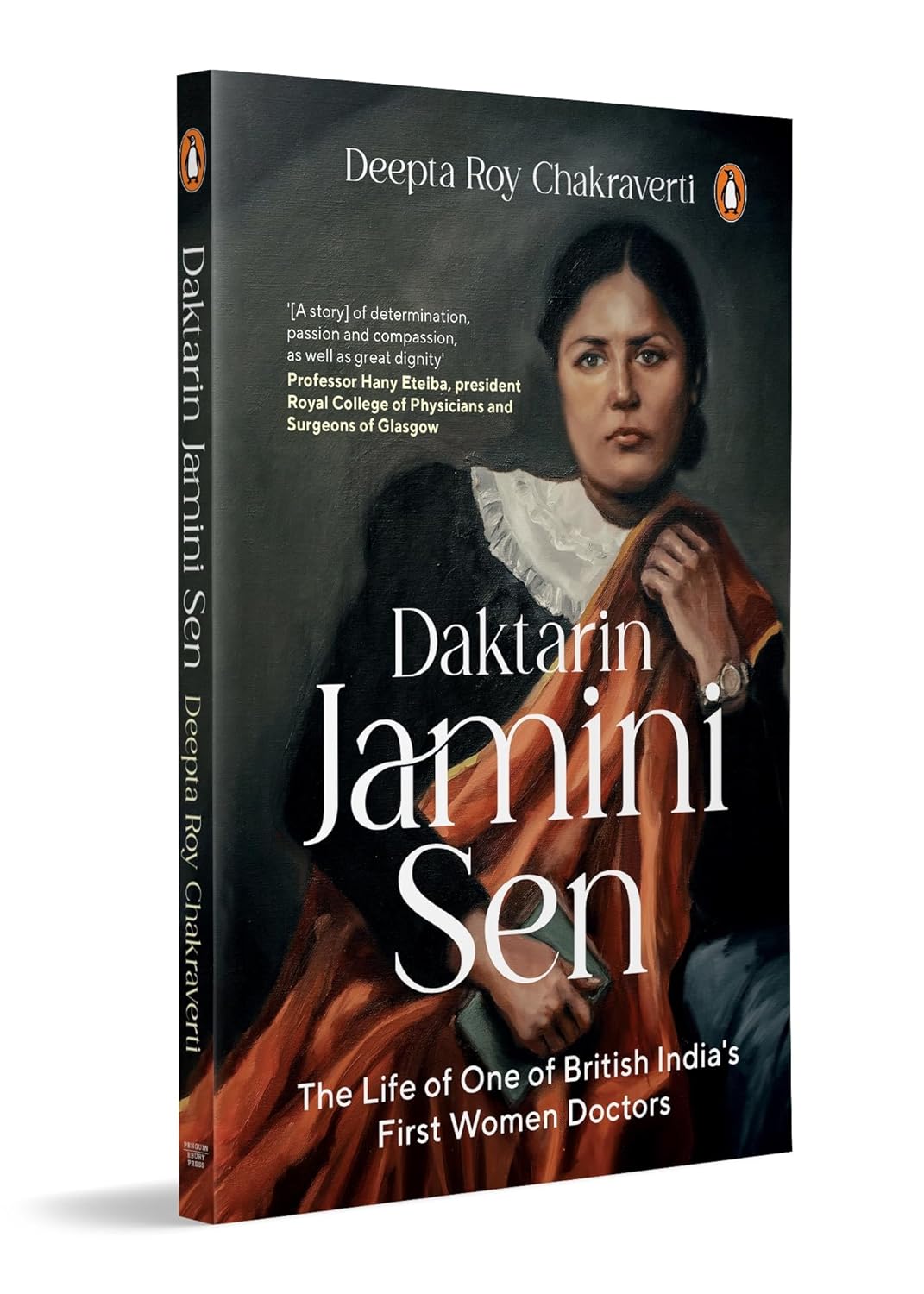
Title: Daktarin Jamini Sen: The Life of British India’s First Woman Doctor
Author: Deepta Roy Chakraverti
Publisher: Penguin/ EBURY PRESS
History often celebrates great events, revolutions, and institutions, yet it frequently overlooks individuals whose quiet determination helped shape the modern world.
Deepta Roy Chakraverti’s biography, Daktarin Jamini Sen: The Life of British India’s First Woman Doctor, seeks to restore one such remarkable figure to her rightful place in history. Through meticulous research and deeply personal storytelling, the book brings to light the life of a pioneering physician who challenged conventions, crossed borders, and carved a path for women in medicine at a time when such ambitions were rare.
Jamini Sen (1871- 1933) was among the earliest women doctors of British India and the first woman to become a Fellow of the Royal College of Physicians and Surgeons of Glasgow. In the late nineteenth and early twentieth centuries, when the world of medicine was overwhelmingly dominated by men, her achievement was nothing short of extraordinary. To study medicine, it required courage and determination; to excel in it and gain international recognition demanded a resilience that few possessed.
Chakraverti’s book traces Jamini Sen’s journey from the changing social landscape of Bengal to the complex and often dramatic world of royal Nepal. Born in a time when child marriage, strict gender roles, and social conservatism defined the lives of many women, Jamini’s life unfolded against the backdrop of a society in transition. The opening chapters evoke a Bengal negotiating between tradition and reform—where ideas of modern education, nationalism, and social change were beginning to challenge entrenched customs.
It was in this milieu that Jamini took her first steps toward a career in medicine. The path was far from easy. As a woman entering a profession dominated by men, she encountered skepticism, resistance, and prejudice. Yet the biography portrays her not as a passive victim of circumstance but as a determined individual driven by conviction and intellectual curiosity. Her pursuit of medical knowledge reflects both personal ambition and a broader spirit of reform that characterized parts of Indian society during the late colonial period.
One of the most fascinating phases of Jamini Sen’s career unfolded in Nepal. She was invited to serve as physician to the royal family during the reign of Prithvi Bir Bikram Shah. Nepal at that time was a kingdom cautiously opening its doors to modern influences, and Jamini’s presence there represented an important step in introducing modern medical practices to the royal court.
Serving in the palace required far more than medical skill. Court life was shaped by hierarchy, intrigue, and political sensitivities. Yet Jamini’s professionalism, discretion, and quiet confidence earned her the trust of the king and the respect of those around her. The biography suggests that her friendship with Prithvi Bir Bikram Shah was marked by mutual regard, and that she played a role in supporting his aspirations for a more modern Nepal.
But the story of Jamini Sen is not merely one of professional success. The book also reveals the personal costs that often accompany pioneering lives. Loss, loneliness, and emotional hardship form a recurring undercurrent in her journey. She endured the deaths of loved ones and navigated difficult relationships yet remained steadfast in her commitment to her work and her ideals.
Chakraverti’s narrative emphasises that Jamini’s resilience was rooted not only in determination but also in faith and introspection. Moments of spiritual reflection and philosophical questioning appear throughout the narrative, suggesting that her inner life was as complex as her public career. This dimension of the biography adds depth to the portrait of a woman who was not simply a medical pioneer but also a thoughtful and introspective individual.
The author’s own connection to the story lends the book a distinctive emotional resonance. Deepta Roy Chakraverti is the last of Jamini Sen’s descendants through the line of Jamini’s niece, Roma Sen Chakraverti. A lawyer educated at King’s College London with a first degree in mathematics from University of Delhi, Deepta writes not only as a historian but also as a custodian of family memory.
In the prologue, she reflects on the idea that our ancestors live within us—not only through blood and lineage but also through memory and spirit. Her decision to write about Jamini Sen arose from a growing sense of injustice. Why had a woman of such accomplishment been largely forgotten? Why had her life been reduced to little more than a historical footnote?
That question became the driving force behind the book. What began as a short story gradually expanded into a blog and finally into a full-length biography. Along the way, Chakraverti discovered family heirlooms, letters, and personal belongings passed down through generations—small fragments of the past that helped reconstruct Jamini’s life.
The author also drew upon anecdotes preserved in family memory and earlier Bengali writings by her great-aunt, Kamini Roy, which provided valuable insights into Jamini’s character and experiences. These sources give the narrative an intimate quality rarely found in conventional historical biographies.
Structured across twenty-five chapters, the book moves through the many stages of Jamini’s life—from her childhood in a changing Bengal to her years in Nepal, her struggles and triumphs in medicine, and the legacy she left behind. The chapter titles themselves hint at the drama and complexity of her life: ‘A Woman in a Man’s World’, ‘The Fight to Wield the Scalpel and Stethoscope’, and ‘Becoming British India’s Saree Wali Daktarin Sahib’.
A foreword by Hany Eteiba, President of the Royal College of Physicians and Surgeons of Glasgow, adds an important institutional recognition of Jamini Sen’s achievements. It situates her story within the broader history of global medicine and acknowledges the significance of her pioneering role.
Daktarin Jamini Sen is more than a biography. It is an act of historical recovery—a reminder that many women who challenged social boundaries and advanced professional fields were gradually erased from public memory. By reconstructing Jamini Sen’s life, Deepta Roy Chakraverti restores one such figure to the narrative of South Asian history.
Jamini Sen emerges from these pages as a courageous, intelligent, and deeply human figure—a woman who carried both the stethoscope and the burden of breaking barriers. Her story reminds us that the progress of society often begins with individuals who refuse to accept the limitations imposed upon them.
In telling that story, this book ensures that Jamini Sen will no longer remain a forgotten pioneer.
.
Bhaskar Parichha is a journalist and author of Cyclones in Odisha: Landfall, Wreckage and Resilience, Unbiased, No Strings Attached: Writings on Odisha and Biju Patnaik – A Political Biography. He lives in Bhubaneswar and writes bilingually. Besides writing for newspapers, he also reviews books on various media platforms.
PLEASE NOTE: ARTICLES CAN ONLY BE REPRODUCED IN OTHER SITES WITH DUE ACKNOWLEDGEMENT TO BORDERLESS JOURNAL
I forget the names of streets. My memory has slowed in time. I am just happy to be able to think with this mind.
I am often in the clouds with this mind thinking how long will it be when it rains again. I forget the exact date it did
rain. I know it was more than a month or maybe two months ago. I was looking at the sky
when the rain fell inside my eyes. I do not know what street I was at when the rain came down.
NAMING CLOUDS
I tried to name each cloud I saw throughout the day.
I called one dark angel which had a serpent’s tongue and a devil’s tail. Every time
I looked up was to name another cloud. Infierno
was the name I gave the hell cloud with its heart
on the outside. Hell I named it. Saintliness was far from
its design. Rimbaud I named another cloud just because.
I SAY ENOUGH
I say enough about the best and worst of times. It is nature and the cosmic voodoo of life that keeps this itch alive to let my anger, joy, and sadness out. What about love? I say a little about it some days too. I say enough of love when I am stuck in reflections of when I believed in such things. My cloudy mind is often lost in a shadow of doubt.
Born in Mexico, Luis Cuauhtémoc Berriozábal lives in California and works in the mental health field in Los Angeles. His poetry has appeared in Abramelin, Barbaric Yawp, Blue Collar Review, Borderless Journal, Fixator Press, Kendra Steiner Editions, Mad Swirl, The Literary Underground, and Unlikely Stories.
.
PLEASE NOTE: ARTICLES CAN ONLY BE REPRODUCED IN OTHER SITES WITH DUE ACKNOWLEDGEMENT TO BORDERLESS JOURNAL
There were very few things that Sir Mark Tully touched which did not turn to gold. In his later years, disenchanted by journalism, he resorted to making documentaries on steam trains. Accompanied solely by a production crew and armed with the knowledge that comes with instinct, Sir Mark established that the locomotives pulling these trains — running on steam — did exist in India, even if he had to crisscross his way to the western peripheries of Kutch to make his point. By then, the BBC, whose outstanding representative he had become, and whose torch he held aloft in times of crises, had become enamoured by the crony capitalism of the centre-right, which we would go on to see in later years.
Born in the southern suburb of Tolluygunge in Calcutta to parents who were Indian in all but name, Sir Mark was sent to study in England at the age of nine before joining the organisation which would, for better or worse, be the making of him. Known essentially for his factual reporting, albeit with the possession of a nuanced eye that made his stories seem humane, Sir Mark’s passion for conversation with his subjects made him highly esteemed in the eyes of his peers. The added benefit of reporting on events that shaped modern India — the Bhopal gas tragedy, Operation Blue Star, Rajiv Gandhi’s assassination, the Babri Masjid demolition, et al — was the ream of concepts he had up his sleeve, and of which he made good use when he started writing books.
Amritsar: Mrs Gandhi’s Last Battle was Sir Mark’s first book, but it was No Full Stops In India that embellished him as a legend who could comfortably balance storytelling with a subtle hint of refinement, and who had the repertoire of knowing his subjects inside. Despite being born in the country, he was only given the privilege of being an Overseas Citizen of India (OCI), but this did not deter Sir Mark from his goal — to tell the stories of real Indians and real India to those who did not know where to look. All his life, he rallied behind the cause of religious pluralism and batted for the inclusion of marginalised communities and minorities into the mainstream, but died a man broken by the scars of battle.
Much like the Ashokan rock edicts that were unknown to the ordinary Indian till James Prinsep deciphered the Brahmi script in the early 19th century, Sir Mark’s work went largely unnoticed in the country until he left the BBC. Harassed and harangued by the Indira Gandhi government, he had also been forced to leave the country when the Emergency was imposed. However, return he did, to his country of birth, and stayed loyal — to its people and to the truth — and continued challenging those in power with constant, if gratifying, attacks.
Telling stories with a precision that most remain unaware of despite the possession of all-seeing eyes, Sir Mark’s work remained a terrifying but ambitious challenge for any aspiring journalist to recreate. He left just the way he had wanted to leave, in the country of his birth, known as an Indian who had struck roots in its soil, blossomed in its spring and withered at its dusk. A man ahead of his times by several generations, Sir Mark Tully was an Indian we did not deserve.
Mohul Bhowmick is a national-level cricketer, sports journalist, poet, essayist and travel writer from Hyderabad, India. He has published five collections of poems and one travelogue so far. His latest book, The Past Is Another Country, came out in 2025. More of his work can be discovered on his website: www.mohulbhowmick.com.
.
PLEASE NOTE: ARTICLES CAN ONLY BE REPRODUCED IN OTHER SITES WITH DUE ACKNOWLEDGEMENT TO BORDERLESS JOURNAL
There are days when kindness is not a feeling
but a decision made quietly, like leaving a light on
in a room no one thanks you for entering.

        The world keeps moving through us, unfinished,
         asking more than it explains.

          We learn restraint from what survives without display:
          the hand that loosens before it clenches,
     the voice that waits long enough to hear itself soften,
  the moment when power chooses not to announce its name.

  Nothing here is dramatic. That is the point.

This is how we stay human together:
by refusing the easy damage, by carrying each other
without calling it sacrifice,
by believing that what we protect in one another
eventually protects the world.
Nma Dhahir is an emerging poet and writer from Kurdistan. She emphasizes the importance of the younger generation in driving change and innovation within the places they’re from, and this includes arts.
PLEASE NOTE: ARTICLES CAN ONLY BE REPRODUCED IN OTHER SITES WITH DUE ACKNOWLEDGEMENT TO BORDERLESS JOURNAL
The holiday market buzzed with life, bathed in the golden glow of string lights that twisted like ribbons between the stalls. Vendors hawked hot cider, the air thick with the scent of cinnamon and cloves. Children, bundled in puffy coats, raced around, their fingers clutching candy canes, their laughter mingling with the low hum of holiday songs. The warmth of the season wrapped the world in a festive embrace.
Shafi clutched her coffee tightly, the warmth of the cup unable to quell the cold gnawing at her insides. The heat of the liquid contrasted sharply with the chill that had settled deep within her…. a coldness that not even the bright lights or holiday cheer could dispel. She scanned the lively scene, but her focus was elsewhere, far from the twinkling stalls and cheerful music.
“You’re too quiet again,” Amir said, nudging her elbow gently. “You okay?”
Shafi tried to smile, but it didn’t reach her eyes. “Just thinking.”
Amir frowned. “It’s Christmas. You’re supposed to feel warm and fuzzy, not… whatever this is. What’s going on?”
“I don’t know,” she whispered. “It just feels… off.”
Amir gave a small laugh. “Paranoia. Classic Shafi.”
But Shafi couldn’t shake the weight pressing down on her chest. The world felt too loud and too quiet at the same time. The joy around her seemed distant, muffled by a creeping unease. She wanted to feel the warmth of the season, to laugh and enjoy the festivities like everyone else, but all she could think about was the shadow of her past, looming just out of reach.
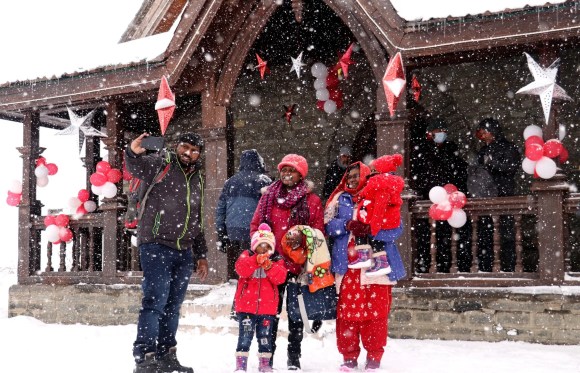
As they walked toward her apartment, the streets emptied, and the festive energy of the market gave way to the solitude of falling snow. The sky had turned a deep shade of indigo, and the streetlights cast long shadows across the quiet pavement. The snow, falling gently at first, began to collect, blanketing the city in soft, white layers. Each flake seemed to carry its own quiet story, falling in silence but adding to the growing weight of the world.
When they reached her door, Shafi stopped dead in her tracks.
“Wait,” she whispered.
Amir followed her gaze, his expression shifting from concern to confusion. The door to her apartment was slightly ajar. Her heart skipped a beat.
“Stay back,” he said firmly. “We don’t know what’s inside.”
Shafi grabbed his arm, urgency flashing in her eyes. “No. I’m going in.”
They stepped inside together. The apartment was eerily quiet. The usual hum of the fridge, the faint rustling of curtains in the breeze, was absent. Everything seemed untouched—except for a single set of dusty footprints leading from the door to the table.
Amir moved cautiously toward the table, his eyes scanning the room for danger. On the table lay a folded piece of paper. It seemed ordinary, yet in the context of the silence and the unusual circumstances, it felt like a warning.
“Shafi,” he said softly. “You need to see this.”
Her name was scrawled on the front in jagged handwriting, the ink slightly smeared. The paper felt heavy in her hands as she took it, her fingers trembling.
“Shafi,” Amir read aloud, his voice steady but concerned. “The snow may bury, but the truth always thaws. You can’t hide forever.”
Shafi staggered back as though the words themselves had struck her, each letter cutting deep. A cold shiver ran down her spine. The past rushed at her with the force of an avalanche.
“What does it mean?” Amir asked, his voice tense.
Shafi didn’t respond. Her mind raced, the weight of her past crashing down like a flood. The words weren’t just a threat—they were a reminder of the life she had tried to leave behind, of the man she had betrayed, and the secrets she had buried.
“Shafi,” Amir said gently, insistent. “Talk to me. Who sent this?”
She clenched her fists, struggling to speak. The truth felt like a lump in her throat, burning to get out, but fear kept her silent. She had buried this secret for so long, hoping it would stay hidden. Now, it was all coming to the surface.
“It’s not that simple,” she whispered, trembling.
“Make it simple,” Amir said softly, kneeling beside her. “Please.”
She looked at him, eyes glistening with unshed tears. She had carried this burden alone for years, but now, in Amir’s unwavering presence, the walls she had built began to crumble.
“There was a man,” she began, voice breaking. “Rafiq. Years ago, I…” She paused, breath hitching. “I betrayed him.”
Amir’s brow furrowed. “Betrayed how?”
“I lied,” she admitted, voice heavy with guilt. “I framed him for something he didn’t do. It was him or me, and I chose myself.”
Amir stared silently. His quiet presence asked no questions; he simply waited.
“Why?” he asked softly.
“Because I was scared,” she whispered. “I thought it was the only way out. It worked—he went to prison, and I walked free. But now he’s out, and I think he’s come for me.”
Silence hung between them, suffocating. Shafi could barely breathe, the weight of her confession pressing down.
Finally, Amir spoke. “And this note… it’s from him?”
Shafi nodded, throat tight. “It has to be.”
Amir knelt, taking her hands gently. His touch grounded her. “Listen. Whatever you did, whatever he’s planning, we’ll handle it. Together.”
Tears streamed down her face. “You don’t understand. He has every right to hate me. I ruined his life.”
“And hiding will only make it worse,” Amir said firmly. “You need to face this. We need to face this.”
Shafi looked into his eyes, searching for doubt, for hesitation, and found none. Only resolve. Only support.
“What if he wants revenge?” she asked, barely audible.
“Then we’ll stop him. But first, we need to talk to him. No more running, Shafi.”
She nodded slowly. For the first time in years, the weight of her guilt began to lift not because the past had changed, but because she wasn’t facing it alone.
Outside, the snow continued to fall, blanketing the world in quiet beauty. Inside the apartment, something new took root: hope.
.
Gowher Bhat writes fiction and non-fiction. He’s a a columnist, freelance journalist, and educator from Kashmir. His writing explores memory, place, and the quiet weight of the things we carry, delving into themes of longing, belonging, silence, and expression. A senior columnist for several local newspapers across the Kashmir Valley, he is also an avid reader and book reviewer. He believes that books and writing can capture the subtleties of human experience.
PLEASE NOTE: ARTICLES CAN ONLY BE REPRODUCED IN OTHER SITES WITH DUE ACKNOWLEDGEMENT TO BORDERLESS JOURNAL
Seek out the spark. Silver-scales flicker in copper dusk, belly-deep in shallows. A fish shimmies just within my gaze, unaware of eyes across the bank. Hands twitch with eagerness and line.
One dart crisscrosses another. One swish and it vanishes, leaving the kind of unwrinkled ripple that only a ghost could make.
Not beautiful, not holy either, but glows in its ignorance, it wears shimmer like an evening dress, dances as if it knows no predator, as if the hook is its own instinct and not that metal thing bobbing in the water.
LANDS OF DROUGHT
If only the magpies and cockatoos pitched in with the seeding, instead of stealing the last of the barley like feathered masked bandits.
The fields stretch wide, sadly sown, sunburnt ledger of solitary labour. And my silos are as hollow as a bird’s bones.
Summer lays claim and offers nothing. A long, dry siege where dreams peek out between nightmare’s teeth. Even the soil knows -- it clumps in my palm like the ghost of work. I’m its servant. It’s retired.
Each day arrives full as an empty drum: from end to end, absurd rows of nothing. I’m a farmer — no, a resident of dust. A scarecrow by trade: sticks in a hand-me-down shirt, some straw stitched at haste.
IN A STEEL TOWN
Noise factories churn out red-hot steel. Chimneys feed the air. The sky nibbles on the ash. Clouds swallow hard.
Smog coats the lungs with slag heaps for illustration.
Eyes burn. Everything tastes of iron and carbon.
Some say the money’s good. But no one knows what’s good about it.
From Public Domain
John Grey is an Australian poet, US resident, recently published in Shift, Trampoline and Flights. His latest books — Bittersweet, Subject Matters and Between Two Fires — are available through Amazon. He has work upcoming in Levitate, White Wall Review and Willow Review.
PLEASE NOTE: ARTICLES CAN ONLY BE REPRODUCED IN OTHER SITES WITH DUE ACKNOWLEDGEMENT TO BORDERLESS JOURNAL
The narrative of Odisha post-1947 is one of change, unity, and strength, set against the backdrop of India’s fresh independence. Although Odisha was established as a distinct province from the Bengal Presidency in 1936, primarily based on linguistic and cultural factors, its evolution into a modern political and administrative entity truly commenced with independence.
On the Cusp of Independence
The foremost and most urgent challenge was the amalgamation of 26 princely states, collectively referred to as the Garjat states, each governed by its own ruler, administrative system, and local customs. These states were scattered throughout the hilly and forested regions of Odisha, and their unification required not just political acumen but also cultural awareness, negotiation skills, and strategic insight.
The responsibility of bringing Odisha together largely rested on Harekrushna Mahatab, the state’s first Premier, who collaborated closely with Sardar Vallabhbhai Patel and V.P. Menon from the central government. The discussions commenced in 1946–47, prior to India’s official independence, and extended into the early years following independence.
Several rulers quickly consented to join, swayed by enticing offers of financial rewards, ceremonial honors, and guarantees that their roles would be honored in a democratic Odisha. In contrast, some were hesitant, worried about the potential decline of their traditional power and local sway.
Mahatab skillfully blended diplomacy, patience, and strategic advantage, methodically uniting all 26 states under Odisha’s governance. This consolidation not only enhanced administrative efficiency but also set the stage for consistent laws, tax systems, and development initiatives throughout the region.
Democracy Finds Its Feet
In the political landscape following independence, Odisha experienced the formation of democratic institutions and practices. The Indian National Congress played a pivotal role in the early political scene, capitalising on its organisational strength and the heritage of the independence struggle.
Elections, local governance bodies, and legislative assemblies were created, providing citizens with a voice in governance and facilitating a gradual shift from princely rule and colonial frameworks to democratic self-governance.
The strengthening of political authority also enabled the formalisation of administrative practices, the modernisation of the bureaucracy, and improved coordination with the central government, which aided in developmental planning for both urban and rural regions.
Farmers First
Economically, Odisha grappled with the twin issues of historical underdevelopment and susceptibility to natural disasters. Agriculture, which employed the majority of the populace, relied heavily on monsoon rains, while traditional tools and methods hindered productivity. After gaining independence, governments focused on land reforms, including tenancy regulations and the redistribution of surplus land to small farmers, with the goal of reducing inequalities and empowering the rural poor.
Rise of Industrial Odisha
The enhancement of irrigation systems, canals, embankments, and reservoirs, especially along the Mahanadi, Brahmani, and Baitarani rivers, aimed to stabilise agricultural production and lessen the risks associated with droughts and floods. These initiatives established a foundation for sustainable rural development while ensuring food security in a state that has historically faced famine.
Industrialisation emerged as a crucial element of Odisha’s strategy following independence. The state’s rich mineral resources—such as coal, iron ore, bauxite, and chromite—served as the foundation for establishing heavy industries. Industrial hubs like Rourkela, which hosts India’s inaugural integrated steel plant, were developed with assistance from the central government and international partnerships, leading to job creation, urban expansion, and economic diversification.
The establishment of the Paradip port during the 1960s and 1970s enhanced the transportation of raw materials and finished products, connecting Odisha to both national and global markets. These industrial and infrastructural developments were part of a concerted effort to shift Odisha from a predominantly agricultural economy to one that is more varied and robust.
Furthermore, education and social reform played a vital role in Odisha’s growth after independence. Literacy initiatives broadened access to primary and secondary education, while improvements in teacher training and school construction elevated educational quality.
Tribal communities and marginalised groups were given focused support, including scholarships, vocational training, and legal protections aimed at helping them integrate into the broader economic and political landscape. Health infrastructure also saw significant growth, with the establishment of hospitals, primary health centers, vaccination campaigns, and maternal care initiatives that gradually enhanced life expectancy and lowered infant mortality rates, especially in remote and tribal regions.
Culture in Full Color
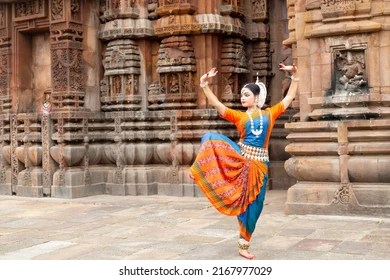
Oddisi dance at a temple
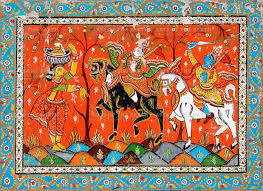
Cultural revival and the building of identity were closely linked to these economic and social changes. Odisha took active steps to promote Odissi dance, music, literature, and handicrafts, which not only bolstered regional pride but also created economic opportunities through tourism and the livelihoods of artisans. The state committed to preserving and promoting traditional arts like pattachitra painting, silver filigree, appliqué work, and handloom weaving, often facilitated by cooperative societies and government support.
Pattachitra Silver filigree work From Public Domain
Temple towns such as Puri and Konark have maintained their significance in spirituality and culture, with events like the Rath Yatra and the Konark Dance Festival serving as key highlights of both religious fervor and cultural tourism. This fusion of age-old traditions with contemporary elements has enabled Odisha to carve out a distinctive identity while also addressing the developmental needs of a modern state.
The political landscape in Odisha after independence has transformed over the years, influenced by a mix of national and local factors. Initially, the Congress party held sway, but the rise of tribal movements, regional activism, and calls for increased administrative autonomy posed challenges to central governance and enriched the discourse on democracy.
Local leaders from tribal and marginalised communities have stepped forward, championing the cause for representation and the fair distribution of resources to overlooked areas. As a result, Odisha has cultivated a diverse political environment, featuring a variety of parties, coalitions, and grassroots initiatives that mirror the state’s intricate social and geographical tapestry.
Nature’s Wrath
Odisha’s natural environment has consistently challenged the resilience of its people and governance. The state faces threats from cyclones, floods, and droughts, which have repeatedly resulted in catastrophic losses of life, property, and agricultural productivity. Significant cyclones in 1971, 1999, 2013, and 2020 caused tremendous devastation, underscoring the susceptibility of coastal and rural populations.
Each disaster led to improvements in early warning systems, disaster readiness, and coordinated relief efforts, gradually turning Odisha into a benchmark for disaster management in India. The involvement of communities, enhanced infrastructure, and strategic planning enabled the state to respond more adeptly to natural disasters over the years.
Mining Marvels
In the late 20th and early 21st centuries, economic development centered on industrial growth, mining, and energy generation. Odisha emerged as a center for steel, aluminum, and power industries, drawing both domestic and international investments. Urban areas like Bhubaneswar, Cuttack, Rourkela, and Sambalpur grew swiftly, transforming the demographic and social fabric of the region.
Industrialisation ushered in a wave of prosperity and job opportunities, yet it also introduced significant challenges, such as environmental degradation, community displacement, and the pressing need to balance economic growth with sustainable development. Efforts to address these issues included policies focused on corporate social responsibility, environmental regulations, and rehabilitation initiatives, although the struggle to harmonize development with conservation persisted as a continual challenge.
Connectivity and Integration
The evolution of infrastructure has been pivotal to Odisha’s transformation since independence. The expansion of roads, railways, ports, and communication networks has linked rural and urban areas, facilitating the flow of goods, services, and people. Notable projects like the Hirakud Dam on the Mahanadi not only offered irrigation and flood management but also produced hydroelectric power, playing a crucial role in the region’s industrial growth.
Ports like Paradip and Dhamra have enhanced trade and maritime links, while the development of rail and road networks has connected remote areas with urban centers and industrial zones. These advancements have contributed to the geographical and economic unification of the state, diminishing isolation and encouraging greater involvement in the national economy.
Social and cultural transformations progressed in tandem with economic growth. Literacy rates saw a consistent rise, particularly focusing on the education of girls. Women became more involved in education, the workforce, and politics, mirroring both national policy efforts and evolving social standards.
Tribal and rural populations maintained aspects of their traditional lifestyles while also embracing modern education, healthcare, and job opportunities. Folklore, languages, and ritual practices were safeguarded through documentation, festivals, and community-driven projects, ensuring that the process of modernisation did not obliterate local identities.
Multi-faceted Society
By the dawn of the 21st century, Odisha had transformed into a complex, multi-faceted society, striking a balance between tradition and modernity, rural and urban progress, and the management of natural resources alongside industrial expansion. Politically, the state had transitioned from a period of Congress dominance to a more pluralistic and competitive democratic framework, with regional parties and coalitions influencing policy and governance.
Economically, the state’s diverse foundation in agriculture, industry, mining, and trade enabled it to endure external challenges while fostering ongoing development. Socially and culturally, Odisha preserved a vibrant heritage, merging classical arts, festivals, and tribal customs with the requirements of a contemporary, globalised world.
The era following 1947 in Odisha embodies a tale of unity, strength, and change. It spans the intricate discussions with princely states leading to the formation of democratic frameworks, agricultural advancements, industrial growth, recovery from disasters, and a resurgence of culture. Odisha’s evolution mirrors the larger narrative of India’s shift from colonial domination to sovereign nationhood.
The state’s skill in managing natural disasters, economic hurdles, and societal shifts while maintaining its cultural essence showcases an extraordinary ability to adapt, positioning Odisha as a fascinating case of regional evolution in a swiftly modernising country.
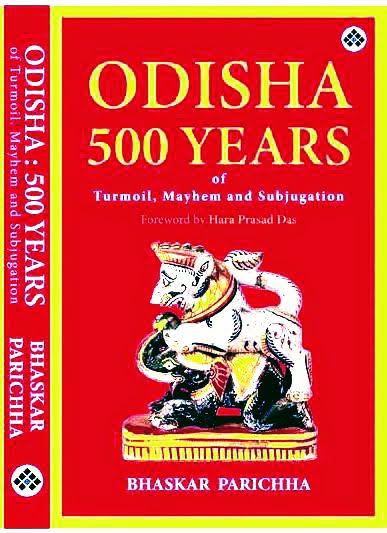
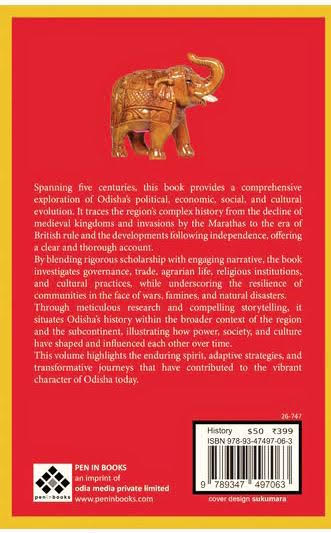
(Excerpted from the book Odisha – 500 Years of Turmoil, Mayhem and Subjugation by Bhaskar Parichha. Published by Pen In Books/Bhubaneswar)
.
Bhaskar Parichha is a journalist and author of Cyclones in Odisha: Landfall, Wreckage and Resilience, Unbiased, No Strings Attached: Writings on Odisha and Biju Patnaik – A Political Biography. He lives in Bhubaneswar and writes bilingually. Besides writing for newspapers, he also reviews books on various media platforms.
PLEASE NOTE: ARTICLES CAN ONLY BE REPRODUCED IN OTHER SITES WITH DUE ACKNOWLEDGEMENT TO BORDERLESS JOURNAL









 Borderless