I don’t belong here, you tell me. I don’t belong here where the monsoons drain the sky of all water? This darkness is not cloud covering the sky in layers of collyrium dust. This darkness is the darkness of your heart staining the air. Can you wipe clean the slate of memory, my smile etched on fond photographs, the family fables, the tangle of feuds and the look in your eyes, when I, your unwanted daughter, walk in demanding my dues? I may not belong here anymore, but I demand the song of every cuckoo that sang on the thatch, the footprints of every squirrel that scuttled across the courtyard, and the cries of every dark goddess you deified in false myths.
Usha Kishore
Usha Kishore is an Indian-born British poet, editor and translator. The author of three collections of poetry, her work has been widely published. www.ushakishore.co.uk
.
PLEASE NOTE: ARTICLES CAN ONLY BE REPRODUCED IN OTHER SITES WITH DUE ACKNOWLEDGEMENT TO BORDERLESS JOURNAL
Parry Lines was an ordinary fellow, so much so that even his friends couldn’t be bothered to find out his actual name and were content to call him “Parallel,” his nickname since childhood. Regular, indeed nondescript features were surmounted by his trademark bald pate; the most you could say was that occasionally he wore a bright plaid shirt in neon pastels to liven things up a bit.
Ten weeks A.G. (After Gherkin)
Yet his death (by gherkin) caused a butterfly effect that changed the world. Until the incident with the gherkin, the most notable thing that had ever happened to Parry was when his surprisingly dashing teenaged son had consumed an entire teacup full of gravy during Thanksgiving dinner. Honoured guests had watched in horror as Parry Jr. (PJ for short), notable for his twinkling hazel eyes and flowing chestnut hair, gulped down the rich, brown fluid–though they should have expected something of the kind when he poured the gravy from the pitcher on the table into the China cup ready at his place setting for after-dinner tea.
Present at that event, and at the gherkin incident as well, was Mrs. Honoria Tadpole, English professor and amateur sleuth. Her demure, conservative appearance (she always wore a smart, tailored suit–or at least the best the local thrift shop could provide–and had her silver-blonde hair cut in a perky, short bob) and her self-effacing manner and diminutive (if plump) stature belied the sharpest mind north of California. It would fall to her to unravel the complicated mystery that the local paper dubbed “Gherkingate.”
Interviewed by the features’ editor, as the criminal trial of the alleged murderer dragged on, Mrs. Tadpole was asked the inevitable question of how it had all started. The interview took place in Mrs. Tadpole’s well-appointed parlour, a room replete with Victorian bric-a-brac. With characteristic hospitality, she poured out a strong brew of BC Bold to accompany the delicate sandwiches (ham, egg, and cucumber) and homemade oatmeal cookies that were her signature “high tea,” known to local islanders as a four o’clock tradition at the old manse where Mrs. Tadpole rented a small suite.
“Now, Mrs. Catchpole, I understand you were part of the original party that travelled to Moany Bay,” the interviewer began.
“Tadpole,” Mrs. Tadpole corrected. A veteran instructor of nineteen- and twenty-year-olds, she was used to misspellings and mispronunciations. Marpole, Rumpole, Toadpole: she had heard and seen it all, and could make the necessary correction without even flinching anymore. She cast her mind back almost three months to a mid-summer weekend off British Columbia’s Sunshine Coast.
She began with an allusion to classic culture: “Just sit right back and you’ll hear a tale, a tale of a fateful trip…”
Sadly, the features’ editor of the Island Gleaner failed to catch the reference to Gilligan’s Island, one of the best sit-coms of the 1960s. Mrs. Tadpole had been a toddler when the series was first aired, but its popularity throughout her childhood made it a touchstone for, really, almost everything in life, according to her observations. She knew that some people accorded such a status to the iconic, original Star Trek, but what did Captain Kirk have that “the Skipper” did not? Not much, thought Mrs. Tadpole.
The premise of Gilligan’s Island was classic: a small number of people, randomly-assorted, stranded on an island together with no real prospect of deliverance. After all, wasn’t that just the paradigm of human existence? You didn’t need to be an English proffessor (though Mrs. Tadpole was one, of course) to figure that out.
That fateful weekend, when the seeds of the gherkin incident was sown, had been rife with undertones of Gilligan’s Isle.
Breathing deeply of the fresh Pacific breeze, the passengers sat out on the deck of the vessel as it hugged the rugged BC coastline. The rushing water behind the Skirmish flumed out into a fan of spray, while the murky depths offshore spat out seals and sealions–even the occasional humpback whale–with random irregularity. Black bears hid among the rocks and evergreens in the uninhabited areas; cabins dotted the beaches in the populated areas of cottage country. On the way up the coast, the party of friends and family had composed their own version of the theme song, with each member of the group assigned to a role from the original cast. Mrs. Tadpole was the Professor, of course. Never mind that the community college where Mrs. Tadpole worked had opted not to accord academic titles to their teachers, or that the original Professor in the TV series was a man. (As Mrs. Tadpole had been known to say to her first-year college students, we live in a post-gender, post-glass-ceiling world. And if we don’t, we should).
Aboard the Bayliner, Skirmish, Parry Lines was the Skipper, and his hapless, gravy-drinking son was typecast as the irrepressible Gilligan, full of mischief and ridiculous ideas. Mrs. Tadpole could only hope that her adorable niece, Mary Anne (same name as her Gilligan’s Island counterpart!), was immune to his sauce-swilling charms.
The Millionaire role was assumed by the reclusive entrepreneur Deadhead, Mickey Garcia (if that were in fact his real name), accompanied by his charming wife, Penelope, a voluptuous brunette. Together they had built an empire founded on tribute bands and biopics. The rumour mill had it that there was trouble in paradise, but no one outside his immediate family had seen Mickey for years, so it was difficult to substantiate the gossip.
The cast was fleshed out (so to speak) with a bona fide movie star, the internet sensation who began as one of the central figures in a YouTube series called Project Man Child (“For the price of a cup of coffee… you can buy this underemployed househusband a cup of coffee!”) and had gone on to a viral barrage of TikToks under the sobriquet of “The Naked Gardener”. Mrs. Tadpole was relieved (as no doubt were the others) to note that all the passengers aboard the Skirmish, including this one, appeared to be fully clothed.
At least, all whom she could see wore conventional travelling attire: Mr Garcia, recovering from surgery and groggy with heavy opiates, was shrouded in a blanket and wearing dark glasses. He slumped a little to the side, and his heavy breathing attested to a well-earned reputation for napping as a pretense in order to ignore his surroundings.
As Mrs Tadpole later told the Gleaner interviewer, the real concern of the trip quickly emerged: not the rapprochement of Mary Anne and Parallel Jr., but the burgeoning, even violent antagonism between Parry Sr. and Penelope Garcia, whom the latter insisted on calling “Cherry” with a suggestive leer while her husband languished in his bunk. “Is he grateful? Or just dead?” quipped Lines. One night, Penelope went so far as to brandish a knife in Lines’ general direction and had to be restrained by Mrs Tadpole and Mary Anne in tandem.
Although Madame Garcia was the only one to meet his taunts with open animosity, no one was spared the self-proclaimed wit of Parallel Lines.
He had the nerve to call Mrs Tadpole’s beloved niece, whose sunny disposition was outshone only by the sweet, fair face that perched above her perfect figure, “Mistress Mary, Quite Contrary” –nothing could have been further from the truth! Of course, Mary Anne merely smiled and shrugged it off, as if no insult could penetrate her cheerful exterior … but others were less armour-clad.
The bully referred mercilessly to the Naked Gardener as “Jamie Oliver, the Naked Chef” (whom he slightly resembled) a slur that obviously got under the man’s skin (“I couldn’t boil an egg to save my life!” he protested angrily. “That’s not my brand at all! He’d better watch his back…”).
Even Mrs. Tadpole (surprisingly resilient after having been bullied through her shy youth as resembling a chubby little toad) came in for her share of abuse, rechristened as “Mrs Toad” after making her one of specialties, toad-in-the-hole, for her shipmates. (Once she discovered that the galley of the Bayliner was stocked with a potato ricer and La Ratte potatoes, there was no holding her back. A ring of caramelized onions surrounded each serving dish, with two nut-brown sausage-ends sticking out of the centre, for all the world like a couple of froggy eyes.) “No one calls me Toad,” she intoned ominously.
Cruelly and unaccountably, Parallel Lines saved his worst tirade for his own son. Recalling that terrible moment of youthful folly, that mind-gripping shame that only time could heal, the father saluted the son like a champion hog-caller summoning his prize sow. “Sooooo-Eeeeee! Want some gravy with that?” Alternatively, he would break into song to the tune of ‘Hey, Jude’:
"Au jus,
Just make it fat,
Take some gravy
And make it wetter..."
It was pitiful to see the boy’s response, especially in front of Mary Anne. His pale face was suffused with a ruddy glow beneath his chestnut fringe, and hot, angry tears rose in his sensitive, hazel eyes.
“I’ll kill him,” PJ muttered under his breath.
And now the tranquil Mary Anne, who couldn’t have cared less about any vitriol directed her way, was at last roused to fury in defense of her maligned and helpless friend. “I’ll do it for you!” she offered. “By G—!”
Two Hours B.G. (Before Gherkin)
Suffice it to say, no one was all that distressed when Parallel Lines failed to return to the Skirmish after an afternoon in the seaside village of Egmont (pronounced with an “egg” and not an “edge”).
Penelope had steered Mickey off in a collapsable wheelchair they had stowed on the boat; “the millionaire and his wife” were off for lunch al fresco, heading for a picnic table in an accessible, though private, spot. Roast beef sandwiches and condiments, along with champagne and a couple of plastic flutes, had been assembled into a decorative yet sturdy straw basket which the amazon-like Penelope slung easily over one arm as she manouevred the wheelchair down the forest path.
The movie star had gone in search of Egmont’s famous cream cheese cinnamon buns, hoping to be recognised at the Forest Cafe by someone who would do a double take and exclaim, “Hey! Wait! Aren’t you that man child?”
Mrs Tadpole and her niece decided to go for a refreshing swim in the brisk waters of the bay, washing off the grime of shipboard life before stopping at the Village Green Room for a bowl of veggie curry soup and some fresh, hot rolls.
As for PJ, he declared himself too upset to leave the Skirmish, and was hoping to curl up with a graphic novel, a diet soda, and a bag of Doritos, to forget all his cares for a few hours while the rest of the party looked around Egmont Village.
But where was Parallel? It was time to cast off. If they didn’t leave soon, they wouldn’t make it to the Coastal Lodge before dark. And–not to mention–P. Lines was the skipper!
“I’m perfectly capable of getting us there,” insisted PJ, fortified by his power nap. “I’ll bet you anything, dad’s holed up at the Drifter Pub, and he’ll crash at the hotel there. I’m sure he’s as tired of us as we are of him. Let’s just go. We’ll all have cooled off by tomorrow morning, and I’ll swing back and get him then, bring him up to the Lodge for the rest of the weekend.”
The plan sounded good, and all agreed to it willingly. Off they set for the rustic cabin someone had dubbed the Coastal Lodge in hopes (quite justified, as it turned out) of charging a tidy sum in AirBnB rates. Never mind that it featured a remote outhouse and a camp kitchen; the setting was beyond beautiful, and the (now) congenial group looked forward to beach and forest walks, blazing bonfires, and midnight swims. Mrs Tadpole insisted on taking charge of the outdoor kitchen: she had brought the ingredients for her famous moussaka and looked forward to the challenge of cooking it in a casserole dish on the barbecue. PJ and Maryanne diced feta, tomatoes, onions and cucumbers for a Greek salad, while the movie star tried in vain to get a cell signal and the millionaires played cribbage by the big bay window in the cabin.
Parallel Lines could cool his heels at the Drifter until morning, thought PJ and crew.
G.T. (Gherkin Time)
“So,” said Mrs. Tadpole to her interviewer, “Can you guess who did it?”
“Uh,” said the Features editor. “Nope.”
“I’ll give you a hint: don’t ask who was the perpetrator. Ask who was the victim!”
“Well, that would be Mr. Lines, would it not?”
“Would it? What if the wheelchair-bound invalid, Mr. Garcia, was really Parallel Lines in disguise?”
“But–”
“He was wrapped in a blanket, wearing dark glasses and a mask, slumped in his chair. And there was a switcheroo.”
“A what?”
“A switch. In the forest.”
“Well, I’ll be jiggered. Why haven’t you said anything?”
“Blackmail.”
“You’re blackmailing the unlikely lovers? Parry Lines and Madame G?”
“No, they’ve been blackmailing me. But it’s time to come out. My trans-formation is at hand!”
“Mrs Tadpole! What a story for the Gleaner–and for the world! May I be the first to congratulate you?”
“You may.”
Deborah Blenkhorn is a poet, essayist, and storyteller living in Canada’s Pacific Northwest. Her work fuses memoir and imagination, and has been featured in over 40 literary magazines and anthologies in Canada, the United States, Britain, the Netherlands, Germany, Australia, Brazil, India, and Indonesia.
PLEASE NOTE: ARTICLES CAN ONLY BE REPRODUCED IN OTHER SITES WITH DUE ACKNOWLEDGEMENT TO BORDERLESS JOURNAL
Odbayar Dorj writes of celebrating the start of the new school year on September 1st in Mongolia and of their festivals around teaching and learning…
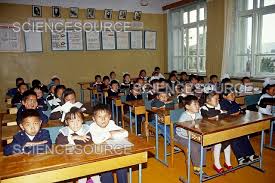
A school in MongoliaInside the classroom…From Public Domain
Mongolians are a people who celebrate festivals wholeheartedly and work with the same kind of enthusiasm. Among our many traditions, one of the most beautiful and meaningful to me is the way we welcome each new school year. In Mongolia, September 1st is not just the beginning of classes—it is a joyful national celebration for teachers and students. On this day, schools across the country hold ceremonies to mark the opening of the academic year. Students eagerly wait for this day, dressed in clean uniforms, their faces full of excitement. Traditionally, the new school year officially begins with a special lesson taught by the President of Mongolia, often about Mongolian script or history, which symbolises the importance of education and cultural heritage.
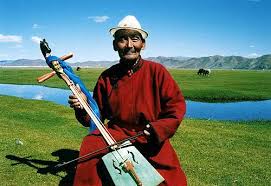
My own memories of this day are filled with music, excitement, and warmth. Unlike in many countries, Mongolian schools do not separate students into different buildings for primary, lower secondary, and upper secondary levels. Instead, everyone studies in the same school building, simply moving from classroom to classroom as they grow older. This creates a strong sense of community—older students and younger students share the same space, the same celebrations, and the same traditions. The ceremony usually begins with a speech from the school principal, followed by short performances by younger students. Songs about schools and teachers are sung, and the gentle melodies of the morin khuur—the traditional horsehead fiddle—fill the air. We sing, dance, and perform music to welcome the new academic year. Sometimes, I wonder how many other nations celebrate the start of school with such joy and artistry.
A man holding a morin khuur, whose music has been named as an Intangible Cultural Heritage of Humanity by UNESCO. From Public Domain
One of the most touching parts of the ceremony is the first bell ringing. This moment marks the official opening of the school year. First graders who are starting school for the very first time are given the honor of ringing a small handbell, while teachers line up their classes and lead them ceremoniously into the building. To ring the bell is considered a great honor, both for the child and their family. I will never forget the day my daughter entered first grade. She was chosen, together with a little boy, to represent all first graders and ring the bell. It was a chilly September morning, as it usually is in Mongolia. With one hand tucked into her uniform pocket to keep warm, she raised her other hand high to match the boy’s height and rang the bell. She was one of the smallest children in her class, but in that moment she seemed so brave and proud. That image remains clear in my mind even now—such memories stay with us forever.
For Mongolians, bells carry deep meaning. We even call our graduation ceremonies “Bell Ceremonies”. These are held for students finishing 5th grade (primary), 9th grade (lower secondary), and 12th grade (upper secondary). For 12th graders, the final bell has special significance: it is the last time they will hear the school bell as students before moving on to university or the adult world. That sound marks both an ending and a new beginning.
For teachers, September 1st is a day of joy. It is the moment we reunite with our students after the long summer break and see how much they’ve grown and changed in just three months. For students, it’s the thrill of seeing their classmates again. The entire month of September is a period of readjustment to school life, and it is followed in early October by Teacher’s Day, one of the few days in the year when teachers can celebrate their profession. Another beloved tradition in Mongolia is “Student Day.” On this day, graduating students—or, if the class is small, students from other classes too—take on the role of teachers for one day, while teachers become students. It’s a playful and meaningful role reversal that leaves deep impressions on both sides.
I still remember my first Student Day vividly. I was in 9th grade when my Mongolian language and literature teacher selected me to become a teacher for the day. It was the first time a lower secondary student had been chosen. I was nervous, especially standing alongside the older students from upper secondary school. I spent the entire night preparing, determined not to let my teacher down. On that day, I taught a 9th grade literature class. I was frightened at first, but the time passed in a flash, leaving me exhilarated.
The following years, I was chosen again—first as a biology teacher in 10th grade, then as a Russian language teacher in 11th grade. I participated as a student-teacher for three consecutive years. I especially remember the biology lesson; that day, I felt a special joy and excitement, a spark that would later lead me to choose teaching as my profession.
Years later, after graduating from university, I returned to school as a real teacher. During my first year at a public school, Student Day came again—this time, from the teacher’s side. My 12th
grade students drew lots to choose teachers, and a sweet girl named Khulan was selected to teach English in my place. She told me with a smile, “Teacher, you probably don’t have a student uniform anymore, so you can borrow mine tomorrow and join our class as a 12th grader.” The next day, the 12th graders handed us invitations, asking us to come to their class as students. Attached to each invitation was a class schedule for the day. When I put on the school uniform again, it truly felt as if I had traveled back in time to my childhood.
As a student, I used to think, “I can’t wait to grow up and start working. I’m tired of wearing this uniform.” But as a teacher, wearing it again brought back a wave of nostalgia. Returning to the classroom as a student for one day became one of the most unforgettable experiences of my life. On Student Day, everyone—teachers, administrators, and staff—puts on uniforms and attends classes together as “students.” The day is filled with laughter and playful mischief. Some pretend to be naughty students: interrupting class, asking silly questions, teasing each other. We laugh and call each other “bad students”.
At the end of the day, both the student-teachers and teacher-students gather to share their thoughts. This is always a moving moment. Older students often talk about how difficult it is to teach large classes and apologise for times when they had been troublesome. They express a newfound respect for their teachers, having experienced the challenges themselves. For us teachers, hearing this is incredibly rewarding. If there were a train that could take us back to our childhood, I think everyone would want to ride it. For teachers, Student Day is exactly that—a once-a-year chance to return to childhood.
For the past three years, I have spent September 1st, Student Day, and Teacher’s Day far away from Mongolia. At first, when I saw my friends’ photos and posts on social media, I felt a quiet envy. But at the same time, remembering these traditions filled me with warmth, pride, and a deep love for my profession. Throughout my life, I have met many wonderful teachers. Thanks to them, I have continued to learn and grow, always inspired by their example. These traditions, these bells, these memories—they are not just part of my past. They are part of who I am, both as a former student and as a teacher.
No matter where I am in the world, once a student, once a teacher—those identities live within me, carrying the echoes of September bells wherever I go.
.
Odbayar Dorj is an international student from Mongolia currently studying in Japan. Her writing reflects on cultural identity, personal memory, and the power of connection across borders and generations.
.
PLEASE NOTE: ARTICLES CAN ONLY BE REPRODUCED IN OTHER SITES WITH DUE ACKNOWLEDGEMENT TO BORDERLESS JOURNAL
The sky is dressed in the metaphors of dark.
Two orbs of mine have seen a lark sleeping with its young, beneath the moonlight's spark.

There's a man who tiptoes from the day's rush, unlocking the gate, keys jingle in the stillness.
With a fixed gaze, he fears the sound will awaken his beloved and their children.

A grandma sews by the window, threads glinting beneath the lamplight,
Weaving old summers into the hush of the night,
Fingers still tremble where small hands once lay,
Stitching the ache that won't fade away.

On roads, finally quiet after day's business,
A drunk man argues softly with none in particular,
Words slurring into the dust, unheard and familiar.
Street dogs curl under a bench, their ribs show faintly.

A mason pauses, smoke curling from his weary lips,
Sits at the edge of a half-constructed skeleton of a building.
The moonlight seeps through hollow beams,
Sketching his struggle upon the concrete bones of the city.

Beneath the murky sky, there also lies a mother, with her little son,
Ragged, curled up with no blanket, warming up instead with dust.

The smuggler waits where no one will see.
Money trades hands, but freedom flees.

Somewhere far away, I hear the hiss of streetlamps flicker,
Refusing to die, softly illuminating lonely streets where lost footsteps lie.
In one of the dwellings, I see a loud TV with no one watching.
Loneliness grapples man.

I see an old woman caressing old photos in the album, kept beneath the bed's gloom.
Pages of laughter, now agony and yearning, shatters the room.

At the dusty city walls, by the lane, a young alluring woman
Drunk with the wine of youth, has her saree tied loosely.
She waits for the night’s business, selling her sorrow, wrapped in skin.
Eyes once dreaming of soft daylight,
Now learn to fade behind the night.

Yet somewhere a window still glows in the gloom,
A hint of tomorrow lies buried in the city's tomb.
These streets hold onto the stories no daylight recalls.
Whispers of lives resonate in the dark, silence fading into the walls.
I keep their secrets, their grief, their light.
I am the witness as they call me Night.
Debadrita Paul is an upcoming voice in poetry.
.
PLEASE NOTE: ARTICLES CAN ONLY BE REPRODUCED IN OTHER SITES WITH DUE ACKNOWLEDGEMENT TO BORDERLESS JOURNAL
That evening was a Friday in autumn. I was sitting by the window pane and looking at the meadows beneath the mountain. The plot and idea for my new story changed colours as I watched the evening sky. The sun was vehemently trying to emerge from behind dense clouds that were outlined in silver. At a glance, it looked like a Renaissance painting, with a line of birds flying hurriedly towards an unknown destination.
I was engrossed by the beauty of the evening. Suddenly, the sun disappeared into the smoky oblivion of the phantom clouds. When the last rays of the embers reflected feebly on the heavily darkened sky, I could hear the shepherds shouting from the vast mountain peaks to their fellow men to hurry back to the tents. The bleating of the sheep and the clip-clop of their hooves on the rocky mountain echoed as they hurried to return to their dwellings. I felt a strange sadness without any obvious reason. Maybe I was overwhelmed with a sense of loss and abandonment.
I was still standing near the glass window, gazing at the sky. I could feel the northern wind pass through me, chilling my entire body. The dark night shrouded the valley with its creased onyx veil. Slowly, everything was immersed in a sea of darkness.
Yes, I needed to start. I was very keen to begin writing that very night and finish it as quickly as possible for a journal. I looked at my writing table—the blank white paper placed on the dark walnut surface seemed to be calling out to me. I could feel the pages waiting for words bleeding blue ink of pain and tears.
I have this irresistible urge to speak for those who have forgotten how to talk, who have forgotten how to cry, who have forgotten how to live. Maybe I will be the voice of the unheard. And maybe I am blessed to be a journalist and storyteller. But now, I feel lethargic, restless, and disturbed. I could feel the autumn creeping in with a deathly coldness hovering over the fallen leaves on this frosty night. Unlike previous years, this year autumn had arrived hurriedly with a cold vengeance. The rustling of dead leaves crumbling in the wind was unsettling, and I felt uneasy. I tried my best to calm the anxious spirit within me, to connect with the purity of those white sheets.
Time was ticking faster. Once again, I returned to my table and took the pen…
But—did I hear something?
Yes, I heard it again. I was distracted by noises from the distant forest. From the deep wilderness of the bushes, the haunting cries of wolves echoed, as if they had been left lonely and abandoned. I looked outside my window, then back at myself. Was I just imagining it? Was I hallucinating?
Suddenly, I was there—in front of them. I could see them clearly in the darkness, silhouetted against the white snow. When they saw me, they stopped howling and stared with shimmering red eyes.
Was I dreaming? Did I walk to them?
No… no…
I returned to my senses—to my reality! I was still sitting in my room. Just as I was trying to write the first line of my story, again I heard it. A faint sound of rustling leaves. The hollow whistle of the chilly wind gushed through the woods. It seemed as though autumn had conquered summer, pushing all living beings to their deathbed. The dried flowers were scattered by the wind. The buds had withered before they could bloom, ruthlessly destroyed—unable to spread fragrance and fill the valley with charm. Now everything had changed. Autumn was lashing wildly through the air with the howling wind, leaving grief and sorrow to linger on the withered branches.
The chilly wind blew fiercely, making the trees and their branches shiver. The cold night rendered everyone helpless and powerless. Humans stayed inside their homes, just like the animals in their burrows.
Did I hear an unnatural voice?
I sharpened my ears and listened.
Yes—I did hear a strange voice! It came from the nearby woods, from the bushes behind my house. It sounded like the voice of a mysterious person, filled with loss and sorrow. It wasn’t just a voice—it was more like a wail. I tried to ignore it, but it seemed to plead for help—something I couldn’t quite understand. No matter how hard I tried to focus on my story and look away, the voice disturbed my soul and compelled me to go out and uncover the truth.
The voice grew louder. It seemed like someone was standing in front of my house, knocking on the door. I waited for it to repeat, but the noise stopped.
Confused and tired, I turned back to my room. But something urged me on. With a compelling curiosity, I slowly opened the door and stood on the lawn. It was empty. There was no one.
With fear and uncertainty, I began walking in the direction of the voice. As I started moving, the invisible voice faded—but I continued to try to find it. I wanted to follow it. It was not only alluring, but terrifying. I wondered if it was just an illusion, leading me nowhere. Yet, the voice carried pain and helplessness that pushed me beyond imagination. I followed it through the narrow, bushy lanes of the forest in the dark of night.
The sky was starless, gloomy. The night was filled with ghostly noises from every direction. A waning crescent hid behind the clouds. I was aware of the danger, but I continued—driven by something deep inside me.
The lanes were lined with cold, dew-covered plants. The withered branches stood lifeless. Autumn hovered above them like a deadly witch. I reached the upper edge of the field where the forest met the mountain. The huge mountain stood like a dark phantom before me.
I stood under the walnut tree near the channel. The voice became faint. I crossed a small bridge to climb the hill, glancing at the dark water. It flowed from the river Jhelum, nourishing the upper mountain crops and connecting many villages like veins in a body. The clear glacier water flowed endlessly, season after season. It never stopped—an eternal source of hope.
And I remembered that day—the day we fought for that channel. How we went to the water authority office after sending so many applications which remained unanswered. We marched through town—fifty of us. Near the army camp, we had to walk one by one. Danish and I led with the petition signed by 500 villagers. Afnan and Usman chanted slogans, while Faris and Mujib carried placards. I had to calm them down to behave in the office…
Lost in thought, I didn’t realise how far I had gone. The voice still called—haunting and surreal.
Then, I heard laughter—children laughing.
By the stream, children were swimming and splashing, shrieking and giggling. They looked like marble statues come to life in the moonlight. I was stunned. How could they be playing on such a frosty night?
As I approached, my feet suddenly froze. I couldn’t move. I stood there, watching.
And once again—the mysterious voice.
The same voice that had pulled me from my home now called from close by. I turned and saw a woman in a long veil, her hair loose, her figure merging with the darkness. She gestured for me to leave the children and follow her.
Her blurred presence held me spellbound. I walked hurriedly, determined to stop her and see her face. I followed her along the channel until we reached a graveyard.
She turned to me and said, “I just want you to know that my children have disappeared and are buried in this unknown graveyard. I came here to take their blood-soaked clothes as our last memory.”
She cried, then added, “They will remain lost until the truth is unveiled.”
I tried to ask her who she was.
She replied, “We are the unknown truth.”
And then—she disappeared.
I screamed, “Hey… stop! For God’s sake, who are you?”
Suddenly—I woke up!
The alarm clock on the opposite wall read 3:00 a.m.
It was a dream.
As I tried to piece together the events, the haunting imagery still lingered. It felt so real—as if I had already known them, in another phase of my life, long ago.
Maybe I was one of them?
Why do I always walk among the dead in my dreams?
Dreams are often a jumble of our daily experiences, but they can also reveal our deepest fears or hidden desires. In them, we confront what already lives within us. Frosty nights are the darkest and most haunting, where we seek comfort in dreams that bind us to the painful echoes of the past and the uncertainties of the future. In this realm, a person’s core essence trembles, leaving them defenceless as the barren wilderness intrudes upon their imagination. These nightmares are as cold and unrelenting as the frost-covered nights themselves.
(The little ones who are sleeping will be haunted and continuously disturbed by the stories of children who were terrorised to death long ago in faraway places. Their serene sleep and dreams can be subverted by a red river that continually competes and devastates the territories beneath them).
Ahmad Rayees is a freelance journalist.
.
PLEASE NOTE: ARTICLES CAN ONLY BE REPRODUCED IN OTHER SITES WITH DUE ACKNOWLEDGEMENT TO BORDERLESS JOURNAL
Our daily prismatic view sorts the world into clashing colours— silver ripples, mustard leaves, grey painted board and batten,
lichen-spangle boulders, crisp imported fabrics that flatter those who don’t need flattering. We must unfold the spectrum.
The glass surface of our minds smooths out the natural light and normalises arrogant hues that frighten children and dogs.
In our youth we startled at the faintest hint of artifice. Now the unmoored hues comfort rather than confront us. The river
coughs up neutral tones to ease the gnashing of construction sites. We still hate to see the planet exposed to its raw geology
but we’ve hefted the deadweight of being human so long we know how ugly we look on the inside where molts of creation continue.
William Doreski lives in Peterborough, New Hampshire. He has taught at several colleges and universities. His most recent book of poetry is Cloud Mountain (2024). He has published three critical studies, including Robert Lowell’s Shifting Colors. His essays, poetry, fiction, and reviews have appeared in various journals.
.
PLEASE NOTE: ARTICLES CAN ONLY BE REPRODUCED IN OTHER SITES WITH DUE ACKNOWLEDGEMENT TO BORDERLESS JOURNAL
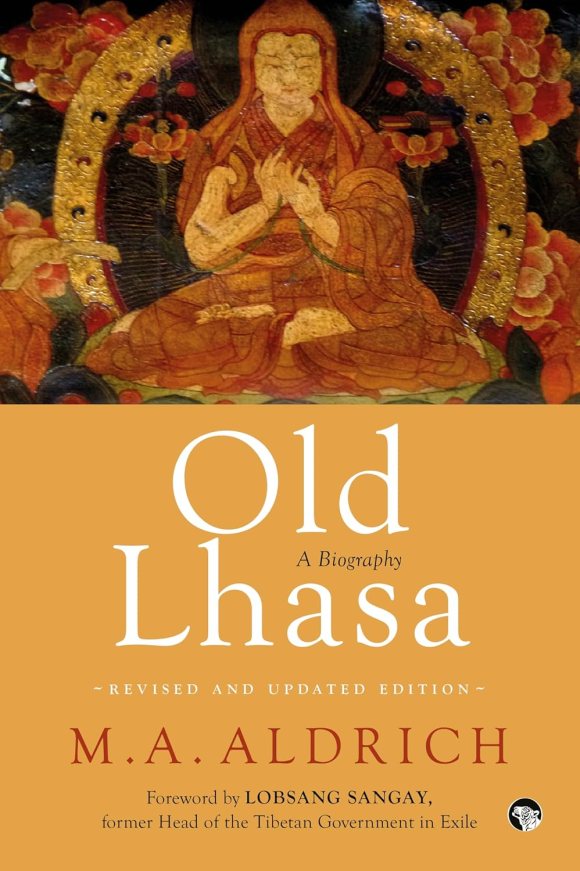
“Contrary to common perceptions, Lhasa is not forbidden to outsiders” – M.A.Aldrich
Old Lhasa: A Biography, (a revised edition published in 2025 for the South Asian market of a book originally published in 2023), is a voluminous 615-page book that combines historical research, travel writing, religion, and culture to offer a comprehensive account of Lhasa, the capital city of Tibet. The author, M. A. Aldrich, is a lawyer who has lived and worked in Asia since the 1990s and had earlier published books on cities like Peking and Ulaanbaatar. Written on the basis of his multiple trips to Lhasa and its surroundings (the last one as late as September 2024), he is happy to discover that Old Lhasa has stood the test of time and still accurately captures the sight, sounds, and feelings of the city and foreigners can wander about freely without a minder so long as their papers are in order. As this book slowly emerged, it grew into both a portrait of the history and culture of that city as well as a serviceable guidebook for readers who are able to go to Tibet when political and regulatory circumstances permit.
Aldrich paints an intricate portrait of Lhasa, a storied city and its history, by giving us the evolution of how the Tibetan script came to be, with inspiration from ancient India and at the same time livens up the narrative with humorous anecdotes, interesting legends and charming fables that makes this book blend many genres into one. Divided into 49 chapters and enriched with several maps and black and white photographs, the chronological narration rightfully begins with the first chapter titled ‘Prelude to Lhasa’ where we are told that with Lhasa as the geographical focal point of their faith, Tibetans believe the dharma[1] has always been connected to their country. He begins the journey in the seventh century during the final moments of the life of Buddha, mentions specific Buddhist virtues such as compassion, wisdom, and benevolent power, among other essential qualities for the path to awakening. For Tibetan followers of the dharma, the history of Tibet is the history of the Bodhisattva of Compassion, which is simultaneously woven into the story of Lhasa.
In the 1920s, when Tibet enjoyed its greatest freedom from outside interference in the modern era, Lhasa had a population of only around twenty-five thousand. It was divided into two districts: one that is now the Old Town, with its seventh-century Jokhang Temple (or, more simply, the “Jokhang,” meaning the “House of the Lord”) at its centre; and the other being Shol Village, which is at the foot of Marpo Ri (Red Mountain). These administrative districts were divided by a north-south boundary that ran through the Turquoise Bridge, another structure dating to the seventh century. The Old Town was not much larger than two- or three-square kilometers, while Shol was even tinier. The residents of Lhasa at that time took immense pride in the religious heritage of their city. Nearly every luminary in Tibetan history had come to Lhasa because of the importance of the Jokhang as the focal point from which Tibetan civilization evolved and expanded. No other city could rival it.
Lhasa grew organically outward in concentric circles. Around 1160, a monk built the Nangkhor, a pilgrim’s circuit (korlam) directly adjacent to the inner sanctum of the Jokhang, so that devotees could practice the religious ritual of circumambulation. It is from this kernel that the boundaries of Old Lhasa came into existence. By the 14th century, Lhasa was enclosed within the Barkhor, a kilometre-long korlam circling the temple and a monastery among other buildings. By the 1650s, Lhasa’s outer limits had been expanded to the Lingkhor, a ten-kilometre pilgrimage route. And so, the boundaries of the city remained until recently.
Lhasa’s significance also drew heavily upon the nearby presence of government buildings and monastic sects of learning. The Potala Palace, with its superb representation of Tibetan architecture, is a massive and dazzlingly beautiful fortress-like monastery that had been the residence of the Dalai Lama and the seat of the Tibetan government since 1648. Three monasteries outside the city were centres of the so-called Yellow Hat or Gelukpa School of Tibetan Buddhism, preserving a venerable tradition of scholasticism and monastic training that had been imported to Tibet from the universities at Nalanda, Odantapuri and Vikramshila in Northern India. Daily life in early 20th century Lhasa was mostly grounded in religion for both the laity as well as the clergy. The Lhasa calendar year revolved around a sequence of religious festivals that tracked the flow of one month into another in a never-ending cycle of faith and devotion. Though religion permeated society, Lhasa was not an “other-worldly” place. In 1951, when the People’s Liberation Army marched into Lhasa behind portraits of Chairman Mao Zedong, Zhou Enlai, and Liu Shaoqi, the days of the city with its self-administered culture were numbered. During the 1959 Tibetan Uprising, the Chinese Communist Party reacted to the civil unrest as if Tibet should be taught a lesson. The Party continues to do so despite brief intermittent periods of slightly relaxed policies. Though Chinese modernity has been imported wholesale into Lhasa, the author opines that Old Lhasa is still there in its people who maintain their centuries-old faith and customs. One just needs to know where and how to look.
In the Prologue, Aldrich had confessed that this is not a “serious book” about Lhasa as the term is understood within the narrow confines of modern academia, since its objective is only to share what he had learned about Lhasa with simpaticos. His audience is the general reader or armchair traveller with a basic understanding of the tenets of Buddhism and the broad outlines of Asian history. He does not go into great depth on religious theory, and he hopes his views might also be of interest to Tibetans who have come of age in the diaspora and are curious about what a non-Tibetan thinks of this fabled city. He attempts to avoid the excessive solemnity and despair that attends much writing about Tibet. It is not that he is ignorant of ongoing atrocities and the appallingly cruel policies of the Party, but he has no doubt Tibet will have a renaissance. He opines Tibetans will overcome the current dark cycle just as they have overcome other bleak phases in their history.
In conclusion, it can be said that even after reading it thoroughly and enjoying it, this book as the author rightly states, “will nudge readers to learn more about Tibet and Tibetan culture.” Also, as Dr. Lobsong Sangay, former head of the Tibetan Government in Exile, rightfully mentions in the ‘Foreword’
, “Though the story of Tibet is an ongoing tale of tragedy, it also is a tale of the human spirit and the resilience of the Tibetan people. …this book is a window for seeking genuine access that will help you make meaningful discoveries of your own, whether you are physically travelling through the streets of Lhasa or traveling through the pages of this book far away from Lhasa.”
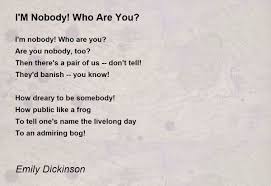
"I'm nobody! Who are you?
Are you a nobody, too?"
(Emily Dickinson)

NOBODY

It is not easy to tell the tale of nobody.
A nobody's tale is without a
beginning or an end,
Like jumbled up letters on a mussy page,
Obscure sketches from a hand untrained.

A nobody's anonymous world
Battered by the day, and
Bruised by the night,
Spins and shatters in a gyrating vortex
Of liquid darkness and light.

A nobody lives and dies and again lives
And breathes a dream in between,
Desperate to see just one come true, and
For a glimpse of green in a bald ruin.

The crimson dawn in a nobody's sky
Burns hopes to ash.
A moon flings shards of silver
At nobody’s world, aiming a cruel slash.

The fog settles forever thick and grey
Outside a nobody's  window.
In a nobody's land, seasons don't change.
There settles permanent a season of snow.

Songs painted black by storm clouds
Croak beyond a nobody's door.
The wind mourns in the hollow orchards
Roses bleed on a cracked floor;

It is hard to tell a nobody's tale
That has neither a beginning, nor an end.
It's the story of a doomed  soul,
That neither has a foe, nor a friend!!
From Public Domain
Snehaprava Das is an academic, translator and writer. She has multiple translations, three collections of stories and five anthologies of poetry to her credit. She has been published in Indian Literature, Oxford University Press, Speaking Tiger, Penguin and Black Eagle Books.
.
PLEASE NOTE: ARTICLES CAN ONLY BE REPRODUCED IN OTHER SITES WITH DUE ACKNOWLEDGEMENT TO BORDERLESS JOURNAL.
Once there lived a farmer named Venkanna in Bhimavaram village. He had a grown-up son named Somu. But Somu was very lazy.
One day, Venkanna’s relatives came. They said that they were going on a pilgrimage and invited them along. Venkanna replied, “Our paddy field will be ruined, if we go away for a whole month now. The harvest should be cut and stacked.”
His relatives persuaded him by saying, “Let your son Somu take care of the work. He will also learn that way. If you both come along, we will see that you face no problems. You won’t get such good company again.” Venkanna agreed after thinking for a while. Overhearing this, Somu promised that he would handle the farm work. Venkanna and his wife left with their relatives.
As instructed, Somu went to the fields a couple of times in the beginning. Seeing the paddy, he thought, “The crop is not ripe yet. It needs ten more days.” So, he lazed and postponed the work. Eventually he stopped visiting the field altogether.
He was reminded twenty days later when his neighbouring farmers enquired why he hadn’t harvested the crop yet. It was already too late by then. He rushed to the field. But he couldn’t find workers immediately. He managed to bring some labourers after five more days. But the crop had become overripe and most of the grains had fallen to the ground.
Venkanna saw the field when he returned from the pilgrimage. He was heartbroken. “I should never have trusted Somu. I shouldn’t have gone,” he moaned while scolding his son bitterly for his laziness.
Later, when there was a wedding in their family, Venkanna again had to leave. Before going, he told Somu, “There is a crop of groundnuts. Go and check every day. Guard the field so cattle don’t graze on it. There’s still some time before it needs to be harvested, so be careful.”
Somu remembered his past mistake with the paddy. He wanted to do better this time and called the labourers in advance. He had the groundnut harvested early. He stacked the crop neatly, thinking his father would praise him.
Venkanna returned later and was shocked. The groundnuts were harvested before the seeds had matured. The grains were soft inside and not ready. Such a crop would fetch no price. Venkanna was distressed again. He scolded Somu. “I only face losses because of you. When will you learn?”
Somu replied stubbornly, “Even when I do the work, you’re never satisfied. Then why should I work at all?” Their argument grew heated.
At that time, their schoolteacher, Mohan, happened to pass by. He stepped in hearing the quarrel and asked what had happened. Venkanna explained Somu’s laziness and the losses it caused.
Then Mohan said, “Your son clearly doesn’t realise how dangerous laziness is. Let me talk to him.”
He said, turning to Somu, “Laziness is the root cause of failure. A lazy person can never achieve what he wants. The greatest enemy of a man is not someone outside, it is laziness itself.”
Somu replied honestly, “I want to give up laziness, but I am unable to. What should I do?”
Mohan smiled and said, “You must practice being active. I’ll give you an example. You’ve raised hens, haven’t you? Have you seen how a mother hen cares for her eggs?”
“No, I haven’t noticed,” said Somu.
Then Mohan explained, “The mother hen sits patiently on her eggs, waiting for the chick inside to peck its way out. Only when it hears the chick tapping from inside, does the hen carefully break the shell from outside to help it out. If she breaks it too early, the chick, which hasn’t fully formed, will die inside. This is exactly what happened with your groundnut harvest, you were too early.”
He continued, “But the hen also never delays once the chick is ready. She immediately helps it out or else the chick will die. That was your paddy mistake. You were too late. Do you understand now?”
Somu nodded realising.“Yes, I see my fault.”
Mohan concluded, “Just as the hen waits with care and patience, we too must show the same attention in our work. Whatever it is…. Farming or business. Responsibility and timing are important. Then only we will get results. If you are a student, careful planning and sincere effort will always lead to progress.” Somu slowly started working hard and thoughtfully from then on.
Naramsetti Umamaheswararao has written more than a thousand stories, songs, and novels for children over 42 years. he has published 32 books. His novel, Anandalokam, received the Central Sahitya Akademi Award for children’s literature. He has received numerous awards and honours, including the Andhra Pradesh Government’s Distinguished Telugu Language Award and the Pratibha Award from Potti Sreeramulu Telugu University. He established the Naramshetty Children’s Literature Foundation and has been actively promoting children’s literature as its president.
.
PLEASE NOTE: ARTICLES CAN ONLY BE REPRODUCED IN OTHER SITES WITH DUE ACKNOWLEDGEMENT TO BORDERLESS JOURNAL






 Borderless