Categories
Nazrul Translations

O Wayfarer, Wipe Your Tears by Nazrul

Nazrul’s Musafir, Mochh re Aankhi Jol (O wayfarer, wipe your tears) has been translated from Bengali by Professor Fakrul Alam.

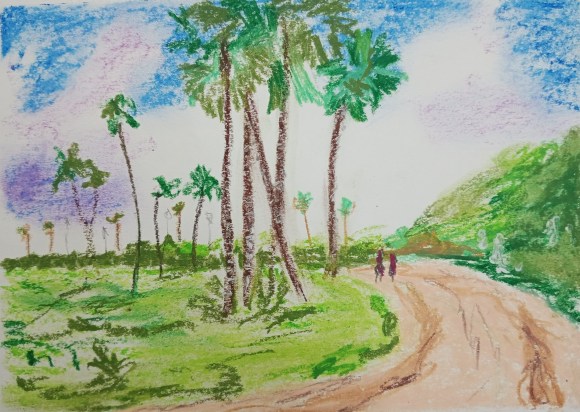
Art by Sohana Manzoor
O wayfarer! Wipe your tears,
Return only with yourself.
The flower blooming on its own
Shed all by itself.
O foolish one! So hapless is your state,
Will you now build your nest in water?
Thirsts are not quenched here
For this is no lake to allay thirsts.
Will the bokul that didn’t bloom in monsoon
Blossom when it’s winter?
On this path forever, errors shed
Covering the grove of frustration.
Oh poet! You’ve illuminated many lamps
With your own light
But your own revered Krishna hasn’t come
To light up the darkness pervading your world.

A rendition of the lyrics by Feroza Begum (1930-2014) in original Bengali

Born in united Bengal, long before the Partition, Kazi Nazrul Islam (1899-1976) was known as the  Bidrohi Kobi, or “rebel poet”. Nazrul is now regarded as the national poet of Bangladesh though he continues a revered name in the Indian subcontinent. In addition to his prose and poetry, Nazrul wrote about 4000 songs

Fakrul Alam is an academic, translator and writer from Bangladesh. He has translated works of Jibonananda Das and Rabindranath Tagore into English and is the recipient of Bangla Academy Literary Award (2012) for translation and SAARC Literary Award (2012).

PLEASE NOTE: ARTICLES CAN ONLY BE REPRODUCED IN OTHER SITES WITH DUE ACKNOWLEDGEMENT TO BORDERLESS JOURNAL

Click here to access the Borderless anthology, Monalisa No Longer Smiles

Click here to access Monalisa No Longer Smiles on Amazon International

Categories
Review

Ebrahim Alkazi: Holding Time Captive

Book Review by Satya Narayan Mishra

Title: Ebrahim Alkazi: Holding Time Captive

Author: Amal Allana

Publisher: Vintage Books, Penguin

During an extensive interview, Pankaj Kapur, the highly acclaimed actor, director and writer, nostalgically remembered his days in NSD[1] as a student in the 70s and of Ebrahim Alkazi who was the guiding light of the school as the Director from 1962-77. Mandi House was the vibrant cultural hub where the quartet of NSD, Triveni Kala Sangam, Sriram Art Centre and Kamani Auditorium breathed cadences of art, music, dance and theatre. As the presiding deity of NSD, Alkazi’s prodigious talent in all aspects of theatre except costume (where his wife was the moving spirit) brought his dynamic genius into the quest for intercultural and interdisciplinary thinking in artistic expressions that was both transformative and liberative for his myriad students like Sai Paranjpye, Nasir, Om Puri, Surekha Sikri, Uttara Baokar and Pankaj Kapur[2], who later on lit the stage and celluloid  though their exceptional talents and skill. He would have been a hundred this month. Amal Allana, his daughter has authored a biography of her father, Ebrahim Alkazi: Holding Time Captive. The book  makes an absorbing read.

She brings out Alkazi’s early encounters and reception by the Hindi Theatrewallas of Delhi in the early 60s. It is the story of a western educated Bombayite who was presumptuous enough to think he could teach Delhi theatre buffs a thing or two. As a second-year student, Sai Paranjpye recalls Ebrahim as a storm under whom a metamorphosis took place in the NSD overnight. Walking in to the den of Hindiwallah writers’ camp, Alkazi caught them unawares by picking up the works of the most cerebral and experimental of the Hindi new wave movement; Mohan Rakesh’s Aashadh Ka Ek Din[3]and Dharmavir Bharat’s Andha Yug[4]Aashadh ka Ek Din, a play with a rural background, was the story of the Indian villager, whose lifestyle, pace and values were succumbing to the inevitable onslaught of urbanisation. The basic theme was autobiographical to Mohan Rakesh himself, where he identified himself with a classical playwright like Kalidas. This mix of history and the present entwined in to a single entity, was a modernist strategy that Alkazi too had attempted while contemporising myths. He exquisitely crafted the mise en scene[5]that sparkled with delicate, nuanced performances from young student actors such as Sudha Sharma as Mallika and Om Shiv Puri as Kalidas.

 India had lost a war with China in 1962.  Alkazi had chosen Andha Yug, set during the last days of the Kurukshetra war, when Aswasthama stood in rage, prepared to use the ultimate weapon to annihilate the mankind. It was just not the play’s topicality, its anti-war thrust that drew Alkazi to it. Alkazi tried to shrug off the baggage of European modernism he was carrying, embarking now on a foundational journey towards a deeper ‘discovery of India.’ Through Andha Yug, Alkazi came closer to learning about India’s value system and philosophy as explored in the Mahabharata, while Aashad gave him an appreciation of the artistic sensibility of the great Sankrit poet-dramatist Kalidas, India’s veritable Shakespeare. From now on, he would engage with the idea of India between the two polarities: India as a myth and India as a kind of documented reality. Alkazi was introducing the idea that theatre was a performance art, not literature performed on stage. He was creating a language of performance that was distinct from the language of words.

The making of Tughlaq and its staging in Purana Qila is a watershed event in the theatre landscape of Delhi. Alkazi was greatly drawn to Girish Karnad’s play Tughlaq. Karnad had confided in him how Tughlaq was the most idealistic, the most intelligent king ever to come on the throne of Delhi and one of the greatest failures also. And how in the early sixties India had also come very far in the same direction. Alkazi felt that this play effectively reflected the trials and opposition a visionary leader faced, while trying to function within a corrupt political scenario. The cast of Tughlaq had some of the most brilliant actors, each painstakingly trained by Alkazi himself. There was Manohar Singh who was playing Tughlaq, Surekha Sikri and Uttara Baokar were doubled as Sauteli Ma, Nasiruddin Shah as the Machiavellian Aziz, Rajesh Vivek as Najeeb. The young reporter members included Pankaj Kapur, KK Raina, Raghuvir Yadav, a veritable who is who of latter-day cinema. Tughlaq was staged in 1972 at the Purana Qila (Old Fort) in Delhi, utilising the historical ruins as a backdrop for the dramatic spectacle. This production is considered a landmark event in Indian theatre, combining history, politics and performance to create a commentary on the reign of Tuqhlaq[6] and politics of the 60s.

Nehru’s dream of reconstructing the nation needed a powerful and unitary concept of ‘nationalism’ to recognise all productive forces in the country. Culture was very much a part of the reconstructive process that needed to be systematised and brought under one umbrella and for this purpose, three national academies had been set up: the Sangeet Natak Academy, the Lalit Kala Academy and the Sahitya Akademi. The desire to modernise Indian theatre was part of the same reconstructive cultural policy. And Alkazi was the mascot of the theatre movement and Mandi House, the epicentre of cultural conflation and crescendo.

The Purana Qila festival in 1972, with Tughlaq, Sultan Razia and Andha Yug became the most talked about cultural event of the decade He wanted to offer both the hoi polloi and the cognoscenti, including burqa clad women, high quality theatre that did not conform to ‘popular taste’; theatre that had a social relevance, that both instructed and entertained. This was Alkazi’s ideal of what constituted national theatre.

There have many stars in firmament of Indian theatre. Ebrahim revitalised Indian theatre. Habib Tanvir, blended folk traditions with modern drama. Badal Sirkar revolutionised Bengali theatre by challenging conventional norms. They are like the great troika of Indian Cinema, Satyajit Ray, Ritwick Ghatak and Mrinal Sen.

Alkazi left NSD as it was denied autonomy by scheming bureaucrats. Allana brings out how Alkazi passionately believed that an artist belongs to no political party, and has no religious ideology. An artist has to distance himself from each one of these in order to see each one of these objectively. “And finally, he has to distance himself from himself.” He wrote: “ It is our duty and moral responsibility to study history dispassionately, but with a passion for the truth, with humility and with a profound sense of responsibility and to ask ourselves seriously: What is the legacy that we shall leave behind?

[1] National School of Drama

[2] Well known Indian actors

[3] A Day in Aashadh (June-July) was a Hindi play that debuted in 1958

[4] Blind Age was a verse-play in Hindi written in 1953

[5] Placed on stage

[6] A 1964 Kannada play by Girish Kannad, translated to Urdu in 1966 in NSD and most famously performed for in Purana Qila, New Delhi, in 1972

Satya Narayan Misra is a Professor Emeritus and author of seven books. The latest, Against the Binary, was published in December 2024. He is a regular columnist and reviewer of books for several leading newspapers in Odisha and digital platforms likeScroll.in and The Wire. He was associated with the NSD in the 70s.

.

PLEASE NOTE: ARTICLES CAN ONLY BE REPRODUCED IN OTHER SITES WITH DUE ACKNOWLEDGEMENT TO BORDERLESS JOURNAL

Click here to access the Borderless anthology, Monalisa No Longer Smiles

Click here to access Monalisa No Longer Smiles on Kindle Amazon International
Categories
Poets, Poetry & Rhys Hughes

Nomads of the Bone

A Poem Of Unsuccessful Excess

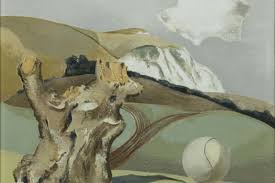
Art by Paul Nash (1889-1946)
Ogden Nash is the finest.
The snobs who dismiss his work
are knobs and jerks
whose heads should be examined
and given an F minus.
Of his talent they have not a tenth.
I mean, flipping heck!
Lacking depth is his strength.

And
now for some
HAIRY QUESTIONS…
Werewolf?
Whywolf? Howwolf?
Whenwolf? Whatwolf? Whowolf?

Questions like those never can
be answered
because the facts are tactless
and the fangs
will leave you gutless on nights
of a full moon.
The lycanthropic topic is one
best avoided
and thus I will always avoid it.

I made myself a sandwich.
I made it for my health.
I am a self-made man
despite my lack of wealth.

I made myself a promise
I would be a bitter gourd
cut into fancy segments
by an even fancier sword.

Unlike okra I’m not slimy.
If you ever dare to try me
I’m a vegetable Cockney,
I must say, “gourd blimey.”

Is that all?
No, it certainly isn’t.


Lady Rickshaw claims
we are all ghost ships
on the streets of cities,
drifting here and there.

That’s modern civilisation
for you: please join the queue
for the time machine.

But in more barbaric times
in chillier climes…

Our cavemen noses
glow in the cold.
They never grow
when we are old
but snowmen’s noses
linger for longer
and their nostrils
resemble craters.

The comet made from ice,
interstellar, vast,
oblivious, very fast,
will strike that fellah dead
when it hits his head.

And now
let’s take a trip to
ANCIENT GREECE

A gorgon’s internal organs
must be clever forgeries.
She turns heroes to stone,
in pairs or if they’re alone,
and when destiny calls
and Greece finally falls
those statues will be taken
to Rome, their new home.

But the gorgon’s heart
will never beat a rhythm
you can dance to.
It won’t thump like
a man-bull’s hoof-shaped
shoes, that’s true.
No swirling sonic brews
amuse our motley crews.

I’ve had better days
lost in this maze:
one time I almost
found my way out,
said the Minotaur…

Fenugreek Mythology
featuring Hercules
and Coriander leaves,
Turmeric and Ulysses,
Centaurs and Bottle Gourds
on a bed of saffron rice
is nicer to devour than plain
old Greek mythology.

Tell me honestly:
have you ever seen
A GHOST?

Death’s anniversary,
is a ghost’s birthday:
blowing out cake candles
with supernatural breezes
he teases the ectoplasm,
a professional phantasm.

Are spooks international?

I am turning Japanese
after a sneeze
because some wasabi
went up my nose.
Kimonos are my clothes.

Also, I play shogi
with my toes. (Shogi is a
kind of chess: I’m glad to
get this off my chest).

Now let’s have a
SELF-REFERENTIAL HAIKU

Counting syllables
when confronted with haiku
ruins the effect.

That’s done.
Where else can we find our fun?


Do you know the tale of
Patriarchy and Mehitabel?
Do you know the tail that
twitches on the windowsill?

The proof is in the pudding,
or so they say,
but I think I know a better way:
the waterproof
is in the puddling duck.

A vestige of a visage?
My face is the place
where my luck never runs out.
It may lack grace,
a waste of features
belonging to other creatures,
but each to their own.

The philosopher doesn’t like
my tone: he tells me
to ponder harder
but not to think about
swamp imps named Marsha.
Easily done: I don’t
know anyone with that name.

Harsher, he calls me timid,
says I am a coward.
Coward? But how?
I don’t know the meaning
of that word
but I can work it out
and applied to me it’s quite absurd.
It means to move
in the direction of a cow,
or many cows, a herd.

Have mercy if you’re thirsty.
Be ruthless if you’re toothless.

Do farm girls
grow on you over time,
seasonally?


A question I can’t answer
because I am a scarecrow.
No one planted me,
I do not grow. I do not know
a single thing.

But I can take a guess
about the mess
made by guests at dinnertime.
Billabong Monkeys
dunk their feet in the soup
in groups much larger
than gorillas are long.

Is that a SONG?
Somehow, I don’t think so.


And now
let’s have some
Soliloquies for Stringless Guitars.


Kiss her through the mask.
Miss her through the cask.

Foxglove Alley.
Weasel Stockings.
Garter Snakes, real and fake.
Rotten Shed and Rusty Rake.
I venture down
the Cul-de-Sac of Frogs.
I lost my way in the fogs.

That isn’t fog: it’s sand.
That’s no frog: it’s a panda.
Are you an understander?
There is no great demand
for sand disguised as mist
and so we insist you redo
the list of things you wish
to purchase in the sopping
shops that underwater lie.

Swinging on a garden gate,
it’s far too late
to palpitate at sunset
but the day’s still too early
to fly away and so you may
barbaric be,
barbaric bee, barbaric beer.

Beer comes in at the mouth.
Jokes come in at the ear.
Foam comes out of the nose.
POOR ATTILA lost his clothes
during a drunken stupor.
It’s not ideal but he is super.

Attila was very short.
Only one metre tall
and nocked with battle scars
at one centimetre intervals.
No wonder he was such
an effective ruler!

He wanted his wife
to call him ‘Darling’
in the marriage bed
but she insisted on
calling him ‘Hun’ instead.

Oh dear!
Have no fear:
King Lear has shed a tear
that splashes
on the lashes of the whip
that thickens cream
in dreams.

When I was younger
I had a narrow mind
and only thought of
narrow things:
tight corridors,
blocked canals,
mountain ledges,
malnourished gulls,
ladders designed
for stick insects,
crevices into which no
man could fall.

But now I am older
and think only of
wide things like
canyons and gulfs,
the open mouths that
shout bravo at gigs,
the taste in literature
of well-read people,
the square bases of
the mighty steeples
perched on churches
in historical towns,
the flapping gowns
of aristocratic vamps,
the pipe bowl of my
eccentric gramps and
the prehistoric snouts
of pigs snuffling for
unripe but fallen figs.

Listen closely, my dear…

My love for you
might sound hyperbolic
to hyperactive alcoholics.
But it will sound
perfectly fine to
good romantic folks.

Now here’s a thing:
sea roofs on the inside
are called sea lings.

Freshwater otters in Goa.
Salty authors in the shower.
Both are so clean
but only the latter dare dream
of rivers of cash.
The former dream only of fish.

FOR A FLUTE?

Love
for a flute
is holy love
because a flute without holes
is a stick
and love for sticks
makes me sick
but flutes have holes
thus my stomach will settle
at the base of the kettle
and I will laugh:
tea-hee cough-hee.

The frozen lion
thaws before he roars.


A thaw in the old ball bearings
and the machinery of his desire
began working again.

The machine marks time
like a strict examiner
puffing out his metal cheeks
in the weeks
before the summer holidays.

Do machines
really play the drums?


As a rule of thumb, yes!
Keeping the beat with steel feet.
How neat. What a treat.
The soul of the dance
is deep in the soles.
The heels heal the heart.

We have
our whole lifetimes
A HEAD of us
in which to try out
new hairstyles, she said.
She knew what
she was talking about.
The barber’s wife.

Mourning becomes Electra.
Evening becomes etcetera.

The gentle love drizzle
puzzles the riddler.
The lion is sizzling
in the meri jaan frying pan
over the fire
of our heartfelt desire.

And that’s
the end of the line
for the wandering rhymes
and the Nomads
of the Bone will soon end
up back home.

*meri jaan is an endearment in Hindi meaning my life

Rhys Hughes has lived in many countries. He graduated as an engineer but currently works as a tutor of mathematics. Since his first book was published in 1995 he has had fifty other books published and his work has been translated into ten languages.

.

PLEASE NOTE: ARTICLES CAN ONLY BE REPRODUCED IN OTHER SITES WITH DUE ACKNOWLEDGEMENT TO BORDERLESS JOURNAL

Click here to access the Borderless anthology, Monalisa No Longer Smiles

Click here to access Monalisa No Longer Smiles on Kindle Amazon International

Categories
Stories

Grandmother’s Guests

By Priyanjana Pramanik

My dida, my maternal grandmother, is perpetually dissatisfied. It is better to die young, my mother often says, than to live to ninety and be like her. For as long as I can remember, she has not smiled. Her face has twisted into a permanent grimace at the torments that each passing day on earth brings.

“After a certain age,” she sighs as she sips her morning tea, “living itself becomes a sin.”

When I was younger, these pronouncements would worry me, and I’d consider my mother’s laughter the height of callousness. With time, I’ve changed my tune.

“Have you considered dying?” I ask her conversationally in response. “I can make arrangements.”

She harrumphs at me and tells me that when she does die, I’ll be sorry. I reply that she’ll outlive her daughter, not to mention me. I hear my mother, who has just entered the dining room, mutter that death will be a sweet release.

“What did you say?” Dida demands, cupping an ear in one hand. “I’ve told you not to mumble, Mishti, no one can understand a word you say.”

Mishti vanishes again. Dida, thankfully, has been overcome by a fit of coughing and has already forgotten what we were talking about.

The cough had appeared approximately one week ago, the day after Dida’s ninetieth birthday, and she is sure that is it, her time has come. After tea each morning, she opens the drawer to her bedside table and takes out an aluminium case that houses several dozen strips of medicines. She inspects each one carefully. Then, it is time to call Ujjal.

Ujjal is our neighbour – and a medical doctor besides. Dida likes to catch him before he leaves for the hospital.

“Hello Ujjal?” she bellows into her mobile phone. “No, I feel terrible – this cough will be the end of me. Is it allergic, do you think? Should I take the Levocetirizine and Montelukast combined tablet? No? How about some Paracetamol? No, you’re right, sometimes home remedies are the best, who needs these newfangled medications? You’re right, Ujjal, what a good boy you are. What a blessing it is to have you so close by. If not for you… I have no one, you know. Nobody to take care of me, or care whether I live or die.”

After this conversation, she chews on some dried clove, that tried and tested home remedy, and then takes a nap. Ujjal calls up my mother and pleads with her to hide Dida’s medicine stash – my mother replies wearily that she would if she could.

After her nap, it is time for Dida to call up various relatives and let them know that she is not being taken care of. Their commiserations, stories of their own aches and pains, and reassurances that she if comes to visit, they will keep her in the lap of luxury, has her happily occupied until lunchtime.

“I won’t eat anything,” she announces when she emerges from her room for lunch. “I have no appetite because of this sickness.”

Ma made goat curry,” I tell her. This is considered. Then – “I suppose I can force myself to have a few bites,” she concedes grudgingly. “Otherwise, I’m just wasting away.”

She eats three helpings with gusto, pausing to point out that the curry could do with a little more salt and two more minutes in the pressure cooker, but is otherwise not too bad. My mother drops a courtesy and is heading back to the kitchen when Dida makes her announcement.

“Mousumi and her husband are coming to visit me this evening,” she says with some satisfaction. “At least my sister’s children love me, even if my own daughter… No, I can’t even say it.”

She remains in good spirits all afternoon, only half-heartedly telling me that I don’t love her. After lunch, she shoos my mother out of the kitchen and does all the dishes. Then, she changes the sheets on her bed. Finally, she changes from her usual nightgown into a white saree with blue border. Now that all the props have been arranged, it is time to set the scene.

Carefully, she arranges herself on the bed and lets out an experimental cough.

“Is there anyone there?” she calls in a weak but carrying voice. “Could someone at least fetch me a glass of water?”

“Coming, Dida,” I call, heading to the kitchen and coming back with a bottle and glass.

She drinks deeply and hands it back to me before another fit of coughing overtakes her.

“I think my temperature is rising,” she says sadly. “This is what will kill me. And no one to switch the fan off, even!”

I turn off the ceiling fan and beat a hasty retreat.

My mother’s cousin Mousumi, or Mou for short, and her husband Somnath ring the doorbell at five p.m. sharp. I let them in and take them to Dida’s room, where the old lady is in bed, as I have left her – but hadn’t I left the lights on? She is silent – she does not move or say a word as we enter the room, and a moment of disquiet steals over me.

At that moment, she tosses her head and moans weakly.

“Oh, Mani!” cries Mou, rushing to her side. “I’m here, Mani. Tell me what I can do for you.”

“Mou, my dear sister’s child,” comes my grandmother’s frail voice in the darkness. “How good of you to come all this way to see your poor old aunt… I fear it may be for the last time.”

She moves to sit up, ignoring her niece’s protests.

“I’ll make you some tea,” she announces in a quavering voice.

“No, no Mani!” Mou says, aghast. “How can you be made to do these things in your condition! Mishti will make you tea, of course. And we’ll have some too, just to keep you company.”

My mother, as always, is amused by the old lady’s antics. As she and I bring in a tea tray loaded with snacks, including fresh samosas from our local sweet shop, we hear Mou earnestly reasoning with Dida.

“You must come stay with us,” Mou Mashi is saying. “We will make sure you’re comfortable – you won’t have to lift a finger.”

“I couldn’t possibly,” replies Dida tremulously. “It would be such an imposition. How could I ask so much of my only niece?”

“No, no, ask anything you want of me! We just moved to a new apartment – it has a brand-new elevator, and a clinic with a doctor available 24/7, and all the comforts you can imagine! And I’ll make all your favourite foods…you look so thin, Mani, it just breaks my heart to look at you.”

“How wonderful that sounds… No one lets me eat anything nice anymore,” Dida says sadly. “It’s all watery dal and plain rice and boiled papayas.”

Mou made appropriately soothing noises.

“I’m here for you, Mani,” she says, holding Dida’s hand. “I’m going to take good care of you.”

The visit is cut short because Mou needs to let her driver off for the night, but she leaves Dida with several more promises of a visit soon-to-be-planned. Before she departs, though, she has some stern words for my mother.

“If you can’t take proper care of a frail old lady,” she fumes. “At least have the decency to put her in a good care home!”

And on that parting note, she and her husband get into their car and drive off.

“Do you think they’ll take Dida away?” I ask my mother after they are out of sight.

“Wouldn’t that be nice,” Ma replies. “The old lady would never agree to leave!”

“What’s that?” calls Dida from her room, with her unerring sixth sense for whenever she is the subject of discussion. Her voice has entirely returned to normal.

“Nothing, Dida,” I tell her, going in to switch on the mosquito repellent and administer her eyedrops. “So, when are you going to stay with Auntie Mou?”

“Uff, now I’ll have to visit her for politeness’ sake,” the old lady says, sounding disgruntled. “Isn’t she so tiring? Turned out just like my sister, she has. Won’t let me lift a finger, indeed! She makes me sound completely helpless!”

And on that note, she bites into her third samosa with gusto.

Priyanjana Pramanik is a doctoral student of geography and writer of fiction and popular science articles, splitting their time between Kolkata, India, and Hobart, Australia, and a parent to seven cats.

.

PLEASE NOTE: ARTICLES CAN ONLY BE REPRODUCED IN OTHER SITES WITH DUE ACKNOWLEDGEMENT TO BORDERLESS JOURNAL

Click here to access the Borderless anthology, Monalisa No Longer Smiles

Click here to access Monalisa No Longer Smiles on Kindle Amazon International
Categories
Poetry

In Your Arms, I Find Home

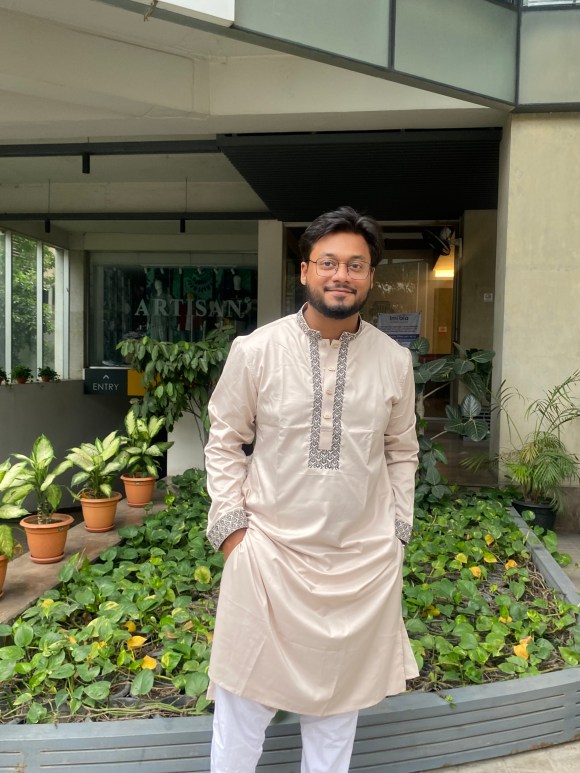
By Raiyan Rashky

IN YOUR ARMS, I FIND HOME

where i belong
the world is vast, relentless, ever turning
but in your presence, time slows
and i am no longer lost

i kneel before you, not in surrender
but in the quiet knowing that i have arrived
that after every long day, every restless
night
i will always find my way back to you

you are the hush of the evening
the warmth of a light left on for me
the gentle breath of a place that feels like
forever

my hands are tired, my heart is heavy
but in your touch, i am weightless
here. against you, 1 lay down my worries
and in your arms, i find home

Raiyan Rashky is a master’s student in English Literature at ULAB. He writes from the heart, inspired foremost by love.

.

PLEASE NOTE: ARTICLES CAN ONLY BE REPRODUCED IN OTHER SITES WITH DUE ACKNOWLEDGEMENT TO BORDERLESS JOURNAL

Click here to access the Borderless anthology, Monalisa No Longer Smiles

Click here to access Monalisa No Longer Smiles on Kindle Amazon International

Categories
Musings of a Copywriter

A Fruit Seller in My Life

By Devraj Singh Kalsi

From Public Domain

Sometimes I think of setting up a small business and nothing attracts me more than becoming a fruit-seller. The foremost reason is the steady supply of fresh fruits for my own consumption every day. When the copywriting gig flops, this is one venture that promises a fruitful outcome to take care of post-retirement needs. Without disclosing my real intention, I chose to grow friendly with a fruit vendor in the local market.

Becoming a regular customer who bought almost every fruit in kilos, I managed to get recognised as one of his top three customers for billings and behaviour. He acknowledged the fact that I never bargained with him so he was generous in giving me more than what he gave to other customers. He cited the unfamiliar names of two other customers and their professions, displaying curiosity about my domicile and my work. I shared my brief details but he was not clear what copywriting and advertising meant. The example he gave of painting the walls and putting up those flex banners from one lamp post to another revealed he was confused. I said he was getting it somewhat right though he still was a bit lost about how I could afford to eat avocados every week just by putting up hoardings. It was useless trying to explain the savings due to non-alcoholic and vegetarian lifestyle were blown up on a fruit-rich diet to avoid consultations with doctors and popping their prescribed pills.  

The fruit seller had placed his cart and occupied a large corner space for many years. The wheels of the wooden cart had not moved an inch for years and they went deep into the earth gradually, small creepers entwined the wheels for a rich green, decorative feel. Since it was close to a public urinal, customers would tend to avoid it. He lit rolls of dhoop batti or incense sticks every hour to keep flies and insects away, to spread fragrance, to beat the pervading stench. Contrary to my assessment, his was the busiest fruit stall, with customers emerging from sedans and SUVs to buy fruits, local and exotic, for premium quality, without pinching their noses, without feeling any pocket-pinch. With bricks cemented unevenly on the ground, and a wooden wobbly stool placed on it, he stood tall on this raised platform to keep an eye on customers and picked up blueberries and persimmons from the upper shelves that required a long hand and extra effort. If you quizzed him about the country of origin of any fruit, he was quick to specify the state or the city it was plucked from. He was aware of the care and temperature his fruits needed to grow well since he had a farmer’s background.

I was a relatively new customer and he introduced me to the exotic fruits on display with a different sales pitch. A lady customer had picked up avocados in my presence and, after she left, the fruit-seller said she managed to save her husband’s life. Seeing me curious, he divulged the complete story of how six months of regular consumption of avocado had reversed the heart disease her husband suffered from. He said the angiogram performed after six months showed arterial blockages were gone. Though it was a true story, I could not believe it completely Maybe the condition did not worsen or there was some improvement. Worrying about my own heart health had already stressed me out so I thought avocado was better than coronary bypass. To keep a healthy heart, it was necessary to drink an avocado smoothie or bite into an avocado toast. I reminded him that the pleasure of exaggeration was irresistible to those who tell fanciful stories and also for the consumers. He asked me to verify online videos if I had doubts regarding the leading role of avocados on heart health. He played it safe with fear – just like clever marketeers do when they make actors wear white robes with a stethoscope in hand and then promote a cooking oil brand as healthy for the heart. However, the bottom-line was clear: I could not bypass the avocado if I wanted to avoid bypass surgery.

As a savvy vendor, he showed me how the old gentleman picking up blueberries had saved his nerves. He was a retired professor with jangled nerves and his shaky hands added credibility to the narrative. He fished out the currency notes from his shirt pocket with an unsteady grip. That he was recovering from a mild stroke was another alert for me. Being engaged in creative overthinking required the brain to function optimally – to keep the cognitive abilities away from decline. Predictably, I became a frequent buyer of blueberries as well, exhausting my budget at times. Not that I noticed much improvement in my neurological performance but it was logical to think that the brain must be fed well since it was never introduced to the wondrous benefits of salmon and walnuts.  

A young lady came and dug her long, painted nails on the skin of the papaya to check its ripeness while another middle-aged lady walked in and sought to know when the hanging bunch of robust bananas in his stall would ripen. She wanted to know the exact time – in the morning or in the evening tomorrow. He said it would ripen by sunset the next day, without batting an eyelid. What made him so confident was unclear to me but I felt he made a wild guess.  He was no astrologer but such silly queries deserved prompt and silly answers. Surely, the lady would not come back to complain in case the fruit did not ripen within the specified time. In case she did so, he could always blame the bad weather for the lapse. When another customer demanded unripe bananas, he showed the same lot and said two days it would take to turn perfect ripe. His flexible truth changed on based in the need of the customer. Another eye-opener of sorts for me!

If a quarrelsome customer came to return a rotten fruit, he took it calmly and gave a fresh one even though he was sure the customer had not purchased it from him in the past seven days. He built a reputation for exchanging damaged fruits and he fed those to stray animals loitering around his cart. This was commendable as it added to his good deeds. Major irritants that tested his patience were queries on size. Customers always held a fruit in hand and asked for either a bigger one or a slightly smaller one but the one they held was not the ideal size for most customers. He was delighted to see me happy with the first watermelon I had picked up from the basket! Many customers, he said, behaved liked this but he had to stay unruffled as these customers were his source of income. Their word of mouth publicity was the most powerful form of advertising for him. Buyers trusted buyers as they were on the same side and the shopkeeper is the one who would always overcharge or sell inferior items. This was the common perception and many sellers followed such tricks and ruined the prospects of the business community. But he was unlike any of those.

One fine morning I was at his fruit stall, and a customer came smoking. He politely asked him to stub it out or finish smoking and then pick up the fruits of his choice. He did not like a smoker blowing out toxic fumes around his incense sticks and polluting the fruits with nicotine smoke. I was amazed he had the courage to say it to a customer and then I found him least affected when the offended customer walked away without buying anything. He did not mind losing such clients. When I argued that he was standing by the roadside and dust was piling up on the fruits, he pointed at the white cloth curtain meant to save his ware heat and dust and showed me the duster he kept handy to clear the dust from settling down on the fruits. Also, he had a sprinkler bottle ready to spray water on the fruits and keep them fresh for longer.

Interacting with him has been an informative exercise as I now know the kind of buyers one has to accost when one starts doing fruit-selling business. If I set it up, I must know how to handle bargaining pitches. I have seen him calculate the total bill and then voluntarily give a discount before the customer demanded it. In most of the cases, they did not argue because he himself chose to lessen the price so that the customer thought he was not being overcharged. That he did the same with me was effective to turn me into his regular client.

Now he calls me up on certain days he gets fresh fruits and offers me the freedom to open the sealed boxes and take the best pieces home, something these online delivery platforms cannot ensure in terms of quality. Surely, it’s a privilege I cannot resist and I do not mind paying him what he seeks for this special, exclusive privilege– be it apples, oranges, grapes or pomegranates or any other seasonal or delicate fruit. He knows my gentle touch on fruits would not cause any damage, rather worked as a blessing. The joy of unboxing the fruit packs in front of the vendor – using his knife – is an immense delight. Along with his compliment that I am a lucky customer who has brought for him more business, more clients, and more prosperity even though I have done nothing to boost his business. His sense of gratitude reflects in his words and reminds me of how much more I need to thank God for the good and all the good people in my life.

Devraj Singh Kalsi works as a senior copywriter in Kolkata. His short stories and essays have been published in Deccan Herald, Tehelka, Kitaab, Earthen Lamp Journal, Assam Tribune, and The Statesman. Pal Motors is his first novel.  

PLEASE NOTE: ARTICLES CAN ONLY BE REPRODUCED IN OTHER SITES WITH DUE ACKNOWLEDGEMENT TO BORDERLESS JOURNAL

Click here to access the Borderless anthology, Monalisa No Longer Smiles

Click here to access Monalisa No Longer Smiles on Kindle Amazon International
Categories
Poetry

Poetry by Joseph C. Ogbonna


SHE GOT MY HEART SADDENED


It’s a rainy day and it’s wet!

There’s a deluge!

A deluge from my almond-shaped glands.

My piercing love notes to you are all drenched

From this flash flood.

It’s torrential and it moves in sweeping proportions.

Proportions that clear everything in sight that

Characterizes the landscape of my own world.

It first took an insidious dimension with your

Disapproving body language, before it deluged

My entire being with your lack of consent to

My persistent advances and pleas for access

To the Mecca of your halcyon heart.
From Public Domain

Joseph C. Ogbonna is a widely published poet from Nigeria. Some of his works are published in magazines, journals, anthologies and in online blogs. He lives in Enugu, Nigeria.

PLEASE NOTE: ARTICLES CAN ONLY BE REPRODUCED IN OTHER SITES WITH DUE ACKNOWLEDGEMENT TO BORDERLESS JOURNAL

Click here to access the Borderless anthology, Monalisa No Longer Smiles

Click here to access Monalisa No Longer Smiles on Kindle Amazon International

Categories
Stories

Visions by Fabiana Elisa Martínez

Fabiana Elisa Martínez

“And suddenly, among all those people I didn’t know, I had this strange feeling, this implausible realisation that I was seeing him for the first time. Handsome, confident, articulate in a language I still cannot follow with grace. And I felt this pang inside, you know, as if a naughty elf inside me were swaying my heart with a rope. How can I see my husband for the first time after having been married to him for almost eight years?”

Rosalia remained silent, observing for some speculating seconds the little square of tablet that Rita had brought for their tea.

“Your husband is exactly like this sweet, darling, which, by the way, is delicious. I need the recipe before you leave.”

“Like tablet?” Rita inclined her head to the right in the exact same way her daughter did when she heard anything worth clarification. “My grandmother Cochrane would be very honoured to know you like her Scottish tablet so much. I cannot make anybody eat it at home. Henry says it’s too sweet and Maggie too sticky.”

“Well…,” Rosalia sighed, “for me it’s perfect, and I am sure nobody in this office will say no to this morsel of Heaven. It reminds me of a dulce de leche candy my detestable mother-in-law used to make in Buenos Aires for Christmas. As you can see, even her perfect evilness was imperfect.”

Rita smiled again and rejoiced at the fact that she could come to visit her older friend at the Castelo de San Jorge with the express purpose of selfishly collecting smiles like Maggie used to collect peacock feathers in the garden before she started going to kindergarten. Rosalia’s office was a new environment for their meetings now. A step up on the podium of a friendship that had begun outside the Castelo box office under a narrow eave on a humid stone bench. Rita loved to breathe in the peace of the office, with its austere decor and dark wooden cabinets that had once cherished the delicate porcelain of Portuguese queens and now held Rosalia’s dictionaries alongside maps, brochures, and tourist forms for all those who came to witness the royal luxury of ancient times.

“So, do you mean that this feeling of seeing Henry again for the first time at the bank’s banquet is sweet like my grandmother’s tablet?”

“Not exactly. When I saw those brownish cubes on the plate, I was convinced that it would be difficult for me to bite into them. You know, my weak teeth and all that. But then I bit into one of them, and it melted on my tongue. And I felt this torrent of pleasure bursting in my mouth. I think what happened to you on Saturday is that you saw Henry like random people usually see him. You heard a far echo of the vision you had of him when you fell in love.”

Rita’s inner elf jumped from her heart to her face to make her frown and purse her lips at the same time.

“But sadly,” Rosalia continued, “you already know that what you saw is an act. The source of your confusion and your loneliness. You love a vision in a dream, a beautiful piece of candy in a perfect window shop that gets further and further away as you get closer.”

A soft knock at the door interrupted the old woman’s thought and let Rita take a sip of tea to conceal her disillusionment. Rosalia took the documents that Victor brought, turned to her side desk, and placed one of the pages in her sturdy IBM Selectric. She adjusted the corners of the paper as if she were folding a handkerchief for the ghost of one of the queens that had inhabited the Castelo centuries ago. Rosalia’s eyes were fixed on the rectangular screen of her typewriter as she turned toward Rita and pronounced in perfect French, “Trompe-l’oil…. trompe-l’oil[1] people I call them. What you see is never what you get. The man I married and later divorced, so many decades ago, was like that. Sometimes, out of the blue, I remember how elegant and self-confident he seemed to be, and still, after all this time, that elf you mentioned still plays tricks with my heart and its cords. Do you know the legend of the two Greek painters of ancient times?”

Rita looked up from her cup and raised her left red-haired eyebrow as an invitation.

“There was a competition to declare the most realistic painter in the land. Zeuxis and Parrhasius presented their art. The grapes that Zeuxis had painted were so impossibly real that birds flew into them and crushed their beaks and heads on the purple spheres. They died a cruel death, believing they were tasting the sweetest pulps and the bitterest seeds. Zeuxis, sure of his triumph, asked his opponent where his painting was. Parrhasius walked him in front of the curtain that hid his work. ‘Draw this cloth and you will see it,’ he said humbly. But Zeuxis’ eager hand trampled on the folds of a fake, perfect drapery made of shades, hues, and light. Parrhasius won not only the prize but the admiration of his enemy.”

Rita inclined her head to the left. “I’m sorry for the birds.”

“That’s why I don’t tell this story much. My granddaughter has a phobia of birds that decide to fly stubbornly in the wrong direction. I’m afraid I instilled that in her with this tale.”

Rita picked up a brown crumb from her saucer. “If only I could draw aside the curtain Henry places between himself, Maggie, and me. I’m a good wife. I don’t know what else to do.” Rita dropped the crumb and killed an imminent sob with the tip of her finger.

“You are like the candid birds, my child. You are hurt but strong. Cannot you see?   You’re making sweets with the salt of tears, pure visions of love with the threads of deceit.”

[1] Deceive the eye… deceive the eye

Fabiana Elisa Martínez authored the collections 12 Random Words and Conquered by Fog. Other works of hers have been published in literary publications on five continents.

PLEASE NOTE: ARTICLES CAN ONLY BE REPRODUCED IN OTHER SITES WITH DUE ACKNOWLEDGEMENT TO BORDERLESS JOURNAL

Click here to access the Borderless anthology, Monalisa No Longer Smiles

Click here to access Monalisa No Longer Smiles on Kindle Amazon International

Categories
Poetry

Yearning for Spring in Autumn

By Luis Cuauhtémoc Berriozábal

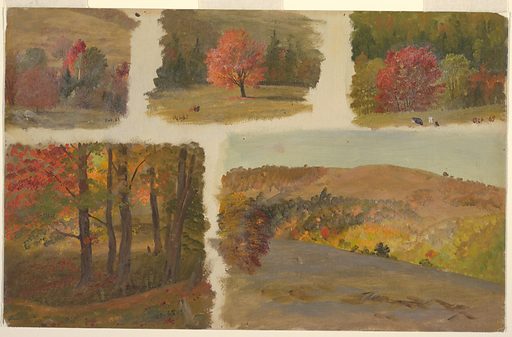
Art by Frederic Edwin Church(1826–1900). From Public Domian
I WANT SPRING

As autumn begins
I want spring.
I don’t want winter.
I don’t want summer.
I want spring.

I am straying from
the current
season. I want to
go away to spring.

Carry me off through
all the bers, September,
October, November,
and December.

Take me away from
the rys, January and
February. I do not
need to make any
resolutions on the
year’s first day. I do not
need Valentine’s Day.

I want spring.
I want spring
all in bloom.


WHEN AUTUMN COMES

My hands are full
living in solitude.
I love a little less
when I feel destroyed.

I feel anti-social
when autumn comes.
This is just a phase
I have stretched out.

I inaugurated sadness.
I curse the owl
that predicts my fate.
It does not like me.

I will love again.
I feel it in my skin.
I know it sounds absurd.
But I will love again.


IN THE SHADOW OF NIGHT

Stumbling in the shadow of night
where the scarcity of light bleeds
over what could not be seen. It
could be a monster or fiend or friend.

It is easy for me to pretend what
is not there. I don’t really know if
anyone is asking. What if it was me
who is slower than most? I am not

some great thief who comes out
at night. I am not brave enough to
fight the monster or the fiend. I
could face my friend with a smile.

Luis Cuauhtémoc Berriozábal was born in Mexico, lives in California, and works in Los Angeles.He has been published in Blue Collar Review, Borderless Journal, Chiron Review, Kendra SteinerEditions, Mad Swirl, and Unlikely Stories. His most recent poems have appeared in Four FeathersPress.

.

PLEASE NOTE: ARTICLES CAN ONLY BE REPRODUCED IN OTHER SITES WITH DUE ACKNOWLEDGEMENT TO BORDERLESS JOURNAL

Click here to access the Borderless anthology, Monalisa No Longer Smiles

Click here to access Monalisa No Longer Smiles on Kindle Amazon International

Categories
Slices from Life

Embracing the Earth and Sky…

By Prithvijeet Sinha

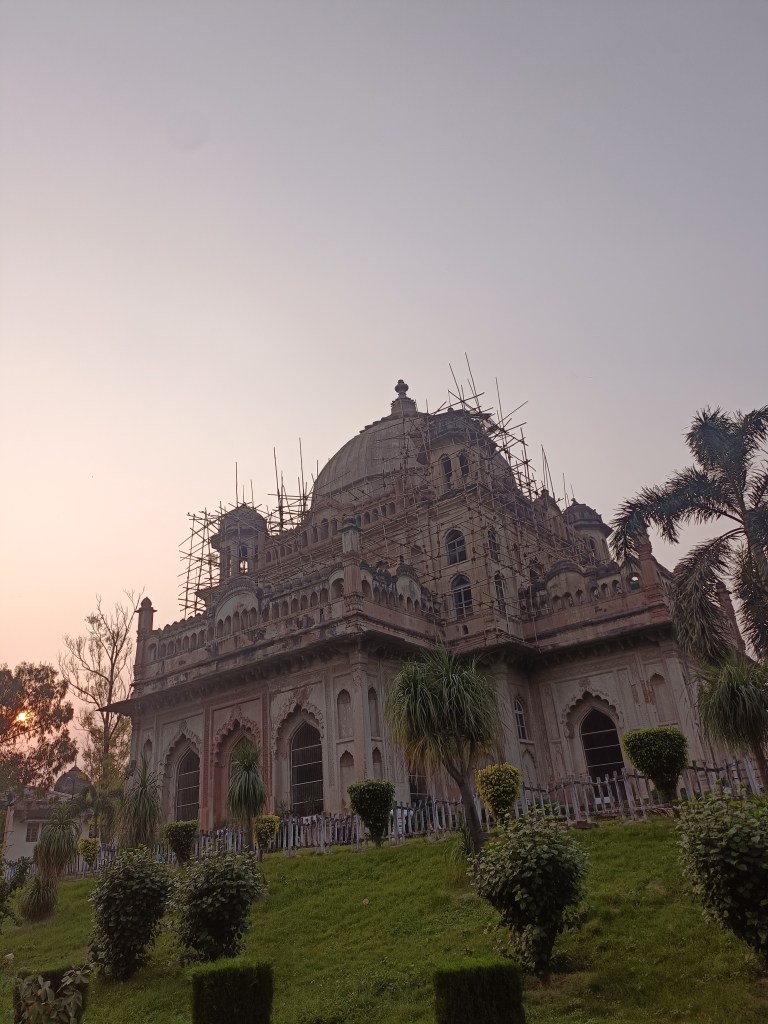
Saadat Ali Khan’s tomb. Photo Courtesy: Prithvijeet Sinha

In Lucknow, there’s a peculiar yet quintessential fascination with preserving the dead, ensuring that monuments to revere them are not only easy on the eyes but also constructed with a certain soulfulness. The sublime, inevitable poetry of mortality is hence the reason why multiple Imambaras and Maqbaras (resting places and tombs) eulogise the architects of a region that led the charge by invigorating secularism, architecture and employment to the masses.

The stunning Saadat Ali Khan tomb testifies to all these features with poignant grace till this present era. Built by Ghazi-ud-Din Haider, the crowned King of Awadh in the early years of the 19th century in memory of his father, the eponymous Nawab Wazir of Awadh, Saadat Ali Khan, it was a palace of refined craftsmanship that took on the sombre hues of remembrance and eternal memory by being rebuilt as a tomb. Such is the fervour of familial legacies. Those eternal memories of wives and children now rest in the vaults that have been preserved in the inner chamber of the structure in its rear end.

On his part, Ghazi-ud-Din Haider (1769-1827) was a man of poise and taste. But he was also operating at a time when colonial powers were shareholders of Awadh as much as any other part of the country. Being a ruler may have been as much a nominal position for him as it was for his father, Yameen-ud Daula Saadat Ali Khan II Bahadur (1752 – 1814). But they both walked on common ground as they ensured that administrative duties fuelled by colonial interests didn’t usurp the spirit of their homeland. Lucknow was much more to Ghazi-ud-Din Haider and his father than just a city. Hence, their architectural aesthetics came into play to build a monumental legacy. If father Saadat Ali Khan was the mind who gave Lucknow a large number of memorable monuments between the city’s fabled Kaiserbagh and Dilkusha corridor then son Ghazi was no flash in the pan himself. The majestic Chattar Manzil, the quietly captivating Vilayati Bagh (built in memory of his beloved English wife Mary Short/ Padshah Begum) and the impressive Shah Najaf Imambara (modelled after the holy Shia site of Najaf in Iran) are all beholden to his vision. They all occupy pivotal central areas of the city today and are a visitors’ delight. He was also the pioneer behind a printing press, employing English and local scholars who were versed in multiple languages and enriched his court with the compilation of an extensive Persian dictionary.

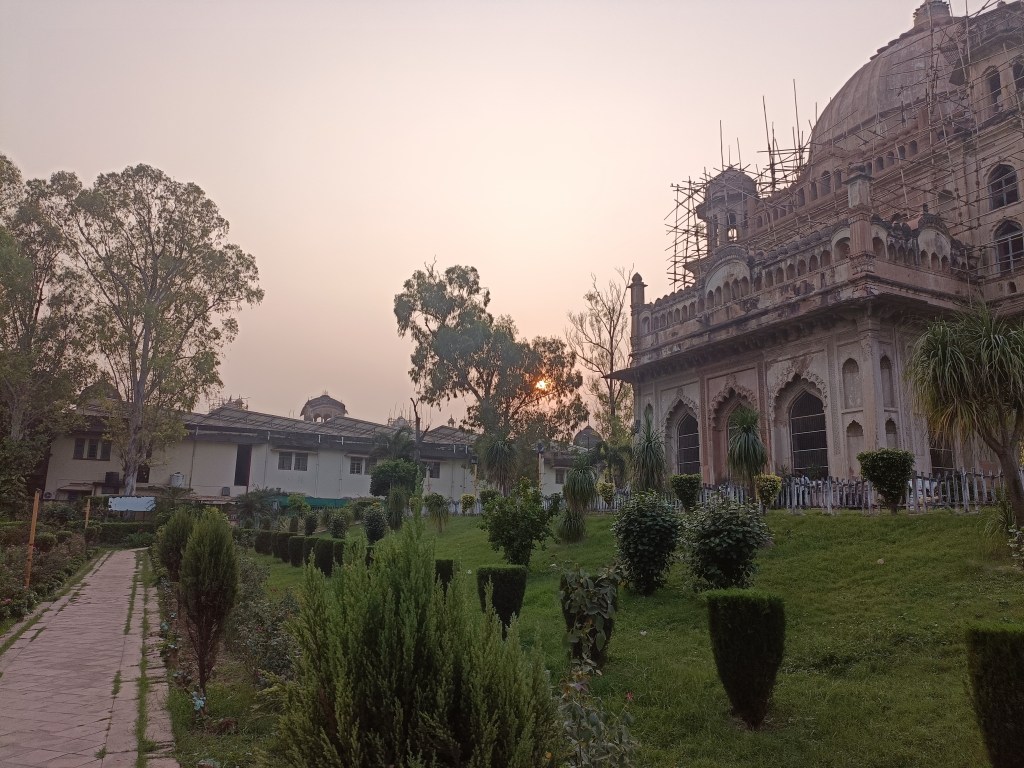
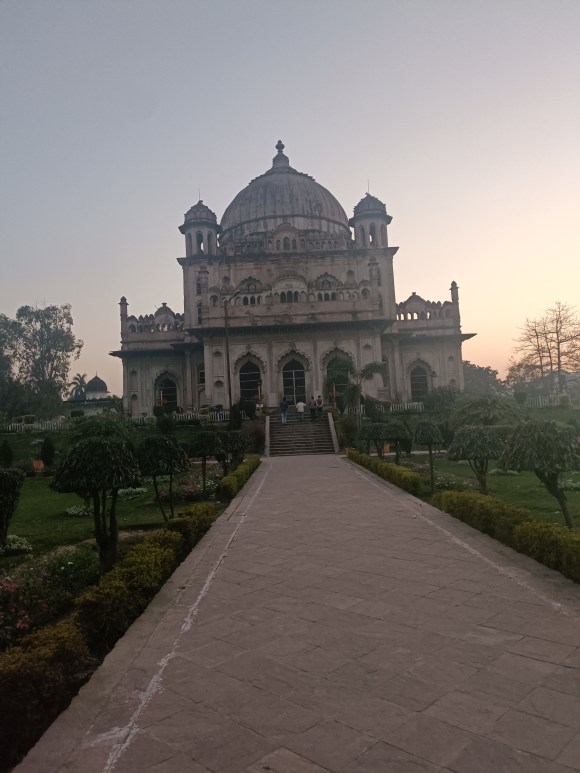
Saadat Ali Khan’s Tomb extends his legacy, it’s a stunning architectural design of a palace turned resting place for dearly departed retaining Lucknow’s exquisite stamp. The magnificent dome, arches, unbridled calligraphy of designs, decorative motifs and the pillars echo with two hundred years and more of all that the structure represents. The distinctive wash of yellow, brown and sometimes bleached lemon in the building are all captivating to discerning eyes. Under this dome and the parapets, one walks in circles and picks up the nuances of beauty that surround it. Chief among them being huge windows framed with nets, galloping squirrels and various potted plants covering the expanse.

Even more wonderful is the tomb of Mursheer Zadi, Saadat Ali Khan’s beloved wife, that stands parallel to his tomb. With its similarly constructed structure and darker tones, the confluence of dome, spires, parapets, inner chamber and decorative motifs become breathtaking. If the morning reveals these structures as enchanting dual partners, afternoons suffuse them with a time-honoured glow while the evenings bathe them with shades of devotion to this cityscape.

Visitors people the verandahs that surround it. At the Saadat Ali Khan Tomb and Garden, we relive the permanence of smiling flowers, the majestic architecture and the surreal power of its mystique. It’s a structure that seems to literally rise out of the earth and court the sky in reverence to both. We, in turn, understand its juxtapositions of mortality and muted grandeur as die-hard Lucknawis.

As scaffolds populate the tombs and restoration work ensures more renewed glint for its overall structure in the new year as also for its neighbouring Chattar Manzil, this site becomes the classical storyteller it has always been. Its saga is continuous, eternal. Its haunting understories are as soaked in legends and myths as is the wonderful city of Lucknow. The dead don’t just rest in peace here, they converse in whispers that become the wind and birdcalls.

Photo Courtesy: Prithvijeet Sinha

Prithvijeet Sinha  is an MPhil from the University of Lucknow, having launched his prolific writing career by self-publishing on the worldwide community Wattpad since 2015 and on his WordPress blog An Awadh Boy’s Panorama. Besides that, his works have been published in several journals and anthologies. 

PLEASE NOTE: ARTICLES CAN ONLY BE REPRODUCED IN OTHER SITES WITH DUE ACKNOWLEDGEMENT TO BORDERLESS JOURNAL

Click here to access the Borderless anthology, Monalisa No Longer Smiles

Click here to access Monalisa No Longer Smiles on Kindle Amazon International