Categories
Poetry

Poems by Tulip Chowdhury  

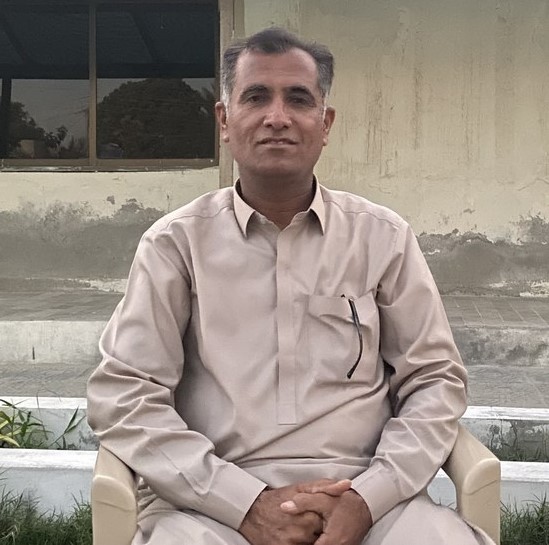
Tulip Chowdhury
SILENT GIVING 

Spring, summer, and autumn,
while the birds sang their seasonal tunes
humans beat loudly their own drums.

The bees collected their nectar well
while swans in the lake nearby
found their life-long mates
and yapped their love notes,

while sound and sights captured
much of the yearly gifts to bless,
while in silence, a rose bush
gave her cloying fragrance
and red flowers.

In life, we give of ourselves:
the best of what we have.


HOPES AND DREAMS

The year 2025 found
the world at a crazy stage
on which life danced.

Amidst the maddening politics,
natural calamities and wars
took the hardest hits.
In the turmoil, I feel like an ant under an elephant

When I wish to make a difference in life
for someone in need — what have I to give?

Mother Teresa’s advice echoes
“If you cannot feed a hundred people,
then feed just one.”
I get up and venture out.

Surely, since I am alive and well;
there is something I can do for someone?

When hope for a better world crumbles like sand,
I send prayers up to heaven---
I know, they can move mountains.
And with prayers,
I plant new seeds of dreams
for a peaceful world of tomorrow.

Tulip Chowdhury, a novelist, poet, and columnist, writes from Georgia, USA. Her books are available on Amazon. 

PLEASE NOTE: ARTICLES CAN ONLY BE REPRODUCED IN OTHER SITES WITH DUE ACKNOWLEDGEMENT TO BORDERLESS JOURNAL

Click here to access the Borderless anthology, Monalisa No Longer Smiles

Click here to access Monalisa No Longer Smiles on Amazon International

Categories
Excerpt

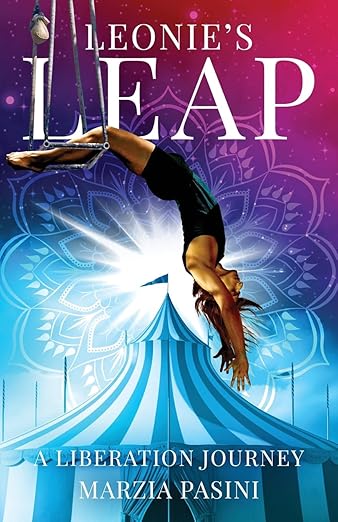
Leonie’s Leap

Title: Leonie’s Leap

Author: Marzia Pasini

Publisher: Atmosphere Press

“Son,” Hridaya whispered again, this time with an edge that made him quiver. “Do you know why you’re here?”

“I don’t,” Leonie answered, still shaken by his visions.

“Then I’ll tell you: this is your last incarnation. Your chance to break free from the cycles of separation and denial that have kept you bound. Do you know what this means?”

“I don’t,” he admitted.

Hridaya took a moment to adjust his robe, then gripped Leonie’s forearm, his voice low. “It means your ancient soul chose to return to this plane one last time for the purpose of liberation. Divine destiny is with you, but you still have the will to reject it. If you turn away, the universe will keep sending the lessons you need to learn. Ignore them, and they’ll get harsher. Do you understand?”

Leonie shrugged in resignation. “What does it matter what I’ve come here to learn?” he murmured, his gaze falling to the ground. “I’m all alone, anyway.”

“Nonsense,” Hridaya countered, his grip on Leonie’s palm firming.

“You are no orphan, but a beloved child of the universe. Though you may feel displaced, your soul is anchored to the womb of the world; your hands inter-twined with the pulse of creation. It is only in the folly of ignorance that we choose to desert ourselves, becoming orphans to our very own souls.

“Look,” he said, squinting his blind eyes as if sensing Leonie’s pain, “I know life doesn’t always add up the way we want it to, but that doesn’t mean we should stop counting our blessings. You see, there is no good or bad luck, really, only wisdom to be gained from our unmendable human condition.

“Our personal stories shape us, but they do not limit or define us. In the end, who we truly are escapes all form and definition. It doesn’t matter, then, what star you were born under or which side of the river you drank from— obstacles will arise either way. You must not get discouraged, son. We are here to pave the way for each other, learning to see clearer so we can love better.

The fortuneteller paused, as though listening for a distant whisper only he could hear. Then, with his head tilted toward the sky, he continued: “At any point, we can give our life a hundred different names or simply call it grace. It all depends on how well we learn to see through things. Sometimes the greatest trials turn out to be our highest blessings. Other times, we are left with indelible wounds, marks that cannot be erased or repaired. But if we carry our hurt with grace, the scars stitched onto our skin become luminous constellations guiding our way home.

“Now happiness is the common road. But freedom? Here the road forks. The path of freedom is not the way of the masses, nor the aspiration of the tribe. Many of us meddle with freedom, but freedom has little to do with getting things our way, possessing what we desire, or feeling good about this or that.

“Before we’re born, freedom is woven into the fabric of our souls. As children, we understand this instinctively, but as we grow, this knowingness fades, leaving us nostalgic or in denial. Only a rare, disgruntled minority set off on a quest to reclaim what’s been lost. Some journey far, sometimes to the farthest edges of the earth. Don’t get me wrong. At times, the search is required. Yet what really matters is never the distance we travel, but how deep we are willing to dive to illuminate the shadows.”

“Son,” the fortuneteller leaned in, his voice dropping to a secretive whisper. “You’ll hear many promising you something better or more. It seems to me everyone hopes to hoard magic, but the pot of gold doesn’t just sit at the end of the rainbow. Treasures pepper the trail. Each day, the path unfolds, ever unwritten. Now tell me, what does your heart long to know more than anything so it may be made free again?”

Silence pervaded the forest once more. A gentle breeze brushed against Leonie’s face as he gazed out at the water, then back at the man. “The truth about my mother,” he uttered. “That is what I’d like to know most.”

Hridaya sighed deeply. “The truth, son, will set you free, but to do so, it must break open your heart first. Are you sure this is what you want to know more than anything?”

A tremor rippled through Leonie’s heart. He knew that the truth, whatever it was, would hit like a punch to his chest.

***

Dearheart, perhaps you, too, have felt the sudden whack of truth—a force you have avoided, fearing it could shatter the world as you know it. Be honest: how often have you told a white lie to help someone save face or feel better? How many times has something inside you desperately wanted to live out the truth, and at the same time hoped it would never be revealed?

There’s no escaping it: the truth is seldom subtle. It’s a hurricane, exposing what you’ve kept covered. If we let the truth be destructive, it will wreak havoc. Yet honesty doesn’t have to be crushing; it can be as gentle as blushing. Gentle honesty is wise and discerning. It doesn’t weaken relationships; it deepens them. Speaking the truth is never about being rude, harsh, or unfiltered—it’s about upholding integrity in the centre of your heart. After all, honesty is a prickly rose. It must be handled with care, carried with grace, and delivered with unbending kindness. Even if it’s tough, lean into the hard conversations softly and speak your heart boldly. Stand for the truth—whatever the cost. Anything less is fickle, unreliable, and untrustworthy.

Dearheart, have you ever wondered about that tingle keeping you awake at night? Where does the fiery inspiration spark from? Why does your soul beckon you in? Consciousness is ever awake, whether you are asleep, stumbling, or taking the leap. It patiently waits for you to unlock the mysteries of your spirit and embrace the liberating journey that awaits.

About the Book

Leonie’s Leap tells of the adventures of a fifteen-year-old orphaned acrobat who escapes his dreary life to join the circus as a trapeze artist. Just as the daring acrobat takes the bold plunge into the unknown, your inner exploration reveals the hidden wonders within.

Your capacity to return to this wild inner landscape is the answer to your deepest longing, the home where every prayer settles. It doesn’t matter where you come from or what path you have chosen—every bit of YOU knows it: you were born to live vibrantly from your depths. The world needs you to dwell in your wildly liberated heart. It breathes through your sacred dreams. Your wings. Your feet.

Are you ready to leap?

About the Author

Marzia Pasini is a writer and life coach devoted to heart consciousness and the sacred return to self. With a background in Philosophy and a Master’s in Comparative Politics from the London School of Economics, she began her career in international development, working with the United Nations and the Office of Her Majesty Queen Rania of Jordan. Two life-altering health crises sparked a profound inner shift, inspiring her to help others reconnect with their inner freedom and truth. She has also authored a children’s book Satya and the Sun, which follows a young girl on a magical journey through her fear of the dark—offering an empowering reflection on change, trust, and the unknown.

Originally from Italy, Marzia has lived in six countries and now makes her home in India with her husband and two children.

.

PLEASE NOTE: ARTICLES CAN ONLY BE REPRODUCED IN OTHER SITES WITH DUE ACKNOWLEDGEMENT TO BORDERLESS JOURNAL

Click here to access the Borderless anthology, Monalisa No Longer Smiles

Click here to access Monalisa No Longer Smiles on Kindle Amazon International

Categories
Poetry

Homeward Bound

By Gautham Pradeep

A WALK BACK HOME 

I often find myself amidst the crumbling cliffside,
mumbling words to myself.
Within the mouth of the weeping river,
I must disperse the ashes of an awakening.
Through the darker brush,
colour would soak the dry paper.
In the corner of an eroding house,
I lack the search I'm entrusted.
The mist I've felt this morn,
now buries me in a shawl of memories.

The tiny tendril holding onto the iron railing,
unwinds in the solitude it enjoys.
It swirls in the nightly gale,
swaying in its shallow reflection.

A feeling surges in me,
as the poison in a pitcher leaf.
It urges the nightly stillness to visit the lonely house,
its amber curtain still intact.
The long lane, in front of me,
is waning under the new moon.
It was once the pen,
I had written my childhood with.
The ink had flowed evenly,
such as the poison in my drink.
And now it must end abruptly,
the tiny man in his bottle of wine.
The twilight sky drinks the last few rays of the sun,
while I sink in my purple drink.

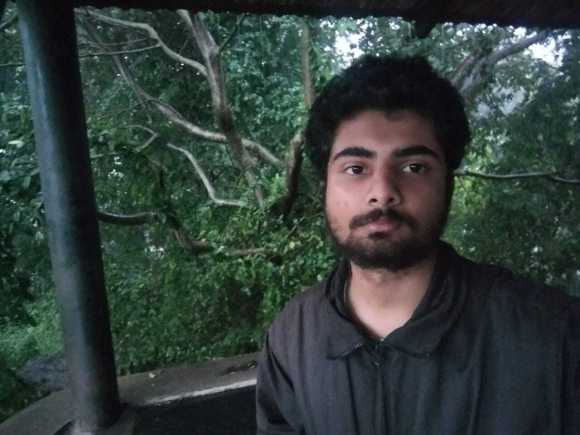
Gautham Pradeep was born in Kerala, India. He is now pursuing an MBBS degree. He tries to explore the existential dilemmas of the his generation. His poems have been published widely.

.

PLEASE NOTE: ARTICLES CAN ONLY BE REPRODUCED IN OTHER SITES WITH DUE ACKNOWLEDGEMENT TO BORDERLESS JOURNAL

Click here to access the Borderless anthology, Monalisa No Longer Smiles

Click here to access Monalisa No Longer Smiles on Kindle Amazon International
Categories
Slices from Life

The Rule of Maximum Tolerance?

By Jun A. Alindogan

From Public Domain

In the Philippines, ‘maximum tolerance’ refers to peacekeepers practicing a high level of restraint during public gatherings to ensure safety and maintain peace, while law enforcement implements action against violent demonstrators and shows tolerance towards those who are peaceful. Essentially, it means tolerating an individual’s capacity for patience, endurance, and long-suffering in the face of behavioral challenges.

Until now, I have maintained a close relationship with an orphaned nephew of a colleague of mine. Our bond grew stronger when he moved to our church shelter from a nearby mountainous town to live with his uncle. I have always empathised with him, as my family also provided care for fatherless children. The purpose of his relocation was to enable him to complete his college education. He eventually graduated with a degree in computer science from an institution that claims to have an Asian focus, despite lacking a physical campus during the Covid-19 pandemic. Understandably, he struggled to find employment. He returned home to stay with his aunt’s family, patiently waiting for an opportunity to secure a job, which proved to be challenging.

During his studies, we would occasionally meet for meals to discuss the work on his paper requirements before graduation and plan his group thesis. When the pandemic hit, our conversations shifted online, but his willingness to seek my assistance remained strong, and I gladly supported him.

His first job involved selling organic powdered coffee imported from Malaysia at an office in the heart of Quezon City. When the Covid-19 virus spiked, all the company’s employees had to work from home. However, there were times when they were asked to come to the office despite the significant health risk.

My friend refused to do so, which was quite reasonable as he lived with his elderly aunt and uncle. As a result, he was reprimanded and issued a memo for unauthorised leave of absence. I had to help him draft a letter in response to the memo. This situation challenged him to assert his rights as an employee as not every human resource policy is beneficial. At times, companies will test your threshold of tolerance to the limit which is not necessarily wrong. Upon repeated emails that we sent to the HR department, he was finally given his last paycheck months after his resignation.

His next job was as a management trainee for a Canadian-based coffee shop in a mall chain. Coffee shops and fast-food stores often hire college graduates from any field to fill staffing gaps caused by high employee turnover, even if their majors are unrelated to the food industry. Unfortunately, he did not pass the probationary period because he said he was verbally mistreated by the store manager over work principles and practices.

His initial job application at a global fast-food chain was unsuccessful, as he did not receive an interview. He ended up taking a part-time online job at a small pharmaceutical company to earn money for his expenses. After a year of waiting, he was finally invited for a management interview at the same fast-food chain in a city near his hometown. He got the job.

He has been working for the global fast-food chain for over two years now and enjoys his role as a specialist manager due to his interest in computing and ordering items. However, the local store management has not been supportive in terms of taking care of their team. For example, when he had a high-grade fever while working, he was not allowed to go home until the next shift manager arrived, in the midst of a heavy, rainy evening. There was even an instance where he had to attend a management meeting at another store after his graveyard shift.

On a particular rest day after his graveyard shift, he was instructed to attend management classes in a southern city for three days, without being given additional days off to offset his attendance during his rest day. Another schedule required him to report at 2pm after working a graveyard shift. At times, he was also instructed to go to other stores to manage, without any fare allowances. All these cases are documented online. The goal is for the team to hit the sales target at whatever cost and without offering any additional incentives. Even when he had toe-surgery and had to go on sick leave, he was still expected to work from home regarding stock orders. The global fast food chain’s work-life balance policy is only superficial.

Maximum tolerance does not mean to allow individuals, communities, and corporations to exploit us to unimaginable levels, where our self-worth is solely dependent on our output. Outstanding results should be based on a holistic approach that recognises everyone’s basic humanity. Resignation prevails simply because individuals are not allowed to exercise and enjoy their humanness in any circumstances. This should not be the case.

This scenario is not only limited to corporations, but also to religious institutions. In the church that I regularly attend, the resident minister encourages members to be involved in various programs, as leadership should not be dependent on a single individual but on the collective efforts of everyone. However, in doing so, he expects every member to participate in a series of activities all day on Sundays. Sundays, or any Sabbath day, should be a day of spiritual and physical refreshment and renewal. However, with the onslaught of day-long programmes each Sunday, the maximum tolerance of members is tested to the point where most skip events instead of feeling encouraged, as the minister makes them feel guilty. Saying ‘n’o is not a sin of omission.

I look forward to a time when it will be common for business enterprises and social institutions to implement appropriate mechanisms that help individuals to be more human, rather than just robots mindlessly following instructions.

Manuel A. Alindogan, Jr. or Jun A. Alindogan is the Academic Director of the Expanded Alternative Learning Program of Empowered East, a Rizal-province based NGO in the Philippines and is also the founder of Speechsmart Online that specialises in English test preparation courses. He is a freelance writer and a member of the Freelance Writers’ Guild of the Philippines (FWGP).

.

PLEASE NOTE: ARTICLES CAN ONLY BE REPRODUCED IN OTHER SITES WITH DUE ACKNOWLEDGEMENT TO BORDERLESS JOURNAL

Click here to access the Borderless anthology, Monalisa No Longer Smiles

Click here to access Monalisa No Longer Smiles on Kindle Amazon International
Categories
Poetry

Poems by Anne Whitehouse

Ann Whitehouse
A FLEXIBLE OBJECT BENDS TO A QUICKENING FLOW

Leaves buffeted by wind
roll up into tight cones.

When strong winds blow,
daffodils twist so the backs
of their petals face
into the wind.

In air-flow experiments,
a flexible fiber always
settles at the boundary
between the smooth stream
and turbulent whirls,
following a universal shape,
like a flag flapping back and forth
in a steady pattern.


STRAWBERRY FIELDS

For Marnie MacLean
In memoriam Donald MacLean


The summer after my husband died,
the strawberry fields burst forth
with their greatest abundance
in forty-five years of our farming.

I sense Don’s lingering presence.
as I walk the uneven furrows
between the rows of strawberry plants.
I hear his voice in my ear,
calculating, planning, suggesting.

We rotated our fields on a three-year cycle.
After the harvest, the weeds took over,
and we plowed it all under. The next spring,
we began again and harvested the second year.

I picture him riding his tractor.
A straw hat shields his face.
He is wearing jeans and a plaid shirt.
His tractor roars down the rows.
Blackbirds wheel about his head.

Our children didn’t want the farm.
They envisioned other lives.
Ten years ago, we sold the land
to the county conservancy
to preserve it as farmland in perpetuity.
Each year since then we leased it back.

At night I walk outside with my dog.
Once an owl flew so low over my head
I sensed its shadow, though heard nothing,
and a shiver of fear went through me.

Now there is no sound but the breeze.
I smell the sweetness of the berries.
and I bless these fields that they may bring
peace and love to those who come
to pick and eat our luscious fruit.
This season will be my last.

Anne Whitehouse is the author of poetry collections: The Surveyor’s Hand, Blessings and Curses, The Refrain, Meteor Shower, Outside from the Inside, and Steady, as well as art chapbooks, Surrealist Muse (about Leonora Carrington), Escaping Lee Miller, Frida, Being Ruth Asawa, and Adrienne Fidelin Restored. She is the author of a novel, Fall Love

.

PLEASE NOTE: ARTICLES CAN ONLY BE REPRODUCED IN OTHER SITES WITH DUE ACKNOWLEDGEMENT TO BORDERLESS JOURNAL

Click here to access the Borderless anthology, Monalisa No Longer Smiles

Click here to access Monalisa No Longer Smiles on Kindle Amazon International

Categories
Essay

Sangam Literature: Timeless Chronicles of an Ancient Civilisation

By Ravi Varmman K Kanniappan

Across the golden sands of time, where the voices of an ancient people still echo, Purananuru stands as a timeless testament to the spirit of the Tamizh[1] land. More than mere verse, it is the heartbeat of a civilization, a chorus of kings and warriors, poets and common folk, each speaking with the fire of truth and the fragrance of life. In its lines, the pulse of an age long past still throbs, reminding us those words, when born of wisdom and experience, never fade, but they endure.

Purananuru, one of the illustrious eight anthologies known as Ettuthogai, forms the bedrock of Sangam era Tamizh literature. Composed over two thousand years ago, it opens a luminous window into the outer world of the ancient Tamizh people, their politics and valour, their sense of justice, their joys and sorrows. Unlike the sweeping arcs of epics that follow a single thread, Purananuru unfolds as a constellation of four hundred independent poems, each a gleaming fragment of human experience. Together, they weave a tapestry of life, fierce, tender, and profoundly real. offering us not a story, but a soul.

The Sangam Age, spanning from the third century BCE to the third century CE, shines as a golden dawn in the history of South India, a time when art, intellect, and poetry reached luminous heights. Born under the gracious patronage of the Pandya kings of Madurai, the Sangams, legendary assemblies of poets and scholars, became the beating heart of Tamizh culture. Within this radiant world of thought and expression, Purananuru took form, a collection that mirrors the grandeur of its age, capturing the valour of kings, the wisdom of poets, and the vibrant rhythm of a thriving civilisation.

Scholars, tracing its language and historical echoes, place its composition between the first century BCE and the fifth century CE. Yet the poems themselves speak louder than any chronicle, invoking images of bustling ports like Musiri, where Tamizh traders met Greek and Roman merchants across the seas. In these verses, we glimpse not isolation but exchange, not obscurity but brilliance, the confident stride of a people deeply connected to the world, yet proudly rooted in their land, their language, and their spirit.

Purananuru is classified under Puraththinai, a literary category that focuses on external experiences and public life. This distinguishes it from Akam poetry, which deals with internal emotions and personal relationships. The poems in Purananuru range from four to forty lines in length. Despite their brevity, they are rich in imagery and emotional resonance, with each word carefully chosen to evoke a specific mood or scene. This compact style enhances the impact of the verses, making them accessible even to modern readers who may not be familiar with classical Tamizh literature.

Among the many celebrated lines in Purananuru, one verse stands out for its timeless relevance. Poet Kaniyan Poongundranar writes, “ Yathum oore yavarum kelir”, which translates to “Every place is my home; Every person is my kin.” This profound statement of universal brotherhood transcends geographical, social, and cultural boundaries. It promotes the idea that all human beings are interconnected, advocating for equality and inclusiveness. Today, this verse is often cited as a symbol of global humanism and remains one of the most iconic lines in Tamizh literature.

Beyond its literary brilliance, Purananuru serves as a poetic record of the Sangam era’s political, social, and ethical life. The poems document the dynamic relationships between rulers and subjects, highlight the moral values upheld by society, and preserve the customs and cultural practices of the time. Through its verses, readers can reconstruct the everyday realities of ancient Tamizh life, from the battlefield to the banquet hall, from royal courts to humble villages.

In recent years, many of these poems have been retold in simplified narrative forms, helping contemporary audiences connect with the ideas and emotions expressed by the ancient poets. These adaptations preserve the essence of the original works while making them more relatable to today’s readers. The enduring wisdom of Purananuru continues to inspire readers across generations. Its themes of heroism, ethics, leadership, and human emotion remain relevant in today’s world.

However, Purananuru is not merely a collection of poems, but a mirror of human emotions, ethics, and reflections on life that remain relevant even today. They have prose too. Take as an example Purananuru 43. It’s  a tale that blends pride, humility, and forgiveness in a deeply human way.

In the palace of the Chola King Nalankilli at Uraiyur, one calm evening turned unexpectedly into a lesson about pride, humility, and forgiveness. The King’s younger brother, Mavalathan, was passing time by playing a board game called sokkattan with the poet Thamappal Kannanar. It was meant to be a light hearted diversion, just two friends enjoying a quiet evening. Mavalathan was an expert at the game, having played often, while the poet was more of an amateur. Normally, when two players of unequal skill meet, the game quickly dissolves into frustration or conflict. But between these two, there was only affection and mutual respect.

Kannanar wasn’t the type to play games, his interests lay in poetry and thought. But when the prince himself invited him, he couldn’t decline. To refuse might have seemed rude or dismissive. So, with a polite smile, he agreed. At first, the game was easy going. They laughed, teased each other, and moved the pieces without care. But soon, the mood shifted. What began as leisure turned into competition. Both players started paying closer attention. Each move became more deliberate, and their concentration deepened. The world outside the board disappeared.

Yet, as the rounds went on, the poet’s joy faded. Mavalathan’s experience showed, he won effortlessly, again and again. The poet began to feel the sting of failure. Losing once or twice might have been fine, but repeated defeat bruised his pride. A dangerous thought crept into his mind,  what if he cheated, just once, so that he could finally win? The temptation was small, but powerful. Yielding to it, he secretly slipped one of Mavalathan’s pieces into his robe, hoping it would go unnoticed.

But Mavalathan did notice. The moment he realised the deception, his face hardened. The calm of the evening shattered. Without thinking, driven by anger, he flung a game piece at the poet’s forehead. The small stone struck sharply, drawing blood. For a moment, there was stunned silence. The poet touched his forehead and saw his own blood on his fingers. Pain was quickly replaced by outrage. “Are you truly the son of a noble Chola?” he shouted. It was an accusation that cut deep, not just through Mavalathan’s pride, but into his conscience.

In that instant, Mavalathan felt the weight of his own wrongdoing. Yes, the poet had cheated, but what he himself had done was far worse. He had responded to deceit with violence. Instead of defending honour, he had stained it. So, he bowed his head in shame, unable to meet the poet’s eyes.

That quiet act of humility startled Kannanar more than the earlier blow. The prince, despite his status, chose remorse over anger. The poet’s own guilt began to surface. He realized that he had set the chain of wrongs in motion by cheating. The prince’s shame was not his burden to bear, it was the poet’s. He walked up to Mavalathan and said softly, “Forgive me. I was the first to do wrong. You were born noble, and your heart proves it.”

Mavalathan, equally humble now, replied, “No, great poet. I acted like a brute. The blood on your forehead is my doing.” The poet responded with calm wisdom, “I erred out of desire, and you erred out of anger. But both of us have recognized our mistakes. That is what truly matters.”

This episode, later immortalised in Purananuru 43, is not just an ancient story about a game gone wrong, it’s a timeless reflection on human behaviour. It captures something we still struggle with today, how easily pride, frustration, or ego can make us lose sight of our values.

In today’s fast-paced, hyperconnected world, people often find themselves caught in similar emotional spirals, though the setting may be different. A workplace disagreement, a heated social media argument, or even a casual online game can escalate into hostility in seconds. We live in an age where reactions are instant, and reflection is rare. The poet and the prince both stumbled, but what makes their story memorable is not their mistakes, it’s the way they confront them.

The ability to recognise one’s fault, to pause and say “I was wrong,” is a strength that modern life often overlooks. We are taught to defend our opinions, to “win” arguments, to justify our anger. Yet, as this ancient story shows, dignity lies not in victory, but in self-awareness. Mavalathan’s silence and Kannanar’s apology are reminders that maturity is found in humility, and peace in forgiveness.

In every conflict, there is a moment when we can either react or reflect. Most of us react, like Mavalathan in anger, or like the poet in pride. But if we choose reflection instead, we reclaim our humanity. Recognising our mistakes doesn’t make us weak, it reveals our strength.

The sands of the river Kaveri have long since shifted, and the game pieces of sokkattan have been lost to time. Yet the moral of that evening in the Chola palace still holds true, greatness is not in being flawless, but in being honest with one’s flaws. For in the end, as both the poet and the prince discovered, the truest victory is not over another, but over oneself.

[1] Tamil

Ravi Varmman explores leadership, culture, and self-inquiry through a philosophical lens, weaving management insight with human experience to illuminate resilience, ethical living, and reflective growth in an ever shifting world today.

.

PLEASE NOTE: ARTICLES CAN ONLY BE REPRODUCED IN OTHER SITES WITH DUE ACKNOWLEDGEMENT TO BORDERLESS JOURNAL

Click here to access the Borderless anthology, Monalisa No Longer Smiles

Click here to access Monalisa No Longer Smiles on Kindle Amazon International

Categories
The Lost Mantras

A Song of the Wind & Other Poems by Isa Kamari

A SONG OF THE WIND 

I surrender my body and soul
to smoke, steam, and mist,
which I gather with one last fibre of strength.
Listen to this lonesome song,
for the sun is envious of my existence.
This life yearns for separation;
frailty is only human.
Ballads after ballads you would know.
An honest young man is always chided for his age.
The unending love of parents
sometimes makes them act as dictators.
If you feel life as silkworms
dreaming of freedom,
just remember your wings have broken
the moment you willingly accept
the smoothness of silk.
If the clouds are too heavy
for the roof of your home,
call the wind, summon the earth.
Then you would taste the sweetness of charity.
But remember,
a barren land sometimes is best left barren,
for art also seeks justice.
Proclaim, but do not claim,
for your worth is still in a balance.
As life is a bountiful gift,
be discreet in giving alms,
but you must be brave to challenge,
although it means
you have to burn a piece of love letter.
For God is closer than your jugular vein.
I come to you from a dusty journey
where I gather smiles from smoke, steam, and mist.
Listen to this lonesome song for a while,
for I am envious of the ensuing dusk.

MOTHER

Oh, Allah,
I know of your Love
from the binjai which she craved for—
a slice from the only fruit plucked by a neighbour.
I know of your Mercy
from the warmth of the womb that protects a soul,
a frail presence in want of a mouthful of rice mixed
with soy sauce and fried fish,
under the thick foliage of the tree of Time,
offering shade to the unfolding age.
The moment she left to meet You,
the tree of Hope fell;
the kingdom of the Hereafter shook in my soul.
Parting will ultimately lead to meeting again.
Only to You I surrender,
begging for your love for Mother—
a straight path tracing her footsteps;
asking for your mercy for Mother—
which overrides your wrath over my life astray;
seeking your gentle affection,
as warm as Mother’s fingers.

TWEET

The chirping has escaped the cage.
The chirping is free; the trap is empty.
The chirping is returned and received.
The chirping is delirious on the rotten branch.
Your tail searches for the nest,
Your claws clench the twigs,
Your wings sift the wind,
Your beak catches the worm,
Your eyes survey the rainbow.
Hey you, the bird which has escaped!
Hey you, the bird which is free!
You bring along the cage in your flight.
The trap awaits your return.
If your tail is not guided by faith,
If your claws are not holding on to good deeds,
If your wings are not spreading grace,
If your beak is not chirping gratitude,
If your eyes are not seeking redemption—
Your song is a caged cry,
Your tweet is a prisoned anguish.
The resplendent feathers that you show off
are hiding a sadness as wide as the sky.

THE TRAIN

The door will close.
If religion is the track,
it does not determine
the path and destination for commuters.
They board and alight at different stations,
not the one, not the only one, not the same always.
Religion is like a map;
it does not make life boring,
does not block a journey,
shows the path anywhere you go,
not the one, not the only one, not the same always.
We are not carriages
that do not have choices.
Just make sure the meandering path is fun and secure,
the last stop safe and peaceful.
The door will close.
The One awaits there,
wherever it is.
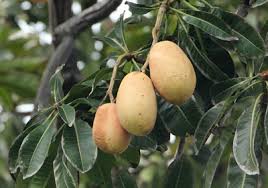
The inside of a binjai mango. From Public Domain

Isa Kamari has written 12 novels, 3 collections of poetry, a collection of short stories, a book of essays on Singapore Malay poetry, a collection of theatre scripts and lyrics of 3 music albums, all in Malay. His novels have been translated into English, Turkish, Urdu, Arabic, Indonesian, Jawi, Russian, French, Spanish, Korean, Azerbaijan and Mandarin. Several of his essays and selected poems have been translated into English. Isa was conferred the S.E.A Write Award from Thailand (2006), the Singapore Cultural Medallion (2007), the Anugerah Tun Seri Lanang (2009) from the Singapore Malay Language Council, and the Mastera Literary Award (2018) from Brunei Darussalam.

He obtained a BArch (Hons) from the National University of Singapore in 1989, an MPhil (Malay Letters) from Universiti Kebangsaan Malaysia in 2008 and is currently pursuing a PhD programme at the Academy of Islamic Studies, Univeristi Malaya. His area of research is on the problem of alienation and the practice of firasat (spiritual intuition) in selected Singapore Malay novels.

The Lost Mantras is a collection that blends spirituality, Malay cultural heritage, and universal human experience. First published as part of Menyap Cinta (Love Greetings, 2022, Nuha Books KL), these poems are like a bridge between mysticism and everyday life, where traditional images (betel, jasmine, kris[1], oil lamps, setanjak[2]) are woven with Qur’anic echoes, prayers, and existential questioning. The collection carries a Sufi resonance—always circling back to longing, humility, surrender, and beauty as signs of God. The poems are not only lyrical but also function as cultural memory: they preserve Malay traditions, communal practices, and village life, while situating them in a cosmic framework of faith, sin, and redemption. The use of Malay customs, rituals, and objects is powerful: it asserts that spirituality is not abstract but embedded in heritage. This makes the collection uniquely Southeast Asian despite its universal in appeal.

[1]A dagger

[2] Malay headgear

PLEASE NOTE: ARTICLES CAN ONLY BE REPRODUCED IN OTHER SITES WITH DUE ACKNOWLEDGEMENT TO BORDERLESS JOURNAL

Click here to access the Borderless anthology, Monalisa No Longer Smiles

Click here to access Monalisa No Longer Smiles on Kindle Amazon International
Categories
Stories

A Lump Stuck in the Throat

Nasir Rahim Sohrabi

A Balochi short story by Nasir Rahim Sohrabi translated by Fazal Baloch

The bus had stopped in front of the roadside hotel, but the dust from the road still hung around it. The passengers, before getting off completely, were busy brushing the dust off the from their travel. The fatigue caused by the delipidated road was visible on their faces and in the creases of their clothes. I had been following the bus and was now sitting under the thatched shelter, drinking tea from a small boy’s cup. The sun was at its peak, glaring down like an angry man. The grime from the boy’s hands on the hot teacup had not yet dried when a red ambulance pulled up in front of the hotel. The dirt and dust stuck to it showed clearly that it had travelled a long way. Two men got out, dusted their clothes, and walked straight toward the water to wash their faces and hands.

The hotel waiter watched them closely. Then the back door of the ambulance opened and their third companion stepped out. His shoulders seemed burdened with many years, and he walked forward with heavy steps until he reached the shade of the shelter. He greeted everyone, and sat down leaning against a wooden pillar. A glass of water was placed before him, but he didn’t touch it. His eyes remained fixed on the ambulance, from which dust continued to rise as though it were still on the road.

After a while, the other two men joined him. Their faces were clean now, but the dust still clung to their ears, eyes, and nostrils. They ordered food. To their third companion they said only, “Come, let’s eat.” But he kept looking at the ambulance fixedly. They didn’t ask him again.

The young boy who had been watching him from a distance placed my tea before me and went toward the man. He touched his shoulder and asked,
“Why aren’t you eating?”

The man was startled as if waking from a deep sleep. His gaze shifted from the ambulance to the boy’s face. He looked at him the way someone, seeing the world for the first time after eye surgery.

“I can never eat alone,” he said. “Food never sits well with me unless someone eats with me. Will you sit here with me?”

The boy nodded.

Offering him the first bite, the man said, “I’ve always fed him the first bite. Until I fed him, he wouldn’t eat at all.”

“Who was he?” the boy asked.

The question seemed to trouble him. His teeth tried to chew the morsel while his eyes stayed fixed on the boy’s face. I saw clouds of dust gather in his eyes, and their darkness spread over his face. Pain began to pour like rain. Lakes of grief rose within him. His breath grew heavy. At last, composing himself, he said: “He was my son. But he had taken my father’s place in my life. When he was a child, I fed him. But over time, I became used to eating the bites he offered me. His mother left him and me long ago. She went away with those who were demanding water and electricity along with the young, the old, and the children. I pleaded with her not to go, but she didn’t listen. She left and never returned. At first, people wrote poems about her. But now, people have too much water in their eyes and too much brightness from electricity in their homes. Now they’re concerned only with their own reflection. She once lived in people’s memories, but the world has forgotten her now.”

After a pause, his eyes drifted again toward the ambulance, though the rain inside him didn’t stop.

“He was in a hurry too, just like his mother. He was always in a rush for everything. He would run to school and never delay returning home. He grew up before my eyes. One day he said to me, ‘Now you sit and rest. It’s my turn to look after you. I’ll feed you now.’ I insisted that my turn wasn’t over yet, but he was in a hurry and won the argument. Then he joined Captian Qasim’s boat as helmsman. But he didn’t stay there long. A year later he became a sailor on Ibrahim’s boat. He never hid anything from me, but after joining Ibrahim, I seldom knew when he left for the sea or when he came home. Whenever I asked, he only said, ‘Whenever the boss orders, we’re ready to go.’

This time too he was in a rush. The moment he came home, he said, ‘We’re leaving for the deep sea. We’ll be back in a few days.’ I wanted to stand up and hug him goodbye, but before I could rise, he had already stepped out the door. Then news came that their boat had caught fire. It didn’t sink, but it was badly burnt. Thanks to the boss, they sent us to Karachi by air. But maybe this time it was the order of the Great Boss. Or maybe the son was in a hurry to go to his mother. He didn’t stay in Karachi even for a day.”

The bus horn blared and the passengers hurried toward it. The boy got up too and began to put on his sandals.

“I haven’t even eaten yet,” the man said. “Where are you going?”

“Look, the bus is leaving. I have to hurry,” the boy replied.

The sun had now slipped behind the western mountains. The shelter had emptied. The red ambulance was gone too. But the old man still sat leaning against the wooden pillar, his eyes fixed on the road. The bus sped off, trailing dust behind it.

.

Nasir Rahim Sohrabi lives in Gwadar, Balochistan. He occasionally writes short stories. This story originally appeared in Monthly Balochi, Quetta in year 2000 and translated and published with  permission from the author.

Fazal Baloch is a Balochi writer and translator. He has translated many Balochi poems and short stories into English. His translations have been featured in Pakistani Literature published by Pakistan Academy of Letters and in the form of books and anthologies. 

.

PLEASE NOTE: ARTICLES CAN ONLY BE REPRODUCED IN OTHER SITES WITH DUE ACKNOWLEDGEMENT TO BORDERLESS JOURNAL

Click here to access the Borderless anthology, Monalisa No Longer Smiles

Click here to access Monalisa No Longer Smiles on Kindle Amazon International
Categories
Poetry

Still, I Dance Alone…

By Laila Brahmbhatt

BETWEEN SONGS

We speak through
what goes unspoken
like singers between songs.
We could move as dancers do,
through unrehearsed steps.
Let’s speak a language
of fluent silences, quiet breaths.
When I yearn to sing and dance with you,
I rewind our unheard conversations.
The tape holds only silence,
Yet still, I sing.
Still, I dance alone.
From Public Domain

Laila Brahmbhatt, a Kashmiri/Jharkhand-rooted writer and Senior Immigration Consultant in New York, has published haiku and haibun in several international journals, including Cold Moon Journal and Failed Haiku.

PLEASE NOTE: ARTICLES CAN ONLY BE REPRODUCED IN OTHER SITES WITH DUE ACKNOWLEDGEMENT TO BORDERLESS JOURNAL

Click here to access the Borderless anthology, Monalisa No Longer Smiles

Click here to access Monalisa No Longer Smiles on Kindle Amazon International
Categories
Review

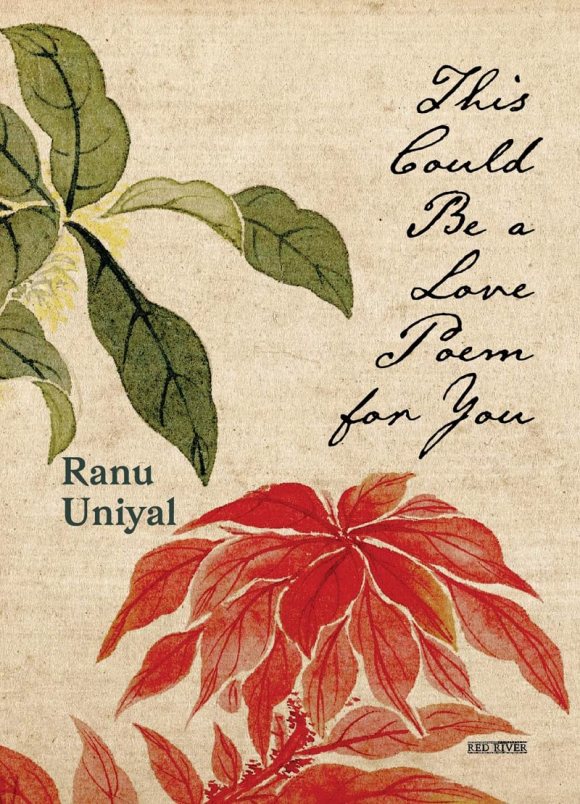
This Could be A Love Poem for You

Book Review by Gazala Khan

Title: This Could Be a Love Poem for You

Author: Ranu Uniyal

Publisher: Red River

This Could Be a Love Poem for You by Ranu Uniyal, is her fifth collection of poems. Uniyal is a passionate bilingual poet at heart, a retired professor of English literature by profession and an inspiration to many budding poets. Across the Divide (2006), The Day We Went Strawberry Picking in Scarborough (2018), December Poems (2012) and Saeeda Ke Ghar (In Saeeda’s home, Hindi, 2021) are some other significant contributions made by the poet.

“Poetry and beauty are always making peace. When you read something beautiful, you find co-existence; it breaks walls down.” A quote by Mahmoud Darwish is reflective of Dr Uniyal’s poignant portrayal of human existence layered with love, grief, crises and relationships with the One (Self) and the World.

The collection is an aesthetic delight that traverses the heart of the readers with astute directness and a distinct confessional tone. It has three segments: ‘Dust My Regrets’, ‘Be a Good Girl’ and ‘Thy Eternal Grace’. Collectively, there are 62 poems in all.

The poems start from the personal and move to the universal  with their intricate details. The poetic sensibilities take us to the female imaginary of the physical, psychological and spiritual domains. If Kamala Das in the 20th century introduced the readers to her brazenness in poetry, then Ranu Uniyal in the 21st century coerces her readers to travel from the common routine to the coveted spiritual abode found in the creative doctrine of poetry. The poetic depth can also be inferred through the rhythmic structure, the play with the words through alliteration and rhymes introduce jibes in poems such as ‘The Shop and the Shutter’.

The themes of love, identity, self-expression, language and power, old age, body’s fragility, vulnerability, precarity, loss, women and domesticity, motherhood, death and memory are persistent throughout the collection. She poetically contours the theme of human existence and its distinct flavours like WB Yeats in Sailing to Byzantium with — “That is no country for old men.”

The poetic pondering over the question of ‘Self’ or recurrent declaration of ‘I’ is developed through linguistic, racial, and geographical temporal identities. For example, the poet’s ‘Garhwali’ identity is camouflaged with the the more modern Anglophone identity. The declaration of the personal “self” and dedication to some personalities like Mohini Mangalik, S. A. Hamid and Amma takes us to the glints of the poet’s biography in the most poetic manner. Gulzar once uttered that, “we poets are errant grains of dust… life takes us and tosses us, we do not know where it will end.” The poems hail the essence of life’s evolutionary journey, especially the one of experience and the mature years of life.

Her poems present multiple binaries: of love and grief, seller and buyer, life and death, through picturesque imagery. Additionally, the poet familiarises the readers with the references to the pagan myths from diverse cultures, Christ, Nachiketa, Yama, Isis, which also introduce us to the eco-folklorists’ traditions which is a delight to explore.

She writes in aphorisms at times and critiques the personal and public crises. The poem, ‘Only Grief’, provocatively emotes the climate crisis as an apocalyptic warning through a distant voice from the future, wherein, critiquing the war-torn present world and the catastrophic space left for the progeny of the future.

We sang dangerously of the failure.
Of our prodigal ancestors.

Another poem, ‘From One Life to Another’, reflects a similar concern about the cataclysmic/tragic climate situations left for the future:

Sparrows and crows have 
been hushed to silence.
The once-green acacia shrieked
as they chopped her limbs.

Nature and motherhood hold each other’s hands in sharing the identity of exploration and exploitation. Furthermore, the intricate details through the lens of the ecofeminist poetic sensibilities highlight the diversified literary corpus in the anthology. The same poem states further:

I was once a tree- all green.
Very tall, bobbing in the wind.
I had leaves, branches.
And occasional flowers.
I, too, had a name.
A woman. A mother.
Once a tree.
I brush them aside,
My tears, an upright foliage
Lying heavy on my chest.

Dr Uniyal can be set alongside the “literary greats” like Kamla Das and Sujata Bhatt.

The usage of the colloquial vernacular Hindi words and phrases makes it more personal, tinctured with cultural aesthetics.

The eponymous poem in the anthology, ‘This Could Be a Love Poem for You’ is raw and personal between the one waiting for the other partner far away from a distance is the talisman of the relationship, the theme that finds its way again and again in the poet’s poetic oeuvre. This colourful and mature anthology glossed with distinct sonorous imagery could indeed be a reflective love poem for the present and for our progeny, the rightful claimants, who would reminisce over the past.  It’s a love poem about resilience and human existence that shall follow the hearts of the readers for a long, dialogic course of expressions and insights.

Gazala Khan teaches in the Department of English at Doon University, Dehradun, India. She has published poetry in magazines such as Setu, Borderless, and The Fictional Café and has been consistently working on creative and literary projects.

.

PLEASE NOTE: ARTICLES CAN ONLY BE REPRODUCED IN OTHER SITES WITH DUE ACKNOWLEDGEMENT TO BORDERLESS JOURNAL

Click here to access the Borderless anthology, Monalisa No Longer Smiles

Click here to access Monalisa No Longer Smiles on Kindle Amazon International