Categories
Musings of a Copywriter

Back to the Past

By Devraj Singh Kalsi

Courtesy: Creative Commons

It was a stage of life when we were friends without knowing the meaning of friendship. Just like that. As we grew up and grasped what friendship meant, we lost the capacity to nurture unconditional friendship. Although we rarely admit our incompetence to strike genuine bonds, we always make tall claims of being real friends for life. Utter one word that pricks a friend’s ego, and you are thrown out of the chat room with collective opposition to make you a pariah forever. It is the equivalent of being punished by the schoolteacher who made you stand outside the classroom for disturbing the entire class.

Attending a grand gala reunion organised by school friends offers an opportunity to revive and relive childhood memories — although the attendees are more engrossed in observing your receding hairline or the protruding belly. Your grey hair reassures those with jet-black hair and gives the scope to suggest effective herbal therapy. Your glowing skin stirs jealousy, and curious friends, eager to dig up the secret of your taut skin, surround you. Tell them you apply nothing to nourish it, and they conclude you are simply masking the truth.

If you have been stylish during childhood but now prefer simple clothes, get ready to be accosted by a friend who flaunts branded apparel and tries to draw your attention to his fancy imported jacket by raising its hood again and again.

Life is strange, and meeting childhood friends makes you realise this bitter truth. Those who were the most dignified and sober types have turned out to be drunkards. Those who never used a cuss word now hurl abuses as an energy booster. Those who wore tidy shoes have turned out to be careless about polish. Those who were always late have now become punctual in life. Those with a strict routine for everything have no routine to follow. Those who never laughed or cracked a joke in school have become humorists. Those who were toppers have become showstoppers of a different kind. Those fond of reading books now dread owning a bookshelf. The compulsive liars have become worshippers of truth. Those friends who never said prayers have now become staunch devotees. Life has its unpredictable ways of shaping people and their destinies.

In a reunion, you meet old buddies and see how they have changed, grown, or decayed in the intervening decades. Although I do not attend these reunions, it fascinates me to wonder how they get the wavelength right to connect. Dance, swing, or hop to revive bonhomie? Do they stand in a queue and pass through the school corridors? Do they enter the classroom and sit on the last bench? Do they fiddle with the chalk and duster to sign their flamboyant designations and titles? Do they revisit the loo where they discovered their youth? Do they stand or jostle near the tap to drink water and then splash it on friends for aqua fun? Do they huff and puff and yet run and climb the guava tree or dangle from its lowest branch in a brave and desperate show of fitness and agility that they have lost? Do they shake an arthritic leg with a fake smile? Do they try to appear healthy and hide their blood sugar levels by gorging on sweets? Do they sprinkle table salt on chops and cutlets to show hypertension has left them untouched? Well, it is a heroic attempt to present the best side with a smiling visage.

Such impulses get the better of you in your middle age when you realise the risk of dying of a sudden heart attack looms large. Before you depart, you wish to meet these childhood buddies and relive the lost innocence. You are back to your primary school — as those were the days you lived without stress and shared without ulterior motives. Life was good, but then you wanted a life of your choice — to carve a niche, rise, and race ahead. The world beckons you then, and now your town of birth makes you feel this had been heaven on earth. Yet, it was the place you were eager to leave to explore the world. Now you have done everything, so you want to return to where it all started. Just another wish like the one that made you navigate the world for golden opportunities.

Now you want to sit under a shady tree and philosophise whether you have lived a good life. Deep inside, you realise it has been a mixed bag, and the cycle is almost complete. You want to slow down and enjoy what you lost or left behind in childhood in a somewhat apologetic way, and you want the company of friends who share a similar worldview now. The future holds no promise of anything worthwhile. But there is a lot in the haystack of the past to cherish and relish. Remember the jam and jelly and butter toast in the tiffin you shared. Perhaps the joys of a simple life pull the heartstrings, and those childhood friends allow you to be yourself and help you recognise the person were and have left behind to a long forgotten past.

Devraj Singh Kalsi works as a senior copywriter in Kolkata. His short stories and essays have been published in Deccan Herald, Tehelka, Kitaab, Earthen Lamp Journal, Assam Tribune, and The Statesman. Pal Motors is his first novel.  


PLEASE NOTE: ARTICLES CAN ONLY BE REPRODUCED IN OTHER SITES WITH DUE ACKNOWLEDGEMENT TO BORDERLESS JOURNAL. 

Categories
Poetry

More poems by Asad Latif

Courtesy: Creative Commons
AN ACRE OF ENGLAND
For Paul Broom, MBE

An acre of England lies in my mind
and travels with me delighted to find
Ashfield near Sydney and Strathfield just behind.
This train carries people and histories on time.
Chinese and Lebanese, Bengalis and Nepalese
and escapees from Italy and Greece
jostle for space with bankers and with refugees
and the occasional natives: Aborigines
whose 60,000 years have overstayed
the expanse of the Australian mind.

At Morriset or Fassifern or Wondabyne
I see the land and its peoples
in British names entwined.
Nations and ages come but to pass
but a train ties all receding sights
to ancestries of the speeding heart.
Brits, this is not your country any more.
Aussies, are you happy? Beware though,
there's a convict poet on every train
missing an acre of England that is
Australia rediscovered, retimed,
re-rhymed, restored.


DISCIPLINE OF FORM


A gaggle of girls from a Sydney train
Elbows its giggling way through the platform
And rushes up the stairs to catch the rain
Or a bus or wait for Pa in this storm.
A broken evening arrives like a hearse
On the highway's sudden bend just ahead
When young unknowns all around me disperse
And leave new poems unwritten and unread. 
But before you go, "Excuse me. I've come
This far but am new here and I don't know
The way to myself from the setting sun
To a land I have never seen before."
They look askance at my age and laugh on.
This sonnet and I recede into form.

 Asad Latif is a Singapore-based journalist. He can be contacted at badiarghat@borderlesssg1

PLEASE NOTE: ARTICLES CAN ONLY BE REPRODUCED IN OTHER SITES WITH DUE ACKNOWLEDGEMENT TO BORDERLESS JOURNAL. 

Click here to access the Borderless anthology, Monalisa No Longer Smiles

Categories
Poets, Poetry & Rhys Hughes

I Went to Kerala

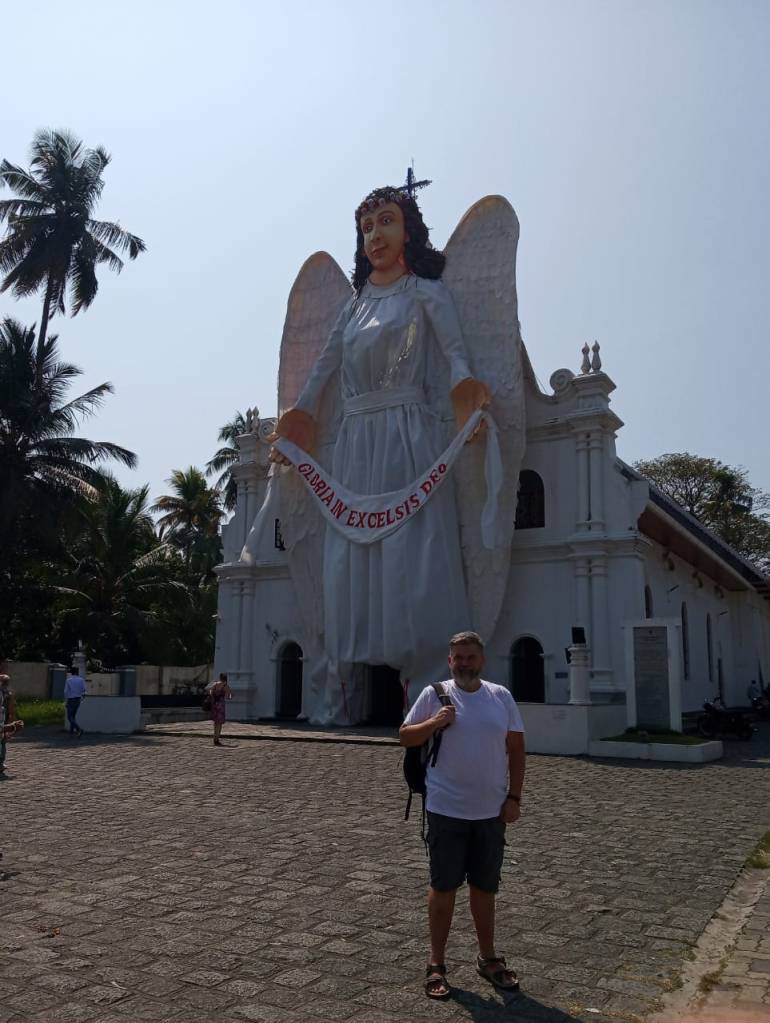
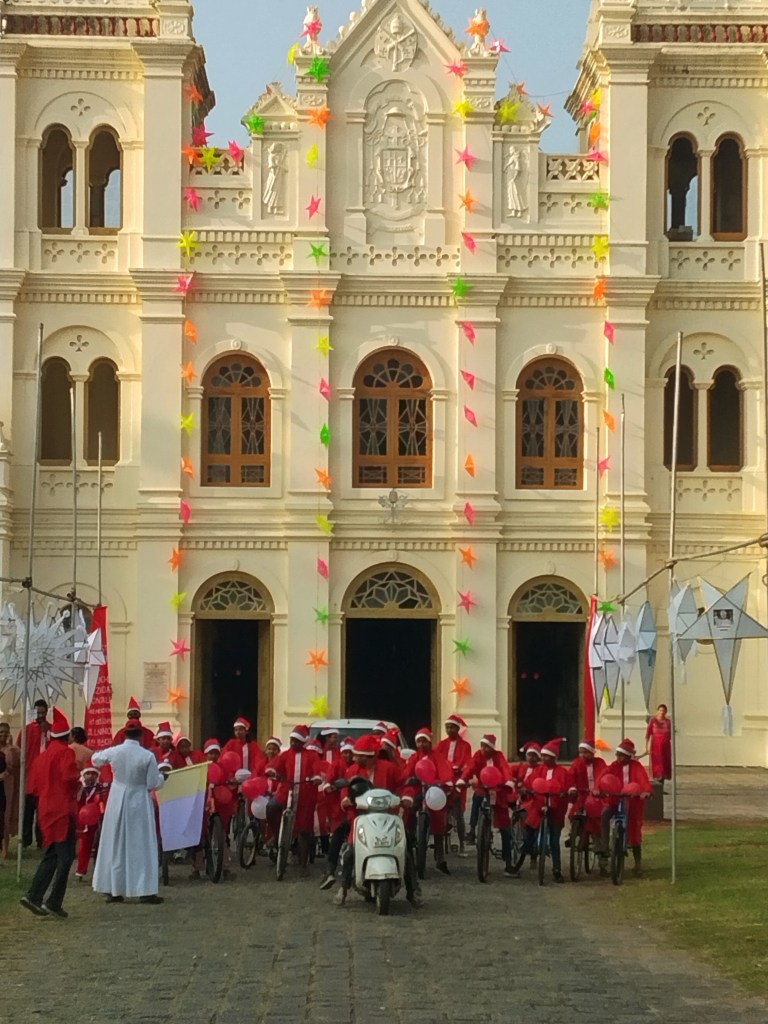
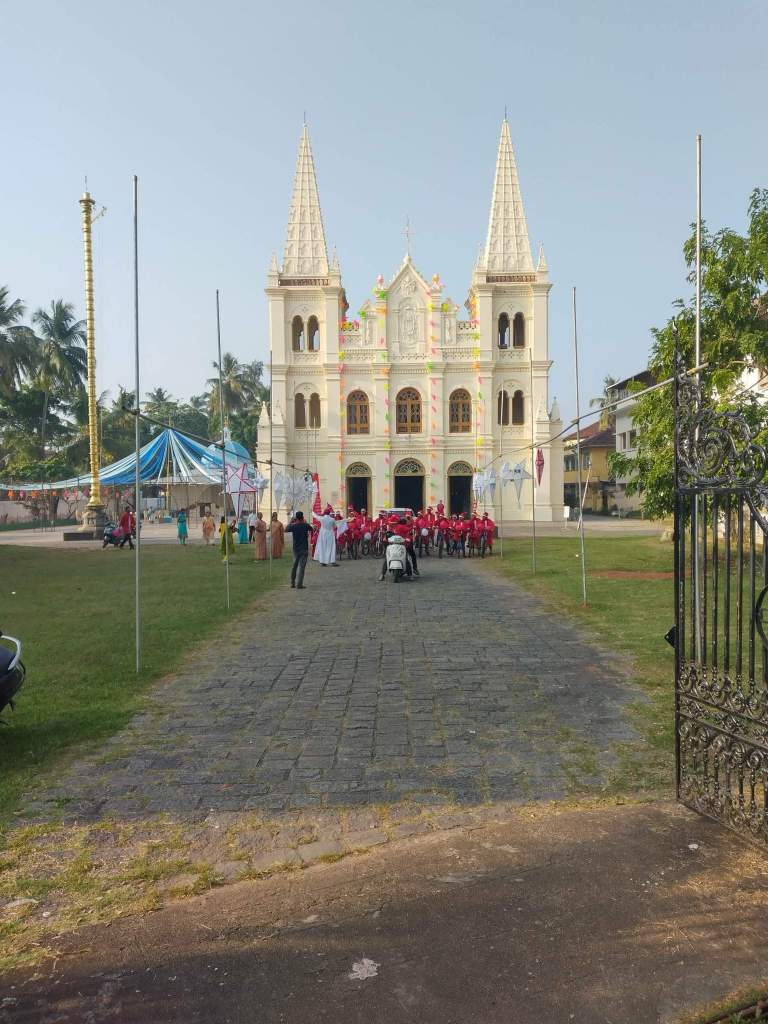
Photo provided by Rhys Hughes

I went to Kerala for Christmas, travelling from Bangalore on the night bus. It wasn’t the first time I had taken a night bus in India. The first time was when I went to Madikeri, high in the hills of Coorg. That bus was one with berths that one can lie completely flat on. In fact, you have no choice but to lie flat because there are no seats. It should be more comfortable than sitting upright all night, and I am sure many passengers find it so, but the vibrations of the engine made my body vibrate in sympathy and every bend in the road made me slide around the berth uncontrollably and when the bus climbed a slope all the blood rushed to my head, which was oriented towards the rear of the vehicle. I decided never to use this restful method of travel again.

This is why I chose a more old-fashioned style of bus in order to journey to Kerala. I understand seats. Your head is always up and your feet always down, and if this happens not to be the case then it quickly becomes obvious that some disaster has happened. Head up, feet down, seems to me the natural order of the universe when travelling a great distance. It was a twelve-hour journey. In India that might not be so remarkable, but I come from a small country where twelve hours on a bus is sufficient time to drive right across the land and a fair way out to sea. “Captain, there seems to be a bus overtaking us!” “Have you been at the rum again, bosun?” The immensity of India is something I doubt I will ever get used to. It is big even in terms of bigness.

Not that the bus with seats was completely free of problems. The seats had a lever by the side of them, and if this lever was pulled, the seats reclined. I was expecting something of this nature, but I was completely taken by surprise at the extreme angle they adopted. They reclined to an excessive degree. All was fine for the first fifty kilometres or so, then the young lady in the seat in front of me decided it was bedtime. She reclined the seat so precipitously that it whacked on my knees, and I was given no choice but to stare directly at the top of her head which was almost touching my chin. The only solution was to recline my own seat. I did so and heard a yowl from behind. I had taken my turn to crush some other innocent knees. And so I lay in this absurd position, sandwiched between two sleepers as the hours slowly passed.

The bus was soon filled with snorers and all of them were out of time with each other. I am a jazz aficionado, I love music with complex rhythms, and I also love polyrhythms, but the point of such intricate music is that there is resolution at some point along the melody lines. The contrasting rhythms ought to come together at least sometimes, in order to provide structure, but the snoring was far too avant garde for that. It was atonal and without time signatures. A man in a forest of lumberjack gnomes probably feels the same way I did, as the sawing takes place and the trees topple with a crash. There was no crash for me during that night, thank goodness, but plenty of jolting as the bus ran over potholes in the highway or swerved around unseen obstacles or accelerated to overtake rival night buses also full of snoring passengers.

Well, all this is a nuisance but one that is necessary for travellers to endure. I reached my destination safely and that’s what really counts. It was morning in Kerala and the heat was already intense. Bangalore is at altitude and altitude is a restrainer of temperature. The landscape shimmered and the port city of Kochi pulsated under the sun. No matter! Time to find my hotel and rest for a while in order to catch up on all the sleep I had missed on the night bus, whose motto is ‘sleep like a baby’, which turned out to be accurate, for I slept not at all and felt like wailing for hours. I went to the correct address and found that the hotel had been closed for the past two years. Ah well!

We are always advised to expect the unexpected, and we do this well, but I don’t think we are ever prepared for the types of unexpectedness we encounter. I was ready for the bus to break down, or for me to lose my way in the narrow entangled city streets, or for crows to swoop and peck my head. I wasn’t ready for a hotel to not exist. I soon found another and it was a better establishment with two ceiling fans instead of one, a balcony, even a fridge that was on the verge of working. That fridge later held two bottles of beer and cooled them from hot to lukewarm, and I drank them one evening and regretted it because I have no stomach for beer. Because of that warm beery incident, I missed out on sampling the palm wine that Kerala is so famous for.

The old part of Kochi is picturesque and labyrinthine. I wandered where I would and ended up somewhere, but I’m still not sure where. Christmas lights were strung between the buildings, large glowing stars had been erected on the summits of walls, on roofs, or dangled from gables. One church I passed had a façade in the form of a gigantic angel. This was really quite surreal. We tend to think of angels as radiant beings with a human form, perfect men and women, but if you read the Bible you will soon see that most angels have an appearance that is not human at all. The highest rank of angels, the Ophanim, resemble sets of interlocking gold wheels with each wheel’s rim covered with eyes. They float through the air without needing wings. A church façade based on one of these angels would be an example of experimental architecture. But the church in the shape of a personable angel was endearing.

I walked past another church and saw a fleet of Santa Clauses mounted on bicycles about to set off. Is ‘Clauses’ the plural of ‘Claus’? I have no idea, for it has never occurred to me that there might be more than one of them. This fleet consisted of children in costume and I have no notion of where they were going or what they would do when they arrived. I strolled onwards and they rode past me, guided by two men on a scooter, one steering and the other holding in his arms a loudspeaker and facing backwards, like a Pied Piper who has entered the Electronic Age. One by the one, the Santa Clauses pedalled past, laughing, waving, generally enjoying themselves.

This was Christmas at its most gentle, innocent and benevolent, a far cry from the Christmas ritual I witnessed exactly thirty years ago in Prague, where the tradition involves a saint, an angel and a devil chained together who stalk pedestrians in order to give them lumps of coal that represent the sins of the year. Prague was freezing, Kochi was broiling, and I know which I prefer, but the beer in Prague is certainly better. I reached the waterfront and sat under a tree and wondered if the mass migration of Santa Clauses I had seen was truly a fleet. Maybe it was an armada instead, or a division? Is there a collective noun for Father Christmas? A Splurge of Santas?

Kochi is riddled with waterways, and it feels like an excellent location for a port, which it is. No wonder it was established at that spot. I felt a small connection to the ancient mariners who had sailed here from the West long ago, from Europe and around the tip of Africa and across the Indian Ocean. One day I will travel from this very place to the islands of Lakshadweep. This has been a dream of mine for a long time, since I was eight or nine years old. I had entered a competition run by the Twinings tea company and I won. A map of the Indian Ocean was given with the names of islands removed and the entrants had to fill in those missing names. I consulted an atlas to do this, as I imagine every other entrant did, but I had an unknown advantage.

My atlas was very old, a green battered thing, and the Lakshadweep islands were marked by that very name. In other atlases the island chain was apparently named as the Laccadives. The administrators were looking for Lakshadweep and that is how I won a year’s supply of tea. It came regularly via the postman in an endless series of little tubs, Earl Grey, Lapsang Souchong, Peach Oolong. But in the end, this endless series finally ended, and my tea luck turned out only to feel inexhaustible rather than to be so. I have never won a competition since or even come close. But I have had a fondness for tea and Lakshadweep ever since, so it is imperative that I sail to those islands one day.

During my time in Kochi, I travelled on a boat only once, from Fort Kochi to Vypin Island. A battered rusty ferry crammed with foot passengers, cars and motorcycles. Cost of ticket? The equivalent of three British pennies. This is far cheaper than the cost of any ferry I have ever been on, with the exception of the occasional free ferries that I have encountered around the world, such as the one that takes passengers across the Suez Canal from one side of Port Said to the other, or the ferry that travels back and forth between Mombasa, which is on an island, and the African mainland. Sea travel is something special and I have done too little of it in my life. If I could have sailed back to Bangalore, I would have. As it happens, I went back on another night bus, but this time the person in the seat in front of me only reclined their seat to a reasonable angle. My knees were not crushed, and in return I did not crush the knees of the person behind me. I like and admire reasonable angles. They make geometry sweet.

.

Rhys Hughes has lived in many countries. He graduated as an engineer but currently works as a tutor of mathematics. Since his first book was published in 1995 he has had fifty other books published and his work has been translated into ten languages.

.

PLEASE NOTE: ARTICLES CAN ONLY BE REPRODUCED IN OTHER SITES WITH DUE ACKNOWLEDGEMENT TO BORDERLESS JOURNAL. 

Click here to access the Borderless anthology, Monalisa No Longer Smiles

Categories
Poetry

The Bike Thief

Written by and translated from Korean by Ihlwha Choi

Courtesy: Creative Commons
It disappeared leaving a figure of its own in a picture.

While stealing a glance of me riding a bike, he had an eye on it guessing that it might be a gold-egg laying hen.

He would cut the iron chain of the bike on a piece of cake.

The power of habit pushed away the conscience without any mercy with blind greed.

After kidnapping my child-like bike, he might eat Jajangmyeon like a pig beside the cycle shedding tears.

When I yielded to despair after I had a fit of rage, slowly, I began to pity the thief.

When I said the thief was so pitiful, my seven-year-old daughter looked up to me as if she did not understand me.


Eight years have passed.

The bike might have aged and frequently be suffering from various geriatric diseases.

Maybe there are many black spots on its face and its two legs might now frequently collapse.

After hard labor of ten years, it might be covered all over with wounds and be ill in bed under the corner of a fence somewhere.

On the face of the thief, several wrinkles would newly appear here and there.

At midnight, under the starlight, my bike would whisper its heartbroken heart to the neighbour bike.

The neighbour listening to his comrade would also burst out in tears sympathising with his friend's old master.

If I regain the bike, I will forgive him and have supper together.

But I moved to the other village. I revisit very rarely.

When I pass by the old village, one unhappy memory recurs with many other happy ones.

Ihlwha Choi is a South Korean poet. He has published multiple poetry collections, such as Until the Time When Our Love will FlourishThe Colour of TimeHis Song and The Last Rehearsal.

.

PLEASE NOTE: ARTICLES CAN ONLY BE REPRODUCED IN OTHER SITES WITH DUE ACKNOWLEDGEMENT TO BORDERLESS JOURNAL

Click here to access the Borderless anthology, Monalisa No Longer Smiles

Categories
Review

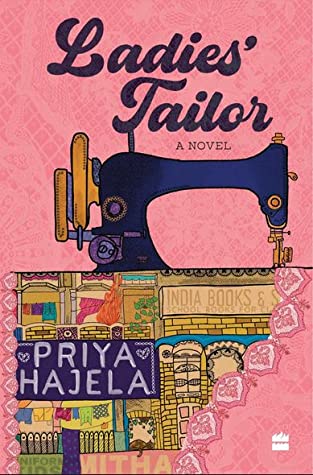
Ladies Tailor

Book Review by Somdatta Mandal

Title: Ladies Tailor: A Novel

Author: Priya Hajela

 Publisher: HarperCollins

Seventy-five years after the Partition of India took place, the cataclysmic event on both sides of the country — in Bengal in the East and in Punjab in the West — has fuelled research on the trauma of migration, loss, and resettlement, and the interest in the theme is still proliferating today. It is interesting to note that apart from documentation through innumerable non-fiction and memoirs, stories of grim reality of the Partition as documented in stories by earlier writers like Sadat Hasan Manto or Khushwant Singh’s Train to Pakistan, the interest on the theme remains unabated even today. The only difference now is that with the passage of time, writers are often relying on memory of the Partition as narrated by their ancestors firsthand, or through books, films and documentaries in a new sort of writing that blends fact and fiction and try to use the background events of migration and displacement into stories of resilience, grit, and people rebuilding their lives anew after crossing borders as refugees with even more stamina.

Priya Hajela’s debut novel Ladies’ Tailor is an attempt to recreate the story of the actual Sikh migration of her paternal grandparents Bakshi Pritam Singh (Papaji) and Beant Kaur (Biji) who left their home in Harial Gujarkhan (Pakistan) and made a new life in Ludhiana, Punjab. Dedicating the book to them, she mentions in the foreword how the places she has written about in the novel – Delhi, (Nizamuddin, Patel Nagar, Khan Market, Shahdara, Kingsway Camp), Lahore, Amritsar and Sukho are all real, but many elements are fictional. All these places provide the setting needed to tell the story, many details imagined and manipulated based on the needs of her characters. Ladies’ Tailor is a story that captures a setting and a group of characters that represent the immigrant and the refugee spirit, the optimistic spirit of never giving up on what you want and a spirit of adventure and entrepreneurship that to this day is the driving force in Delhi and Punjab.

The novel begins primarily with the protagonist Gurdev, a Sikh farmer who had deliberately moved from his parent’s house in Lahore to settle and work in a remote village called Sukho for ten years where all the religious communities lived in harmony and led peaceful lives. It took a lot of time for people to realize the Muslim-Sikh violence in the village that began around 1946 and that resulted in fear, hatred, insecurities as real and when large-scale massacres, butcheries, annihilation of entire clans, that was beyond Gurdev’s imagination happened, and he participated like everyone else. He made a brief visit to Delhi where he judiciously deposited cash with different people so that he could use it later. When he finally decided to migrate to India along with his wife Simrat and their two children, he could not convince his parents in Lahore to join them as they were determined never to leave Pakistan, the birthplace of their gurus.

After braving the horrific massacres and ordeals along the way, Gurdev landed up at Kingsway Camp in Delhi only to reach safety and find new problems ahead of him. Not only is he determined to make a fresh start for himself, his wife and sons, but he proves to be quite a meticulous, strategic planner and motivator for fellow refugees in the camp. Simran, the all-enduring and never complaining type of wife, turns sick and is admitted to the hospital and by the end of the ninth chapter, she silently disappears after that when Gurdev hands her some ornaments that his mother had given her. We don’t hear from her again as well as the two sons who accompany their mother.

Though taken aback, the indomitable Gurdev takes it all in his stride and tries to concentrate on his business and survival instincts. He befriends two sardars, Nirmal Singh, a Ladies’ Tailor, and Sangat Singh, and convinces them to start a business venture for readymade and customised garments of Khadi, an affordable hand-woven fabric preferred by women in the refugee camp and for those who wouldn’t like to wear British fabrics and wanted only ‘Made in India’ clothing. He sets up shop in the upcoming Khan Market, provided by the government in lieu of his land in Pakistan, forms a partnership with a trader in Shahadra to supply superior quality Khadi exclusively to them, and together the four of them start attracting a steady clientele, with Noor, a Muslim war widow from nearby Nizamuddin, as their brand ambassador. Hajela focuses on interfaith camaraderie with intricate details about how survival strategies result in Hindu-Muslim marriages and how names are changed to remain safe in the community.

The next move in the plot comes when Nirmal, the tailor, is somehow dissatisfied with the output because his clothes lack ornate embroidery work, a very important embellishment that used to make his outfits stand out across the border in Lahore. He wants a special sort of embroidery on their garments that was the kind crafted by two orphaned boys in Lahore, who he had nurtured like his own sons. Gurdev, the mastermind, plans a daring trip to Pakistan with Noor as his partner, to bring the two boys to Delhi for Nirmal and for their business to succeed. A complicated procedure begins with Gurdev cutting off his hair and shaving his beard to take on a new Muslim identity, and procuring a false passport, plans to visit Lahore along with Noor posing as his wife. This is where Hajela finds ample opportunity to implant a sort of interfaith romance and love relationship between the two of them. Once they arrive in Lahore, they take shelter in a Hindu man’s house and both of them feel trapped because Shakeela Begum, the mistress, seemed suspicious of their visit and itch to see them in jail. More complications arise with the driver Akbar and actual agents who keep on shadowing them.  

Hajela’s narrative is full of intricate details, be it in the furniture, clothing, food, social mores, and other material objects that prevailed in the Indian subcontinent in the 1940’s and 1950s. She fills the novel with little details like how the cut of the ladies’ salwar could determine which side of the border you belonged to, differences between the taste of the same food in Delhi and Lahore, and how people on both sides believed that one day, when things settled down, they could go back to their homes. Noor’s shopping for glass bangles, jootis, and dupattas with Phulkari[1]work in the tiny stalls of Liberty Market and Anarkali acts as a camouflage for their real mission to trace the two young boys who excel in embroidery. The novelist describes things here in great details, especially with new problems arising each day. But with his survival instincts, Gurdev takes each stride adapting to the situation and his determination to overcome all odds and thrive with new beginnings remains praiseworthy.

Despite crowding the plot towards the end with too many ramifications, like suspicion, counter espionage, breach of trust, car chases, bribing people with American dollars, the protagonists are constantly shadowed by unknown people. Strange twists to the story occur where Gurdev manages to locate his aged parents forcibly living in the outhouse of their grand home in Lahore when they were assumed to have been burnt alive during the riots. The way Gurdev plans to cross over to India once again through a remote and lesser-known spot along the border by bribing people left and right with dollars sounds a bit contrived no doubt and it seems that Hajela wanted to put in too many imagined situations to make her book a page-turner till the end with ample amount of suspense like a mystery thriller. It celebrates the unvanquished spirit of the Punjabi refugees, who, using their skills and energy, made a success of their business. Fairly linear in narration, a lot is left to the imagination at the end and therefore the novel is a feel-good read that celebrates the human spirit’s victory in the face of terrible odds. Apart from narrating the lingering afterlife of the Partition, Hajela’s statement clarifies the mission of her writing quite clear — “It’s not what sets us apart but what brings us together that’s important. How we resist the forces that are intent on separating us is what defines us. How we recover from past transgressions is what carries us forward. Ladies’ Tailor takes a resolute look at stumbling and making amends, at holding close and letting go and at turning back in order to move on.”

[1] A type of folk embroidery of Punjab

Somdatta Mandal, critic and translator, is former Professor of English at Visva-Bharati, Santiniketan, India.

PLEASE NOTE: ARTICLES CAN ONLY BE REPRODUCED IN OTHER SITES WITH DUE ACKNOWLEDGEMENT TO BORDERLESS JOURNAL

Click here to access the Borderless anthology, Monalisa No Longer Smiles

Categories
Poetry

When Dreams Unite

By Ananya Sarkar

Dear stranger
Did we visit the same dream last night?
The wispy dandelions that floated
Did they make you smile and cry?
And wandering through the trail
Did you find my footprints strange?
But yesterday wasn't the first time...
We've been visiting the same dream
Over and over again
Just never together.
So tonight, let's make a pact
When the darkness blanks you out
And the clouds begin to drift
Wait for me
And together we
Will visit the same dream.

Ananya Sarkar is a creative writer from Kolkata. Her work has been published in various e-zines. She loves to go on long walks, cloud gaze and ponder upon miracles. She can be reached at ananya7891@gmail.com.

PLEASE NOTE: ARTICLES CAN ONLY BE REPRODUCED IN OTHER SITES WITH DUE ACKNOWLEDGEMENT TO BORDERLESS JOURNAL. 

Click here to access the Borderless anthology, Monalisa No Longer Smiles
Categories
The Observant Immigrant

The Immigrant’s Dilemma

By Candice L. Daquin

Courtesy: Creative Commons

I have been an immigrant to a new country three times: from France to England, England to Canada and then, Canada to America. Being an immigrant is often a highly positive experience. We may have greater opportunities, we seek our dreams, we grow them. On the other hand, immigration for those of us who have gone through the process, is not easy. It is expensive, time-consuming, nail-biting and often lonely. It is said that those who immigrate ‘successfully’ do so because of familial support and/or because their children reap the benefits of their sacrifice.

Whilst there are too many stories to condense any one feature of immigration, we can only talk of our own experiences and somehow in understanding that, perhaps stay open enough to understand others. We can come together through that collective understanding.

As a psychotherapist, I work with many immigrants. I see clients daily who were born elsewhere and sometimes struggle to acculturate in their new-found country. Where I live, near the border between Mexico and America, we have a multitude of immigrants from Mexico, central and south America as well as from around the world, coming through the borders, seeing asylum and a better life.

Consequently, there can be a high degree of racism in rebuke for the startling numbers of immigrants passing through our city. I can drive down a road and see people lined on the street much as you would see in other countries, begging and homeless. Our resources are stretched and one option chosen by the Governor of Texas was to bus immigrants and asylum seekers to other states in the US. Initially this was considered a racist, insensitive act that treated people like cattle. When you look at it closer, you can see it was perhaps these things but also a desperate plea for other states to understand the overwhelming nature of immigration for border states and share in the expense.

It is easy for a non-border state to believe the border should be effectively kept open and all immigrants allowed in. but when it’s on your door step it can be challenging. Most people in Texas care about immigrants but also experience some of the downsides of too many immigrants at once. In El Paso, people froze to death sleeping on the streets, houses were broken into, the situation was dire and extreme and locals didn’t have enough resources to manage. Shipping immigrants who wish to go to other states, to those states, might appear cruel, but also makes sense, if it’s consensual. Whilst many of the Texan Governors decisions have been quite possibly racist and prejudicial, this choice was in part to show other states how dire the situation is.

Why are there so many asylum seekers right now? As President Biden announced the lifting of closed borders to asylum seekers, the numbers attempting to come into America increased exponentially. Under the Trump administration, the Department of Homeland Security (DHS) called the “Remain in Mexico” policy (officially, the Migrant Protection Protocols) caused immigration to be somewhat halted. The original reason countries like America accepted asylum seekers goes back to WW II where the Jews who survived ethnic cleansing had nowhere to live and were essentially stateless. The right to seek asylum was incorporated into international law following the atrocities of World War II. Congress adopted key provisions of the Geneva Refugee Convention (including the international definition of a refugee) into U.S. immigration law when it passed the Refugee Act of 1980.

The laws that exist now were enacted to protect them and ensure stateless people were never again turned away in droves. The creation of Israel was in part the consequence of WW2 and the abuse against the Jews. It could be argued any issues with Israel are directly linked to the ethnic cleansing the Jews experienced and their subsequent statelessness. Laws endeavoring to protect future people from such experiences are what we now use in our handling of asylum seekers. “When Congress finally eliminated the racial provisions in U.S. immigration and nationality law in the 1940s and 1950s, generations of federal practice and procedure did not instantly disappear without a trace. Over the years, other government agencies had developed their own racial classification systems, often partially borrowed from INS experience, and such systems could take on lives of their own.”

The downside to this is, the world has dramatically changed since the 1940s (2,307M versus over 7 million today). the population is growing at a heady rate and thus, even if a small percent of people seek asylum from any one country, it is huge in comparison to previous numbers. Department of Homeland Security  statistics show that from Biden’s Inauguration Day through May 2022—just 16 months and change—about 1.05 million migrants were apprehended on the southwestern border and then released into the US. With every year, the worlds population swells and with it, a strain on resources. ‘Affluent’ countries such as America, may literally speaking have the resources to help asylum seekers but the reality for many asylum seekers is quite different once they are in-country. According to Census Bureau statistics, immigrants’ share of the U.S. population rose more from 1990 to 2010 than during any other 20-year period since these figures were first recorded in 1850—from 7.9 percent to 12.9 percent

What constituted poverty in their country of origin may be considerably lower than what money they can earn in America, if indeed such earnings can be made at all. The social welfare system protects asylum seekers by giving them somewhere to live and a stipend until they are able to find work but what of those who do not possess the necessary skills? Not to mention the dearth of certain jobs. Immigrants wishing to live in the cities, may find work is only available in the agricultural parts of America and not earn enough to live on without language and education in a city. Likewise, they must contend with crime, safety issues and making the meager money they receive, stretch to pay for themselves and their families. What might seem initially like a lot of money, in comparison to their home-countries, is quickly devoured by the more expensive living expenses of America.

Immigrants who move to America or other developed countries, on a visa rather than asylum, may fare better. But note how many PhD’s are driving cabs or serving in restaurants. Underemployment is a phenomenon whereby those who are educated, are working at a lower level than that education would typically warrant. For their children there may be greater opportunities but for many first-generation immigrants, the adjustment and opportunities are restricted. Doctors in their own countries, they find American prohibitions on accepting foreign transcripts and learning, despite the low quality of American education in comparison to many other countries. It’s almost if you were being subjective about it, like having to pay the price for immigration.

When I immigrated to Canada, I found many who possessed PhDs and advanced education were unable to find work. There was some push back from locals who resented skilled workers and felt all immigrants should ‘know their place’ and take the dregs work. This is something you really don’t believe will happen to you when you are very educated, and get a skilled worker visa, but it’s a reality, perhaps less spoken about because it makes the host country look unkind. But go beyond the shiny posters about immigration and speak to the people and you will find it’s not uncommon.

Immigration is necessary for many reasons, not least the Western world ageing and requiring new blood because of declining birth rates. But the Western world wants immigrants to do the work they don’t want to do just as much as they may appear to want immigrants to ‘succeed’ and for every Doctor and PhD who was an immigrant, there are plenty who find themselves no better off through immigration. That’s a sacrifice worth making when you have no other choices or you hope your children will inherit the American Dream but if you have no children and you’re sold a false dream, then it can be disheartening if not crushing. There are 11 million recent immigrants in transition, best estimates predict, who labour in American fields, construction and kitchens, as well as American classrooms, detention centers and immigration courts.

What we hear less about, is how many immigrants leave. And how many suffer silently, having fallen between the gaps, into anything but the American Dream. What can be done about this? Should we impose immigration restrictions not out of cruelty but an understanding that a host country is ill equipped to deal with mass influxes and that the original reasons for the laws have evolved/changed as our population has grown? Should we insist other states take some responsibility for asylum seekers? As well as demand other countries pitch in more? And understand that what may look racist, is in fact a more realistic approach than flinging open the border and allowing everyone to come in at once?

It is an interesting dilemma and one that won’t be decided any time soon. The racists and extreme economic conservatives will battle against the diametric opposite liberals who believe all should inherit the opportunity a country like America holds. Both sides are too extreme in that they don’t consider the reality. The reality is racism should not and cannot endure in a country like America where soon ‘brown skin’ will be the majority and old racist ways are being challenged. But equally, being so ‘woke’ that you don’t see the fall out of idealistic policies, isn’t the answer either. In tandem with an identity politics that emphasises the subnational, a too progressive project may place global concerns above national interests. Hence, the oft repeated slogan “global problems require global solutions.”

Speak to the people. Many times, people criticise me for living in Texas. They assume I’m one of the ‘bad guys’ without understanding Texas is made up of a huge diverse population. Within that diversity are many Latinos who don’t want mass unchecked immigration any more than the racists, but for radically different reasons. Things aren’t as simple as they seem in a Twitter comment. There are many complex considerations that must be taken into account to ensure the best outcome not only for asylum seekers but those who already live in-country. There are answers, but they won’t come from knee jerk reactions or entrenched thinking on either side.

What we do know today, is people are literally dying to come into America and with them, perhaps some unchecked terrorists sneak in, just as they did before 9/11. In order to protect everyone and ensure things are done legally and safely, immigration must have some controls and should be funded accordingly, without any one state taking the majority of the strain. Many Texans are quite the reverse from what you’d imagine, if you subscribe to stereotypes. Maybe the problem is we should really get rid of stereotypes and try knowing who people really are before we judge en mass. Houston has one of the highest Indian communities in the world. All cities within Texas have absorbed huge numbers of immigrants from around the world. Let’s think less of ‘them and us’ and more about truly doing what will be best for those seeking to come into a country and begin a new life. Immigration is a conundrum, but if we work together, instead of apart, we can find answers.

.

Candice Louisa Daquin is a Psychotherapist and Editor, having worked in Europe, Canada and the USA. Daquins own work is also published widely, she has written five books of poetry, the last published by Finishing Line Press called Pinch the Lock. Her website is www thefeatheredsleep.com

.

PLEASE NOTE: ARTICLES CAN ONLY BE REPRODUCED IN OTHER SITES WITH DUE ACKNOWLEDGEMENT TO BORDERLESS JOURNAL.

Click here to access the Borderless anthology, Monalisa No Longer Smiles
Categories
Poetry

No OTP required

By Saranayan BV

Neeladri Road — Bengaluru. Courtesy: Creative Commons
NO OTP REQUIRED

	
The streets are full of Zomato guys,
Amazon, Swiggy courier boys,
These angels of delivery form the axis of weekend bonanza.
Today the pavements lean on kerb railings 
Laden with young men and women
Punching into their mobiles,
The women's skirts this evening shorter than what they normally wear.
The roads are difficult to cross at Neeladri Road,
Even God needs to be careful with the revellers.

How does it matter my pockets are empty and throat dry?
Someone's trying his voice in the rooftop bar,
Using an old mike with cutting-edge karaoke,
Why, I have music to keep me on buddy!

Life is only all it can give, no OTP required.
The range between Glenlivet and palm-toddy isn’t all that big --
I have no hassles with God or OTP.

Saranyan BV is poet and short-story writer, now based out of Bangalore. He came into the realm of literature by mistake, but he loves being there. His works have been published in many Indian and Asian journals. He loves the works of Raymond Carver.

.

PLEASE NOTE: ARTICLES CAN ONLY BE REPRODUCED IN OTHER SITES WITH DUE ACKNOWLEDGEMENT TO BORDERLESS JOURNAL

Click here to access the Borderless anthology, Monalisa No Longer Smiles

Categories
Excerpt

Is Theatre a Sport?

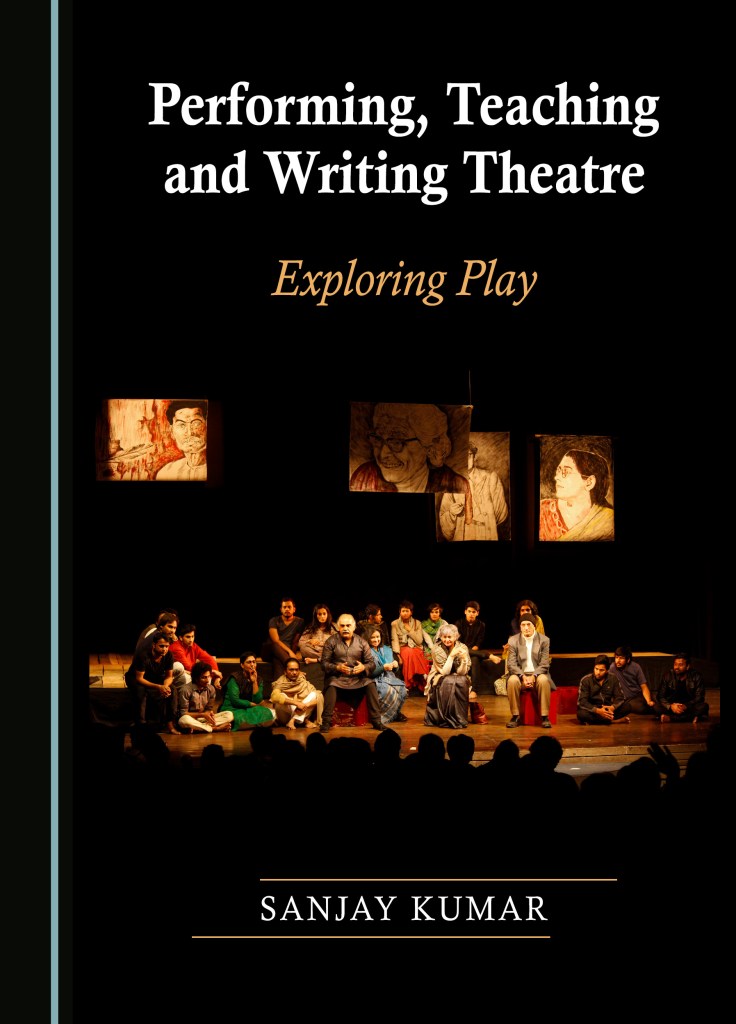
Title: Performing, Teaching and Writing Theatre: Exploring Play

Author: Sanjay Kumar

Publisher: Cambridge Scholar’s Publishing

A SUMMING UP / AN OPENING OUT

The ludic journey has taken us playing through performing, studying, researching, teaching, and writing theatre. It is a specific, experience-based journey, but it has a vastness and a depth that is just about beginning to reveal itself. The one thing that is clear is that creating theatre is an exercise in seeking an alternate way of life, constantly activist and constantly developmental.

Challenging the hegemonic crust, showing it to be the veneer that it is, theatre is the voice of all the diversity that lies beneath. Inimical to the state, in its purer, stronger, manifestations it questions all forms of authority, and beyond that, exposes the fallacies that constitute the very framing of authority. It is the reply to authoritarianism, and at best, often the only means to express the perspective of the unheard. It leads from the front against oppression and repression and becomes a vehicle for the two rudimentary rights of all thinking beings, the right to say ‘no’ and the right to question ‘why’. Hated by religious bigots, theatre is against the orthodox and the patriarchal, and also against the ossification of the radical, showing progress to be a verb in progress rather than an arrived noun. It is a performance that constantly seeks to outperform the deals dealt out to it.

A form existing as text, theory, and praxis from times immemorial, theatre integrally ties in with the histories of its times. Wallowing in many such oxymorons, theatre is historical in being located in its specific history and has a trans-historical dimension in being the perennial naysayer. And as the world sinks to newer levels of fascist authoritarianism, and detentions, arrests and persecutions abound, theatre reverts to metonymies, fantasies, dystopias and historical allegories to keep the fight going. All kinds of decadence are its target, from the toxic masculine to the religious bigot to capitalist power, theatre can, and does, oppose them all. Its biggest enemy remains the fascist, authoritarian, capitalist state in all its avatars, and it is possibly the best weapon against it.

The provisional aspect of its outcomes makes it capable of dealing with the ossified layers of its world and seeking alternate questions and meanings, continuing to show that the meanings that are rooted in hegemonic formations erode in time. An incomplete and malleable form, its multilayerity gives it the flexibility to explore diverse facets of the same reality.

The capitalist and the fascist seek to keep us entrapped in cocoons. Theatre, however, links people, it is a reaching out, and its transboundary aspect makes it possible for it to acquire an international dimension and combat the internationalism of the market. The history of theatre evidences its relative insularity to the forces of capitalism. After a capitalist takeover of our world, clearly since the 19th century in the west, and then in India, all over the world there exist traditions of theatre that prioritize working in the margins, and acquire a razor edge in showing the political through the prism of the peripheral. Critiquing the money-oriented world is where realism began, and the kind of distancing that left-wing theatre creates from this orientation takes the critique much further.

In our world, proscenium theatre can serve as a point of intersection between dominant processes and dominant policy making on the one hand, and the needs of the margins on the other. The pandies’ experience shows this across the class and gender divides, and in undermining notions of dominance and supremacism. Its strength lies in creating mutually performative playful zones where the audience goes along with the performing unit and sees through its own blindness to realize how easy it is to pass a lie as truth and vice versa. The creation of a developmental zone of shared ideology between the unit and the audience is the key to successful proscenium theatre. The challenge of theatre becomes to outperform and reach out to the class and power other. In its taking on of hegemony, it has the potential to be confrontationist. The challenge to regression can be outright or with subterfuge, as seen in the use of Manto by pandies’. Negotiating with those in power, the proscenium is also the space to impact the young privileged, to impact enough to use better, more inclusive paths, enabling us to make better decisions for the future. It is the perfect site for advocacy — social, medical, and even legislative. Its effectivity gains manifold if the performing unit makes a conscious effort to overcome, or at least mitigate, the class barrier, to get underprivileged voices in. This enables the margins to better penetrate hegemonic structures and provide leads to better courses of development.

With workshop-based theatre, we move into a zone that is probably most conducive to alternate formulations of amelioration and development. It opens the doors between the mainstream and its margins and enables those stories to come in, and it’s no longer a diseased margin that needs cure but a vital, throbbing entity with its own claims to be heard and developed on its own terms. This is the real site of out-performing, setting the problems and getting possible processes for solutions. The age-old problem is reframed in bold frieze – can those sitting in positions of power redress the problems of the disempowered? Can they even identify the problems holistically? On the margins, it gives the space to voice its position about its problems and judge back the power structures that profile it. One needs to give in to alterity, to at least a feeling that some of our fundamentally held beliefs can be wrong, or at the very least not pertaining to those away from the mainstream.

When we look at the workshops with the youth in Nithari, and with the platform boys, the certitudes of dominant classes get irrevocably displaced. The participants perform in all senses of the verb. And via proscenium theatre, these voices penetrate the mainstream. They raise new questions and review old problems. Co-ordinates of family, religion, and a good life do not hold any certitude for those in the margins. It stands bare that the system’s ameliorative processes are for the dominant only, and those in the margins continue to be used and exploited. And there is the special relationship between the facilitator and the participants that forms the core of understanding needs and moving towards possible methodologies of development.

Theatre assumes penetrative insights as one creates with communities in zones of conflict and war. Its potential in zones of war, not simply of usual peace processes but of understanding the conflict and seeking solutions from the engaged parties together is still untapped, as shown by the Kashmir experiences. The pioneer process showed possibilities in theatre, at par with workshopping at Nithari and with platform children. In zones of war, its characteristics become stronger and more capable, the defiance of an authoritative perspective, of not taking of one discourse as the final statement, the fluidity of negotiating binaries becomes a mode of understanding and bringing opposite positions closer. Again, voices that are totally removed in times of war, those of women and children, come to the fore and add perspectives to what is felt, and what is required. The process of theatre repeatedly showed that beneath the veneer of hegemonic dominant voices the suppressed voices wanted a cessation, of war, of conflict, of misery, of one and all. The incompleteness of theatre matches the incompleteness of the process, the bumps, the changes, the veering possibilities. Penetrating the chest-thumping veneer, it seeks out the vulnerability and takes us often, as elsewhere, into desire and imagination, the two sources capable of taking on most conflicts. Suspicion and hatred slowly give way to older traditions of love and togetherness. And there is potential for turning any, even loose, agenda on its head, as the workshop with the Sopore pelters showed. There is a kind of immediacy to the process. The form dips so much into the participants’ collective thought process and depends so much on what emerges from there, that it is this collectivity that at that moment forms the narrative.

All political formations seek to prescribe or proscribe theatre, and theatre exists in subversion, subterfuge, and open rebellion. Closer to our understanding of historical processes, theatre’s role has been more caustic as nations veer towards a right-swinging, fascist combination of patriarchy, religion, and capitalism, theatre has had to bite in hard. The proscenium theatre has played, and continues to play, its vital role, but it’s really theatre that emanates from various communities and underserved social formations that the more disturbing and relevant modes of theatre emerge. Arousing our critical faculties theatre goes places. The whole holistic mythos of the bourgeois success narrative from school to profession; the bigotry of all religions; legal, medical and social interventions — all are under its purview. And creating unique developmental zones in our societies it nudges to outperform ourselves, look beyond the decadent ideological frames of the worlds we inhabit, and seek out, or rather make, newer, better worlds.

About the Book:

Drawing on the writer’s experience of three and a half decades of performing, teaching and writing theatre, this book explores the performance practice of a theatre group (pandies’ theatre, Delhi) by placing this practice in a frame of international activist theatre movements. The teaching aspect provides a historical backdrop and the writing of plays adds depth and sharpens the political position. It identifies theatre as a force for changing society across the centuries and beyond national borders. The book examines a large variety of theatrical experiences, including well-known forms of proscenium, workshop and street theatre.

About the Author:

Sanjay Kumar has been part of the International Residency Programme at the Rockefeller Centre, Bellagio, Italy and an alum of the prestigious, US Government’s IVLP (International Visitors Leadership Program) and is the recipient of Delhi University’s (Vice Chancellor’s) Distinguished Teacher Award in 2009.

PLEASE NOTE: ARTICLES CAN ONLY BE REPRODUCED IN OTHER SITES WITH DUE ACKNOWLEDGEMENT TO BORDERLESS JOURNAL. 

Click here to access the Borderless anthology, Monalisa No Longer Smiles
Categories
Poetry

Colours by Ron Picket

Courtesy: Creative Commons
I LOVE COLOUR

The dawn sun reflects from windows across the valley.
It makes me warm with excitement.
I love colour; I always have.
I love the yellow-green of newly erupted leaves in the sun.
I love the red straws of the bottle brush
I love neutral greys, taupes, and tans -- 
Not so much for themselves,
But for the setting they give to oranges and deep chocolate browns. 
I love the blue-grey of shadows -- for their colour,
And for the shape they give.
I love the ruby red of a laser; the brilliant green of an LED – 
They’re new colours and most of humanity will not recognise them.
I love fluorescent lights for the different way they offer to see things.
I marvel at a field of ranunculus, or lavenders, or tulips.
I love a field of rows of corns or beans or lettuces.
I am delighted by the blues of roofs in Santorini and doors in Egypt.
Of the cerulean blue of the sky.
And the unworldly iridescence of a moth’s wing.
Colour, don’t know what I’d do without it!

Ron Pickett is a retired naval aviator with over 250 combat missions and 500 carrier landings. His 90-plus articles have appeared in numerous publications. He enjoys writing fiction and has published five books: Perfect Crimes – I Got Away with It, Discovering Roots, Getting Published, EMPATHS, and Sixty Odd Short Stories.

.

PLEASE NOTE: ARTICLES CAN ONLY BE REPRODUCED IN OTHER SITES WITH DUE ACKNOWLEDGEMENT TO BORDERLESS JOURNAL

Click here to access the Borderless anthology, Monalisa No Longer Smiles