Categories
Contents

Borderless April, 2024

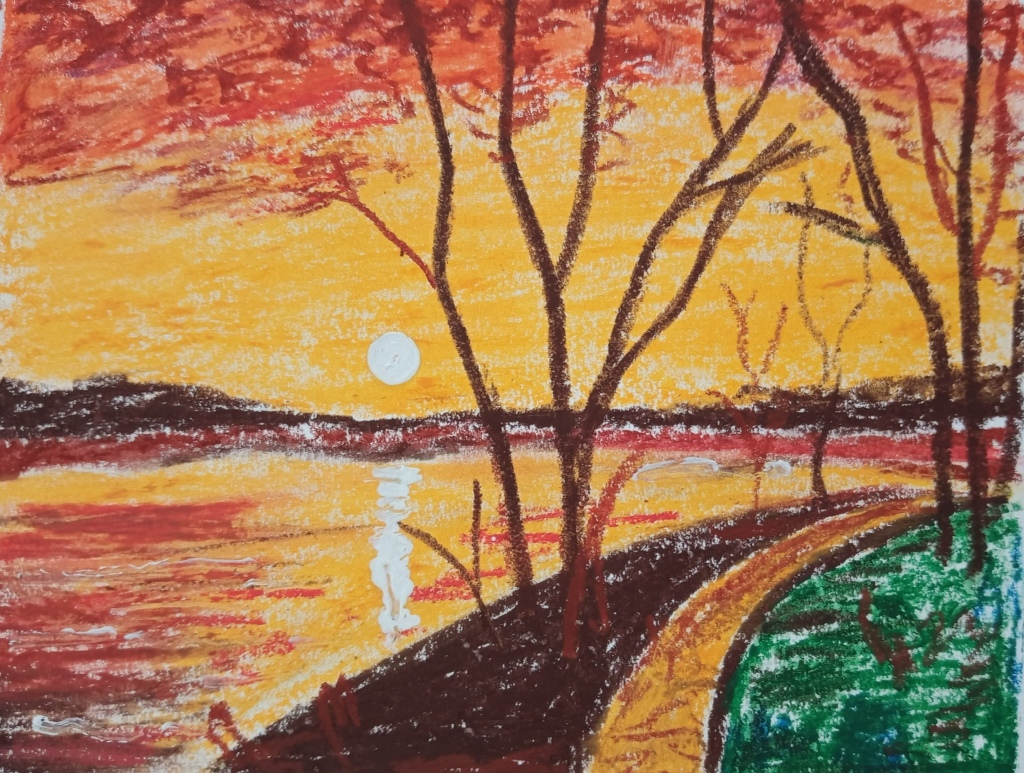
Art by Sohana Manzoor

Editorial

April Showers… Click here to read.

Translations

Baraf Pora (Snowfall) by Rabindranath Tagore, gives a glimpse of his first experience of snowfall in Brighton and published in the Tagore family journal, Balak (Children), has been translated from Bengali by Somdatta Mandal. Click here to read.

Himalaya Jatra ( A trip to Himalayas) by Tagore, has been translated from his Jibon Smriti (1911, Reminiscenses) by Somdatta Mandal from Bengali. Click here to read.

Bhumika (Introduction) by Tagore has been translated from Bengali by Ratnottama Sengupta. Click here to read.

The Fire-grinding Quern by Manzur Bismil has been translated from Balochi by Fazal Baloch. Click here to read.

The Tobacco Lover by Ihlwha Choi has been translated from Korean by the poet himself. Click here to read.

Pochishe Boisakh (25th of Baisakh) by Tagore(1922), has been translated from Bengali by Mitali Chakravarty. Click here to read.

Pandies Corner

Songs of Freedom: Dear Me… is an autobiographical narrative by Ilma Khan, translated from Hindustani by Janees. These narrations highlight the ongoing struggle against debilitating rigid boundaries drawn by societal norms, with the support from organisations like Shaktishalini and pandies’. Click here to read.

Poetry

Click on the names to read the poems

Michael Burch, Kirpal Singh, Scott Thomas Outlar, Nusrat Jahan Esa, George Freek, Snigdha Agrawal, Phil Wood, Pramod Rastogi, Stuart McFarlane, Ahmad Al-Khatat, Shamik Banerjee, Ryan Quinn Flanagan, Lisa Sultani, Jenny Middleton, Kumar Bhatt, Rhys Hughes

Poets, Poetry & Rhys Hughes

In The Desk, Rhys Hughes writes of his writerly needs with a speck of humour. Click here to read.

Musings/Slices from Life

Heatwave & Tagore

Ratnottama Sengupta relates songs of Tagore to the recent heatwave scorching Kolkata. Click here to read.

The Older I get, the More Youthful Feels Tagore

Asad Latif gives a paean in prose to the evergreen lyrics of Tagore. Click here to read.

No Film? No Problem

Ravi Shankar takes us through a journey of cameras and photography, starting with black and white films. Click here to read.

Musings of a Copywriter

In Witches and Crafts: A Spook’s Tale, Devraj Singh Kalsi finds a ghostly witch in his library. Click here to read.

Notes from Japan

In Of Peace and Cheese, Suzanne Kamata gives us a tongue in cheek glimpse of photo-modelling mores. Click here to read.

Essays

Discovering Rabindranath and My Own Self

Professor Fakrul Alam muses on the impact of Tagore in his life. Click here to read.

The Lyric Temper

Jared Carter explores the creative soul of poets through varied times and cultures. Click here to read.

Bengaliness and Recent Trends in Indian English Poetry: Some Random Thoughts

Somdatta Mandal browses over multiple Bengali poets who write in English. Click here to read.

Stories

Hope is the Waking Dream of a Man

Shevlin Sebastian gives a vignette of life of an artist in Mumbai. Click here to read.

Viceregal Lodge

Lakshmi Kannan explores patriarchal mindsets. Click here to read.

The Thirteen-Year Old Pyromaniac

Paul Mirabile gives a gripping tale about a young pyromaniac. Click here to read.

Conversation

Ratnottama Sengupta in conversation about Kitareba, a contemporary dance performance on immigrants, with Sudarshan Chakravorty, a choreographer, and founder of the Sapphire Dance Company. Click here to read.

Book Excerpts

An excerpt from Jessica Mudditt’s Once Around the Sun – From Cambodia to Tibet. Click here to read.

An excerpt from Bhaskar Parichha’s Biju Patnaik: The Rainmaker of Opposition Politics. Click here to read.

Book Reviews

Meenakshi Malhotra reviews Mahasweta Devi: Writer, Activist, Visionary, edited by Radha Chakravarty. Click here to read.

Basudhara Roy reviews Out of Sri Lanka: Tamil, Sinhala and English Poetry from Sri Lanka and its Diasporas, edited by Vidyan Ravinthiran, Seni Seneviratne, Shash Trevett. Click here to read.

Swagata Chatterjee reviews Sanjukta Dasgupta’s Ekalavya Speaks. Click here to read.

Bhaskar Parichha reviews Bhang Journeys: Stories, Histories, Trips and Travels by Akshaya Bahibala. Click here to read.

.

Click here to access the Borderless anthology, Monalisa No Longer Smiles

Click here to access Monalisa No Longer Smiles on Amazon International
Categories
Review

Voices from Beyond

Book Review by Swagata Chatterjee

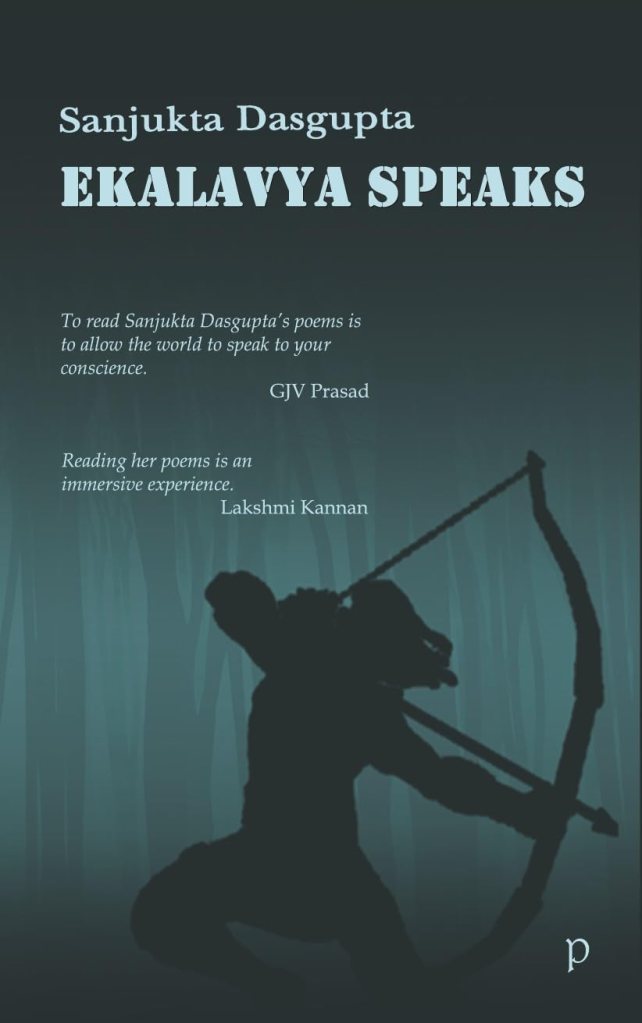
Title: Ekalavya Speaks

Author: Sanjukta Dasgupta

Publisher: Penprints

Poetry which goes beyond the boundaries of words and speaks for a greater cause calls for a captivating read. The lines become more significant when the verses address multiple socio-politico-cultural issues, aesthetically and without didacticism. Poet and academician Sanjukta Dasgupta’s latest book of poems Ekalavya Speaks is not merely a gathering of words, they rather, “[…] spread out their wings untiring/ And never rest in their flight” (Yeats) and attempt to hark at deaf ears and represent unheard voices. She is a strong voice for the otherized, marginalised sections raising issues from multiple spheres of life. Caste, gender, myth, history, pre-history, and technology all find space in her chosen selection of poems. The very last lines of the first poem, ‘Accident of Birth’ says,

“No accident could be 
More catastrophic than
The accident of birth, alas.”

This sets the tone of the whole collection, bringing out the angst of not one voice or one poet but an entire nation. The poet is a strong voice, at times ironic as she says in her titular poem ‘Ekalavya Speaks’-

“The Sun also Rises for us
I may claim your thumb some day.”

These lines are from Dronacharya, the tutor of the royal princes who asks his disciple to gift him his thumb after lopping it off  as a fee to maintain his allegiance to the throne. Ekalavya, the tribal prince could not question the ‘guru’ in the Mahabharata, whereas the poet in the surreal space gives him the voice to speak for the treachery of the great guru. The guru reappears in the poem ‘Dronacharya: The Teacher of Princes’ where questions are thrown at the intentions of a biased guru who was  “The glamourised bonded labour/ Leashed to the regal court.”

Her poem, ‘Kurukshetra-The Killing Field’, goes beyond the boundaries of territories and is akin to any war where lives are lost. At once Kurukshetra becomes the battleground of Ukraine or Gaza where humanity is killed every day. The crying mothers and wailing children are the same everywhere and they are representatives of the universal sorrow of pain and loss and how peace is a mere myth as “Peace was restored at the price/ of rivers of blood […]”. In fact, ‘In the Holy Land’, she talks of dying children and the toxic air of war-trodden Gaza; of the grief-ridden Bethlehem and Jerusalem.

In her greater narrative, Ekalavya and Karna unite to quest for justice, for a space in the mainstream, and for a better liberated world. In Dasgupta’s poetry,  Ekalavya, Shambuka or Shikhandi are not figures from the great epics, they represent the backwards sections of society who perhaps after eons of silence they have now found the time to come out of death, saying– “ I rise from my ashes/ Resurrected!”

With Shikhandi, Draupadi’s brother in the Mahabharata, who was born a female and exchanged gender with a yaksha (nature spirit) for that of a male, Dasgupta brings in the suffering caused by gender identity. She sensitively writes about Oscar Wilde’s homosexuality in her poem ‘The Poet In Reading Gaol’. One’s sexual orientation can ironically be treated as a heinous crime. Heterogeny is also a kind of capitalism as the poet strongly urges and questions progressiveness and maligning of human rights.

In her earlier books Lakshmi Unbound, Sita’s Sisters, and Indomitable Draupadi. Dasgupta has primarily addressed the feminist question. Her latest includes poems like ‘Bapu’ and ’Manipur’. In ‘Bapu’, she talks about the rape of a 12-year-old child in the name of religion in India with sensitivity.

‘The Coffee Shop’ is an interesting and ironic poem. Dead leaders meet in a surreal space where neither murderer nor violence can touch them. They are ‘immortals’ and ‘martyrs’ and, now, are even invincible. It is utopian when Gandhi, Jesus, Martin Luther, and Julius Caesar meet each other. Religion and politics, peacemakers and warriors, all blend in a higher realm of understanding. The flavour of this poem is unique and different from the rest of the poems in the collection and yet thematically it stands out as a statement against violence and death. Death cannot bring an end to the ones whose deeds and ideals are immortal. The same can be said about another visionary poem, ‘Shakespeare and Kalidasa’.

In all the poems, the poet comes across as a strong, sensitive voice whose pen cuts across dogmas, blind faiths, violence and otherization. At the same time, she speaks for the cause of humanity. There are personal poems, like ‘I can’t breathe’; a brilliant poem describing psychological claustrophobia in a world where no peace or no prayers can end the suffering of souls. ‘The Exit’ or ‘Loss’ add richer gravity .

As a poet Dasgupta’s language is lucid and she draws her allusions and examples from the myths, from the past and the projected the future. She strongly voices her opinion. As an educator and as a responsible human being she becomes the voice of the many. Each poem unfolds a story to guides our way through obstructions, which are not physical but mental barriers from which one must liberate oneself. As I read her, I am reminded of a few lines by the great Urdu poet, Faiz Ahmad Faiz, who wrote:

Speak, your lips are free.
Speak, it is your own tongue.
Speak, it is your own body.
Speak, your life is still yours.

Swagata Chatterjee is an Assistant Professor of English at a state-aided college under Vidyasagar University. She is an academician and a keen reader.

.

PLEASE NOTE: ARTICLES CAN ONLY BE REPRODUCED IN OTHER SITES WITH DUE ACKNOWLEDGEMENT TO BORDERLESS JOURNAL

Click here to access the Borderless anthology, Monalisa No Longer Smiles

Click here to access Monalisa No Longer Smiles on Kindle Amazon International