Categories
Interview Review

Of Wanderers and Migrants & Anuradha Kumar

A review of Anuradha Kumar’s Wanderers, Adventurers, Missionaries: Early Americans in India (Speaking Tiger Books) and an interview with the author

Migrants and wanderers — what could be the differences between them? Perhaps, we can try to comprehend the nuances. Seemingly, wanderers flit from place to place — sometimes, assimilating bits of each of these cultures into their blood — often returning to their own point of origin. Migrants move countries and set up home in the country they opt to call home as did the family the famous Indian actor, Tom Alter (1950-2017).
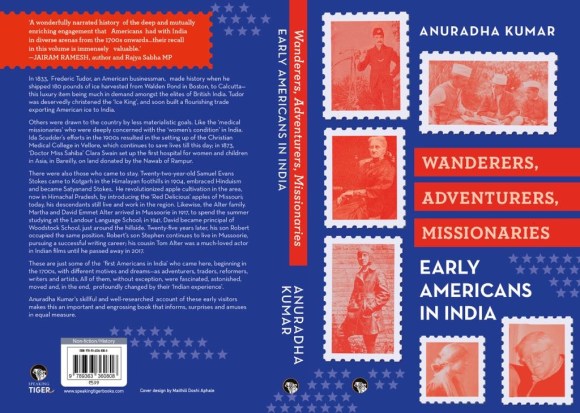
Anuradha Kumar’s Wanderers, Adventurers, Missionaries: Early Americans in India captures the lives and adventures of thirty such individuals or families — including the Alter family — that opted to explore the country from which the author herself wandered into Singapore and US. Born in India, Kumar now lives in New Jersey and writes. Awarded twice by the Commonwealth Foundation for her writing, she has eight novels to her credit. Why would she do a whole range of essays on wanderers and migrants from US to India? Is this book her attempt to build bridges between diverse cultures and seemingly diverse histories?

As Kumar contends in her succinct introduction, America and India in the 1700s were similar adventures for colonisers. In the Empire Podcast, William Dalrymple and Anita Anand do point out that the British East India company was impacted in the stance it had to colonisers in the Sub-continent after their experience of the American Revolution. And America and India were both British colonies. They also were favourites of colonisers from other European cultures. Just as India was the melting pot of diverse communities from many parts of the world — even mentioned by Marco Polo (1254-1324) in The Kingdom of India — America in the post-Christopher Columbus era (1451-1546) provided a similar experience for those who looked for a future different from what they had inherited. The first one Kumar listed is Nathaniel Higginson (1652-1708), a second-generation migrant from United Kingdom, who wandered in around the same time as British administrator Job Charnock (1630-1693) who dreamt Calcutta after landing near Sutanuti[1].

Kumar has bunched a number of biographies together in each chapter, highlighting the commonality of dates and ventures. The earliest ones, including Higginson, fall under ‘Fortune Seekers From New England’. The most interesting of these is Fedrick Tudor (1783-1864), the ice trader. Kumar writes: “In Calcutta, Dwarkanath Tagore, merchant and patron of the arts (Rabindranath Tagore’s grandfather), expressed an interest to involve himself in ice shipping, but Tudor’s monopoly stayed for some decades more. Tagore was part of the committee in Calcutta along with Kurbulai Mohammad, scion of a well-established landed family in Bengal, to regulate ice supply.”

Also associated with the Tagore family, was later immigrant Gertrude Emerson Sen (1890-1982, married to Boshi Sen). She tells us, “Tagore wrote Foreword to Gertrude Emerson’s Voiceless India, set in a remote Indian village and published in 1930. Nobel Laureate Rabindranath Tagore called Emerson’s efforts, ‘authentic’.” She has moved on to quote Tagore: “The author did not choose the comfortable method of picking up information from behind lavish bureaucratic hospitality, under a revolving electric fan, and in an atmosphere of ready-made social opinions…She boldly took in on herself unaided to  enter a region of our life, all but unexplored by Western tourists, which had one great advantage, in spite of its difficulties, that it offered no other path to the writer, but that of sharing the life of the people.’” Kumar writes of an Afro-American scholar, called Merze Tate who came about 1950-51 and was also fascinated by Santiniketan as were some others.

Another name that stuck out was Sam Higginbottom, who she described as “the Farmer Missionary” for he was exactly that and started an agricultural university in Allahabad. Around the same time as Tagore started Sriniketan (1922), Higginbottom was working on agricultural reforms in a different part of India. In fact, Uma Dasgupta mentions in A History of Sriniketan: Rabindranath Tagore’s Pioneering work in Rural Reconstruction that Lord Elimhurst, who helped set up the project, informed Tagore that “another Englishman” was doing work along similar lines. Though as Kumar has pointed out, Higginbottom was a British immigrant to US — an early American — and returned to Florida in 1944.

There is always the grey area where it’s difficult to tie down immigrants or wanderers to geographies. One such interesting case Kumar dwells on would be that of Nilla Cram Cook, who embraced Hinduism, becoming in-the process, ‘Nilla Nagini Devi’, as soon as she reached Kashmir with her young son, Sirius. She shuttled between Greece, America and India and embraced the arts, lived in Gandhi’s Wardha ashram and corresponding with him, went on protests and lived like a local. Her life mapped in India almost a hundred years ago, reads like that of a free spirit. At a point she was deported living in an abject state and without slippers. Kumar tells us: “Her work according to Sandra Mackey combined ‘remarkable cross-cultural experimentation’ and ‘dazzling entrepreneurship.’”

The author has written of artists, writers, salesmen, traders (there’s a founder/buyer of Tiffany’s), actors, Theosophists, linguists fascinated with Sanskrit, cyclists — one loved the Grand Trunk Road, yet another couple hated it — even a photographer and an indentured Afro-American labourer. Some are missionaries. Under ‘The Medical Missionaries: The Women’s Condition’, she has written of the founders of Vellore Hospital and the first Asian hospital for women and children. Some of them lived through the Revolt of 1857; some through India’s Independence Movement and with varied responses to the historical events they met with.

Kumar has dedicated the book to, “…all the wanderers in my family who left in search of new homes and forgot to write their stories…” Is this an attempt to record the lives of people as yet unrecorded or less recorded? For missing from her essays are famous names like Louis Fischer, Webb Miller — who were better known journalists associated with Gandhi and spent time with him. But there are names like Satyanand Stokes and Earl and Achsah Brewster, who also met Gandhi. Let’s ask the author to tell us more about her book.

Anuradha Kumar

What made you think of doing this book? How much time did you devote to it? 

These initially began as essays for Scroll; short pieces about 1500-1600 words long. And the beginnings were very organic. I wrote about Edwin Lord Weeks sometime in 2015. But the later pieces, most of them, were part of a series.

I guess I am intrigued by people who cross borders, make new lives for themselves in different lands, and my editors—at Scroll and Speaking Tiger Books—were really very encouraging.

After I’d finished a series of pieces on early South Asians in America, I wanted to look at those who had made the journey in reverse, i.e., early Americans in India, and so the series came about, formally, from December 2021 onward. I began with Thomas Stevens, the adventuring cyclist and moved onto Gertrude Emerson Sen, and then the others. So, for about two years I read and looked up accounts, old newspapers, writings, everything I possibly could; I guess that must mean a considerable amount of research work. Which is always the best thing about a project like this, if I might put it that way.

What kind of research work? Did you read all the books these wanderers had written?

Yes, in effect I did. The books are really old, by which I mean, for example, Bartolomew Burges’ account of his travels in ‘Indostan’ written in the 1780s have been digitized and relatively easy to access. I found several books on Internet Archive, or via the interlibrary loan system that connects libraries in the US (public and university). I looked up old newspapers, old magazine articles – loc.gov, archive.org, newspapers.com, newspaperarchive.com, hathitrust.org and various other sites that preserve such old writings.

You do have a fiction on Mark Twain in India. But in this book, you do not have very well-known names like that of Twain. Why? 

Not Twain, but I guess some of the others were well-known, many in their own lifetime. Satyanand Stokes’ name is an easily recognisable still especially in India, and equally familiar is Ida Scudder of the Vellore Medical College, and maybe a few others like Gertrude Sen, and Clara Swain too. I made a deliberate choice of selecting those who had spent a reasonable amount of time in India, at least a year (as in the case of Francis Marion Crawford, the writer, or a few months like the actor, Daniel Bandmann), and not those who were just visiting like Mark Twain or passing through. This made the whole endeavour very interesting. When one has spent some years in a foreign land, like our early Americans in India, one arguably comes to have a different, totally unique perspective. These early Americans who stayed on for a bit were more ‘accommodating’ and more perceptive about a few things, rather than supercilious and cursory.

And it helped that they left behind some written record. John Parker Boyd, the soldier who served the Nizam as well as Holkar in Indore in the early 1800s, left behind a couple of letters of complaint (when he didn’t get his promised reward from the East India Company) and even this sufficed to try and build a complete life.

How do these people thematically link up with each other? Do their lives run into each other at any point? 

Yes, I placed them in categories thanks to an invaluable suggestion by Dr Ramachandra Guha, the historian. I’d emailed him and this advice helped give some shape to the book, else there would have been just chapters following each other. And their lives did overlap; several of them, especially from the 1860s onward, did work in the same field, though apart from the medical missionaries, I don’t think they ever met each other – distances were far harder to traverse then, I guess.

What is the purpose of your book? Would it have been a response to some book or event? 

I was, and am, interested in people who leave the comforts of home to seek a new life elsewhere, even if only for some years. Travelling, some decades ago, was fraught with risk and uncertainty. I admire all those who did it, whether it was for the love of adventure, or a sense of mission. I wanted to get into their shoes and see how they felt and saw the world then.

Is this because you are a migrant yourself? How do you explain the dedication in your book? 

I thought of my father, and his cousins, all of whom grew up in what was once undivided Bengal. Then it became East Pakistan one day and then Bangladesh. Suddenly, borders became lines they could never cross, and they found new borders everywhere, new divisions, and new homes to settle down in. They were forced to learn anew, to always look ahead, and understand the world differently.

When I read these accounts by early travellers, I sort of understood the sense of dislocation, desperation, and sheer determination my father, his cousins felt; maybe all those who leave their homes behind, unsure and uncertain, feel the same way.

You have done a number of non-fiction for children. And also, historical fiction as Aditi Kay. This is a non-fiction for adults or all age groups? Do you feel there is a difference between writing for kids and adults? 

I’d think this is a book for someone who has a sense of history, of historical movements, and change, and time periods. A reader with this understanding will, I hope, appreciate this book.

About the latter half of your question, yes of course there is a difference. But a good reader enters the world the writer is creating, freely and fearlessly, and I am not sure if age decides that.

You have written both fiction and non-fiction. Which genre is more to your taste? Elaborate. 

I love anything to do with history. Anything that involves research, digging into things, finding out about lives unfairly and unnecessarily forgotten. The past still speaks to us in many ways, and I like finding out these lost voices.

What is your next project? Do you have an upcoming book? Do give us a bit of a brief curtain raiser. 

The second in the Maya Barton-Henry Baker series. In this one, Maya has more of a lead role than Henry. It’s set in Bombay in the winter of 1897, and the plague is making things scary and dangerous. In this time bicycles begin mysteriously vanishing… and this is only half the mystery!

We’ll look forward to reading a revival of the characters fromThe Kidnapping of Mark Twain: A Bombay Mystery. Thanks for your time and your wonderful books.

.

[1] Now part of Kolkata (Calcutta post 2001 ruling)

Click here to read an excerpt from Wanderers, Adventurers, Missionaries: Early Americans in India

(This review and online interview is by Mitali Chakravarty)

PLEASE NOTE: ARTICLES CAN ONLY BE REPRODUCED IN OTHER SITES WITH DUE ACKNOWLEDGEMENT TO BORDERLESS JOURNAL

Click here to access the Borderless anthology, Monalisa No Longer Smiles

Click here to access Monalisa No Longer Smiles on Kindle Amazon International

Categories
Essay

Where No One Wins or Loses a War…From Lucknow with Love

Narratives and photographs by Prithvijeet Sinha

Talking about Vilayati Bagh as being an isolated cousin among the many gardens and monuments of Lucknow would be feasible given its elusive nature. I say elusive because it is nestled in the lush environs of the cantonment area and forested canopy that lies ahead of Dilkusha Palace which is one of the city’s many frequently visited wonders. Within this canopy lies Vilayati Bagh, “Vilayati”(foreign) referring in no small terms to not only a colonial past but also the stark fact that it is home to three tombs of erstwhile British officers who perished in the high noons of 1857’s First War of Independence. It was only a year ago that I, myself, had the opportunity to go there for the very first time. But that March morning changed everything. I have been there twice already to revel in its tranquility.

Its history is quite like other gardens and leisure spots of Awadh. It was built in the earlier parts of 19th Century by Ghazi Ud-Din Haider[1], the Nawab of Awadh, as a gift for his beloved European consort. During the revolt of 1857, it fell prey to shellings and other bombardments. But like most of Lucknow’s quintessential monuments, the spirit of renaissance did not elude it for long. In the present day, it is still tucked away in its quiet corner, slumbering and awakening for discerning eyes (and minds) who go there to capture crucial echoes of its unique identity.

Flanked by the Gomti close by and a cemetery in the middle of a spacious compound, the property begins its enchanting passage as one takes a straight drive (or walk) from Dilkusha Palace, approaches Kendriya Vidyalaya and then continues to move ahead to encounter a railway crossing, opposite which lies the cantonment granary, quarters and the grand and haunting Bibiapur Kothi. Taking a left turn from that location brings one to the verdure of old, huge trees, a moderately spacious road and pleasant sounds of cicadas and birds. In this pithy journey to Vilayati Bagh, the feeling of time-traveling to a gracious era of architectural elegance comes into sight the moment we reach its immediate premises. A beautiful Sufi dargah bathed in impressive green lies on the left and a few moderate homes of those who probably maintain this compound meet us.

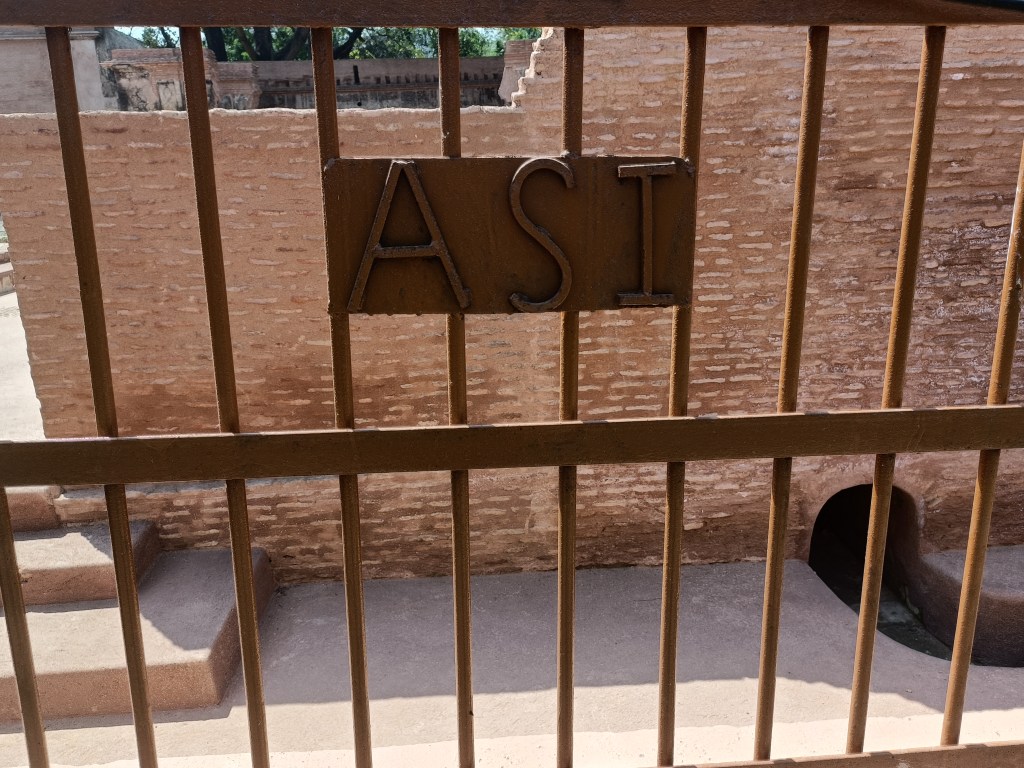
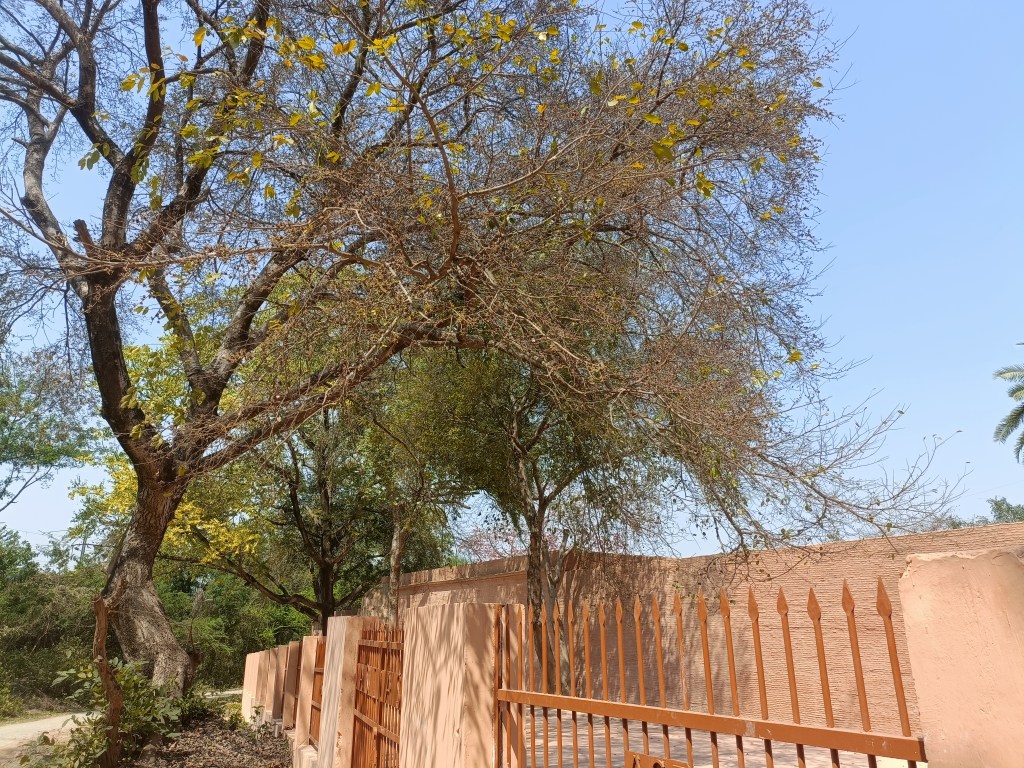
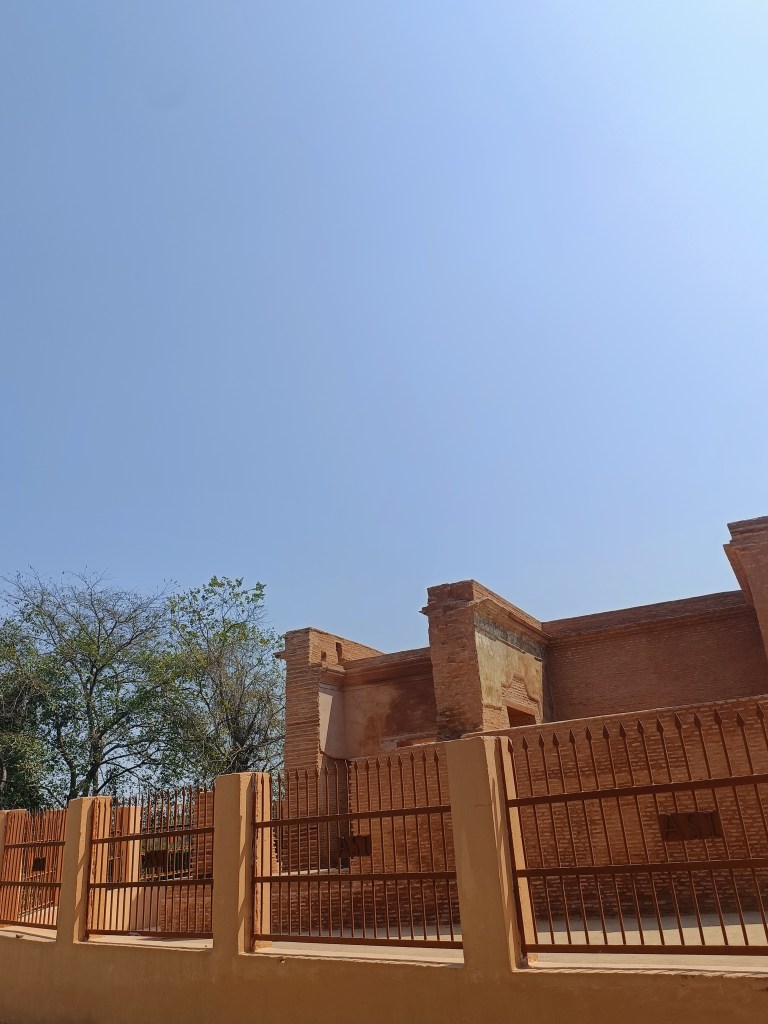
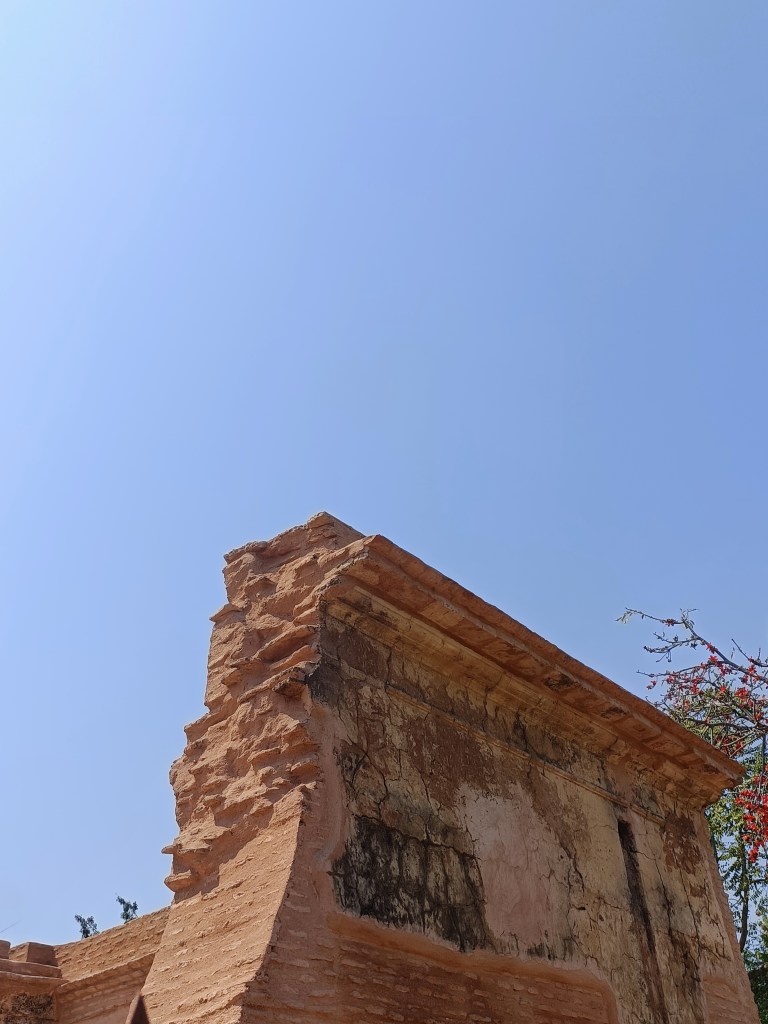
Then the real journey begins. A sophisticated sense of the building blocks of this elusive garden are elucidated by its brown- yellow, almost auburn walls. The lakhauri[2] paint and plaster give it luster on a sunny day. These ramparts retain their history of age, war and past reckonings. Yet it’s the sun that designs their colour schemes in the most sublime shades.  Archeological Survey of India has restored its lost glory in recent years and the result is there for all to see.

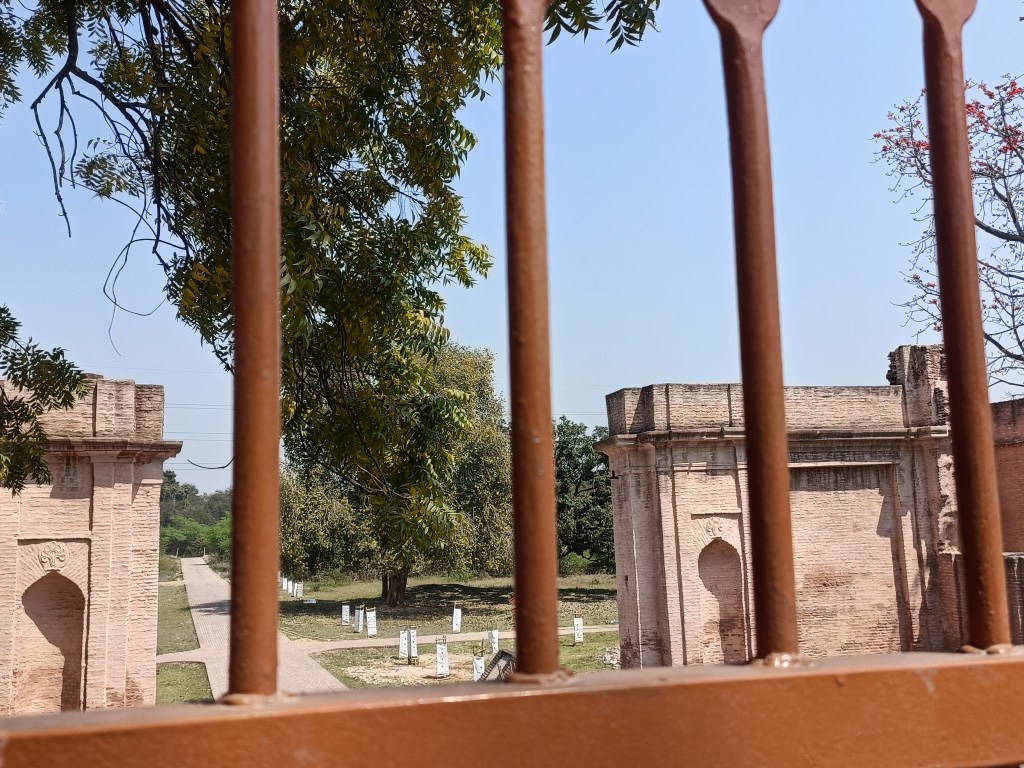
The boundary walls have a sturdy presence and are enclosed by arrow-shaped iron structures painted in pleasant brown. As one explores the interiors of the garden compound, little monoliths, corrugated outer flanks that look like barracks emerge, the exposed bricks red and pink in their sublimity of skin tones. A Y-shaped drain also flanks them. There is an aura of extraordinary peace all around. This isn’t meant to be a tourist spot. This is the one for aesthetes and true aficionados of history. The mind wanders and is arrested by trees whose branches are shaped like pitchforks.

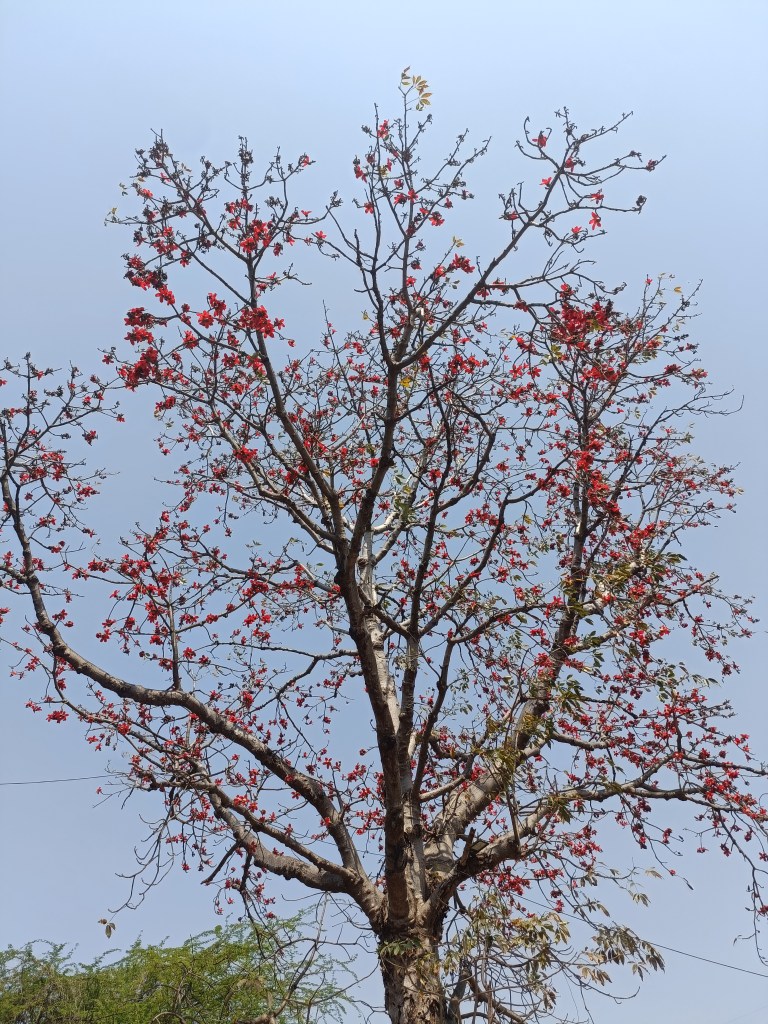
A dargah (miniature Sufi shrine) greets one at the outer end of the compound while a majestic gulmohar tree seems to appear like a tall fellow wearing red scarves. Arches and domes subsist in this sturdy network of walls.

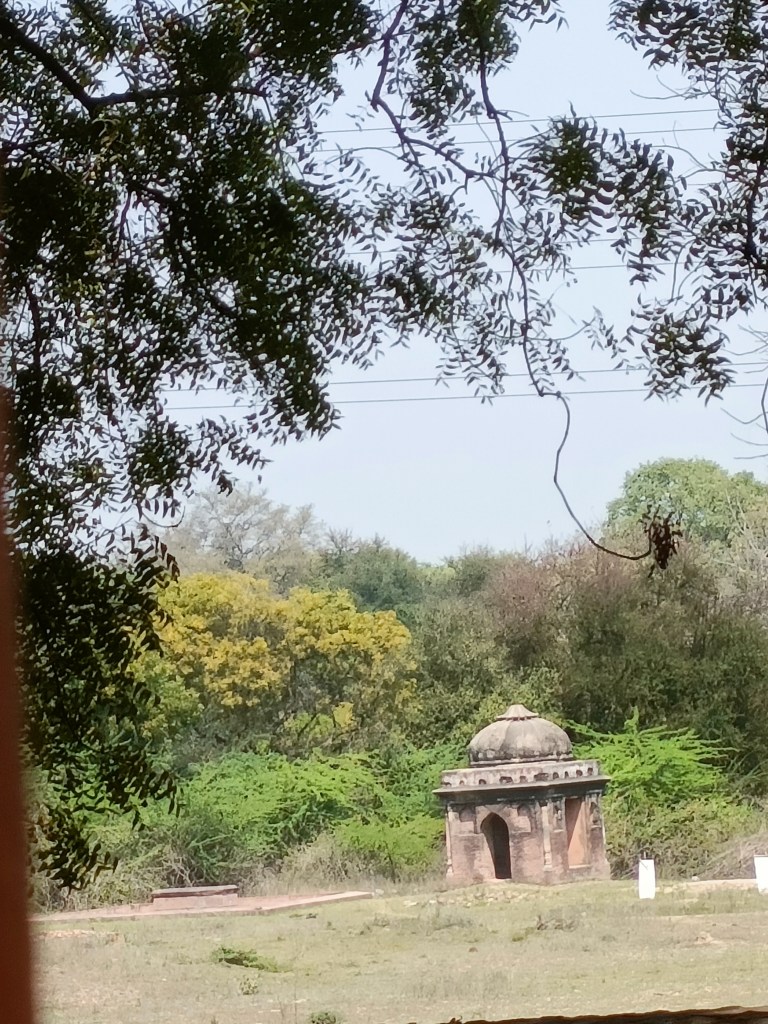
The saga of Vilayati Bagh is one of beauty but the starkness of its melancholy is evident in the cemeteries that lie in a little distance from the main gateway. They belong to fallen English soldiers Henry P. Garvey, Captain W. Helley Hutchinson and Sergeant S. Newman. These tombs are made in the image of a wide basin, crypts depicting that no one side can win or lose a war. Everybody has formidable stakes, and the dead don’t preach the gospel of victory or sombre defeat. Flanking these resting places are miniature pavilions with domes; they are surrounded by white rectangles made from cloth supported by twigs — sobering symbols of lives lost and the unpredictable designations of mortality.

Despite this unique mixture of melancholy and beauty, sobriety reigns. Of course, the obvious euphoria of discovery overrides every other emotion. Lucknow is a city that lives and breathes in such possibilities where a monument or elusive corner of its expanse can prompt an awakening for its discerning residents. Going further than the limitations imposed by acquired knowledge is always a source of deeper reckoning. This garden that houses nature and ghosts of mortality in its inner sanctum gives me another reason to keep my curiosity intact.

[1] Ghazi-ud-Din Haidar Shah (1769-1827), The first King of Oudh and the last Nawab Wazir of Oudh. He started a line of kingship which ended with the exile of Wajid Ali Shah(1822-1887).

[2] Traditional natural ingredients, often dyes or pastes from plants, used for coating buildings in Lucknow

Prithvijeet Sinha  is an MPhil from the University of Lucknow, having launched his prolific writing career by self-publishing on the worldwide community Wattpad since 2015 and on his WordPress blog An Awadh Boy’s Panorama. Besides that, his works have been published in several journals and anthologies. 

PLEASE NOTE: ARTICLES CAN ONLY BE REPRODUCED IN OTHER SITES WITH DUE ACKNOWLEDGEMENT TO BORDERLESS JOURNAL

Click here to access the Borderless anthology, Monalisa No Longer Smiles

Click here to access Monalisa No Longer Smiles on Kindle Amazon International
Categories
Independence Day

Of Midnight’s Children and their Compatriots… 

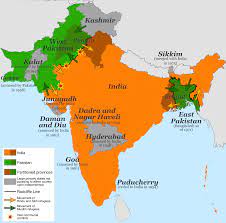
At the stroke of midnight, on 14th-15th August, 1947, the colonials handed the Indian subcontinent back to the indigenous population — but they did not leave it as they had found it. They made changes: some reforms and alterations, like the introduction of railways  helped the subcontinent move towards a better future once the  plundering of raw materials and the transport of British mill cloth halted. However,  the major change which continues to create conflicts in the sub-continent to date was the Partition on the basis of religions. This was initiated by the colonial  policy of divide and rule, which came into play post the revolt of 1857 and is often perpetrated still by the local inheritors of the colonies. Was it justified and does the packaging by the colonials have to be given credence so that the progeny of the ruled keep othering and thinking of differences? 

To help you find answers, we bring to you writings about the days of the Raj like Aruna Chakravarti’s The Mendicant Prince, where the colonials try to deprive a state of its rightful ruler to fill their own coffers, and Premchand’s Pus ki Raat (A Frigid Winter Night) that reflects the sorry state of peasantry under the Raj. Prince or pauper — both suffered.  Voices that pleaded for secularism, like that of Nazrul, Tagore or Gandhi remained unheard by those who drew the lines of division. Bhaskar Parichha tells us in his review: “On his way to Noakhali and in the face of the large-scale massacre, to the question ‘Will Partition Change Us Forever?’ Mahatma Gandhi replied: ‘I have seen more of history than anyone of you, and I tell you that I have known Hindu boys who called Muslims ‘uncle’. Hindus and Muslims used to participate in each other’s festivals and other auspicious occasions.’”

And perhaps this is borne out from the life of Zohra Sehgal, a legendary dancer as reflected by the essay written by Ratnottama Sengupta, based on Ritu Menon’s Zohra: A Biography in Four Acts and her own interactions with the aging performer. Along with these, we have the voices from the present like that of G Venkatesh who finds that the borders may not be what the indigenous population had wanted and Aysha Baqir’s narrative reflecting on the darker aspects of life in the sub-continent.

Poetry

Arise, Arise O Patriot! and Helmsman Attention! by Kazi Nazrul Islam have been translated from Bengali by Professor Fakrul Alam. Click here to read.

Tagore’s Song of Hope or ‘Hobe Joye‘ has been translated from Bengali by Mitali Chakravarty. Click here to read.

Prose

Pus Ki Raat or A Frigid Winter Night by Munshi Premchand has been translated from Hindi by C Christine Fair. Click here to read.

Aruna Chakravarti unfolds through the life of a prince in pre-independence era in her latest novel, The Mendicant Prince, based on the prince of Bhawal controversy in the first part of the last century. Click here to read.

Ratnottama Sengupta gives a glimpse of the life of Zohra Sehgal, based on the book Zohra: A Biography in Four Acts by Ritu Menon, and her own personal interactions with the aging Zohra Sehgal. Click here to read.

In Istanbul, G Venkatesh stops over at the airport to make a friend from the other side of the divide. Click here to read.

In I am Not the End, Aysha Baqir takes on the persona of a computer to unleash a poignant and chilling story based on the darker side of modern living. Click here to read.

Bhaskar Parichha reviews Rakesh Batabyal’s Building a Free India, dynamic speeches by freedom fighters of the last century. Click here to read.

Categories
Tribute

The Thrice Born

Commemorating fifty years of Bangladesh which struggled for the right to freedom from oppression and succeeded finally on 16th December, 1971

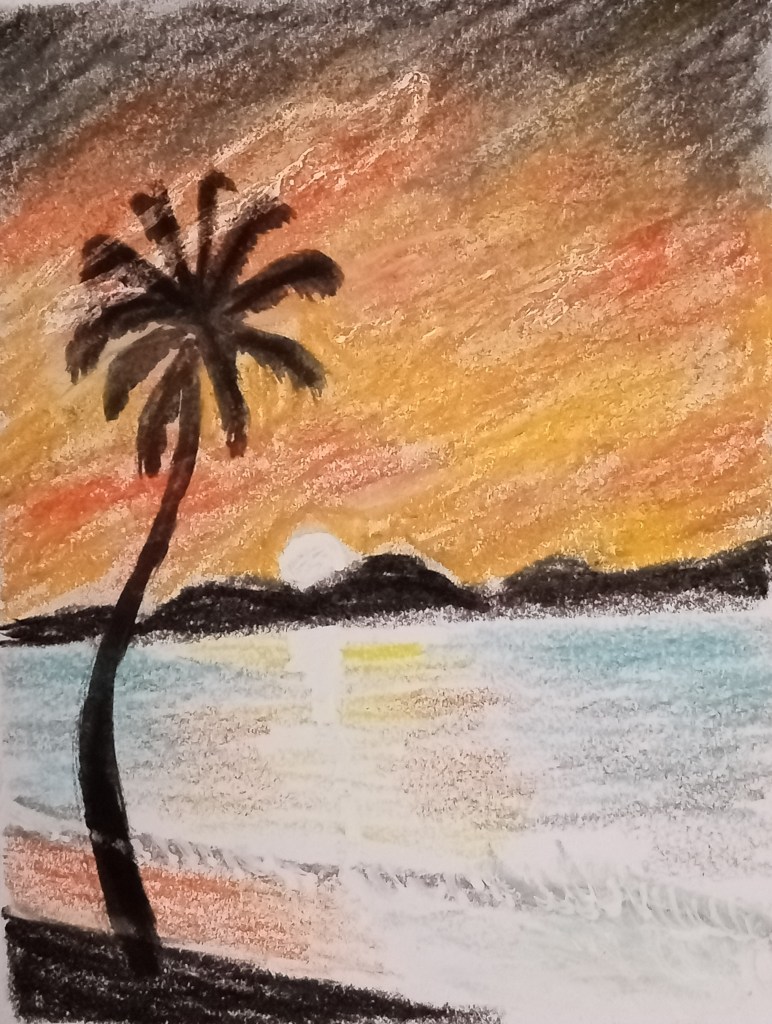
Landscape in Bengal. Painting by Sohana Manzoor

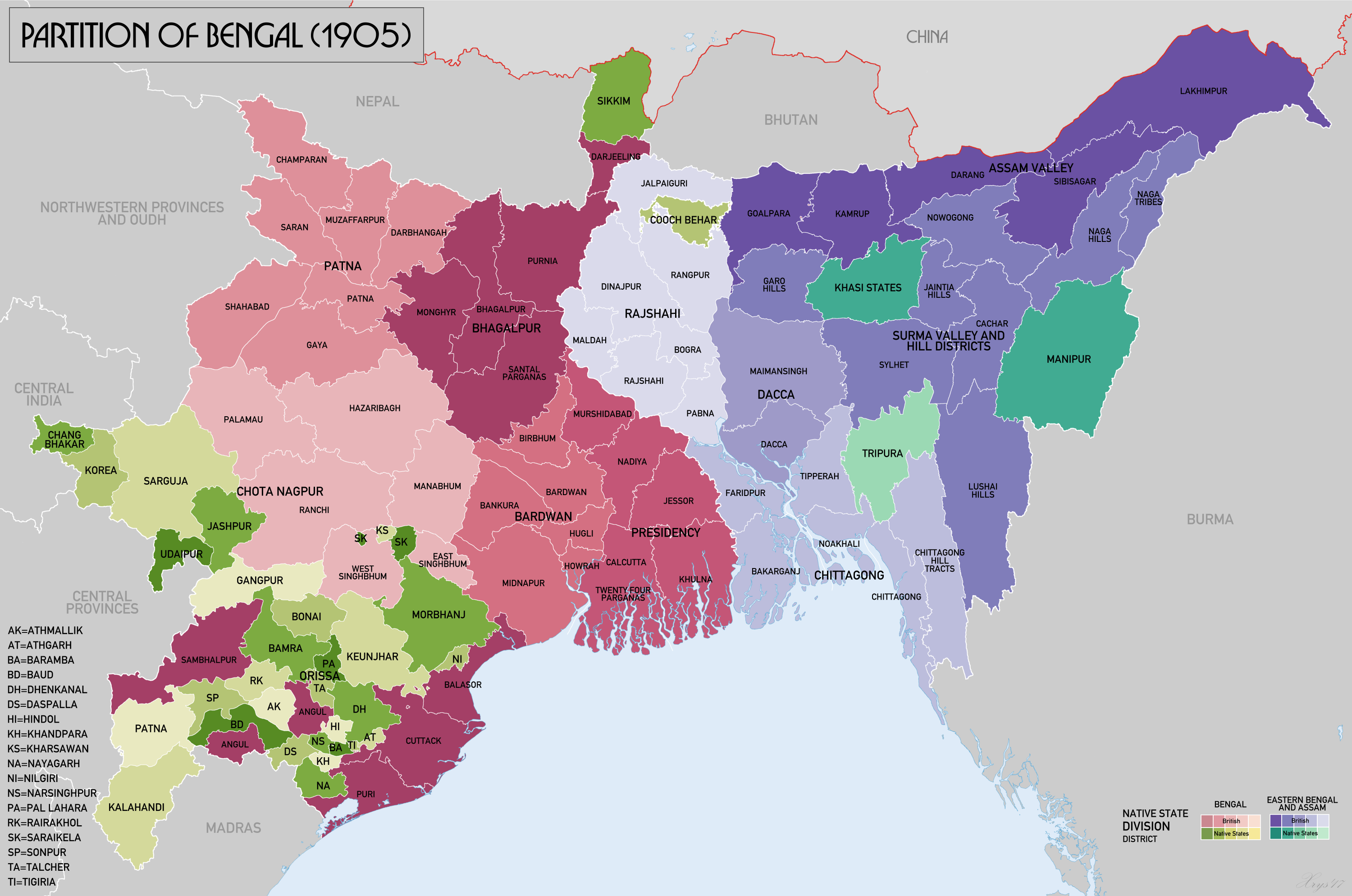
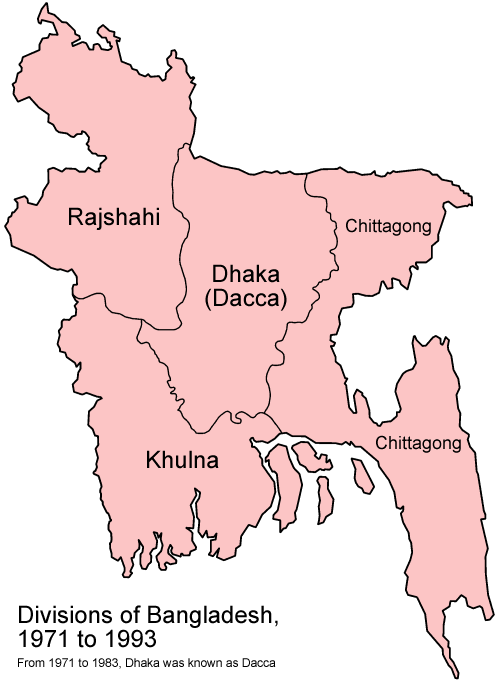
Bengal went through three Partitions, the final one being in 1971, when Bangladesh came to be its own entity. The first Partition of Bengal was in 1905, when Lord Curzon sliced it along the lines of faith, which as Ratnottama Sengupta points out in her musing was the result of the colonial policy of divide and rule implemented along religious lines for earlier when Hindus and Muslims had combined forces against colonials, it took a year to quell the revolt of 1857. Due to opposition from many, including Tagore, the colonials were forced to revoke the Partition in 1911.

In 1947, the subcontinent was again divided along religious lines. So, technically, there was Pakistan and India. Pakistan included East (Bengal) and West. As Fakrul Alam tells us in his essay, the Bengalis resented the imposition of Urdu by Pakistan. After a struggle of three decades, and a war in which India supported East Pakistan and America supported West Pakistan, Bangladesh gained complete independence in 1971 with Sheikh Mujibur Rahman, the founding father of the country, at its helm.

We present to you a glimpse of this part of history as told by various contributors on our forum.

Interview

Professor Fakrul Alam, the translator of Bongobondhu (friend of Bengal) Mujibur Rahman’s autobiography, to takes us on a journey to the inception of Bangladesh and beyond. Click here to read the interview.

Translations

Poetry & Prose of Nazrul extolls the union of all faiths. Known as the ‘rebel’, now the national poet of Bangladesh, he has been translated by Fakrul Alam, Sohana Manzoor and Shahriyer Hossain Shetu. Click here to read.

Prose

The Birth of Bangladesh & the University of Dhaka

Professor Fakrul Alam takes us through the three Partitions of Bengal which ultimately led to the creation of Bangladesh, with focus on the role of Dhaka University. Click here to read.

Joy Bangla: Memories of 1971

Ratnottama Sengupta recaptures vignettes from her past, from across the border where the same language was spoken, some in voices of refugees from East Pakistan to India. Click here to read.

The Voice that Sings Hope through Suffering…

Rakibul Hasan Khan pays a tribute with a twist to a recently deceased Bangladeshi writer, Hasan Azizul Huq, a writer who wrote of the Partition victims. Click here to read.

Golden Bangladesh at 50: Book Review by Aruna Chakravarti

Aruna Chakravarti reviews Golden Bangladesh at 50: Contemporary Stories & Poems edited by Shazia Omar, bringing to focus the Partition between 1905-1911. She also explains the story of the creation of Aamar Shonar Bangla (My Golden Bengal, the Bangladesh National Anthem) by Tagore around this period. Click here to read.

Flash Fiction: In Search of a New Home

Marzia Rahman shares a short narrative about refugees in Bangladesh. Click here to read.

House of the Dead

Sohana Manzoor gives us a glimpse of contemporary Bangladesh in a poignant short story. Click here to read.

Categories
Interview

Bridge over Troubled Waters

In Conversation with Sanjay Kumar, the founder of Pandies, a socially responsible theatre group

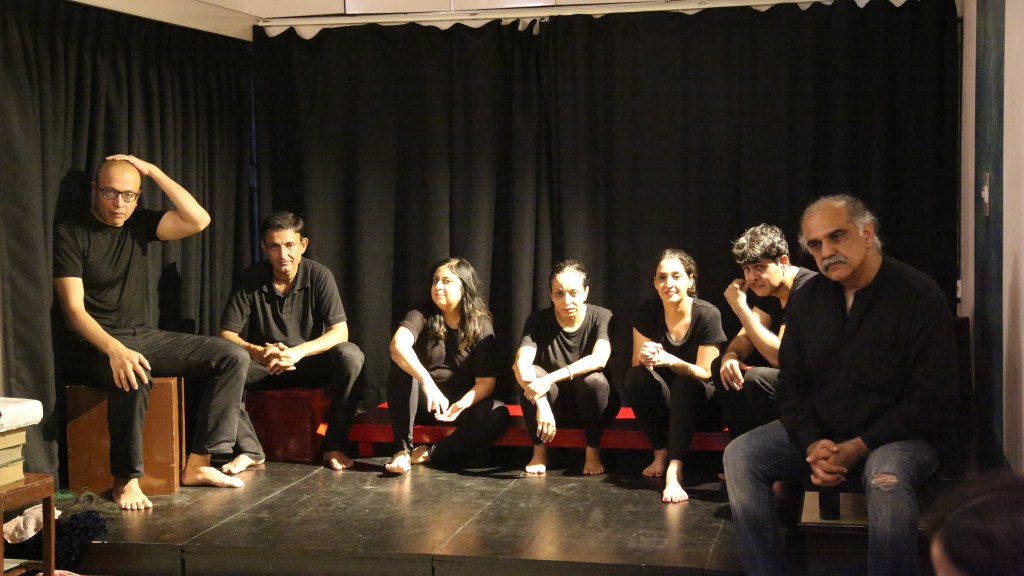
Some members of Pandies, with Sanjay Kumar sitting in the right hand corner.

Festivals often involve pageantry where people connect, reach out and have fun through performances. These can range from high class shows in halls to entertaining performances in street corners, individual buskers or theatricals at home. Brecht (1898-1956), often taught in universities,  popularised socially responsible epic theatre.  Epic theatre connects the players, imbued with welfarism and a sense of social responsibility, to educate the audience, subsequently encouraged to question and move towards altering their present reality to a more egalitarian one. Add to this students who look for more than just academic growth in universities and a young dynamic professor in the 1980s, and the end result is a volunteered ‘institution’ that has blossomed over three decades into a strangely named group – Pandies.

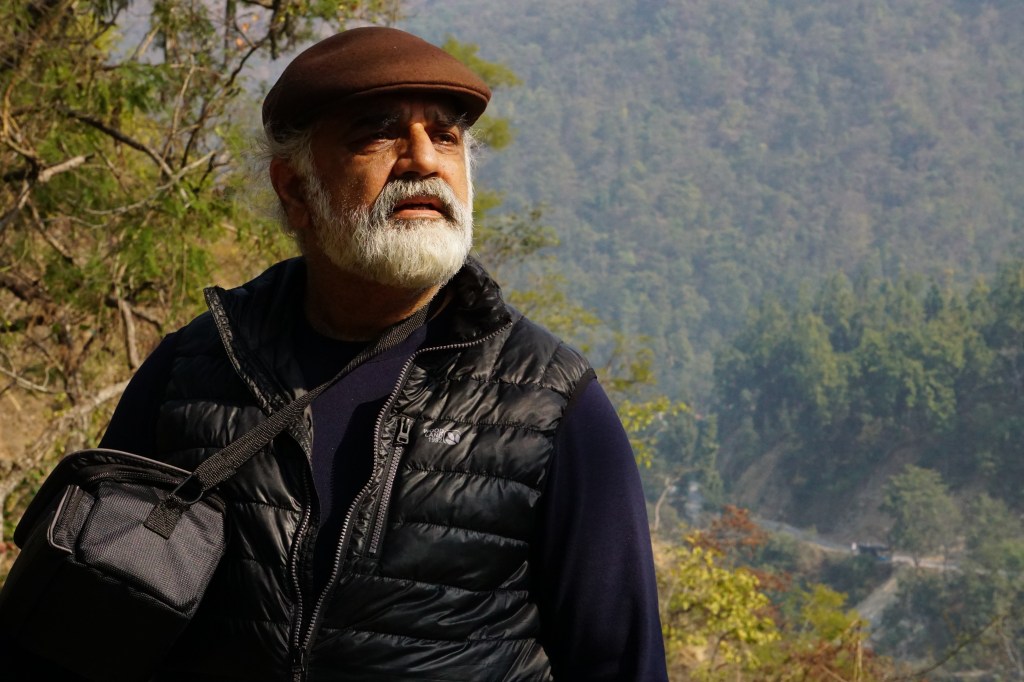
Sanjay Kumar

Founded in 1987 by Sanjay Kumar, an academic from Delhi University with residencies in Italy and the United States for the welfare of exploited children, the group evolved into a major voice trying to reach out to all strata of society. Kumar evolved a form of theatre to channelise the energy of students towards creating an awareness for the need to grow by helping the less fortunate. He tells us by the way of introduction: “We have been working with twenty slums or bastis in Delhi, have had interactions with a hundred schools and about twenty-five colleges. A minimum of hundred presentations are held each year. The major issue till 2000 was gender-sensitisation. Each year, pandies’ latches on to a different theme. After performing in the proscenium theatre, it takes adaptations of the same to diverse places. The group also works on issues related to environment. The adaptable, flexible, bilingual (at times multi-lingual) scripts are totally ours. The group is constantly exploring, searching for better modes to get its meaning across. Songs, dances, choreographed sequences are all a part of its repertoire. One of the most successful modes is an extremely interactive discussion at the end where the activist even narrates relevant anecdotes to get its audience to talk. The group has evolved a mega network in and around Delhi consisting of women, HIV activists, environmentalists, school and college teachers and students, progressive women from various communities including slums, victims of rape, attempted murder.” His work has reached across to multiple countries, universities (including Harvard) and has found credence among number of hearts across the East and the West.

The most impressive performance I saw was online with young refugees from Afghanistan and migrant workers in slums. They have worked with Non-Governmental Organisations (NGOs)  that work with children, sex workers and women, thus educating and learning from them and exposing them to our, more secure world where the maximum need a young student has, is to score well to get into the right university and for their family and friends to travel, to have freedom of speech and better lives. Perhaps, the best way to comprehend this kind of drama is to let Sanjay Kumar take over and introduce the work they are doing, bridging gaps at multiple levels.

Tell us about the inception of pandies’. How old is the group?

The incipience of the group goes back to college really to the year 1987 when we did the first play from Hansraj (a college under Delhi University), though we registered later in 1993, as we broke away. As I got free from MPhil, I decided to start theatre in the college in a way that steers it clear of the festival circuit of doing 25-30 minutes plays and winning small cash awards at various college fests. The College Drama Society was revived in 1987 and under that banner we did six plays, one each a year on the trot: Lorca’s Blood Wedding (1933), Ngugi’s The Trial of Dedan Kimathi (1974), Strindberg’s The Dream Play (1901), Vicente Lenero’s The Bricklayers (1976), Genet’s The Balcony (1957)and Brecht’s The Caucasian Chalk Circle (1944).  Each was a full-length play of at least 100 minutes.

We were doing plays at a semiprofessional level, all having a run of five to seven days in Delhi’s leading theatre halls. The bookings were being done in the name of the college but from the beginning no money was put forth by the college. The funding was collected by the students from small donations. The group was getting too big for the college. There was a constant targeting from many in the administration and the faculty, accusations of the openly sexual content of the plays, of the insubordinate behaviour of the students, of classes being bunked. And then as the group evolved, there were many students who had graduated but still wanted to be there and as the reputation grew with the choice of plays and quality of production (contemporary reviews read us at par with professional groups), many students from other colleges wanted to join us. Things came to a head with the college administration in 1993. We had already booked at the auditorium in the name of the college and were rehearsing for Macbeth. We decided to launch our own group (the work normally took about six months) and in two months we registered and collected money enough to go under the new banner — Pandies’ theatre.   The relationship with structures of the university remains tricky, there are those among the younger teachers and of course students who love us but the old and orthodox are still a bit wary.

Was this theatre started for the needs of the students/ teachers or to create an interest in academic curriculum?

Yes, at that time the syllabus had a totally first world bias (the bias is still there but less), to get in plays that speak to us. They may be first world, but they critique our oppressor — Brecht,  Rame, Genet.

 What was the gel that bound the group together ? Was it used to satisfy the needs of  the students, teachers or society. Can you elaborate? 

The first thing was the love of theatre. It’s like a bug, and the heady thing about a collectivism trying its own thing, charting paths not done in college before. And then the activism took over and went way beyond the love. We started pandies’ with a view that our world is not the way we want it. We wanted to make it better for more people. Even the plays from 1987 to 1993 were exploring non-canonical theatre. 

The first point of attack was the huge gender bias. We felt we were living in a misogynist, rape friendly society. Series of proscenium plays attacked that. We tied up with the feminist NGO, Shakti Shalini. Our ties go back to 1996, with LGBT movements and women’s movements. Veils had more than hundred shows, theatres, colleges, schools and markets and slums and villages. We were asking for  change in rape laws in the country. She’s MAD took stories from women’s organisations about laws of mental illness being consistently used against women to label them mad to take away their property rights, custody of children and provide a veneer over patriarchal violence. Again a play that sought legislative reform was Danger Zones. It explores what happens when you are lesbian and do not have a big wallet or parents to save you — forced marriages, sale into prostitution. 

Equally important, in fact more so in later years has been the attack on religious bigotry. Gujarat was a breaking point. We had years of series workshops with impoverished youth in slums exposing the rhetoric of  bigotry. We start with the Sikh pogrom of ’85 and go on to dissent against what our society has evolved to under a right wing dispensation, the religious supremacism of our world.

When you work with young boys, drug peddlers and sex workers, aged eight to fourteen, you return home a wreck and in need of therapy. But if you keep that fire alive inside you, you know how to take on the oppressors.

It is about a naked politics. We seek to rouse people from slumber, awaken a critical understanding of the world we live, of the forces that govern us — patriarchy, capitalism and, the tying factor of all oppression — religion.

The need was and remains the need of our times and our ethos.

How did the name evolve? And your group evolve?

It goes back to 1993 and is fully in keeping the with ‘play’ aspect of the group which likes to play with politics with its audience. It emerged from collective decisioning that has been the hallmark of pandies’ functioning. The name is a take ‘off’, ‘away’ from Mangal Pandey and the revolt of 1857. Actually, from the inability of the British to get Indian pronunciations correct. Pandey became Pandy, a hated expletive for the British commanders and continued in their letters even 50 years after the suppression of the revolt. ‘Pandy’ was one who was a part of the British structure, in their employ (Jhansi’s soldiers were not Pandies for instance), earned from them and rose against them. The hatred conveyed by the word was many times higher than in the simple expletives of  traitor or the Hindustani ‘gaddaar.’ While it has a historical solidity, it also has a playful aspect just beneath, for many of the young in the group it was also deliciously close to panties and pondies (slang for pornographic literature), the sexual aspects for which the group was falsely castigated while in college, and what we loved to grin and laugh at.

We broke away in 1993, four teachers and about thirty students. Starting as a proscenium English group with an activist leaning in 1993, by 1996 we had turned totally activist. Starting with about thirty-five members (still the core for each project), the group soon acquired more than hundred members (today it has more than that, people go away and many return, even after a decade or fifteen years, to do that “better thing”).  A strong presence of young, motivated women gave the group a feminist essence. And seeking overtly to make our ethos better, the group stressed a Left Feminist Atheist core as the law of its work from the very beginning. Activism, simply the overt statement that we are not okay with our world the way it is and seek a systemic change and are willing to do our bit as theatre enthusiasts for it.

Our three primary areas of work are : a. Proscenium: The plays are always activist and many of our own scripts and many adapted, some activist plays (Brecht, Rame and other activist scripts including agit prop) in the original; b. Theatre outside proscenium: What is usually called street theatre, nukkad natak, guerrilla theatre, the group has done actually thousands of performances and c. Workshop theatre: Where activist facilitators create plays with communities, staying with them or visiting them regularly — razor’s edge work has been done with young boy sex workers picked from platforms and housed in shelters, in the cannibalised village of Nithari, in women’s shelters, with refugees and in Kashmir.  The process consists of getting ‘stories’ from the margins and creating theatre from them, performed usually by the community members, and at times along with Pandies.

Were you influenced by any theatre/art forms/writers or any external events to evolve your own form?

From the international activist tradition Brecht has been the most solid influence, his mode of showing what is obvious but we refuse to see it. Boal, Franca Rame, Dario Fo. The entire traditions of left swinging realism and alienation. In our own traditions the influence is more subtle, Indian People’s Theatre Association (IPTA) itself and Janam (a  more contemporary people’s theatre group). We also borrow from the political and popular traditions of the subcontinent — Dastaan Goi, Jatra, Tamasha and Nautanki to name a few.

What impacts us most is the politics. Theatre is about critique, it’s about my ability to say ‘no’ and my desire to ask ‘why.’ We look back through history, history that tells us nothing can be permanent, that is record of those who stood and fought tyranny and authoritarianism. Gujarat 2002 was difficult and so was Babri Masjid but so was the emergency of 70s and never forget the anti-Sikh pogrom of the mid 80s at the heart of the country where I live.

Yes, and what is happening today, here and all over the globe cries for activist intervention.

What were the kind of content you started with? I heard you even adopted out of Aruna Chakravarti’s novel (Alo’s World?) to make a play. So, what was the content of your plays? Were you scripting your own lines?

We started with adaptations of plays with explicitly activist content which could be made more activist and imposed on our reality. Ibsen’s Ghosts, inspirations from Simon de Beauvoir, Doris Lessing. And post-1996, we were creating more and more from our own scripts, often containing multiple plays tied with thematic thrusts. And again, in times of repression one reverts to adaptations, of those who stood up to the challenge of their times, specially at the doors of gender, religion and class (the three themes of Pandies).

What we did for Aruna was akin to what we have done for other friends of Pandies, fiction writers, create small dramatic enactments based on parts their novels/short stories to go along with the launch and publicity of their works.

Have you moved away from your earlier models? What is your new model?

From proscenium to (while retaining proscenium) community theatre to (while retaining proscenium and community) workshop theatre that was the trajectory of Pandies before the pandemic struck our world. 

The pandemic thrust us into a new model of cyber theatre. The group meets every Sunday but with Covid and the lockdown, we all went hibernating for a few months, awestruck by what struck us.

And then we started meeting online. It was amazing, we were able to connect with members in US, in Philippines, in UK and in different parts of India. There was the frigidity of the online mode but the ability to converse with so many people in their respective bubbles was just great. We met every Sunday. And started with storytelling for each other. With around thirty people that process took some Sundays. And then we started thinking of doing online plays using zoom. These were live online, no recording and each ending with a question-and-answer session with our audiences.

What was happening around us, the pandemic, and the equally deadly forays of our right-wing rulers made us look for avante garde activist plays from the past. We turned deliberately to the American tradition (important to let it be known that even the most decadent capitalist center has a solid activist theatre tradition) and did one agit prop and one proto-feminist play. Subterfuge was important and it was also important to say that even in the darkest of hours people have stood up to tyranny and fascism. Clifford Odets’ Till the Day I Die (1935), an anti-Nazi play of the agit prop tradition is aimed as much at Hitler as at McCarthy and relevant against all fascist governments. Broadcast simultaneously on Zoom and Facebook, the play got over 7000 hits. Sophie Treadwell’s Machinal (1928) was the second, a proto feminist play it raised issues of mainstream violence and suppression of ‘other’ voices. We were making quite an impact. Our audience was not confined to people from one city but spread internationally as friends all over the world who had wanted to see our plays (we have travelled and performed abroad twice, once in Manchester with an anti-fascist play — Cleansing in 2002 and in New York in 2012 with Offtrack, based on the lives of young boys ‘rescued’ from platforms in India).

We decided to connect with communities that we work with at least in and around Delhi through zoom. And we discovered the horrors for ourselves. While the rich had actually been ‘worried’ over the lockdown, the poor had taken an unfathomable hit. The incidence of domestic violence was at a peak (lockdown, problems getting ‘booze’, little help from cops and NGOs). Our young friends — now in late 20s, with whom we had been performing since 2006 since the Nithari (slum outside Delhi) pogrom had been thrown out of their meagre jobs, belonging to families of migrant labour — had seen it all and refugees from Afghanistan — in a bad state anyways — were really hit. And they were all artists, performers and storytellers par excellence. So, we decided on a storytelling festival where people from these sectors would narrate their stories in the same cyber format. And we asked our audience to put in some money and that was entirely distributed among the participants. The stories that emerged, personal and fiction derived from personal, were simple exhilarating.

What and how many languages do you use and how do you bridge linguistic gaps?

Language is highly political. We set out as an English group but with Macbeth itself some crucial scenes were being rendered in Hindustani (the opening scene and the porter scene). By 1996, as the group was going totally activist, a multi-language form had evolved. We were still keeping a section of English in the proscenium (had to be translated or made easier in the slums and villages shows) but sections of Hindustani and diverse languages of North India are being introduced. A recent example is an adaptation of Manto’s(1912-1955) stories and writings (Saadat Hasan Manto: Pagaleyan da Sardar), about 60 percent in Punjabi and 40 in English with no other language used (Punglish). We do a lot of translation work, including at times on the spot.

Who does your scripting? How do your scripts evolve?

The original scripts are a collective, collated exercise and emerge after months of workshopping on an issue within the group. Most of the Scripts are written by me or my colleagues from Delhi University, Anuradha Marwah and Anand Prakash.

Who are your crew members and how many team members do you have? How many did you start with?

The total number is above 100. Many leave for a while and return from careers and families. It is strictly volunteer group. The group has tried variously models and the one that works and keeps it activist intent intact is the one where we do not pay ourselves for our time. A project involves a total of about thirty people.

What was the reaction of your colleagues when you started Pandies? Did it find acceptance/ support did you receive from among your colleagues, the academics, and the media?

I would like to add that the reactions from colleagues and academia have been interesting and mixed. Pandies is the first and possibly the only story, of a group tracing its origins in college society theatre and move on without a break to establish not just a national but an international reputation. Even as the model evolved from proscenium alone to in-your-face activism, from seeking and getting funding to putting in your own money and/or collecting it from the audience but never compromising on the political content of what you do. It makes people uncomfortable, especially in the early years, say the first decade — “is this theatre at all?” Today it is seen a story, as an experiment that worked  — the sheer survival of the group from 1987 to 2021 and beyond creates a space for admiration. Students spread across this university, over other universities in India and abroad have been the most ardent support system.

The media has been supportive, quite a bit actually. Over the years, the Pandies’ fan club has extended there too. We got some adverse reviews to begin with but more from those from the academia, who were writing in papers and journals, who had problems of simply — I cannot see activist success stories from the university itself.

What has been the impact on the people who are part of the Pandies? What has been the impact on the audience?

When you do political theatre the impact is on all sides of the spectrum. And the best place to measure the success is your own side. The empathy, the killing guilt and the desire to do more manifest in the group members, especially after series of tough workshop theatre evidences the impact.  

I saw your play in an on online forum. What exactly made you move towards what you called cyber theatre?

Basically, the pandemic. But it has been a good experience, sheerly in terms of reach and numbers (the first play had 7000+ hits though we never got near that again, also we were ticketing plays after the first). We always crib about the reach of market theatre and how activist theatre falls by the side. The cyber medium actually gives an international access to live theatre. Think the potential is huge.

How would others access these plays?

Amazingly the reach of the smart phone is huge. When we worked with communities, we did send out signals to make available smart phones for our performers and their local audience but discovered that not much was required. The internet does at times pose problems, even for us, there are technical glitches at times but then we have glitches everywhere. And technology, as young techie at Pandies told me, is to be used and not feared. If the audience can suspend disbelief in theatre, what’s a glitch or two on screen.

The potential far outweighs the hurdles.

You had interesting pieces (or rather pieces) evolving out of slums and migrant workers. You had an interesting take on why slums develop. Can you tell us?

The ignored margins of our world. Metropolitan cities, and I speak of Delhi — my abode specifically, attract people from all over. The prospects are great, and it is not untrue, as we have seen in our experiences of performing in so many slums and more importantly creating theatre with those who live there, that life is actually better for most. They earn more, eat better and find better school and health facilities. The trajectory is both simple and awful, many villages around Delhi become abodes for migrants, first on rent and then ownership. These margins are also the blot for the rich and famous who live around there in big bungalows and condominiums. They berate the residents for being thieves and drug peddlers and use them for a supply of menial help, maids, drivers, and the same kind of drugs. Working with them and creating theatre one realises that the grievances from the other side are worse — of exploitations, profiling and being treated worse than animals.

What was the impact of this piece on migrant workers and the theatre you had with Afghan refugees among your audience? Who are the people that constitute your audience? How do they respond to these plays? Do you have collaborations with more universities or theatre groups?

In the preceding decades Pandies has performed in practical every college in Delhi University besides performing in universities all over including IITs (Indian Institute of Technology), TISS (Tata Institute of  Social Sciences), Jammu, Bangalore and colleges of Rajasthan and Jharkhand. The tie-ups and collaborations are specific project related. Pandies has over the years been very zealous of guarding its artistic and political independence and anything that seeks to compromise that even slightly is not welcome. We have long lasting collaborations with organisations that work in areas we are in — Shakti Shalini (NGO Women’s group), or Saksham in Nithari (NGO running schools for children).

Can you tell us its reach — universities, theatre halls, small screen? How far have you been able to stretch out in thirty years? Tell us about the growth.

Bourgeois theatre rules the world. It’s connected  and money generates more money. pandies’ endeavour has been to connect not just at the university levels, not just at national levels but at international levels, evolve collectives that deal with exploitation and oppression at diverse levels.

We perform and do workshops. The group’s reach has been wide. Going on a narrower, sharper course over the last decade to be able to work with the severely marginalised, those who don’t even come on the space of development of the downtrodden.

The nature of our theatre enables us to connect with the underserved and more than 80 percent of the work does not come on the page of the dominant middle class. Performances and presentations all over the country and many abroad use the pandies’ template, Syrian refugees in Greece (2018), Gypsy communities of Ireland (2013), communities in NYC (2012) and nooks and corners of our own country including the Muslim valley of Kashmir where angels fear to tread.

What are your future plans?

As the world opens up, all varieties of work have started again. Workshops with our underserved margins and a full-length proscenium production are both long overdue.

At the same time the cyber experience has taught us the importance of reach, that those who go physically away don’t have to opt out of working for the group.

So yes, we seek a malleable form, a hybrid that combines stage theatre with all its power and is available online live, and the online form too will merge together to the performance which will be more far reaching and accessible. Given the group’s depth we will get there and soon.

Thank you.

(This is an online interview conducted by Mitali Chakravarty.)

PLEASE NOTE: ARTICLES CAN ONLY BE REPRODUCED IN OTHER SITES WITH DUE ACKNOWLEDGEMENT TO BORDERLESS JOURNAL