Categories
Excerpt

From Ukraine to America: A Refugee’s Narrative

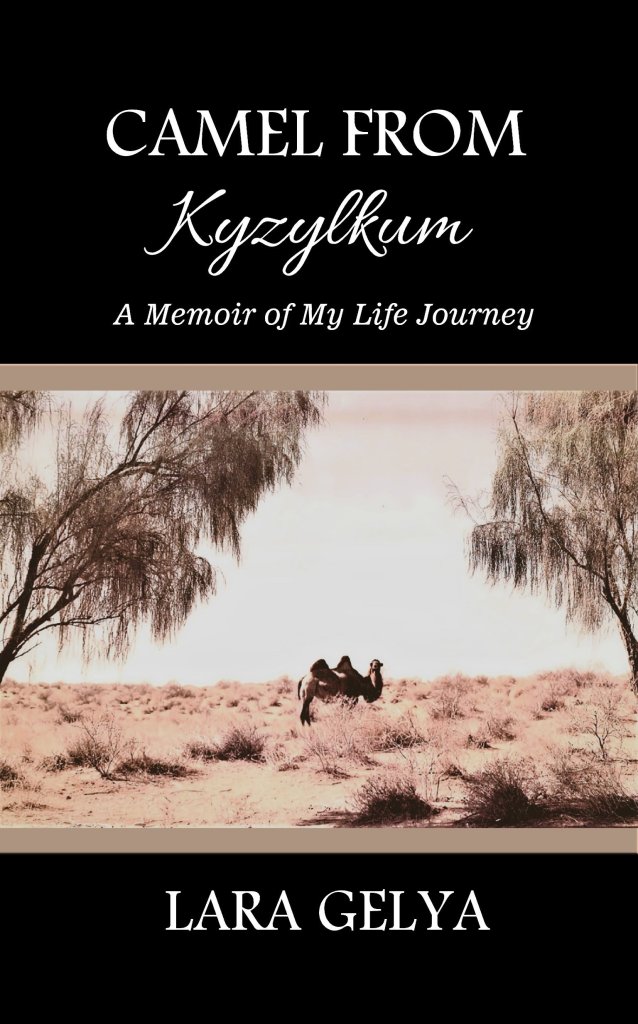
Title: Camel from Kyzylkum

Author: Lara Gelya

Publisher: Life Journeys Books

In Italy – Now and Then

The first time I visited Rome was in early 1990. I was on a mission to find a better life after escaping the Iron Curtain of the Soviet Union. As punishment for my escape, my USSR citizenship was revoked, leaving me stateless, with the status of ‘Refugee of the World.’ I traveled light across continents, with just two suitcases filled with family photos, a few books, spoons, and small pots. I had almost no money in my pocket, but Rome and Italy were still a wonderful discovery and a source of immense cultural enrichment for me in 1990.

During that time, I visited Rome and its historical landmarks such as Vatican City, the Colosseum, the Roman Forum, and the Trevi Fountain, to name a few. I also had the most important interview of my life in Rome, at the American Embassy, where I received the green light to go to the USA!

In May of 2024, during our Mediterranean odyssey, we spent some time in Rome. It was a deeply nostalgic and memorable experience for me! Revisiting Rome after so many years brought back a flood of memories and allowed me to see familiar places with new eyes.

I would like to share with you a chapter about my life in Italy in 1990, from my memoir Camel from Kyzylkum:

Italy

My first impression of Italy was that it was quite dirty and noisy. After I got used to the spotless cleanliness of streets and places in Austria, it disappointed me to see trash on the streets and in public places, along with graffiti. For the first time, I saw homeless people sleeping on rags on the marble floor of the subway in Rome. I also noticed how Italians get pretty animated when they talk, compared to very restrained Austrian people. But with time, my opinion about Italy changed—I fell in love with the country, and I grew to love the warmth of Italian people. I came to love Italian bread. The Italian language was like music to my ears, and I even learned how to speak some basics.

For the first two weeks in Italy, we were stationed at the bungalow summer camp south of Rome. It was January, and even during the day it was pleasantly warm outside, but at night it was cold. These bungalow houses did not have heat and were not equipped for the wintertime. I remember I was sleeping in my warmest clothes and even covered myself with a mattress from a spare bed in my bungalow. Nevertheless, I got very sick with a cold, so sick that I thought I would not survive it. During the day I walked to the seafront and sat there for long hours—the warm Mediterranean sun and fresh, salty sea air helped me to slowly recover.

After two weeks in the bungalow summer camp, we were told that we needed to rent apartments for ourselves in the nearby city of Torvaianica, a city south of Rome that was founded in the 1940s and is best known for its beaches. It has a population of about 12,700 inhabitants and extends for about eight kilometers along central Lazio’s coast. The refugee organization, HIAS, gave us money to cover rent and food. I do not remember the exact amount it was per person, but it was just enough for us not to be on the street dying from hunger. Later on, when I was already in the United States and working, I was required to reimburse HIAS for what they’d spent on me. I paid it back gradually, a small amount each month.

There were plenty of apartments available for rent in January. Many of them were at the seaside. Refugees from the Soviet Union usually shared one apartment—a two-room apartment for two families, a three-room apartment for three families. I was alone and in no way could I afford to pay for a room on my own. Someone from the group introduced me to a young fellow who was traveling alone, too. His actual name completely escapes my memory at present, but I’ll call him “Misha.”

Misha was in his early twenties. He was very smart and even knew English. For the first time in his life, he was separated from his parents whom he had left behind in the Soviet Union. Misha and I rented a room in the two-room apartment on the first floor of a building at the seaside. We could sit on the balcony and look at the beach and the Mediterranean Sea in front of us. The enormous wardrobe that was in the room divided our room into two halves to give each of us some privacy. Misha was absolutely unprepared for everyday life. He did not know how to manage the little money we had, how to do grocery shopping, or how to cook food. I felt sorry for him and suggested that he contribute some amount of money for food and I would shop and cook for both of us. Misha was happy to do that.

When I went for an interview for the first time at the American Embassy in Rome, I was asked a lot about places I had worked in the Kyzylkum Desert. They had a detailed map of Uzbekistan on the table and asked me about Zarafshan, Navoi, Uchkuduk. I was surprised; I thought they already knew more than I did.

After the first interview, I had to wait for the second one, a very important interview, after which a decision would be made on whether to allow my entrance to the United States. Many families were denied the entrance visa to the United States without being given any specific reason or explanation. These people had stayed in Italy for six months, for a year, or even longer. They found some jobs to support themselves and their families. Some of them decided to stay in Italy for good. It was an unsettling time.

Every day at 6:00 p.m., all Soviet refugees who stayed in Torvaianica gathered together at the central square of the city. There were a lot of us, and while I do not know the exact number, I remember how the square was filled with a Russian-speaking crowd, to the amazement of the local population of Italians. We were waiting for the messenger, usually a man who would stand in the middle of the crowd and read the list of people who had gotten permission to go to America. Even though I had not yet had a second interview in the American Embassy, these daily meetings were the biggest entertainment of the day and a learning experience—people mingled together, told stories, shared news, and made friends.

Misha always found me in the crowd after the announcing part was over and asked, “What’s for dinner tonight?” It seemed that he was always hungry. Even though I did not want to go home yet, I felt an obligation to serve him dinner. I thought he was acting like a little baby and since I was not his mother, it was bothering me. There was only one time when I sent Misha to the store to get something for me while I was cooking. He returned with an ice cream cake, our money for two weeks of our food ration gone. We divided the cake among all of the people who lived in both rooms of the apartment. This was the last straw for me. I canceled our contract and let Misha be on his own. Our living arrangements in the apartment remained the same, but I did not cook for him anymore. Meanwhile, we got a new tenant in our room. Another woman, approximately my age, joined us. Three of us shared the room up to the time of my departure.

The distance between Torvaianica and Rome was about 40 kilometers (25 miles), and there was bus transportation. I used the bus a few times. The ride was about 50 to 60 minutes. I did not go often, because the bus was usually packed with people and reminded me very much of the buses in the Soviet Union. Also, traveling by bus costs money I could not spare. Very soon I learned I could get to Rome by hitchhiking—every car driven by an Italian man would stop when they saw a young, pretty woman hitchhiking on the road. Several times I even hitchhiked with Misha. When the car stopped, I told the driver that he was my brother. I must say that most of the time Italians were very reckless drivers, and I felt uncomfortable in the car quite often.

I loved my outings to Rome. I enjoyed exploring the beautiful city where every stone has a history. Once or twice a month, all museums in Rome were free and I took advantage of this. Visiting the Colosseum, St. Peter’s Basilica, the museums of the Vatican, including the Sistine Chapel and the Trevi Fountain, to name a few, all became unforgettable experiences and cultural enrichment for me.

On the days when I was not traveling to Rome, I was discovering Torvaianica. Some items and events from my time there will be engraved in my memory forever.

For instance, there was a shoe and leather accessories store across from our apartment. In the Soviet Union, Italian shoes and leather accessories always were part of every woman’s desirable outfit, but they were difficult to get. In the store across the street was everything I could only dream about: elegant leather shoes, hand purses, belts. I visited the store quite often—not to buy, just to look. The store seemed to me big and exceptional. Years later, in 2001, Sparky and I traveled to Italy and visited Torvaianica. We found the beachfront apartment where I lived at the beginning of 1990 and a shoe store across the road. To my amusement, all at once, I saw an ordinary little store where I calmly browsed —it did not give me the excitement that it had in 1990. Perception is everything, and I was a very different person by 2001.

The main drag of Torvaianica with its famous Italian bakeries, restaurants, and shopping sprawled along the Mediterranean coast. On the snuggly, warm Italian evenings of January and February, I liked to stroll the street, window shopping and people watching. Italian people did not like to hold back their emotions—they laughed, they talked loudly, helping themselves with gestures, and I loved the music of the Italian language. I always stopped at the window of one particular bakery to examine all of the wonderful baked goods on display, though I could not afford to buy any. One of these baked goods was filled with a mix of rich semolina and ricotta cheese, and was a shell-shaped pastry called Sfogliatelle; Zeppole was another pastry consisting of a deep-fried dough ball dusted with powdered sugar and sometimes filled with various sweets; there was also biscotti, Venetian cookies, and hot chocolate cake—I could not take my eyes off of these beautiful culinary arts. One evening, the owner of the store, a middle-aged Italian man wearing a white chef’s coat and hat, with a lush body, dark mustache, and kind, laughing eyes, came out carrying a plate with a few biscotti and Venetian cookies and offered it to me to taste. Bewildered by his offer and the fact that he, probably, had been watching me evening after evening in front of his window, I did not have the strength to refuse his marvelous-looking, tasty Italian pastries.

Finally, the day came when I received a letter from the American Embassy in Rome with the invitation for the second and most important interview of my life. As I struggled with the English language then, I clearly understood the date and time of my interview, but I completely missed the location. Besides, I was pretty sure that there was only one location for the American Embassy in Rome and I knew where it was. But I was wrong.

The interview was scheduled for 12:00 p.m. I wanted to be collected and prepared. To eliminate any possibility of being late, I arrived at the American Embassy in Rome at 11:00 a.m. It was a sunny, beautiful, spring-like day; I lost myself for a short time (while waiting) on the fascinating streets of Rome. The sidewalk cafes were full of business people enjoying their lunch hours. I was thinking, “Is there going to be a time in my life when I, like them, can sit leisurely at a sidewalk cafe and have lunch? And feel myself as confident, relaxed, and happy as these people?” I wanted to believe that this time would eventually come in my life.

At about 11:45 a.m., I returned to the American Embassy expecting to soon be called by the guard. There was a good crowd of people waiting, like me, to be called. One by one they went inside until only I was left waiting. It was after 12:00 p.m. I got anxious—I began to wonder why I was not being called. I showed my paper to the guard. He explained to me (mostly by gestures and with some Italian phrases) that my interview was in a completely different location on the other side of the city. I was shocked. First, I had no money to get a taxi. Second, I thought my life was doomed. With this realization, I stood on the curb of the street in the center of Rome and sobbed bitterly. Tears rolled down my face.

Well, the Italian people did not easily tolerate this scene. Soon enough, a taxi stopped by me. The driver got out of the cab and asked me what had happened. Continuing to cry, I showed him my paper invitation for the interview and tried to explain to him that I had come to the wrong location. He looked at the paper and then at me and started vigorously gesticulating, pushing me inside his cab. Even inside the taxi, I could not stop crying. The driver turned around to me shouting some equivalent of “Shut up” in Italian. I became quiet. I realized he was going to drive me to the address where I needed to be. While he was driving, I feverishly thought about how I would pay for my ride as I had very little money in my pocket. But I was wearing a gorgeous silver ring with a gemstone on the ring finger of my left hand. The ring was handmade with an intricate Gothic design and a big, beautiful, pink, tourmaline stone—it was my favorite ring! I bought it during my vacation in Latvia, a country on the Baltic Sea—Latvia was a part of the Soviet Union from 1940 to 1991. I immediately decided to pay for my ride with the ring.

We arrived at the address of the second location of the American Embassy. I paid for the ride with the ring. The grounds of the Embassy were surrounded by a high fence and the gates were closed. I was not sure how I could get inside. However, the gates opened for an incoming cab and I just sneaked through the gates and ran towards the main building. I entered a room full of people waiting to be called for their interviews. My face was red, mascara smeared across my face, and my hair was messed up. Immediately, I heard my name being called. I walked into a smaller room where two men asked me questions. Then one man with reddish hair said to me how he had grown up in Buffalo, New York. He asked me if I knew how severe the winter could be in Buffalo. I said, “Probably not worse than in Siberia.” They both laughed. With this, my interview was over. From that point, I would have to wait for the Messenger at the Torvaianica square to call my name and give me an official paper with “Yes” or “No” written on it.

After two weeks or so, the Messenger at the 6:00 p.m. gathering at the Torvaianica square called my name. I was not nervous; for some reason, I was sure that it would be “Yes”. I calmly opened the envelope—there were dates for my flight from Rome to New York City. It was exciting news for me, and in anticipation of big changes in my life, I started to prepare myself for the trip.

About the Book

Camel from Kyzylkum is an award-winning memoir that chronicles the remarkable journey of immigrating from the Soviet Union during the late twentieth century. It delves into themes of hope, struggle, family, and loss, offering a profound exploration of the human spirit’s yearning for freedom and self-determination. Through the author’s compelling narrative, readers gain a deep insight into life within the Soviet Union and the immense sacrifices and risks individuals undertake in pursuit of a better life.

The memoir traces a gripping path from Ukraine to the Kyzylkum Desert in Uzbekistan, and onward through Austria, Italy, and finally America. Along this journey, the author navigates personal truths and aspirations, illustrating the resilience and determination required to forge a new path in unfamiliar lands.

Camel from Kyzylkum is not just a memoir; it’s a transformative narrative that opens doors to unfamiliar worlds, encouraging readers to broaden their perspectives and empathize with the challenges and triumphs of others. It stands as a testament to the enduring human spirit and the universal quest for identity and belonging.

About the Author

Born and schooled in Ukraine, Lara Gelya spent the next two decades in the Kyzylkum Desert of the Republic of Uzbekistan, working at geological sites and expeditions of the Mining Industry. At that time Ukraine and Uzbekistan were parts of one country — the Soviet Union.

In 1989 Lara left the Soviet Union, lived in Austria and Italy before she, at last, found her way to the United States in 1990. Starting her life from ground zero again, and trying on so many hats, she was able to make a lengthy professional career that led to her eventual retirement on the shores of sunny Florida.

Now, enjoying her retirement, Lara fills her days with enriching activities like writing, creating videos and pictures, reading, gardening, cooking, traveling, and immersing herself in nature or entertainment. Her diverse interests and active lifestyle after retirement show a deep appreciation for life’s pleasures and a continuing curiosity about the world around her.

.

PLEASE NOTE: ARTICLES CAN ONLY BE REPRODUCED IN OTHER SITES WITH DUE ACKNOWLEDGEMENT TO BORDERLESS JOURNAL

Click here to access the Borderless anthology, Monalisa No Longer Smiles

Click here to access Monalisa No Longer Smiles on Amazon International

Categories
Conversation

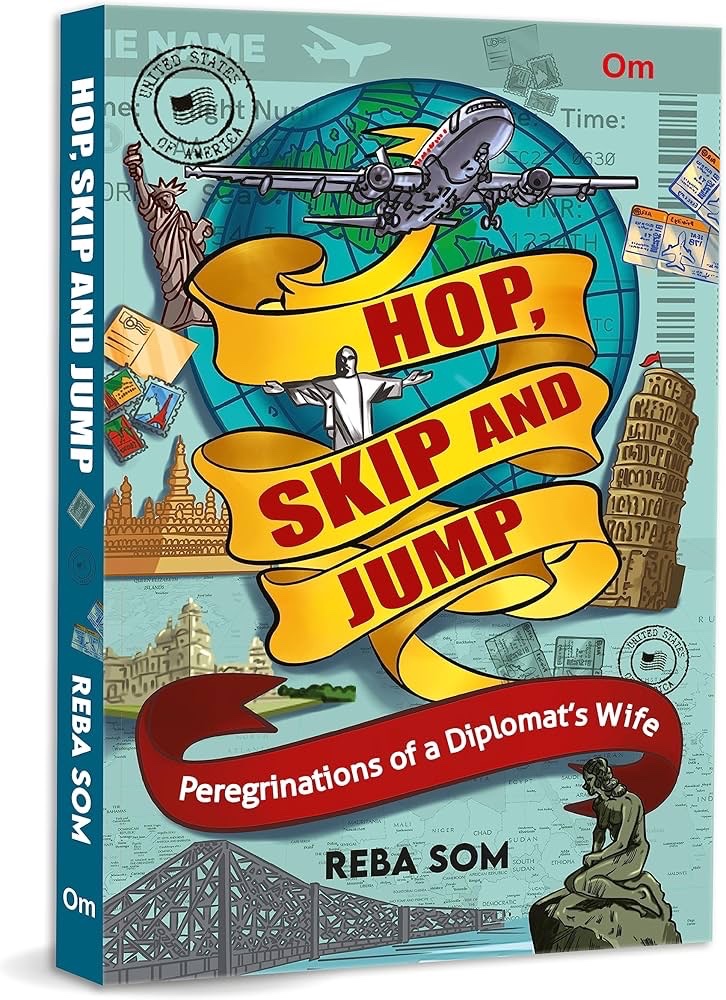
Peregrinations of a Diplomat’s Wife

Ratnottama Sengupta converses with Reba Som

Reba Som

“If Washington goes to Dhaka, there’s a chance that Paris might make it to Stockholm. And of course Moscow would be moved to Geneva!?”

Sounds like gibberish? But this is a piece of the speculative conversation on transfers and postings that is regular in the drawing rooms of embassies and consulates, Dr Reba Som found out on her very first posting after her marriage with Himachal Som.

Both were Presidency graduates pursuing higher careers — he in Foreign Service, she on the threshold of a doctorate. But life as the wife of an ambassador wasn’t only about glamour postings, fancy holidays and brush with celebrities. It was a mixed bag of blessings, as the woman who had grown up in Kolkata with a grounding in Tagore’s music would soon conclude. For, there were the dark clouds of life away from ageing parents and school going children; from the comfort of familiar food and mastered language; from developing your potential and crafting your own identity in the world out there.

In recent years we have read accounts of retired ambassadors and career diplomats’ experiences in diplomatic life. In her memoirs, Hop, Skip and Jump; Peregrinations of a Diplomat’s Wife, Dr Som’s is a woman’s voice, abounding in stories and observations about how the spouses keep a brave front in alien surroundings to hold up the best image of her country. In this conversation, she voices outmore about her encounters with racism, with political emergencies and exigencies. In short, about her lessons in a borderless world of multicoloured humanity.

You went to Brazil (1972), then to Denmark (1974), then Delhi (1976), Pakistan (1978), New York (1981), Dhaka (1984), then Ottawa (1991), Laos (1994), Italy (2002). Please share your gleanings from these lands.

The roller coaster ride was a saga of discovery. Travelling across expanses of the planet earth that we had seen only on the pages of geography books and atlases was a great learning experience. I gained an understanding of diverse cultures, imbibed social customs, became proficient in languages, and was exposed to exotic cuisines. At the same time I faced homesickness. Each posting entailed the challenge of uprooting oneself, finding schools for children, and reinventing oneself every time.

A large part of this life was in the years that had no mobile phones, no video calls, no social media, no internet communication. What did you thrive on?

Continents and hemispheres away from home, the only link with family and friends then was the diplomatic bag. The weekly mail service ferried across oceans by the ministry in Delhi contained letters and parcels from home. We were asked to judiciously use the weight allowed to bring spices, tea, condiments, clothing and other necessities. It became a ritual to write long letters and send them weekly by the diplomatic bag to Delhi from where they would be posted to respective destinations throughout India.

Along with letters would come bundles of magazines and newspapers. These brought us news of home from which we were truly cut off. With no television or internet or phone calls, we were in the dark about all news, be it political, social or entertainment. Every week on the bag day we waited anxiously to receive the newspapers – and the letters, which had instructions, news, recipes, advice, gossip. All of these were crucial for nurturing our souls.

One telegram from my father in 1973 carried the cryptic message: ‘Reba, solitary First class.’ These were the MA results of Calcutta University which were out after a delay of two years.

I was most taken up by the understated humour of some of your encounters in your memoir. Please recount some of them.

On our very first posting, to Brazil, not only our unaccompanied baggage but also our accompanied baggage did not arrive. Eventually when the lost luggage showed up, Himachal’s ceremonial bandhgala[1]was steeped brown — in the colour of the gur[2] my mother had lovingly packed in!

In Brazil, we found the people to be fun loving but too flamboyant. They made tall claims that their institutions were the biggest in the world. But reality often proved the claims to be hollow. Such was the Presidential bid to make the tallest flag pole in the world in Brazil’s new capital, Brasilia. A very tall flag mast was indeed built but the huge flag atop it was torn to shreds since the engineers had not factored in the wind speed at that height. Brazilians mirthfully called it the President’s erection!

And at Denmark. we were surprised by a sudden news of our posting to Mozambique. We had long realised that we were mere players on the chessboard of postings – we could be shunted off across continents at the whims of the powers that be. By the same token, a couple of phone calls by the newly arrived ambassador undid the mischief. We were happy to unpack and settle down again. The only guilt I felt was when I met the owner of Anthony Berg chocolates: I had in no time demolished the entire carton of chocolates he had sent as farewell gift!

You are among the few I know who have mothered in different continents. So how different is it to become a mother away from India?

I always felt that the best way to get to know certain nuances of a country’s cultural tradition was to have babies in them. My elder son, Vishnu was born in Copenhagen and Abhishek, the younger one, in New York — and my experiences each time couldn’t be more different.

In Copenhagen, a social democrat country, hospital visits for full term pregnant women were fixed on a certain day of the week. On the preceding day they had to collect their urine in a jerry can and present it for lab examination. I was confounded and not a little embarrassed to meet other mothers-to-be, swinging their jerry cans like designer bags without fail on the appointed day. I learnt only later that, from the urine examination doctors would note the condition of the placenta and not unnecessarily rush patients into childbirth with caesarean and surgical intervention!

In NY, on the day of my discharge, the hospital staff were highly excited because Elizabeth Taylor had come in for one of her facelifts. I could not forgive them their magnificent obsession when, along with a goodbye hamper, they wheeled in a bassinet with a different baby. On my protestation the nurse rudely shouted, “Can’t you read… the tag says Som Junior?” Shocked by the implication I said, I could not only read but also see! And it was not my child. While everyone was looking on in disbelief another nurse wheeled in my little one. The babies had their diapers changed and were put back in the wrong bassinet.

Years later, we discovered in an informal meeting with an American ambassador that Abhishek was indeed an American citizen. Because, at the time of the child’s birth Himachal was posted not to the embassy in Washington but to the consulate in New York. Only consulate children were given the privilege. This discovery, rechecked by State Department Records, gave our son the US passport. It was a windfall as Abhishek went on to graduate summa cum laude from a prestigious management school in the US and enter Wall Street as an investment banker.

I must also share another truth about birthing away from India. Before Vishnu’s birth, my parents had come to Copenhagen. When I was discharged from the hospital I received their care and being fed Ma’s cuisine was the best gift I could have. So, when phone calls came from hospital, followed by visits enquiring about my state of depression, I was totally confused. I realised how many mothers suffered from postpartum depression in a society bereft of nurturing family care.

How could you master languages as removed as Portuguese from Lao and Italian from Urdu? Is a flair for languages the key to this proficiency or the training imparted before each posting?

 I enjoy learning languages. My stint at learning French at Ramakrishna Mission Golpark stood me in good stead in grasping Portuguese in Brazil, French in Ottawa and Italian in Rome — all Latin languages. But there was also the hazard of mixing up some phrases and words, so similar yet so different! Like Bon Appetit in French and Bueno Appetito in Italian. Or Amor in Portuguese; amore in Italian and amour in French.

Sometimes though, I accidentally learnt how language travels. My mother had packed in many petticoats to match with my saris but without their cord. We went to a store that promised to hold all we need but all my sign language did not bring what I needed. “Phita is obviously not available here,” I told Himachal, preparing to leave. Suddenly the storekeeper perked up. ‘Fita, si senhora!” he said and produced bundles of cord.

In due time I found out that janala, kedara and chabi – Bengali for window, chair and keys – had travelled from India to become janela, cadeira and chavi.

What did Dhaka mean to one raised in West Bengal – per se the Ghoti-Bangal[3]divide, your roots  or the cultural side with Firoza Begum and Nazrul Geeti?

Dhaka was a great posting in so many ways. It was a hop, skip and jump away from my home town Kolkata, with the same language and culture and yet was a foreign posting with foreign allowances!

As you know, there’s a subtle cultural difference in East and West Bengal. Both speak Bengali but in East Bengal, it’s a colloquial rustic dialect while West Bengal speaks its refined cultural form. This formed the infamous ‘Ghoti-Bangal’ divide: Urban Calcuttans looked askance at their country cousins from the East.

The difference extended to the palate. East Bengalis flavoured their dishes with more chillies and West Bengalis, with a pinch of sugar. For the fish loving people, the two iconic symbols are Hilsa and Prawns, for East and West. Emotions soared high in Kolkata when the supporters of the football teams, East Bengal and Mohun Bagan, clashed, after intensely fought matches that spurred deadly arguments and bets.

Given this background, Himachal created a minor storm by announcing to his parents from Chinsurah, Hooghly in West Bengal that he would marry a girl whose parents were from Dhaka and Faridpur in East Bengal.  Ghoti-Bangal feud remained the subject of much friendly banter between Himachal and me until we were posted in Dhaka. There, in a diplomatic turnaround, Himachal played down his Ghoti background to announce that his mother’s family was from Chittagong and he was born in the principal’s bungalow in Daulatpur, Khulna, where his grandfather was posted.

To give a bit of Himachal’s family background: Dr Pramod Kumar Biswas, the first Indian doctorate in Agricultural Sciences from Hokkaido University in Japan, had settled in Dhaka as principal of the Agricultural College. His charming daughter Kana won the heart of Dr Rabindranath Som, a veterinarian who weathered the predictable Ghoti Bangal storm to win her hand in marriage. 

When my parents Jyotsnamay and Manashi Ray visited us, we couldn’t visit Patishwar in Rajshahi district, where my maternal grandfather Atul Sen had worked with Rabindranath Tagore before he was arrested for revolutionary activities with Anushilan Samiti, and exiled to Kutubdia, an isolated island in the Bay of Bengal. As a headmaster, he had given shelter to Jatirindranath Mukherji, popularly known as Bagha Jatin[4].

It was a breezy day when my octogenarian father revisited Faridpur Zilla School. The colonial bungalow had acquired a fresh coat of terracotta paint. Finding his way to the headmaster’s room, he announced with a lump in his throat that history had been rewritten, boundaries redefined and new national identities forged since 1923, the year he had matriculated.

The headmaster, delving through yellowing files, fished out the matriculation results for that year. My father’s face was that of an excited school boy impatient to show off his prowess: “Look at my maths marks! Oh yes, my English scores were a trifle lower than expected because I had a touch of fever, but look at Jasimuddin’s marks in English! Thank God, he passed it.” We looked around in hushed surprise. This isn’t The Jasimuddin, the beloved poet of Bangladesh? “But of course,” my father responded. “Jasim’s weakness in English was my strength!”

Dhaka was also personally fulfilling as my doctoral studies, which I had carried across three continents, found fruition at last! On another front, I met with success in gaining the confidence and blessings of Firoza Begum, the legendary exponent of Nazrul Geeti.

The songs of Kazi Nazrul Islam were a great favourite of my father. He often hummed those made famous by Firoza Begum. Since I had trained in Tagore songs from age five, I never aspired to master the distinctly different style of rendition. A chance encounter with the golden voice revived this desire. Firoza Begum bluntly refused. When I persisted, she wanted to hear me sing a few Tagore songs.

One morning I mounted three flights of steps, harmonium on my driver’s shoulder, to enter her flat with apprehension. At her bidding, I sang four songs of Tagore. She heard me without any comment, then she asked why I hadn’t been singing for Bangladesh television. My relief was palpable! I had passed her test.

Over the next two years, my weekly classes with her extended well beyond the music lessons to serious discussions on life itself and the meaning of religion. What began as a guru-shishya[5]relationship, transcended to deep friendship. She declined any remuneration and dearly wished that I should cut a disc. This wish of hers came true only when Debojyoti Mishra heard me and decided to record my Nazrul-songs for Times Music in 2016.

Food is perhaps the first face of culture. So please share with us some of your culinary adventures. Or should I say ‘fishy’ stories?

Adventures? I could talk about the chapli kebabs in Pakistan, or about putting samosas in Bake Sales. I could tell you about making rasgullas from powder milk. I could even tell you about our gardener in Laos who merrily collected every scorpion and caterpillar that came his way, “for snacks,” he told me. But let me focus on fish.

The very first party I hosted at home in Brazil led me to seek substitutes for Indian ingredients. Fish of course had to be on the menu, mustard fish at that. I had already learnt from the Brazilian ambassador in Delhi that surubim, being boneless, was the most suited for curries. So surubim it was for months until the day I had to go to the fishmongers – and found it was a monster of a whale!

In Pakistan, traversing the arid countryside of Sind, the train would stop at stations where fillets of pala were being shallow fried on large skillets. Savouring its delicate flavour we went into a discussion on the merits of pala versus hilsa. Both have a shiny silver body with thin bones, both swim upstream against current. The taste of hilsa steam-cooked in mustard sauce is a super delight in both Dhaka and Kolkata. There of course the discussions are on the merits of the hilsa from Padma and Ganga respectively.

In Laos I once called the plumber to ease the draining of the bathtub since the pipe had got clogged. He arrived with a live fish in a plastic bag and promptly emptied it into the pipe. It would eat through the slush as it travelled through the pipe, he assured me!

Post retirement, Himachal settled to honing his culinary skills. Cooking, which he had started in Ottawa, became his lasting hobby. He would shop for fish in C R Park or INA Market[6]. He would pore over cookbooks and plot innovative recipes. “Cooking,” he was quoted in Outlook magazine, “is art thought out with palate.” And his piece de resistance was the salmon baked whole.

Which was your most cherished, or striking, brush with celebrities in world history?

At one of the finest dinners in Copenhagen I found myself seated next to a countess. She invited me to visit her since she lived in the neighbourhood. The next day a liveried man arrived to escort us to an imposing manor house. We were welcomed with sherry and we had to select a card from a silver salver with the name of our partner for the dinner. I was escorted by a handsome young man who floored me when we exchanged names. He was the descendent of Count Leo Tolstoy!

Another memorable encounter was with a person straight out of the history books. I was strolling in a forested park outside Copenhagen. I noticed with a shock that I was looking into a glass topped coffin. The aristocratic face inside had an aquiline nose and a goatee that lent a refinement to the visage that still sported a faint smile. The starched lace collar was held in place by a jewelled button that showed impeccable taste. But the elegant hands tapered off to skeletal fingers, and the feet too had become skeletal.

The plaque at the bottom of the coffin informed us that this was James Hepburn, the Earl of Bothwell, with whom Mary, Queen of Scots had fallen in love. It was a fatal attraction since both were married. But soon her husband, Lord Darnley, the father of her son James, the future king of Scotland and England, was mysteriously burnt down in a manor, and Bothwell was granted a divorce. However, their marriage incensed Catholic Europe, so Mary gave herself up to buy the release of Bothwell, who fled to Denmark.

‘Whoever marries your mother is your father’: this dictum defines the acceptance of whatever political dispensation you are forced to live with, at home or abroad. So how did you cope with a turmoil like Emergency or antagonism in Islamabad? 

We had returned to Delhi in the midst of Emergency. We felt some relief to see trains running on time and punctuality being maintained in government offices. Corrupt officers were being hauled up and over-population being addressed. But the atmosphere was sombre and conversations hushed. The deep scar left by the Emergency saw Indira Gandhi being swept out of power the following year.

In Islamabad tension had mounted when I arrived over the imminent execution of Zulfiqar Ali Bhutto[7]. Our residence had become the favourite watering hole for Indian and international journalists who knew Himachal from his Delhi days. Animated discussions over drinks were followed by quick despatches typed out on my rickety typewriter. Unending speculations on the unfolding drama had kept us on tenterhooks. Then one morning in April 1979, the phone rang to say, “It’s done.” [8]

How did Italy change your life?

Italy was easily the best posting of my life in embassies, not only because of its rich history. There I found Italian artists painting inspired by Tagore’s lyrics, and singers like Francesca Cassio singing Alain Danielou’s translations. What made them take it on? The question led me to rediscover Tagore.

My singing of Rabindra Sangeet also found recognition in Rome. My first CD album was released there. I was in many concerts. It was so fulfilling when my translation of Tagore’s lyrics into English found appreciation. Tagore himself believed that his songs were ‘real songs’ with emotions that speak to all people. I began translation in earnest. And that led me to write Rabindranath Tagore: The Singer and his Song (Penguin 2009). The book, with my translation of 50 Tagore songs, was considered very useful to many performing artistes who could understand and represent Tagore better in their art forms.

Please tell us about growing up with Tagore.

Like many girls in Kolkata I began learning Rabindra Sangeet from the age of five. Over the years the songs grew on me. The unique lyrics conveying a gamut of emotions spoke to me when I was far away on postings abroad. I continued my practice of the music through the years and felt vindicated when I got the opportunity to perform to appreciative audiences abroad and back in India.

Why did you work on his songs rather than his poems or stories?

There’s something compelling about Tagore songs. Remember that Gitanjali, which won him the Nobel, was a collection of ‘Song Offerings.’ Songs had given Tagore the strength to ride over the tragedies that had beset his life. They not only helped him express his grief over the deaths and suicides in his family, they were also his mode of expressing his frustration over the political situation that obtained then. And he felt his songs would help others too. “You can forget me but not my songs,” he had written.

Did you ever feel the need to jazz up the songs for Western audiences?

Tagore’s songs are like the Ardhanariswar[9] – the lyrics and the music are inseparable. The copyright restrictions that prevailed after this death did not allow translations. And that was a handicap since his music cannot be appreciated without comprehending his lyrics which are an expression of his creative thoughts.

I would say his songs have near-perfect balance between evocative lyrics, matching melody and rhythmic structure. And the incredible variety of his musical oeuvre touches every emotion felt by any human soul, without jazzing up.

Tagore’s songs are the national anthem of India and Bangladesh, and have also inspired that of Sri Lanka. But will his internationalism hold up with the change of order indicated by the recent developments on the subcontinent?

Tagore was known to be anti-nationalistic. He believed no man-made divisions can keep people segregated. He did not agree with the Western concept of ‘nation,’ he was an internationalist who accepted the ideals of democracy – ‘aamra sabai raja[10], of gender equality – ‘aami naari, aami mohiyoshi[11]; indeed, in equality of humans. What he wrote in lucid Bengali suited every mood. Georges Clemenceau, who was the Prime Minister of France for a second time from 1917 to 1920, had turned to Gitanjali when he heard that World War I had broken out. Even today people can relate to what he wrote.

How did all the hop skip and jump shape the feminist within Reba Som?

The wives of Foreign Service officers are often seen as decorative extensions of their spouses. People only saw the glamour we enjoyed on postings abroad, not the heartbreaks and disappointments we battled. Despite their qualifications the wives were not allowed to work abroad. Instead they had to be perfect hostesses: clad in colourful Kanjeevarams they had to prepare mounds of samosas and gulab jamuns.

But there was little recognition, appreciation or compensation by the Ministry of External Affairs of all the hard work and struggle they put in. To settle down in different postings in rapid succession. To host representational parties where they had to conjure Indian delicacies with improvised ingredients. To raise disgruntled children on paltry allowances.

Once, as the Editor of our in-house magazine, I had floated a questionnaire to all the missions abroad asking about the changing perceptions of the Foreign Service wives. That had opened a Pandora’s Box. Eventually in response to our requests the Ministry relaxed service conditions and allowed the wives to work abroad if they had the professional qualifications and received the host country’s permission. This was a veritable coup!

My own act of rebellion was accepting the Directorship of the Tagore Centre ICCR Kolkata (2008-13) after we returned to Delhi on Himachal’s retirement. It became a challenge for me to try and get the Tagore Centre on the cultural map of Kolkata, proving to myself and my disbelieving family in Delhi that it was possible!

[1] Somewhat like a Chinese collared coat

[2] Molasses

[3] Ghoti – People from West Bengal state in India
Bangal – People from Bangladesh

[4] Bagha Jatin or Joyotinadranth Mukherjee (1879-1915) was a famous name in the Indian Independence struggle

[5] Teacher-student

[6] Markets in Delhi

[7] Zulfikar Ali Bhutto(1928-1979) was the fourth president of Pakistan and later he served as the Prime Minister too.

[8] Bhutto was executed on 4th April 1979

[9] Half man half woman

[10] We are all kings

[11] I am a woman, noble and great

Ratnottama Sengupta, formerly Arts Editor of  The Times of India, teaches mass communication and film appreciation, curates film festivals and art exhibitions, and translates and write books. She has been a member of CBFC, served on the National Film Awards jury and has herself won a National Award. 

.

PLEASE NOTE: ARTICLES CAN ONLY BE REPRODUCED IN OTHER SITES WITH DUE ACKNOWLEDGEMENT TO BORDERLESS JOURNAL

Click here to access the Borderless anthology, Monalisa No Longer Smiles

Click here to access Monalisa No Longer Smiles on Amazon International

Categories
Musings

The Chameleon’s Dance

By Chinmayi Goyal

The photo captures it all in a moment. 

An eight-year-old girl stands near the bustling confines of an airport: her eyes are wide, her smile bright. However, beneath that radiant smile lies subtle hints of deeper emotions known only to the girl herself.

The discovery of this photograph had been an accident as I was sifting through a neglected box of keepsakes. The moment my eyes met the image, a floodgate of memories unleashed. I could feel myself stepping off the plane and onto American soil, the soft glow of the cabin lights, and the sea of unfamiliar faces. The conversations flowed around me as I stumbled blindly into a linguistic labyrinth. 

The memory of that first day in American school etched itself in my mind. The teacher introduced me, and I blushed as the other kids looked upon me with fascination. I felt like an outsider unable to fit in. My thick Indian accent, which I had never thought about, was now a stain that separated me from others. My tongue stumbled over words spoken with the cadence of another world. The perplexed gazes of strangers mortified me. That day I made a promise: I would do anything and everything to fit in and change my accent. It was an instinctive reaction, born out of my desire to be native in a foreign land. It was a survival mechanism, a way to navigate the social structures that formed the scaffolding of this new world.

Beyond verbal communication was the challenge of writing and spelling. On the first day, we had a benchmark spelling test. I performed miserably. Growing up in India, I was educated in the British English system. Words like “colour,” “favourite,” and “theatre” adorned my vocabulary with their extra “u”s and “re”s. These linguistic quirks had been ingrained in me since childhood, and I had never questioned their correctness. Soon I realised that my spelling, which I considered impeccable, was peppered with these “mistakes.” I was embarrassed. I developed an obsession with consciously correcting my old habitual spellings, like “colour” to “color,” and “favourite” to “favorite.” Like leaving behind my Indian accent, I sought to rewrite this part of my identity.

I grew up to become a chameleon, forever adapting my linguistic hues to blend seamlessly into the ever-changing landscape of my life. In a peculiar dance of identities, I became a performer mastering the art of disguise. Even now, I marvel at my own adaptability, at how I can effortlessly switch between rhetorical worlds. It’s as if I have a wardrobe of culture, with an American accent for the world outside and my own familiar Indian accent tucked away at home. When I’m with my family, when I return to the comfort of my roots, the switch is automatic. The words flow with the rhythms of home, and my voice reverberates with the echoes of my heritage. It’s a return to a world that doesn’t require adaptation, a place where I can be unapologetically myself.

In this continuous performance of linguistic acrobatics, I’ve realised that my identity is not fixed but fluid, a reflection of the multiple worlds I inhabit. I am the chameleon, forever changing and adapting in this intricate dance between accents and authenticity. I’ve found a new version of myself—a person who can navigate two cultures, seamlessly switching between accents yet remaining true to my unique identity. I was neither wholly Indian nor entirely American; I was the synthesis of these two worlds, a living metaphor of cultural fusion. As the years passed, I found solace in the poetic beauty of my dual identity. In the end, I realised that it was in this tapestry of language, accent, and identity I had truly discovered myself—a narrative still being written, a story still unfolding, a girl who had found her place in a land of dreams.

.

Chinmayi Goyal, a student at Yorktown High School in New York, is passionate about writing. She serves as editor-in-chief of a newspaper called VOICE and has published several of her pieces there.

.

PLEASE NOTE: ARTICLES CAN ONLY BE REPRODUCED IN OTHER SITES WITH DUE ACKNOWLEDGEMENT TO BORDERLESS JOURNAL

Click here to access the Borderless anthology, Monalisa No Longer Smiles

Click here to access Monalisa No Longer Smiles on Amazon International

Categories
Poetry

Poems by Adeline Lyons

Adeline Lyons
UNDRESSING

flaming trees
whisper

I sought
infinite

turned
immovable

became
dimensional

shed
body

embraced
nakedness

found
light

froze
in reaching

for the absolute

FINDING, FULFILLED

fiercely, you freed me,
roughly parting the chained
veil of my keeping.

you knew not to touch
or look too deeply.
you claimed me,

cutting the barbed cage
with your smooth scythe.

aged eye gazing
on freshly fallen flesh,
you said,

cherish this gift.
ask for none other.

Adeline Lyons is an emerging writer from New York.  She studies at the University of Wisconsin-Madison.  Her work can be found in The Hooghly Review and Spark to Flame Journal.

PLEASE NOTE: ARTICLES CAN ONLY BE REPRODUCED IN OTHER SITES WITH DUE ACKNOWLEDGEMENT TO BORDERLESS JOURNAL

Click here to access the Borderless anthology, Monalisa No Longer Smiles

Click here to access Monalisa No Longer Smiles on Kindle Amazon International
Categories
Poetry

Poetry on Migrations

By Nilsa Mariano


BEAUTIFUL AND COLD

Soundlessly they move at night beautiful and cold
morning light reveals a lawn covered in snow
a red headed woodpecker chips and drums steady
oak trees that stand strong bare witnesses to it all

morning light reveals a lawn covered in snow
blood spatters announce predators overhead and near
a red headed woodpecker bangs steady blows
hungry finches frantically feed watching the sky in fear

blood spatters announce predators overhead and near
the news announces more dead due to Ice and climate
hungry finches frantically feed watching the sky in fear
we fight for climate change but tolerate ICE

the news announces the dead in Ice and snow
the damaged fall like tree branches on the border
we fight for climate change but tolerate ICE
children in tents watch the snow and cry mother

the damaged fall like tree branches on the border
both sides claim and deny any blame
children in tents watch the snow and cry mother
the red headed woodpecker watches with shame

Both sides claim and deny any blame
the oak trees stand strong bear witness to it all
children in tents watch the snow and cry mother
soundlessly they cross at night resolute beautiful and cold


CORN BEANS SALT

Querida madre,

we crossed the border made it here tired but well
we were caught by la migra there are many of us in a shelter
which smells bad but they feed us and give us water
the food is cold and bland
I am grateful and do not complain
but at night at bedtime
the lights make it hard to sleep
in the quiet you hear the little ones crying
for their families or because they are afraid
as for me …it is you I worry about I miss your face mama
keep the dog near it can keep you safe it will bark and warn you of intruders
try to keep your strength do not wander far from the house
right now I see you clearly
hair dark as frijoles negros held back in place with a thin ribbon
you are smiling and shaking your head
that here I am far away telling you what to do

I have faith that any day now I will make my case
the judge will understand after he hears my plans and sees how strong I am
despite all the weight I have lost
I will tell them that I am already fifteen
I will work hard so I can send for you
they are lining us up for a shower it's been a long time
God keep you safe
I hope you have corn beans and salt
enough to keep you going
you are always in my heart

te quiero mama

tu hijo


SWEETWATER


Just the name made my mouth water
With sugary southern syllables
Sweetwater
he carefully tracked the path of the Eclipse
this was one of the cities (he smiled)
spectacular prime viewing
Although the shabby hotel
The best in town did not meet my big city artificial aspirations
fine-tuned over the years to four dollar hotel ratings
But It was outside town had an expansive lawn and the right cost
Arriving the night before the blessed event we drove into town
Looking it over with small expectations
The town center howled back with pacemaker shattering music
A stuffed astronaut dressed in silver affixed to a post
like a symbol of Christ
Vendors and stray dogs filled the streets
Around the plaza were small shops with enticing windows
I could not resist
I saw some old luggage I envisioned using as props
the owner strode over as backup to the salesgirl
We looked each other up and down
New York she said
Brooklyn I said
Williamsburg we said
Espanol we Espanglished
Screaming and laughing like teenagers
We hugged and traded ancestral names and towns
trying to establish our connections
We discovered we lived blocks from each other in Brooklyn
We knew the same vibrant scary neighbourhoods
We had Family names we shared
I kept quiet about the stories
of my father the case worker
Visiting families to assess their needs
long hours away from home with select
Desperately beautiful women
As she drew me close to answer her questions
and we declared we were sisters
She wanted me to meet her blind mother
blind with the same rare disease
My blind father had….
my heart went on pause…. breathe
We traded phone numbers
Made plans to visit each other
Had a glass of wine
A toast to life
I paid for my discounted luggage

I imagined my future with a sister I never had
let the past be past and welcome the new
The next day we sat in wait
With hundreds of others
Waiting for the eclipse
The crickets and frogs alerted us
Special glasses in place
We watched as the moon
Passed between the sun and the earth
Darkness came with a loud gasp

Packing the car the next day
Sweating in the heat we left
high with expectations
But there were
No Emails no calls
Nothing but
crickets from Sweetwater
A chance meeting
unexpected eclipse

Glossary:

La migra: Informal Mexican Spanish term  for US Immigration

Querida madre: Dear mother

frijole negros: Latin American dish made with black beans

te quiero mama: I love you Mum. I have to go

tu hijo: your son

Nilsa Mariano is a graduate in comparative literature from Binghamton University New York. She has been published in Stone Canoe, Five Minute Magazine and MicroFiction Monday Magazine, Muleskinner Journal, Wildgreens Magazine and Chicken Soup for the Latino Soul.

.

PLEASE NOTE: ARTICLES CAN ONLY BE REPRODUCED IN OTHER SITES WITH DUE ACKNOWLEDGEMENT TO BORDERLESS JOURNAL

Click here to access the Borderless anthology, Monalisa No Longer Smiles

Click here to access Monalisa No Longer Smiles on Kindle Amazon International
Categories
Poetry

Poems by David Francis

SATURDAY

Saturday, Saturday, Saturday, what
do you think about Saturday? It’s flat.

The grey sky reminds us of traveling
and in the wind the birds are eddying.

Dissatisfied, if you were somewhere else—
Utopia—you would be hearing bells;

you would feel mellow in the fruitful sun,
fulfilled, in the prime of life, having fun.

Such weather only comes to remind us
through memories that it’s all behind us.

Should we take a newspaper to breakfast
or will the headlines make us feel feckless

with their inane arbitrary redundance,
offering war and scandal in abundance?

So lazy that pleasures are overkill,
yet we can’t sleep all day, there’s time to fill,

and too many naps seems enervating
as an option to the girl you’re dating.

Tennis is out, and games are not your thing;
conversation doesn’t feel promising.

Exposed to Saturday’s mood of malaise,
exhausted by the accumulated weekdays,

this hurry to be in Sunday’s milling crowds
which move like corpses under viscous shrouds:

a great dull procession from Buenos Aires
up to Texas and over to Paris

and back under the patio roof that is leaking,
like a voyeur behind a Chinese screen peeking

at no one, like a bright flag that is furled,
our banner of freedom: this Saturday world!


GOSSIPS


Just because I’m a coward
doesn’t mean the gossips are right
with their concrete notions
but watch them build the trivial
with such care,
making complicated fine points
woven into, of all things,
knots,
you guessed it, to secure.
Bluntness is the only
way to say
to them they are inferior
and that you
are not a statistic.
Yes, I am also thinking:
why am I here?
To be cold goes nowhere
and so you are involved
in the humid entanglement.
The most horrible truth
is when they are right
and you are vulnerable that night,
all because you have forgotten your comb.


THE SMILING MAN


The smiling man
who straightened up
when he noticed
I saw him smiling.

“Well, I’m sorry
I put that
dour expression
there on your face
that’s so beguiling!”

And he said
in a whisper
so I couldn’t hear
as he walked on
down the mall:

“You didn’t put
that dour expression
there—
don’t worry—
it’s been there
since I was small.”

When he told
me that,
I felt better
and I sat
thinking where I’d
like to go.
I thought for
a moment I
might follow him,
an interesting man
to know.

But I knew
that he’d be
out of sight
by now

and I didn’t
want to see
him straightened up right,
anyhow.

David Francis has produced six music albums, one of poetry, Always/Far: a chapbook of lyrics and drawings (Oilcan Press), Poems from Argentina (Kelsay Books), and New York Revery (Cyberwit.net). He has written and directed the films, Village Folksinger (2013) and Memory Journey (2018). He lives in New York.

.

PLEASE NOTE: ARTICLES CAN ONLY BE REPRODUCED IN OTHER SITES WITH DUE ACKNOWLEDGEMENT TO BORDERLESS JOURNAL

Click here to access the Borderless anthology, Monalisa No Longer Smiles

Click here to access Monalisa No Longer Smiles on Amazon International

Categories
Review

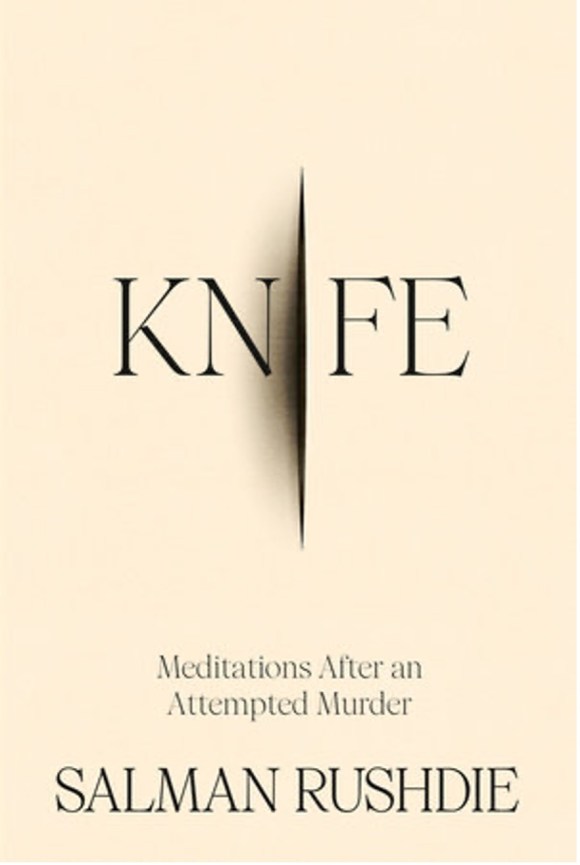
Knife by Salman Rushdie

Book Review by Somdatta Mandal

Title: Knife: Meditations After an Attempted Murder

Author: Salman Rushdie

Publisher: Penguin Random House

More than thirty years ago, a fatwa had been declared by Ayatollah Khomeini on the famous writer Salman Rushdie. The charge of blasphemy was labelled after the publication of The Satanic Verses, and since then the author has been living in asylum at different places because he was not safe in his own country. When it was assumed that the incident had died its natural death, the simmering vendetta and violence upsurged suddenly on 12th of August 2022, when Rushdie had gone to participate in a week of events at the Chautauqua Institution in upstate New York titled “More Than Shelter: Redefining the American Home”, and an unidentified man attempted to murder him on stage with a knife.

This horrific act of violence shook the entire world. No one hoped that they would ever be able to read a single line written by the author once again. He was a totally lost case. Now, one-and-a-half years after the incident, and in unforgettable detail, Rushdie writes this first-person memoir Knife where he relives the traumatic events of that day and its aftermath, as well as his journey towards physical recovery. His healing was made possible by the love and support of his present African American wife Eliza, his family, his army of doctors and physical therapists, and his readers worldwide.

Dedicating the book to the men and women who saved his life, the text is neatly divided into two parts, each containing four sections. The first half of the book titled “The Angel of Death” primarily revolves around ‘despair’, whereas the second part, “The Angel of Life,” narrates a vision of ‘hope’ and optimism and Rushdie’s attempt to return to normalcy once again with his indomitable spirit to fight on against all odds.

The opening chapter called ‘Knife’ begins with the description of a beautiful August morning in detail and how the apparent tranquility was shattered when suddenly violence appeared in the form of an unidentified man who rushed at him on the open stage and stabbed him indiscriminately. Totally flabbergasted, Rushdie obviously didn’t know what to do. So, he narrates the rest of the incidents in the form of a collage, with bits of memory pieced together with other eyewitness and news reports and tells us how that morning he “experienced both the worst and the best of human nature, almost simultaneously.” Though the incident of his attempted murder dragged “that” novel back into the narrative of scandal, Rushdie declares that till date he still felt proud of having written The Satanic Verses.

Apart from the day-by-day narration of how things shaped up after the stabbing incident, three things stand out very clearly in this memoir. First is of course the detailed description of his entire eighteen-day long stay initially at the extreme-trauma ward of the hospital and later at the rehab centre titled ‘Hamot’. Though in extreme pain we are told how doing a few simple everyday things for himself lifted his spirits greatly. So, apart from the rehab of the body, there was also the rehab of the mind and spirit. Spending more than six weeks in two hospitals, he could return to the world and so slowly he started feeling optimistic again.

The chapter called ‘Homecoming’ begins with his leaving the hospital at 3 A.M. as quietly as possible and going back home at that unearthly hour to evade any watching eyes.

Emotionally moved, even though he had lost one eye permanently, he felt “100 percent better and healthier immediately. I was home.”

The incident of homecoming is once again closely related to the second important issue during his convalescence –the love, care and bonding with his present wife Eliza. Dedicating a total chapter titled “Eliza”, Rushdie gives us details of how he met the African American poet Rachel Eliza Griffiths entirely unknown to him, through the eminent American writer, Norman Mailer, and how his friendship grew stronger day by day, leading to a secret marriage based on the realisation that it was a relationship not of competitiveness but of total mutual support. They showed that even in this attention-addicted time, it was still possible for two people to lead, pretty openly, a happily private life till the knife incident changed everything. He tells us how the poetical sensibilities of his wife lent extra support to him in such trying times.

The third most significant aspect of this memoir is the way Rushdie devotes an entire chapter addressed to his assassin –“The A”. And it is really at its imaginative best. In it he has recorded a detailed conversation that never actually occurred between himself and “a man I met for only twenty-seven seconds of my life”. After bringing in several intertextual references about other writers and situations, about other murders being committed in the lives of different personalities, in the fourth and final session of his imaginative conversation, Rushdie states, “You don’t know me. You’ll never know me.” After the imagined conversation is over, he no longer has the energy to imagine the assassin, just as he never had the ability to imagine him. He feels that the purgation is complete, and this chapter of his life is closed once and for all.

Interestingly after half a year of nothingness, Rushdie realises that his writing juices had indeed started to flow again. During his sleepless nights at the rehab, he often thought a lot about The Knife as an idea. Talking about different occasions and purposes when the knife is used, he realized that the knife is basically a tool and acquires meaning from the use we make of it. It is morally neutral, and it is the misuse of knives that is immoral. Then he states that language too was a knife for him, and he would use it to fight back. Here he made a resolution that instead of remaining as a mere victim, he would answer violence with art – “Hello, world, we were saying. We’re back, and after our encounter with hatred, we’re celebrating the survival of love. After the angel of death, the angel of life.” But it was hard for him to write about post-traumatic stress disorder at any time especially when his hand felt like it was “inside a glove” and “the eye… is an absence with an immensely powerful presence.” Returning to New York after a ten-day visit to London, he therefore decided to spend the second chance of his life on just love and work. Since several Muslim entities were still celebrating his pitiable condition, he thought to make it clear to his readers that his worldview about God had not changed a bit and so he declares — “My godlessness remains intact. That isn’t going to change in this second-chance life.”

In the final section ‘Closure?’ Rushdie writes that his own anger faded, and it felt trivial when set beside the anger of the planet. He understood that three things had happened that had helped him on his journey towards coming to terms with what had happened – namely — the passage of time, the therapy, and ultimately the writing of this book. Moving along with time, he felt he was no longer certain that he wanted, or needed, to confront and address his assassin in open court and that the “Samuel Beckett moment” no longer seemed significant at all. This is where art and love overcame all barriers. He has successfully moved on and there was no need to look backwards once again.

Written a few years ago, Rushdie’s Joseph Anton: A Memoir narrated the story of how he was living a disturbed life under the pseudonym of Joseph Anton. But that memoir did not create much impact upon the readers, whereas Knife has brought back the powerful and erudite Rushdie as he has risen phoenix-like from the ashes and revealed his erudition without being parochial. Ordinary readers often shy away from his work as it is full of intertextuality and cross-references. But even those who find his writing to be too high-brow will have no problem in understanding the ‘free-associative way’ in which the mind of this writer works even today. The book is a page-turner no doubt and has brought back the popularity of Salman Rushdie once again. The simplistic yet very appealing cover of the book is an added attraction too.

Somdatta Mandal, critic and translator, is a former Professor of English from Visva-Bharati University, Santiniketan, India.

.

PLEASE NOTE: ARTICLES CAN ONLY BE REPRODUCED IN OTHER SITES WITH DUE ACKNOWLEDGEMENT TO BORDERLESS JOURNAL

Click here to access the Borderless anthology, Monalisa No Longer Smiles

Click here to access Monalisa No Longer Smiles on Kindle Amazon International
Categories
Excerpt

The Murder that Shocked the World


Titles: The Poisoner of Bengal/The Prince and the Poisoner

Author: Dan Morrison

Publishers: Juggernaut (India)/ The History Press (UK)

November 1933: Howrah Station

For most of the year, Calcutta is a city of steam, a purgatory of sweaty shirt-backs, fogged spectacles, and dampened décolletage. A place for melting. In summer the cart horses pull their wagons bent low under the weight of the sun, nostrils brushing hooves, eyes without hope, like survivors of a high desert massacre. The streets are ‘the desolate earth of some volcanic valley’, where stevedores nap on pavements in the shade of merchant houses, deaf to the music of clinking ice and whirring fans behind the shuttered windows above.

The hot season gives way to monsoon and, for a while, Calcuttans take relief in the lightning-charged air, the moody day- time sky, and swaying trees that carpet the street with wet leaves, until the monotony of downpour and confinement drives them to misery. The cars of the rich lie stalled in the downpour, their bonnets enveloped in steam, while city trams scrape along the tracks. Then the heat returns, wetter this time, to torment again.

Each winter there comes an unexpected reprieve from the furious summer and the monsoon’s biblical flooding. For a few fleeting months, the brow remains dry for much of each day, the mind refreshingly clear. It is a season of enjoyment, of shopping for Kashmiri shawls and attending the races. Their memories of the recently passed Puja holidays still fresh, residents begin decking the avenues in red and gold in anticipation of Christmas. With the season’s cool nights and determined merriment, to breathe becomes, at last, a pleasure.

Winter is a gift, providing a forgiving interval in which, sur- rounded by goodwill and a merciful breeze, even the most determined man might pause to reconsider the murderous urges born of a more oppressive season.

Or so you would think.

On 26 November 1933, the mercury in the former capital of the British Raj peaked at a temperate 28°C, with just a spot of rain and seasonally low humidity. On Chowringhee Road, the colonial quarter’s posh main drag, managers at the white- columned Grand Hotel awaited the arrival of the Arab-American bandleader Herbert Flemming and his International Rhythm Aces for an extended engagement of exotic jazz numbers. Such was Flemming’s popularity that the Grand had provided his band with suites overlooking Calcutta’s majestic, lordly, central Maidan with its generous lawns and arcing pathways, as well as a platoon of servants including cooks, bearers, valets, a housekeeper, and a pair of taciturn Gurkha guardsmen armed with their signature curved kukri machetes. Calcuttans, Flemming later recalled, ‘were fond lovers of jazz music’. A mile south of the Grand, just off Park Street, John Abriani’s Six, featuring the dimple-chinned South African Al Bowlly, were midway through a two-year stand entertaining well-heeled and well-connected audiences at the stylish Saturday Club.

The city was full of diversions.

Despite the differences in culture and climate, if an Englishman were to look at the empire’s second city through just the right lens, he might sometimes be reminded of London. The glimmer- ing of the Chowringhee streetlights ‘calls back to many the similar reflection from the Embankment to be witnessed in the Thames’, one chronicler wrote. Calcutta’s cinemas and restaurants were no less stuffed with patrons than those in London or New York, even if police had recently shuttered the nightly cabaret acts that were common in popular European eateries, and even if the Great Depression could now be felt lapping at India’s shores, leaving a worrisome slick of unemployment in its wake.

With a million and a half people, a thriving port, and as the former seat of government for a nation stretching from the plains of Afghanistan to the Burma frontier, Calcutta was a thrumming engine of politics, culture, commerce – and crime. Detectives had just corralled a gang of looters for making off with a small fortune in gold idols and jewellery – worth £500,000 today – from a Hindu temple dedicated to the goddess Kali. In the unpaved, unlit countryside, families lived in fear of an ‘orgy’ of abductions in which young, disaffected wives were manipulated into deserting their husbands, carried away in the dead of night by boat or on horseback, and forced into lives of sexual bondage.

Every day, it seemed, another boy or girl from a ‘good’ middle- class family was arrested with bomb-making materials, counterfeit rupees, or nationalist literature. Each month seemed to bring another assassination attempt targeting high officials of the Raj. The bloodshed, and growing public support for it, was disturbing proof that Britain had lost the Indian middle class – if it had ever had them.

Non-violence was far from a universal creed among Indians yearning to expel the English, but it had mass support thanks to the moral authority of Mohandas Gandhi. Gandhi, the ascetic spiritual leader whose campaigns of civil disobedience had galvanised tens of millions, was then touring central India, and trying to balance the social aspirations of India’s untouchables with the virulent opposition of orthodox Hindus – a tightrope that neither he nor his movement would ever manage to cross.

And from his palatial family seat at Allahabad, the decidedly non-ascetic Jawaharlal Nehru, the energetic general secretary of the Indian National Congress, issued a broadside condemning his country’s Hindu and Muslim hardliners as saboteurs to the cause of a free and secular India. Nehru had already spent more than 1,200 days behind bars for his pro-independence speeches and organising. Soon the son of one of India’s most prominent would again return to the custody of His Majesty’s Government, this time in Calcutta, accused of sedition.

It was in this thriving metropolis, the booming heart of the world’s mightiest empire, that, shortly after two o’clock in the afternoon on that last Sunday in November, well below the radar of world events, a young, slim aristocrat threaded his way through a crowd of turbaned porters, frantic passengers, and sweating ticket collectors at Howrah, British India’s busiest railway station.

He had less than eight days to live.

About the Book:

A crowded train platform. A painful jolt to the arm. A mysterious fever. And a fortune in the balance. Welcome to a Calcutta murder so diabolical in planning and so cold in execution that it made headlines from London to Sydney to New York. 

Amarendra Chandra Pandey, 22, was the scion of a prominent zamindari family, a model son, and heir to half the Pakur Raj estate. Benoyendra Chandra Pandey, 32, was his rebellious, hardpartying halfbrother – and heir to the other half. Their dispute became the germ for a crime that, with its elements of science, sex, and cinema, sent shockwaves across the British Raj. 

Working his way through archives and libraries on three continents, Dan Morrison has dug deep into trial records, police files, witness testimonies, and newspaper clippings to investigate what he calls ‘the oldest of crimes, fratricide, executed with utterly modern tools’. He expertly plots every twist and turn of this repelling yet riveting story –right up to the killer’s cinematic last stand. 

About the Author:

Dan Morrison is a regular contributor to The New York Times, Guardian, BBC News and the San Francisco Chronicle. He is the author of The Black Nile (Viking US, 2010), an account of his voyage from Lake Victoria to Rosetta, through Uganda, Sudan and
Egypt. Having lived in India for five years, he currently splits his time between his native Brooklyn, Ireland and Chennai.

.

PLEASE NOTE: ARTICLES CAN ONLY BE REPRODUCED IN OTHER SITES WITH DUE ACKNOWLEDGEMENT TO BORDERLESS JOURNAL

Categories
Stories

Spunky Dory and the Wheel of Fortune

Ronald V. Micci

By Ronald V. Micci

“Spunky’s in a funky.”

“Keep off my emotional lawn,” young Dorothy Carmody snapped, fourteen years young. “You’re trampling on my rhododendrons.”

“Geez, Dory.”

“Adventure. Need some ASAP, you know how it is.”

“Sure.”

And then a new girl, a transfer, came sashaying along the school corridor, her skirt whipping up a storm of self-assurance — Constance Harrington, known to the hoi polloi simply as Connie. And the moment Dory laid eyes on her, she knew. Here was a partner in crime. Here was a throw caution to the wind cohort, someone who wouldn’t back down from the prospect of adventure.

It was the very same week she had met Connie that she discovered a pack of cards buried in a pile of leaves beside her verandah. In the smoky autumn air, choked with swirling leaves, on her way up the walk she caught a glimpse of something out of the corner of her eye. She thought it was a discarded pack of cigarettes, but the colour of it seemed odd.  It was a deck of cards, and hardly your run of the mill playing cards. These cards were mini works of medieval art, in vivid colours.

“What’s that?” her mother asked. “My guess, tarot cards.”

She thumbed through the cards and found herself in a strange world populated by cups and knights, pages, swords, pentacles, and collapsing towers. What in the world, she wondered, or perhaps out of it. Here were unusual cards that seemed culled from the mists of time. Runes from the leaf piles of autumn.

As she fingered each card, it seemed to speak of faraway places. The meanings, she felt, would instinctively reveal themselves to her. She would look them up on her laptop, but she knew no amount of research was a substitute for what she might intuit and how she might construe the meanings for herself. Spunky was funky that way.

Now young mistress Carmody needed to share her newfound treasure, even before absorbing the meanings of these odd cards. She retreated to her room and called Connie. “You know anything about the tarot?” she asked.

“Oh! billy clubs and chopsticks,” Connie retorted.

“Come on, Connie, don’t give me the stonewall treatment. I’m staring right here at a pack of tarot cards — they’re shaking in my hands, as though they want to speak.”

“I’m tone deaf, Dory, tired and tone deaf. Too many idiots got on my nerves today,” Connie said.

“Connie, I’m serious. These are hot, and there’s adventure here. Emergency confab — third period study hall. Tomorrow. In the stacks.”

“If you insist,” Connie sighed.

The study hall was sprinkled largely with numbskulls or brainy types toiling quietly in their heads. But there were tall metal racks of books, a modest library. And you could enjoy a bit of secrecy there. Dory slyly slipped the pack of tarot cards into Connie’s hands.

“Rider deck,” Connie said, to inquisitive eyes. “Yup.” “Well?”

Connie plucked a card at random from the deck. Wheel of Fortune.

Suspicious looks were exchanged and shoulders shrugged. “So?” Dory said.

And suddenly the room began to spin, and her eyes were tiny pinwheels. She felt a whirlwind coming on, a sweeping blur. “Con — ?”

 “Grab my hand,” Connie said, and they were both caught up, heads spinning in a kind of wild vertigo.

When they regained their composure and the seeming gale had subsided, they were no longer in the school library. They were on some deserted beach in the tropics, complete with palm trees, and water as pale green, clear and pristine as all of creation. Waves rolled and crested, lapping the sands, and they were shoeless, and the heat stung their toes. They looked left, they looked right. The beach was deserted. Sure enough, they were alone.

“Our own private Idaho,” Connie joked. “Spunky Dory, what have you done?”

 “No,” Dory said. “We’re dreaming. Snap your fingers, come on.”

 Thumb and fingers snapped, but the portrait of paradise did not morph one iota.

“Now, Miss Thirst-For-Adventure, how do you propose we get back?”

“Who needs back? We’ve hit it, Con. Paradise. Park ourselves down in the palm shade and chill, Con, chill. Unless you’d prefer our private limousine.”

 Dory pointed. There was a leaky old wooden rowboat at water’s edge tethered by a long rope that extended around the trunk of one of the palm trees.

“No,” Connie said. “We’re in Never Never Land, and that old boat is going to take us where?”

“Over the rainbow, beyond the blue horizon, take your pick.”

“And here they come,” Connie said, as out of the trees poured what appeared to be natives of some sort, and their cries shattered the bliss, not to mention the spears they were jostling in their hands. Had Connie’s imagination done a back flip?

“The cards, the cards,” she said, and she rubbed the Wheel of Fortune card, frantically rubbed and rubbed.

“Dor– ?” she said, terrified, and just as grass skirts, spears and painted warrior faces were all but upon them, angry ones at that, they felt their heads begin to spin dizzily again, and trees and sand and ocean swirl madly around them and they clung to each other and in what seemed like hours but was only an instant, they were back among the library stacks.

“No,” Connie shook her head. “No way.”

“Yeah,” Dory said. “Oh yeah. And we chickened out.”

“We sure as suds did, and not a moment too soon. What did we have for lunch today anyway, was it spiked? I mean, did we just — “

“Yeah, we just…”

“And you wanted us to, well, indulge our just, is that the just of it?”

“Where is your sense of adventure?”

“I think I left it in algebra class. Assuming we weren’t having one big hallucination, what just happened?”

“That’s what we’re gonna to find out.”

“Look, we are gonna be late for fourth period.”

“Saturday, Connie. My basement. Word of honour?”

“Dory, you’re crazy. No way.”

“Come on — besties?”

Reluctantly, Connie nodded: “Okay, besties. As in, it was the bestie of times, it was the worstie of times. You’re gonna get us in a mess, Dory, I just know it.”

Had they imagined this? Had the cards transported them to a temporary Shangri-la, an island paradise, or had too much cramming for school fried their innocent, developing, and surely hyperactive brains?

Those cards had some very strange pictures, and paradise island may or may not have been a figment of their imaginations run wild. But what if they dared investigate the rest of those cards, because Connie suspected that was the plan. She shuddered to think.

Saturday came, as it always does, with its wonderful sense of liberation and kick around freedom, and after lunch in the kitchen of Dory’s home, with the two girls munching on sandwiches, Dory gave the nod.

Connie was apprehensive, but down into the darkened depths of the cellar they went. The air was cool and a bit stale, and small windows didn’t admit much outside light. There was an old workbench there, and a cold room where her father stored paints and tools. They sat side by side on the workbench, and Dory fanned out the pack of tarot cards in front of them.

“Here’s the deal,” Dory told her friend. “There are twenty-two major arcana and fifty-six minor arcana cards. Fifty added to six reduces to eleven. That led me to eleven minor cards and twenty-two major.”

“I think you’re confusing me with key signatures.”

 “Well, those are supposedly special numbers. You’ll have to do your own research there. Eleven and twenty-two. Back to the main game. The major arcana — that’s the twenty-two — are sort of major changes in your life, and the minor ones are day to day activity. Still with me?”

Connie was growing impatient.

 “The cards with pictures of cups — well, the cups represent feelings. The swords represent actions. The pentacles, those gold coins, the five- figured ones, represent the material aspects of life — like work and business. And finally, there are wands, and those express action, passion and energy. Get the picture?”

“Pictures, Dory dearest. A passel of confusion. And what about that wheel card?”

“The Wheel of Fortune, the destiny card. There are also court cards — king, queen, knight and page.”

“Couldn’t we try something less precarious, like say gin rummy or hearts or something? Dory, lead us not into temptation.”

“I’ll shuffle, you get to make the pick.”

How lucky could a girl get, Connie thought to herself. Oh boy, here we go again.

Dory worked the deck, the cards crunching as she shuffled and cut, shuffled and cut. She was waiting perhaps for one of the cards to spring unbidden from the pack, for fate to play its hand. And wouldn’t you know, a card flopped out.

“Kismet, Connie.”

“Yep, that’s what my friends call me, good old ‘Kismet Connie.’ Never met a kiss I didn’t like. Or was that kiss, bat my eyes.”

The card that had flopped out was in fact the eight of pentacles, depicting a relatively young fellow in Renaissance squire’s costume seated at a workbench, wearing what appeared to be a doublet and red tights. He was intently using a mallet and chisel to hammer gold coins. There were five-pointed pentacles stamped on the coins, eight in all. He seemed amiable enough.

“Everything up to date in Kansas City?” Connie kidded. “Watcha got there, pentacle fellow?”

Just as quickly, the card seemed to respond, and Connie and Dory felt the whirlwind coming, the dizziness, and the wild spinning sensation. The room was going round and round, and where it’d stop nobody knew — like some kind roulette wheel spun by the hand of fate.

“Me and my big mouth,” Connie said, as the girls sought refuge by clinging to each other. “And to think, instead of this I could have been out there shopping for basics.”

Fate seemed to murmur: Fly me to the moon and let me play among the stars. . . Their heads spun and spun, the girls clung and clung, you really had to be there, and the scene around them was changing, and as they became lucid again, the spinning sensation had stopped. Lucid, in point of fact, now in a medieval workshop, just like the one depicted in the tarot card, as before them a lad was busy with hammer, chiselling away at his coins.

Connie leaned to her friend — “Thanks, pal. Thanks a ham sandwich.”

“Look at this, we’re in a medieval workroom or something. Come on, tell me you’re not digging this.”

 “You want the long version or the short? Dory, you’ve done it again, and dragged me in a windstorm with you. When oh when will I ever learn?”

Dory gestured her friend in the direction of the busily hammering boy.

 “You first,” Connie said. “Con?”

“I get it. I get the dirty assignments. Okay, little miss wizardry, I shall be so bold. As always, you are pushing the envelope. I won’t even ask where we are, but I’m guessing we made a wrong turn somewhere at Camelot.”

The young man seemed oblivious to their presence, as though they weren’t even there.

“Uh, excuse us, medieval person,” Connie said, “I believe we took a wrong turn at a traffic stop in the village. Yes, we are obviously from another time warp and out of our depth, so to speak. Think fish out of water. Twenty-first century hussies. Whatever you want but get us back to where we once belonged. You get the gist, even if gist wasn’t even a word that had been invented during the Middle Ages, Renaissance, what have you.”

“I like that,” Dory said. “Middle Ages!”

“Hey, I’m cutting edge,” came the sarcastic tone of Connie’s voice.

“Are you here for the coins?” he asked. Yes, the ‘he’ at the workbench who was pounding away at just such coins.

“No, we’re here to pick up the laundry,” Connie joked. “Actually, we’re sort of not here at all, imagine us as shadows, will-o’-the-wisps, ghosts. What we really could use is a lift somewhere, preferably back to the twenty-first century. I hear the distinct sound of reality calling. You got a spare oxcart or something?”

“One,” he said. “I will part with but one.”

“Oxcart or coin?” Connie couldn’t resist.

“Here, take it.” He handed them a gold coin.

“For good fortune.”

“Good fortune we could use,” Connie said. “And a couple of airline tickets outta here fast.”

Let’s face it, who could look a gift coin in the mouth, even if it was a medieval mouth?

Dory appropriated the coin, and the moment she touched it — uh-oh, spinning heads and flying saucers, whipping winds and wildebeests, and in what seemed two shakes of a lamb’s tail, they found themselves back in Le Present Age, also known as the here and now — yes, down in Dory’s dank basement.

It was still there in the palm of her hand, the gold coin, albeit it had somehow dwindled in size. It was now the regular size coin rather than the giant medieval family variety. But it did glitter and come to tell it was actually made of gold, as Dory found out later when she consulted a local precious metals dealer.

“And now,” Connie said, “can we do some clothes shopping and give that pack of cards a big hearty heave-ho where it belongs?”

“Aw Con.”

“Aw nothing. Ditch them. Dory, forgive me, but time machines are sooo yesterday.”

“Connie, Connie, Connie,” Dory muttered, shaking her head. She knew she could pretend to accede to Connie’s wishes, but she also knew she was going to hide that magical little deck of cards somewhere in her bureau drawer, for another day. If you couldn’t look a gift coin in the mouth, you sure couldn’t look a gift adventure, not with life being as humdrum as it was.

“Loosen up, Con,” she winked. “Yeah, yeah. Don’t say it.”

Dory smiled ear to ear. “Girls just wanna have fun.”

Ronald V. Micci, a native New Yorker, is a prolific author of plays, screenplays, novels, and short stories, both comedic and serious, many available for perusal on the Booksie, Simply Scripts and Amazon websites.  A published playwright (Brooklyn/Heuer Publishers), former magazine editor and advertising proof reader, his one-act plays have been staged in Manhattan and throughout the country.  

.

PLEASE NOTE: ARTICLES CAN ONLY BE REPRODUCED IN OTHER SITES WITH DUE ACKNOWLEDGEMENT TO BORDERLESS JOURNAL

Click here to access the Borderless anthology, Monalisa No Longer Smiles

Click here to access Monalisa No Longer Smiles on Amazon International

Categories
Interview Review

In Discussion with Rajat Chaudhuri: Spellcasters and Solarpunk

A brief overview of Rajat Chaudhuri’s Spellcasters, published by Niyogi Books, and a conversation with the author.

Spellcasters by Rajat Chaudhuri is a spellbinding fast paced adventure in a phantasmagorical world against the backdrop of climate change and environmental disasters. Chaudhuri, a proponent of solarpunk[1],  has nine books under his belt, including the Butterfly Effect (2018) a few fellowships (like Charles Wallace), and a sense of fun as the characters hurtle through the book gripping the readers with their intensity.

In this novel, Chaudhuri’s universe is run by a council, based on Akbar’s Navratnas[2]. They seem to be people in charge of running a chaotic world. This group — though not drawn from Akbar’s court but from various parts of the world — are known as the ‘Nine Unknown Men’. They are said to host great people from the past in another dimension. As they “fold the dimensions and transform matter from one form to another”, manipulating and yet healing characters like Chanchal Mitra, his protagonist, putting the world to ‘rights’ by destroying villainous capitalists who sport shrunken heads of their enemies and indulge in creating drugs that can lead to annihilation of humankind, there is a fine vein of coherence which gives credibility to Chaudhuri’s imagined world.

The locales are all fictitious but highlight real world problems of climate change, unethical scientific research and uncontrolled economic growth that only pamper the pockets of the rich craving power. He weaves in episodes that had made headlines in Indian media, like Ganesha drinking milk, and Himalayan disasters, a result of interferences by human constructs like dam building and ‘development’. A sensuous mysterious woman with curly hair, Sujata, who sets Mitra back on track and is as good as a Marvel heroine when accosted with villains, adds to the appeal of the book.

He describes a barefoot tribe which seems more idyllic than real. But given that it is a phantasmagorical fantastical novel, one would just accept that as a part of the Spellcasters’ world. However, the import of the message the tribal leader conveys to the characters on the run is astute. “We take little from this land and try to return what it gives us. So did our forefathers and all those who walk this country with the animals. But the settlers in villages and cities never tire of drawing out the last drop of earth’s riches…” A similar take on nomadism and settler communities can be found in nonfiction in Anthony Sattin’s Nomads: The Wanderers Who Shaped our World, who talks of the spirit of brotherhood, or asabiyya, that bound the nomads together, a concept borne in the fourteenth century in the Middle East. One wonders if the Nine Unknown Men who cast spells are also bound by some such law as at the end the ‘Perfect Lovers’ disappear into another adventure in time… perhaps, to resurface in Chaudhuri’s next book?

Chaudhuri is poetic with words. He writes stunning descriptions of storms and climate events: “The rivers are boisterous and overflowing, the skies are being torn apart by forests of lightning. The great snow-capped peaks from where these rivers emerge have vanished behind walls of water tumbling down from the skies.”

The thing that makes his book truly unique is the way his characters seem to internalise or grow out of the miasma that encapsulates the world below the mountains. They seem like an extension of the chaotic external environment with strange happenings. Even in the council meeting held by the Nine Unknown Men, some of the crowd seem to be wisps of mists. Chanchal Mitra has to go above the hovering fog to start healing back to normal. The novel starts in a seemingly dystopian setting. The ending is more of a fantasy. There is a strain of Bengaliness in his wry humour, in small factual details, like we find Jagadish Chandra Bose seated in the council hall, though  LJ drawn from RL Stevensons’ fictional pirate from Treasure Island (1883), Long John Silver, and Caligari from The Cabinet of Dr Caligari (1920), have larger and more crucial roles in the novel. Spellcasters is a thriller that entices with words, a gripping plot and suspense — set against a backdrop of strange climate events that are becoming a reality in today’s world, though the characters are more interesting than those drawn from real life.

The novel is written by an author who is compelled by perhaps more than a need to record his times. He has a vision… though not clearly laid out as a didactic message. But it hovers in the fog that is part of the book. One of the things that came across[3] was to create utopia, we need the chaos of dystopian existence…a theme that rebel poet Nazrul addresses in his poem, ‘Proloyullash’ (The Frenzy of destruction): “Why fear destruction? It’s the gateway to creation!”

Rajat Chaudhuri

In a past life, Chaudhuri had been a consumer rights activist, an economic and political affairs officer with a Japanese Mission and a climate change advocate at the United Nations, New York. Working in such capacities could have generated his vision, his worldview. Let us find out more about it by asking him directly:

What made you turn to writing from being an activist and climate change advocate? How long have you been writing fiction? What made you turn to fiction?

I am still involved with activism through my work with NGOs and my writing for popular media and other venues.  However, I have gradually shifted my energies to creative fiction through which, nowadays, I try to engage with climate change and other planetary crises.

I have been writing fiction for nearly two decades now, my first novel, Amber Dusk was published seventeen years ago.  As a full-time activist I have had the opportunity to interact and work with people from various strata of society right from the villages of India to international fora like the United Nations, where I have often noticed a tug-of-war of ideas between big business, sections of civil society, governments and other major groups like women, indigenous people and so on. While watching and participating in these, I had begun to realise how stories can open another flank in our efforts to communicate our ideas.  

Today, you see, storytelling is everywhere. Stories are being recruited for issues big or small, important or completely worthless, even dangerous! In my case, I realised that stories can be an important vehicle for communicating issues surrounding planetary crises to my audience. Stories tend to be sticky — they remain with us for a long time and studies are now showing that well told stories can trigger changes in perceptions, beliefs and ideas. But it took me a long time to transform this realisation into book projects. Before that I had written other books – contemporary fiction, urban fantasy and so on.  

 What made you conceive Spellcasters? How long did it take you to write?

There are two or three strands that came together in the writing of Spellcasters. Most important among these is my interest in psychology and mental disorders and specifically in the fact that the ideas that dominate the world today, you can call them spells too, make us behave like we are affected by some kind of mental illness. Ideas and practices like limitless growth, conspicuous consumption and so on, make us behave as if we have lost our minds as we go on plundering the planet for energy and resources despite the fact that `nature’ is striking back at us with ever-increasing fury. So, our mental illness is causing planetary illness and at the centre of all this are these powerful, mesmerising, false beliefs, which right from the time of the Club of Rome have been known to be dangerous.

So, when I began to plan this novel, all these thoughts were in my mind partly driven by my activism. And at the same time, I had been reading Sudhir Kakar’s works about magic and mysticism in India and the parallels between Indian and western psychology so all of that came together. It took me about five years to complete Spellcasters not at one go, there was other stuff I have worked on in between.  

What kind of research went into making the book?

To create the main character, the journalist Chanchal Mitra, I worked closely with my psychoanalyst friend Anurag Mishra who happens to be a student of Sudhir Kakar. And that research was really intense. We had long face-to-face and online sessions and I read a lot about the varieties and specificities of mental disorder.

Then there is of course that background layer of interest which oftenseeds ideas in your mind. This usually comes from your reading, and I had been interested in reading about the occult traditions of the East and the West for many years. Characters like Mme Alexandra David-Neel[4], the magic healers among indigenous peoples, the power of entheogenic substances like mushrooms have always fascinated me, and some of that came back while researching this book. Writing the climate layer of the story was comparatively easier because of my first-hand activist experience. 

Do you have a vision or a message that you tried to address in this novel? I felt it moved from a dystopian setting to that of a fantasy — though not to utopia. Do you think a dystopian vision is necessary to evolve utopia?

The message is simple, and we all know it: Ideas of limitless growth have affected us mentally and so we behave and act in ways (resource extraction, carbon emission) that are making the planet sick. We are passing on our illness to the planet.  The belief in limitless growth is a zoonotic disease that our species has transferred to the living planet. Still, we do not act because we are under the effect of these powerful ideas, these powerful spells, that’s where the novel gets its name. The message, if we can call it one, is to be aware of this and try to break out of these spells.

The path to utopia is not necessarily through dystopia. We can start hoping and acting today before things get really bad. Which is the locus of the whole solarpunk movement with which I am closely associated as an editor and creator. But `darkness’ can be redeeming too. Jem Bendell writes about this in detail. Grief and sorrow can indeed make us stronger; author Liz Jensen navigates grief and encounters hope in Your Wild and Precious Life, which is a must read for everyone asking these questions. But coming back to Spellcasters it is really neither dystopia or utopia if we are talking about the climate layer of the story, it’s very much set in the present. What might look dystopian are the gothic and magical elements and settings which serve as a counterpoint to the cold logic of the scientist character, Vincent.  

Your novel has broken various barriers by mingling different constructs. So, tell us, how do you combine realism with fantasy, science with literature and create your own world?

It’s not difficult actually. Fantasy, magic and `unreason’ are woven around the borders of the familiar. We see them often without noticing it. Leaping a little higher or using a prescription eye-cleanser can do the trick!

To answer the other part of your question, science and literature or nature and culture were never apart in the first place. They were sundered because of the partitioning project of modernity which goes back to the work of Hobbes and Boyle and has its own history and protagonists. Science fiction as you know does not care much for this division. Climate fiction because of its scaffolding of science and reason needs to bring the two together. As a climate fiction writer, I try to keep the scientific complexities in the background, but they remain as building blocks of the story. In this book however we have a full chapter which is out of a scientist’s journal, and I did that for a change in flavour and in the spirit of experimentation. 

 Are your imaginary locales based on real cities? Please elaborate.

Often so. In Spellcasters the cities of Anantanagar and Aukatabadare modelled on Calcutta and Delhi respectively. A close reader can easily pick out the similarities but then I also enjoy changing some details especially when I am writing mixed-genre work like this one. So, there is no Chinese joint (like the one Chanchal hangs out at) in Calcutta where you can openly smoke weed but there are places quite similar to the one I described and there is indeed a real person with an eye of glass who used to hang out in one of these.

You have spoken of storms on the hills. Do you also see this as an impact of climate change? Do you think building roads, tunnels or hydel power stations on the hills can, over a period of time, have adverse effects on climate or humanity? Can you suggest an alternative to such ‘development’?

The avalanches, the unseasonal rains, especially the cloudbursts are all closely connected to climate change. Having said that, we also have to be careful to avoid climate reductionism. Often it is a concatenation of factors (including carbon emissions and climate change) and processes, their effects amplified by feedback loops, that precipitate disasters. This is very true if we study migration, for which climate change can be one of the driving forces but there could be other factors like economic opportunities, cultural patterns etc implicated in such flows. 

Mindless development which does not take into account the fragility of nature and the interconnections between all beings big and small, microscopic or enormous, animate or inanimate, will set into motion processes that will precipitate crises like climate change. Yes, big dams are definitely a problem and small hydro is always a better option. We often hear that nature is self-healing or that there have been many previous extinctions, and that the planet has made and remade itself, but that’s like telling ourselves, please prepare for suicide while the super-rich and the cults of preppers, especially in the advanced industrialised nations, can escape to their doomsday bunkers.

The alternatives to the current development model is to be found in the ideas of Gandhi, of Schumacher, in solarpunk literature, in Vandana Shiva’s works among plenty of other places. The basic idea is to live in harmony with the planet, cut down on emissions, reduce resource extraction, try community based participatory solutions to problems instead of relying on economic, high-tech or market-based instruments, step back, go slow and let nature cloth and feed us so that we can live with dignity while forsaking greed.   

 In Spellcasters, you show climate change as an accepted way of life at the end. Do you think that can be a reality? Do you think climate change can be reversed?

A novel often presents itself as a bouquet of ideas without the author demonstrating any clear bias for one over the others. But as an activist-writer I usually drop clear hints as to what is more desirable without making it too obvious. There is always this ongoing duel between politics and aesthetics in a novel and the best among us balance the two quite well.

Climate change can of course be engaged with, controlled and reversed, if we can stick to the ambitious targets of the Paris climate agreement with the rich nations facilitating the process with more funds to poorer nations. Both producers and consumers have a role to play here, and we need serious lifestyle changes in the advanced industrial nations (or rather the global North) and a serious focus on climate justice for any meaningful change to occur. Only planting trees and carbon-trading won’t do.

Your language is very poetic. Do you have any intention of trying poetry as a genre?

Thank you. I haven’t ever thought of writing poetry because I am not gifted with the art of brevity which I think is essential there. But I have enjoyed translating poetry from Bengali to English, which was published as a book. I plan to do more of that.

What can we next expect from your pen?

I have been trying to finish a work of non-fiction about climate change and I hope to do this by the end of the year.

Let me also take this opportunity to thank you Mitali and your team at Borderless Journal for your service to literature. You are doing important work here and I am really grateful for your interest in my novel.

Thank you so much for giving us your time and sharing your wonderful book.

.

[1]Solarpunk is a sci-fi subgenre and social movement that emerged in 2008. It visualizes collectivist, ecological utopias where nature and technology grow in harmony. Read more by clicking her

[2]Navratnas or the nine gems were a bunch of very gifted men in his court, like Birbal and Tansen.

[3]The author does not agree to this reading in the interview. He sees his novel evolve out of the solarpunk movement.

[4]Alexandra David-Néel (1868-1969) https://openheartproject.com/the-path-post/alexandra-david-neel/

CLICK HERE TO READ AN EXCERPT FROM SPELLCASTERS

(The online interview has been conducted through emails and the review written by Mitali Chakravarty.)

PLEASE NOTE: ARTICLES CAN ONLY BE REPRODUCED IN OTHER SITES WITH DUE ACKNOWLEDGEMENT TO BORDERLESS JOURNAL. 

Click here to access the Borderless anthology, Monalisa No Longer Smiles

Click here to access Monalisa No Longer Smiles on Kindle Amazon International