Categories
Conversation

From Outhouse to Backwaters

Ratnottama Sengupta tracks the journey of Leslie Carvalho over a quarter century
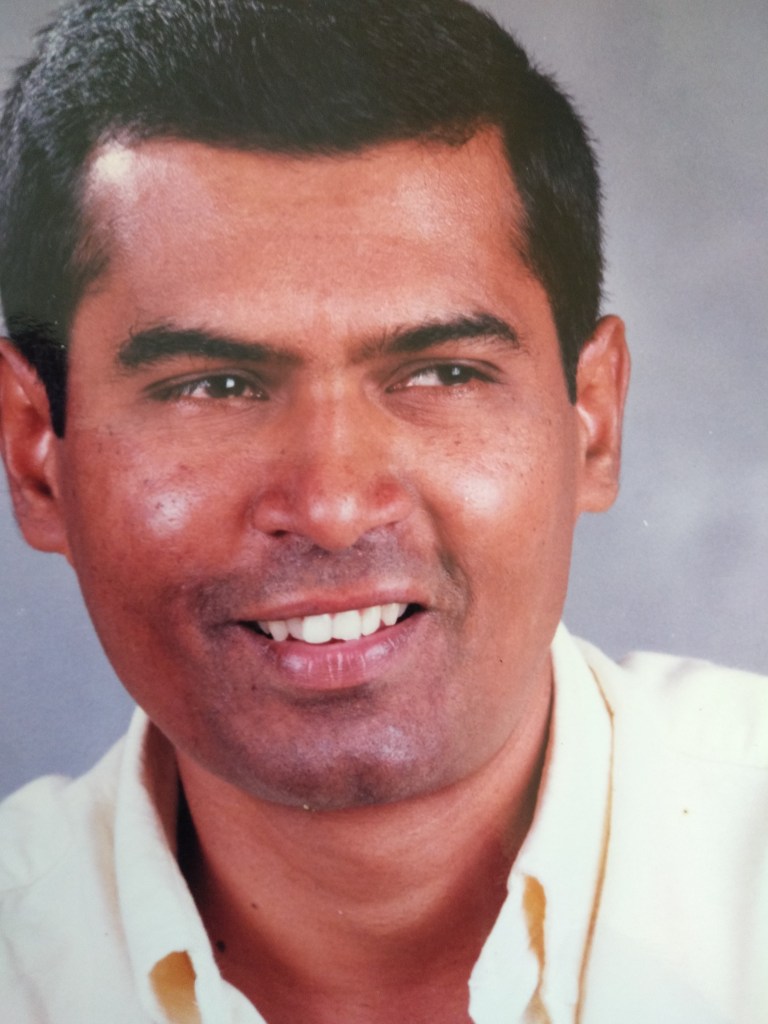
It seems like only the other day. The International Film Festival of India, IFFI, 1998 was on. Along with a colleague, I was seated on the steps outside Siri Fort I auditorium connected to a long corridor going to Siri 2. Someone introduced Leslie Carvalho. “Aha! The young filmmaker from Mangalore?”  I responded. “There’s a write up on you in The Times of India today. It says there’s a lot of expectation from The Outhouse.”

The “delightfully sweet” film had lived up to the expectation of the critics. It was bestowed the Aravindan Puraskaram, presented by the Kerala Chalachitra Film Society to commemorate the iconic Malayalam director, and the first Gollapudi Srinivas award, another national level award to recognise filmmakers marking their debut in Indian cinema. So I was not surprised to meet him next as a co-member of the jury for the National Film Awards 2000.

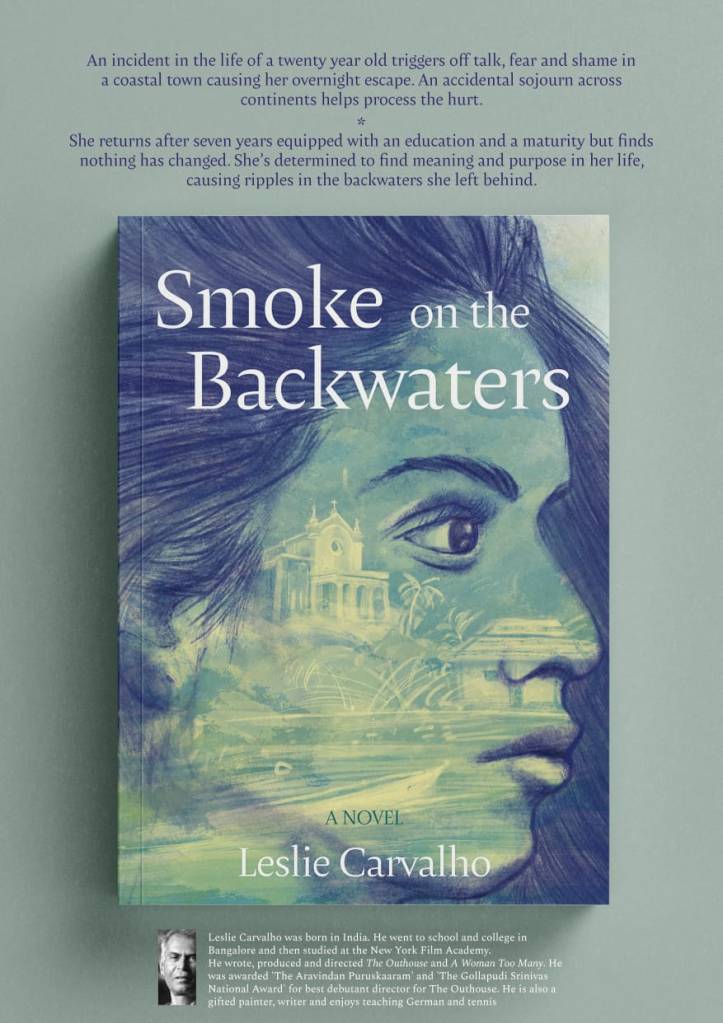
The Tennis coach who is also a German language teacher with a passion for painting has now published his first novel, Smoke on the Backwaters. It centres on Rosa, a twenty-year-old from Mangalore, who is forced to flee overnight because of the storm of gossip, fear and shame unleashed by a single incident in her life. Her unexpected journey across continents becomes a path of healing. Seven years later, armed with education and maturity, she returns home, determined to pursue her purpose in life. But how much had the town she left altered from its old ways?

RS: Leslie, before we talk Backwaters, can we briefly revisit The Outhouse? From where did you derive its content? And what was your compulsion for choosing that subject?
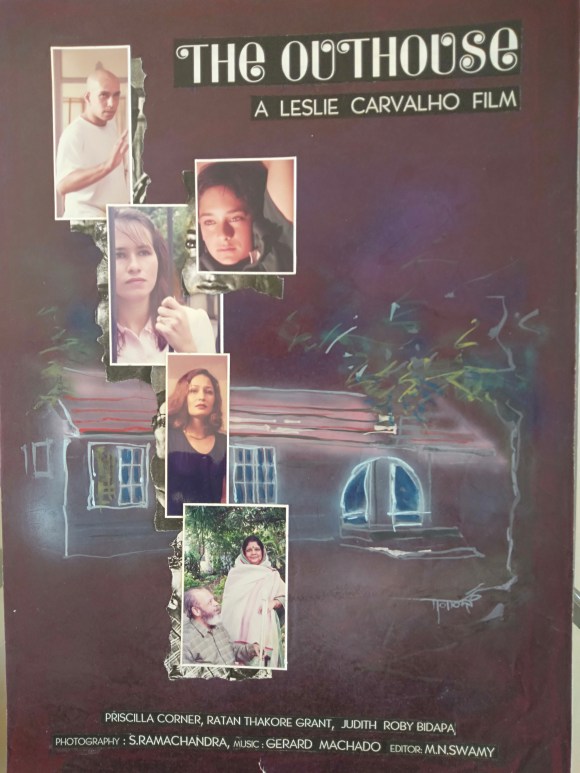
Provided by Ratnottama Sengupta

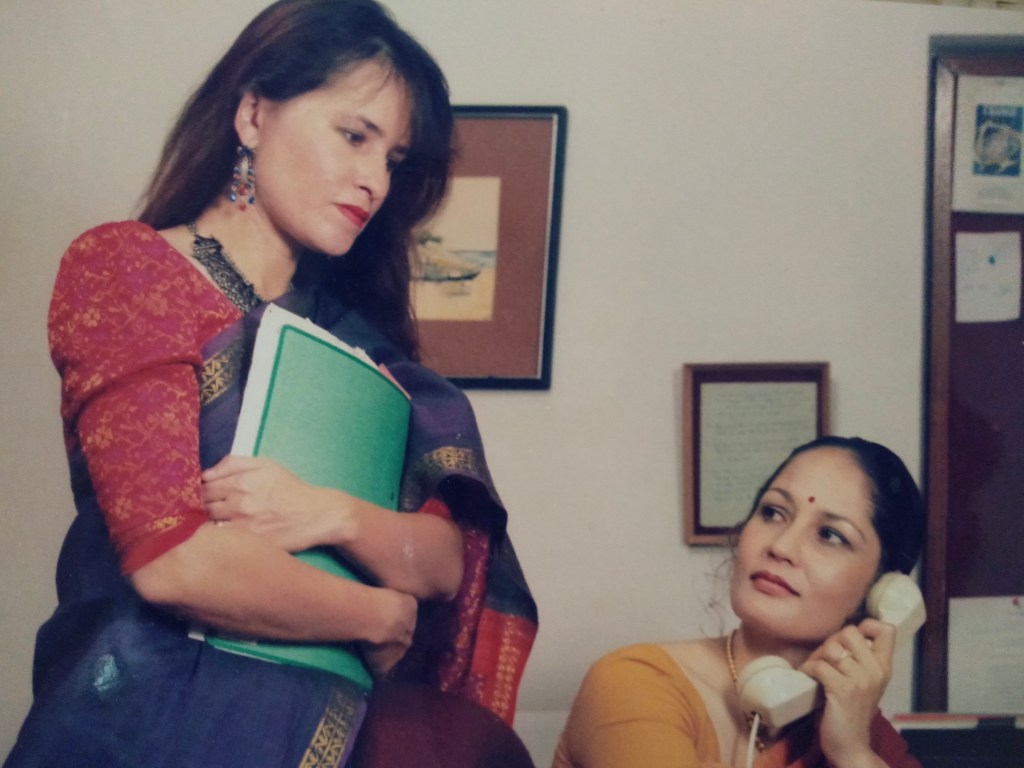
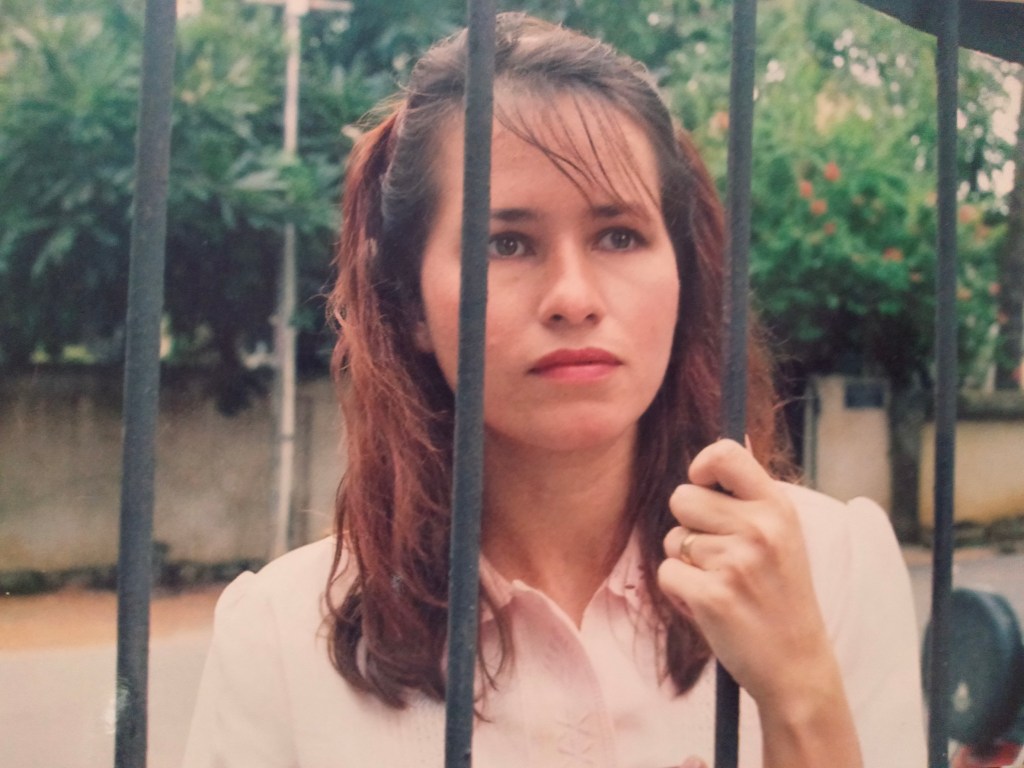
LC: The Outhouse was a simple, linear narrative about moving on in life despite the odds. A young mother’s need to gain economic independence to supplement the family income; the help she received from her financially independent sister; a kind hearted Bengali landlady’s generosity which causes stress and violence in the Anglo-Indian couple’s day to day life, and how it affects the two children growing up.

RS: Why did you choose this subject as your debut vehicle? If you were to travel in a time machine, would you choose a ‘mainstream’ subject?

LC: I chose this subject as my debut vehicle as I had seen quite a bit of violence in the Anglo- Indian community in the Lingarajapuram area of Bangalore I grew up in.

I was itching to make a movie after my six-month course at the New York Film Academy. As I was working on a very tight budget, I just stuck to what was taught — to keep it simple, straightforward and just tell a story using the various tools of cinema — in short, to make it cinematic.

If I were to go back in time, I don’t think I would have chosen a ‘mainstream subject’. I derived immense satisfaction along with the cast and crew as we felt we were working on something we were passionate about. We all felt drawn towards the characters, the story and the theme of the film.

RS: How did you get interested in cinema? And what were the problems you faced while filming The Outhouse – in terms of funding, casting, shooting location, distribution?

LC: I grew up watching Tamil, Kannada, Hindi, a couple of Konkani and lots of Hollywood films. My mother tailored clothes at home, and she taught a whole lot of women stitching. They were fans of Tamil cinema, especially of Sivaji Ganesan, MGR, and the heroes of Kannada cinema, Dr. Rajkumar and Vishnuvardhan. She also enjoyed the Hindi films of Rajesh Khanna, Dharmendra, Hema Malini, Amitabh Bachchan, Sanjeev Kumar, Jaya Bhaduri and Rekha — that is the popular cinema.

And my father, being an Army person, took us to see English films, like The Ten Commandments, The Bible, Hatari, To Sir, With Love[1]. Also, St. Germain’s School where I studied, screened English films every Friday afternoon in the Hall, from spools off a projector that made a jarring sound. It was an amazing experience — black and white Charlie Chaplin, Laurel & Hardy films and also Patton with all the bad words. Later, when in college, we would bunk classes to watch most of the popular Hindi and English movies.

At the New York Film Academy, I was exposed to an entire range of the world’s best in cinema. Satyajit Ray, Akira Kurosawa, Ingmar Bergman, Antonioni, John Ford, William Wyler, Fellini, Jean Renoir… And I watched a whole lot of films on the American Movie Chain (AMC). There I discovered all of Spencer Tracy’s films and fell in love with his sense of timing and under playing. It was also a time when I discovered Guru Dutt and marveled at his brand of filmmaking from Pyaasa, Kaagaz Ke Phool, Chaudhvin Ka Chand, Sahib Biwi Aur Ghulam to Aar Paar and Mr & Mrs 55[2].

It is hard to believe I began the shoot for The Outhouse on September 18, 1996, and completed it in 14 days – on October 1. After we went through the rushes, we required two more shots to link the gaps. Since I was on a shoestring budget of a few lakh rupees, I had rehearsals with the cast for close to three months. I doff my hat to them in gratitude as 90% of the film was canned on first takes. I could not afford retakes, and I worked with a brilliant cameraman, S Ramachandra, who was very supportive and encouraging. He shot most of B V Karanth, Girish Karnad, and Girish Kasaravalli films as well as the popular tele-serial Malgudi Days[3]. A number of first-time directors like myself, had benefitted immensely by his generosity and patience.

Since it was an independent film, whatever little finance I had, I sunk into the film. And then it took me a year to complete post-production for lack of finance.

I was particular about the casting. I wanted the Anglo-Indian look, feel, mannerisms, costume, interiors to be authentic. I met each cast member and spoke to them at length about the vision I had for my film. Almost all of them were from the Bangalore English Theatre, and all of them were cooperative. Moreover, Cooke Town is a quaint little place with many English bungalows and outhouses. After some struggle, I found one on Milton Street which suited my story perfectly.

After The Outhouse was selected for the Indian Panorama in IFFI ’98 and received the two national awards, I just walked into Plaza Theatre on MG Road in Bangalore and met the owner, Mr Ananthanarayan. He had heard about the film and asked me to meet the distributor, Nitin Shah of Hansa Pictures in Gandhi Nagar, the biggest distributor of English films. He put it on for a noon show for three weeks while Fire was on for the matinee and evening shows. The distributor then put it in Mangalore and Udupi for a week. And when I received the Gollapudi Srinivas National Award in Chennai, Aparna Sen was one of the honoured guests. She saw a small portion of the film and said that she would speak to Mr Ansu Sur to screen it at Nandan in Kolkata — founded by Satyajit Ray to help screen small independent films. A theatre owner in Kolkata recommended a person who took the film to the North East. It was also screened in parts of Kerala.

Coincidentally, this April 30th, The Outhouse will be screened in the leafy neighbourhood of Cooke Town next to the outhouse where the film was shot.
RS: In the last 50 years we have seen films by directors like Aparna Sen, Ajay Kar, Anjan Dutt. Even before these, Ray had touched upon Anglo Indians in Mahanagar. These are all films made in Kolkata. Is it because this is the erstwhile capital of the Raj?

LC: Many of the films on Anglo-Indians were based in Calcutta. It was the influence of the British Raj and its culture that was so much a part of their long history of ruling there. Of course their influence was in other parts of the country as well like Madras, Hyderabad, Bangalore, Whitefield and Kolar Gold Fields, the railway colonies all over the country, the hill stations, and many other cities which has pockets of Anglo-Indians.

RS: I remember one Hindi film, Julie that had an Anglo-Indian protagonist. How has the community been projected in popular culture? Was it lopsided or biased?

LC: Throughout our film history Anglo-Indians have played bit roles here and there. Some significant roles came their way in Bhowani Junction, the teleserial Queenie, 36 Chowrighee Lane, Bow Barracks Forever, Bada Din, Cotton Mary, The Outhouse, Saptapadi, Mahanagar, Julie, and Calcutta I’m Sorry[4].

Some of the characterisations have been quite biased; some not well fleshed out; some in passing fleeting moments of drunkenness, prostitution. The song and dance sequences have not helped the community, sadly.

RS: What led you to writing? The screenplay for The Outhouse?

LC: I wrote the screenplay of The Outhouse on plain A4 sheets of paper, on both sides. This is not done but I did it to save on cost. I gave the screenplay to my cinematographer S. Ramachandra, and in his generosity he understood my purpose. I went by what was taught at the New York Film Academy. Of course, I had to combine all the elements to make it whole. The idea of the screenplay came to me while I was at the film school in 1995.

RS: What was the trigger for writing Smoke in the Backwaters?

LC: As an artist, filmmaker, and writer, I have tried to combine all the elements of story-telling – fact and fiction — keeping in mind the flow of ideas, pace and momentum to engage and interest my audience and readers.

I remember beginning to write the novel two decades ago when my mother — who studied in Kannada medium — said, “I hope you will write it in simple English so I can read it too.”

And I wanted it to be reader friendly with regard to the font size, the brightness of the paper, the spacing, the clarity and the size of the book. I was lucky my publisher ‘Anglo-Ink’ was supportive and combined well to find that centre.
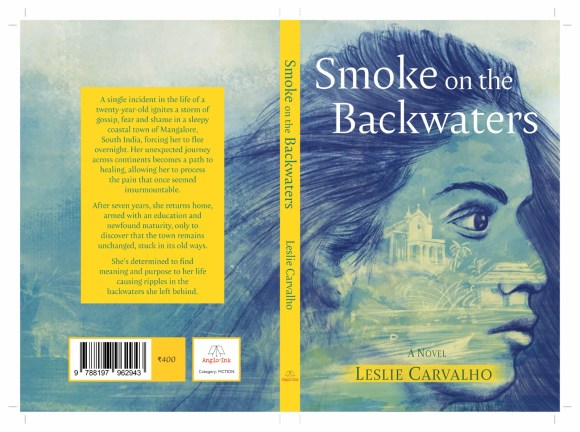
Provided by Ratnottama Sengupta

RS: How are you marketing the book? Through Litfests? Bookstore readings? Airport bookstalls? A H Wheelers?

LC: Since Anglo-Ink is a small-time publisher, we’ve had a dream launch in my hometown Bangalore at the Catholic Club. My book seller is Bookworm on Church Street in the heart of Bangalore and for people in Cooke Town it is in The Lightroom’ library.

We are looking at launches in various cities as well, through book readings, LitFests, Airport book stalls, AH Wheelers, readings at schools and colleges.

Since a major portion of the novel is set in Germany, we are looking at translating it into German. I hope to get it translated in a few Indian languages as well.

RS: Since the sunset decade of 1900s, Anglo Indians have been migrating to Australia and Canada. What triggered this migration? Economics or politics?

LC: The migration of Anglo-Indians was inevitable. It was bound to happen for reasons more than one, be it political, economic or social. First under the ‘Whites Only’ policy, many fair skinned Anglo-Indians migrated — the brown and dark skinned were left behind. Slowly they opened up and even they left. Some felt they would adapt better to a western culture, and have adopted their new country as their homeland.

RS: You were a big support for me when my son joined NLSUI in 2000. Again, when I curated Anadi, the exhibition of paintings by Contemporary and indigenous artists from MP and Chhattisgarh. Bangalore has since become an international megalopolis. How has life changed for the locals?

LC: Bangalore has changed dramatically and drastically. The change was bound to happen because of its growing prominence of an International City. The IT industry brought jobs, slowly other industries, started picking up from real estate, fashion, digital technology and social media platforms, start-ups, academics, sports, games, recreational and tourism.

The moderate climate was a huge bonus that attracted people from all over. Bangalore has always been cordial, encouraging and accommodative of people from all over through their mild manners, hospitality and gentleness.

Today Bangalore is unrecognisable. Still, some pockets retain that old world charm of neat, clean and green Bengaluru from the old Pensioners Paradise of Bangalore.

.

[1] The Ten Commandments (1956), The Bible (1966), Hatari (1962), To Sir, with Love (1967)

[2] Pyaasa (Thirsty, 1957), Kaagaz Ke Phool (Paper flowers, 1959), Chaudhvin Ka Chand (The Full Moon, 1960), Sahib Biwi Aur Ghulam (The Master, the Wife and the Slave, 1962), Aar Paar (This shore or that, 1954), Mr &Mrs 55 (1955).

[3] From 1986 to 2006.

[4] Bhowani Junction (1956), TV miniseries Queenie (1987), 36 Chowrighee Lane (1981), Bow Barracks Forever (2004), Bada Din (1998), Cotton Mary (1999), Saptapadi (Seven Steps, 1981), Mahanagar (The Big City, 1963), Julie (1975), and Calcutta I’m Sorry (2019)

Ratnottama Sengupta, formerly Arts Editor of  The Times of India, teaches mass communication and film appreciation, curates film festivals and art exhibitions, and translates and write books. She has been a member of CBFC, served on the National Film Awards jury and has herself won a National Award. 

.

PLEASE NOTE: ARTICLES CAN ONLY BE REPRODUCED IN OTHER SITES WITH DUE ACKNOWLEDGEMENT TO BORDERLESS JOURNAL

Click here to access the Borderless anthology, Monalisa No Longer Smiles

Click here to access Monalisa No Longer Smiles on Amazon International
Categories
Essay

New Perspectives on Cinema & Mental Health

Between 1990 and 2017 one in seven people in India suffered from mental illness ranging from depression and anxiety to severe conditions such as schizophrenia. However, the depiction of this in cinema has been poor and sensationalist contends Shantanu Ray Chaudhuri.

‘In a lot of films there is the underlying message that all the patient really needs is love and affection. There is a tendency in films to try and normalise mental illness by saying that patients don’t need treatment, they need love. The audience gets the two extremes and what we are not getting are portrayals of people with chronic illness.’ – Dr Cleo Van Velsen, psychiatrist

A poet loses his mental balance on seeing his beloved fall to her death. And what do his family members do? They approach a dancing girl in a brothel to marry him in a bid to get him cured. In a fit of madness, he even rapes her, and she becomes pregnant. But the typical ‘good Indian woman’ that she is, she perseveres in her effort. A few convoluted plot-turns later, the poet gets into a brawl with the villain, resulting in the latter falling to his death, much like his lover. Lo and behold! He is cured, though now he has no memory of the dancing girl.

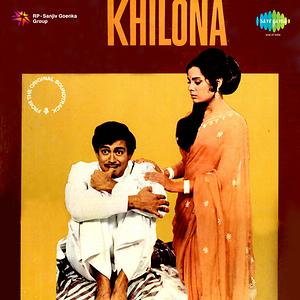
A nurse in a mental hospital is asked to take care of a patient as part of an ‘experiment’ that its dictatorial army doctor president wants to conduct. The patient is cured but it affects the nurse’s emotional stability. Insensitive to her turmoil, the doctor, preening with the ‘success’ of his experiment, more or less browbeats her into another one with a new patient. With disastrous consequences. Not only is the science/medicine of it dodgy (romantic love to cure a person), it also has the doctor spouting a line like ‘there’s nothing like a woman’s love and care to heal an unstable mind’, while the inmates going around the institute are, in the words of writer and critic Madhulika Liddle, the quintessential Hindi-film, “singing-screeching-long-haired lunatics in films like Khilona, Pagla Kahin Ka, Anhonee, etc”.

These are two of Hindi cinema’s most celebrated films, both huge commercial and critical successes: Khilona and Khamoshi. And both equally and criminally unaware of what mental health entails. Over fifty years later, on the evidence of films like Atarangi Re, Hasee Toh Phasee, Judgemental Hai Kya, Bhool Bhulaiyaa, Anjana Anjani, Tere Naam (in Hindi) and Hridpindo, Habgi Gabji and Bela Shuru (in Bengali), films continue to be as clueless about mental health conditions (MCHs) and how to deal with them.

As Vidushi Duggal, clinical psychologist and co-founder of Accept, says, “Mental health issues are grossly misrepresented in Hindi cinema. First, there is a tendency among filmmakers to select only the more overt (and hence the more ‘dramatic’) MHCs for portrayal, such as schizophrenia, bipolar disorder, dissociative identity disorder to name a few. Second, the lack of proper understanding and research, coupled with creative liberties aimed at sensational dramatisation, manifests as misinformed content.”

Her colleague and co-founder of Accept, Nikita Ramachandran, also a clinical psychologist, adds, “The depiction of mental health, despite advancement in literature, conversations and growing awareness remains largely uninformed. The core of this depiction is a viewing of mental health from the lens of chronicity and severity of illness. The scope of mental health has largely been limited to insidious mental health conditions such as depressive disorders, OCD, schizophrenia, with some focus on developmental disorders such as intellectual disability, autism or learning disorders. This depiction itself poses a problem, due to the association of mental health with illness/disease. The illness-lens fails to consider a fundamental truth – that mental health exists by virtue of being human.”

Leave alone such classic portrayals as A Streetcar Named Desire, Ingmar Bergman’s Persona and Hour of the Wolf, going back to the 1950s and ’60s, to more contemporary ones as One Flew Over the Cuckoo’s Nest, What’s Eating Gilbert Grape, A Beautiful Mind, Silver Linings Playbook, one would be hard-pressed to find one Hindi or Bengali film which addresses the theme with any verisimilitude till almost the new millennium.

There was the odd Mahesh Bhatt film like Arth and Phir Teri Kahani Yaad Aayi. One character that might escape attention when we talk of MHCs is the tenacious cop played by Boman Irani in Jijy Philip’s My Wife’s Murder, which has an interesting and understated subtext linking a food fetish with subtle melancholia.

Over the last couple of decades, films depicting mental illnesses have proliferated, sadly, with little responsibility and almost no understanding. While it is interesting that the films that managed to get some of it right were all made in the new millennium – reflecting a greater awareness about MHCs and greater acceptance in popular discourse – it is equally frustrating that some of the most pathetic films too have been made in the last two decades. As Vidushi Duggal says, “They depict an oversimplified and skewed portrayal of the MHCs in question, replete with stereotypical and insensitive portrayals that are magnified for dramatic effect.”

But this has been par for the course from, say, a Pagla Kahin Ka in 1970 and other films of the era which showed electroconvulsive therapy (ECT) as the cure for all symptoms of ‘madness’, to Krazzy 4 in 2008, where four patients suffering from every disorder possible escape the institution they have been committed to. Their experiences and conditions are then played out for laughs in a manner that is not only insensitive but also offensive.

The Films That Got It Partly Right

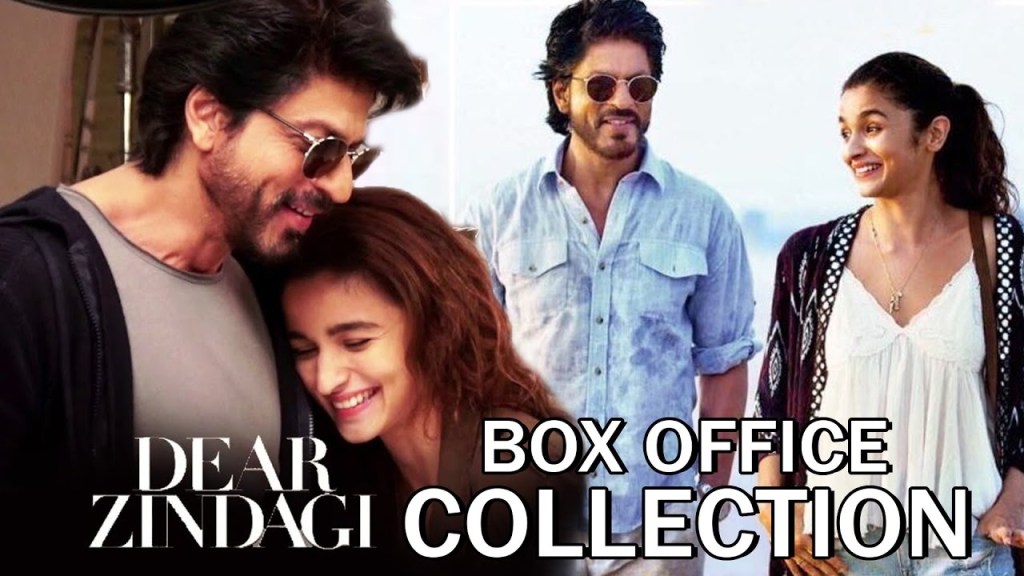
Dear Zindagi: That this Gauri Shinde film has been feted in the India media despite its problematic therapist-client relationship says a lot about how starved we are of responsible content. It needs to be applauded for its very nuanced take on mental health (Alia Bhatt[1] is a revelation), with none of the cliches that we are used to. It is also one of the few films that has its protagonist seeking therapy and that depicts sessions with a psychiatrist. As Vidushi Duggal says, “I can think of no realistic psychiatrist in Indian cinema. SRK’s[2] character may come close to a halfway decent portrayal of a psychotherapist in practice, but it too has problematic elements.” One major problem pertains to the relationship between the client and therapist with the latter even taking the former out to the beach for ‘sessions’ and talking about his own failed marriage and relationship with his son. A strict no-no as far as therapy is concerned in real life. As Anupama Chopra pointed out, the film offers a “Vogue version of therapy – a lovely expansive Goa house, sessions during walks on the beach, cycling together and dialogue like har tooti hui cheez jodi ja sakti hai[3]. It’s manicured and pat.”

Taare Zameen Par: This much-lauded film gave us the very real world of a dyslexic child and his relationship with a teacher who recognises his problem and inspires him and people around him to come to terms with and understand the very real gifts the child possesses. Though the child’s trouble with simple arithmetic is more a trait of dyscalculia than dyslexia, it remains a rare Hindi film that has found mention in peer-reviewed academic journals like Annals of Indian Academy of Neurology and Indian Journal of Psychiatry. These journals have praised the film for its general accuracy in depicting dyslexia which “deserves to be vastly appreciated as an earnest endeavour to portray with sensitivity and empathetically diagnose a malady”, blending ‘modern professional knowledge’ with a ‘humane approach’ in working with a dyslexic child. However, it needs to be mentioned that dyslexia is a learning disability and not a mental illness. That the filmmakers club it with other mental illnesses shows how mental health is not correctly understood.

15 Park Avenue: The story of a woman, Mithi (Konkona Sen Sharma[4]), conjuring a utopia in her mind – an imaginary house, 15 Park Avenue, that gives the film its name, happy mother of five imaginary children, wife of an imaginary husband – and living with it, Aparna Sen’s [5]film, shattering and affecting in equal measure, addresses mental illness with a sensitivity and accuracy that almost all Indian films lack. The telling moment when Mithi’s sister (played by Shabana Azmi[6]) tells the psychiatrist (Dhritiman Chatterjee[7]), “What right do we have to take away the happiness she gets from her imaginary world?”, raises an issue that is rarely addressed, the subjectivity of reality: hallucinations can be just as compelling as ‘reality’. Just because someone’s perceptions of reality is at variance from ours, does it give us the right to term the former ‘abnormal’ or object to it?

Death in the Gunj: Konkona Sen Sharma’s directorial debut is another rare film that addresses the unravelling of a fragile mind over a family holiday. Given that the film is set in 1979, an era when there was no conversation around the subject, there is no overt mention of mental health. Also, though Shutu (Vikrant Massey[8]) may be the one who comes across as prone to what could be called mental health issues, the film strips the veneer off the ‘loving family’ to show how we are complicit with our toxic masculinity and bullying in driving a frail mind off the rails.

Other films that got aspects of it right are Black, which despite going over the top in many crucial sequences offers a very nuanced understanding of Alzheimer’s, and Kartik Calling Kartik, one of the first Hindi films dealing with schizophrenia.

The Bad and the Ugly

Tere Naam: Leading the list would be this Salman Khan [9]starrer that featured a mentally unstable protagonist whose head is shaved, and who is tied in chains. The mental hospital sequence in the film is a gratuitous misrepresentation. In a gross failure of messaging, like Shah Rukh Khan’s Rahul in Darr, Radhe Mohan’s obsessiveness, in keeping with the tradition of ‘heroes’ stalking women in Hindi films, is presented as worthy of emulation. One aspect of Hindi films dealing with mental health issues that needs to be called out is the manner in which they position unrequited love/obsession as a trigger, often portraying that as a fashionable antihero statement. Which of course harks back to Saratchandra Chattopadhyay’s Devdas, the original ‘antihero’ who could have done with psychiatric consultation.

Vidushi Duggal says, “While many films have gone on to give this impression, I would be wary of making that connection as it is yet another example of misinformed sensationalisation. Mental health issues are complex and have multiple causal factors – genetic, biological, psychological and social/environmental. Nikita Ramachandran adds: “The depiction of someone unravelling or descending into a breakdown or developing a mental health condition is an inaccurate portrayal, as well as an overgeneralisation that caters to the general theme of love, attempting to add an ‘interesting’ dimension or layer to this portrayal of love. Equally problematic is the manner in which mental health has been pathologised for a long time. Behaviour seen as deviant, classified as ‘abnormal’, characters depicted with mental health issues were villainized. The violent death has been an age-old trope of a satisfactory ‘The End’, where closure has been synonymous with death and a general depiction of ‘good over evil’.”

Bhool Bhulaiyaa: A psychological horror comedy (!) that ostensibly deals with dissociative identity disorder (DID), this colossal hit makes a series of missteps about mental disorders. Hypnosis as a cure for DID, ‘treatments’ rooted in superstition (including a psychological condition that is cured when the doctor slaps the patient), ‘psychiatrists’ who applaud themselves as godmen – it is an endless list of shocking distortions. Akshay Kumar [10] as a psychiatrist. Need one say more?

Atarangi Re: ‘I am a psychiatrist, and I know women.’ That’s a dialogue a doctor mouths and that’s the level of discourse around mental health this film stoops to. In another sequence the doctor clubs together people with bipolar, psychiatrist disorders and schizophrenia in a manner that’s downright offensive. In one sequence, the ‘imaginary’ character Sajjad, a magician, is supposed to make the Taj Mahal disappear and fails to do so only because the patient has popped a pill immediately before the ‘act’. Filmmaker Aanand L. Rai is a serial offender when it comes to woeful depiction of mental health issues, with the protagonists of Tanu Weds Manu Returns shown consulting a marriage counsellor in an asylum! The man describes his wife’s irrational behaviour as an example of bipolarity to which the doctor responds: “In that case, every woman is bipolar.”  

Anjana Anjani: Writing about the ‘hollow space in my heart’ that made her use the term ‘death thoughts’, Therese Borchard says in her blog, “The most difficult thing I will ever do in my lifetime is to not take my life.” That is everything that is wrong Anjana Anjani, where two adults battling life crises enter a pact to take their own lives. A hugely problematic representation that romanticises suicide, it makes a mockery of the breakdown that drives people to such despair. 

Hasee Toh Phasee: The protagonist here, described as ‘mental Meeta’ in the film’s promotional material, blinks her eyes incessantly, twitches her nose, is extremely jittery – all of which are shown as symptomatic of ‘madness’. She is constantly popping pills to control these sensations which lead to odd situations.

The Situation in Bengali Cinema

Such is the paucity of characters dealing with MHCs in Bengali cinema that a few filmmakers I reached out to, could not come up with a single film on the subject. One pointed out Aparna Sen’s Paromitar Ekdin for its realistic and heartfelt delineation of the character of Khuku, a girl with intellectual disability who is referred to as ‘schizophrenic’ by other characters in the film. Uttam Kumar’s[11]1955 film Hrad, based on a novel by Bimal Kar, is another instance of a film that places its protagonist in an asylum. He seems to have forgotten parts of his life and behaves in a manner that make people feel he is ‘mad’. There’s of course Deep Jwele Jaai, the Bengali original of Khamoshi

Three recent films stand out as examples of how clueless writers and filmmakers are when it comes to depiction of MHCs. Shieladityo Moulik’s Hridpindo is the story of a woman who, because of an accident and the brain surgery that follows, is left with her fourteen-year-old self, with no memory of her life after, including her husband. However, her pronounced lisp and the way she behaves, constantly demanding attention, leaves you wondering if she is a child of seven! Not to mention that a film dealing with a brain surgery is called Hridpindo.

Raj Chakraborty’s Habgi Gabji, the title a take-off on PUBG, addresses the very relevant theme of gaming and mobile addiction and its frightening consequences on young minds. Bolstered by a good turn by child actor Samantak Dyuti Maitra, the film, despite its noble intentions, suffers from the same problems that beset many other films of the genre. The child is taken to a psychiatrist. However, the session does not take place in a professional space but in the doctor’s drawing room. There is little emphasis on understanding, prevention and cure, with a large part of the meandering script devoted to the child’s violence and alienation. Which is disappointing given that the WHO has defined gaming disorder as a “pattern of behaviour characterised by impaired control over gaming, increasing priority given to gaming over other activities” and has flagged the escalation of gaming as a major health risk.

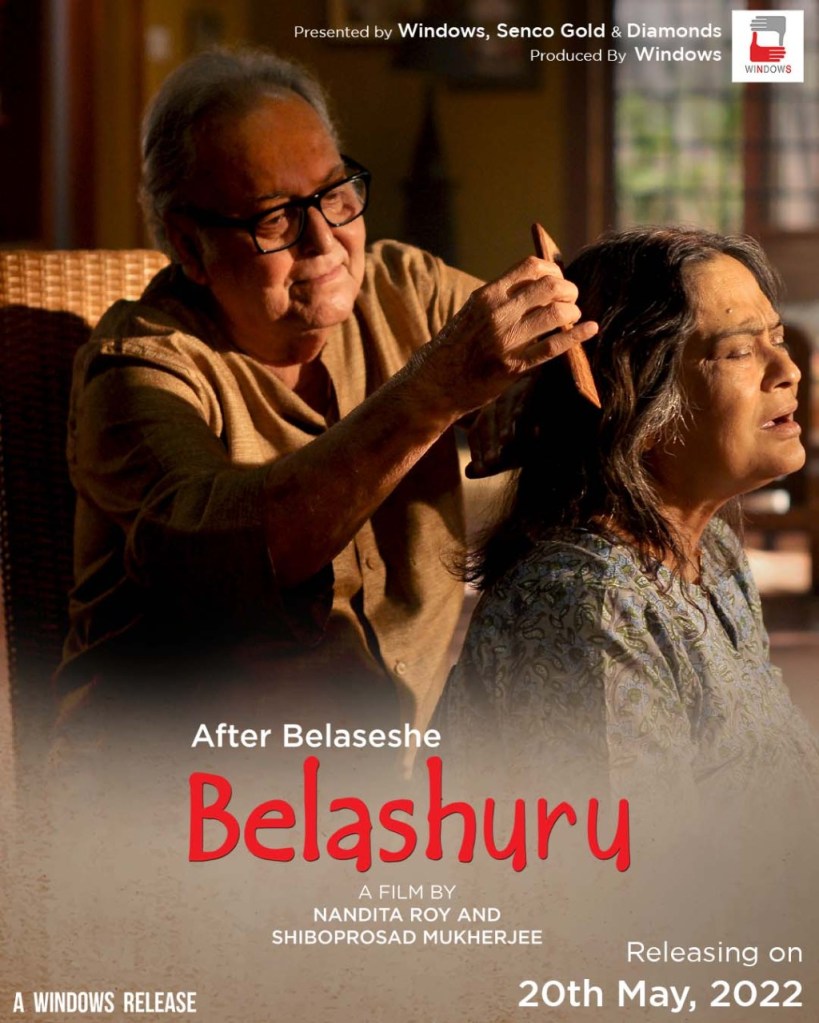
Bela Shuru, one of the biggest successes of 2022, is a high-intensity melodrama with a social message, typical of films by the filmmaker duo Nandita Roy and Shiboprasad Mukherjee. It addresses the onset of Alzheimer’s in the elderly but the symptoms that the wife displays – smearing her face with vermilion, among others – is more in tune with lunacy than the more insidious effects of Alzheimer’s. It is obvious that the filmmakers opt for the overdramatic and take creative liberties in the depiction of mental health issues, dumbing down the narrative, in the process bracketing different illnesses under the same umbrella and distorting the truth.

The lack of proper representation in Bengali cinema is also surprising given that its biggest icon, Satyajit Ray, introduced the world to many unheard-of mental health issues in his stories. Nakur Chandra Biswas in the Shonku books, for example, is a psychic who experiences flashes of the past and future. Barin Bhowmick-er Byaram is the story of a kleptomaniac who has been through therapy. The protagonist of Bipin Chowdhury-r Smritibhrom suffers from a curious case of memory loss, while Fritz explores the childhood trauma of its 37-year-old protagonist. In the Feluda story, Dr Munshi-r Diary, we have a patient who suffers from a persecution complex, an irrational fear or feeling that one is the object or target of collective hostility and persecution. What is fascinating is that Ray wrote about these conditions decades before they became part of the public discourse in India. However, none of these were adapted into cinema.

The Responsibility of Filmmakers and Writers

It is critical to note that cinema plays a significant role in shaping, creating and developing one’s understanding of reality. Films have of late started investing in an intimacy director/coordinator. Maybe it is time to have good psychiatric consultants too. Nikita Ramachandran says, “Mental health and emotional well-being are nuanced, and every story is different. It is challenging to depict the many layers, and also portray these in ways that will resonate or connect with the larger audience.” Vidushi Duggal is of the opinion that, “While acknowledging that an exhaustive depiction of all nuances of mental health is beyond the scope of a time-limited medium that is essentially designed for entertainment, as a community we need to remain cognizant of the potent and pervasive influence of cinema on creating awareness and developing/shaping attitudes. This calls for responsible filmmaking that involves adequate research on the mental health issues being portrayed.”

(Note: For Vidushi Duggal, who listened. Nikita Ramachandran, thank you for your inputs.)

A shorter version of this essay was published in Telegraph earlier

Shantanu Ray Chaudhuri is a film buff, editor, publisher, film critic and writer. Books commissioned and edited by him have won the National Award for Best Book on Cinema twice and the inaugural MAMI (Mumbai Academy of Moving Images) Award for Best Writing on Cinema. In 2017, he was named Editor of the Year by the apex publishing body, Publishing Next. He has contributed to a number of magazines and websites like The Daily Eye, Cinemaazi, Film Companion, The Wire, Outlook, The Taj, and others. He is the author of two books: Whims – A Book of Poems(published by Writers Workshop) and Icons from Bollywood (published by Penguin/Puffin).

[1] Indian film actress

[2] Indian film actor, Shah Rukh Khan

[3] Translates from Hindi as: “all broken things can be repaired”

[4] Actress and Director

[5] Actress and Director

[6] Actress

[7] Actor

[8] Actor

[9] Actor

[10] Indian film actor

[11] Actor (1926-1980)

PLEASE NOTE: ARTICLES CAN ONLY BE REPRODUCED IN OTHER SITES WITH DUE ACKNOWLEDGEMENT TO BORDERLESS JOURNAL

Click here to access the Borderless anthology, Monalisa No Longer Smiles