In Did He Ever?,Rhys Hughes gives fun-filled verses on Lafcadio Hearn, a bridge between the East and West from more than a hundred years ago. Clickhere to read.
Dolly Narang muses on Satyajit Ray’s world beyond films and shares a note by the maestro and an essay on his art by the eminent artist, Paritosh Sen. Clickhere to read.
A few weeks ago, my daughter invited me to go on an outing with her and her helper. My daughter, who is deaf and uses a wheelchair, lives in a group home in Osaka. She is becoming more and more independent, but she does have kind people around her to give her support, including a helper who is also deaf and uses Japanese Sign Language.
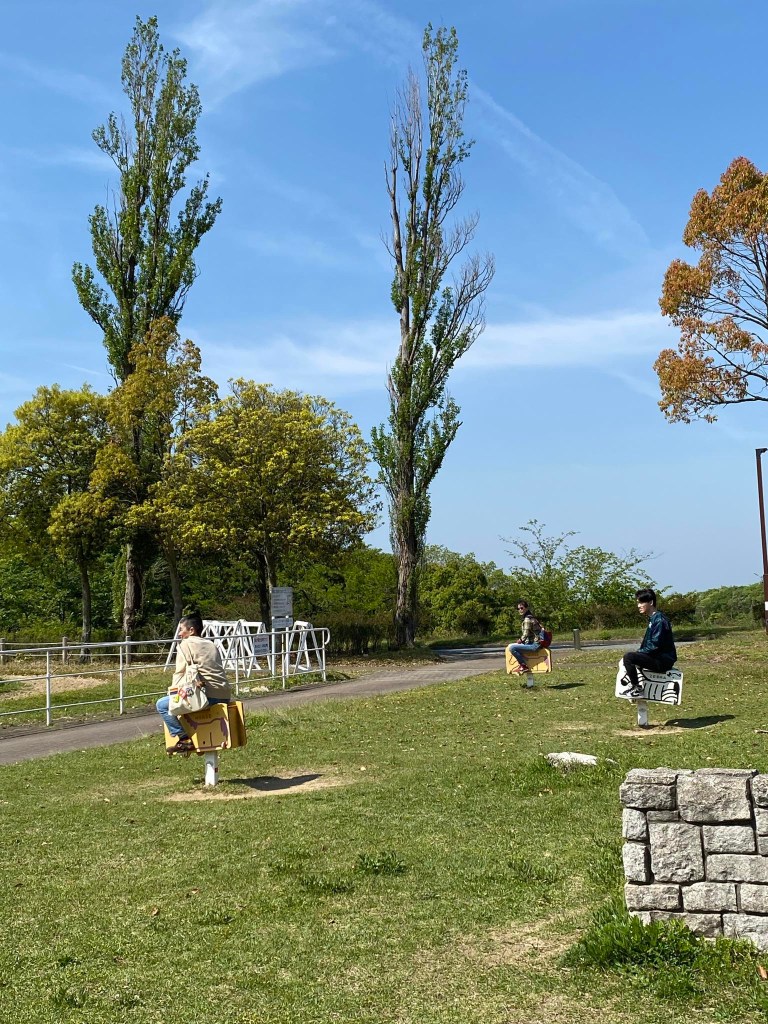
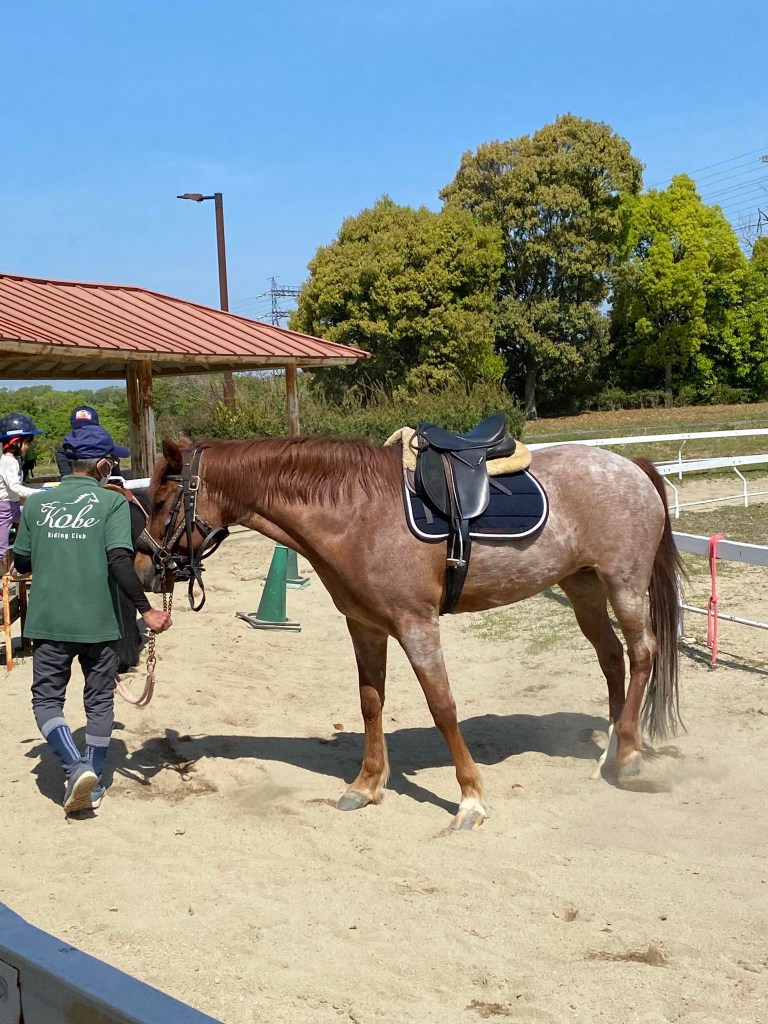
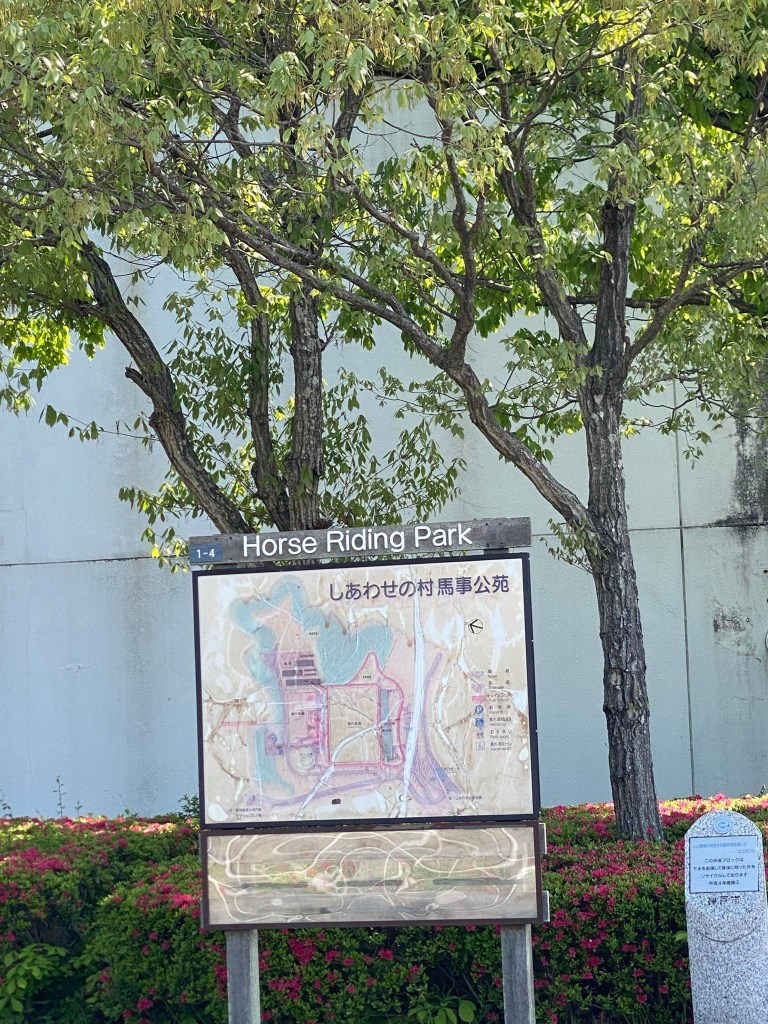
Actually, my daughter invited our entire family to accompany her and her helper on a weekend to Happy Village, a recreational facility in Kobe especially for persons with disabilities. We had visited the onsite stables years ago, and our twins had ridden around a ring on ponies. Having such pleasant memories of the place, I looked forward to visiting again.
My husband declined due to a golf tournament, and my son, who had just entered college as a graduate student, was concerned that he would have too much homework. My daughter informed me that her brother would meet us for a meal.
Although I was looking forward to seeing my daughter and getting to know her helper, I did have a few concerns. For one, I don’t have the confidence to drive in the megapolises of Japan. Kobe, for example, is a confusing city with many ramps, overpasses, and one-way streets, not to mention the traffic. I knew that Happy Village was on the outskirts, however, and I thought that maybe I could get myself there by car. I could have gone by bus or train, but it would have taken me two or three times as long to get there.
In addition, I was a bit worried about communication. I can converse with my daughter, more or less, in Japanese Sign Language, but my signing is not perfect. Since leaving home, my daughter’s vocabulary has expanded, and her signing has sped up. When among fluent JSL users, I can’t always follow the flurry of their fingers. Nevertheless, I know that my daughter often struggles to keep up with what hearing people are saying, and I thought it would be a valuable experience.
A couple days before, my daughter sent me a Google Maps link to the restaurant where we would meet. We would have a meal and then proceed to Happy Village. On the day of, I packed a bag, filled my car with gas, and set out. I had no idea what we would be doing. On trips with my husband, every hour was pre-planned. I thought it would be nice to just go with the flow. I was looking forward to seeing my two kids.
I managed to arrive at the restaurant with ten minutes to spare. I staked out a table and sat down to wait. While perusing my phone, I came across a link that I thought would interest my son. I sent it to him. He replied with a laughing emoji, followed by “Are you coming to Kobe tomorrow?”
A cold sweat broke out over me. “Tomorrow? I thought it was today.”
“She told me tomorrow,” he texted back.
“Oh, no.” I quickly scrolled through our communications and confirmed that we were indeed meeting him the following day. It was now ten minutes after the time I had agreed to rendezvous with my daughter at this restaurant. Or so I thought. Was I supposed to meet her tomorrow? Would I have to find a hotel for the night?
Panicking, I sent my daughter a text and a photo of the restaurant. “I’m here!”
She texted back that they would be a little late, and that there would be six of them.
Six! I had thought that there would only be the three of us. Now I was feeling really intimidated. I am an introvert, and I know my limits. The more people there are around me, the more I retreat into myself. Plus, there was the issue of communication.
Finally, my daughter and her entourage arrived. I met her helper, the helper’s husband, the helper’s twin sister, an older woman with cropped hair and rainbow socks, and a young man about my daughter’s age. We got down to the business of ordering food via the tablet on the table, and sorting our basic facts, such as my age, and that we would be meeting my son the following day at Sannomiya Station.
Sannomiya Station! That was in a busy district in the heart of Kobe. I hadn’t known that we were actually going into the city. I managed to sign that I was scared of driving in such an unfamiliar place. I was beginning to realise that I should have pried more details about this trip out of my daughter beforehand.
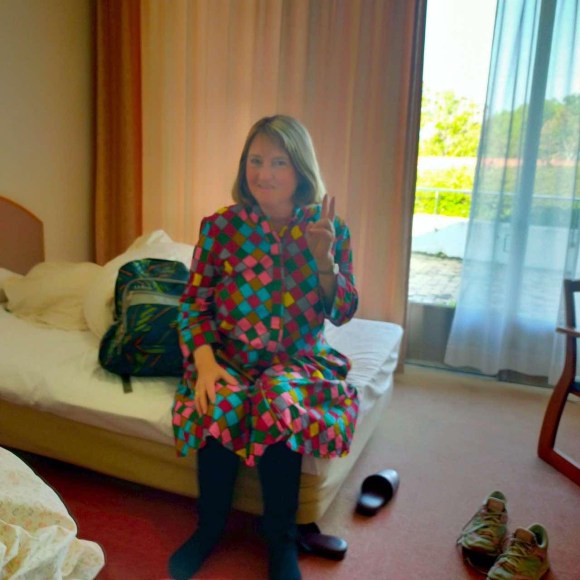
Three hours later, I followed the others in my car to Happy Village. My daughter and I were in one room, the others in their own rooms. By this time, my social battery was waning. I was ready to take a bath and curl up in bed with a book. My daughter, who is an extrovert, went down the hall for a couple more hours of JSL conversation and cake with her friends.
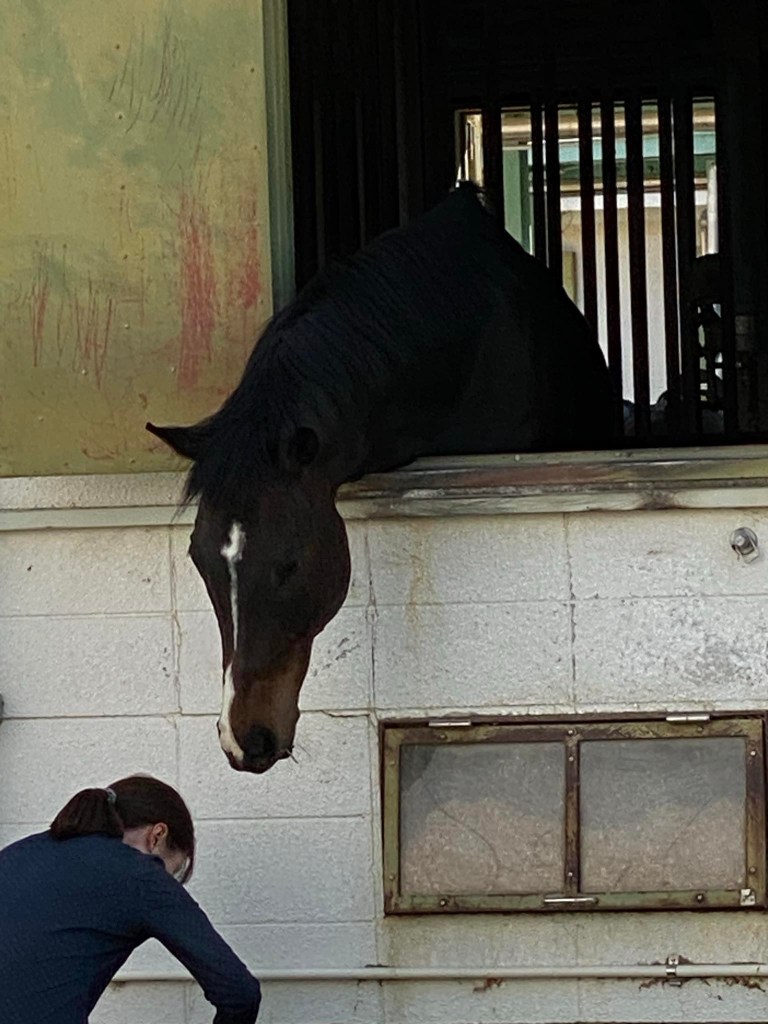
The next morning, we checked out of the hotel and stopped by the stables. Just as before, children rode ponies around the ring. My daughter zoomed around in her wheelchair, and the rest of us tried to keep up.
Next, we dropped by the helper’s apartment. I was invited to leave my car in the parking garage, and ride in the car with the others, for which I was very grateful. As we headed toward Kobe, I noted how quiet it was inside the car. No one tried to talk or sign. It would have been dangerous for the driver to take his hands off the wheel to form words, or to look away from the road for too long.
We finally connected with my son, and went to a restaurant. Because there were so many of us, we split up. My kids and I sat at one table, and the others sat at another. I brought my son up in English, and it remains our lingua franca. After my son and daughter exchanged a few words in sign language, my son and I talked a bit about the recent political situation in the United States. Although my daughter was curious, I couldn’t quite explain to her what we were talking about in JSL. I encouraged her to write notes to her brother. They communicated by pen and paper for a while.
After lunch, my son went back to his apartment to prepare a PowerPoint for his class the next day. The rest of us wandered around the city, window-shopping, until it was time for me to leave. My daughter wasn’t ready to go home, so the helper’s husband offered to give me a ride back to my car.
On the way, he said, “When you were talking to your son, your daughter didn’t understand.”
“That’s true,” I conceded. “We were speaking in English.” Although I had wanted to bring up my daughter in English, circumstances made it too difficult. Yet, my son was the only one in our family that I could freely communicate with in my native language.
“I felt sorry for her,” the helper’s husband continued.
I nodded. I had an idea of how my daughter felt. Although I had lived in Japan for many years, I often didn’t fully understand what people were saying around me.
He activated an app on his smartphone, which was affixed to the dashboard, which rendered spoken words into text. He suggested that my daughter could use such an app. I tried to explain that she already knew how to use the app, but for some reason she hadn’t tried to employ it in the restaurant.
I guess I could have been offended by his words, but instead I was moved. I was happy that my daughter was surrounded by people who cared so much about her, who were looking out for her best interests. How wonderful that she had finally found her tribe.
Suzanne Kamatawas born and raised in Grand Haven, Michigan. She now lives in Japan with her husband and two children. Her short stories, essays, articles and book reviews have appeared in over 100 publications. Her work has been nominated for the Pushcart Prize five times, and received a Special Mention in 2006. She is also a two-time winner of the All Nippon Airways/Wingspan Fiction Contest, winner of the Paris Book Festival, and winner of a SCBWI Magazine Merit Award.
PLEASE NOTE: ARTICLES CAN ONLY BE REPRODUCED IN OTHER SITES WITH DUE ACKNOWLEDGEMENT TO BORDERLESS JOURNAL
 Borderless