Tonight, in accordance with what I generally find necessary to record, I have mustered the courage to give full account of the singular events that have befallen friends and neighbours. These nightly entries have drained me of energy and patience, produced unusual sounds in my home, like those caused by nests of bees or wasps. Unusual too, the grotesque belief that loneliness and long periods of silence and speaking to one’s self, will give rise to hallucinations or other such aural phenomena. Be that as it may.
In the edition of the May ninth 1973 Daily Mirror, I came across an article which reported a most daring escape made from the Mental Hospital not far from our quiet neighbourhood. In 1968, the escapee had been accused of excoriating the flesh of a sixty-year old widow, so it read. What inflamed the imagination of the good people of our village was the way in which he had let himself in. Knocking at the door he introduced himself as a salesman for an encyclopaedia publishing house. The unsuspecting woman let the killer in and even offered him a cup of coffee. Her husband had died a very long ago, so it was supposed that she must have had an urgent longing to speak to someone. After conversing with her at some length, he casually revealed his hideous companion, an axe, and buried it deep within her brain, so the autopsy showed. He then proceeded to excoriate the poor woman. This odious account he willingly, and I add here, with over-excessive enthusiasm, declared to the authorities shortly after his capture. Owing to the savage and cynical nature of the crime, the monster was committed to the mental institution, and there interred for life …
Quite understandably his flight created a disturbance in our village neighbourhood. The twisted-minded beast was no doubt lurking about the wood surrounding our tranquil homes. The police stated that they had discovered fresh footprints leading from pockets of underbrush in our general direction. They have identified these footprints as his ! He had found an asylum during the hunt, and now was in search for new prey. His bloody doings would not stop at one …
Some time passed before the police gave up hope of locating the mad murderer. No one had seen him nor had my neighbours made any attempt to form a squad of vigilantes to ferret him out of his lair. I, as usual, sat behind my desk as I am doing at present, gazing half dreamily upon my scribbled notes, regarding the affair rather apathetically.
Five nights ago whilst lethargically reading through my writings as was my wont, a scream tore through the stillness of an unusually still night. Looking up from my writings, I imagined a sulking figure dragging itself over a rooftop just opposite my home through the parted serge curtains of my bay window. I state emphatically that the hour was late, and that perhaps my eyes had grown weary. Thinking it was merely my imagination, I returned to my work at hand.
The following morning to my astonishment, the papers reported a grotesque killing during the late hours of the night only six houses from that of my own ! In fact, it was someone with whom I was acquainted. My blood ran cold. He had been found beheaded. Chunks of flesh had been hacked out of his neck and torso. A hatchet undoubtedly was used for this gruesome purpose. What proved singularly frightful was that the unfortunate victim had been having coffee with his killer. Two cups of half-drunk coffee were discovered unmolested on a small, sitting-room settee. As to how the murderer entered, it can only be assumed that his victim let him in. The state of the house was in ruin. Nothing, however, had been stolen. A clear case of premeditated murder, so the police concluded.
This of course brought myriads of police to our quiet street where investigations were carried out with much fanfare and discomfiture. I was visited several times, the police sniffing about my home like a pack of retrievers. The chief inspector questioned me as if I were the criminal.
Did he think I was deflecting his attention from something important to their investigation ? Did he suspect me of foul play ? Of complicity ? He had those shifty pink rabbit’s eyes of a police inspector ! In spite of this ferreting and harassment, I said nothing. He casually flickered the ashes of his pipe in a seashell which I kept on my writing-table, thinking it, no doubt, an ash-tray, then left without a word, a master mustering his hounds. You may ask why I divulged not a word about that phantom on the rooftop. This I have asked myself, and even now at my desk writing this entry, I have no rational answer …
That evening (of the murder), I uneasily noted that my mind had been wandering from its normal systematic chain of thoughts. I was continually straining my eyes to envisage that evil phantom dancing on the roof opposite my home. Suddenly, and I assert my eyes did not deceive me, there it pranced again, sweeping haphazardly from shingle to shingle … from chimney to chimney, brandishing something metallic which glittered in the blue moonlight high overhead. And in one emblazoned second, I believe he gaped at me, mouth open, eyes ablaze! Yes, I am sure of it! And in that one terrible moment I noted that he possessed the same facial features as me: flattened head, black, beady eyes, pug nosed, curled lips. He vanished, darting out of the moonbeams … Throwing down my pen, I clutched at my hair ; my head churned out a series of chilling, bizarre scenes. The uncanny resemblance unsettled me, even alarmed me. I finally lay on my canopy falling into a troubled, dreamless sleep.
How stunned I was the next morning when I read in the morning papers that my next door neighbour had been brutally butchered, ostensibly by the workings of the same maniac. The killing was identical, as was the means by which the killer entered the house. The police searched frantically. House to house inspections had been ordered and carried out. Again the hounds rummaged through my household belongings in the most disrespectful manner; had they snickered at the scones and boiled eggs I failed to remove from the kitchen table, crushing the shells that lay scattered on the floor under their muddy boots ? They had some cheek. And as they went about their sordid ‘duty’, the chief inspector eyed me with a strange mixture of pomposity and wariness, twitching his pipe inside his mouth from left to right and right to left, his nostrils quivering.
I felt my knees stiffen under that glare. Yet, I dared not return his pinkish rabbit stare, nor divulge my visions of the fleeing phantom. They finally left, then scoured the wooded area with dogs. I heard the howls and barks and yells of the chase. If I’m not mistaken they searched the surrounding woods and glens for days ; alas, the escapee was nowhere to be found. Many of my neighbours began to leave. To tell the truth, I felt no immediate danger, although I was quite naturally disturbed. Dull depictions flooded my thoughts of a hatchet-wielding man breaking down my door. And evening after evening, as darkness mantled the clusters of woods and lonely streets and lanes, icy droplets of fear gripped my heart ; I had seen this maniac, yet said nothing. Knocks rattled my door. Upon answering it, there was no one. Hornet-like droning and bee-like buzzing rattled the drums of my ears. Was it my imagination ? Could fear stir the mind to such heights of fancy ?
And so it was as four or five more nights passed. Two more murders had been reported in an adjacent neighbourhood, notched on the helve of the maniac’s gory weapon. I was in a quandary. Why did this evanescent shadow haunt my nocturnal solitude ? Why did he pertinaciously dance before my window ? Why hadn’t he knocked casually at my front door ? God if I knew. And why hadn’t I been to the police to notify them of this moonlit macabre rite ? Did the killer mock my terror … my timid reluctance to act ? Did he embrace me as his tacit witness … his accomplice ?
Yes, why hadn’t I gone to the police ? The words are so difficult to express ; they wretch themselves from my pen. How then would they sound, sputtered to the police, or to that pipe-wielding inspector ? Oddly enough, though, I always remained calm. And even as his crazed figure sauntered under the silver moonlight, I sat stoic, placid, squeezing my pen until my fingers and knuckles turned pale white …
The night of the double murder occurred a week ago. Since then the killer appears to have ceased his bloody onslaught. Perhaps he has been apprehended, or cornered in some distant wooded recluse like a wild animal. I haven’t seen him, and I must confess, on several occasions I’ve actually stepped out my door on to the porch to listen more attentively ; to see him more clearly ; to call out to him, discharging my savage, commingled phantasies and fears …
That night, as I toyed pointlessly with my writing tool, I fixed my bloodshot eyes to that hellish cornice of the roof opposite my house, a roof long since abandoned by its two or three occupants. Nothing. No one. I’ve wondered from time to time if the lunatic had really caught sight of me glaring at him in his frantic flights, my eyes pinned on his as he glided from rooftop to rooftop as if floating puppet-like in mid-air. All this had me chilled. It was unusually damp. My study felt damp and mildewy from insufficient heating. I hear footsteps coming up the street, hollow in the thick night. They halted.
I detect a slight rustling sound outside on my porch, like crispy leaves cracking under a booted foot. Why I write all this down just now is indeed troubling. A faint dizziness has sharpened my aural perceptions. And as I continue to write, in spite of myself, the porch door was opening, slowly … patiently as if the creaking wished not to intrude upon those sleeping at this late hour. And still I scribbled line after line.
There was someone knocking at my front door. I was chuckling as only a deranged man would when sensing foul play afoot, yet patiently waiting for it to strike ! And again, my pen continued to dictate to me. I was completely taken up by my writing. Is it because it mirrored the indelible mark of my solitude … my banal existence ?
There it was again that knocking. Should I answer it ? Perhaps it’s the old codger wanting a cup of hot coffee ! What a shuddering, stupid thought. No, probably some drunkard who noticed my light … or a neighbour in distress, no, better yet, the pipe-twitching inspector hoping to catch me off guard. Yes, I’m sure it’s that snooping blighter. God how my nerves were at an edge! And that tapping and rapping at my chamber door … Some late visitor entreating an entry? Ha ! Who could it be for Heaven’s sake ? Him ? Yes, him ? Rotten luck mate, I hadn’t a grain of coffee to offer him. That blasted door … If only I had a pistol … No, in the kitchen … the cleaver ! I fetched it and decided to see who fared better ! Hatchet against cleaver … I was sorry for the old sod — no coffee that night but a taste of my cleaver. To the kitchen. That hammering was driving me daft ; he’d wake up the whole damn neighbourhood … or what was left of it … First my cleaver, then the door … then to the rooftops … to the rooftops …
Paul Mirabile is a retired professor of philology now living in France. He has published mostly academic works centred on philology, history, pedagogy and religion. He has also published stories of his travels throughout Asia, where he spent thirty years.
.
PLEASE NOTE: ARTICLES CAN ONLY BE REPRODUCED IN OTHER SITES WITH DUE ACKNOWLEDGEMENT TO BORDERLESS JOURNAL
Ratnottama Sengupta gives a glimpse of the life of a woman impacted by the Partition, spirited enough to be a celebrated performer and to have a compelling saga written on her life posthumously, Zohra: A Biography in Four Acts by Ritu Menon, published by Speaking Tiger Books. This feature is based on the book and Sengupta’s own personal interactions with the aging Zohra Sehgal.
Zohra Sehgal. Photo provided by Ratnottama Sengupta
Zohra Sehgal[1] mirrors, in a strange kind of way, the story of the Indian subcontinent.
Born a Khan in 1912, raised in purdah by the Nawabs of Rampur in palaces and mansions in Lucknow and Dehradun, educated in Queen Mary’s College of Lahore; trained in Western dance in pre-Hitler Germany; whirling through the globe and basking in limelight as the dancing partner of the phenomenal Uday Shankar; setting up her own dance school with husband Kameshwar Segal in pre-Partition Lahore; rising to carve a niche for herself as a member of Prithvi Theatres; dominating the screen as a nonagenarian cast against the legendary Amitabh Bachchan… Sahibzadi bestowed with an impulse to find her way in the world, made of her life what she would.
So, was it all sunshine and moonlight in the life of the lady who, when she turned 100, had the wit to say, “You are looking at me now, when I am old and ugly… You should have seen me when I was young and ugly…”? No. She had seen the failure of Uday Shankar Cultural Centre in Almora; the closure of her own dance school in Lahore. She’d relocated to Bombay and be a less appreciated ‘side-kick’ to her ‘prettier’ younger sister in Prithvi Theatres. She performed in makeshift stages more often than in the Opera House; traveled in third class compartments with the troupe, slept on trunks, washed her own clothes. She had to worry about providing for her children and their father. She had to cope with the whimsicality, alcoholism, depression and finally, the suicide of her husband… But the caravan of misfortunes never dampened her spirit. “If I were to be reborn, I’ll be back as a blue-eyed, five feet five, 36-24-36,” she could repartee with humorist Khushwant Singh.
But then, much of the tragedy unfolded around the Independence cum Partition at Midnight. And I thank Ritu Menon’s ‘ABiography in Four Acts’ for lifting the curtain on this side of Zohra Segal – the phenomenon I had the good fortune to know through the years we spent in Delhi’s Alaknanda area.
Zohra’s father, Mohammed Mumtazullah Khan had descended from Maulvi Ghulam Jilani Khan, the warrior chieftain of a clan of the Yusufzai tribe[2] and a religious scholar of repute who came to the Mughal court in Delhi possibly in 1754. Along with infantry and cavalry and the title of Khan Saheb he was given Chitargaon Pargana in Bihar, but since the British rulers were taking over Bengal and Bihar, he fled to Rohilkhand and joined the Rohilla chieftains who survived the battle against the Nawab of Awadh and rose to become Nawab of Rampur.
Zohra’s mother, on the other hand, descended from Najibuddaulah, another Rohilla Pathan[3] in the service of Ahmad Shah Abdali and the Mughals, who founded Najibabad in 1740 and received the hereditary title of Nawab. By 1760, the tract of land he ruled included Dehradun, Najibabad, Meerut, Muzaffarnagar, Badayun, Bijnor and Bulandshahar. After 1887 his descendents, being incharge of the Regency Council that looked after the affairs of the Nawabs, set up schools to teach English, impart western education, encourage education of girls…
So, like many of India’s Muslim royalty and landed gentry, the Mumtazullahs were largely liberal, often westernised, and mostly secular. Their daughters, educated in English medium schools, went on to become hightly qualified professionals, including as ophthalmologist or Montessori teacher. Their sons went abroad for further studies, as did Zohra’s betrothed Mahmud — her maternal uncle’s son who went to school in England, graduated from Oxford, became a Communist, married a comrade and distributed all his inherited land in Moradabad to the peasants. Her elder sister Hajra married Z A Ahmed, an alumni of the London School of Economics who, as a committed communist, organised railway coolies, press workers, farmers and underground members of the then CPI[4].
Yet, even for such a family it was unusual to send the daughter to a boarding school — Queen Mary College, founded in 1908 — in a distant city like the cosmopolitan Lahore. It was a purdah school for girls from aristocratic families from where Zohra matriculated in 1929. By then she had imbibed the secular, broadminded values of her mostly-British teachers, and of an education that placed equal emphasis on physical activities – sports, to be precise. Here Zohra was initiated into both, art and acting – two passions of Uday Shankar who proved providential in her life.
It wasn’t so surprising then, that after matriculating, she set out on an arduous, even hazardous, overland trip across Afghanistan, Iraq, Turkey and Middle East, with a kindred spirit: her strong willed maternal uncle Memphis who, being a maverick much like Zohra herself, endorsed all her unconventional choices. He enrolled her in Mary Wigman Tanz Schule in Dresden; he financed her stay as too her owning a teeny-weeny car so she wouldn’t have to travel by train! None of this, however, ruled out her performing Namaz five times a day or reading the Koran. Years later, it was he who unreservedly stood by her decision to marry Kameshwar Sehgal when her own family was wary of the choice. And they spent their honeymoon in his house ‘Nasreen’ – now well-known as Welham Girls’ School. Built by an Irishman on five acres of land, it had pointed roofs, gables and half-timbering with extensive lawns, gravel pathways and exotic trees…
Young Zohra. Photo provided by Ratnottama Sengupta
‘Can you dance?’ Mary Wigman had asked Zohra. It wasn’t to her disadvantage that her sheltered childhood did not have the scope for that. A radical artiste herself, Wigman had rejected formal technique in favour of improvisation although Zohra had to master theories, alongside choreography and dramatic pieces that entailed limbering up exercises for the whole body, from fingertips and wrists to arms and shoulder, neck, head, back, chest, hips, knees, legs, toes… There were no mirrors: the training did not allow them to look at themselves while composing since, Wigman held, “consciousness and awareness should proceed from within rather than from an external image.”
All this was different from the grammar of classical Indian dancing – and by the end of her third year, when Hitler was hovering on the horizon, she was nimble on her toes dancing foxtrot, waltz, polka and tango. When she returned to Dehradun, she enjoyed a newfound freedom that expressed itself in cutting all her silk burqas to make petticoats and blouses!
Zohra delighted in the adventure of travel, in discovering new places and people. She sought out travel agents, pored over brochures, spotted packages to travel with groups, by trains or buses, walked with friends, rucksacks on their back and sandwiches in their pocket, to Norway, Austria, Hungary, Switzerland, France. This was the time when Uday Shankar and Simkie – Simone Barbier[5] – were crisscrossing Europe. These stars of the Uday Shankar Dance Company were rapturously received by audiences who were mesmerised by the oriental exotica that had little to do with classical or folk dances of India. Instead, it offered romance and sensuousness wrapped in myth and mysticism. The blithe Adonis and his graceful energy cast a spell with his ‘physical beauty,’ ‘transcendental expression,’ ‘grandness’ and ‘command of muscles’. The ‘deep charm of the indescribable nobility’ of his dance became the face of ‘the rare yet mysterious personality of Modern India.”
When she joined Shankar in Calcutta as he prepared to tour Rangoon, Singapore, Moulmein and Kuala Lumpur, Zohra not only learnt to apply western make-up on an Indian face. She had to adapt if not unlearn her training at Wigman’s, to discipline her body and rehearse, rehearse and rehearse. For, at Shankar’s, there was no rule or theory. Instead, there were parties and dinners, meetings with the Viceroy and the Governor of Bengal, driving fast cars and boating, ballroom dances and cabarets too! If Zohra reveled in this, she also soon imbibed the almost religious atmosphere of Shankar’s performances that required them to travel regardless of the time of day or night and be in the theatre well before the hour in order to shed every thought other than the dance — one in which movements radiated from a concept and merged back into it.
Most of all, Shankar’s physical beauty and creative iconoclasm proved irresistible, and Zohra happily succumbed to the dancer and his stage lights. She saw how his unorthodox dance imagination reveled in sensuality and she marveled at its potential. None in India then was experimenting with form and movement nor choreographing for an ensemble. And then, Shankar was using a unique orchestra of violin, sitar, piano, sarod, gongs, drums and cymbals. The musicians composed for the dance, the dancers in glittering costumes moved on dazzling sets to their music. This transported audiences to unexplored aesthetic heights and conquered the world.
With Shankar, Zohra performed in Palestine, Syria, Iraq, Egypt, Greece, the Balkans, Czechoslovakia, Italy, Switzerland. Belgium, Holland, Poland, Italy, France. By now, the company included Allauddin Khan[6], Ravi Shankar, Kathakali artiste Madhavan Nair, and Zohra’s younger sister Uzra. Names, all, that would go on to shine long after Shankar set up the Almora Dance Centre – modeled after Dartington Hall, a country estate in Devon, UK that promoted forestry, agriculture and education too, besides the arts. Before that, however, Zohra toured America performing love duets with Shankar, in New York, Chicago, Boston, Philadelphia. Wherever they went, they were greeted by applause and bouquets, photographs, reviews and receptions. Besotted audiences treated them like rockstars and on one occasion Pearl S Buck presented ‘the princess’ an autographed copy of The Good Earth.
On a subsequent visit to Bali with Shankar, she had the heady experience of romance and passionate discovery – of the splendours of dance and music on the island as much as her very being. The magnetic field that was Shankar aroused her senses thrilling awareness of her body. And on her return to India, she met Rabindranath in Santiniketan…
*
When the Uday Shankar Cultural Centre opened in 1940 at Almora, there were only ten students. As its repertoire kept growing, so did its popularity. Soon they were joined by Nehru’s nieces, Nayantara[7] and Chandralekha[8]; Guru Dutt who would one day become a celluloid maestro; Shanta Kirnan — later Gandhi — who’d shine on stage; Sundari Bhavnani who’d become Shridharani, the founder of Delhi’s Triveni Kala Sangam; and Shiela Bharat Ram, of the industrial family, who gained stardom as Baba Allauddin Khan’s disciple. Classes in technique combined with training under gurus of Kathakali, Bharatanatyam and Manipuri — Sankaran Namboodiri, Kandappa Pillai, Amoebi Singh — and to music by Shankar’s brother Ravi, and Baba’s son, Ali Akbar.
Zohra, besides assisting Shankar just like Simkie, also prepared a five-year course for the learners to improvise intricate movements. If theories of Shankar’s art gave form to his dreams, Zohra also learnt the importance of walking elegantly, suppleness of facial expression, and relaxation of mood, prior to dancing. The training evoked in his dancers the consciousness of the body as a whole. A body that moved in space to form patterns of intrinsic beauty.
Kameshwar Segal, a Rossetti-like boy, slim and fair with curly locks, slender hands and feet, fitted right into the scenario. The great grandson of one of the dewans – prime ministers – of the then princely state of Indore, he was well versed in Urdu and Hindustani besides his mother tongue, Punjabi. Soon he was a painter, set designer, light designer, mask-maker, handyman. Though Zohra, being involved with Shankar, had decided never to marry, she admired Kameshwar’s ingenuity, loved his humour and responded to his banter. Soon he proposed to his teacher. Zohra, senior to him by eight years, was aware of the odds against them. Yet she responded, perhaps because by now, the air in Almora was thick with romance and its byproduct, jealousy. Besides Simkie, so far recognised as his prime dance partner, there was Amala Nandi, whom Shankar would garland as his life partner. Simkie herself settled down with Prabhat Ganguly; Rajendra Shankar married Lakshmi Shankar, and Ravi Shankar married Baba’s daughter, Annapurna.
Photographs provided by Ratnottama Sengupta
Uzra, who had met Hameed Butt in Calcutta, also married the same year – 1942 – as Zohra. But, unlike Uzra she had to reconcile with a vegetarian, orthodox Hindu family of Radha Soami sect. Surprisingly, her uneducated mother-in-law welcomed the alliance more readily than Zohra’s own father who was used to the interfaith marriages of his own communist sons but didn’t wish for either Zohra or Kameshwar to convert. Jawaharlal Nehru was to attend the civil wedding which took place on 14 August 1942, in Feroze Gandhi[9]’s mother’s house in Allahabad, Zohra had learnt from his secretary. Her brother-in-law being Nehru’s secretary, the future prime minister of India had even shared that he would gift them Persian rugs. But two days before that the Quit India Movement[10] started, and Jawaharlal Nehru was jailed. Zohra, ever her sprightly self, had revealed her own story to me: “My brother received him on his release, and the first thing he asked was ‘Where is the young couple?’ I asked my brother, ‘Why didn’t you ask him where are the Persian rugs?’”
*
However, the dream wedding may have been the peak moment of happiness in the life of Kameshwar and Zohra. There on the WW2 gained in intensity, transportation became difficult, food and money too got scarce. In a couple of years, Shankar downed the shutters at Almora and went on to film his dream project, Kalpana. Simkie soon left India never to return. Sachin Shankar set up his ballet unit in Bombay. But before that, when Zohra put her all into starting Zoresh Dance School in Lahore of 1943, Kameshwar staked his claim as director.
Photo provided by Ratnottama Sengupta
When the school was inundated with students, she was forced into motherhood. When she returned to the stage, they went on a national tour with boxes and curtains from Lahore to Amritsar, Bareilly, Dehradun, Meerut, Lucknow, Allahabad, Patna, Asansol and Calcutta. Artistically a huge success, the school, however, left the coffers dry. More importantly, at the end of the Big War in 1945, Britain didn’t rule the waves and India was restive. The Muslim League was at loggerheads with the Congress, equations between the Hindus and Muslims had soured, their Muslim friends were looking at them with misgivings. Lahore clearly was not an ideal place for a couple like them. Kameshwar and Zohra relocated to Bombay, where Uzra and Hameed had set up home.
But in the city of celluloid dreams Zohra did not stand a chance in cinema. Not only was she short, somewhat plump, not quite a beauty; in cinema, a nachnewali was merely a nautch girl. In fact, she did not ever dance on stage again. She re-invented her fluidity of movement and expression to make her mark as a choreographer in Prithvi Theatres where her sister was already a leading lady. Eventually, in mid-1950s she choreographed for a few films such as Navketan’s Nau Do Gyarah and Guru Dutt’s CID.
Their bungalow on Pali Hill – a neighbourhood that was home to British, Catholic and Parsi families — was surrounded with Uma and Chetan Anand, his brothers Dev and Goldie, Balraj and Damayanti Sahni, Meena Kumari, Dilip Kumar, the Kapoors… Frequent visitors included Guru Dutt, Raj Khosla, Mohan Segal, Geeta Dutt, Nasir Khan[11], writers Sahir Ludhianvi, Sardar Jafri, Vishwamitra Adil, Amita Malik, composers S D Burman, and Ravi Shankar … Names that would in the next decade become Bollywood royalty.
Cinema was of course the big thing in Bombay of 1940s. Bombay Talkies had already heralded glory days with titles like Achhut Kanya (1936, untouchable maiden), Kangan(1939, Bangles), Bandhan (Ties, 1940), Jhoola(Swing, 1941), Sikandar(Alexander the Great, 1941). Devika Rani, Ashok Kumar, Leela Chitnis, Sohrab Modi, Prithviraj Kapoor were stars who would soon be joined by Punjabis from Lahore such as K L Saigal, Jagdish Sethi, B R Chopra, F C Mehra. Partition wasn’t a certainty yet, in the city of the political beliefs of Right and Left, mixed with industrialists and progressive writers and struggling artistes, the cry for freedom had created a ferment of ideas and the house resounded with scripts, arguments, reading, dancing, painting. K A Abbas, Sajjad Zaheer, Sadat Hasan Manto, Ismat Chughtai, Shahid Lateef[12] – they would associate with Utpal Dutt, Ritwik Ghatak, Salil Chowdhury, Hamid Sayani, Ebrahim Alkazi, Balraj Sahni and Prithviraj Kapoor[13], to pledge that they would present the crisis of the times through the medium of theatre.
*
Prithviraj[14], although a superstar on screen, believed that theatre should proliferate every city, not temples and mosques. Instead, he urged, “spend on theatres that would become centres for cultural education.” After the first election, when he was nominated to the Rajya Sabha in 1952, he’d said, “In that temple called theatre, a Hindu, Muslim, Christian, Jew, Parsi and Sikh all come together. No one cares whether it’s a pandit or a mulla [15]sitting next to them. Communists sit with communalists, to laugh together and cry together. It would be the biggest temple for the benefit of the nation.”
Such a person could not reconcile to the Partition of the subcontinent. It meant, in his own words, that “You will turn me out of Peshawar, and leave my unfortunate Muslim brethren here in the lurch, with their roots uprooted from the soil!” His protest took the shape of four plays that started in 1945 by underscoring the folly of dividing lives on religious basis.
The quartet began with Deewar (Wall), an original play thoroughly contemporary in its politics and communicating its message in a language everyman could follow. The Partition was symbolised by two brothers who, egged on by the foreign wife of one brother – played by Zohra – insist on dividing their ancestral home into two halves by erecting a wall. At a time when Jinnah was raising his pitch for a Muslim nation, the play interpolated the dialogue with speeches by him, Gandhi and Macaulay. So prescient was the message that the British government refused to allow the performance without a green signal from the Muslim League, despite the go-ahead by its CID and the IG Police.
Eventually, despite objection by certain Urdu papers, the play continued to play till 1947 with the peasants pulling down the wall in the climax. In reality, though, the Radcliffe Line concretised the division on the midnight of 14/ 15 August, unleashing bloodshed and misery for millions. On that fateful day, the play was exempted from Entertainment Tax for one full year. Deewar was performed 712 times between 1945 and 1959, until Prithvi Theatres folded up.
The secular credentials of the company is summed up in one practise: The actors began their days with voice production handled by Prithviraj himself, and singing rehearsed by the music director Ram Gangoli. And what did they sing? The base tones were practised by singing Allah Hu! While the high pitches intoned Ram! Ram!
In another expression of his secularism, after the Direct Action Day[16] riots unleashed on August 16th by Jinnah’s demand for Pakistan, leaving 5000 dead and 15000 homeless in Calcutta alone, Prithviraj drove through the city in an open truck with Uzra and Zohra on either side. However, this Hindu-Muslim amity resulted in death threats for them.
And on the eve of Independence, the entire company gathered in the compound of Prithvi Theatres, unfurled the Indian Tricolour, sang Vande Mataram, then took out a procession. Zohra danced with abandon on the streets of Bombay, while Prithviraj’s son Raj Kapoor played the drum. The euphoria did not last: at a personal level Kameshwar was annoyed; on a larger level, death and destruction stalked the streets and the country was engulfed in the horror of untold violence.
Prithviraj’s immediate response was to stage Pathan, the story of two friends – a Muslim Pathan and a Hindu Dewan. When Tarachand dies, Sher Khan promises to look after his son as his own. Local feuds result in a revenge killing where Vazir is implicated. When tribal custom demands an eye for an eye, Khan sacrifices his own son, Bahadur. And when this scene was enacted, there would be no dry eye in the auditorium. Uzra and, in particular, Zohra immersed herself in the play along with Raj and Shammi, the two sons of Prithviraj, who played the two boys. Raj, then only 23, also travelled to Peshawar to design and redesign to perfection the single set of the play. The play was staged 558 times between 1947 and 1960, when curtain fell on Prithvi Theatres.
When rehearsals for the play were on, so was rioting in the cities and towns across India. Prithviraj would, without fail, visit the affected mohallas[17]and hold peace processions. The one dialogue that resonated long after the play ceased to be staged is still pertinent: “Do you want that Hindus should sacrifice their lives for Muslims and the Muslims should not sacrifice their lives for Hindus? Why should they not when they know they belong to one country, eat the same food, drink the same water, and breathe in the same air? Knowing this, you still raise this hateful question of Hindu-Muslim?”
Prithviraj truly believed that religion does not make for conflict, only the abuse of religion, turning it into the handmaiden of vandals, created conflict. “And it is the responsibility of art to present the true aspect of reality.” So, his next production, Ghaddar (Traitor) covered the period from Khilafat Movement to 1947 to deal with the question of the four million Muslims who had remained in India. If they were traitors, who had they betrayed – Islam or Pakistan? Prithviraj as Ashraf and Uzra as his wife join Muslim League but remain staunch nationalists. Shattered by the violence unleashed in Punjab after August 15, he vows to stay back and serve his motherland. He is therefore shot dead by a ‘friend’ Muslim Leaguer.
Zohra loved the cameo she played of a maidservant who refuses to go to Pakistan. Fully identifying with the sentiments of the character — whom she crafted after the family retainers in her mother’s home — she would add extempore dialogue, and these endeared her to the audiences. She was deeply pained that the Partition created personal loss in her family as many of her own people moved across while she, married to a Hindu, never even considered it. But, in covering the thirty-year span of the play she had to enact an old woman – and “feeling old from within” was against the grain of the ever-exuberant lady who, even at 102, would go to bed with a smile on her lips as she whispered to her long dead husband, “Wait just a little longer Kameshwar, I’m on my way to be with you…”
As with Deewar, Ghaddar too faced problems with censor board clearance. The chief minister of Bombay asked Prithviraj to approach the Central government. Sardar Patel introduced him to Nehru, who sent him to Maulana Azad. The Education and Culture minister not only gave him a letter of clearance but also a 50 percent reduction in train fare for all cultural troupes. But the Muslims boycotted the play; Muslim Leaguers in Cochin threatened to burn down the theatre; and some crazy elements wanted to shoot Prithviraj. When he invited people from Bhendi Bazar to watch the play, they concluded that, “People who have been shown as Ghaddar deserve to be shown as traitors.”
Meanwhile the entire population of villages — where their neighbours were their community, their family — were being uprooted in Punjab and Bengal. They were going crazy trying to decide, “To go or to stay?” People who didn’t know any borders were figuring out if, by crisscrossing the imaginary line, they would remain Indians or become Pakistanis. Would they forego their lifestyle by going or ditch their religion by staying? The questions assumed frightening proportion as two of Zohra’s brother, one of her sisters, and even her dearest Uzra relocated themselves in Lahore and Karachi.
However, the real tragedy in all this for Zohra was that Kameshwar had distanced himself from her. Never having found a foothold for himself in Bombay, he had taken to alcoholism, substance support, and perhaps occult activities. Her touring with the Theatre did not make matters easy. But the need to put food on the table combined with the draw of footlights, and acting became Zohra’s calling and, yes, her second nature.
Ahooti (Sacrifice), Prithvi’s final play in the Partition Quartet, was the story of Janki, who is abducted and raped on the eve of her wedding. She’s rescued by Mohammed Shafi and reconciled with her father in a relief camp. But when the family moves to Bombay, she is subjected to slander, and although her fiancee is willing to marry her, his father forbids that, compelling her to commit suicide. The story mirrored the life of countless ‘Partition widows’ – on either side of the border — who have found place in literature and, much later, in films like Shahid-e-Mohabbat Buta Singh(The Sacrificing Lover, Buta Singh, 1991) and Gadar:Ek Prem katha (Rebellion: A Love Story, 2001)too. The published estimates of the number of women abducted by the governments of both the fledgling countries put the figure at 50,000 Muslim women in India and 33,000 non-Muslim women in Pakistan. The enormity of the problem led the two governments to enter into an agreement to locate, recover and restore all such women to their respective families. But what of the women who had, in the meantime, acquired a new family?
In the original script it was to be the story of a mother and daughter but since Uzra had left the country, Prithviraj rewrote it as the story of a father and his daughter. Zohra did not have her heart in the play: first, becaue Uzra was not there; then, because her original role had been altered. Here too, she discerned Prithviraj’s self-indulgence. The play opened in 1949 to tepid reception and dull reviews that dubbed it ‘boring’. But the Deputy Genral of Bombay Police was moved by the girl’s plight and offered his services to help all such women. Prithviraj introduced him to one refugee whose daughter had been separated in the chaos of fleeing – and within days the daughter was found and restored to him. That is not all: at the end of the play the larger-than-life personality would stand with shawl spread out to collect any donation dropped into it, to help the relief work. Such was the emotional response that women even dropped their jewellery in the shawl – which Prithviraj soon requested them to desist from doing.
The Partition Quartet was to first perhaps to see where the rhetoric of religious difference can lead, the contest over territory can entail, the violence and violations that can result. Whatever the quantum of success or criticism they earned, they certainly provoked debate and affected political discourse that still hasn’t lost its sting. Zohra’s heart would swell with pride when Prithviraj rose to address conventions; call on people to turn his moves into a movement for peace. Through him she found herself performing in Punjab’s Firozpur jail, for prisoners who sat with hands and feet in chain… and she also got to witness the hanging of a man scheduled for the next dawn.
All this changed Zohra in a fundamental way: she shed her arrogance; she learnt to respect the dignity of everyone she worked with; she understood the transformative power of theatre. And perhaps she came to love her country, her people, her roots a little more.
Ratnottama Sengupta, formerly Arts Editor of The Times of India, teaches mass communication and film appreciation, curates film festivals and art exhibitions, and translates and write books. She has been a member of CBFC, served on the National Film Awards jury and has herself won a National Award. Ratnottama Sengupta has the rights to translate her father, Nabendu Ghosh.
.
PLEASE NOTE: ARTICLES CAN ONLY BE REPRODUCED IN OTHER SITES WITH DUE ACKNOWLEDGEMENT TO BORDERLESS JOURNAL
Paul Mirabile travels to 1970s Italy to a crime inside a sixteenth century well
St Patrick’s WellInside the wellThe Pozzo di San Patrizio ( “St. Patrick’s Well”) is a historic well in Orvieto, Umbria. Built between 1527 and 1537, it was inspired by an Irish pit that was said to give access to purgatory. The cylindrical well, 53.15 metres deep with a base diameter of 13 metres, has 248 steps and 70 windows providing illumination.
A visit to Italy would certainly do me wonders; I hoped my migraines and other aches and pains would disappear, and my academic life regain its habitual vitality and éclat. Yet, in spite of my joyous resolution, I couldn’t see myself going alone to a country so different from my own. I thus decided to bring along a girlfriend of mine, a colleague from the university who had been working with me on various projects both at the university and at my summer home. She would be an excellent companion for such an excursion; the long distances by bus and train would be spent in ardent conversation, the sites and experiences could be discussed with a sympathetic companion. Also, if my health would fail at any given moment, she could surely offer her fine qualities as a physical and spiritual healer.
We left at the end of June, taking a night train through sunny France then directly to Rome. After spending a stimulating week there, bathing in the glory and debauchery of the Roman Empire, exalting the works of the great Renaissance artists, strolling through the still present Pasolinian streets of proletarian squalor, we took a bus to Orvieto, a mediaeval town located in the lush green hills of Umbria, noted especially for its white wine. I like a good white wine, and I was sure this ancient Etruscan town would revive and rejuvenate my spirits. Rome had plunged me in a numbing, cultural lethargy ; it was much too theatrical for my tastes, too saturated in enormous works of art for me to assimilate. I needed a stimulus less exacting, less pompous, more submissive. Orvieto was just that submissiveness …
The cathedral drew me towards her like a lascivious hussy. The queenly black and white columns and the lightly faded frescoes depicting scenes from the ‘Apocalypse’ painted at both ends of the transept[1] heightened my appetite for the imaginative and the unknown. The ceiling towered ever so high above me. At times the long and lofty naves appeared like soaring prehistoric animals, zebra-coloured, ready to devour their squealing prey below. At these awesome moments, I forgot that my colleague was close at hand, a hand so tender, fresh. Her presence became unreal, fading away beyond the muslin ramparts of my intimate sanctuary.
When I returned to the real world, I took my girlfriend by the hand and pressed it firmly. She appreciated those penetrating instances, although I will confess they were few and far between.
After our visit to the Duomo, we stopped for lunch, and had some lovely Orvieto wine. I ate and drank like I never had before, gobbling down plates of pasta that I never dared touch at home. I felt like I was in a reverie, drinking, eating, laughing … even joking ! I had never joked in my life: Was I possessed by some spirit, or simply by the trellis of polychromatic vines creeping up the trattoria[2]walls that emitted the most sensuous perfumes?
We stopped off at our hotel to change after lunch. I threw around my neck my favourite silk scarf stained a violent red. As to my companion, she too dressed very smartly for the occasion, draped in a long, milky white muslin skirt, a resplendent black satin blouse and sporting a large hat with crape rose. Yes, it would to be a most rewarding plunge into the underworld, I thought cheerfully.
We left the hotel. Arm in arm we strolled like two young lovers towards the famous Pozzo di San Patrizio, a curiosity that attracted me for its absolute banality: a well dug out of volcanic tuft, hellishly profound, spiralling down and down into the bowels of the earth, where the coolness of its universe preserves and petrifies all that stumble into and within its dark, dank apertures. Are all wells similar ?
We descended the cool, glistening, humid steps, smoothed over by moss. Oddly enough, we were the only visitors. My colleague, startled by our chilly surroundings, grasped my arm tightly in an almost man-like grip. She slipped, nearly sliding over the low stone wall that separated the steps from the brackish waters far below. I peered down into them ; a diminutive bridge connected the two spiralling stairways on each side of the darkened waters. The bridge seemed so far away, so distant from our weary lives spent on the surface of the earth, working like slaves to earn a meagre living. I had been toiling so much, trying to gather new ideas for a book or short-story. But nothing emerged, no matter how deep I sounded ; only a spittle of words drooled on paper without meaning, and oftentimes, without form.
My mind wandered nervously from the moist walls to the lightless, stagnant waters … A story would surely form out of those dank elements, a murder committed on the spur of the moment as the killer descended ever deeper into the bowels of Hell … Yes, Saint Theresa’s Hell as she so vividly depicted it in her autobiographical writings; a depiction that I had memorised to comfort me during long sleepless nights, twisting and turning in moist, smelly sheets :
“…Whilst she knelt in prayer, she suddenly found herself amongst demons in a place which appeared to her like the entrance of a long, narrow small street, a sort of low furnace, obscure and anguishing. The floor seemed to be of a very foul-smelling muddy water, swarming with terrible vermin or worms. At the end of this road appeared a cavity with a sort of closet, cabinet or store-room where the saintly nun felt cramped. Here she felt as if she were imprisoned. Hence, I reiterate that the descent into Hell was one of the greatest boons that the Lord granted me because I gained greatly from it, losing thus my fears of the trials and contradictions of this life, so as to strengthen myself to endure them ; and I thank the Lord who delivered me from what appears to me to be such terrible and perpetual evils …”
How comforting did those words ring in my tortured ears under the weighty silence of starless nights. A murder, yes a murder … without premeditation, without vindictiveness … without meaning ! A murder pure in act, taintless of any scrupulous criminality to which mankind has been accustomed. A murder to be executed in this very well, in its unholy, hellish, malodorous enveloping coil. Its slimy aureole would indeed produce a horror-filled effect.
As I turned to my colleague to expound my budding thoughts, a hard, clanking noise disturbed us from above. It sounded like a rotating, iron machine, grinding, pounding, droning … droning like a million wasps or hornets. A torturing engine, perhaps, twisting and tearing the limbs of its hysterical victims. The weird cranking sounds made my head spin. I felt a pang of involuntary emotion for its victims, his or her sorrows and misfortunes, trials and tribulations. My girlfriend stared at me out of empty orbits. Above the cranking din, the droning wasps and hornets, now receded now grew louder. I poured out my soul to her about the imagined murder. My animation caused her to laugh meekly, albeit I sensed in her voice an anguish that if magnified would have echoed off the well walls. She noted my need to expurgate this relevant project, the desire to couch it on paper, the need to fulfil its account. She realised this tale could only be discussed in whispers, here in the bowels of Hell. Yet, how delighted, how encouraged, how spellbound even was I to enlist her sympathy.
Our footfalls were endless. The sun’s rays had long since left us to grope our way along the smooth, rounded walls. The clanking and droning had ceased for an instant, but again took up its place amongst the horrors of my imagination, in rhythm with the melodious words of Saint Theresa, still drumming inside my temples. And my tale thickened with obsolete details amongst those uncanny rhythms. The cranking lent it beauty and balance, the drake-like light, ruddy and rutilant, form and volume. But the tiny bridge still appeared so remote, so aloof, far below us. Would we ever reach the damn thing ? Its razor-sharp crossing? The descent … the razor-sharp bridge : “ ..it was the bridge over cold water … it was strong and stiff like a sword … and it had the length of two lances..…” murmured creepily into my ear a fey voice from some remote, unearthly Time and Space; one that I could not fathom for the life of me. I shook my head, ridding it of that vexing nuisance …
The story that poured out from my entrails would surely please my future readers. But did it have to occur at the bridge ? Could it not, for example, happen elsewhere, along the slimy passage downwards, high above the stinking waters ? Could the killer, anxious to carry out his crime, impatient of the countless steps, not throw his victim to a watery death from the smooth, slimy, low, protecting, stone wall ?
I submitted these new image-filled details to my colleague who merrily agreed to the novel developments. She deemed it amusing, and even cautioned a detail or two, apropos the way in which the murder was to be effected. Was the victim to be strangled or merely thrown over the stone wall ? I shook my head fiercely, no violence would be condoned, a simple push over the side. The killer would observe the frightened face of his defenceless prey as she plunged over the stone wall. Yes ! It had to be a woman ! One who was easily terrified, especially of well deaths ! I laughed so loud that its echo clanged above the clanging, iron clamour … the droning hordes of wasps and hornets. My girlfriend stepped back against the low wall, noticing that the laugh resounded far greater than the gyrating engines. She turned a ghastly white, her eyes frozen in their sockets. Her sudden soft smile eased my inner tensions, soothed my painful need to perform a physical achievement. Yet, I had to do something to alleviate the mounting tension in my chest and temples : that spiralling Theresian plummet into Hell …
I touched her arm, absorbed by the intensity of her presence. She suddenly slapped me away as if the torturous pounding had been impounded in the palm of my hand. Her face transformed into a mutilated horror, her lips stretched bloodlessly across her already livid, pallid face. Those lips curled into a snarl and sneered at me. Those hollow eyes tunnelled out two fiery rays in the inky darkness. Her slow and steady transformation, along with the droning machines drove me back a few steps. The well seemed so much deeper ; and where was that bridge ? The iron clanking and wasp-like droning came to a sudden halt … The silence grew unworldly, and as it did, all the terrors of the subterranean world began to jump at me in tainted colours. Indeed, the Luciferian world would soon gain on my own. I wanted to run back up those long steps, back to light and hope.
She caught my shoulder. I lashed out to protect myself. Who’s side would she be on ? There would be no turning back now, my mind was running amok. My story was not evolving any further, and there I was trapped within the entrails of Hell in company not with Saint Theresa but with a witch-like demon. A strong impulse grew terribly painful and seized my heart, a killer’s impulse that shot adrenalin through my arm as it involuntarily stretched out to grasp the witch’s leathery neck … to wring it to death. But ever so gently, as not to leave any ungainly marks on that creamy, pasty, ashen skin. Those marks never attracted me in the least ; they were done in the most barbaric fashion, passionately and without reflexion.
We are not savages, are we not ? We are children of mild words and sober acts. And here I was forced to perform such undistinguished rituals … I deemed it repugnant to prostrate before these base and besmirching deeds. Her lips touched mine. They were dry, wilting like the dying petals of a black tulip, no longer tempting, but welcoming infectious lust. My strength, however, did not yield, and lifting up this mindless, mirthless creature, I threw it over the wall, its screams in perfect harmony with the churning machines, the droning hornets. The screams vanished with a distant thud … and splash … I peered over the low stone wall : the body floated listlessly upon the calm, clammy waters. Suddenly it disappeared, and only the large hat with crape rose lay stiff on the oily surface waters like some dead gelatinous marine creature …
I continued to peer into those waters, so still, so tranquil, like my nerves, still and tranquil. A decomposing odour soon filled the air. Already ? It made me think of a slaughter-house on the edge of a polluted river-bank. Perhaps even of a burial vault. I searched for my colleague but she was nowhere to be found. Had she returned to the surface? She did seem so distraught at the stillness and profoundness of that Hell-hole. Someone did caution me about her oftentimes awkward, even odd, unpredictable behaviour.
Apparently she was capable of standing you up at any time for any given reason. I now believed it. She had left me to wane alone in Saint Theresa’s realm. But I was undaunted, unafraid of what others would say if they should find me amongst the dead. Their words could never pierce my brazen heart. I had been there before and knew how to handle poisonous platitudes. And besides, I could at last write my story… my beloved story that would earn me a grand reputation amongst my so called peers, they who, to tell the truth, were no more than the lackeys of market-targeting editors and courtiers of government officials. Perhaps they would all laugh at my naivety, at my indefatigable efforts. But I feared not their calloused mockery. I would not lock myself up like some raving maniac and let them tear me to pieces. Let them come ! The dark walls of Hell had welcomed Saint Theresa … They shall welcome me ! They shall be my lichened ramparts, my spiralling stairway to fame and fortune ! Hell will transform the cranking machine and droning nests of wasps and hornets into a deadly weapon of defence … cranking and droning my enemies to atoning tears. Had the goodly saint not whispered to me the bitter but bountiful benefits of Lucifer’s diabolical gardens ?
There on the diminutive bridge, razor-sharp (I finally gained the bridge), I waited for them, my indistinguishable peers, cranking my neck high up to the creamy waxing rays of a lunar light ; waited at that precipitous bridge for the great Crossing. Ô Theresa ! Ô Theresa ! Will my story rise to the dawn of rosy day, expurgated of its entombed overweening bondage ?
[1] Either of the two sides of a cross-shaped church that are at a perpendicular angle to the main part
Paul Mirabile is a retired professor of philology now living in France. He has published mostly academic works centred on philology, history, pedagogy and religion. He has also published stories of his travels throughout Asia, where he spent thirty years.
.
PLEASE NOTE: ARTICLES CAN ONLY BE REPRODUCED IN OTHER SITES WITH DUE ACKNOWLEDGEMENT TO BORDERLESS JOURNAL
“ … And do you think our present government is meeting the demands of its people ?” spouted the Spokesman Doctor, chairman of the Portuguese Communist Party Delegation in Nisa. Seated in a squalid, fly-laden café, he directed his poignant words towards a group of glassy-eyed villagers, seemingly rather perplexed at such a display of political pathos. He had been at it now for at least two hours.
A dusty gust of wind and shuffling of feet directed the villagers’ languid attention to the doorway. Long strips of coloured plastic peevishly scraped against one another. Someone stepped in : a young man, well-to-do, by his appearance, obviously not from Nisa. He side-stepped a dozing dwarf, making his way to the counter. All glassy eyes fell on the stranger.
“You never answer questions,” the Spokesman Doctor said, turning on the villagers coldly, although keeping a watchful eye on the stranger at the counter. “All of you, how long are you going to sit here swallowing insult and humiliation ? You can’t live on olives and bread alone. Look at our land … where are the tractors ? Where’s the money from America ?” There was no reply to those beseeching questions, only the slight chuckling of the stranger, who leaned gingerly at the bar sipping a coffee.
“You’d rather live then without running water and electricity ?” the Doctor spat out, staring hard at the stranger, who stared back at the Doctor even harder. “And still you don’t understand my questions.” One skinny, toothless fellow made some effort to amuse the Spokesman Doctor, but only succeeded in ordering another cup of coffee. The stranger broke into a wide grin. All eyes peered at him from yellow, sunken sockets. He broke the frosty silence by asking in the most delicious courtesy, but in the most atrocious Portuguese, for a glass of iced lemonade.
The unexpected appearance of this stranger brought whispered comments from the villagers. The Spokesman Doctor’s wiry face eyed the stranger with suspicion. He set aside his cup of coffee. A fly aimlessly found itself inside the sugar-coated rim of the cup where it remained until the Spokesman Doctor swished it disdainfully away.
“Are you Portuguese ?” he asked, rhetorically, with a slight accent of irony. The young man turned to him and answered in his choppy Portuguese that he was not, adding a few instants later that he was an American on visit to a friend whom he works with in France. This last phrase was declared in excellent French, something which surprised many of the villagers, most of whom had worked in France for years. The most astounded, however, was the Spokesman Doctor.
“So you have a friend in Nisa ?”
“Yes I do,” returned the American, catching a note of doubt in the Doctor’s authoritative tone.
“Who is this friend of yours ?”
“Domingo Flaco, but he’s still in France just now. I think he’s on his way, or at least he should be. I’m not certain ; he wrote me some time ago.”
“Do you still have the letter ?”
The American searched the Doctor’s tiny, black eyes, twitching nervously in their sockets.“No, am I supposed to have it ?” the other retorted dully.
The lanky American’s easy flow of speech and command of French relieved some of the villagers’ mistrustful thoughts, thoughts put there by the Doctor’s obsessional fear of alien spies in the mountain villages. Domingo’s name set the villagers at ease, but the Doctor remained on his guard, shifting irritably about the table, playing mindlessly with his empty cup of coffee. Another fly, finding itself helplessly stuck in the grounds of the coffee, the Doctor savagely crushed it with his thumb. He seemed to sense something foul ; something amiss, even insalubrious in this clean-cut American who spoke excellent French. Domingo indeed did live in Nisa, that was an undeniable fact. But what would an American be doing with Domingo … a poor mountain peasant who had immigrated to France, and there was presently working on a wine farm ? This relation had no logical link to it, or if it did, it completely escaped his wits. A well-to-do American visiting a peasant in the poverty of Portugal concealed a reason that his imagination could not fathom.
The Spokesman Doctor fell on his prey like a lion : “Does anyone know him ?” he asked the villagers in Portuguese. There followed a long pause. During that pause the American ordered another lemonade, quite unaware that he had become the topic of discussion. Nonchalantly he drained his glass, eyeing the assembly curiously. Again a jumble of words struck him oddly. The cold lemonade contrasted sharply with the heat that had been accumulating around him.
“Do you know this American ?” asked the Spokesman Doctor again, but this time addressing the veiny-face villager behind the counter.
“I think he does work with Domi,” he responded, wiping the counter for about the hundredth time which scattered the vexatious flies.
“No, I don’t think he does work with Domingo,” rallied the Doctor hurriedly. “I saw him handing out Jesus Christ leaflets yesterday. He was haranguing people for money. Then he went from bar to bar asking questions. Where’s your papers, American ?” The Doctor shot a fiery glance at the young man, who for one, was relieved that this man had finally spoken to him directly, and in French.
“What papers ?” he inquired. The Spokesman Doctor laughed haughtily. The others followed, but with more restraint. The Doctor now felt he had hit the nail on the head. His ‘people’ were with him, as always. “Come on, we want to see your papers. I saw you yesterday handing out Jesus Christ leaflets to people in the streets.”
The American wiped the sweat off his forehead, intrigued more by the use of ‘we’ than by the accusation. “What the hell are you talking about ?” replied the American, crimsoning under the glow of a dozen eyes.
“Are you a Communist ?” rifled the Doctor. The American nodded in the negative, taken aback by the bluntness of the question.
“Are you then a Capitalist ?” Again the same negative nod.
“Then you are nothing but an evangelizing parasite !” A pasty smile flitted across his lips. The American breathed deeply, moving a trembling finger across the counter. He couldn’t think of anything to say to defend himself ; all this seemed utter nonsense.
“Where are your papers ?” asked the Spokesman Doctor cloyingly.
“What in God’s name are you raving about, man ?” fired the American, stepping back, the enraged flies skirling about his red, sweaty face.
Again the Doctor smiled, slowly pushing his way towards the circle of villagers round the counter.
“Do you know about the CIA here in Portugal ?”
This question frightened the stranger. He brushed his flaky blond hair from his forehead, then threw the villagers a bewildering look. “Should l know about it ?” he retorted, involuntarily shifting his right foot towards the swaying, plastic strips of the doorway.
Suddenly a man shouted out coarsely : “No Doctor, he does work with Domi in France. I saw him there six months ago when I visited my cousin in Beaune.”
“No !” brayed the Spokesman Doctor vehemently. “I tell you I saw him yesterday handing out Jesus Christ leaflets. You know, there’s lots of those people in Portugal today, mostly Americans, too … you know, with the elections coming up … Look what happened before the last elections … the same thing, American agents running about the countryside posing as people of the Jesus Christ Movement.” This last statement was met by incredulous glances from the villagers. They all acknowledged the Doctor as a grand man, politically astute and well-read, but a doubt reigned over their blurry, uneducated minds. And yet, it was true: an American in Nisa posed a problem, and raised a mystery that none, at least in that hot and illiterate café, could unravel.
“You know a lot about many things, don’t you ?”enquired the Spokesman Doctor, ingratiatingly. This time the subject of conversation did not deign to reply. The Doctor scoffed at this show of pretense. “I don’t know American, but I saw you yesterday going from café to café with those dirty leaflets in your hands. There’s something about you I can’t understand. I know you speak excellent Portuguese, too.” With this ‘compliment’, if it may be considered as one, the American lifted an enigmatic eyebrow.
“There’s a lot of CIA activity in this area round election time,” continued the Doctor with his pasty smile. “Communism is very strong in our villages. Look around you … everything is falling apart in our villages. Americans are to blame for the poverty of our country.”
“Not Americans,” blared out the young man beside himself. “The …”
“No !” screamed the other louder than his rival. “I don’t want to listen to your sweet, poisoned words. Laughing, he turned away to speak quietly to his people.”
Many words darted in and round the savage, swirling flies, words which the American was at a loss to comprehend. He could have left, the way was clear to the door. But he remained adamant in his right to be in that café and drink coffee with the villagers. No proxy lout of a Communist courtier would eject him from that public place. Then a strange sensation crept up on him : everyone appeared to have come to some sort of resolution … verdict would be a better word … As if he had been accused of some crime. He saw the jury to his right … then the judge, to his left, a dark man, sporting a moustache with a horrible pasty smile.
“We have found the accused guilty,” came a hushed, indescribable voice. A wave of panic seized the accused.
“Guilty … guilty of what ?” The sad, sunken eyes of the jury hung suspended in the air. The flies, too, seemed to have adjourned their monotonous gyrating. The eyes of the judge were laughing at him, as a sickly moustache inched its black way into the left corner of his mouth.
— Has everyone gone crazy ? the American thought. –An innocent man has been falsely accused. Yes, something is very wrong here. How could this have happened ? I only came in for a cup of coffee ! Really I did … — These inner pleadings hammered at his temples, hot and pulsating. Was it real ? –To the doorway– were his next whispered words. –Must escape before they trap me in here.– The American rushed towards the doorway but scraping feet forced him to swing his shoulder to the left. –It’s not true … they’re on me. For what ? — A knotty fist shot out. He blocked it with his forearm. Then another which again he easily countered. –They’re all crazy … really crazy, — a tiny voice within him admonished.
He wanted to speak aloud but his voice found no chamber to echo his confused thoughts. Something cracked in his mouth; blood filled the spaces between his teeth. He stumbled back, catching hold of the counter. Turning, he faced his judge, and in an instant of crystal clarity he caught sight of a dull, metal object in his hairy hand. A flame tore through his belly. He grabbed at it … fingered it … found clots of blood smeared on it.
“What have you done ?” he managed to spit out in a flow of blood, his eyesight gradually fading into an empty space behind his head.
The American crumbled to his side, still conscious of his surroundings. A face slid across his sight, that of a moustached man, smiling a very pasty, wicked smile. A glibly voice nettled what remained of his pride. “That will be all for you,” said the pasty, wicked smile.
And it was true what that smile said. For the young man moaned aloud, then lay still. Everyone rose and left the café …
Paul Mirabile is a retired professor of philology now living in France. He has published mostly academic works centred on philology, history, pedagogy and religion. He has also published stories of his travels throughout Asia, where he spent thirty years.
Featuring poetry by Lesya Bakun, Rhys Hughes, Ron Pickett, Michael R Burch, Kirpal Singh, Suzanne Kamata, Mini Babu, Malachi Edwin Vethamani, Sybil Pretious and Mitali Chakravarty
These fragments I have shored against my ruins
…
Datta. Dayadhvam. Damyata.
 Shantih shantih shantih

-- Wasteland (1922) by TS Eliot
These lines from a hundred year old poem by TS Eliot continue to cry out to be part of our civilisation’s ethos as do the lyrics of Bob Dylan’s pacifist song, ‘Blowin’ in the Wind‘ which wonders : “Yes, and how many times must the cannonballs fly/Before they’re forever banned?” The world continues to war destroying nature, lives and a common human’s need to exist in peace and go about his daily tasks, secure that the family will meet in their home for dinner and a good night’s rest. Cries of humanity in crisis from the battle grounds of Ukraine take precedence as Ukrainian Lesya Bakun writes about the plight of the people within the country stalked by violence and death.
REFUGEE IN MY OWN COUNTRY/ I AM UKRAINEBy Lesya Bakun (07.03.2022, Ukraine)
I am Kharkiv.
I am Volnovakha.
I am Kyiv.
I am the blocked Mariupol on the verge of humanitarian catastrophe.
I am the completely destroyed
City of Shchastia --
That is literally translated as "happiness" --
Where people have to sit in the bomb shelters,
Because nothing else is preserved.
The Russian troops are not letting them out.
I am Ukraine.
I am a fighter.
I am a refugee
In my own country.
What's in the minds of Russians?
Nine years ago, I was in Strasbourg, France.
Seven years ago, I was in Dublin, Ireland.
Two years ago, I was in Istanbul, Turkey.
Today, I am
In an internally displaced people’s centre --
In a city that I cannot even publicly disclose
For the security of too many families
Who are fleeing to remain safe.
"The Ukrainian IT company N has left the markets of Russia and Belarus forever".
We should have done it eight years ago.
We should have done it thirty-one years ago.
A lot of my friends are switching from Russian to Ukrainian.
We should have done that thirty-one years ago
So that no one comes to "protect us".
I am the gasoline
that NATO sent us
Instead of closing the sky --
Apparently so that we can burn
The Budapest Memorandum
We have seen the real face of Russians
Again
They negotiated green corridors
And started shelling from the heavy weaponry.
Evacuation is cancelled.
"I wish you survival,
Health
And the closed sky above you."
As the battle rages and razes, some react to what we have gleaned from media reports, some of which move hearts with stories of bravery and the spirit of the people battling the invaders who kill and destroy what they cannot possess… But can freedom of thought and resilience ever be destroyed?
THEY SHALL NOT PASSBy Rhys Hughes
They shall not pass
we cried as we held the pass
against the enemy.
And our sleepy student
days in sunlight
suddenly seemed long gone
and very far away
though it was only
a few weeks since war began.
Would such times
ever return? We had no idea.
Now the conflict is over
and the years pass
with increasing velocity
and right here
in the rebuilt city I am young
no longer. I am
the teacher: it is my turn.
And as I watch my students
dozing in sunlight
instead of revising for exams
an old refrain fills
my head: They shall not pass.
ADVANTAGE INTRUDERBy Ron Pickett
The sun edges over the cluttered horizon.
The cell towers, eucalyptus and large water tank are comforting.
The sun slowly fills the dark.
Life is safe and warm and good – for now.
The sun slides below the western horizon in Kyiv and darkness returns.
The dark brings its special unseen terrors.
The rumble and rattle of distant rockets and bombs.
The roar of jets and the throb of helicopters.
Flashes of light fill the night sky but there are no storms in the distance.
The earth trembles: the people quiver.
Daylight is ten long hours away, we who have been there remember, and shudder.
There are patches of dirty snow on the ground.
On trees and shrubs and the Peoples Friendship Arch.
And under the rubble of bombed buildings.
The snow is marked by the black stains of explosions and the red stains.
The snow will melt with the coming of spring, but the stains will remain.
The stains are physical and psychological and deep.
Dark is the province of the predator.
Dark is a comforting cover for the aggressor.
Dark is the source of fear and anguish for the weak.
This predator is man who can see in the dark.
To see at night is a huge advantage.
Advantage intruder.
FRAIL ENVELOPE OF FLESHBy Michael R Burch
for the mothers and children of Ukraine
Frail envelope of flesh,
lying cold on the surgeon’s table
with anguished eyes
like your mother’s eyes
and a heartbeat weak, unstable ...
Frail crucible of dust,
brief flower come to this—
your tiny hand
in your mother’s hand
for a last bewildered kiss ...
Brief mayfly of a child,
to live two artless years!
Now your mother’s lips
seal up your lips
from the Deluge of her tears ...
FOR A UKRANIAN CHILD WITH BUTTERFLIESBy Michael R Burch
Where does the butterfly go ...
when lightning rails ...
when thunder howls ...
when hailstones scream ...
when winter scowls ...
when nights compound dark frosts with snow ...
where does the butterfly go?
Where does the rose hide its bloom
when night descends oblique and chill,
beyond the capacity of moonlight to fill?
When the only relief’s a banked fire’s glow,
where does the butterfly go?
And where shall the spirit flee
when life is harsh, too harsh to face,
and hope is lost without a trace?
Oh, when the light of life runs low,
where does the butterfly go?
THE TIMES, THE MORALSBy Kirpal Singh
(After Ee Tiang Hong)
Testy times
Tempers flake, bruise
Blood swells veins
As memories burn.
Times were
When reason prevailed
And men talked --
Eyes glittering.
Now it’s tit for tat
No relenting
Frayed nerves
Know no restraint.
We pray n plead
For sanity’s return
As pall bearers
Carry another dead.
When will all this horror, violence and sorrow end? Will there be peace anytime soon… many voices across the globe join in quest of harmony.
Mt Fuji: Photo Courtesy: Suzanne Kamata
A VIEW OF MT. FUJI (March 3, 2022)
By Suzanne Kamata

On the third day
of the third month
of the fourth year of
Beautiful Harmony (Reiwa)
which followed the era of
Heiwa (Peaceful Harmony)
my husband, son, and I traveled to Gotemba.
We checked into our mostly vacant hotel
wandered the grounds amongst
oaks and bamboo and volcanic rocks
gazed upon the majestic mountain
symbol of Japan.
Mt. Fuji stood
calm and dormant and frilled by cloud
spotlit by late afternoon sun.

As we stared in wonder and awe
   BOOM!
an explosion resounded.
A black helicopter
like the ones over Kyiv
flew into view.
I recalled the military vehicles
we’d passed on the highway
those young men driving to
practice for self-defence.

When will there be peace in Ukraine?
When will there be peace in the world?

RUSSIA AND UKRAINE
By Mini Babu

After the war,
the repose of the dead,
settles over the nations.
The leaders will smile,
shake hands and
interchange the bodies
of the dead, maimed,
captives and,
each will dust
that which belongs to
the other, wash
their hands and
walk away.

Children hold on
expecting their fathers,
unknowing that
fathers never come back
after war.

And I, the ordinary,
instruct my children
how historic these names
are for examination.
Putin and Zelensky.

PEACE TALKS IN THE FOREST
By Sybil Pretious

I breathe
I sit on the hard cushion of root, foundation of growth
Peace talks to me  in the forest
Leaning against the rough trunk  bark,  feeling of strength
Peace talks to me in the forest
Above the leaves, cover me with a protective shade
Peace talks to me in the forest
Flowers flutter giving a splash of colour
Peace talks to me in the forest
Seeds heralding new life hang, dispersed on the wind
Peace talks to me in the forest
And I wonder
Why do warring nations not meet in forests
For peace talks
 where peace talks.


PRICE OF PEACE
By Malachi Edwin Vethamani

(I)

Peace is
a gentle brook,
natural and real.

Peace is
not things to come,
not imagined.

We arrive as beings of peace.
One with all around us,
same flesh, same blood.

Then labels are thrust upon us.
baptised into communities,
branded as nations.

Essentialist labels
bind us and blind us.
We shed our individual beings,
stitched into communities.

If you are not with us
You are against us, they say.
Taking a stand
comes with a price.

The price is often peace.


(II)

This is yet another call to stop a war.
A new plea for peace.
A shout out for prayers.

The callers change
with each new
war cry.

This too will pass.
How much will remain?
How much decimated?

Then these cries will be repeated.
What is lost?
Is anything ever gained?

We will smell
the stink of death
and see the rubble of destruction.

All the display of human unkindness
we inflict on our fellow beings.


(III)

What new enterprise,
what profiteering,
has brought on this new war?
Surely, no noble cause
can condone this waste of lives.

Whose monuments will we pull down now?
What new statues will we raise for self-proclaimed heroes?

What of the spouses who lost their partners?
What of the parents who lost their children?
Children and citizenry
casualties all.
Crushed and broken.


WASTELAND REVISITED AFTER A CENTURY
By Mitali Chakravarty

The river flowed with debris, with bodies
of the dead. When the waters reddened
with corpses crossing borders on a train,
nightmares haunted myriads of lives.

The undead cried till infecting more, the
anger, the hatred spread. That was more than
seven decades ago. History repeats itself.
Will it ever stop? This hatred? This war?

Does killing, destroying ever help? Does
it dissolve the buried hate, the anger, the
deaths? Swigging blood like vodka, the madmen
brew war with oil, weapons, the threat of nukes
to annihilate all lives — make barren the Earth.

Cosmic clouds gather to thunder,
‘Da, datta, dayadham, damyata’ till peace
comes with love songs that echo through the
Universe. A Brahmic vision of kalpas like waves
ebb and flow, calming the cries of tortured souls.

Oh God! Help us learn Mercy. When will the
white horse ride to our rescue? Or was that all
a myth? Kalki? Does the white horse ride out of each
soul to form a lightening that dispels mushroom clouds?

Peace be unto you.
Om Shantih, Shantih, Shantih!
PLEASE NOTE: ARTICLES CAN ONLY BE REPRODUCED IN OTHER SITES WITH DUE ACKNOWLEDGEMENT TO BORDERLESS JOURNAL

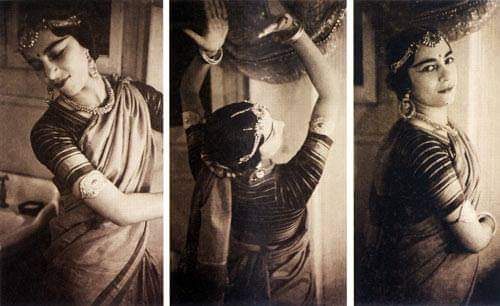

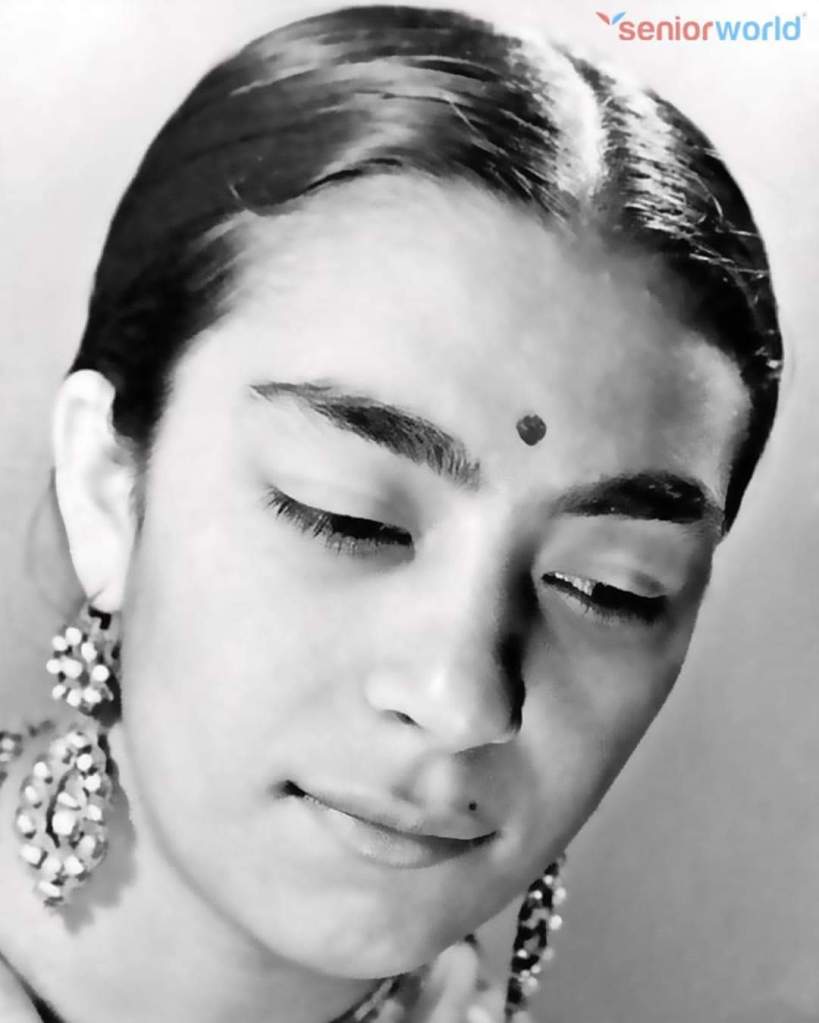
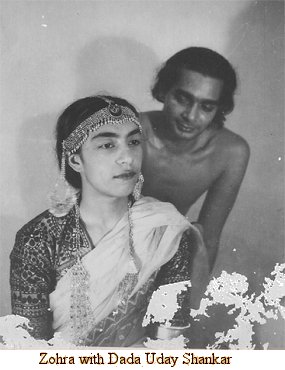

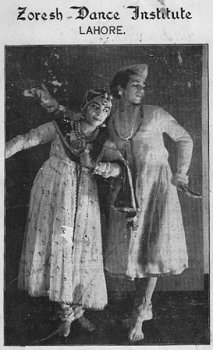
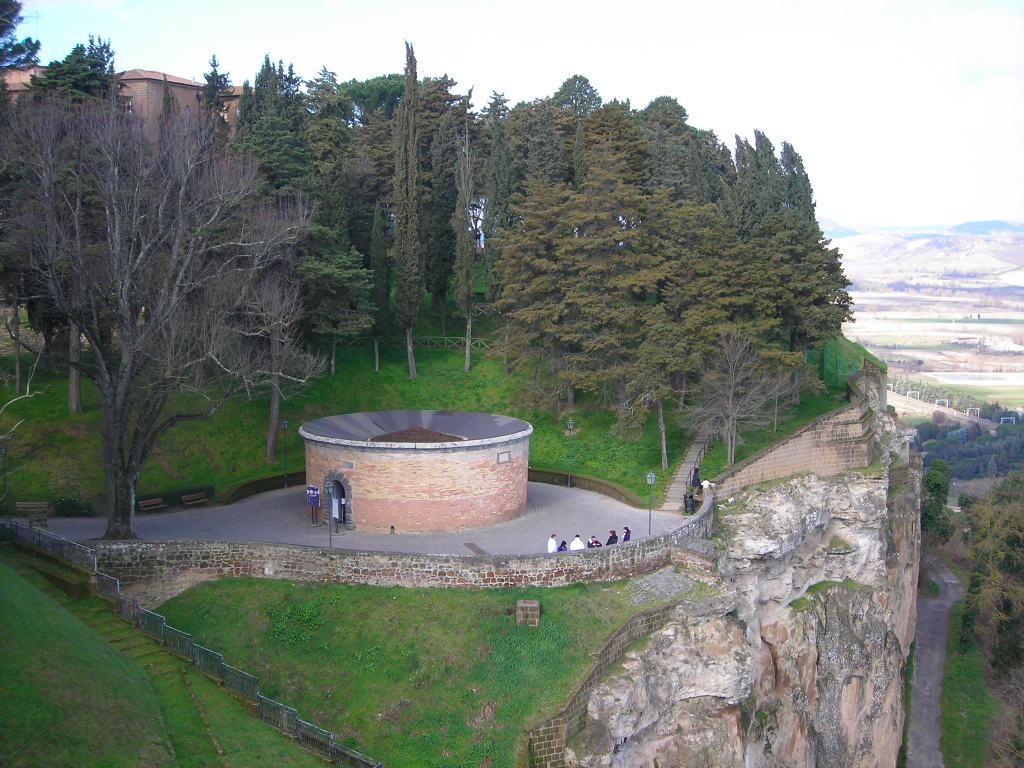
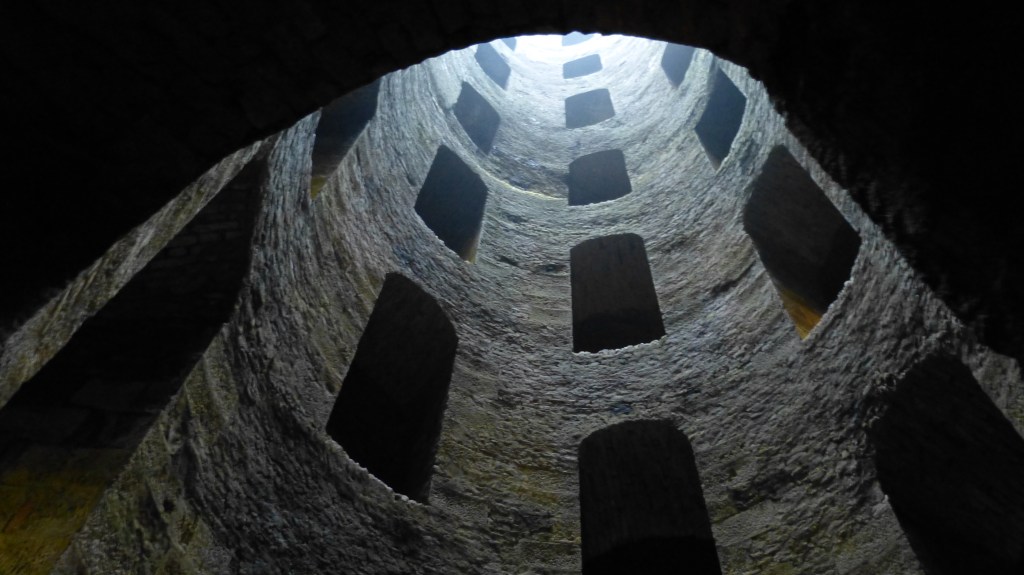
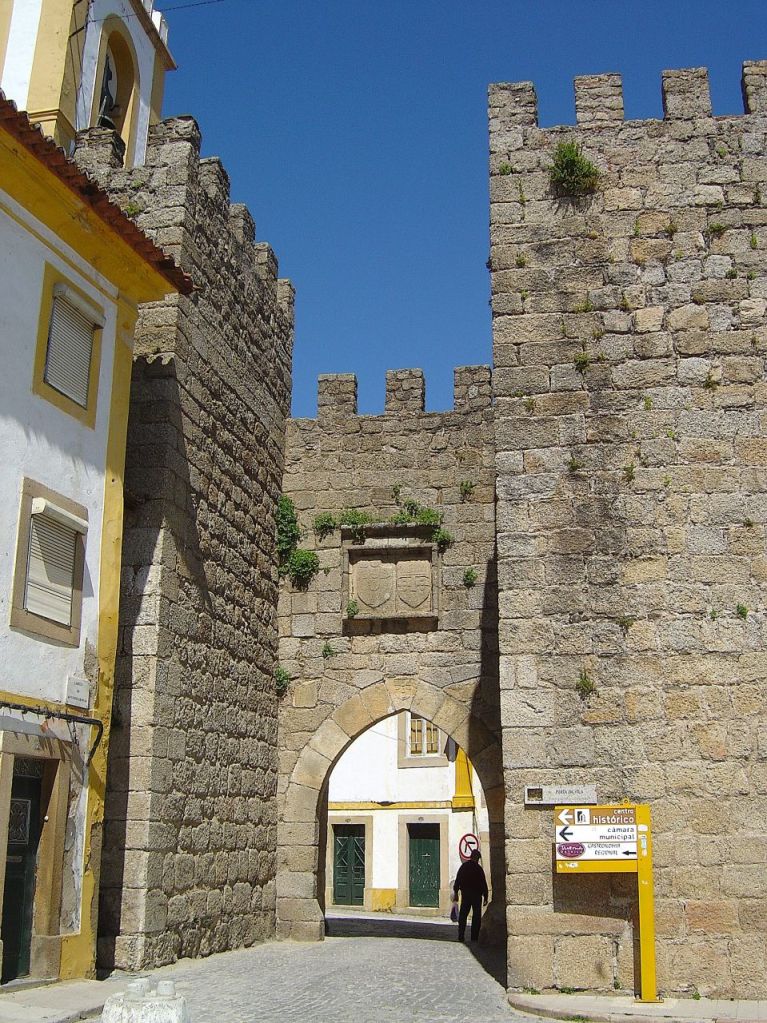


 Borderless