Categories
Contents

Borderless, June 2024

Art by Sohana Manzoor

Editorial

Fly High…Like Birds in the Sky… Click here to read.

Translations

Nazrul’s Nur Jahan, the Mughal empress, has been translated from Bengali to English by Professor Fakrul Alam. Click here to read.

Eight Short Poems by Munir Momin have been translated from Balochi by Fazal Baloch. Click here to read.

An Age-old Struggle by Ihlwha Choi has been translated from Korean by the poet himself. Click here to read.

Okale or Out of Sync by Tagore has been translated from Bengali by Mitali Chakravarty. Click here to read.

Poetry

Click on the names to read the poems

Michael Burch, Ryan Quinn Flanagan, Kumar Sawan, LaVern Spencer McCarthy, Shamik Banerjee, Prithvijeet Sinha, Gregg Norman, Rinku Dutta, Alex S. Johnson, Anushka Chaudhury, Wayne Russell, Nusrat Jahan Esa, Ahmad Rayees, Ivan Ling, Swetarani Tripathy, R.L.Peterson, Ayesha Binte Islam, Rhys Hughes

Musings/ Slices from Life

In the Grip of Violence

Ratnottama Sengupta muses on acts of terror and translates a Bengali poem by Tarik Sujat which had come as a reaction to an act of terror. Click here to read.

Meeting the Artists

Kiriti Sengupta talks of his encounter with Jatin Das, a legendary artist from Bengal. Click here to read.

A Musical Soiree

Snigdha Agrawal recalls how their family celebrated Tagore’s birth anniversary. Click here to read.

A Cover Letter

Uday Deshwal muses on writing a cover letter for employment. Click here to read.

Musings of a Copywriter

In Berth of a Politician, Devraj Singh Kalsi muses on an encounter with a politician. Click here to read.

Notes from Japan

In A Day with Dinosaurs, Suzanne Kamata visits the ancient dino bones found in Fukui Prefecture. Click here to read.

Essays

From Place to Place

Renee Melchert Thorpe recounts her mother’s migration story, hopping multiple countries, starting with colonial Calcutta and Darjeeling. Click here to read.

My Love Affair with (Printed) Books

Ravi Shankar writes of his passion for print media. Click here to read.

A Story Carved in Wood, Snow and Stone  

Urmi Chakravorty travels with her camera and narrative to a scenic village in the Indo China border. Click here to read.

Stories

Spunky Dory and the Wheel of Fortune

Ronald V. Micci takes the readers on a fantastical adventure. Click here to read.

Rani Pink

Swatee Miittal sheds light on societal attitudes. Click here to read.

The Ghosts of Hogshead

Paul Mirabile wanders into the realm of the supernatural dating back to the Potato Famine of Ireland in the 1800s. Click here to read.

Conversations

In conversation with eminent Singaporean poet and academic, Kirpal Singh, about how his family migrated to Malaya and subsequently Singapore more than 120 years ago. Click here to read.

In conversation with Jessica Muddit, author of Once Around the Sun: From Cambodia to Tibet, and a review of her book. Click here to read.

Book Excerpts

An excerpt from Suzanne Kamata’s Cinnamon Beach. Click here to read.

An excerpt from Ryan Quinn Flanagann’s These Many Cold Winters of the Heart. Click here to read.

Book Reviews

Somdatta Mandal reviews Maya Nagari: Bombay-Mumbai A City in Stories, edited by Shanta Gokhale and Jerry Pinto. Click here to read.

Basudhara Roy reviews Trailokyanath Mukhopadhyay’s Tales of Early Magic Realism in Bengali, translated by Sucheta Dasgupta. Click here to read.

Rakhi Dalal reviews Damodar Mauzo’s Boy, Unloved, translated from Konkani by Jerry Pinto. Click here to read.

Bhaskar Parichha reviews The Dilemma of an Indian Liberal by Gurcharan Das. Click here to read.

.

Click here to access the Borderless anthology, Monalisa No Longer Smiles

Click here to access Monalisa No Longer Smiles on Amazon International

Categories
Notes from Japan

A Day with Dinosaurs

Photographs and Narrative by Suzanne Kamata

My day job is “associate professor,” so I sometimes attend academic conferences. When I learned of an upcoming conference on language teaching in Fukui Prefecture, which I had never been to, I was eager to sign up. Sure, I wanted to hear all the cutting-edge theories about teaching English to language learners – how to motivate my students to write haiku, how to use AI, and so on – but my primary reason was to see the dinosaur bones.

Although at one time it seems that dinosaurs pretty much roamed the whole world, fossils of dinosaur bones weren’t discovered in Japan until 1989. Those bones were found in Katsuyama City, Fukui Prefecture. Since then, even more bones have been discovered, and a museum ̶ Fukui Prefectural Dinosaur Museum ̶ opened in 2000. As part of the pre-conference activities, the host university had arranged for a trip to the museum. A free shuttle but would depart at 11:30am.

I consulted an app on my smartphone and determined that it would take me about five hours to reach Fukui Station from my home in Tokushima Prefecture on the island of Shikoku. I would have to take a bus, a train, another train, and the high-speed bullet train. After a recent trip to Tokyo, I had learned how to use an electronic transit card, which was basically an app on my phone. This app could be used to breeze through ticket gates at train stations, as well as on buses and subways.

I got up at 5:30am on the day of the museum tour. My husband dropped me off at the bus station. I got on the bus and got off in Osaka. Then I took a train to Kyoto, which was mobbed with travelers. Although I thought I could get on the next train, the so-called Thunderbird, with my app, I discovered that I needed to have a reservation. I suppose I could have made one on my smartphone while standing in line, but I was confused. I left the platform and queued up to buy a reserved ticket from the vending machine, which disrupted my tight schedule and meant I would not be able to make it to Fukui in time for the free shuttle bus.

The Thunderbird goes straight from Kyoto to Fukui with few stops in between. The scenery is mostly composed of rice fields and squat mountains. The monotonous view was calming. About an hour later, the train pulled into Tsuruga where I had to switch to the brand-new Hokuriku Shinkansen for the last seventeen minutes of my journey. In my rush to finish my business at the vending machine in Kyoto, I had inadvertently booked a seat in the most luxurious car. I was the only one there.

I texted a friend who was also attending the conference. She had already arrived. I told her that I would be late, and that I wouldn’t be able to ride the bus with her. This was Japan, where everything was always on time! However, the organisers were Americans, and they were willing to wait for me. Hooray!

As soon as I got to Fukui Station, with its moving animatronic raptor keeping guard out front, I hopped into a taxi and finally arrived at the university, where the bus was indeed waiting. I sprinted onboard, apologised to my fellow passengers, and thanked the organiser profusely.

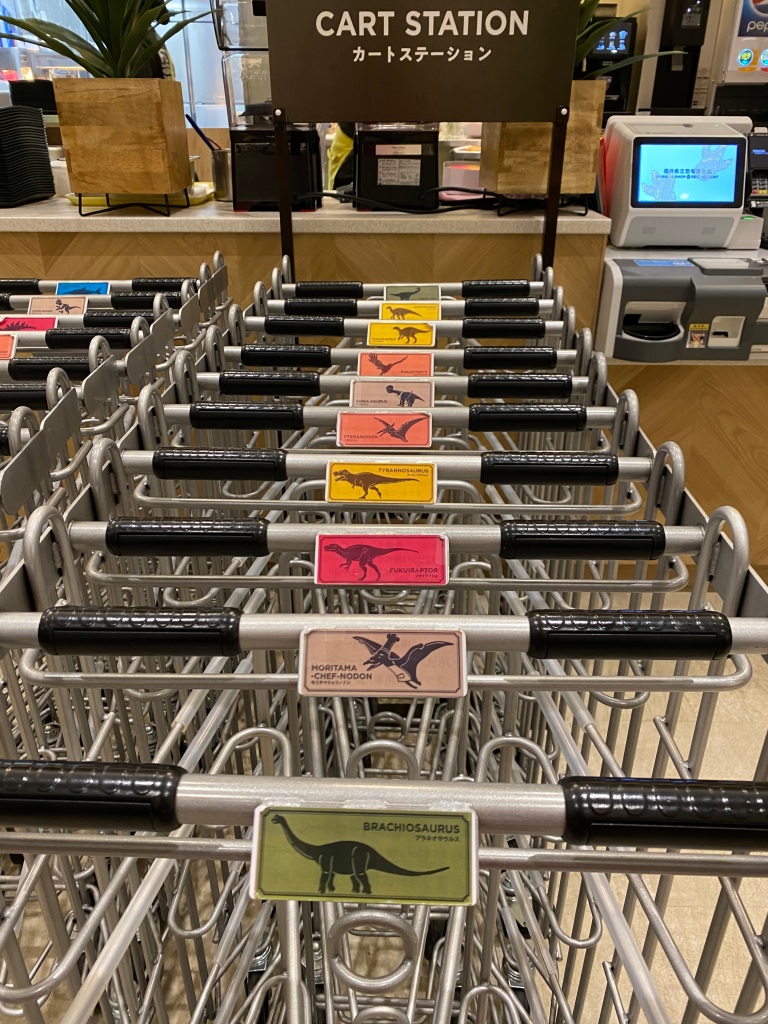
The museum was impressive, as advertised. Replicas of dinosaurs discovered in such far-flung locales as Morocco and Mongolia were on display. There were, of course, also exhibits of the five dinosaurs and one bird species discovered in Fukui, including the long-necked stubby-legged Fukuititan, the herbivorous Fukuisaurus, and the Fukuiraptor. Although the museum offers an excavation experience where visitors can pretend to dig and discover fossils, my friend and I just walked around looking at all of the cool rocks and bones.

Having gone through my son’s dinosaur obsession when he was young, I could remember some of the dinosaur’s names – the Ankylosaurus with its bumpy back, the Stegosaurus, and Pterodactyl. When we were ready to take a break, my friend and I made our way to the cafeteria for dino-themed snacks.

While many famous destinations in Japan are struggling with over-tourism, Fukui, while slightly off the beaten track, has a pleasantly relaxing vibe. Things may change with the new bullet train, but for now, I recommend it as a fascinating horde-free place to visit.

Suzanne Kamata was born and raised in Grand Haven, Michigan. She now lives in Japan with her husband and two children. Her short stories, essays, articles and book reviews have appeared in over 100 publications. Her work has been nominated for the Pushcart Prize five times, and received a Special Mention in 2006. She is also a two-time winner of the All Nippon Airways/Wingspan Fiction Contest, winner of the Paris Book Festival, and winner of a SCBWI Magazine Merit Award.

PLEASE NOTE: ARTICLES CAN ONLY BE REPRODUCED IN OTHER SITES WITH DUE ACKNOWLEDGEMENT TO BORDERLESS JOURNAL
Click here to access the Borderless anthology, Monalisa No Longer Smiles

Click here to access Monalisa No Longer Smiles on Amazon International

Categories
A Special Tribute

Will Peace Come Dropping by?

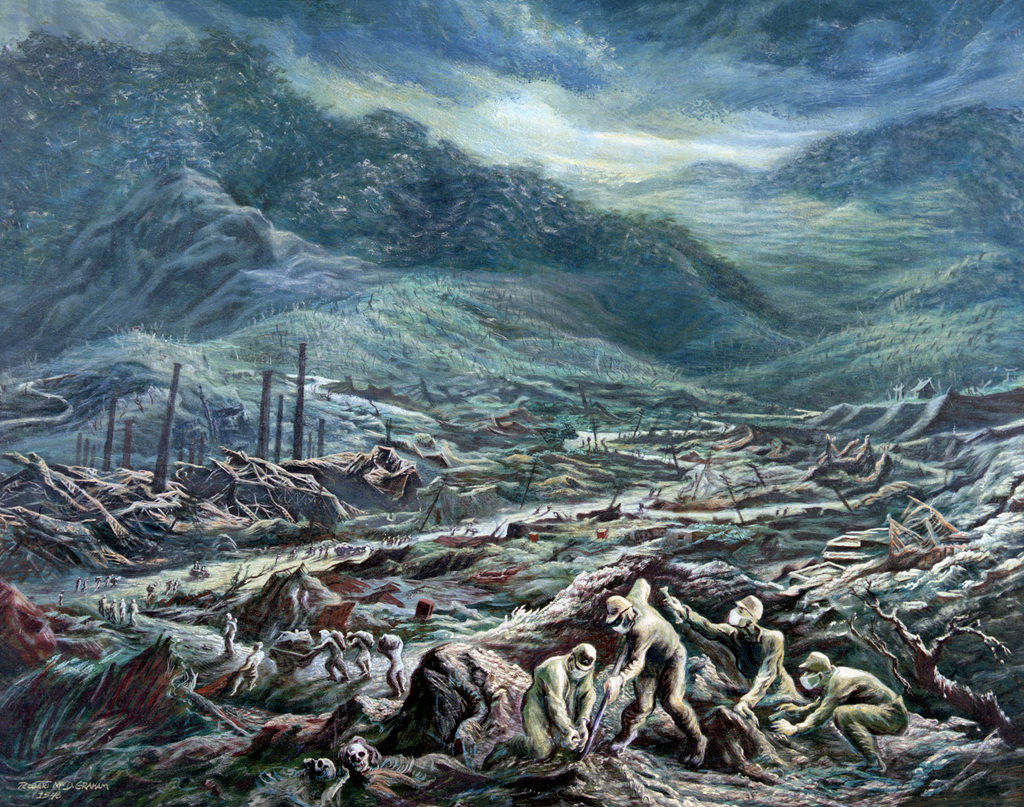
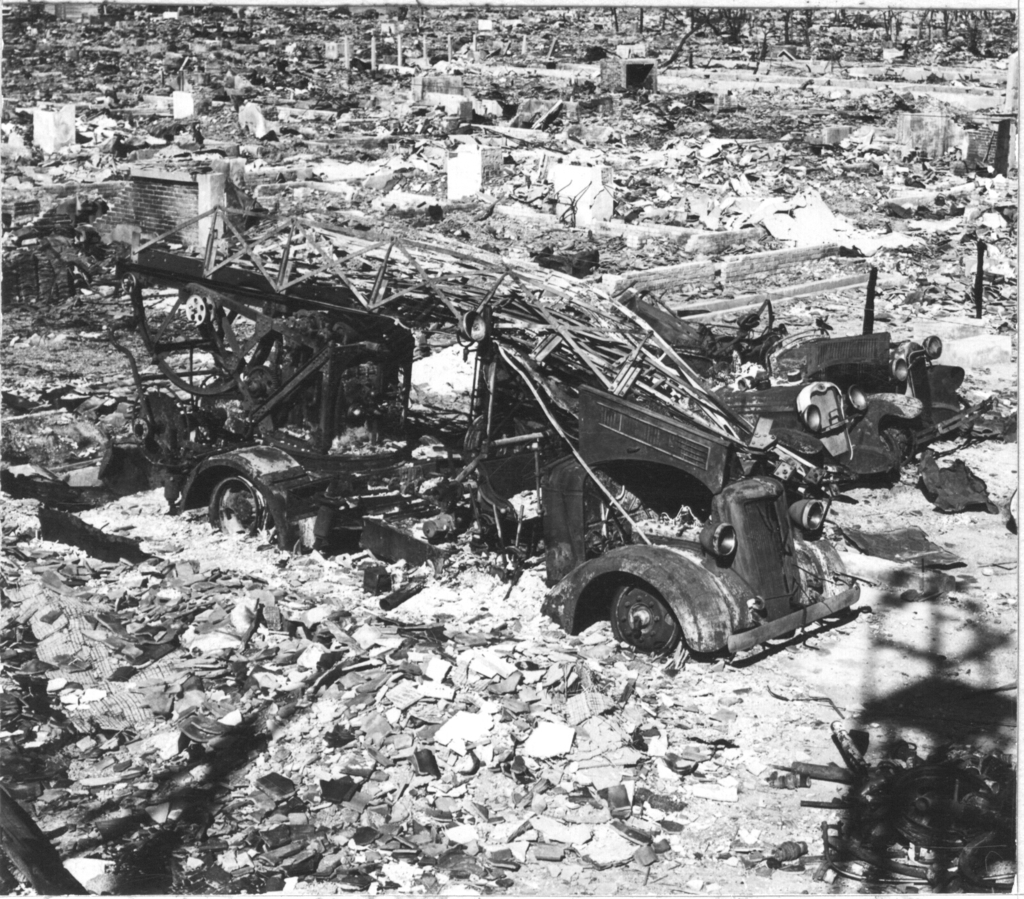
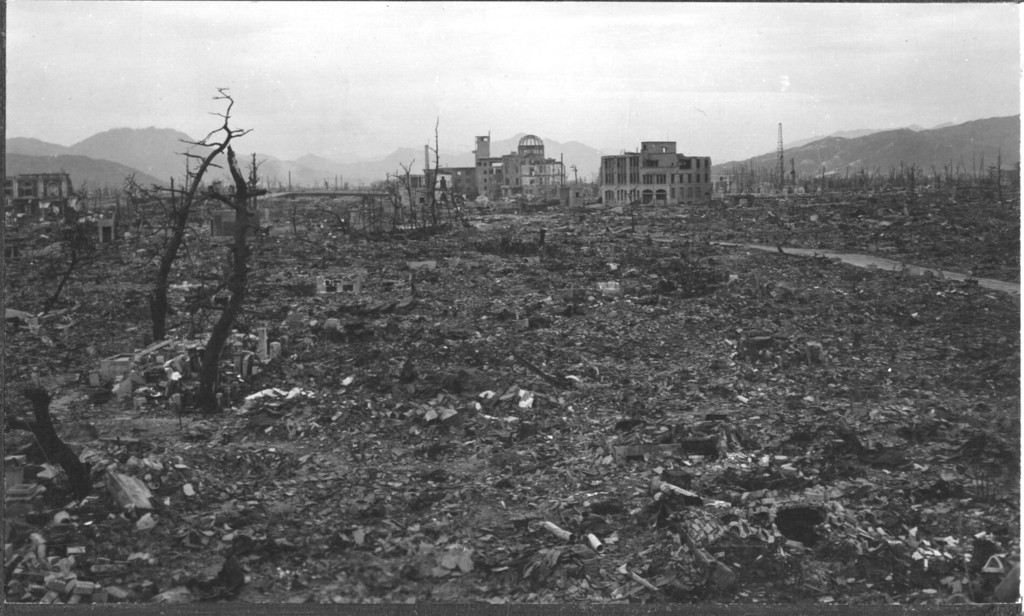
When in 1945, the Allied forces dropped atom bombs on August 6th in Hiroshima and on August 9th in Nagasaki, the Second World War drew Japanese aggression to a halt. But what was the impact on the lives of those innocents whose home, family and future changed forever? Their lives were wrecked — within a few seconds for no fault of their own. The impact clearly continues to ravage the second generation, as can be seen from the narrative of a hibakusha’s daughter who shares her travails while expressing her candid views on the recent movie, Oppenheimer, and the sale of ‘Boppenheimer’ products. She writes: “I live with it1 now having a chronic progressive nerve pain disease. My damaged immune system is attributed to my mother’s exposure to radiation from the atomic bombing.”

Are we forgetting that past, where two whole towns were decimated by atomic bombings with uncountable numbers of deaths and suffering handed down generations? Will we repeat the horrific story again to resolve issues as conflicts continue to ravage the planet with weapons, without considering their impact on the already felt climate crises? Will there be a replay of the bombing of 1945 to annihilate a people, their way of life and create suffering among all humanity? We may not be around to comment on the outcome!

Way back in 2017,  climate experts contended that in case of another such bomb blast, “The effect would be similar to that of the giant meteor believed to be responsible for the extinction of the dinosaurs. This time, we would be the dinosaurs.” 

With that in mind, we hope for a world without wars. In this special edition, writings look for peace by creating awareness and suggesting alternatives. Kathleen Burkinshaw writes about the 1945 bombings and her perspectives on media packaging of mushroom clouds. We have a story from a soldier’s perspective during the First World War by the eminent Bengali poet, Nazrul, who fought in it as a soldier for the British army. Current conflicts show up in the writing of Ramy-Al-Asheq, who was born in a refugee camp in the Middle East. They move to Ukraine with voices of Lesya Bakun, a refugee on the run, and Ron Pickett, a US army veteran. Poetry on Myanmar in the past by Sister Lou Ella Hickman and a story of the Rohingya’s plight by Shaheen Akhtar brings the focus into civil wars within Asia. More poems by Don Webb and Michael Burch urge for peace through poetry. Awareness about conflicts that nonetheless impact an interconnected world are brought in with interviews with journalists who were in Afghanistan (Andrew Quilty) and Myanmar (Jessica Muddit) when the takeovers by the current regimes started. We conclude with a discussion for alternatives towards a better future with Anthony Sattin.

Non-Fiction

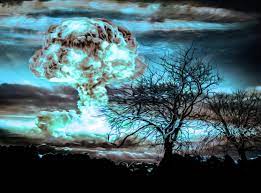
Mushroom Clouds and Movies: Response from a Hibakusha’s Daughter: Kathleen Burkinshaw, a second generation victim who suffers nerve disorders from the atom bomb dropped on Hiroshima, where her mother watched her own father perish, responds to the recent media packaging of the event. Click here to read.

The Refugee and the Other, an excerpt from Ever Since I Did Not Die by  Ramy Al-Asheq, translated by  Isis Nusair. Click here to read.

Poetry 

I am Ukraine by Lesya Bakun, a refugee from Ukraine. Click here to read.

Wars and Rumours of War, a response on the war in Ukraine by Ron Picket, a a retired naval aviator with over 250 combat missions and 500 carrier landings. Click here to read.

My Visit to Myanmar in 1997, a poem about peace in the land where Buddha flourished by Sister Lou Ella Hickman. Click here to read.

Philosophical Fragments by Don Webb, an anti-war poem. Click here to read.

Poetry for Peace by Michael Burch. Click here to read 

Fiction 

Hena is a short story by Nazrul from the perspective of a soldier during the first world war, translated from Bengali by Sohana Manzoor.  Click here to read.

The Magic Staff is a poignant short story about a Rohingya child seeking refuge by Shaheen Akhtar, translated from Bengali by Arifa Ghani Rahman. Click here to read.

Interviews 

A discussion about Afghanistan, with journalist Quilty who went back to Kabul as Taliban entered the city. Click here to read.

Keith Lyons talks to Jessica Mudditt, who watched from within the country as the Myanmar Junta took over. Click here to read.

Could there be a way out of this world wide unrest? A discussion with Anthony Sattin as he explores concept of brotherhood unique to earlier times, when borders were not this well defined. Click here to read.

*

  1. the impact of the atomic bomb ↩︎
Categories
Poets, Poetry & Rhys Hughes

Dinosaurs in France

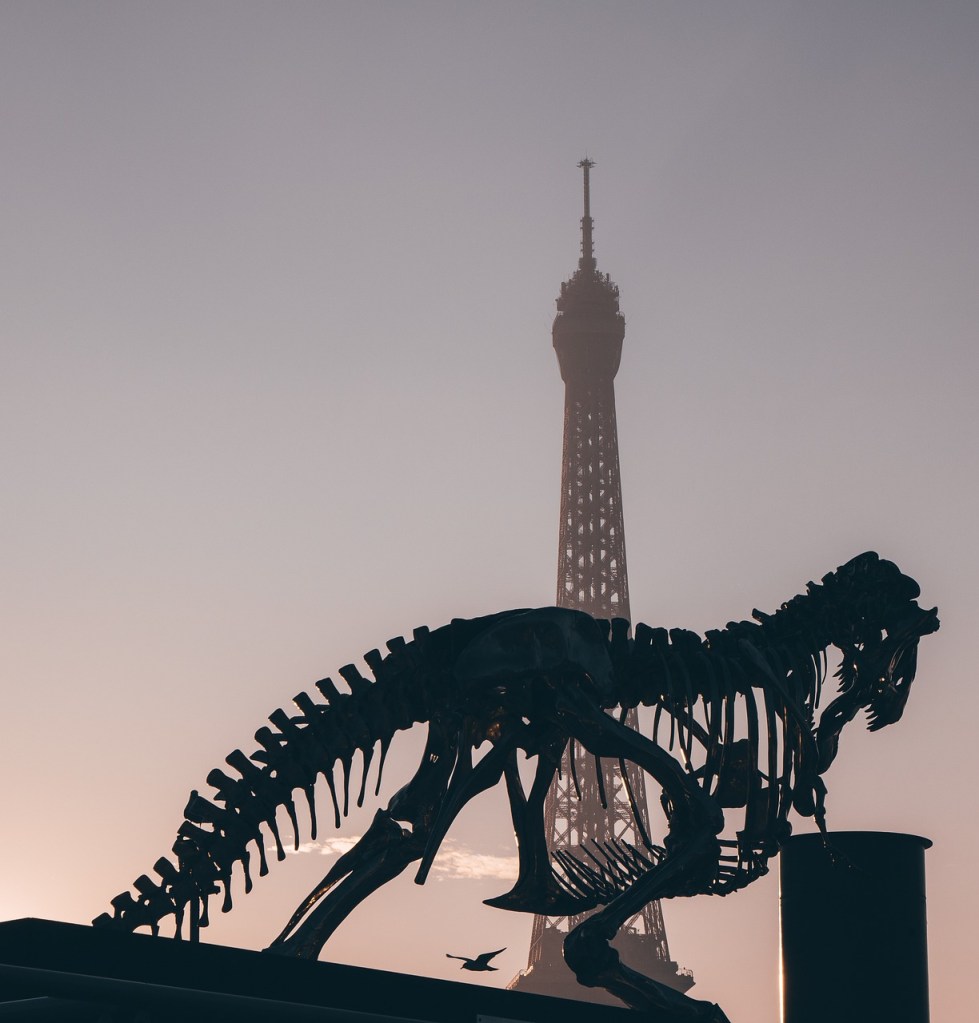
Eiffel Tower Paris. Courtesy: Creative Commons

I am still confused as to how many continents there are. Is Oceania the same as Australasia? Do North and South America count as two or just one? Is Antarctica a proper continent and not just a frozen phoney? What about the subcontinent of India? Does that count as half, quarter, or some other fraction? What continent does Greenland belong to? And the islands of the mid Atlantic, what about them?

When I was younger the issue was simpler. There were six continents, Africa, America, Asia, Australasia, Europe and Great Britain. There was absolutely no doubt that Britain was separate from Europe geographically and spiritually. In fact, the mainland of Europe was the continent and things that came from it were ‘continental’ and mostly malodorous, quilts and kisses on the hand being exceptions.

In Europe people did peculiar things; they spread chocolate on bread for breakfast and melted cheese in communal pots in the evenings. Or so it was said. Europe was a place of mystery, a patchwork of suspense, and crossing its multifarious internal borders wasn’t likely to be easy. If you had to travel there, a large vulcanite suitcase that could be plastered with triangular destination labels was the minimum requirement. Better not to go at all! The greasy food, cooked in nasty olive oil, was certain to upset your stomach. And there were yodellers.

My great childish dream back then was to build a raft and paddle it to France. There were enough fallen trees in the forest near my home to provide wood for the construction. France seemed an incredibly exotic destination and my enthusiasm was increased rather than diminished when I was told that dinosaurs existed there. They had become extinct everywhere else but still flourished in France. Thus, I couldn’t wait to drag my raft ashore and encounter my first stegosaurus. Other lies that adults told me about France included the assertion that the Eiffel Tower was something that horses jumped over in the Grand National. Having no idea what a ‘Grand National’ was I felt only a vague sense of awe. It was many years before I learned that it is a horse race famous for being dangerous to horses and for the ludicrous hats worn by upper class drunken women who watch it and chortle.

Adults in those days told outrageous untruths as a matter of course. It was an accepted part of life. I grew up in an environment where no one said anything sensible but instead would make the most absurd statements with a straight face. It was an uncle who claimed that France was jammed with dinosaurs. He also informed me that we were living in Australia, not Britain, but that everyone else would try to trick me into thinking it was Britain and that they were all in the joke together and I shouldn’t believe them. The truth of the matter, he added, was that Britain was a fiction, it didn’t exist, or it had sunk beneath the sea, it was a joke or a memory and nothing more. This was Australia and when he was my age, he had made a raft, from twigs, and sailed it around the world and started a successful property business with a gorilla in a jungle.

And he told me that he once pulled the plug out of the bath while he was still in it and got sucked down the hole and ended up at the bottom of the sea where he lived in a gigantic air bubble with a dolphin who taught him dolphin language and how to make crêpes. None of this was said in a joking manner but in a tone of utter seriousness. Everyone was like this. The postman once told me that he lived in a marshmallow house and was terrified of lightning strikes because the heat would alter the flavour of his roof and that people were taxed on the flavours of their roofs, so for him it was a major concern that his tiles weren’t toasted.

One of my favourite absurdities concerned the International Date Line. Because Australia was so many hours in the future, people who lived there (like ourselves) could phone relatives in Europe with the results of football matches, horse races and boxing competitions that hadn’t yet happened, enabling those relatives to make a big profit at the betting shop. These European relatives could then phone America to pass on the same information, enabling friends over there to also make money through betting. However, because of the Date Line it wasn’t possible for America to do any such favours for any countries west of them. In other words, America took but didn’t give, and as a consequence, was building up a large debt to the rest of the world.

One day all the other nations of the world, all those living in a future time relative to America, would form an alliance and invade America and loot all its treasures in retaliation. I am fairly sure it was one of my schoolteachers who told me all this. Even supposedly ‘responsible’ adults liked to be ridiculous in a blasé manner and play jokes on children. I remember one outing to a pond in a park as part of a nature class. We were required to sketch any animals that we might encounter, and, in my mind, I can still see the teacher crouching over a child’s sketch pad and pointing to a duck that was paddling slowly on the water.

“What it that, boy?”

“A duck, sir.”

“No, boy, it’s a fish.”

“But it has a beak and wings, sir!”

“Yes, but it has a tail too. Can’t you see the tail? Fish have tails, don’t they? That means it’s a fish. Draw it exactly as you see it and write the word ‘fish’ under the drawing and tomorrow I will hand your work to the headmaster so he can form a judgment of your educational progress and I am sure the result will interest him.”

That’s how life was in Britain when I was younger. Practical jokes and getting other people into trouble for the purposes of comedy was standard behaviour. If you didn’t tell amusing fabrications then you were regarded as rather odd, dubious even, a spoilsport and also, perhaps, a saboteur or foreigner. I would look at adults in the street and wonder if any of them were French and on familiar terms with dinosaurs.

Then everything changed and the countries and cultures of Europe became much more accessible. Going to Paris, Madrid or Lisbon for a weekend took no more effort than visiting Weymouth, Blackpool or Margate. In fact, it usually took less effort. I began to genuinely feel like a European citizen, something generally considered not feasible for a British fellow, but I am Welsh, not English, and the Welsh, who are the original Britons, are hardly British. To feel European required only my desire and acquiescence, and I had that desire and yes, I was willing to acquiesce. Feeling European wasn’t an option denied to me at that time and I never thought it would be, at least not until plate tectonics reformed the continents and Europe ceased to physically exist.

It sounds ludicrously obvious, but it still apparently needs to be said. Britain isn’t a continent by itself. That was just a childhood myth, similar to the story that if you swallow an apple pip a tree will grow inside you, and in fact I once deliberately swallowed many pips in order to have an orchard in my stomach and never grow hungry. I would only have to jump up and down at mealtimes for the fruit to fall from the branches. Because the fruit was already in my stomach, actually eating it would be unnecessary. It seemed such a wonderful solution that I couldn’t work out why everyone didn’t do it. I supposed that maybe adults didn’t really like convenience. But no, we can’t have trees growing inside us. And sadly, dolphins don’t know how to make crêpes.

Politely we call such things myths. They are deceits, of course. But the world seems to have gone back in time. Travelling abroad is truly difficult again, impossible in many instances. I spend my days bewailing the reversal. I have started wondering if my old plan of building a raft might be my best option of leaving these shores and visiting other lands. There might be dangerous dinosaurs off the coast of France, those long-necked plesiosaurs, but I will take a big detour around them. I will steer by the light of the stars and satisfy my hunger by eating the walls of my marshmallow cabin. Everything will work out fine.

Rhys Hughes has lived in many countries. He graduated as an engineer but currently works as a tutor of mathematics. Since his first book was published in 1995 he has had fifty other books published and his work has been translated into ten languages.

.

PLEASE NOTE: ARTICLES CAN ONLY BE REPRODUCED IN OTHER SITES WITH DUE ACKNOWLEDGEMENT TO BORDERLESS JOURNAL