Categories
Interview

 Magical Journey of Worlds and Words with Lya Badgley

Keith Lyons in conversation with Lya Badgley
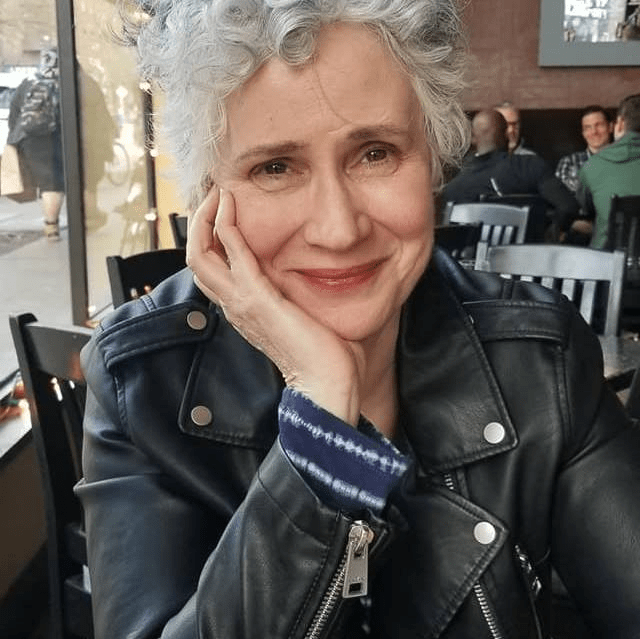
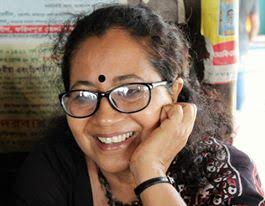
Lya Badgley

Lya Badgley’s life reads like an exotic adventure book you can’t put down, but she writes plot-driven suspense about women overcoming life-changing odds, against a backdrop of global conflict. In this interview, she shares her views about creativity, courage, persistence and resilience.

Youve had an interesting life – how often do people say that to you? How do you tell the story of your life in a short elevator pitch?

I’ve been very lucky to have had choices – many do not. That said, being born in Myanmar to Montana parents, was a good start. From Seattle’s arts scene to documenting war crimes in Cambodia and opening a restaurant in Yangon, my life experiences fuel my creativity. I’ve been a mother, a former city council member, and an environmental activist and now write novels drawing deeply from my lived experiences.

So, you were born in Yangon, Myanmar. How did your parents from the Rocky Mountains come to be in Burma? What are your first memories from there?

My parents discovered the wider world when my father was stationed in northern Japan during the Korean War. They fell in love with Asia, and he went on to dedicate his life to academia, earning a doctorate in political science. They first arrived in Burma (Myanmar) in the late 1950s. One of my earliest memories is coming home from kindergarten in up-country Burma and telling my mother that all the children spoke English in class. Astonished, she accompanied me to school the next day, only to find that the children were speaking Burmese. I had simply assumed it was English. To this day, I love languages.

What kind of environment did your parents create which encouraged your creativity?

My mother was a true artist, always encouraging me to find beauty in everything around me. My father sparked a deep curiosity about the world, especially about the lives of everyday people. Our dinner table conversations were always lively, full of challenges and excitement, fueling my imagination and intellect. I was never allowed to leave the table without sharing something interesting and eating all my vegetables.

In 1987 what changed your life? How does Multiple Sclerosis affect you today?

In 1987, I developed a persistent headache that wouldn’t go away. Within two weeks, I lost vision in one eye. The diagnosis of Multiple Sclerosis came swiftly. I’ll never forget the mix of terror and wonder as I looked at the pointillistic MRI image of my brain, and the doctor casually said, “Yep, see those spots? That’s definitely MS,” as if he were ordering lunch. Strangely, that diagnosis liberated me—after all, what’s the worst that could happen? Now, as I age, the disease may slow my body, but it hasn’t dimmed my spark.

In what ways has being a musician/poet/writer/artist been a struggle and challenge? Do you think that is part of process and it in turn fosters innovation?

The struggles of being an artist—whether overcoming rejection, creative blocks, or balancing art with daily life—are definitely part of the journey. But there’s also magic in that process. There’s something almost alchemical about wrestling with a challenge and, through that tension, creating something entirely new. It’s in those moments of uncertainty that the most unexpected ideas emerge, as if they’re waiting for the right spark. The struggle doesn’t just foster creativity—it transforms it, turning obstacles into opportunities. And the joy comes from watching that magic unfold, as your vision takes on a life of its own.

When did you return to Southeast Asia, and how did you come to work as a videographer on a clandestine expedition interviewing Burmese insurgents, and later helping document the genocide cases in Cambodia?

The short answer is — a boyfriend! In the early ’90s, I returned to Southeast Asia, driven by a deep connection to the region and feeling uncertain about what to do next after a failed marriage. Through a friend I met during Burmese language studies, I stumbled upon an unexpected opportunity to work as a videographer on a covert mission, documenting interviews with Burmese insurgents. That intense experience then led to my role in Cambodia, where I worked with Cornell University’s Archival Project. There, I helped microfilm documents from the Tuol Sleng Museum of Genocide, preserving crucial evidence that would later hold war criminals accountable. Both experiences were life-changing and cemented my passion for telling these vital stories.

You were among the few foreigners to open businesses in Burma in the 1990s. What hurdles were there to opening the 50th Street Bar & Grill Restaurant in Yangon, Myanmar? How was Burma at that time?

Opening the 50th Street Bar & Grill in Yangon in the mid ’90s was a real adventure, and I take great pride in being part of the first foreign-owned project of its kind at that time. Myanmar was just emerging from decades of isolation, with very few foreigners and even fewer foreign businesses. Navigating the bureaucracy was incredibly challenging — layers of red tape, and we often had to rely on outdated laws from the British colonial era just to get things moving. It took persistence, creative problem-solving, and a lot of patience. I had the advantage of understanding the culture and speaking a bit of the language, and I never worked through a proxy. I handled even the most mundane tasks myself—like sitting for hours in a stifling hot bank, waiting to meet the manager, who was hiding in the bathroom to avoid me!

Basic infrastructure issues like inconsistent electricity and unreliable suppliers were ongoing challenges. But despite all the hurdles, Yangon had a special energy then. The people were incredibly warm and resilient, and there was a palpable sense that the country was on the cusp of major change, even though it remained under military rule. Looking back, I’m proud to have been part of something so groundbreaking during such a unique moment in Myanmar’s history. It’s heartbreaking to see the return of darker times.

When did you first start writing and what has kept you writing? 

In the ’80s, I began writing song lyrics for my music, which eventually evolved into poetry. It turned out I had more to say, and my word count steadily grew from there. I write because I have no choice; it’s an essential part of who I am.

Your first novel, The Foreigners Confession, out in 2022, in the middle of the Covid-19 pandemic, weaves together one persons story and a countrys painful history. How do you integrate in the legacy of the past, a personal journey, a war-torn country and the themes of loss and regret?

In The Foreigners Confession, I explore the interconnectedness of personal stories and a nation’s history. I like using conflict zones as backdrops for my protagonist’s inner turmoil. These settings highlight the psychological landscape shaped by war and trauma, reflecting the chaos within the character. I’m fascinated by the notion that evil exists in each of us, and under the right circumstances, we’re all capable of bad things. This theme resonates throughout the narrative, as the characters grapple with their moral choices amidst the turmoil surrounding them. As Tom Waits[1] beautifully puts it, “I like beautiful melodies telling me terrible things” — that juxtaposition is central to my writing, illustrating how beauty and darkness can coexist and inform our understanding of the human experience.

When it comes to writing are you a planner or a pantser? Whats your process for writing, particularly when you want to bring in the setting, the history of a place, and authenticity?

I’m a pantser all the way! Just saying the word “spreadsheet” makes me break into a sweat. I wish I could create meticulous diagrams and beautiful whiteboards filled with colorful, fluttering sticky notes, but that just isn’t my style. For me, the story unfolds as I write. I refer to myself as a discovery writer. It’s a slow and sometimes tedious process but discovering what I didn’t know was going to happen is truly amazing. I draw from my personal experiences to provide authenticity.

Does writing suspense/mystery help make a novel more compelling because it has to be well-crafted and cleverly constructed?

I write the story buzzing in my brain and then try to determine the genre.

What do you think about the power and potential of a novel to reach readers in a different way, for example as a vehicle to give insight into the situation in Cambodia or Myanmar, the wider/deeper issues (like geopolitics/colonialism), and the present reflecting a troubled past?

Yes, yes, yes! Novels have the potential to foster empathy and understanding, challenging readers to confront uncomfortable truths. Can we humans please stop being so stupid? It’s doubtful, but we can only hope.

Last year your second novel, The Worth of a Ruby, was launched, and youve recently been in Myanmar. Whats been your impression of the place in 2024, still suffering under the coup and with not such good prospects as in the 2010s? Could you ever go back there to live?

Sitting in the Inya Lake Hotel in Yangon as I write this, I can see that the people here carry a veil over their eyes that I don’t recall from my previous visits. Nevertheless, the cyclical nature of oppression has persisted here for a long time. My husband and I would move back in a heartbeat if there were opportunities and adequate healthcare for my situation. This country remains a part of my identity, and I dream of a future where I can return to help contribute to its recovery.

Your current/recent visit to SE Asia has taken you to what places? What have been the most memorable experiences?

I’m in Yangon until mid-October and will then spend a few days in Singapore, slogging my books to the shops there. As always, the most memorable experiences are renewing the deep connections with the people I care about.

Both your books feature people/countries having to confront their past/dark side. How do you think a novel can help navigate through the complexities and nuances of situations, or at least show that nothing is as black and white as first thought?

That’s a complex question, and any answer can only touch the surface. Both of my novels explore people and countries grappling with their pasts and confronting their darker sides, but the truth is, no single story can fully capture the complexity of these situations. What a novel can do, however, is open a window into the nuances and shades of gray that exist beneath the surface. By diving into characters’ personal struggles and the layered histories of their countries, readers can begin to see that nothing is as black and white as it might seem. A novel helps illuminate the hidden motivations, moral ambiguities, and emotional complexities that are often overlooked, offering a more profound understanding of the tangled web of human experience.

Your work-in-progress novel is set in Bosnia. What themes will that explore?

The themes in my work-in-progress novel set in Bosnia will continue to explore the complexities of personal and national histories, much like my previous work. However, this time I’m weaving in elements of magic realism, drawing inspiration from the Sarajevo Haggadah and Balkan folktales. These mystical elements will add a new layer to the narrative, deepening the exploration of identity, memory, and the ways in which the past haunts the present. The use of folklore will allow me to delve into the region’s rich cultural traditions while keeping the focus on the enduring human themes of loss, resilience, and transformation.

Where is homefor you now? How do you think living in other countries has influenced your outlook and personality?

I am wildly curious, and home is the room I’m sitting in. Though we pay a mortgage on our condo in Snohomish, home has always been more about where I am in the moment than a fixed place. Living in different countries has profoundly shaped my outlook and personality. It’s given me a deep appreciation for diverse perspectives and a sense of adaptability. I’ve learned that people’s values and struggles can be both uniquely local and universally human. Experiencing different cultures has also sparked my curiosity and influenced the way I approach storytelling, allowing me to blend personal and global themes into my work.

What do you think are your points of difference/advantages that you bring to your writing?

One of the key differences I bring to my writing is my unique upbringing. Growing up in Myanmar with parents who encouraged both critical thinking and creativity gave me an early appreciation for the complexities of the world. I’ve lived in many countries and experienced firsthand the way cultures can both clash and blend, and that depth of perspective is something I try to infuse into my stories. Navigating a chronic disease like multiple sclerosis has also shaped my writing. It’s taught me resilience, patience, and how to find beauty in challenging situations. I think these experiences allow me to write characters and narratives that explore the shades of gray in life—the areas where pain, perseverance, and hope intersect.

Why do you think that a high proportion of expats/students/backpackers/digital nomads are from the Pacific Northwest and find themselves living and working in Southeast Asia? (I know three people from Snohomish who live in Asia).

It’s an interesting phenomenon, and I think the Pacific Northwest has some unique qualities that make it a breeding ground for wanderers. Growing up on the edge of the continent, facing west, there’s always been a sense of curiosity about what’s beyond the horizon. The region’s creative spirit—fueled by its music scene, constant rain, endless coffee, and a long history of innovation with computers and tech—fosters a mindset that’s open to exploration and new ideas. People from the PNW are used to thinking outside the box, and there’s a certain resilience that comes from enduring gray skies. This drive for adventure and discovery seems to naturally extend to places like Southeast Asia, where expats, students, backpackers, and digital nomads can experience a different pace of life while still tapping into their creative or entrepreneurial sides. Though, it blows my mind that you know three people from my little town of Snohomish living in Asia!

For aspiring writers and creatives, and for readers of Borderless, whats your advice?

My advice for aspiring writers, creatives, and readers of Borderless is simple: always take the step, go through the door you don’t know. The unknown is where growth, creativity, and discovery happen. Don’t be afraid to embrace uncertainty and take risks in your work and life. Whether it’s starting a new project, exploring a different idea, or venturing into unfamiliar territory, those leaps often lead to the most rewarding experiences. Stay curious, keep pushing boundaries, and trust that the act of creating—no matter how daunting—will always teach you something new.

Where can readers find you?

Email: lyabadgley@comcast.net

Mobile: 360 348 7059

110 Cedar Ave, Unit 302, Snohomish WA 98290

www.lyabadgley.com

www.facebook.com/lyabadgleyauthor

www.instagram.com/lyabadgleyauthor

Youtube: www.youtube.com/@lyabadgleyauthor 

.

[1] American musician

Keith Lyons (keithlyons.net) is an award-winning writer and creative writing mentor originally from New Zealand who has spent a quarter of his existence living and working in Asia including southwest China, Myanmar and Bali. His Venn diagram of happiness features the aroma of freshly-roasted coffee, the negative ions of the natural world including moving water, and connecting with others in meaningful ways. A Contributing Editor on Borderless journal’s Editorial Board, his work has appeared in Borderless since its early days, and his writing featured in the anthology Monalisa No Longer Smiles.

.

PLEASE NOTE: ARTICLES CAN ONLY BE REPRODUCED IN OTHER SITES WITH DUE ACKNOWLEDGEMENT TO BORDERLESS JOURNAL. 

Click here to access the Borderless anthology, Monalisa No Longer Smiles

Click here to access Monalisa No Longer Smiles on Kindle Amazon International

Categories
Essay

Travels of Debendranath Tagore

Narrative by Debendranath Tagore, translated from Bengali by Somdatta Mandal

Note from the Translator

Debendranath, Father of Rabindranath Tagore

Born to Dwarkanath Tagore in Shelaidah, Debendranath Tagore (15 May 1817 – 19 January 1905) was a Hindu philosopher and religious reformer. One of the founders of the Brahmo religion in 1848, his journey in the role of ‘Maharshi’, the great ascetic, was an attempt to spread the Brahmo faith and he travelled extensively to various places, especially in different parts of the Himalayas like Mussourie, Shimla, Kashmir, and Dalhousie.  He even constructed a house in Bakrota called ‘The Snow Dawn’ where he used to reside for months. Although Debendranath was deeply spiritual, he managed to continue to maintain his worldly affairs — he did not renounce his material possessions, as some Hindu traditions prescribed, but instead continued to enjoy them in a spirit of detachment. His considerable material property included estates spread over several districts in Bengal. Debendranath was a master of the Upanishads and played no small role in the education and cultivation of the faculties of his sons.

In his memoir, Jeevan Smriti [Memories of Life], Rabindranath also narrates in detail about his trip with his father in the Himalayas when he was just eleven years old. Debendranth founded the Tattwabodhini Patrika (1843) as a mouthpiece of the Brahmo Samaj and apart from his autobiography, wrote several other prose pieces which also reveal his wanderlust.

Among the two entries included here, we have ‘Moulmein Bhraman’ which is an interesting travel piece narrating his sojourn in Burma in September/October 1850. In the Chaitra 1817 Saka issue of Tattwabodhini Patrika, a travelogue ‘Mori Bhraman’ narrating Debendranath’s trip to Mori was published. Interestingly, as a prologue to this piece Sri Chintamani Chattopadhyay tells us that he was so enamoured after listening to Debendranath’s oral narration of the trip undertaken 28 years earlier, that he decided to transcribe it for the satisfaction of the readers.

Moulmein Bhraman (Travel to Moulmein)

After a year, the splendour of autumn revealed once again and the desire to travel blossomed in my mind. I could not make up my mind where to go for a trip this time. I thought I would make a trip on the river and so went to the bank of the Ganges to look for a suitable boat. I saw that several khalasis — dockyard workers – of a huge steamer were busy at their work. It seemed that this steamer would soon set sail.

“When would this steamer go to Allahabad?” I asked them.

In reply they said, “Within two or three days this will venture into the sea.”

On hearing that this steamer would go to the sea, I thought that this was the easiest way my desire for a sea journey could be fulfilled. I went to the captain instantly and rented a cabin and in due time boarded that steamer to begin my sea journey.

I had never seen the blue colour of the sea water before. I kept on watching the beautiful sights by day and night amid the continuous bright blue waves and remained immersed in the glory of the eternal spirit. After entering the sea and swaying with the waves for one night, the ship dropped anchor at three o’clock the next afternoon. In front of us, I saw a stretch of white sand and something that looked like human habitation. So, I took a boat and went to see it. As I was wandering about the place, I saw a few Bengali men from Chittagong with charms around their necks coming towards me. I asked them, “How come you are here? What do you do?”

“We do business here. We have procured the idol of Goddess Durga in this month of Ashwin[1],” they replied.

I was really surprised to hear that they celebrate Durga puja here in Khaekfu town of Burma. Durga puja was celebrated even here!

From there, I came back to the ship and started towards Moulmein. When the ship left the sea and entered the Moulmein River, I remembered the scene of leaving Gangasagar Island and going into the Ganges River. But this river did not offer any such good scenery. The water was muddy and full of crocodiles; no one bathed in it. The ship came and dropped anchor at Moulmein. Here a Madrasi resident called Mudeliar came and greeted me[2]. He came on his own and introduced himself. He was a high-level government official and a true gentleman. He took me to his house, and I remained a guest there and accepted his hospitality for the few days I stayed at Moulmein. I stayed very comfortably in his house.

The streets in the city of Moulmein were wide and clean. The shops that lined both sides of the street selling different kinds of things were all manned by women. I bought a box, and some very fine silk clothes from them. Going around the marketplace I went to the fish market at one time. I saw big fish for sale displayed on huge tables.

 “What are these big fish called?”

They replied, “Crocodiles.” So, the Burmese ate crocodiles; they spoke verbally about ahimsa and the Buddhist religion, but their stomachs were filled with crocodiles!

One evening when I was wandering on the wide streets of Moulmein, I saw a man walking towards me. When he came close, I understood that he was a Bengali. I was quite surprised to see a Bengali there. From where did this Bengali arrive across the ocean? It seemed there were no places where Bengalis did not go. I asked him, “From where have you come?”

“I was in trouble and so came here,” he replied.

Instantly I understood his trouble[3]. I asked him further, “How many years of trouble?”

“Seven years,” he replied again.

“What did you do?”

“Nothing much. I just duplicated some papers of a company. Now my term is over, but I cannot go home because I do not have the money.”

I offered to give him the passage money. But how will he go home? He had set up a business, had got married, and was living quite comfortably. Would he ever go back to our country to show his shameful black face there?

Mudeliar told me that there was a mountain cave here which people went to visit[4]. If I wished he would accompany me there. I agreed. On the first moon night[5], he brought a long boat during the high tide. There was a wooden cabin in the centre of that boat. That night, Mudeliar, I, the captain of the ship and seven or eight other people boarded the boat and it left at two o’clock at night. We sat up for the whole night in that boat. The foreigners kept on singing English songs and requested me to sing Bengali songs. So, I kept on singing Brahma-sangeet occasionally. No one understood anything. They did not like them and went on laughing. We travelled for about twenty-seven miles that night and reached our destination at four o’clock in the morning.

Our boat reached the shore. Everything was still dark. On the shore I saw a cottage full of trees and creepers from which light was coming out. I got curious and ventured alone to that unknown place in the darkness. On reaching there I found it was a tiny cottage. Inside several bald-headed priests in yellow ochre robes were placing candles in different parts of the room. I was quite surprised to see people resembling the priests of Kashi[6] here. How did they come here? Later I came to know that they were the leaders of the Buddhist monks and known as Phungis. I hid myself and observed them playing with the lamps but suddenly one of them saw me and took me inside. They gave me a mat to sit on and water to wash my feet. I had come to their house, so this was their way of entertaining guests. According to the Buddhists, serving guests was a sacred act.

I returned to the boat at early dawn. The sun rose. Mudeliar and the other invited guests came and joined us. This made us fifty in number. Mudeliar fed all of us there. He had arranged for several elephants; about two or four people got on each elephant and proceeded towards the dense jungle. There were small hills all around and in between was that dense forest. There was no other way of travelling here except on elephant back. We reached the entrance of the cave in the mountain around three o’clock in the afternoon.

We descended from the back of the elephants and started to walk in the jungle where the undergrowth was waist high. The entrance to the cave was small; we had to crawl in. After crawling in a little we could stand up straight. It was very slippery inside and we kept on slipping and falling. So, we started walking very cautiously. It was pitch dark inside. Though it was three in the afternoon it seemed like three at night. I was scared that if we lost our way in the tunnel, we would not be able to come out. We would then have to wander inside the cave for the whole day. So, wherever I went, I kept an eye on the faint light at the entrance of the cave. All the fifty of us spread ourselves in various parts of the cave and everyone had sulfur powder in their hands. Then each person put a little sulfur powder in the little holes in the cave next to where he was standing.

After everyone’s place was defined, the captain lit his share of the sulfur powder. Instantly each one of us lit matches and ignited our portion. Now the cave was lit simultaneously at fifty different places like fireworks, and we could see the inside clearly. What a huge cave it was! On looking up to the ceiling our vision could not gauge its height. We saw the different natural formations that had been caused by rainwater seepage inside and were really surprised.

Later, we came out and had a picnic in the forest and then came back to Moulmein. On our way back we heard different musical instruments being played together. Locating that sound, we went forward and saw a few Burmese people dancing with all kinds of gestures of their bodies. Our captain and the foreigners also joined them and started to dance in a similar manner. They found great pleasure. A Burmese lady was standing at the entrance of her house. She watched the mimicry of the foreigners and went and whispered something in the men’s ears.  They stopped their singing and dancing immediately, and all of them suddenly left the scene and disappeared somewhere.  The captain went on entreating them to resume their dance, but they did not listen. It was amazing to see how much hold the Burmese women had over their men.

We came back to Moulmein. I went to meet a high-level Burmese official at his house. He received me very politely. There was a huge room and in its four corners sat four young women stitching something.

When I sat down, he said “Ada[7].”

One of the girls instantly came and handed me a round box full of betel leaves. On opening it I found it to contain different condiments. This was the local Buddhist custom of receiving guests. He then gifted me some excellent saplings resembling the Ashok flower. I had brought them home and planted them in my garden, but they did not survive despite great care. The fruit of this tree is very popular with the Burmese. If someone had sixteen rupees then he would spend the entire amount to buy that fruit. We disliked their favourite fruit because of its smell[8].

Mori Bhraman (Travel to Murree)

On the 10th of Pous, 1789 Saka[9], I abandoned all work and ventured in full earnest to go for a tour in the west. I did not decide where I would go. Just as a confined river feels overjoyed when released, I too left home with equal enthusiasm. Two servants accompanied me. One was a Punjabi Sikh called Gour Singh, the other was Kashi Singh, an Odiya Kshatri. At that time the train went only up to Delhi.

Upon arriving at Delhi, I found out that there was no other way to go except by mail coach. So, I booked a seat on it. My destination was Punjab. The horses of the coach in which I travelled up to a place near Sutlej were not steady. Because of them the coach swayed on both sides. I feared that it might topple, and it did tilt on one side and fell down on the ground.

I got out of the coach through its panel and shouted at the driver in the topmost voice – “You made me fall down, the body is hurt in many places and the nose is bleeding.” The driver had assumed that I had already died under the pressure of the carriage. Feeling assured after hearing my voice he replied, “Baancha to – at least you are alive.” My servant brought some water from a nearby well. I washed my nose. It was almost evening by then. Seeing a rest house nearby, I spent the night there.

Early next morning, I boarded the mail carriage again. It crossed the huge bridge upon the river Sutlej. Upon looking down I saw that the water had a tremendous current. I had never seen such a large bridge before. The wind was blowing fiercely. The strange sound of the waves hitting one another created great pleasure in my mind.

After that I reached an inn near the Beas River. Having our lunch there, I boarded the coach again at four in the afternoon. It was almost evening; we hadn’t progressed far when all of a sudden, a heavy storm rose. The road was just along the river. Sand started blowing to form clouds and cover the surroundings. Nothing was visible in front of us. Sand filled our nostrils and the coach could hardly move. I couldn’t decide where to go and take shelter. We found a settlement a little further ahead. Seeing a two-storied house I got off the coach and spent the night there. The storm continued unabated till three o’clock at night. As soon as it stopped, I boarded the coach again.

In this manner, travelling from one inn to another, I ultimately reached Amritsar. Earlier when I had gone to Shimla, I had spent a few days with great pleasure in Amritsar in an old, dilapidated house located next to a narrow sewer line. Immediately upon reaching Amritsar, I went looking for that beloved house.

I came next to the sewage line but saw that the house did not exist anymore. There wasn’t even a sign of it anywhere. This was an example that nothing was permanent in our lives.

I came back from there in a depressed mood. I rented a small single storied hut next to the road. As a traveller on the road, I stayed there amid the dust in that small room quite stoically but with great excitement. I cannot express in words how much I enjoyed living in such seclusion. The room wasn’t much taller than the road. Unknown travellers would stop by and speak to me in a manner as if we had been acquainted before. I was also happy to interact with them. One of them was a devotee of Hafiz and I too became an admirer. He did not want to leave me and became an earnest friend of mine.

Days went by in this manner. One day a Brahmo gentleman called Shibchandra babu came from the Brahmo Samaj at Lahore. He said that he had been sent by the Brahmos there once they heard that I was here, and I had to go to Lahore. Seeing his eagerness I started for Lahore. Babu Nabinchandra Roy had arranged for my accommodation beforehand in a house located next to a wide road at Anarkali. Once I reached there, the Brahmos came and surrounded me with devotion. During my stay in Lahore, I even had to deliver a lecture in Hindi.

From there the Brahmos arranged for my stay inside a garden. Surrounded by lime trees, the dwelling house was in the middle. With only two servants accompanying me, who was going to cook for me? I developed diarrhoea after eating the hard rotis that were served. Soon, I was also attacked by malaria. The Brahmos informed a Muslim doctor, and he came and saw me. I did not take the medicines prescribed by him. My own medicine was powdered Myrobalan and I took that. The next day there was a lot of emission of blood. I became weak; wanting fresh air I went up to the first floor. There I felt the tremendous heat of the sun and my head started reeling. The very next moment I fainted. Upon hearing this news, two Brahmos came and started feeding me sugar cane and I regained my consciousness after their nursing.

The body was in a miserable condition. The next day I sat wondering where I could go in such a state and that too without a cook. How could I return home in the heat of summer? As I was feeling tense thinking about it and could not decide what to do, my heart suddenly said, “Go to Murree.”

Thinking this to be a god-sent instruction I started preparing to go to Murree. The local Brahmos came to meet me at around two in the afternoon. My body was still very weak, and I didn’t have the energy to even talk much. They asked me what I wanted to do now, and I told them that I had decided to go to Murree and would begin my journey that day itself. After they left, Nabin babu and a few other Brahmos came.

I told them, “I want to go to Murree today so please arrange for a coach.”

They sent Gour Singh and arranged a mail carriage for me. Nabin babu asked me what I would eat on the way. He then gave me two bottles of pomegranate juice. After the coach arrived, I had the two big trunks loaded on its roof and got inside with the two bottles of juice as sustenance. Two servants sat on the roof of the coach. Despite my objection, the Brahmos dismantled the horses and started pulling the coach by themselves. I had to persuade them to stop. The coachmen attached the horses again and started moving.

After travelling a little I realised that the coach was swaying too much, and it was also not strong enough. The Sikh Gour Singh who was sitting on top was very strong, and there were two heavy trunks; if the roof collapsed on my head, there would be nothing I could do. I started feeling scared. Travelling in this manner, I reached a dak bungalow. It was a great relief and I felt that my life was saved. After eating there, I boarded the coach again. Gradually I came to the Jhelum. Gour Singh’s house was located there. He stopped the coach and was pleased to call his relatives and introduce me to them.

In this manner I arrived at Rawalpindi, which was situated in the Murree valley. From this point the road went up and down. Many broken wheels lay scattered here and there as proof of this dangerous road. I became scared on seeing them and kept wondering what would happen to me if the wheels of this unstable coach also broke. But by God’s grace, we overcame all these various hurdles and safely reached another dak bungalow[10]. As soon as I arrived there, the local Bengali gentlemen came to meet me. The pain in my body and the strain of travel made it difficult for me to speak. A gentleman called Dwarik babu started taking special care of me. He went here and there looking for a house, and at last went and requested a Parsi gentleman to allow me to stay in his garden.

I stayed in that garden and a Punjabi doctor came to see me. I told him that milk was my only food, but I could not digest that milk very well. I asked him for some medicines that would help me to digest that milk and was slightly relieved with what he gave me. I had become very weak. At night when I went to bed, I felt that I would not be able to get up the next day.

When Dwarik babu came the following day, I told him that I wanted to go to Murree. He told me that there were still no shops and markets at Murree, and I would find it difficult to stay there. But I went on pestering him. So having no other way he arranged for two basket carriages called dulis that would take me to Murree. I went in one duli and my luggage was put in the other one, while the servants went walking. I reached Murree after three days and a lot of hardship.

It was situated at a height of 7,500 feet. The bearers asked me where I wanted to go, and I told them to take me to the place where the sahibs usually landed. They took me to a huge house which was totally deserted and not a single human being was around.

I told them, “Why did you bring me here? Take me to a bungalow where people are staying.”

So, they took me to another bungalow. But the people there told me that it was a club house and not a place for travellers to stay. So, I could not put up there. I told the bearers to take me back to that same uninhabited house where they had taken me at first. They got annoyed and went back there and said that they would not go anywhere else. They placed my duli under a tree in front of that house. Looking up I saw the sky overcast with clouds. Here in the hills, it doesn’t take long for clouds to gather and rain. I was worried and wondered where to go now. I asked the bearers to take me inside and they carried the duli up to the verandah. I got down and inspected the house. There was no one anywhere. I selected a room and again asked the bearers to bring all by bedding from the carriage and spread it out near the wall so that I could sit up and take some rest. They did that and the very next moment quickly disappeared with their dulis.

A little later it started raining. The servants had not reached till then. Through the windowpanes, I could see that a heavy storm was raging outside. The leafless branches of all the big trees were fiercely swaying and big hailstones started hitting the windowpanes as if they would break them, but nothing happened. I kept on thinking that if I arrived here a little late then I would surely have died inside the duli in this severe hailstorm.

After a while the two servants came shivering. With the cold, the rain, and the hailstorm, they were in very bad shape. After wringing their clothes, they came near me. I told Gour Singh to look for a bearer or the caretaker of this hotel and bring him to me.

So he went and got the chowkidar. I asked him to fetch the furniture for the room, but he said he couldn’t do that till he received orders from the master. I threatened him that if he did not bring the furniture out under my orders and if his owner got to know about it, then he would be instantly dismissed from his job. The man got scared and then brought out a charpoi. I spread out my bedding on that cot and lay down. That night Gour Singh brought me a roti and some water. I could neither eat that hard roti nor drink the ice-cold water of Murree. So, I spent the night without any food. In the morning, I sent Gour Singh to fetch some milk and kept on counting the hours until his return.

It was eight o’clock and still there was no sign of Gour Singh. Those eight hours seemed like eight days. At last, he came back at 9 am with some buffalo milk. Upon drinking it, I found it to be diluted with water and tasteless. I could not digest that milk, and nothing remained in my stomach. The milk just passed out as it was. I covered myself with layers of blankets and shawls and went to sleep in the charpoi in that tremendously cold weather.

While I was lying down, I saw a shivering sahib entering my room. I realised how extremely cold it was outside when I found his teeth were chattering. He lit a fire in the next room and because of that I felt a bit comfortable.

The next day Gour Singh brought such diluted buffalo milk once again. I drank it but again the milk went out of my body as it is. Having starved for three nights I felt almost half-dead on the third night. I laid down quite comfortably on the charpoi with all the warm clothes layered upon my body and did not feel any pain. I felt as if someone like my mother was sitting near my head. I was breathing and along with that breath I saw my friend, Sajuja, also looking at me.  Breathing in and out in that manner I spent the whole night doing easy yoga and cannot describe how happy I felt.

Soon the night was over, and it was morning. Once again Gour Singh brought that kind of diluted buffalo milk. I drank it. How strange! I digested the milk that day. Since pure milk was unavailable here, I told Gour Singh that it would be nice if he went looking for a cow.  So, he went to Rawalpindi and bought a small cow for thirty rupees. He said that she gave ten seers of milk per day. Now milk has become my staple diet.

After drinking that milk my body became a little stronger. I had been staying in Bekereya Hotel from the beginning but now I decided that it was not feasible to continue staying there any longer. So, I went to look for a rented house. I went up the hill in that extremely weak condition and found an empty house. But it was so cold there that I did not find it suitable. A little lower from that point I found another house and liked it. I rented it for nine hundred rupees and started staying there. The next day the postal peon brought me a letter from my nephew Gnanendranath. I opened it with excitement, and he had included a Brahma-sangeet which read thus:

Gao rey tahar naam
Rochito jaar visvadhaam.
Dayar jaar nahi biram
Jharey abitito dhaarey.

[Sing His name/He who has created this world/Whose blessings endless/Falls continuously on earth]

I had already received His blessings to get back my life from the verge of death; the same blessings that were referred to in this song made me feel excited and my heart leaped with joy. This sort of a letter, and at such a time! How strange! How strange!

In this new house I managed to get a cook. He prepared green moong dal for me, and I liked its taste. It was sufficient for my lunch. After a long time, I felt satiated after an afternoon meal. As my health started improving, I gradually began to increase the quantity of my milk consumption. Early in the morning after the upasana was over, they brought the cow in front of me, and I would immediately send a bowl for the cow to be milked before my eyes. The bowl of milk was brought to me; I drank it and sent the bowl back. The cow would then be milked again, and I would once again drink from the bowl. This procedure was repeated several times and after drinking four or five bowls of milk, I would go for a walk in the mountains. Walking in the fresh cool breeze and under the direct rays of the morning sun, I wandered here and there and then came home. Instantly I would have tea, chocolate, and milk. During lunch I would drink milk again, and in the evening, and before going to bed. In this manner, I would drink about ten seers of milk each day and whatever was left over was made into butter to be consumed with rotis the next morning.

Within seven days, I regained my strength and, feeling exuberated started travelling in the mountains. I started singing songs praising the grace of our creator and there was no end to those songs. For a long time, I had been cherishing dreams of visiting Kashmir and it seemed that our creator would now fulfill it. So, I started enquiring about how to go to Kashmir. By the beginning of May, Murree became full of people and the place took a new look with the red uniform of the British soldiers and the fanciful clothes of the other British men and women. Deserting its shabby look, even nature filled up the place with varieties of flowers. After staying in Murree for three months, I heartily began my journey to Kashmir on the 4th of September.

 [ Excerpted from Wanderlust: Travels of the Tagore Family. Translated and Edited by Somdatta Mandal. Kolkata: Visva-Bharati, 2014]

[1] Septemmber-October

[2] Sri Murugesam Mudeliar was the then Commissariat contractor of the military outpost at Moulmein.

[3] The fact was that the man had been banished here. Usually, political prisoners were interned in Moulmein prior to 1848.  But after 1848 Port Blair in the Andaman Islands was made the new place for banishment and imprisonment. This narrative is dated 1850.

[4] The local name of this famous cave was Kha-yon-gu, and Farm Cave in English. It was situated in the northeast part of Moulmein town and was approachable through the Ataran River.

[5] This was on the 4th of November, 1850.

[6] Varanasi

[7] In the Burmese language a guest was called ai the(y), which was pronounced like ‘aah’ and which when suddenly heard sounded like ‘ada’.

[8] The Durian looks somewhat like a jackfruit but is leaner and smaller in size.

[9] This would be 1867 CE.

[10] A dak bungalow was a circuit house along the postal route for the administrative officials to spend nights.

Somdatta Mandal, critic and translator, is a former Professor of English from Visva-Bharati University, Santiniketan, India.

.

PLEASE NOTE: ARTICLES CAN ONLY BE REPRODUCED IN OTHER SITES WITH DUE ACKNOWLEDGEMENT TO BORDERLESS JOURNAL

Click here to access the Borderless anthology, Monalisa No Longer Smiles

Click here to access Monalisa No Longer Smiles on Kindle Amazon International

Categories
Stories

The Magic Staff

A poignant short story about a Rohingya child by Shaheen Akhtar, translated from Bengali by Arifa Ghani Rahman

Shaheen Akhtar

Musa was born in the year when the girl child in his region was allowed to live and the sons were being killed. Dadi, his father’s mother, Bismillahjaan, had named him. There were no celebrations, no events to mark this ceremony, and not even an insignificant penny was spent on incense. However, as a tax for the arrival of a child into this world, a fat sum had to be donated to the nearby police station. That is how Dadi Bismillahjaan described the heavy term ‘birth registration’ used by people.

And Musa had landed on this side of the Naf River last night without that Dadi. He did not know at the time that his grandmother was not on the boat. She had paid for both their passages with six thousand kyat[1]. Then ensued the hullabaloo as people vied to get on the boat under cover of the darkest of nights.

A stream of salty tears ran down Musa’s cheeks as he stared down the endless river. Had his lungi been tied to his Dadi’s Thami,[2] he would never have let her float away. God forbid! Why would the old woman have floated away? She probably had not boarded the boat in the first place. She had ensured her grandson’s passage and quietly withdrawn from the back.

That was what Bismillahjaan had wanted from the very beginning. Musa was the sole heir to his family name, she used to say with every breath. If he survived in any corner of the earth, at least his bloodline would live on. And so, she had pulled her old, skeletal body across the hills and through the jungles. In all this time, she had held on to the enamel pot in which she cooked rice. Along the way, she had boiled whatever leaves she could gather and served them to Musa.

Musa had not paid attention to this at the time. His eye had been on the mountain along their path – perhaps he might see the light of God, the light which burned the mountain, but not Musa, the prophet. But none of these mountains were named Sinai. He had found a staff on the way though, and he had tied the bundle of clothes and the cooking pot to one end.

When Musa’s caravan arrived at the sandy banks of the Naf, he had relieved the stick of its burden. The sandy banks were like Karbala – with no water to drink nor food. The salty water where the river and the ocean met only made them vomit, cry, and struggle. In the meantime, when one woman gave birth, Musa, the learned student of the village religious school, was summoned to sound the azaan, the call for prayer, in the baby’s ear. Two days and two nights passed. There was no boat in sight. The Burmese army was hunting them down like the Pharaoh’s soldiers. Secretly, Musa had extended his arms once towards the river but to no avail. So, under cover of the night, he had thrown his staff into the water. This too was fruitless. The stick was swept away by the current. But at that moment, an engine boat puttered over from the other side and stopped at the bank. It was in that boat that Musa had piled in to arrive at this unknown destination last night. In the midst of this, he had lost Dadi, Bismillah.

How would Dadi traverse that long road again? Where would she go? What would she eat? Home burnt, fields burnt – their land had been destroyed by the ruling goons. If the family graveyard was still intact, she could probably find shelter in a foxhole. This must have been her plan all along. Musa’s sleep-deprived, numb, dizzy brain now recalled the rambling hints she had dropped about this. Five years ago, Bismillahjaan’s only son, Musa’s father, had been laid to rest in that graveyard. Musa had been a child of eight then. As he watched the gravedigger shovelling in the earth, he thought about the ancestors that were lying there. Baba had suffered much in life and his death had been worse. The military junta soldiers had shot him in the chest and then his throat had been slit by the monks. As he lay in his grave, Baba would tell of his travails to his dear ones who had led comparatively peaceful lives.

Musa wiped the tears from his eyes and sat on the rocks of the dam. He was closer to the water’s edge from here. Countless people stood squashed together on this side of the Naf, their eyes trained on the other bank. As darkness descended, a lantern or two lighted up on the river, and there was the occasional flicker of a flashlight. Musa drew in his breath sharply. Did the battery-operated lights belong to the military junta?

Perhaps there were still thousands of people waiting on the tarpaulin laid out on the sands he had left behind yesterday. Some would be giving birth; some would be dying – their bodies burned or maimed by bullets. There was no medicine, no proper food. For what sin were they suffering this hell on earth? Was Dadi still burning in the hell at the sandy banks?

As soon as a fleet of boats docked along the bank, Musa jumped into the water. He could not move forward as the crowd shoved through the neck-deep water from the opposite direction. He did not even have a light to shine on the faces of the swarm of people to find Dadi’s. Whatever light there was on this side came from the flash of cameras or the flashlights of the BGB[3] or the coastguards. They were using their flashlights to search through the refugees’ belongings that had been dumped on the banks – their plastic sacks, cooking utensils, urns, broken wall clocks, solar panels, and piles of quilts and pillows. At that moment, lightning in the sky heightened the tremors in Musa’s heart. What if Dadi drowned in the middle of the river in a storm? Raindrops fell on Musa’s head while he was still chest-deep in the water. In the meantime, boats docked relentlessly, as countless as the waves in the sea, compounded by the lapping of the water on the bank and the ear-splitting noise of their engines.

When it began to pour, Musa took shelter in the barn, or rather, a goat shed, of a nearby house. The shed shared a wall with the hut and was covered by the Nipa palm leaf with the other three sides open. In this tiny space stood two closely tethered goats. Musa crowded in with them. Who knew how late it was now. The homeowners must be sleeping soundly. He thought he would leave when the rain eased off but just then, the thunder clapped and he grabbed one of the goats around the neck and sat down. It was a familiar touch after so many days and the smell was exactly the same. When lightning struck a little later, he looked timidly, for the first time, at any creature from this unknown land. It did not look unfamiliar though. In fact, the eyes looked as tender as his pet goat’s. So what if Musa was a scholar in the maktab[4], at heart he was a shepherd – of a pair of golden buffalos and two goats with four or so kids. How much pain those goats must have suffered when they struggled in the fire that engulfed them!

Before the army set fire to their homes, the buffalos had been set free and Dadi had taken refuge in the forest with twelve-year-old Musa. Perhaps she had thought nothing would happen to a woman, child, and a few innocent goats. What Bismillahjaan did not know was that the tyranny of the army had heightened by the day. Even the girls were not spared. These tyrants used to rape before, but now they resorted to spilling blood. When Musa returned home two days later, all he found were ashes and destruction. They had taken shelter in Dadi’s sister’s home a little to the south that day and that is where they stayed for a full year prior to their migration.

When Musa thought of his mother, he recalled a woman sprawling on the front yard with a child in her lap. The child’s pigeon-like pink feet hung over one side of Ma’s lap. Where were his young siblings now? His mother? Musa was awoken by his own cries. He found himself lying curled up on the straw in the goat shed, the pair of goats standing next to him. Someone had wrapped his entire body with a torn quilt – just as his mother used to silently cover him up during the heavy monsoon or winter nights. Even so, Musa left the shed before the first light of dawn. He did not return to the dam. Instead, he began to wade through the muddy path in the opposite direction.

The marketplace ahead was already buzzing at this ungodly hour. City dwellers, alighting from the intercity buses, rushed to the stalls for breakfast, their bags hanging from their shoulders. Aromatic smells filled the dawn air. As hunger pangs rose in Musa’s empty stomach, he began to loiter around the stalls.

When someone came out of a stall and aimed a camera at him, Musa took shelter behind the stall. The camera was a lure – this person was actually a kidnapper, thought Musa. He hissed inwardly like a snake. When the same man, however, returned with a plate of food from inside the stall and called to him, Musa dragged his feet forward. Then he wolfed down the food. He cared nothing at all for the number of clicks the camera made or how many pictures were taken of his starved face. As he burped after polishing off the plate, Musa thought that he would be willing to allow photographs if it meant meals twice a day. He was actually waiting to find a staff that would transform magically into a snake. This was now his aim in life.

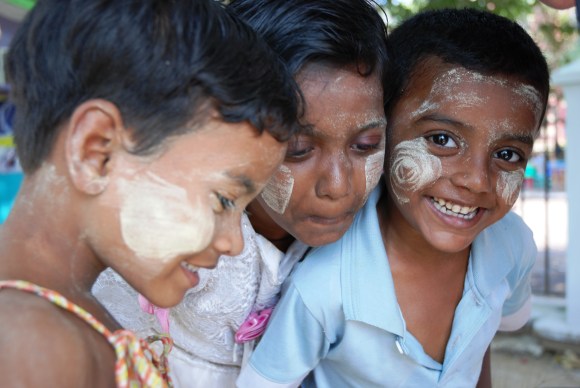
With his life’s goal determined, Musa could now afford to look around casually. The place may not have been a township but it was quite busy regardless. There were some paved stores. A schoolhouse stood nearby, some mud-splattered sleeping people crowding its veranda. In the middle stood a pile of their dirty household belongings. When someone emerged from behind a plastic sack of this rootless group, Musa was taken by surprise. Was this boy his twin or was he looking at himself in the mirror? The only difference was that the boy had a white clay mark of Thanaka[5] on his cheek. He was dressed in light blue denim shorts chopped off at the knees. With these and some other differences, the two of them stood in the shade of the stall, next to each other. Neither seemed to have the strength or the inclination to speak.

Children with Thanka on their face. Courtesy: Creative Commons

When the cameraman appeared with a local in tow, Musa quickly turned his back on them to face the wall. Why was this man so overenthusiastic? Wasn’t he satisfied with the bunch of photos he had already taken of his starving, beggarly face? But this time it was not the click of the camera, but the man’s words that drew attention. Musa realised he was taking interviews. In the beginning, the boy next to him also stood silently. Perhaps he was mute, deaf. But the next moment, he began to stammer. Musa felt goosebumps. Did everything become topsy-turvy when doomsday loomed? Was Musa glib of tongue and Harun a stammerer? Of course, he had no idea if this boy’s name was even Harun.

‘So many murders, rapes, arson – did you see these with your own eyes?’ The local translated the cameraman’s words into Rohingya.

What could be the answer to this question? And how could it be described? Did the kid next to him stammer so he did not have to answer such questions? Musa’s heart was in a turmoil. To save the boy who looked like his twin, Musa turned his face away from the wall.

Holding his Dadi’s hand, he had been escaping – Musa began to pour out his story in Rohingya. There was black smoke and fire behind, the sound of screams and bullets chasing them. Body after body lay dead along the road. Bullet-ridden. Throats slit. Then the thunder of the ocean. It seemed to be howling, wanting to divide itself into two. But the stick in his hand did not have that power.

The two men, like the Pharaoh, looked at Musa in disbelief. But the twin-like kid was happy, even though his name was not Harun, but Shah Alam.

As they walked towards the schoolhouse, Shah Alam said that they had crossed over on a raft the night before from the village of Fatongja in Maungdaw. Shah Alam’s father was missing and his older brother had been murdered. His three other siblings were with his mother.

“With Musa, you are now four,” said his mother to Shah Alam as she sat on the veranda and rolled up a plastic mat. A truck was due to arrive shortly and they would be transferred to a nearby refugee camp. Musa felt suffocated. The air was moist and heavy like a full mashk[6]. Dazed people walked around, vacant looks in their sleepless, tired eyes. No face reflected any sign of joy at the prospect of a new life. Did Musa’s face show any sign of delight? He did not want to live the life of an insect in a camp.

When the convoy of trucks arrived in the marketplace, Musa ran the other way as fast as he could. Government forces of this land chased him back. Shah Alam was standing in the truck and sucking his thumb. His mother had let out a cry as if a child of her own womb was running away. Standing in the open truck like cattle, Musa growled in anger. He was more upset with Shah Alam’s mother than with the authorities here. Musa did not want an adoptive mother or brother – he wanted a staff, one that would magically turn into a snake.

“You must not take the words of the Book literally, Musa!” Bismillahjaan came into Musa’s dreams that night. “It is foolishness to do so. Forget about me. Your entire life awaits you. Go forward on your own.”

“Where will I go, Dadi?” Sad and angry, Musa asked in a teary voice. “I want to go back – to that graveyard where you are headed to take shelter in a foxhole.”

Musa shut up when he heard someone groan in their sleep. He began to sweat profusely as he lay under the tarpaulin. His stomach had encountered some rice after many days, refugee rice – and he had not been able to digest it properly. Yet, the day before, a lot had been accomplished. The authorities had done a family headcount and provided ration cards. They had collected and brought their rations of rice, lentils, sugar, and oil to their tarp-covered shelter. Shah Alam’s mother had instantly set up house and Musa had become a part of the family. He was now spending his nights under the same tarp.

Chores were distributed in the morning. Shah Alam’s mother and siblings would stand in line at the ration shop while Musa and Shah Alam were responsible for collecting firewood from the forest and water from the pump. “Don’t fight like Habil and Qabil,[7] my dears,” Shah Alam’s mother poked her face through a hole in the tarp as they walked toward the jungle. “Be good brothers like Musa and Harun.[8]

Musa’s heart danced with joy when he heard the names Musa-Harun pronounced together. He immediately wanted to address Shah Alam’s mother as Ma, but he suppressed that desire by turning to look at Shah Alam. What a fool! He did not look like he could be good for anything other than gathering firewood. Anyhow, going into the forest did not just mean collecting firewood for the stove – it also meant that he might find the staff he had been searching for. By Allah’s infinite mercy, Shah Alam’s mother had not made him stand in line like a beggar with a bowl, waiting for handouts of food. Moreover, he did not have to remain confined to the camp.

Besides going into the forest, Musa also climbed the mounds around the camp with the others when he heard that the Burmese military had yet again set fire on the other side of the Naf. His people howled, the women wailed and beat their chests. Musa joined them: “Oh Dadi! My heart aches for you!” Sometimes, he cried in tune. “How will I live without Dadi!” When his tears dried up, there was fire in his eyes.

When he received news that a boat had sunk on the Naf, Musa rushed to see. He went close to the dam and sat on the stone slab to stare out into the river. In his hand was a branch of the gojari tree he had found in the forest. He muttered to himself as he struck the water with the branch.

What sort of justice was this? No one would remain – no father or mother, sister or brother, no home or land, no country, no earth. What was his fault? Why did he have to spend his life at a camp – like a cockroach under a tarp? And then there were other troubles. Young girls kept disappearing. As soon as their wounds healed, the young men plotted evil deeds while the police invaded at odd hours of the night. Children cried, old women lamented. Was there no way out of this hell?

“Of course, there is! There is only one route out of this place,” said a trafficker to Musa one day by the riverside. Musa could test his fortune by crossing the river like Sindabad the Sailor. There was a boat nearby and he would not even have to pay for passage.

Musa had no desire to test his fortune. He did not care either about the camp’s development like the light-skinned men who rolled in on expensive cars to find fault. He just wanted to return to his own land. For that he needed a magic staff that would turn into a snake and chase his enemies away. He wanted to see the land overrun with frogs, lice, and locusts that would put fear into the hearts of the Burmese soldiers and drive them out of Rakhine. Or blood would flow in the river instead of water, just like it did when his people were tortured by the commanding forces on his land.

The idea of blood flowing down the river appealed to the militant who waited by the mound everyday for Musa. He had no beard on his face or cap on his head and Musa had no idea where he came from or where he lived. Perhaps he hid beneath the grass like an insect or burrowed into the dark trunk of the enormous banyan tree. But no matter where he lived, the militant ignored the staff in Musa’s hand. As he stood on the mound and looked out onto the fire and smoke on the other side of the Naf, he said to Musa, “If you want blood to flow in the river, you must be trained in arms. It is not possible to do it with a mere gojari branch.”

“Who said this is merely a gojari branch?” Musa questioned. He had no use for an AK-47, grenades, or bombs. He wanted to tell him about the magic staff that would instantly turn into a snake and save his people.

The militant grew quite angry with Musa. He said, “Listen, O Musa, doomsday is near. Bullets and guns are the final answer.”

Musa felt helpless. Couldn’t he show the militant even a little bit of magic now? Like a tiny frog? Musa opened up his palm. Instead of a frog, his palm felt the brush of the breeze.

But neither of the paths suggested by the trafficker or the militant appealed to him. What would he do now? Musa wanted to howl. In anger and frustration, he flung away the branch in his hand. Instantly, it turned into a snake and disappeared into the wilderness around the mound.

(First published in Bengali in Prothom Alo on July 15, 2018)


[1] Kyat is the currency of Myanmar

[2] A sarong-like piece of clothing worn by the people of Myanmar

[3] The Border Guard Bangladesh

[4] Islamic elementary school

[5] Thanaka is made from barks of trees and used like Sandalwood paste to decorate and protect people from sunburns

[6] A traditional water carrying bag made from goat skin

[7] The Quranic equivalent of the Biblical Abel and Cain

[8] The Quranic equivalent of the Biblical Moses and Aaron

Shaheen Akhtar is a notable Bangladeshi short story writer and novelist. She received the Bangla Academy Literary Award (2015) for her contributions to literature and the Asian Literary Award (2020) for her novel The Search.

Arifa Ghani Rahman is Associate Professor and Head of English and Humanities at the University of Liberal Arts Bangladesh, Dhaka. In addition, she is a freelance editor and translator.

.

PLEASE NOTE: ARTICLES CAN ONLY BE REPRODUCED IN OTHER SITES WITH DUE ACKNOWLEDGEMENT TO BORDERLESS JOURNAL