Painting by Joseph Mallord William Turner (1775-1851); From Public Domain
I’ve performed upon many stages of the World
Have donned many masks,
Am today like a ship whose sails furled
Floats listlessly upon the horizonless seas of uncertainty.
.
Passed are those days of fury and adventure,
Of desert crossings, mountain passes and oceanic swells ;
The hour has come to lie down and venture
Forth towards a novel existence of tolling kneels.
.
All has become pensive, still and Silent
Amidst the glorious illumination of nightly bidding ;
Where vivid Dreams and Tales invent
An irrevocable identity, so unexpected, yet so fitting.
.
.
Paul Mirabile is a retired professor of philology now living in France. He has published mostly academic works centred on philology, history, pedagogy and religion. He has also published stories of his travels throughout Asia, where he spent thirty years.
.
PLEASE NOTE: ARTICLES CAN ONLY BE REPRODUCED IN OTHER SITES WITH DUE ACKNOWLEDGEMENT TO BORDERLESS JOURNAL
We live on a huge planet, a watery world, which is a small cosmos in itself.Keith Lyons discovers humanity in his local swimming pool.
In recent years, I’ve increasingly sought an elixir of life. Even though I know this magical potion won’t grant me eternal life — not even eternal youth. The elixir doesn’t even promise to cure all diseases, though it seems a lot of other people are taking this tonic as treatment for every kind of ailment.
My pursuit of this higher realm means that most days, if I am able, I take a break from work, life and the busy-ness of it all to replenish, relax, and rejuvenate. My woo-woo astrological friend reckons that because my star sign is Cancer (one of the three water signs along with Pisces and Scorpio), I am drawn to water. But then, we all need water. Water is Life. It keeps all life going – for without water, life cannot exist. As the saying goes, “No Blue – No Green.” We need water to survive, to thrive, for our hygiene, for our wellbeing, and for the ice cubes in our virgin piña colada cocktails.
When I heard about the prospect of a new swimming pool opening up nearby my home, in the dark days of the Covid-pandemic, I was doubly happy and expectant. I even turned up to the new venue before it had actually opened, when they were still finishing the build and checking all the systems worked. The local government funded facility offered not only a swimming pool, but also a point of contact for interactions with the council, and the pool was twinned with a modern library. In my mind, I imagined that it might be possible to go swimming, then to glide over to a cafe or bar to get a drink, and then to select a book to read while reclining on an in-water lounger. Could it possible? I know I had stayed at a fancy hotel with a wet bar in Macau, where the bartender served cocktails to me and a photographer as we lived our best lives — until the next morning when we didn’t feel so flash.
Water, as you may know, makes up over 70% of the Earth’s surface. Up to 60% of the human body is actually water — depending on how much fluids you’ve drunk. A cucumber is made up of around 96% water. I recall these facts from a high school science project as I push the button of the water dispenser and a half circle of cool water arcs up for me to catch as much as I can in my mouth. I’m thirsty and know I need to drink lots of fluids, as I’ve just spent the last 80 minutes exercising and soaking in warm water. And I feel like I’m dehydrated from all the exertion.
Ever since a new indoor swimming pool opened in my neighbourhood, I’ve been making the effort to go as often as I can, to move and stretch in the warm hydrotherapy pool and then relax in the even-hotter spa. It has become something of a pilgrimage for me, even on the coldest, rainy days of winter. My route there from my house goes along a new cycleway, through a park (where a dog recently tried to attack me on my bike) cuts through a local ‘secret shortcut’ beside offices and a new church, then tracks along an industrial area of factories, warehouses, and commercial premises. After 6pm, the road to the pool has little traffic, just the occasional truck and security vehicle. If road conditions, traffic and winds are favourable, I can be door-to-door in under 10 minutes. But once I enter the new complex, change into my swimming gear, and walk down the ramp of the hydrotherapy pool, time becomes less important. I change from the demands of a busy world to more me-time.
But there’s more than devoting an hour to honour and exercise one’s physical body. Moving in water offers benefits beyond the physical realm, whether one’s aim is to help the heart, the waistline or the body’s strength. Because water is a lot denser than air, water provides more resistance — around 12-14% — compared to doing the same exercises on land. That resistance assists cardio and strength training. There’s another factor for water-based activities: buoyancy. The feeling of being lighter or weightless when submerged in water means you take the pressure off bones, joints and muscles. It is the closest thing you or I might get to being in space. You don’t even need one of those NASA t-shirts with the iconic blue, red and white logo of the National Aeronautics and Space Administration.
The 1.4-metre-deep hydrotherapy pool, which is kept at 33-36C, sits alongside the traditional 25-metre swimming pool, which is kept at 26-28C. The therapeutic pool’s inclusion in the new community complex was the result of lobbying by locals, who previously had to drive across to the opposite side of the city to access a suitably warm pool.
Photo Courtesy: Keith Lyons
It has only been a few months since the pool opened, but already many come to the waters, from when it opens at 5.30am each weekday (7am weekends) to when the last are forced to leave at 9.30pm (8pm in weekends). I’m more of an afternoon and evening swimmer, preferring to go to the pool after work or at the end of the day. Some attend the twice-a-week gentle exercise class, where the average age is 65+. Others visit almost every day at nearly the same time.
Some arrive in wheelchairs, pushing walking frames, or hobbling on crutches. Others walk from the changing rooms to the water smiling expectantly as they pace towards the transformative pool. At mid-morning, with the light from the wall-to-ceiling windows slanting across the pool, it could easily be a scene from the 1985 movie, Cocoon, where the retirement home pool helped them rediscover their youth (it was full of aliens). If you had to paint the scene, there would be a lot of blue hues, along with off-white and grey tones, with silvery reflections off the water.
While some exercise by themselves, focusing on their routines, the set prescribed by their physiotherapist, or whatever takes their fancy, for many it is also a social time, as they aqua jog up and down the lengths, or stand at the sides doing calisthenics. If you listen carefully over the music soundtrack of upbeat, positive songs playing over the public speakers, you can hear the water gushing and flowing. It bubbles up from the floor of the pool. Jets roll in from the sides of the hydrotherapy pool. In the spa pool, there’s a force field strategically placed around the pool. Modern water treatment means there’s no smell of chlorine.
The pool is a very tactile, sensual in-body experience. It is also somewhat humbling. Patrons must change into suitable bathing costumes, which can be as skimpy and revealing as bikinis and togs, though some prefer full body covering for modesty or self-perceptions. The water in the hydrotherapy pool is so warm that there’s never any hesitation on entering. People are only limited by the speed at which they can move from the air environment to the watery world of buoyancy and drag.
My local swimming pool is a microcosm of the wider community, and the big wide world. As where I live has experienced significant migration in recent decades, it is certainly a diverse multi-national cross-section of the community. Chinese are the largest group, with a swim school, coached sometimes in Mandarin, operating most weeknights. There are also families from the Philippines, a group of learn-to-swimmers from Nepal, and occasionally a non-swimmer from India who needs to be rescued from the deep end of the main pool by lifeguards. On one afternoon and evening, the whole pool becomes ‘women-only’, with the blinds drawn so women can use the pools without the glare of men. With more refugees from other countries now making up our neighbourhood, there are often people from Afghanistan, Eritrea, Kurdistan, Ethiopia, Somalia and Bhutan venturing into the pools for the first time.
Is the swimming pool I go to special? Can such a multi-sensory, multi-cultural, relaxing-yet-reviving experience only be found in my swimming pool? Nope. Seek out a public swimming pool in your area and discover another world.
Photo Courtesy: Keith Lyons
.
Keith Lyons (keithlyons.net) is an award-winning writer and creative writing mentor originally from New Zealand who has spent a quarter of his existence living and working in Asia including southwest China, Myanmar and Bali. His Venn diagram of happiness features the aroma of freshly-roasted coffee, the negative ions of the natural world including moving water, and connecting with others in meaningful ways. A Contributing Editor on Borderless journal’sEditorial Board, his work has appeared in Borderless since its early days, and his writing featured in the anthology Monalisa No Longer Smiles.
.
PLEASE NOTE: ARTICLES CAN ONLY BE REPRODUCED IN OTHER SITES WITH DUE ACKNOWLEDGEMENT TO BORDERLESS JOURNAL.
Christopher Columbus (1451-1506)From Public Domain
I, Roberto Mendoza, in this year 1550, ship’s boy on Christopher Columbus’ first and second voyages to the West Indies before my promotion to sailor on his third and fourth voyages, testify to the veracity of the eye witness events that I record for posterity. And in spite of their devastating raw truth, it is my troubled conscious that has conducted my hand, goaded my intelligence to write down these sorrowful facts. For facts they are, regardless of the prestige and boons that Columbus received from his protectors and admirers.
Where shall I begin? How do I burrow through the layers of unquestionable fame that has marked that name to reverberate with the clanking of the slave chains, the death rattles in the gold and silver mines, the gnashing of teeth, the hangings and dismemberments … the insensible apathy of the subjugation or submission of the Indian masses?
It has always appeared to my young eyes that Columbus’ achievements were enveloped in an aura of mystery or incomprehension. I may even add an aura of fantastic falsifications, mainly initiated and authorised by Columbus himself and his unquestioning gallants.
I knew him well, too well to be duped by those seductive charms of his, that subtle cunning, a mask donned whenever a fruitful occasion arose, yet under which lay a brutal, tyrannical individual bent on attaining his greatest ambition: wealth and glory, and this at any price. What was the little ditty that some fool invented for innocent children and naive adults to recite: “In fourteen ninety-two Columbus sailed the ocean blue?” A ridiculous rime to recall that wretched year. Yes, I say that wretched year for it celebrated the Genoan hero’s glorious voyage.
During that fatal year of 1492, two other major events occurred in Spain which I believe to be in relation to Columbus’ conniving his way into Isabella’s confidence: the expulsion of the Jews to North Africa, Italy and Constantinople, and the capitulation of Granada, the last stronghold of the Muslims in Spain, to the Christian kings. Henceforth, Spain rid herself of those ‘impure’, centuries-laden ‘foreign’ plunderers. Did not Columbus write in his logbook (if we are to believe Bartolomé de Las Casas’s transcribed copy of it) that he was overjoyed by those two events: ”thus you (the Monarchs) have turned out all the Jews from your kingdoms and lordships”, and ”the royal banners have been placed on the towers of Alhambra”[1].
This being said, because of the expulsion and the reconquest, Columbus’ true birthplace had to be concealed, for any negotiation with Isabella or Ferdinand. This hero was not born in the city of spaghetti and banks, Genova, as commonly known. The darling of the Spanish monarchy was born in the land of the corsairs, in Calvi, a lovely port town in Northern Corsica, indeed conquered by the Genovans and governed by them during five centuries, but none the less born and bred far from the banks of Italy. Corsica, where for centuries Vandals, Ostrogoths, Greeks and Lombards, and ill-bred Aragonese and Genovans vied for domination, intermingling, integrating and assimilating.
Why would Columbus lie about his place of birth? Was it out of fear of a possible ‘corsair descent’? One that connoted piratry, pillage and other misdeeds [2]? Be that as it may, the rogue managed to cajole Queen Isabella into giving him enough maravedis[3]to undertake a voyage that would heighten the glory of the conquering Spanish Monarchy and the new-founded kingdom.
And that was how Admiral Don Christopher Columbus frayed his way to fame and fortune!
With the Queen’s glittering maravedis he commissioned three caravels : the Nina, the Pinta and the Santa Maria, the third of which he navigated himself, the other two by the Pinzón brothers. How I happened to be aboard the Santa Maria is a long story with which I shall not bore my readers.
So there he stood at the prow, mantled in a vaporous circle of pride and arrogance whilst we, his sea-faring companions, sweated away on deck or in the hold, were fed rotten food, furled and unfurled the sails without respite, hunted out the innumerable rats that ran amok below, withered under the insufferable heat of September. I myself almost fainted under the long, long hours of tedious work, boredom and especially fear; fear that we and our tiny caravel, surrounded by thousands of leagues of far from blue waters, would be food for the horrible undersea monsters that had swallowed many a brave crew and their vessels with yawning jaws and leathery tentacles. All of us were terrified, and the five weeks we spent crossing a swelling ocean towards the East, or so we all thought, triggered a feeling of panic, alienness and remorse. The admiral described the ocean like a river; I myself felt like a cork in a rainswept pond, jostled and jolted, no land in sight, our water and meat, taken aboard at the Canary Islands, foul-tasting, half-eaten by the enormous black rats.
Did the great Admiral not consult the stars? Eastward? There was nothing — only rolls and rolls of higher and higher walls of water battering the fragile sides of our vessels. And I, so young, asked myself time and time again, how did an incompetent sea-faring fellow like Columbus ever win the confidence of Isabella and Ferdinand ? Oh how I recall his bulky figure at the prow, oftentimes behind the helm, screaming orders or simply staring out into the watery vastitude, dreaming no doubt of gold … gold … and more gold … He had written the word ‘gold’ seventy-five times in his logbook during the first two weeks of our crossing!
How many of our poor sailors had been beaten for insubordination, had suffered the excruciating trial of keelhauling[4], one or two even hanged for attempting mutiny, so fearful were they of being devoured by sea monsters, dying of thirst or hunger or being bitten by the furry rats that thrived below in our beds of straw?
At long last I heard the cry “Land ahoy!” coming from the crow’s nest. Yes, we finally reached a cluster of islands that would be named Guanahani[5], Cuba, Haiti and the Dominican Republic on the maps of future cartographers. It was on these islands that my first glimpses of a barbaric and despotic Columbus would not only be corroborated, but magnified to the heights of psychopathic insanity. For it became more and more evident to me that the Admiral, whom I considered in my youthful age as a hero, had no intentions of treating the indigenous peoples of these islands either as equals or with a soupçon of humane sympathy. He indeed judged them somewhat higher than animals, yet whose only human value was how much they would bring him as slaves sold in Spain, or how much gold and silver they would extract for him from the mines and rivers. All he saw in these peaceful peoples was the glitter of gold fastened to their noses and the rings of equal glitter hanging off their ears and arms. He saw gold everywhere, even gold stones shining in the rivers! He wrote in his logbook that gold grew in clusters and could be plucked off trees like fruit!
The way in which he ferreted information out of the Indians about gold deposits turned my stomach. His obsession with gold drove him into periodical frenzies during which time he would beat, even torture the poor indigenous man or woman who failed to locate the deposits. He spent his sweltering nights tossing and turning in bed, totally possessed by this maniacal craving.
But his brutality was not limited in this direction: The Spaniards or other Europeans who disobeyed him or sought to outmanoeuvre him in the pursuit of power or riches were tracked down and hanged, accused of criminal acts. His barbarity knew no bounds, nor his slave-selling which began to enrich him immensely.
On our second and third voyages, which led us to the islands of Granada and Tobago, the abundance of gold extracted was tantamount to the number of Indians he enslaved for his own ‘household’ purposes, and those he sold into a slavery which by then had become a thriving, lucrative business. We navigated from island to island sowing the seeds of destruction as the stoic Admiral described their beauty, the exotic animals and birds, and especially the immense, awaiting riches buried under that beauty. How many of the indigenous he had killed when several tribes revolted against him, and how many committed suicide cannot be accurately tallied. I would learn much later that Las Casas put that tally at 1,500 Taion Arawaks.
Indeed, as time went by Columbus’ wrath found merciless outlets against Indians and Europeans alike as the settlements grew in economic and political importance. Indians who failed to extract enough gold from the mines had one of their arms cut off[6]. On many occasions he had rebellious Spaniards dismembered in public much to the outrage of the governors appointed to the settlements by the Spanish Monarchy.
The governors of these settlements began sending reports to the King and Queen relating the horrendous behaviour of Columbus, his obsession for power and riches, his masquerading as a ruling god-like figure over the ignorant natives. Testimonies piled higher and higher on the Queen’s pearl-inlaid writing-table, relating cases of rape, murder and mutilation.
On his return trip to Spain she immediately had him seized, chained and thrown into prison. She also expropriated all his extorted possessions, be they gold or land. There he rotted away for six weeks, so enraged was the Queen, betrayed by this ‘foreigner’. However, his brother Bartholomew, on his knees, pleaded tearfully in favour of his brother’s heart of gold, his innocence in all matters of governance, having been slandered by the governors and their lackeys who wrote defamatory reports to wreak vengeance upon a man whose glory and greatness surpassed theirs. The Queen hesitated. It was King Ferdinand who decided to have him released.
His release from prison had puffed up his ego, unlocked his megalomania.
Columbus’ fourth and last voyage, between 1502 and 1504 with four caravels, took us to Martinique, Honduras, Jamaica, Costa Rica and Nicaragua. I had been appointed a full-fledged sailor by then and relished the idea of accompanying the Admiral, jotting down all his actions, prudently of course, so that I would not to be arrested for bearing witness to his ruthlessness, perhaps even hanged as a traitor. The ‘civilising’ process undertaken by him included plundering, murdering, enslaving and mutilation. Amidst the unbridled violence and sadism, he posed as an evangelist, a disinterested zealot deeply desirous to convert the ‘savages’ into God-fearing Christians, into ‘civilised’ beings like himself.
Columbus returned to Spain a hero of piety, magnanimity, sanctity. The impostor even wrote two books : the Book of Privileges[7] in 1502, an indecent mass of statistics which enumerate all his accumulated rewards wrested from the Crown under which lay the beaten and mutilated bodies of the indigenous, and the Book of Prophecies[8] in 1505, a shameful scream of smut comprising hundreds of citations from the Bible, all of which spell out in his vapid style his Christian ‘mission’ in the New World, ever so charitable and lenient towards the ignorant, child-like ‘natives’ ; a mission, indeed, pure in spirit, rightful in act.
With Columbus’ death the unwarrantable fervour that he had kindled slowly shrivelled into ashes. I retired from sea-life and found work in the Custom’s Bureau, a most comfortable employment. Besides, I was disgusted by all the tales told about him by the sailors, especially their bawdy narratives about the native women in the New World. I wished to leave my sea-legs behind and tread more earthy paths. Furthermore, my new tasks gave me ample time to read the posthumous reports about Columbus[9], many of which belied the benignant deeds and bountiful achievements of the monarchial and New World idol. It was after these important readings that I decided to begin my memoirs …
The rogue’s Book of Prophecies created quite a stir amongst the aristocratic castes : Columbus’ fantasies of promoting Isabella and Ferdinand as heads of a new crusade to the Holy Lands to defeat the Muslims, and there spread Christianity kindled many a nostalgic and gun-ho heart. The monarchs, wary of the old Admiral’s apocalyptic inaccuracies and religious bigotry, never took him seriously. I wonder if they had even read his book …
None the less, Columbus certainly provided an excellent example for other freebooters to follow in the wake of his doughty adventures. The slave trade between the Old and the New World thrived as well as the gold and silver that flooded the Spanish markets. It is no mere metaphor that this period in Spain was called as El Siglo de Oro (The Golden Century).
.
[1] Bartolome de Las Casas (1484-1566) a Dominicain priest who spent forty years in Hispaniola (Haiti and the Domican Republic) transcribed an abstract of Columbus’ lost logbook. How accurate or truthful is this copy is difficult to assess. Journal of the First Voyage of Christopher Columbus (1492-1493), translated by Clements R. Markhma : London, Hakluyt Society, 1893, pp. 15-93
[2] Corsica : Columbus’ Isle, Joseph Chiari, edition Barrie and Rockcliff, 1960.
[3] Gold coins used in mediaeval Spain during the 11th and 14th centuries.
[4] A maritime punishment by which the sailor is ‘hauled’ under the ‘keel’ of the ship with ropes.
[5] As called by the Indians. Columbus called this island San Salvador. Today it is called Watling.
[6] On this point see Howard Zinn, Christopher Columbus and Western Civilization, Open Magazine Pamphlet Series, 1992.
[7]El Libro de Privilegios. The English edition : Book of Privileges, The Claiming of the New World, John W. Hessler, 2014.
[8]El Libro de Profesías. The English edition : Book of Prophecies, Repertorium Columbianum, Blair Sullivan, 2004.
[9] Columbus and Las Casas : Two Readings on the Legacy of Columbus(1542 (The Devastation of the Indians. A brief Account) and 1550 (In Defense of the Indians).
Paul Mirabile is a retired professor of philology now living in France. He has published mostly academic works centred on philology, history, pedagogy and religion. He has also published stories of his travels throughout Asia, where he spent thirty years.
PLEASE NOTE: ARTICLES CAN ONLY BE REPRODUCED IN OTHER SITES WITH DUE ACKNOWLEDGEMENT TO BORDERLESS JOURNAL
A Self-Portrait with Seven Fingers by Marc Chagall (1887-1985). From Public Domain
Tommy ordered a second pint of beer at the counter. The bar buzzed with the usual crowd, and a few groups of tourists, mostly from northern Europe, were beering it up as they did at home. Tommy had had a long day preparing breakfast and clearing the rooms at the Hotel Van Acker, Jan Willem Brouwersstraat, 14. Afterwards, he accompanied three Spanish tourists to the ‘high’ spots of Amsterdam: Anne Frank’s house, Vondel Park, the Rijks and Stedelijk museums, Rembrandthuis, Madame Tussauds, completing his tour at the ‘hot’ spot for all such tourists — the red light district. There he left the Spaniards, tired of having dragged them about the town while straining to understand their Spanish.
How long had he been at it ? Four … five years ? Who knows. Something in his mind had snapped. Oftentimes he suffered from bouts of amnesia or blackouts, a succession of synapse that triggered in him extreme panic, even paranoia. He felt an elbow nudge him lightly in the ribs: “ All right, mate?” asked a middle-aged man with long, blond, silken hair and ultramarine blue eyes.
Tommy eyed the man suspiciously. He had managed to squeeze himself in at the counter as imperceptibly as a ghost. “Yes, I’m all right. Why?”
“Oh, I just saw you staring into space as if you were in great thought or pain.” Tommy smiled leerily.
“No pain, just thinking small thoughts.” The other smiled. His teeth were very white. He reached over, took a few pinches of tobacco from a drinker’s pouch with unabashed effrontery and rolled himself a cigarette.
“Do you do that often?” Tommy enquired lamely.
“What?” the other asked puffing away dreamily.
“Pinch tobacco from people’s pouches.”
“Of course I do, it’s been my custom for ages,” answered the tobacco pincher with a whimsical gleam in his eyes. “What are you doing in Amsterdam, working I suppose?”
Tommy straightened up. “I work at the Hotel Van Acker doing odd jobs for the owner.”
“Ah, yes, Van Acker … Where they found that murdered dwarf.”
“He wasn’t murdered. He died of a heart attack.”
“The police never found the key to his room. That is strange. To die of a heart attack in a hotel room without the key.”
“So what?”
“Sounds a bit shadowy to me. But that’s all in the past. And who cares anyway, right ? What’s your name?”
“Tommy.”
“From?”
Tommy hesitated: “From Luton.”
“Luton?”
“It’s in Bedsfordshire.”
The pincher of tobacco nodded, rolling himself another cigarette. “I’ve seen you handing out leaflets or pamphlets in the streets.”
“That’s possible.”
“How’s the salary at Van Acker’s?”
“I get on. Van Acker gives me my meals and I sleep in the cellar room under the stairway.”
There was a very long silence — a silence so long that Tommy began to grow nervous. Finally, the man said: “Listen, I might have a job for you Tommy that will earn you enough money to live like a prince anywhere in the world for the rest of your life. One night ! Only one night, and you’ll become as rich as Crassus.”
“Who’s Crassus?” asked Tommy mistrustfully. The other laughed.
“The richest man in the Roman Empire. You see, my proposition deals with paintings; I’m an art collector.”
“Pictures? I like pictures. I take all my hotel tourists to the art museums.”
“Perfect. Here’s my address. Come by any time after eight at night. By the way, my name is Gustav.”
“Gustav … Gustav what?”
“Gustav Beekhot. I hope to see you soon, Tommy. Tot ziens[1]!” Gustav slapped Tommy on the shoulder and left the crowded bar, weaving through the mass of throbbing, bulky bodies like a shadow amidst a darkening, nameless stretch of land …
Five days later, after having wrestled with his thoughts, Tommy leaned his bicycle at the gate of a plank which led to Gustav’s house-boat on the Ruysdaelkade Canal. It was quite an impressive barge. He knocked at the door. Gustav, eyes a watery blue, opened the door and wished his visitor a hearty welcome ‘aboard’. “Just in time for dinner,” he said flippantly. When Tommy stepped in he couldn’t believe his eyes: they swept over a long ‘hold’ full of paintings of all sizes and colours, some hanging off the walls, others on easels, and still others scattered on the uncarpeted ‘bottom deck’, unfinished.
“You might open a museum here,” he suggested, strolling from painting to painting. “I like to look at pictures. When I accompany people to the Rijks or to the Rembrandthuis I always take my time to examine the pictures. The tourists just look at the title and at the name of the painter.”
“Yes, very few people really examine a painting.” Gustav placed two bowls of rice, shredded carrots and two pints of Heineken beer on a hackney table. “I for one prefer to paint them, buy or sell them, although I do often go to the museums for inspiration.”
“You sell your own pictures, then?” Gustav chuckled.
He gave Tommy a conspiratorial wink: “No, who would ever buy a Gustav Beekhot ? To tell you the truth I sell the ones I steal or have stolen from museums or from private collectors.” Tommy, who had sat down at the table dropped his fork. He stared at Gustav in disbelief. All that had been said with absolute aplomb. “Yes, Tommy my lad, sometimes I do buy them from contemporary Scandinavian painters living in poverty, but I prefer to steal them … It’s cheaper!”
“But … but how can you steal a picture from a museum?” questioned Tommy in alarm.
“It’s quite simple. It’s a question of know-how. Thievery is an art, my dear lad. And if you are willing, you will learn this art easily, and by doing so, earn a half a million dollars!”
Tommy jumped up. “No, please, let us eat, and I shall spell out all the niceties to you. There’s really nothing to it: a wiry, loose-limbed body like yours, will-power and the common sense to keep your mouth shut. And I do believe you possess all those aforesaid qualities. Am I correct?” Tommy remained voiceless. “Of course you possess them. But you doubt my word. Others too doubted, and today are living like kings in Tahiti, the Seychelles or in some Central American country.”
“A half a million dollars?” Tommy managed to stammer, sitting down slowly as Gustav glided between his paintings in a breezy, phantasmal gait to procure a bottle of Jenever in his kitchenette at the ‘prow’.
“Yes, Tommy. One night. One night only.” Tommy peered out the ‘porthole’, it had begun to drizzle. He watched as the drops gently fell upon the unruffled canal waters; they fell gently, rocking his host’s barge dreamily. He suddenly felt a seizure coming on. He strained to control it, the house-boat rocking … rocking so gently, like the drops of drizzle. Something snapped in his head; he shook it out. Gustav ate his rice and carrots as if he noticed nothing of the crisis that his visitor, and future accomplice, was suffering. He was smiling that engaging smile.
“What do I have to do?” came Tommy’s belated reply in spite of himself. He had asked that without being fully conscious of actually asking it.
Gustav stopped eating, sized him up, then thrust his taunt face forward. It had a ghostly white appearance to it: “Crawl through a very very narrow tunnel about two hundred metres long behind the Zadelhoff Café to the storage room of the Stedelijk museum. In that storage room you will find a painting by Marc Chagall, A Self-Portrait with Seven Fingers, which will be waiting for you to cut out of its frame with a razor blade. The nightwatchman has already put the painting exactly where you will pop up from the storage room hole.”
Gustav stood, went to a broken, plastic shelf over his wash-basin and picked up a razor-blade. “Look, this is how it should be done.” And the art dealer began to cut out a painting from its frame. Tommy gasped. The other laughed. “Don’t worry, it’s one of my worst chefs-d’oeuvre …” Gustave then rolled up the canvas and placed it into a plastic cylinder. “There you have it my boy,” he beamed. “Sling the cylinder over your shoulder, drop down into the hole and crawl back through the tunnel where I shall be waiting for you.”
“But this tunnel … I can’t see …” Gustav put up a hand.
“The tunnel was dug during the second world war and used either to store ammunition by the local militia or as an escape route for Jews and communists.”
“How do you know all this?” Tommy asked incredulously.
“I studied history, and have many friends who deal in these particular matters.” There was a shrewd, impish twinkle in his host’s eyes.
Tommy seemed a bit sceptical about the whole operation. Gustav’s eyes were all alit, the glow of which stabbed at his distrustful heart. Gustav noted his guest’s wavering emotions. “My buyer will be in Amsterdam in five days,” he proceeded in a haunting undertone. “He’s arriving from Tampa, Florida and will be paying me one million three hundred thousand dollars for the painting. You will receive five-hundred thousand.”
He went to a drawer. “Here, this bank card will permit you to withdraw your share of the profits in any bank machine in the world. It’s a Swiss Banker’s card. But under no circumstances must you withdraw more than two thousand a day; bank administrators may become suspicious.”
“Where’s my bank?”
“That I cannot tell you,” Gustav answered sharply. “I suspect that you are mistrustful of me?” he chaffed.
“No, I’m not, but still …”
“No buts. The card is perfectly valid once the money has been deposited. And it will be after your mission has been completed. But I warn you Tommy, you must leave Amsterdam immediately before the museum authorities realise that the Chagall has been stolen. My buyer will leave on a morning flight back to Florida.”
At that moment Gustav poured out two glasses of Jenever, raised his and cried — ‘Godverdomme’ [2]! And with that coarse shout they both gulped down the divine nectar. Tommy felt a mounting tension in his chest, throat and jaw. Had he made a pact with a man whom he hardly knew ? He left at midnight, benumbed, as if he were a bit tight.
For two days Tommy struggled to control his taut emotions. To weigh the consequences of this incredible proposition. He could become immensely rich after a few hours of mental and physical toil, yet something irked him. It all seemed so unreal! He walked the streets of Amsterdam in the late afternoons, flicking matches into the air one after the other, watching the lit sticks glide gently to the street where the last lingering sparks sizzled out. He repeated aloud, “Tahiti, the Seychelles … I wonder where they are?” over and over again. He would take out the bank card and study it carefully. “It looks real to me,” he assured himself, albeit nervously.
On the fourth afternoon they met for tea at the Zadelhoff Café, after which Gustav took Tommy behind the café and showed him the sewer lid which led to the tunnel. Then they strolled over to the Stedelijk Museum, and whilst promenading through the halls of paintings Gustave cautiously pointed out the storage room where the Chagall had been stored for a future exhibition at another museum. All that day Tommy had admired the art collector’s professionalism and precision in elucidating the details of this very risky, but lucrative operation.
“Will-power, nerve and stamina, my lad,” Gustav kept repeating until he told Tommy to meet him that very night behind the Zadelhoff Café at one o’clock sharp. The buyer had booked a morning flight back to Florida. “One night ! Only one night, my friend. Don’t let us down … “ Tommy clenched his fists. He suddenly felt a surge of unwonted force, a force he had experienced many years ago before his unexpected arrival in Amsterdam. Gustav slapped him on the shoulder and glided away like a phantom in the reddening twilight …
A far away church-tower bell struck the hour of one. And so it happened, happened like a dream …
Gustav cut a spectral figure outlined against an ill-lit, moonless night as he waited impatiently for his accomplice. At that moment Tommy arrived, a trifle late. They both set immediately to work to open the heavy sewer lid. Once pried open, Tommy climbed down the rusty rungs, a torch in hand, the plastic cylinder slung over his shoulder. “The rats! The rats!” he called, looking up, his lithe body trembling.
“Rats ? The rats will scramble away when you train your torch-light on them,” Gustav shouted down in a weird, stilted voice. “Don’t talk nonsense ; just move on …”
And he slid the sewer lid over the hole. Tommy stopped. Darkness engulfed him. The boy panicked. — All alone! All alone! — he lisped to himself in fear. He nevertheless carried on down into the damp darkness training the light along the broken stone walls dripping with age. There, the opening of the tunnel! It was true. There was the tunnel … But so narrow … so terribly narrow …
Poor Tommy was hardly able to push himself into the opening. He began to cry. He felt he had been buried alive in a toolless coffin. All alone! All alone! “Mummy!” escaped from his dry, chapped lips. Yet Tommy crawled on and on. The thought of a half million dollars flooded his inflamed brain. The brave boy elbowed a painstaking trail over root and rock, his torch-light cutting out a thin stream of blissful light that disappeared into a dark Nothingness. A Nothingness that frightened him, reminded him of vague scenes in some other life that he had once led, a former life of battling and crying out in a moonless, raging darkness …
His head struck stone. Yes, it was stone! The gallant Tommy had reached the museum storage hole. He straightened up with difficulty, touched the cold walls; a ladder had been provided for the Second World War escapees.
“The rest will be child’s play,” he whispered in an echoless vacuum. Up he clambered excitedly. The hole seemed endlessly deep. Was that possible ? Ah, the floor tile … Finally. He pushed it open as easy as that. “Child’s play,” he sniggered as if speaking to Gustav.
Tommy pulled himself out into a deep, deep darkness. A darkness he had never experienced before. He searched for the razor-blade in his trouser pocket, trained his torch …
A merciless neon light suddenly blinded him, absorbing all the darkness, save that which still lay heavy and hauntingly in his head. Four policemen stood pointing at him, laughing and laughing. A very stoutish, well-dressed man stepped out from the policemen and grabbed the boy by the scruff of the neck. “So this is the little twit that has been hiding out like a rat!” the man chidded in broken English. “Hiding in the storage pit, hey? Think you’d slip away from us? What on earth are you doing in here you scamp, playing hide and seek?” Tommy said nothing. Baffled, he had lost all contact with reality. “Deaf and dumb, hey? Let’s see.” One of the police officers struck the boy across the face.
“Please don’t,” he whimpered.
“There you are, he can speak after all, and with a British accent, too,” pursued the well-dressed man who happened to be the museum director. “So, why are you hiding here ? What are you doing in that pit? Look at the mess you’ve made.” Indeed, the storage hole was filled with empty cracker and potato chip bags that Tommy had been eating. “Were you drinking water from the lavatory tap ? Look at this floor, there’s water all over it.” He poked Tommy in the chest.
“I was sent to steal a picture … Marc Chagall …”
“Steal a painting ? A Marc Chagall ? How were you to get it out of the museum ? Are you masquerading as Honest Jack[3] ?” This was asked with biting irony.
“Through the tunnel back to the Zadelhoff café.”
“Oh, I see … a tunnel to the Zadelhoff café.” He turned to the policemen: “Is there a tunnel to the Zadelhoff café.” All the policemen laughed and laughed, pointing at the sulking boy whose filthy, ill-smelling clothes struck a grotesque contrast with the museum director’s well-tailored suit.
“And with a razor-blade cut it out of its frame,” Tommy hurriedly added.
“Where’s the razor-blade?” one of the policemen demanded, taking him by the arm. “Give it to me.” Tommy searched his pockets. He held out a safety-pin.
“No tunnel, no razor-blade,” broke in the museum director. “You’re either a liar or a raving lunatic.”
“But I crawled through it. Gustav Beekhof showed me the tunnel and told me to steal the picture when he invited me to his house-boat,” Tommy pleaded, tears flowing over the dark shadows of his wild, tired eyes.
“There is no tunnel you little liar!” screamed a policeman. “And who is this Gustav Beekhot? Where is his house-boat?”
Tommy racked his brains: “I don’t know the exact address but I can take you there.”
He was hustled out of the museum into the moonless night, bundled into a police van and off they sped through, along and over streets, canals and bridges … until …
“There, on the Ruysdaelkade Canal,” the boy shouted in triumph. “His house-boat is the second …” Tommy stared in horror: there was no house-boat ! A police officer pulled him out of the van and dragged him to the slip where the house-boat should have been docked. Tommy rubbed his red, stinging eyes : “But it was there … I …”
“Shut-up you impudent little runt!” the officer barked. “I’ll check.” He returned to the van.
A few minutes later, he returned. “There’s no house-boat registered in that slip, and we have no record of a Gustav Beekhof,” he stated stiffly, looking hard at Tommy. “You’re raving mad.” A bewildered Tommy stepped back, his thoughts running riot.
“No house-boat. No Gustav Beekhof,” fumed the police officer. “A little scamp of a thief, that’s what you are.” And he twisted Tommy’s ear until it turned beet-red. “What’s your name, boy?”
“My name ? My name is Outis,” he lisped, holding his smarting ear.
“And your papers?”
“Papers ? I have no papers … I’m …”
“Shut-up!” the police officer stormed, turning red. He took Tommy by the shoulders and shook him so hard that his teeth chattered. All of a sudden something snapped in his brain. The boy was seized by a mounting tension which sent him spiralling into a dark nothingness that he had never before experienced — a nothingness where he drifted through a darkened, nameless stretch of land …
DOCTOR VAN DIJK’S REPORT
The patient who calls himself Outis, as recorded by the police, most probably English-born, was found hiding in the Stedelijk museum storage room for two days with, according to the patient, the intention of stealing Marc Chagall’s ‘A Self-Portrait with Seven Fingers‘, which the aforesaid patient claimed had been deposited in the room for that purpose. This claim was disclaimed by the museum director, Mister Aalbers who avowed that the painting hangs in its usual place in the museum. The patient being questioned by the police, maintained that he was put up to the supposed theft by a certain Gustav Beekhof who apparently does not exist, according to police records, nor does his place of residence: a house-boat on the Ruysdaelkade Canal. The patient was promised a half a million dollars for the theft, which, as he declared, was undertaken by crawling through a tunnel from behind the Zadelhoff Café to the museum storage room. The police confirm that this tunnel has never existed. Furthermore, when the patient showed the police his bank card with which he was to withdraw his share of the theft, it turned out to be a library card whose owner’s name and library location had been thoroughly effaced beyond deciphering.
The patient has fallen into a coma for several days now. There seems to be no doubt that he is suffering from an acute case of schizophrenia, caused perhaps by a sudden mental or physical traumatism that has created an imaginary parallel world through which the patient wanders in and out whenever jolted by an unsual event or encounter.
The patient thus will remain in our clinic under strict observation until he emerges from his unconscious state.
Chief Psychologist of the Psychotherapierpraktijk Overtoom
[2] ‘God damn it’ in Dutch. A rather ‘informal’ interjection when making a toast amongst close friends.
[3] The notorious English robber John Jack (1702-1724). He was hanged for his daring thefts.
.
Paul Mirabile is a retired professor of philology now living in France. He has published mostly academic works centred on philology, history, pedagogy and religion. He has also published stories of his travels throughout Asia, where he spent thirty years.
.
PLEASE NOTE: ARTICLES CAN ONLY BE REPRODUCED IN OTHER SITES WITH DUE ACKNOWLEDGEMENT TO BORDERLESS JOURNAL
In order to build a new low-cost residential complex twenty kilometres to the West of Rome, hundreds of hectares of low-lying hills, orchards, several depopulated hamlets and unplanted vineyards had been cleared by an army of bulldozers, cranes and cheap labour with picks and shovels. In the 1960s, housing construction in Italy had mushroomed out in an erratic, rampaging spectacle beyond any public or private circumspection.
Pier Paolo and his middle-aged mother benefitted from one of these new, but hastily built residential flats on the tenth floor of a fifteen-storey tower. His father had abandoned the family four or five years ago, forcing the boy’s mother to work as a seamstress for the hundreds of residents of their tower. He himself had dropped out of school to work at a nearby wine factory in the industrial zone. Their meagre incomes paid the rent, permitted them to eat two or three meals a day and dress decently.
Everyday, Pier Paolo shuffled lazily to the factory at eight o’clock. To reach the small factory, he crossed an immense horizonless, treeless esplanade paved in the most banal ugly grey paving stones. What caught his attention, however, was a low rising stretch of grassy dirt mounds which ran for a lengthy distance along a high, barbed wire metal barrier which separated the dirt mounds from a rocky embankment leading downwards to a newly build avenue. These low dirt knolls, according to the season, blushed a poppy spring red, a leafy, autumnal brown, a wintry white then a lush, verdant green in the summer. On his off days, he would walk through the low hillocks from one point to the other. They covered an area of about twenty-five metres by ten metres. His constant crossings in this forgotten pile of dirt had traced footpaths in and around the knolls, the low bushes and over broken roots.
Pier Paolo enjoyed these pleasant promenades. Below, on one side, buzzed speeding vehicles. On the other, lay the empty, treeless esplanade where hardly a soul appeared, save a few workers, housewives pushing carts of food, flowers or trinkets to be sold in the neighbourhood market, one or two old school comrades and stray dogs. It was at that particular movement of contemplation that Pier Paolo experienced a tinge of excitement, a mounting commotion that would endorse and embolden his existence, would prompt his escape from the boring walls of a suffocating flat, the ugly concrete and metal of their block residence …
Returning from the factory one afternoon at the beginning of June, Pier Paolo walked briskly over the range of shaggy mounds of piled up dirt for an hour or so before finally deciding upon a spot that would suit his adventure nicely. Hidden from the eyes of those who crossed the esplanade, a small concavity in the rim of a grassy hillock would afford him a place to sleep. He only needed to erect a make-shift lean-to, not to protect him from the rain — during the spring and summer months it never rained — but from the scorching heat. Yes, Pier Paolo resolved to live with nature on this diminutive tract of earth that had miraculously survived the building contractors’ bulldozers and cranes.
He hastened home to his mother who was busy sowing a marriage dress for her second storey neighbour. Pier Paolo excitedly explained his adventure. It would last through not only for the summer months, but also through autumn before the heavy rains set in. She listened passively, her mouth agape. Had her son gone completely daft? No, he appeared quite normal, even serious. He would rise with the rising sun, have his breakfast at the café near the factory, lunch at the factory canteen, and as to diner he would buy deli meats, olives, cheese and bread at the grocer’s.
“Why not eat diner here with me?” his mother suggested in her soft, meek voice.
“Of course I’ll eat with you mummy, but only on weekends. I must live permanently in my new environment. I’m eighteen year’s old, and it will be an adventure to sleep out in such primitive and natural surroundings without neighbours’ screaming and shouting, loud parties until four in the morning, lifts breaking down all the time. I want to breathe fresh air, if that is all possible in this godforsaken dump.”
His mother flushed at these last words, but held her tongue, astonished at her son’s resolution. “You see mummy, I want to look up at the stars and not at the cracks in the ceiling of my room.” His mother nodded her head, thimble on her thumb, needle and thread between her index and middle finger. He was right, there were many cracks and fissures in the ceilings and walls of their ‘new’ flat ! Well, he did show ingenuity and imagination. He wouldn’t take no for an answer, and besides, he wouldn’t be far from home …
So Pier Paolo packed a few belongings in his back-pack, rolled up his sleeping bag, kissed his mother on her wrinkled forehead and strolled to his ‘earthy paradise’ as he facetiously called his up-coming ‘residence’.
The first two weeks Pier Paolo did eat with his mother on Sundays and also gave her his clothes to be washed, cleaned and dried, made ready for work on the morrow. However, the following weekends he did his own washing at the launderette for a few lira, and ate sandwiches at his hilly home instead of with his mother. It certainly was not out of anything against her. He loved her very much. But Pier Paolo wished to be on his very own, especially on his off days and at night, lying on his sleeping bag outside the lean-to, observing the stars and the moon as they moved slowly across the universe. Up till then, no one had disturbed him. A stray dog did sniff about his installation on several occasions, but the animal seemed friendly, and Pier Paolo threw it some slices of salami and pepperoni. The only other ‘visitors’ to his comfortable solitude were the sparrows who gayly pecked at the crumbs of bread that he scattered for them just below his shelter.
Oh how after a hard day’s work at the factory he relished those calm, starry evenings, the light whir of vehicles below beyond the barbed-wire barrier, the absolute silence of the esplanade behind him! He really felt quite at home amongst the natural elements; the ants building their ant-hills, the bees doing their dance amidst the honeysuckles, the birds chirping in and out of the bushes. The poppies and daisies were in bloom, too. Alas, many of the grassy knolls and thorny footways had been littered with coke bottles and caps, beer cans or liquor bottles, yellowed magazine and newspaper pages, cigarette studs, all thrown there by returning workers from the industrial area or gangs of drunken adolescents. Pier Paolo, struggling through the prickly weeds, would clean the mess the best he could, but invariably the same lot or other litter-louts would fling whatever trash they had into his ‘paradise’ as if it were a huge rubbish bin. Did these individuals know that Pier Paolo had taken up residence in those piles of grassy mounds? Even if they did, nothing would have prevented them from tossing whatever they had into it, accompanied by drunken guffaws and mindless giggles.
The sea must not have been far off, or so he imagined. For at times he heard the whir of a winged seagull. He stood to catch sight of it, but only the blurry orange glow of the high rising tower lights far off at the end of the esplanade marked the sky. The towers resembled so many indistinct parapets of flickering light-bulbs which loomed ominously at the end of the soundless esplanade. That vastness of ugly emptiness had always frightened him, and at those times he would turn his back to this sinister, featureless urban landscape and dwell upon the images of faraway scenes that crossed his imagination. No, those electric lights would not chase away his stars …
One star-filled night, he envisaged pink and amber sands of a horizonless desert whose barkans[1] and chots[2] left him breathless; the heat of the sands made him sweat under the blazing hot sun in an azure sky of pure, unpolluted, untainted opal. In another vision, he pictured himself deep in a chain of snow-clad crested mountains, trekking with difficulty over ribbed glaciers and ice-laden passes, the blues of the mountains inviting him to penetrate ever deeper so as to discover the arcane entrance to the subterranean kingdom of the King of the World.
Pier Paolo’s imagination soared to new heights night after night following a hard day’s work. It were as if he had mounted a magic carpet which floated under rainbows, over wide forests and turquoise seas. These fantastic images slid him slowly into a deep, healthy sleep. He awoke refreshed and vigorous, ready for a hearty breakfast at the café and work. In fact, he had never worked as hard as he did now, loading the train cars with heavy cartons of wine, working rapidly at the conveyor belt packaging wine bottles.
Many of the workers admired the young Pier Paolo for his renewed energy, his replenished stamina and spirit. At the sound of the whistle, he showered, bought some prosciutto, pepperoni, provolone, olives, pistachios and bread from the grocer’s, then returned merrily to his shaggy-mounded home. His muscles ached, but gradually relaxed when the stars began to pop out forming clusters of scintillating comfort …
He saw himself on the Niger River somewhere in Mali, drifting in a canoe on the slow moving current, wild geese cackling on the wing, hippopotami bellowing and rumbling in the deep waters, camels grunting from the arid sand-filled shores. He drifted and drifted as the heat bore heavily upon him, lying upon sacks of corn, munching on dates, tomatoes and boiled fish …
A sudden barking! It was the stray dog. Pier Paolo shook himself out of his dreamy stupor, threw the poor scraggy creature a slice of pepperoni, then closed his weary eyes and slept soundly. Darkness crept over the hilly mounds, mantling their denizen in another tranquil night of peaceful repose.
Oddly enough, after having devoured the slice of pepperoni, the dog never returned to visit our grassy-mounded denizen. He had other visitors, however — a motley lot of out-of-schoolers who seemingly scented the presence of someone living amidst the abandoned lot, and who endeavoured to confirm it. It was a Saturday afternoon. Pier Paolo was busy reading an interesting detective story when suddenly he found himself encircled by three ragamuffin boys and two very buxom girls! They all sized him up, noses in the air as if sniffing the warm breeze of a July day.
“Who are you mate?” a skinny boy questioned with overt contempt. He appeared to be the ‘chief’ of the pack. Pier Paolo stood up. He was much taller than any of them and more broad-shouldered. The others held their ground, but one or two scraped the dirt with their worn-out shoes, biting their lips.
“I’m the king of these mounds. What of it?”
“The king?” guffawed the skinny chap out of the corner of his distorted mouth.
“Yea, the king,” repeated Pier Paolo, heightening his voice with an added tinge of condescension.
“Very well, king. Then what if we were to dethrone you and turn your monarchy into a democratic state?” The others sniggered at this show of rhetoric, albeit hesitantly.
“Go ahead, Mister Democrat!” responded the monarch, tightening his fists, smiling through clenched teeth. No one moved. The warm breeze made the democrats sway in their fixed positions like a herd of paper tigers.
“Ah, let it go,” interrupted one of the girls. “Let him rule over his trash-filled kingdom.” And she turned to leave, followed shortly by the other girl then the three boys, who exchanged menacing glances with Pier Paolo. The ‘chief’ bowed in affected reverence to the ‘king’ and mumbled something unintelligible. When they had reached the esplanade, Pier Paolo scoffed at this unexpected intrusion, crawled under his lean-to and went back to his afternoon reading …
The August heat dried all the perfumed poppies and dainty daisies that Pier Paolo had planted around his lean-to. The heat had become unbearable, driving through the palm-leaf roof of his make-shift shelter. It was holiday for most of the workers at the wine factory, but Pier Paolo volunteered to work the whole month, not only for higher wages, but for showering and the afternoon hot meals. He did visit his mom every now and then, but was living mostly on deli meats, olives, cheese, fruit and bread. Because of the heat, he showered every day and took his clothes to the launderette every two days. It’s true that this kind of a diet began to bore him, however, his solitary refuge had really become his royal paradise!
Every Saturday and Sunday, he roamed through his ‘kingdom’ searching the nooks and crannies for unusual objects: a broken tombstone dating from the seventeenth century judging from the Latin inscription, a yellow-paged book of verses by a poet unknown to him, several of which he managed to read but hardly understood. He discovered a rusted compass and magnifying-glass, half-buried in one of the weedy mounds. In a riot of dead roots he rummaged out a photo of a young girl dressed as if to go to church, all in white with a huge black crêpe de chine hat. He collected these treasures and put them in a box for safe-keeping. They represented objects reminiscent of some by-gone era.
One day he stumbled upon a huge footprint, much bigger than any print he had ever seen.
“A dinosaur?” he thought excitedly.
He scoured the knolls for any dinosaur bones but found none. Where did that enormous footprint come from? Pier Paolo grew somewhat apprehensive. His kingdom indeed enclosed a myriad mysteries. And this one drew him further before the advent of humankind …or so he thought.
One fine sunny morning, the black dog he had fed, suddenly appeared with a huge bone in its mouth. Pier Paolo threw it a few slices of salami he had been munching on but the dog shook its shaggy head and plodded off behind a knoll. He raised a quizzical eyebrow. Did the dog not like salami? Perhaps that bone was a dinosaur bone. He shrugged his shoulders sniffing the hot air.
During the month of August he hardly visited his mother. He hardly spoke to his colleagues at the factory. They eyed him nervously. The boy seemed so estranged, aloof with a distant look in his eyes. He would look straight through you and beyond, somewhere far, far away. His gait too had slackened. This being said, he carried out his tasks as usual.
He let his hair grow long, dishevelled. He grew a wispy beard, uncombed. His clothes, although clean, hung on him like a bag, and a bit bedraggled to boot as if he had slept in them. Which he always did, needless to say. All he yearned for was to return to his solitary retreat in the evening, lie down and stare at the emerging stars. They drew him upwards and outwards. The sun having set, the heat ceased to vex him. The crickets discontinued their August chorus. Other sounds, alien, rose to a high pitch in his head…the tinkling of camel bells across the sandy wavelets of the Gobi or the Sahara deserts. There he was again, riding atop a camel, a white, gleaming, silken turban wound about his head, his body protected by a satin djellaba. He had sailed the high seas for many moons before disembarking in this ocean of ergs[3] whose vibrant colours made his eyes squint. The cleanliness of such an expanse delighted him, such a contrast to the concrete ugliness and filth of all those horrid towers! As the ship disappeared over the rim of the watery horizon, he stood between the vastness of the desert and the sea, the first in front of him, the second behind, ready to penetrate unknown territories. Above, a translucent blue sky. The camels plodded onwards; a sudden crispy sound alerted him to a change in the landscape, the camels’ hooves now trudged over stetches of slaty black sands that the dried lava of a volcano eruption had deposited thousands and thousands of years ago. The camels trudged and trudged ; the crusty slaty sands crunched and crunched until Pier Paolo fell asleep …
Pier Paolo, after five weeks of not visiting his mother, spent a Sunday with her. So happy was she to see her son that the cheerful woman cooked him his favourite dish: eggplant parmigiana. She bought him the best provolone and caciocavallocheeses that she could afford, and served him a vintage Chianti wine. As a special treat for dessert, she fried him Sicilian sfince[4]. How he wolfed those delicious delicacies down! Pier Paolo hadn’t eaten such sweets for over three months. He had become so thin, his long hair and beard framed an emaciated face, whose bulging eyes bore a wild look. Yet he remained very polite, mild-mannered, even tender towards his loving mother throughout the afternoon. When he closed the door behind him, she held back her tears. Would she hold them back when his final hour came?
It was a warm September afternoon, 1975. Next to his lean-to, Pier Paolo sat reading a novel by Alberto Moravia, ‘GliIndifferenti’[5], the 1929 edition. He sniffed the cool autumn air, admired the pleasant scents of the poppies and honeysuckles around which the bees were busily buzzing. From behind the mounds, he heard a few vehicles screech to a halt, followed by many coarse voices. The boy stood, walked over the mounds and noticed five or six men in ties and two policemen staring up at him. A big fat man, probably a building contractor by the look of his clothes, waved to him to come down. With overt disdain, he turned and returned to his novel. Shortly after, though, he found himself surrounded by these intruders to his privacy. He stood, miffed to the marrow!
“You’re trespassing, sirs. And encroaching on my afternoon reading.” This was stated with calm but obvious scorn. All the men laughed so loud that it brought a series of yowls from the stray dog, who had been observing the scene from atop the knoll where Pier Paolo had built his lean-to. It was showing its teeth, yet uttered not a growl.
“Clear out boy, you’ve had your fun for the summer. The neighbours are complaining about you. Anyway the city is about to level all this and pave it clean.” The fat man certainly gave himself airs, puffing out his chest.
Pier Paolo, with a thin smile, replied wearily: “What neighbours? No neighbour has ever said anything about my being here. They don’t even know I’m here.”
“Listen, don’t muck about with us. I’m telling you to push off or we’ll be forced to drag you off,” the other said in a offensive tone, his face turning a beet-red.
Pier Paolo clenched his fists: “This is my kingdom, fatty. I and only I decide when to leave!”
The dog yowled again. The fat contractor kicked down the lean-to in a spate of anger. Pier Paolo, taken aback by this display of uncalled for violence, lashed out at him with two or three well-placed blows to the face. ‘Fatty’ fell backwards to the ground, spitting out a tooth and much blood.
One of the policemen grasped Pier Paolo by the shoulder ; the young boy showing unusual strength knocked his arm away and struck the policeman’s jaw with his elbow, then continued to strike him in the ribs with a volley of punches. Just then from above, the dog leapt into the crowd barking hysterically. It fell onto one of the men biting into the neck. The dog had gone mad. The other policeman took out his pistol and shot it dead.
Pier Paolo, stunned by the gunshot and the dog lying limp next to his broken lean-to, flew into a rage and attacked the policeman, seething like an animal, gnashing his teeth. He struck blow after blow, uncontrollably. Now the rest of the men pounced on the boy beating him mercilessly to the ground, kicking him in the head. The policeman broke up the beating, handcuffed the half-unconscious Pier Paolo and dragged him off to the police car …
The badly beaten boy was taken to hospital. Upon his release, he was immediately arrested and charged for assault and battery on the two policemen and on two municipal civil servants. At the trial the accused, who had no defence, was sentenced to two years imprisonment and a 50.000 lira fine, which he refused to pay on the grounds that neither he nor his mother could afford such a sum. The judge slapped on another year of imprisonment.
Confined to stare at four concrete walls many hours a day, Pier Paolo gradually slipped out of the reality of his circumstances. He took no food nor spoke to anyone. He merely lay prostrate on his little cell bed like one awaiting death. No more wonderful images of deserts, mountains and seas crossed his benumbed mind.
Death stole upon Pier Paolo in violent spasms on the evening of the second of November, 1975. Apparently, he had starved himself to death.
His lonely mother sewed and sewed, no longer able to retain her tears. No neighbour came to comfort her; no religious authority to commiserate with her grief.
As to Pier Paolo’s kingdom or paradise, on one dreary November day, several bulldozers levelled the shaggy mounds. The area that had been his home now became an extension of the paved esplanade up to the barrier of the embankment.
[4] Made of ricotta, unbleached flour and unsalted butter, rolled into balls and fried. When cooled, sugar powder is sprinkled on them. They are generally eaten on Saint Joseph’s day in Sicily.
[5] Translated in English as ‘The Indifferent Ones’ or ‘The Time of Indifference’ by Alberto Moravia(1907-1990)
.
Paul Mirabile is a retired professor of philology now living in France. He has published mostly academic works centred on philology, history, pedagogy and religion. He has also published stories of his travels throughout Asia, where he spent thirty years.
.
PLEASE NOTE: ARTICLES CAN ONLY BE REPRODUCED IN OTHER SITES WITH DUE ACKNOWLEDGEMENT TO BORDERLESS JOURNAL
Tommy sat down to dinner with his parents. Roast beef and mash again. He grimaced. His mother, a cashier at Lidl[1], and his father, a travelling salesman, threw him cursory looks: “Tommy, you should eat, meat is so dear,” his mother lamented.
“Eat up boy, money doesn’t grow on trees you know,” barked his father, wheezing irritably, followed by a huff that brooked no further comment on the subject.
Tommy slouched over his plate and wolfed down the food without a word. He left the table, as always, casting a contrary glance at his father, who ate his meal in silence, a ritual to which he demanded both his wife and his son to observe scrupulously.
Tommy slipped outside into the warm breeze of late summer, sitting down on the steps of his parents’ (the bank’s!) town council flat. How his father unnerved him with his tyrannical rules and stentorian ditties. “He’s gone almost half the year selling his cheap, nasty wares, and here he is laying down the law like a bloody dictator. Poor mommy does all she can to meet his inept demands, but when she can’t she cries her eyes out,” he fumed inwardly, clenching his fists.
Tommy took out a box of matches, lighting each one, then flicking them into the yellowing grass of their front garden. He enjoyed watching the little sticks sail into the night air all alit, only to fall extinguished on the stone walk-way or grass. He loved the sulphurous smell of the sparks, the vision of the orange flame. They aroused a shiver of excitement in his belly and spine. The door opened. His father snorted: “Whatever are you doing with all those matches ? Matches don’t grow on trees.” And in a heightened voice, “Stop wasting them …” He slammed the door shut. Tommy clenched his fists, his lips whitening in constrained animosity …
Tommy began his incendiary career at school. Armed with a box of matches that he had pinched from the local grocers, he set fire to the large rubbish bin in one of the maintenance rooms on the first floor of the building, causing billows of smoke to fill corridors and lungs of children and teachers as they rushed about either to escape or extinguish it. The fire was not serious in itself. However, the bin contained plastic substances whose horrible odours and ochre-yellow fumes made everyone retch or choke. Several children collapsed from smoke inhalation. Since no one had suspected Tommy, or any other child for that matter, the school board of directors concluded that it was due to an act of negligence. Hence, the elderly maintenance man was promptly sacked!
The thirteen-year old Tommy’s maiden exploit filled his lungs with pride, and would incite him to bigger deeds of daring …
And bigger deeds they indeed were: Southwold’s supermarket fell prey to Tommy’s insatiable fiery appetite. He had spotted an area outside the supermarket where hundreds and hundreds of wooden boxes, crates and cartons had been stacked all along the wall. This storage area was fenced off from a vacant lot which ran the whole length of it. In full daylight, the defiant Tommy sprinkled gasoline all along the mass spread of boxes, crates and cartons, then tossed matches into them. He ran and lay low under the scant bushes of the lot as the fire took hold and spread. Soon the flames were licking the wall, arching high over the roof of the supermarket (it wasn’t Lidl where his mother worked!), casting sparks into the hot, August air.
Tommy crawled away to safety into a nearby woods where he observed the now roaring flames with gratifying glee. Sirens drowned out the shrills of clients and supermarket personnel. The young arsonist dusted himself off, pushed back his tousled hair, and like all seasoned arsonists have done (and will always do), stepped gingerly into the gathering crowd that watched the fiery spectacle, listening to them conjecture unintelligently on the origins of the fire. He covered his mouth, concealing a victorious smile, mesmerised by the grandeur of the blaze. The thirteen-year-old Tommy eyed the spectators with disdain, his shrewd mind already kindling his next performance for all to see — one that would ‘bring down the house’, as his father would always jeer with that gross guffawing of his.
In that nearby woods which separated the shopping mall and the school from Tommy’s neighbourhood, a gang of ruffians had built a huge tree-fort in an aged oak, whose horizontal growth provided an excellent setting for their fort. It was very long, sloping upwards into the large leafy branches, built with brand new wood stolen from the construction sites and roofed with a huge metal sign that the rowdies, no doubt, had pilfered from some warehouse. The fort was furnished with stolen furniture, pieces of carpet, framed pictures, curtains and all sorts of knick-knacks. Tommy despised this gang of thugs who constantly stopped him on his way to school on the wide path that divided the woods in two, either to filch his lunch money, which they deemed ‘toll fee’ for passage through ‘their territory’, or simply to slap him about a bit ‘just for fun’. Tommy could have gone around the woods, but that would have implied a forty-five minute trek. Class began at eight.
Tommy’s heart, aflame by these extorting blighters, especially by their crass, vulgar laughter, carried out his revenge with ardent savagery and meticulous precision …
Four days later, at five o’clock in the afternoon, gigantic flames spearing upwards from the clearing of the woods were seen miles away. Even the heat was felt in the nearby neighbourhoods. Indeed, Tommy had thought out his plan of action with methodical mania. He knew when the wretched hooligans would be out of their lair of lechery, all eleven of them, out on ‘errands’ as they snickered; that is, stealing, extorting, fighting. He spread two small jerrycans of gasoline, siphoned from his father’s car, thick over the tree-fort, trunk and branches of the oak. He felt a pang of sorrow for the aged oak … but what must be done must be done, right ? When these preliminaries had been accomplished the rest was child’s play. The dryness of the tree and the wood of the fort produced a conflagration that even took Tommy by surprise, all the more as it spread at an incredible speed out of the clearing into the surrounding wooded areas. Alarmed but fascinated by the raging, arching, yellowish-orange flames, he threw more and more brushwood into the sweeping blaze, screaming at the top of his lungs – “Feed the fire! Feed the fire! Feed the fire!” But this unexpected madness nearly cost him dearly, for at that very hysterical moment, one of the ruffians who had probably seen the flames from afar on his way back to the tree-fort, overheard Tommy’s uncontrollable cries and spotted the arsonist on the edge of the clearing, flinging dead wood into the flying sparks that shot out from all quarters of the main blaze.
“Hey you!” the lad shouted. Tommy didn’t need to turn around. He recognised the voice. He took to his heels through the twisting paths of the woods which had not as yet been touched by the lapping flames, running as fast as he could. He heard the other pacing after him, yelling at the top of his voice words that struck fear in Tommy’s little heart. But Tommy knew the woods like his hand. He veered off the path and darted into a pocket of thick thorny undergrowth, his face and hands pricked and slashed. The pursuing lad stopped, out of breath, hesitant to follow, for now the unfurling blazes were curling up in front him! Knowing that the criminal had escaped, he back-tracked, hoping to escape. He did, for the morning newspapers reported no deaths from the tragic incident. As to the arsonist, he battled through thorn and thicket, managing to flee by way of a tiny footway which led him behind his neighbourhood. He waited in a copse of willows and, under the cover of darkness, made for his parents’ flat, looking furtively at the rising flames, which by then had all but devoured the woodlands. At ten o’clock he reached his doorstep, seen by no one …
Sirens screamed well into the night, accompanied by the coarse calls of clusters of men, apparently out in search for the culprit.
Tommy, exhausted by the fire and his flight, silently opened the front door, slid in and tip-toed upstairs to wash his face and hands, smelling of smoke and streaked with dried blood from the thorns. Once this operation completed, he stepped outside, then stood on the steps of the flat, watching the crimson glow of the conflagration light up the sky. Many neighbours were doing the same, some standing and talking in the middle of the high street. His father and mother stepped outside to watch the spectacle.
“How awful! How terribly awful!” wailed his mother, hands cupped over her mouth.
“I hope they catch the animal and skin him alive!” his father yelped in a burst of his usual condemnatory judgement. “I’ll be the first to lend a helping hand,” he added in a angry voice, spitting out a cigarette stub into the garden flower-bed. Tommy listened, a slight grin spreading over his aching face.
“Tommy, what are you doing here on the steps at this hour?” his mother suddenly enquired rather nervously, as if she had just emerged from some trance.
“I’m doing what you and everyone else in the neighbourhood are doing, mommy, watching the fire.” This pertinent answer prompted no reply.
The next morning at breakfast, Tommy explained away the scratches on his face and hands because of their cat, whose viciousness was quite known to them all if caressed the wrong way.
“Please don’t muck about with the cat, dear,” his mother lovingly reprimanded. “Look at your face and hands.” Tommy shrugged his shoulders at this show of motherly concern, thanking his stars that his father was out early that morning at some sales show in connivance with his associates to fleece their clients. His mother harped on about the woodland fire and all the rumours and gossip that conflated it. Tommy hardly listened.
The three devastating fires that broke out in the wheat and rye fields and in the orchards of the neighbouring villages and hamlets west of Southwold during September convinced the police that they were not dealing with some feckless firebug, but a shrewd and odious serial compulsive pyromaniac. And since there had been no rain for months, the fields and orchards went up like ‘a box of matches’ as the expression goes. And yet, not one single shred of evidence could be brought against him (or her?). No one had seen anyone near the fires, nor had that ‘anyone’ left a clue of his or her identity by inadvertence. The adolescent who had pursued Tommy in the woods, when interrogated by the police, admitted that because of the smoke and the hood over the fugitive’s head he could not give any clear portrait of the heathen.
Meanwhile, vigilante squads had been formed to track down and ferret out the beast, corner him (or her?) in his or her lair or den …
Tommy read or heard all these trumpetings with considerable apathy, working hard at school, keeping to himself, playing the shy, reserved boy during recreation or when out with a friend or two. His conscious was clear … his keen sense of survival, too. How he jeered inwardly at all this fuss over him: Little Tommy Harper, the pyromaniac! It did indeed hoist his pride. His mother and father talked unceasingly about the misbegotten pyromaniac at dinner night after night, his father booming out his usual commonplace clichés, his mother, those exasperating soughs and sighs. As to Tommy, he remained silent, meditating on the fact that his father had suspended his sacred ritual of silence at the table — at least for this major event– but more importantly, mulled over his next exploit, one that would go down in the chronicles of their precious sea-side town. What Tommy did not know, and this goes without saying, that this chronicled exploit –for indeed it was chronicled– would be his last …
The origin of the daring deed lay in an ugly tussle between Tommy and one of his classmates over a boat-outing at the boy’s father’s boat some five miles or so from Southwold on the River Blyth. It seems that the boy’s father, for some unknown reason, had taken a disliking to Tommy’s father, a dislike which then tainted Tommy. When the classmate invited several mates on his father’s catamaran one Saturday morning, Tommy was overtly excluded. He demanded an explanation for this unfair ostracism. He was given none! The boy merely smiled in unconcealed contempt. Tommy, fists clenched, knocked him down and began pummelling him with vicious blows until two or three teachers came to the battered boy’s rescue. The incident occurred during recreation and created quite a stir at school.
Tommy was, henceforth, not only shunned by his fellow mates, but was suspended from school for three days. His father in a spurt of terrible wrath, took the belt to him, beating him so hard that the boy’s mother had to intervene to avoid her son from fainting: “I’ll have no blood in this house ! No blood!” she raged and ranted, putting an end to the thrashing. The red-faced father pushed his son to the floor and marched out of the house …
A week later Tommy had thoroughly refined his plan. Nothing would curb his revenge. How sweet it would be… He would reduce that boat to cinders! Everything up in crisp, crimson flames! Everything: yachts, catamarans, the boat-house and club. Everything! That’ll teach them all what it means to be humiliated, banned like an outlaw. “Fire for fire! Feed the fire! Feed the fire! Feed the fire!” he repeated to himself raving.
On one very warm night, at the beginning of October, Tommy slipped out of the flat at midnight. His father had gone off on one of his ‘travelling tours’ and his mother was fast asleep. He dressed all in black, a hood hid his blond hair. As always, he had three jerrycans of gasoline stuffed in a backpack, siphoned from a neighbour’s car, along with two or three large boxes of matches and his father’s pruning shears.
The walk to the waterfront took him over three hours, but the effort would be worth its weight in gold. He had studied the area inside and out, had even drawn a map of it. The pruning shears got him into the enclosure. From there, the rest would be easy. First targets: the boat-house and club. He saturated their walls with enough siphoned gasoline to ignite the Tower of London. Then to the yachts and catamarans he skipped gayly, the berthed vessels dancing lightly in their slips[2]. Yachts, motor boats and catamarans were soaked with what was left of the gasoline, Tommy jumping from one to the other in a state of uncontrolled dementia. Above him, a full moon girt with a golden halo seemed to fuel fire to the leaping lunatic, giggling and choking with laughter at each wild hurl of gasoline: “Feed the fire! Feed the fire! Feed the fire!” he howled into the darkened air …
Suddenly hurried footsteps! A torch carved out a hollow tunnel of hazy light in his direction. No time to lose; it was the watchman on to him. He had not counted on that. He lit several matches, igniting boat after boat. The torchlight swung from left to right, the footsteps hurried here and there as flames burst into the blackness. From the boats Tommy then jumped onto the floating dock, hurrying to the boat-house and once there threw matches randomly at the saturated walls. A curtain of flames shot up, spiralling speedily towards the rooftop. The whole house went up like a rocket ship out of its launch. Two small explosions followed.
“There must have been demijohns of gas inside,” Tommy thought. As he raced to the marina club-house to complete his crazed ravaging two or three gunshots rang out, one of which ricocheted metallically off a crane just to the left of him next to a boat ramp. “He’s shooting at me the bloody git!” Tommy lashed out, scowling. He ran and cringed for cover behind stacks of buoys and coils of rope. The marina club-house still lay several feet to his right, but here the desperate arsonist hesitated. He had no cover to reach it, and worse still, because of the dark and the spiralling smoke he couldn’t see the watchman. Could the bugger see him? Tommy had never been confronted by such a perilous predicament. Escaping from pursuing ruffians was one thing but dodging bullets was another. This was no police or action picture. Tommy realised that one bullet could put an end to his life in a split second.
Tommy baulked at the idea of running to that awaiting target, but completely obsessed with it, he was about to take the risk. However, something unexpected happened. Unknowingly he had hid behind the buoys and coils of rope that had been piled up on a pontoon moored to one of the many floating docks on the river waters. The ropes that moored the pontoon to the dock had been burnt away by the flames racing out of the marina boat-house, flames that had all of a sudden surrounded Tommy. About to dash towards the boat-club to escape the approaching flames, he realised that the pontoon was moving out into the river, slowly. The River Blyth that led out to the Broads … then to the ocean! A few more shots rang out in his direction. He caught sight of the watchman, it was good Mister Knowles, the father of one of his classmates. The man, well over his fifties stumbled then fell, lying still as the flames seemed to engulf his body. Tommy screamed in despair. An arsonist he indeed was… but a murderer ?
Sirens rang out in the heat of this dreadful night. Firemen and police had since entered the marina battling through the blazes and stifling smoke with tons of water sprayed at random. Had they seen Mister Knowles body? Would they be able to save him?
Torchlights swept the marina then swerved into the river. Hidden securely behind the buoys and rope the cringing boy could not be seen, yet the police were training their torches on it as if suspecting something. “They’ll get the rubber boats out after me,” Tommy fretted. “I’m done for !” As his father had said, they would skin him alive! Already the lynching squads were out in the nearby streets, tracking the heathen who had struck again. And those blokes were no choir boys.
The pontoon moved quicker and quicker towards the Broads where the fierce swells tossed and rocked the fragile vessel. Tommy thought of putting on a buoy but he couldn’t swim, and anyway the vigilantes would be scouring the marshes along the river in search of the fugitive; he could hardly stay in the water, floating about like a cork in a pond or an apple bobbing up and down in a barrel. Thick grey, fleecy clouds slid athwart the halo of the moon. Tommy was suddenly swallowed up in a shroud of gloom as the pontoon bounded out beyond the Broads into the rising rolls and swells. The thirteen-year old Tommy Harper screamed for his mommy. A scream that no ear heard!
Further and further out the doomed passenger, stranded on the pontoon, was borne into the darkness and distance …
*
After months and months of searching for the pontoon, the naval patrols and the local police abandoned their hunt. All that they were able to find were two or three floating buoys. As to the sudden disappearance of thirteen-year old Tommy Harper, it was said that he had absconded from home. Oddly enough, the police never suspected the boy of the fires, believing his disappearance, and the end of the series of tragic conflagrations, a mere coincidence. Furthermore, the only person to have had a clear view of the criminal, Mr Knowles, had unfortunately died of smoke inhalation, the firemen arriving too late to resuscitate him. When neighbours of dubious doubts questioned Mrs Harper about this ‘coincidence’ over a cup of tea at bridge she would reply in lachrymose accents, wringing her knotty hands: “Why would my Tommy ever do that ?”
One or two neighbours of the Harpers believed that they had caught sight of a boy who bore a remarkable resemblance to their son in Amsterdam, walking up and down the streets, handing out leaflets. This information, however, was never investigated. Besides, Mr Harper, ravaged by all this gossip and hearsay about his son threw up his hands and declared :
“I’ve washed my hands of that boy. Let him go to the devil!”{ His poor mother on the other hand, cried and cried every day and night, praying that her only son, her little Tommy, would cheerfully come walking through their front door …
He never did.
.
[1] A German founded discount supermarket chain located in many European countries
Paul Mirabile is a retired professor of philology now living in France. He has published mostly academic works centred on philology, history, pedagogy and religion. He has also published stories of his travels throughout Asia, where he spent thirty years.
.
PLEASE NOTE: ARTICLES CAN ONLY BE REPRODUCED IN OTHER SITES WITH DUE ACKNOWLEDGEMENT TO BORDERLESS JOURNAL
Ever since his boyish days at the Seminary in Zamora, Spain, Felipe Jimenez acquired an unsual passion for mediaeval Visigothic architecture. A passion rarely shown in the mid 1800s. Another passion, too, swelled Felip’s heart and pride, one seemingly incongruous to the first: his fascination for the Quinta del Sordo, or the Villa of the Deaf; the villa or country-house where Francisco de Goya[1], a famed painter, alone and dwelling in his soundless world, drove out the fears and torments that haunted his sleepless nights by depicting a series of the most incredible frescoes that any painter up till then had painted. Frescoes that came to be called ‘pinturas negras‘[2]. Why Felipe Jimenez had associated these two passions into one maniacal life project is the drama of his heart and of this tale …
In the mid 1800s the only means of exploring the Spanish countryside with any speed was on horseback. Felipe prided himself as an excellent horseman. He loved horses, especially his own, whom he named with endearing irony, Rocinante[3]. As he roamed Northern Spain in search of the three extant Visigothic churches, he himself questioned his love of mediaeval art: Was it his voracious readings of mediaeval castles and knights? The glorious battles between Visigoth Christians and Muslim Arabs? The silent stones of ruined churches, castles and hamlets to whose voices no one wished to lend an ear?
And Goya’s frescoes? The deaf Master’s tortured figures and thickly layered pigments impressed on the solitary walls might have reflected the bleak, lonely landscape that Felipe was now traversing speedily. Reflected the bleakness, too, of his soul for a reason that he could not understand. He thought, spurring his steed faster, that the oddity of his passions might have been kindled, unknowingly, by the unexpected encounter of two very apparently contradictory visions, yet out of which Felipe had been magically touched or enlightened because of their estranged association, because of their incompatible commonalities.
With a genuine thirst to sate these emotions, our rider rode on and on until he came upon the seventh century Visigothic church of San Pedro de la Nave in his own region of Zamora. A pure joy to lit up his eyes when he saw the sculptured capitals[4] of twittering birds and intoxicating flowers, of the beloved Daniel in the Lion’s den, soothing the roaring beasts with his melodious chanting, of Saint Philip’s outstretched hands conducting his chant to Creation. These tickled Felipe’s ears as he listened to their concerted canticle. He had never before experienced such fineness of hewn stone and arched forms.
From his shoulder-bag he procured a sketchbook and began drawing the animated capitals, one after the other, carefully noting each cry of the bird, each chant of Daniel and of Philip. When this task had been meticulously completed, he stepped outside into the blackness of night, breathed in the thick air, then retrieved his bed-roll, rolled it out and slept peacefully against the outer wall of the church, whose stones, still hot from the scorching afternoon sun, afforded him warmth against the chills of the early autumnal night. He awoke refreshed, bathed in the swathes of a pure, reddish, morning glow.
Now if these treasures aroused enthusiasm in Felipe’s heart, greater would be the treasure trove that awaited him to the south of the great city of Burgos, when some weeks later, he discovered the seventh century chapel of Quintanilla de las Viñas, perfectly intact. Dismounting from his trusty but fatigued steed, in awe he admired the outer friezes[5] of exquisitely sculptured partridges and peacocks, feasted his dust-filled eyes upon festoons of interweaving vines and clusters of hanging grapes. They were almost real to the touch those plump clusters! He listened in a sort of dazed ecstasy to the imagined screams of the partridges and peacocks as they paraded their plumage and fanned their tails inside the frieze. The sweetness of the grapes dripped off each pregnant cluster. How Felipe longed to quench his thirst by picking each one out of its stony bezel.
Unable to enter the chapel, the door being barred, Felipe brought out his sketchbook and reproduced those screams and sweet drippings as best as his artistic talents enabled him. He was an excellent artist. As he closed his sketchbook, a sudden thrill shot up his spine — a thrill that he had never experienced before. Felipe rode off filled with wonder, the early autumnal sun setting red and round over the arid plains of northern Spain. Had it all been an intimate communion with those birds and grapes? Had others bore witness to those storied stones? Felipe patted Rocinante’s jowls affectionately: all these questions remained enshrouded in the mystery of Spain … his own story within Spain’s …
Over the scorching plains Felipe galloped wildly in search of the last Visigothic church, San Juan deBaños, locatedin the region of Palencia. He arrived after five or six days of riding under the blazing sun, sleeping under the gelid stars.
This jewel outshone the other two: the basilica-plan church’s naves[6] were supported by the most perfectly intact groined vaults[7]: they left him breathless. He began sketching them in feverish excitement. But what really astounded the drawer was the triumphal arch that welcomed the church-goer within. An arch that he had never laid eyes on before.
Just then Rocinante began pawing the hard soil with the hoof of her foot. She snorted and pawed with steady blows in an unusual way. Felipe ran over to her. He noted that her horse-shoe had been displaced. As he bent to reshoe his horse, it occurred to him that Rocinante’s iron shoe bore an exact resemblance to the welcoming entry arch of the church. When he had finished the shoeing, he resumed his drawing, marking every detail of this incredible arch: It can’t be compared to the Moorish arch or to the Roman one- he mused. He then decided to coin this novelty the arco de herradura[8]; that is, the horse-shoe arch, for indeed unlike all the arches found in Spain, the opening at the bottom of this one was much narrower than its full span. But what attracted him most about this original work of art were the two abutting ends of the arches supported by the tops of the columns which gave the impression that they sought to join together to form a circle. Of course this impression was one of an artist’s …
Overjoyed by his coined expression, thanks to his trusty dark-maned Rocinante whose shoe had been properly shod, Felipe spent the rest of the day studying the church inside and out. When twilight set in he pulled out his bed-roll, lay down at the apse[9] of San Juan de Baños, imagining in his head his next and last halt, Recaredopolis, the only Visigothic town to be founded by the migrating Northern-Germanic peoples, built by King Leovigilda’s excellent craftsmen in 578 and finished by his son, King Recaredo, the first Catholic Visigothic king of Spain, baptised in 586. According to his map, Recaredopolis was located eighty kilometres from Madrid in a hamlet called Zorita de las Canes. According to several learned acquaintances, he had been informed that the hamlet lay in stoic silence, ignored by archeologists, unvisited by the curious. He liked that. He would ride to it at the red of dawn …
Five days later, the dark-maned Rocinante carried her exhausted rider, face-blistered and throat-swollen into Zorita de las Canas, then straight to Recaredopolis. Here the silence of the still standing stones welcomed the quester. Trotting through the remaining edifices he pulled up his steed before a horse-shoe arch, more or less identical to the one that he had admired and sketched at San Juan de Baños. The domed roofs of the churches and chapels had fallen into decay, but the untouched stones rang of a superior, magnanimous craftsmanship. This sixth century town had withstood the upheavels of History, the turbulence of Time, although the two-storey palace had lost its second storey entirely and the granary had been reduced to two walls and piles of heaped up stone.
The horseshoe arch at Recaredopolis. Photo Courtesy: Paul Mirabile
Felipe let his horse roam about looking for a good feed whilst he meandered in and out of the moss-clad walls of the dilapadated palace, granary and sanctuary, filling his sketchbook with copy after copy of this fabulous mediaeval architectural trove. It seemed to him that no one, besides the villagers, had stepped foot in these ruins. Felipe felt estranged from himself, staggering about in a queer trance-like state from wall to wall, all so silent, yet deafening to his ears, so lyrical, so ecstatic that they strove to enter into communion with him. He sketched until the advent of night …
The ever-standing mediaeval sanctuary walls. Photo Courtesy: Paul Mirabile
Felipe built a fire and cooked a few potatoes and green peppers over it on a make-shift spittle. Lying on his bed-roll as he had done for so many star-studded nights, hands behind his head, he scrutinized the Autumn moon’s face mottled with huge black spots, listening to the deep, warm silence that surrounded him. He suddenly sat up: Had he not heard a runeful moaning skipping over the dry, empty plains? He bit his lower lip. The night air began to chill him. He continued to listen, attentively, his heart pounding painfully. Nothing. No one. Something frightened him: The horrors of war. Of famine and poverty ? Of old age creeping up upon him ? Or the ugliness of human depravity ? But why are these thoughts plaguing him at this very uninvited moment, as he lay so peaceful in this lieu of broken stones and tales ?
The sanctuary rising over the dry, grass-swept plain. Photo Courtesy: Paul Mirabile
He counted the stars, mentally tracing the curved contours of the waxing alabaster moon. Nothing stirred. No breath of wind, no call or cry from animal or bird. Felipe felt a surge of loneliness here as if the slow decay and negligence of the ruins resembled his own, physically and mentally … He was well over fifty, and the hardships of aging were slowly creeping up on him. His hand trembled when he drew. His back hurt from riding. His mind thought thoughtless thoughts, adrift between the past and the present in some sort of dark chaos.
Felipe ignored the fact that no thought arises by thinking. Thoughts burst upon you at the most unsuspecting moments. They dance and whirl about then penetrate as quickly as that! The thinker must welcome them no matter how abrupt, unforeseen, painful. Yet, Felipe was keen on welcoming them, eager to decipher their subtle choreography.
He awoke in a dull trance. The sun rose lethargically over the voiceless ruins, the curling, misty plains. He watched its entrance into the world whilst the dancing thoughts that had spun him about during the night, and at present were jarring him out of sleep, grew brighter and brighter into figures of acts to be enacted. He threw dirt over the embers of the fire, rolled up his rug, saddled the munching Rocinante, and with a last glimpse of Visigoth Spain, galloped at full speed towards Madrid.
However, not to the big city. What had he to do with big cities ? No, Felipe Jimenez spurred desperately to Manzanares, twenty kilometres outside of Madrid, where there, the enigma of his quest would be resolved, or so he hoped! For a wild, dancing thought had overwhelmed him last night. A thought so feral that it would surely unlock the door to the mystery of an overt sense of hopelessness. Felipe imagined that hidden recess, heard its muffled invocations. To Manzanares he thus rode hard. To the Quinta del Sordo (Villa of the Deaf) where those welled up voices would overflow and spill forth the truth of centuries and centuries of silent exuberance, ecstasy and crime … To him and him alone ? That sacred communion remained to be seen …
Francisco de Goya’s voice, one that the great painter no longer heard since his deafness had severed him from the rest of the world, lay dorment in that villa; or so it was said. The great Master heard only faint murmurs of the Other World, murmurs that conducted his hand, steered his strokes, governed his unbridled imagination.
To those strange frescoes Felipe flew, thrilled that the hidden recesses of somber existence would be laid bare at that villa, illumined by the fourteen pinturas negras (black paintings), those black, ochre and brown pigments telling a tale that no historian, no archaeologist, no artist has ever told. Muteness, deafness, voicelessness — beacons of existential raison d’être …
Three days later, Felipe Jimenez and Rocinante arrived at the villa as wreaths of fog were lifting off the slow, rolling wavelets of the River Manzanares. He dismounted, tied his horse to a tree and stood for several minutes in front of a quaint, two-storey country house behind which rose a range of shaggy hillocks hardly visible in the morning haze. Between the wisps of mist he noted that the front walls were in a deplorable state, suffering no doubt from the humidity and heavy rains. The alabaster sheen of the roughcast had crumbled off in large, mossy patches into a front garden overgrown with yellowing quitch grass, spiky thistles and thorny nettles. Flower beds had become weedy, rank.
He walked up to the front door and knocked: once … twice … thrice: No one.
Felipe laughed and thought: “Of course, he can’t hear. He’s deaf !” Mustering a bit of courage, he pushed open the heavy door; it had been left unbarred. He peeked inside, then slipped in quietly. Once inside, the silence frightened him. All the shutters had been shut in the dining room. There was hardly any furniture. A foul odour of dissolution made him dizzy.
“Señor … Señor Goya?” Felipe called in a feeble voice unlike his own, the echo filling the room and his ears with unfamiliarity. “Are you out ? Yes, you must be out!” he assured himself, after which he rapidly threw open the shutters allowing streams of greyish, morning, misty light into the Master painter’s dining room. He gasped in disbelief. Painted on the dirty, unpapered walls were six frescoes that glowered at him in irate mockery. Yes, they eyed this intruder, this interloper’s every gesture with incensed scorn: there, the toothless guffawing of two old men hunched over their bowls slurping soup, fleshless faces sneering in gnarled lechery. Whether it was the dull light or the artistic acuteness of Goya’s brush work, their faces gave the impression of being embossed with warts or malignant tumours. Their clothes drooped on them like tattered rags (Dos viejos comiendo sopa)[10] !
Then Felipe approached a most peculiar scene: the mythological god of Time, Saturn, its eyes popping out of its sockets, was chewing one of his sons alive in bloody gluttony, the ruthless, long-haired creature believing that if he devoured his sons, one by one, he would never be dethroned by them, thus interrupting the course of Time (Saturno devorando uno de sus hijos)[11]. To his left, the most frightening of all frescoes: El Aquelarre[12]. Felipe drew closer. Yes, this was the Master’s most horrid depiction of his mindset: a black mass! It was a huge depiction of a motley crew, attired in tatters, gloating, mottled faces tormented, distorted by unhealthy beliefs, listening in starry-eyed reverence to a goat-like creature, yes, Satan himself, robed in black, horns held high in haughty hallowedness. Upon these dank, lonely walls Goya expunged from his tortured mind the two pillars of his psyche: the ecstatic and the grotesque …
In a state of feverish agitation Felipe took out his sketchbook and traced the six frescoes one after the other like a madman attempting to capture each frightful feature, every desperate detail, each and every harrowing stroke of the Master’s demoniacal brush.
Sketching as best he could, given the dusky dimness of the late morning light and the dark pigments of the paintings, Felipe, after having drawn the downstairs frescoes now rushed head-long upstairs to Goya’s study. He shrank back in a dazed shock overwhelmed by the sight of the other eight masterpieces. All of them depicted the dark recesses of a man’s deranged mind, a mind enmeshed in darkened recesses, questioning and questioning and questioning. Felipe went from one to the other gaping at the cheerless existence of an artist, whilst the artist’s cheerless figures gaped at him, at this unwelcomed stranger. With much difficulty he discerned two warty, bizarre figures suspended dreamily in mid-air as if set free from Earth’s weightiness, sailing over a battlefield where they observed the drama below in ecstatic grotesqueness. In the background upon a hill an embattled castle lent a glum foreboding to the outcome of the scene (Visión fantástica)[13]. And there, on the back wall, two men, buried up to their knees, battling to the death with cudgels, a delightful technique that only the Spaniards could have invented. (Duelo a garrotazos)[14].
“Hobgoblins, all of them!” Felipe cried out involuntarily in crazed delirium. He had lost control of himself, sketching and sketching the figures that glowered at him, talking aloud in an effort to expurgate the evil that gradually filled his soul. The horrors of war, death, violence.
The most phantasmagorical visions had been assembled here in this dreadful villa during the restless nights of a his heart, painted by the Master of painters who had shunned all contact with the outside world. A solitary, mute communion had occurred within these demented walls, whose commerce wallowed in the mire of old age decrepitude, of sickening lust for glorious butcheries and triumphant slaughtering. Did Francisco de Goya love the smell of blood?
Felipe hardly understood the obsession that had nettled him for so many years whilst he sketched until his wrist ached. The mute stones … the deaf ears … the pounding silence that had entombed the landscape with courtly crimes, pogroms and despot debaucheries, all of which had crumbled into speechless stone, into hollow, unspoken edifices. Indeed, all had fallen into decay, a slow decay, like the colourless figures painted on these waning walls ; like Goya’s mind ! “And mine ? Yes, mine too ! Ecstasy and grotesqueness : the mindset of our national character …” he acknowledged ingloriously.
Felipe, utterly exhausted, completed his sketching just before nightfall. He tip-toed down the stairway to the front door that he had left ajar. A last glimpse behind him saddened his heart; he had not met the Master. Yet, at the same time, a faint voice told him it would have been a fruitless meeting: the deaf have no one but themselves to converse with.
Furthermore, perhaps that meeting would have divulged the dreadful truth of Goya’s painted visions, and more importantly, the truth of those stones whose own untold story might have spoken a truth that only Felipe would have comprehended, enwrapping him thus in many veils of a strange, naïve self-satisfied truth. A truth that went beyond human reasoning, struggling in a twilight zone of Felipe’s own story within the quagmire.
It stands to reason that Felipe Jimenez had experienced what some call the ‘sense of the past’. A troubling experience that may occur at any instant of time or by incessant galloping between the past and the present. Nevertheless, it must be recorded that Felipe never really believed that he would fully join or unite the stony vestiges of a lost kingdom to the ‘black paintings’ by Francisco de Goya. Perhaps this sentiment or fantasy can be compared to the horse-shoe arch whose two bottom abutting stones sought to conjoin in a circle … in vain …
Be that as it may, our heroic Felipe died without friends or family. Only three of his sketches have been preserved. Oddly enough, they were discovered on the inside cover of a 1780 Royal Spanish Academy edition of El Ingenioso Hidalgo Don Quijote de la Mancha written by Miguel de Cervantes[15], edited by Joaquin Ibarra. In this same edition were also found several scattered notes in the margins presumedly jotted down by Felipe.
Felipe Jimenez’s tomb has never been located. Does this obliterate his existence ? I for one believe he did exist. However, many historians contend that he never existed at all …
.
[1] Francisco de Goya (1746 – 1828) born in Fuentedetodos, Spain died in Bordeaux, France.
[15]The Ingenous Gentleman, Don Quixote of La Mancha by Miguel de Cervantes Saavedra (1547-1616)
.
Paul Mirabile is a retired professor of philology now living in France. He has published mostly academic works centred on philology, history, pedagogy and religion. He has also published stories of his travels throughout Asia, where he spent thirty years.
.
PLEASE NOTE: ARTICLES CAN ONLY BE REPRODUCED IN OTHER SITES WITH DUE ACKNOWLEDGEMENT TO BORDERLESS JOURNAL
The good folk of Black Rock, Montana, USA, were not overly enthusiastic that a small, travelling circus would be coming to their peaceful town to make a one-night performance. They had heard disturbing stories about this circus from people out of state who had seen it or pretended to have seen it. Rip Branco, the mayor of Black Rock, felt a bit reluctant about authorising the performance, but the owners’ arguments won him over, half-heartedly. Besides, the children of Black Rock had never had the pleasure of seeing a circus, nor their parents for that matter.
So, many posters of the coming circus were nailed or pasted on the outer walls of the townhall, the school and at the farmers’ and factory workers’ cooperatives.
Strange tales circulated throughout the region: the performers originated from the Old World speaking alien tongues. Hearsay spread that many of the performers were abnormal individuals, freaks of nature, they said; and that the whole show was a razzle-dazzle of shamelessness, cynicism. What if this hearsay was the truth! The majority of the folks of Black Rock were convinced of its veracity.
In spite of all this hullabaloo the circus rumbled into town. Through the narrow, main avenue of Black Rock, lined with shops, banks, the townhall, the police-station and the Wednesday open-air market, crawled ten or eleven caravans painted in colourful figures of clowns, mountebanks, lions and elephants, and odd looking creatures whose appearances the townspeople, gaped at wide-eyed. They watched this slow-moving spectacle as they stood on each side of the avenue like rows of sentinels or pine-trees. The rear-guard of the caravan was composed of a cage with two dozing lions, behind whom plodded two baby elephants, lethargically swaying their trunks, every now and then emitting a trumpeting cry as if they were announcing the arrival of the courtly cortege …
No one uttered a word as the caravan disappeared into the weedy fields outside the town, designated by the mayor for their one-night performance.
Before the astonished eyes of the townsfolk, many of whom had rushed out to the field leaving their shops unoccupied, men, women and other ‘odd’ individuals scrambled to and thro, pitching, erecting, raising, until the top-tent loomed large and welcoming before them. Admission was a mere two dollars, a comfortable fee for the good people of Black Rock, a fee, too, considered a largesse on the part of the owners given the fact that the performers had no peer on earth … Or so they said.
At eight o’clock sharp the flaps of the big-top were flung open to the mistrustful but curious folks of Black Rock. Mayor Rip Branco, with his wife and two young boys, was the first to be admitted, then the town’s children, all to be seated in the first six or seven rows of the grandstand. Next to shuffle in were the farmers, factory workers, bankers and shopkeepers with or without their wives, conducted to the stalls flanking the grandstand. No animals were permitted. Many of the men grumbled protestations or sardonic remarks, but the ticket seller, a smiling dwarf sporting a torero costume, took no heed.
When the spectators had settled in comfortably the lights went out. A blast of music boomed out of the pitch black. Trombones, trumpets, hand-drums and tambourines filling the big-top with rhythms and melodies very foreign to the ears of the spectators. A huge spotlight fell on five or six colourfully-dressed individuals in the ring masquerading as some sort of rag-time band, blowing or banging their instruments as they danced about in happy-go-lucky abandon. The ring-master stepped out of this motley crew, pushing and shoving them aside, lashing out with his whip towards the more recalcitrant ones, who, in defiance of the snapping whip, blew out scales of disobedience. He bowed to the spectators in the most obsequious manner, doffing his black top hat. One of the musicians handed him a huge megaphone and he bellowed :
“Ladies and gents … and children too, tonight is the night of all nights, one you will never forget. All of you will witness the most rollicking merry-makers that have stalked our good earth; the most incorrigible buffoons who have ever lived. Your eyes will feast upon a jamboree of dancing, jestering and cavorting oddities whose dazzling shenanigans have always made children shriek, women scream, men doubt their senses. But I can assure you every stunt, every act, every gesture, however burlesque, is of the utmost authenticity.” Whether all the spectators were able to decipherthe ring-master’s opening tirade is difficult toassess. In any case, he went on: “ Now, let me present the strongest man on Earth, the nameless giant of Central Asia.” And as he cracked his whip the musicians fled into the darkness behind him. Out of that mysterious dark, the nameless giant charged into the middle of the arena like a raging bull. The master of ceremonies fled as if for his life. Snorting and grunting, the colossus, clad only in a tiger-skin loin-cloth, flexed his biceps, threw out his mighty chest, tightened his thigh muscles. He was indeed a mountain of muscle. Meanwhile popcorn and cotton candy were being distributed to the children, free of charge. Mayor Branco and his family also benefitted from this boon …
The strongman made horrible grimaces at the children who shrank back in their seats, squealing. He stomped about snarling and growling, flaunting his muscle-laden body until out rushed seven little dwarves dressed as toreros, all of them brandishing a bullfighter’s cape. They swarmed about the now enraged strongman, waving their capes and taunting him with obscene gestures and cuss words. The strongman charged into them head down like a bull, snorting and panting, swinging his bull-like neck from left to right, knocking a few dwarves to the sandy soil of the arena. Just as the crowd began to display overt displeasure at this unseemly spectacle with hoots and hollers (except the children who were cheering on both), two dwarves jumped up on to the strongman’s massive shoulders, followed promptly by all the rest, where gradually they formed a little pyramid atop this mountain of a man, who presently much appeased, pranced about in the spotlight with his ‘captured’ dwarves’, singing a song in some alien tongue. The dwarves hectored the dwarf-bearer, chaffing him with the crudest of names, smacking his massive face or slapping the top of his bald head with pudgy hands. With one mighty shake of the head, the strongman shook them all off into the air like so many swarms of flies, they, tumbling and rolling away, far enough from him where they continued to gesture indecorously.
Many spectators began to boo and hoot. Others laughed and cheered, especially the children, who munched happily on their cotton-candy and popcorn. “Shame! Shame!” cried out several women from the stalls. But their rebukes were drowned out by two or three applauding groups of farmers who apparently had been drinking before the performance. In fact many men were drunk, and the majority were taking much delight in this unusual spectacle …
Just then, at the crack of the ring-master’s whip, the dwarves rolled out of the arena and the strongman stomped away, bowing to the crowd. Into the ring now appeared five very weird-looking creatures, and behind them, as if by magic, a long, high tightrope that had been erected, held up by two very high wooden ladders. The spectators were baffled: humans or animals? Three, perhaps women, had faces of lions, whose ‘manes’ grew out of their cheeks, rolling in thick strands down to their feet. It was a horrible sight! But more horrible still were the two-headed and the mule-faced women, dark faces drooping down to their necks. Gasps rose from the crowd. Cries of indignation followed.
“Freaks ! Monsters!” they rasped and raged at the smiling ring-master who introduced his acrobats and trapeze performers, one by one, as the finest in the land whilst they speedily climbed up the ladders, three to the left, two to the right. At the top, they tip-toed out on to the thin wire where in burlesque abandon they danced and pranced and sang, the wire swaying to and fro. One or two juggled little red balls, tossing them over the heads of the others who attempted to catch them. Far below, the master of ceremonies whipped his whip and the merry acrobats danced and pranced all the more ardently, one or two on one foot, as the wire rocked, rolled and pitched like a boat. Terrified shrieks rose from the now standing crowd. Farmers and factory workers showed their fists. Women shouted abuse. As to the children and Mayor Branco, they clapped in rhythm to the singing quintet rocking and rolling on that tightrope.
At that point Mayor Branco turned towards the displeased crowd behind him, confused about what attitude to adopt. There was no doubt that the acrobats and trapeze performers were genuine artists ; their antics on that high wire brooked no belief of beguilement. And however ‘freakish’ they appeared to be, this awful birth-born deformity should welcome a hearty appraisal. Which the good mayor did from the bottom of his heart when the five performers had slid down the ladders, taken their bows in the middle of the ring and disappeared behind the rear flaps of the top-tent.
Much of the crowd were on its feet, red-faced (due to their drinking ?), shouting down to the ring-master as he cracked his whip violently: once … twice … thrice, signal which brought out two ferocious, roaring lions[1] shaking their manes. The spotlights followed their proud steps as they neared the front rows of the grandstands. There they sniffed the cotton candy of the now terrified children who recoiled in their seats. Their parents rushed to their rescue, but this was unnecessary, for another crack of the whip — and the accompanying spotlight — brought out a three-legged man and a pin-headed man. They strolled towards the sniffing lions, calling them by their names. One of the lions began lapping the popcorn out of the outstretched hands of several children who squealed in wary delight. Then the lion licked those charitable hands in grunting gratitude.
The pin-headed man whistled. The huge beast turned and trotted to him. He waved to the crowd then opened the lion’s mouth, pushing his pin head into it. As to the three-legged man, he had hopped on to the other lion’s back, two legs at its flanks and one lying over its fluffy mane. With a deafening yelp and roar, they galloped around the ring as if they were at a rodeo show, rushing around the pin-headed man whose whole tiny body had by now completely disappeared in that lion’s open mouth. The crowd held their breaths uncertain of the stance they should take on this stunt. Could a man possibly crawl into a lion’s massive maw ? The drunken farmers laughed grossly. Their wives sneered in contempt. The children sat in excited expectation.
Meanwhile another spotlight had fallen on a beautiful milky-white woman clad in a silken gown, standing upright against a large board placed behind her. Another spotlight swung to the left where a legless man, using his arms like a pair of crutches, had positioned himself ten or fifteen feet from the upright woman, a huge leather belt girding his chest from which hung dozens of kitchen knives. Between this scene and the lion-tamers’ antics, the spectators remained nonplussed, no longer hooting or hectoring.
The legless man swiftly took a knife and threw it at the lovely girl; it drove into the back board a quarter of an inch from the crown of her head. Here the crowd puffed in awe. Many women covered their eyes whilst the children were all eyes! He threw another and another. After each knife thrown, the crowd gasped a huge gasp! The legless man continued his act, each knife working rapidly downwards from the woman’s head, around her exquisite shoulders, along her slim, graceful hips, lengthwise her bare, slender legs until reaching those minute feet of hers. When he had finished his knife-throwing performance, the beaming, long-haired woman stepped out from the contour of the knives, the spotlight proudly exhibiting her ravishing silhouette configured on the board. With a gesture of triumph, she pointed to that silhouette, then glided over to the legless man, took him by the arm and both bowed reverently to the crowd. The men jumped up cheering wildly, either out of respect for the knife-throwing performer or for the ravishing beauty of the woman. As to their wives, they remained seated, smugly looking towards the ring, disregarding their drunken husbands’ sonorous applause. Mayor Branco was on his feet applauding along with his two boys, his wife tugging at his sleeve to sit so as not to make a spectacle of himself.
All of a sudden two spotlights swept over the galloping lion and the one that, it would seem, had all but swallowed the pin-headed man. But no ! Look … there … The lion yawned a wide yawn and out of that yawn the pin-headed man leapt, running about the ring crying out: “I’ve lost me head ! I’ve lost me head!” The crowd, stunned by these uncouth shenanigans, again began yelling insults. As to the galloping lion and its whooping cavalier, they darted to the right, where in front of them a huge hoop had been magically placed; a fiery hoop whose leaping flames hissed and sizzled. Through the hoop they jumped followed by the other lion, tailed by the waddling pin-headed man who dived through the hoop, tumbled over on the other side, got up, dusted himself off, then bowed to the hypnotised spectators. The children at once howled with joy. The adults, hesitant as to the ‘quality’ of this extravagant act, remained stoic, frowning.
The band struck up a local tune, horns and drums ushering in a motley gaggle of clowns rushing about the ring like escaped madmen from an asylum. In their frantic scuffle, two or three of them were tossing about a strange object, flinging it about like a football. A sudden shiver of horror swept through the crowd: those merry-making buffoons were passing a living torso to one another! A man without arms or legs! He had a huge smile on his face as he sailed in the air from one pair of arms to another. Then the clowns broke into a song: “ Zozo the clown and his funny hat, patches on his pants and he’s big and fat, long flappy shoes and a round, red nose, makes people laugh wherever he may go!” These lyrics were repeated without respite as they played football with the torso, who, and it must be stated here, was crying out for joy!
Enough was enough! “ Monsters! Monsters!” cried out groups of red-faced, infuriated men from the back of the stalls, screwing up their eyes. Rotten tomatoes were thrown at the shameless buffoons by the farmers who had brought them along for the occasion. Ladies screamed. The children sat in dazed awe, following each pass of the laughing torso as if they were following a football match. The frolicking clowns, undismayed by the tomatoes, performed cartwheels and somersaults from one end of the ring to the other.
But it was the following scene that left the crowd dumbfounded. As the laughing torso was thrown from clown to clown, spurts of orange flames spouted from his mouth! Long fiery flames that carved out tunnels of blazing light as he arched high in the air. This surreal scene rendered the crowd, momentarily, mute with puzzled, ambiguous emotions. They soon, however, regained their initial, infuriated state.
In the last rows of the stalls, rowdies were making a tremendous row, brawling with the bankers and notaries who had shown, up till then, an impassioned interest in these performances. Fisticuffs broke out. Faces were slapped or punched. Hair and beards were pulled. Clothes torn. Ladies knocked over. Things were indeed getting out of hand. Whistles blew. The local security guards rushed into the upper stalls roughly handling the more pugnacious men, untangling the tangles of rioters one by one, unknotting the knots of brawlers that rocked the stalls.
At that stormy moment, trumpets, trombones, drums and cymbals sounded below, silencing the brawlers for a brief moment. Then from out the side flaps two baby elephants charged, trunks held high, trumpeting louder than the fanfare! Atop them, seated in howdahs apparelled in the most royal regalia were yelping mahouts fitted out in cowboy costumes, waving their huge cowboy hats at the now stupefied spectators. The elephants chased the clowns around the ring, grabbing a few with their trunks, rolling them up then flinging them into the air. The elephants had gone amok, lifting their trunks for all to see their huge flabby smiles. The living torso was passed high over the mahouts’ reach, mouthing furious flames galore, landing with a thud in the arms of a receiving clown on the other side. The children in the front rows were on their feet howling with merriment, laughing along with the clowns and elephants as the chase continued on its merry-go-round way. And here the band struck up a favourite tune to which all the clowns sang: “Zozo the clown and his funny hat, patches on his pants and he’s big and fat, long flappy shoes and a round, red nose, makes people laugh wherever he may go.”
This boisterous chorus was joined by children, some of whom had internalised the tune. Their voices rose in unison, rising far above the brawling, bickering and rioting behind them in the upper stalls. To tell the truth, some of the farmers, factory workers and bankers had also joined in the singing. How they enjoyed those yelping ‘cowboys’ whooping it up atop the baby elephants.
Mayor Branco sized up the maddening bedlam, reluctant to decide who were the madder: the performers or the crowds! Yet, deep down, oh how he was enjoying himself that evening. For him, it would be the most memorable night of his life. And I will add here, for most of the other good folk of Black Rock, be they the howling children, the appalled women or the obdurate men …The madness grew even madder when from out of the side flaps the seven little dwarves scrambled, dashing up to the elephants, waving their capes. One or two of these mischievous acrobats had been on stilts and were trying to distract the rampaging mahouts with their capes. The mahout-cowboys riposted by letting fly their lassoes, the nooses catching one or two of the rascally dwarves who were toppled from the stilts and dragged mercilessly in the wake of the plodding elephants. The ring had become a veritable pandemonium of lunacy and delirium …
Suddenly all the spotlights went out. A sudden lull crept over the ring, creeping stealthily up into the stands. A deep lull during which time not one drunken cry from the adults, not one choking laughter from the children, not one trumpet from the elephants nor yelp from either the cowboy-mahouts or clowns or dwarves were heard. The lull must have lasted a minute or two …
The lights suddenly flooded the ring where all the performers and animals had mustered in humble expectancy. Silently they stood (or were held!) searching out the crowd for compassion, understanding, appraisal. The master of ceremonies stepped out from amongst them. He doffed his top hat :
“Ladies, gents and children. The performances that you have experienced tonight will not go unnoted in the chronicles of Black Rock.” (Whether this opening remark meant to be ironic is not for your narrator to say. In any case, it provoked a few snickers from the upper stalls.) “Yes, many of you have exhibited displeasure and resentment. Monsters you cry out? Freaks you bellow in bitter tones! Well, yes, if by monsters you mean these humble unfortunates who have had the courage to show themselves, to exhibit themselves to the public as true artists, and not sulk in self-pity or hide out like criminals or unwanted wretches out of the righteous eye of the public. But why display such ill-feelings towards them, may I ask? Because many of my performers suffer from birth deformities? Because they are physically unlike normal people? No! Their terrible deformities do not, and will never deprive the public the goodness and nobleness of their hearts of gold … their feelings of sincerity when performing for you. But this sincerity must be reciprocal. If not, their disfigurement will be interpreted as a ticket to the streets, a paid fare for lethal medical experiments in clinics, tearful departures for the zoos where they will be put into cages like savage animals … We are a grand and hard-working family whose every member holds equal status. But their livelihood, ladies and gents, depends on your good will, your protection against dangerous individuals whose illicit, murderous intentions would have killed them off long ago or maimed them even more. Here, within the sanctuary of this vast tent, look not at those deplorable disfigurements, but consider fairly and honourably their long, long hours of labour, their unquestionable talent, their dauntless courage and human dignity.”
The fanfare struck up one of rag-time tunes to whose familiar melodies all the children stamped and clapped. Their mothers and fathers also clapped. Farmers, shop-keepers, bankers and factory workers alike imitated the gaiety of the children. Even the security guards joined in the revelry. As to those adamant hooters and rioters, they stalked out of the top-tent, raising their fists, spitting out drunken obscenities … Which were drowned out by the general mirth and merriment.
All the performers bowed. The baby elephants held their trunks high, the lions shook their proud, bushy manes. With the crack of the whip the lights went out.
The good folk of Black Rock Montana filed out of the top-tent singing the Zozo tune. Mayor Rip Branco was the last to leave, a bright, beaming smile on his round face.
And as Shakespeare once had occasion to record: All’s well that ends well.
[1] The story is set in indeterminate times (the author claims around 1970s) before animals were banned from performing in circuses.
Paul Mirabile is a retired professor of philology now living in France. He has published mostly academic works centred on philology, history, pedagogy and religion. He has also published stories of his travels throughout Asia, where he spent thirty years.
.
PLEASE NOTE: ARTICLES CAN ONLY BE REPRODUCED IN OTHER SITES WITH DUE ACKNOWLEDGEMENT TO BORDERLESS JOURNAL
How can anybody comprehend one of the largest and most ancient cities in the world? Keith Lyons goes up high, underground, underwater and down some dead-end alleyways as he tries to understand in just three days what took 3,000 years of history to create.
Day One*
My fascination with China started at an early age. I remember as a child leaving through the Time-Life World Library series volume for China (1965); its photographs grainy black and white, and tinted colour, only serving to increase the mystique about the nation then isolated behind the Bamboo Curtain at the height of Mao’s Cultural Revolution. Back then, to be able to stand on the Great Wall of China, or to see the vastness Tiananmen Square seemed as probable as going on a school trip to the Moon.
I was in my late 20s when I first visited the Middle Kingdom, and through a series of events, choices, and decisions, later found myself living and working in the ethnic borderlands of southwest China for more than a dozen years from the mid-2000s. During that time in-country, as well as before and after during my various travels throughout China, how many times do you think I visited the capital, Beijing? Half-a-dozen times? Or at least 10 times? Sorry. I have to confess, even though I ‘knew’ Beijing through books and documentaries — and creating travel itineraries for tour groups — I never once visited in person the Chinese capital.
Yes, that’s right. I crafted detailed, tailor-made itineraries for first-time visitors to Beijing, to give them an insider’s experience of the capital, without getting within a thousand kilometres of the great city. My excuses include:
1 – China is vast, and almost the same size as Europe;
2 – It would take 3 days by train from my courtyard house in Yunnan’s Lijiang to the Forbidden City, and I wasn’t up for such a long journey
3 – To be honest, I wasn’t as enthralled about Beijing after hearing mixed reports from other travellers, so I decided I could live (and/or die) without casting my eyes upon the sights and wonders of Beijing.
A small window of opportunity opened to me recently when the stars aligned between jobs and other responsibilities. I had turned down the invitation to speak at a national tourism conference about the future of China’s tourism development post-pandemic, but I got to visit China for the first time since 2019, making an extended stopover in the capital. A visa-exemption initiative recently re-instated to encourage tourism without the need for pre-approved visas meant I could theoretically apply for a 144-hour transit stamp.
So, I touched down at Beijing’s Capital International Airport (IATA code PEK) early one morning after an overnight flight from the southern hemisphere. This being my first time without a pre-approved (and expensive) visa I was a little nervous, and my fears were not allayed when no one was staffing the 144-hour visa desk. Was this the first great wall I had to overcome? I got sent from one immigration queue to another, a couple of times having to go against the flow of newly-arriving passengers and slip upstream through security. When eventually an official arrived to process the paperwork and issue the transit stamp, I had to show all my flight and accommodation bookings; not an easy task when you can’t connect to the airport wi-fi.
I was sweating, not just because of the late summer heat, but also because I had booked a bus tour to the Great Wall that was leaving at 8 a.m. from central Beijing, a train and subway ride away. “Dear Sir, our assembly point is at Exit C of Dengshikou Subway Station on Line 5,” read my instructions. “You can see the guide wearing a blue vest. Please arrived at the assembly point 10 minutes early.”
Having a Chinese bank card, a map preloaded onto my phone, and some decent residual Mandarin skills, along with no reservations about queue-jumping as payback for being delayed, I found an ATM, and headed to the exit of the massive airport. There were only a few seconds to admire the impressive roof arching over Terminal 3, designed by Sir Norman Foster for the 2008 Beijing Olympics as I marched across the marble floors towards the Capital Airport Express. It was just after 7 a.m. but already I could see how Beijing Capital Airport is — or was — the second busiest airport in the world.
Transferring from the airport line train downtown to the metro, the time on my phone was counting down towards the departure time. I worried that if I missed my bus, my whole trip would be ruined; and that such an inauspicious start to my Beijing exploration would cause a chain reaction of delays, missed opportunities and regret. Maybe I’d never make it to the Wall. Then I thought: take it easy, it’s not the destination, it’s the journey. I studied the Chinese characters for Dengshikou, recognising the first Sinogram as meaning light or lantern.
Arriving at the subway station, I quickened my pace up the stairs and escalators to emerge into sunlight at Exit C. It was 7:59. Fortunately, a blue-vested person was standing in the middle of the carpark. “Do I have time to grab something to eat or drink?” I asked the ZANbus guide in my slightly rusty Mandarin. “No. We’re leaving right now,” she said, ushering me onto the bus.
“But we have bottles of water on sale onboard.”
My online booked tour, a bare basics budget-friendly US$25 including admission ticket, offered three advantages: visiting a less-visited section of the Great Wall a mere 70km from Beijing, arriving before the ‘other tourists’, and being a strictly ‘no shopping’ experience (many tours visit several stores where guides and drivers make huge commissions). As the only non-Chinese person on the coach, the guide (who was supposed to speak some English) gave me a special briefing (in Mandarin), explaining the options for going up and coming down from the Mutianyu section of the wall, as we sped out of the metropolis heading towards the green rolling hills in the hazy distance.
As we passed orchards, with growers selling freshly-picked fruits and nuts, I secretly wished we could stop for some shopping, not just to support the locals, but to ease my rumbling empty stomach. A nearby passenger, a man in his 20s visiting from a central province, whom I later dubbed ‘Running Man’, live-streamed the succession of farmer’s markets we zoomed past, in between video-chatting to his girlfriend. “There’s apples, pears, apricots, plums, grapes, persimmon, walnuts and huge peaches,” I heard him say. Since the bus driver didn’t once slow down, I justified to myself that, even though probably quite delicious, that produce would probably be exorbitantly over-priced for day-tripping Great Wallers like myself.
By 9.30am I was striding along an arcade of mainly unopened shops past the visitor centre, stopping to buy more water, and some snacks. “How about an ice cream?”one vendor asked me after I looked into his glass-top freezer. “Later, OK?” A cafe offered a latte coffee, but the US$8.25 price tag reminded me that China gives too much status to the beverage, which is sometimes just instant coffee and creamer. A Chinese family, long-resident in the UK, gave me a fuller rundown on the logistics for sightseeing, where to meet the guide for the trip back to Beijing (the waiting hall just near Burger King), and most importantly, when the bus driver would be leaving (4pm sharp). “Also, if you tell them you are with this bus company, there’s a discount at Subway,” the teenage son chimed in as we boarded an electric vehicle for a short ride to the base station for the ascent of the crestline high above us. Looking along the line of the hills, I could just make out the crenellated up-and-down patterns of the walls, stretching off into the far distance.
Now you’ve probably heard it many times, but let’s dispel the myth: the Great Wall of China is not visible from space. It is not visible from the Moon. It isn’t even visible to the naked eye from the low-orbit International Space Station. The popular myth goes back centuries, and more recently has been part of the propaganda of modern China to state that the wall was the only human-made structure that could be seen from space. The myth was challenged when Apollo 12 lunar module pilot Alan Bean said, “The only thing you can see from the Moon is a beautiful sphere, mostly white, some blue and patches of yellow, and every once in a while, some green vegetation. . . No man-made object is visible at this scale.”
Some artificial structures such as cities, highways and dams are visible from space, but the Great Wall is only visible from low Earth orbit with magnification or high-powered camera lenses. This was confirmed by China’s own first astronaut who went around planet Earth 14 times in 2003 on Shenzhou 5. “The Earth looked very beautiful from space, but I did not see our Great Wall.”
Photographs provided by Keith Lyons
To get personal and up-close with the Great Wall, other passengers decided to get a chairlift up and traipse further along between watchtowers and then take a toboggan (“speed slide”) down for 5 minutes of excitement. Rather than hike up (crazy in the heat), I opted to take the same cable car up and down (less than US$20 return).
Within minutes we could look down on the graceful, curved line of each section of the wall as it gently arched from one watchtower to the next. Wow! As the cable car reached its terminus near watchtower 14, the extent of the Great Wall to the north was revealed, fading to the horizon as vegetation and battlement became indistinguishable.
The Mutianyu section extends some 5.4km, and though work began in the 6th century, much of it was rebuilt or renovated in the 15th and 16th centuries. In the 1980s about 2.3 km of that section was restored, so over the last three decades, more and more people have been able to visit the less crowded and commercialised alternative to the more famous, most-restored, scenically magnificent Badaling section.
At Mutianyu, constructed of granite blocks, the wall has been made pedestrian-friendly and smooth, though there were steps, some steep in parts as they climb to the series of watchtowers. My fellow passenger Running Man darted around taking selfies and videos, as if he had only 24-hours left to live. Couples set off to the best spots to take photos, while a group of three university students set their sights on the highest watchtower, No.20, which could take one or two hours return depending on speed, stops and stamina. The path climbs from the low of watchtower 17, with the steepest leg between 19 and 20.
Being something of a mountain goat myself, you might expect me to join them purposefully climbing towards the much-talked-about ’20’, but this goat was tired, jet-lagged, and hungry. Instead, I wandered along to the next abutments and decided to just sit in the shade admiring the view. This is just what I had envisioned, I wrote in my journal. And it was. Just like in the photos. Actually, I had expected the Great Wall might be more crowded with jostling visitors, but less than half those getting off the cable car ventured beyond watchtower 16 — and it wasn’t a weekend or holiday.
At watchtower 17, it was so quiet and still that I could hear cicadas in the pine and chestnut trees flanking the wall. A pair of sparrows darted around, a plane flew overhead, and I watched the slow progress of a centipede across the path from the inner parapet to the invader-facing crenelation, a distance of four or five metres. Surely, the centipede hadn’t climbed all the way up the seven or eight metres of the Wall’s walls, five times the height of an adult? During its construction, which went until the mid-1600s, parts of the wall were made with bricks, held together by a durable glutinous rice mortar — arsenic was used to prevent insects from eroding away the wall.
An old man, who has been sitting nearby in the shade while his adult son and grandchildren went on further, finishes drinking from a plastic water bottle and discards it over the side. I feel like saying something, but stop myself, realising that some attitudes and behaviours are slow to change. He probably thinks the Great Wall was visible from space, I confide to myself.
The Wall’s modest width, no bigger than a road, was probably why it couldn’t be easily spotted from above. However, it did provide a fast means of travel and transportation for troops. Officially, the Great Wall was some 21,198 km long – that’s equivalent to half the equator – but up to a third of the structure has disappeared over time. It’s not just one continuous wall either, with sidewalls, parallel walls, enclosing walls, and even sections where there are no walls, just high mountain ridges, rivers, ditches or moats as the barriers. The Wall can lay claim to being the longest man-made structure as well as the largest building construction project ever undertaken. On a blank page I start a rough sketch of the section in front of me, trying to get my head around how this is just a tiny fraction of the longer, greater wall.
As well as being for border defence, the Great Wall also served to transmit messages, using watchtowers and beacon towers. From the next watchtower, the grandson of the bottle-litter-man waves but failing to catch the attention of the old man, he runs back along the wall path yelling, “Yéye – Granddad! Did you see me waving to you at the next castle?”
There is a certain irony about this extensive bulwark constructed across northern China and southern Mongolia up to two millennia ago to keep out invaders which now every day is climbed over by tourists from Mongolia, Russia, Eurasia and beyond. This is supposed to keep us out. But here we are, on the top of the wall and fortifications, having invaded, not from beyond, but from the downtown of the capital of the nation. So much for the upright projections, resembling teeth bared at the enemies.
Other travel experts and expats living in Beijing tell me if I visited Mutianyu a month later, I would see the surrounding maple, oak and chestnut trees in their autumn splendour. In winter, snow transforms the scene. But on this day, I am just happy to be present, to take on the literal meaning of Mutianyu — Admire Fields Valley — as I take the cable car down to the bountiful valley, snack on a corn cob sprinkled with chilli, and some fresh walnuts. As the clouds turn to a sudden rainstorm, in the comfort of the waiting hall, after savouring an ice cream, I let the day catch up on me.
Photo provided by Keith Lyons
Back on the bus at 4pm, Running Man is sunburnt red and sweaty — but still grinning as he sorts through his photos and videos. The mother hen guide gives us all a small memento of the day, a fridge magnet of the Great Wall, as a reward for all making it back on time.
The next thing I recall is being woken by the guide. I must have drifted off to sleep. “We’ve arrived,” she says, pointing towards an entrance to the Beijing metro which seems different from the starting point. For a moment, I wonder if I have been dreaming it all: the Great Wall, the perfect day, how everything worked out in the end. Then I realised it was all true: I’ve just seen and been on the Great Wall. And I have the fridge magnet in my pocket to prove it. I turn to say goodbye to Running Man, but he’s already exited the bus, and is making for the escalator down.
Keith Lyons (keithlyons.net) is an award-winning writer and creative writing mentor originally from New Zealand who has spent a quarter of his existence living and working in Asia including southwest China, Myanmar and Bali. His Venn diagram of happiness features the aroma of freshly-roasted coffee, the negative ions of the natural world including moving water, and connecting with others in meaningful ways. A Contributing Editor on Borderless journal’s Editorial Board, his work has appeared in Borderless since its early days, and his writing featured in the anthology Monalisa No Longer Smiles.
.
PLEASE NOTE: ARTICLES CAN ONLY BE REPRODUCED IN OTHER SITES WITH DUE ACKNOWLEDGEMENT TO BORDERLESS JOURNAL.
Mr Richards, employed by the British Council, had been teaching English at a posh, private preparatory school in Thailand for more than four years in the Province of Prachuap Khira Khan in a coastal town named Mawdaung. His first and sixth form pupils enjoyed his humour much more than his tedious grammatical explanations, and Mr Richards had no qualms about this.
Mr Richards taught twelve hours a week which offered him ample time to learn Thai, travel extensively throughout the country, especially up North in the dusk-filled jungles and along the Mekong River shores exploring villages and temples.
The one-storey school, perched high up on the brow of a hill, overlooked the turquoise-tainted Indian Ocean. The large windows of his class afforded pupil and professor much visual pleasure when grammar became too much of a bore, and Mr Richards too weary or hot to break the boredom.
“Now, instead of casting cursory glances out of the windows,” shouted a nettled Mr Richards, one very grey, windy day, “who can tell me what function the word ‘chewing’ plays in the composed word ‘chewing-gum’ ?” All the smiling faces and darting eyes happily translated their perfect ignorance of the answer. However, a minute later, a very pretty girl, one of the brightest in his class, excitedly cried out, “A verb, sir !” Mr Richards gave her a benign smile and shook his head.
“No, no. It is not because it ends in -ing that it is a verb,” he lectured in a paternal tone, so overtly exercised by Mr Richards, and so perfunctorily accepted by the pupils. He scanned the eager heads of the others ; alas none had the desire to crack the enigma. He checked his watch : “Oh well, I’ll let them out ten minutes or so before the bell rings. I have to catch that bus to Bangkok,” he sighed, still waiting for an answer that never came.
“No bother. Tonight think about it and tomorrow morning let me know, right ?” He stood up. “Go on now … down the hill … off to the beach, I’ll give you a treat this afternoon.”
Before he had even finished the word ‘afternoon’ the whole class, besides two girls, grabbed their books and scrambled for the door. Out they stormed, racing downhill towards the shingled beach of the crescent-shaped bay. Mr Richards observed them from the large windows. Their delightful screams made him a bit queasy: he had been told never to allow the pupils out before the bell. He, nevertheless, had done so on several occasions. He shrugged his shoulders, picked up his books and papers from the wooden desk and was about to make for the door when a terrible thundering or roaring sound froze him in his footfalls. He swivelled on his heels and gasped in horror as rolls and rolls of water smashed against the plate glass of the window panes. The violence of the impact threw the two girls to the floor screaming, but besides a few chinks through which spouts of water gushed in, the windows had miraculously withstood the brunt of the tidal wave. For a tidal wave it was, and a tremendous one! The two girls remained lying on the floor, crying but unhurt.
Mr Richards ran to the windows. The waves had receded, but what he espied below on the crescent-shaped seascape, or what had been a crescent-shaped seascape, caused him to fall back and scream involuntarily : “Dear God! There’s nothing left!” Indeed nothing remained: no palm trees, no vendors’ shacks along the shore, no boulders. No shore ! Only a vast ocean that lay several metres below the school, now churning a glaucous thickness under grey, sultry skies, upon which floated a myriad bobbing flotsam: uprooted palm-trees, lifeless cows and dogs, shoals of bloated fish, roofs of straw, pots and pans, planks, bright coloured robes with or without their proprietors’ bodies inside them !
“Bodies !” he cried covering his mouth. “My pupils … Have they all …” He dared not finish his sentence. The two girls stared at him, mouths agape, eyes deorbited. “The boys and girls floating in the water … Dear God they’ve all drowned !” He wept and wailed, stamping his feet, grabbing at his hair. The girls too began to weep and wail.
In an instant he came to himself. “Their deaths are my fault,” he mused. “I let them out too soon … against all school regulations. Blast ! Why did I do that … just today ?” He soon realised that the headmaster would be on to him soon enough; he feared his starched character. And the parents ? They would accuse him of manslaughter. He would be arrested and put in prison, even hanged for involuntary homicide ! He had every call to be frightened …
Taking hold of himself, Mr Richards knew he had to flee very quickly from Thailand before the headmaster and the parents learned about his unpardonable blunder. And they would learn about it soon enough when the panic and hysteria had died down.
He leapt over the still supine girls and rushed out the door. Once outside he noted that the town near the school had hardly been damaged. But below, he caught glimpses of undulating corpses being poled out of the waters by villagers and policemen in pirogues, rowboats or catamarans. The tidal wave had been gigantic. He turned his attention away from the catastrophe and fled home …
He jogged up to his bungalow further up the grassy hill at the edge of town. Speedily he gathered what he could, for the alert would be out for him at any moment … Or, so he believed. A change of clothes, one or two books and his official documents he stuffed into a small backpack, and without locking his door quickly made a bee-line for the bus station, where luckily he managed to jump on a bus for Bangkok. Apparently no one recognised him, nor followed him. He paid the fare, settled into one of the many empty seats and stared stony-eyed out of the window. His red, puffy eyes filled with tears. What a blithering fool he had been ! And now, what had he become ? A fugitive … no, worse, a murderer ! “Dead ! All dead !” rose a ghastly whisper in his ear. He had to get away as far as possible as the scenes of the bloated pupils danced before his bloodshot eyes.
Once in Bangkok he wasted no time. Further North he travelled by bus into the Province of Chiang Rai. There, in a village whose name he hardly recalled, he spent two nights pondering his dilemma, assuaging his jaded nerves, chary of leaving any sign or evidence of his frantic intinerary, thinking only of a plan to save his neck. He couldn’t possibly stay in Thailand, the police surely were now on his trail, or would be very soon. Neither could he return to England: the bobbies would be waiting for him at the airport, ready to handcuff the murderer of over a dozen innocent children !
Then in the middle of a hot, sleepless night it suddenly occurred to him: he would shave his head and eyebrows, don a monk’s robe, change his expensive Russell and Bramley shoes for sandals and set out for Laos. He had travelled widely in Laos and could even speak a smattering of Kra-dai. He had taught in Luang Prabang for three years and had many friends amongst his former pupils, two of whom had entered monkhood in Pak Beng at the Wat or temple Jin Jong Jaeng. “I shall escape naked from the shipwreck of mundane life,” he murmured, smiling inwardly at his little metaphor which he recollected from his childhood upbringing. But would he ?.. Mr Richards sunk into his lumpy bed: the figure of an outlaw, a pariah, a self-exile stood before him like a shadow … a double of himself: -swollen little bodies drift like flotsam in waters,darkly … that fey voice droned above a tumult of incongruous thoughts.
Mr Richards shook his head and said aloud, “To Pak Beng. There I’ll join the sangha[1] of the Theravada monks. There I shall seek spiritual solace, rid my mind and spirit of those drifting bodies of cheerful boys and girls, swept away from the joys of life because I had a bus to catch!” So he hoped.
Yet the obstacles of reaching the temple caused him concern. The Laotian government frowned upon Western spiritual-seekers cluttering their monasteries and temples. He needed a visa. Where would he find a consulate in the North of Thailand ? And would they issue one to a ‘Western monk’ ?
He jumped up from the bed, and as he did his mind cleared of all that tumultuous tossing. He had befriended many of his pupils’ parents whilst working in Luang Prabang, and he knew, by correspondence, and his frequent voyages to Laos, that one of them, Mr Inthavong, had been appointed consul in one of the North Thailand consulates. He rushed down to the reception and asked at the desk where the nearest Laotian consulate could be found.
“You must travel by bus to Wiang Kaen near the Mekong River, sir.”
“Are there any other consulates ?”
“Not that I know of, sir.”
Mr Richards heart skipped a beat; Mr Inthavong must be working there. He had to take the chance.
The next morning the ‘Western monk’ got on a bus for Wiang Kaen, carrying only a small bag for his passport, photos and a bit of lunch. All along the tedious journey to the North-Eastern town Mr Richards prayed that Mr Inthavong would be there; it was his only chance to obtain a visa for Laos.
He reached Wiang Kaen by nightfall, found accommodations at a temple guest house and spent a horribly sleepless night, tormented now by the thought of the failure of his plan, now by the screeching rats and buzzing mosquitoes.
At nine o’clock sharp he was at the front gate of the bright new consulate, a lovely two-storey bungalow-like edifice enshrined by lush gardens carpeted with the most perfume-scented fruit trees and flowers. He rang. The security guard strolled out and sized him up. Mr Richards politely mentioned his friend’s name. The unshaven security guard raised two quizzical eyebrows, but took his passport and photo and left him to ruminate the events that were about to unfold behind that iron barrier, inside the lovely bungalow. It all seemed hours to him as that voice repeated “irresponsible murderer !” Suddenly the security guard stood before him, together with a small, portly man dressed in a suit and tie.
“Can that be you Mr Richards? A bonze? A monk? What have you done? Where is all your beautiful black hair ?” All this was said in imperious tones much to the delight of the monk who sighed in relief: his pupil’s father had recognised him! He wiped the perspiration off his furrowed brow. “Step in, please … out of the heat,” the consul pleaded. So they both strolled into the air-conditioned consulate, Mr Inthavong wearing Russell and Bramley shoes, recently polished, Mr Richards, a pair of worn-out sandals.
Inside the monk was served tea and a bowl of rice in Mr Inthavong’s office, he himself abstaining from joining him since he had already breakfasted. “I’m so happy to see you Mr Richards,” began the enthusiastic consul. “What brings you here, and dressed like that ? Are you really a monk now ?” Mr Richards broke into a tapestry of lies that, as time went by, he himself began to believe: Living so long in Asia had infused his soul with the compassionate virtues of Buddhism, and in Laos, he hoped to pursue his path deeper in the compassionate depths of Buddhahood in order to glean its treasures. The consul smiled like a child does when listening to his or her favourite nursery rhyme.
Mr Richards then got down to business: his visa ! Mr Inthavong nodded, examining his passport and two photos. “You shall have it in three days. Meanwhile, you are to be my guest here, upstairs with my wife and two children.”
And so the first snag had been circumvented. For those three days, Mr Richards, plied with food, drink and homely conversation, had all but forgotten the wave, the floating bodies and merciless whisper … the abominable figure of a self-exiled …
On the morning of the fourth day, armed with a three-month visa, the Western monk set out to cross the Mekong River to Ban Houei Sai on a Nam Ou boat with six other passengers. It had been so long since he had been on the Mother of all Rivers. He inhaled the tropical river air in silent jubilation. As they navigated slowly downstream, his thoughts interlaced with the flecks of foam, wandered back to his days spent on the Mekong at Guan Lei on the Chinese border, where having been temporarily stranded, he finally was welcomed aboard a small six-cabin dai, a Chinese boat, heading for Thailand.
What a voyage! They had anchored by the soundless jungles at night, machetted through them in the evenings in search of mangoes, navigated by bathing rosy water buffalows and by tiny golden stupa-tipped isles. What an adventure! The crew had left him off in a small Laotian village where he made his way to Luang Prabang on one of those blue, wooden box-boats, gliding by stilt-home villages under whose piles lounged or snorted huge black pigs, scenes so reminiscent of Alix Aymé’s paintings[2] housed at the Luang Prabang Royal Palace. Then the real adventure began, upstream on the Nam Ou in a frail six-seater river boat, slowly weaving between treacherous snags and swift cross-currents. He passed the Park Ou caves, Nong Khiaw and Muang Khwa, sleeping in bungalows and eating rice with thick pieces of pork in the pristine territories of the Hmong tribal peoples. Alas, his grand voyage to Hatsa ended in Sop Pong near the Vietnamese border, the authorities refusing him an entry visa to cross Vietnam then back into Laos where he wished to continue on his river voyage to Chao Dan Tra at the Chinese border.
Ah yes, those were the days of freedom … of existential sovereignty. And now ? A fugitive … a prisoner to his own wretched egoism, Mr Richards suddenly felt overwhelmed by a deep loneliness. His mixed recollections were suddenly interrupted by shouts from the shore : they had reached Ban Houei Sai.
Once the formalities were completed, Mr Richards managed to hop on a collective taxi which sped him towards Pak Beng on a smooth road. He reached the town before nightfall, and to his joy he spotted his two former pupils seated on the temple steps. Were they waiting for him ? Indeed they were, thanks to a letter sent by Mr Inthavong who had explained in great detail to the Satu or Venerable Father of the temple-sangha Mr Richards’ religious fervour and enthusiastic intentions to enter monkhood. The consul had added that nothing should be said to the police or to other state authorities of his entry into Buddhahood.
His former pupils, who had grown into full manhood, heads shaven and bare foot, happily led him to meet the Satu Father. To tell the truth, Mr Richards hardly recognised them. But that made no difference. As expected, he deposited a large donation (all the cash he had on him which amounted to some six hundred pounds), then was given three bright new ochre-coloured robes of pure cotton, shown to his splayed window cell, through which he had a slight view of the inner temple gardens, and was told the daily procedures of his initiation as a pha or a novice: collective prayers in the Prayer Hall, breakfast, Sutra readings until lunch, discussion, rest period, an hour or two of manual labour such as gardening, restoring frescoes or termite-riddled woodwork, personal perpetual moving meditations, yoga exercises, then a light meal before the final collective prayer and sleep until the sound of the gong at four o’clock in the morning.
When the two monks had left him, Mr Richards lay back on the straw mat on the earthen floor that served as a bed. He had been given immaculately clean sheets and a pillow. A mosquito net had been nailed to the splayed window. The walls bore no images nor any other colour than a light beige. Putting his hands behind his head he followed the slowly turning ceiling fan with his eyes: yes, his plan had succeeded. No one would ever find him here. Yet he had no reason to rejoice. He would never again see his aging parents seated at the hearth reading or conversing in low voices, his trusty Irish Setter … his friends at the pub. A sharp pain of remorse, or better put, compunction stabbed at his chest. “Dead!Drowned ! All dead !” the whispers hammered at his temple. Would that relentless voice ever grant him respite ? Would anyone ever forgive him ? Only penance. Only the fires of tribulation could scrape away the rust of vice that had corroded his being. A life of contrition would be the most appropriate path for him, the most responsible. Tears again began to well up in his eyes. He fell asleep and awakened to the cascading sound of two or three vibrating gongs.
So began Mr Richards’ initiation into Therevada monkhood. He had to learn the akkara alphabet in order to read the sutras, the Buddhist acriptures. His practice of many languages enabled him to accomplish this in two months. What he enjoyed most was the tham nong or the musical rhythm method which empowers the monks to memorise the hundreds of sutras of the Sacred Books ; it formed part of the didactic games that the bonzes played every morning and afternoon. These didactic games also included dancing and chanting sessions. The ‘western bonze’ adapted quite rapidly to his new lifestyle … his new home … No doubt his last …
As time passed, the rigours of the monastic code, the kindness of all the monks towards him, his slow but steady immersion into the Kra-Dai language and the marvels of the modality of Buddhist life attenuated, to a certain extent, the mortifying effects his spirit and body had suffered since that horrendous wave. Images of the drowned bodies did wake him up in the middle of certain nights, heaving and panting in one sweaty mass of anguish. However, the whispered voice had long since been silenced. His prayers and ruminations served as a watershed for those waves of guilt, an oceanic ointment for his slowly healing wounds. He was so glad to do service at the temple, run errands for the personnel who worked in the kitchen, wash and hang to dry the three robes of all twenty or so monks.
Gradually he succumbed to the beauties of Buddhahood, of attaining inner peace, his mind having all but vacated that remorseful past. His wide struggles between jubilation and despondency, gaiety and sorrow, ecstasy and debasement dwindled to a few chinks of dread. In short, he enjoyed his laborious leisure …
It was his seventh year at the temple. In spite of his three-month visa having expired, the Satu Father allowed him to take up his begging bowl and go into town to beg for donations, and even have a bite to eat at one of the roadside stands if he so desired. Mr Richards beamed with joy. In all those seven years he had hardly stepped out of the temple. He knew nothing of Pak Bent besides several photos that had been left behind by some tourists on the bench of the veranda of the main Prayer Hall.
He strolled about the crowded streets of the main arteries admiring the colourful markets and smelling the cooked food that had once given him pleasure, especially the pork and prawns. He went from shop to shop, his bowl filling with dented coins and frazzled bills. He was about to order himself a vegetarian meal in one of the market eateries when a group of well-dressed men addressed him in broken English. He shrugged his shoulders, prudently. They then spoke in Thai which he feigned to understand a bit. They appeared to be part of a large tourist group. One man placed a five-dollar bill in the monk’s bowl. They spoke very politely to him, and even invited the good monk to their hotel for a bite to eat … vegetarian of course ! The monk hesitated at first, but finally agreed. Who knows, perhaps these good men, quite wealthy-looking, would donate a fine sum to the temple-sangha.
They hailed two taxis and soon stood outside the palacial Le Grand Pakbeng, a sumptious five-star hotel. The finest in Pak Beng. In the lift that shot them up to the Presidentielle Suite, he looked at himself in the lift mirror ; he hadn’t seen his face for over seven years (the temple-sangha had no mirrors) and noted that the corners of his eyes had shrivelled into crow’s eyes. He winced.
ThePresidentielle Suite was fabulously fitted out with an outdoor spa and living area. The majestic terrace looked out upon the rolling Mekong which snaked through the rich greens of the mountainous forests.
The door was slammed shut and locked behind him …
And that was the last time anyone ever saw the monk from the Wat Jin Jong Jaeng, alias Mr Richards.
An investigating detective, sent by the Richards’ family, after a year or two of intense enquiry, believed that their son had been abducted by the group of Thai tourists who had checked into Le Grand Pakbeng. The detective, once learning their names, discovered that three or four of them were the parents of the pupils who had drowned in the terrible tidal wave that struck southern Thailand some nine or ten years back. Alas nothing could be proven against them. What proved very odd was the fact that Mr Richards’ parents had no idea their son had been the cause of the drowned children in Thailand, and even ignored his entry into monkhood, having received no letter from him for over seven years ! The detective had nothing to say about this silence. Nor did he wish to say anything.
The detective concluded in his report to the grief-stricken parents, rather sententiously, that no human being has ever disappeared completely, however altered his or her appearance. This trite remark hardly brought a ray of solace to them.
[2] (1894-1989) French painter. She discovered the use of lacquer in her landscape paintings of Southeast Asia.
.
Paul Mirabile is a retired professor of philology now living in France. He has published mostly academic works centred on philology, history, pedagogy and religion. He has also published stories of his travels throughout Asia, where he spent thirty years.
.
PLEASE NOTE: ARTICLES CAN ONLY BE REPRODUCED IN OTHER SITES WITH DUE ACKNOWLEDGEMENT TO BORDERLESS JOURNAL
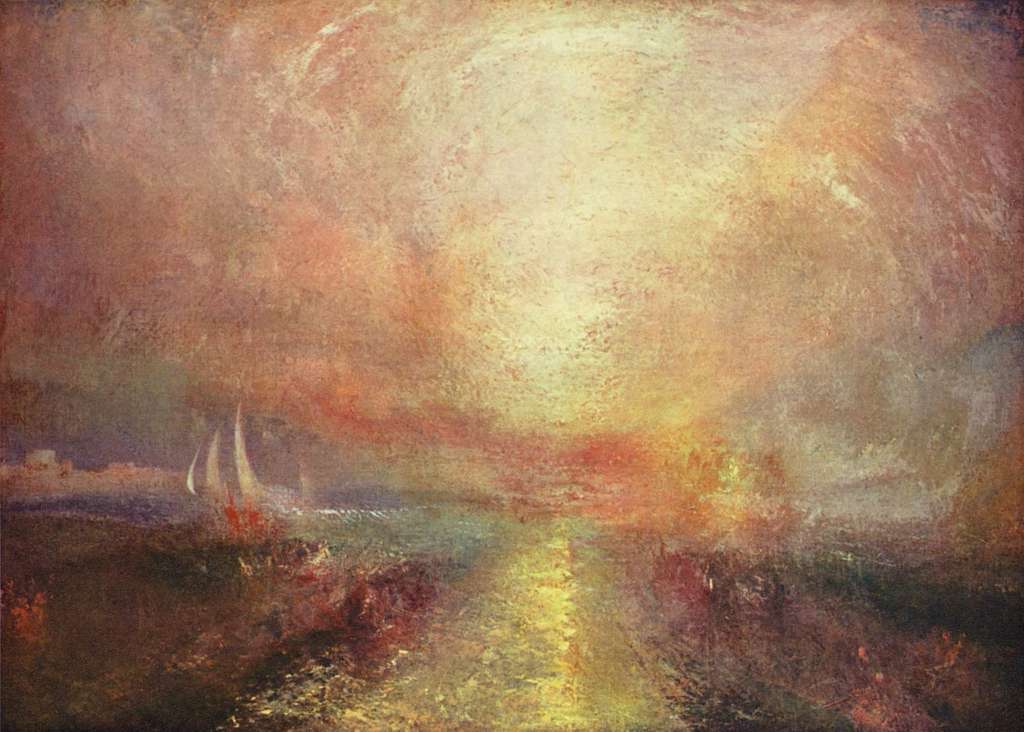
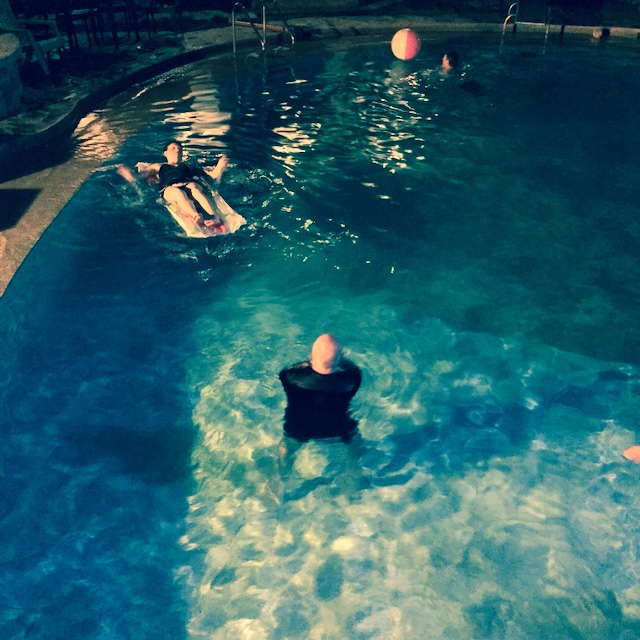
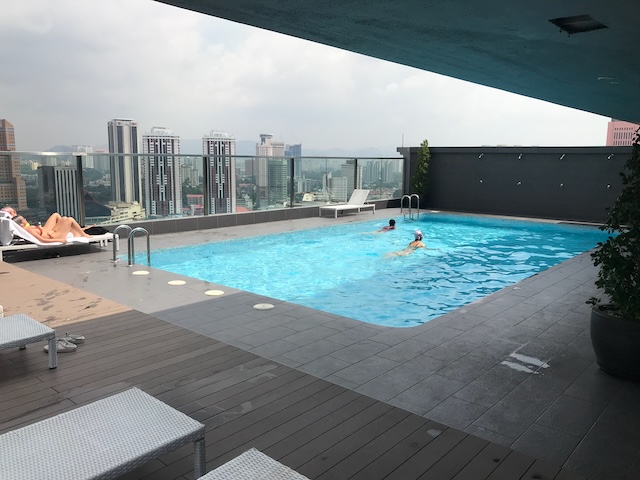


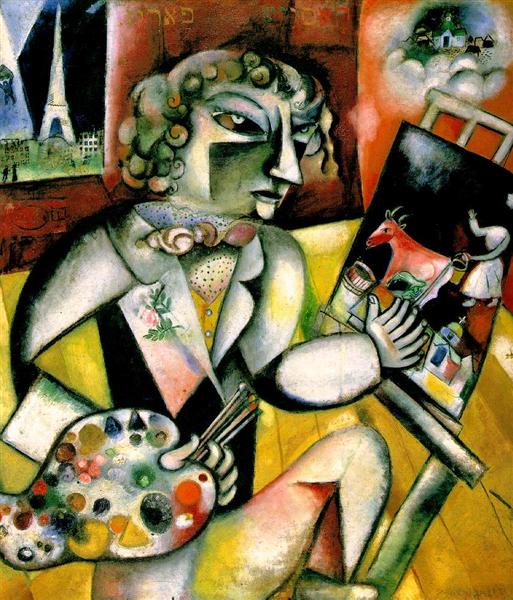


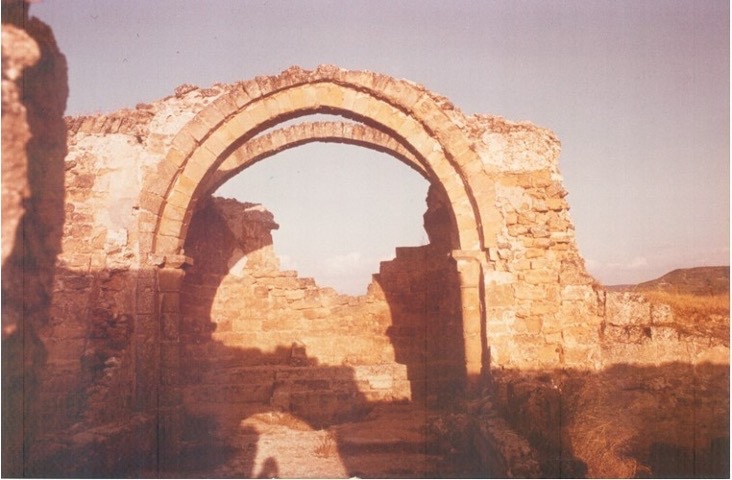
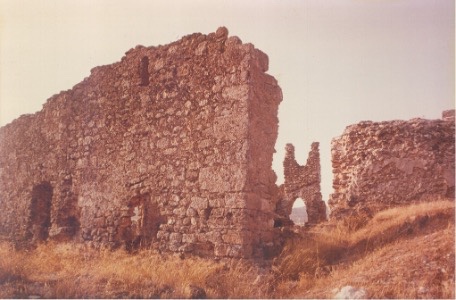
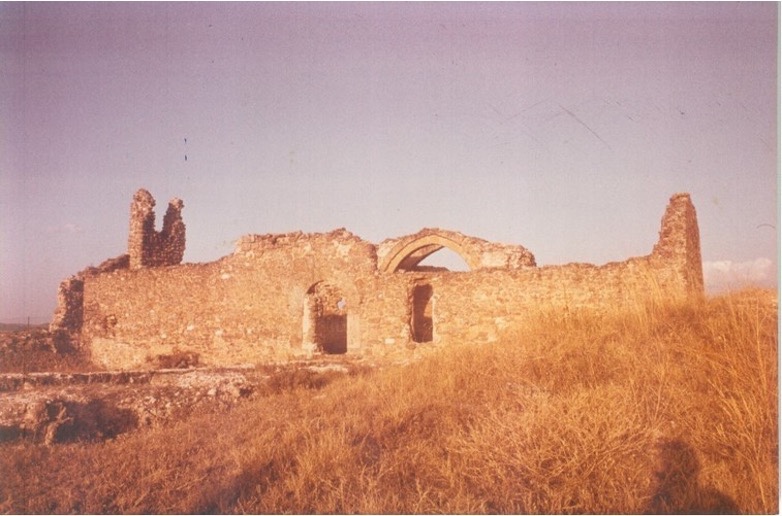
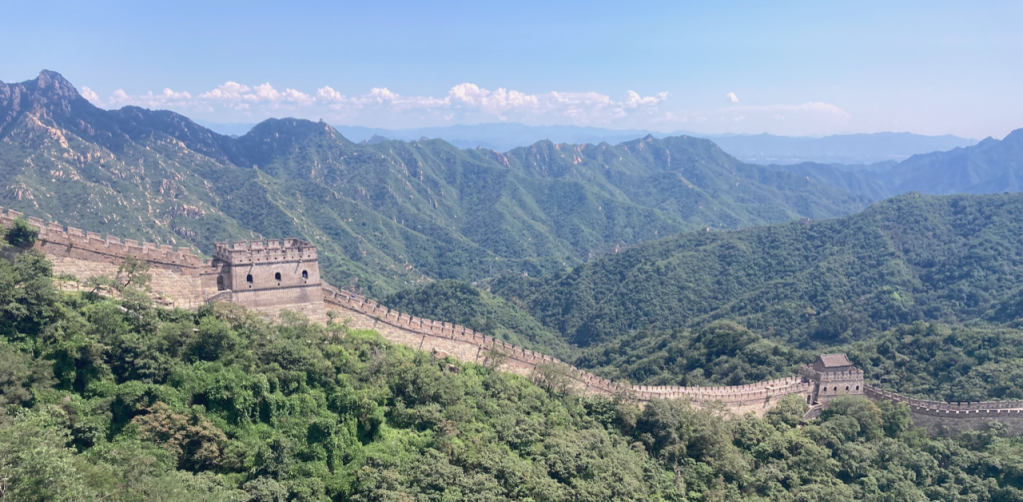
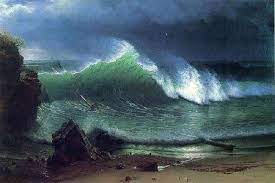

 Borderless