From the fount of darkness emerges light. That is your luminescence. A beacon shines amidst all rebellions, conflicts. That is your radiance. The hut that lies along a dusty path, That is your abode. Being immortalised by war is cruel affection. That is your love. When all is lost, what remains, That is your invisible gift. Death contains life like a vessel. That is the life you give us. The dust that lies under our feet laces the land. That is your heavenly land. Amidst all of us, you conceal yourself. That is You for me.
Tagore’s poem translated from Bengali by Debali Mookerjea-Leonard
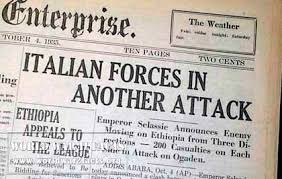
Rabindranath Tagore composed the poem ‘Africa‘ in response to Mussolini’s invasion of Abyssinia (modern-day Ethiopia) in 1935. Written in 1937, this poem was included in his collection Patraput (‘cup of leaves’) published in 1938.
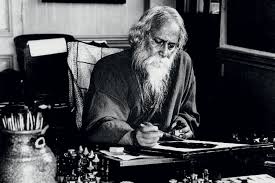
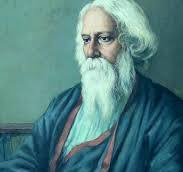
Rabinmdranath Tagore (1861-1941)From Public Domain
  In that bewildering, ancient time
         When the discontent Creator,
Repeatedly took apart his new creation
     In those days of His impatient head-shakes,
The arms of the turbulent seas
     Wrested you away from the bosom
Of the Orient, Africa—
      Bound you in the dense watchful woodlands,
In the deepest interiors, where light is meagre.
     Immersed in that profound solitude,
You gathered the mysteries of the obscure,
     Deciphered the enigmas of earth-water-sky,
  Nature’s concealed magic inspired in you,
    Incantations, from someplace beyond consciousness.
In the disguise of the hideous,
    You mocked the terrible;
In the intense majesty of the dreadful,
    You aspired to defeat fear, making yourself fierce
To the drumbeats of a cataclysmic dance.

   Oh, woman in the shadows
Under the dark veil
   Your humanity went unrecognised,
Invisible in chaotic disregard.
    Then, they came with iron manacles,
They, whose nails are sharper than your wolves’ claws
    Came the captors of humanity
Blinded with pride, a blindness darker than your sunless wilderness.
    The barbaric greed of the civilised
Stripping naked their shameless inhumanity.
     Your wordless weeping wet the jungle paths,
Muddied the dust in your tears and blood
      That under the plunderers’ hobnailed boots
Turned to grisly sludge,
     Marking for all eternity your disgraced history.

At that moment, across the seas, their church bells
     Pealed at daybreak and dusk
In calls to prayer, in the name of compassionate God;
      Children played on mother’s laps
And poets’ songs lauded
       The beautiful.

    Today, when on the western horizon
Twilight holds its breath at the impending tempest,
   And beasts slink out of their secret lairs—
    To declare with ominous howls, the end of day,
     Come, poet of the end-time,
      In the last light before nightfall
   Stand at the door of that dishonoured woman;
        Beg -- “Forgive me”—
     In the midst of vicious rants
Let that be the final sacred utterance of your civilisation.
Debali Mookerjea-Leonard is the Roop Distinguished Professor of English at James Madison University. Together with research and teaching, she also translates Bengali poetry and fiction.
.
PLEASE NOTE: ARTICLES CAN ONLY BE REPRODUCED IN OTHER SITES WITH DUE ACKNOWLEDGEMENT TO BORDERLESS JOURNAL
Tagore’s poem Suprobhat or Good morning was originally published in in Purabi (Name of a Raga) in 1925 by Vishwa Bharati.
Art by Sohana Manzoor
Sunshine, your radiance
Bursts through the doorway.
Like lightning, it has stunned
Penetrating the dreamworld.
I was wondering if I should arise,
If the blinding darkness has passed,
If I should open my closed eyes
Redolent with sleep.
Meanwhile, the northeast
Heralds your arrival.
Amidst the bright sky
Clouds waft,
As if set aflame.
The Eastern breeze
Stunned awake, blushes red.

Bhairav*, in what guise have you come?
Snakes twine around your fron,
The Rudra bina* plays a melody
To welcome the ragini of the morn.
Does the enchanted koel coo?
Do the flowers in the woods bloom?
After eons, suddenly,
The dark night has split.
Your sword has sliced
The darkness into two.
In pain, the universe
Shivers, bleeding light,
And spills it across the skies.
Some have woken up with the tremor,
Some continue to dream with fright.

Though hungry after the night
At the cremation ground, your followers,
Moisten and wet their lips
To scream, to holler.
They are our guests.
They dance in our yards.
Open, O householder, open
Your door, do not hide —-
Bring everything you have.
You will have to give your all.
Do not sleep any more.
Rend your heart,
Pour your being.
O devout, why are you
 Attached to false affections?

As the sun rises, I hear an unknown voice:
“There is no fear. O, there is no fear —
In the final reckoning, he who gives up
His life is immortalised in eternity.”
Oh Rudra, I sing for you.
Tell me how to invoke you.
I will drum the tabor in rhythm
With the dance of death.
I will decorate your offering
With a basket of pain.
The morning has come.
The destroyer of darkness,
Shiva, roars with laughter.
The hearts of the awakened
Flow with joyous contentment.

A new entity will emerge by
dedicating life to the life force.
Invoking your glory,
All fears can be overcome.
It is good that the storm
Has destroyed the decadent.
It is good that the morning arrived
Riding the lion-cloud—
The union will be set aflame
By a fiery bolt of lightning.
For you, I will give up
All my wealth.
Life can be eternalised by ambrosia,
Partaken with your grace.

*Bhairav is another name for Shiva. It is also the name of a morning raga.
*Rudra bina is a type of vina. Rudra is another name for Shiva.
(Translated from Bengali by Mitali Chakravarty with editorial input by Sohana Manzoor)
.
PLEASE NOTE: ARTICLES CAN ONLY BE REPRODUCED IN OTHER SITES WITH DUE ACKNOWLEDGEMENT TO BORDERLESS JOURNAL
Raja O Praja, an essay by Tagore, has been translated from Bengali as The King and His Subjects by Professor Himadri Lahiri. It formed the lead essay in his book of the same name published in 1908.
Translator’s Introduction: Rabindranath Tagore’s essay “Raja O Proja” was first published in the well-known Bengali periodical Sadhana (Sravana, 1301/1894). It is anthologised in Rabindra Rachanabali (Sulabh Sanskaran) 5th volume (Visva-Bharati, Pous 1394): pp. 727-31. Tagore unravels the nature of the relationship between the colonial masters and the subjugated subject people. Much before Edward Said, Tagore examined how the colonial masters resorted to the practice of stereotyping, a strategy that denies human qualities to the colonised and renders them inferior and uncivilised. Set against the contemporary political background, the essay provides an incisive analysis of the behaviour patterns of both the British colonial government and the subjugated Indian population. It should be considered a significant contribution to the study of colonialism.
The King and his Subjects
When the British civilian, Radice Sahib1, insulted and persecuted a certain zamindar in Orissa by violating laws, Lieutenant-Governor MacDonnell2subjected the offender to a one-year-punishment.
If we reflect on this incident, it should not have surprised us. In reality, however, this act of justice was incredibly startling to the general public. This explains why some naive individuals expressed their unusual delight.
Shortly afterwards, when MacDonnell Sahib was duly replaced by Elliott Sahib3, the latter freed Radice from the punishment by illegally reversing his predecessor’s order and even promoted him to a higher post. Now the same naive people have started expressing their profound sorrows.
The task is accomplished by the will of the master. Only the master knows why he [i.e. Elliott] violated the rule; we are left desperately groping in the dark. It may be that one civilian protected the prestige of another. But the decision was surely inappropriate – this incident dented MacDonnell Sahib’s prestige, and even that of the government.
In course of their conjectures, people are providing different theories; all of these may turn out to be incorrect. On the whole, it may be said that only the government knows the ins and outs of its own policies; we are merely blind puppets being controlled by these policies.
Hence, it is my opinion that driven by our delusions, we instinctively express our happiness and sadness at the moral and immoral decisions of the people at the helm of affairs. Where everything is done at the master’s will, where our good fortune or bad depends greatly on the character and whim of a particular person, there we should consider both the auspicious and the inauspicious, the moral and the immoral as merely momentary, accidental episodes. What MacDonnell Sahib did was the result of his own will, and what Elliott Sahib did was also produced by his own caprice; we are merely ruses.
Even then, we cannot help feeling distressed or shocked by the appalling events or delight at their praise. But we should always remember the specific instances that will make us happy and contribute to our people’s glory.
This can be achieved only when all the common people develop so intense a sense of conscience and alertness that we can feel the pain together in the face of insult and injustice, and also when the government absorbs into its own system an obligation to respect the conscience of the people; only then can we genuinely rejoice.
Usually, our moral conscience, our understanding of our work culture, and our apprehension of vilification all combine to guide us to the path of duties. The principles of responsibilities of our governments are largely determined by moral conscience and work culture. Their connection with the subject people’s ideology of good and evil is very weak.
It is universally known that when conscience comes into conflict with work culture, the latter sometimes prevails. During this conflict, the moral compass of those individuals not involved in the conflict can help reinforce one’s own conscience. When we will find the subject people’s criticism being appropriately reflected in the government’s activities, we will express our happiness.
In the absence of the subject people’s criticism, the sense of moral duty of the British in India imperceptibly slackens and degenerates to such a level that their moral ideals begin to radically differ in nature from those of the native British. For this reason, we find on the one hand, the Englishmen in India hate us, and on the other, they express their utmost intolerance towards their own countrymen’s opinions, as if both were alien to them.
There might be several reasons for this. One reason is that due to the remote location of their country, the British in India forget how social criticism typically motivates or impacts actions of their own countrymen. In addition to this, the Englishman’s relationship with us is primarily based on selfish interest as they do not share any emotional bond that stems from nation-based kinship. Hence, for various reasons, it becomes challenging for the British in India to maintain the same purity of selfless duties towards their subjects. Consequently, a distinct and specific code of duty begins to develop for the colonials in India – this arises from various factors such as their self-interest and pride of power, the moral conscience of the weak, subjugated nation, and the complexities involved in administering a foreign country. The English of England sometimes fail to recognise this distinct code of duty.
Certain talented Englishmen with exposure to colonial India have taken upon themselves the responsibility of effectively introducing this unique object [i.e., this new ideology of difference] in England. By virtue of their talent, they are demonstrating that this new object has its own unique appeal.
Rudyard Kipling’s name may be cited as an instance. He has exemplary power. By invoking that power, he has created in the English imagination an image of the Orient as a cattle pen. He is trying to convince the native Englishmen that the Indian government is, indeed, a circus company. He is skillfully orchestrating our actions as a performance of strange and spectacular animals of various species before the civilised world, implying once the spectators take off their steady gaze, all the animals could immediately spring upon them. The animals are to be observed with intense curiosity, they will have to be kept under control with the proper combination of fear of the whip and temptation of pieces of bone. Of course, certain doses of compassion for animals are also required. But if you raise here issues of principles, love, and civilisation, it will be difficult to keep the circus going, and it will also be dangerous for the proprietors.
The image of strong human animals being controlled solely by willpower and compelled to dance at the mere gesture of the master’s finger is likely to fascinate the English as a curious spectacle of entertainment. This generates in them an interest in the uniqueness of the human animal and also a racial pride. There is also a profound satisfaction in being able to control someone who embodies an imminent threat, and this seems delightful to the inherent nature of the English people.
On another front, the number of Anglo-Indian team members is also increasing day by day. Anglo-Indian literature too is gaining popularity. The influence of Anglo-Indians is gradually finding roots in the English soil, spreading its branches all around. In this context, it should be mentioned for the sake of justice that many Anglo-Indians, after retiring from their assignments in India, have displayed extreme benevolence towards the helpless Indians.
For all these reasons, many native English people are sceptical about whether it would be a quixotic stupidity for them to discharge to the oriental animals those duties usually reserved for themselves, whether this act of showing equality will reveal the civilised islanders’ intellectual narrowness and inexperience, and whether this would also harm animals of various species. English philosophers such as Herbert Spencer believe that it is not only inevitable that moral ideals vary according to the standard of civilisation but also necessary according to the norms of evolution.
The truth of these opinions will be judged on some other occasion. For the time being, I can only say that its (i.e., the practice of treating Indians unequally) consequences are very painful for us. Apprehending an uprising after noticing some posters on trees in the state of Bihar, opinions have been expressed in several English newspapers that a genuine union of love is never possible between Oriental and Occidental races. The former has to be subjugated forcibly by means of fear of threats. All these, it seems, are being expressed more openly these days than ever before.
Our opinion is that even if we admit that the principles of duty in freedom-loving Europe may not be suitable for application in every corner of the ever-subjugated Orient, it is indeed an unrealistic dream for them to maintain the usual rhythm of the Oriental life here for the simple reason that our king is a European. If our country were free, the monarchy that would have evolved in the natural process in this Oriental space would surely have been different in multiple aspects. It may be that, from one perspective, the king’s excessive power would have appeared greater than it is now. Similarly, from another perspective, the subjects, by limiting the king’s authority, would have channelised their own desires in various forms and through multiple avenues. Natural compatibility can be best expressed through natural means. Howsoever they may want, the English cannot achieve that (artificially) just through policy making.
Hence, the Englishmen can behave with us just in the way they do; if they willingly distort it, that will amount to misbehaviour, it will never become an Indian behaviour. They can break their own ideal, but in its stead what will they build and how? However, the English, fallen from their ever-familiar native ideal, may turn out to be big, ferocious animals. From the hints of cruelty, laced with aggression of power, that we can trace in the works of authors like Rudyard Kipling, it seems that man often wishes to jump into the primitive barbarity of wild nature of the forest by ripping through the fine, hundred-threaded strong net of civilisation. On their arrival in India, the Anglo-Indians taste the exquisite wine of power that may create this overwhelming intoxication. The natural, spontaneous embodiment of masculinity in the writings of these loveless, difficult, power-boasting talented men has a kind of extreme fascination. That is literature for the English but for us, it is indeed a recipe for death.
Secondly, the way authors in their contemporary novels represent the Orient as appearing mysterious to the Occident is largely fictitious. There are numerous intersections between us. The similarities of the heart are often overshadowed by external differences. Modern writers tend to apply colour to, and even exaggerate, the unfamiliarity of these external features to please the readers; they do not try to unearth the similarities lying deep within, neither are they capable of doing that.
The significance of making all these statements is simply this: the idea that European values are exclusively meant for Europe is gradually spreading not only in India but also in England. Indians are supposedly so different a race that the civilised values are not completely applicable to them.
Under such circumstances, if our ethical values become strong, the policy of governance cannot go off the right track. When the English are conscious of the fact that their actions are being closely watched by the entire Indian population, they will not be able to do anything by completely disregarding India.
Recently, some evidence of this is being noticed. When India witnesses some misdeeds committed by the English, she begins to call for justice in her own feeble voice, invoking civilisational and moral values. This naturally angers the colonials, but at the same time, they are forced to remain somewhat vigilant.
Even then, full results are yet to be seen. The British consider it an admission of their weakness to adhere to codes of values that exhibit respect towards us all the time and under all circumstances. They find it insulting and harmful if one of them commits a crime against us and is punished by the law. They fear that Indians will perceive it as curtailment of power.
It is impossible for us to identify the nature of thoughts of government officials. However, I feel the untimely promotion of Radice Sahib can be linked to the above policy. This suspicion is reinforced specially when such an event is found to have occurred repeatedly. The government is, as if, silently declaring, it is your audacity to expect an English official to be humiliated for harassing and insulting one of you. Even if we have to violate conventions and neglect the rules of governance to crush that audacity, it will be desirable. The English race is greater than the norms of ethics, they are beyond the jurisdiction of justice!
For the sake of truth, it has to be admitted that the government tends to keep not only the English but also its own employees a notch above the rule of justice. This has been observed in one or two contemporary incidents. In the Baladhan4 murder case, all those involved, right from the English judge to the Bengali police personnel who were openly blamed in the judgement of the High Court, have been rewarded and encouraged by the colonial Bengal government.
We are individuals outside the realm of politics, we are not familiar with its internal complexities. There might be a hidden motive behind it [the government’s decision]. The authorities may believe that the local judge in the Baladhan case did not issue an incorrect ruling – around five to seven individuals should have been hanged in some manner. They might have nurtured a biased opinion that the incident in reality happened despite the lack of concrete judicial evidence, and that only the local judge could have determined the truth which was inaccessible to the High Court judge.
We want to say that openly rewarding, instead of punishing, individuals who have been publicly condemned by the highest court of the country, who have been proven guilty in the eyes of the public, amounts to the disregard of the moral judgment of the public. Everyone’s told we do not feel the need to offer any explanation to you about our duties. The government is not bothered about whether you praise or criticise it – our government is strong enough to withstand such scrutiny!
The governor who demolishes the anguish and moral judgement of the subjects under his shoes, and drowns their feeble, insecure voices beneath the marching sounds of their feet, is indeed a strong ruler in Anglo-India!
It is unnecessary to disclose whether this highlights their power or reveals our utmost weakness. This insolent disregard of the government suggests that, in its view, the moral judgement of the Indians is not strong enough to evoke a feeling of embarrassment in them. Instead, this unapologetic recklessness seems to them as the manifestation of a genuine power over an ever-oppressed nation.
If we can really convince the agents of the government that we do not consider the violation of ethics as bravado, that injustice, however powerful it may appear, is held as equally despicable and reprehensible in our Oriental system of judgement, and that the lack of courage to dispense justice everywhere firmly and impartially is also considered by us as a sign of weakness, only then the English would be forced to respect our norms of duties. The reason is that they will be able to discover the correspondence between our ideal and their own.
When we forget the bitter lessons of our prolonged subjugation, when we decide not to consider the injustice of the powerful as the manifestation of divine will — something that must be endured in silence — when we consider attempts at the redressal of injustice, even if it fails, as our duty, and when for these reasons, we stop being averse to sacrifice ourselves and bear pains, only then the days of true happiness will bloom. At that point, the sense of justice of the British government will never be derailed by any selfish policy and eccentricity of any individual; it will stand like a resolute mountain firmly based on the foundation of the subjects’ hearts. At that time, good gestures of the government will not accidentally be showered on our bowed heads like momentary favours; we will, on the contrary, accrue them as respect. What we are getting as alms today will be received as our rights.
Questions can be raised – offering advice is easy, but what about the solution? To that, we may retort that no proper bliss can be achieved by clever strategies alone; for that we have to pay the entire price due to it. All of us must strive to our utmost potential, proper lessons should be imparted to siblings and children in every household, a strong ideal of justice needs to be established in both the family and society, and careful attention must be paid to one’s own behaviour. Like all good advice, this too is easier to hear, difficult to implement, and is indeed age-old. However, there is no new, short-cut or hidden path other than this long, open, and ancient highway.
Translator’s Notes:
1. Mr. C.A. Radice belonged to the Indian Civil Service cadre during the late nineteenth and early twentieth century. He was posted as an Assistant Magistrate and Collector in Murshidabad in 1890 and was “vested with third class powers” (Appt. File 5C—4. Proceedings B. 1—3, Ja. 1890). He was ‘degraded’ for “prosecuting Babu Radha Shyam Nissanta Mahapatra, zaminder of pargana Balinkandi in the district of Balasore” [Judl. File J-1P—113(1-21), Proceedings 134-55, Aug. 1893]. Radice’s ‘reversion’ to 2nd grade became effective in February 1895. [(Appt., File 6C—8(3.8). Proceedings B. 716-21, Feb. 1895)]. The translator of this essay traced these pieces of information in the entry on “Radice, C.A. Mr., I.C.S.—” pp. 1126-1128. Kindly see: https://sadte.wb.gov.in/uploads/pdf/D12/D1224.pdf
2. Antony Patrick MacDonnell (1844–1925) joined the Indian Civil Service in 1865. He was the Lieutenant-Governor of Bengal during the period 1893-1895. MacDonnell was respected as an expert on the Indian land reformation and famine relief. “His sharp temper and unwillingness to tolerate inefficient subordinates earned him the nickname ‘the Bengal Tiger.’” Kindly see the entry on “MacDonnell, Antony Patrick” contributed by Patrick Maume, in Dictionary of Irish Biography. https://www.dib.ie/biography/macdonnell-antony-patrick-a5180.
3. Sir Charles Alfred Elliott (1835-1911) was the Lieutenant-Governor of Bengal during the period 1890-1893. Tagore’s reference to MacDonnell being replaced by Eliott is confusing because Eliott indeed preceded MacDonnell, and did not succeed him.
4. Tagore refers to an incident which is popularly known as “Baladhan Murder Case.” It took place in Baladhan Tea Garden in the Cachar district of Assam on 11 April, 1893. Several persons barged into the manager’s bungalow in the tea garden at night and killed the manager (Mr. Cockburn) and the chowkidar and seriously wounded Mr. Cockburn’s Indian paramour named Sadi. Money and other valuables were looted. Later six Manipuris and a Gurkha were arrested. They were tried by the sessions judge John Clark (and a panel of three Indian assessors) at Sylhet who sentenced four of the accused to death. Babu Kamini Kumar Chanda took up the case to Calcutta High Court which acquitted all the accused (Sanajoba 234). “On December 11, 1893, Calcutta High Court Judges Ameer Ali and H.T. Prinsep acquitted all of the prisoners on account of the many ‘irregularities’ and ‘illegalities’ committed during the police investigation and trial, as well as the lack of corroborating evidence” (Kolsky 145).
See pp.142-48 [in Chapter 4 titled “One scale of justice for the planter and another for the coolie”: law and violence on the Assam tea plantations” (pp. 142-184)] in the book Colonial Justice in British India edited by Elizabeth Kolsky (Cambridge University Press, 2010) and p. 234 of Th. Babachandra Singh’s chapter “The Manipuris in the Politics of Assam” (pp. 213-36) included in the book Manipur, Past and Present: The Heritage and Ordeals of a Civilization, Volume 4 (Pan-Manipuris in Asia and Autochthones), edited by Naorem Sanajaoba, Mittal Publications, 2005. (Google book link: https://books.google.co.in/books?id=CzSQKVmveUC&printsec=copyright&redir_esc=y#v=onepage&q&f=false)
.
Himadri Lahiri retired as Professor of English, the University of Burdwan, West Bengal, India. He is currently teaching English at Netaji Subhas Open University, Kolkata.
PLEASE NOTE: ARTICLES CAN ONLY BE REPRODUCED IN OTHER SITES WITH DUE ACKNOWLEDGEMENT TO BORDERLESS JOURNAL
Time flows at an indolent pace. The mind floats in an empty space. Into that vast void, images drift. Over many eons, many have flit To the distant past. Arrogant conquerors sped fast. Pathans rode to satiate their greed. Then, Mughals wheeled Victories, whipping dust-storms, Flying flags for their throngs. These empires have left no trace On the vast void at which I gaze. Through ages, the serene sky Is with sunset and sunrise dyed. Now the might of Britons holds sway Penetrating new pathways With the power of steam And vehicles of fiery steel. With vigour, they spread Their dominions across the land’s breadth. I know their regime will also pass. Their empire will crumble at last. On the astral plane, despite their strength, Their army will not leave a single indent.
When I look around the Earth, An ocean ripples along its girth Heaving huge waves of humanity Through myriad paths, in myriad coveys, Over centuries as their daily needs are met In life and in death. Forever, they row, With their rudders tow, Work in fields, plant seeds, Their harvests reap. They work all the time, In towns or in wilds. Empires decline silencing bugles of war. People forget histories of battles fought. Stories of glory, angst and gore, Stay concealed in children’s lore. They struggle to work hard, In Punjab, Bombay and Gujarat, In Bengal, in Kalinga, all over the land, By the coastline and the riverbank. These stories of daily life hum Reverberating like drums; Joys, sorrows, day and night Resonate as hymns to our lives. Empires are ruined to ashes. Over eons, they toil as masses.
This poem has been translated by Mitali Chakravarty with editorial input by Sohana Manzoor
.
PLEASE NOTE: ARTICLES CAN ONLY BE REPRODUCED IN OTHER SITES WITH DUE ACKNOWLEDGEMENT TO BORDERLESS JOURNAL
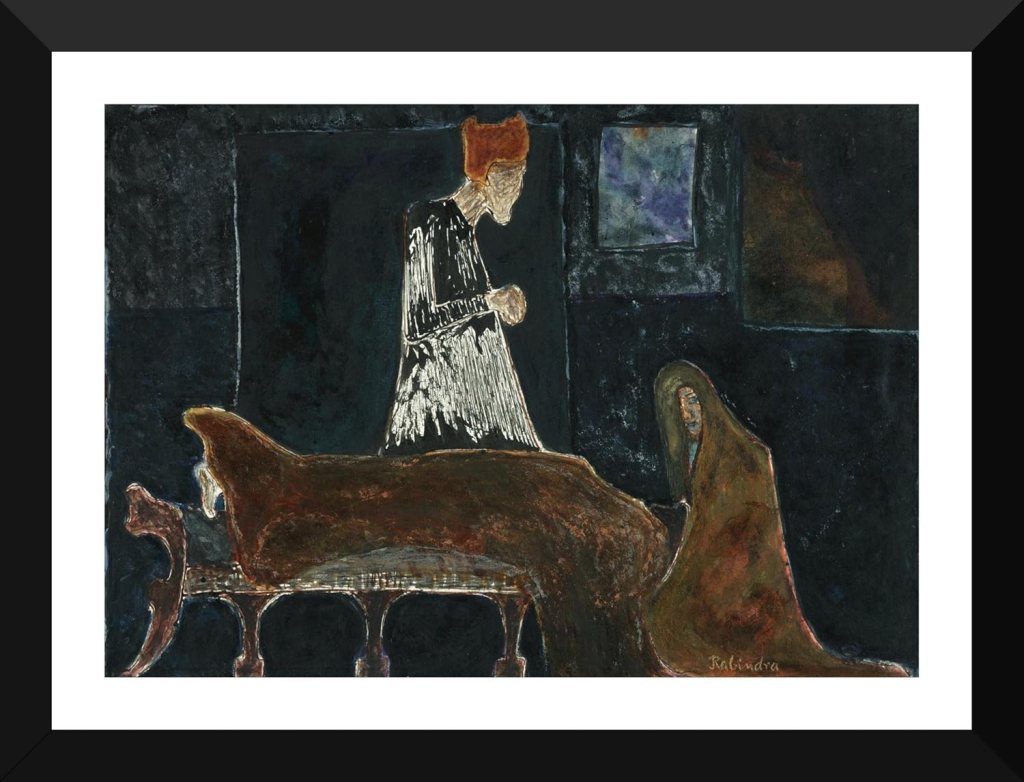
Written and published in 1901, Mrityu (Death)was a part of RabindranathTagore’s collection called Naibedya (Offering).
Death Scene painted by Tagore (1861-1941). From Public Domain
DEATH

Death is a stranger to me.
Today, I shiver in apprehension.
I cling to this life with all my might,
With tears in my eyes, I wait to bid
This world goodbye.
    O ignorant, why did you grow
So attached to this life when
The cycle of life and death was
Known to you? The dawn of death
Is like reacquainting with a stranger.
I love this life so much that I am
Convinced I will love death equally.
A child torn from one breast wails but is comforted
Within moments of being held at the other breast.
This poem has been translated by Mitali Chakravarty with editorial input by Sohana Manzoor
.
PLEASE NOTE: ARTICLES CAN ONLY BE REPRODUCED IN OTHER SITES WITH DUE ACKNOWLEDGEMENT TO BORDERLESS JOURNAL
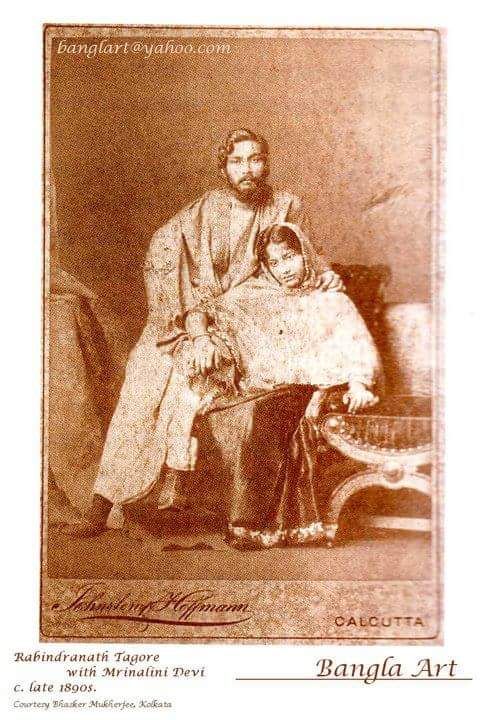
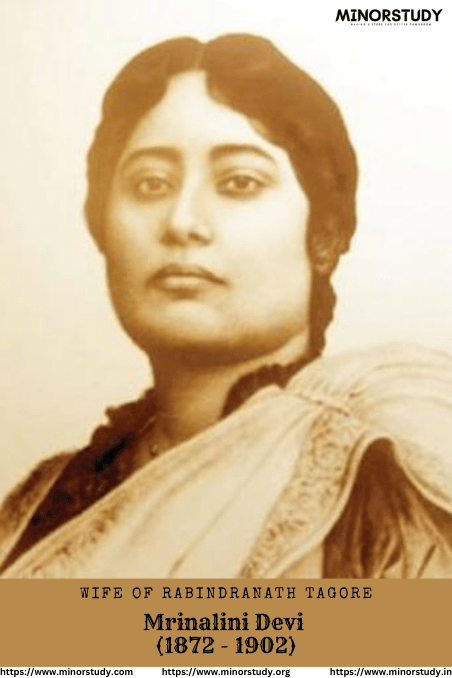
Acche Dukho, Acche Mritu (Sorrow Exists, Death Exists) was written by Tagore when his wife, Mrinalini Devi, died in 1902. His lyrics have been translated by Professor Fakrul Alam.
Photos from Public Domain
Sorrow exists, death too; partings scald as well
And yet peace, and yet delight, arise eternally.
Life goes on; the sun, moon and stars keep smiling!
Spring comes to gardens singing varied tunes.
Waves scatter and fling themselves up again.
Where old flowers shed, new flowers blossom.
Overall, there’s no decay, no lasting misery,
And in such fullness the mind seeks solace
A rendition of Tagore’s song by the legendary Debabrata Biswas (1911-1980)
‘Okale‘ (translates as ‘out of sync with time’) is a part of Tagore’s poetry collection, Khanika (translates to ‘moments’) published in 1900.
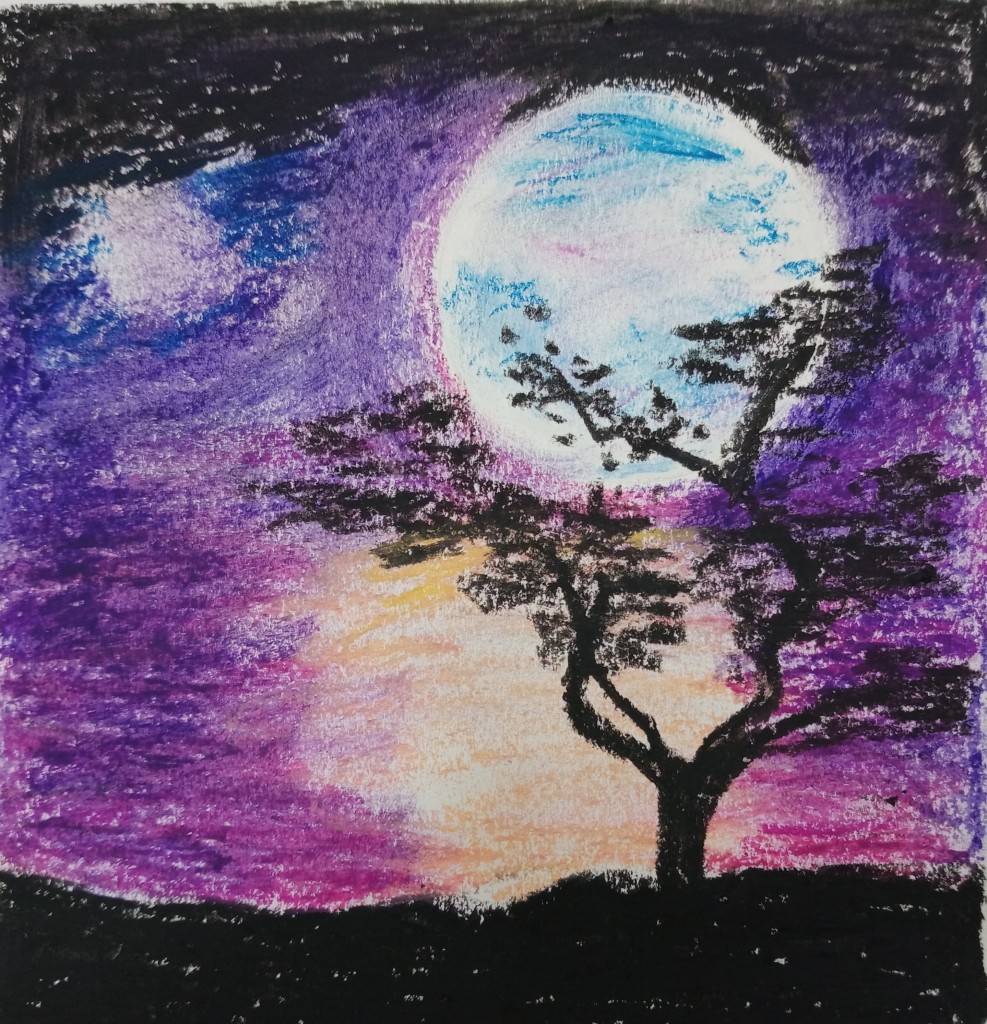
Art by Sohana Manzoor
OUT OF SYNC

Who is it that runs burdened with
           Merchandise to the closed haat*?
Dusk has set in.
             The day is past.

Carrying burdens on their heads,
Vendors return to their homestead.
A fragment of the new moon
                     Has risen in the vale.
Those from the other shore,
Call out loudly to the boats.
The riverside reverberates with
                       Their echoes evermore.

With what hope have you come
              At this hour
To the closed haat, breathlessly,
              With your load?

Sleep has caressed
              The woods to bed,
The cawing of crows have halted
              In their nests.

In the shrubs near the pond,
By the fence, crickets call.
Stunned branches of bamboo,
          Sway softly in the breeze —
Within the courtyard of their homes,
The weary sleep in their abodes.
The night-lamp brightens
          The flickers of shades.

When all are at rest,
        As the time to work is past,
Who is it that runs burdened with
           Merchandise to the closed haat?


*Rural Bazaar
This poem has been translated by Mitali Chakravarty with editorial input by Sohana Manzoor
.
PLEASE NOTE: ARTICLES CAN ONLY BE REPRODUCED IN OTHER SITES WITH DUE ACKNOWLEDGEMENT TO BORDERLESS JOURNAL
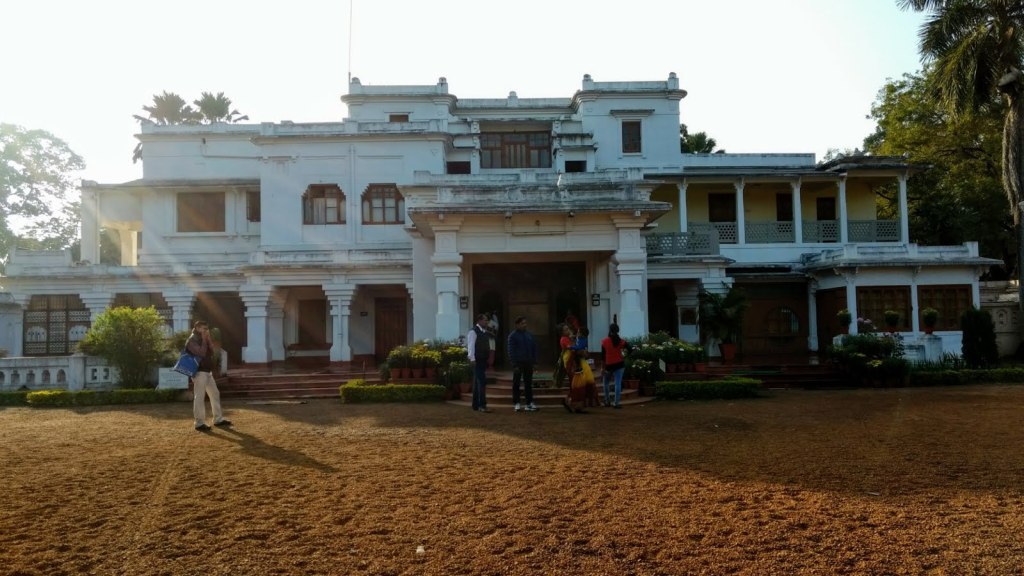
‘Chhora or Rhymes’ was written by Rabindranath Tagore in 1941 in Santinketan at his home, Udayan. It was part of a collection called Chhora that was published in the same year.
Udayan (translates to sunrise) Tagore’s home in Santiniketan, where he wrote this poem.
     RHYMES

When idleness hovers
       In twilight’s haunts,
A hard day’s work
       Draws to a halt,
Scattered whimsies
      Float in flocks.
I do not know why
      The dream realm calls,
Leaving behind the
       Chasms of the day —
Some are filled with sentiments,
        Some, run astray —
The flow of these imaginings,
        Lost in their own rhythm,
Revel as irrationally as
        Crickets’ chirp in unison,
Or dragonflies gather in dusk
        To flit spontaneously
Into a weak flame that
        Flickers dimly.
 In clear light, when I reflect
          On those lines,
I wonder if they were written
          Intoxicated with wines.
Externally, they seem
           To have an obvious sense,
And yet, they seem to conceal
           mysteries that are dense.
Thoughts seem to stream, flow,
           And drown —
Yet, they do not reveal
           From where they come.
They exist I know but the rest
           Is obscured by darkness —
The game is on to tie one
           With another in coherence.
Congruity gives meaning.
         But they break these constraints,
And in an ecstatic frenzy,
          Dance in emptiness, unrestrained.
This poem has been translated by Mitali Chakravarty with editorial input by Sohana Manzoor
.
PLEASE NOTE: ARTICLES CAN ONLY BE REPRODUCED IN OTHER SITES WITH DUE ACKNOWLEDGEMENT TO BORDERLESS JOURNAL
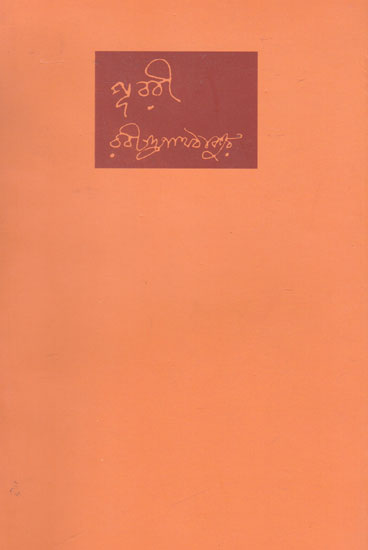
Pochishe Boisakh[1]was written by Tagore on 8th May 1922, and published in a collection called, Purabi [name of a raga] by the poet himself under the aegis of Vishwa Bharati.
Purabi by Rabindranath TagoreRabindranath Tagore(1861-1941)
Night gives way to dawn. I bring to you By hand, The full saga of My birth written By the rays of The morning sun.
A blood smeared sun rises out of the horizon. Faint shadows of the woods play lonely notes of the Bhairavi. Saal, palm and sisir trees murmur to Break the silence of the outskirts. On the dry fields, a blood-red path resembles The forehead of a sanyasi* smeared with holy paste.
This day returns every year In different guises on this earth — Sometimes, filled with copper-coloured mangoes, Or rustling with young palms, Or, crackling with dry leaves in the mid-day sun, Sometimes rushing to free itself Like the clouds of the Unshackled kalbaisakhi*. And it comes to me When I am alone, Drunk with the northern breeze, Hands me a gift — A plate made of the blue sky And then a zephyr filled cup of nectar.
This day has dawned today. My heart beats rapidly As if someone is blowing a conch resonating With the susurration of infinite oceans. Birth and death like The skyline meet in the circle of life. Today they come together. A white radiance seems To overflow with music from The flute of Time, filling the emptiness. Endless music irradiates My soul singing from within.
Morning descends with a Calm smile and Whispers into my ears: “I have come anew amidst many. One day, you arrived In this universe Redolent with the perfume of fresh mallika blooms, Amidst the breezy caresses of the chattim tree, In the heart of darkness, Under a steadfast, azure gaze. I kiss the forehead Of the new you. I have come to awaken you On this exciting day.
“Oh, newly fledged, Let’s revisit the start of your life. Today your existence is overwhelmed With transient dusty correspondence. Remember, O youth, Your first birthday… Unblemished — Pure, like the first moments of your life; Like the waves of the ocean, revive Every second of Your first day.
“Oh, newly fledged, Arise, illumined Out of the ashes of past. Anew, May you shine out of the mists like a rising sun. Holding the vernal flag, Fill youthful moments with lush foliage — In this way, newly fledged, Pierce the emptiness, reveal yourself. Revel in the exuberance of life, Reveal the eternal wonders of the universe within your being. The horizon reverberates with notes from the auspicious conch.”
In my heart, Eternal new notes peal On pochishe boisakh!
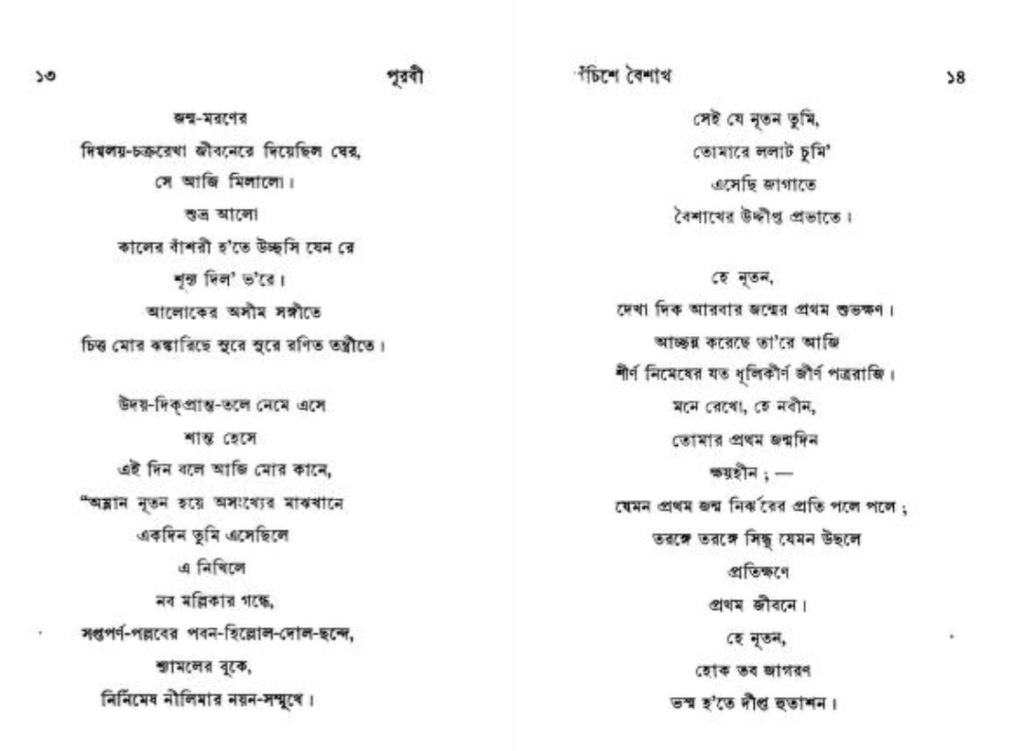
In 1941, Tagore adapted the last part of the poem, changed a few words and made it into a song for his last birthday, acceding to the request of a birthday song to his family and friends. The song, ‘Hey Nutan’[2], has been translated by Aruna Chakravarti in her historical novel, Daughters of Jorasanko, as the last birthday song by Tagore. You can access the translation of the song and his last birthday celebrations depicted by Aruna Chakravarti by clicking here.
ScreenshotScreenshotThe poem written in 1922 from Purabi, Vishwa Bharati The last part of the poem from PurabiThe last birthday song (1941)The last part of the longer poem written in 1922 was adapted into a song by Tagore, his last paean to his own birthday, few months before his death in 1941. The changes made to the words and phrases can be seen in the screenshots pasted above.
[1] Pochishe Boisakh is the 25th of Boisakh. Boisakh is the first month of the Bengali calendar coinciding with mid-April to mid-May. Tagore was born on 25th Boisakh, which is a date that shuttles between 7th to 9th May every year on the Gregorian calendar.
[2] Aruna Chakravarti translates this as ‘Oh ever new’. In the poem, it has been translated as ‘Oh newly fledged’. It is from that point that Tagore made the changes and converted the poem into a song. He changed a few words, a few lines, giving it a new life as a song.
(This poem has been translated by Mitali Chakravarty with editorial input by Sohana Manzoor)
.
PLEASE NOTE: ARTICLES CAN ONLY BE REPRODUCED IN OTHER SITES WITH DUE ACKNOWLEDGEMENT TO BORDERLESS JOURNAL







 Borderless