Categories
Stories

The Faithful Wife

A Balochi folktale translated by Fazal Baloch

Courtesy: Creative Commons

Once there lived a king who had a son. With the passage of time, the prince grew into a young man.  The king thought that before he shut his eyes forever, the prince should be married off. He expressed his desire to his son who responded with his choice. He wanted to marry a princess of a distant land. The next day, the king summoned his vizier and told him what the prince desired. Moreover, he said that he would pay as much dower as they asked for.

The vizier sent a messenger to the king for the purpose. The king gave his consent. The messenger returned to his country with the good news. The prince was married with great pomp and splendour. A few days after their marriage, the king brought his daughter-in-law to the palace. She was beautiful and well-mannered.

Days passed by. One day the king breathed his last and his son subsequently ascended the throne and became the king. But he loved his wife so much that he did not pay much attention to the affairs of his kingdom. At last, he abdicated his throne to live a happy and peaceful life with his beautiful wife. Soon he ran out of his wealth and become so poor that he had nothing left. A few days later his wife turned to him and said, “By sitting idle at home we will die of hunger. You should do something or engage yourself in a business”. He replied, “First, I can’t live without you. Separation from you will rend my heart. Second I’m not well-versed in any craft. There is however a desire in my heart to conduct some trade but I don’t have any capital for it”.

“Don’t worry I will finance you,” his wife told him.

“How come?” asked the husband.

“Take all my jewels and sell them off and bring me the sum you receive for them.”

The husband did what his wife had told him. The wife then advised him to buy goods with the money and board a ship. Thus he loaded the goods on a ship and returned to his wife and asked her, “What should I do next?”

She gave him a flower and said, “Whenever you feel sorrowful for me, just look at the flower. It will ease off your sorrows”.

He put the flower into his pocket, boarded the ship and set on his journey. After journeying for many days and night he finally landed in a distant country. He anchored the ship in the harbour. Meanwhile, the soldiers arrived and demanded duties. He paid the duty for the ship but surprised the soldiers saying that he had something else on him but neither was he going to pay any duty for it nor show it to them.

“How strange! What is it?” a soldier asked him but he refused to reveal.

When the soldiers continued to insist, he at last told them that it was the flower given by his wife. The soldiers took him to the king’s court and told the king about the flower he was keeping with him. The king turned to him and asked him sarcastically, “Oh, you think your wife is such a good woman that you can live by her token?”

“Yes, I think so” was his reply.

“If we produce your wife here at our court, what would you say?”

“If you think you can convince her to come here, I will give her to you”, he told the king. Then he turned to the court and said, “A man or two could go and try to persuade his wife to come.”

Two young men, one was king’s own son and the other was the vizier’s, presented themselves for the adventure. After making necessary preparations, they set out on their journey.

Meanwhile, the man sought permission to sell his goods. The king granted permission happily.

The king’s and vizier’s son traveled long and finally reached the city where the wife of the king who was now a merchant lived. There they ran into an old lady who invited them to her cottage. They asked the old woman to go to the merchant’s wife and tell her that the son of a king was desperate to see her. Initially she refused but when the prince gave her a sack full of gold coins, the old woman hurried to merchant’s wife and conveyed her prince’s message. At first she made excuses but when the old woman gave her no rest she at last said, “Ask the prince to visit me at night”.

The old woman told the prince what she had been told by the merchant’s wife. In the evening, the prince spruced himself up and took leave of his friend, the vizier’s son and left for his desired destination.

When he reached there, the woman pointed towards the bathroom and said, “Go there and refresh yourself. I do the same. Then we will have a conversation. We’ve a long night ahead”.

The moment the prince entered the bathroom, the woman locked the door from outside. Two days later, when the prince failed to return, the vizier’s son grew anxious about him. He wondered if someone had done him ill or he had gone somewhere. The next night he decided to see the woman and ask her about the prince. But when his eyes fell on her, he forgot the prince and thought that it would be a lucky hit if he managed to trick her.

He told her that he had been desperate to see her and would be much obliged if she would spare some moments to talk to him. The woman told him to do what she had asked the prince the other night. When he entered the bathroom she locked it from the outside. Now the prince and vizier’s son both lay locked in the bathroom. Six or seven days later she sent for a carpenter and asked him to make two giant sixed boxes in which a man could sleep easily. He also asked the carpenter to make two holes on the side of the each box.

The carpenter went off and made the boxes as she had ordered him. She then summoned two men who owned camels. She instructed them thus, “I have locked two men in the bathroom, put them in these two boxes, load them on the camels”.

When they were all done she asked the camel owners to follow her. She fed them water and food through the holes in the boxes. After travelling for many days and night, they finally reached the land of the king who wished to have her in his court. Upon reaching there, she rented a quarter and placed the two boxes there. She locked the house and went out. On her way to the city, she encountered the kotwal or the police chief of the city. He inquired her: “Who are you?”

“I am a courtesan”, she replied.

“Don’t you know courtesans are not allowed to move around freely in this city? I wouldn’t let you wander like this.”

“Is there any way that I could be spared?” She asked the kotwal.

“If you visit my home in the evening, I will let you go,” the kotwal put the condition before her.

“Of course I will come. This is what I do. But being a servant of the king you have always people around you. If any of your sentries or soldiers catches the sight of me, it will bring ruin to your reputation. I have rented a house in the corner of the city. It is better we meet there”.

Thus, the kotwal let her go.

The Imam of the mosque was the next she encountered. He asked her:

“Who are you?”

“I am a courtesan,” she replied.

“I seek refuge from the Holy Lord! Don’t you know such impure women are not allowed to roam freely in this city? I will take you to the king”.

“Please for God’s sake, let me go,” she pleaded.

“If you visit me in the evening I will let you go,” he told her.

“Of course, I will come. This is what I do. But as you are the Imam of the entire city, whether it is death or marriage people will come to you to perform the rituals. If someone saw me with you, it would tarnish your dignity and honor. I have rented a house in the corner of the city. It is better we meet there”.

Hence the Imam let her go.

She then ran into the vizier who inquired: “Who are you?”

“I am a courtesan”, she replied.

“The king has banned the movement of courtesans in the city. I will take you to the king”.

“Is there any way that I may be spared?” she asked the vizier.

“Yes, if you come at my home near king’s palace tonight, then I will leave you,” said the vizier.

“Of course, I will come. This is what I do. But as you are the vizier, if king sends someone for you and he happens to catches the sight me with you it will dent your dignity. I have rented a room in the city. It is better we meet there”.

The vizier agreed and let her go.

At last she bumped into the king himself. He asked her: “Who are you?”

“I am a courtesan,” she replied.

“In my kingdom sinful women like you are not allowed. I will put you in the prison”.

“I am a poor woman. Let me earn a livelihood. Take pity on me,” she pleaded.

“No, I can’t,” the king replied.

“Isn’t there any way that I may be spared?” she asked the king earnestly.

“Yes, there is but one condition. If you accept it I will let you go the very instant”.

“What is it”?

“If you come at my palace in the evening, I will let you go,” said the king.

“Of course I will. This is what I do. But as you are the king of the land, if someone saw me with you; it would stain your honour and esteem. I have rented a house in the corner of the city. It is better we meet there”.

Thus the king was agreed to see her at her house. He noted down the details of the location and told her that he would pay her a visit at her place that night.

The woman returned to her quarter. At dusk she cooked herself a dinner. She was just done with her meal when someone knocked at the door. She got up and opened the door. The kotwal was standing outside. She let him in. He had barely seated himself when someone again knocked at the door. The kotwal pleaded with the woman:

“For God sake hide me somewhere.”

“There is no such place in the house where I could hide you, but I have an idea,” replied the woman.

“What is the idea?” the kotwal instantly asked her.

“I will give you a sack of grain and you grind the content in the quern. Thus, nobody will suspect you”.

The kotwal agreed.

She opened the door and found the mullah standing outside. She welcomed him. The mullah had just started the conversation with the woman, when someone knocked at the door again. The mullah grew worried, and he begged to the woman saying: “Pray hide me somewhere”.

“There is no such place in the house where I could hide you but I have an idea”, replied the woman.

“What is the idea?” the mullah asked her trembling.

“You should bend down on your knees, and I will place the water-pitchers on your back,” said the woman.

The mullah consented and she placed two water-pitchers on his back and strolled out of the room.

She opened the door and let the vizier in. The vizier had barely stepped into the house, when there was a knock on the door again. The vizier turned to the woman and urged her: “Please hide me somewhere”.

“There is no such place in the house where I could hide you but I have an idea,”replied the woman.

“What is the idea?” The vizier asked her in an earnest voice.

“You should snuggle against the wall and I will place the lamp on your head. It will be dark beneath the lamp and nobody will notice your presence,” said the woman.

The vizier did what the woman told him. She placed the lamp on his head and left the room.

She opened the door and to her surprise she found the king himself standing before her. She courteously greeted him and conducted him into the house. Then she went and unlocked the two giant boxes. A moment later she excused herself and said: “Let me take a bath to refresh myself before I join you”.

The king granted her the permission, and she stole out of the door and started her journey back home.

Back in the house, the king kept waiting for her. When after a long time she failed to show up, the king decided to ask the maidservant who was grinding the grain. Hence he walked over there and he was astonished to discover that instead of a maidservant it was the kotwal grinding the grains. When the kotwal saw the king there he smiled and said: “Thank God! I’m not alone. His Majesty too has been tricked by the woman”.

The vizier also felt relieved and so did the mullah. The king said that since they had been tricked by the woman, they would take away the two boxes of the woman. The king went forward and opened one box and but instead of any finery or jewelry he found his own son lying in the box. The king lost his temper saying, “I spit on your face. You damn coward!”

The prince turned to his father and said, “I was made a captive away from home, but I curse you for you all have been tricked in your own kingdom.”

The king asked him about vizier’s son. The prince told him that he was lying in the next box. They all broke the door and sheepishly went to the merchant and sought his forgiveness for they couldn’t bring his wife into the palace. The king presented him a shipload of silver and gold.At last he reached his home. He felt very proud to have a clever woman as his wife who with her shrewdness not only protected her own honour but also did not let any stain spoil her husband’s dignity. Thus, she remained honoured and exalted in the eyes of both her husband and God.

(This folktale was originally featured in Balochi in Geedi Kessah-5, compiled by Mahmood Mari published by Balochi Academy Quetta in 1979. Fazal Baloch has the translation rights of this collection.)

Fazal Baloch is a Balochi writer and translator. He has translated many Balochi poems and short stories into English. His translations have been featured in Pakistani Literature published by Pakistan Academy of Letters and in the form of books and anthologies.

.

PLEASE NOTE: ARTICLES CAN ONLY BE REPRODUCED IN OTHER SITES WITH DUE ACKNOWLEDGEMENT TO BORDERLESS JOURNAL

Categories
Stories

The Circle

By Sutputra Radheye

Courtesy: Creative Commons

It was Saraswati Puja that day when he went to my parents and asked, without any hesitation, if he could marry their daughter. Me. We had been dating for four years at that point of time. It was unusual for the India of our times in the 80s. We didn’t have gadgets like there are today. When he was studying in IIT(Indian Institute of Technology) Bombay, and I was in Kolkata, we used to write letters. Sometimes, they would arrive in a week or two, but sometimes, they took about a month. It was tough not seeing each other for years. But, finally it was happening. He didn’t leave me for someone better. He kept his promise.

We got married in October and were soon blessed with a daughter. She replaced me in his heart. She was now the person who used to live in most parts of his heart. I used to joke to him saying he has rented my house to our daughter. He was everything good that happened to me.

Decades later as I write this, my hands are trembling. I don’t know why but I am scared. Something is not right. Something terrible is on the way. I shouldn’t think that way but I am not able to stop myself from going into these routes. Today is Saraswati Puja and he is lying pale in the surgery. Our friend, Dr Ghosh, is inside with him. The operation is going on.

An hour and a half later, the doctor walked out of the surgery. His eyes were moist. I knew what I feared had happened. But, I won’t cry. He won’t like me teared up.

I am stronger than he thinks I am.

.

Sutputra Radheye is a young poet/writer  from India. He has published two poetry collections — Worshipping Bodies(Notion Press) and Inqalaab on the Walls (Delhi Poetry Slam). His works are reflective of the society he lives in and tries to capture the marginalised side of the story.

.

PLEASE NOTE: ARTICLES CAN ONLY BE REPRODUCED IN OTHER SITES WITH DUE ACKNOWLEDGEMENT TO BORDERLESS JOURNAL

Categories
Stories

Henrik’s Journey

By Farah Ghuznavi

It was time to give up the fight.

Shifting from the uncomfortable position on her side, Chhaya sat up. There was no way she was getting a nap on this flight.

For her surrender, she was rewarded with a beaming smile from one of her fellow passengers. The man, who had earlier introduced himself as Henrik Something-or-the-other, had not stopped talking – or so it seemed to her – for the past five hours. She was grateful that they had less than two hours of flight time remaining before they landed in Copenhagen.

Reaching the departure gate in Dubai, Chhaya had noticed Henrik almost immediately. Tall and lean, his well-groomed silver hair seemed a little at odds with his flamboyant clothing: a zipper-festooned biker jacket, red tie, white shirt and navy jeans, with a black cowboy hat jauntily perched on the extended handle of his cabin baggage, for good measure.

A short time later, she located her aisle seat, only to find him comfortably ensconced between her and the young Indian man sitting by the window. Curtly acknowledging his introduction, she ignored the twinkle in his eye and dived into a report on refugee relief activities, indicating, she hoped, a total lack of interest in further conversation.

A man dressed like that had to be working his way through some form of midlife crisis, Chhaya figured, albeit one that had arrived late. She had no idea how accurate her assessment actually was. But she was determined not to be a spectator at Henrik Whatnot’s travelling circus. Besides, she was determined to be well-prepared for the donor meeting in Copenhagen.

By the time their meal had been served, Henrik was on first-name terms with all the cabin crew members. He had started by sharing the holiday photos on his phone with Giselle. A tall blonde from Munich, she seemed unaccountably interested in his safari experiences at Kruger National Park. And even Chhaya had to admit that the picture of him bottle-feeding a lion cub was rather cute.

“Was this your first trip to South Africa, sir?” Giselle asked.

“Call me Henrik! Yes, it was, and I am thinking of buying a third home there. Now that I’m retired, my wife and I have more freedom to travel. A doctor’s life isn’t really designed for leisure, but for the last couple of years, we’ve been spending our summers in Denmark and our winters in Thailand, where my wife is from. I’m making up for lost time, so to speak – though my wife’s convinced I travel too much!”

Chhaya concealed an inward shudder at this instance of yet another older white man picking up some young Thai woman on a beach holiday, and taking his submissive Asian flower home to keep him warm in the frozen north. The stewardess, who was probably thinking the same thing, did an even better job of hiding her distaste.

“So you met your wife on your travels, sir – I mean, Henrik?”

“Yes, but perhaps not in the way that you are thinking,” said Henrik, smiling. “I was hiking through northern Thailand, when I stumbled across a village tucked away in the hills. There were no hotels, so I rented a room for the night in someone’s home. The family had a son who was visiting from Bangkok. He was the only one who spoke good English, so he translated our conversation for the others, while we ate the delicious food his mother had cooked for us.

“In the middle of the night, there was a knock on the door, and the young man came in to say that his neighbour’s child was very ill. He asked if I could help. I did what I could, but it was touch and go for a while, because the boy was burning up. I spent the next few days looking after him. He lived with his mother and aunt, who had the unenviable job of plucking and cleaning slaughtered chickens at a nearby poultry farm.

“I ended up staying in that village for three months. That’s how long it took me to persuade the boy’s aunt that I would make a good husband. Even today, my wife Su doesn’t like spending time in Bangkok, so we decided to build a house in her village. You never can tell what fate has in store. My marriage to the world’s kindest woman was built on a foundation of chicken guts, late nights with a sick child, and her determined resistance to the advances of a strange foreigner!”

By the end of his story, they were all smiling, even Chhaya.

She was less impressed when Henrik decided to buy gifts for his beloved wife from the duty-free trolley after dinner. Examining a platinum bracelet stud with diamonds, he asked the steward Jeffery, what he thought of it.

“It’s a bit over the top, isn’t it?” the man said. And then, perhaps remembering that his job was to actually sell things – the more expensive the better – the steward made a quick recovery, adding “Though I suppose it depends on your wife’s preferences. It is a very beautiful bracelet!”

“Yes, but I think you may be right. My wife is a woman of simple tastes. I think she would prefer this one.” He selected a slim gold bracelet cunningly crafted into three interwoven strands, before moving on to the perfumes. “Which of these fragrances do you think she’d prefer?” he asked Jeffery.

“I don’t really know, sir…” he said, hesitating.

“But you must have some preference!” Henrik said. “What would you buy for a woman – for your wife or girlfriend?”

Since Jeffery looked decidedly ill at ease, Chhaya intervened. “Why don’t you ask one of the women Henrik? I’m sure they would be happy to give you some advice.”

The look of relief on Jeffery’s face made Chhaya wonder if perhaps giving away aftershaves was more his style than perfumes. Summoning his co-worker, a petite brunette, to the trolley, Jeffery said, “Marta, this gentleman would like some suggestions about which perfume to get his wife for a special occasion.”

Rolling her eyes at Jeffery, Marta nevertheless obliged. With her more savvy assistance, Henrik finally selected a crystal Baccarat bottle of Guerlain Idylle, spending the tidy sum of nearly 1500 euros on the two items. “I’ve been away a long time, so I have some making up to do where she’s concerned!” he joked.

Appalled at his extravagance, Chhaya couldn’t help thinking about how much better that money could have been spent in the Rohingya refugee camps in Bangladesh, where she and her team found themselves working under increasingly frustrating conditions.

There was no point in making such comparisons, she knew, but it was infuriating when people threw away money like that in a world where others were desperate. And with money to burn, why was this guy travelling economy anyway?

Deciding she had had enough of the strange man and his stories, Chhaya turned on her side, jamming in the earplugs that she had cadged off Jeffery, and willed herself to sleep.

Meanwhile, Henrik turned to speak to the young man on his right, who reluctantly surrendered his headphones and his plans for in-flight entertainment. As Chhaya persisted with her abortive attempt at napping, Henrik proceeded to chat with Sunil, a nerdy youth with well-oiled hair, who was on his way to the US to study Engineering.

“So you’re going on a full scholarship? How wonderful! Your family must be very proud,” Henrik said.

“Yes, they are. I would never have got the scholarship without the sacrifices my parents made for my education,” Sunil said. “But now I am facing some difficulties.”

“Why? What’s wrong?” Henrik said.

“Well, it was my mother’s fervent wish that I get engaged before leaving for America, but I just could not find a suitable girl. My parents tried everything. They matched horoscopes, discussed nice girls with my uncles and aunties, and identified a number of prospective brides.”

“But do you want to get married so soon?” Henrik said.

“Oh yes, I have no problem with having the engagement now and getting married after I return from the US,” Sunil assured him. “It is just that none of the girls was right for me. What I mean is, several of them were beautiful, but there was always something I didn’t like about them. And also, too many of them wore glasses!”

“Ah, but you mustn’t be so finicky, young man! You can’t pick a bride simply for her beauty, and think that’ll be enough to keep you happy. Beauty is all very well, but after a while, its effects wear off. The important things in a marriage are humour, and companionship – a wife who is smart enough to understand what you need, and to tell you what she needs. And the girls who wear glasses are probably the smarter ones!”

“But my wife must be beautiful! You see, I am intelligent, but I am not very good-looking. So when we have children…”

“You want them to have her looks and your intelligence?”

“Yes!”

“But Sunil, as George Bernard Shaw famously pointed out, you must realise that it could also work out the other way around! And if they were to have your looks and her intellect, surely you would want her to be intelligent too?” Henrik laughed. “Not that there’s anything wrong with your looks, of course!” he added cheerfully.

With Sunil as his captive audience, Henrik continued to expound on his theories regarding marriage. Trying to sleep, Chhaya ground her teeth as the sub-standard airline earplugs forced her to listen in; though she had to admit that the older man did make a number of good points.

In the end, Sunil reached the same conclusion, saying “Yes, Mr Henrik, I think you are right. I will take another look at the bio-datas of some of the girls with spectacles.”

In the end, Chhaya gave up all hope of sleeping and sat up once again. Marvelling at Henrik’s powers of persuasion, she decided to try for an attitude adjustment. It helped when the object of her ire turned to ask Chhaya what line of business she was in.

“I’m a development worker, actually,” she said.

“Oh?” Henrik’s eyes lit up. ”What’s your area of specialisation? And if you don’t mind my asking, where are you from?”

Some imp of mischief made Chhaya reply, “Well, where do you think I am from?”
“To tell you the truth, I’m having a hard time figuring it out. I want to say Thailand, because you remind me a bit of my wife, but your name doesn’t sound Thai. Are you Malaysian? Or Nepali?” Henrik said.

“That’s what most people think,” Chhaya said. “But actually, I’m from Bangladesh.”

“Well, that’s a country facing some challenges right now!” said Henrik. “I was surprised when your government decided to let the Rohingyas in a couple of years ago. So many of them too. I just wish European governments were half as generous when it came to refugees!”

“Yes, if only!” Chhaya laughed. “But coping with the influx has presented enormous logistical challenges for those in my line of work. As well as for Bangladesh as a country, of course.

“Actually, that’s why I’m going to Copenhagen right now, to address the donor consortium that funds my organisation.” She gestured at the report she was holding, “So I need to sound informed and authoritative.”

“Have you actually been to the camps yourself?”

“Yes, several times. I was there very recently, just a couple of days ago. Things are a mess right now, but we have to deal with the realities on the ground. And there’s also some talk about this new disease, COVID 19, that’s popped up out of nowhere. It could be disastrous if it makes its way to Bangladesh, given our population density. And people are living cheek by jowl in the refugee camps already!

“To make matters worse, China’s pretty close by for us, so the threat is very real. Unless, of course, it miraculously disappears the way MERS or SARS did. Still, I’m actually quite proud of Bangladesh for opening the borders to the refugees from Myanmar despite what it’s costing us.”

Chhaya smiled briefly before continuing, “As for Aung San Suu Kyi — I can’t understand how, after benefiting from the international human rights movement’s support for decades, she could turn her back on the Rohingya refugees like this!”

“I guess her hands are tied, to some extent,” Henrik said. “The military are still in charge in Myanmar, after all.”

“That’s true, but I don’t understand how she can possibly deny what’s happening there. And it infuriates me when she draws a false equivalence between the elements carrying out this ethnic cleansing, and whatever supposed disruption the Rohingyas have caused in Myanmar!” Chhaya said.

“I can’t argue with you there. But unlike her fellow Peace Prize-winner Mandela, Suu Kyi is ultimately a politician. And to politicians, the most important thing is power – regardless of how they get it.”

“I wish the Nobel Committee had never given her that Peace Prize. She certainly doesn’t deserve it!”

“I suspect the Norwegians are thinking the very same thing!” Henrik said.

Looking into those shrewd blue eyes, Chhaya realised that she had underestimated the older man. He was no buffoon, whatever the reason for his gregariousness. Or indeed, what some might call his garrulousness.

His interest in the challenges posed by the Rohingya presence in Bangladesh, and his awareness of Suu Kyi’s fall from grace indicated a surprising knowledge of global events, something she would not necessarily have associated with the average Dane, given the sheltered lives they led.

Though of course, Suu Kyi’s Nobel Prize had originated in Henrik’s part of the world, in neighbouring Norway. And she had met enough Scandinavian activists and development workers to know that most of them cared passionately about sharing resources to help create a better world.  

“Unfortunately, there is no precedent for stripping someone of the award. So I think we’d have been better off giving her the Ig-Nobel Prize rather than the Nobel!”

“Is there such a thing?” Chhaya asked in disbelief.

 “Oh yes, very much so. They identify recipients for it every year. Not that anyone is eager to be an award winner for that one! But, on a different note, does your organisation accept private donations?” Henrik asked.

“Yes, we do, actually!” Chhaya replied, surprised. “We have a special PayPal account for this campaign, because it’s a humanitarian emergency.”

Henrik took down the details, before taking out his mobile phone. Even as she gave them to him, a cynical part of Chhaya’s mind wondered if this was more of the man’s posturing, or whether a donation would ever materialise. She did not have to wait long to find out.

Jeffery appeared in response to Henrik pressing the call button. “I wonder if you could help me get online for a few minutes?” Henrik said.

Chhaya knew that it was expensive to use the Internet while the flight was airborne, but it didn’t seem to deter Henrik. Jeffery, happier with this request than he had been with the previous one, helped him navigate the process. As Chhaya watched, Henrik entered the staggering amount of five thousand euro, and sent off his contribution.

The remaining flight time passed quickly, as they discussed the situation. And after she had collected her baggage upon landing, Chhaya looked around to say goodbye to her strange companion, and to thank him one last time.  But by then, Henrik was nowhere to be seen.

Chhaya gave a mental shrug. Henrik had asked for her email address, but she doubted she would hear from him again. He had already made his donation, and a generous one at that. It was surely enough to allow him to wash his hands and his conscience clean of the matter.

*

Evelina Morales was having a bad day. After an exhausting flight from the Philippines, she had landed in Copenhagen to discover that her employer was going to be late picking her up. Not that she cared. Despite being tired, she was in no hurry to be reunited with Mrs. Solgaard. Because though her employer liked to insist that Evelina address her as Anne-Karin, the young woman was under no illusion that it made their relationship any less formal.

Anne-Karin Solgaard’s soaring career trajectory meant that Evelina’s services as an au pair made up a key element of her support system. With two young children, Anne-Karin could not have sustained her meteoric rise as a right-wing politician without Evelina’s help at home.

Nevertheless, Evelina could not shake the sense that her employer viewed her as more of a robotic nanny service than a human being. And although Anne-Karin often touted Denmark as an ideal society where everyone, including workers, had good lives and proper weekends off, Evelina noticed that this did not stop her employer from asking her to work on a Saturday or Sunday if Anne-Karin needed her services, as she all too often seemed to.

Nor was Evelina’s job an easy one. The children, both boys under the age of five, displayed a boisterousness that verged on being hyperactive. Danish permissiveness with respect to child rearing made things even harder. So while Anne-Karin fondly referred to her boys as “chaos pilots”, Evelina could not help thinking that she might have been less indulgent if she herself had to deal singlehandedly with the chaos that they created.

But if Evelina could not quite be sure how her employer viewed her, she was left in no doubt of Anne-Karin’s general dislike of immigrants, particularly those who came to Denmark from Somalia and other hotspots. “If only the Muslims would make an effort to integrate!” she was often heard saying to her admirers. “You’d think they would be grateful to have a new life here, but it’s unbelievable how resistant some of these people are to adopting Danish values.”

Evelina made it a point never to react when Anne-Karin made remarks like that, but she drew the line when her employer suggested she read the autobiography of Ayaan Hirsi Ali. “She’s a remarkable woman, you know, Evelina. She identified the threat that Muslims pose to Europe long before most of us were aware of the danger. And she knows what she’s talking about — she grew up in Somalia!”

Aware of Ali’s incendiary views on religion from her conversations with a Somali friend, Evelina could not remain silent. “Thank you, but I find some of her ideas too extreme. I mean, according to her, the Norwegian terrorist Anders Breivik felt that censorship of his writings on Christian superiority left him “no choice” but to commit murder! Breivik massacred dozens of children on Utøya. And this vile man actually expressed admiration for her in his manifesto!”

“I haven’t heard her views on Breivik,” Anne-Karin replied, unruffled. “But she is right to talk about the need to combat Islamic terrorism.”

Despite her own worries about the Muslim separatist struggle in the Philippines, Evelina despised people like her boss, whose populist rhetoric recycled tired stereotypes to score cheap political points. So, though she allowed the statuesque redhead to have the last word, the young Filipina left the book untouched where it lay.

To make matters worse, Evelina knew that quite apart from her hostility to immigrants in general, and Muslims in particular, Anne-Karin’s identity as part of a tiny minority of Danes attending evangelical churches meant that she often viewed other Christians – especially Catholics like Evelina – with a degree of suspicion. And as a Christian herself, Evelina could not help thinking that Anne-Karin and her Pentecostal friends held views that would not pass the litmus test that they were so fond of applying to key life questions: namely asking, “What would Jesus do?”

That this group’s political opinions reflected the general hardening of Danish attitudes towards foreigners did not make her employer’s racist comments any easier for Evelina to swallow. No matter how much she worked, Evelina was regularly subjected to Anne-Karin’s assertion that Denmark was too soft in letting in the migrants “flood in” to exploit its admittedly-generous welfare system.

Evelina’s friend Aaden, a young Somali man who had fled the brutal civil war, certainly had little time for people like her employer. “How’s Ol’ Sunshine today?” Aaden would ask, smiling. It was a long-standing joke that her sourpuss employer’s surname included the word for sun, “sol” — even if it was because she had taken her husband’s name. Such merriment at her expense was probably not the outcome Anne-Karin had in mind when she packed her nanny off to the introductory language course where Evelina had met Aaden.

“If I knew what would make her happy, Aaden, I would do it just to get that look of disdain off her face. You know what I mean?”

“Yes, but nothing you can do is likely to change anything! Let’s face it, she just hates foreigners. What’s worrying is that someone like her is doing so well in Danish politics!”

“I guess she represents all the people who think like her. Such nasty people shouldn’t be the ones making decisions that impact other people’s lives…”

“Well, she certainly seems to have no problem having foreigners around when they’re changing diapers and ‘airing’ the dog!” Aaden said, referring to the literal meaning of the Danish term used for dog-walking.

“That’s because she can’t afford to hire a Dane to do the work that I do!” Evelina retorted.

“Don’t forget, most of them think they’re too good to be doing this kind of work. I’ve never seen so many people who want all the crappy jobs done for them, but don’t want to let in the workers who’re willing to do those jobs,” Aaden replied.

Now, nursing the overpriced cup of coffee she had bought in order to occupy a table at the airport snack bar, Evelina reflected on how unhappy she felt being back in Denmark.

Nobody at home understood. For them, it was a great opportunity to travel and earn good money for what was, after all, a relatively simple job. Too simple, Evelina thought. Was this all that being a straight “A” student throughout school and college was worth?

To add insult to injury, Aunty Nancy kept telling her, “You might even meet some nice Danish man. And then you could stay on there!” Evelina did not have the heart to tell her that marriage was probably the last thing on the average Danish man’s mind. But letting her family down by quitting her job was just not an option. And it did at least allow her to save some money towards a university degree.

Her despondent musings were interrupted by a smiling stranger. As the silver-haired gentleman standing in front of her enquired if he could share her table, Evelina looked around at the lack of available spaces and assented with whatever grace she could muster.

“Are you okay?” the man asked her, after a moment. “You look a little tired.”

The concern in his eyes prevented her from taking offence. “I’m all right. It’s just been a long flight…” And before she knew it, Evelina found herself telling a stranger what she had been unable to share with her family.

He listened patiently, before saying, “I’m so sorry you’re having such a difficult time. This is certainly not the best time to be an outsider in Denmark. But you know, there are many Danes who feel exactly the same way that you do. Especially people working in the development sector, like me, who’ve seen more of the world.”

“Oh, do you travel a lot for work?” Evelina asked.

“Yes, or at least, I have done more of that recently. I’m a doctor, you see. Once I retired, I wanted to do something useful. So now I volunteer to work in countries that are experiencing humanitarian crises – though I’ll admit that I wasn’t brave enough to help with the Ebola outbreak.”

“So where have you been?” Evelina asked.

“All over the place, really,” her companion replied. “In fact, it’s caused a lot of trouble in my personal life. My wife is, understandably enough, fed up with my absences! Still, I didn’t expect…” he paused.

“Is something wrong?” It was Evelina’s turn to ask.

“Yes, well… I was expecting my wife to pick me up, you see. But I just received the text message she wrote last night. She says she’s leaving me. So there won’t be anyone to meet me at the house now – and I was so excited about coming home.”

“I’m really sorry!” Evelina didn’t know what to say. He seemed like a nice man, but she could understand that his wife might get tired of waiting for a husband who was always travelling to faraway, and potentially dangerous, places.

“It’s alright,” he said. “I’ll manage. It’s not entirely unexpected, but I did hope that things wouldn’t come to this. I’ll just go on to my next assignment straightaway. I’m volunteering at the refugee camps in Bangladesh, where they’ve been dealing with the Rohingya people, who are fleeing persecution in Myanmar. ”

“Of course, I’m sure you’ll be fine,” Evelina said, feeling awkward. She didn’t even know the man, but it made her oddly sad to think of him returning to an empty house with a broken heart. Still, it was good to be reminded that not all Danes were as unfeeling or self-absorbed as Anne-Karin.

“This would never happen in your country, would it?” her companion said, making an attempt at humour. “I suppose people aren’t often lonely in cultures like yours – not unless they want to be alone, of course”.

“You’d be hard put to find yourself alone in the Philippines, even if you wanted to be!” Evelina said.

They smiled at each other briefly, before the man continued, “I should head home now. But before I go, could I ask you for a favour?”

Evelina nodded, a little wary. He didn’t look like a creep, but you could never tell.

She waited.

“I bought a present for my wife, you see – and I just can’t bear to carry it around. You’d be doing me a great favour by taking it off my hands…” he said, looking at her hopefully.

Evelina was in a quandary. She did not want to accept a gift from a stranger, but she could understand why the poor man might find the poignant reminder of his changed circumstances too painful.

“Please!” he said, “I would be very grateful.”

Reluctantly, Evelina agreed. Straightening to his full height, the stranger handed her a small duty-free bag. Then he turned and walked away, disappearing into the excited crowds that had gathered to greet their friends and families.

*

Well, that took care of one thing, Henrik thought. He had observed the sad-looking young woman for a while before deciding that she would be the recipient of his duty-free purchases.  Hopefully Evelina would enjoy the bracelet and perfume.

Poor girl, what a nightmare her employer was! But what could you expect from a member of the Danish right-wing? The rising tide of hostility to immigrants in Denmark was part of a wider global picture that Henrik struggled to understand, though he was familiar with the othering rhetoric of “us” versus “them”.

Muslims in particular were often demonised, and when you got down to it, were about as welcome to most Europeans as the Rohingyas were to the Buddhists in Myanmar. It bothered Henrik that his fellow Danes’ commitment to the egalitarian values underpinning their society did not seem to extend beyond their borders.

On the other hand, human beings were complicated creatures, full of contradictions. You just had to look at him to see that, after all.

He had gone from being shy Henrik Ahlberg, to a globetrotting sophisticate capable of talking to complete strangers at great length – even when he wasn’t speaking a word of truth!

Actually, that was not entirely fair: it was true that he was a doctor. And the life story he told was, after all, the life he could have had. If only he had been brave enough to go in search of it before…

As for his imaginary Thai wife, Henrik gave himself points for coming up with such a highly believable detail. His countrymen’s weakness for Thai women was well-known, though Henrik himself would have been happy with a woman from any country, if she had only loved him in the way that he had longed for his entire life.

He had waited patiently for years to meet the woman of his dreams. Preoccupied by his work, and distracted by fantasies about the future, it was too late by the time Henrik realised that the love of his life had stood him up. Unlike him, perhaps she had got tired of waiting. Which meant that now, the woman who should have been his wife was probably having a great life with someone else.

There was nothing Henrik could do about those lost opportunities. But when the unexpected remission from his illness materialised, he decided to use whatever time he had left – and nobody seemed to know exactly how long this could be, since estimates ranged from ten months to as many years – to make up for all the time he had wasted. The South African safari was just the first step in that process.

It was a pity, he thought, that he had never lived up to his dream of working for Doctors Without Borders. Helping people survive disasters in the darker corners of the globe would have been a worthwhile use of a life, and probably far better than what he had used his life for, at least to date.

He had felt a pang when he was describing his dream retirement career to Evelina. But to his younger self, viewed from the safety of Scandinavia, that kind of work had seemed too dangerous. It took his diagnosis to show him just how close to home danger could lurk.

It was inspiring to see people who cared so much about their work, like that girl on the plane, Chhaya. She had been so offended by the extravagance of his duty-free purchases! It was written all over her expressive face, reflected in the furious knitting of those dark brows set over her long-lashed brown eyes.

She had no way of knowing that he was “in character” at the time. Or that money was the one thing that he did have, since both love and time were in short supply.

She was a feisty little thing, that one, Henrik thought, chuckling inwardly. Not that she would thank him for describing her as “little”, he suspected. Even if he did tower over her five foot frame. The encounter with her reminded him of something that his Indian friend Jayesh had said, about a proverb to the effect that small chillies often pack the biggest punch.

And meeting people like her also validated his choice to travel economy, which he preferred because of the diversity it offered, in comparison to the comfortable predictability of business class.

Remembering that he still had Chhaya’s card tucked away in his wallet, Henrik had the sudden thought that medical volunteering might not be such a far-fetched idea, even now. After all, he suspected they needed all the help they could get in those refugee camps.

And if he followed through with his plan, then perhaps on some future flight he would even get to tell his fellow travellers a true story or two.

.

Farah Ghuznavi is a Bangladeshi writer, whose work has been published in Germany, France, Austria, UK, USA, Canada, Singapore, Nigeria, Nepal and India. Her story, ‘Judgement Day’, was awarded in the Commonwealth Short Story Competition 2010. She was also the writer in residence with the Commonwealth Writers website in 2014.

.

PLEASE NOTE: ARTICLES CAN ONLY BE REPRODUCED IN OTHER SITES WITH DUE ACKNOWLEDGEMENT TO BORDERLESS JOURNAL

Categories
Stories

Death will Come…

By Munaj Gul Baloch

 It was a quiet pleasant evening with an unending essence of hopelessness. Mahi was drained and unable to reply to her own self. It was about six in the evening. The breeze carried a soulful fragrance within its whispers. Mahi was sitting on the edge of Neheng River. The sparkle of the setting sun with the pleasing breeze solaced her and revived her, raising her out of her weariness. 

She remembered the sunset when she would sit a little distance away from Hasnain and stare at him. Hasnain was dispirited and was waiting to befriend death. So was death.

Hasnain’s tempting smiles and innocent face were forever visible within her tear-filled eyes. Mahi wandered why like a doomed soul he was unable to adjust himself to dwell in peace.

Mahi closed her eyes and scrutinised the jarring memories that wavered through her mind, remembering all those peaceful moments which were spent with him. The boy had died a year ago. His voice still haunted her. His image still drifted before her eyes. His grief was apparent in such visions and each of his words wafted back to her. 

 She was bound to suffer. She still heard the voice of his wretchedness as he screamed out loud.

 “Is there anyone to free me from this torture-cell? I am suffocated here. I no longer want to resist my own departure from myself. Neither have I had an existence nor a non-existence. I befriended nothingness.” 

These words of Hasnain made Mahi suffer till her last breath. She was dead silent after witnessing the misery and soreness of the blue boy as he tussled with death and lost himself.

It was the same day. It bound each life within death. Mahi was submerged with suffering, and she befriended death. So did death. 

The graveyard is proud to own deaths that had befriended lives and exposed souls.

.

Munaj Gul Muhammed from Turbat, Balochistan, has been writing since 2017 on various educational, social and gender issues in different newspapers such as The Daily Times, Balochistan Voices, The Baloch News, Balochistan Point and other outlets. He has also won Agahi Award in the category of Human Rights in 2018.

PLEASE NOTE: ARTICLES CAN ONLY BE REPRODUCED IN OTHER SITES WITH DUE ACKNOWLEDGEMENT TO BORDERLESS JOURNAL

Categories
Stories

Faith and Fortune

By Devraj Singh Kalsi

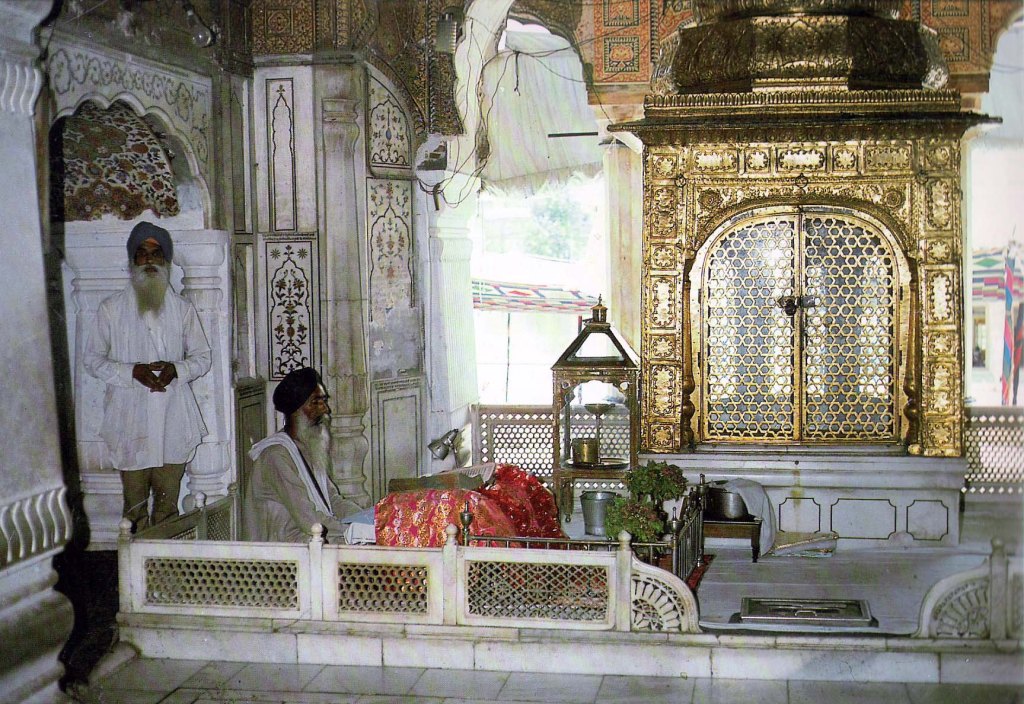
Sardar Randhir Singh wears the turban and a steel bangle – the symbols of Sikh faith. But he does not believe in the Sikh Gurus or the Guru Granth Sahib. Though he identifies himself as a Sikh, he does not visit any Gurudwara. When his son tied the knot, it was the last time he made a reluctant concession. When his son purchased an apartment, the holy book was brought inside during the housewarming ceremony for a few hours one afternoon.    

“When you do not have faith in the holy book, when you follow a cult Guru instead, was it necessary for me to marry in a Gurudwara or carry the holy book for the housewarming ceremony?” Shivjeet asked his father to clarify the duality.   

Sardar Randhir Singh wasn’t prepared for his son to pose this question to him. He couldn’t explain why this was unavoidable. He closed his eyes and scoured the maze of the distant past, remembering his own youthful days when he lit incense sticks and prayed before Guru Nanak, seeking divine intervention to bail him out of debt.

Shivjeet waited for an answer. He had to frame something to the best of his abilities. He scratched his dyed beard and fumbled to explain, “Beta, the entire community is involved and they raise too many questions and doubts.”

“So, you avoid being isolated in the Sikh community. But it confuses us. We do not know the path to follow,” Shivjeet spoke like a schoolboy who had deviated from the right path and was seeking guidance.  

“No, the path is clear. You follow the Living Guru and make your partner walk along the same path. I will take you to Babaji when he visits the city for discourse next month. Remember, we are Sikhs, but we do not feel like Sikhs. At least I do not. You are an engineer, my son, apply your intellect. How can you rationalise the holy book to be the embodiment of Living Guru? Many educated Sikhs are wondering, wandering, and consulting Babaji for salvation. Our spiritual Master is very much alive, and we reject what the Sikh clergy says. Beta, this is just between the two of us,” Sardar Randhir Singh tried his best to pass on this balancing act as the way forward.

The brief conversation on religion was important. Shivjeet was married into a family that believed in the same cult Guru. This was in fact one of the prime reasons why this marriage was formalised. But the daughter-in-law, Nikita, was never comfortable with the idea of Sikh rituals and customs being followed at home. She complained to Shivjeet that it was unnecessary to bring the holy Granth home since none of the family members believed in it: “When we do not subscribe to what is written in it, what is the need of carrying the Granth on your head and bringing it home? Just for the sake of community?” she asked him while stacking up the washed clothes in her wardrobe.  

“I raised the same point of getting rid of this farce with Papa and he explained the logic. Perhaps he is right,” Shivjeet replied, making her jittery about losing her ground.

“Let me know what new logic he applied. It is sheer hypocrisy – nothing else. Our Guru is Babaji – a living one – and we married because of common faith in Babaji. At least your family said it vocally at the time of our marriage. But now your father brings home his hardcore Sikhism from time to time for the sake of relatives. I should have listened to my parents and held griha pravesh, with Panditji performing the puja here,” Nikita trailed off like a seasoned strategist.

“No, no, Papa is not a believer in the Granth. You got it all wrong. To avoid questions and grilling from relatives. You know well we do not visit any Gurudwara and many people keep asking us why we are not present there during important Sikh festivals. This exercise appears an attempt to connect with them. If more Sikhs turn rebels, then it becomes easier to explain our position and reject tradition.”  

“Tell your father clearly, I am not going to raise my son as a Sardar. No way. Your father should be the last Sikh in our family. After that, no Sikhism in our lives, remember that. It is good you are not a practicing Sikh and you do not wear the turban. So, make sure our son also stays away from it and sticks to the path shown by Babaji. If your father intends to make our son wear turban when he grows up, please tell him in advance that we have jointly decided not to raise him as a Sardar. His formal name will also not be some Rajinder or Jatinder. I think we have decided that already, Ambar is nice,” Nikita poured forth to make her stand clear on this issue and expected her husband to stick to that. 

“No need to get hyper, I also do not want our son to be identified as a minority. With turban, you are considered dumb, subjected to all kinds of vulgar jokes. And I hate that. I snipped my hair long ago in high school because of that reason.”

“Was your father okay with that? I mean he could not do it for himself?” Nikita cut in, wondering how the identity issue panned out.

“I told him my friends make fun. He said okay — go ahead, become clean-shaven. There was no discussion or argument,” Shivjeet explained how easy it was for him to chop off his locks. “However, some relatives did object and criticise but the blazing guns soon fell silent when he passed the buck on to me. It was my hair, and I alone had the right to decide what to do with it. He posed helpless in this matter.” 

The next morning Sardar Randhir Singh was ready with his wife, Kulwant Kaur to go to the Dera for community service. He was in charge of shed construction, to oversee its completion before Babaji arrived here to give darshan to his burgeoning tribe of followers. His wife was also thinking of making the son take the spiritual path early, while they were alive.

“Since he stays away for job purpose, he should have Naam from Babaji. I am sure Nikita will also agree,” Kulwant Kaur said, seeking his reaction. “Let us get it formalised this time. I will discuss with her in the evening.”

When they returned home, she asked Nikita to sit with them for a while. “Beta, I have some important matter to discuss with you.”

“Yes, Mummyji,” Nikita said, showing submissiveness without any design.

Beta, we thought both of you should take Naam now. With Babaji’s grace, he has stopped drinking now,” Kulwant Kaur laid the foundation.

For Nikita, this was really good news but she showed fake concern. “I have no issues but after taking Naam, baptism strictures have to be followed. No chicken or meat. Will he turn vegetarian?”

“Turning him vegetarian is all up to you, beta, he will eat whatever you offer and obey your orders,” Kulwant Kaur entrusted this responsibility to Nikita who felt an overwhelming sense of power. “If you are ready, it is enough. He can be moulded.”

Nikita understood her mother-in-law knew his weakness well. It made her realise she had been doing it all these years. Kulwant Kaur was restrained by Sardar Randhir Singh after Shivjeet got married, to let Nikita wield more control. It was a challenge for the mother to overcome the urge to be protective about the only son, but she believed Babaji gave her strength to give up attachment.    

While serving dinner, Kulwant Kaur took the centre stage. Passing the bowl of Rajma, she said softly, “Puttar, take Naam when Babaji comes next month. Both of you.”

“Mummy, I have not thought of it yet,” Shivjeet replied quickly, looking at his wife, gauging her facial reaction to his words.

“Nikita also feels so,” his mother added, to make it easy for him to decide.

“You will have to become totally vegetarian, no meat, no fish,” Nikita said.

He looked at her and wondered if she was actually in favour of taking Naam or not. She had not said anything to him.  

Seeing the blank look, Nikita said, “Yes, Mummyji, we should go for Naam. I have already given order for big portraits of Babaji, framing them for the living room wall.  

Sardar Randhir Singh slowed down his mastication to pick up a cucumber slice from the salad plate and congratulated her, “That’s wonderful, beta, just tell him golden border frame must. So it is final then. Both of you are taking Naam next month. Right?”  

Shivjeet was unusually quiet at the dinner-table. His parents expected a vocal, resounding yes. Giving up his favourite cuisine was a sacrifice he was not prepared for yet.  He knew his father turned vegetarian after the age of sixty, after enjoying all kinds of meat including venison and pork during his hunting expeditions. He was in his late thirties and would lose the chance to indulge in meat-eating forever. This was no challenge for his wife as she was a strict vegetarian like her parents.

Shivjeet broke his silence. Mustering courage, he said firmly, “Will give it a thought. Nikita can go ahead, no issues.” Taking a separate stand for himself surprised Kulwant Kaur who hoped he would do what Nikita would ask him to do. The streak of individualism baffled Nikita who felt her power was tamed by his assertion.

This was not the kind of response Sardar Randhir Singh was expecting from his submissive son but he did not press further. Both of them hoped Nikita would persuade him to accept the proposal.  

At night, after two bouts of making love, Nikita said, “You are away from home most of the time, turn vegetarian when you are here, but eat outside.” This fabulous offer of infidelity came as a surprise from her. A horny stud who came home once in three months was not likely to abstain from sex for that long. Was it a trap by Nikita to know how comfortable he was with this dual arrangement? If he agreed readily, would it give any hint he was disloyal?

Covering her bosom with the floral blanket, Shivjeet peered out of the large window and said, “But this is cheating. Taking Naam and not following the guidelines would be worse. Being a Sikh is better for two reasons at least. Whiskey and chicken. You don’t have to give it up.”

There were many things Shivjeet did outside but his image at home was squeaky clean. He was projected as a man of principles at home. He rejected her ideas as she would suspect he followed flexible morality. He was not prepared to raise doubts in her mind as she would suspect his morality to be wobbly.  

While the family was united in following Babaji, Sardar Randhir Singh knew his elder daughter, married into a Sikh family, was still following the Granth Sahib. He had tried to convince his son-in law but he was unsuccessful on repeated occasions. He hoped he would manage to convince his daughter but not the son-in-law. He wished he should face some challenges and ordeals in life so that he can suggest Babaji as the solution provider.  

The next day, Kulwant Kaur called up their daughter around noon. She got a message when the call was dropped. “In gurudwara,” Kulwant Kaur read the message and showed it to him.  

“What is she doing in gurudwara? She is my daughter,” Sardar Randhir Singh thrummed, losing his calm, and stabbing the slice of bread with butter knife.

“But she is married now and her family believes in something else. Why do you always blame her? We should damage our ties with her,” Kulwant Kaur defended her elder daughter.

Shivjeet walked into the living room, drying his wet face with a towel and spoke in defence of his elder sister though he never liked her or her husband. Sardar Randhir Singh was hurt she was in a gurudwara. When she called back later in the day, his first complaint was related to her gurudwara trip.

“Whenever your mother calls, you are in Gurudwara. Has your husband shifted there?” The acerbic comment was not what a true believer delivers.  

During the telephonic chat, Kulwant Kaur specified that her brother and his wife were taking Naam. “You also come and take Naam along with them,” Kulwant Kaur offered, to please her husband sitting in front though she knew it was just another weak attempt that would be rejected by her elder daughter.   

Guru Granth Sahib is our only Guru and we believe in Nanak,” her elder daughter said loudly and clearly. Sardar Randhir Singh snatched the phone and began scolding her. Shivjeet sat nearby to observe his father fuming at his elder daughter. He never spoke to his son like that. For daughter, the patriarch had a different set of rules.

“Have you gone mad like that crazy husband of yours? How can a book be God or Guru? Answer me that,” Sardar Randhir Singh lambasted her, his flared-up nostrils drawing the attention of his son who drew vicarious pleasure from this feisty exchange.

“Papa, I do not argue on matters of religion. You are free to do whatever you like. We also have that freedom. No question of force. Jo simrey jin simraye,” Harpreet wrapped it up wisely.

 “Yes, I know the bhajan. Don’t teach me, I am your father.”

Sardar Randhir Singh hollered when Harpeet rectified him by saying it was a Shabad, not a Bhajan. Kulwant Kaur grabbed the phone and ended the conversation abruptly, “Acha, beta, talk to you later, bye, love you beta.”

Acha, why do you get so worked up on this issue? We posed as Sikhs when we married her in that family and they believed us though we were not practicing Sikhism. We hid this fact. They are okay with what we believe in and never influence us, so we should also let them do what they like,” Kulwant Kaur tried to sound fair.

Harpreet had many times thought of settling it differently but her husband stopped her from firing salvos that would give Nikita and Shivjeet a valid reason to stop her entry in their home forever. 

“This is precisely why that son-in-law is still hopeless. I regret the day I chose him for my daughter. Let him surrender to my Babaji, seek mercy and then see how he will progress in career like my son. That chap does odd jobs and behaves like a great artist. He is all fake, a big nobody, lives off ancestral property and lectures on Sikh faith. Does he understand the value of hard work? I am sure she will leave him and also give up his faith, end her unhappiness and come back to our Babaji to find bliss. Babaji will definitely bring her to the fold one day and then we all will have the same Guru.”  

“But has she ever said she is unhappy there?” Kulwant Kaur asked.    

“He does not let her come here. He does not meet us. What kind of a relationship is that? In their own world. Nobody else matters. This is no Canada or London. My brothers and sisters all are together. One big family. Even today we call up once every day.”

“I know how close you all are,” Kulwant Kaur said sarcastically, to stall his train of thoughts.

“You could not sell the joint property or convince your brothers to sign in your favour. Nobody likes you but nobody says that in front of you and you think they respect you. Stop believing them.”

“Babaji will decide when it is the right time. I know I have to sell that property and give the proceeds to our son to repay his home loan obligations,” Sardar Randhir Singh revealed his strategic mind in front of Shivjeet who was listening attentively to their conversation.  

Shivjeet could not discuss anything with his elder sister and Nikita also maintained formal ties with her, to keep her at a safe distance from her domestic world. She did not like any interference in her life and had advised Shivjeet to minimise contact with his sisters.  

When Shivjeet went upstairs and told Nikita about the phone chat with Harpreet, she called up her sister-in-law and cleared the ground, “Hello Di, when are you coming? It has been long since you were here. Have some good news to share. Both of us are planning to take Naam when Babaji comes next month. Nice if you could also be with us.”

There was enough gunpowder in her words to trigger an explosion but Harpreet always maintained a stoic calm. Though Nikita knew Harpreet she was not in pursuit of cult gurus and deras, she poked her on this ground to keep the kettle on the boil. 

Being of a wiser strain, Harpreet said, “It is not possible for me to be present there, but I respect your decision and wish you both all the best. Shivjeet heard this exchange but he did not talk to Harpreet except on birthdays and anniversary occasions.

Nanak taught the need to respect all faiths and believers. Harpreet sincerely followed that but she did not think it was right to leave one fold to embrace another or experiment with faith. Religion came to her from parents and disowning it would be disowning parents. Being the eldest child, she had faint memories of her mother doing paath at home. Her father also paid obeisance to Guru Nanak but that was all long ago, more than two decades. A lot had changed in her family since then. Setbacks had shaken the foundation of faith and led Sardar Randhir Singh away from the Sikh fold. It was like a termite attack that hollowed him inside.  

Since the in-laws of Harpreet and his extended family were sincerely following the Granth Sahib as their guru, it was impossible to make them change their path. Her parents said she lacked the power to convince her husband, to change her husband’s mind but she never tried to do that or exercise undue influence. Her husband was following the Sikh norms and she saw no reason to interfere in this aspect and ruin her family life. She was pretty surprised when Shivjeet called her for advice one afternoon.

“Di, all are saying I should take Naam from Babaji but I am not too sure. Can I talk to Jija ji for a minute,” Shivjeet pleaded.

“Oh sure, wait, just a minute, calling him, Suno –” Harpreet summoned him from the reading room. 

Her husband, Daljeet picked up the phone and listened to the full story. He felt tempted to discourage Shivjeet from going ahead. But when he said he was ready to take Naam, it was clear it was just a matter of time and he wanted his help and guidance to find some ways to delay by a decade.

“May I know the reason if it is not too personal, brother.”
Jiju, you know this is not the age to take up the spiritual path. Nikita wants me to take it up though I am not confident. She wants to be sure we have given up Sikhism forever.” He was hopeful that Daljeet would suggest some way to wriggle out of this messy situation for some years at least.

“Since you are okay with joining a Dehdari Guru and your wife is also on the same page, you should do the needful at the earliest,” Daljeet played it safe as he did not wish to worsen his ties with in-laws.

When the call ended, Daljeet spoke his mind.  

“Now your entire family has made an exit from Sikhism. So this is why they did not want a Sikh daughter-in-law.”

“Many Sikh families are now chasing living gurus. It is rather unfortunate,” Harpreet expressed grief and appeared helpless.

“Exactly, these ‘hidden’ devotees are more dangerous for the Sikh faith. They are destroying us from within,” Daljeet added. “These Babajis travel business class, have limos and grab land of villagers to build posh commune. It is a big scam, business idea mixed with religion.”

Harpeet did not argue and let it pass with a mild nod. 

“Next month, there is Mummyji’s death anniversary and there is langar scheduled in the gurudwara. Should I invite my family?” Harpreet sought his permission.

“It is a mere formality. Your parents will not enter gurudwara. Besides, their Babaji is coming next month and they will be busy with their programme,” Daljeet explained the trajectory. 

There was a sudden development as the cult guru cancelled his programme because of court summons regarding a money laundering deal. Most relieved was Shivjeet as the tension of taking Naam was over.

 “Is there a superior power than Babaji helping me out?” Shivjeet thought when he first heard the news from his disappointed father. 

Showing fake interest, Shivjeet asked his father, “When will Babaji come next?”

“Not in the next couple of years. He is going on a world tour – to Singapore and the US soon,”  Sardar Randhir Singh was bereaved to make this announcement.

He cut grass inside the Dera premises to prepare the ground and his hard work was all waste now.  It would again grow to knee-length in two years.   

Shivjeet went to the terrace to share this good news with his elder sister. He did not want any member, not even his wife, to get an idea of unbridled happiness. Harpreet told her brother of the death anniversary in the family but did not ask him to be present. 

Preet did not want her father and mother to be present on the occasion of death anniversary as their sacrilegious behaviour would be tough for her. Besides, she did not want them to poison her ears with repeated proposals to switch to Babaji. Harpreet was happy with formless worship.

The last time she offered karah parshad to her mother, she said it would increase her sugar level and her father refused to have it as it would block his arteries because of ghee (clarified butter). It was surprising for them to hear their daughter prepares karah parshad at home after reciting Japji Sahib.   

When she sent her video of making karah parshad, her mother messaged her nothing, just a smiley emoji. Nikita also sent a smiley.  

When her father heard that, he mockingly said he must talk to her now before she becomes a paathi or raagi.

Nikita dialled her number. Being the connecting link between the father and the daughter thrilled her.  

“Yes, I am learning shabad kirtan and soon sending you video recording of singing shabads in the gurudwara,” Harpreet shared this update with her father who was not happy to hear that but did not say anything to discourage her. He gave the phone to Kulwant Kaur who performed the duty of congratulating her daughter. She knew Harpreet was interested in singing from childhood but Sardar Randhir Singh never allowed that as he did not consider it to be a good pursuit.    

Within a few days, Harpreet recorded one shabad at the local gurudwara and sent the video to her family. When they viewed it, her father had the same mocking tenor while suggesting a career option, “Tell her try Bollywood. These won’t make her famous.”

Nikita messaged the exact words to Harpreet who was hurt to read what her father said. Why was it so hard to utter a word of genuine praise for his daughter when he went gaga over everything his son achieved?    

Her faith was shaken and she wept and prayed to Wahe Guru that He should do some miracle in her life so that these dirty taunts dry up forever.  

Her prayers were answered when she soon got the chance to record a shabad for a Punjabi film. Daljeet had uploaded her video on Youtube and it caught the attention of a Punjabi film-maker who wanted her voice recorded. Sardar Randhir Singh made fun of her shabad singing and the same shabad opened for her the floodgates of success. Her voice found appreciation across the industry and she got multiple offers to sing in Bollywood.

The situation at home changed dramatically for her. The father who ridiculed her was now taking full credit for motivating her.

“See, I told you, she should try Bollywood. It worked. She is my daughter.”

He waited for Nikita and Shivjeet to second him but they were unusually quiet. They never imagined Harpreet would take the lead and prove to be more successful than her brother. She was already a celebrity in her own right. Nikita thought it prudent to be her friend as she would introduce her to her friends in the film industry and she could also fulfill her dream of opening a design studio using her contacts.   

The vocal orchestration of Babaji being superior was finally over. Kulwant Kaur never mentioned Babaji again in front of Harpreet. Sardar Randhir Singh never ridiculed her faith. Offending successful people is an offence and nobody does that. Harpreet and Daljeet thanked Wahe Guru for connecting with the masses. They organised Akhand Paath at their residence to thank the Supreme Lord and invited her family. Surprisingly, they all turned up in full strength.  What was more surprising was Sardar Randhir Singh bowing down before the Holy Granth. The sudden meltdown was attributed to her grand success. Perhaps he had never received such benevolence from Wahe Guru.   

Harpreet was now in a position to help her father and family. She asked her mother if their ancestral property, jointly owned, had been sold. She asked her how much they were expecting. He quoted a fanciful figure he never expected to get. Harpreet expressed the desire to buy his share in the property. Since it was more than the market price, he agreed to transfer it in her name. When Shivjeet heard this from his father, he was glad he would now repay all his loans.  

The entire family was thankful to Harpreet and terribly ashamed of how they treated her and her husband.

Sardar Randhir Singh had been struggling to sort out the property issue but God made it happen through his daughter. Harpreet was happy to see her parents. Seeking karah parshad from the gurudwara, they promised that their grandson would be raised as a Sikh. Nikita now had no problem with that – indeed she was smarter than the chameleon. She wanted to meet film crowds and hobnob with them.

Harpreet and Daljeet were both happy that Sikhism would be revived in Sardar Randhir Singh’s house after almost three decades. The property matter was one prime reason why he drifted away and after a long wait of twenty years, the problem was finally solved amicably with handsome profit coming his way. Sikhs leaving the fold because of materialistic issues return once these issues get resolved. A transactional and reciprocal relationship with Wahe Guru is reflective of their mindset.

Sardar Randhir Singh and Kulwant Kaur started visiting all the Sikh temples and went on pilgrimage to convince their daughter they were really back in the Sikh fold. When Harpreet reminded them that Babaji was coming to the city after a long gap of two years, they feigned ignorance.

Sardar Randhir Singh said, “We are now totally gurudwara focused, beta.”

There were media reports of Babaji being involved in a big scam but he took no interest in the matter, made no attempt to reject it as a conspiracy to defame their Spiritual Master. Perhaps there is no smoke without fire prevailed over his mind.

“God knows the truth. But Nanak is our rakha tey palan haar, our protector and caretaker. He alone can forgive our sins, dear.”

Kulwant Kaur was excited when Harpreet proposed a visit to Kartarpur corridor. Shivjeet and Nikita were also ready to go wherever their elder sister would take them.  

“So let us get our passports ready, beta,” Sardar Randhir Singh declared with enthusiasm, while checking out the validity of the document.  

Glossary

Beta/Puttar – Son

Guru Granth Sahib – Holy text of Sikhs

Griha pravesh – A ceremony for entering a new house

Panditji — Priest

Puja – Payer

Gurudwara – A Sikh Temple

Sardar – A follower of Sikhism

Dera – Camp or a stage set up for viewing

Darshan — An opportunity to see or an occasion of seeing a holy person or the image of a deity. (Oxford Dictionary)

Naam – Initiation

Jo simrey jin simraye — They alone remember Him in meditation, whom He inspires to meditate, a sikh hymn

Bhajan/ kirtan – Devotional songs

Shabad – Hymn

Achha — okay

Paath – Reading the holy texts

Jija ji – Brother-in-law

Suno – listen

Dehdari guru – a living guru

Langar – a Sikh communal free kitchen

Karah parshad – whole wheat dessert offering

Japji Sahib – Sikh scriptures

 Ragi – a Sikh religious singer

Wahe Guru – God described in Guru Granth Sahib

.

Devraj Singh Kalsi works as a senior copywriter in Kolkata. His short stories and essays have been published in Deccan Herald, Tehelka, Kitaab, Earthen Lamp Journal, Assam Tribune, and The Statesman. Pal Motors is his first novel.  


PLEASE NOTE: ARTICLES CAN ONLY BE REPRODUCED IN OTHER SITES WITH DUE ACKNOWLEDGEMENT TO BORDERLESS JOURNAL. 
Categories
Stories

Sofiemol

By Sharika Nair

The old man hurriedly sliced the few stragglers left from the bunch of cowpea beans. It was nearly eleven, time for Sofiemol to pass by. Picking up the bowl with the neatly diced beans, he walked into the kitchen. His wife was sprinkling masala powders into the sambar, and the kitchen was filled with the heady aroma of the simmering lentils. She was absorbed in her kitchen witchcraft, the mixing and the churning and the frying, in which she was so proficient that with a mere bowl of lentils, a few vegetables and a pinch of spices in her arsenal, she could transform any lowly dish into a treat for the palate. He quietly left the bowl on the kitchen platform and walked back to the dining room, before she could notice him. Taking the cutting board and the knife to the work area, he rinsed them in the sink. Placing them carefully on the sideboard to dry, he heaved a sigh of relief. His chores for the morning were done.

Though living the retired life, the old couple woke up at 6 am to the alarm. Water for their bath was still heated on the soot-blackened aduppu; the gas stove being reserved for cooking. Once morning ablutions were completed, the old woman lighted the brass lamp while chanting her prayers, and left it near the door. The old man helped her with breakfast preparations by grating coconut or chopping onions. After breakfast, the couple conducted the cleaning and moved on to the cutting and dicing for lunch with the stoic flourish of an orchestra, thanks to the assurance gained from years of repetitive chores, working in tandem and mostly in silence. Occasionally the old woman remarked on the quality of the vegetables or passed on some news from the neighbourhood. The old man grunted in acknowledgment. 

Clothes were washed and starched every alternate day. The old man drew water from the well, heaving up the ancient aluminium bucket strung on the creaky pulley. The old woman scrubbed the clothes on the washing stone that glistened in the sun like black onyx. 

The old man did not always wait for Sofiemol’s arrival with the anticipation of an ardent devotee, awaiting the opening of the sanctum for deeparadhana. The first few days that she passed by, more than two decades ago, she was a source of much excitement in the locality, and everyone would come outside their homes to gawk and wave at her. Sofiemol was the bus that first connected the sleepy village of Karipoothira to the country’s intricate bus network. Initially, it was just a coincidence that when the old man stepped out of the house, to stand leisurely near the gate and watch the ebbs and flows of his neighbourhood, the Sofiemol passed by. Over the years, he had started timing his routine to the crossing of the red and yellow bus during her mid-morning trip from Pulikkuttusseri to Kottayam town. On the way back, the blaring horn of the bus would wake him from his afternoon siesta and remind him it was time for tea and banana chips. 

As he stood outside the gate, the old man could see the dust in the distance that signalled that Sofiemol was on her way. Across the road, Manikuttan of the Wadakke house was hurrying towards the bus stop with his wife, Hemalatha. Manikuttan called out to him, “Valliacho, we are going to the town to Anumol’s house. It’s her baby’s choroonu. All fine with you?” The old man smiled and nodded. It seemed just a little while back that Manikuttan’s daughter Anumol had come to pick up fallen mangoes from the garden wearing a bright yellow frock, her hair oiled, washed and tied in neat plaits. 

Soon, Sofiemol passed by and halted at the bus stop further down the road. He stood watching as people got down and Manikuttan and his wife and a few others boarded the bus.

The old couple had moved back to Karipoothira in 1970, after the old man retired from his job at the Ordnance factory board headquarters in Calcutta. Their daughter had been married off to a suitable Malayali boy in Calcutta while their son had acquired the highly sought after ‘Government Job’ with a public sector company and moved to Bombay.

The first few months were spent on the renovation of the ancestral tharavadu. The sitting room had been extended, gleaming mosaic tiles had been laid on top of the red oxide floor, the bathroom had been redone and house was spruced up for the new returnees. 

After that, life appeared to have come to a standstill.

In Calcutta, the days had been disciplined and fast paced. In the mornings, the children would get ready for school and in the later years for college and leave. The old man, who was a much younger man then, would glance through the newspaper, and set off to work. 

He had been much appreciated for the impeccable maintenance of accounts at his office. His first boss, Mr Jenkins would often exclaim, “Mr Pillai what would I do without you?!” while thumping him heartily on his back, deeply embarrassing the mild-mannered accountant. After Independence, Stephen Jenkins had gone back to the empire where the sun had begun to set, and a much younger Indian gentleman had taken over in his place. Debasish Sengupta had quickly recognised his faultless work as well and had become reliant on him on all matters financial.

Evenings in Calcutta had spun by like the pages of a suspense novel, flipped hungrily while barrelling towards the climax, with the children’s homework, trips to the grocery store, the songs on the radio and the occasional socialising with friends all bundled together; several minutes, hours, years of a cluttered life; bits and pieces captured and caged inside the albums in the bedroom cupboard, tiny black and white squares featuring stiff shoulders and dour faces.

Ever since he moved back to Karipoothira, his life back in Calcutta seemed to be from another lifetime. The tram rides to work, the sounds of raucous card games from the neighbour’s house, the bustle of his Gariahat neighbourhood was a different universe compared to the sluggish Kerala village, where the neighbour’s cow giving birth was big news. 

When Sofiemol started shuttling down the road in front of his house, she became a tiny whirlwind, shaking up the stillness of his new world. He had become a tree, rooted to a spot, watching the world go by, but seeing the bus, filled with people, moving with manic energy gave him a reflected sense of purpose. 

Sofiemol had embarked on her maiden journey in 1972. By the following year, Sreelakshmi was running on the same route early in the morning, with a return trip during lunch time. By 1980, Baijumon and Minimol had been added to the fleet. But Sofiemol remained the old man’s favourite, a favoured first-born of sorts; just seeing her go by filled him with a vague sense of pride.

The old man was called valliachan or perappan by his Hindu neighbours and pillaachan or appachan by the Christian ones. His age had made his name redundant but the wiping out of his identity had been both secular and universal. It seemed almost poetic that he had lost his first name first. During his working years, he had been Mr Pillai.

Every alternate summer vacation his children, their spouses and grandchildren arrive for their cherished holiday, a break from the chaos of their cities. Suitcases would pile in the bedrooms and chatter would fill the house. The old woman would go into a frenzy of cooking, overwhelmed with the sudden need for larger quantities of food. She would also never fail to declare once or twice, loudly, lest he fail to hear, “Finally some noise in the house! Otherwise, it is deathly quiet here. You know how achan is. Difficult to get a word out of him.” 

Towards the end of their stay, the old man would neatly pack several packets and bottles filled with jackfruit and banana chips, lime pickles and coconut chutney powder, into cardboard cartons along with raw mangoes and coconuts, for the visitors to take back home. When they left, baggage stuffed into the trunk of the taxi, the children screaming out their goodbyes, excited about their train journey back home he would invariably find himself choked, holding back tears. His parting words would remain lodged in his throat. Dinner that night would be unbearably sombre but the next morning would bring with it a palpable sense of relief at the return of calm and peace.

Four years ago, the old man had taken Sofiemol to go to the bank in Kottayam. Suresh, a distant relative, was the bus conductor then. The old man was seated near the door, and Suresh, standing precariously on the footboard with the effortless nonchalance that all private bus conductors seemed to possess, had enquired about his health, “Perappa sukham alle?” Making small talk, the old man had said, “This bus is in such good condition. Hardly ever breaks down.” Suresh had laughed, “Perappa, this is not the original bus. Do you think a bus will last for over fifteen years on these roads? The old Sofiemol was condemned a year back after the owner bought this new one. It was given the same name for good luck. It’s the owner’s daughter’s name, after all.” The old man had sat in stunned silence for the rest of the journey.

For the past year or so, the old man was waking up earlier than usual. As pale tendrils of sunlight stealthily crept in through gaps in the curtains, the chirping of sparrows on the mango tree just outside the bedroom window would awaken him. As he lay in bed waiting for the alarm to ring, he often found himself remembering a time long gone by, relics preserved well despite the passage of time; his mother’s voice scolding him for climbing trees, the sound of marbles getting knocked together by expert knuckles, the panicked voice of a friend shouting, “Gopala… headmaster is coming…run!”

Last week, the old man had gone to the dispensary for his niggling cold and the nurse had called out his name twice, “Gopalan Pillai”. He hadn’t realised she was calling him, till she tapped him on the shoulder and gently said, “appacha, you can go in now.”

As it is time for lunch, the old woman comes to the door to ask him to cut banana leaves from the backyard. Usually, banana leaves were cut for special occasions. Today, though, for some reason known only to her, the old woman has decided they would eat from the leaves. Maybe she has made a sweet dish, jaggery payasam perhaps, the old man muses hopefully. He hums a cheery tune as he dips his feet in the rivulet behind the house. For all her complaints about his laconic tendencies, the old woman would get irritated if he were to sing inside the house.

He mixes the rice, sambar, cabbage thoran and beans mazhikkuparatti together, making little balls of the mixture and eats them with relish. The old woman reminds him to buy candles from the grocery store in the evening. “The power cut is scheduled at seven this week,” she mutters. Half way through the meal, the old man clears his throat and says, “It’s long since you made chakka ada.” The old woman frowns. Since there is leftover dosa batter, she had been planning to make dosas later in the evening. The ada is a lot of work but the old man rarely makes any demands. So, after lunch, instead of taking a siesta, she goes to the backyard to pluck vazhana ila, bay leaves that grow wild in most yards, for the ada. She makes a dough of jackfruit jam and rice flour, and steams the dumplings after stuffing them in the bay leaves.

Once the jackfruit dumplings are cooked, the old woman pours tea into steel glasses and peeps into the dining room. The grandfather clock has struck four and Sofiemol still has not passed by. No wonder the old man has not woken up yet. Her arthritis has slowed her movements considerably. She trudges slowly to the bedroom and finds the old man on the floor clutching at his chest.  She rushes out to call the neighbours.

Within half an hour, the doctor arrives, examines the old man and officially declares what the group of relatives and neighbours gathered in the house already know. The old woman’s wails ring through the house. “He said he wants to eat chakka ada.. he did not even eat them,” she cries as the other women try to console her.

One of the assembled mourners whispers to his neighbour, a bit self-consciously given the atmosphere of bereavement in the house, “What happened to Sofiemol? The bus is late today.” The other man whispers back, “I heard one of its tyres got punctured. I saw Mechanic Joseph going with the new tyre a while ago.”

Just a few metres away, on the road in front of the house, oblivious to the human drama inside, Sofiemol speeds by on the afternoon trip from Kottayam back to Pulikkuttusseri, setting off a dust storm, that soon settles into the silence of a thousand afternoon siestas, broken only by the occasional wailing from the house.

Glossary

Sambar – spicy lentil and vegetable curry

Aduppu – traditional firewood stove

Deeparadhana – ritualistic waving of lamps in temples

Valliachan – uncle

Mol – endearment for a girl child

Choroonu – baby’s first rice intake ceremony

Tharavadu – family house

Perappan – uncle

Pillachan – a title for elderly man from Kerala’s Nair community

Appachan – term used for father, grandfather or an elderly person by Kerala’s Christian community

Achan – father

Perappa sukham alle? – uncle are you well?

Jaggery payasam – sweet dish

Thoran – vegetable and grated coconut stir fry

Mazhikkuparatti- fried vegetable dish

Chakka ada – jackfruit pudding

Dosa – rice crepe

Vazhana ila – bay leaf

Sharika Nair wrote feature stories on entrepreneurs and women achievers during her stint with YourStory. Her story ‘The Silver Anklet’ won a prize in Deccan Herald’s short story competition in 2018. Sharika recently authored a children’s book titled Tara and the quest for the Cursed Prince. Her short stories have been part of anthologies titled The Other Side, Ether Ore and A Lie on Her Lips. Sharika lives in Bangalore with her family.

PLEASE NOTE: ARTICLES CAN ONLY BE REPRODUCED IN OTHER SITES WITH DUE ACKNOWLEDGEMENT TO BORDERLESS JOURNAL

Categories
Stories

The Man Who got Eaten. 

By Kieran Martin

When I tell people this story they wonder why I can pet a dog at all, much less act as if I like one. 

The truth is, dogs are just animals and their needs are beyond their own understanding. Some of them just get greedy. 

For about four years, between the ages of eight and twelve, I lived next to a kid whose dad was eaten alive. The weird thing was this: it started before we moved in to the street, and didn’t end till long after we moved out. 

If you’ve seen a one-armed man playing ball games with children, you may think you know what R’s front yard looked like on a weeknight. But you’d be wrong. Mr K never seemed to miss his chewed off hands and feet until he tried to use them. When he reached to catch a ball, and saw it sail slowly past the stumps of his arms, surprise was painted on his face. 

It didn’t happen all at once — that was the worst part. In fact, the dog spent the best part of four years chewing on the man. I was about to say ‘that poor man’ but stopped myself: we never talked about him that way. No one could stand the way he joked about it. He’d blame it on the weather, the wind had a bite, or the sun took a drink. Sometimes it was people he worked with — back biters and leeches. He smiled and joked about how he’d been offered to every parasite in god’s creation. 

He never mentioned the dog. 

I remember one summer evening when R and I sat at the train station, waiting to meet his dad from the train. Our mothers had decided to take dinner to the park and our job was to meet Mr K and lead him to the park. After the first two trains arrived and left without him, my Mum appeared at the station and told us both to give up and come play cricket before the light was all gone. R stayed till after dark: we picked him up on our way back home. 

Ahead of us, in the half-light, we saw the dog, looking huge, 

Mr K draped over him like a sack, hands and feet dragging along the path. Without saying a word, we all slowed our steps, giving the dog time to drag him on to the porch. By the time we arrived at the front door the dog was gone. “I got locked out,” he said, smiling weakly. “I’ve been waiting, but I don’t mind. Its a lovely night. Maybe I’ll poach a couple of eggs.” Mrs K was the only one to look at him. 

She banged the gate and lead their kids inside. 

Mr K wouldn’t shake your hand, like others kid’s dads. The only way to tell if fingers were missing was to concentrate very carefully as he patted you on the head. There was no easy way to count the size of the dog’s meal because Mr K would grow the limbs back. He ate huge meals and grew fat but seemed light like a sponge cake. 

I stayed over with R some nights and often heard him wandering the house alone, turning on the TV or fiddling with the computer. The house was as rickety as their cheap lawn furniture and used to shake from one end to the other when the washing machine came to its spin cycle. Yet, Mr K could walk from one end to another without making a sound. 

I heard cancer got him in the end. After all that he was eaten from the inside out. We’re all meals, he’d say, shrugging with a hopeful smile, as if he were waiting for someone to agree. 

No one ever did. At least, no one that I could see. Back then.

.

Kieran Martin wrote a couple of short pieces 14 years ago when living in a very small town. He also writes lyrics, essays and code. His sons taught him how to narrate; one of the many gifts they came to him with.

.

PLEASE NOTE: ARTICLES CAN ONLY BE REPRODUCED IN OTHER SITES WITH DUE ACKNOWLEDGEMENT TO BORDERLESS JOURNAL

Categories
Stories

Dear Dr Chilli…

By Maliha Iqbal

Courtesy: Creative Commons

Although she could say her madness had begun when she first wrote to Dr. Chilli, but somewhere deep inside her, in a tiny dark crevice, sparked an unintelligible force. This force melted the hard glitter of her eyes till they were like luminous ponds in the heart of a wild forest where all was quiet; ponds in which autumn leaves floated without causing even a shadow of a ripple. Tears flowed down her cheeks.  Now the pond had become like a river that refused to stop even as it tore through rocks and Earth. This force had always existed in her, it existed in everyone but remained dormant in most.

She knew she had to stop. Angrily, she beat her forehead with her sweaty, hot palms. Blows that dulled her, as though each was a hypodermic injecting an exhausted numbness in her. The sound of her own crying came from far away like the soundtrack of a movie in slow motion, like distant bombs exploding, like the ringing of an alarm clock heard through the haze of a dream. That’s what it probably was– a dream. It couldn’t be real. In her world, reality was harsher.

She heard the groaning of her school bus and decided that she was awake after all. The day had just begun. It would get harsher.

*

Ankita got into the bus and sat down in a corner. Her face had faint streaks where tears had flown not so long ago, like the snowy white path left behind by a flying airplane. As they reached the next stop, she stared out of the window. A girl came running out the house and into the bus. She was grinning. A grin that was confident. Perhaps cheerful too but that was difficult to say. It was as though happiness spread everywhere but shied away just when it reached the eye.

She sat down next to Ankita.
“Hi, all prepared?”

Ankita stared at her best friend, Nita and a thought flashed through her. My best friend is Mona Lisa. She made herself smile, stretching her skin so it became plasticky and the somewhat synthetic glitter returned to her eyes.

“Yes, hope today’s class test goes well.”

The girls chatted until the gates of the school appeared.

*

After school Ankita and Nita returned home. They had a quick lunch and then went off to their coaching center. They went to the same coaching institute, travelling together.

On the way, Ankita kept staring at Nita. Something she had said earlier in school had amazed her. Not shocked her or angered her, not even disgusted her but made her wonder. Curious. Something that she never was nowadays. Nita had airily remarked that she had imagined tenth grade would be very difficult and yet it was easier than her expectations. Was it now? Really? She thought about her routine. Wake up at six in the morning, get ready for school and study till seven thirty. Then school and back home at one in the afternoon, lunch and then get ready for coaching. She went to coaching to prepare for NTSE (National Talent Search Exam), her upcoming board exams as well as for various entrance exams. Returning home at seven in the evening, she completed all her homework by nine and was free to enjoy herself until twelve when she went to bed. 

She hadn’t ever complained but lately something had happened to her. All because of Dr. Chilli.

When she had walked into class this morning, two of her classmates had remarked cheerfully that she wouldn’t be worried about the class test of course since she was the topper. Ankita had said nothing. Yes, her class test had gone well. Yes, she loved being the topper but no, she had worried! Right up to the last minute.

This thing about being the topper worried her too. No doubt she loved it, but she knew that it was more difficult to stay at the top than to reach it. She had seen so many toppers deteriorate. Her own best friend was her main competition right now. If only her percentage was higher than Nita in the upcoming boards. Even 0.5 percent higher than Nita would make her feel elated.

She knew Nita must be studying more than her. Why had God made her, Ankita, so dumb? She couldn’t really be good. Not ever.

“Why are you looking so worried?”

Nita was staring anxiously at her.

“Oh no, nothing. I am okay.”

“Look! There’s a new poster for our coaching institute.” Nita pointed at a huge billboard. Ankita stared at a dazzling new poster with the pictures of grim faced, God-like toppers of earlier years staring down. Below was written, “You could be the next one! Excellence in Learning. Experienced Educators. Join now.”

She repeated Nita’s words in her mind. ‘Our coaching’, Nita had said it in a way that meant naturally, not even unusually, that they and the coaching institute went hand in hand. Where there was coaching, there was Ankita and Nita. It was something essential in their life, like the heart or the brain. It had always been ‘ourcoaching’, said in a single quick breath with no space in between the words and she had never really noticed it. 

She thought about what was written. Yes, the teachers were very experienced in her institute. Take Mr Sharma who taught physics. He had a formidable experience of eight years in Kota, and he kept complaining about the low quality of things in Delhi. The students worked harder there, put in more hours, slept lesser. When he talked about his Kota days Ankita stared at the faces of her classmates, their eyes shone, and she could clearly read the desire in them. The desire to be hung up on a billboard, staring down on the world. At those times, she had felt that desire too but now she only felt like laughing at them.

The poster was too small. They were crazy if they thought they could all ever fit in it.

*

“Are you okay?”
“Yes, yes. I am fine.”
“Ankita, you talk so little nowadays, and you look worried.”

Ankita stared at Nita’s concerned face. She smiled synthetically, feeling her palms sweat.

“Trust me. It’s just that the board exams are only a month away. It’s the stress.”

“Don’t be worried! Remember what our principal said — just think of it as a class test.”

Ankita thought what it would be like if this was really a class test. Well, she might worry a little less but she would still worry. Every mark mattered. Somehow, she could not think of a board exam as a class test, but it was easy enough to think of a class test as a board exam. That made her wince.

“What’s wrong?”

Ankita straightened her face quickly and said nothing.

Nita frowned and murmured, “You keep making faces… I don’t think you are well.”

“Oh, don’t keep saying that!”

Nita looked surprised and with a touch of hurt said, “I only care about you. I won’t ask you anymore.”

They were both silent for a while. Then Ankita said quickly, in a low voice,

“You don’t understand. There are too many Sharma sirs in this world, and I am so afraid of him.  I afraid of going out into that world.”

*

Ankita was at home, and it was nine-thirty in the evening. She had just finished her dinner. She lay back on the bed, the back of her neck throbbing with pain. It always ached when she studied with her head bent. She thought back to her coaching class, trying to feel inspired by Sharma sir’s words like she used to feel once upon a time but there was no rush of adrenaline through her body. She held her head in her hands, hating Dr. Chilli.

Her mind went to when she had first started all this. When she was preparing for her ninth-grade final exams, her heart had often felt crushed by a heavy weight like an iron fist squeezing the life out of her. She had not only worried about her upcoming exams but also about her tenth grade for those were the real tests. The Boards. Nita had been concerned even then. She had told her that exams were nothing to be scared about. Sometimes even she, Nita worried, but did not let that worry make a wreck of herself. Ankita had listened to Nita but shook her head slightly. Nita had then laughed and joked, “Well, then go see a psychiatrist!”

That had made both of them laugh.

“What makes you think I have enough saved to go to a high-class psychiatrist?”

“Okay then, just take a page, invent a doctor and write to him!”

They had laughed again but that night when Ankita couldn’t sleep (it was getting more difficult to sleep as the days passed), she had slipped out of bed and opened a notebook. She thought for several moments then wrote,


“Dear Doctor Sheikh Chilli,”

She smiled. Sometimes she imagined if she had just been a fool, no topper. What would life be like? She would never know but at least she could consult a psychiatrist who was a fool, one of the most famous simpletons!

That was how it had started. She now went to that notebook and picked it up flicking to the first entry. It read–

“Dear Doctor Sheikh Chilli,


I feel like I am going mad. I am angry all the time. Angry on my father, my mother, even a glass of water (I threw one down and broke it yesterday). I have always been so calm, but I don’t know what has happened… What’s really weird is that I don’t feel afraid of my results or even the exams, but I am always more afraid of what comes in between- the preparation. What kind of preparation is this? I have to mug up every word of my books, be word-perfect. I hate it. I mug up something at night and forget it in the morning. It’s all very well to say that the key to scoring good marks is reading the chapters thoroughly. Sounds intelligent. Of course, it’s not true. The text in the book should be branded in your brain to get anywhere at all.

In all my life, whenever I have had problems, I have talked to my parents. Take the time when I lost my most cherished fountain pen and cried all day. My father at once bought me a new one next day but now I really don’t know whom to confide in. My father can do nothing. My mother can do nothing. I am fighting a losing battle against a system that I haven’t yet understood clearly. Perhaps that’s why I am angry because I don’t know whom to beg for help, whom to be angry on. Perhaps that’s why I am going mad.

Sometimes when I am studying, my brain goes out of control, and it becomes so difficult to memorise even one paragraph. I feel so mad, so angry that I slap myself. It’s morbid but it is so out of my control! It seems I have to beat the words into my brain. I remember when my grandfather passed away, my grandma became hysterical with grief when she came to know of it.  She screamed and sobbed, slapping her forehead. Whom am I crying for? Is it because I know I am dying or is it because I know everyone like me is dying?

Yours,

Ankita

She read it once and with sweaty hands picked up her headphones. She listened to songs till ten when her mother came into the room.
“Ankita, I just came to remind you. Have you finished your homework?”

“Yes! Is there anything you want me to help you with?!”
“Don’t shout! This is a bad habit of yours. Whenever you have your headphones on, you think that just because you can’t hear clearly, others cannot either and you have to shout to make yourself heard.”
“Sorry.”

She smiled sheepishly. Her mother went away, and she relaxed in her bed.

She thought back to what she had read not long back. Then she had been afraid of the mugging. Now she was afraid because she wasn’t afraid. She no longer feared the mugging because she knew it was nonsense, stupid, illogical– and that’s what really frightened her. When she had finally realised the brain-deadening stupidity of it all, would she ever be able to continue as before? Now that she realised that this crazy competition was not healthy, but maddening, would she still remain the topper? Could she ever put her heart into all this and truly believe in it?

*

Ankita woke up gasping. She had a nightmare, but she couldn’t really remember what it was. Did she even have a nightmare? She wasn’t sure any longer. She sat on her bed for a long time. It was strange. She was sure something horrible had caused her to wake up. If only she could at least remember the nightmare. She was sweating badly.

Dr. Chilli would never hear from her again. She had promised herself this because if she continued writing she knew either of two things could happen- she would deteriorate or she would go mad but right now she had to do something to pass the time because she just couldn’t sleep. She opened the notebook and decided that she would write something positive, something that had been on her mind ever since the exams started to loom on the horizon.

“Dear Dr. Chilli,

‘When the Exams are Over.’  Sounds so magical, doesn’t it? I have so often thought and thought of what I would do when the exams are finally over. Finally, I am penning it down. Firstly, I would definitely take a look at those flowers by the river that I always see whenever I pass by in the school bus. They look beautiful from so far away. Imagine how nice they would be up close!

I also want to devote some time and try learning swimming. It always looks so exciting. Another important thing I would do would be to convince my parents to take me to a beach. Andaman? Kerala? Odisha? Or some foreign country? I haven’t decided but I would definitely see a beach someday. I would go to a theatre to watch a movie. I haven’t ever seen a movie in a theatre, but I hope it will be fun! There are so many other things. I could fill this notebook!”

She paused, suddenly excited by all the planning. When could she do this? Most likely after Board exams in March. No, she had her senior secondary entrance tests pretty soon after that and then the scholarship exams. There was NTSE also.

Then she also had to join coaching classes for eleventh grade. She would have free time too (she could do some of the things then), of course but what had she been thinking? Imagining everything would be over after this exam. Oh no, life was an exam. There would always be the next one. For one moment she had imagined living in the world where she had beat the system. It was fun.

She sighed and wrote the same lines several times in her notebook until she fell asleep, her face calm, no doubt thinking about the one line she had written so many times.

When the exams are over...

.

Maliha Iqbal is a student and writer based in Aligarh, India. Many of her short stories, write-ups, letters and poems have been published in magazines like Livewire (The Wire), Creativity Webzine, Histolit, Countercurrents, Freedom Review, Cafe Dissensus, Times of India, Good Morning Kashmir, Borderless Journal and Indian Periodical. 

PLEASE NOTE: ARTICLES CAN ONLY BE REPRODUCED IN OTHER SITES WITH DUE ACKNOWLEDGEMENT TO BORDERLESS JOURNAL

Categories
Stories

Eyes of the Python


Written in Tamil by S.Ramakrishnan, translated by Dr.B.Chandramouli

Raghav dreamed of a python again. He had never dreamed of a snake till he was thirty. But ever since he married seven months ago, the python had recurred several times in his dreams. Mirudhula was to blame.

She was fond of pythons. When she admired one, her eyes would widen as if she were swishing her tongue at a delicious gulab jamun. In confusion, he used to wonder: “What kind of woman is she?”

In the city zoo, there was a cage with an artificial tree containing a twelve-foot python. They did not know where they got it; it was the first thing they went to see as newlyweds.

“Ragav, look at its eyes. They flash with a secret. Its texture, the style of its coils, the small movements, all of it are amazing. I like it; I want to hold it in my lap,” said Mirudhula.

Ragav hid his fear and asked, “Should we go?”

“We just arrived. Why are you rushing?” she said, standing near the barrier, watching it with interest.

He could not understand what interested her.

“You know it is non-poisonous. Even at school, I got a prize for drawing a python,” said Mirudhula.

“It is still a snake,” said Ragav. She was snapping pictures with her mobile. A boy who came there hid behind his mother with closed eyes. His mother was pulling him forward, urging him to look.

Ragav left her alone and went to see the white tiger. When he returned, she was still admiring the python. He felt irritated to see her slowly licking an ice cream cone and watching the motionless python.

Young newlyweds go to the movies only. Mirudhula was not interested in the movies; in all of her 26 years, she had seen only less than ten.

“I fall asleep at the cinema,” she said. He could never fall asleep in a movie theater.

In his college days, he would watch all three new releases for Diwali and Pongal non-stop. The three movie theatres in his town changed movies twice a week. In a week he saw six movies, mostly second shows. If it was too late to go home, he would sleep on friend’s open terrace and in the morning, go to the college from straight from there.

Why did he marry a girl who disliked movies – he wondered.

 Mirudhula was a salesperson for a multinational company. She was the single daughter of a dentist. She graduated from Manipal University after attending an Ooty convent. Having worked in Italy for two years, she was fluent in four or five languages. She made 1.5 lakhs per month.

They connected on a matrimonial site. When they first met in Amethyst’s coffee shop, her perfume intoxicated him. He couldn’t take his eyes off of her black and yellow salwar-kameez.

She spoke fluently and naturally with a fake smile on her face, as if speaking to a customer. She ordered an orange ice-tea, which Ragav had never tasted.

Twice, she repeated the same question: “Are you the only offspring?”

“Yes. My father is a college professor and my mom a schoolteacher,” he replied.

“Thank God you aren’t a teacher too,” she said. He didn’t get what was funny about it but laughed politely. Her charming beauty seduced him, as one might desire decorated pineapple pieces in a five-star hotel.

She seemed to be purposefully using a seductive voice.

“May I know how much you weigh?” she asked.

No girl has ever asked him that. Feeling shy, he said, “Sixty-eight”.

“You must lose 5kg, ” she said, smiling.

While opposite her, he felt as if it was drizzling on his face.

She winked, “Do you have any other questions?”

“You are very beautiful,” said Ragav. 

“I am aware of it.”

“I am lucky,” he laughed lightly.

“I’m still deciding – have to think more. I rush nothing.” Mirudhula said, “I am different and difficult to understand.”

“Different how?”

“I don’t want to scare you off yet, but I am like that only.”

She licked her small lips as she spoke. Her lips were sexy; the upper one was slightly smaller.

‘I think I am an inch taller than you,” she said.

“Is that so?” he exclaimed. “It is not a problem.” 

“It would be a problem for me. You should wear platform shoes,” she said.

“Sure. I can do that.”

“Do you drive?” she asked.

“No, I only ride a bike.”

“I got a car as soon as I got the job and drive to work daily. I love driving.”

“That is really cool. We don’t have to use ola then,” he said.

She disliked that comment. Slowly combing her distressed hair, she munched on the orange wedge.

“Aren’t you curious about my car?”

“Sorry. I know nothing about cars.”

She teased him, “Do you walk on the road with your eyes closed?”

“I wear a helmet. I hardly notice anything else.”

While she ate a sugar cube, she regarded him quietly. Her eyes seemed to seek something in him. What was she looking for? He could not stand her scrutiny.  

She smiled. “We will meet again.”

 Her perfume lingered long after she left. Ragav picked up and tasted a sugar cube just like her.

It was the first of their three dates. After that, their families got together and arranged the wedding. Unlike traditional marriage hall weddings, theirs was a lavish affair at a beach resort. Mirudhula’s father spared no expense. They honeymooned in Hawaii. She enjoyed varied foods, including fish. Raghav craved rice.

Even when she was kissing him in bed, Mirudhula was slow and deliberate. Her kiss was emphatic. Her embrace was slow and long. Their lovemaking was urgent and refreshing, like eating ice cream in the summer.

They temporarily stayed at Mirudhula’s apartment upon returning to Chennai. Mirudhula was serious about renting a new home. She rented a flat on the top floor of a newly built apartment building with 34 floors.

Ragav said, “A first-floor flat would have been nice.”

“One must live in the highest location possible. It is nice to see the city beneath my feet,” she said.

He felt uncomfortable living so far up.  What if the lift failed? What if the balcony glass barrier cracked? Why was there so much glare in the morning? His mind bubbled with doubts, questions, and fears. But her morning routine was to stand on the balcony with the morning brew in the hand and admire the sprawling city below. The fast wind blew her hair in waves. He disliked standing on the balcony.

Mirudhula was a great cook, but she only cooked when she liked it. The other times, they catered from the hotel only. She was never late for work. Even at home, she never seemed to rest and kept moving. Ragav, however, liked to relax on the sofa after work. On Sundays, he slept until noon. Not her.  She exercised every morning. She took great care of her figure and health.

Leaving together by car, she dropped him off at the metro station and proceeded to her workplace. She never drove him to work. She often got home by 9 p.m., whereas he was back by 6 p.m.

While waiting for her, he watched television. Occasionally, he cooked for himself. All his dreams of married life were dashed in a few weeks. He felt that his life was like a book read and finished in a hurry.

One day Mirudhula fought, saying he lacked toilet etiquette. He yelled at her another day for storing Chinese food in the fridge that smelled foul. Despite the petty fights, she often surprised him with gifts. He too took her shopping every week without fail. To appease her, he ate in some restaurants that he disliked. Her poise was evident in her every action.

She had the habit of buying strange things online. She bought wall mounted blue lights for the bedroom. The rotating blue light made the room look like a pool. When she moved around in the room, it was as if in a dream.

Another time, he was busy at work when she sent him a video and texted him to watch it right away. It was a revolting scene that showed a python swallowing a baby monkey.

Angrily, he called her and demanded to know why she sent him that video.

“Did you see? The python swallows the monkey and turns, looking eerily silent…something strange…”

“Isn’t the baby monkey unfortunate?”

“Snakes eat when they’re hungry–anything wrong in that?”

“Don’t send such videos anymore. Why would I look at them?”

“I liked the video so much I watched it 30 times today. You are my better half, so I shared it with you.”

 He cut the call with “Stupid”

It was two days before they spoke again. He became more enraged when she ignored his anger.

That Sunday, she made many of his favorite dishes. She deliberately wore a silk sari. Showered him with kisses; his anger melted away.

A few days later, she told him while leaving for work, “I’ll get a package; accept it but don’t open it. I’ll open it.”

“What package?” he asked.

“Surprise” she laughed.

A guy delivered a big box, just as she said. It came from Taiwan.

Despite being curious, he did not open it, not wanting to anger her.

Unusually, she called before coming home that day: “Did the package arrive?””

“They delivered it in the afternoon itself,” he said.

“Can I get you something from McDonalds?” she asked.

Knowing she wasn’t planning to cook, he replied, “Pick it up yourself.”

She asked, “What sweet would you like?”.

“I’ve given up sweets,” he said flatly.

She cut the line by saying, “Well, we’re eating today.”

Mirudhula came home carrying two bags. One package contained food and the other sweets. Was it her birthday today? He wondered. Then he remembered her birthday was on May 8th. He could not figure out what was special about that day.

 The package she carefully unwrapped contained a rubber python folded six times. She caressed it lovingly.

“Touch it and see how soft it is”

“What is this for, Mirudhula?” he asked.

“They have included a hand pump to inflate it; please help me,” she said

He took the hand pump and inflated the rubber python through a port. He watched it slowly expand. The snake unraveled to over ten feet of smooth coils. She wore it on her shoulders and smiled.

“Come close… let us wear it together,” she said.

As he grudgingly consented, she wrapped the inflated python around his shoulder as well.

“How is it? Can you feel the silky touch?” she asked.

“It feels strangely slimy, “he said as he tried shaking it off.

“I searched online and ordered it from Taiwan for 300 dollars,” she said.

“It’s not worth it. What made you buy it? I don’t like it,” said Ragav.

“I will spend my money as I wish. You like nothing.” She said, reclining on the sofa, hugging the python. He was a bit scared to look at her. As she stroked the python’s head, she stroked it with her cheek; only its tail was dangling outside the sofa.

“Ragav, I am thrilled today. Let us celebrate.”

“What is there to celebrate?”

“You won’t understand. Even before we were married, I said I was different. You even nodded your head.”

“That doesn’t mean you should have a Python at home… who would do that?”

“This is not a true snake, just a toy.”

“Why do you need a toy?”

“Then why do you have a fish tank? You like watching fish, right? Did I question it?”

“It is not the same.”

“It is all the same. Look Ragav. Whether you like it or not — us living together means compromising on some things I like.”

“There is no such rule.”

“No problem.  I don’t need your permission, anyway.” She laughed and sat down on the couch to watch an Italian channel. When she was angry, she would speak in a foreign language and watch foreign language channels.

Ragav locked himself in his room. His anger took a long time to subside. She might even bring the rubber python to the bedroom, he thought. Luckily, she left it on the sofa. She ate alone and came to bed as if nothing had happened.

She took the python to the bathroom the next day. She rubbed soap suds on it as she played with it in the shower. The wet python dried on the balcony.

He suppressed his rage and left for the office.

In the car, Mirudhula said, “You are overreacting, it’s just a toy.” This is like you playing video games; try to understand.”

He did not reply. That day, she drove him to his office on purpose. He came home to find the dried python in the hall, left there by the maid. He was furious.

When he touched its body, it felt like a snake but with motionless eyes. The plastic tongue twitched when he pressed its head. In the mirror, his visage looked strange as he wore the snake, like she did. It was such an expensive costume. What would someone from his hometown think? What is so special about this python?

 He deflated the python. Folding the rubber shell, he cast it in the kitchen corner. It was the first thing she looked for when Mirudhula got home at 9.30 pm. Not finding it, she shouted, “What did you do with the python?”

“It is in the kitchen”

“You would have deflated it, I know.” She said, walking to the kitchen.

“Yes. It is disgusting to look at.”

“The problem is yours. What you did is inevitable; you’re a pervert.”

“I’m not perverted. Does anyone else keep a python at home?”

“I don’t care if others keep it or not. I’m not like others.”

“You are adamant.”

“Yes. I am like that only.” She said, deliberately inflating the python with the hand pump. It grew much larger than its usual size. She walked to the bedroom, lovingly hugging the python. Loud music blared. Maybe she was dancing with the python.

Ragav slept on the sofa that night. The python accompanied her to work in the morning. In the lift, an old man asked her, “Is that a rubber toy? Where do they sell it?”

“Taiwan” she said, laughing.

“I’ve seen a python in the Assamese forests,” said the old man.

She put the python in the back seat. She did not drive him to work that day. He rode to work on his bike. He could not concentrate at work. When he spoke to his mother, he told her what had transpired.  His mother asked incredulously, “A rubber snake? Why did she buy it?”

“Who knows? She is a strange type.”

His mother was shocked. “Thank goodness she did not buy a live snake”

“She might even do that. I don’t know what to do.”

He heard his mother cursing in anger. Perhaps she spoke to Mirudhula’s father. Mirudhula’s mom called her the next day.

“Why did you talk to others about our problems?” Mirudhula demanded.

“I told my mother only.”

“Are you a schoolboy to run to your mother? What do you have in your mind? Am I crazy?”

“Yes.”

“I can’t live up to your expectations, Ragav.”

“I understood it very well long ago.”

“Then you better close your eyes and ears.  If you complain again like this to my folks, I do not know what I will do.”

“Why do you torture me? You can leave if you don’t like to live with me.”

“Why should I leave? I will stay here.”

“Well, I will leave then.”

Walking to the balcony with the python, she said, “It’s your choice.”. Leaning on the barrier, she held the snake up, and it wave in the air. To express his anger, he left for work early in the morning.

He arrived home late that night. The home was empty. He didn’t bother to look for her. She did not return the next day as well. He rang her father, but his father did not pick up the phone. After three days, Mirudhula called him one afternoon. “I have decided Ragav. I am leaving”              

“It is your choice.”

“The house cost me over two lakhs. You must return it. I have informed the owner that I will vacate the home, since I have paid for the advance. You better find a new place. Our marriage was a bad dream. That is all I can say.” She hung up.

Ragav thought she’d return after her anger subsided. He couldn’t stand her stubborn behavior. He wanted to call her back and give a piece of his mind. When he called again, she did not pick up the phone.

Upon returning home that night, he discovered she had emptied the house of her clothes and belongings. But she had left behind the rubber python, which lay alone in the middle of the hall.

Why did she leave it behind? It was the root of all their problems. What was she seeking? Her wants were so weird.

He kicked the rubber snake with his foot, but even then, his rage did not fade.

To vent his anger, he trampled the snake with his feet. After deflating it, he took it to the balcony and cast it into the wind.

 Flying in the air, the snake looked beautiful indeed. 

Glossary

Gulab jamun: Indian sweets

Diwali, Pongal: Festivals

S. Ramakrishnan is an eminent Tamil writer who has won the Sahitya Akademi Award in the Tamil Language category in 2018. He has published 10 novels, 20 collections of short stories, 75 collections of essays, 15 books for children, 3 books of translation and 9 plays. He also has a collection of interviews to his credit. His short stories are noted for their modern story-telling style in Tamil and have been translated and published in English, Malayalam, Hindi, Bengali, Telugu, Kannada and French.  

Dr.Chandramouli is a retired physician.. He is fluent in English and Tamil. He has done several English to Tamil, and Tami to English. He has published some of them.

.

PLEASE NOTE: ARTICLES CAN ONLY BE REPRODUCED IN OTHER SITES WITH DUE ACKNOWLEDGEMENT TO BORDERLESS JOURNAL

Categories
Stories

A Navigational Error

By Luke P.G. Draper

GUILTY!

The word echoed like shotgun fire through Trafalgar Square.

Pigeons scattered. Most quietened back to the ground, some flew to the domed roof of the National Gallery or away into the low and oystery clouds that folded in the morning sky.

The old man stood at the foot of the Gallery’s steps, a frayed square of cardboard and scratchy blanket at his feet a dog may have lain on before, though he stood alone and crooked, his lucid eyes betraying his wilted frame. 

He clenched his fists by his side, closed his eyes and bellowed again.

GUILTY!

I was sat at the eastern fountain, soothed by the sound of sluicing water and the pulsing rumble of traffic from The Strand, but the word pealed through the square like a sudden toll of a faulty clock. I’m unsure how long I sat on the fountain wall watching him. He ignored me as if it was all part of street act, and perhaps I convinced myself it was to justify my voyeurism. We were invisible to each other and ourselves.

The square was quiet save litter pickers and the occasional businessperson crossing the square toward the office buildings, oblivious as the old man gradually lifted his arm in the air as if raising a starting pistol and roared the word once more.

GUILTY!

A smartly dressed woman walking alone toward Pall Mall vaulted like a frightened horse at the noise.

Guilty! He hissed behind her canter.

After she turned a corner, he stood to as upright a posture he could like an abandoned soldier, taking a moment to uncoil his wiry beard with his yellowed fingers, straighten his mariner cap and wipe his eyes.

Still, he didn’t look at me.

I began walking in the early mornings half a year ago. Four mornings after London came together to celebrate hosting the 2012 Olympics, three mornings after it was torn apart by bombs under and over ground. After days of self-confinement, my flat no longer felt like sanctuary. The view from my window of rows of shops and diners that often disappeared behind the type of bus that exploded in two filled me with dread. The bus would wait at the stop outside the drug store. And wait.

After a vivid dream of being chased by a bus and waking up at the pneumatic hiss of the first number 32 pulling in, I got out of bed, got dressed and left my flat to walk with no particular destination in mind. I walked all the way to Hackney Marshes and sat on the banks of the River Lea with a bottle of wine and a plastic cup. Usually, families would paddle in the water, but nobody swam that day.

The walks would last most of the day. I would circle Cricklewood to start, then walk through Maida Vale and Hyde or Regent’s Park and sometimes past the Thames toward Battersea. Every walk was navigated only by my awareness of London’s streets. I began stopping at pubs but felt too anxious to settle, even after drinking my fill.

A week later, my strolls brought me to Trafalgar Square. Small cuts of paper streamers floated on the paving and bobbed on the fountain’s water. The party was over before it began. The smoke and the ashes had dispersed, and the streets were cleansed of the mechanical — and other — remains, but something still hung in the air, like anger and fear had evaporated into an electrostatic force. It tasted blood-coppery and drifted consciously like lost ghosts.

The wound still gaped and would continue to as London silently endured.

Together, said the news, but London was shattered into grains that refused to rebind.

GUILTY!

But of what, precisely? Pride? Greed? Complacency? I took my battered tobacco tin from my pocket and picked out a pre-rolled cigarette. The bite of the first morning cigarette lingered and faded. I found myself drifting into the fountain’s chant and closed my eyes, my mind empty of all thought and memory. I remained in this mesmerised state until my cigarette burned down to my knuckle. When I reopened my eyes, the man had gone.

I checked my watch. Eight twenty-four. More people were passing through the square. Soon, groups would gather and loiter. I had no intention of being among them, so I rolled the remaining paper and tobacco between my fingers and scattered the dust on the ground, stepped off the fountain wall and headed east to the river.

Walking down Duncannon Street reminded me why I preferred the openness of the square. Cars passed closer, and the narrow pavement guided people to cross in tighter herds. While before I would walk with my head down, I now mark in every face I meet the city’s burdens. Though today, fewer people walked toward me. From the offices and the bistros, people exited and headed instead for the river until we were all like knots in the same rope being pulled toward the turbid waters.

Around Embankment Station, the line dispersed. People headed to the footbridge or the pier to get a closer look at the river. I headed to an elevated walkway that granted a view down the river all the way to the Vauxhall curve.

“There, I see it!” Cried out a man on the bridge, pointing down the river.

The morning sunlight burned on the water’s surface.

“Where”? asked a clipper, dashing on the sloping bank.

The gasps and cries could be heard over the traffic and the wind that groaned through the bridge girders.

I saw it. First a ripple on the surface and then the emergence, grey and colossal.

“There!”

“A whale! Look mum!” cried a child beside me, clutching his mother’s skirt. The mother held her hand to her mouth.

Throughout the morning and into the afternoon, crowds gathered on the banks and bridges to catch a glimpse of the whale that had come to visit. Though it had submerged soon after peering above the surface, we cooed over any disturbance in the water and cheered for the rescue service that zipped along the river on small engine boats toward any unconfirmed sighting.

I watched the river carefully. The water heaved with all the activity, exciting the crowds, who’s faces stole my attention. Many smiled and waved, as if welcoming family back from a long journey at sea. Many clapped and cheered. Some were holding back tears while others openly cried. Some prayed, in different styles and languages. It was a harmony of loving chaos. We were all, with our scars and religions, willing the whale to survive. We were thankful for its visit and the well wishes, but mentally guided it back to the vast ocean. We wouldn’t admit to ourselves that it was lost and afraid, that it had made some navigational error and swam into the shallow, fetid waters of our notorious tributary by mistake. A river once so polluted it was declared biologically dead. A river once a whaling port, where the stranded were hacked up for their oil and bone. A river that regularly surrenders corpses. We willed it back to safety with all our collective strength.

I stayed leaning on the walkway railings until the sun set and the winter chill had seeped through to my bones. I gazed on to the now calmer waters. Fewer rescue boats patrolled the river and most of the families had left. Workers crossed the footbridges with their heads down. I thought about the old man on the square. I still didn’t know what he was accusing us of, but really, I don’t think he did either. We all have our secrets, faults and regrets and we all have our rules and devotions. We have our histories that shape our futures, and for now the ever-occupied present. The old man stood there as a mirror to all that dared to look into it, and if they did, they would confront their guilt — just as we did when we stared into the soul of our river — and scream until all that is left is blind hope.

For the first time since the bombs, I wanted to go home.

.

Luke Draper is from Portsmouth, UK and lives in Japan. He studied Creative Writing at the University of Chichester. His literary influences include Leonard Cohen and Ryūnosuke Akutagawa.

.

.

PLEASE NOTE: ARTICLES CAN ONLY BE REPRODUCED IN OTHER SITES WITH DUE ACKNOWLEDGEMENT TO BORDERLESS JOURNAL.