Categories
Slices from Life

Serenading Sri Lanka

Photographs and Narrative by Mohul Bhowmick

Sri Lanka can be savoured best via its street food stalls; the aroma of the spices that emanates from the flurry of dishes left drying in the hot sun is supposed to hold the flavour of the country in its entirety.

Quite appropriately, I step out of the airport in Colombo just as dark clouds assemble overhead for an impromptu November gathering. The path to the bus terminal is waylaid in the melee, and the eventual taxi that comes around is met with immense gratitude for the warmth it emanates from within.

Meanwhile, the clouds have picked up pace and lambasted in full strength upon my flimsy raincoat. As the taxi — a Tata Nano — pulls out of the airport, I read a sign that tells me, rather ominously, ‘Welcome to Sri Lanka!’

.

But have I arrived? The drizzle accompanies me all day even as I try to venture out northwest from my dorm near the Galle Face Green towards Independence Square and Viharamahadevi Park. The park has a tinge of tenderness that makes me long for home barely six hours after I have left.

The soldier who has been entrusted to protect the monument of Gautama in the centre of the park slights me at first by asking me to put my camera away, but something about my nationality sparks enough curiousity and reverence in him to apologise and show me around its premises.

Named after the mother of the great Sri Lankan king Dutugemunu [161-137 BCE], who united the island under his banner after generations of oppression from Indian invaders, the park is tranquil in a manner that only the moneyed can afford to be. To be welcomed here by a member of the Lankan military seems ironic to me. Quite intrinsically, I discover that the affluent neighbourhood of Cinnamon Gardens is merely a stone’s throw away.

.

The sunset at Galle Face Green is where I lay my eyes upon the Indian Ocean for the first time; the gentle disappearance of the disk of fire in its graceful attire with lakhs of denizens of the city in attendance is not an event to be forgotten in a hurry.

It strikes me in the bouts of consciousness I still have with me on the start-stop train to Anuradhapura the next morning, which miraculously manages to reach the ancient capital of the island only moments after its scheduled time of arrival despite having spent about fifteen stoppages in the rough-hewn greenery of north-central Lanka.


The Isurumuni Royal Temple, Anuradhapura.

The Vanni, which separates the north from Anuradhapura, begins here, and I do not think I have gathered enough courage to bypass it just yet.

The Maha Sri Jaya Bodhi — a sapling of the Bodhi Tree under which the ascetic Sakyamuni had sat all night in meditation in the fifth century BCE and attained Enlightenment in Gaya — transposes much of the tranquillity one must have felt had Gautama himself been around; instead, hundreds of his lay followers deify his idol and consecrate his ideals with flowers and oaths of incorruptibility.

The compound where the Maha Bodhi stands allows one the permission to whisk the mind away from its constant whirl of thought and towards action based on feeling; its way, as Gautama’s, holds that offering the grant of ‘self-realisation’ to one’s fellow man is far more sumptuous a gift than an endowment of land or capital can ever accomplish.


Novice monks at the Ruwanwella Dagoba in Anuradhapura.

The Ruwanwella Dagoba, which the great Dutugemunu had painstakingly built, offers the refuge that the Maha Bodhi implores one to seek by going inwards. Two quarts of the Buddha’s relics are enshrined here, and the inflow of visitors ensures that the joyful policemen on duty are hard put to shred their visages of quietude, which one would have moments ago thought to be beyond them.

The next morning, with a German fellow traveller — whom I met at dinner while watching India decimate New Zealand on television in the semifinal of the cricket World Cup — I excavate whatever innards of peace and serenity I could from the Isurumuni Royal Temple.

My new friend from Germany tells me of of his experiences while travelling in Japan. He explains how he had made good use of the public parks (greens) at night as the locals did not use them after dark. He did not have money to sleep in hostels/ hotels and used benches in the public parks instead!

I offer him freshly plucked oranges from the gardens abutting the temple, where princes and princesses of an earlier age used to amble while seeking matches.

I get so drawn into the ethics that Gautama’s teachings must have instilled among the laypeople of the island that I almost forget to notice when my landlord — from whom I had also borrowed a bicycle — casually doubles the rate of his homestay when I check out. I learn — only much later — that he is no believer in the path Sakyamuni trod and speaks Tamil.


The Sigiriya rock fortress from afar.

Sigiriya seems much hotter than Anuradhapura1 was, and I write this even as the sun goes down and I climb up to a hidden rock far from the one which gives the town its name. The sun sets farther still from the Sigiriya Galla, and along with a bunch of British fellow travellers, I enjoy the last beads of light seeping past the horizon.

My evening is considerably brightened when our guide Vasu points me towards a green-looking hillock supposed to be the one Hanuman brought from the Himalayas as he sought for the life restoring ‘sanjeevani’ herb. While descending, a girl from Cornwall shrieks in considerable awe of the girth of the trunk of the first elephant she has ever seen.

The hike up Kasyapa’s fortress2 takes little effort, and the sparse crowd makes it feel worthwhile all the more. My newfound British friends — devoid of the SAARC3 protection of a reduced entry ticket to the top — climb the eastward facing Pidurangala instead. They tell me much later that they found the visage of Sigiriya quite appealing from the top of the latter; in a picture they show me, I cannot help but speculate that the black spot on the top of the rock was my shadow.

A dip in a hidden lake authorised by the owner of the backpacker’s hostel we are in is sprinkled liberally with views of the fortress in the backdrop; even the arrival of a slimy water snake that nibbles at my friend Jackson Price — a former telecommunications manager from Bristol — is not enough to shatter our sense of innate wellbeing.

.

There is just about enough time to catch the temple near the centre of Dambulla town unawares before Rapahel Nuding — a mechanical engineer from Stuttgart — and I take the bus south to Kandy. The carvings on the rocks inspire us both differently; me to poetry and him to decode how it could possibly have been done without the help of modern-age machinery.

Kandy is damp and misty when we arrive; the flecks of raindrops prance around nicely as neither of us wants to close the window shades of the rusty old bus we are travelling in. The lake can be sensed before we can see it; within an hour, we are back in the area to witness the ceremony at the Temple of the Tooth Relic where the dante dhatu, or the tooth relic, is displayed to laypeople.

Temple of the Tooth Relic

I help Raphael tuck into his — and my first this trip — masala dosa in the hordes of Tamil restaurants near the temple; I wonder if he asks for a second helping of the mango lassi to cool his inflamed tongue down or merely because he has liked the sensation the frozen — and possibly preserved — fruit. He stays back for a day, but I sling my bag to get on the morning train to Nuwara Eliya, having had enough of the cultural capital of Lanka already.

.

The bitter cold that greets me in Nuwara Eliya is only slightly lessened by the endless cups of tea that keep rolling through the night at the Laughing Leopards backpackers’ hostel. I struggle to explain to Helen Brinkmann, a post-graduate student from Dortmund, why I shall go to bed in tears having watched Australia demolish India in the final of the World Cup; the memories keep plaguing me a few days later in Ella when I sit down to get a grip upon myself and form an understanding of the ill-fated event.

Of the twin haunts of Nuwara Eliya and Ella, it is the journey that fascinates me the most; the rickety old contraption that passes off as a train is as old as I am in spirit and wanders only slightly off the gorgeous trails that have to perforce be left behind. Quite like the train, I am too enamoured by the countryside to trade it for the capital a week later.


The hills of Uva, as seen from Ella.

The hills that rise from the extensive green wildernesses filled with shrubs of undefinable assortment catch my eye in Ella, and it is some time before I can catch a grip of my sentiments and force myself to sit down. The bats and monkeys that gather in numbers at the Ravana Ella — or Ravana’s cave — scare me out of my wits before I can even put my foot into the mouth of the opening. Outside, the sun shines generously on a creek drifting past the hills in a muted whirr that only the sapient can perceive.

.

It speaks highly of the natural largesse that Sri Lanka possesses. Within hours of leaving the cool climes and peaks of Ella, I arrive at sea level, and the Indian Ocean peeks in patches to the left when the bus turns right from Matara, the southernmost tip of the isle. Indeed, I have breakfast in the hills and lunch on the coast.


Sunset at the beach in Mirissa

Mirissa, where I am headed next, brags of pristine beaches uninjured by the droves of tourists that fill it during the season. On arrival that evening, I find a rock to the west that garnishes a panorama that is stunning. My first encounter with kottu roti is astride a charitable helping of coconut sambal which my tongue finds excitable, and I tell myself that I am finally in the south.

.

Excursions are made to the beaches that litter the southern Lankan coast without rhyme or reason, or even distinction to one’s name or creed. Weligama, Midigama, Ahangama, the air force base at Koggala, Habaraduwa and Unawatuna all become names interchangeable with rapture perpetuated by the lack of inaccessibility. From another country, people struggle to reach me on my cell, and their needs stay blissfully away from my purview.

The sun shines on the coast much like it had done when I was in the west; the north and central parts of the country are barraged by untimely rains and I am glad to have left them behind.


The harbour as seen from Galle Fort.

Galle, where I am to stay for a night before heading back to Colombo, charms me out of my wits and looks askance as I walk away evincing a wry smile from the preposterous shindig that one might as well call a fort. The cricket ground stirs a longing for a home I have no rush to return to; on account of the goodwill and record I enjoy, I am allowed into the members’ stand for a gracious helping of a local under-19 match.

The entrapments that the Portuguese, the Dutch and the British had all in turn instituted — that now passes off as a spectacle of great pleasure — protect the town of Galle from outsiders, and also, it seems to me, from itself. Inward-looking to a fault, the Sinhalese of Galle have been known to open their hearts and hearths to all but those who have boasted of a skin tone less plentiful than white.

Upon being given to understand the intricacies of such delights and lodging in a palatial mansion owned by a Lankan Muslim family, I exult in the first serious gelato I have had in my life; an egg roti earlier in the day had barely served the purpose it was intended for.

.

Return to Colombo. I see the capital with eyes that I had not been endowed with when I first landed on these shores; it seems to be a lifetime ago now. The polished highway outside the President’s House, which abut the Chinese-funded port and end up at the imperial inheritance of the Galle Face Green purport me to a world I thought I had left behind in the countryside.

I put it down to my lack of vision but the night creeps up on me unannounced even as I try to trudge out of the humongous man-eating machine they call the One Galle Face shopping mall. It is not without some discomfort that I take flight, aware that it may not be for the last time.

.

  1. Kingdom of Dutugemunu ↩︎
  2. Built during the reign of King Kasyapa [477-495 CE] ↩︎
  3. South Asian Association for Regional Cooperation ↩︎

Mohul Bhowmick is a national-level cricketer, poet, sports journalist, essayist and travel writer from Hyderabad, India. He has published four collections of poems and one travelogue so far. More of his work can be discovered on his website: www.mohulbhowmick.com.

PLEASE NOTE: ARTICLES CAN ONLY BE REPRODUCED IN OTHER SITES WITH DUE ACKNOWLEDGEMENT TO BORDERLESS JOURNAL. 

Click here to access the Borderless anthology, Monalisa No Longer Smiles

Click here to access Monalisa No Longer Smiles on Kindle Amazon International

Categories
Slices from Life

Suga Didi

By Snigdha Agrawal

A Santhali woman

She stood somewhere at 5 feet 8 inches.  Of athletic build.  Swarthy skin. A face full of punch holes; ravages of smallpox during childhood.  Her disarming smile more than made up for the lack of a flawless complexion.  The girls were told she was being employed as their Ayah, with strict instructions to address her as ‘Didi[1]’.  The Ayah affix after her name, was a ‘no’, ‘no’ in a Bengali household.  So, it was Suga Didi right from day one. The rest of the elite living in the cosmopolitan community frowned upon such bourgeois sentiments.

Suga lived in a Santhal village, on a river bluff, surrounded by dense Sal Forest. Inaccessible by road and cut off from civilisation. The only Santhal village in the area, close to the gated community, offering employment opportunities to the tribals. Not that they were keen on leaving the village to work in the steel and brick factories. Suga was the one-off amongst them venturing out from her cloistered society.  She arrived for the interview, hair oiled, drawn back from her face tied into a chignon, and dressed in a cotton saree with a red border, way above her ankles. The blouse was missing. Her attire would surely be viewed as improper in the elitist community.    She spoke in the Santhal dialect, with words common to Bengali and Hindi.  Amenable to change, she did not resist the suggestion of wearing a blouse, nor letting down the saree border to her ankles, when reporting for work.  Agreed happily to the working hours from 6.30 am to 4.30 pm, five days a week.  During school vacations, morning reporting was pushed back to 8.30 am. 

The decision to employ Suga was borne out of necessity. With four growing girls, aged between fourteen and four, or thereabouts, it was becoming increasingly difficult for their mother to handle all the chores.  Plaiting their hair, getting them dressed for school, ironing uniforms, and accompanying them to the school Bus stand, were some of the many activities entrusted to her.  Add to that, the role of a luggage carrier.  With four school bags, piled on her head, and four tiffin baskets weighed down with filled water bottles, hand-held, she shepherded the girls safely, morning and evening.  It wasn’t an easy walk. There were open drains to cross.  Heavily loaded truck movement posed a serious problem as well. She guarded them like her own. Taking care of the girls when they got home from school was also included. Occasionally, when the mood was right, she shared ancient tribal folklore, sometimes breaking into a song. 

The eldest of the four had read stories of tribal practices.  Witchcraft.  Human sacrifice.  Eating wild animals.  Men and women drinking ‘mahua’ toddy. Suga was questioned on the validity of all this to which, she neither denied nor confirmed.  Tribal secrets were not for the ears of the civilized. But she couldn’t ward off the pestering from the girls for long.  And went on to narrate the story of the Santhal deity, Bonga, visiting their village on a moonless night, in the guise of a king cobra to drive away the bad spirits living on the edge of the forest, responsible for killing the cattle.  Quietly slithering on the muddy terrain, the twelve-feet reptile, held the spirits captive, performing a wild dance with its raised hood.  And then struck.  The spirits screamed and fled, never to return. The village headsman invited the cobra for dinner, sharing toddy and barbequed lizards.  That was not the end of the story.  Suga concluded that the snake dissatisfied with the host, gobbled his head from neck upwards.  The girls held onto each other shocked out of their wits.  A bizarre ending.  Doubts were raised as to whether the story was real or imaginary, made up by Suga Didi.  Many such stories found their way into the older one’s scrapbook.  Later found in the steel trunk, along with old photos, discovered by the younger two. 

When Birbhadra the cook took leave to visit home, Suga filled in, helping out with cutting, and clipping the meat and fish.  All the preparatory work for cooking the meals.  Prepared by the lady of the house.  The girls were curious to know what Suga cooked at home. Her stock answer was hot, spicy, and unpalatable.  Their persistent pleading to cook a tribal dish at some point bore fruit. Reluctantly, she agreed to treat the household with a recipe, made from goat innards. The butcher supplying meat was duly informed to send the liver, fat, spleen, heart and intestines.  “Eww, gross!”  But not so, when the dish arrived on the dining table.  Blood red with a film of fat floating on the top, garnished with freshly chopped coriander leaves.  In no time it was polished off.  Delicious!  Delicious! All exclaimed.  Suga was on cloud nine that day.  They named the dish “Chagol Pagol Curry[2]”.  Suga’s signature dish.

It was the spring of 1959.  By then, the older girls had left for boarding school.  Younger ones then six, were pretty much able to ready themselves for school on their own. Suga’s workload had halved.  For most of her free time, she took upon herself the role of gardener, attending to the vegetable garden, and advising the gardener on how best to get good yields from her experience of growing vegetables in the village.  The smell of ‘bidi[3]’ wafting into the porch, meant the two were sharing a smoke.    

And then for over a week during that summer, she had not reported for work. Alarm bells rang in the household.  Had she fallen ill?  Had she died of cobra poisoning?  Had she been thrown out from the village for violating the rules?  Worst still, was she a victim of human sacrifice?  Concerns that kept the family awake.  No one knew her address, except that she belonged to the Santhal village on the river bluff, inaccessible to non-tribals.  A security guard from the factory was sent to find out if the headsman could be summoned to the river, under the ruse of gifting him Scotch whiskey.  Didn’t work.   No one responded to the call, announced with a handheld loudspeaker.  Several attempts were made to no avail.  Rumours mills were churning out stories of her having eloped with the cook, Birbhadra, though it made no logical sense.  Happily married with a dozen or so kids living in Begusarai, he could least afford a second wife.  Though coincidentally, Birbhadra left employment around the time Suga was out of the radar.     

It was decided there was no further need to employ a nanny aka ‘didi’ for the girls. Suga was the first and the last.  Irreplaceable.   She remains an enigma to date.

.

[1] Elder sister

[2] Crazy goat curry

[3] A type of cheap cigarette made of unprocessed tobacco wrapped in leaves

Snigdha Agrawal (nee Banerjee) is a published author of four books and a regular contributor to anthologies.  A septuagenarian, she writes in all genres of poetry, prose, short stories and travelogues.

PLEASE NOTE: ARTICLES CAN ONLY BE REPRODUCED IN OTHER SITES WITH DUE ACKNOWLEDGEMENT TO BORDERLESS JOURNAL

Click here to access the Borderless anthology, Monalisa No Longer Smiles

Click here to access Monalisa No Longer Smiles on Kindle Amazon International
Categories
Slices from Life

Healing Intellectual Disabilities

By Meenakshi Pawha

Disability is an inevitable condition that affects nearly everyone at some stage, and its duration can vary from brief to prolonged. It is an inherent aspect of human beings. Recently, I read An Unplanned Journey: Stories of Empathy from the Frontiers of Intellectual and Developmental Disabilities by Naval Pant which offers a tapestry of poignant and compelling accounts of real-life experiences of individuals with developmental and intellectual disabilities that comprise both children and adults with special needs.

Naval Pant, the author, has discovered an invigorating perspective on the complex subject of disability. Spanning a wide range of disabilities, such as autism, language and speech impairments, Down syndrome, cerebral palsy, and Intellectual and Developmental Disabilities (IDD), the author offers a nuanced, in-depth knowledge of the characteristics of these challenges, as well as specific strategies for assisting children in maximising their cognitive and emotional capabilities.

He obtained a degree in Mathematical Statistics but transitioned to Educational Philosophy for his postgraduate studies and PhD. In 2005, he established an organisation dedicated to providing high-quality services for individuals with intellectual and developmental disabilities (IDDs). He strongly advocates for their comprehensive development, rehabilitation, and vocational training within an inclusive setting. His book contains a collection of fourteen stories straight from the heart. This book is unique. The book’s unconventional subject matter, crafted by a perceptive author, compelled me to hold the book in my hand and examine its plush velvet cover, awestruck by its captivating title.

I commenced reading swiftly flipping through the pages with eager speed. The author employs a distinctive storytelling style and smoothly transitions the readers from one story to another. In the introductory chapter, Naval Pant declares that “This narrative is thus at once an autobiographical account, a memoir of the institution we built, a chronicle of the heroic struggles of young children and some of my learnings from serving in the field of special needs education.”

The first story is the only fictionalised account in the collection. The rest emanate from deep lived experiences of Naval Pant and his team of dedicated teachers. “Until you have a kid with special needs, you have no idea of the depth of your own strength, tenacity, and resourcefulness” is the quote which begins the second chapter, “An Unplanned Journey”. It sets the tone of the book as well. It tells us, “There is no roadmap on this island…You don’t know its topography…your situation is unique…Gradually, you learn to accept your situation.”

The concluding chapter delves into the various services extended by his institution, its fundamental tenets and educational philosophy, and the difficulties encountered in a post-pandemic society. It adequately reiterates the organisation’s spiritual drivers that result in the forging relationships between the teachers and the students free from dominance or authority and encourages communication between them. He shows how it is beneficial to prioritise a culture of engagement in educational institutions not rooted in hierarchy. What stood out most prominently for me was the language and tone of the book. The text is highly readable, resembling a casual dialogue between intimate acquaintances. It employs common words, concepts, and ideas, rendering it remarkably engaging and riveting. The book lacks is a narrative that fleshes out the myriad challenges and barriers that caregivers and their children are confront with in society on a daily basis. While it alludes to the topic, it does not extensively investigate or analyse it.

The strength of the book resides in its consistent provision of solutions for every topic it addresses. Naval Pant’s book offers valuable motivation for individuals with impairments and parents and educators who must confront daunting challenges. These stories serve as sources of inspiration, promoting good change in students’ lives and fostering hope, peace, and potential for transformation. Although the book extensively explores the topic of disabilities and its related difficulties, the main message that resonates is the admirable quality of a courageous and tenacious individual who perseveres and harnesses his experiences to foster personal growth rather than succumbing to bitterness. The author does not experience the sorrow that accompanies the task of raising a child with disability. The book illustrates the significant endeavour required to effect substantial transformations worldwide.

The book will be of enormous interest to parents, special educators, disability experts and non-profit organisations interacting with these stakeholders. Unquestionably, engaging with this book will undoubtedly stimulate contemplation over the future of education in Disability Studies for both theorists and practitioners.

Meenakshi Pawha is a retired professor from the University of Lucknow.

.

PLEASE NOTE: ARTICLES CAN ONLY BE REPRODUCED IN OTHER SITES WITH DUE ACKNOWLEDGEMENT TO BORDERLESS JOURNAL

Click here to access the Borderless anthology, Monalisa No Longer Smiles

Click here to access Monalisa No Longer Smiles on Kindle Amazon International

Categories
Slices from Life

    When the Cobra came Home

By Antara Mukherjee

A strange thing happened.

A cobra came to our house in Burdwan two days ago. It stayed for few minutes in the washroom downstairs and then vanished in the dark. The caretakers were terribly frightened. They wanted to kill it by any means. When I got the call, I told them to wait for some time without even trying to do anything. Somehow, I knew it would go away on its own. And it did.

My mind raced back to the years when I was in school. One evening, to our horror, a cobra was discovered in my brother’s bedroom on the second floor. We shouted our heart out while my mother kept staring at it in silence with folded hands. After few seconds, it magically vanished. She looked at the calendar, hanging from the wall, and in a calm tone, declared that it wasn’t an ordinary cobra but Goddess Manasa, the Goddess of snakes, who came to ask for her annual worship; she further told us that whenever this would happen in future no one should try to do any harm to the snake but prepare to offer favourites to the Goddess.

Strangely, snakes kept visiting our house, infrequently though, before Manasa puja[1] and my mother wasted no time in preparing for her annual offerings. She, however, never cooked the day before, as was the usual practice related to the annual worship known as Aarandhan or No-Cooking Day. It is a ritual where Bengali households refrained from cooking on the day of worship and ate whatever had been cooked the day before, after offering the same to the Goddess. Neither the typical menu associated with Aarandhan— for instance, five types of vegetable fritters, vegetable mishmash, mixed vegetables, varied fish preparations and sweet dishes — nor the practice of eating previously cooked meal was a part of my mother’s annual worship of the Goddess. Her way of honouring the Goddess was a matter of pleasing her with a personal touch, something that was beyond the shackles of set rituals. As I grew up and got entangled in all sorts of activities, I hardly cared to ask her about such serpentine visitations. I don’t recall any such occurrences in the last seven-eight years until day before yesterday.

My mother was deeply religious and immensely superstitious. She had her own worldview about things, especially anything related to Goddess Kali — Goddess Manasa, being an incarnation, was quite honoured by her, though Manasa was not the coveted Goddess to be worshipped. In our locality, Viswakarma[2] puja, which falls on the last day of the Bengali month Bhadra, that is mid-September, is observed with huge pomp and glitter as we live in the same locality where the main power supply plant of Burdwan is located. On the same day of Viswakarma puja, Manasa puja is also observed. Close to the boundary of our house, every year a huge pandal is constructed by the working-class people and a sort of community meal is served. My mother never went to the power supply plant to offer puja, but to the pandal for Manasa. She strongly believed that it is her devotion that kept the snakes/evil away from her three children. When we would become unmindful of the power of Goddess, she told us, Manasa would send her agent to remind us!

As I have hardly believed in my mother’s self-constructed logic, I never subscribed to her practices. But, this time, with the cobra coming home, I felt I was being instructed to offer something to Manasa. I couldn’t believe myself doing this, but I called up the caretakers and coordinated so that Manasa got her favourites from us.

“Rinku, please buy some fruits, milk and a packet of sweets and offer it to Goddess Manasa tomorrow. Make sure that you remember doing this.”  I gave clear instructions to our homehelp.

In my mind, I prepared myself to visit the Goddess the next day, to see how she was doing!

Before the car took a turn towards Power House Para, my locality, Kumar Sanu[3]‘s powerful nasal tone that dominated my adolescence, reached my ears:

“Tu meri zindegi hai/Tu meri har khushi hai/Tu hi pyaar tuhi chahat /Tu hi aashiqui hai…(You are my life/You are my joy/You are my desire/You are my love) [4]

This song from the movie, Aashiqui[5], welled up fragments of my past. There used to be a time when I waited for ‘Pujor gaan‘ or  Bengali songs released during the puja. Almost all the notable singers of the time came up with new albums, yet Kumar Sanu was the unrivalled King. I passed my teens and jumped into adulthood with his superhit song – ‘Priyotoma mone rekho (‘Keep me in your heart, sweetheart’).’ That afternoon, after more than two decades, I heard him singing, again – ‘Koto je sagar nadi periye elam ami /Koto poth holam je paar/Tomar moton eto oporup shundor/ Dekhini to kauke je aar...(‘I crossed the seas/I walked through ways/ The beauty that you are/ I haven’t met’).’ Almost hypnotised, I got down from the car and walked straight to the direction of the pandal. I needed no Pied Piper from Hamlin; we, Bengalis have our own, the nasal Sanu. The closer I got, the louder he sang. Soon, familiar faces surfaced —

“Good to see you.” Lahiri Aunty shouted from her balcony.

“Same here.” I shouted back

The Lahiris and the Mukherjees are literally ‘samne wali khidki’[6], existing on the opposite lane, of Power House Para[7]. While my mother and Aunty went on talking for hours from their respective balconies, the doctor husbands silently attended to their respective patients in their respective chambers downstairs — a practice that went on for almost forty years.

The weather-beaten balconies have witnessed to the transformations in both the families. Lahiri Aunty was still standing on hers, while ours was empty. Instantly, I found myself standing there at the wee hours of a certain nineties morning, when Kumar Sanu was ruling the music industry and Uncle, the field of Dermatology, watching my father rushing to the Lahiris. Within few moments, our red telephone rang. I came inside and my mother told me to follow her immediately to the Lahiris. Inside their first-floor bedroom, for the second time in my life, I saw a dead body. Uncle’s eyes were closed. Aunty sat motionless. My mother went the window and sat beside her dear friend. I had nothing to do. I kept staring at various showpieces collected by them from all over the world. When my grandfather died couple of years earlier than Uncle, I had my cousin, Tiya, to play with me. We had our freedom then; the elders were busy. It was fun. Death had no power to scratch me, even though I saw a dead body for the very first time.

At the Lahiris that morning, not a sound could be heard. A house where harmonium, tabla and sitar existed in harmony, was unusually quiet. After Uncle, however, Aunty continued to sing but Kumar Sanu never ever dared to peep into her bedroom. She had the classics of Bengali music for her company. In contrast, I welcomed everyone in my life. From Kishore Kumar to Rafi, from Kumar Sanu to Udit Narayan, from Baba Saigal to Apache Indian etc[8], I brought all the cassettes that were available in the market. I was largely spoiled by my elder brother. Madonna, Michael Jackson, Backstreet Boys, Spice Girls, Harry Belafonte, Elton John, Phil Collins etc[9] were supplied by him and by some of my school friends. It was my elder brother who inculcated in me a deep love for what he called the four pillars of Hindi music: Kishore Kumar-Asha Bhonsle -R.D. Burman-Gulzar. I was in class eight when I heard ‘Sei rate rat chilo purnima/Mon chilo falguni hawate[10] (‘It was a full moon night/ my mind wandered in the spring air’)’. I replayed it ten times in our old, black tape-recorder. A hot and humid afternoon seemed so breezy then. And when dusk came, I became a moon-gazer. I have never stopped looking at the gorgeous lady ever since.

Since Viswakarma, Manasa and Kali pujas were observed in our locality with much gusto, I got the chance to listen to and update myself with the recent puja releases. At the same time, I also became aware of the oldies. A locality mostly consisting of doctors, engineers and professors, the choice of songs played was up to a certain standard. It was only when I went to one of the most notorious of colleges in town that I became acquainted with the masala numbers and I loved them! With time, the second generation took hold of the pujas and likewise the choice of songs to be played underwent a rapid change. Soft, romantic numbers as well as Jhankar beats were preferred. It was a time when Kumar Sanu gave voice to all the Khans — Shah Rukh, Salman, Amir [11]— and to seniors like Jackie, Anil and Sanjay[12]. Amongst Bengali Puja songs, Kumar Sanu somehow managed to coexist with the neo-liberal paracetamols of the nineties – Suman, Anjan and Nachiketa[13]. When ‘Bhoomi’, a Bengali band, swayed us with their hit songs, all sweethearts or ‘priyotomas’ were earnestly desired through Sanu’s nasal voice. The loudspeakers constantly amplified Sanu’s songs — be it the contemporary Bengali numbers or Bollywood hits. He was, as if, the unavoidable menu in our daily music-buffet.

My mother was cool about the change in the songs being played in our para-pandals but her friend, Lahiri Aunty, probably, was not. Bathed in the classics of Nirmala Mishra, Kanika Bandyopadhyay, Satinath Mukhopadhyay et al, she shut all her doors and windows when the speakers howled – ‘Ke bole Thakuma tomar / boyesh periye geche aashi! (It is unbelievable that Grandma/ you have crossed eighty)’– another Sanu blockbuster! She kept herself confined within the four walls and rarely came out in the balcony. Ma was always downstairs, on the streets, without caring which song was being played. Her attention was fixed at the puja, be it Kali or Manasa.

I don’t remember Lahiri Aunty joining her during Manasa Puja. But she enthusiastically participated during Kali Puja’s final ritualistic bidding adieu to the goddess, boron, and then,  in sindoor khela[14], a community practice where married women smear each other’s cheeks with vermilion powder. Aunty was the first to do boron and then to start the typical sindoor khela. Unmarried girls like us were not spared either. I disliked the rubbing of vermilion in my cheeks but who had the courage to say ‘no’ to her? After Uncle passed away, she stopped coming for boron and my mother, in solidarity, refrained herself from participating in the play. But nothing, absolutely nothing, could deter her from the elaborate preparation for the puja.

“So, puja means you would get a chance to harm your body by eating those items which you are not supposed to eat, right?” I often rebuked my mother.

“You are mistaken. I don’t eat anything. I offer everything to the Lord.” She was always ready with her defence.

I strongly believe that it was her blind devotion and irrationalities that drove her astray. I could no longer tolerate any ritual after her cremation. However, within one-and-half-year of her passing away, strangely enough, that same me, was standing in front of a Snake Goddess and repeating what her mother used to do.

*

“Here, take some prasad[15],” Nitai, the little boy of yesteryear, now a responsible local boy, in-charge of the Durga puja, offered a plate full of fruits and sweets. I don’t know for how long I was standing at the steps to the mandir[16]. His husky voice jolted me out of my inertia.

“How are you doing?” I asked him.

“Oh, I am very busy. Where were you yesterday?” He questioned

“I have just come.”

“I hope you’ll be with us during Durga puja?”

With no one waiting for me at home, why should I come to Burdwan during that time? I asked myself. Why should I pray to the Goddess whose annual visit, three years back, robbed me of my greatest treasure? My wounds were still fresh.

 He probably read my silence.

“Don’t worry at all. Uncle and Aunty have left the world but we are there for you. It’s where you were born. It’s your locality. Your roots are here. You must come.”

The para or locality where I grew up has changed a lot. My life, too, underwent massive transformations. Nobody awaits my arrival here anymore. Yet some things remain. Most importantly, my past remains, my root remains, my delightful memories remain. And in them, my parents still breathe. Why should I stop myself from generating further memories? Why won’t I live for my happiness too?

 I smiled and assured him that I will be back. He was still holding the plate of Prasad.

“I have given up sweets. I am taking a piece of cucumber, okay?”

“This is the blessing from Goddess. Nothing will happen if you take some,” he insisted.

Greedily, I picked up a batasha, a flat, coarse whitish sweet, and started to munch on. Ah! that heavenly feeling! When did I last eat a full batasha? I could not remember. We now have fancy sweets as prasad. The indigenous sweets like batasha, nokuldana — tiny, roundish sugary substance —  are fast vanishing from the platter of Bengali prasad.

During our childhood, nokuldanas and batashas had been middle-class Bengalees’ coveted folk-sweets. Roshogollas, pantuas or even malpuas, traditional Bengali sweets, were prepared by my mother on special days. But we always had jars of nokuldanas and batashas readily available at home. For an unannounced guest, a domestic help, a hungry beggar, the next-door child and, most importantly, for me, always looking out for something to munch on, batashas were generously distributed. However, she disliked my habit of stealing them from her Gods! Normally, after daily puja, I, reflexively, snatched batashas from her offerings and, in no time, crunched them inside my mouth. She cursed me for being so impatient. In those days, contrary to the softness of Bengali sweets, the crispy sound and feel of both nakuldana and batasha gave me an unparalleled satisfaction of winning over an invisible opponent.

After the ritualistic offerings, when my mother went inside her room to change (normally, she wore a special white and red saree for Puja purposes), I practically, ‘stole’ all the nokuldanas and batashas from the small silvery plates of her Gods and Goddesses. They were readily available candy to me. After her evening worship or during Satyanarayan puja, I watched with rapt attention the making of shinni– a semi liquid mixture of flour, banana, batasha, sweets, milk and dry fruits, treated as a special offering to the Gods. Particularly, I watched her hands, mercilessly squeezing the bananas, breaking the batashas and mixing milk and curd until it formed a smooth, soft semi-solid paste. We were at loggerheads, for her unmindful crushing of the batashas irked me to the core. It was, as if, she was bent on breaking the backbone of my childhood fantasies. I enjoyed the masculinity of the batashas amongst her otherwise feminine palate of prasad. I still avoid crushing batashas. I feel terrible to see them silently  disintegrate.

My precious memories of this rustic sweet were challenged by the Bengal politician, Anubrata’s gur-batasha politics; like a palimpsest, the visuals of my mother’s white cream-like smooth right hand, adorned with gold rings, a red and golden bangles, submerged in a copper tumbler full of flour, milk, fruits and batasha, surfaced in my mind. Ironically enough, the last desert which she ate before she passed away was shinni and, in all probability, it caused infection in her blood. An insulin-dependent, dialysis patient, after all, was not supposed to take such concentrated sweet items. But it was impossible to rationalise her. In Nitai’s plate of prasad, I saw her hand and felt the touch on my palm, as if asking me to take another sweet from it. But I controlled myself. I am not going to spoil my body after having witnessed the gradual disintegration of my mother’s body due to uncontrolled diabetes.

“Goodbye. We shall meet soon.” I waved at Nitai and left the pandal.

As I came home, instructions followed: “Rinku, please spread carbolic acid properly. We cannot take any risk with snakes.”

“Don’t worry. Snakes won’t come now. It came to ask for Puja. Your mother used to worship Manasa. Now that she is not there, you’ll have to carry forward the tradition.”

Rinku spoke like a philosopher. I was surprised to find her so relaxed! Just two days back she almost fainted when the Cobra had come.

I looked at my mother, hanging from the wall, and smiled.

“So you will make me do such things even in your invisible mode!” I communicated to her in silence.

Just then, it started to rain. I saw her smiling back at me.

Like the images of my mother’s jars of mixed pickle, her stories are stored in the depth of my unconscious mind. Whenever I need to energise myself, I take a scoop out and revitalise myself, the physical destruction of her body notwithstanding.

.

[1] Praying, normally in a community festival in this case

[2] The architect to the Hindu pantheon of Gods.

[3] Kedarnath Bhattacharya, popularly known as Kumar Sanu, a playback singer in India

[4] Hindi Bollywood song

[5]  Bollywood film translates to ‘Romance’ from Hindi  

[6] A reference to a popular Bollywood song – translates to ‘the window in front’

[7] Locality

[8] Indian popular singers

[9] Western pop singers

[10] A song by Kishore Kumar

[11] Bollywood actors

[12] Bollywood actors

[13] Bengali pop singers

[14] Sindoor is the vermilion powder worn by married women in the partings of their hair and Khela means play in Bengali. Women play with sindoor to bid the Goddess farewell.

[15] Offering of food for Gods

[16] Temple

Antara Mukherjee is the editor of three books and a Member of Review Boards of International Journals. She is a part of West Bengal Educational Service, Govt of West Bengal. She is presently teaching at the Dept. of English, Durgapur Govt College.

.

PLEASE NOTE: ARTICLES CAN ONLY BE REPRODUCED IN OTHER SITES WITH DUE ACKNOWLEDGEMENT TO BORDERLESS JOURNAL. 

Click here to access the Borderless anthology, Monalisa No Longer Smiles

Click here to access Monalisa No Longer Smiles on Kindle Amazon International

Categories
Slices from Life

The Old Man

By Munaj Gul Baloch

I enjoy traveling; it’s a passion that still burns within me. The thrill of exploring mountains, rivers, forests, and historical places gives me immense pleasure. One particular memory stands out—the cloudy morning of 2017, when Hasnain and I embarked on a journey to our friend’s place in Dasht Kunchti, located in the district of Kech in Balochistan.

Our companionship was unique; we often found ourselves lost in thoughts, discussing social issues, the beauty of rain, clouds, and mountains. Nature mingled with our essence, and we couldn’t breathe without adventures. Traveling two or three places in a month became a part of our life, and our Sundays were always filled with stories, both blue and happy.

Our journeys left us with recollections, more potent than lessons, that lingered in our minds. What we saw, we will never forget; it’s ingrained in the subconscious.

Let me share the story of our journey to Dasht Kunchti, a trip that etched its beauty and meaning in our lives forever. Traveling a distance of two to three hours on a bumpy road was no easy feat, especially when the path was desolate with no shops and few fellow travelers, as was the case on the Jalbar road from Kolaho to Dasht.

When we started, the sky was cloudy, and a gentle breeze accompanied our ride. The beauty of the journey lay in the gratifying weather and the captivating mountain scenery. While crossing Jalbar, by a river between Dasht and Kolaho, we encountered a seventy-year-old man on the way to a waterfall. He seemed confused about the routs. Sensing his need for help, we offered him a ride on our bike.

Silence prevailed initially, as we were strangers. Names were exchanged, and the old man soon started talking, relishing our company. The conversation was both challenging and heartwarming. At some point, he thanked us and reiterated the need for kindness: ” Thank you for your help. I know you are students. Always be kind to other human beings, now and even after your graduation as you have been to me.” His message still resonates.

As we approached the waterfall, he urged us to stop, warning us of the impending rain. “Pass this river quickly; there is no alternative. When it rains, this river flows with much water for hours,” he said. And he disappeared into the mists of time.

In the six years that have passed, I’ve come to understand the need for kindness, especially given the current times. As they say, the hands that help others are holier than the lips that pray. The old man sought to convey that kindness is a universal language. It enriches the behaviour of souls, bringing joy to the giver and solace to the receiver.

.

Munaj Gul Muhammad writes for different national newspapers and has won Agahi Award (Pakistan’s biggest Journalism Awards) in the category of Human Rights in 2018. He can be reached at munaj1baloch@gmail.com

.

PLEASE NOTE: ARTICLES CAN ONLY BE REPRODUCED IN OTHER SITES WITH DUE ACKNOWLEDGEMENT TO BORDERLESS JOURNAL

Click here to access the Borderless anthology, Monalisa No Longer Smiles

Click here to access Monalisa No Longer Smiles on Amazon International

Categories
Slices from Life

Wayward Wayanad

Narratives and Photographs by Mohul Bhowmick

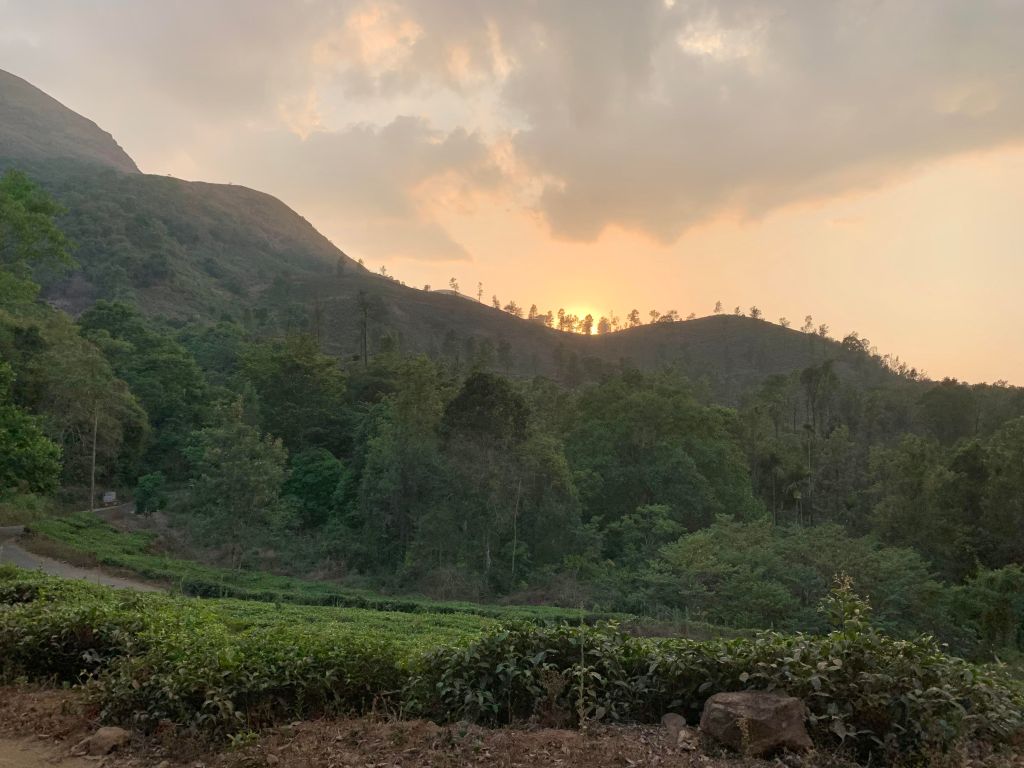
Chembra stands out imperceptibly in the background as the mist descends over its northern side. The driver of the rickety auto-rickshaw in which I make the topsy-turvy trip from Kalpetta settles to drop me at the backpacker’s hostel at Chembra’s foothills for 500 rupees. A vast tea estate stretches out for as far as the eye can see, and it is only when one edges closer to the property’s north-western precipice is any semblance of Wayanad encountered. 

Originally a hospital set up by the British in the 1920s, the hostel is a renovated colonial-style structure with a vast corridor that runs parallel to its rooms. I learnt much later that the tea estate that houses the hostel is spread over 700 acres. The fall to the northwest is spectacular, with hills in the lower range of the Western Ghats basking in the late evening sun as it makes its way down to the low-country orbs of Mysore and Chamarajanagar.

It is no surprise that one has to cross Bandipur to reach Wayanad in the first place; any easier and one would have been tempted to think that one was within the anonymity of civilisation.

*

Earlier in the day, the elephants that I spotted from an unobtrusive window on the bus from Mysore seemed triumphant and exultant — for what I did not know. The egret that sat contentedly upon the shoulders of a rather guileless water buffalo winked at me as I struggled to bring my camera out of the mishmash that my backpack had become. I was reminded of an older boy with whom I never got along in school and who often bullied me for the pancakes my mother painstakingly packed. 

*

I am forced to snap out of this reverie when my hostess reminds me that elephants were spotted at the southern expanses of the property a few days ago. She asks me to not step out after dark. In the common area boasting of a sit-out on a makeshift tree house, a motley crew from all hues of life rejoice at what appears to be a joint venture launched by a businessman from Bangalore and an engineer from Bombay. I join the pack and am welcomed by a loud cheer.

John, a chartered accountant who rode all the way from Coimbatore on his imported motorcycle, recounts having seen a leopard when turning in one of the several snaking curves when climbing from Kalpetta. He slurs as he articulates and his eyes appear bloodshot; I know only too well to separate the wheat from the chaff. Advait, a veterinarian from Anantapur, rebuffs everything that John says and vociferously advocates for an early dinner. He is, quite promptly, turned down.

*

The trek towards the peak of Chembra is made through the heartland of the eponymous forest range. Langurs peer out inadvertently while a flying squirrel makes an appearance from its cosmic abode. Catching sight of me and my companions’ incongruously sunscreened visages, it jumps shyly onto the double-storied Bo where it has made its home. Murali, the young forest officer who accompanies us jokes with Estelle, the German lady who quite fortuitously chooses to trek in her Birkenstock footwear, about sightings of bears in the vicinity but restrains himself when she turns ashen white. 

The heart-shaped lake peeks with unabashed curiosity as we huff and puff our way up to the midway point of the trek. To our great consternation, this is where we have to end our trip as the summit of the peak is sealed off by the government. A few years ago, Murali tells us, a group of nincompoops who made it to the summit lit a couple of cigarettes to celebrate. They did not, however, stub them when they were done. What happened next is well documented — a forest fire of gargantuan scale that wiped out about 60 hectares of forest land and claimed the lives of hundreds of wild animals. The summit has been off-limits to travellers ever since. 

The parched outcrops that surround the lake by no means diminish the panorama that lies to the west. A faint countenance of the vast fields of tea and paddy which fortify the district of Wayanad is visible through the mist. It is almost noon, but my companions and I find no reason to shed our coats. Specks of Mohit Chauhan’s Phir Se Ud Chala[1] fill the air; it feels as if Chembra herself has come to life. 

It is not exactly wise, but we surrender to the lure of lying down on the grass and bask, cocooned by the benevolent gaze of Chembra. Dark clouds brew overhead but Begum Akhtar reassures us in her palliative voice, and it is not before the first drops fall on my forehead that I alert the others over our predicament. Unsurprisingly, I find that most of my friends had nodded off, obliged by the exercise and the accompanying iridescent breeze. 

*

The descent, as always, is trickier than the climb, and we take refuge from the rain under a giant rock midway. The shelter is insubstantial for a group of ten, and we end up getting soaked to the skin anyway. Murali, rather ingeniously, offers his service raincoat to Estelle. Much to his chagrin, she declines, and continues unabated in her soaking t-shirt, Nike track pants and Birkenstocks. Someone mentions a childhood spent in the Bavarian Alps…

Dry leaves fall from the trees — these untimely showers ensure that they are not held on to their material comforts for long — and the fauna we encountered on the way up seemed to have disappeared. The langurs call out occasionally, but the mynahs respond in dulcet tones of their own. 

Drenched to the core yet alive beyond measure, the rain loses significance as we meander down the trail. Consciousness makes itself felt in every cell of my body as I lumber past the sludge and try to find a foothold on the wet tracks. Awake to the moment and mindful of not slipping — essentially holding my life in my hands — I experience a pacifying sense of tranquillity that I normally associate with timing a straight drive back past the bowler on a cloudy afternoon at the Gymkhana.

Damp pathways mark our way back to the hostel. On the way, an appetising breakfast of puttu and kadala curry[2] is sought to calm our nerves. A gulp of tea, brewed from the plants of the estate on which our hostel stands, soothes and brings some warmth back into our bodies. After that, we sleep all afternoon. The 1980s restaurant at this point serves as a reputable hotbed for the exchange of accounts as fellow travellers make their way upcountry for further investigation. Krishnagiri, Edakkal, Banasura and even Ooty, among other places, feature on their itinerary. Buses out of Meppadi take the circuitous route towards Sultan Bathery via Kalpetta. A few companions remain as I make the hike back to the hostel. 

Last vestiges of the raindrops from earlier in the day cling on with pride on the tea leaves. Seen from a distance as we walk up the bend onto the track that leads to the hostel’s gates, it appears as if the leaves have shed tears of their own. 

The sky turns a dull shade of orange, almost as if playing testament to friendships made and attachments uncovered. I am content enough to watch the sunset over the lower Western Ghats as another pre-monsoon drizzle wafts in. Someone mentions a fresh batch of pazham pori[3] being made in the kitchen. I scramble down the tree house to beat the rush.

[1] Song from Bollywood movie, Rockstar. Translates to: He flew again

[2] Local fare. Rice cake and spicy chick pea curry

[3] Banana Fritters

Mohul Bhowmick is a national-level cricketer, poet, sports journalist, essayist and travel writer from Hyderabad, India. He has published four collections of poems and one travelogue so far. More of his work can be discovered on his website: www.mohulbhowmick.com.

PLEASE NOTE: ARTICLES CAN ONLY BE REPRODUCED IN OTHER SITES WITH DUE ACKNOWLEDGEMENT TO BORDERLESS JOURNAL. 

Click here to access the Borderless anthology, Monalisa No Longer Smiles

Click here to access Monalisa No Longer Smiles on Kindle Amazon International

Categories
Slices from Life

The Theft of a River

By Koushiki Dasgupta Chaudhuri

I often watch colleagues’ faces fill up with incredulous wonder when I talk about my childhood home. Most of them come from concrete jungles and can never imagine a childhood in the suburbs surrounded by coconut trees, ponds and vast green expanses.

When I mention the pond behind our house and the bamboo forest across it, they envision some sort of a utopian tropical paradise. Only, the pond isn’t much of a pond. It’s more of an algae infested sinkhole that turns into a breeding ground for mosquitoes every rainy season. When I was small, my babysitter had once ventured to swim in it and had rapidly retreated as burning red rashes started spreading all over her body like molten lava. Another time our help had been bitten by a non-poisonous snake while trying    to wash some rags in its murky green depths. It was almost as if the pond had cast the curse of the Erinys[1] upon us for decades of crimes against the natural order.

When I was smaller though, before the pond started to spew out its vitriol in a volcanic rage,     people fished there regularly. Often, I used to wake just before dawn hearing the fishermen call out to each other in the dark. My earliest memories of an alarm clock consist of the splashes they made as they went below the surface. As I would struggle to raise myself from the depths of a carefree child’s slumber, the men would dive into the turbid waters to retrieve the net    they had fastened the day before. The sun would move across the sky to keep shining on my face   till I could no longer pretend to my mother that I was asleep. I would wake up and sit with my books near the window, my attention being taken up by the huge steel drums in which the fishermen would bring in their day’s haul. Some days, our neighbours would offer my mother some fish if it was a good catch. My mother, with her obsessive hygiene and sanitary practices, would always politely refuse. By that time, the entire neighbourhood had started using the pond as the veritable dumping ground for all their leftovers. Waste management? What is that to people living in cramped bamboo houses in alleys too narrow for garbage trucks to enter!

But it wasn’t always like this, or so I have heard. Among other things, me and my mother share the same childhood home. When my mother was small, she used to swim a lot in the pond herself. Only it wasn’t a pond back then. Back then when there were a lot less bamboo houses and a lot more bamboo trees, the pond was a river. My father had once shown me an old newspaper advertisement which talked about the theft of a river. Eight-year-old skeptical me had wondered aloud, ‘How can someone steal a river?’ My father had explained that people had filled the river with sand, earth, rubbish wherever they could to gain a bit more land to live on. I had wandered about the other ponds in the area and slowly understood that it is possible to steal rivers, oceans, earth, even the air   we breathe. I also understood that sometimes theft can be a gradual process. I stole the pond a little  every time I threw my wrapped sanitary napkins into it under the cover of darkness. My neighbour stole it a little more the day he decided to give up fishing and open a cycle repair shop instead. In his defence, the pond had also stolen his livelihood, bit by bit, till one day it simply became unfeasible to sustain a wife and a kid on the meagre fishing yield.

The problem with gradual theft is that you can never tell when it’s over. When did the river turn into a pond? Was it the day the pankouris[2] stopped splashing about in the water? Or will it be the day when the last person forgets that this tiny strip of waterbody was once a mighty being joining the Ganges? It won’t be today, or maybe even fifty years from now, but eventually my descendants will one day look at the grazed land behind my childhood home and struggle to remember what lay there. Maybe the name will come to the tip of their tongues and dissolve – “Shonai Nodi”, a lovable river. In Bengali homes, “Shona / Shonai” is often used as a nickname, an endearing term gifted to children by ailing grandparents. I wonder who had bestowed this name on a river. Were they naïve enough to hope that the name would save it? Ageing parents around the world are thrown away to gather dust in old-age homes everyday. How then would a river survive, even one with a mawkishly sentimental name?

It has been a long time since I used to sit down with my books near the window and watch my beloved “Shonai Nodi”. The bamboo houses are almost all two-storied cement buildings now. I listen to people in the neighbourhood complain of the unbearable heat as they proceed to install their second or third air conditioner. Old women gather at dusk and wonder why living near a pond is not cooling their houses as much as it used to do twenty years back. They dump all their household waste in the water while wondering where all the kingfishers have disappeared. The alleys have become more cramped now with new buildings, each vying with the other to occupy just a bit more space. I see people looking hungrily at the narrow sliver of water left. I am perpetually afraid that one day I will return and see a bustling road there. Perhaps then finally the garbage trucks will be able to enter. And my successors will laugh when I tell them the story about the road that was a pond that used to be a river.

[1] The Erinyes (Furies) were three goddesses of vengeance and retribution who punished men for crimes against the natural order. 

[2] Pankouri – Black cormorant, a fish-eating bird found mainly along the inland waters of the Indian Subcontinent.

Koushiki Dasgupta Chaudhuri is a software developer by profession. In her free time, she likes to read, write, travel and occasionally to try to shatter glass ceilings.

.

PLEASE NOTE: ARTICLES CAN ONLY BE REPRODUCED IN OTHER SITES WITH DUE ACKNOWLEDGEMENT TO BORDERLESS JOURNAL

Click here to access the Borderless anthology, Monalisa No Longer Smiles

Click here to access Monalisa No Longer Smiles on Kindle Amazon International
Categories
Slices from Life

In Quest of Seeing the Largest Tree in the World

By Meredith Stephens

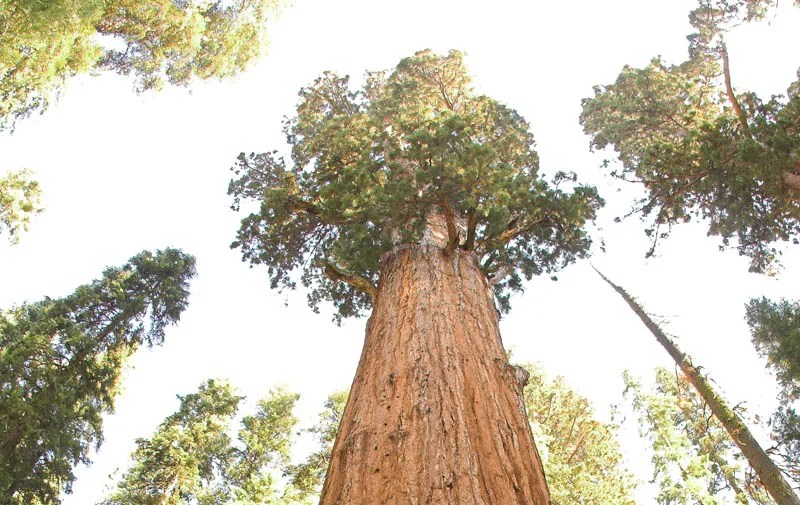
General Sherman: The largest tree in the world. Courtesy: Creative Commons

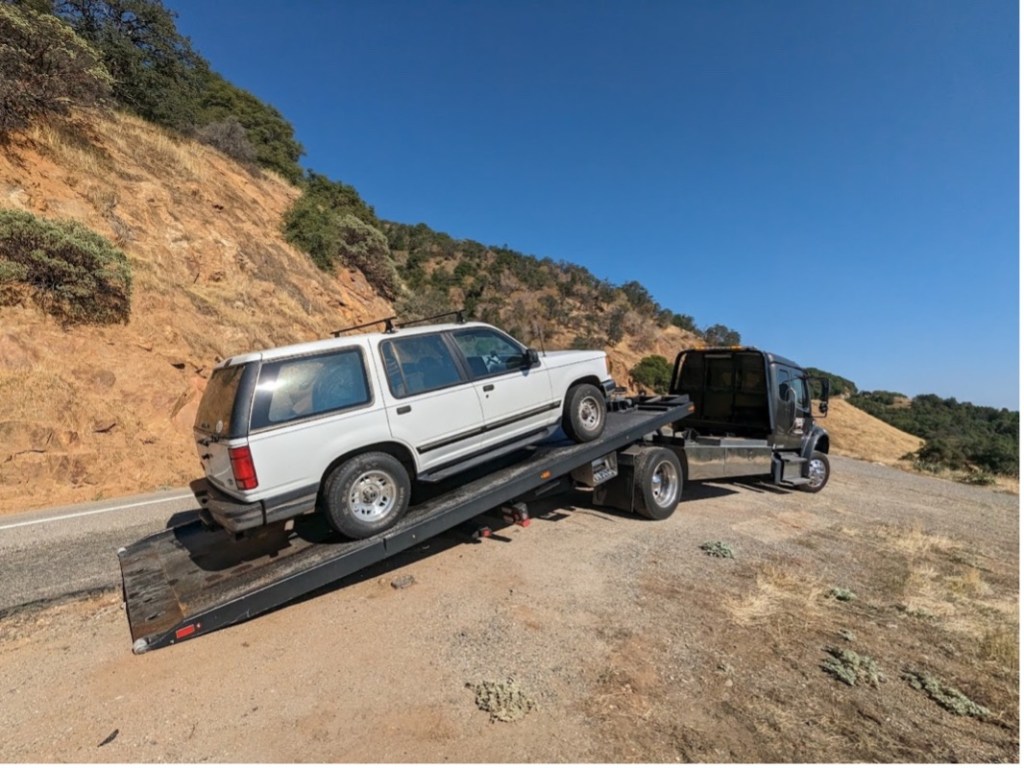
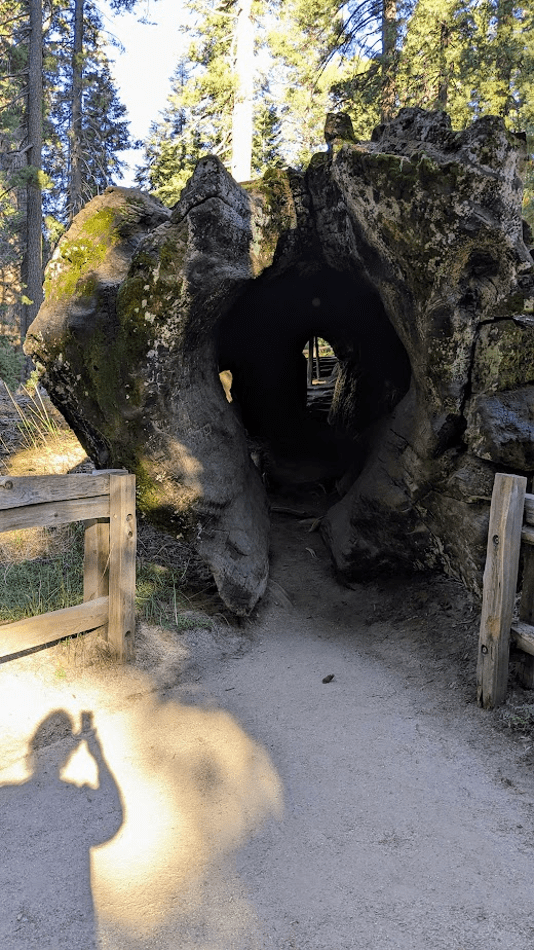
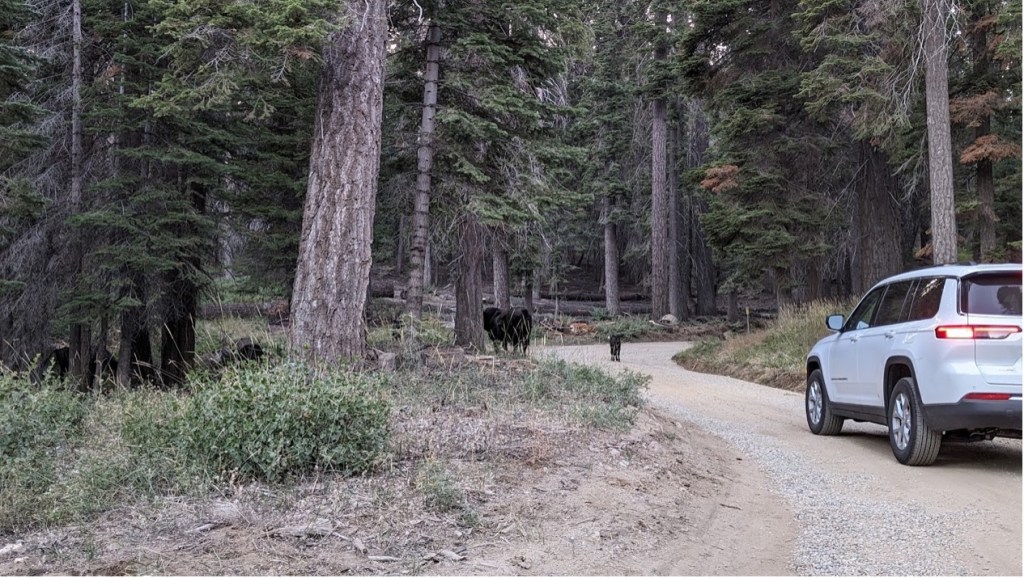
On our final day in California, we were looking forward to making the journey to Kings Canyon to see the largest tree in the world, a giant sequoia 87 metres tall. We packed the car with eight pieces of luggage destined for Australia, into Alex’s 1993 Ford Explorer. It had served us faithfully for several hundred miles of touring in California for the previous weeks. We headed up the winding mountains to Kings Canyon, dotted with live oaks and cattle in the foothills. We were heading up a particularly steep section of the road when the engine faltered. Alex urgently pressed his foot on the accelerator but the car refused to budge. 

“I’ll try and push it,” I offered.

I positioned myself to one side of the rear of the car. If the brakes failed, I did not want the car rolling back and flattening me. The car did not respond to my urgings so I gave up. I noticed cars ascending the mountains at speed, and the blind corner ahead. I decided to walk uphill so that I could signal the cars coming up the hill to warn them of oncoming traffic around the corner. When there was a car descending the hill on the other side, I put up my hand to warn them to stop until it was safe. About twenty cars passed us this way, until one driver noticed our plight and decided to help us. He stopped at the turn-out, and two elderly couples alighted from the car.

“Hasn’t anyone stopped to help you?” the driver asked.

“You’re the first,” I replied.

The two men walked towards the car to help push it twenty metres to the turn-out.

“John!” called out his wife, trying to stop him. It obviously wasn’t safe for a man in his seventies to push a heavily laden car up a mountain ahead of oncoming traffic.

Meanwhile, a man in his thirties had joined the party. Another car stopped on the other side of the road. Two burly men with tattoos crossed the road to help push the car to safety. Alex, the elderly men, the younger man, and the burly men, joined forces to push the car to the turn-out. The car slowly responded and was eventually positioned off the road. The burly men crossed the road to return to their car, and the elderly men returned to theirs. The younger man remained with us.

Alex tried to call the automobile service but his phone had no reception. 

“Can I borrow your phone?” he asked the younger man. 

“Sure. By the way, it might be quicker to call a tow truck. I suggest getting a tow-truck from Reedley, because you will be able to rent a car there.”

We called the tow truck company in Reedley and they agreed to come in two hours. The young man, who turned out to be an off-duty ranger, took his leave. We grabbed our picnic items from the car, and headed downhill to the shade of a large live-oak, while we waited for the tow truck. Lying on the grass under the cool shade of the live-oak, enjoying our picnic items, I could almost forget that we were in a crisis. After an hour or two we thought we needed to be visible from the road for the tow-truck, so we returned to the punishing heat road-side, and soon the tow truck appeared. The driver expertly loaded the car onto the truck, and invited us to join him in the front.

“Careful. It’s very high up,” he warned.

Photograph by Meredith Stephens

I stretched my legs to reach each step to get into the front of the truck, and sat in the back seat, while Alex sat next to the driver.

Sitting in air-conditioned comfort high up with a view down the mountain was such a contrast to sitting in the old car, straining up the mountain. We reached the plains and passed through the hamlet of Squaw Valley before reaching Reedley. With only minutes to spare, we picked up a rental car, removed a few items from the Explorer, and drove back up the mountain. We wound our way past where the car had broken down, into the National Park, through dense forest and charred remains of forest fire several years ago. We followed the signs to our lodge, but our break-down had cost us several hours, and we did not have time for sights that evening. 

That evening, Alex checked the passports to confirm they were at hand for our departure to Australia the following evening. They were not in their usual place. We searched our other bags. Then we retrieved bags from the car and searched them too, to no avail. 

“We’ll have to call the consulate and get temporary passports,” I suggested. 

“First, we will have to retrace our steps. Maybe they fell out when the car broke down. Maybe they are still in the Explorer,” suggested Alex.

That night Alex could not sleep, worrying about the passports. What if we could not return to Australia the next evening and had to buy new tickets? The next morning he was still worried.

“We’ll have to look for the passports, retracing our steps from yesterday. We have no time to see the tallest tree in the world.”

“Do we have time to see the third to tallest tree in the world?”

“Yes. That’s only a fifteen minute detour.”

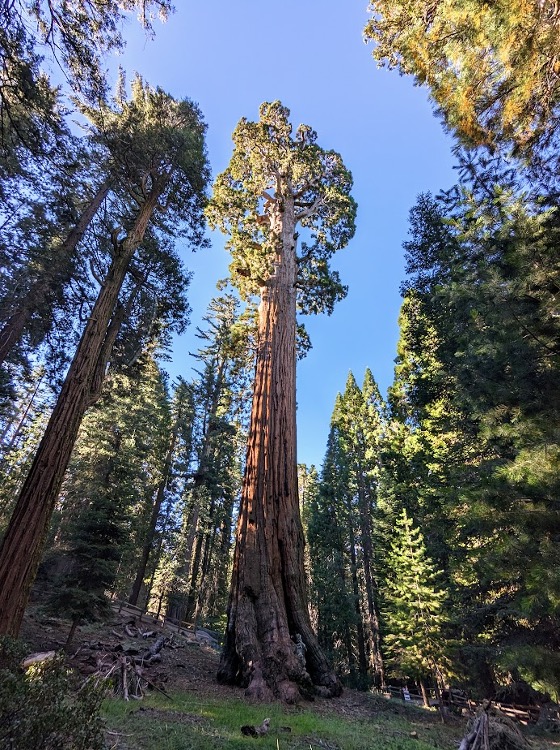
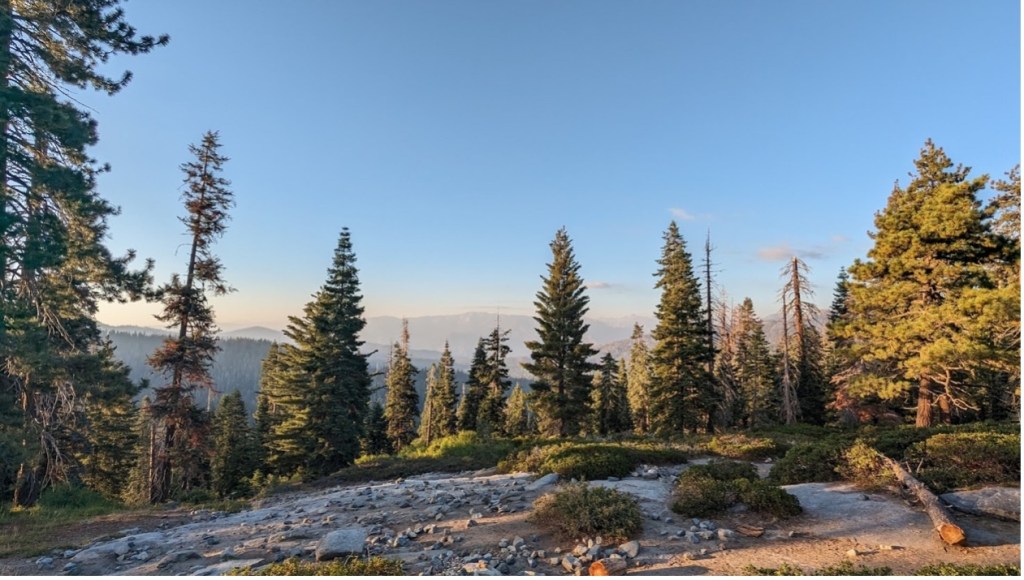
We drove to see the third to tallest tree in the world. As I started walking in the forest I immediately felt both exhilarated and relaxed. These giant trees provided a protective canopy and their scent sent a rush of well-being through my body. I was satisfied. Did I really need to see the largest tree in the world? Yes, but that would have to wait!

We hurried back down the mountain to search for the passports. We could not risk the possibility of not finding them just because of sightseeing. We reached the area of our break-down, and combed the grassy hill carefully in search of the passports, to no avail. Then we wound our way back down the mountain to the tow truck business. I received the keys from the office, opened the car door, and there were the passports on full display.

“Shall we go back to Kings Canyon to see the largest tree in the world?” I asked Alex.

“It will be ninety minutes to get back to the National Park, and then a five hour drive to the airport in LA.”

“I really want to see the tree, but I can’t face over six hours in the car. I guess we should head for the airport.”

“If we had known that the passports were here, we could have gone and seen the tree while we were still in the park,” lamented Alex.

With passports in hand, we did not need to visit the consulate to be issued temporary ones. We could catch the plane as planned. We were not able to see the tallest tree in the world, even though we had driven up the mountain twice. There was some consolation in the fact that the tree would be waiting for us, in years to come, when we had the opportunity to return to our beloved California.

Meredith Stephens is an applied linguist from South Australia. Her work has appeared in Transnational Literature, The Muse, The Font – A Literary Journal for Language Teachers, The Journal of Literature in Language Teaching, The Writers’ and Readers’ Magazine, Reading in a Foreign Language, and in chapters in anthologies published by Demeter Press, Canada.

PLEASE NOTE: ARTICLES CAN ONLY BE REPRODUCED IN OTHER SITES WITH DUE ACKNOWLEDGEMENT TO BORDERLESS JOURNAL

Click here to access the Borderless anthology, Monalisa No Longer Smiles

Click here to access Monalisa No Longer Smiles on Kindle Amazon International
Categories
Slices from Life

Belongingness and the Space In-Between

By Disha Dahiya

Humans are in a perpetual state of motion — be it intercity, interstate, or inter-country — and the relentless quest to assimilate commences. Embracing a new culture, blending seamlessly with the locals, and adopting regional slangs and accents become daily endeavours. In this race without a finish line, a persistent anxiety takes hold. “What if I don’t quite fit in?” “Will people forever perceive me as an outsider?” “Could I lose touch with my roots?” Trust me, this apprehension intensifies when one immigrates to a foreign land.

The inner conflict of belonging experienced in transcultural migrations casts light on the concept of cultural dysphoria. When I first encountered this term, it piqued my interest in how individuals navigate their daily lives while carrying this weight. Cultural dysphoria, a recent term, is an extension of the concept of dysphoria. EverydayFeminism defines cultural dysphoria as: “…the dissonance between the societal expectations for an individual’s broad cultural performance or identity and their desired embodiment of that culture, or uncertainty about where they fit into cultural categories.”

In simpler terms, someone experiencing cultural dysphoria feels like an alien in a new culture. They grapple with the space between two distinct cultures. While their mind urges them to embrace the tenets of the new cultural paradigm, their heart insists on preserving their native cultural heritage.

It was only recently that I comprehended how the concept of cultural dysphoria applied to both me and my family. This understanding took nearly two decades to crystallise, but as the adage goes, “better late than never.” Such realisation would not have dawned upon me without the pursuit of my Ph.D. thesis. Over time, I delved into novels penned by first-generation South Asian American writers such as Chitra Banerjee Divakaruni, Amulya Malladi, Naomi Munaveera, and Bapsi Sidhwa. These authors were born in South Asian countries and subsequently migrated to America. Their literary works often delve into the challenges faced by immigrant families in a foreign land. Reading allows us to explore the world, but essays and books also furnish a window through which we can empathise with someone’s narrative. Nevertheless, one’s own story offers a distinct and nuanced perspective. Indeed, first-hand experiences yield unique vantage points.

I was a mere eight-years-old when my father obtained Canada’s Permanent Residency Card, and our journey towards establishing roots in a foreign land began. As a second grader, comprehending that you’re about to traverse over 7,000 miles is no small feat. At times, the gravity of such a situation eluded me. On other occasions, I found excitement in the impending turbulence. It was exhilarating, even though questions like ‘why are we relocating?’ and ‘why must I leave my school?’ continually lingered in my mind, spanning the distance from Delhi to our future home in Calgary.

This is the nature of belongingness – it doesn’t instantaneously manifest if you’ve have never before contemplated the possibility of residing in a country far removed from your homeland. The initial step in transcultural migration involves recognition, transcendence, and integration. One must acknowledge the reality of transcending boundaries, leaving behind their original cultural heritage, and stepping foot in a foreign land with its own distinct cultural tapestry. I refer to this stage as ‘Acceptance’, as it encompasses a multitude of thoughts regarding one’s capacity to accept and be accepted within this new environment.

For my family, the journey of assimilation began the moment we exited YYC Calgary International Airport in November 2006. A friend of my maternal uncle’s son welcomed us—a network woven through connections—a common phenomenon in Indian culture. Connecting with familiar faces, who then introduce you to others, and this chain keeps expanding, is deeply ingrained in our cultural fabric. From being surrounded by individuals of a different ethnicity to grappling with the nuances of time zones, my family sought to adapt to our new Canadian milieu. Isn’t it peculiar how one day you’re in the tranquility of your home, and the very next day, you soaring through the skies, crossing international borders?

Recalling the sequence of events surrounding our immigration, nearly two decades later, is no simple task. Much has evolved, particularly my perspective on life. What once seemed normal has shifted, no longer aligning with my current perceptions. This is the natural progression of personal growth – forgetting, reminiscing, comprehending, and de-constructing. Each emotion makes sense in hindsight, guided by wisdom acquired over time.

At times, we relegate certain emotions to the shadows of our heart. We normalise the experience of residing in the in-between and the accompanying sense of non-belongingness, presuming it to be an idiosyncrasy. However, South Asian diaspora members share these particular sentiments of the in-between. We accept our role as outsiders among the locals, convinced that this is the way it should be, right?

Navigating the new environment while endeavouring to retain a strong connection to one’s roots becomes paramount when relocating to a foreign country. A part of me yearned to return to India to celebrate the Festival of Lights with those left behind, while another part was eager to explore innovative ways of preserving our culture and traditions amidst the bustling streets of a land predominantly inhabited by individuals of a different ethnicity.

During those years, Canada had not yet become the Mecca for Indian students pursuing higher education, as it is today. The immigrant community consisted mainly of those who had relocated in the ’70s or ’80s in pursuit of a brighter future for their children. Consequently, the Indian community was relatively smaller.

The question of belongingness emerged from as early as my first day at school. Where does one truly belong in a classroom of over twenty students with varied ethnicity? Among these students, four were of Indian descent, two hailed from Pakistan, one each from Australia and France, while the remainder were Canadian natives. Yet none of these students were unequivocally ‘Indian.’

The logical assumption might be that I belonged with the group of four Indian-origin students. However, this was not the case because, fundamentally, I was Indian. A subtle distinction lies between being Indian and being of Indian origin. It wasn’t a matter of passports; it ran deeper. I was too Indian to seamlessly integrate with non-Indians and just slightly more Indian than those of Indian origin. I existed as an ‘other’ amidst the ‘others,’ with the four Indian-origin students occasionally amused by my Indian accent. Emerging from a decent background, having received education in a convent school, initiating casual conversations with a simple ‘hey, what’s up?’ was effortless. Yet, adopting a foreign accent was not within my purview. My peers of the same age knew precisely when and how to employ phrases like ‘screw it,’ ‘for God’s sake’, I’m not interested,’ and ‘nahhhh…’ The only phrase that came to mind whenever I wished to express my lack of interest was ‘it doesn’t matter’. As a non-native English speaker, it was the most apt phrase I could muster. Apparently, seamless alignment in terms of accent, language, and communication is pivotal to establishing friendships in a foreign land. Failure to do so results in being cast aside as an outsider.

The nagging thought that permeated my family’s collective consciousness during those early days in Canada was this: Do we belong here among people who do not perceive us as one of themselves? We had successfully traversed the initial stage of transcultural migration. Consequently, the second stage — which I’ve labelled ‘Non-belongingness’ — became a pivotal moment, shedding light on our lack of alignment with both people of Indian origin and non-Indians. Our cultural identity remained a poignant question mark, casting a shadow over our Canadian experience.

For my father, commuting to work entailed a daily two-hour journey to and from his workplace. Occasional weekend outings, mostly for groceries, marked the extent of our excursions. Indian suits were my mother’s customary attire, but how long would that persist? After a few months, she transitioned to wearing jeans and long shirts. While Indian suits exude grace and elegance, she lamented the difficulty of blending in. “Passing by a row of foreigners while wearing a salwar kameez is a daunting task; one becomes the subject of unwarranted stares,” she confided. Her eyes betrayed a longing for the life she left behind in India, where she could choose her favourite salwar kameez and embellish it with the most exquisite dupatta in her wardrobe without attracting undue attention. I sensed her yearning for India, particularly when my maternal grandfather — whom I affectionately called Nanu — phoned. Each call filled her with joy, and her countenance radiated even more than usual. Perhaps Nanu sensed her yearning to return, which manifested as glistening tears on my mother’s cheeks.

Life in Canada was a far cry from what it used to be in India. As Diwali approached, I eagerly anticipated the deluge of sweets and gifts that would typically inundate our home in India. However, that year, those customary tokens of celebration were conspicuously absent, a stark reminder that we had yet to establish a substantial social network in Canada. Everything had changed. People in Canada appeared disinterested in the Festival of Lights. It was just another day for them. Some were engrossed in preparations for Christmas, while others seemed oblivious to the existence of Diwali, India’s most eagerly awaited festival. With no candles adorning our home, no gifts to fuel our excitement, and nothing resembling the grandeur of an Indian Diwali, our spirits plummeted upon realising that we had yet to sever our emotional ties to our culture. It was a perplexing sensation. While I yearned to embrace the festivities of Christmas, the absence of enthusiasm for Diwali contrasted starkly with my Canadian expectations. I believe my parents experienced a similar sentiment because on that day, an uncharacteristic sombreness shrouded our smiles. We smiled for each other, but the glint in our eyes bespoke our longing for our true home, India.

In this narrative, where did we truly belong? Some may argue that we belonged where we resided at that moment, while others might reflect on their immigrant experiences and ponder their sense of belonging. This is where the bitter realisation of cultural dysphoria takes root. The inability to fully integrate into a foreign land, the feeling of being an outsider, and the disconnect between cultural expectations and reality culminate in a dysphoric sensation, marking the onset of the third stage in an individual’s transcultural migration journey. At this juncture, it becomes imperative to recognise that while certain aspects of one’s former culture must be relinquished, others must be preserved. I refer to this third stage as the ‘In-Between.’

The third stage of the transcultural migration experience delineates the unique space an individual occupies, betwixt and between two cultures. As immigrants, we embraced certain facets of the new culture while shedding some of our own, and vice versa, to carve out a niche that could accommodate and harmonise both cultures. Within this ‘In-Between,’ a new persona emerged. We remained too Indian for the world outside, yet our hearts affirmed it was for the best.

That year in Canada unfolded with a plethora of surprises. And then, we returned to India. But that’s a story for another essay!

The feeling of cultural dysphoria is far from uncommon. A majority of migrants grapple with the turmoil of cultural conflicts when transitioning to a new country. While this narrative offers a glimpse into how transcultural migrations can affect an individual, there exist countless other stories waiting to be shared with the world. In the area of transcultural migration, each thread tells a unique story, and my narrative is but one strand in this rich fabric of human experience. As my family and I navigated the in-between of two cultures, I am reminded that our journey is a testament to resilience, adaptability, and the enduring power of cultural identity. While the road may be fraught with challenges, the experience has imbued us with a profound appreciation for new cultures. Cultural dysphoria may cast its shadow, but it also offers a canvas for personal growth and understanding. It is my hope that by sharing our story, we illuminate the path for others embarking on similar journeys and foster a deeper understanding of the intricate web of the transcultural in-between.

Disha Dahiya is a PhD Research Scholar in English Literature. She has a keen interest in exploring the South Asian narrative across borders and boundaries while focusing on the cultural aspect of transcultural migrations.

.

PLEASE NOTE: ARTICLES CAN ONLY BE REPRODUCED IN OTHER SITES WITH DUE ACKNOWLEDGEMENT TO BORDERLESS JOURNAL

Click here to access the Borderless anthology, Monalisa No Longer Smiles

Click here to access Monalisa No Longer Smiles on Kindle Amazon International
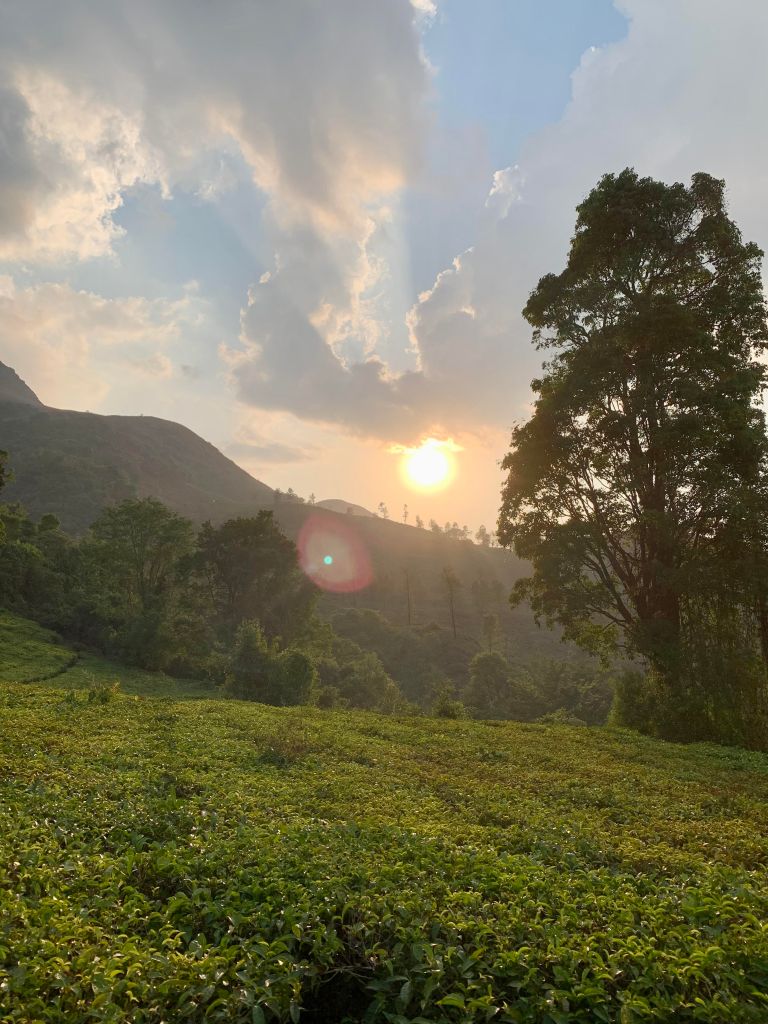
Categories
Slices from Life

Onsen and Hot Springs

Meredith Stephens explores Japanese and Californian hot springs with her camera and narrative.

One of the pleasures of living in Japan is taking a dip in the hot springs, otherwise known as onsen. Although I lived in Japan for more than twenty years, it was ten years before I could bring myself to regularly visit an onsen. This is because I could not bring myself to accept the notion of communal (albeit segregated) nude bathing, which would be taboo in the West. My long-term expat English friend in Japan continued to entreat me to visit the onsen, and so I eventually capitulated. Would everyone in the onsen be slim, and would they look down on a curvy westerner? Would I attract glances because of my physical difference? I visited one of the many onsen in Matsuyama with my two daughters. Nobody appeared to look at me. The onsen was not full of young slim women. There were many elderly and infirm in the onsen. Maybe the young were already healthy, and they did not need to visit an onsen.

There was a wide range of pools at the onsen. One had a walking pool, in which you walked anti-clockwise. Another had pools with jets that could be turned on to massage your back, a carbonated pool, and stone beds to lie on while watching a television screen placed on the wall which faced you. Another had an outdoor area, with separate bathtubs, a communal pool, a communal cold pool, and a pool inside a cave. There was also a sauna. Inside was a bucket of salt. You could scoop some salt out of the bucket and throw it over your shoulders. There was a clock in the sauna. I could not bear to stay in as long as the other patrons and would sometimes let myself in the door and then walk straight back out again.

I made up for the ten years of not visiting the onsen by becoming a regular patron, usually visiting at least once a week. I returned to Australia at the beginning of the pandemic, and one of the many things I missed about Japan was visits to the onsen. The next time I was able to visit an onsen was over three years later, on a visit to California.

My companion Alex and I drove from Shaver Lake to Mono Hot Springs Resort, both in the Sierra Nevada. We wound up the mountains through the site of the Big Creek Fire. On each side of the road were charred tree trunks.

Huntingdon Lake, California

As we drew closer to the resort, we turned onto a narrow road with large granite boulders on each side. Dump trucks charged towards us, and we took shelter in the many turn-outs.

After this hair-raising drive we arrived at our destination at 4 pm. We collected the key to our hut from the office and made our way there. I remembered an experience from an onsen resort in Japan, where patrons boasted how many times they had bathed in the various pools, and decided I would do the same at this Californian hot spring. We consulted the map and decided to visit the bath house. We had purchased swimsuits for this purpose. In Japan being clothed in an onsen is taboo, but in America it is quite the contrary. The first thing I noticed outside the bath house was the sign saying, ‘No Dogs Allowed’.

Why would you bring a dog into a bath house? In Japan, I had seen a sign saying, ‘No-one with tatoos can enter’, but never — ‘No dogs’.

I entered the bath house expecting to see large communal pools as in Japan, but instead discovered individual showers and baths in separate rooms with doors that could be locked. Apparently, the water was piped into the bath house from the source across the valley. Next, we decided to cross the valley to take a dip in one of the outdoor springs. In order to cross, you had to wade through a river gripping on to a rope, and tread across river rocks.

Alex went ahead of me, and I slipped into the icy cold water onto the river rocks. I tried to grasp the rope, but it eluded me. After several attempts, I managed to grasp it.

“Alex! Help!” I shouted.

I was aware of the glance of onlookers on the rocks witnessing my panic. Alex climbed onto the rock on the other side, extended a hand, and pulled me to the other side. The onlookers offered words of encouragement. We walked across the granite rocks and up the grassy hill, to find El Padro baths. Other bathers kindly and unnecessarily stepped out of the bath to offer us a place. Unlike Japanese baths it was muddy underfoot. We bathed there for twenty minutes, then continued up the grassy hill to the Iodine Bath.

This was similar to El Padro. We bathed here for another twenty minutes and chatted to a fellow bather. Then we headed back to our hut, this time walking a considerable distance out of our way in order to cross the bridge rather than wade through the river again.

The next morning, we decided to return to the baths before breakfast, in the hope of having them to ourselves. We went back across the bridge and headed up the grassy hill to the mud bath. The mud bath was shallow, just deep enough to sit in. The base of the pool at one end felt like grains of granite, and at the other end soft slimy mud. We could feel the heat pulsing from the edge of the pool. We spread mud over our neck, shoulders and legs, soiling our new swimsuits. We lay in the pool for twenty minutes enjoying the sensation of the warm mud on our bodies. Then we stepped out and washed the mud off in a metal bath.

We returned to our hut to wash off the rest of the mud, and rest, before visiting another pool called Li’l Eden. We trudged up the road in the sunshine for about thirty minutes, before spotting a downhill path leading to the pool. The path turned into a steep granite decline. A rope had been placed there to assist in ab-sailing. I had never ab-sailed before, but I followed Alex’ example, placing the rope in between my legs, clutching it, while carefully placing my feet in suitable footholds. I descended safely, albeit with muddy sleeves and sodden shoes. We spotted Li’l Eden and entered. It was a large muddy pool. If I sat on the mud at the bottom of the pool, I could feel the heat pulsating through the mud. After luxuriating in the mud, we hopped out and decided to return to the hut via the path and cross the river, rather than the bridge. We trod through the long muddy grass back down the hill. This time, instead of wading through the river across the river rocks to get to the other side, we decided to walk along a log which had been placed there for this purpose. What if I fell into the cold waters below? At least the log was a shorter distance than wading through the river holding the rope, so I decided to try. I quickly placed one foot in front of the other and a few seconds later I was safely on the other side.

We had two lengthy conversations with fellow visitors, and what struck me was that both of them said that this was their favourite place in the world. One said he had come here over one hundred times and preferred it to more famous destinations such as Yosemite and Kings Canyon. The other said she loved it so much that she spent her entire summers here. (In winter the road is closed because of the snow.)

I’m glad I had the chance to visit Californian hot springs after having spent so many years visiting Japanese ones. The latter are much more manicured. Each bath has a unique quality, and clothed attendants come in regularly to test the water quality. The Californian hot springs were more rustic. Other than the bath house, they required physical effort to get to each one, and the floor of each springwas unsealed. Many bathers had tattoos, but this was unremarkable. Both the Japanese onsen and the Californian hot springs are charming in their own ways. Yet, it was only because I had succumbed to the encouragement of my friends in Japan to indulge in frequenting onsen that I had braved the almost inaccessible roads to reach Mono Hot Springs in California.

Meredith Stephens is an applied linguist from South Australia. Her work has appeared in Transnational Literature, The Muse, The Font – A Literary Journal for Language Teachers, The Journal of Literature in Language Teaching, The Writers’ and Readers’ Magazine, Reading in a Foreign Language, and in chapters in anthologies published by Demeter Press, Canada.

PLEASE NOTE: ARTICLES CAN ONLY BE REPRODUCED IN OTHER SITES WITH DUE ACKNOWLEDGEMENT TO BORDERLESS JOURNAL

Click here to access the Borderless anthology, Monalisa No Longer Smiles

Click here to access Monalisa No Longer Smiles on Kindle Amazon International