Categories
Review

Of the Raj, Maharajas and Me

Book Review by Bhaskar Parichha


Title: Of the Raj, Maharajas and Me

Author: MA Sreenivasan

Publisher: Speaking Tiger Books

This is a delightful book for two reasons: One, it is a reminiscence of a civil service official with the princely state of Mysore and Gwalior, and later with the government of British India. Secondly, the stream of language and the lucidness with which the author has penned his recollections is remarkable. What is more, it reflects on the administrative practices of the former princely states of India.

M.A. Sreenivasan (1897-1998) lived through almost the entire 20th century and was among the very few people who witnessed at close quarters the enormous changes that took place in India during this period. Born in Madras, he belonged to a family that traced his subsequent generations of Pradhans (ministers) of successive kings of Mysore for 150 years. Sreenivasan joined the Mysore Civil Service in 1918 and, after a varied career both with the Mysore Government and the Government of British India. He became a Pradhan of the Maharaja of Mysore in 1943. In 1947, he was invited by the Maharaja of Gwalior to become the Dewan of that State. During that momentous year, he was a member of the Constituent Assembly of India and in regular touch with many of the leading figures (including Mountbatten) involved in the transfer of power from British to Indian hands.

Much more than an autobiography, the book is a rare portrait of India during and immediately after the British Raj. The princely States of India have been neglected by scholars, many of whom have tended to be unfairly critical. There is much in this book on the effectiveness of administration in two major princely States. It redresses the balance and makes the book a valuable document on the subject. Further, Sreenivasan provides sharp insights into the negotiations that led to the end of the Raj, and into the new polity that emerged after Independence. 

Writes Sreenivasan about Louis Mountbatten: “I had seen and talked to Mountbatten at lunch parties in Viceroy’s House and meetings of the Chamber of Princes. Tall of stature, with an enviable reputation as Supreme Commander of the Allied Forces during the War, he impressed everyone with his fine personality and pleasing manner. Standing on the dais that day, wearing his bright, white naval uniform, festooned with medals and decorations, he addressed the gathering as Crown Representative of His Majesty, the King of Great Britain, his cousin, and spoke of the King’s concern for the Princes of India with whom the Crown’s long-standing associations and obligations were soon to come to an end.”

Elsewhere in the book he writes about Sir CP Ramaswamy Iyer: “He was a remarkable man. Endowed with a fine personality and a keen intellect, he was learned and brilliant, an eloquent speaker, and a brave and dynamic administrator. In his early years, he was a much sought-after lawyer and one of the first, most ardent, champions of Home Rule for India. CP, as he was called by friends, was among the leaders and statesmen whose views were sought by successive British missions. He did not, however, take part in the Constituent Assembly or its committees. I knew he had plans of making Travancore an independent maritime State. I had always held him in esteem as a distinguished elder statesman and called on him at Travancore House in New Delhi, asking him why he had not agreed to the accession of Travancore.”

Write Shashi Tharoor in the foreword: “This book is simultaneously an exploration of the region’s glorious past and present and a memorable personal history, tracing Sreenivasan’s life and career, which was as challenging as it was deeply interesting. From the ups and downs of local politics to navigating the bureaucracy of nascent independent India, not to mention moving forays into Sreenivasan’s home life particularly relating to his beloved and constantly supportive wife, Chingu, there is little that is not covered. The reader follows the author through his myriad journeys, from Mysore to New York and London, to the Chambal Valley and beyond.”

The last few chapters of the book are notable. Whether it is the merger of the princely states or Prime Minister Nehru, Sardar Patel and the two Nobel laurates- CV Raman and Dalai Lama – Sreenivasan’s chronicles make for an absorbing read.

In the epilogue, he writes: “The years have witnessed revolutionary changes in India. There has been impressive progress in many directions and many remarkable achievements. The scourge of smallpox and plague has been eradicated. The shame of human beings carrying night soil has ended in many cities and towns. Infant mortality has been reduced, and life expectancy enhanced.

“The production of food grains and other needed crops has vastly increased. Thanks to generous foreign aid and increased revenues, huge dams and reservoirs have been built. Hydro-and thermal power generating stations installed. An industrial revolution has taken place. Thousands of mills and factories turn out myriads of products, from cotton cloth and silk to telephones, television sets, computers, locomotives, motorcars, and aeroplanes. Transport and communication have also been revolutionized. Scores of universities, hundreds of engineering and medical colleges and research institutions have been started and equipped. India can boast of having perhaps the largest surplus of scientists and technologists in the world for export. But progress has not come with both hands full. With great gains have come great losses. An irreparable loss is the grievous vivisection of India.”

This captivating life story will be of particular interest to students and scholars of modern Indian history as well as the general reader.

Bhaskar Parichha is a journalist and author of UnbiasedNo Strings Attached: Writings on Odisha and Biju Patnaik – A Political Biography. He lives in Bhubaneswar and writes bilingually. Besides writing for newspapers, he also reviews books on various media platforms.

.

PLEASE NOTE: ARTICLES CAN ONLY BE REPRODUCED IN OTHER SITES WITH DUE ACKNOWLEDGEMENT TO BORDERLESS JOURNAL

Click here to access the Borderless anthology, Monalisa No Longer Smiles
Categories
Review

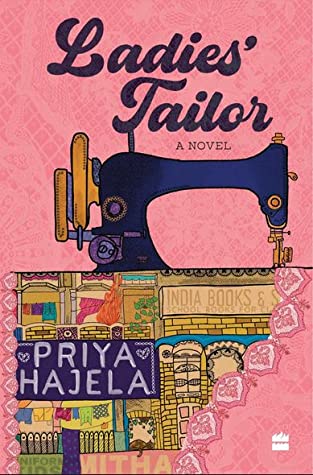
Ladies Tailor

Book Review by Somdatta Mandal

Title: Ladies Tailor: A Novel

Author: Priya Hajela

 Publisher: HarperCollins

Seventy-five years after the Partition of India took place, the cataclysmic event on both sides of the country — in Bengal in the East and in Punjab in the West — has fuelled research on the trauma of migration, loss, and resettlement, and the interest in the theme is still proliferating today. It is interesting to note that apart from documentation through innumerable non-fiction and memoirs, stories of grim reality of the Partition as documented in stories by earlier writers like Sadat Hasan Manto or Khushwant Singh’s Train to Pakistan, the interest on the theme remains unabated even today. The only difference now is that with the passage of time, writers are often relying on memory of the Partition as narrated by their ancestors firsthand, or through books, films and documentaries in a new sort of writing that blends fact and fiction and try to use the background events of migration and displacement into stories of resilience, grit, and people rebuilding their lives anew after crossing borders as refugees with even more stamina.

Priya Hajela’s debut novel Ladies’ Tailor is an attempt to recreate the story of the actual Sikh migration of her paternal grandparents Bakshi Pritam Singh (Papaji) and Beant Kaur (Biji) who left their home in Harial Gujarkhan (Pakistan) and made a new life in Ludhiana, Punjab. Dedicating the book to them, she mentions in the foreword how the places she has written about in the novel – Delhi, (Nizamuddin, Patel Nagar, Khan Market, Shahdara, Kingsway Camp), Lahore, Amritsar and Sukho are all real, but many elements are fictional. All these places provide the setting needed to tell the story, many details imagined and manipulated based on the needs of her characters. Ladies’ Tailor is a story that captures a setting and a group of characters that represent the immigrant and the refugee spirit, the optimistic spirit of never giving up on what you want and a spirit of adventure and entrepreneurship that to this day is the driving force in Delhi and Punjab.

The novel begins primarily with the protagonist Gurdev, a Sikh farmer who had deliberately moved from his parent’s house in Lahore to settle and work in a remote village called Sukho for ten years where all the religious communities lived in harmony and led peaceful lives. It took a lot of time for people to realize the Muslim-Sikh violence in the village that began around 1946 and that resulted in fear, hatred, insecurities as real and when large-scale massacres, butcheries, annihilation of entire clans, that was beyond Gurdev’s imagination happened, and he participated like everyone else. He made a brief visit to Delhi where he judiciously deposited cash with different people so that he could use it later. When he finally decided to migrate to India along with his wife Simrat and their two children, he could not convince his parents in Lahore to join them as they were determined never to leave Pakistan, the birthplace of their gurus.

After braving the horrific massacres and ordeals along the way, Gurdev landed up at Kingsway Camp in Delhi only to reach safety and find new problems ahead of him. Not only is he determined to make a fresh start for himself, his wife and sons, but he proves to be quite a meticulous, strategic planner and motivator for fellow refugees in the camp. Simran, the all-enduring and never complaining type of wife, turns sick and is admitted to the hospital and by the end of the ninth chapter, she silently disappears after that when Gurdev hands her some ornaments that his mother had given her. We don’t hear from her again as well as the two sons who accompany their mother.

Though taken aback, the indomitable Gurdev takes it all in his stride and tries to concentrate on his business and survival instincts. He befriends two sardars, Nirmal Singh, a Ladies’ Tailor, and Sangat Singh, and convinces them to start a business venture for readymade and customised garments of Khadi, an affordable hand-woven fabric preferred by women in the refugee camp and for those who wouldn’t like to wear British fabrics and wanted only ‘Made in India’ clothing. He sets up shop in the upcoming Khan Market, provided by the government in lieu of his land in Pakistan, forms a partnership with a trader in Shahadra to supply superior quality Khadi exclusively to them, and together the four of them start attracting a steady clientele, with Noor, a Muslim war widow from nearby Nizamuddin, as their brand ambassador. Hajela focuses on interfaith camaraderie with intricate details about how survival strategies result in Hindu-Muslim marriages and how names are changed to remain safe in the community.

The next move in the plot comes when Nirmal, the tailor, is somehow dissatisfied with the output because his clothes lack ornate embroidery work, a very important embellishment that used to make his outfits stand out across the border in Lahore. He wants a special sort of embroidery on their garments that was the kind crafted by two orphaned boys in Lahore, who he had nurtured like his own sons. Gurdev, the mastermind, plans a daring trip to Pakistan with Noor as his partner, to bring the two boys to Delhi for Nirmal and for their business to succeed. A complicated procedure begins with Gurdev cutting off his hair and shaving his beard to take on a new Muslim identity, and procuring a false passport, plans to visit Lahore along with Noor posing as his wife. This is where Hajela finds ample opportunity to implant a sort of interfaith romance and love relationship between the two of them. Once they arrive in Lahore, they take shelter in a Hindu man’s house and both of them feel trapped because Shakeela Begum, the mistress, seemed suspicious of their visit and itch to see them in jail. More complications arise with the driver Akbar and actual agents who keep on shadowing them.  

Hajela’s narrative is full of intricate details, be it in the furniture, clothing, food, social mores, and other material objects that prevailed in the Indian subcontinent in the 1940’s and 1950s. She fills the novel with little details like how the cut of the ladies’ salwar could determine which side of the border you belonged to, differences between the taste of the same food in Delhi and Lahore, and how people on both sides believed that one day, when things settled down, they could go back to their homes. Noor’s shopping for glass bangles, jootis, and dupattas with Phulkari[1]work in the tiny stalls of Liberty Market and Anarkali acts as a camouflage for their real mission to trace the two young boys who excel in embroidery. The novelist describes things here in great details, especially with new problems arising each day. But with his survival instincts, Gurdev takes each stride adapting to the situation and his determination to overcome all odds and thrive with new beginnings remains praiseworthy.

Despite crowding the plot towards the end with too many ramifications, like suspicion, counter espionage, breach of trust, car chases, bribing people with American dollars, the protagonists are constantly shadowed by unknown people. Strange twists to the story occur where Gurdev manages to locate his aged parents forcibly living in the outhouse of their grand home in Lahore when they were assumed to have been burnt alive during the riots. The way Gurdev plans to cross over to India once again through a remote and lesser-known spot along the border by bribing people left and right with dollars sounds a bit contrived no doubt and it seems that Hajela wanted to put in too many imagined situations to make her book a page-turner till the end with ample amount of suspense like a mystery thriller. It celebrates the unvanquished spirit of the Punjabi refugees, who, using their skills and energy, made a success of their business. Fairly linear in narration, a lot is left to the imagination at the end and therefore the novel is a feel-good read that celebrates the human spirit’s victory in the face of terrible odds. Apart from narrating the lingering afterlife of the Partition, Hajela’s statement clarifies the mission of her writing quite clear — “It’s not what sets us apart but what brings us together that’s important. How we resist the forces that are intent on separating us is what defines us. How we recover from past transgressions is what carries us forward. Ladies’ Tailor takes a resolute look at stumbling and making amends, at holding close and letting go and at turning back in order to move on.”

[1] A type of folk embroidery of Punjab

Somdatta Mandal, critic and translator, is former Professor of English at Visva-Bharati, Santiniketan, India.

PLEASE NOTE: ARTICLES CAN ONLY BE REPRODUCED IN OTHER SITES WITH DUE ACKNOWLEDGEMENT TO BORDERLESS JOURNAL

Click here to access the Borderless anthology, Monalisa No Longer Smiles

Categories
Review

Is Time Future Contained in Time Past?

A Book Review by Rakhi Dalal

Title: A Handful of Sesame

Author: Shrinivas Vaidya

Translator: Maithreyi Karnoor

Publisher: Gibbon Moon Books

Originally written and published in Kannada as Halla Bantu Halla by Shrinivas Vaidya, this book won the Karnataka Sahitya Academy Award in 2004 and Central Sahitya Akademi Award in 2008. The author of many critically acclaimed literary collections, Vaidya is also the recipient of Karnataka Rajyotsava Award.

The English translation A Handful of Sesame by Maithreyi Karnoor was shortlisted for the Lucien Stryk Asian Translation Prize. Karnoor is the recipient of the Charles Wallace India Trust Fellowship for creative writing and translation. She has also won the Kuvempu Bhasha Bharati prize for translation.

Written with the backdrop of India’s struggle for independence, spanning a time period of almost a hundred years from the mutiny of 1857 to Mahatma Gandhi’s assassination, this book chronicles the life of a Hindu Brahmin family over a century in a town called Navalgund in Karnataka. It is the narrative of a family, whose seed originated in Kanpur in Northern India but which took roots in the small Southern Indian town of Navalgund during a period of political upheaval and then made it a home for generations to come. This story, as Tabish Khair notes in the foreword, thus also becomes a story of internal migration, recording the adoption and assimilation of cultural and religious practices in everyday living. More than that, it offers us a window into the socio-cultural mores of a family affected and shaped by changing times. 

Vasudevaachar is the son of Kamalanabh-panth of Kanpur who marries the daughter of a Brahmin from Navalgund and stays back during the chaotic times brought about after the suppression of 1857 mutiny. Like his father, he practiced medicine and takes on the responsibility of the entire household after Kamalanabh’s demise. The narrative deals with a detailed account of the struggles of running of the household with regular events like birth, death, marriages and so on in the big joint family with Vasudevaachar at the centre even as various occurrences like natural calamities, fight for freedom, world war and political turmoil keep altering the contours of their daily life.

Vaidya essentially creates a Brahmin household, suffusing the narrative with a rich language, idioms and slangs and vivid description of rituals, food and daily practices which are rendered in a delightful manner to the non-native reader through a fine translation by Maithreyi Karnoor. It palpitates with both rhyme and rhythm, of language and everydayness, concocting a gripping tale that captivates imagination.

The major characters that inhabit the world of A Handful of Sesame are diverse and non uni-dimensional. They evolve with the progressing narrative, forging the complex web of relationships within a large family that change as the time moves. Vaidya’s skilful portrayal brings forth the nuances in their interactions and connections which tie them as a family.  

Vasanna or Vasudevaachar, the head of the family, a religious and orthodox Brahmin is shown to be burdened by perpetual looming financial burdens of the family. Tulsakka, his wife, is a quiet yet determined woman. Ambakka, sister of Vasanna, is a shaven widow who lives with them. Impatient and irritable, she however assumes bigger role in caring for the newborns of the family. Venkanna, younger brother of Vasanna and a widower too, instead of marrying again keeps a relationship with a Muslim woman. A firm and resolute man, he shares the financial burden of his brother. Rukkuma, an orphan adopted by Panth family and belonging to a lower caste, lives as a house-help while Narayana, another orphan adopted by the family and son of a distant relative lives with them too.

As the world around them keeps changing, family dynamics change too. When English schools open up in Dharwad, the young sons of the family are sent for an education there. With opening of newer avenues for livelihood, the next generation keeps moving onto newer and bigger places, adopting new ways of life but remaining connected with their roots.  

Struggle for freedom, which remains a constant in the background, is employed to portray the rising collective consciousness across the nation which influenced the lives of ordinary people. We are offered glimpses into how the events like Salt Satyagraha or Congress meetings had an effect on the routine life of people of a small town like Navalgund.  The author also offers a peek into the larger social construct surrounding the Panth family, which though fragmented by caste and religion, lived in harmony with each other. An orthodox Brahmin like Vasanna goes to a dargah to offer sugar to ward off evil eye. In the present context, this might appear contradictory to the very definition of an orthodox, but it simply means that a rigidness in following one’s own rituals did not translate to a dislike of others’ and the minds were more open to accepting the customs believed to bring a greater good. 

Such times did exist. How wonderful it would be able to have access to more such works written in regional languages — works which open up bridges to the past of distant lands, connecting to our present, making the present improbable possible and bridging the divide; works which bring to us the account of lived lives of a people separated only by language. Perhaps this is why it becomes important that these works be made available to varied readers through translation.   

For an English reader, Maithreyi Karnoor’s perceptive translation presents a view of the ‘most underrepresented region in Kannada literature’, thereby offering us not only the linguistic nuances neglected by mainstream Kannada but also a compassionate insight into the regional life which is critical for a better understanding of the period.

Rakhi Dalal is an educator by profession. When not working, she can usually be found reading books or writing about reading them. She writes at https://rakhidalal.blogspot.com/ .

.

PLEASE NOTE: ARTICLES CAN ONLY BE REPRODUCED IN OTHER SITES WITH DUE ACKNOWLEDGEMENT TO BORDERLESS JOURNAL. 

Click here to access the first Borderless anthology, Monalisa No Longer Smiles

Categories
Review

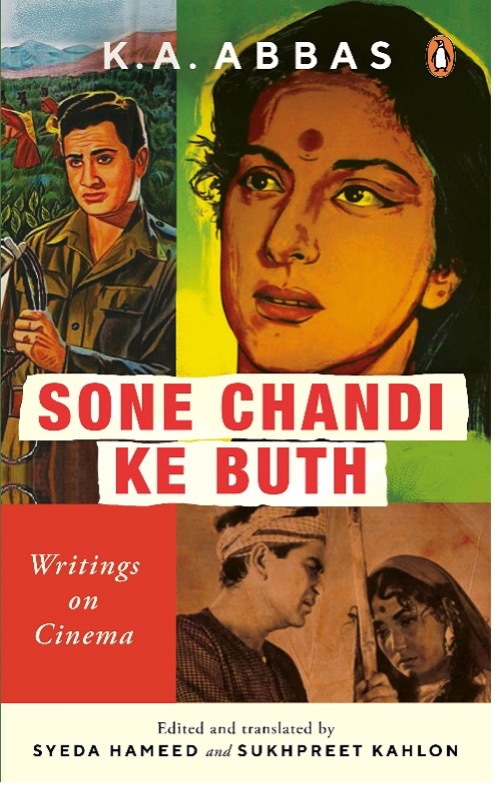
Writings on Cinema by KA Abbas

Book review by Gracy Samjetsabam

Title: Sone Chandi Ke Buth: Writings on Cinema

Author: K. A. Abbas

Editors and Translators: Syeda Hameed and Sukhpreet Kahlon

Publisher: Penguin Vintage

Khwaja Ahmed Abbas’s[1] Sone Chandi Ke Buth:[2]Writings on Cinema (2022), edited and translated by Syed Hameed and Sukhpreet Kahlon is truly, “an insider’s view of the ‘Sitaron Ki Duniya’[3]”.

The book is a constellation of Bollywood stories about moviemaking, film personalities, incidents, and fateful moments straight from the horse’s mouth. The book is divided into four sections – Funn Aur Funkaar[4], Kahaaniyaan[5], Articles, and Bombay Chronicle Articles. Abbas was often addressed as the “Human Dynamo” by his closest friends for his spontaneity and dexterity in churning out forms of expression such as short stories, novels, dramas, and films, which manifested whenever he pronounced, “Mujhe Kuch Kehna Hai[6]. He embodies a different time and sensibility, making the man and his work a treasure from the bygone days. Professor and scholar Ira Bhaskar aptly describes, “K. A. Abbas represents a crucial figure of the Indian modern who believed that critics and artists had a responsibility towards society.”      

K.A. Abbas, who was adept in Urdu, Hindi and English made the most of his multilingual skills to contribute thousands of articles on popular media including the longest-running weekly column, 46 years as a contributor in Blitz, writing for the Bombay Chronicle, 40 movies, short stories, and 74 books in 73 years. Sone Chandi ke Buth (2022) is Abbas’s last book on filmi duniya, the world of movies. The book throws a glimpse into Abbas’s journey from the young and aspiring journalist who wrote paltry salaried publicity blurbs to a scriptwriter, filmmaker and film critic of great repute  who made a tradition of his own offering “love” for the art and to everyone who lovingly called him “KAA”. Bollywood’s Big B, the Mahanayak[7], the megastar fondly admires Abbas’s “unrelenting spirit” and recalls, “K. A. Abbas gave me my first film, Saat Hindustani. I call him Mamujan.”

Syeda Hameed and Sukhpreet Kahlon labelled Sone Chandi ke Buth (2022) as “adhbudh[8]”, for the book is a testimony of the contribution of the man and his craftmanship. Coming from a family of poets and writers, Abbas walked along with the stars of the industries in its golden and the silver eras and yet was a man who could make jokes of himself, give sincere criticism on the quality of an artist’s work or the movie, speak of Bollywood as a unifying factor of pluralism in India, and suggest the importance of understanding truth for a greater cause. Intelligently and humorously, the book opens a window to fascinating instances and anecdotes of his life experiences and his encounters with the people who made history in the world of movies in India via Bollywood that were crucial to the industry or the personalities. With each turn of the pages, the narrative unravels interesting stories and junctures like how in writing about V Shantaram, whom he calls “Sadabahar” or evergreen, he goes on to describe his “crashing” into the world of film and becoming a film critic through film publicity, how his editor’s advice at the Bombay Chronicle opened his wings of  liberty to be critical but to do it prudently.

Drawing a fine veil between the reel life and the real life of the people with whom he manoeuvred in the film industry, the book “revealed more than concealed” the human aspects of greatness and flaws of each amidst their roles as heroes, villains or side characters in the movies. The book is filled with incredible stories of towering Bollywood personalities through Abbas’s eyes. Revelations in the section “Funn and Funkaar” captivatingly describe why he referred to V Shantaram as “The Evergreen Filmmaker”, Prithviraj Kapoor as “The Shahenshah[9]”, Raj Kapoor as “An extraordinary Karmayogi[10]”, Dilip Kumar as “Loss of a national treasure”, Meena Kumari as “The Muse of Ghazals”, Balraj Shani as “The People’s Artist”, Amitabh Bachchan as “Himmatwala[11]”, Sahir Ludhianvi as “The Lover and the Beloved”, Rajinder Singh Bedi as “The Guru”, and Satyajit Ray as “Mahapurush[12]”. The section “Kahaaniyan” sheds light on the ironies of the glamour and glitz in the film industry and on special days on the movie sets.

The section on “Articles” presents his thoughts on the relationship of filmmaking with business and its impact on society. Each article is a critical discussion of aspects of a good film, and he strongly opposes scripts that succumb to commercial sensibilities and powerfully voices the need for for “a good story” that “lies at the heart of a good film”. The section “Bombay Chronicles articles” compiles some of the finest articles of his passionate and flourishing days at the Bombay Chronicle in the 1930s as a film journalist. The articles in the concluding section continue to bring forth memorable facets of the world of films in India of the man and his times, and at the same time keep the spirit of enquiry burning in all movie enthusiasts and scholars to reflect on how much has changed over the years. Sone Chandi ke Buth brings into play Abbas, the man, the artiste and his style to showcase what a perfect blend of the head and the heart can do in film making.

If you are looking for a must-have book on Bollywood, filmmaking and movie criticism, then Sone Chandi ke Buth offers you an ample amount of it and more. Timeless memories of photos of the movies: Awara[13] (1951), written by him; Anhonee[14] (1952), a film he made on Nargis’s request; Rahi[15] (1953), a movie based on Mulk Raj Anand’s Two Leaves and a Bud starring Dev Anand and Nalini and Jaywant; Munna (1954), the first songless film of Indian cinema under the Naya Sansar banner; Pardesi [16](1957), the first Indo-Soviet production in a collaborative work of the Naya Sansar banner and Mosfilm Studio; Char Dil Char Rahein [17](1959), Abbas’s first multi-starrer movie; Chaar Shehar Ek Kahani[18] (1968), Abbas’s best-known political documentary; Saat Hindustani [19](1969), a movie on comradeship; and also, personal photos of Abbas’s self,  with his family and on film sets, enhances the aesthetic of the book.

The book has a phenomenally exciting set of stories about the famous and the lesser known faces of the movie industry in India, as people with ordinary life and circumstances amid their successes and failures. The translators and editors — his niece, Padmashri Syeda Hameed, an activist, educationist, writer and a former member of the Planning Commission of India, and Sukhpreet Kahlon, a researcher on cinema studies at the School of Arts and Aesthetics, Jawaharlal Nehru University — need to be thanked for collating these wonderful writings that touch our hearts while forging new bonds and links through the medium of films.

[1] Indian Film Director, 1914-1987

[2] Translates to: Statues of Gold and Silver

[3] World of stars

[4] Fun and Fun makers

[5] Stories

[6] I have to say something

[7] The great actor, refers to Amitabh Bachchan

[8] Amazing

[9] The Emperor

[10] A person who believes the ultimate panacea lies in devotion to work

[11] Courageous

[12] Superman

[13] The Vagabond

[14] The Untoward

[15] Traveler

[16] Foreigner

[17] Four Hearts, Four Paths

[18] Four towns, One story

[19] Seven Hindustanis

.

Gracy Samjetsabam  is a freelance writer and copy editor. Her interest is in Indian English Writings, Comparative Literature, Gender Studies, Culture Studies, and World Literature. 

.

PLEASE NOTE: ARTICLES CAN ONLY BE REPRODUCED IN OTHER SITES WITH DUE ACKNOWLEDGEMENT TO BORDERLESS JOURNAL

Click here to access the Borderless anthology, Monalisa No Longer Smiles
Categories
Interview Review

In Search of a Pitcher of Nectar by Samaresh Bose

A conversation with Nirmal Kanti Bhattacharya, the translator of Samaresh Bose’s In Search of the Pitcher of Nectar, brought out by Niyogi Books.

In 2017, the Kumbh Mela (the festival of the sacred pitcher) was declared an Intangible Cultural Heritage. A Times of India report read: “The committee noted that as the largest harmonious conclave in the world, Kumbha Mela stands for values like magnanimity and patience that are very beneficial for the modern humanity. Moreover, the concept of Kumbha Mela goes well with the current international human rights tools because the festival welcomes people from all corners of the world without any differentiation.”

Five years down the line, Niyogi Books brought out a translation of Samaresh Bose’s[1] In Search of a Pitcher of Nectar, an epic travelogue translated from Bengali by Nirmal Kanti Bhattacharjee on the festival at the confluence of the three rivers, Ganga, Saraswati and Jamuna — in Allahabad. An eminent acknowledged writer, whose stories won not just literary acclaim like the Sahitya Akademi award but were translated to prize winning films, Bose’s solo voice stands alone in the translated version — as that of Kalkut, one of the pseudonyms he assumed.

In the early part of the book, Bose gives the reason for his journey into this crowded event which even in the middle of the pandemic (2021) had 3.5 million visitors: “Observing this great variety of humankind on the move is a thirst that is not easily quenched.” Bose’s exploration came long before the pandemic as his book was published in 1954. Then a Bengali film was made on it in 1982.

The writer claimed to have set out to look into the heart of the nation: “I would dive deep into that heart of India. I would identify my own face in this strange mirror of India. That face is my mind. My religion.” And he discovers, “the poor India was there like a faded cloth by the side of a muslin chunni.” While peeling layers of poverty and ‘respectability’, he introduces us to a bevy of characters which include not just Godmen, but also women, who evolved from wifehood to prostitution to godwomen, to young girls forced to marry polygamous octogenarians, to people in quest of lost family members, to men in search of the intangible — and all united together for a dip in the holy ‘sangam[2]’ of three rivers, the ultimate panacea for all ailments and ills for believers. That the author is not part of the believing crowds, but a sympathetic, humane commentator is obvious from his conversations with various people and his actions, which defy boundaries drawn by the respectable god minding devotees thronging the festival. He uses the event to pinpoint the flaws of socially accepted norms and to find compassion for the less fortunate. He laces his narrative with love and compassion for humanity.

The title itself both in Bengali and English conveys the quest for nectar or the divine amrita of immortality which led to a festival that washes away sins with a dip at the confluence. Legend has it that the gods and the rakshasas worked together to draw out the ambrosial drink at this sangam and then, the gods cheated and consumed all of it, judging the other party as too evil to be handed eternal life in a cup. The unbreachable walls had started and perhaps continue even to this date.

The real origin of the festival as Bose contended remains disputed like that of many other cultural lores, though people do continue to quest for miracles in the waters that were supposed to have thrown up the ambrosia. The narrative implies the educated and schooled rarely participated in this event. There is a mention of the prime minister at the festival, but that would be as a dignitary, and not as part of the crowd.

The crowd in its urgency to take a dip at the holy hour, results in a stampede and many deaths. It is a sad and philosophical ending which clearly takes us back to the questions raised at the start of the narrative. “If lakhs of people are blinded by faith, then why not search for the reason? What is that celestial blinker which can blind lakhs of eyes?”

While questioning faith, the narrative exposes the gaps in society with compassion — even between the educated and uneducated that has become a severe point of contention as more fissures into society and creating more boundaries. At the end of the book, one wonders have things really changed from the 1950s when Bose wrote the book to the current experience where the UNESCO, a modern-day construct and belief, has dubbed this festival as a juncture where all humanity congregates? Do they?  To enlighten us on this issue, we conversed with the eminent translator of this powerful book, Nirmal Kanti Bhattacharjee.

Nirmal Kanti Bhattacharjee

What led you to translate Samaresh Bose’s In Search of a Pitcher of Nectar?

Samaresh Bose was a celebrated novelist. Th social relevance of his novels can never be over-emphasised. But when he started writing travelogues under the pseudo-name Kalkut, he invented a new creative trajectory. Amrita Kumbher Sandhaney, Kothay Pabo Tarey [4]are all classics in Bengali literature. I have been reading and rereading Amrita Kumbher Sandhaney for decades and always felt it should be presented on a national and international platform. Hence, when time and opportunity arose, I took up the translation work and the result in In Search of the Pitcher of Nectar.

There was a Bengali film (Amrita Kumbher Sandhaney, 1982) made with the story of this book. Did you use this as a resource too for your translation? What do you think of the film? Did it capture the book well?

Yes, I have watched the film when it was released. I don’t remember the details now, but the impression remains that it was a reasonably well-made film. But I don’t think it has acted as a resource for my translation work. On the contrary whenever I tried to think of Shyama, the sophisticated face of Aparna Sen[5] would appear in my vision.

In 2017, UN declared the Kumbh-mela as an intangible cultural heritage. And yet, here Samaresh Bose mentioned a stampede within the Mela that killed many people. Do you think things have changed since he wrote this travelogue?

Definitely. Now, the Kumbh-mela is an extremely well-organised event. The way in which the administration handles the flow of lakhs of people is something to be seen to be believed. Even Harvard University researchers had undertaken a study to analyse how an ephemeral city comes up with all the civic, municipal and medical facilities for a temporary period of time. The stampede that Bose mentions are things of the past.

Have you ever been to a Kumbh-mela? Is it as he describes?

Yes, once; obviously inspired by the reading of the book. It was in early 70’s. I found it tallying with Bose’s description to a large extent. It was a lifetime experience for me, because I also went with an open mind, an agnostic as I am.

What in this book strikes you the most?

Two things struck me most in the book. One, unlike all other visitors, Bose’s was not a pilgrimage. He did not even take a dip at any of the auspicious dates and moments. He was in quest of understanding man’s urge for piety. It was as if an atheist’s search for the godhead. Secondly, the technique of writing was a unique blend of travelogue and fiction. His character sketches are something unparalleled in the history of travel writing anywhere in the world. I hope I am entitled to give this opinion, having a modest exposure to the world literature.

You are a felicitated translator. When you translate from Bengali to English, what strikes you as the biggest hurdle? And how do you get over it?

The biggest hurdle in translating from Bengali into English is the problem of culture specific transfer. Here one is not translating from an Indian language into another. Here translation is not just linguistic transfer, but culture transfer also. One has to be very careful where to valorise the source language and where to make some sacrifice for attaining compatibility to the idiom of the target language. I guess I have learnt to strike a balance between the two.

You have translated the Bengali portions fully in this book but not always the Sanskrit or Hindi? Why not?

The Sanskrit and Hindi portions in the text are very well-known quotes from Tulsidas and other celebrated poets. I thought they would communicate even without translation. More importantly, they are all in rhymed couplet or quartet. If the rhyming is done away with, their linguistic impact will drastically reduce. And maintaining a semblance of rhyming in English was beyond me. So, I left them as they were. The case of the Bengali quotes is totally different. There I could confidently take some liberty and attain the desired impact.

Do you think a translation is better if it is closer to the text or if it captures the spirit of the piece and conveys it to the readers, though it departs from the text as in Edward Fitzgerald’s translation of Omar Khayyam’s Rubaiyat?

It depends on the motive of the translator. Gayatri Chakravarty Spivak in her celebrated essay ‘Politics of Translation’ suggested that we should approach the text with love and empathy. If that is achieved, the translator remains as close to the text as possible; and yet he/she can take occasional liberty to capture the spirit of the original. But if the motive is to sanitise the text to cater to a particular reading community, as Tagore wrongly did or civilise the text from the point of view of master-slave attitude, as Fitzgerald did, then it is wrong. We now know how much of Tagore or Khayyam is lost in these English versions.

You have translated major writers from Bengal like Mahasweta Devi, Sunil Gangopadhyay, Sirshendu Mukhopadhyay and Samaresh Bose. Which has been your favourite author to translate and why?

Well, all the authors I translated so far are my favourite authors. I can not translate unless it is so. I greatly enjoy Sirshendu Mukhopadhyay’s young adult stories, Sunil Gangopadhyay’s romantic novels, Samaresh Bose’s dexterity in narration and characterisation, Mahasweta Devi’s socially conscious works. I have translated two novels of Tagore also for their universal appeal and extremely thought-provoking themes.

After translating this many novels, are you planning one of your own?

Oh no, I am not a creative person. I hopelessly lack imagination.

Do you have any advice for upcoming translators?

Well, I don’t feel entitled to give advice to anyone, I can only say that a wannabe translator should live with a book for some time before venturing into translation. You should not take up any translation work unless the book resonates with you or speaks to you, so to say.

Thank you for bringing the book to non-Bengali readers and also your time.

[1] Also known as Samaresh Basu (1924 to 1988)

[2] Confluence

[3] Translates to ‘ On the Golden Peak’, part of Kalkut Rachna Samagra (Kalkut’s collected writings), published in 1957 and made into a Bengali film in 1970

[4] Translates to ‘Where will I find Him?’, published as a part of his collected writings in 1957

[5] Aparna Sen, the legendary actress from Bengal, acted as a character in this film

(The book has been reviewed and the interview conducted online by emails by Mitali Chakravarty)

PLEASE NOTE: ARTICLES CAN ONLY BE REPRODUCED IN OTHER SITES WITH DUE ACKNOWLEDGEMENT TO BORDERLESS JOURNAL

Click here to access the Borderless anthology, Monalisa No Longer Smiles

Categories
Review

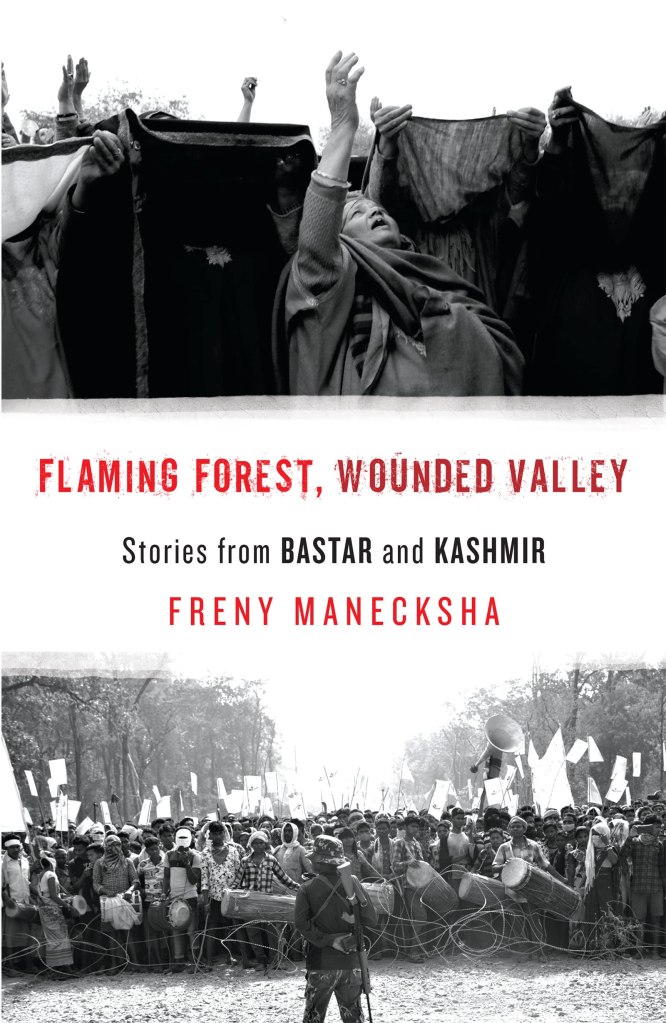
Flaming Forest, Wounded Valley

Book Review By Rakhi Dalal

Title: Flaming Forest, Wounded Valley: Stories from Bastar and Kashmir

Author: Freny Manecksha

Publisher: Speaking Tiger Books

People who have never lived in or around conflict riddled zones, have a scant notion of how the politics of a nation impact survival in such places. In the name of curtailing extremism, the punitive measures adopted, achieve little more than turning daily living into a nightmare. How would one feel if the forces employed by a state, supposedly to safeguard the common people, barge into their homes unannounced at any time whether day or night and leave them terrified? Or, if a group of civilian people are fired at by the forces while sitting in their fields discussing as routine a thing as celebration of a festival?

In a country like India where the mainstream media turns a blind eye and sometimes help propagate a biased and false narrative, it takes courage of a few who, despite looming threats, try to bring in stories from such places, stories that tell of the oppression of common people both at the hands of extremists and the state.

Flaming Forest, Wounded Valley by Freny Manecksha is one such attempt towards bringing out truth from two militarized zones of the country – Bastar and Kashmir. Manecksha is an independent journalist from Mumbai. She has worked with Blitz, The Times of India, Mid-Day and Indian Express. She has travelled and written extensively from Kashmir and Chhattisgarh. She is the author of Behold, I Shine: Narratives of Kashmir’s Women and Children.

In documenting the accounts from these restive places, Manecksha draws parallels between the everyday struggle of people to live in their villages or homes, the distrust for the forces or police system because of the brutalities suffered, the hesitation to file reports because justice is seldom achieved, the state narratives which usually demonstrate scant regard for the people and their right to live with dignity, the impunity with which their lives and their bodies, especially those of women, are disregarded and desecrated.

In case of Kashmir, “the Armed Forces Special Powers Act (AFSPA) gives blanket immunity to the security forces against crimes like unlawful detentions, torture and custodial killings.” As a result, they can force enter a home at any time for a raid and search the entire house while deploying a member as a ‘human shield’. This makes the concept of home as a safe and inviolate space alien for the people because anything can happen at any time.

Neither home nor outside is safe. Whereas in Bastar, public institutions like schools become places for interrogation and torture, in troubled towns of Kashmir, the hospitals becomes places for identifying and arresting protestors. Shot with guns or pellet guns, the bodies become spaces trampled by coercion and ruined or silenced by violence.   Their stories of suffering and pain find echo in a poet’s words:

“At an avant-garde cafe in uptown Pune
the reserved tables celebrate 
a teenager’s birthday in cosmopolitan English
My nearly dead phone flares up with a call from home
My mother laments in frayed Kashmiri: 
I am happy you aren’t at home, two other boys
Were shot dead today.”

The reports from these fractured lands are harrowing and forces one to delve into the motives and repercussions of State’s militarisation policy which, instead of maintaining peace, has brought unrest to people’s lives. Whether it is through Ikhwanis[1] in Kashmir or Salwa Judam[2]in Chhattisgarh, the state, irrespective of the Government at Centre, has tried to constrain people through violence. In the name of national interest, their lives have been dispossessed of the merit to normality. At stake as ‘collateral damage’, a term used by state or forces as matter of fact, has just not been their lives but also the dignity in death. The struggle, whether of the Adivasis of Bastar or of people from Kashmir, has been to reclaim their everyday life, their land and their homes.

These stories, however, are also those of resilience. The book celebrates the idea that even in the face of tortures and abuse, collective grief transforms into collective sharing which make people stand together and claim their rights to live. Manecksha writes with empathy and tenderness. Her reportage reflects the efforts that are put in collecting these narratives. It is a book as critical as it is relevant to our times. 


[1] Religious Militia

[2] Militia employed to crack down on counterinsurgents

Rakhi Dalal is an educator by profession. When not working, she can usually be found reading books or writing about reading them. She writes at https://rakhidalal.blogspot.com/ .

.

PLEASE NOTE: ARTICLES CAN ONLY BE REPRODUCED IN OTHER SITES WITH DUE ACKNOWLEDGEMENT TO BORDERLESS JOURNAL. 

Click here to access the first Borderless anthology, Monalisa No Longer Smiles

Categories
Review

Manoranjan Byapari: “ Why did I even write?”

Book Review by Basudhara Roy

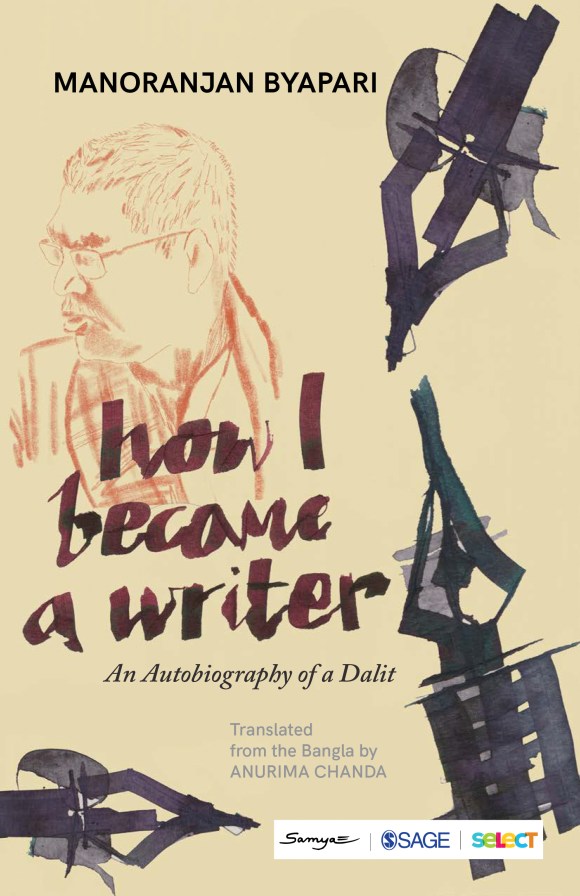
Title: How I Became a Writer: An Autobiography of a Dalit

Author: Manoranjan Byapari

Translator: Anurima Chanda

Publisher: SAGE Publications India and Samya under Samya SAGE Select imprint

The autobiography, as a literary genre, has a compound and far-reaching relevance. Among the many ways that it engages in a productive conversation with the world, is its staunch social impact. When and why does a person set out to write his or her life’s story? The answers to this could be numerous. Central, however, to each of them would be the perception of a threat to one’s experienced or imagined identity, the attempt to seize empowerment through the act of narration, and the identification of one’s individuality as having a widely referential social base that could encapsulate some meaning for humanity at large.

In the teeming, diverse and thoroughly spectacular life of writer, Manoranjan Byapari, an impulse towards all the three can be found. An unlettered rickshaw puller-turned indefatigable and award-winning fiction writer, and currently a member of the Legislative Assembly of West Bengal (Balagarh constituency) and the Chairperson of the Dalit Sahitya Akademi, West Bengal, Manoranjan Byapari’s How I Became a Writer: An Autobiography of a Dalit is the translation of the sequel to his Itibritte Chandal Jivan (Interrogating My Chandal Life) published in 2017 and winner of The Hindu Prize 2018 for non-fiction.

“I keenly believed that even though a life might be trivial, inferior or disgusting, there was something to learn from it which could come handy later. […] People who scavenged through dustbins would know that sometimes one might also find delicacies in the garbage,” writes the author (in the context of a particularly obnoxious character in the book), articulating a practical and philosophic doctrine that is hard to beat. If taken as a metaphor for his own life’s tireless trials, these words throw light on Byapari’s literary treatment of every little or mean episode in his life with sincerity, stubbornness and sagacity.

The sequel How I Became a Writer effectively takes off from where the first book ends – Byapari’s return to Calcutta from Dandakaranya and his taking up the job of a cook at the residential Helen Keller School for the Deaf and the Blind. Spanning a journey of around two decades, the book documents the arduous, painstaking, courageous and unrelinquishable labour of nurturing the ambition to write amidst the innumerable hazards-big and small-that threaten a Dalit’s dignified existence in India.

Comprising a series of thirty-four vignettes, the book is divided into two parts – ‘School Shenanigans’ and ‘The Right to Write’. The former section offers a close look at Byapari’s work-life – his workplace, duties, associates, and the systemic social inequities that are intended to steadily impoverish and dehumanize those who inhabit the lowest rungs of the class and caste hierarchies. The latter section focuses almost exclusively on his creative life, his intense literary and activist aspirations, and his relentless growth as a writer in the face of every obstacle to body, mind and spirit. The two sections, however, speak very intimately to one another with the result that they effectively build up one seamless narrative whole, animated, in each of its fibres, by “jijibisha” – the indomitable will to live that has characterised Byapari’s intellectual journey throughout.

In her ‘Foreword’ to the book, Sipra Mukherjee, the translator of Interrogating My Chandal Life, draws attention to the remarkable “non-marginality” of Byapari’s writing that, in the first part of his autobiography, exhibits and establishes itself in his choice of both language and geo-political space of creative exploration. In How I Became a Writer, Byapari’s marginal viewpoint on the history, narratives and psychology of the mainstream impresses further. His knowledge of the world is clearly staggering, his perception sharp, and his intuitive wisdom is matchless in its perspicacity. Alert, critical, and thoroughly versed in his Marxist epistemology, he understands the social dialogue of money and power and that of rights and denial, with deftness and insight. Most importantly, he is constantly aware of being not merely an individual but a representative of a social group – the proletariat who must attempt, by all means, to speak truth to power:

“Muttering furiously, she asked, ‘Royda asked you to make tea and you refused. Is that right?’

“I answered in the affirmative without an iota of tremor in my voice. I did what a representative of the working class would do had it been within the world of one of my own stories. The way Bordi, like one of the overlords, had called me forth to show off her positional power in front of her people, I too, was eager to show her that I was a knowledgeable and brave representative of my class of people.”

Throughout Byapari’s language, there is a quiet and determined authority intended to radically subvert the dense and intricate mainstream texts of injustice and victimization. One of his potent subversive tools is certainly his robust and well-toned satire, the other being his close reading of mythological material, folk tales, and indigenous wisdom located in anecdotes and proverbs. Bringing this local ontology and epistemology to bear on the mainstream knowledge involves a constant interrogation of the latter’s chosen socio-political and cultural texts, thus constituting a bottom-up view on social theory and praxis.

Glowing vividly in these pages is also Byapari’s unvanquished faith in literature as a means of social reform. He reiterates here, often, the necessity to take up the pen as a tool of protest, as a means of emancipation from indignity, and as the only method of scripting oneself into social discourse – “Somebody had said that a writer does not write with a pen, but with the spine.” But the act of writing which is often made to appear autonomous and independent of social interference, may not come as easily to everyone. To someone like himself, as Byapari insists, literacy itself has been a gift and the act of reading and writing, a liberation from his otherwise “insignificant, ugly and hateful life”.

In a society where writing has often been valorised as a private intellectual activity, Byapari strongly points out how privacy is, in itself, a privilege. Contrary to the fashionable notion of the writer as entitled to a ‘writing space’ both physically and temporally, Byapari’s autobiography projects him as accomplishing his writing in the oddest of spaces and hours, under the most threatening of conditions, and with the sole will to keep the fire in his soul alive. Both cathartic and revolutionary, his creative life becomes a valuable agency for him to wield his self-esteem against life’s diminishing forces.

But to be able to write and to, even, write well is not enough. To carve a niche for oneself in the writerly world, and to be heard and responded to is an enormous challenge in itself. There is, firstly, the significant handicap of financial investment in publishing a book; secondly, the apathy of prejudiced and non-discerning readers towards writers of the lower caste; and thirdly the entire nexus of publishers, marketing, reviewers and awards to negotiate with. To someone like Byapari, handicapped severely by both his caste and class, literary recognition has been very slow and unforthcoming.

It has, however, happened over the years, for as Byapari believes, in the world of literature, the way upward lies only through dedication, toil, perseverance, and the presence of an empathetic and like-minded literary community. But though the writer remains inordinately grateful for where he has arrived, there is also, at times in the book, a serious questioning of the practical outcome of meaningful literature in the world. Does it make a difference? Does it help transform the conscience of society? Does it lead to material improvement in a poor writer’s life circumstances? Byapari remains distinctly conscious of having been transformed from a writing person to a literary subject under the harsh glare of literary festivals, media and academics but his greatest fear of failure revolves around the possibility that his writing may have failed to make a dent on the world’s harsh indifference:

“Why did I even write? Would I be able to change this bloodsucking societal system standing atop the rotting thousand-year-old foundation with my pen alone? Would I be able to stop the inhumane religious brutality of the priestly class in the name of caste? The child lying on the footpath, who had curled up in the bitter cold, could I bring him a blanket? That child crying in his mother’s arms in hunger, would I be able to make him sit in front of a plate full of warm freshly made rice?

“I could not! I could not!”

However, as in the case of every true artist, Manoranjan Byapari’s love for writing triumphs over all misgivings. How I Became a Writer is a glowing celebration of his tribulations, grit, antagonisms, friendships and the generous support of many noble souls that helped pave his way to artistic maturity and fame.

For those who cannot read the book in Bengali, this translation by Anurima Chanda, an academic and translator,  arrives as a coveted gift. Organic, fluid, and maintaining the right balance between linguistic and semantic authenticity, this animated rendering of Byapari’s life introduces readers of English to a writer who remains etched in memory as much for his lyricism and humour as for his sheer honesty and brilliantly satirical social criticism.

.

Basudhara Roy teaches English at Karim City College affiliated to Kolhan University, Chaibasa. Drawn to gender and ecological studies, her four published books include a monograph and three poetry collections. Her recent works are available at Outlook India, The Dhaka Tribune, EPW, Madras Courier and Live Wire among others.

.

Click here to read the book excerpt from How I Became a Writer

PLEASE NOTE: ARTICLES CAN ONLY BE REPRODUCED IN OTHER SITES WITH DUE ACKNOWLEDGEMENT TO BORDERLESS JOURNAL

Click here to access the Borderless anthology, Monalisa No Longer Smiles

Categories
Review

The Shaping of Modern Calcutta through Lottery Sales

Book Review by Somdatta Mandal

Title: The Shaping of Modern Calcutta: The Lottery Committee Years, 1817 – 1830

Author: Ranabir Ray Chaudhury

Publisher: Niyogi Books

If you ask any layman about the city of Calcutta (now rechristened as Kolkata) you will get three major pieces of information — namely, it was founded by Job Charnock in 1690; it was the seat of East India Company and capital of British India till 1911; and that it was divided roughly into two sections — the white English town at the centre and towards the south and the native town in the north. Beyond that, very few people have the idea of how the city developed spatially and how several major arterial roads, tanks and squares were built systematically during the beginning of the nineteenth century and this is where The Shaping of Modern Calcutta: The Lottery Committee Years, 1817 – 1830 by Ranabir Ray Chaudhury gives us plenty of information about the gradual development of Calcutta. This was undertaken by raising money through sale of lottery tickets and implemented by the creation of a Lottery Committee which functioned specifically for thirteen years from October 1817 to 1830.

Under the system then prevalent, the surplus lottery funds remained with the Bank of Bengal which would continue to be involved in the sale of tickets and the payment of prizes but would have nothing to do with other payments. The three senior members of the committee were John Eliot, Charles Trower and Henry Wood who had already looked after the construction of the square and tank at Baparitala (Wellington Square) and the new road being built from Dharamtala Road to Bowbazar. Later officials like Henry Shakespear and Barwell, G. Gordon and A. Colvin were inducted, and featuring in various sub-committees, they were also deeply engaged in the city’s development work.  

In 1830, for all practical purposes, the functions of the committee relating to the improvement of the city ceased effectively. Though the beneficial impact of the committee’s work affected everyone, native and European alike, and there was nothing remotely furtive about it, yet the Directors of the East India Company in London were not happy with what was happening in distant Calcutta on the city-development front, choosing to view the evolving picture in a different light. Keeping in mind the virtues of economy in expenditure, the Company wrote to its Government of Bengal that whenever there was any activity relating to general and public utility, some part of the charges ought to be borne by the inhabitants. Further, the Lottery Committee was handling large sums of money and perhaps there was the Company’s deep-seated skepticism about the sensibility of such expenditure in general and a tendency to conclude that the money was not being spent efficiently. The work done by the committee was phenomenal because the projects conceived and implemented by it still cast a long shadow on life in modern Calcutta. 

It becomes very clear that the city of Calcutta gained immensely from the development work carried out by the Lottery Committee since October 1817. The Strand Road had spruced up the eastern bank of the River Hooghly beyond recognition; the western side of Tank Square (today’s BBD Bagh) down to the Maidan till the West Bengal Legislative Assembly, had been given its modern shape with its grid of streets; pucka drains had been built and upgraded all over the city; the major north-south arterial road extending from Park Street in the south to Shyambazar in the north with four squares along it had been constructed; Free School Street had been made; the entire area south of Park Street up to Circular Road had been transformed into ‘virgin’ land ready to be settled in by the genteel (for the most part, sahib) population of Calcutta; and the modernisation of the Garden Reach area, reaching up to Khidirpur in the north, had been begun.

Among other things, the Lottery Committee built the major arterial roads in the northern and central parts of the city, which in time determined the layout of the contiguous residential areas. Dalhousie Square and the entire ground between Park Street and Circular Road were developed by the committee. Previously, a large part of the ground south of Park Street was low-lying and marshy, generating pestilence all around. Bustee clusters were located here probably because of the availability of Gangajal from Tolly’s Nullah (the Adi Ganga) through the existing network of drains, the river being some way off to the west.

The story of the making of Strand Road is narrated in detail, as with increasing economic activity and population pressure, it would provide the inhabitants with easier access to the river, both for recreation and commerce. The Lottery Committee was also responsible for putting up the first brick-and-mortar decorative balustrade which still adorns the Chowringhee area and Red Road. Thus, in its 13 years of effective functioning (till 1830), the committee had been successful in providing the critical push necessary to transform Calcutta from the topographical shape it had inherited since the years immediately following the landing of Job Charnock at Sutanati in August 1690 into one which, in a manner of speaking, would make the city ready to be launched into the 20th century and beyond.

The interest in reading the book persists throughout because apart from the maps, figures, numbers, statistics, and other logistic details, we get a lot of information of the different hindrances the Lottery Committee faced while implementing their projects. Human nature has not really changed much and so we read about people at that time who flouted the rules to line their own pockets and for whom profiteering was the norm.

The basic premise here is that human nature being what it is, there are some aspects of life and behaviour which are universal in their reach, both temporally and spatially. Another very interesting area of study is how the officials encountered the problem of encroachment, the process of land acquisition and the demand for compensation by native plot holders. The committee was aware of matters affecting the native sentiment and there are instances of how they altered the alignment of a major road to suit the convenience of the natives. Even then in some instances tiffs and legal hassles with local residents in North Calcutta were also recorded. Apart from private property rights, religious considerations too played an important role in the decision-making process of the committee.


Before concluding it is worthwhile mentioning a few lines about the author of this volume. During his quarter-century with The Statesman in Calcutta (1970-94), principally as a leader writer, Ranabir Ray Choudhury became interested in the past of a great city which the East India Company had selected as the nerve centre for its operations in the Indian subcontinent and further to the east, extending to Singapore and beyond. In time, this growing interest led to three compilations – Glimpses of Old Calcutta 1835-1850 (1978), Calcutta a Hundred Years Ago 1880-1890 (1987), and Early Calcutta Advertisements 1875-1925 (1992). He next wrote The Lord Sahib’s House, Sites of Power: Government Houses of Calcutta 1690-1911 (2010). A City in the Making, Aspects of Calcutta’s Early Growth (2016).

This volume under review is his sixth book and thematically is a sequel to the last one. That work ended with the formation of the Lottery Committee in 1817: this book takes up the story from there. From a connoisseur of the city, we get details of its development to a point that a lot of unknown facts are provided to the reader which the author garnered from documents and archival material available at the West Bengal State Archives.

Though he is not a historian, trained or otherwise, the author mentions in the ‘Introduction’ how he faced the constant struggle to avoid getting enmeshed in detail and to refocus attention on the broad current of policy and the effects of its implementation. Attention to the specific problems faced in the day-to-day execution of projects also does help to throw light on the precise nature of hurdles encountered at the grassroots level. The book is therefore highly recommended for scholars of history, architecture, town planning and every layman reader who is interested in Kolkata – a city which has been defined in multifarious ways as a city of joy, a city of palaces, a dead city, and so on.

.

Somdatta Mandal, an academic, critic and translator, is a former Professor of English at Visva-Bharati, Santiniketan, India.

PLEASE NOTE: ARTICLES CAN ONLY BE REPRODUCED IN OTHER SITES WITH DUE ACKNOWLEDGEMENT TO BORDERLESS JOURNAL

Click here to access the Borderless anthology, Monalisa No Longer Smiles
Categories
Review

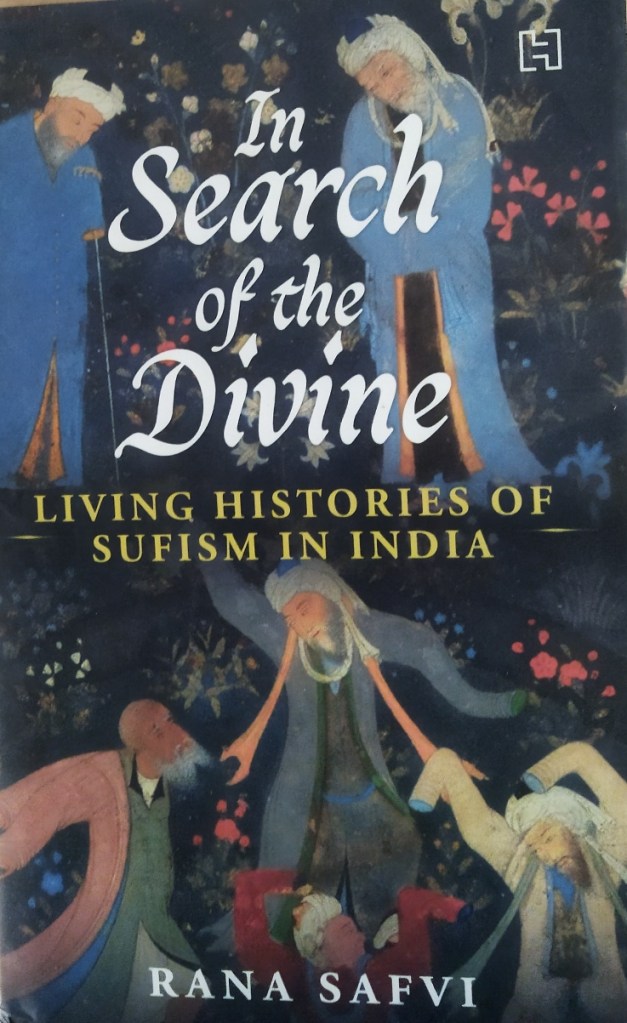
In Search of the Divine

By Bhaskar Parichha

Title: In Search of the Divine: Living Histories of Sufism in India

Author: Rana Safvi

Publisher: Hachette India

Sufism was a liberal reform movement within Islam. It had its origin in Persia and spread into India in the 11th century. Most of the Sufis (mystics) were persons of deep devotion who disliked the display of wealth and degeneration of morals following the establishment of the Islamic empire.

 The word ‘Sufi’ is derived from ‘suf’, which means wool in Arabic. It also means ‘purity’.Sufism or mysticism emerged in the 8th century, The early known Sufis were Rabia al-Adawiya, Al-Junaid, and Bayazid Bastami. It was a well-developed movement by the end of the 11th century. Al Hujwiri is regarded as the oldest Sufi in the sub-continent. By the 12th century, the Sufis were organized in Silsilahs.

In Search of the Divine: Living Histories of Sufism in India by Rana Safvi is by far the most comprehensive history of this belief system. As a scholarly book, it does more than just explain Sufism. The book elucidates how the practice is influential and yet possesses a quiet dignity. The general perception of Sufism for those uninitiated is perhaps reduced to paintings and images of saints, in cascading gowns steeped in reverence for the Almighty. The images, while powerful are deeply reductive. Like with most other things, Sufism has been reduced to images, motifs, and symbols of faith.

Says the blurb: ‘Sufism, called the mystical dimension of Islam, is known for its inclusive nature, as well as its ethics of love and compassion, its devotional music, art, and architecture. In India’s syncretic culture, Sufism developed a distinct character, and harmoniously embraced the Bhakti traditions of North India.’

A renowned writer, scholar, and translator, Rana Safvi is a passionate believer in India’s unique civilisational legacy and pluralistic culture which she documents through her writings. Author of nine books on the culture, history, and monuments of India, her A Folk Tale and Other Stories: Lesser-Known Monuments of India is a commendable book.

Safvi writes, “As numerous mystics came and settled in the subcontinent, they drew from local Hindu influences and developed a unique form of Sufism here. There was a great and constant refertilisation of ideas. With their understanding, acceptance, and integration of local customs and influences, they carved their own unique space in the hearts of locals of every faith, class, and caste. They could speak the local language, and dialects and as tales of their Karamat (miracles) grew, so did their followers.”

She delves into the fascinating roots of Sufism, with its emphasis on ihsan, iman, and akhlaq[1], and the impact it continues to have on people from all communities. Safvi relies not only on textual sources but also on her visits to dargahs across the country, and the conversations she has with devotees and pirs alike. 

Safvi says dargahs aren’t spaces meant to accommodate the Muslim community alone. Sufi saints insisted on religious harmony. In the 18th chapter of the book titled Celebrating with the Saint, she quotes an oral account of tolerance and acceptance.

“Some Muslims were once passing through an area where Holi was being celebrated. Perhaps as a shararat (mischief), perhaps unwittingly, the Muslims got Holi colors on their clothes. This led to a flight among Hindus and Muslims. The news reached the darbar (court) of Hazrat Nizamuddin Auliya. The Muslims complained that they had been defiled.

“How would they offer namaz now?’ said Fareed Bhai.

“Hazrat Nizamuddin Auliya told them: my people, all colors come from Allah. Which color is that that does not come from Allah?

“Then Hazrat Nizamuddin Auliya told Hazrat Amir Khusrau to capture this in a couplet. And Hazrat Khusrau wrote the (following) lyric:

Aaj rang hai ri

Mere khwaja ke ghar rang hai ri, aaj rang hai[2].”

The book suggests in intense detail the sacred atmosphere she encountered: the reverent crowds, the strains of qawwali, and the fragrance of incense, as well as highlights the undeniable yet often forgotten contributions of women in Sufism. The wide-ranging study is contemporary and also a tribute to the rich and textured past.

The book doesn’t just explain Sufism to the lay reader, it coagulates the affinity shared between Sufism and Islam. Safvi’s book lends dignity to the millions of worshippers who otherwise inhabit an Islam-loathing world.

Apart from a historical account, the books deal with the oral narratives, the status of women, and the Prophet’s family who laid the foundation for faith as Muslims know it. The elegant study emphasises the power of faith, not just in a universal capacity but also as a personal one. Along with the book meant for review, Safvi writes in a note, “This book has been a deeply enriching experience for me.”

Safvi’s work does not make the case that Sufism is independent of Islam. She says it was a myth solidified by western academics. She clarifies that a lot of Sufi followers do consider Prophet Muhammad to have spearheaded the practice. The connection with Islam is unmissable and yet it took on the shades of other faiths in praxis.

Her exploration isn’t in any way, a means to legitimise Sufism. Safvi is humble enough to recognise that she doesn’t need to do that. If anything, her writing is to shed light on values of peace, austerity, and benevolence which often miss the eye’s mark when religion is discussed in a politically charged world.

Rana Safvi’s In Search of the Divine is dignified, powerful, engrossing. Weaving together facts and popular legends, ancient histories and living traditions, this unique treatise running into more than four hundred pages examines core Sufi beliefs and uncovers why they might offer hope for the future.


[1] Spiritual excellence, faith, act of goodness or virtue

[2] At my Khwaja’s home, there is jubilant colour
Today there is jubilant colour

Bhaskar Parichha is a journalist and author of UnbiasedNo Strings Attached: Writings on Odisha and Biju Patnaik – A Political Biography. He lives in Bhubaneswar and writes bilingually. Besides writing for newspapers, he also reviews books on various media platforms.

.

PLEASE NOTE: ARTICLES CAN ONLY BE REPRODUCED IN OTHER SITES WITH DUE ACKNOWLEDGEMENT TO BORDERLESS JOURNAL

Click here to access the Borderless anthology, Monalisa No Longer Smiles
Categories
Interview Review

The Storyteller of Singapore: Suchen Christine Lim

Singapore moved from being a little island to a trading port to an affluent glamorous city that bridges the East and the West. Spanning the spirit of the wide expanse of this movement within a century are some iconic writers. One of them is Suchen Christine Lim, an award-winning author who writes narratives embedded in history, lined with hope and love — two values that need to be nurtured in today’s war-torn world.

Dearest Intimate is her most recent novel that shuttles against the backdrop of Japanese invasion of not just China but of what was then Malaya and modern-day Singapore. The story revolves between the worlds of Chan Kam Foong and her granddaughter, Xiu Yin. A passion for Cantonese opera that spans across generations weaves all the threads together into a single multi-layered rich tapestry of life. That life is never about a single strand or a single facet is brought into play by her intricate craftsmanship.

Suchen has taken seven years to complete this novel creating a story that immerses the reader in different time periods. The time periods are congealed with a variety of techniques of narration. Both, the first-person narrative — the voice of Xiu Yin — and the third person — the diary which unravels her grandmother’s story — are seamlessly knit into a whole. Though to me, the diary is perhaps more compelling with its historic setting and its interludes of amazing passionate poetry, like these lines:

“Though hills and mountains, rivers and plains separate us,
nothing can separate our thoughts and dreams.
Though a thousand li separate our bodies, no mountains nor
rivers, not even the Four Mighty Oceans can separate our heart.”

As the book progresses, it unfolds Xiu Yin’s journey towards rediscovering her strength and love. She rises from the ashes of an abusive marriage which is in sharp contrast to the marriage of her grandmother, Kam Foong, arranged by the family in a traditional Chinese village in the early part of the twentieth century. That victimisation and abuse see no borders of education and can be born of a sense of frustration and an over-competitive outlook is skilfully reflected in the marriage of Xiu Yin, whose husband is from an educated Westernised Catholic background. She had been brought up on traditional lores among Chinese opera artists. Interesting observations on gender issues and local concerns — like the housing policies in Singapore — are wound into the narrative.

To me, one of the most enduring qualities of Suchen’s novels are that they deal with the common man against a historical backdrop. In an earlier interview, she had said: “I wanted to see the past from the perspective of coolies, the illiterate, who have largely been left out of history books. And yet without them, who would pick up the nightsoil?” In this novel too, she has dealt with the common man — farmers and opera singers only the historic setting and their responses have changes because of changed circumstances. We live, feel, emote with the common people before, during and after the second World War to the modern twenty first century Singapore. The author’s skilful characterisation enlivens her creations. The cruelty of Japanese invaders during 1940s is highlighted in the suffering of the people and their abuse. Published around the same time as Sumantra Bose’s Netaji Subhas Chandra Bose’s Life, Struggle and Politics, which shows how the Indian leader thrown out of Congress took support from the Axis powers (German and Japanese), it gives a contrasting perspective. Though this is fiction, Singapore history does corroborate that the Japanese invaders were extremely brutal in their outlook, even among the colonials.  Suchen’s reiteration of their cruelty is heart rending.

She has through her characters reiterated on the need of art not just to express but to make people laugh, give them hope and cheer them in dark times. This is an interesting theme which in itself makes one wonder if it is a comment on the perspectives of writers depicting unmitigated darkness. We find this strand of hope in great fiction from the last century — like JRR Tolkien’s Lord of the Rings series or Margaret Mitchell’s Gone with the Wind. They all end with hope as do Suchen’s works.

Suchen’s oeuvre very often encompasses the story of migrants as it has done here. And the interesting progression in this novel is the migrants’ complete acceptance of their new homelands — Singapore and Malaysia. In an earlier interview, Suchen had said, “A man can rise and go beyond borders but the land that he leaves will always be in his bones and heart.” And some of her protagonists had headed back to China. But in this novel, one is left wondering if the characters from China have not transcended their national frontiers to embrace the Cantonese opera, declared an intangible cultural heritage, like Durga Puja, by UNESCO.  Art and love have overridden all kinds of borders — and perhaps, that is why the name of the novel Dearest Intimate, which is used by Kam Foong for her love and for Xiu Yin by her beloved justifies the title. At the end, it is a heartfelt love story between humans and even between humanity and an art form that evolved to embrace the common man. Like all good books — it touches hearts across all borders with its message of love and acceptance as do Suchen’s other novels. To discuss, her world view and her novel, we had a brief conversation with Suchen —

What made you write this novel, Dearest Intimate? What led you to it?

I had a strange dream while I was on the Writers Immersion and Cultural Exchange (WrICE) residency in the ancient city of Hoi An in Vietnam. I dreamt of a pale orange pillow embroidered with two mandarin ducks and two rows of Chinese characters. When I woke up, I wrote down the two sentences in English, which eventually became the opening paragraph of this novel. So, you can say it was an unexpected gift from the universe that led me to write this novel.

In your earlier novels like A Bit of Earth the protagonist always felt for part of their homelands. However, in Dearest Intimate, the protagonists dwelt on the theme of love and Cantonese opera, not so much on homeland. Has your world view changed since your first novel? How and why?

Well, I don’t think there is a quick easy answer to the how and why of change in worldview. The time gap between the publication of my first novel, Rice Bowl, and the latest, Dearest Intimate, is more than 30 years. Over that span of time my novels had examined issues of political /historical import, race and identity, moving from the past to the contemporaneous. Over the course of 30 years, it is natural for an author’s ideas and obsessions to change.  I would be very worried if I do not change, or my characters and themes do not change. For example, my sudden interest in the pipa led to the writing of The River’s Song, which in turn led me to Chinese music and Hong Kong Cantonese opera and the learning of Cantonese.

Tell us about why you took up the Cantonese opera in a major way in this novel?

It was the strange gift of a dream of two mandarin ducks embroidered on a pillowcase, which reminded me of the Cantonese operas I used to watch as a child with my grandmother and mother. Such pillowcases with embroidered mandarin ducks were symbols of love and fidelity and were sewn by young women in love in Chinese operas. Cantonese opera was a part of my childhood that was largely forgotten till this dream. Looking back, I think in writing Dearest Intimate I was reclaiming that forgotten part of my childhood.

Why did the novel take seven years to write? What kind of research went into the novel?

Partly because the research was such fun. I wasn’t concerned about deadlines. I had already flung away deadlines the moment I resigned from the Ministry of Education years ago. And I must admit I was fortunate that I didn’t have to write to fill my rice bowl. My research obsession began after I had watched a Hong Kong Cantonese opera troupe perform at the Kreta Ayer People’s Theatre, and later, other operas at the Esplanade during Moon Festival. Curious about the actors’ training, I went to the National Archives and listened to the many interviews with old opera actors and actresses of local Chinese opera troupes. Every year, I flew to Hong Kong to watch one or two Cantonese operas, and once I even met Chan Poh Chee and Bak Suet Xin, the icons of Hong Kong’s Cantonese opera. When I started writing the novel I would watch one Cantonese opera on YouTube every afternoon, even re-watching a few favourites. Unhappy that I could not understand the literary Cantonese used in the operas I joined a Cantonese class in Chinatown to deepen my understanding of Cantonese.

Why did the novel take seven years to write?  Well, one of the reasons is my troublesome health. I had several health issues to deal with. Very boring chronic issues which, naturally, gobbled up my time and distracted my attention. The most serious of these troublesomes was a minor stroke that affected my movement and speech for some months.

You have written many children’s stories, a play, short stories, non-fictions and novels. What is your favourite form of storytelling and why?

The novel. It is humanity’s greatest literary invention. Within the novel, raw messy lived experience is transformed into coherent narrative.

All your novels have a sense of hope and seem to reach out with the message of love and acceptance. Why is it you feel reiterating this is important?

I am glad you think my novels have a sense of hope. Hope is often the reason we live another day. Hope is what helps us to endure, to wait. To write, to make art is an act of hope.

What in your opinion is the purpose of art? You have repeatedly mentioned in your novel that people will respond better to hope or laughter in opera in dark times. Would you say this also applies to writing? Do you think people in dark times prefer books that give hope? Please elaborate.

I will quote Master Wu in the novel: “Play our music! Tell our stories! Sing our songs! Write our histories! Preserve our humanity! That is what the arts are for. Never, never for one moment forget who we are …”  in the age of robotics, story-generating AI and Twittering twitterati. 

Do you have any advice or message for budding writers?

Suffering is good for the writer. It will deepen lived experience and expand the heart’s empathy. 

Thank you for your wonderful answers and for giving us the time.

(The book has been reviewed and the interview conducted online by emails by Mitali Chakravarty)

Click here to access the Borderless anthology, Monalisa No Longer Smiles
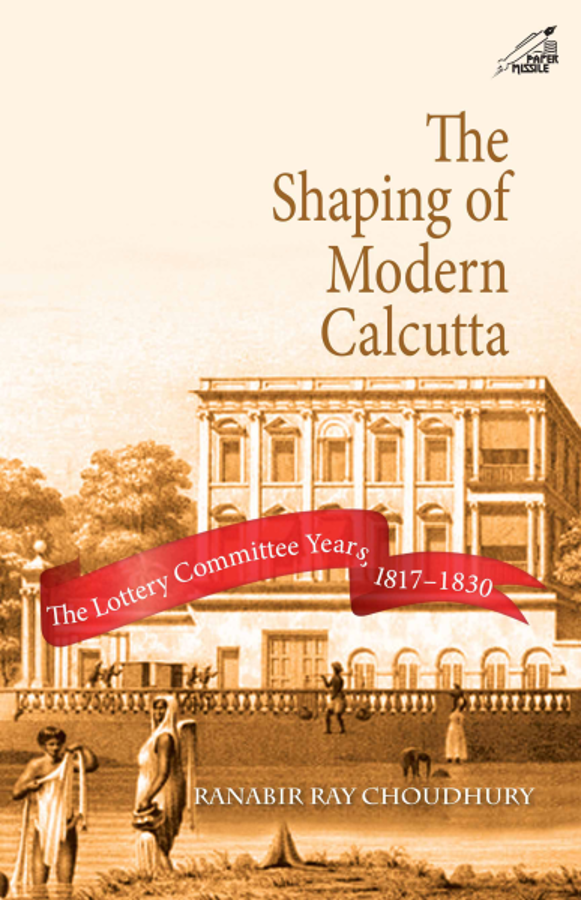
PLEASE NOTE: ARTICLES CAN ONLY BE REPRODUCED IN OTHER SITES WITH DUE ACKNOWLEDGEMENT TO BORDERLESS JOURNAL