Prithvijeet Sinha muses…with his narrative and his camera
The chronology of monuments and historical continuum in Lucknow are affixed to the Nawabi realm, tales of opulence and benevolence or narratives that pivot around the First War of Independence in 1857 and its enduring imprints. All of these features mark the city. But they can also become dog-eared markers and signifiers that can prevent one from looking at modern marvels.
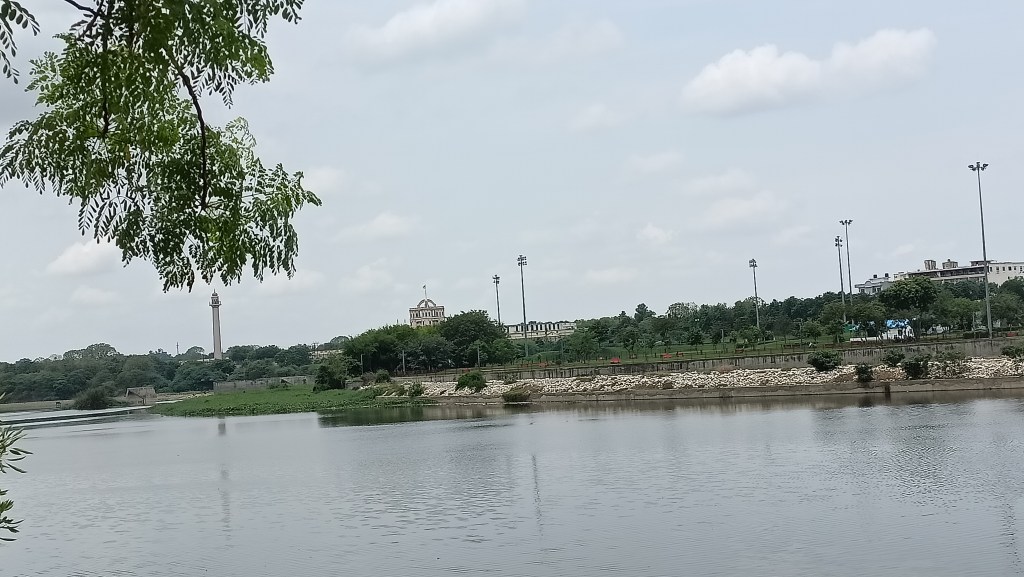
That being said, the most serene corner of Lucknow has yet to complete a full decade of its existence but has already become an indispensable part of the cityscape buoyed by nature and beautiful landscaping. For if mortal hands gave shape to beautiful, everlasting monuments of Awadh, modern visions have given the city the Gomti Riverfront Park.
Situated at the heart of the city just before unveiling the expanse of Gomti Nagar and intersected by Hazratganj and Cantonment on its primary stretch, it complements the River Gomti’s function as the city’s lifeline with remarkable fervour. It is easily accessible and is a personification of the natural beauty that Lucknow exemplifies for millions. In fact, in the current day and age, it serves as a common unifier for those many faces who visit it for leisure or as regular joggers, walkers and wanderers.
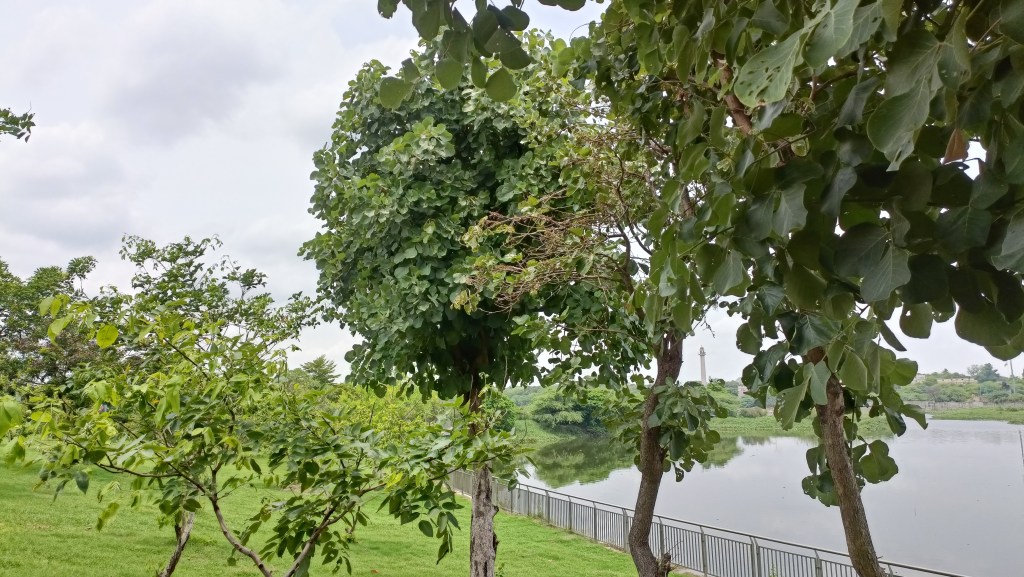
It has consistently maintained its pruned gardens, verdant slopes leading to its open avenues and the trees and plants cover this stretch. It’s not just about the idea of exemplary maintenance, the river is near some classical monuments facing it such as the Ambedkar Park, the majestic La Martiniere Boys College and the gorgeous Dilkusha Bridge. All this is already set in motion as rolling fountains, little dome-shaped pavilions serving as seating spaces and the red stone walls on its upper reaches welcome the visitor.
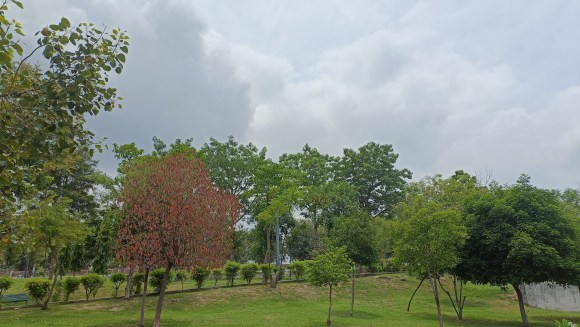
On a deeply personal level, Gomti Riverfront Park has something that leaves one swooning. It’s about the way the gardens are spread out, the song of the sparrows that can often be spotted here on some rare occasions and how the gulmohars shed their red flowers, leaving footprints of earthly vermilion as one takes a reprieve and beholds mynas with miles of yellow eyeline perched atop navy-blue lamps navigating left and right.
On many mornings in monsoon, I have been saved by the protection of the trees here and tasted the rain on my tongue. I have watched sprinklers rise like a spray of rejuvenation on the grass as a pretty wooden seat or those painted in green look on. I have seen joggers initiating a tryst with good health here, cyclists enjoy the joy evinced by these stretches and others practicing yoga to the soundtrack of birdsongs and rustling winds. I have felt myself breaking free from mundane rhythms and anxieties while traversing its meaningful miles and have composed many pivotal poems inspired by its imagery hence solidifying my omnibus of individuality in conjunction with the cityscape.
The Riverfront Park gives silence and tranquil charms in droves and moves far away from the urban bustle so that the green cover and unrestricted steps stretching all the way to the fabled Dilkusha Bridge dispenses with the conventional crowds and makes one experience true serenity.
There are many landmarks like Bibiapur Mansion, Vilayati Bagh a little far ahead. So, history wraps it all around but never to smother its unique identity. Marking the riverfront as a hub of activity and interior space for soaking nature’s humble bounties, this park has so much to offer all at once. It marks the chronology of water and its neighbourhood of riches in the heart of Lucknow.
Prithvijeet Sinha is an MPhil from the University of Lucknow, having launched his prolific writing career by self-publishing on the worldwide community Wattpad since 2015 and on his WordPress blog An Awadh Boy’s Panorama. Besides that, his works have been published in several journals and anthologies.
PLEASE NOTE: ARTICLES CAN ONLY BE REPRODUCED IN OTHER SITES WITH DUE ACKNOWLEDGEMENT TO BORDERLESS JOURNAL
It all started with a Facebook post which quoted Churchill and read, “If you are twenty and not a Communist[1], you don’t have a heart. But if you are forty and still a leftist, you do not have a brain.” That snowballed into a literary discourse on the word great and what constitutes greatness. The funny thing is that Churchill never said anything to that effect. The closest one gets to that quotation is Otto von Bismarck, the first Chancellor of Germany who may have uttered, “He who is not a socialist at 19, has no heart. He who is still a socialist at 30, has no brain.” By the way, Bismarck’s brand of politics earned him the title ‘Iron Chancellor’. How do we classify something or someone as great or otherwise?
As written by the victors, history also designates Churchill as a great leader and statesman. A towering figure, he stood steadfast with the people, with his oratory skills, during ‘The Darkest Hour’[2], as London was bombarded by German fighter planes. Surprisingly, he was also voted out of office after World War II. He was mentioned to have said, “History will be kind to me, for I intend to write it.”[3] I do not think that the family members of the 1943 Bengal famine victims will consider him anything but great – a racist, a bigot and a white supremacist, maybe.
Even then, many in the United Kingdom thought Churchill was not a statesman but a foul-mouthed drunkard. At a function, a female guest of aristocratic standing, obviously not his fan, berated him and his politics. She is said to have said, “Sir, if you were my husband, I’d poison your tea.” Without a single pause, the witty Churchill quipped, “Madame, if you were my wife, I’d drink it!” [4]
When Churchill was informed about the Bengal Famine, he was infamously quoted as saying, “Serves them right for breeding like rabbits and, by the way, why isn’t Gandhi dead yet?” [5]
My point is that one man’s great leader may be another’s mortal enemy. This is especially true in a world where power and wealth are used as a yardstick of prosperity. We often forget that these commodities are finite; the losses of one side exactly offset the gains of the other.
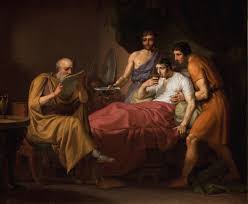
Alexander may be ‘Great’ for putting a small region called Macedonia on the world map. With all the carnage and misery he spread over the lands he and his army traversed, it took only the might of a tiny mosquito to bring him down. At least, that is one of the likely ways he died. Other contenders include alcoholic liver disease, depression and strychnine poisoning.
Alexander The Great On His Sickbed, By Christoffer Wilhelm Eckersberg (c. 1783 – 1853). From Public Domain
Like Alexander, many monarchs with the suffix ‘The Great’, such as Peter, Catherine, and Frederick II, left behind an enormous body count and a trail of devastation.
The Great ‘state-of-the-art’ Titanic was marketed as ‘unsinkable’, and itself was a lifeboat with tight watertight compartments, giving ample time for ferry passengers to be rescued by rescue vessels. Hence, the need for an adequate number of lifeboats was deemed unnecessary. We all know about the irony of its disastrous maiden journey, which is still spoken about a century later as one of Man’s greatest miscalculations.[6]
Indians of the 20th century honoured Karamchand Mohandas Gandhi as a selfless soul who chose a life of poverty to stir the masses’ consciousness towards self-rule. The people thought it appropriate to address him as Mahatma (the Great Soul) or the Father of the Nation. Today, an increasing number of Indians are having second thoughts. Perhaps they may have been taken for a ride and got the short end of the stick from the British. It is amusing that Gandhi’s son, Harilal, despite the reverence of the people of the subcontinent towards his father, also did not hold his father in high regard. Disillusioned with the senior’s move to block his law scholarship to England, Harilal became a rebel, spiralling into alcoholism, eventually becoming a public nuisance and falling into oblivion.[7]
The Great War, also known as World War I, was touted as a necessary battle to end all wars. We know it never ended anything, but its post-war deals remain a nidus for World War II and the turmoils that persist even today.
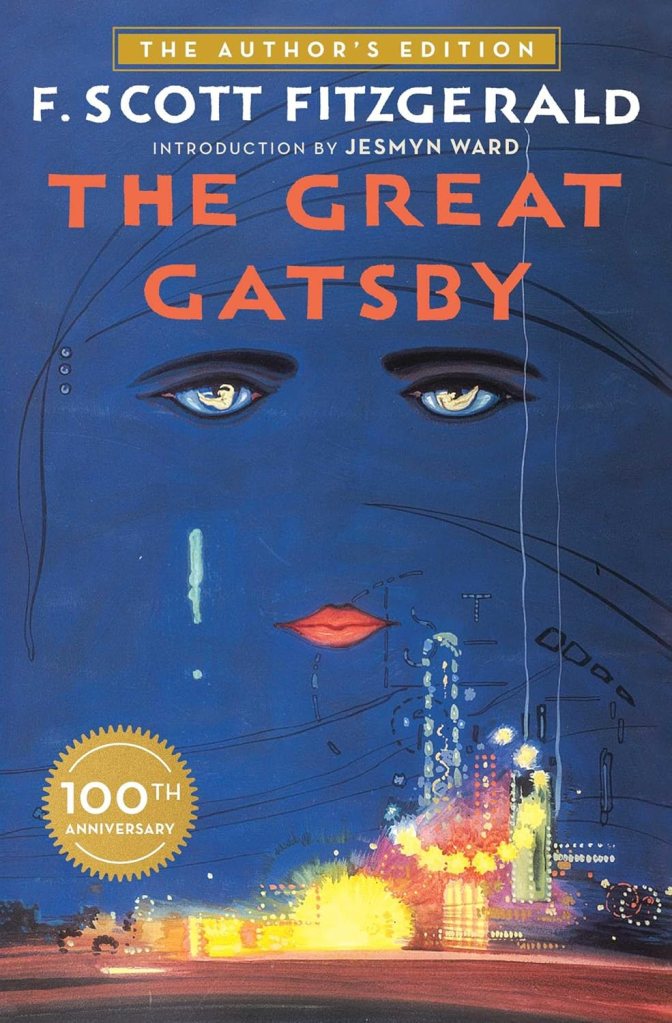
The Great Gatsby exposes the fallacy of the American Dream and the notion of a successful life under capitalism. F. Scott Fitzgerald shows that success-based materialism and trying to relive a nostalgic past will not lead to fulfilment. Instead, it will lead to a decadent path and disappointment. [8]
Published in 1925Film from 2012
In a world so entrenched in wealth acquisition, we have heard of many families afflicted with the misfortune of striking it rich in the lottery and seeing their family spiral into an abyss.
The Great Train Robbery in 1963, the UK’s biggest heist, where the robbers scooted off with the present-day value of £62 million, ended with none of the culprits laying their hands on the loot, but mostly just behind bars. [9]
Just look at Trump and his track to the White House using the ticket which promises to ‘Make America Great Again (MAGA)’. The illusion of the blissful past only morphed into civil unrest, which required the deployment of National Guards and Marines to use flash-bang grenades and tear gas to squash down their own citizens. If that was not enough, now there is talk of MIGA — Make Iran Great Again, perhaps returning Iran to its glory days of the Persian Empire! [10]
When we describe something as great, we usually refer to it in a positive light, as something extraordinary pushing human abilities beyond normal boundaries. It is a subjective assessment. One man’s greatness is another’s failure. It can serve as a cautionary tale for those who have fallen.
It’s just food for thought. After having a bad day at the office when nothing went right, we returned to find that we had forgotten the house key at work and had to go all the way back to the office to retrieve it. What do we say? “Great!”
.
[1] ). Even though this quote is often referred to as coming from Churchill, it may have been originated from Otto von Bismarck, the first Chancellor of unified Germany between 1871 and 1890. He could have said, “he who is not a socialist at 19, has no heart. He who is still a socialist at 30, has no brain.”
[4] People probably put words into Churchill’s mouth. It may be a misquotation. The conversation may have taken place between Lady Astor and Churchill’s aide.
Farouk Gulsara is a daytime healer and a writer by night. After developing his left side of his brain almost half his lifetime, this johnny-come-lately decided to stimulate the non-dominant part of his remaining half. An author of two non-fiction books, Inside the twisted mind of Rifle Range Boy and Real Lessons from Reel Life, he writes regularly in his blog, Rifle Range Boy.
Disclaimer: The opinions expressed are solely that of the author and not of Borderless Journal.
PLEASE NOTE: ARTICLES CAN ONLY BE REPRODUCED IN OTHER SITES WITH DUE ACKNOWLEDGEMENT TO BORDERLESS JOURNAL
Before I ever stepped into a classroom, I had already learned to read and write. Over twenty years ago in Mongolia, children typically started school at the age of eight. But I began a year earlier—at seven—already recognising the letters and words on the page.
I don’t remember exactly how I learned, but I do recall asking my mother, who worked at a school dormitory, to bring me a copy of the Tsagaan Tolgoi (Alphabet Book) from the school library. With the help of my grandparents, I memorized all 35 letters and began reading. Because my mother worked at a school, we often visited the homes of her coworkers. On one such visit, we stopped by the home of the school librarian, Mr. Bayaraa. I remember flipping through one of the literature books for older students and seeing a drawing of a giant with one eye standing before frightened people in a cave. Later, I realised it must have been The Odyssey. From that moment on, I was fascinated. I longed to read every book I could find—especially those with pictures and stories.
When I finally started school, I couldn’t wait to dive into books. But the first-grade routine quickly wore me down: we spent most of our time copying words neatly into our notebooks. Then our family moved from the countryside to the city, and I transferred to a new school. By fourth grade, I was enrolled in a class called Reading and Writing, which would later become Literature. It was my favorite subject. Our teacher encouraged us to borrow books from the school library and read outside of class. That was, without a doubt, the most exciting homework I’d ever been given.
Still, getting into the school library wasn’t easy. Our school operated in two shifts, and my classes were in the morning—from 8:00 to 11:00. I lived nearby and could be home in under five minutes. My grandmother always had lunch ready, usually a warm bowl of bantan. Those were some of my happiest moments.
In the afternoons, I would walk back to school and try to visit the library. But the teacher on duty at the entrance always interrogated me: “Where are you going? Who are you meeting?” I explained that I just wanted to visit the library. Even after getting permission, I often found a sign on the door that read: “Closed for internal work.” Many times, I left disappointed. The librarian never opened the door.
Everything changed when I entered junior high school and gained the independence to ride buses. I started visiting the National Public Library named after D. Natsagdorj. It took about thirty minutes by bus, and I could only afford to go once or twice a week. The library was mostly empty, except for a few elderly men reading newspapers. It used the old Soviet-era catalog system, which was difficult to navigate. Instead, I approached the librarian directly and told her the kinds of books I liked. She always picked something out for me, and even though I never knew what it would be, the anticipation became one of my favorite parts of the week. I spent many summer days in the tiny reading room, lost in stories. When the fall semester began and university students returned, seats became scarce. They, too, relied on public libraries for study space.
By the time I entered high school, our school librarian had changed. Finally, we were allowed to use the library after classes. It had a wide range of books—both Mongolian and international literature. It felt like a dream come true.
Years later, in 2020, my daughter started school. In Mongolia, we celebrate the moment children finish learning their 35 letters with a Tsagaan Tolgoi celebration—a joyful milestone that marks the beginning of reading and writing. Sadly, due to COVID, my daughter never got to experience that celebration. More than that, she never even had a chance to experience a library. Unlike my school, hers didn’t even have a library corner. Due to overcrowding, the library space had been converted into a classroom. After textbooks were distributed during the first few weeks of the school year, the “library” served no other purpose.
As a mother and a former student, I couldn’t help but feel heartbroken by this quiet loss.
Now, as I study in Japan, I’ve started volunteering as an English teacher for first- to fourth-grade students at a local elementary school. It was my first time being at a Japanese school not as a visitor, but as a teacher. Two retired female teachers welcomed me warmly and introduced me to the principal. I would start teaching on May 1st. Even though my Japanese was limited, I felt their kindness beyond words.
We visited the classroom—a spacious room, half of it open for movement and activities. I was shown the storage room where they kept teaching materials, including flashcards. I was given two weeks to prepare. I was thrilled—not just to be working, but to finally be using my professional skills.
I reviewed every flashcard, thinking carefully about how to incorporate them into my lessons. I created a 12-week lesson plan and excitedly prepared for my first class.
But the first class didn’t go as I imagined. Sixteen students joined the English club, and as soon as I started speaking in English, some children looked surprised. Because I am Mongolian and physically resemble Japanese people, many often assume I am Japanese. The students seemed confused—some even asked if I was pretending or acting, wondering why a “Japanese-looking” person was speaking to them in English. I had prepared fun activities like Simon Says and The Alphabet Song, hoping to create a lively atmosphere, but without help from the two retired teachers, it was hard to hold their attention. Somehow, I made it through the class, but I left feeling defeated.
Thankfully, the teachers encouraged me: “Don’t be discouraged,” they said. “Especially with first graders—it’s only been a month since they started school.”
I spent the following week stressed and unsure. How could I communicate with children from another culture? How could I teach kids of different ages and learning levels?
There’s a Mongolian saying: “If God doesn’t know, ask a book.” I realised books were my only hope.
Just like the times I hesitated to enter unfamiliar spaces in Japan, I found myself nervous about entering the university’s children’s library. But I gathered courage, walked in, and soon found myself surrounded by picture books in English.
There were so many beautiful titles—more than I had ever imagined. I felt I was more excited than the children. Since then, finding the right book for my students has become my favourite part of lesson planning. I spend hours reading reviews, flipping through pages, and selecting stories that are both accessible and engaging.
At the same time, I couldn’t help but reflect on how lucky Japanese children are. Back in Mongolia, many children grow up without ever experiencing a library. And here I am, surrounded by cozy furniture and shelves filled with books, just a few steps away from the classroom.
Every week, I arrive an hour early to prepare for class. Right next to my classroom is the school’s library—bright, welcoming, and full of choices. Sometimes I see the first graders visiting with their teacher, eagerly choosing books and settling into child-sized chairs to read. And I think of my daughter. I feel sad—not only because I miss her, but because I know she doesn’t have access to a space like this. At her school in Mongolia, there is no library—not even a reading corner. Watching these children enjoy books so freely makes me wish my daughter could experience the same joy and comfort that comes from being surrounded by stories.
I remember my childhood dream: to one day have a small children’s library of my own. A place where I could read aloud to children, draw with them, fold origami, and spend quality time. That dream has only grown stronger.
In Mongolia, there are very few children’s book authors. Most publishers produce simplified versions of Disney movies or classic tales, often filled with too much text to engage young readers. Finding the right book for my daughter has always been a challenge. That’s when I began to dream—not just of reading books, but of writing one myself. After all, books hold countless lives, stories, and dreams. They are entire worlds we can live in.
I miss my daughter very much. I often make a list of things we could do together—places I want to show her if she ever comes here, places I want to go with her. I especially dream of going to the library with her, choosing and reading books together. I want to read aloud to her the book I think is the most beautiful, and then watch what she imagines, what she draws, and what she creates after reading it.
Sitting here in my university’s children’s library, I felt like I became a child again, and I found myself wishing that children everywhere in the world could have access to a library like this—one that sparks their imagination. That’s when I began writing this essay.
Because libraries are not just buildings filled with books—they are spaces where children begin to dream. I hope that one day, more schools in Mongolia will make room for those dreams. And until then, I’ll keep turning pages, teaching stories, and imagining that little library I still dream of—for my daughter, and for so many others like her.
Odbayar Dorj is an international student from Mongolia currently studying in Japan. Her writing reflects on cultural identity, personal memory, and the power of connection across borders and generations.
.
PLEASE NOTE: ARTICLES CAN ONLY BE REPRODUCED IN OTHER SITES WITH DUE ACKNOWLEDGEMENT TO BORDERLESS JOURNAL
Ratnottama Sengupta introduces a prolific, popular and celebrated Bengali writer and an artist
Dhruba Esh; Courtesy: Kamrul Hasan Mithon
“Dhruba Esh, born 1967, is a full time cover designer – and a part time writer. He has authored stories for children and thrillers for grown-ups. A total of 40 books — or maybe more.”
This is from the cover flap of one of the artist’s published works. Cryptic? Yes. But it does not fail to convey the whimsy every Dhaka-based publisher and poet identifies with the name, Dhruba Esh. Read what Humayun Ahmed (1948-2012), a prolific author, dramatist and director of unforgettable films like Ghetuputra Kamola[1], saysabout the designer in Chaley Jaay Basanta Din[2]. “Must get hold of Dhruba Esh. For some unknown reason he’s been out of reach. Pasted on the front door of the flat he lives in is an A4 sized paper. It is adorned with the sketch of a crow in flight and is signed off with these words in Dhruba’s handwriting: ‘The Bird has Flown the Nest.’
“What I need to do is this: Throw away that A4 sheet and replace it with another, inscribed by these words: ‘Come back, Birdie!’
“Dhruba Esh might not know, but a bird that takes to its wings always returns to its nest. Only the caged bird has nowhere to fly off to. Its only reality is to stay put in one location…”
Why am I taking a serious note of what Humayun Ahmed wrote? Not only because Dhruba Esh has penned the biography, Tumi Achho Kemon, Humayun Ahmed? More so because this custodian of Bangladesh literary culture, who continues to be a top seller at Ekushe Book Fair[3], is one of the cornerstones of modern Bengali literature on either side of the barbed wires.
Dhruba Esh is himself a legend in the Bangla literary firmament, I learn from Kamrul Hasan Mithon, a photographer turned publisher cum writer has been instrumental in reconnecting me with my father, Nabendu Ghosh’s roots in Kalatiya, once a village in Dhaka district that is now a suburb of the capital city. Bhaiti, as I affectionately address him, has been writing a column, Dyasher Bari (Ancestral Home), in Robbar (Sunday) magazine published online from Kolkata. Featured in it are all the major names of Bengali art, literary and cinema world — from Suchitra Sen, Mrinal Sen, Paritosh Sen to Ganesh Haloi, Miss Shefali, Sabitri Chatterjee and not forgetting Baba.
“Dhruba Esh is just one of his kind. He does not have a wife, no mobile, nor a Facebook page. He does not even ride a bus or train. If a destination is too long to walk, he travels only by rickshaw. He is most indifferent to money matters. But he is most enthusiastic about painting and designing.
“Starting in 1989, when he was still a second year student at the Dhaka University, he has designed nearly 25,000 book covers. In addition he has designed music albums – and T’s too! Three years ago he was bestowed with the Bangla Academy Literary Award for his contribution to Children’s Literature – with titles such as Ayng Byang Chang[4] and AmiEkta Bhoot[5].”
I fell for ‘Amiyashankar…’ at the very first reading. How effortlessly the surreal narrative etches a contemporary reality obtaining in the land of my forefathers!
Amiyashankar Go Back Home
Story by Dhruba Esh, translated from Bengali by Ratnottama Sengupta
Subachani or Bar footed Geese flying over Himalayas: From Public Domain
“Amiyashankar Go Back Home!”
“That’s the title of the book?”
“Yes Sir.”
“Is there a poem by this name?”
“No Sir. There’s no mention of Amiyashankar in my poetry.”
“No mention at all? Oh!”
“Can I send you some of my poems?”
“You may send.”
“Can you do the cover within this month?”
“Not this month. You’ll get it on the 12th of the next month. Only sixteen days to go now.”
He started laughing.
He’s a small town poet. A young professor. I have been to the town where he teaches in a girls’ College. It’s like a watercolour painting. There’s a river to the north of the town. Blue mountains in the distance complete the view.
The geese of Subachani had flown over this town on their journey towards the Manasarovar to restore Ridoy to his human size. The poet was unaware of this. He has not read Buro Angla[6].
“What is the book about? Birds?”
“You can find the PDF on Google.”
“Thanks. I will read it.”
Two days later he called. “Reading BuroAngla has sparked some fireflies in my mind. I’d not read the book until now.”
He was given my number by Rasul Bhai, a poet and a cricketer from the same town. He just about looks after the family publishing business. A good person. Last year I had done the cover for his book of poems, Lake Mirror of the Full Moon.
The poet had emailed his poems. He had said he’d send some poems, instead he had sent the PDF of the complete book. On the basis of Divine Selection I read 13 poems. He cannot be faulted for not reading Buro Angla. This poet writes good poetry. In two days I readied the cover for his book.
*
“Is Amiyashankar a friend of yours?”
“No.”
“Why are you telling him to go back home?”
“Because he is Amiyashankar.”
“What?”
“His wife waits for him.”
“He has no one of his own but his wife?”
“He has kids. One son, one daughter.”
“What does he do?”
“He’s a teacher in a government primary school.”
I was startled. Subhankar, Tushar, Amiyashankar, me — we are childhood friends. Our Amiyashankar is a teacher in a government primary school. He has a son and a daughter. The poet who lives in another town has never been to our town. He is not likely to have set his eyes on or made an acquaintance of Amiyashankar. Or, is a person likely to know another person through social media?
“I am not on social media,” said the poet.
“Why?”
“I get disoriented. Confused.”
“Oh. Your Amiyashankar’s wife is named Mitra?”
“Mitra. Yes, I did not tell you, sorry. Amiyashankar’s son is called Arnab, his daughter is Paramita.”
“Why are you creating Amiyashankar?”
“I have no friend.”
Our Amiyashankar’s wedded wife is Mitra. His son is Anu, Miti his daughter.
I call him.
“Hey, what’s the proper name of Anu and Miti?”
“Here — Anu is Arnab…”
“And Miti is Paramita?”
“Yes. You know it already.”
Really tough to suffer this.
I mentioned the poet. Amiyashankar did not read or write poetry. He had never heard of the poet.
“A modern poet?” he was curious.
“A post-modern modern poet.”
“Now what is THAT? Good to eat or wear?”
“Eat. Wear.”
“Does it hide your shame?”
“It covers your shame.”
“Good if it hides all.”
“Yes. Right. Where are you now?”
“I’m here, at Moyna and Dulal’s stall, sipping tea.”
“Aren’t you cold? Go back home.”
Amiyashankar, go back home.
*
On the 12th I sent the EPS file of the cover to the poet.
“If you don’t like it you may discard it,” I messaged.
Reply: “Will you design another cover then?”
Reply: “No.”
Reply: “This will do. I like it. There’s no Amiyashankar but one can visualise him. Thanks. Do I pay you online through bKash?”
I sent my bKash number. He sent the money.
End of give-and-take.
*
I blocked the poet’s number. I deleted every bit of communication in the mail. We had an Amiyashankar in flesh and blood. The poet had concocted an identical Amiyashankar. That Amiyashankar did not live and breathe – how’s that? Such convolution and complication! I was fed up of continuously, endlessly, unendingly living in complexity.
Better to shut my eyes and think of uncomplicated glow worms in my mind.
.
[1] A 2012 film by Humayun Ahmed centring around the exploitation of ghetupatras – young boy performers, Komala being a ghetupatra.
[6] Book by Abanindranath Tagore (1871-1951, nephew of Rabindranath Tagore) published in 1953. Buro Angul is Thumb in Bengali. This is the humorous story about a mischievous boy, Ridoy, who was shrunk to the size of a thumb. He had to journey to the Mansarovar in Himalayas to regain his original size and meets various creatures, including the geese referred to here.
Dhruba Esh, born 1967, is a full time cover designer — and a part time writer. He has authored stories for children and thrillers for grown-ups. A total of 40 books — or maybe more. This story was first published in Bengali in a hardcopy journal called Easel.
Ratnottama Sengupta, formerly Arts Editor of The Times of India, teaches mass communication and film appreciation, curates film festivals and art exhibitions, and translates and writes books. She has been a member of CBFC, served on the National Film Awards jury and has herself won a National Award.
.
PLEASE NOTE: ARTICLES CAN ONLY BE REPRODUCED IN OTHER SITES WITH DUE ACKNOWLEDGEMENT TO BORDERLESS JOURNAL
I live close by to the Brighton Jetty. Going for a walk there gives me my daily dose of sunshine and smiling faces, soothing me when I feel lonely. Sometimes, I’ve gone and bought a lemon sorbet or sausage roll, eating it whilst seated on a bench overlooking the jetty. On summery days, families play in the shade under the jetty, making memories that will last a lifetime. At sunset, you can see couples strolling hand-in-hand, stopping only to snap selfies against an impossibly photogenic crimson sky. From dawn till dusk however, when you walk upon the jetty, you’ll see fishermen, and the occasional fisherwoman. They have set up camp with foldable chairs and boxes of fishing gear. They sit slumped with their nose in their phones, waiting hours for a bite. Dismembered crab claws and fish guts add to the stained cement, making for a grotesque and pungent scene of nautical carnage.
Many years ago, if you walked out to the end of the jetty on any given day, you may have seen an unusual sight, a trolley with two blanket-covered chihuahuas snuggled in it. They belonged to an old man who sat and fished nearly every day. The tiny dogs were swathed in raggedy blankets and nestled within a trolley. One had a stained camo baseball cap on while the other had a beanie. They were equipped with tiny life vests, perhaps on the off chance that they decided to stumble into the sea. Instead, they sat shivering in the ocean breeze, staring with bleary eyes far out across the sea. Their wise pink eyes must have seen far beyond space-time.
Jetty Dog by Vela Noble
I had been a teenage artist with my heart set on an art school in California at the time. I plopped down in my baggy jeans on the fish-stained concrete and sketched the dogs with a pen. My agenda had been that acceptance into the school required a portfolio of artworks all drawn from life. Noticing my gaze, the old man hobbled proudly over to me and showed me an oily newspaper clipping in his wallet.
‘Look, my dogs ended up in the newspaper!”
Other Adelaidians had obviously also thought this scene was charming and worthy of being remembered. For simply sitting there in the salty air, the two dogs and their bristly bearded owner seemed to have become as much a part of the jetty itself as its barnacled steel beams. I visited the old man and his dogs a few afternoons while I was preparing a portfolio for art school, and then I was gone. Overseas to Los Angeles and other big cities and, for the longest time, I put my memories of little old Adelaide behind me.
This all happened a long time ago, around a decade to be precise. Fate had pulled me back to my hometown and back to my childhood home. Sometimes, when I stroll in the sunshine down to the jetty and sit there slurping my lemon sorbet, I almost expect to see that elderly owner with his two chihuahuas, perched in their rightful spot at the shaded end of the jetty. Instead, the newer generations of fishermen have taken over, more concerned with TikTok reels than fishing ones. I would love to know what happened to that old man and his two chihuahuas.
Vela Noble is a student at Adelaide University currently finishing her BA degree majoring in Creative Writing and Japanese Studies.
.
PLEASE NOTE: ARTICLES CAN ONLY BE REPRODUCED IN OTHER SITES WITH DUE ACKNOWLEDGEMENT TO BORDERLESS JOURNAL
I learnt early that life is never fair. They say time and tide wait for no man, moving along their own trajectory.
I heard money solves all problems or at least eases the pain of tough times. There was a time I ventured into saving mode. I started my own piggy bank, dropping in a coin almost daily into a plastic-mould chick figurine. I patted myself on the back as the clink of coins became louder and louder. It was not much, but every jingle reminded me of the value of money and the comfort it would provide me one day. The trouble was that my sisters were equally pleased that my coffers were filling to the brim. They began needling out coin after coin to finance their addiction of buying little treats. I felt frustrated. I knew saving was hard, but I never expected reaching my goal to be so difficult. My sisters’ malfeasance came to light one day when I noticed that the piggy bank had been displaced away from its usual place, tucked behind my nice shirts. That was when I confronted my sisters.
In my eyes, I did nothing wrong. Instead of admonishing my sisters and compensating for my loss, Amma claimed it was my fault. She taught me the harsh truths of life. It was my responsibility to safeguard my property, not anyone else’s. After that realisation, I sought out other ways to save money.
Then, I had a new group of friends. I joined a competitive group of classmates who wanted to excel academically. I thought that would be easy. I devoted all my time to studying and paying attention in class. It seemed easy, but it was a different story when the examination results were released. It was the class jester, for whom everything was a joke, who came out on top. Another valuable lesson I learnt was not just to study hard, but to study smart.
As I grew older and the screaming radio became a constant background to my daily life, I realised that the world was not a peaceful place. On one hand, songs promised a tranquil world of apple trees and honeybees[1]; from the same country, they sent tanks and bombs to annihilate each other. It seemed that the Vietnam War would never end. Peace in the Middle East was merely a pipe dream.
Amidst all that, a hippie song emerged, envisioning a world without boundaries, an airspace free from control, and a peaceful existence [2]. It instilled a sense of hope that life might indeed have something to look forward to after all. The image of two figures dressed entirely in white playing a white grand piano remains permanently etched in my mind as the beacon of hope that one day everything will be all right. And life went on.
After many years of burning the midnight oil and reaping bitter seeds, its sweet fruit finally emerged. Yet, all my classmates who were partying and living life to the full had already gained a head start in their careers. They had ascended the ladders of their professions and were cruising around in flashy cars, while I was starting as an intern with little to show except a few letters behind my name. The competitive streak within me, however, reassured me that academic excellence is superior to the acquisition of wealth.
I continued my healing work, convincing myself that what I was doing would be returned in kind and that I would receive blessings of a different kind. As time passed, I realised that those were merely comforters to soothe a colicky baby. The old adage ‘health is wealth’ was a fallacy. In the real world, wealth buys health, just as one gets justice with all the money one can afford to pay for legal services. The youthful cry of ‘Can’t Buy Me Love’ [3] was another lie. Money buys everything, and it feels better to cry in a BMW than by the footpath of the street.
So, there I was, thinking that if I were to follow the ways prescribed by the elders, I would be all right. “Tell no lies.” They said. “Speak only the truth!” Then there were people who made lying— or they would call it ‘bending the truth’— the pillar of their profession. “Don’t be materialistic, look at humanity!” Tell that to the stockholders who do not take it kindly when the conglomerate shows high praises and blessings but announces no monetary returns in dividends. For one thing, even big countries help each other not for altruistic reasons but for geopolitical and economic interests. There is no such thing as a free lunch. Everything comes with its encumbrances.
I was advised not to fight back but to turn the other cheek. Yet, behind my back, the world has regarded me as a fall guy, and I was merely a useful idiot—someone they could blame for all their wrongdoings because I was naïve enough to admit my mistakes. Now my friends urge me to strike before the other party draws first blood and to never admit to any wrongdoings.
As human beings, we yearn for a world without conflict. We all desire peace of mind—a world where everyone follows a single prescribed path, where everything falls into place, a utopia in which one person sees another not by the colour of their skin or the tunic they wear, but by the strength of their character. Most prayers we offer to a higher being invariably end with ‘Peace on Earth’ or ‘Happiness for All’. Prayers like ‘Sarve Bhavantu Sukhinaha‘ [4] and ‘Om Shanti‘ [5] assume that everyone can have things their way at one given time, creating a win-win situation. Such a situation can only exist in our imagination. Regardless of what everyone else says, life is a zero-sum game. For someone to win, another must lose, somewhere, somehow. For the lion colony to be happy, a goat must be sacrificed. Contentment is achieved when we acknowledge our limitations and accept that sometimes things do not go in our favour. Outcomes may improve if we recognise that we can only do so much.
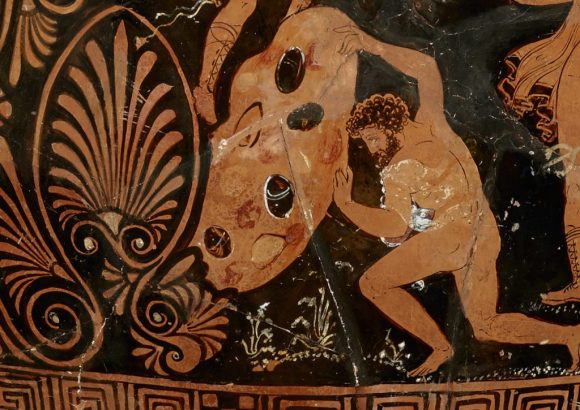
An Earth without conflict is a pipe dream. The natural course of events is entropy interspersed with instances of chaos and order. One can choose to adopt a nihilistic view of our existence and do nothing, or be like Sisyphus [6] — resigned to the fact that we are in a hopeless situation — but strive to find joy in setting small targets and achieving modest successes, filling our hearts with laughter and happiness during the lull before the storm, and endeavour to leave a better future for the next generation.
When everyone found it impossible to carry a big load, the human mind devised the wheel. When the greener pastures across the lake obsessively stirred the curious, it took one brave young man with the imagination to make a raft of fallen tree trunks. Hope springs eternal in the human breast[7]. The change we want the world to embody starts with the man in the mirror. Numerous social experiments have repeatedly shown that doing a kind gesture is contagious. One good turn deserves another. No good deed remains unreturned. We can try.
Sisyphus: From Public Domain
[1] A verse from The New Seekers’ “’I’d Like To Teach the World to Sing” became a jingle for Coca-Cola later.
[2] John Lennon’s most successful solo single, ‘Imagine’, envisions a world of peace without materialism, without borders separating nations, and without religion.
[3] The Beatles’ 1964 hit ‘Can’t Buy Me Love’ is a McCartney composition that naively preaches that true love cannot be bought. In the later stages of his life, McCartney discovered the hard way that divorce, without a pre-nuptial agreement for someone of his stature, could be financially draining. Money can’t buy love, but falling out of it can be costly.
[6] In Greek mythology, Sisyphus was a shrewd king. The gods condemned him to roll a boulder up a hill for eternity, only to see it roll down again after reaching the summit. Albert Camus, in his book ‘The Myth of Sisyphus,’ implies that Sisyphus was happy. He found performing and completing the act itself meaningful. He gave meaning to the meaningless.
[7] “Hope springs eternal in the human breast,” an excerpt from Alexander Pope’s poem “An Essay on Man.”
.
Farouk Gulsara is a daytime healer and a writer by night. After developing his left side of his brain almost half his lifetime, this johnny-come-lately decided to stimulate the non-dominant part of his remaining half. An author of two non-fiction books, Inside the twisted mind of Rifle Range Boy and Real Lessons from Reel Life, he writes regularly in his blog, Rifle Range Boy.
.
PLEASE NOTE: ARTICLES CAN ONLY BE REPRODUCED IN OTHER SITES WITH DUE ACKNOWLEDGEMENT TO BORDERLESS JOURNAL
There is a word I’ve never been able to say. Just three letters in Mongolian—“ААВ” (father)—but for me, it’s the most difficult word of all. I’ve never called anyone by that name.
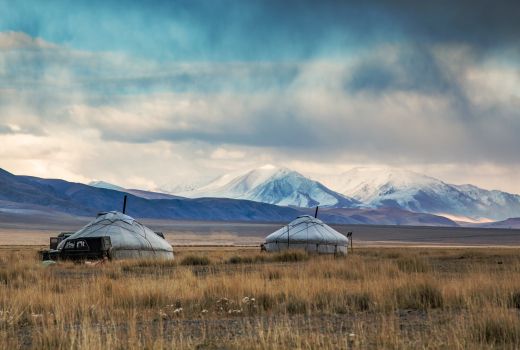
Duut in Mongolia. From Public Domain
I remember second grade in Duut Soum, one of the most remote and elevated villages in Mongolia. It was a small, close-knit place where everyone knew each other. My classmates and I had grown up together—from kindergarten to school, playing outside in the same familiar streets. Because there weren’t many children, each grade had only one class. Ours was one of the largest.
One day, our teacher assigned us to write a composition titled “My Father”. It was a simple assignment for most, but for someone who had never known a father, I didn’t know where to begin. For the first time, I asked my mother for help. I remember her thinking of her own father—my grandfather—and guiding me gently: “Write that when he comes home, it feels like a mountain’s shelter fills the house.”
I wrote exactly what she said and turned in my paper.
Later, our teacher read aloud one of the essays she liked best. To my surprise, she read mine. I was so embarrassed, I wanted to disappear from my seat. I still wonder why she chose it — maybe because it touched her, or maybe because it came from a child imagining what she had never experienced. When she finished, some boys asked, “How can she write about a father if she doesn’t have one?” Their words cut deeply. I didn’t cry, but I wanted to.
From that moment on, every assignment about “father” became something I dreaded. It felt unfair that schools continued to assign such topics, as if everyone had the same kind of family. In a world where many grow up without a father or mother, why do we continue to teach in ways that exclude them?
Despite it all, I’m endlessly grateful to my mother. She raised me without letting me lack for anything. Because I never had a father to begin with, I didn’t know what I was missing—until much later.
In 2022, I came to Japan as a student. It became one of the most beautiful periods of my life. I met many wonderful people, and one of them was Toshio-san.
As summer approached, I was researching places to travel. When I showed Toshio-san my list, he pointed to one place, Shimanto River. “That’s near my home,” he said. “I can help you get there.”
We arranged to meet at the library the following week. Punctual as always, he was waiting at the entrance. We planned to go on August 22, and he suggested we stay two nights instead of one. I agreed. He called a friend to find accommodations and promised to take me to the Pacific Ocean.
Later, he returned from a trip with brochures and snacks for me, but due to rising COVID cases, he suggested we postpone. “But I promise, I’ll take you,” he said. I would have understood if it didn’t happen, but just before classes resumed, he contacted me again. He opened his calendar and asked about October 29–30. I had no plans, so I said yes.
Before leaving, he added, “Oh, one more thing. Do you know Yuto Ishihara? He’ll join us.” I did. Toshio-san thought I might feel uncomfortable traveling alone, so he arranged a friend for me.
I counted the days until October 29.
When the day came, he called at 5:55 a.m., right on time. We picked up Yuto and headed toward Kochi. It was a warm, golden day. Our first stop was Umi no Eki in Toyocho, famous for fresh raw fish. Unfortunately, I dislike raw fish—and raw eggs too, which was part of the breakfast set. When I asked if it was boiled, Toshio-san laughed and explained that Japanese people enjoy mixing raw eggs with rice and soy sauce.
Still, I ate the miso soup and rice and watched the surfers nearby.
“Kochi is known for its waves,” he said, smiling.
We visited a cave near Muroto, one of Tokushima’s 88 pilgrimage sites, and passed through orange fields. “Do you like oranges?” he asked.
“Yes, I love them!”
He immediately called a friend to find the best ones and bought me two bags. I shared a few, then ate the rest happily. Watching me, he said, “What else do you like? I’ll get it for you!” He was sincerely happy to make me happy.
That’s when a thought crossed my mind: What would it have been like to have a father?
I had never asked myself that before. But seeing someone care so sincerely, someone wanting to make me smile, I couldn’t help but wonder: If I had a father, would he have been like Toshio-san?
We visited the famous Hirome Market in Kochi for lunch. I told him I liked karaage (fried chicken), and he got me several types to try. Later, we drove to Tosashimizu. On the way, he talked on the phone—I guessed it had something to do with fish.
By the time we arrived, the sun was setting. We went to Tosashimizu Geopark to see the sunset. Though we were late, the orange glow lingered, and the lighthouse in the distance glowed beautifully.
That night, we visited an elderly woman, nearly 100 years old, who gifted me handmade crafts and an eco-bag. Then we went to a guesthouse run by another friend. Dinner was elaborate, and though they had prepared sashimi, Toshio-san had informed them in advance that I didn’t eat raw fish. They made grilled chicken just for me.
It was then that I realized: that phone call earlier had been for me.
Another guest joined us—a friend of Toshio-san’s who showed me his collection of sea shells and marine fossils, each labeled and categorized. He even gifted me one as a keepsake.
At that moment, I remembered a Mongolian proverb:
“When your father is alive, meet people. When your horse is healthy, travel far.”
I had never been introduced to so many people before. This was what that proverb meant.
The next morning, we woke early to watch the sunrise. Words can’t describe its beauty—the waves crashing, the golden light spreading over the ocean and cliffs, the lighthouse standing tall.
We visited Kawashijima Island, where the sea was so clear we could see fish without any equipment. Later, we had lunch at another friend’s restaurant—a tiny, spotless place where I had the best omurice I’ve ever tasted. While waiting, another friend of his joined us—a lively woman who had worked in elementary school and was now a river master.
Although it was only a two-day trip, I met so many new people and visited countless beautiful places. It became one of the most precious memories of my life—when I truly felt how beautiful this world is, and how many kind-hearted people there are in it. In those moments, I found myself thinking, If I had a father, maybe he would have taken me on a trip like this, introducing me to his friends, just like this.
And in those moments, it felt like the wound I’d carried deep in my heart for 26 years had finally started to heal. The thought: What if I had a father?
Just be kind. Your kindness may fill someone’s emptiness. It may even heal a wound they’ve been silently carrying for years. Maybe, at that time, Toshio-san didn’t even realize how much of that space he had filled in me. But I truly wanted to say the word I could never say for so many years—father—to him.
Even though we were born in different countries, speak different languages, and live in different cultures, I found the father I had long searched for—in Japan. I haven’t seen Toshio-san since, but if I’m ever asked about my father, I will tell this story again and again.
Because sometimes, it doesn’t take blood to become family.
Sometimes, a kind voice, a shared meal, or a smile from the heart is enough to fill what we thought would always be missing. In a quiet corner of Japan, through simple acts of kindness, I found a sense of belonging—and perhaps, the most unexpected gift of all: a father’s love.
Odbayar Dorj is an international student from Mongolia currently studying in Japan. Her writing reflects on cultural identity, personal memory, and the power of connection across borders and generations.
.
PLEASE NOTE: ARTICLES CAN ONLY BE REPRODUCED IN OTHER SITES WITH DUE ACKNOWLEDGEMENT TO BORDERLESS JOURNAL
Life evolves. The new replaces the old, and fresh ideas overshadow previous ones. What was once an avant-garde style one day may appear unattractive the next. We sometimes feel embarrassed by the clothes we wear and the trends we embrace decades after models showcased them on the catwalk.
Trends come and go constantly. Species become extinct at a background rate of one species per million each year. Human activities, such as habitat destruction and chemical pollution, have accelerated this decline by hundreds or thousands of times.
At times, cataclysmic accidents of Nature expedite this decline, such as meteoritic impacts and the extinction of the dinosaurs 65 million years ago. Neanderthals lost the survival game to Homo sapiens because they did not adapt to environmental demands, though not without infusing their DNA into the latter. Should we consider this an inevitable consequence of our existence, or should we strive to rectify it with our current level of scientific advancement?
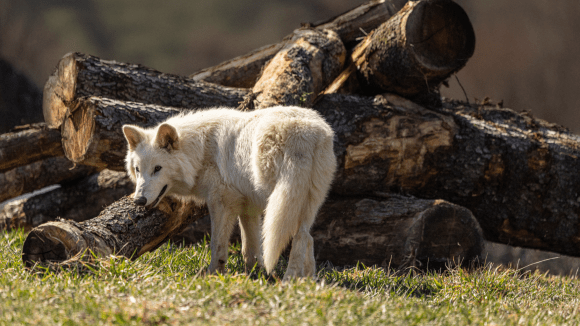
It was recently reported that a rare species of wolf, the dire wolf, last roamed the Earth 13,000 years ago. Three dire wolves have been recreated using CRISPR technology[1] and surrogacy, allowing them to roam the Earth once more. Part of their DNA was extracted from an ancient fossil and transplanted into an artificial grey wolf egg. The grey wolf differs genetically from the dire wolf and is related to the domesticated dog. Dire wolves were fierce apex predators that existed before humans, when the world was a much more hostile place.
The scientists who embarked on this experiment thought it was a necessary first step towards preventing further species extinction. Their next objectives include recreating the dodo bird, which humans hunted to extinction due to its ease of capture, and the Tasmanian tiger. Scientists are particularly fascinated by Tasmanian tigers because they belong to a rare group of marsupials mainly found in Australasia. Additionally, rats with woolly mammoth genes are also being developed in laboratories somewhere.
Are these all really necessary? On one hand, humans pose the greatest threat to all living beings. We not only kill each other but also other species to assert our dominance. Our mere existence on Earth leaves a significant carbon footprint, which could potentially destroy the planet before its expiration date. Logically, we are a greater threat to the species than Nature’s natural selection. We should not exist at all. We only expedite doomsday. Yet, we carry the notion that the burden of preserving the third rock from the Sun for eternity lies squarely upon our shoulders.
A real example of the danger of our manipulation of Nature’s order can be seen in our irritation with pathogenic insects. DDT[2] was introduced to control mosquitoes. We believed we were doing a great service by reducing arthropod-borne diseases, only to realise the crucial roles insects play in pollination and, by extension, our food chain. Rachel Carson’s [3]now-famous 1962 line, “the spring with no chirping birds”, serves as a grim reminder of Nature’s intricate web of interdependency and the detrimental effects of chemical pesticides. Every being has a specific role in the grand scheme of things.
Wolves regulate the overpopulation of large herbivores, such as elk and deer, which helps maintain plant health and diversity. Mosquitoes and many other insects may be pests, but they are also essential for plant pollination and are integral to the food chain that helps balance the ecosystem. Dodos and Tasmanian tigers may have had their significance at one time. Nature, the greater equaliser, must have its reasons for ending its existence. To act against Nature, to correct something we perceive as wrong, is foolhardy.
Hollywood offers a fictional reminder, as was seen in Jurassic Park, of what occurs when humanity meddles with Nature, regardless of how thoroughly we believe we have crossed the ‘t’s and dotted the ‘i’s. The seed of life possesses a mind of its own. Its innate drive to propagate may lead to the creation of dangerous hybrids, mutants, and chimaeras or even result in hermaphrodites within species to ensure continuity.
Even before the dire wolves’ secret whereabouts are made public, Elon Musk has already expressed his desire to have one as a pet. This shows that these freak products will just end up as rich men’s playthings. It is unlikely that this technology will significantly change the day-to-day life of the average person. The tech moguls may view these baby steps as precursors to transhumanism, a better version of humanity, where human capabilities are enhanced synthetically through technology, bypassing Nature’s selection.
Anyway, the last thing we want to see in our lifetimes is new breeds of vicious, ferocious dire wolves joining forces with woolly-toothed mice and bloodthirsty Tasmanian tigers in our streets, searching for us as food in a borderless world as far as these beasts can see.
From Public Domain
[1] CRISPR technology, or Clustered Regularly Interspaced Short Palindromic Repeats, is a gene-editing technique.
[2] Dichlorodiphenyltrichloroethane, is a synthetic chemical compound that was once widely used as an insecticide and a key component in malaria control efforts.
6. Transhumanism is a philosophical and scientific movement that advocates the use of current and emerging technologies, such as genetic engineering, cryonics, artificial intelligence (AI), and nanotechnology, to enhance human capabilities and improve the human condition.
.
Farouk Gulsara is a daytime healer and a writer by night. After developing his left side of his brain almost half his lifetime, this johnny-come-lately decided to stimulate the non-dominant part of his remaining half. An author of two non-fiction books, Inside the twisted mind of Rifle Range Boy and Real Lessons from Reel Life, he writes regularly in his blog, Rifle Range Boy.
.
PLEASE NOTE: ARTICLES CAN ONLY BE REPRODUCED IN OTHER SITES WITH DUE ACKNOWLEDGEMENT TO BORDERLESS JOURNAL
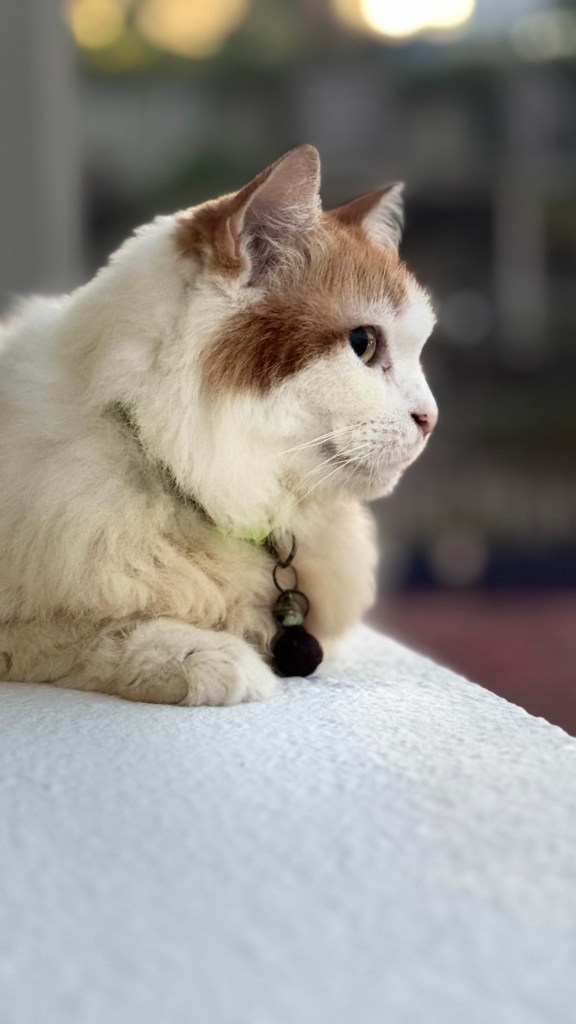
Just the other day, a visitor to my home made a remark. She observed that my cat, Felix, was staring into the horizon while sitting by the glass window. Felix seemed unfazed by the activities within the house, instead focusing his gaze on the neighbour’s gate. In front of the neighbour’s compound stood a few stray cats, returning his stare. It resembled a kind of staring competition.
The visitor remarked that Felix might be looking at all his stray friends on the other side of the fence, envying their lifestyles. They could roam freely whenever they wished, accompanied by their pack of friends. Wherever they rested their heads was their home. Moreover, they did not have to endure his fortnightly baths or grooming. Oh, how Felix loathed those cold showers and the bare feeling afterwards when there was not enough fur on his Persian body to lick, beautify, and flaunt. As for the food… throughout his life, the only sustenance he consumed was in pellet form. The occasional lizards and insects he hunted down with the remnants of what his dormant DNA offered were swiftly intercepted by his owners. This is why Felix the Cat was often seen engaged in forlorn glances, brooding over his seemingly helpless situation.
In response, I told the visitor that Felix’s feline friends on the other side of the fence would likely feel the same way. They would be gazing at him with eyes brimming with envy. If only they grasped a bit of philosophy, they would be yelling, “life is not fair!” Here sits Felix in the comfort of the house, in an aesthetically pleasing environment shielded from the harsh forces of weather and nature, with love overflowing all around, soothing tactile stimuli to caress and rub against him, protected from noxious ailments, and safeguarded against prancing predators and cruel individuals discontented with their presence or their annoying mating calls.
They would probably pray to swap places with a house cat in their next life. Felix, were he to believe in rebirth, would likely yearn to roam free without being tethered—symbolically, of course, as cats are not leashed, a privilege they possess over their fellow domesticated ‘friends’, the dogs!
That is life, is it not? No one is truly satisfied with their existence. Everyone believes the grass is greener on the other side of the fence. What they may fail to grasp is that it appears greener because the soil is fertilised with manure. One must endure the stench of excrement to appreciate the outcome. The poor man looks at his wealthy neighbour and assumes that once he secures that coveted high-paying job and some money, everything will be splendid. Meanwhile, the rich man gazes at the poor, reminiscing about his long-lost days of poverty when life was simple and sleep was undisturbed.
Poet Kannadasan[1], in one of his many wisdom-filled compositions, envisioned a situation: the snake, a natural prey of the eagle, residing upon Lord Shiva’s neck, haughtily sneering at Garuda[2] and inquiring if he was well. The snake, securely nestled in the protection of the Lord, knows that Garuda cannot harm him. Garuda responds that everyone would be just fine if they were in the place they are meant to be. Kannadasan then quotes the Tamil poet Avvaiyar[3],who asserted that the world respects you when you hold a prominent position. When you stumble, even your shadow will defy you. I believe the essence of the message is to accept and appreciate what one possesses in life. Unrealistic expectations lead only to disappointment, whilst acceptance fosters contentment.
.
[1] Kannadasan (1927-81), also known as Kaviarasu (King of Poets) is considered one of the greatest Tamil poets.
[2] A legendary divine eagle-like bird who is the mount of Vishnu.
[3] A Tamil woman poet (supposed to have lived in the first century BCE) from the Sangam period (300BCE – 300 CE).
Farouk Gulsara is a daytime healer and a writer by night. After developing his left side of his brain almost half his lifetime, this johnny-come-lately decided to stimulate the non-dominant part of his remaining half. An author of two non-fiction books, Inside the twisted mind of Rifle Range Boy and Real Lessons from Reel Life, he writes regularly in his blog, Rifle Range Boy.
.
PLEASE NOTE: ARTICLES CAN ONLY BE REPRODUCED IN OTHER SITES WITH DUE ACKNOWLEDGEMENT TO BORDERLESS JOURNAL
Mongolians hold a special ceremony called the “haircut celebration” for young children, but not everyone is invited to this event. Especially not someone like me, who has gone through a divorce.
I had been meaning to write about this for a while, and now, nine months later, I finally find myself sitting in front of my computer, ready to share my thoughts. After coming to Japan as a student for the second time, I have had the opportunity to take many interesting classes. Among them, the most captivating one was Kamata-sensei’s English Language Cultural Class. Every week, the professor selected a story for us to read before class, and during the lessons, we would discuss our favorite parts and share our thoughts. Sometimes, the professor would ask thought-provoking questions, sparking lively discussions. This class quickly became one of my favorites, something I eagerly looked forward to each week.
We primarily read short stories written by foreign authors living in America. I was amazed by how much emotion, thought, and complexity could be packed into such short narratives. The professor’s careful selection of stories made me admire her even more.
One of the stories we read was Kyoko Mori’s Yellow Mittens and Early Violets. During our class discussion, we talked about cultural differences across countries. There were only four students in our class—one from Morocco, one from Mongolia (me), one from the Philippines, and one from Japan—plus our American professor. This small group allowed us to exchange ideas freely and truly listen to one another. It was fascinating to see how five people from five different cultural backgrounds could read the same story but interpret it in completely different ways.
During this discussion, I shared a personal story about Mongolian traditions, which I now want to write about here.
For Mongolians, hair holds deep symbolic meaning. For instance, women traditionally do not leave their hair loose; it is always braided. Only those in mourning let their hair down. Similarly, if a child’s hair is left uncombed and tangled, it is believed to shorten their lifespan and diminish their fortune.
One of Mongolia’s most significant traditions related to hair is the sevleg urgeh (first haircut) ceremony. Since ancient times, Mongolians have referred to a young child’s untouched hair as sevleg or daakhi, showing deep respect for it. The first haircut is performed with great care, wishing the child a long, prosperous life.
Traditionally, a girl’s hair is cut in mid-summer, guided by the call of the cuckoo, while a boy’s hair is cut in mid-autumn, following the sound of the stag. Families invite relatives and friends to participate in the ceremony. The ritual is conducted when boys reach an odd-numbered age (for example, 3, 5) and girls reach an even-numbered age (for example, 2, 4). This belief stems from the Mongolian spiritual concepts of arga (odd numbers, representing action) and bileg (even numbers, representing wisdom).
The ceremony begins with an elder—typically the most senior and respected person present—touching the child’s hair with a wooden knife before using scissors to snip the first lock. The elder then dips the wooden knife into a cup of milk, allowing a drop to fall onto the scissors. This ritual ensures that the blade does not “harm” the child, symbolically purifying the act. The child’s father carves the wooden knife himself, while the mother sews the child’s traditional deel(Mongolian robe) for the occasion.
Guests take turns cutting a small lock of hair, offering blessings as they do so. The cut hair is respectfully wrapped in a ceremonial scarf (khadag) and preserved. Those invited to touch the child’s hair are carefully chosen; they must be seen as virtuous, fortunate, and stable figures.
I, however, do not belong in this category.
I became a mother at nineteen, and although my daughter’s father and I once dreamed of a future together, our paths eventually diverged. In Mongolian culture, divorced individuals are not invited to participate in a child’s haircut ceremony. There is a belief that if someone like me were to touch a child’s hair, the child might also face a broken marriage in the future. This tradition, deeply rooted in the idea that a person’s energy influences a child’s life, means that people like me are excluded.
At first, it hurt.
Now, I have grown used to it. Though I have come to accept this tradition, I still wonder—should cultural heritage come at the cost of human connection? Perhaps the true essence of tradition is not just in preserving rituals, but in ensuring that no one is made to feel like an outsider in their own culture.
I sometimes wonder—have we become so devoted to tradition that we have forgotten the importance of human compassion?
This was the story I shared in class—the story of why I am not allowed to take part in one of my own culture’s most sacred ceremonies.
.
Odbayar Dorj is an international student from Mongolia currently studying in Japan. She reflects on cultural traditions, personal experiences, and the intersection of human connection and societal norms in her writing.
.
PLEASE NOTE: ARTICLES CAN ONLY BE REPRODUCED IN OTHER SITES WITH DUE ACKNOWLEDGEMENT TO BORDERLESS JOURNAL









 Borderless