Categories
Excerpt

Tales of a Voyager by Syed Mujtaba Ali

Title: Tales of a Voyager (Joley Dangay)

Author: Syed Mujtaba Ali, translated from Bengali by Nazes Afroz

Publisher: Speaking Tiger Books

Translator’s Introduction

What will you call someone who puts down his profession as ‘quitting job regularly’ while applying for his passport? The short answer is Syed Mujtaba Ali. Even though written in jest, this succinct phrase describes him perfectly—his wicked sense of humour, his peripatetic life, his ability of making fun of himself, his propensity of not settling down in one place or a job—everything can be packed into that phrase. And when these traits are gifted with a razor-sharp brain that masters a dozen languages and absorbs tomes on philosophy, history and knowledge from the four corners of the world, you get a Syed Mujtaba Ali. Only a few such unique persons are born in a century.

It was not a coincidence that a born rebel and non-conformist young Ali would be attracted to the greatest writer and philosopher of his time, Rabindranath Tagore. Refusing to go to a university run by the British rulers, he chose Visva-Bharati in Shantiniketan, founded by Tagore. Under Tagore’s tutelage, the cocoon flourished into a dazzling butterfly. The teachings of Shantiniketan set the life course for Ali as Tagore remained his pole star.

Imbibing his guru’s deep-seated ideals of freethinking humanism and internationalism, Ali as a twenty-three-year-old fresh graduate, would set out to explore the world. Starting as a teacher in Kabul in 1927, he went on to completing his PhD in comparative religion as a Humboldt scholar from Bonn, Germany, in 1932. After returning home briefly, Ali went to do his postdoctoral studies at one of the oldest universities in the world, Al-Azhar in Cairo in 1934. The ruler of Baroda state, Maharaja Sayaji Rao was hugely impressed by this young scholar when he met Ali during his visit to Cairo in 1935. The Maharaja invited him to head the government college in Baroda. Accepting the post, Ali moved to Baroda in 1936 and remained there till 1944.

Following the death of Sayaji Rao, Ali left Baroda and returned to Kolkata. He did not take up any jobs for a few years, concentrating on finishing his first book, Deshe Bideshe,* his memoir of his time in Kabul between 1927 and 1929. Serialized in 1948 in Desh, the most-read literary magazine in Kolkata, it was published as a book in 1949. The book attained an instant cult status and Bengali readers were swept off their feet by Ali’s prose, wit, gripping storytelling, ability to create a cast of most fascinating characters, and his multilingual and multicultural erudition.

Ali went through another life-altering event around this time. In the wake of the partition of Bengal, Ali moved to East Pakistan, which was his birthplace and joined the government college in Bogura in 1949 as the principal. But his stay in Pakistan was rather a short one. This was the time when Pakistani rulers were trying to impose Urdu as the national language over the majority Bengali population in East Pakistan. It was impossible for a freethinker like Ali who took a huge pride in his Bengali heritage and identity to subscribe to such a policy. He penned a short yet scathing critique of the government’s attempt to colonize the Bengalis with another language. Pakistani authorities promptly issued an arrest warrant against him after the essay came out in a journal in Kolkata. Ali’s elder brother, who happened to be a district administrator at the time, warned him about his impending arrest and overnight he left Pakistan forever. He returned to Kolkata and lived in India as an Indian citizen for the rest of his life.

Shortly after returning to India, the first Education Minister of India, Maulana Abul Kalam Azad, invited Ali to head the newly founded Indian Council for Cultural Relations or the ICCR* as its first Secretary and the editor of its Arabic journal, Thaqafat-ul-Hind. He took up the assignment in 1950 before joining the All India Radio in Delhi in 1952. He went on to be the Station Director of All India Radio in Cuttack and Patna. Finally, he joined his alma mater, Visva-Bharati in Shantiniketan in 1958 first as a professor of the German language and then of Islamic Culture. After his retirement in 1964, as a full-time writer he lived between Shantiniketan and Kolkata.

As a man who led such an unorthodox life, his family life could not be otherwise. He married, late in his life (1951, at the age of forty-six), Rabeya Khatun, who worked for the education department in East Pakistan. They had two sons, born in 1952 and 1953. While he continued living in India as an Indian, his wife and sons lived in East Pakistan. After the freedom struggle and the war of independence of 1971 when East Pakistan became an independent country as Bangladesh, Ali started spending more time with his family in Bangladesh. He died in Dhaka in 1974 during one of such visits and was interred there.

(Extracted from Tales of a Voyager (Joley Dangay) by Syed Mujtaba Ali, translated by Nazes Afroz. Published by Speaking Tiger Books, 2023.)

About the Book

 Some time between the two World Wars, Syed Mujtaba Ali set out on ship from India to travel to Europe. Leaving Sri Lanka behind, sailing in the Arabian Sea and then along the coast of Africa, he crossed the Horn of Africa, until the ship reached Suez Port. Along the way, Ali collected a bunch of stories—about his new young friends Paul and Percy, who became his loyal acolytes; and the eccentric Abul Asfia Noor Uddin Muhammad Abdul Karim Siddiqi, who carried toffees, a gold cigarette case, and other sundry items in his capacious overcoat pocket and who had the answer to all problems though he barely spoke a word ever.

As the ship makes its way, Mujtaba Ali tells stories of the island of Socrota with its pirates in search of treasure. He dives into history and recounts how the giraffe went to China via India from Africa. And when the friends get off at Suez, in order to see the pyramids of Giza, he provides a deeply entertaining and perceptive description of Egypt—from its taxi drivers and café owners, to pharaohs and tomb hunters.

Erudite but light-hearted, brimming with laughter and with many moments of tenderness, Tales of a Voyager is a gem of a travelogue from the author who wrote the immensely popular travel account of Afghanistan, In a Land Far from Home (Deshe Bideshe).

‘Syed Mujtaba Ali knows how to perform magic through his writing! One moment his humour and wit will make you break out in roaring laughter and the next you find yourself buried in deep thought being touched by the poignance in his satire.’—Dhaka Tribune

About the Author

 Born in 1904, Syed Mujtaba Ali was a prominent literary figure in Bengali literature. A polyglot, a scholar of Islamic studies and a traveller, Mujtaba Ali taught in Baroda and at Visva-Bharati University in Shantiniketan. By the time he died in 1974, he had more than two dozen books—fiction and non-fiction—to his credit.

About the Translator

A journalist for over three decades, Nazes Afroz has worked in both print and broadcasting in Kolkata and London. He joined the BBC in London in 1998 and spent close to fifteen years with the organization. He has visited Afghanistan, Central Asia and West Asia regularly for over a decade. He currently writes in English and Bengali for various newspapers and magazines.

Click here to read the review/interview with the translator, Nazes Afroz.

PLEASE NOTE: ARTICLES CAN ONLY BE REPRODUCED IN OTHER SITES WITH DUE ACKNOWLEDGEMENT TO BORDERLESS JOURNAL. 
Categories
Excerpt

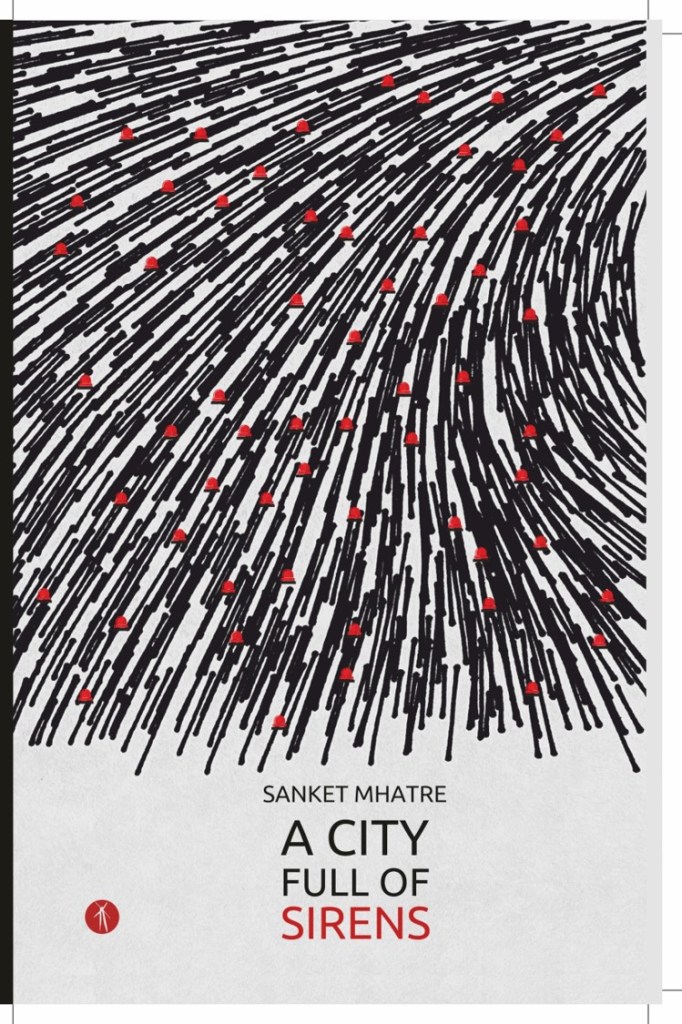
A City Full of Sirens

Title: A City Full of Sirens

 Author: Sanket Mhatre

Publisher: Hawakal Publishers

A CITY FULL OF SIRENS

On a rain kissed day 
sirens from ambulances wring at full volume
sending a shockwave through this somnolence 
the city has been suddenly diagnosed with Stage 3C 
and all of us who matter to her: 
slum dwellers, middle class, uber rich
upper caste, sub-middle-sub-lower, lower,
converts, casteless, outcasts, pimps and city planners   
were late by a minimum of ten months in pre-empting this disease
nobody took the city to an oncologist 
pointed out this infernal spread
no one bothered when her vitals temporarily shut down
no octogenarian ruins were consulted 
when her uterus screamed a history of malfunctioned births 
now, water levels are rising 
her stomach bloats with a spell of monsoon
and there’s no omental biopsy in sight
no cytology report collected
everyone’s figuring out which part of her abdomen
could be punctured to release the flow 
forgetting we had to close the tap, long ago. 
the city kept a lot in her womb for far too long
regret and debris
garbage and a festering wound
what she needs isn’t saline and drips 
but a memory from the books of sunshine 
an embrace from salt lines and mangroves 
the reassurance of leafy smiles stretching into infinity
somebody holding her hand, somewhere 
she deserves a Sunday with a beginning, middle & end
an unclogging of mind with forests of her childhood 
ultimate exculpation from all traffic jams, under construction sites, 
illegitimate saat bara* of a river rechristened as a gutter  
a forehead filled with deep-rooted kisses 
not immigrant, sweat-soaked goodbyes 
she needs hope in her veins 
laughter under her tissue
maybe, a joke from the past 
before she’s sent for chemotherapy

*Saat bara: The 7/12 extract is an information document prescribing details about a specific piece of land such as survey number, area, date and more particulars about the existing owner's name.  

MID FLIGHT

Bending over clouds 
we are dunked, face first 
into the broken arteries of Kolkata: 
dissected torso of a civilization, blinking back 

A vanishing sunset sprints
below a network of lackluster lakes 
suspended in time
green stillness festering in its colonial wounds

Our fingers trace her desiccated tributaries, desolate perimeters
brittle sentences from a lost fable breaking at the seams  
while miniaturized humanity rearranges  
the lost pages of an endless narrative

A new story foams 
at the mouth of its river 
yearning for reinterpretation 
from citizens in the sky 

We realize
mid-sentence and mid-flight 
are the same things
spoken skywards 


CULTURE OF TRANSIENCE

It took a river for civilizations to be born
how else do you explain the nature of blood in our veins? 

rivers wait for none, sometimes, not even themselves 
and here we are stuck in the make believe of eternality 

created to throw us off the scent of water
too precious, like truth, residing in our atoms

anything that doesn’t change our body can never change us: 
a law that stays hidden in deep trenches of our epidermis 

underneath all permanence lies everything in passing
oceans, forests, islands, farms, clouds, cities—landmasses of desire 

suspended raft-like, floating on the ever-flowing waters of time
while we are left to determine our own culture of transience 


VERTICAL FORESTS
 
Words are seeds
we sow for tomorrow
where an axe melts into the navel of the axis
emerges a flower on the other side
our voices etched in the bark
can put a soul to sleep
an Amazon in each word; stretching
through thick mesh of bones and arteries
 pulp synchronized to our heartbeats
birdsong to a breath
while ink sprawls
on a dream of half slept pages
 
blank verses quivering with eternality on empty lines
blood and conscience ensnared
 in a network of memories
 rooting us
 
To a new earth
where only time exists
—Unhalved

About the Book     

In Sanket Mhatre’s debut collection, A City Full Of Sirens, poetry is intertwined with the body language of love. From the simple act of facing oneself every morning deeds are garbed in the language of sensual love. These are deeply thought out, deeply experienced poems, germinating from a nameless place of profound experience. They measure intricately the delicate entities of parting and separation and pine for a union of the truth with the truth. Enmeshed with memories and half-memories, longings and surrender, Sanket’s poems reflect the deepest flushes of love and the brokenness that inevitably follows.

About the Poet

Sanket Mhatre is a Mumbai based bilingual poet, writer and columnist. His first book of cross translated poems in Marathi and English, titled The Coordinates Of Us , won the prestigious Raza Foundation Grant after being shortlisted at iWrite2020 in Jaipur Literature Festival. Apart from being widely published nationally and internationally, Sanket has been invited to recite poems at Kala Ghoda Arts Festival, Jaipur Literature Festival, Poets Translating Poets, Vagdevi Litfest, GALF, Glass House Poetry Festival, Anantha Poetry Festival, National Poetry Festival Kolkata, Ledo National Poetry Confluence Assam among many others. Sanket has also been curating multilingual poetry performances through Crossover Poems. He is also the co- creator of Kavita Café – a unique digital platform that blends cinematic vision with poetry. 

Click here to read the review

PLEASE NOTE: ARTICLES CAN ONLY BE REPRODUCED IN OTHER SITES WITH DUE ACKNOWLEDGEMENT TO BORDERLESS JOURNAL

Click here to access the Borderless anthology, Monalisa No Longer Smiles

Click here to access Monalisa No Longer Smiles on Kindle Amazon International

Categories
Excerpt

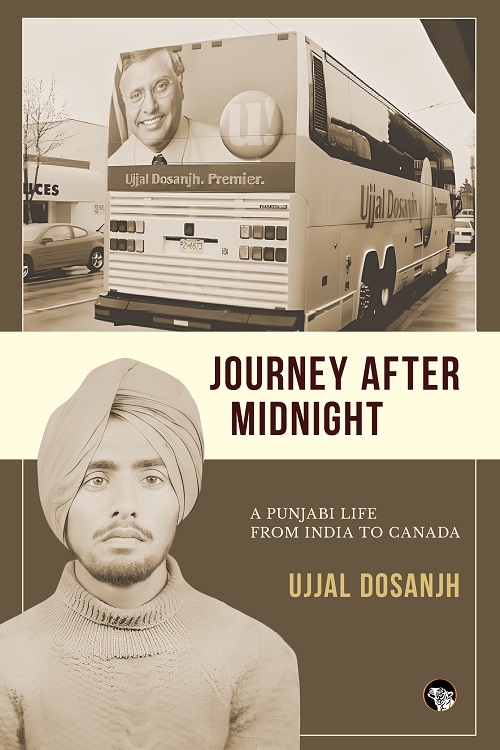
Journey After Midnight

Title: Journey After Midnight: A Punjabi Life from Canada to India

Author: Ujjal Dosanjh

Publisher: Speaking Tiger Books

50

A variation on the common Indian expression “Mullan de daur maseet taeen,” which roughly translates as “An imam’s ultimate refuge is the mosque,” sums up my relationship with the world: India is my maseet. I have lived as a global citizen, but India has been my mandir, my masjid, and my girja: my temple, my mosque, and my church. It has been, too, my gurdwara, my synagogue, and my pagoda. Canada has helped shape me; India is in my soul. Canada has been my abode, providing me with physical comforts and the arena for being an active citizen. India has been my spiritual refuge and my sanctuary. Physically, and in the incessant wanderings of the mind, I have returned to it time and again.

Most immigrants do not admit to living this divided experience. Our lack of candour about our schizophrenic souls is rooted in our fear of being branded disloyal to our adopted lands. I believe Canada, however, is mature enough to withstand the acknowledgement of the duality of immigrant lives. It can only make for a healthier democracy.

Several decades ago, I adopted Gandhi’s creed of achieving change through non-violence as my own. As I ponder the journey ahead, far from India’s partition and the midnight of my birth, there is no avoiding that the world is full of violence. In many parts of the globe, people are being butchered in the name of religion, nationalism and ethnic differences. Whole populations are migrating to Europe for economic reasons or to save themselves from being shot, beheaded or raped in the numerous conflicts in the Middle East and Africa. The reception in Europe for those fleeing mayhem and murder is at times ugly, as is the brutal discrimination faced by the world’s Roma populations. The U.S. faces a similar crisis with migrants from Mexico and other parts of South America fleeing poverty and violence, in some cases that of the drug cartels. Parents and children take the huge risk of being killed en route to their dreamed destinations because they know the deathly dangers of staying. Building walls around rich and peaceful countries won’t keep desperate people away. The only lasting solution is to build a peaceful world.

Human beings are naturally protective of the peace and prosperity within their own countries. A very small number of immigrants and refugees, or their sons and daughters, sometimes threaten the peace of their “host” societies. But regardless of whether the affluent societies of western Europe, Australia, New Zealand and North America like it or not, the pressure to accept the millions of people on the move will only mount as the bloody conflicts continue. Refugees will rightly argue that if the West becomes involved to the extent of bombing groups like ISIS, it must also do much more on the humanitarian front by helping to resettle those forced to flee, be they poverty-driven or refugees under the Geneva Convention. With the pressures of population, poverty and violence compounded by looming environmental catastrophes, the traditional borders of nation states are bound to crumble. If humanity isn’t going to drown in the chaos of its own creation, the leading nations of the world will have to create a new world order, which may involve fewer international boundaries.

In my birthplace, the land of the Mahatma, the forces of the religious right are ascendant, wreaking havoc on the foundational secularism of India’s independence movement. I have never professed religion to be my business except when it invades secular spaces established for the benefit of all. Extremists the world over—the enemies of freedom—would like to erase both the modern and the secular from our lives. Born and bred in secular India, and having lived in secular Britain and Canada, I cherish everyone’s freedom to be what they want to be and to believe what they choose to believe.

I have always been concerned about the ubiquitous financial, moral and ethical corruption in India, and my concern has often landed me in trouble with the rulers there. Corruption’s almost complete stranglehold threatens the future of the country while the ruling elite remain in deep slumber, pretending that the trickle of economic development that escapes corruption’s clutches will make the country great. It will not.

Just as more education in India has not meant less corruption, more economic development won’t result in greater honesty and integrity unless India experiences a cultural revolution of values and ethics. The inequalities of caste, poverty and gender also continue to bedevil India. Two books published in 1990, V.S. Naipaul’s India: A Million Mutinies Now and Arthur Bonner’s Averting the Apocalypse, sum up the ongoing turmoil. A million mutinies, both noble and evil, are boiling in India’s bosom. Unless corruption is confronted, evil tamed, and the yearning for good liberated, an apocalypse will be impossible to avert. It will destroy India and its soul.

On the international level, the world today is missing big aspirational pushes and inspiring leaders. Perhaps I have been spoiled. During my childhood, I witnessed giants like Dr. Saifuddin Kitchlew of the Indian freedom movement take their place in history and even met some of them. As a teenager, I was mesmerized by the likes of Nehru and John F. Kennedy. I closely followed Martin Luther King and Robert Kennedy as they wrestled with difficult issues and transformative ideas. I landed in Canada during the time of Pierre Trudeau, one of our great prime ministers. Great leaders with great ideas are now sadly absent from the world stage.

The last few years have allowed me time for reflection. Writing this autobiography has served as a bridge between the life gone by and what lies ahead. Now that the often mundane demands of elected life no longer claim my energies, I am free to follow my heart. And in my continuing ambition that equality and social justice be realized, it is toward India, the land of my ancestors, that my heart leads me.

Extracted from the revised paperback edition of Journey After Midnight: A Punjabi Life from Canada to India by Ujjal Dosanjh. Published by Speaking Tiger Books, 2023.

About the Book: Born in rural Punjab just months before Indian independence, Ujjal Dosanjh emigrated to the UK, alone, when he was eighteen and spent four years making crayons and shunting trains while he attended night school. Four years later, he moved to Canada, where he worked in a sawmill, eventually earning a law degree, and committed himself to justice for immigrant women and men, farm workers and religious and racial minorities. In 2000, he became the first person of Indian origin to lead a government in the western world when he was elected Premier of British Columbia. Later, he was elected to the Canadian parliament.

Journey After Midnight is the compelling story of a life of rich and varied experience and rare conviction. With fascinating insight, Ujjal Dosanjh writes about life in rural Punjab in the 1950s and early ’60s; the Indian immigrant experience—from the late 19th century to the present day—in the UK and Canada; post-Independence politics in Punjab and the Punjabi diaspora— including the period of Sikh militancy—and the inner workings of the democratic process in Canada, one of the world’s more egalitarian nations.

He also writes with unusual candour about his dual identity as a first-generation immigrant. And he describes how he has felt compelled to campaign against discriminatory policies of his adopted country, even as he has opposed regressive and extremist tendencies within the Punjabi community. His outspoken views against the Khalistan movement in the 1980s led to death threats and a vicious physical assault, and he narrowly escaped becoming a victim of the bombing of Air India Flight 182 in 1985. Yet he has remained steadfast in his defence of democracy, human rights and good governance in the two countries that he calls home—Canada and India. His autobiography is an inspiring book for our times.

About the Author: Ujjal Dosanjh was born in the Jalandhar district of Punjab in 1946. He emigrated to the UK in 1964 and from there to Canada in 1968. He was Premier of British Columbia from 2000 to 2001 and a Liberal Party of Canada Member of Parliament from 2004 to 2011. In 2003 he was awarded the Pravasi Bharatiya Samman, the highest honour conferred by the Government of India on overseas Indians. 

Click here to read the interview with Ujjal Dosanjh

.

PLEASE NOTE: ARTICLES CAN ONLY BE REPRODUCED IN OTHER SITES WITH DUE ACKNOWLEDGEMENT TO BORDERLESS JOURNAL. 
Categories
Excerpt

Roses in the Fire of Spring

Title: Roses in the Fire of Spring: Better Roses for a Warming World and other Garden Adventures

Authors: M.S. Viraraghavan and Girija Viraraghavan

Starting to read our book you may well ask, why the title, why ‘Roses in the Fire of Spring’? The name is derived, in part, from Omar Khayyam’s lines in the Rubaiyat:

Come, fill the Cup, and in the Fire of Spring,
Your Winter garment of Repentance fling:
The Bird of Time has but a little way
To fly – and lo! The Bird is on the Wing.

The words of Omar Khayyam have a special meaning in the climate of the tropical mountain on which we have lived for the past forty years. On our mountain, the Palni Hills, at an elevation of over 2,000m, the monsoon rains are prolonged, and go on from September till almost the end of December. Nature, in our garden, produces a special effect in the last week of December. The Rosa gigantea plants climbing our many trees – cypress, callistemon and native magnolia – burst into spectacular bloom, in clouds of cream and white, an alternative White Christmas. There is an incredible surprise in store when suddenly the rains stop, and the sun comes out with the intense, rich brightness characteristic of mountain sunlight. At our altitude, the air is thin, pollution free, and the power of the sun in spring is stunning, the effect of the light further accentuated by ultra-violet rays. But the wind remains cold, like ice, the sun is like fire, and the result, if you are a drinker, is akin to whisky on ice. No wonder you are in a mood to discard the winter garment of repentance. The roses feel the same way, and there is a burst of bloom with a profusion of flowers much brighter in colour than on the plains. This same spring flowering of roses is, we are sure, a feature of the table-lands of Iran, at Nishapur, so romantically located by the side of the famed Silk Road where Omar Khayyam wrote his verses. There can be little doubt that he would have marvelled, as we do, at the spring sunlight. This same effect can be seen, to a lesser extent, in the rose areas of the Indo-Gangetic plain, where roses are in full bloom in February, and perhaps slightly earlier in the rose gardens of the Deccan Plateau of southern peninsular India.

It is not as though this spring flowering of roses ignited our lifelong search for better roses for the warmer parts of India, and, for that matter, the warmer parts of the world, so far denied the intoxication of beautiful, easily grown roses. We had always been impressed by the words of India’s pioneering rose breeder, B.S. Bhatcharji, who, nearly a hundred years ago, stressed the need for a separate line of breeding for warm climates. Our rose-growing experiences, particularly in the difficult growing climate of southern coastal peninsular India, convinced us that Bhatcharji was right. These areas have their share of passionate rose growers but they get by with great effort, growing the roses of temperate climates with weekly sprays of powerful pesticides, hazardous to themselves, and a threat to the environment. In this background we come to the thesis of this book – creating better roses for a warming world, and the search for other plants to complement the roses.

(From the Preface, Roses in the Fire of Spring, by M.S. Viraraghavan and Girija Viraraghavan, Running Head, 2023)

About the Book

Roses in the Fire of Spring records the epic journey, spanning more than half a century, of world- renowned rose hybridizers, M.S. ‘Viru’ Viraraghavan and his feisty partner-in-grime, Girija Viraraghavan, in their efforts to create roses better suited for a rapidly warming world. This account of their literally groundbreaking work is also part-travelogue and memoir. The Viraraghavans’ intrepid rose travels take them, and the reader, from continent to continent, up mountains, through forests, across oceans and rivers, from Uruguay to Japan, and from Germany to Australia. Join them on their journey as they plant-hunt, meet celebrated rosarians and plant enthusiasts, view some of the world’s most famous gardens, and trek indefatigably through a life rich with colour and fragrance. Replete with horticultural insight, engaging sidelights from their life, and photographs, this book, boasting an international cast of gardening luminaries, at once informs and entertains. It also presents a country-wise list of future possibilities in rose breeding in places as diverse as China, subtropical Asia, Africa and the Middle East. A must-have book for hobbyists, garden enthusiasts and professional plant hybridizers alike – for that matter, anyone concerned about the fragile environment of our planet.

About the Authors

M.S. ‘Viru’ Viraraghavan and Girija Viraraghavan are gardening enthusiasts. 

PLEASE NOTE: ARTICLES CAN ONLY BE REPRODUCED IN OTHER SITES WITH DUE ACKNOWLEDGEMENT TO BORDERLESS JOURNAL

Click here to access the Borderless anthology, Monalisa No Longer Smiles

Click here to access Monalisa No Longer Smiles on Kindle Amazon International

Categories
Excerpt

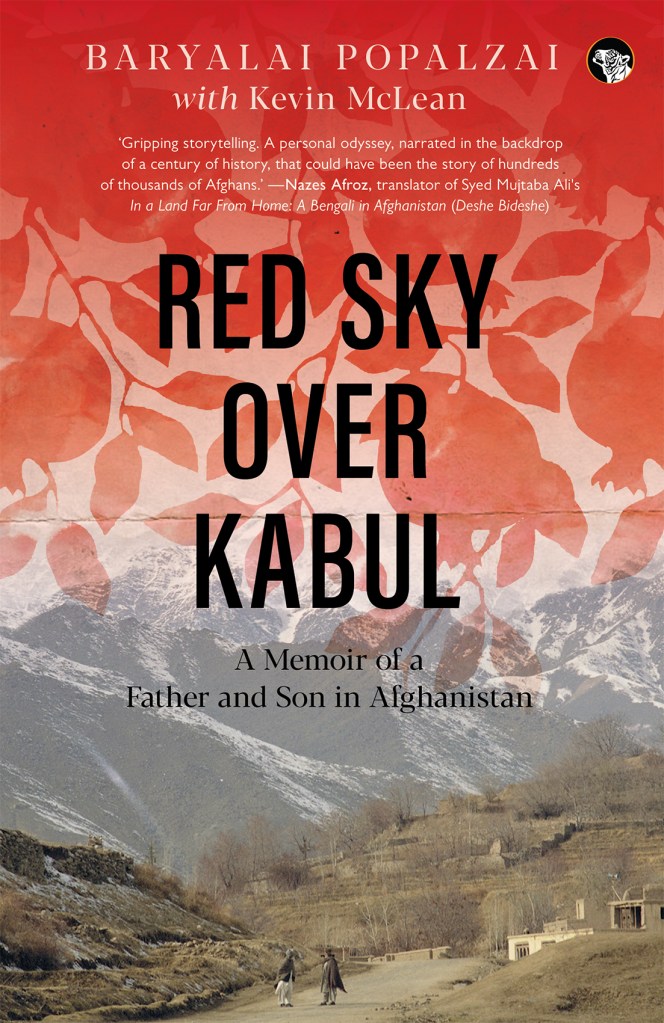
Red Sky Over Kabul

Title: Red Sky Over Kabul: A Memoir of a Father and Son in Afghanistan

Authors: Baryalai Popalzai and Kevin McLean

Publisher: Speaking Tiger Books

One
Kabul, Afghanistan, 4 October 1980

On a breezy October day, a kite-flying day, my cousin Kader surprised me with a visit. He looked much older than I remembered, his hair thinner, his once smooth face now lined with worry. He was a well-known political writer who had worked for the Ministry of Education before the Spring Revolution. He was also known for his short stories.

For generations, his family had been one of the most important families in Kabul. Kader looked at me with his deep-set black eyes and spoke in a frantic voice, ‘Bar, you must leave immediately. The National Security and Russian soldiers are now searching house to house. They’ve already searched half of your neighbourhood and they won’t stop. You must come to my house immediately. It’s the only place that will be safe for you now.’

I did not know what to think. Things were so bad now, I wondered if I could trust my own cousin. He could have given in to the Communists; or he could be telling me this because they were holding someone in his family hostage.

I hated the Russians for making me doubt him, and I hated myself for doubting him.

Tashakor (Thank you). I’ll be okay,’ I assured him. ‘I have a hiding place that the National Security will never find.’

But he was adamant. ‘You must come to my house. It’s the only place that will be safe for you now.’

‘I need time to think,’ I said, deflecting his request.

‘There’s no time!’ he said.

I told him, ‘I have to think of my wife and children, my father and mother. I’m the only one who can take care of them.’

‘You won’t be much use to them dead,’ he said.

‘That is true, Kader. But before I leave my family and go to your house, I must speak with my father.’

Kader just sighed. ‘God be with you.’

That night I lay on the floor, unable to sleep. I could hear the National Security guards in the street outside my house shouting at people, ‘What is the password for tonight?’ If there was no response, there would be the sound of gunfire and I would flinch as if the bullet had ripped through me.

As soon as the sun appeared, I went up to my father’s bedroom where he spent most of his time since losing his leg years before. I told him about Kader’s visit. ‘Things have changed,’ I said. ‘Every house is being searched now. They will even search the general’s house. I can no longer hide from these crazy people.’

‘So, you think you should go stay with Kader?’ Baba asked.

‘We don’t know who’s honest anymore,’ I replied. Then the words I had dreaded saying for so long escaped my lips.

‘The time has come for me to leave.’

Baba didn’t say anything at first. This unsettled me because my father was never at a loss for words. When he finally did speak, his voice was weak. ‘I was afraid it might come to this,’ he said. ‘I’ve spoken with Abbas. He agreed that when the time comes, he would go with you. I will get word to him. You can leave tomorrow at first light.’

When I told my mother, who I called Babu, her body shuddered, but her lips were silent. My mother had a habit of never sitting still when she was nervous. First, she paced back and forth in the room. Then she walked from one room to the other. Then from one house in our compound to another.

She returned to our living room and continued pacing back and forth until I could take it no longer.

‘Sit!’ I told her. But she never sat. My wife Afsana was asleep in another room with our two children. I couldn’t find the tongue to tell her. But I knew I must.

‘Afsana?’ I called, waking her.

Baleh? (Yes?)’

‘It’s not safe for me here anymore…I must leave tomorrow.’

‘What do you mean?’ she asked, panic rising in her voice.

‘Kader came to see me. Things have become too dangerous now. Abbas is coming for me in the morning. He’ll make sure I get out safely. I’ll send for you and the children as soon as I can.’

A painful silence followed. Afsana started to speak, but stopped. She knew there was nothing she could say or do now. We both lay awake all night.

As dawn approached, I went to say goodbye to my father.

He was sitting up in bed staring at nothing, his books and newspaper lying next to him, unread.

‘Ah, the time has come,’ he said. He seemed to be searching for something else to say; some last words of wisdom, some final advice from father to son. When he finally spoke, he spoke slowly, the words sticking in his throat, ‘Take care of yourself.’

I could not do this. ‘I won’t leave without taking you and Babu. I can’t leave without Afsana and the children,’ I said.

‘We’ll all go together!’

He was silent for a moment, his eyes never leaving my face. ‘Nay, you know that’s not possible,’ he said.

‘I can get friends to help us. They can take all your things. We’ll go to Jalalabad. Everything will be all right.’

‘Nay, Bar. It is not practical. I’m too old and weak to be moved. The Russians won’t bother Babu, or Afsana, or the children. We’ll be safe here. If we try to leave, none of us will survive. Things are very bad, but I still have my house and my writings. But it is true, you are no longer safe here, so you must leave to save yourself. Let’s pray that in a few months, things will change.’

‘If that is your wish,’ I gave in.

‘Say goodbye to me now,’ Baba said. ‘I’m afraid you won’t see me again.’

‘How can you say that?’ I protested, feeling the pain of those words as though he were already dead.

Extracted from Red Sky Over Kabul: A Memoir of a Father and Son in Afghanistan by Baryalai Popalzai and Kevin McLean. Published by Speaking Tiger Books, 2023.

ABOUT THE BOOK

 Red Sky Over Kabul is the deeply personal, moving and dramatic story of a royal Pashtun family—the Popalzais—intimately connected with Afghanistan’s history from the 1800s. After the Soviet invasion in 1980, the narrator, Baryalai—Bar—is forced to leave his beloved country as National Security guards carry out a house-to-house search for young men who refuse to fight for the Russians against their fellow Afghans. He flees to Pakistan, where he is imprisoned as a spy, eventually making his way to the US, to make a new life for himself. He returns twenty years later, to reclaim his family homes in Kabul and Jalalabad, only to find them occupied by drug dealers and warlords.

This memoir is as much a story of Bar as it is a story of Afghanistan: Bar’s father, Rahman, was tutor to Zahir Shah, who would become the last king of the country after the assassination of his father in 1933; Rahman Popalzai continued to serve Zahir as his advisor and confidant for 40 years. At the heart of this book is the relationship between a father and son—Rahman and Bar— who share a fierce love for their homeland, but whose paths diverge.

Red Sky Over Kabul is also a vivid portrait of a vanished Afghanistan—a world of kite flying, duck hunting and sitar lessons; a world lost to unending, horrific violence. But even in loss and tragedy, the human spirit finds hope and resilience—which is Afghanistan’s triumph, as it is Bar’s.

ABOUT THE AUTHORS

 Baryalai Popalzai was born in Kabul, Afghanistan in 1952. After the Russian invasion in 1980, he fled the country and eventually settled in San Diego. When the Taliban were ousted in 2002, Bar returned to Kabul for the first time in twenty years and has been returning a few times every year since then.

Kevin McLean received his JD from Boston University School of Law and practised law for many years in Boston and San Diego. He is the author of Crossing the River Kabul (2017).

PLEASE NOTE: ARTICLES CAN ONLY BE REPRODUCED IN OTHER SITES WITH DUE ACKNOWLEDGEMENT TO BORDERLESS JOURNAL

Categories
Excerpt

The Blue Dragonfly

Title: The Blue Dragonfly – healing through poetry

Author: Veronica Eley

Publisher: Hidden Brook Press, Ontario

grey blanket					[from Prelude]

earliest memory
driving along
a country road
in the back seat
wrapped
in a grey blanket
in the dark

separation
the side bars
on the hospital bed
two years old
pneumonia

fifteen-year-old girl
raped
police declare
emotionally disturbed
wrapped
in a grey blanket
taken home

disturbed
turbulent
the waters
the waves, the waves
are big, mommy
the cold, grey ocean
is deep
I lean against the railing
of the White Star Cunard liner
seven years old

railings
grey blanket
grey, grey 


secret monsters				[from Presentation]

when I am dog tired
deep down below
an ambiguous voice
declares itself

blasphemous language
often, with a highly sexual content
pokes out its unseemly head
to scream and thrash about

language from a deep abyss
dirty tributaries
foul-mouthed monsters
who live in my
subterranean landscapes

loud mouthed
the desire to smash and hurt
to feed the monster within
to let out a little vengeful steam
is the only way to calm the beast

in some ways
I live a life of pretence
hidden
shameful
feeding the snake within
with disgusting morsels

 
the bodhisattva				[from Altered States]

she wanders through the streets
a heart as big
as the whole outdoors
warding off criticisms
from voices long
ago dead

how do you
lose
rolling the dice of
compassion?
the fashion in the 90s
: to give
politically/correctly

the knife of deconstruction
blasts
beliefs, values, ideals
the high-rise
terminology
-laden
hierarchical
transcendent, dualistic
world
crumbles (post
-modernized)
leaving us with
No Thing, powering our appetites
to violent
pornographies

karma
equals Choice
equals Action
equals Identity

where does this yearning
come from? the bodhisattva’s loving
compassion, undifferentiated
interconnective, doing
and undoing

do we have any
other choice?
in our best dress
our Sunday best
our best frame of mind
-- compassionate be

I exist between myself
and you


mother						[from Home]

eternal mother
conniving tributary peace strategies
love and replenishment
look to the sun
the bare branches
outlining our destinies

reaching to the heavens
rooted in fertile ground
our arms reach upward
bare, rough and brown
the colour of the earth

take care, dear mother
look to the sunset
the glorious colours
I will be thinking of you

About the Book

The Blue Dragonfly: healing through poetry is a verse narrative of trauma and recovery, 120 poems organized into three acts: Secret Monsters, The Bodhisattva, and Mother. Distinguished by an intense affectivity of language, its poetry of metaphor, repetition, and internal rhyme, “rotating / like a wind chime / inside my body,” communicates a trance-like account of trauma, therapy, and personal growth. Resistance to Western rationality – camouflaging crimes of incest and rape – is a major theme. The poet’s encounter with an Indian psychiatrist heralds the discovery of “a comrade spirit / a healer” from another continent. In time, the poet becomes the bodhisattva herself, a compassionate witness to her own and the bravely lived stories of others, a “red trauma reverberating around the world.” Trauma theory links such suffering to creative language, re-invoking Aristotle’s conception of metaphor as uniquely bound to tragedy (to make the unspeakable speak). Is poetry and its poem then merely a “work of art”? Or is it a linguistic “magical toolkit,” with purpose to build a common, practical humanity free from pain?

About the Author

Born 1950, Manchester UK, Veronica Eley is an Adult literacy instructor, Toronto, 1994-2011, Master of Education, OISE-UT, Toronto, 2002. She retired inDartmouth, Nova Scotia, 2016. Her first book of poetry was published in 2021. – Poetry came to the author late in life through journaling and therapy (1998-2016), when she learned to “stream the inner spirit, the unconscious,” in a “fluid connection between my soul, brain, pen and paper.” Poems would give structure and pace to her feelings, sparking her “creative remembering” and recovery from trauma. Ideas of synchronicity and flow, an attunement to nature, and the stories of her immigrant and refugee students provided a rich support for telling her own story. The author’s family had migrated to Nova Scotia in 1952. Dislocation shock, charismatic Catholicism, and the metempsychotic memory of the cotton mills would repose themselves in the youngest child. A “trinity of traumas” personal to her would follow. Now the small-press publication of her book, aided by her acutely poetic camera, accumulates readers. The author declines interviews, as “the poems speak for themselves.”

PLEASE NOTE: ARTICLES CAN ONLY BE REPRODUCED IN OTHER SITES WITH DUE ACKNOWLEDGEMENT TO BORDERLESS JOURNAL

Click here to access the Borderless anthology, Monalisa No Longer Smiles

Click here to access Monalisa No Longer Smiles on Kindle Amazon International

Categories
Excerpt

Siddhartha: The Boy Who Became the Buddha

Title: Siddhartha: The Boy Who Became the Buddha

Author: Advait Kottary

Publisher: Hatchette India

‘King Bimbisara is completely enamoured with Amrapali. He seems to be in love with her, and for that, Ajaatshatru seems to detest him. They are not on speaking terms anymore. Moreover, when I was there, Ajaatshatru did not speak a word even to me…’

‘Are you sure you did not do anything to upset him?’ asked Shuddhodana, concerned. Ajaatshatru giving Siddhartha the cold shoulder was worrying news indeed. He was only a few years younger than Siddhartha and was poised to take the throne from Bimbisara. If, in the future, the rulers of Kapilavastu and Magadha could not see eye to eye, then what would be the point of this trade route that they had so carefully worked on? What would be the point of the independence from the trade route through Kosala?

‘Father, how could I have upset him when he wouldn’t even speak to me? He chose to go hunting both on the day that I arrived as well as the day that I left.’

‘This is not good,’ said Shuddhodana. ‘This is the result of Bimbisara’s own foolishness. The only reason that Ajaatshatru dislikes you is because Bimbisara keeps comparing him to you. He was always very taken by your insight.’

‘But if that were the case, then we have no reason to worry! If I try to establish friendly relations with Ajaatshatru, then perhaps we will not have anything to fear!’

Shuddhodana was taken aback at how optimistic Siddhartha sounded. He wished he could share his optimism but was wary of saying anything to take away his son’s enthusiasm for affairs of the state.

‘But there was still something wrong with King Bimbisara; he seemed to not have any relations at all with Queen Kosala. Instead, he spent most of his time with the courtesan Amrapali. I believe Ajaatshatru took offence to that too, for he didn’t seem interested in spending any time with me.’

‘I wouldn’t give it too much thought, Siddhartha, there are things about that family that you do not know. Perhaps it is not right for us to ascertain from the outside, the merits of their dynamic, but they have shared a very troubled relationship, let us leave it at that…’

‘What do you mean, father?’

‘The stars are powerful, Siddhartha. Great things can be done and undone, depending on whether one has luck and destiny on his side or not. Parents may be invulnerable when it comes to anything else on earth, but they are powerless when it comes to their children. Once the idea that some misfortune might befall their children enters their heads, they will do anything to ensure that this does not happen.’

‘Including banishing every single crippled, injured or maimed person from their kingdom to live in misery?’

Shuddhodana gave Siddhartha a sharp look.

‘Who has told you of this?’ asked Shuddhodana.

‘I have seen Sukhibasti with my own eyes, Father.’

Shuddhodana felt like he had been hit square in the chest with a mace.

‘I did what I believe was right, Siddhartha,’ he said.

‘You could call it that, Father, but I am simply trying to understand how a man as great as you could love his family as much as you have, while showing no mercy to your subjects.’

Shuddhodana was insulted, more so because he was hearing these words from his own son. Siddhartha was crossing a line.

‘Siddartha, I am your Father but I am your king as well. Do not forget that.’

‘Do not threaten me, Father. I have seen what you created. How long did you plan to keep it a secret? How long did you plan to have it hidden from me? How many more lies are there to discover?’

‘Enough!’ bellowed Shuddhodana. ‘I did what I had to, to safeguard the kingdom and its heir from straying off the path that was chosen for him.’

‘Did you think that you needed to take the words of someone who hadn’t seen the future so seriously that it influenced the way you brought up your own child?’

‘He was my Guru, Siddhartha, just as Guru Kondanna was yours.’

‘Guru Kondanna is my guru!’ Siddhartha corrected an angry Shuddhodana.

‘You are overstepping your boundaries, Siddhartha. I have been very patient and understanding, but enough is enough. You cannot take the pain of others and make it your own all the time. At the end of the day, one’s duty must take precedence over everything else.’

Siddhartha calmed down and collected himself. He took off his armour and laid it on the floor of the courtroom at the foot of his father’s throne.

‘Forgive me, Father. I do not mean to disrespect you or my duty but what must one do when he is unable to see the reason behind one’s duty and dharma? When I left Kapilavastu, I encountered nothing but suffering and sadness. The farmers who grow the food we eat are exploited mercilessly by royal guards and collectors. I have been sleepless since I returned from Sukhibasti. Are you aware that our own injured and maimed soldiers are sent there? They fought for us and with us in the war. How can one call this duty?’

(Extracted from Siddhartha: The Boy Who Became the Buddha by Advait Kottary. Published by Hachette India, 2023.)

ABOUT THE BOOK

His family was happy to see him, but they had hoped to meet the Siddhartha they knew, not the Buddha he had become.

Long before Siddhartha became the enlightened leader [Buddha], he was a boy oblivious of the world. As the young prince navigates politics and relationships, he slowly begins to question his oppressively perfect life. Meanwhile his family struggles to maintain their deception in the hope that they can mould him into a dutiful king – from banishing the old and sick to hiding their own advancing age. In Advait Kottary’s intricately woven narrative, raw human emotion and conflict is tempered with the boundless compassion of the Buddha. Exciting and insightful in equal measure, Siddhartha is at once a riveting story and a profound meditation on our shared quest for truth.

ABOUT THE AUTHOR

Advait Kottary is a writer and actor residing in London. Passionate about cars and engineering, he worked as an engine designer before quitting his job to pursue his love of writing and the performing arts. He went on to lead the world’s biggest Bollywood musical Jaan-E-Jigar, and act in international productions such as Beecham House. Advait has also co-conceptualised the award-winning television show Molkki and voiced several audiobooks with Swedish platform Storytel. Siddhartha is his first novel, which stemmed from his own quest to understand the Self and his encounter with the Buddha’s teachings.

Click here to read the review/interview with Advait Kottary

PLEASE NOTE: ARTICLES CAN ONLY BE REPRODUCED IN OTHER SITES WITH DUE ACKNOWLEDGEMENT TO BORDERLESS JOURNAL

Categories
Excerpt

Greening the Earth

Title: Greening the Earth: A Global Anthology of Poems

Editors: K. Satchidanandan & Nishi Chawla

Publisher: Penguin Random House

Preface

Humanity’s power to degrade the environment has become unprecedentedly dangerous. In fact, we have already changed the environment irreversibly, and suicidally so. What we call nature is no longer nature in its pristine glory. Human intervention has transformed it into something sub- rather than semi-human: a combination of climate, topography, the original environment and the effects of the long history of human intervention. If it was agriculture that had transformed the landscape once, it is now urbanization that has affected the broader areas of our environment. Managing the environment is becoming a practical rather than a theoretical problem. It is not enough that we create theme parks or conserve a select few areas. ‘Museumizing’ nature and landscape will not be enough. Several animals and birds are on the verge of extinction; the list is growing, and human beings can easily be next in the at-risk list. What we require today is not isolated action, but concerted action at the global level. Techno- fascism that leads to eco-fascism—both have their roots in human greed and aggression—is one of the inevitable fall-outs of blind and unsustainable patterns of development.

While a few poems in this anthology offer a perspective on how humans can respond to the reality of extinction, others give us an awareness of how we can struggle to keep what we still have. Some poems share earnest insights into our own evolution, and others offer grim warnings or raise voices against the imminent threat of extinction and the fate of our planet. Some poets spin interconnected incantations and weave healing nature through their blood, and others honor it by connecting the sustainable with their personal poetic bones. The environmental theme of most poems can inspire meditation as well as a commitment to apocalyptic action. The poets anthologized here offer landscapes of beauty and joy, of rustic retreat, of communion with our natural world, against the larger looming questions of human survival, of spurring towards conservation and preservation, of recognizing our ancestral knowledge, of a complicated pact and a complex impact. The anthology, in short, is our kind of shock tactic to the glaring lacunae within our urbanized, post-industrial society. What distinguishes us further, is that our anthology is a global chorus of poetic voices. We cannot stress enough the ‘sustainable’ route felt in the ‘sustainable’ poetic voices of our anthology. Along with our conscious eco warrior poets, Greening the Earth is our kind of responsible activism.

Extinction

Maren Bodenstein

here

on the prairie we measure

the years

by the extinction of insects

that visit our porch lamps

the brittle

longhorn is gone

for a while now the giant

stick insect no longer flares its scarlet wings even

the bluewhite chafers have succumbed

to the heat

by day we dwell in the creek

my sisters and I

one of us pregnant

but I keep forgetting

if it is me

look I am full term now

I tell them stroking my flat belly

on the horizon

a fire roars

through the grasses and over

the houses it marches

the last army of insects

into the bellies of storks

a confusion of vehicles

full of belongings flees

towards us

Ma in her car

with the poodle

comes rushing at us

get in she shouts

misses the bridge

plunges deep

we must rescue her

I tug at the metal

but my sisters

heavy with chatter

do not hear

Ma broken mermaid sneezes

opens her blue-eyes

happy

to see me

Beholden

Erin Holtz Braeckman

I come to you as Crow. But not before you first come to me. My bones are left like tinder in the dark ashes of my feathers when you find them. Crouching low in the crisp clutch of Spring the way the grandmothers once did, you speak words of ritual from the cave of folk memory you’ve walked right into without knowing. And you ask—before you hear my totem call from the pines high overhead; you ask before you slip one of my bones into your pocket. Because wrapped inside the song of that old teaching circle you stepped within was this telling: what you collect, you become the caretaker of. Not the thing itself, but its living story. Those crystals on your altar? You are the steward of their mountains. Those shells lining your windowsill? You are the custodian of their oceans. The pressed petals and dried acorns and vials of sand—the bones; in them there are entire fields and forests and feral ones of whom you are a curator. Which is why I come to you this time, a cackle-caw of shade-shifters stalking through your sister spruces. The others fly when you near, leaving me below in the corner fencing, the wing you took the bone from a tangle of black shadow throwing back the light. I feel the moment you are beholden, Crow-Keeper; how you fold the wild beating of my body into your hands, placing me like a stone on a cairn into the bracken beyond; how those grandmothers come to braid feathers into your hair.

(Excerpted from Greening the Earth: A global Anthology of Poetry, Penguin Random House)

About the Book:

Greening the Earth is a rare anthology that brings together global poetic responses to one of the major crises faced by humanity in our time: environmental degradation and the threat it poses to the very survival of the human species. Poets from across the world respond here in their diverse voices-of anger, despair, and empathy-to the present ecological damage prompted by human greed, pray for the re-greening of our little planet and celebrate a possible future where we live in harmony with every form of creation.

Editors:

K. Satchidanandan is a leading Indian poet He is also perhaps the most translated of contemporary Indian poets, having 32 collections of translation in 19 languages, including Arabic, Chinese, Japanese, English, Irish, French, German and Italian, besides all the major Indian languages. He has 24 collections of poetry, four books of travel, a full length play and a collection of one-act plays, two books for children and several collections of critical essays, including five books in English on Indian literature besides several collections of world poetry in translation. He has been a Professor of English, and also the chief executive of the Sahitya Akademi, the Director of the School of Translation Studies, Indira Gandhi Open University, Delhi and National Fellow, Indian Institute of Advanced Study, Shimla. He is a Fellow of the Kerala Sahitya Akademi and has won 52 literary awards from different states and countries, including the Sahitya Akademi award, India-Poland Friendship Medal from the Government of Poland, Knighthood from the Government of Italy and World Prize for Poetry for Peace from the Government of the UAE. His recent collections in English include While I WriteMisplaced Objects and Other PoemsThe Missing RibCollected Poems, Not Only the OceansQuestions from the Dead and The Whispering Tree: Poems of Love and Longing.

Nishi Chawla is an academician and a writer. She has six collections of poetry, nine plays, two screenplays and two novels to her credit. Nishi Chawla holds a Ph. D. in English from The George Washington University, Washington, D.C. USA. After teaching for nearly twenty years as a tenured Professor of English at Delhi University, India, she had migrated with her family to a suburb of Washington D.C. She has taught at the University of Maryland from 1999 until 2014. She is now on the faculty of Thomas Edison State University, New Jersey, USA. Nishi Chawla’s plays get staged both in the USA and in India.

PLEASE NOTE: ARTICLES CAN ONLY BE REPRODUCED IN OTHER SITES WITH DUE ACKNOWLEDGEMENT TO BORDERLESS JOURNAL

Click here to access the Borderless anthology, Monalisa No Longer Smiles

Click here to access Monalisa No Longer Smiles on Kindle Amazon International

Categories
Excerpt

Bhubaneswar@75 – Perspectives

Title: Bhubaneswar@75 – Perspectives

Editors: Bhaskar Parichha/Charudutta Panigrahi

Publisher: Pen In Books

INTRODUCTION

As we look forward to the next 25 years … 

April 13, 1948. It was on this day that the first Prime Minister of India Pandit Jawaharlal Nehru laid the Odisha capital city’s foundation stone. Since then, Bhubaneswar has remained a celebrated model of modern architecture and city planning with its prehistoric past as a temple city. Along with Jamshedpur and Chandigarh, Bhubaneswar is one of modern India’s first planned cities. 

While laying the foundation-stone, Nehru observed: ‘Bhubaneswar would not be a city of high-rise buildings for officers and rich men without relation to the common masses. It would be consistent with the idea of reducing differences between the rich and the poor. The New Capital would embody the beautiful art of Odisha, and it would be a place for beauty…so that life might become an adjunct to beauty.’

Bhubaneswar is a temple town with a series of ancient sandstone temples varying in size from the towering eleventh century Lingaraja Temple. It was a city of temples. Once upon a time, there were more than 7,000 temples in and around Bhubaneswar. Today, there are only a few. 

EXQUISITE ARCHITECTURE

From a religious standpoint, the Lingaraj temple is the most popular. Other temples include the 7th century Vaital temple, the impressive 10th century Mukteshwar temple, and the 11th century Raja Rani temple with its fine carvings. There are many other temples of exquisite architecture. 

Several Grade-I temples of national importance have been protected by the Archaeological Survey of India (ASI) in Old Bhubaneswar, such as Ananta Basudeva, Mukteswara, Persurameswara, and Rajarani Temples, which are just a few examples. Bhubaneswar’s modern capital is shaped by Old Bhubaneswar’s ancient temples.

The state capital city planning began near the old temple town. The Master Plan for the upcoming city of Bhubaneswar was prepared by Dr Otto H Koenigsberger on the concept of neighbourhood unit planning. The original plan envisaged horizontal development rather than vertical growth for a population of 40,000 with administration as the primary function. Koenigsberger designed a linear pattern for the city, with administrative units on the main artery, and neighborhood units attached to them. Neighborhood units offer residents the most sophisticated amenities in a city. They were placed at short distances to give people easy access to schools, hospitals and other facilities.  

CENTRAL VISTA

Six units were developed. Unit-V served as the site for the administrative complex, while other units were planned according to neighborhoods. As part of the town center, there was a market building, a weekly market, a day-to-day market, and a bus station. There was a central vista with views of the Raj Bhawan. There was also a commercial zone along Janpath and Bapuji Nagar up to the railway station. Koenigsberger’s planning zone provided characteristic weather control and a salubrious climate throughout the year. This area — the heart of the city — maintains the lushest green cover in the city with open space and a well-organized transportation system.

A neighborhood unit required that each child live within a quarter of a mile or a third of a mile of their school. Housewives were required to live within a half mile of the civic center to shop there and have access to medical facilities within the town. Distances between a person’s home and place of employment could conveniently be covered by a bicycle or a cycle rickshaw. Koenigsberger suggested 7 different types of roads for 7 different groups of users and 7 different functions. Those are footpaths, parkways, cycle paths, minor housing streets, major housing streets, main roads and main arteries.

Bhubaneswar was planned to be the state capital, but it is primarily a city for government officials. Residential quarters were designed to meet the needs of officials from various income groups. Planning was made to meet the ideal urban family’s requirements. This was done by providing them with single-storey independent houses with a front yard and kitchen and garden space in the back yard. Government bungalows have extensive open spaces around them and abundant space between one house and another. Those with high incomes occupy bungalows near the main employment complex. 

Low income housing consists of mostly one and two bedrooms comprised of more than one unit broken into rows. Early in the planning process, residential quarters in different neighborhoods were mostly standardized. Small scale industries and manufacturing activities were added after 1980. Much of the original plan has changed in twenty years.

HERITAGE ZONE

Bhubaneswar has been declared a special heritage zone as Ekamra Kshetra, which consists of several significant structures. Various socio-cultural and religious heritages of Odisha are represented in the monuments, which represent different periods in Odisha’s history. In recent years, several of these significant elements have steadily lost their significance due to modern construction activities.

An integrated regional development plan has been prepared to meet the growing demand for services in the region. This plan has been declared as the Comprehensive Development Plan (CDP) of the Bhubaneswar Development Plan Area (BDPA). The BDPA comprises Bhubaneswar Municipal Corporation, Khurda Municipality, Jatani Municipality and adjoining 122 Mouzas. The Long Term Perspective Plan for Bhubaneswar-Cuttack Urban Complex (BCUC) provides a vision for the development of the whole region by 2030. Bhubaneswar-Cuttack Urban Complex being the hub of commercial, political, administrative and socio-cultural activities in Odisha, it has rich potential for development. 

A lot of resentment was felt — and it still exists — when Bhubaneswar replaced Cuttack as the capital on 19 August 1949, two years after India gained independence from Britain. In recent times, Bhubaneswar and Cuttack have been called the ‘twin cities of Odisha’ – one with a modern look and another with a millennium-old history. Bhubaneswar and Cuttack have become closer since the Netaji Subhash Chandra Bose Bridge, also known as the Trisulia Bridge, opened on 19 July 2017. 

BIG FIVE

There are a few Tier-2 cities in the country that host the top five IT companies in the country. Bhubaneswar is one of them. These companies include Infosys, Wipro, Tata Consultancy Services, Tech Mahindra, and Mindtree. It is considered one of the three most attractive places in the world to do business, according to the World Bank. Bhubaneswar has been selected as one of the first twenty cities in India to be developed as a smart city. This is part of his flagship ‘Smart Cities Mission’ which seeks to develop 100 smart cities in India. 

Bhubaneswar was added to the World Heritage List (WHL) as part of the application process. The WHL requires that the site be of outstanding value, as well as having at least one of the ten selection criteria met. This is required for inclusion on this list. Bhubaneswar meets four of them. Over 100 cities have been designated World Heritage Sites by UNESCO.

Nations that nominate heritage sites and cities to UNESCO, and submit data, maps, and photographs, are given heritage status by the organization. World Heritage Status is the highest honor and most prestigious title given to heritage monuments, sites, and cities in recognition of their universal value.

Bhubaneswar, one of the two Indian capitals planned after independence, alongside Chandigarh, is today one of the most prominent cities in Odisha. It has a culture as vibrant as the city itself. With a population of one and a half million, Bhubaneswar has become known as one of the most happening cities in Eastern India. India’s evolving urban landscape places the city among its upcoming metropolises.

This book contains twenty-seven essays written by learned scholars on different aspects of Bhubaneswar. From temples to town planning, from becoming India’s sports capital to urban living, from culture to literature, and from business to education, the book says it all. It represents everything that has happened since the foundation stone was laid. It is a throwback to what we have witnessed.

It is hoped that by the time Bhubaneswar celebrates its centennial twenty-five years from now, the city’s signature identity and impeccable heritage will have been preserved and passed on to future generations in a more intact form. 

Bhaskar Parichha

About the Book:

The capital of Odisha and a city that is still in the process of being shaped, Bhubaneswar is many things to many people. The Temple City, as it was once called, was home to thousands of temples at one time.

The foundation stone of ‘modern’ Bhubaneswar was laid in 1948 by Pandit Jawaharlal Nehru. It became the administrative capital of Odisha in the learly 1950s. Bhubaneswar was declared a ‘smart city’ under the urban initiative by the government of India in 2014.

Bhubaneswar, one of the two capitals planned after independence, is today a vibrant city in Odisha with an equally vibrant culture. With a population of one and a half million, Bhubaneswar has become known as one of the most happening cities in Eastern India. India’s evolving urban landscape places the city among its upcoming metropolises.

The book has 25 essays on different aspects of Bhubaneswar written by scholars of standing. From temples to town planning, from becoming India’s sports capital to urban living, from culture to literature, and from business to education, the book says it all. It is a compilation of all that has happened over the past 75 years.

A ‘portrait’ of the city is presented in the book.

About the Editors

Bhaskar Parichha (1957) is a senior journalist and author of five books Unbiased: Writings on India, No Strings Attached: Writings on Odisha, Madhubabau – The Global Indian, and BijuPatnaik – A Biography. He has edited an anthology of essays entitled Naveen @25 -Perspectives. He is a bilingual writer and lives in Bhubaneswar.

Charudutta Panigrahi (1968) is a social advocate and practicing intellectual. He has set upthink tanks in India and abroad. A TED Speaker and an author, he is a polymath whose work takes him everywhere. This is from the last mile in indigenous communities to the high table of global policy making. He lives between Gurgaon, Bhubaneswar, and Panjim with his family. His recent release, The Scent of Odisha, has been received well by readers all over and is acclaimed as an exceptional Odisha chronicle of current times. He is engaged in climate change work and has set up a global platform called Climatists in Berlin.

PLEASE NOTE: ARTICLES CAN ONLY BE REPRODUCED IN OTHER SITES WITH DUE ACKNOWLEDGEMENT TO BORDERLESS JOURNAL

Click here to access the Borderless anthology, Monalisa No Longer Smiles

Click here to access Monalisa No Longer Smiles on Kindle Amazon International

Categories
Excerpt

Tagore’s Last Birthday Celebration

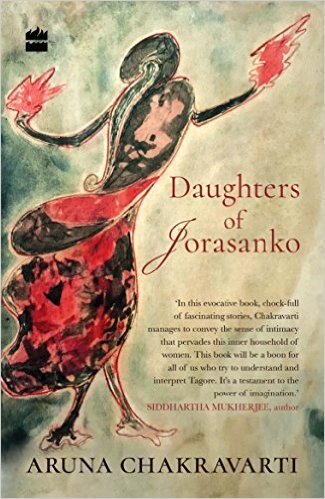
Title: Daughters of Jorasanko

Author: Aruna Chakravarti

Publisher: HarperCollins India

The twenty-fifth day of Baisakh dawned. A hot airless day when not a leaf stirred in the trees and the red earth burned like smouldering coals. Rabindranath was taken to the southern veranda in the morning as usual but he lay in his armchair so listless, so drained of energy, Nandita realized that something was wrong. ‘Let me take you back to bed, Dadamoshai,’ she said. ‘You had better rest the whole day and reserve your strength for the evening. The students have organized a programme for your birthday.’

‘I know.’ Rabindranath nodded. ‘I mustn’t disappoint the children. But I would like to give them something in return. Fetch a pen and paper. Closing his eyes, he sang slowly in an old man’s quavering voice. He nutan/dekha dek aar baar janmer pratham shubhokshan:

Oh ever new! 
Let my eyes behold once more 
the first blessed moment of birth.

Reveal yourself like the sun 
melting the mists that shroud it.

Reveal yourself
tearing in two the arid empty breast. 
Proclaim the victory of life.

Give voice to the voiceless that dwells within you; 
the eternal wonder of the Infinite.

From emerging horizons conches blow; 
resonating in my heart. 
Oh callout to the ever new! 
Twenty-fifth of Baisakh!

Rabindranath lay on his bed all day breathing heavily, the heat sapping his strength. He felt so exhausted that even to lift an arm or keep his eyes open was an effort. He could sense the activity that was going on around him. People were coming from far and near with gifts of flowers and fruit. They begged for a glimpse of him but he, who had never refused to meet anybody in his life, now lacked the energy to do so.

He felt a little better towards the evening when the heat of the day had dissipated and a cool breeze started to blow from the khowai. Then at dusk, Nandita came in. ‘Get up, Dadamoshai,’ she ‘ said brusquely. ‘You’ve rested long enough. Time to get dressed.’

Rabindranath sat up meekly and allowed her to put on him his birthday garments of silk dhuti and chador. He didn’t object even when she adorned his brow with sandal paste and hung a garland of fragrant juin flowers around his neck. But when Protima came in with a bowl of fruit he couldn’t stand the smell. ‘Not now, Bouma.’ He shook his head, ‘I’m not hungry.’

Protima wouldn’t go away. ‘You’ve hardly eaten anything today,’ she said firmly. Have a few pieces of mango. It’s your favourite himsagar. Prashanta brought a basketful.’

Lacking the strength to protest, he put a small piece in his mouth and shuddered with distaste. ‘The good days are gone, Bouma,’ he said sadly. ‘Else why does the king of fruits taste bitter in my mouth?’

‘But even last season you were eating five or six a day!’

‘I know.’ He smiled. ‘That is why I say the good days are gone.’

(Excerpted from Daughters of Jorasanko by Aruna Chakravarti, published by HarperCollins India)

About the Book:

The Tagore household is falling apart. Rabindranath cannot shake off the disquiet in his heart after the death of his wife Mrinalini. Happiness and well-being elude him. His daughters and daughter-in-law struggle hard to cope with incompatible marriages, ill health and the stigma of childlessness. The extended family of Jorasanko is steeped in debt and there is talk of mortgaging one of the houses. Even as Rabindranath deals with his own financial problems and strives hard to keep his dream of Santiniketan alive, news reaches him that he has been awarded the Nobel Prize for literature. Will this be a turning point for the man, his family and their much-celebrated home?
Daughters of Jorasanko, sequel to the bestselling novel, Jorasanko, explores Rabindranath Tagore’s engagement with the freedom movement and his vision for holistic education, brings alive his latter-day muses Ranu Adhikari and Victoria Ocampo and maps the histories of the Tagore women, even as it describes the twilight years in the life of one of the greatest luminaries of our times and the end of an epoch in the history of Bengal.

About the author:

Aruna Chakravarti  has been Principal of a prestigious Women’s College of Delhi University for ten years. She is also a well-known academic, creative writer and translator with seventeen published books on record. They comprise five novels, two books of short stories, two academic works and eight volumes of translation. Her first novel The Inheritors (published by Penguin Random House) was shortlisted for the Commonwealth Writers’ Prize and her second, Jorasanko (published by HarperCollins India)received critical acclaim and also became a best seller. Daughters of Jorasanko, a sequel to Jorasanko, (HarperCollins India) has sold widely and received rave reviews.Her novel Suralakshmi Villa, published by Pan Macmillan Ltd under the Picador imprint, has been adjudged “Novel of the year (India 2020)” by Indian Bibliography published in The Journal of Commonwealth Literature U.K. Her latest work, The Mendicant Prince, a semi-fictional account of the Bhawal legal case, was released by Pan Macmillan Ltd, in July this year to widespread media coverage and acclaim. Her second book of short stories Through a Looking Glass: Stories has just been released by Om International Ltd.

Her translated works include an anthology of songs from Rabindranath Tagore’s Gitabitaan, Sarat Chandra Chattopadhyay’s Srikanta and Sunil Gangopadhyay’s Those Days, First Light and Primal Woman: Stories. Among the various awards she has received are Vaitalik Award, Sahitya Akademi Award and Sarat Puraskar.

She is also a script writer and producer of seven multi- media presentations based on her novels. Comprising dramatised readings interspersed with songs and accompanied by a visual presentation by professional artists and singers, these programmes have been widely acclaimed and performed in many parts of India and abroad.

.

PLEASE NOTE: ARTICLES CAN ONLY BE REPRODUCED IN OTHER SITES WITH DUE ACKNOWLEDGEMENT TO BORDERLESS JOURNAL

Click here to access the Borderless anthology, Monalisa No Longer Smiles

Click here to access Monalisa No Longer Smiles on Kindle Amazon International