How often have we, as fully realised human beings, found ourselves in the ironic situation of proving our human status to a computer programme? We have ticked boxes to identify zebra crossings, traffic lights, and buses, only to be told we were wrong, as if we did not know what a bus was. It is as if our fingers were too stubby to press the right keys or too daft to understand. And now, we are deciphering distorted words, as only a human could read wavy or cursive writing.
Now we understand. The verification exercises did not just stop automatons from spying on our data. They were meant to aid computers in digitising old books[1]. Computers sometimes struggle with old pages when converting physical books into digital versions. Due to wear and tear and fading caused by oxidation, the text may appear distorted. Computers use this mundane verification process by making humans interpret these unreadable texts. We play a crucial role in this process, creating a training module to help identify issues and errors to improve digitisation.
While CAPTCHA[2] (acronym for Completely Automated Public Turing test to tell Computers and Humans Apart) was initially designed to prevent bot attacks and spam, it is now used by computers to distinguish between humans and bots among users. Alan Turing, the father of theoretical computer science, proposed a test[3] which was later named after him to evaluate a machine’s ability to exhibit intelligent behaviour indistinguishable from a human. Although many machines and AI programmes have passed this test, humans now face a reverse Turing Test to prove our organic status.
The funny thing is, while all this is happening, with automation and the diminishing need for human interaction, humans are gradually losing their humanity. We have lost the ability to look into each other’s eyes and start a conversation just for fun. Suppose Alan Turing proposed the test to gauge machine intelligence, and modern computers give a reverse Turing Test[4] to exclude unwanted chatbots. In that case, humans perhaps need a Turing-like test to confirm they still have some grey cells. We are increasingly losing our capacity for idle chats. We are all just prisoners, best left to our own devices.
Talking about looking into each other’s eyes and melting into the passion of each other’s aura, the dating scene these days is no longer like that. Enter any dimly-lit romantic restaurant, couples are not lost looking at one another but lost in the abyss of cyberspace, looking at the digital restaurant menu or perhaps into each other’s social media or Tinder hits to see what the other half has been up to.
While it is true that automation is changing the job market, it’s also creating new opportunities. My son, for instance, worries about his job, but I remind him that the world has created jobs that were non-existent just half a century ago. Who has heard of social media managers, cloud architects, or veterinary psychologists? My mother told me that my grandfather worked in a printing press. He used to come back smelling of turpentine, which he used to clean off the ink that stuck on his body. Nowadays, printing is done at home with a button, a slight whirring and a whooshing, and out comes a printed document at one’s convenience.
My grandfather later became a chauffeur to a successful business magnate. Once we have sorted out the finer points of bringing self-driving cars to market, we may not need drivers in the future. Now, many self-proclaimed gig entrepreneurs give up their full-time paying jobs to become delivery boys. Do we have news for these boys? Drones are dying to get up and replace you.
If one were to think that only the blue-collar job is at risk, think again. Conveyancing jobs currently carried out by paralegals can be taken over by an AI programme to churn out beautiful Sales and Purchase Agreements[5].
These programmes have also learnt to say the appropriate words during grief and crises. Increasingly, call-in helplines are ‘manned’ by AIs. The field of psychiatry may be at risk of not needing doctors. Even as we speak, we may already be conversing with chatbots about our bank transactions without realising it. This raises ethical questions about the role of AI in sensitive areas of human life and the potential loss of human connection in these interactions.
I remember a time in mid-1990 when the Malaysian civil society expressed concern over Malaysia’s uncontrolled influx of foreigners and our overdependence on the foreign labour force[6]. Someone suggested automation and mechanisation as a possible way to avert this. Still, apparently, the financiers were not too keen to increase business expenses, which would possibly reduce foreign investment. The general acceptance was that third-world nations were not ready to fully automate. They had not been able to provide universal employment to their citizens. This historical perspective highlights the complex relationship between automation, economic development, and social equity.
Moving forward, we sometimes find ourselves in zombie states, clicking reel after reel on social media as if we have so much time. Examples of children turning violent against the hands that feed them when their demand to go online is denied are not uncommon. Have we not heard of spouses immersed in full-blown affairs living under the same roof with the other half with ease, with a bit of help from the need for data privacy? A husband does not know what the wife does behind his back because access to devices is guarded by passwords.
Rock bands once thought using synthesisers on their songs was sacrilegious. The legendary British rock band, Queen, proudly boasted that they never used synthesisers to maintain a traditional, raw, organic feel to their sounds. Now, we must be happy with the digital manipulation of music and voice. Even though AI can compose music at a philharmonic level, music connoisseurs are far from contented. They say it lacks emotion, probably because great music comes from lived experience[7].
What started as automation, where machines aided humans to ease work, has now evolved to something which can learn and mimic human actions. It has come to be called intelligence, albeit artificially developed by the human mind. Like a student surpassing his teacher, the real fear now is that AI is evolving consciousness. If AI is the future, the person who controls the future will be King. Does that not mean that tech entrepreneurs will be the world’s future leaders? The world will indeed be borderless, only determined by digital connectivity.
We already long for the good old days when talking to customer service did not start with, “press 1 for English and this conversation will be recorded for self-improvement.” What they mean is that it will be used against you. Dealing with a computer chatbot already feels Kafkaesque. It feels like talking to a wall without recourse to “talking to the manager!”
Farouk Gulsara is a daytime healer and a writer by night. After developing his left side of his brain almost half his lifetime, this johnny-come-lately decided to stimulate the non-dominant part of his remaining half. An author of two non-fiction books, Inside the twisted mind of Rifle Range Boy and Real Lessons from Reel Life, he writes regularly in his blog, Rifle Range Boy.
PLEASE NOTE: ARTICLES CAN ONLY BE REPRODUCED IN OTHER SITES WITH DUE ACKNOWLEDGEMENT TO BORDERLESS JOURNAL
The translation published by Shambhabi The Third Eye in 2022
Published in 1868, Manottoma: Dukkhini Sati Charit (Manottama: Narrative of a Sorrowful Wife) the first novel written by an unnamed Bengali woman identifying herself as ‘A Woman belonging to the Hindu Lineage’, which is technically not a pseudonym, has been translated by Professor Somdatta Mandal and published recently in 2022. Somehow evading the attention of literary historians, the text, or any detailed information about it was unavailable for a long time till it was unearthed by a researcher in London only in 2010. In the foreword to the translated novel, Prof Rosinka Chaudhuri points out that the year 1868 was only a decade after the introduction of the main genres of modern Bengali literature: the modern novel, poetry and drama. This was a time of revision and reinvention, of recasting selves and literary forms and genres.
Manottama narrates the sufferings of a educated and long-suffering wife who labours under the petty punishments meted out to her by her uneducated husband, depicting the conflict between patriarchal expectations and prescriptions and women’s education and presumably, agency. The eponymous novel depicts a situation where Manottama, an educated woman, is married to an uneducated husband. Because of the latter’s profligate ways, she is subjected to penury and untold hardships, which she seems to accept without demur.
The narrator of Manottama claims it’s a ‘history’. Cast in a dialogic format as a conversation between two friends, Jadhav and Madhav, (a common format in its time) the novel, in one interpretation, tells us about the pitfalls of female education in the nineteenth century, a period that also saw the emancipation of Bengali women through education in a significant way. Written in the traditional Indian Puranic style of narration, with plenty of sub-plots and digressions and without conforming to the western dictates of unity of time, place, and action, it provides a domestic picture where an educated wife has to compromise with the activities and worldview of an uneducated husband. At one level of interpretation, it seems to be an attack on patriarchy. As an early narrative by an anonymous woman, the work needs — and in a way, demands — greater attention now after more than a century of neglect in order to reinterpret and reconfigure its didacticism and question its meek acceptance of status quo.
Can we accord this work the status of a novel? Also is there a way in which we can unpack the didacticism of the text and pave the way to a subversive reading of patriarchies?
In showcasing a woman who seems to meekly accept her lot in life without complaint, the intention purportedly was to show the benefits of education and how an educated woman navigates her destiny. There are many instances of rampant social injustices in the text. The husband’s profligacy, his marrying a second time and frittering away family fortunes — all these are accepted by the protagonist, Manottama, in a spirit of apparent equanimity. She seems to accept the social injustices meted out to her meekly, without demur or protest. She obeys and serves her father during his visit and continues to perform her conjugal and domestic duties vis-a-vis her undeserving husband. If anything, she continues in her endeavour to instruct her children and the children of the quarrelsome second wife. No complaint against marital injustices pass her lips, even when her father expresses concern over the indigent condition of the household. Her behaviour is ideal in every respect and she is upheld as a paragon.
“Manottama” in Bangla can be translated into someone with a superior mind or soul and the protagonist named as such fits the bill. She keeps quiet about her individual woes while trying to ensure the well-being of the whole family.
The novel shows the impact of the many instruction manuals and advice/conduct books that were plentifully available at the time and herein lies part of the problem of the book as a novel. For one, there is no attempt to depict the inner thoughts of the protagonist. She at times seems like a cardboard cutout, a compendium of all the virtues extolled by patriarchs and paternalists in 19th century Bengal and India. She is a stereotype and seems almost a parodic version of the ’good woman’ who sacrifices self-interest at all times. Whether this narrative qualifies/succeeds as a novel is something which has to be decided by the reader .She embodies the ‘patibrata’ or the devoted wife, a kind of woman who helps in the salvation of the husband and nation. To quote a writer at the end of the 19th century:
The Patibrata wife is the road to liberty and mobility of man. If the women of India follow the footsteps of Sita and Savitri, then this fallen country will be the blessed land again. (Chandranath Basu, Bagchi 85)
The discovery of this text forms a story by itself and is a precious nugget as it was located in the British library relatively recently, in 2010. The significance of this text is also that it is a woman’s voice addressing other women, advising them with a strong didactic intent. As readers, we can only speculate that the writer intends this homily as a form of advocacy to women that they should not abandon their traditions and customs, but use their education in order to better themselves, and devote themselves to serving their husbands.
The narrative in a dialogic style seems like an extended conversation or debate between a proponent of tradition and a spokesperson and modernity. Some of the conversation between Nilabrata, the irresponsible husband, and Manottama, echo aspects of this debate. According to Nilabrata, who is rendered somewhat insecure by his educated wife and voices the biases against women’s education, only foolish men will send their daughters to school in order to train their daughters as prostitutes. “Educating women and showing them the path to go astray are similar,” he asserts.
One is reminded of Bankim Chandra Chatterjee’s (1838-1894) essay on Prachina o Nobina or “The Traditional Woman and the New Woman”(Woman Old and New, 1879). The debate on whether to educate women were along the contours of conservatism versus progressivism, albeit with shades and finer nuances.We can suppose that the author is in conversation with a conservative perspective which argues against women’s education and where she attempts to demonstrate that tradition and women’s education are not mutually opposed or divergent.
Bengali literature offers many examples of women who were poised on the brink of the paradoxical conundrum of modernity, which made them embrace education and reform without abandoning traditional values. This attempt to recast and position the ‘new’ Indian woman was a pre-emptive gesture to counter the accusation of Westernization and deracination levelled against the reformist attempts to redefine gender roles and relations in late 19th century India.
While one can grasp the discursive aspect of the text, the lack of what we understand or perceive as a natural human response on Manottama’s part to any of her husband’s actions — misdemeanours, follies or vices — leave us feeling deeply dissatisfied. If the novel as a form shows the interactions of the individual with other individuals or with society, the lack of any credible response from Manottama casts her in the mould of a ‘patibrata’ woman but stifles the text as a novel.
However, if we keep in mind that many great writers novelists from Bengal and elsewhere — Bankim Chandra Chatterjee, Rabindranath Tagore and Sarat Chandra Chattopadhayay— have often used the novel as vehicles of ideas, which generate debate both within the world of the novel and in a larger socio-historical context, this novel can surely be counted as a precursor and a prototype of the discursive/social discussion novel in Bengali. As for the other question raised earlier about the possibility of a subversive reading, Manottama by showing the evils besetting patriarchal systems, manages to show the untenable nature of the same and the fact that men like Nilabrata, for all their bravado, are liable to collapse, unless rescued and sustained by sensible wives. In that sense, it hold a lesson for men to marry wisely and recognise the true worth of educated wives, without getting lured either by false friends or duplicitous women.
The book has received a fresh lease of life in the hands of a competent translator and commentator. The foreword similarly draws out the significance of the narrative, placing it in the context of its times and the larger context of Bengali literature. An exploration of its discursive trajectories and varying cartographies adds to the joys of discovering and reading the narrative.
.
Meenakshi Malhotrais a Professor of English Literature at Hansraj College, University of Delhi, and has been involved in teaching and curriculum development in several universities. She has edited two books on Women and Lifewriting, Representing the Self and Claiming the I, in addition to numerous published articles on gender, literature and feminist theory.
.
PLEASE NOTE: ARTICLES CAN ONLY BE REPRODUCED IN OTHER SITES WITH DUE ACKNOWLEDGEMENT TO BORDERLESS JOURNAL
Blank faces welcome me in Phnom Penh. That the people smile at all is a miracle; years of haggard living, tortured upbringing, and painful deprivations have reduced this golden city of Indochina to one filled with figurative corpses. What America could not achieve, Pol Pot did in a flash and years of oppression turned into that of a blood-filled regime that the Mekong did not even try to wash away. For all its salubriousness, this river, among the greatest in the world, stood by and watched its children be consumed by an ephemeral fire that could only be extinguished in 1979.
Then the Vietnamese intervened, returning only after being loathed by almost everyone in Cambodia. The former, among other benedictions, took apart whatever little credibility the Democratic Kampuchea (Khmer Rouge) government had amassed in three and a half years in power. Pol Pot’s name, quite naturally, does not feature on the political billboards and hoardings that seem to have made themselves inconspicuous in Phnom Penh today. The national dish, Amok, made of fish or several vegan accoutrements to serve the European traveller, takes up the spot left by those of the beggars in the parking spot north of the royal palace.
As I sip my umpteenth sugarcane juice, fortified with cubes of ice that may have once come out of Tibet, I wonder whether the king curls his lips in distaste seeing the beggars and rag-pickers waiting outside the golden gates of his palace. But the official line in Cambodia is that Sihamoni is a staunch Buddhist who likes the occasional bit of Czech opera, and all my thoughts of irreverence — born out of weeks of living in Indochina — flush down the confluence of the Mekong and the Tonle Sap while looking past Sisowath Quay to the east.
This river, the lifeblood of Indochina, had once emerged as a trickle in Tibet, and I am perplexed by the lack of cohesion it shows while merging with the Tonle Sap, which also shares its name with a large freshwater lake in Siem Reap. During the monsoon season, the Mekong forces the Tonle Sap to reverse its water with such gushing force that the latter is left with no choice but to flood itself with fish.
It doesn’t rain in Phnom Penh; I had heard this phrase before but am accosted with it with painful lucidity for the first time when visiting the Tuol Sleng primary school that served, for years, as a torture centre for the Khmer Rouge. Had it rained on the frangipani-filled lush gardens of the school — belittling the despair and agony that went on inside — I would not have noticed. I envy the frangipani blooms and their ability to distance themselves from such emotions as those that afflict men. Outside, a survivor of the Khmer Rouge years sells his story for a few pennies; recognition from the foreigner seems more validating to him than acceptance from his countrymen, who have long forgotten his ordeals. I am told that a McDonald’s might soon open across the street.
When encountering the fabled ‘baby-killing tree’ in the ignominious Killing Fields in Cheoung Ek outside Phnom Penh, there is a numbing sensation which I have scarcely felt before. The tears fall heavier than the unseasonal rains I would have wished to encounter in Phnom Penh; it was not too long ago when I could have claimed that I had not cried in ten years. That this tree is also a Pipal, a cousin of the one under which Sakyamuni attained enlightenment, seems a cruel joke to me. That there is still some sign of life on it, populated by the innumerable butterflies and twittering sparrows, exacerbates this feeling all the more.
Angkor
Angkor[1], a few days later, seems resplendent at dawn, but I am unable to escape the reality that the men who built this monument had also given birth to the reality that the Khmer Rouge would later become. Indeed, Pol Pot was known for his selective readings of the classics of the Khmer kingdom of Angkor — if building this city was possible, anything was, even his vastly unerudite idea of returning the country to a year ‘zero’, doing away with the market economy, abolishing money and persecuting intellectuals for wearing spectacles.
The rain that evades me in Phnom Penh finally catches up with me in Angkor Wat; unable to make a visit early one morning on a bicycle in a thunderstorm through the black jungle, I remain rooted to my guesthouse and eventually fall asleep.
On my first visit to Angkor Wat, I am stunned by the intricacies and details that seem to have permeated every angle of Khmer design. The frescoes on the walls and the images on the gates of the large temple complex depict wars fought and construction projects undertaken; for all its virility in eventually losing its grasp over modern-day Cambodia, the Hindu-Buddhist Khmer kingdom — of whose ilk Jayavarman VII had been, and whose predecessor Suryavarman II had ordered this temple made in 1150, at first as a tribute to Vishnu, and eventually, a mausoleum for himself — was remarkable in its aesthetic sensibilities.
Ta Prohm
The several other temples in the area, including the great Bayon, Ta Phrom and Prasat Preah Khan — not to mention the gigantic meadows located in the heart of the old city of Angkor Thom — attract and drive my senses even as I struggle to cycle on flat roads in the deadening midday heat. The meadows, which feature statues of elephants attired in regal resplendence, remind me of a time simpler than this, when a thousand parasols could be had for cheap and held over the head of the king. The climate of Indochina, I surmise, may not have been too different from what it is now; I look yonder for concrete jungles mimicking the ones that seem to have sprung up choc-a-bloc in west Hyderabad, but encounter only lush blackness.
Angkor Thom
In effect, understanding Khmer society or the part of it which is shown to the visitor, is a challenging affair unless one undertakes a voyage of the heart that infrequently involves short-changing between lives of a different kind. The Mekong, which makes no appearance in Siem Reap, slithers away from the intemperate nature one finds in Angkor.
When I walk past Sisowath Quay one night under a moonless sky, I am reminded of my own idea of happiness, which seems to have been torn to shreds on this journey; a group of middle-aged Khmer men, devoid of languor in this dark hour and well-fortified with Angkor, the brew and not the temple, beckon me over to join in their game of sai[2]. It is then that I know it is time to put the killing tree to bed. For now.
[2] Played with the foot with a shuttlecock-like structure
Mohul Bhowmick is a national-level cricketer, poet, sports journalist, essayist and travel writer from Hyderabad, India. He has published four collections of poems and one travelogue so far. More of his work can be discovered on his website: www.mohulbhowmick.com.
PLEASE NOTE: ARTICLES CAN ONLY BE REPRODUCED IN OTHER SITES WITH DUE ACKNOWLEDGEMENT TO BORDERLESS JOURNAL.
I first encountered the word in a B-grade flick of the same name. Ever since then, the word has struck my fantasy. Serendipity. My birth: serendipitously born after a son’s birth and death; coincidentally, even if a consolation prize, I am a cisgender[1] female. A girl child! What a joke. A substitute, but a girl version. I have often laughed, perhaps, loudly in my head at the joke that serendipitously played on my mother’s body. At the same time, another part of me wondered if that birth was serendipitous or the result of a deliberate quest that emerged from the nebulous grief of my mother. Was I a loss, a replenishment, or just serendipitous—just there? That is a conversation I have chosen not to have with the person who holds the secret of my birth. My birth mother. Some things are best left serendipitous.
Then came the best part of being in places I was never supposed to be found in. In family lore, always the darker-skinned, the book bug, the quieter child, who lacked the tall gait and the elegance of looks that one associates with class-caste. I was never that child. The second best and the serendipitous.
At best. I looked like my paternal grandmother; her broad forehead, dusky complexion, laborious quiet life, and ever-brooding absence in our growing up sealed her in my memory—a shadow without form. The faded yellow print of her pictures rotting in the corner frame above the walls in the rooms of my childhood held her in a stony gaze, looking over us. I looked like her, everyone said. Every mirror time, I tried to notice the resemblance and failed. Serendipitous. And so, I heard that she had died cooking for a family of 14 during the 1950s, in the heat and the labours of the kitchen and the birthing and rearing of children; she had gone just like that. Unnoticed. Serendipitously. At that reckoning, I had no idea what she might have thought of her life or its worth or if those thoughts were relevant and meaningful.
Yet, I looked like her, and by some strange rationale, I felt that I might start and end like her, except that I had to blot out that fatal certainty of her being absent. Her life’s work remained unmentionable, making her especially precarious and serendipitous among us siblings. But I had to do the erasing without any radical shifts. A bloodless coup over destiny. To live looking like her and yet living, unlike any of her days. It was as if my war with serendipity would have to be conducted serendipitously. Unseen. It was behind the covers of the book I was authoring—my life. Or so I felt at the time.
Our resemblances in looks took me to places far away in the books I preyed on. Sometimes, she became Bertha Mason[2], hovering over me, around me, hunting me down to consume my Self; some other times, I thought of the chances I could explore to blot her out and start owning me. I also wondered, somewhat fantastically, about who’d witness our meeting, our two entities fusing in a symphony unheard of. Sometimes, her emergence and eclipsing me seemed possible since I was not supposed to own any articulative space. At all. I was to gradually become the lady in the photo who was my father’s mother. I looked like her. And as my looks distanced me from my mother, I had to stay aloof, forever stuck in the picture, when the individual, my grandmother, was never a real presence in our lives growing up. She was gone before my parents were married. Gone before the serendipitous connection between the daughter of her sixth child could be made, and what would decide my fantasy with her.
Early on, like a gothic heroine coming to claim her rightful place after her travails were written by other men who decided for her, I figured I had to let her go out of that picture and claim space for her while allowing me the freedom where I was not the second best, the substitute child, the replacement, the accidental error. But the person who mattered. My paternal grandmother had not counted, and I did not either. But somehow, she had to come out of the picture so I could. Too. In my adolescence, there was this constant war against the serendipity of the accident of my birth, and it was shaping me from unnoticeable presences that shaped my sense of self at the time. A continual tug of war with the self.
In picture after picture, after adolescent year after year, the resemblances kept piling up. Anyone meeting me from my mother’s side noticed how I did not quite look like anyone they knew on their side. The voices noticing that I did look like someone long since passed crept up, ambushing me serendipitously. “You look just like her. Her forehead and complexion look just like hers.” I was aghast. What did she sound like? Are there stories I could find about her? Things she liked? Books she may have read? Stories of her girlhood she may have shared? Anything that took me back in time and let me feel her for real, like the person I looked like, but had never seen or felt a presence of. How can I think of her and me in me simultaneously? My thakurma[3] haunted me. And so did the fact that her granddaughter from her sixth child, whom she could not have foreseen, would become obsessed with her. She haunted me with her absence.
The lost child, the one lost in time, haunted my parents in his way. He came to live between us. Every time, a caress on a birthday, a milestone in life, or a decade past, I have been reminded that if he were here, we would be two years apart and that the gathering would only enrich itself if he were here. I was never enough. My decades, milestones, and being me were never enough. Either as the serendipitous birth or the look that outed me every time I stood before the parents or their side of the family, I became more and more distant from the people I came home to. Or I thought I had. While the people in the pictures, a dead person who birthed my father, who birthed me, became more defined in my life, and another dead person, a dead son, replaced me every time I tried being me.
A strange dilemma crept on me over time. The fantasy with the mingling of the pictures had disappeared, just like the stories that I had suddenly grown out of. A maturer self-reflected on the depression that came serendipitously to inhabit the space between my mother and me. My heart rumbled, and my eyes cried at the helplessness of that disorder. Was the boy child ever going to stop haunting my mom? If my thakurma were alive, could she steer my mother back to the present moment where she had her own children? Me? I reflected deeply as I entered my 30s at the time, torn apart by a conflict I could never quite diagnose myself, and a voice I could never hear, yet a presence that kept haunting us.
Both dead voices. Dead people. They were long gone in time. Yet never absent. Serendipitously creeping up on me. Ambushing me every time I peeked out.
[1] A person whose gender identity corresponds with the sex registered for them at birth
[2]Bertha Mason was the first wife (afflicted severely mentally) of Edward Rochester, the hero of Jane Eyre, Charlotte Bronte’s novel published first in 1847.
Aparajita De is a mid-career academic, trying her hand at creative writing. this short piece represents her efforts juggling to find a voice between academic writing and more accessible creative writing. Aparajita has been published in venues such as Kitaab.org, Tin LunchBox Minimag, and TheJournal of Epxressive Writing. Aparajita also plants, walks, and organises.
PLEASE NOTE: ARTICLES CAN ONLY BE REPRODUCED IN OTHER SITES WITH DUE ACKNOWLEDGEMENT TO BORDERLESS JOURNAL
Talking about Vilayati Bagh as being an isolated cousin among the many gardens and monuments of Lucknow would be feasible given its elusive nature. I say elusive because it is nestled in the lush environs of the cantonment area and forested canopy that lies ahead of Dilkusha Palace which is one of the city’s many frequently visited wonders. Within this canopy lies Vilayati Bagh, “Vilayati”(foreign) referring in no small terms to not only a colonial past but also the stark fact that it is home to three tombs of erstwhile British officers who perished in the high noons of 1857’s First War of Independence. It was only a year ago that I, myself, had the opportunity to go there for the very first time. But that March morning changed everything. I have been there twice already to revel in its tranquility.
Its history is quite like other gardens and leisure spots of Awadh. It was built in the earlier parts of 19th Century by Ghazi Ud-Din Haider[1], the Nawab of Awadh, as a gift for his beloved European consort. During the revolt of 1857, it fell prey to shellings and other bombardments. But like most of Lucknow’s quintessential monuments, the spirit of renaissance did not elude it for long. In the present day, it is still tucked away in its quiet corner, slumbering and awakening for discerning eyes (and minds) who go there to capture crucial echoes of its unique identity.
Flanked by the Gomti close by and a cemetery in the middle of a spacious compound, the property begins its enchanting passage as one takes a straight drive (or walk) from Dilkusha Palace, approaches Kendriya Vidyalaya and then continues to move ahead to encounter a railway crossing, opposite which lies the cantonment granary, quarters and the grand and haunting Bibiapur Kothi. Taking a left turn from that location brings one to the verdure of old, huge trees, a moderately spacious road and pleasant sounds of cicadas and birds. In this pithy journey to Vilayati Bagh, the feeling of time-traveling to a gracious era of architectural elegance comes into sight the moment we reach its immediate premises. A beautiful Sufi dargah bathed in impressive green lies on the left and a few moderate homes of those who probably maintain this compound meet us.
Then the real journey begins. A sophisticated sense of the building blocks of this elusive garden are elucidated by its brown- yellow, almost auburn walls. The lakhauri[2]paint and plaster give it luster on a sunny day. These ramparts retain their history of age, war and past reckonings. Yet it’s the sun that designs their colour schemes in the most sublime shades. Archeological Survey of India has restored its lost glory in recent years and the result is there for all to see.
The boundary walls have a sturdy presence and are enclosed by arrow-shaped iron structures painted in pleasant brown. As one explores the interiors of the garden compound, little monoliths, corrugated outer flanks that look like barracks emerge, the exposed bricks red and pink in their sublimity of skin tones. A Y-shaped drain also flanks them. There is an aura of extraordinary peace all around. This isn’t meant to be a tourist spot. This is the one for aesthetes and true aficionados of history. The mind wanders and is arrested by trees whose branches are shaped like pitchforks.
A dargah (miniature Sufi shrine) greets one at the outer end of the compound while a majestic gulmohar tree seems to appear like a tall fellow wearing red scarves. Arches and domes subsist in this sturdy network of walls.
The saga of Vilayati Bagh is one of beauty but the starkness of its melancholy is evident in the cemeteries that lie in a little distance from the main gateway. They belong to fallen English soldiers Henry P. Garvey, Captain W. Helley Hutchinson and Sergeant S. Newman. These tombs are made in the image of a wide basin, crypts depicting that no one side can win or lose a war. Everybody has formidable stakes, and the dead don’t preach the gospel of victory or sombre defeat. Flanking these resting places are miniature pavilions with domes; they are surrounded by white rectangles made from cloth supported by twigs — sobering symbols of lives lost and the unpredictable designations of mortality.
Despite this unique mixture of melancholy and beauty, sobriety reigns. Of course, the obvious euphoria of discovery overrides every other emotion. Lucknow is a city that lives and breathes in such possibilities where a monument or elusive corner of its expanse can prompt an awakening for its discerning residents. Going further than the limitations imposed by acquired knowledge is always a source of deeper reckoning. This garden that houses nature and ghosts of mortality in its inner sanctum gives me another reason to keep my curiosity intact.
[1] Ghazi-ud-Din Haidar Shah (1769-1827), The first King of Oudh and the last Nawab Wazir of Oudh. He started a line of kingship which ended with the exile of Wajid Ali Shah(1822-1887).
[2] Traditional natural ingredients, often dyes or pastes from plants, used for coating buildings in Lucknow
Prithvijeet Sinha is an MPhil from the University of Lucknow, having launched his prolific writing career by self-publishing on the worldwide community Wattpad since 2015 and on his WordPress blog An Awadh Boy’s Panorama. Besides that, his works have been published in several journals and anthologies.
PLEASE NOTE: ARTICLES CAN ONLY BE REPRODUCED IN OTHER SITES WITH DUE ACKNOWLEDGEMENT TO BORDERLESS JOURNAL
In 2015, Shashi Tharoor’s speech at the Oxford Union exploded across social media, striking a chord far beyond academic or diplomatic circles. Framed around the motion “This House Believes Britain Owes Reparations to Her Former Colonies”, Tharoor—alongside eloquent speakers from Ghana and Jamaica—argued persuasively for moral accountability from the former empire. Tharoor’s speech was widely appreciated in India because of the succinctness with which he illustrated how and why colonial rule exploited the subcontinent, and how violence and racism were the order of those days.
“It’s a bit rich to oppress, enslave, kill, torture, maim people for 200 years and then celebrate the fact that they are democratic at the end of it. We were denied democracy, so we had to snatch it, seize it from you,” he said to loud applause from the audience.
But while insightful points such as these formed the crux of Tharoor’s eloquent speech, it was his rapier barbs that had the esteemed audience (and netizens alike) crowing. “No wonder that the sun never set on the British Empire,” he says at one point, referencing a common boast used to illustrate the sheer extent of Britain’s power, “because even God couldn’t trust the English in the dark.”
The speech’s viral success revealed a yearning—particularly among millennials raised on televised debates and editorials—for a mode of discourse that is rapidly disappearing. Where once prime-time slots featured fiery discussions on social and political issues about caste, class, gender, and policy, today’s digital platforms prioritise speed, relatability, and aesthetics.
In the India of today, a viral tweet can spark more conversation than a peer-reviewed article. A beauty influencer’s “Get Ready With Me” vlog is more likely to trend than a lecture by a scholar on social justice. The thought leaders of the past were expected to speak with gravity; the content creators of the present are expected to sparkle. When public intellectuals are replaced by public influencers, the nature of cultural discourse changes. Popular culture, once a mirror held up to society, now leans into escapism. Complex socio-political debates are flattened into clickable soundbites, and intellectual inquiry is often sidelined by algorithm-friendly content categories, sorted by SEO value[1].
Intellectuals once forced us to think harder, ask more difficult questions, live with complexity. Influencers invite us to feel seen, validated, or soothed. One expands the self, the other simply flatters it.
India’s Golden Age of Thought: When Public Intellectuals Shaped the Nation’s Conscience
Once upon a time, India did not lack public intellectuals. In fact, the early decades after Independence saw them thrive because India’s tradition of intellectual dissent is long and storied. Figures like Nehru, Gandhi, Ambedkar, Tagore—they were not just leaders or writers; they were public philosophers.
Thinkers engaged with the moral and political questions of their time, not just within academia but in public forums, books, interviews, op-eds, and essays that reached a wide, engaged readership. They helped build the intellectual spine of a newly independent nation grappling with secularism, caste, democracy, and justice.
Even in Bollywood, cinema once offered social critique—from Guru Dutt’s Pyaasa (Thirsty, 1957) to Shyam Benegal’s Ankur (The Seedling, 1974). They were conscience-keepers, cultural critics, and truth-speakers. They didn’t shy away from controversy—many actively courted it. They weren’t afraid to speak against majoritarianism, economic inequality, censorship, or communalism.
Meanwhile, halfway across the world in Texas, a young boy named Wes Anderson—who would go on to become one of the most distinctive voices in contemporary cinema—found himself deeply influenced by Satyajit Ray. It wasn’t just Ray’s pioneering cinematic style that captivated him, but also his prolific work as a writer and illustrator, and his powerful engagement with public discourse. Through his films, Ray offered a radical and empathetic lens on Indian society, boldly confronting issues such as poverty, gender roles, the tension between tradition and modernity, and the human consequences of social change—perspectives that were remarkably ahead of their time and continue to resonate across cultures.
Dr. A.P.J. Abdul Kalam was one of modern India’s most beloved and influential public intellectuals—a scientist, teacher, and former President who embodied the rare blend of deep technical knowledge and visionary humanism. Revered as the “Missile Man of India” for his pivotal role in advancing the country’s space and defence programs, Kalam also brought science into the public imagination with clarity, humility, and hope. His presidency (2002–2007) was marked by an earnest outreach to young people, whom he inspired to dream beyond the limitations of circumstance. Unlike many in power, Kalam believed in the democratisation of knowledge—he made complex ideas accessible, challenged youth to innovate, and constantly linked progress with ethics and spirituality. In doing so, he redefined what it meant to be a public intellectual in India: not someone cloistered in academia, but a leader who imagined a better future and invited the nation to build it with him.
Brains Behind Paywalls: How Intellectualism Lost Its Spotlight
There’s no shortage of brilliant minds today—but intellectualism requires both platform and patience. Neither is abundant. A YouTuber dissecting colonial legacy in Indian education may get a few thousand views; a beauty blogger with “chai latte skin” content racks up millions. But now, intellectuals are trapped producing work for journals and conferences rather than the public sphere. As a result, public-centred intellectualism has become rare. It’s not because intellectuals of that caliber no longer exist, but that the structures that once made their ideas visible have been buried under layers of institutional gatekeeping.
The decline of the public intellectual isn’t just the result of a shifting media landscape—it’s also tied to how our access to and expectations around knowledge have evolved. There was a time when intellectuals were celebrated as generalists, able to navigate literature, politics, science, and philosophy, and translate complex ideas for a broader audience. Think of Susan Sontag or Bertrand Russell—figures who didn’t confine themselves to narrow academic lanes but moved fluidly across disciplines to spark public thought and dialogue.
Today, intellectual life has become increasingly siloed. Hyper-specialization has turned academia into an insular world where scholars speak primarily to other scholars. Rather than bridging the gap between advanced knowledge and public discourse, modern academics are often locked within their own echo chambers. The public philosopher who once commented on culture and politics has given way to specialists producing work for a niche audience of peers.
Even when academics do attempt to reach beyond their field, they’re often met with suspicion. A historian writing on political theory or a physicist reflecting on metaphysics is likely to be dismissed for stepping outside their “expertise.” Intellectual authority today is rigidly policed, and interdisciplinarity—once a hallmark of great thinkers—is now treated with skepticism.
From Public Intellectuals to Public Aestheticism: How Influence Got a Makeover
Today’s cultural powerhouses operate on a very different wavelength than their predecessors. Where figures like Susan Sontag or James Baldwin once shaped public consciousness through sharp intellect and critical writing, today’s influencers—like Kim Kardashian—wield their power almost entirely through aesthetics. Kardashian doesn’t publish essays; she sets the tone for global beauty trends. With each new look—glazed donut skin, brownie lips, strawberry makeup, and the almost comically indulgent cinnamon cookie butter hair—the Kardashians and Jenners reshape beauty norms with a force that rivals traditional intellectuals.
In India, the landscape mirrors this shift. Influencers like Ananya Panday and Ranveer Allahbadia amass millions of views despite offering little in terms of originality or eloquence. Much of their content borrows from what’s already been done, often repackaged with no clear voice of their own. Unlike cultural figures such as Shabana Azmi or even Priyanka Chopra[2]—whose words once commanded attention and mattered—many of today’s digital celebrities struggle when pulled out of the comfort zone of scripted, bite-sized platforms. Their polished online personas crumble under the pressure of unscripted public discourse.
What we’re left with is a curated illusion, a constant performance of identity. And the troubling part? Young audiences are watching, emulating, and internalising these facades—until, inevitably, a scandal breaks the spell. In an era ruled by surface and spectacle, authenticity has become the rarest currency of all.
If Joan Didion or Arundhati Roy represented a time when public intellectualism had mass appeal, these influencers represent what has replaced it: public aestheticism. A philosopher might spend years constructing a critique on our society, but an influencer can change peoples’ worldviews with a single Instagram post. Influence now moves at the speed of an Instagram story. The philosopher builds theory; the influencer sells a mood. In this new aesthetic economy, they are the message, the medium, and the marketplace all at once. This is not an incidental shift, but a reflection of our broader cultural transformation.
Although, this is absolutely not a wholesale condemnation of influencers. Many use their platforms to raise awareness, fundraise, and spotlight important issues. But influence has become aestheticised. And when beauty, brevity, and branding become the dominant currencies of expression, difficult truths become harder to hear.
Even figures with a platform one would consider intellectual, like a podcast or blog, tend to operate within a different framework than the public intellectuals of the past. The most successful are the ones who know how to package their ideas into easily consumable formats. Their content may demand engagement, but not necessarily deeper thinking. The most successful cultural critics of our digital age are simply a different kind of influencer, one who may sell a worldview rather than a skincare routine, but are selling something nonetheless.
Amidst all of this, we have lost the expectation of being challenged by our cultural figures. We have lost the collective memory of what it means to gather around an idea rather than a trend. We have lost the stamina for long-form thinking. We now crave hot takes instead of deep dives, personality over principle, vibes over values. We’ve also stopped expecting our cultural figures to challenge us. We ask them to inspire us, to entertain us, to market their authenticity. We no longer crowd into halls for heated debates—we scroll.
When Influence Replaces Insight: The Rise of Apathy and the Fall of Public Thought
The culture hasn’t gone quiet though. Indian influencers—fashion bloggers, tech reviewers, lifestyle curators, “finance bros”, even comic creators—are the new cultural capital. They dominate conversations on what matters to people: from wedding aesthetics and productivity hacks to skincare routines and budget investments. The currency of their influence isn’t depth but relatability, not dissent but delight. Even in the realm of “education”, we find influencers gamifying complex financial or political ideas into simplified carousels or 60-second explainers. It’s not necessarily bad—but it is diluted.
It’s also understandable why many hesitate to enter intellectual spaces today—there’s a prevailing sense that everything worth saying has already been said. We live in an age where every thought seems pre-articulated, every argument countered, every counterpoint already dissected. The landscape isn’t lacking in intellectual potential; it’s that fewer people feel confident stepping into the role of a public intellectual, believing true originality is no longer possible.
This mindset breeds an intellectual echo chamber. Rather than contributing to the discourse, many settle into passive consumption, convinced that someone else has already voiced every worthwhile idea.
But the truth is, no conversation is ever truly finished. History shows us that ideas are living things—they shift, adapt, and deepen depending on who engages with them and when. The same philosophical questions that animated thinkers centuries ago continue to evolve, finding new relevance in each generation. Feminism as it was understood in the 1970s is not the feminism of today. Jean Baudrillard’s meditations on media and hyperreality in the 1980s feel hauntingly prescient in our digital age—but our reading of him is inevitably shaped by the world we now inhabit. Every era reinterprets the past, and every new voice brings a fresh lens. That’s what keeps the intellectual tradition alive.
Reclaiming Thought: Can Intellectualism Survive the Age of Spectacle?
So, can the intellectual space be reclaimed, or has it been permanently absorbed into digital spectacle? Long-form discussions found in podcasts, essays, and forums are a great starting point. Platforms of these media types allow for deeper exploration of ideas, where nuance and depth are greatly valued.
And it’s not that intellectuals have disappeared. They are still here, writing essays, protesting laws, mentoring students. But they’ve been pushed to the peripheries of public attention. Their audiences are shrinking, and their words are often drowned out by the louder, shinier pull of influencer content.
But intellectual spaces aren’t only limited to these traditional platforms. Niche online communities like internet book clubs on Fable or Instagram create new ways for people to connect with unique ideas. You can also incorporate intellectual conversation into your everyday life. Attend local events, art galleries, or even start casual discussions among friends to make these topics more accessible and relevant. The intellectual sphere may have shifted, but it isn’t gone. We simply have to work to reclaim these spaces with people who are willing to engage deeply with ideas.
Ultimately, the death of the public intellectual may not be as tragic as it seems, it may just mean that intellectualism is taking on new forms. But we have to ensure we’re not losing sight of what really matters—the depth, complexity, and refusal to settle for easy answers in the pursuit of something greater.
Culture Is Still Loud—It Just Doesn’t Want to Make You Uncomfortable Anymore
There’s another reality unique to India: the active suppression of dissent. To be an intellectual in India today, particularly one critical of the status quo, is to court danger. Writers have been jailed (Anand Teltumbde), journalists have been shot (Gauri Lankesh), and students have been arrested for protest slogans. In such an atmosphere, who would choose to be a public intellectual?
The public intellectual, by definition, is someone who speaks truth to power. In India, speaking truth to power comes at a high cost. And so, instead, we scroll. Meanwhile, the influencer class thrives because they are apolitical by design. Their influence is rooted in apathy, in not asking uncomfortable questions. This is not a coincidence. It is by systemic design. The less we think, the more we consume. The more aestheticised our discontent, the less threatening it becomes. Influencers now perform the soft work of culture—sedating, distracting, pacifying—while hard truths are hidden behind paywalls, FIRs, and broken institutions.
But if the public intellectual is to make a comeback, we as an audience must do our part. We have to choose depth over dopamine, discomfort over convenience. We must resist the temptation to aestheticise every idea until it’s just another lifestyle choice.
Because when thought leaders become brand ambassadors, and reflection becomes a trend, we risk forgetting that ideas—not images—are what truly shape society.
The public intellectual may be on life support, but the conversation isn’t over. It never is.
[1] SEO (Search Engine Optimisation) value refers to the estimated monetary worth of organic traffic generated by a website through search engine optimisation efforts.
Lopamudra Nayak is a poet, freelance writer, and biotechnologist with a passion for literature and storytelling. She writes poetry, book reviews, and reflections on pop culture on her blog, Substack and Instagram.
.
PLEASE NOTE: ARTICLES CAN ONLY BE REPRODUCED IN OTHER SITES WITH DUE ACKNOWLEDGEMENT TO BORDERLESS JOURNAL.
Dolly Narang muses on Satyajit Ray’s world beyond films and shares a note by the maestro and an essay on his art by the eminent artist, Paritosh Sen
Brochure cover: Provided by Dolly NarangSatyajit Ray(1921-1992): From Public Domain
My trunk call from Delhi to Calcutta booked one day before finally materialised. This was way back in 1990 when trunk calls were the fastest mode of communication. In a coarse voice, the operator demanded a response from the deep, modulated voice on the other end. ‘Satyajit Ray hai[1]?’ she asked, her tone sharp with impatience.
I could hear the legendary filmmaker’s composed response to the operator’s gruff, abrupt tone. I winced at her brusqueness feeling helpless to intervene and apologise.
When she connected me, I introduced myself to Satyajit Ray and ventured to share my idea of an exhibition that would showcase a lesser-known yet equally fascinating facet of his oeuvre—his drawings, film sketches, graphic design and more. A visual archive that, though rarely seen by the public, was as significant as his cinematic legacy. He was initially apprehensive—modest about this body of work and uncertain about how it would be received
This initial conversation was followed by a series of follow-up exchanges over trunk calls, over several months. Each call felt like a step closer to realising the exhibition. I would book trunk calls in the urgent category request for PP (person to person) as they took less time to materialise. PP calls were specifically for the person whose name was specified. Still, patience was essential.
Ray, to my surprise and admiration, always answered the phone himself. No secretary, no assistant screening the calls. The simplicity and humility was endearing.
I had first shared the idea of the exhibition with Paritosh Sen one of India’s master painters and a friend of Ray’s of an exhibition of a lesser known yet fascinating facet of Ray’s genius: children illustrations, detailed film sketches, designs for book and magazine covers, typeface designs, his diverse portfolio of graphic work. Paritoshda, as I affectionately called him who mentored and guided me as I began my journey into the art world, not only approved of the idea but took it upon himself to speak to Ray, whom he knew personally. Following the introduction through Paritoshda, I pursued the idea with the legend.
During the first phone call, I briefly spoke about my concept— an exhibition that would focus on his rarely seen visual art. His immediate response was hesitant and guarded, “These are very small works on paper just a few inches in length and width.” he said. “They would be of no interest.” I ventured that this was a unique and a first time view into his visual legacy and the size would not take away from the impact. He further expressed his doubt about his graphic work having any resonance beyond Bengal, in North India. I further submitted that his artistic genius and versatility has an appeal beyond Bengal. This exhibition would give a rare insight into the work and thought process of not only the deeply respected and admired film maker that we all know but also of Satyajit Ray the illustrator, the graphic designer, along with revealing the meticulous and detailed planning into his films.
I hoped to bring this body of work — into public view for the first time. The idea was to get people to see another Ray — not the filmmaker behind the camera, but the artist behind the pen and brush.
I remember Ray had explained that he had a busy schedule and preoccupied with the editing of Ghare Baire. After several months of trunk calls and waiting, I booked another urgent, person to person call. Finally the breakthrough I was waiting for, “ Come next week,” he said. His doubts of an exhibition having been cleared through the intervention of Paritoshda and somewhat through my persuasion.
As I boarded the Indian Airlines flight to Calcutta the following week, a surge of excitement gripped me. I was given a morning time to meet him at his residence: 1/1 Bishop Lefroy Road. I arrived with some trepidation. Standing outside this tall imposing door, I rang the bell. Soon, I found myself face to face with the master who opened the door himself—his tall, commanding presence matched only by his deep, well-modulated baritone voice greeting me warmly. He led me into his much photographed studio/workplace. He was looking comfortable and relaxed in a white kurta pajama. In contrast to his majestic yet simple presence, I was nervous and hoping it was well masked.
Thereafter, began a series of visits to his flat. Each time the door was opened by the master himself. And I would be led into his study teeming with books lining the teak wood book shelves.
He would sit in a comfortable looking swivel chair with a brown rexine cover, the corners of which were slightly frayed. Opposite him and within a comfortable arms reach was a small work table with jars tightly packed with paint brushes, pen, pencils. Here is where he did his drawings to create his vast and varied visual legacy of set design, costume design, make up instructions, graphic design, children’s illustrations for the monthly children’s magazine, Sandesh, started by his grandfather, He also designed the covers for Sandesh, more books and magazine covers.
Making of the exhibition
Working alongside him to sort through his drawings was an enriching and memorable experience—one that offered rare insight into his creative mind. Each meeting felt like a step closer to the exhibition becoming a reality. I noticed his interest was slowly growing and he was participating in the selection with increasing enthusiasm and a discerning eye. He approved some while some he felt need not be exhibited. Our meetings would stretch till lunch time until he was gently summoned by his wife, Bijoyadi, to take his lunchbreak. He would extend the search and wrapped up a little beyond lunch time. I too was cautious not to overstep limits.
As he began to look in his study, he unearthed these miniature treasures on paper tucked between books or between their pages, resting on tall teakwood bookshelves. Some were found under sofa cushions. He remembered that many were with his cousin Lila Majumdar[2] and that he would have to ask her. As he delved deeper into his collection he remarked, “I had forgotten I have done all this work.”
During few initial meetings, I would address him as Mr. Ray, which was beginning to feel formal and somewhat awkward. So I asked if there was another way I could address him.
“Manik,” he asserted. “Everyone calls me Manik.”
From that moment on, I called him Manikda. These recollections return to me vividly as I write this piece.
We turned our attention to his iconic crimson books, neatly stacked in his study. These well-known volumes are a treasure of Ray’s meticulous preparatory work—filled with detailed sketches for his films, costume and set designs, makeup instructions for his makeup artist, architectural notes, and an astonishing range that gave glimpses into his thought and work process.
Sourced from the brochure provided by Dolly Narang
We did not want to remove any drawings from these precious notebooks. He selected the drawings that he liked and decided he would ask Nemai Ghosh (1934-2020), his close associate and long-time photographer, to photograph them for the exhibition.
Several drawings, having come loose from the notebooks, were used in their original. We did not want to remove any drawings which were firmly in place in these volumes. Ray identified the drawings that appealed to him and Ghosh photographed them.
Part two of the exhibition was titled “Drawings and Sketches For Films’ and it comprised of both originals and the photographs by Nemai Ghosh of the drawings chosen by Ray.
I nudged him further and asked if there was anything else he might suggest from his visual repertoire.
He thought of his film posters. The ones readily available in his flat were posters of Nayak and Ghare Baire, which were loaned for the exhibition. He was particularly eager to include the poster of Devi, but after searching, he discovered he only had one copy and was reluctant to part with it.
Top: Hoarding of Ray’s film Goopy Gyne Bagha Byne (1969). Below:: Film posters of Nayak(Actor, 1966) and Ghore Baire (Home and the World, 1984). Sourced from the brochure provided by Dolly Narang
We tried to include artworks which would represent the different aspects of his visual repertoire. It seemed there was no end — typefaces he had designed, advertising campaign when he worked for D.J.Keymer. While searching he realised he did not have the originals of the typefaces he had designed but fortunately they had been preserved in the photographs taken by Nemai Ghosh. Later Paritoshda told me that he was given an award for the typeface by an American foundry and named it after him, Ray Roman.
Provided by Dolly Narang
An album was discovered containing a silent film he had conceptualised on paper but never brought to life—a silent film on Ravi Shankar with his music in the background. The album, composed of monochromatic black watercolours, was photographed by Nemaida. It drew great interest, offering a first-ever glimpse into a project that was never realised.
Paritoshda advised that Ray had composed music for many of his films. A tape with his compositions was playing continuously and softly in the background at the exhibition.
The exhibition was presented in two parts each had a duration of three weeks. Part one was devoted to his Graphic design, drawing and part two was about his preparatory sketches for films.
I requested Paritoshda to write an article for the exhibition catalogue, to which he graciously agreed. He penned an insightful essay which was appreciated by Ray himself as well as by fellow artists, critics, and visitors who found his insights both illuminating and deeply engaging. When I asked him for his suggestion for a title for the exhibition, he thoughtfully suggested — “The Other Ray” — a title both fitting and meaningful.
With the socio-political upheavals around us in Delhi, it wasn’t easy—cataloguing, printing invitation cards, framing, arranging transport to distribute the invitations. Invitation cards from our mailing list of over one thousand had to be hand delivered.
I asked Manikda for names of his friends and associates who he would like invitations to be sent to. His list included names both in India and abroad.
About a week before the event, I visited AIFACS[3] to put up a poster for the exhibition. To my surprise and delight, sitting in one of the exhibition halls was none other than M.F.Husain himself. It felt like a godsend—an unexpected opportunity to personally invite him.
He was visibly excited upon hearing about the exhibition and expressed interest in seeing the artworks immediately wherever they were. I explained that the pieces were still at home and would be better appreciated once they were displayed on the gallery walls. But he was insistent—he wanted to see them right away. We got into my car and drove to my house. Husain viewed the works in thoughtful silence moving from work to work, looking at each with great interest. After perusing them keenly he settled at the dining table and began reminiscing about his association with Ray – a moment as historic as it was moving, etched forever in my memory.
I was not prepared with either a tape recorder or a camera to record this memorable encounter. Fortunately, The Illustrated Weekly, under editor Pritish Nandy, later published his reflections in an article spread over two pages with several illustrations of his graphic work.
Opening to the Public
When the exhibition finally opened at The Village Gallery in New Delhi’s quaint Hauz Khas Village it was received with great enthusiasm and acclaimed by both critics and the public
Visitors from all walks of life came to see the “ The Other Ray”. For many, it was a revelation. The same legendary filmmaker who had given the world The Apu Trilogy had also crafted whimsical illustrations for children, designed book jackets, created typefaces. It was exciting for them to get a peek into his creative process as a filmmaker through his detailed film sketches.
I made another trunk call to inform him that the article in the brochure by Paritosh Sen had been chosen for The India Magazine’s cover story. The next day, when I spoke to him again and offered to send him a copy of the magazine, he responded with excitement. He said he couldn’t wait and had already gone to the market to buy a copy for himself.
Once the exhibition—having stirred great excitement in the art world—came to an end, it was finally time to take it down. The last few days were deeply moving. Visitors lingered, often spending long hours in the gallery, reluctant to leave, as if trying to hold on to the experience a little longer. The space was filled with quiet reflection and enriched by heartfelt exchanges.
Looking back, organising this exhibition remains one of the most fulfilling experiences of my life. What I cherish is the memory of the many hours spent in his study carefully selecting the works for the exhibition. It was a collaborative process, he was open to my suggestions yet he became more and more involved as he delved deeper into his graphic work.
An idea, carefully nurtured, took shape as an exhibition. What was especially fulfilling about the exhibition was how it brought to light a lesser-known facet of Ray’s creative genius—his remarkable visual imagination, his penchant for details, his industriousness. Until this exhibition, only a few of his sketches had appeared in articles and books, leaving much of this work largely unseen. The display offered audiences a rare and intimate glimpse into his visual world as well as his work and thought process, making it especially significant.
The final step was to return the works. I personally placed each delicate sheet into thin plastic sleeves, compiled them into a portfolio, and flew to Calcutta to return them to the master. True to his dignified demeanour, he received the compilation with quiet pleasure. He expressed both satisfaction and a hint of surprise at the enthusiastic response the exhibition had received. I took the liberty of asking him if I could keep as a memento two works from each part of the exhibition. He readily agreed and asked me to choose. I selected one black white illustration for Sandesh and credit title from his film Sonar Kella (The Golden Fort, 1974) . One more request — Could he sign these please? To which he graciously agreed.
As I took my leave, I shared a thought—could we perhaps work on a sequel to The Other Ray? He received the idea warmly, but unfortunately, it never came to fruition. He soon became immersed in Agantuk (The Stranger, 1991), and not long after, his health began to decline.
As I write this, memories come rushing back, and I find myself tempted to echo Manikda’s words of my experience that “I had forgotten I had done all this work.”
Costume designed and sketched by Ray for Hirak Rajar Deshe (In the Country of the Diamond King, 1980) Sourced from the brochure provided by Dolly Narang
Ray’s Note in the Brochure:
My grandfather was, among other things, a self-taught painter and illustrator of considerable skill and repute, and my father — also never trained as an artist — illustrated his inimitable nonsense rhymes in a way which can only be called inspired. It is, therefore, not surprising that I acquired the knack to draw at an early age.
Although I trained for three years as a student of Kalabhavan in Santiniketan under Nandalal Bose, I never became a painter. Instead, I decided to become a commercial artist and joined an advertising agency in 1943, the year of the great Bengal famine. Not content with only one pursuit, I also became involved in book designing and typography for an enterprising new publishing house.
In time I realised that since an advertising agency was subservient to the demands of its clients, an advertising artist seldom enjoyed complete freedom.
This led me to the profession of filmmaking where, in the 35 years that I’ve been practising it, I have given expression to my ideas in a completely untrammelled fashion.
As is my habit, along with filmmaking, I have indulged in other pursuits which afford me the freedom I hold so dear. Thus, I have been editing a children’s magazine for thirty years, writing stories for it and illustrating them, as well as illustrating stories by other writers.
While preparing a film, I’ve given vent to my graphic propensities by doing sketches for my shooting scripts, designing sets and costumes, and even designing posters for my own films.
Since I consider myself primarily to be a filmmaker and, secondarily, to be a writer of stories for young people, ·I have never taken my graphic work seriously, and I certainly never considered it worthy of being exposed to the public. It is entirely due to the tenacity and persuasiveness of Mrs. Narang that some samples of my graphic work are now being displayed. Needless to say, I’m thankful to Mrs. Narang; but, at the same time, I must insist that I do not make any large claims for them.
Ray’s signature: Sourced from the brochure provided by Dolly Narang
SATYAJIT RAY
The Consummate Artist by Paritosh Sen (1918-2008)
(Republished from the brochure of “The Other Ray” exhibition)
It was the summer of 1945. I was holding my third one-man show and my first in Calcutta. On the third day of the exhibition, Prithwish Neogy (a brilliant scholar, now heading the Department of Asiatic Art at the Honolulu University) entered the exhibition hall accompanied by an extraordinarily tall and swarthy young man. I had known Prithwish earlier. The latter was introduced to me as Satyajit Ray. I was vaguely aware of him as the only son of the late Sukumar Ray, the creator of a unique body of nonsense rhymes and humorous prose remarkable for their originality of vision and an extremely sharp intellect and imaginative power. Satyajit was also known as the grandson of Upendra Kishore Ray, one of the inventors of half-tone block making, a pioneering creator of a sizeable body of children’s literature and the founder of the well-known children’s magazine, Sandesh, and a painter of no mean talent either.
Satyajit was then doing a course in painting in Santiniketan under the very able guidance of Benode Behari Mukherjee, a great artist and an equally great teacher. Besides, Ray had also the unique opportunity of coming in close contact with Nandalal Bose, the guru of both Benode Behari and Ram Kinkar, undoubtedly the foremost sculptor of contemporary India.
Earlier he had also received the blessings and affection of Rabindranath Tagore. Although he did not complete the art course in Santiniketan, the experience of being surrounded by these great artists and the unique rural setting of the Santhal Parganas, as portrayed by these artists and the poet, enabled Ray to appreciate nature in all its diverse and glorious manifestations and opened his eyes to the mysteries of creation. This single unprecedented and cherished experience helped him to formulate his ideas about the visual world and to unlock doors of visual perceptions. Added to this was his study and understanding of the classical and folk art, dance and music of our country. The magnificent collection of books in the Santiniketan library of world art and literature also helped him to widen his horizon. It was here that he read whatever books were available on the art of cinema. The seeds of a future design artist and a filmmaker were simultaneously sown here.
Having lost his father early in life, the need for earning a livelihood assumed enough importance to make him leave Santiniketan prematurely and look for a job in the field of advertising art or, as it is better known in modern parlance, graphic design. A latent talent is bound to make its presence felt sooner or later, whatever be the chosen field. As Tagore said in one of his early verses, “Flowers in bloom may remain hidden by leaves but can they hide their fragrance?” Satyajit Ray was appointed by the then D.J. Keymer (now known, as Clarion Advertising Services Ltd.) as a visualiser-cum-designer, often executing the finished design or an entire campaign himself.
Together with two of his contemporaries, O.C. Ganguli and Annada Munshi, Ray was trying to evolve certain concepts not only in illustrations but also in typography which would give their design an overall Indian look. One recalls those highly distinctive newspaper and magazine ads, the magnificent calendars, posters, cinema slides and what not of the late ’40s and ’50s not without a certain nostalgia. If my memory does not fail, I think some of the works of these three artists were even published in Penrose Annual and elsewhere. Here it may be worthwhile to bear in mind that the style evolved by these three artists made a welcome departure from the dull academicism and the stereotypes being practised by most of the advertising agencies of those times. The freshness and vigour displayed in their approach was readily appreciated both by their employers and their clients. Ray was particularly strong in the difficult area of figure drawing, an area in which many graphic designers were found singularly wanting.
Although he was soon to move away from commercial art to embrace his new-found love of filmmaking, he would continue to remain an illustrator of the first order as would be evident from his emergence as a story-teller in the two popular genres of detective and science fiction. (Not many outside Bengal know that Ray’s literary output is in no way less than that of his cinema and that most of his books have already run into thirty to thirty-five editions). He has not only been illustrating his own stories, but over the years he has been designing the covers of his grandfather’s once defunct children’s magazine Sandesh, revived by him nearly two decades ago, which also carried many illustrations by him. But in my opinion his most cherished field is calligraphy, whether that be of the pen or brush variety.
Illustrations from Sandesh: Sourced from the brochure provided by Dolly Narang
This art he imbibed from his guru Benode Behari Mukherjee. Over the years he had also been studying the art of typography with the scrutinising eye of a highly creative calligrapher. The result has been a series of innovations in both Bengali and English lettering evolved for posters, banners and book covers. These very original works gave a tremendous fillip to graphic design in general and book, magazine and record covers in particular, especially in Bengal. The books Ray designed for the now defunct Signet Press of Calcutta way back in the early ’50s set new trends and were considered as models for book production both in terms of page layout, typography and jacket design, the last being his chosen field where, as I said earlier, his innovations have known no bounds. The covers of the well-known literary magazine Ekshan, which he has been designing for many years, to give only one instance, bear ample testimony to his apparently playful but significant experiments with the forms of three Bengali letters which constitute the name of the magazine. The wide variety of his inventiveness is one of his great achievements in the field of cover design.
Cover designs for Ekshan. Sourced from the brochure provided by Dolly Narang
Then there are the posters, banners and slides he designed for his own films. These too were eye openers and instant trend setters. Who can ever forget the huge banners and billboards of the Apu trilogy put up at important street junctions of Calcutta! Their freshness of ideas, design concepts and calligraphy were not to be missed even by men and women in the street. Simultaneously with his creative outburst in the art of cinema, his creativity in graphic design reached new heights. What was remarkable was the fact that Ray imminently succeeded in investing all these works with a highly distinctive Indian flavour derived from his awareness of our folk traditions (especially 19th century Bengali book illustrations and woodcut prints of decorative lettering) both in their linear vigour and simplicity as well as in ornamentation.
One of the most outstanding examples of this approach was the publicity material he designed for Devi. The underlying theme of the title expresses itself forcefully both in the highly imaginative design of the lettering and the image. Their fusion is perfect. Not many graphic designers have been as type conscious as Ray. He personifies the printing designer’s gospel “type can talk”. That a letter or a printing type is not only a sign but an image by itself, and if appropriately employed can have immense communicative power and is capable of expressing a whole range of human emotions was known to Ray from the very beginning of his career.
In the enormous range of Roman printing types there are many in the humanist tradition in their simple aesthetic charm, warmth of feeling as well as in their highly elegant but delicate anatomical details. There are also those which are severe, powerful and cold but nonetheless are highly attractive in their own ways.
It is often overlooked by most readers that a letter’s structure and anatomy can be reminiscent of things in the visible world, both natural and man-made. Some can have the gentle rhythm of the rise and fall of a female form, others may have the majestic look of a well-designed edifice-just to give only two similes. Ray not only bore all these considerations in mind but used his calligraphic knowledge, skill and innovative power to their full advantage when he designed the three printing types called Ray Roman, Daphnis and Bizarre for an American type foundry nearly two decades ago.
Sourced from the brochure provided by Dolly Narang
Not many of us know the infinite patience, rigours, discipline and the endless process of trial and error involved in designing a whole series of a printing type. That, in spite of his other demanding preoccupations, he found enough time to design three complete sets of types bears ample proof of his diligence and perseverance and his passionate love for the world of types. Those of us who have known him over the past decades are profoundly admiring of the fact that he is a workaholic in the best sense of the term. His diverse creative output is staggering and would put many a man half his age to shame.
In the ’40s, I met Satyajit periodically as I worked as an art master in Indore. One of the high points of my visits to Calcutta during the long summer or the short winter holidays was to frequent his ground-floor apartment in South Calcutta. It was at his place I first listened to TS Eliot’s recital in the poet’s own voice of TheWaste Land which was just brought out by HMV (now known as EMI). It was on such visits I would also have an opportunity to listen to his latest collection of records of European classical music. And it was also on one of such occasions I first heard him toying with the idea of making a film based on Rabindranath Tagore’s novel, Home and the World, a project which was abandoned soon after and was finally realised nearly four decades later.
It was not before1 returned home in 1954 after a five years’ stint in Paris that I came to know of his intense involvement with the making of Pather Panchali[4]. I vividly remember to this day the excitement with which he described it to me and invited me to a screening of the rushes. He brought out all the sketches and doodles he made along with side notes in Bengali not only of the dress, props and characters in the script but also very quick but masterly sketches of frames of each of the sequences, camera movements, etc. I remember asking him why he thought it necessary to make such careful preparations before shooting. To which his quick but significant reply, “One of the foremost but very difficult things in filmmaking is to determine the placement of the camera.” He was equally quick to point out that this is only the first part of shooting a movie and not stills.
Those of us who watched him in action know only too well that although there is always a professional cameraman present in his unit, in reality he becomes the cameraman himself. The visual richness of a film is as important to him as a story well told — the one being inseparable from the other. This is the most distinctive feature of his artistic achievements in all his films.
Ray is a lyricist of the highest order. From his first film Pather Panchali to his latest ShakhaPrashakha[5], this lyrical bend binds all his films together in the form of an oeuvre and finds full fruition in his most recent work.
Some of the imperceptibly slow camera movements in this film are sheer poetry. Although not yet released, I had the opportunity of seeing it twice, and apart from anything else, I as a painter was bowled over by its visual richness and its consummate technical finesse. I have reasons to say this. Whenever I see a movie, I try to see it through the lens of the camera and having witnessed many film shootings of some of Ray’s films, it has become a habit with me to follow the movements with great fascination. Thus, it helps me greatly to enjoy watching a film from the aesthetic and technical viewpoint.
I am sure that in order to achieve maximum artistic quality Ray finds the preliminary exercises made primarily in pen and ink very useful. These small and simple sketches, evidently done in quick succession, have all the spontaneity and vigour of something impeccably visualised and bear the unmistakable stamp of a born lyricist. Their linear treatment, unorthodox positioning on paper and an apparent insouciance, at any rate, in my eyes, are the products of a highly creative mind and are designed to meet the needs of a fastidious aesthete.
Among the sketches, one comes across portraits of many of the characters in his films in various moods and postures. These could easily be rated as some of his best works in this group. Only someone with consummate skill can bring out the full characterisation in a postage-stamp format with utmost economy and clarity. The lines which define the contours and other details of the figures are free flowing, sure and firm, the result of years of practice both with the pen and the brush.
One of the most interesting exhibits in the present collection is the album containing one of his earliest essays in visualisation of a film project — the documentary he once wanted to make on Ravi Shankar playing the sitar and on the tabla accompaniment. Ray showed it to me as early as 1954. It is possible that the inspiration came from his viewing Uday Shankar’s ballet film, Kalpana (Imagination) -– a film which he studied frame by frame by taking scores of stills in the dark theatre where the film was released. He showed me the entire series one by one and pointed out among other things the unusual camera angles, the dramatic lighting, the magic of black and white, especially in the close-ups of both the dancers and the tabla playing. Although the Ravi Shankar film was never released, I think Ray thoroughly enjoyed the exercise and learnt a lot from it.
Sourced from the brochure provided by Dolly Narang
This, along with numerous sketches and doodles related to his films, will ever be regarded as something unique in the history of filmmaking in our country.’ Only a few’ and they can be counted on one’s fingers, in world cinema have been such gifted artists too like Eisenstein, Kurosawa, Fellini and a few others. The Village Gallery should be congratulated for presenting to us “The Other Ray – the Consummate Artist.”
Dolly Narang, a gallerist, has conceptualised innovative pathbreaking exhibitions. A recent student of sculpture, she has the satisfaction of experiencing both personal and spiritual evolution as a Pranic healer and as a grandmother.
.
PLEASE NOTE: ARTICLES CAN ONLY BE REPRODUCED IN OTHER SITES WITH DUE ACKNOWLEDGEMENT TO BORDERLESS JOURNAL
What if I tell you that History is my neighbour? It would sound like hyperbole to a lay person. But if you are a resident of the historic and expansively beautiful urban area of Hazratganj that is the heart of the city, it will seem a shorthand for reflections in time.
Hazratganj is a state of mind, not only a piece of land stretching across kilometres and hosting the best that humanity has to offer, whether natural or man-made, including the Imambaras, gardens and riverfronts and gateways that define Lucknow as also the mass of commercial institutions, cultural centres and culinary establishments elevating its profile as a diverse area of activity.
In this beautiful centre of a glorious city lives yours truly and one of the most evocative of the historic gardens dotting Hazratganj also happens to be a mere five-minute walk from his home. I’m talking about Sikandar Bagh, a garden complex that is a sight for sore eyes and retains history in its structure, with lime yellow walls of lakhauri[1], a beautiful gateway bearing the city’s fabled fish symbol and a pagoda style arch signifying the melange of influences in its multidimensional whole.
The domes and ramparts retain the haunting afterglow of history but also the dark days that led to its tragic unraveling.
Built around the mid 1840s by Nawab Wajid Ali Shah[2], the great aesthete and ruler of Lucknow, Sikandar Bagh was a private residence, a garden of elegance and a performance art venue made to honour his love for Sikandar Begum, his beloved wife. The intimacy of this saga of love and mutual respect shared between two life-partners is reflected in the way the place comes alive for any visitor. There’s nothing grand here. Yet there’s the gift of verdure, the protection of huge, dome-like trees and remnants of the original structure that reminds us of a place preserved in its handsome inception and prevalence down the ages.
But Sikandar Bagh is a cultural outlier because apart from its blessed beginnings and present serene state, it had also been scarred by the First War of Independence in 1857[3]. This was the site that was used by sepoys of Awadh (a hallowed title for the region comprising Lucknow and its neighbouring districts that continues to this date) to mount their rebellion against British supremacy. This was a private garrison and hiding place in those erstwhile days of November 1857 where the plotting of a historic rebellion took place. History was not kind to the rebels, and nearly all were slain by the colonial establishment. Knowing that the serenity here could hold so much ballast in its open space makes one ponder. To know about this is to understand that we are progeny of these brave and the remains of the walls facing this garden and continuing up till the Shahnajaf Imambara seem to take the toll of all that bloodshed and hurt that lies embedded within these bricks.
Of course, knowing the background is imperative but so is being inured to its beauty. I am an eternal walker, a flaneur, so for me Sikandar Bagh has been a favourite place to revel in the humbling and aesthetic aspects of Lucknow. Sikandar Bagh befits my desire to saunter and take in the bouquet of nature.
*
It’s been my morning ritual to be comforted by the breeze, swayed and lulled to satisfaction with the lullaby of the trees within its compound and behold a distant beehive in the tallest Goliath among these ancient trees, looking at nestling birds and squirrels in the lower branches of their trunks.
As I write this after a brief stroll in this garden on a pleasant Sunday afternoon, the summer seems to have been evoked to spread its sunny yellow carpet with mellow repose instead of scorching us with humid darts and blows.
The thing with Sikandar Bagh is that history is alive here but also a natural companion. Always the silent, sturdy type, an occasional morning walker or casual passers-by make for rare sights inside its premises in the early hours. It always makes me feel like the chosen one, allowed to roam its length and breadth, making it a regular haunt.
*
A lot of times while going from one place to another, I see young people seated on its green benches, relieving themselves of their pressures and sometimes enjoying a quiet meal here. I also look at people who, besotted by its unique beauty and structure, walk leisurely and photograph its stretches. Their eyes register the special place it holds for them.
Today, Sikandar Bagh is overseen by the Archeological Survey of India. Around early 2022, it commissioned a refurbishment that restored its walls, ramparts with the lakhauri , a far cry from the concrete jungle that is an urban reality in the modern era.
It always comes down to these columns, frescoes, ramparts, a humble mosque within this secular compound, the pavilion signifying what once was an open theatre and the palatial remains, all blended in the unique textures and colours of centuries; worn out by time but never denuded of glory, a stark yet humbling reminder that Sikandar Bagh is a labour of love. Writing this, I am enchanted by its gateway’s peacock iconography, how they seem to call out to the actual birds who visit from the neighbouring Botanical Gardens premises facing this little slice of verdure and architectural wonder.
I inhale the sights, simultaneously rattled by the annoyance of traffic outside its main gate intruding upon its peculiar, unique position within the heart of the city. Yet I know it’s sealed by a dignified reserve, as if these domes and the gateway spell quietude and ubiquity like the red eyes of the pigeons flying near the roof and peering down its height.
*
Honeybees on the tallest trees here go from the nectar of one season to the next and the sun shades this compound in moods invoking the spirit of a poet in me. It’s so easy to be wrapped in the peace and calm of this open space and its historical representation, so easy to know that creative inspiration fed by such a pleasant source is far from just a fictional device. It is a living, breathing ally to diurnal times.
Being in the lap of nature within cities can be a novel intervention. But my love affair with Sikandar Bagh – my own paradise — never waits for a distinct memento. It came to be from a place of love. It is my composite love for it that makes it stand out.
[2] Nawab Wajid Ali Shah was the eleventh and last nawab of Awadh. His kingdom was annexed by the East India Company in 1856 and he was exiled to Kolkata.
[3] Revolt of 1857: The sepoys – Hindus and Muslims – rose united in rebellion against the British Raj. As a result, the British adopted the weapon of Divide and Rule successfully, and the subcontinent continues to be scarred by the fanning of the same flame to this day.
Prithvijeet Sinha is an MPhil from the University of Lucknow, having launched his prolific writing career by self-publishing on the worldwide community Wattpad since 2015 and on his WordPress blog An Awadh Boy’s Panorama. Besides that, his works have been published in several journals and anthologies.
PLEASE NOTE: ARTICLES CAN ONLY BE REPRODUCED IN OTHER SITES WITH DUE ACKNOWLEDGEMENT TO BORDERLESS JOURNAL
For 50 years now Ratnottama Sengupta has seen Haren Thakur adroitly create art from the humdrum of tribal life. And his stylised abstract of the dark-toned humans still makes her sit up and take note.
Haren Thakur with his painting. Photo provided by Ratnottama Sengupta
A dark, stick-like outline encompasses a human of the male species. A triangle, an oblong, a rectangle. A white patch in the midst of a sepia-green landscape. A drummer. A mother with a child holding aloft a balloon. Two women bathing in a primitive pond. A quizzical duck. A wriggling worm. Trees hills fish pigs cows fox… And, yes! A train zigzagging its way through a vast expanse of meadows. As we view the watercolours of Haren Thakur from Ranchi, you might think of the rice-white art of the Warli tribals characterised by geometric shapes that depict the rituals of everyday life. I might be inclined to revisit the painted layers on the 100,000-year laterite at the prehistoric rock shelters of Bhimbetka in the foothills of the Vindhyas in Madhya Pradesh. Another viewer might think of the ancient Sauras and the adornment of their walls in their adobe huts in Odisha. The artist himself might have recollections of the animated Santhal pats he saw being created during his student years in Tagore’s Santiniketan. However, none of Haren’s figures are simplistic. They are all stylised. And so adroitly that you are bound to sit up and take note of them no matter how many times you have come across the theme.
Art by Haren Thakur. Photos provided by Ratnottama Sengupta
Form and content come seamlessly together in the paintings that Haren Thakur will exhibit in Delhi’s Habitat Centre from April 15. The artist who mastered Art at Santiniketan — home to Santhals, the native dwellers of Bengal and Odisha — then made his living in Jharkhand, which is home to 32 tribes… Indeed, from his very beginning, the beauty in the dark skin-tone of the men and women going about their chores was the most natural rhythm of life in the bazaars and streets of Bankura Bishnupur, where his family hailed from, or in Purulia, where his father made his home.
Beyond doubt, Rabindranath’s deep affection for the Santhals and the Bauls reinforced this love. Much like Gurudev, Haren finds poetry in their tilling of the earth. In their mono-toned songs and the repetitive steps of their dance. In the fulfilment they find in the primeval life and archetypal love. And when, following in the footsteps of the Universal Poet, Haren finds beauty in a grain of sand, the everyday life ceases to be an essay in deprivation and rises to the level of art.
*
And his colour palette? That too came off the walls of his hostel in Santiniketan, from the frescoes and murals by Binode Behari Mukherjee. From the brick-toned ‘canvas’ that is the prehistoric rock painting of Bhimbetka. The pigment on Haren’s brush and tubes is never loud then, never grating. It is always muted, always mellow. And the impact is heightened by Haren’s utilisation of rice paper, and Chinese ink, on watercolour.
The Nepali rice paper became his signature in 1974. Prior to that he would work the rice paper in the tempera process that was ‘Master Moshai’ Nandalal Bose’s gharana, school – or Indian shaili, style. But in that process of painting layer by layer, the rice paper would lose its original character and serve merely as a background surface.
Then, in his fourth year, for a scholarship test of the Visva Bharati University, Haren experimented by soaking the rice paper in water. It became so pliant that he could spread it out like a piece of cloth. “And its texture!” It won him the scholarship — and immense appreciation from his teachers, Dinkar Kaushik and Somnath Hore. “They said, ‘Go ahead and explore this medium and this process further. It adds a dimension that has immense possibility.”
Art by Haren Thakur. Photos provided by Ratnottama Sengupta
Fifty years have gone by since, but Haren has not given it up. Sometimes, when painting on canvas, he does apply acrylic directly on its surface. But at times, even here, he pastes rice paper on the canvas, primes it with watercolour, then inks in the forms. However he adds, “when I paint on rice paper mounted on board, I do not – cannot – use acrylic. It simply doesn’t have the capacity to be absorbed by the rice paper the way watercolour gets absorbed.” So, in such cases Haren uses transparent watercolour.
Clearly the chemistry between rice paper and watercolour is amazing. Unique.
*
Circling back to the content: Haren’s understated pitch was reinforced by the Zen worldview of a teacher like Somnath Hore. The master minimalist’s use of the white, barely scratched by the red of a wound, spoke volumes — and it made Haren introspect. Once, while exhibiting the Wound series, Somnath Da had said, “I discovered such depth of emotion in the reticence of tones!” This soliloquy got deeply etched in Haren’s unconscious. And eventually it came to express itself in the rusty red of the iron oxide rich Birbhum soil; the roasted brown of Purulia’s rocky earth; the weathered green of the Bauls; the soothing blue of the open sky high above the woolly white of floating clouds.
Art by Haren Thakur. Photos provided by Ratnottama Sengupta
Flattened figures. Non-realistic features. Do you see a hint of Husain – or perhaps Paul Klee – in the abstraction of the human world? I notice a reflection of the figures encountered on Egyptian papyrus. Or the African world. Haren, on his part, reiterates his original inclination: the attraction towards the lack of artifice in Adivasi life. How else would the tribals go about their daily humdrum with a baby knotted to their back? Or float in an open pool under the sun-kissed sky? To the city-bred mind, this would be unthinkable — until Haren captions it ‘Nature’s Bathtub’!
But, notwithstanding my references, the art traditions of the indigenous people over the world have never influenced Haren. “Their art tradition is so rooted in their environment – be it of Jharkhand or of any other.” Even their pigments, brush, and surface are integral to their life. But he certainly derives inspiration from the lifestyle of the original inhabitants, he affirms.
“I have always admired their direct application, the spontaneity of their form,” Haren further explains. “But I am influenced rather by the uncomplicated lives they lead. Since I was in Santiniketan I have admired the way they connect with nature in everything they do. Their intimacy with animals is incredible – they seem to be in dialogue with the animals they domesticate! This became a part of my visual world, especially when I came to live in Ranchi. The same reality imbues the lives of the natives – Oraon, Munda, Ho, Sabar, Bedia, Lohar… They rest under the tree unconcerned about how the ‘civilised’ world looks at them. They speak with the hills, with clouds in the sky, with cattle and kids, trees and waters, rivers and streams!”
Art by Haren Thakur. Photos provided by Ratnottama Sengupta
This they do with no inhibition. Because this routine is a reality they have inherited from their ancients. “That is why I believe there is nothing more ‘Contemporary’ than this,” Haren asserts. This innate natural life, and the Santiniketan grooming, combined to forge his vocabulary, his visual language.
So, in the exhibits, you encounter an abundance of water bodies. Pools and ponds. Rivers and waterfalls. Lotus and lily. Big fish. Many small fish in its tummy. Ducks and kingfishers. Hyacinth and hayfield. All this is a natural part of the countryside that has made Haren theirs.
Interestingly there is also this play with size. In one of the frames an elephant walks down the road – and at every footfall he is greeted by a number of… ants?! Look closely and you will decipher that they are dogs!
Haren is giving you a worm’s eye view. And, in addition to the proportion, he is picturing the Hindi proverb Haathi chaley bazar, kutta bhaukey hazaar/ when an elephant walks to the market, a thousand dogs will bark! Political comment? You said it!
Stay tuned to the song of the Adivasi earth, Haren.
.
Ratnottama Sengupta, formerly Arts Editor of The Times of India, teaches mass communication and film appreciation, curates film festivals and art exhibitions, and translates and writes books. She has been a member of CBFC, served on the National Film Awards jury and has herself won a National Award.
.
PLEASE NOTE: ARTICLES CAN ONLY BE REPRODUCED IN OTHER SITES WITH DUE ACKNOWLEDGEMENT TO BORDERLESS JOURNAL
Tuberose, a perennial species of the asparagus family and a native of Mexico has somehow found a home in India too. It blooms at night, which makes sense as in Hindi, it’s a compound of two words – ‘Rajni’ means night, and ‘gandh’ is the smell. It exudes the intense smell of the night, and the long, slender stems supporting the white waxy flowers at the top reinforces its nocturnal beauty. In the world of perfumery, tuberose is a prime source of scent production.
shaam kī ḳhāmosh rah par
vo koī asrār pahne chal rahī hai
rajnī-gandhā kī mahak bikhrī huī hai
duur peḌoñ meñ chhupī dargāh tak

(In the silence of the evening
She is wearing a mystery
The aroma of rajnigandha is scattered
As far as the hidden shrine among the distant trees)


-- Dhoop Ka Libaas (The Robes of the Sun) by Yameen( 1286-1368)
Like the aforementioned nazm, the perfume of tuberoses seem emanate from Basu Chatterji[2]’s 1974 film Rajnigandha too, a movie based on Mannu Bhandari’s story Yahi Sach Hai (This is the Truth). Deepa, played by Vidya Sinha, is the protagonist of the film who struts across the road, waits at a bus stop, with her saree pallu[3] resting on her right shoulder, and is annoyed at Sanjay’s constant tardiness. Sanjay, portrayed by Amol Palekar, is a freewheeling man with a chronic urge to converse excessively and forgets almost everything he was supposed to do. But when she looks at the bunch of Rajnigandha he brings for her, she forgets all her qualms about him. Rajnigandha phool tumhare yunhi mahke jeevan mein (May the fragrance of your tuberose keep blossoming in life), the verse from the film’s song, likewise, is Deepa’s prayer for life.
Deepa, a headstrong woman living in the Delhi of the 1970s, is in the final stages of writing her PhD thesis and is on a job hunt. Sanjay, on the other hand is a more laid back fellow with “just a BA” working in a firm, and fortunately does not suffer from a fragile male ego which feels threatened by a more qualified female partner. A job interview entails Deepa traveling to Mumbai where she meets her former flame, Navin (played by Dinesh Thakur). Seeing him again rekindles her feelings for him. Navin is a go-getter living the fast life of Mumbai, whose advertising job made his way into the party life of the city. Navin’s personality symbolises thrill and adventure, whereas Sanjay on the other hand perhaps defines stability, if not standstill, in life. Deepa is thrown into the dilemma of who should she choose, Navin or Sanjay, much like the film’s song, Kai Baar Yunhi Dekha Hai (Often, I have Seen), which essentially is the musical expression of Deepa’s situation, that says “Kisko Preet Banau? Kiski Preet Bhulau?” (‘whose love shall I accept, whose love shall I forget?’). While Navin does notice Deepa’s appearance, manages to be on time, he is also the one who broke her heart in college. Sanjay, on the other hand, who is hardly on time, forgets the film tickets he was supposed to bring, fails to notice what saree Deepa was wearing, and annoys her to the core, would probably never go as far as breaking her heart.
“Crafting Sanjay—a loquacious character who never explicitly expresses love but conveys it through his eyes—without making him seem selfish, was a challenge,” writes Amol Palekar in his memoir, Viewfinder. Both men however, had one similarity – the zeal for protesting, for unionising against injustice in their respective positions, a virtue that presumably was not surprising for the people belonging to the first generation of young independent Indians. The Deepa that Mannu Bhandari writes about appears firmer and bolder in her stances than the one Basu Chatterji crafted on screen, who is more shy, more reticent and even more confused.
While India did get its first and only woman Prime Minister by the 1970s, in Bollywood, it was the era of the ‘Angry Young Men’ that defined the careers of actors like Dharmendra, Amitabh Bachchan, and Rajesh Khanna, who embodied the larger-than-life character of the ‘hero’ in Hindi cinema and received a cult following as well. On a parallel but divergent plane, there emerged a different kind of male protagonist: he was the guy next door, a middle-class, urban, white collar office goer, who travelled in public transport and spoke no flashy dialogues. A point to be noted here is, that the said definition of the character also included that they were primarily English-educated and from a comparatively well-off background — compounding to the ‘middle-class’ phenomenon in urban India. This was the characterisation that Amol Palekar adopted with films like Rajnigandha, Chhoti Si Baat (A small Matter, 1975) and Baaton Baaton Mein (Between Conversations, 1979). Basu Chatterji’s films underscored this portrayal of the ordinary, urban middle class milieu which was often absent from the mainstream commercial Bollywood films from that time.
With no surprises, the men in these films, like Sanjay in Rajnigandha, are not perfect feminist characters. From a snapshot in the film, Sanjay tells Deepa to keep her money to herself after marriage because the household shall be run with “his” money. Ideally, in an equal household, if both partners have a source of income, the expenses should be shared by both of them, which defines the ‘partnership’ in a relationship in the most literal sense of the term. Considering the time and space of when the film was made, it appears that while Chatterji, consciously or not, did try to incorporate modern ideas of women’s financial independence, he also at the same time, could not completely erase how a conventional ‘man’ from a patriarchal ethos would react — by still upholding the status quo of hierarchy between the two sexes.
Despite these few shortcomings in the film, Deepa’s character contains a multitude of complexities, unlike many films of the seventies where female characters are often reduced to archetypes as that of the demure, submissive wife, the sacrificing mother or the unattainable love interest. She is not an overtly assertive individual but is also neither a passive receiver of love nor a woman who blindly conforms to patriarchal conventions; rather, she is someone who constantly engages with her emotions, doubts, and desires. Her emotional conflict—to choose between thrill and stability, novelty and convention—reflects the larger question of female autonomy in a culture where women were often expected to follow predetermined roles. Although Deepa’s predicament is not a radical departure from typical romance plots, her internal journey is far more introspective and self-aware than the majority of female characters in the films belonging to that era. She is not a mere object of male desire or a meek heroine waiting to be ‘saved’ by a male hero. She is an individual in her own right, capable of making difficult choices that reflect the evolving understanding of herself.
Deepa’s decision-making isn’t straightforward or even particularly idealistic, but not once does she lose her individual agency to feel for herself and the emotional depth in her character offers a fresh perspective on the representation of women in Hindi cinema, portraying them as individuals with competing needs and aspirations, rather than as mere props for male narratives. Maeve Wiley, the protagonist from the Netflix show, Sex Education, calls “complex female characters” her “thing.” Well, this author’s proposition would be to include Rajnigandha’s Deepa as well into this list.
In its subtle critique of the pressure on women to conform to the traditional idea of womanhood, this film however does not provide any revolutionary discourse to the existing social and cultural norms surrounding women’s roles. It still runs on the same old conventional path that expects a woman’s happiness and worth to be defined by her relationship with a man. But it nevertheless has been able to depict a self-reliant woman whose existence itself is an act of revolution in male dominating spaces such as that of earning a doctorate in the 1970s.
Basu Chatterji, known for his ‘middle-of-the-road’ cinema was part of the Film Society Movement. According to historian Rochona Majumdar, the Film Society activists grappled with the definition of a “good” film. Was it’s primary goal to improve the lives of the Indian people, a goal that mainstream (profit-driven) “commercial” cinema had failed to accomplish? Or was it just to “mirror the aspirations of common people” through cinema, as one early film society activist put it? In line with the same thought, this film with no dramatic plot twist or a visible antagonist per se, stands out as a celebration of the ordinary, an ordinary man, an ordinary woman, travelling in public transport, with ordinary aspirations. Not to mention, this ‘ordinariness’ had a certain class and religious position as well.
The tuberoses could also perhaps be taken as an allegory of the ordinary. While conventionally, a rose is sought to be the flower connoted with love and romance, with countless romantic poems mentioning it, the tuberose in comparison appears to mundane. When one buys a bouquet, two-three tuberose stems are often seen given the geographical and seasonal context, but just as a supplement to the more prominent flowers wrapped in it. So, does this flower in the film symbolise a sense of yearning or through it, is it an attempt to tell an ‘ordinary’ love story?
The film’s title Rajnigandha does not just symbolise love or longing but aptly reflects the emotional tone of the film. Just as the flower blooms at night, Deepa’s journey towards self-realisation and emotional clarity unfolds in the quiet, introspective passages in the story, rather than in conspicuous expressions of passion or drama. Her feelings and relations are complex, layered, and occasionally challenging to describe, much like the flower’s euphoric yet elusive nature.
It won the Filmfare Critics Award for Best Movie, with two songs penned by the Hindi lyricist Yogesh, bagging Mukesh[4] the National Award for Best Male Playback Singer, and no distributor willing to buy the film initially, Rajnigandha also passes the Bechdel Test which examines how women are represented in films with distinction. This to me is its greatest triumph. Its delicate yet profound meditation on love, choices, and identity, is a masterwork of Indian cinema that contemplates on the silent, unpronounced qualms of daily life by fusing realism with emotional profundity. An honest depiction of human emotions, tastefully rendered in a small, intimate canvas, is what all works of Basu Chatterji (not just the film in question) deliver as a welcome diversion in an age of exaggerated melodrama and action. And Rajnigandha is a film that reminds people to value the nuances of human relationships and the elegance of slow, quiet cinema, making it a timeless classic.
[4] Mukesh Chand Mathur (1923-1976), playback singer in films
Bibliography:
MAJUMDAR, ROCHONA. “Debating Radical Cinema: A History of the Film Society Movement in India.” Modern Asian Studies 46, no. 3 (2012): 731–67. http://www.jstor.org/stable/41478328.

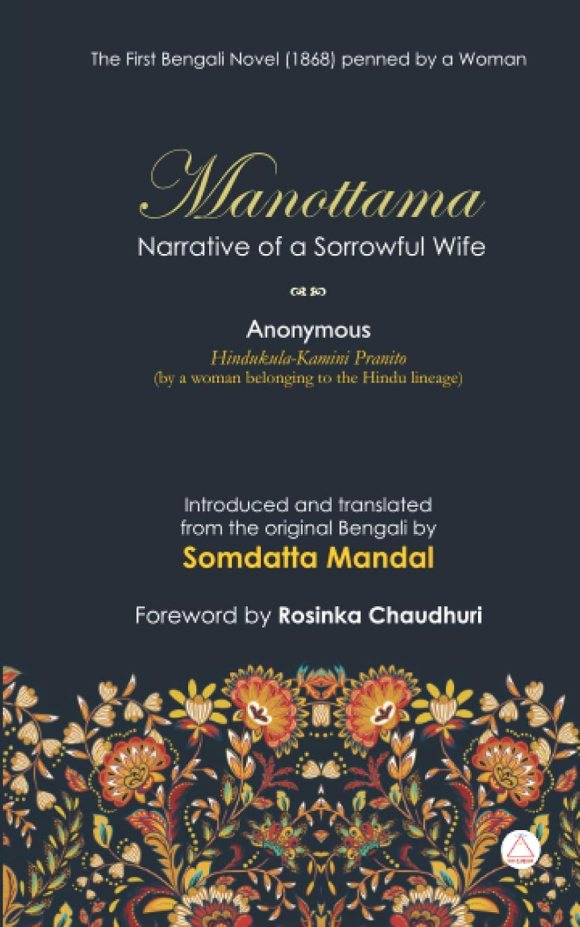










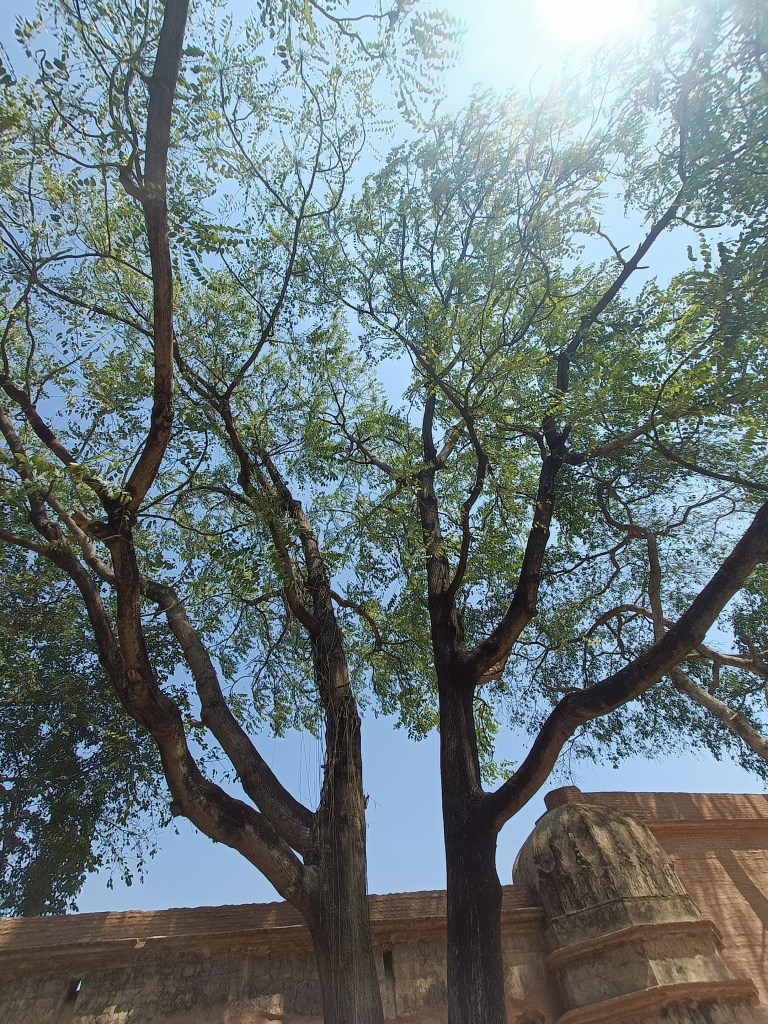
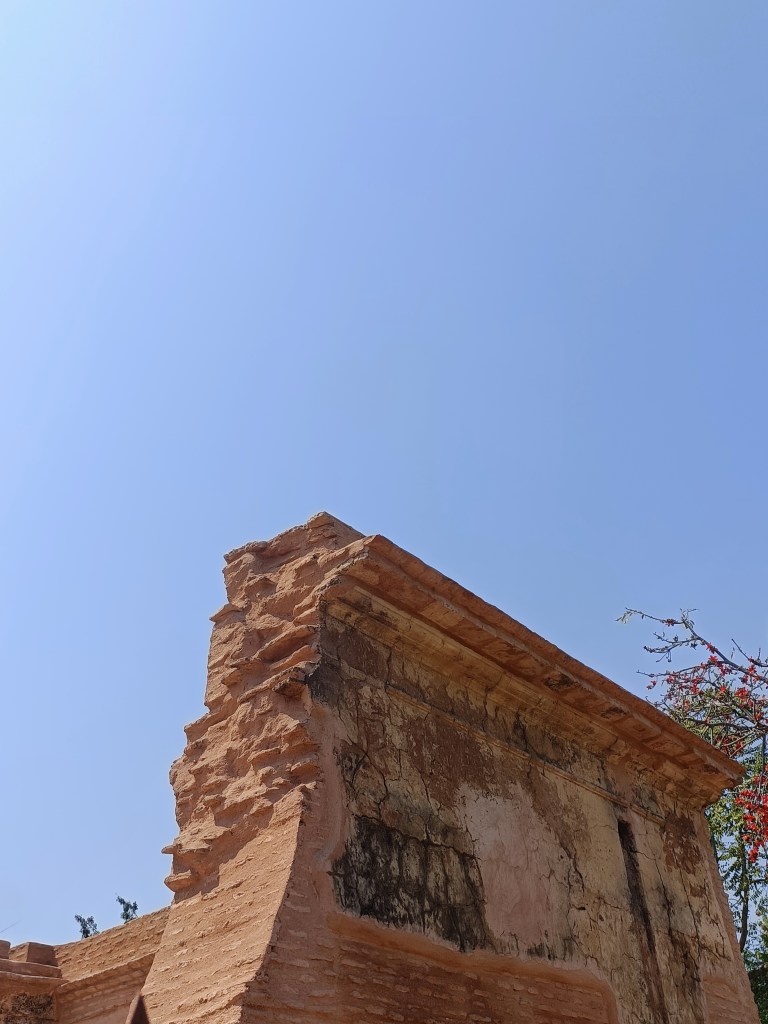
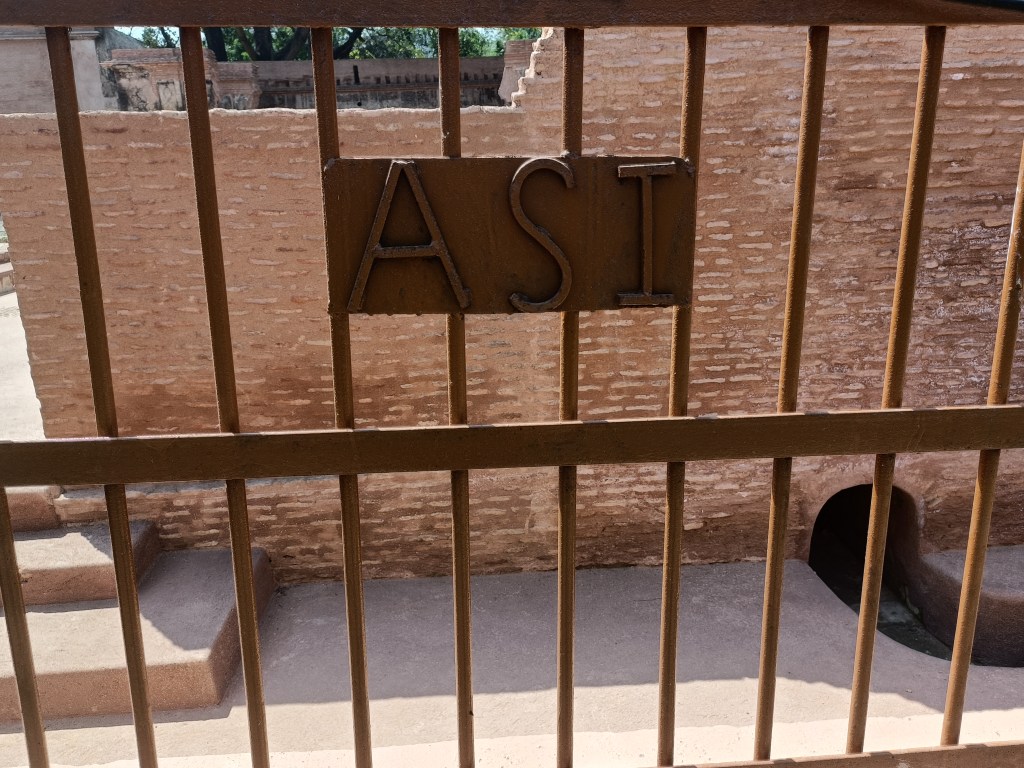
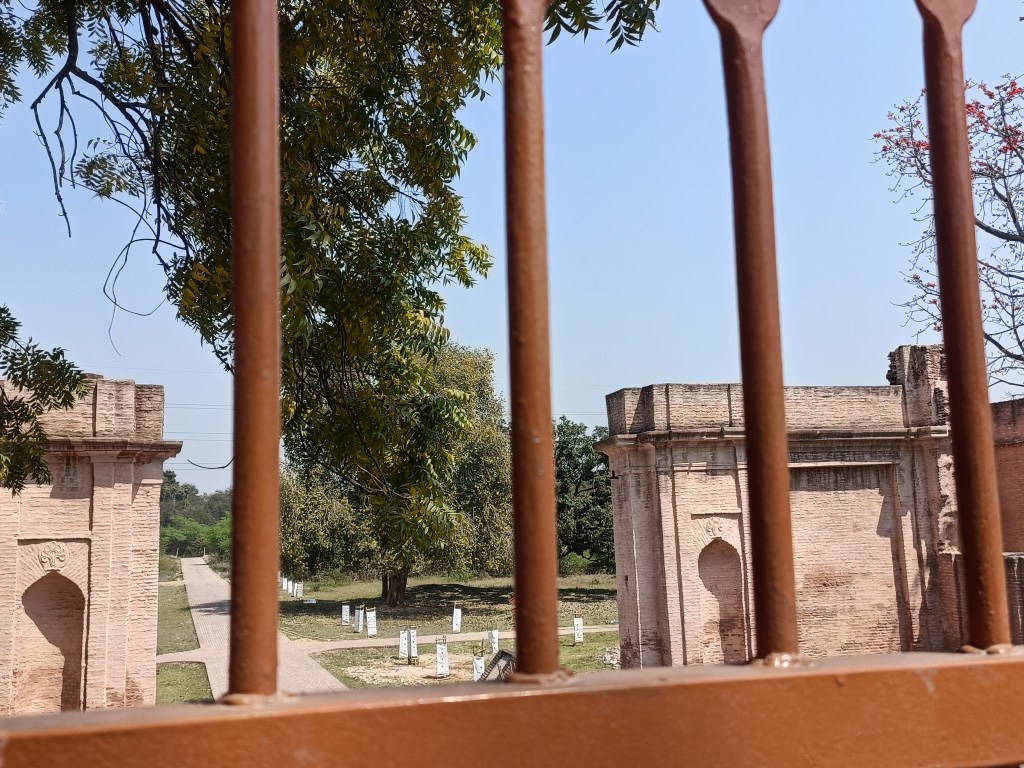
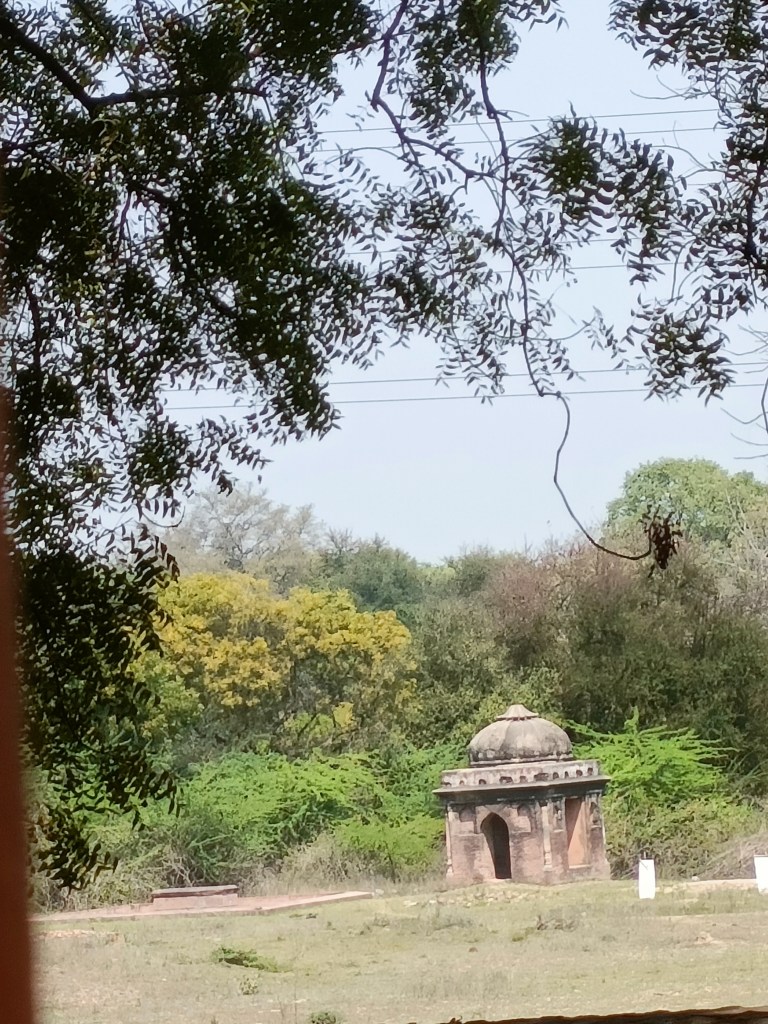
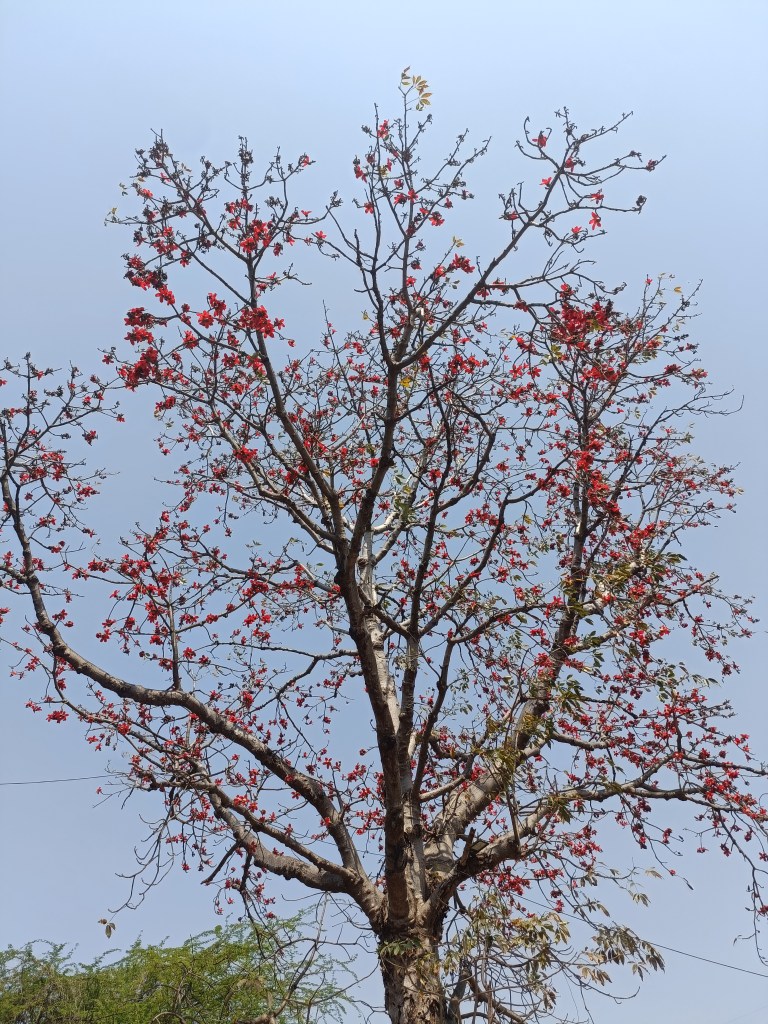

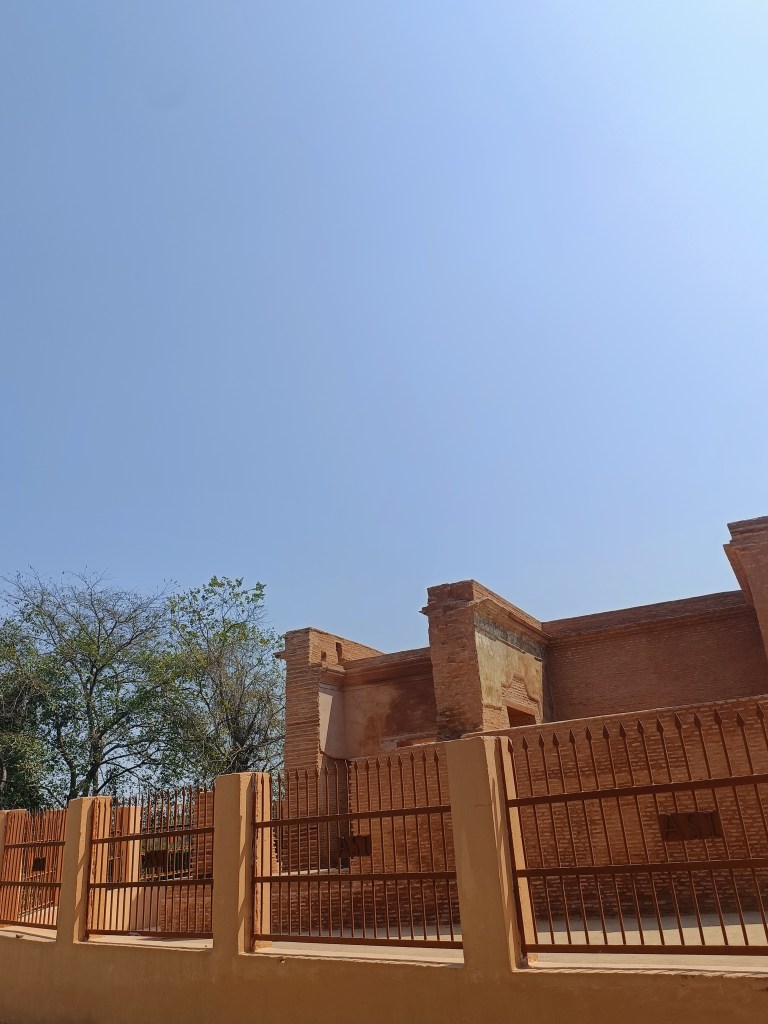


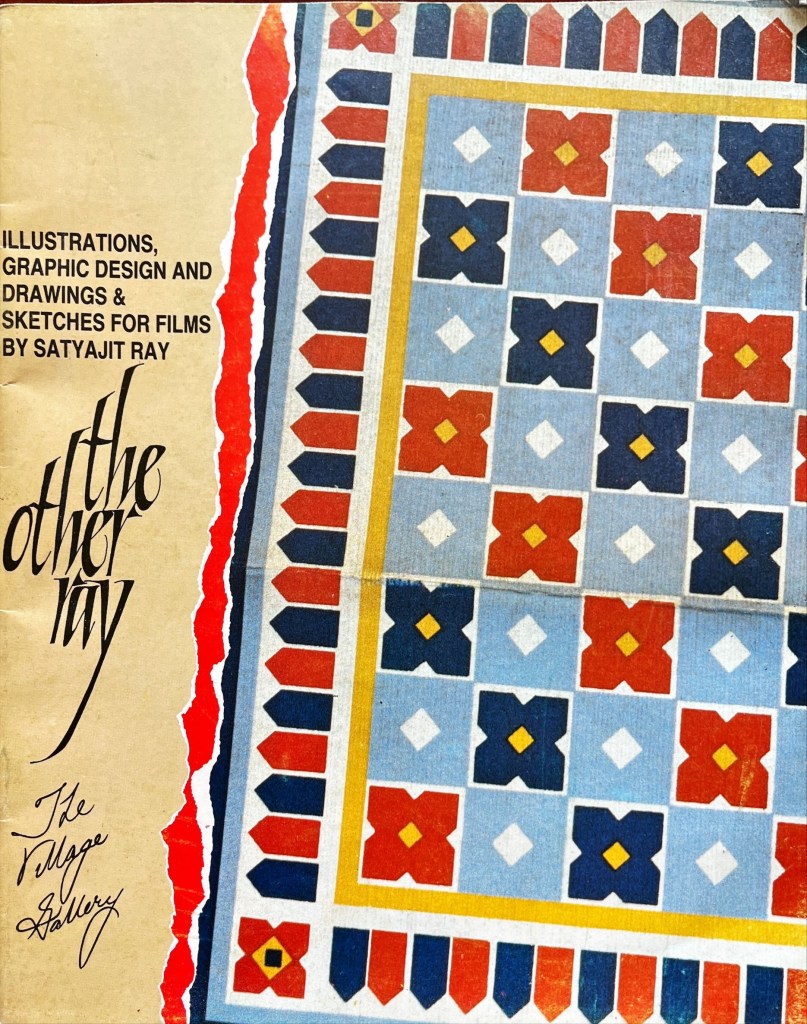
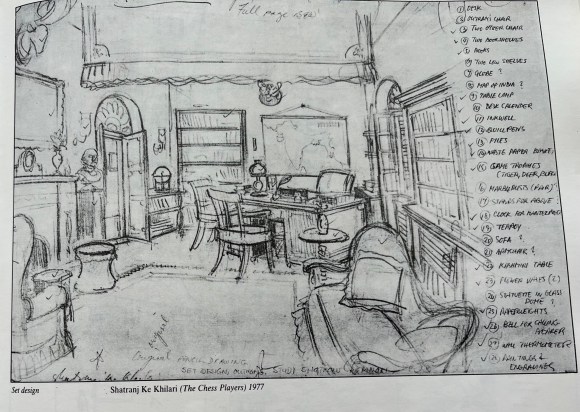
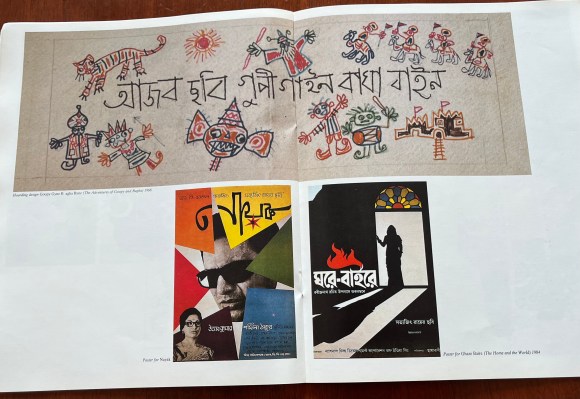
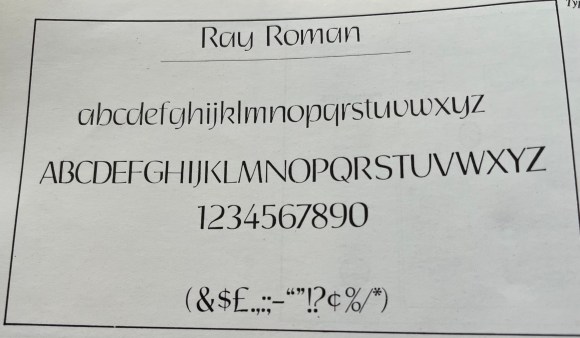
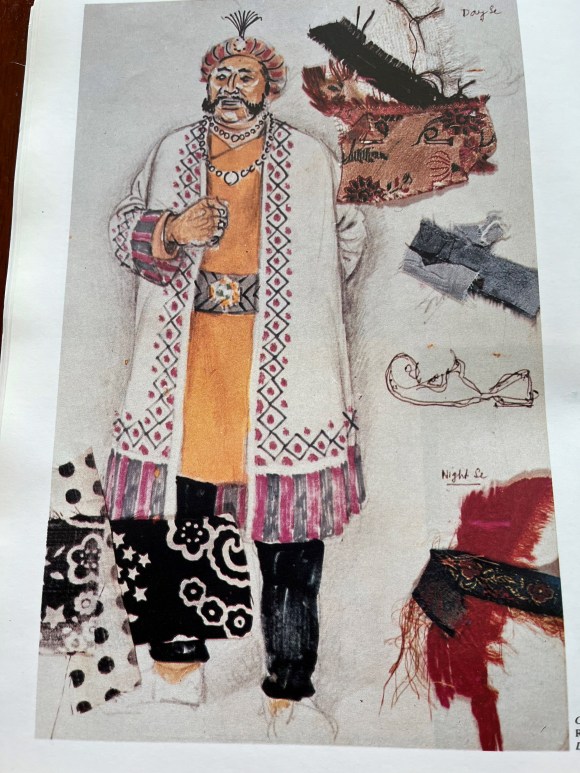

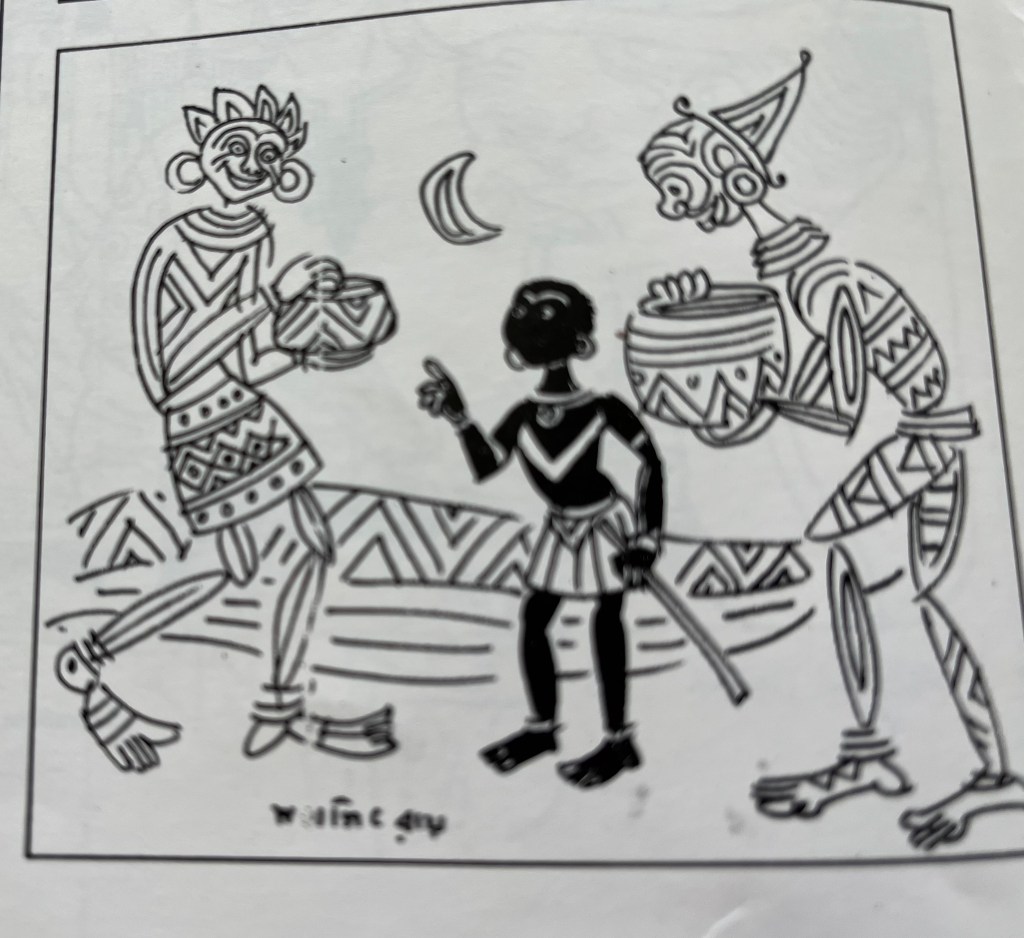
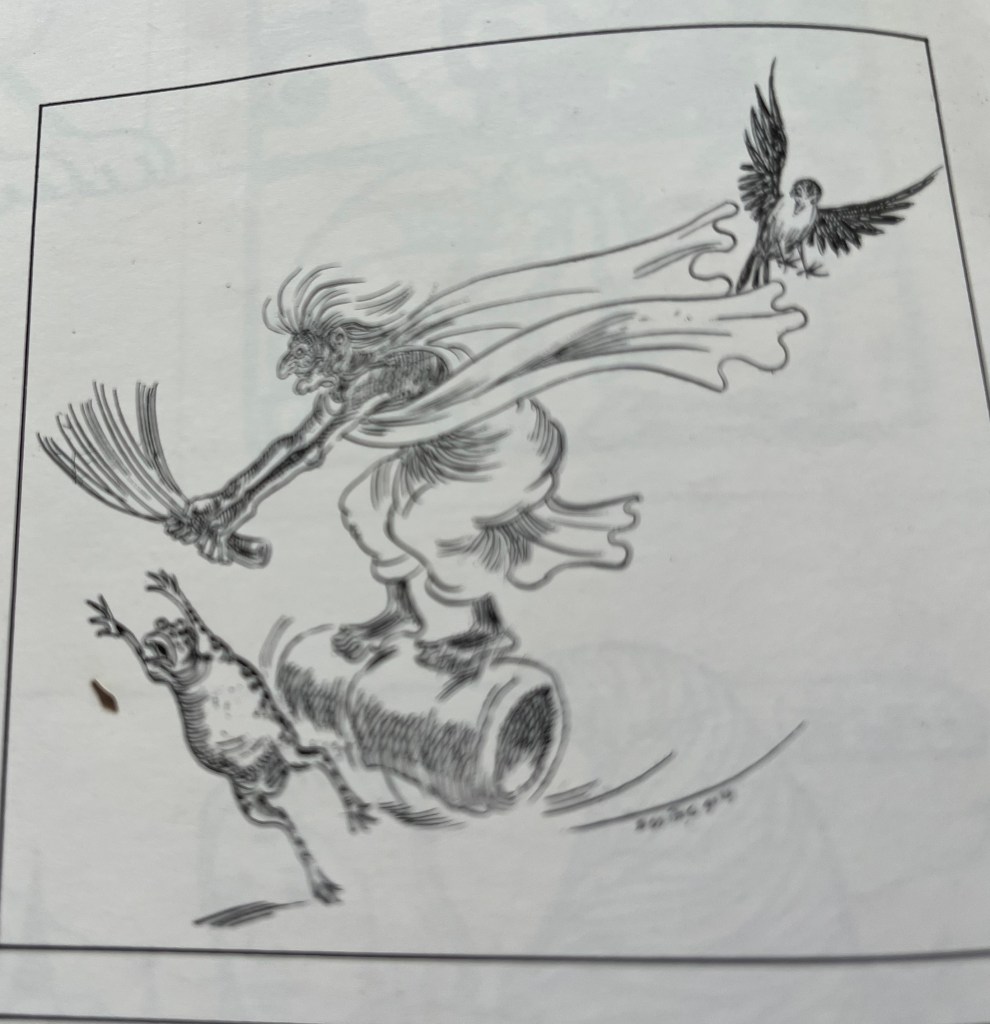
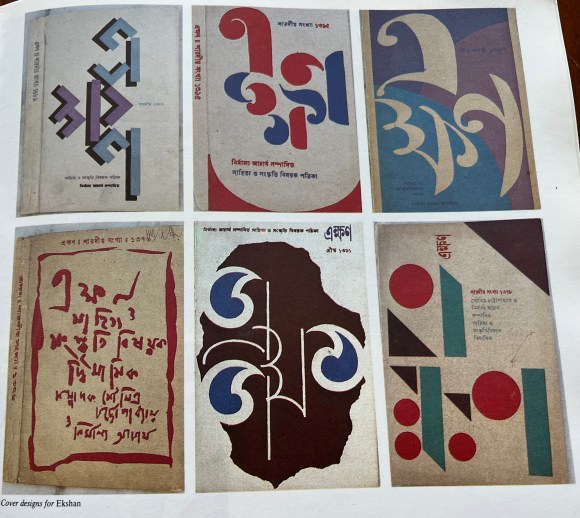
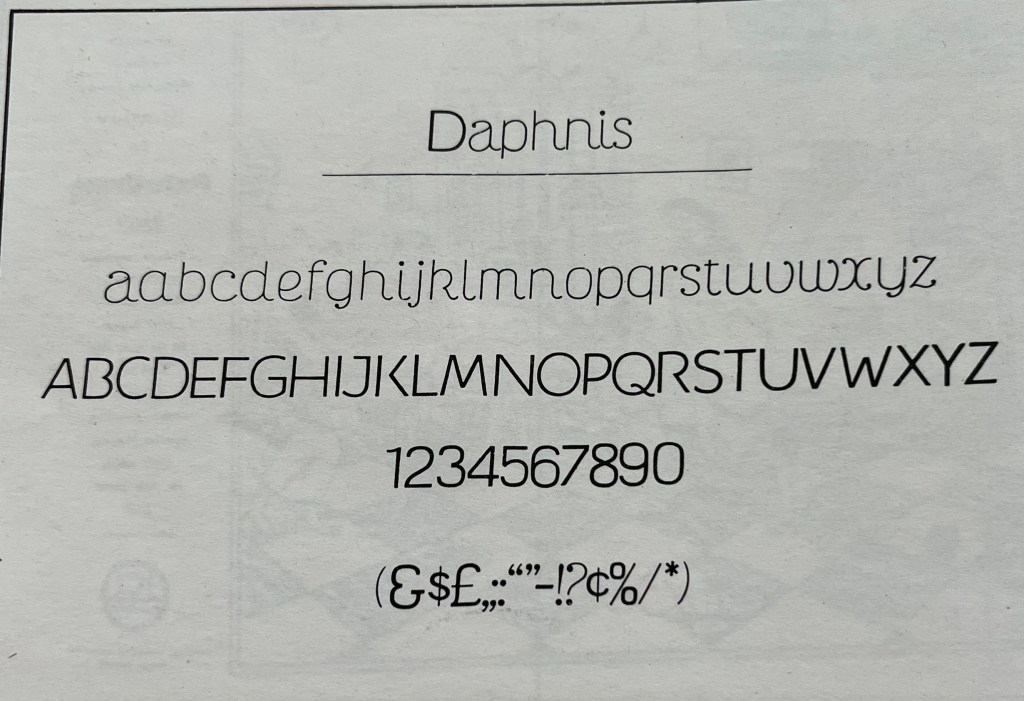
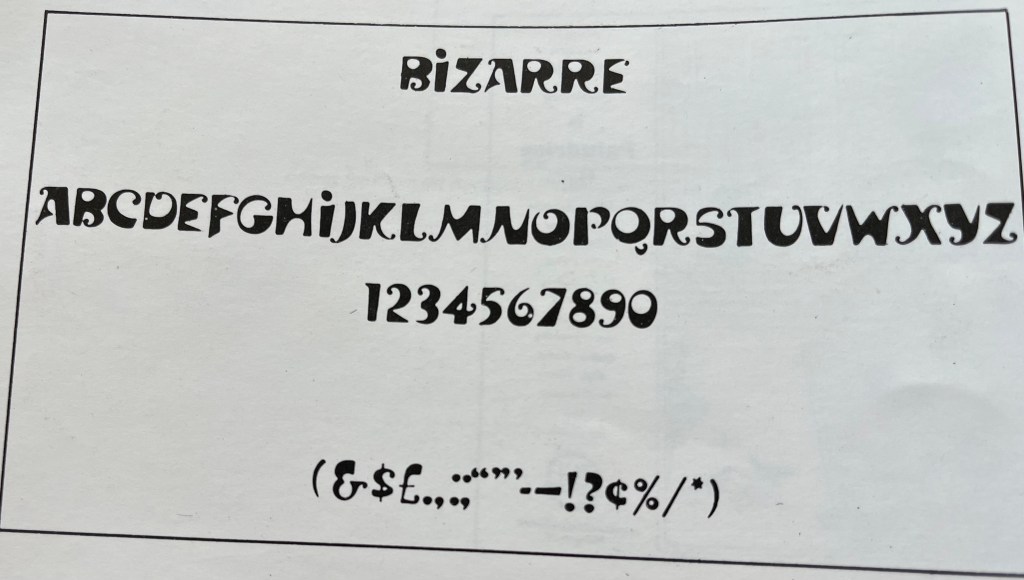
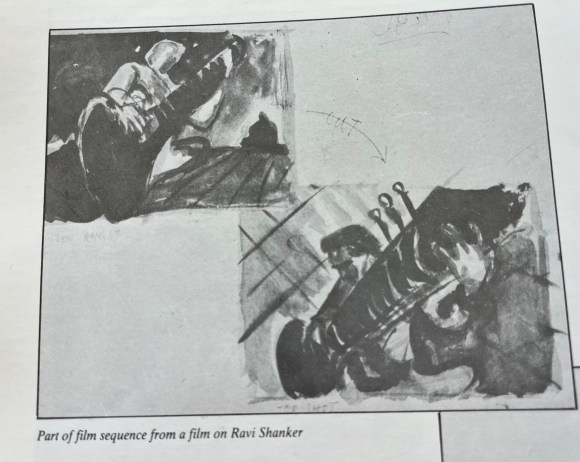
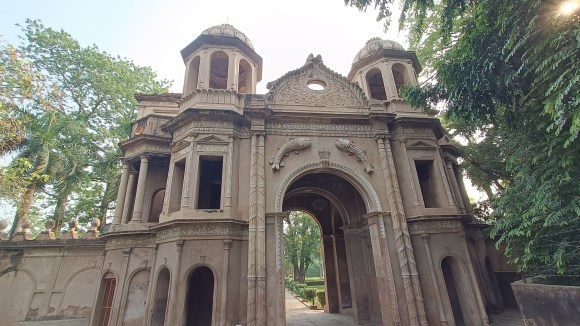
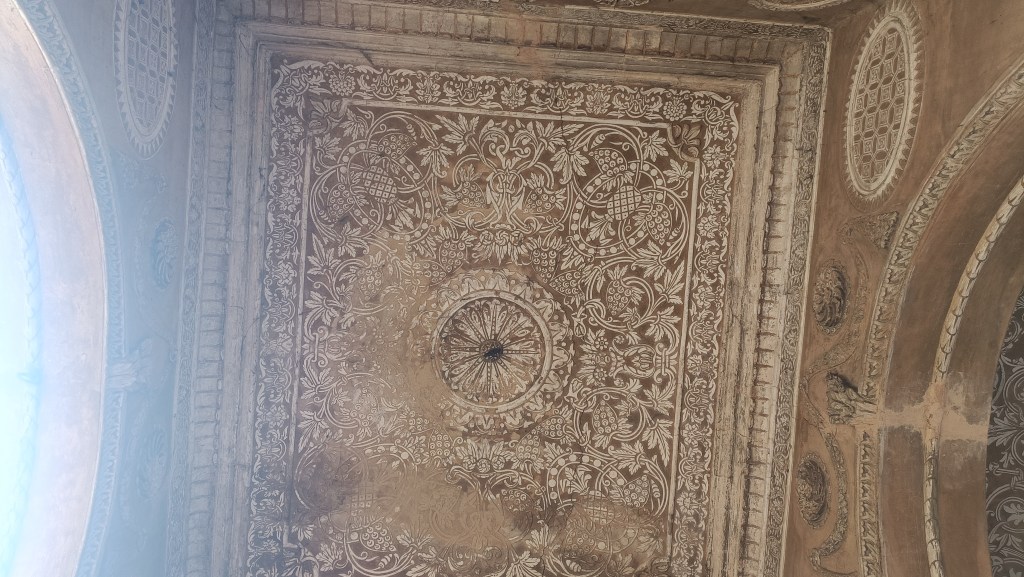
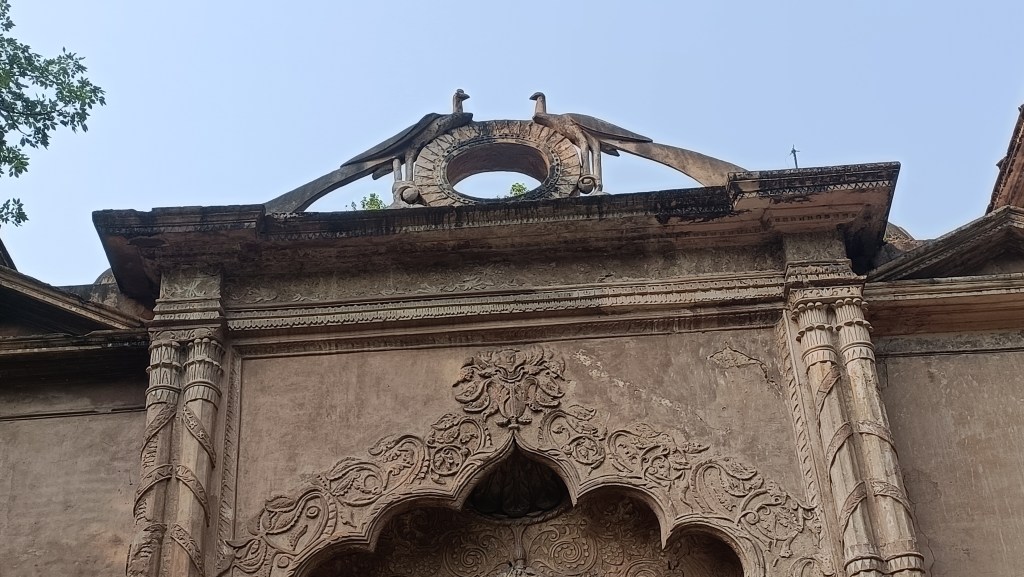

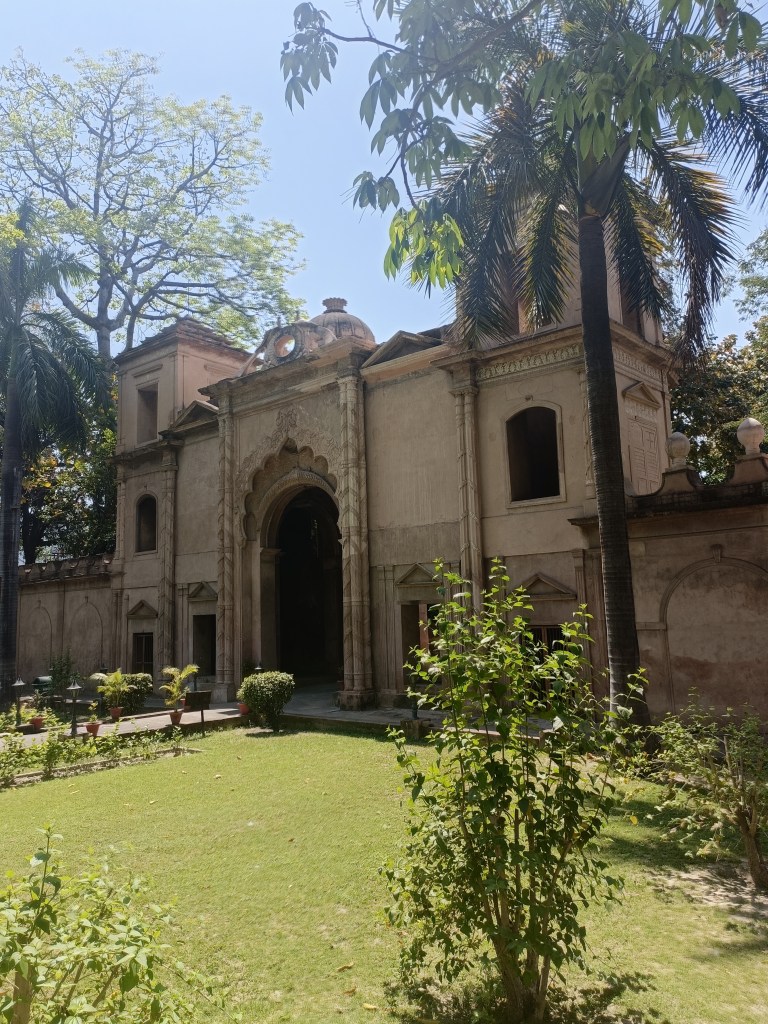
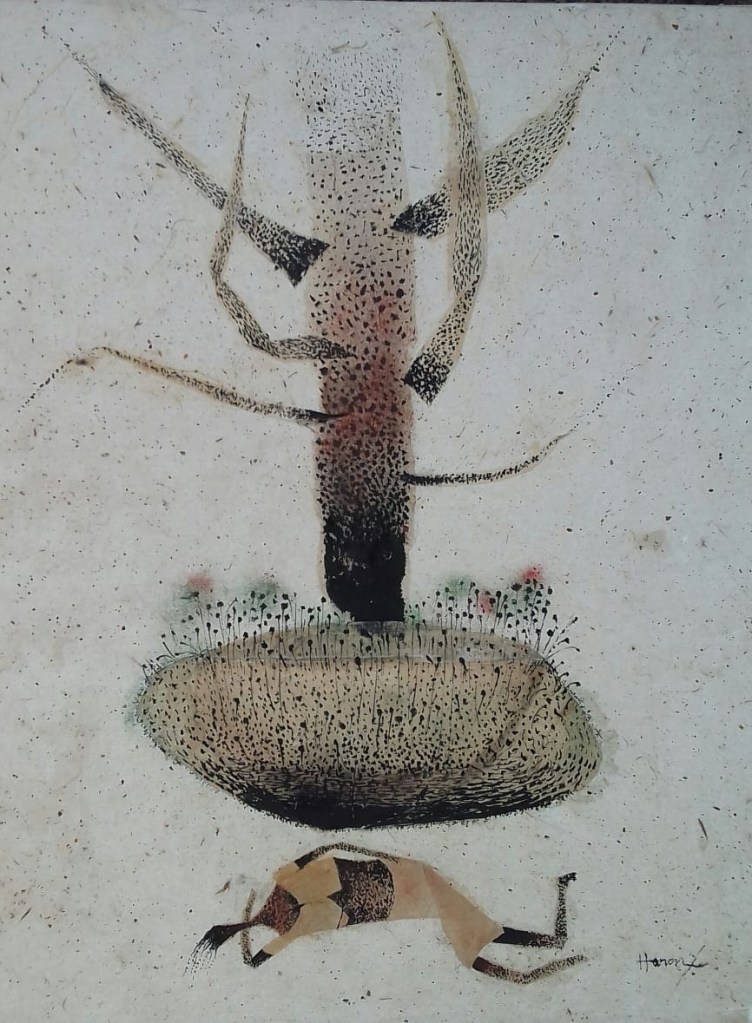

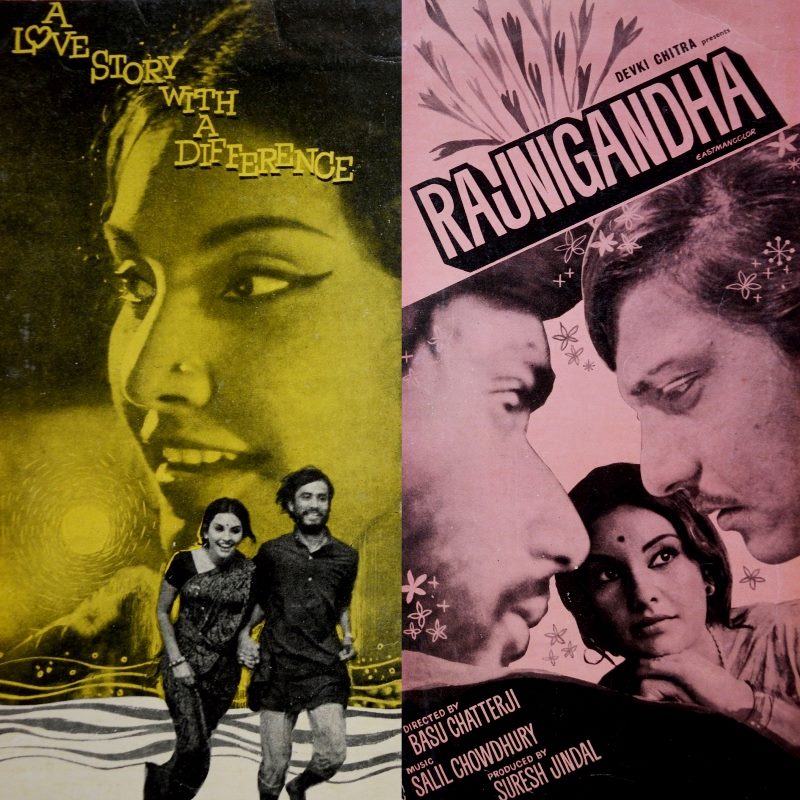
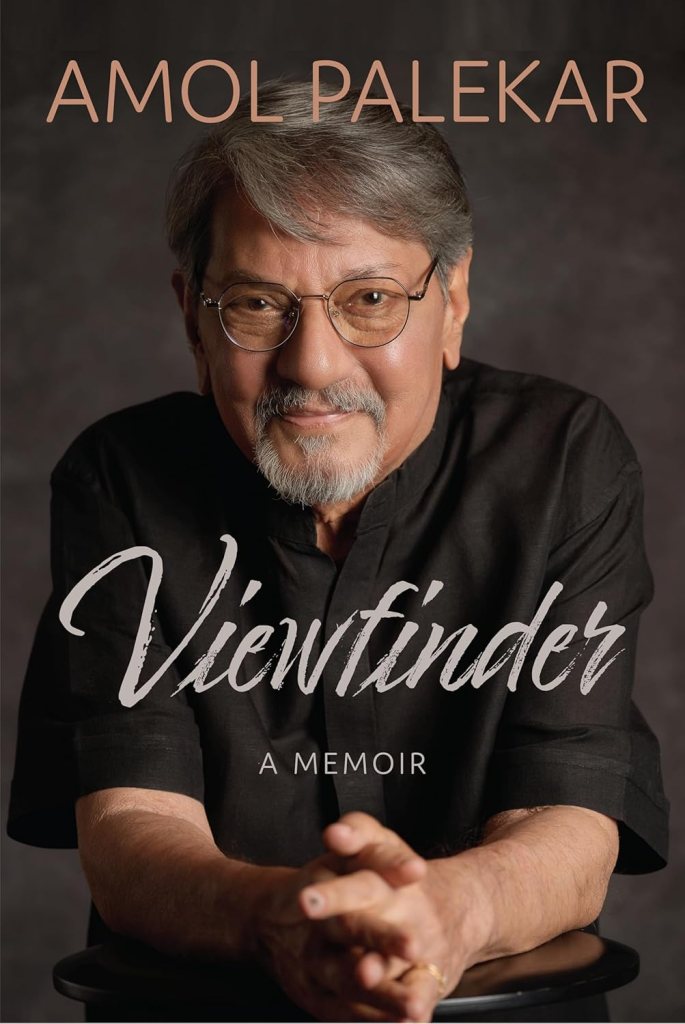
 Borderless