Categories
Essay

The Kaleidoscopic World of Satyajit Ray

By Anasuya Bhar

Satyajit Ray in New York. Courtesy: Creative Commons

The last year and a half has seen exhaustive commemoration of the works Satyajit Ray (1921 – 92) as it marked his birth centenary. To us in India and to the world in general, Satyajit is now revered as a filmmaker, primarily. He has become a myth and a legend in the art of filmmaking, so much so that Akira Kurosawa has pleaded that the ignorance of the former’s art is comparable to not having seen the sun or the moon. Nevertheless, it would be highly unjust to his artistic persona if we study him merely as a film maker. He was a polymath intellectual who was versatile in several arts, where literature, visual art and music were only among a few of his talents apart from cinema. Satyajit had re-invented himself severally, in various times of his life and career.

The Beginnings

Born to the illustrious and talented family of the Rays of Gorpar in north Kolkata, Satyajit was grandson to Upendrakishore Ray Chowdhury (1863 – 1915) and the only son of Sukumar Ray (1887 – 1923), whom unfortunately Satyajit lost, when he was merely two and a half years old. The vein of versatility ran high in the family. Upendrakishore distinguished himself as a pioneer in the art of photography and later also in printing technology. In fact, to him we owe the science of half-tone printing and photography. His research papers were published in the prestigious Penrose journals of England. Upendrakishore also distinguished himself as a writer of children’s literature and published not only in Bengali journals like Mukul, Sakha and Sathi (in the nineteenth century), but also founded his own magazine for children in 1913, by the name Sandesh – a name indicative, not only, for a Bengali sweet meat, but also for information and news. Sukumar Ray was primarily a student of science, with a double B.A in Chemistry and Physics honours from Presidency College Kolkata. He, however, went to England to study Printing Technology with the long term goal that he would assist his father in their own press, U. Ray and Sons. Sukumar too, got his research papers published in prestigious scientific journals. He was in England at a time when Rabindranath Tagore, too, had made his visit in 1912 and was a witness to some of the poet’s reading of his poems from Gitanjali (1912) in the company of many influential people in that country. Sukumar returned to Kolkata and was compelled to take up the editorship of Sandesh from 1915, after the death of his father. Sukumar had already started the ‘Nonsense Club’ and his hand written journal Share Batrish Bhaja (Thirty-two and a half Fried Savories) even before he went to England. The vein of the ‘nonsense’ tradition only perfected itself after his return; his own poetry and prose began to see the light of day from the time he began to edit Sandesh. However, and rather unfortunately, his life and career too, came to an abrupt end in 1923. It was only a few years after this that the magazine Sandesh closed down.

Satyajit Ray was largely brought up in his maternal uncle’s home in Ballygunge, from where he completed his schooling at Ballygunge Government School and attained his B.A in Economics (Honours) from Presidency College Kolkata. His mother Suprabha Devi, preferred that Satyajit follow up his education under the guidance of ‘gurudev’ Tagore and hence cajoled him to join Kala Bhavana in Santiniketan in the year 1940. The reluctant Satyajit actually wanted to study ‘commercial art’, but was denied that opportunity in Santiniketan. Nevertheless, he was struck with the brilliance of Nandalal Bose and Binodebehari Mukhopadhyay, whom he got as his mentors in Kala Bhavana. Satyajit was steeped in the nuances of western art, music, films and books; ever since his childhood he was an avid listener of western classical music and a keen viewer of foreign films as they appeared in erstwhile Calcutta.

Santiniketan, for the first time, afforded a glimpse of the beauty of rural Bengal, a gift that he would utilise later when he would make films. While here, Satyajit still felt restless and left after completing only over two years of the course. He returned to Kolkata and joined the advertising firm of D. J Keymar in 1942 as Junior Visualizer, where D.K. Gupta was then Assistant Manager. Among his colleagues were the talented artist Annada Munshi and the younger O.C. Ganguli and Makhan Dutta Gupta. It may be mentioned here that Satyajit, at that point, was rather keen on getting a job and procuring an independent residence for himself and his mother. The scourge of having to labour without a father was quite evident. In 1943, the Signet Press was founded by D. K. Gupta and Satyajit was assigned several books to design. Thus began a career in book designing, which marks an interesting chapter in his artistic career.

The Composite Artist

Satyajit Ray has designed as many as over 300 book covers. The repertoire of Ray book covers is extensive and varied; he continued to remain a composite and wholistic artist throughout the span of his career when he evolved as a writer, mainly for children, even while continuing to make films. He designed books for a host of writers beginning with Sukumar Ray to Bibhutibhusan Bandyopadhyay, to Premendra Mitra, Jibanananda Das, to Lila Majumdar, while he worked for Signet, and later even for other publishers. Each of these covers were aesthetic statements linking themselves to the themes and the content within. The frontispiece as well as the illustrations inside, ranged from the linocut / woodcut designs to fine lines and geometric solid shapes. Each one of these designs proved beyond doubt his versatility, talent and uniqueness of vision. Some of Ray’s book covers found pride of place in internationally reputed journals like the Graphis (in 1950).
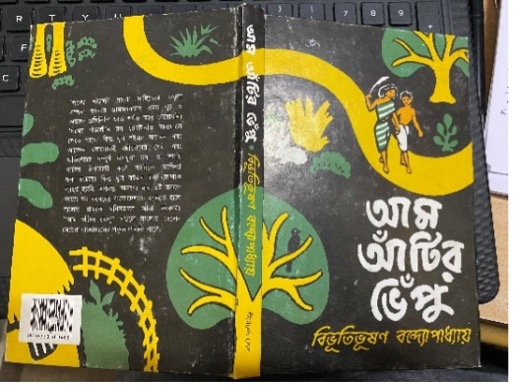
Book cover by Satyajit Ray from personal collection

Ray’s artistry found new space in the covers of Ekshan, a Bengali bi-monthly periodical edited by Nirmalya Acharya and actor Soumitra Chattopadhyay between 1961 and 1995. The periodical died an untimely death after the demise of Nirmalya Acharya. Satyajit designed several of its covers and each one of them is a masterpiece of visual jugglery. There are three letters in the title and Ray seems to act as a visual conjuror of these three letters using various planes, letterings, geometry and even characteristics of various art forms.
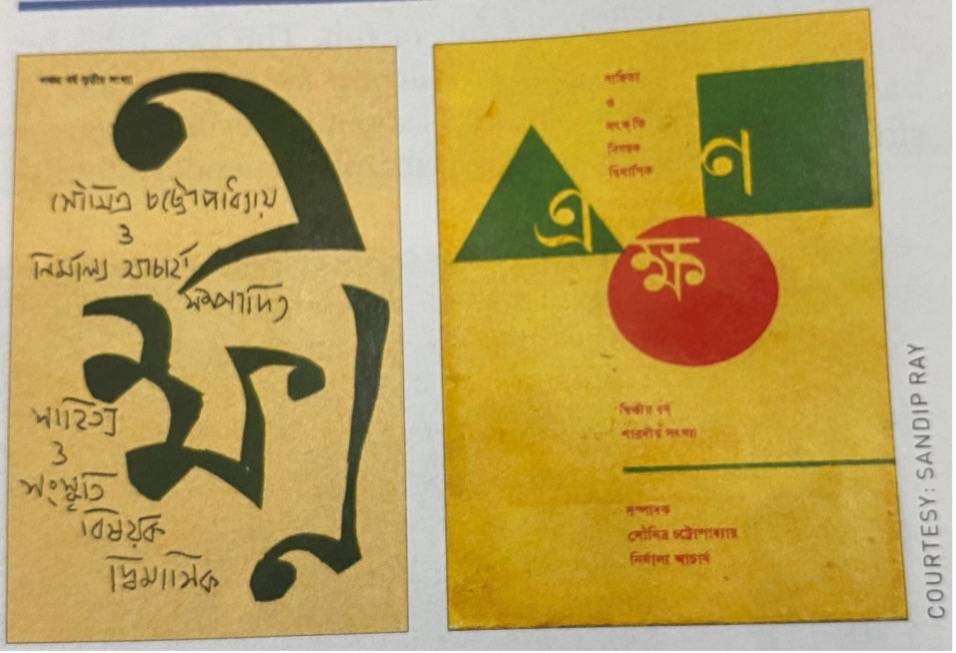
Ekshan journal, Photograph from Frontline Ray Commemorative Issue, November 2021

The 1950s saw Ray totally emerged in films and his own maiden attempt at a directorial venture took shape in 1955, with Pather Panchali (Song of the Little Road) Ray also designed his film posters, title cards and even fliers, apart from writing the screenplay himself. Later, he also graduated to composing his own music and writing his own stories; seldom do we see such a versatile artist.

It may be pointed out here that while we keenly study the various facets of Satyajit Ray, he was not alone in diversifying the art of design and illustration in books. One may mention here the works of Purnendu Patri, Pranabesh Maity and several others whose works are significantly remarkable in the history of book making. As mentioned earlier, Satyajit has constantly re-invented and adapted himself to the changing face of time. This has allowed him to survive several cultural and historical changes.

The Writer

Satyajit began writing consistently from his fortieth year, somewhat out of necessity. Before that he wrote sporadically. That year, 1961, saw the revival of the children’s magazine Sandesh under the entrepreneurship of Ray and his poet-friend Subhas Mukhopadhyay. The magazine, inactive since the thirties, saw a new lease of life when Ray and Mukhopadhyay decided to revive it in 1961. They were also the editors of the new Sandesh. Ray designed most of its covers and like the various letterings of Ekshan, he juggled with the masthead of Sandesh as well.
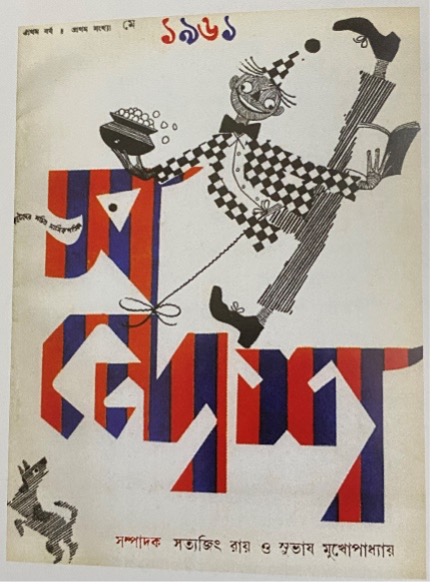
The magazine continues to be among the leading children’s magazines till date and is currently being edited by Sandip Ray, Satyajit’s son. In the first issue of the new Sandesh, published in May 1961, Satyajit decided to translate some of Edward Lear’s The Jumblies into Bengali, simply as a gesture of participation. The second issue of the magazine carried his first short story in Bengali along with his own illustration. That marked the beginning of a series intriguing literature primarily published in the pages of Sandesh in a Bengali that is modern, contemporary, smart, and attractive to the young and inquiring minds of children. Some of his works were also published in Anandamela, another children’s magazine in Bengali and Target, a children’s magazine in English, which was quite popular in the 1980s. The latter mostly published Ray in English translation, mostly made by himself. Some of his English translations were anthologised in Stories, published by Secker and Warburg in 1987. There are many more translations of Satyajit now available in English; those of the adventures of Feluda and Professor Shonku, and Fotikchand and many others are also published by Penguin.    

Satyajit Ray’s books were a staple to the children of the eighties in the last century. Most of us then, welcomed our teenage with the scientific adventures of Professor Shonku and those of the private investigator Prodosh Mitter alias Feluda. These books were the repository of a variety of knowledge – one emerged cleverer and better enriched after regaling oneself with the exhilarating laboratory experiments of Shonku, while on the other hand, one cajoled one’s brains with the cerebral magic of Feluda. For children like us, Ray’s identity as a filmmaker came second to his writing, as we understood less of that art in that age. In fact, his stories were a rage among our contemporaries then, and we marvelled at his plots, along with his accurate illustrations and cover designs, all of which made him a supreme artist-figure in our childhood. There were also occasions when we connected his films on children with respect to his books. Hence, the adventure tales around the ‘golden castle’ (Sonar Kella, 1974) or those around in Benaras (Joy Baba Felunath, 1978), were only a derivative of what we perused in the books of the same names.

The Ray Generation

It would, perhaps, not be wrong to say that Ray’s writing created a brand in the genre of children’s literature. As contemporary and the immediate consumers of his books, some of us identify a part of our childhood with the Ray literature. He was a master in the handling of the bizarre and the fantastic, the investigative crime thrillers and also the evolution of the science fiction. Again, Ray may not be said to be a pioneer in any of these genres, but he made them highly palatable and attractive to the young minds. One would be guilty of falsification if one does not mention Sukumar Ray himself, or Hemendrakumar Ray and Premendra Mitra, who made, perhaps, the earliest forages into the art of the bizarre, the supernatural or the sci-fi in their own times and generations.

Satyajit Ray’s repertoire as a writer for children is extensive. He is credited to have composed thirty-eight adventures of Professor Trilokeshwar Shonku. In him, Ray creates a familiar Bengali with extraordinary scholarliness who was once a teacher in Scottish Church College Kolkata, but now resides in Giridi. Although his only companions are now his valet Prahlad and pet cat Newton, he has an elaborate family history which the author creates as a back drop for his readers. Professor Shonku’s various travel destinations offer extensive scope for young minds to travel within the safety of their homes. In creating the several marvels of science Satyajit must have surely drawn extensively from the works of Jules Verne, H.G. Wells as well as The Chariot of the Gods (1968) by Erich von Dӓniken – works with which he must have been familiar ever since his childhood. Scholars also propound similarities between Professor Challenger of Arthur Conan Doyle (The Lost World) and Professor Shonku. However, there is also reason to believe that Professor Shonku has a distant antecedent in the character of Professor Hushiyar (Heshoram Hushiyerer Diary) created by Sukumar Ray. With time, of course, Shonku evolves as a more serious and responsible, internationally acclaimed scientist. Ray had also wanted to make a film on aliens, with a sound background on science fiction, but this dream remained unexecuted. The first ever film on Professor Shonku was made by his son in 2019.

The Private Investigator Mr. Prodosh C Mitter first made his appearance in the arena of Bengali detective fiction in the year 1965. The Bengali readership was already accustomed to private detectives created by Niharranjan Ray (Kiriti Ray) and Sharadindu Bandyopadhyay (Byomkesh Bakshi) before Ray launched the career of Feluda, who emerged as a highly identifiable neighbourhood man with his nephew and assistant Topshe and their elderly writer-friend Jatayu. One may again mark the presence of other detectives in contemporary literature like Kakababu (Sunil Gangopadhyay), Gogol (Samaresh Basu) and the boy group of Pandava Goyenda (created by Sasthipada Chattopadhyay), which were also available to the young readers along with the adventures of Feluda. All of them were simultaneously popular among contemporary children, although Ray scored higher because of his razor sharp intelligence and complete artistic and aesthetic package that his books offered. Some, made into films, made him the most popular among children and adults alike. Apart from his series characters like Shonku or Feluda, Ray has created a host of other characters in numerous short stories and novellas, over a period of thirty years or more. There is, quite interestingly, very little adult fiction written by Satyajit, with the exceptions of Nayak (The Hero, 1966), Kanchenjunga (1962) and Pikoo’s Diary (1980), all of which have been made into films.

Ray as Translator and maker of Children’s Films

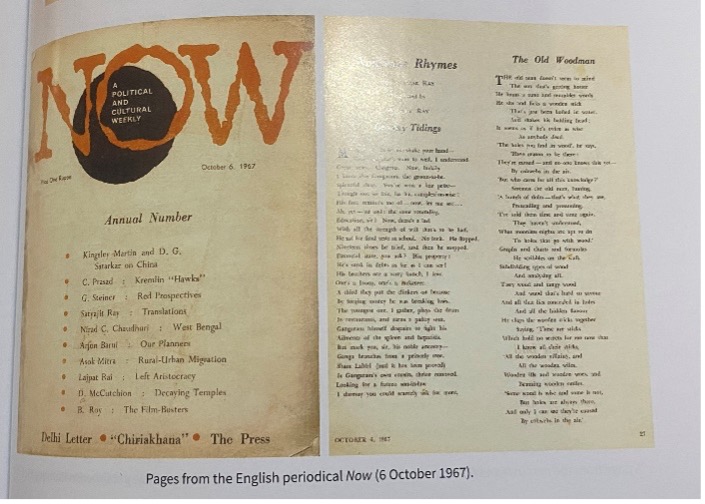
Ray distinguished himself as a translator as well. The first major translation done by Satyajit Ray was, perhaps, those of a selection of Sukumar Ray’s Aabol Taabol (‘Nonsense Verse’, 1923). About ten such poems were translated / trans-created in the pages of a radical weekly called Now, edited by Samar Sen during 1967-69. These poems were then noticed by P. Lal of Writers Workshop, a pioneering publishing enterprise which patronised (and still does), Indian writing in English, since 1958. They were brought forth as an independent collection by this house in much admiration for Satyajit’s skill in rhyme and meter, in 1970. The edition has remained a popular one and has recently suffered alterations in the fourth corrected and expanded edition in 2019. The text is also prescribed for study in a course on Popular Literature in the undergraduate syllabus of the University of Calcutta, since 2018.
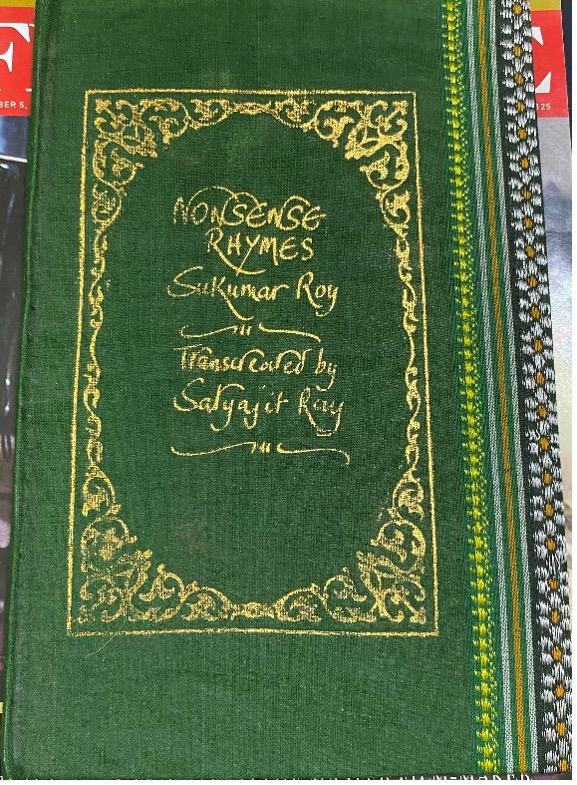
Satyajit also translated some works of Upendrakishore along with other works of Sukumar into English in various times of his career. These are now available with the translations of his own works, in a compendious edition titled 3 Rays (Penguin Books, 2021) and edited by Sandip Ray.According to Sandip Ray, these were mostly done with a view to popularise the works outside Bengal and to a larger audience, mostly as recreational activities, which Satyajit undertook between the shooting of his films.

In 1969, Satyajit Ray directed Goopy Gyne Bagha Byne, a novella originally written by Upendrakishore Ray Chowdhury about two rustic simpletons Goopy and Bagha and their careers in music. The occasion was the birth centenary of Upendrakishore and was a result of requests from his teenaged son Sandip, to create something for children. The film was an improvement on the literary text, and continues to be a marvel in the study of the fantastic, given the limited means with which it was produced. Satyajit introduced in the film a dance – the sequence of the ghosts’ dancing – which remains a marvel of cinematography and an example of ingenuous thinking, intelligent editing and deft execution within a limited budget. As always, Satyajit creates a family pattern for Goopy and Bagha, too. They re-appear after a hiatus of ten years in Hirok Rajar Deshe (1980). By this time, the duo has earned fame as extraordinary performers, with magical powers to transfix their listeners and with uncanny powers to unravel the mysteries of state politics. On the domestic front, they are also married to princesses as well as proud fathers.  Hirok Rajar Deshe or ‘The Land of the Diamond King’ is a study on an ugly regime of totalitarianism, where almost all are being brainwashed to worship a power hungry king. The film may be identified as a political satire under the garb of entertainment for children, where good eventually overcomes evil. Satyajit makes extensive use of fantasy and magic as well as creates a world where science is being used to destroy the good sense of people. It is the musical duo of Goopy and Bagha who re-affirm good sense and sanity in an anarchic and dystopian state. The duo returns in Goopy Bagha Phire Elo (Return of Goopy Bagha, 1991) and the setting now is influenced more by a sense of science fiction and fantasy. The last film of the trilogy was directed by Sandip Ray, who re-affirms his presence in a cyclical and metaphorical ‘coming of age’ marking himself as a filmmaker.
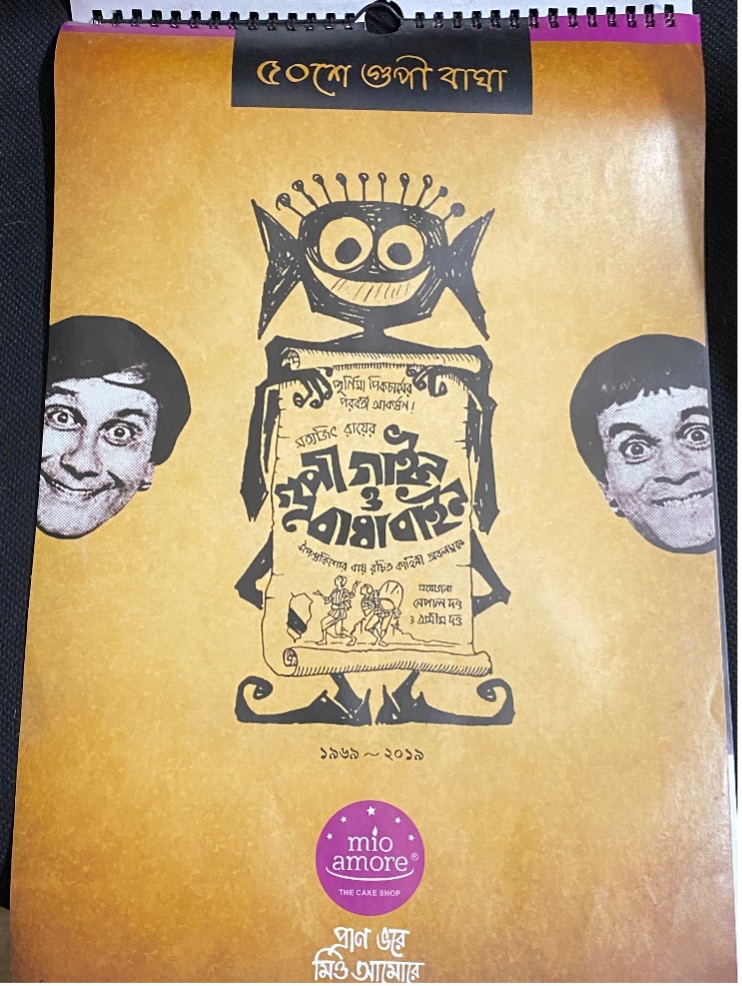
The cover page of the Commemorative Calendar celebrating 50 years of Goopy Gyne Bagha Byne

The enormity of the Satyajit Ray papers, letters, manuscripts, posters, notebooks, sketches, as well as his film prints are now being collectively maintained and conserved by the Society for the Preservation of Satyajit Ray Archives. The Society also organises regular lectures and exhibitions and looks to the publication of books on the maestro. It is significant that Penguin India has decided to dedicate a whole collection of books on Ray as ‘The Penguin Ray Library’. One must not fail to acknowledge the scholarship and hard work of his son Sandip Ray and Satyajit-scholars like Debashis Mukhopadhyay and Pinaki De, who mesmerise with their encyclopaedic knowledge on the master. The past year and half have seen innumerable lectures and scholarly interactions on Ray where the two have shone independently. The present author stands in awe of their scholarship.

( Note: All the photographs used in this article are taken by the author, except the one licensed under creative commons.)

References

  1. Frontline – ‘The World of Ray: A Commemorative Issue’, November 5, 2021
  2. Ray, Sandip (ed.). 3 Rays: Stories from Satyajit Ray. New Delhi: The Penguin Ray Library, 2021.
  3. Ray, Sandip (ed.). Sandesh. Festival Numbers 2020 and 2021. Commemorative issues on Satyajit Ray entitled ‘Satyajit 100’. Kolkata.
  4. Ray, Satyajit (trans.). Nonsense Rhymes – Sukumar Ray. Kolkata: Writers Worshop, 2019.
  5. Ray, Satyajit. Shera Satyajit. Kolkata: Ananda Publisher’s Private Limited, 1991.
  6. Robinson, Andrew. Satyajit Ray: The Inner Eye – The Biography of a Master Film-Maker. London and New York: I. B. Tauris, 1989.

Dr. Anasuya Bhar teaches English at St. Paul’s Cathedral Mission College Kolkata.

.

PLEASE NOTE: ARTICLES CAN ONLY BE REPRODUCED IN OTHER SITES WITH DUE ACKNOWLEDGEMENT TO BORDERLESS JOURNAL
Categories
Essay

Are Some of Us More ‘Human’ than Others?

By Meenakshi Malhotra

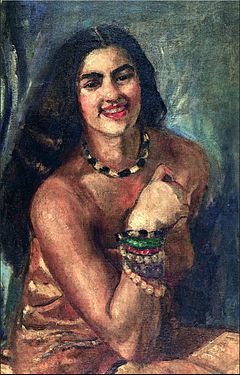
Self-portrait by Amrita Shergil. Courtesy: Creative Commons

Post-humanism and the Anthropocene epoch have undermined the notion of human exceptionalism, the feeling that as a group or a species, human beings are superior to other species. It is time to interrogate the hierarchy of human/animal where we understand the category of the human as undoubtedly superior. One view is to see the human as a posthumous category, not just post-human. Most civilisations and philosophies across the world have privileged one set of values/qualities at the cost of another-thus categories like human-animal, man-woman, reason-passion, good-bad have become binaries where one term is considered better than the other. 

It is in this context that I turn to Catherine MacKinnon’s work, Are Women Human? (2006). In her book, she poses the question of women’s relationship to the category of the human. 

After almost a century from the Universal Declaration of Human Rights, which defined what a human being is and is entitled to, Catharine A MacKinnon asks: ‘Are women human yet?’ If women were regarded as human, would they be subjected to the privations and oppressive practices perpetrated in cultures? Would they, for instance, be sold into slavery and sexual slavery worldwide; would they be “veiled, silenced, and imprisoned in homes; bred, and worked as menials for little or no pay; stoned for sex outside marriage or burned within it; mutilated genitally, impoverished economically, and mired in illiteracy–all as a matter of course and without effective recourse?”

In the wake of recent events which have once again highlighted the scant regard in which women are held across nations and in societies, it is instructive to revisit the fundamental questions posed by Mc Kinnon. The Nirbhaya, Asifa, Unnao, Priyanka Reddy, Hathras  cases in India, events that unfolded recently in Afghanistan and innumerable instances the world over, are traumatic and traumatising as they are instances where violence has been unleashed, consciously and deliberately, on women, children and whole communities. These significant  events can be called ‘critical’ since they raise some crucial questions on the category and definition of the notion of the ‘human’ itself.

The category of the ‘human’, as Yuval Noah Harari and many before him discussed, became associated, in terms of evolutionary biology, with a large brain, an upright gait and other specific characteristics. Whatever its genealogies in scientific or anthropological parlance, the word acquired a specific set or cluster of meanings. The notion of ‘human’ gets associated with a set of inalienable rights(as in human rights), a set or cluster of affect/s such as kindness, compassion and sympathy/empathy. And yet, this is a term we revisit time and again, at important historical conjunctures. Sadly it is a term which emerges more in the breach than the observance. Further, it is one that seems to be taxonomically problematic and perplexing and  shores up the category in a peculiarly  exclusionary way. To substantiate and cite an instance, inter alia, were the Jews admitted in the category of the human by the Germans, the Dalits by upper castes and women by men? The problem here is not just of ‘othering’ but the fact that the persistence of asymmetric power relationships robs one group of a sense of agency and the power to name themselves and their experience. The other group, which calls the shots on how humanity is to be defined, becomes blind to its own oppressive behaviour, perpetuates atrocities and is condemned by posterity. It becomes a case where, in a manner of speaking, all of us are human but some are obviously more human than others. Thus the  suspicion that peppers our mind when we come across liberal terms like ‘equality’ and ‘freedom’ also extends to the ‘human.’   

Working with issues that are sited on the cusp of law and culture and that are a vital aspect of transnational feminism affecting the  status of women, McKinnon in her essays  takes her gendered critique of the state to the international plane. Her book/essays is/are a trenchant critique of the inequalities of international politics, which turns a blind eye to the consequences and significance of the systematic maltreatment of women and its condoning by a skewed system. Her sharp critique points toward fresh ways—social, legal, and political—of  “targeting its toxic orthodoxies”.

McKinnon takes us inside the workings of nation-states, where the oppression of women is the common factor that defines community life and distributes power in society and government. She takes us to Bosnia-Herzogovina for a harrowing look at how the wholesale rape and murder of women and girls there was an act of genocide, not a side effect of war. She takes us into the heart of the international law of conflict to ask—and reveal—why the international community can rally against terrorists’ violence, but not against violence done to women. A critique of the transnational status quo that also envisions the transforming possibilities of human rights, this  book makes us look as never before at an ongoing war too long undeclared, unspoken and relegated to silence..  

It is important to recover voices like that of McKinnon since the self-appointed  custodians of the ‘human’ are more often than not dyed-in-the-wool liberals, paternalists, self-appointed purveyors of law and morality. Most of them are so entitled that they are entirely blind to their own privilege as they declare themselves to be the champions of human rights, having practised and perpetuated the wrongs that need to be set right.

As we ‘celebrate’ the month of the Woman in March, we need to revisit these questions which have gained a new urgency in our time. Only then can we perhaps understand the full implications of the human and work towards making it a truly inclusive category.

.

  Dr Meenakshi Malhotra is Associate Professor of English Literature at Hansraj College, University of Delhi, and has been involved in teaching and curriculum development in several universities. She has edited two books on Women and Lifewriting, Representing the Self and Claiming the I, in addition  to numerous published articles on gender, literature and feminist theory.       

.

PLEASE NOTE: ARTICLES CAN ONLY BE REPRODUCED IN OTHER SITES WITH DUE ACKNOWLEDGEMENT TO BORDERLESS JOURNAL
Categories
Essay

‘What remains is darkness and facing me – Banalata Sen!’


Rakibul Hasan Khan explores death and darkness in Fakrul Alam’s translation of Jibanananda Das’s poetry

I

Literary translation is a creative work, and the literariness of a translated work reflects the creativity of the translator. From a reader’s perspective who does not know the language of the “original”, the more the translated work reads “natural”, the better is the translation. But it is very intriguing from the viewpoint of someone who has access to both the original and the language of the translation. Reading the translation for such a reader is sometimes like reading the same poem in two languages at the same time, which is often a very enriching and exhilarating experience. But it is not always the case, for such readers may show a critical attitude to the translation for having a “bias” towards the original, especially if the latter is written in their first language. Then their reading turns out to be more an evaluation of the translation than enjoying the work in translation. It is a difficult task for such readers to overcome this predicament. 

I also face this predicament while reading Fakrul Alam’s translations of Jibanananda Das’(1899-1954) poetry in Jibanananda Das: Selected Poems with an Introduction, Chronology, and Glossary (Dhaka: UPL, 2nd Ed, 2003). To keep aside my evaluative concerns, therefore, a middle course was necessary, while still comparing the translations with the originals. To this end, I read some of the most “popular” poems by Das in Alam’s translations with a particular focus on the latter’s recreation of the images of death, dread, and darkness.

There is a personal preference for my choosing of the dark images, for I always find Das’ grotesque or dreadful images as appealing as the beautiful ones, but more important reason for my choosing of the dreadful than the beautiful is to underscore the experience of a poet who lived under the dark shadow of colonial rule. Initially, I thought it would be very intriguing to read Das’ poetry postcolonially in Alam’s translations because of the latter’s reputation as an academic in the field of postcolonial studies. But while reading the translations, particularly the erudite introduction that he has included at the beginning of the volume to introduce the salient features of Das’ poetry as well as to offer a very insightful and resourceful discussion on others’ and his translations of the poet, I felt that Alam almost altogether suspended his postcolonial self and fully activated his own creativity to capture the sights and sounds of the works of a poet who is extraordinarily famous for the aesthetic and artistic qualities of his poetry. Alam seems to have embraced this challenge enthusiastically and has succeeded with flying colours, but his emphasis on the art may have cost him thematically on certain occasions, although it has not diminished the overall quality of the translations. His translations also continue to bear the mark of his academic background as a scholar in English studies.      

In spite of discovering that Fakrul Alam does not highlight the postcolonial elements in Jibanananda Das’s poetry, I did not abandon my initial plan of reading his translations through postcolonial lenses. Therefore, I resort to Edward Said, whom Alam considers his “guru”, to adopt the former’s concept of “contrapuntal reading” and apply it on the latter’s translations.

Said theorised contrapuntal reading as a technique of reading the texts of English literature, particularly the novel, to unravel the unrecognised and unarticulated elements of colonisation which are ostensibly absent in those texts. I adopted this technique for reading Alam’s translations to examine the images of death, dread, and darkness in Das’ poetry as the expressions of the poet’s experience as a colonised person. To view translation as an act of interpreting a text, I invoked Frederic Jameson’s formulation that interpretations of literary texts could bring to surface the repressed political unconscious in the narrative. Although Jameson’s theory is essentially a Marxist reading strategy, for my postcolonial materialist reading of Fakrul Alam’s translations, a reworking was necessary. Alam’s translations brought to light the repressed political unconscious in Das’ poetry, giving clue to the poet’s rendition of the grotesques as a result of the material realities of his time under the British Empire.

II

The first poem of Jibanananda Das that I read in Fakrul Alam’s translations is “An Overwhelming Sensation” (“Bodh”) – a deeply engaging poem that highlights the extraordinary sensibilities of a poet that separate them from the multitude. There are two “dreadful” images in this poem, and the first one is as follows:

In my head!
Walking along beaches – crossing shores
I try to shake it off;
I want to grab it as I would a dead man’s skull
And dash it on the ground; yet, like a live man’s head,
It wheels all around my heart! 
(26-31, p. 30)

The image of death and dread in the above quotation reminds me of Shakespeare’s the “grave diggers scene” in Hamlet as well as “Lady Macbeth’s persuasion scene” in Macbeth, although the original poem does not allude to Shakespeare so noticeably. Similarly, the second dreadful image of the poem resonates a Shakespearean diseased imagery in Alam’s translation:

Eyes whose nerves have dried up,
Ears which cannot hear,
And like that hump – a goitre erupting on flesh
Rotten cucumber – putrid pumpkin – 
All that have grown rank in the heart – 
All that. 
(101-106, p. 32)    

Is it a mere coincidence that Alam’s translations of the above images of death and dread remind me of Shakespeare? Do they have any connection with his academic background of English studies that must have included Shakespeare? It is also not a coincidence that Das himself was a student of English literature, who also pursued a teaching career in English. The colonial connection of English studies in the Indian subcontinent is a historical fact, which occasioned for the poet, the translator, and me to study the Bard, but more important is to note on how the presence of Shakespeare becomes more obvious in Alam’s translation than it is in the original. To me, the dreadful images recreated by Alam reflects the tormented mental state of the colonised poet. If we keep in mind that the original poem was written around the death throes of the colonial rule in India, we cannot overlook the link between these images and colonisation.

“Camping” (“Campe”) is another poem that contains some extremely poignant and dreadful images. In Fakrul Alam’s translation, this poem’s connection with colonisation becomes more recognisable than it is in the original. The poem describes a hunting night in a forest where the speaker of the poem is camping: “Somewhere deer are being hunted this day; / Hunters have moved into the heart of the forest today” (6-7, p. 32). The night for the speaker is both enchanting and mysterious – “a night full of wonders” (60, p. 34), but it turns into a horrible one due to the presence of the hunters. In Alam’s translation, the anxiety of the speaker reflects an acutely sensitive mind of a person who is restless by what is happening around him:

I can sleep no more;
Lying down
I hear gunshots;
And then more guns firing. 
In the moonlight the doe in heat call again.
Lying down here all by myself
I feel a heaviness in my heart
Hearing gunshots
Hearing the doe calling. 
(42-50, p. 33-34) 

Alam’s use of the words, “gunshots” and “guns firing”, perfectly captures the dreadfulness of the night and clarifies the heaviness of the speaker’s heart. He makes the anxiety of the speaker palpable. As he informs the reader with a footnote at the beginning of the poem, Jibanananda Das wrote this poem as an expression of “the helplessness of life” (p. 32), the above lines represent that helplessness of the speaker.   

Interestingly, this is a love poem – seemingly. The speaker compares himself with the fallen lovers of the doe who tempts the stags to come out of their hideouts by calling them passionately but deceivingly to be shot by hunters. According to the speaker, the doe has learnt this art of deception and cruelty from humans: “Lessons she has learnt from humans!” (51-54, p. 34). In Alam’s translation, the cruelty of hunting and the agony of the speaker become obvious:

I hear a double-barreled gun thunder,
The doe in heat keeps calling,
My heart can’t get to sleep
As I lie down all by myself; 
(79-82, p. 35)

Here the doe is a symbol of deceptive love. The speaker himself is also a victim of such love. His heart bleeds at the sound of gunfire. The innocent death of the stags reminds him of his own wretched state, but he is aware that he needs to learn how to negotiate with this wretchedness: “Still I must learn to forget sound of guns going off” (83, p. 35). This realisation gives the speaker the composure to reflect on the identity of the hunters:

They who own the double-barreled guns that destroyed the stags this day,
They who brought the relish of deer flesh and bones to their dinner
Are like you – 
Lying in camp beds they are drying up their souls
Reflecting on their feast – reminiscing – remembering. 
(84-88, p. 35)

The hunters are those who “own the double-barreled guns”. Does it ring a bell? Although the first Mughal Emperor Babur introduced guns in India in the sixteenth century, it is the British who made use of guns the most in the Indian subcontinent. Thus, there is a strong association between the British colonisers and the hunters in this poem.

Alam’s translation brings to surface the repressed political unconscious of the poem. If the poem is an expression of “the helplessness of life”, he heightens that helplessness, demystifying some of the obscurities of the original poem in the process of translating it. He succeeds in recreating the atmosphere of horror that does not let the speaker sleep. The anxiety of the speaker over the helplessness of his fellow people and of the animal world as a whole make us think about the time and place of writing this poem.

The dreadful images of death and dread recreated by Alam using words and phrases like “gunshots”, “guns firing”, and “double-barreled gun thunder” present before us a troubled world where the serenity of the natural world is shattered by the sound of gunshots. Yet, the speaker realises that he needs to negotiate. The colonised also had to negotiate with the colonisers. Therefore, if we situate the poem against the backdrop of its writing during the colonial period from a colonised location, can we overlook its colonial connection? Does Das portray the tormented state of the colonised through this allegorical love poem? This allegory of the hunted existence of the colonised becomes more perceptible than the original through Alam’s interpretative translation – translating as interpreting. Alam’s translated version of the poem reveals the material realities of the poet’s time which are largely concealed by symbols and imageries in the original poem.

III

To write on the theme of darkness, the poem “Banalata Sen” first comes to my mind, for I consider it as one of the darkest poems by Das. The poem’s darkness is very subtly camouflaged by a tapestry of extraordinary images. Its astonishing popularity as a love poem also often hides the darkness. Alam’s translation largely unveils the camouflage, and brings to light the overwhelming darkness of the poem. In the Bangla version, Das deploys the word “darkness” by somewhat screening it with other associated images and allusions. Alam also does so without using any synonym for “darkness” in his English translation, understandably for not affecting the poetic quality of the poem. As a result, the word “darkness” appears as many as five times in his translation, which is the same number as in the original. Here, the recurrent word has been put on bold typeface.

From Sinhala’s Sea to Malaya’s in night’s darkness, 
…
Was I present; Farther off, in distant Vidarba city’s darkness, 
… 
Her hair was full of the darkness of a distant Vidisha night, 
…
Did I see her in darkness; said she, “Where had you been?”
…
What remains is darkness and facing me – Banalata Sen!
(2, 4, 7, 11, 18, p. 61)

Fakrul Alam does justice to the original while translating this “difficult” poem, and exposes the dominance of darkness in it. Probably any other translator would also keep the word “darkness” the same number of times, but Alam’s success lies in his maintaining a similar artistic sublimity that we find in the original poem. It is evident in his coining or use of the phrases like “the ways of the world”, “ash-grey world”, “foaming ocean”, “the soft sound of dew”, “fireflies light up the world anew”, and “life’s mart close again”. His successful recreation of the images of darkness opens up the opportunity to explore the political potentialities of the poem.

“Darkness” (“Andhakar”) is another poem of overwhelming darkness. Fakrul Alam’s translated version of this poem also testifies my claim of his interpretive translation. He also explains in the introduction of the volume the process of his using self-explanatory words for retaining Bengali names to honour Jibanananda Das’s preference for this: “[t]he sensible option, it appeared to me, was to use Bengali names when an exact English equivalent was not available, and then to use a Bengali word in such a way that the meaning could be conveyed where possible within the line” (p. 21). Alam’s explanatory use of two Hindu mythological rivers’ names in the following lines of “Darkness” may also clarify my point:

I looked up and saw the pale moon withdrawing half of its shadow from that river of death, Vaitarani, 
As if gesturing towards the river of mutability, the Kirtanasha. (2-3, p. 72)

Alam supplements the meanings of the rivers by using the phrases “that river of death” and “the river of mutability” before Vaitarani and Kirtanasha respectively, while in the original poem, there is no such explanatory “notes” preceding the rivers’ names, assumingly because the Bengali readers of the poem are supposed to know the names of these mythological rivers, although I think many Bengali readers are also not fully informed of the significance of these rivers. Therefore, Alam’s innovative use of these rivers’ names becomes self-explanatory, without undermining the poetic quality of the lines. Similarly, the following line of the same poem is another example of his explanatory translation: “O Moon whose brightness has faded to a faint blue” (6, p. 72). In this line, the part following “O Moon” is clearly an attempt by the translator to explain the faded colour of the moon. However, Alam’s translation of this poem, like “Banalata Sen”, enhances the deep darkness manifested in the original.    

If we go back to the time of publication of the volume Banalata Sen (1942) where the two poems “Banalata Sen” and “Darkness” were included, we can get an explanation to the poet’s obsession with darkness. It was indeed the darkest time for the people of the Indian subcontinent under British colonisers. The colonial rule affected the Bengal province (where Jibanananda Das is from) so severely that it resulted in the worst famine in the subcontinental history in 1943. The Bengal famine of 1943 has been called a “man-made holocaust” by Gideon Polya, for which the then Prime Minister of England Winston Churchill’s policy of hoarding food supplies for the British soldiers fighting in the Second World War by depriving the colonised. Apart from the effects of the famine and the World War, communal conflicts also ravaged the peacefulness and harmony of life in this region. The optimism of anti-colonial movement was soon to be marred by the proposal of partitioning India on the basis of “two-nation theory”. All these must have affected Das while writing “Banalata Sen” or “Darkness”, and Alam’s translations give us a clear view of the unfathomable darkness that engulfed the poet’s world.

IV

In this section, Fakrul Alam’s translations of the poems of Beautiful Bengal [Ruposhi Bangla], one of Jibanananda Das’ most loved poetry collections, will be discussed. The poems of this collection reflect the poet’s deep attachment with his land as well as his meditations on death and reincarnation through picturesque and sensuous portrayals of the flora and fauna and the landscapes of rural Bengal. The first poem of this volume that appears in Alam’s translations reveals the poet’s musings on death. The very title of the poem, “Knowing How These Fields Will Not Be Hushed That Day” (“Shei Din Ei Math”), alludes to the day after the poet’s death. In Alam’s translation, the poet’s sense of grief imagining the day when he will be no more becomes as poignant as it is in the original:

Because I will disappear one day
Won’t dewdrops ever cease to wet chalta flowers 
In surges of soft scent?
(4-6, p. 43) 

These lines demonstrate the poet’s wistful imaginings of the time after his own death, but at the final stanza of the poem, he perceives death from an objective viewpoint. Alam perfectly captures this transition from subjective to objective, and presents it as authentically as possible:

Quiet lights – moist smells – murmurings everywhere; 
Ferryboats moor very close to sandbanks;
These tales of earth live on forever,
Though Assyria in dust – Babylon in ashes – lie.
(9-12, p. 43)

In Alam’s translation, the poet’s contemplation of the inevitability of death and the impermanence of everything, including great civilizations, appear in a perfect state of semblance and equipoise as in the original poem.  

“Go Wherever You Want To” (“Tomra Jekhane Shadh”), one of the most famous poems of Beautiful Bengal, bears evidence of the poet’s deep desire to stay eternally in the lap of Bengal amidst its unique beauties, refusing the prospects of moving to elsewhere, especially to any foreign land. The poet asks those fascinated by the attractions of foreign lands to go wherever they want to, but he himself wants to remain in Bengal eternally, justifying his decision by describing its bewitching beauty. Fakrul Alam is at his best as a translator in recreating the sights and sounds of the poet’s beautiful Bengal, where the sestet of the sonnet implies the poet’s eternal connection with this land:

Ready to take her grey-coloured duck to some storyland – 
As if the smell of Paran’s tale is sticking to her soft flesh, 
As if she has risen from her underwater kalmi reed abode – 
Silently leaving herself in water once – then disappearing 
Into the fog far, far away – but I know I’ll never lose sight of her
Even in the press of the world – for she is in my Bengal evermore. 
(9-14, p. 44)

Apparently, this poem is free from the heaviness of death imageries, but a close examination may bring to surface the poet’s embedded desires for death and rebirth. His yearning for remaining in Bengal eternally is only possible through his reincarnation in this land after his death.

The poem “I Have Seen Bengal’s Face” (“Banglar Mukh Ami Dekhiyachhi”), another sonnet of Beautiful Bengal, further justifies the poet’s decision to stay in Bengal for good and to go nowhere else. In his translation of the poem, Alam shows outstanding artistic skills to emulate the aesthetic and poetic beauty of the original. The octave quoted below may clarify my point:

I have seen Bengal’s face, and seek no more,
The world has not anything more beautiful to show me.
Waking up in darkness, gazing at the fig-tree, I behold
Dawn’s swallows roosting under huge umbrella-like leaves.
I look all around me and discover a leafy dome, 
Jam kanthal bat hijol aswatha trees all in a hush,
Shadowing clumps of cactus and zeodary bushes.
When long, long ago, Chand came in his honeycombed boat
To a blue Hijal Bat Tamal shade near the Champa, he too sighted 

Bengal’s incomparable beauty. 
(1-9, p. 49) 

Alam’s innovative use of native tress and legends appear as spontaneously and effectively as possible to make the piece apprehensible to non-native readers. The poem gestures to the poet’s desire to glorify his land and culture, and Alam’s translation further accomplishes that glorification.      

The poet’s desire for rebirth in Bengal is emphatically expressed in the poem “Beautiful Bengal” (“Abar Ashibo Phire”). Since the poems of the Beautiful Bengal are untitled, the first line of each poem is mostly accepted as the titles of the poems in Bangla original. Fakrul Alam also mostly follows this tradition, but often makes use of his freedom as a translator to change the title. The title of this poem “Beautiful Bengal” in Alam’s translation is another example of his applying that freedom. Perhaps he translates the title so differently from the “original” title, which could be something like “I Will Come Again”, to emphasise the extraordinary popularity of the poem that could easily be rendered as the titular poem of the volume. While I agree with this position, I feel it is deviating from the sense of reincarnation that the “original” title evokes. However, Alam does not deviate from the idea of return used as a refrain in the whole poem, and maintains the same stature as a translator that I find him in most other poems. I quote first few lines of the poem to support my view:

I’ll come again to the banks of the Dhanshiri – to this land
Perhaps not as a human – maybe as a white-breasted 
shankachil or a yellow-beaked shalik;
Or as a morning crow I’ll return to this late autumnal rice-harvest laden land, 
Wafting on the fog’s bosom I’ll float one day into the jackfruit tree shade; 
(1-4, p. 51)

This poem can be read as a companion piece to the two other poems I have discussed above: “Go Wherever You Want To”, and “I Have Seen Bengal’s Face”. The idea of reincarnation and the feeling of an inseparable connection with the homeland reverberate in these poems with exquisite descriptions of the beauty of Bengal.

The poems of Beautiful Bengal are perhaps most passionate “postcolonial poems” by Jibanananda Das, where he glorifies his native land and culture as an attempt to recuperate the damages done to those by colonials. Fakrul Alam’s translations bring to surface the repressed postcoloniality of these poems by making the poet’s postcolonial sensibility more prominent than they are in the originals. Das’s deep rootedness in his land and culture expressed in the poems of Beautiful Bengal exemplifies his unequivocal stand on the question of belonging. During a time when the colonial effects occasioned for many of his contemporaries to leave their homelands and embrace diaspora identities, Das’s unwavering utterance like “Go Wherever You Want To” reflects his resistance to colonization. It remains as a source of inspiration for many in the days to come, particularly at the wake globalization when the lure of a transnational identity complicates the questions of home and belonging.

V

In the final section of the essay one of Jibanananda Das’ most overtly time conscious poem entitled “1946-47” will be discussed. As the title suggests, this poem reflects Das’ deep observations on the contemporary sociopolitical issues of his time during and preceding the year of partition of India. Fakrul Alam adds a brief note to the poem to brief his readers the poem’s background. I find that note as a very helpful starting point for those who are not informed of the history of the Indian subcontinent. I quote it entirely to demonstrate how meticulous Alam is to make his translations comprehensive as well as comprehensible, particularly for non-native readers:

“1946-47” is the longest poem by Jibanananda Das that I have translated and is one of his most impressive meditations on contemporary history. In it, he broods on the communal strife, chaos, and diasporas that accompanied the partition of India in general and Bengal in particular. Das himself had been uprooted by historical events, and had moved from the Muslim majority district of Barisal to Calcutta, where Hindus were in a majority. But Calcutta too was in tumult and riven by religious riots; the names and places mentioned in the poem represent Hindus and Muslims and localities associated with these communities.“(p. 115)    

With this note, the translated version of the poem becomes self-explanatory and more transmissible than the original, but it may surprise one that neither Das nor Alam directly mention the culpability of the colonization for the tumultuous historical events that the poem foregrounds. Perhaps both of them skip this deliberately, for the role of the British colonisers is too obvious to mention.

The long history of colonial rule culminated in the partition of India, which was preceded and followed by communal riots and dispersion of people from their homelands, resulting in deaths, dreads, and destructions. Therefore, the poem is replete with images of dead, dread, and darkness that best describe the time it represents. In Alam’s translation, the horror of human atrocities becomes as poignant as in the original:  

Somewhere someone’s house will be auctioned off now,
Possibly for a song!
And so you must cheat everyone else
And be the first to reach heaven!.
…
Thousands of Bengali villages, drowned in disillusionment and 
benighted, have become silenced.
…
The children now are close to death, trampled
By ignorant exhausted rulers of an era of misgovernment;
Their ancestors had once laughed and loved and played, 
And had gone to rest in dark after raising permanently 
The swing landlords had them make from tall trees for charak festivals. 
They were not that well off then; yet compared to present-day villagers, 
Blinded and tattered by famines, riots, darkness and ignorance,
They lived in a distinct and clear world. 

Is everything indistinct today? It is difficult to speak or think well now;
The rule is to keep everyone in the dark, full of half-truths;
The practice is to infer the other half of truth  
All by yourself in the dark; all are suspicious of each other. 
(3-6, 31, 49-60, p. 115-17)

The implications of the lines I have quoted above from Fakrul Alam’s translation of the poem “1946-47” are so obvious that they do not require further explanation. Das’ political consciousness is relatively more apparent here than his most other poems. In Alam’s translation, that political consciousness resonates very loudly. Like a typical postcolonial poet, Das highlights the miseries caused by colonial rule, comparing the present with a “better” past. While making this comparison, he refers to the exploitative system called “Permanent Settlement of Bengal” introduced by Earl Cornwallis on behalf of the East India Company in 1793 to settle a deal between the Company and the landlords, causing enormous oppression and deprivation for the peasants and those at the margins. Fakrul Alam aptly explains this reference with a footnote that “[t]here is an allusion here to the system introduced by Lord Cornwallis in colonial Bengal in 1793 which created a class of landlords and let to the impoverishments of peasants” (p. 116). Notes like this and the glossary he has added to the volume makes the poems very much accessible not only to the non-native readers but also the native readers of the translations.

In fine, I repeat that translating is a process of explaining a text, and often it is on the discretion of the translator how explanatory the translation would be. In the case of Fakrul Alam’s translations of Jibanananda Das’ poetry, sometimes his attempts to explain the texts are explicit. He even points out where the intertextuality of a particular poem is quite obvious by quoting some lines from the “original” poem that inspired Das to write that poem. In my discussion, I have so far deliberately avoided this point of intertextuality because I find those poems so authentic in expression that the “originals” seem to replicate those, but it is an important point that I cannot avoid altogether. The Western “influence” on Das’ poetry indicates the Western education and culture in which he was exposed to through colonization. As a poet, he and his contemporaries of Bangla poetry were “benefited” from that exposure, which makes it clear that to oppose European colonisation or Western imperialism does not necessarily mean to reject their artistic, cultural, literary, or scientific achievements. But it is also not to be forgotten that the artistic, cultural, or literary matters were often used by the colonizers to maintain their hegemonic dominance by relegating the same originating from the native societies to an inferior status. In Orientalism (1978), Edward Said categorically explains the basis of cultural supremacy of the European that prompted them to colonize. Therefore, a critical awareness is necessary to approach those even at this age of the so-called postcolonial period. In the case of Jibanananda Das, whereas he mostly succeeded in maintaining his originality while writing poetry being inspired by Western poets, many of his contemporaries merely imitated them as blind devotees, which makes him truly “a poet apart”. However, Fakrul Alam’s all-encompassing translations help his readers to access the poems with much ease than it is in the case of the originals, foregrounding the repressed political unconscious of the poems. And in spite of this “explanatory translating”, he succeeds exceedingly in maintaining the poetic qualities of his translations, and that makes the volume so special.  

References:

Jameson, Frederic. “The Ideology of The Text.” Salmagundi, no. 31/32, Skidmore College, 1975, pp. 204–46, http://www.jstor.org/stable/40546905.

Said, Edward W. Culture and Imperialism. London: Vintage, 1994.

.

Rakibul Hasan Khan is a PhD Candidate in English at the University of Otago, New Zealand. He can be reached at rakib.hasan82@gmail.com.

.

PLEASE NOTE: ARTICLES CAN ONLY BE REPRODUCED IN OTHER SITES WITH DUE ACKNOWLEDGEMENT TO BORDERLESS JOURNAL

Categories
Essay

Farewell Keri Hulme

Author Keri Hulme (1947-2021) was the first New Zealander to win the prestigious Booker prize for the bone people*. Keith Lyons recalls times he spent in a remote coastal settlement with the humble writer, who remains a divisive enigma.

Okarito, home of Keri Hulme. Courtesy: Creative Commons

“You want to know about anybody? See what books they read, and how they’ve been read…” Keri Hulme

I was in high school when I heard the news that Keri Hulme’s the bone people had won the 1985 Booker Prize, literature’s most prestigious award for a novel in English. At 38 years old, she was the first New Zealander to receive the prize. Hulme became the first author to win with their debut novel. Later, in 2013, Eleanor Catton became the second Kiwi, the youngest winner of the Man Booker Prize, and also holds the record for the longest novel, 832 pages.

The following summer while hitchhiking around the South Island, I visited the small settlement of Okarito on the West Coast, where Keri had built her own house and lived since the 1970s. A converted schoolhouse in the former 1860s gold mining town was the main accommodation available: a youth hostel with bunk beds. I’d been attracted to the area because of the rugged coastline, placid tidal lagoon, mountain views and the elegant white herons which nested in the nearby forest.

Even though I’d struggled through an early edition of the bone people, I wasn’t as enthralled about the book as some of my fellow travellers who occupied bunk beds in the spartan hostel. Several European visitors carried copies of the book, which had been translated into many languages, several with different covers. It seemed that every day I went out walking along the main street of the settlement (population: 13 permanent residents), there would be an earnest woman from Cologne clutching Unter dem Tagmond or a young couple from Aarhus plodding along the road in the hope of finding Keri’s octagonal tower two-story house. Visitors wandered over the sand dunes desiring to encounter the acclaimed pipe-smoking author, beach combing for driftwood or gemstones washed up on the high tide.

There for the scenery and sanctuary of the coast, lagoon and native forest, rather than to spot the world-famous author, I did locate her house further along the settlement’s main road. A sign on the gate read “Unknown cats and dogs will be shot on sight”. The hostel warden Bill Minehan, who lived next door to Keri, told me she didn’t really like the attention or surprise visitors. Some of the other residents, protective of the community’s drawcard, would give wrong directions, so visitors after sightings of the elusive author could be seen pacing up and down the rutted grass airstrip — signposted Okarito International Airport and flying the Okarito Free Republic flag — or sidestepping around sheep grazing on the settlement’s rough golf course.

Often, after rains, Keri’s front yard flooded, creating a moat to protect her from rubberneckers. The Okarito Free Republic flag sometimes fluttered from a flagpole at Keri’s house, along with an alternative New Zealand flag, with a stylised spiral fern frond, made by Austrian painter and artist Friedensreich Hundertwasser. She moved to Okarito after winning a ballot for a section of land in 1973, building the house herself, lining bookcases with some 6,000 books, and setting up her writing desk with views out to the sea.

Keri was increasingly portrayed as reclusive. Rumours were that she’d spent all her Booker Prize thousands on alcohol from the Whataroa Hotel, some 25 km away. She didn’t like meeting strangers. She was reluctant to give interviews, and very rarely did she allow anyone into her house. She preferred solitude. “A large part of my life is the surge of the sea, listen to the sea, the pulse of the sea,” she once said.

I did catch a glimpse of Keri on my last day when returning a key to Bill — she was wielding a hammer, fixing the side of her house. The sweet aromatic scent of pipe tobacco floated in the humid air. Then I realised it was probably her I’d seen surf-cast fishing while on a long coastal walk towards the lagoon’s outlet into the Tasman Sea.

Bill let slip that Keri was formidable, but not unbeatable, at Scrabble. Having told him I had been at a Catholic boys’ school in Christchurch, and that I was also a writer, he asked if I knew any good high-scoring Scrabble words. I gave him ‘exorcise’ and ‘queazy’.

One of Keri’s favourite Scrabble words, I later found out, was ‘syzygy’, meaning the alignment of three celestial bodies. Three main characters make up ‘the bone people’. Keri said the characters for her book first came into her imagination when she was eighteen years old. After dreaming about a mute child with strange green eyes, she mused over the vision, eventually developing it into the character of the shipwrecked boy Simon Peter, whose life is intertwined with what one critic described as ‘his child-battering stepfather and a virgin feminist’.

The eldest daughter of a carpenter, whose parents came from Lancashire, and a mother who came from Orkney Scots and Māoris, she grew up in my hometown Christchurch. Her father died when she was aged eleven. After leaving school she dropped out of university part way through a law degree. She worked as a tobacco picker, in a woollen mill, delivering mail, cooking fish and chips at a takeaway shop, as a pharmacist’s assistant, a proofreader at a local newspaper, and in television production.

It took her almost two decades to finish the novel. She spent a dozen years trying to find a publisher. All New Zealand’s main publishing houses rejected the manuscript outright or insisted on extensive heavy re-writing before they would consider taking on the book.

In the end, it was published by a small obscure three-woman feminist collective (it was only the second book they produced), and typeset by students at a university newspaper, with an initial print run of just 2,000 copies. The book, which contained numerous typographical errors, was launched at an event at a teacher’s training college.

The year after its humble beginnings, the bone people won the Oscars of world literature, against the odds and against such literary heavyweights as Peter Carey, Doris Lessing and Iris Murdoch. The somewhat controversial win showcased writing from New Zealand to an international audience, who would perhaps only be aware of the likes of modernist short story writer Katherine Mansfield or Janet Frame, who explored madness and language.

Hulme’s contribution, blending indigenous myth and Celtic symbology, and set in a distinctly wild coastal New Zealand setting, is described as “an unusual story of love”’  or in the Amazon blurb “a true evocation of loneliness and attempts by deeply flawed people to connect to each other”. The main character of three, part-Māori artist Kerewin is convinced that her solitary life is the only way to face the world. How autobiographical is it, you ask? The more you delve into it, the more you find similarities with the unusual literary star, who increasingly got dubbed “reclusive” by the media because she wished to remain out of the limelight.

Part of the legend around Hulme is about the surprising success of her debut novel. She didn’t fancy her chances of winning the Booker Prize, so was in the US when the awards ceremony was held in London (plumes of cigarette smoke swirled up in the film footage) — she was the only contender not in the audience at London’s Guildhall. When she was called in her Salt Lake City hotel room during the event, she didn’t believe the news down the phone line. “You’re pulling my leg, aren’t you?” she said, “Oh, bloody hell.”

She was full of self-doubt. The literary world had a mixed response to her breakout novel. “Set on the harsh South Island beaches of New Zealand, bound in Māori myth and entwined with Christian symbols, Miss Hulme’s provocative novel summons power with words, as a conjurer’s spell,” wrote one New York Times review. “She casts her magic on three fiercely unique characters, but reminds us that we, like them, are ‘nothing more than people’, and that, in a sense, we are all cannibals, compelled to consume the gift of love with demands for perfection’.

Another review in the same publication was more critical. “It’s not so much that the novel offers ‘a taste passing strange’ as the author notes in the preface — interior monologues, disjointed narratives and vulgar language, after all, are hardly news these days. It’s more that the novel is unevenly written, often portentous, and considerably overlong.” The Guardian described the bone people as “a morass of bad, barely comprehensible prose.”

Even one of the Booker Prize judges, Joanna Lumley, was against it being picked as the winner, saying its subject matter was ‘indefensible’. A recent article described the bone people as one of the most divisive novels in Booker Prize history. The four words to sum up the book were violent, disturbing, poetic and striking.

While dismissed by some as unreadable and pretentious, in New Zealand the novel combining reality with dreams was seen as a masterpiece by others with its vision of a society regenerated by the adoption of Māori values and spirituality. For some, it challenged their worldview and sense of place at home in the world. Author Joy Cowley wrote, “Keri Hulme sat in our skulls while she wrote this work . . . she has given us — us.”

Keri said she wanted the novel to harmonise New Zealand’s two major cultural influences, indigenous Māori and European-descendent settlers (she herself shared both heritages). If you were to discover other authors who have explored in new ways what it means to be Māori, look up works by Patricia Grace and Witi Ihimaera, or for a raw look at the debilitating effect urban life has had on Maori, Alan Duff’s Once Were Warriors.

By the time I returned to Okarito the following August holidays to write a story for the Youth Hostel Association, the secluded hamlet had grown in population with the addition of a few more hardy souls and holiday houses, I only saw Keri a few times. One time, after gutting some snapper, she was off to clear the mailbox and collect the newspaper at the highway junction (there was no shop in the township). Another time she was cleaning a gun, bespectacled, and wearing her trademark red bush shirt. Like Hemingway, Keri liked hunting, (she favoured a .22 Ruger rifle among her collection of guns, swords and knives), and often took to the forest in search of deer.

Another time she was assembling poles, screens, nets, waders and buckets for the official start of the white baiting season. My father had worked in marine administration for decades, which included the monitoring of whitebait jetties and official seasons, so I knew a few things about the obsession. “Are the whitebait running yet?” I asked as she made the finishing touches to repairing nets. “Any day now,” she replied, looking expectedly towards the clouds billowing in the west. The season officially started the following day, and she had already checked her favoured locations for a 5am start. Normally a night owl and late riser, even her writing routine was swept aside for the ten weeks of the season when she was out trying to catch the coveted tiny fish. While throughout the year she might be catching rig or kahawai in the surf, netting for flounders in the lagoon, or trying to land salmon or trout in the rivers, her main springtime preoccupation was catching whitebait, the prized juveniles of migratory Southern Hemisphere fish.

I helped Bill load up driftwood onto the back of his vehicle before the rains set in, for use as firewood at the hostel (with a load for Keri too) and found some fool’s gold in quartz rock. Bill confirmed my folly. I gave him some more Scrabble words: Quartzy and Quickly.

That next summer I returned again to ‘The Big O’, hitching on the dusty corrugated gravel road to the coast with its pounding surf, driftwood sculptures and star-filled nights. Just before Christmas, with Bill away, Keri asked me if I could look after things at the hostel and check her place while she visited relatives on the other side of the South Island. The only other person staying medium-term was a German dwarf actor, who joked with me that he was a big man in European television and movies. Before she left, she dropped off a carton of a dozen beer, and some frozen whitebait, silvery eyes glistening through the plastic bag, with advice on how to make a batter for fritters with beer, flour, salt, and fresh parsley growing outside the hostel. “You could spice it up with some chilli pepper,” she said, pointing to a half-full jar of pepper left behind in the communal pantry by a Chilean backpacker.

Later, as we drank beer and watched the sunset from the old wharf, I mentioned to Manfred that even though Keri showed typical West Coast conviviality, we never once talked about writing. We’d talked about the moods of the weather, birdcalls from creatures seldom seen, what remedies protected vegetable gardens from slugs, and strange things which washed up on remote beaches. Having lived in that place for so long, she had plenty of stories about incidents, characters, or her own eccentric foibles. And I think that seeing her as a three-dimensional person (almost ignoring that she was a Booker Prize winner) rather than a 2-D writer made a difference, because it took away the pretensions and the expectations. She was direct, and also had a dry sense of humour. Manfred liked her rugged independent spirit, and kindly nature, not just because she had given us a box of beer. “She is like a good Kiwi bloke, yah?”

However, in the literary world, there was an expectation that a second novel was due. Her debut novel was on track to sell over a million copies. She’d retained the film rights, as its form couldn’t be easily adapted to the big screen. She believed that some stories work best ‘behind human eyes, not in front of them’. Surely she wasn’t going to be a ‘one-hit wonder’ like the band who sang the Macarena, Harper Lee’s To Kill a Mockingbird or The Catcher in the Rye by J. D. Salinger?

She finally announced her second novel, about fishing and death, she finally announced. And it would be called BAIT. She published a second collection of poems in 1992, and two collections of short stories appeared in 1986 and 2005. As for BAIT, it later would be published along with its twinned novel, On the Shadow Side.

She once declared she didn’t believe in writer’s block. “I know about distractions, laziness, daydreaming, stressful events that push writing to the background, and the sheer enjoyment of doing other things for a change … I am a slow, but very, very persistent writer.”

I can’t exactly recall when the last time it was I saw Keri. I just remember seeing her heading out on a fishing trip, along the windswept beach towards the lagoon and its ever-shifting outlet to the sea. She gave me a nod, and gradually faded into the misty greyness of the day and the distance. That night, after sunset at the beach, I witnessed the rare phenomena sometimes seen when the surf glows neon-blue from a bioluminescent algal bloom or plankton. Above it and beyond, the stars twinkled.

A decade ago, after almost forty years at Okarito, Keri left to move to the other coast, where she felt more at home. She had been dismayed by the development with ‘very ugly McMansions’ holiday homes visited by outsiders who would fly in by helicopter or plane. Her council rates were becoming unaffordable. She was also suffering from arthritis in her hips, back and elbows.

A few years ago, I went back to Okarito with a friend, but it felt different without her being there. We both hold the wish to buy her house, mainly in memory and tribute to Keri’s life and work, and also, to inspire our own writing. Though we both admit that Keri has fished all the best words, and woven the most compelling tales.

The much-anticipated second novel was never published, nor was the promised third. She died in late December last year. A family representative said she wasn’t after fame or fortune. “There were stories of her being this literary giant. It wasn’t really something that she discussed. It was never about fame for her, she’s always been a storyteller. It was never about the glitz and glam, she just had stories to share.”

*Please note ‘the bone people’ all lower case is the correct version of her title

 A view over Okarito and its lagoon and beach. Photo Courtesy: Keith Lyons

Keith Lyons (keithlyons.net) is an award-winning writer who gave up learning to play bagpipes in a Scottish pipe band to focus on early morning slow-lane swimming, the perfect cup of masala chai tea, and after-dark tabs of dark chocolate. Find him@KeithLyonsNZ or blogging at Wandering in the World (http://wanderingintheworld.com).
.

PLEASE NOTE: ARTICLES CAN ONLY BE REPRODUCED IN OTHER SITES WITH DUE ACKNOWLEDGEMENT TO BORDERLESS JOURNAL

Categories
Essay

Satyajit Ray’s Cinematic Universe: Can Isolation Create a New World?

 By Rebanta Gupta

The Hungarian Marxist philosopher György Lukács coined the term “transcendental homelessness” in his essay The Theory of the Novel, to explore the feeling of homesickness prevalent in the arena of modern philosophy. The ecosystem of the epic was governed by the cosmic laws of fate, the transcendental signified was ever-present to protect mankind, and the human soul found a transcendental home in that cosmic destiny. The celebrated Postcolonial scholar Edward Said, in his essay, ‘Reflections on Exile’ observes, “Classical epics, Lukács wrote, emanate from settled cultures in which the values are clear, identities stable, life unchanging.” Novel, the brainchild of modernity, is the site where this “transcendental homelessness” functions. The European novel emerged out of a changing society, where the omnipotent figure of God had been effaced, with the invasion of skepticism and rationality. Novels germinate from a societal structure, Said writes, “in which an itinerant and disinterested middle-class hero or heroine seeks to construct a new world, that somewhat resembles an old world left behind forever.” A sense of retrogression, an insatiable urge to return to that erstwhile home haunts the modern world, which suffers from an ontological homelessness. The shadow of this sense of homelessness and estrangement also haunts cinema, which has a novelistic structure. Cinema, which is engraved on celluloid, is written by an auteur, the director, who is analogous to the author of a novel. The characters of the celebrated Indian filmmaker Satyajit Ray’s films suffer from a sense of perpetual homelessness; pangs of isolation and estrangement haunt their sinews and nerves, in the midst of a kaleidoscopic world. This essay would focus on two of Ray’s films: Kanchenjungha (1962) and Charulata (1964) and try to analyze how they create an atmosphere of isolation and estrangement.

Satyajit Ray. Courtesy: Creative Commons

Kanchenjungha (1962) narrates the saga of a wealthy aristocratic family, during the final lap of their vacation at Darjeeling. Inclement weather has shrouded the peak of Mount Kanchenjungha with mist, and a parallel mist of confusion, contradictions, unrequited desire, and unspoken words has enveloped the characters. The film describes the primacy of the father figure in the family ecosystem through the character of Indranath (played by Chhabi Biswas), who is a snooty, pompous, and authoritarian figure, who wants his daughter Manisha (played by Alokananda Roy), to marry a wealthy man whom he has hand-picked for her, but she seems to be reluctant to accept this unilateral decision of her father. William Wordsworth, in the poem Lines Composed a Few Miles Above Tintern Abbey (1798), had instructed his sister Dorothy to believe in the ways of nature, which fills the mind “with quietness and beauty” and “lofty thoughts, that neither evil tongues, rash judgments, nor the sneers of selfish men” can demotivate her. But Indranath, it seems, stands vertically opposite to the arena of Wordsworthian exhortations; he is completely alienated from nature, his materialistic drive has effaced his capacity to appreciate the beauteous aspects of Darjeeling and the Himalayan wildness. When the ornitho-enthusiast Jagadish, his brother-in-law (played by Pahari Sanyal) talks about his search for a bird, Indranath nonchalantly asks, “Roast hoy? (Could it be roasted?”). He is marooned in his sequestered island of materialism, and his desire to catch a glimpse of the snow-clad Kanchenjungha is basically a competitive desire to acquire a coveted product, real love of nature is not associated with that. He has high opinions about Banerjee (played by N. Viswanathan), the potential groom for Manisha, because he has a starting salary of twelve hundred rupees, which was indeed a handsome amount in the postcolonial context of the film. Indranath’s wife Labanya (played by Karuna Banerjee) is a subjugated woman, who has a feeble presence before the domineering existence of her husband, and her subjectivity finds no outlet. She, therefore, sits on a bench by the abyss, and at the hour of descending fog, sings the Tagore song E Parabase Rabe Ke Hay (“Alas, who will live in this forlorn and alien land”), set in the Hindustani Classical Raga Kafi, which uses the notes komal gandhar (E-Flat) and komal nishad (B-Flat). The raga creates a melancholic mood, as the song touches the somberness of gandhar and the solitary bohemianism of nishad (which is widely used in the mercurial and melancholic Bengali folk music), and it reflects the alienated state of a woman, who has not had her share of love from her husband. Fog dilutes the outlines of the horizon, as her hopes slowly get extinguished and desperation reigns supreme, and the last line, “Temon apon keho nahi e prantare hay re (There is no one dear and near in this alien world)” mingles with the fog to create an atmosphere of perennial loneliness. Jagadish’s comment, “You have sung after such a long time,” indicates that Labanya’s daily hectic life and Indranath’s iron fist have isolated her from her artistic persona. Rabindranath Tagore talks about the importance of aesthetics in his seminal work Japan Jatri (Travels through Japan, 1919) if humans become too much obsessed with the utilitarian domain, they become machine-like entities, whereas the domain of aesthetics is the area where they can actually realise the true nature of their existence, leading to the experience of the Lebenswelt (life-force)described by Edmund Husserl. The song not only translates Labanya’s melancholia into musical notes, but it also signifies her urge to rediscover her real self, as she expresses concern over the possibility of the smothering of Manisha’s artistic qualities and urges after the marriage. The golden Kanchenjunga, which appears in the last few frames of the film, signifies that cosmic home, the abode of hope, which has hitherto remained elusive to the characters. But in this journey to the cosmic abode, the rogue Indranath is left behind, as he frantically searches for his compatriots, and a terrifying wave of isolation hits him, along with a mocking, derisive tune of a hilly song.

Charulata (1964) is widely regarded as one of the premier achievements of Ray. The film, which is based on the 1901 novella Nashtaneer (The Broken Nest), written by Rabindranath Tagore, narrates the heart-wrenching saga of the eponymous heroine (played by Madhabi Mukherjee), who walks down the solitary passages of an aristocratic house like a spectre. Her husband, Bhupati (played by Shailen Mukherjee), the editor of a political newspaper, nurtures the dream of expanding his business, while Charu suffers from lovelessness; sexual and intellectual dissatisfaction simmers within her. The much-lauded opening scene sets the melancholic tone of the film. The scene where Charu is seen knitting the initials of Bhupati’s name on a handkerchief might remind the audience of Alfred Tennyson’s Lady of Shalott, who is imprisoned in an island castle. She weaves a colorful web in her solitary chamber under the shadow of an unknown curse, which will befall her, if she looks down at the city of Camelot. She can only catch glimpses of the “shadows of the world” in the mirror that hangs before her. Charu, like the Lady of Shalott, is imprisoned in an urban mansion, where household chores are managed by a fleet of servants. She watches the activities of the outside world through binoculars, in an effort to reconcile the differences between the home and the world. The images of the palanquin bearers, a man with monkeys, a fat man with an umbrella crossing the road- all these are reminiscent of the “shadows of the world” in Tennyson’s poem written in 1842, which have now appeared on the glasses of Charu’s binocular. But the Lady of Shalott had to pay the price for abandoning her loom and looking down at the blooming water lilies and the “helmet and the plume” of the gallant knight, as Tennyson writes,

Out flew the web and floated wide;
The mirror crack’d from side to side;
“The curse is come upon me,” cried
      The Lady of Shalott.

Similarly, the curse of infidelity and adultery hits Charu, with the arrival of Amal, her attractive brother-in-law (played by Soumitra Chatterjee). He enters her life in a tempestuous way, which echoes the knight’s entry into the lady’s life. Charu’s isolated state makes her desperate to efface the boundaries separating the home and the world, and the entry of Amal signifies the eruption of the outside world in Charu’s domestic discourse. Ray portrays the psychological gulf between Bhupati and Charu by making Charu stare at the fleeting image of Bhupati through the binocular. He is engrossed in his world of political journalism with no time to accompany his wife, while the latter tries to find solace in literature and other artistic works. But the binocular episode underscores the irreconcilable differences between them. The camera unprecedentedly backtracks, as she lowers the device and stares at her husband with a note of derision in her eyes. This derision anticipates the arrival of Amal, who will occupy the void left by Bhupati will emerge as his sexual and intellectual rival.

The last scene, which incorporates the freeze-frame technique, is reminiscent of the final scene of François Truffaut’s film The 400 Blows (1959) where the teenage protagonist Antoine Doinel stares at the audience by rupturing the fourth wall, and the camera zooms in on his face and refrigerates time, to show the signs of discontentment on his face. Charu and Bhupati face each-other, and the latter’s heart is exploding because of his wife’s supposed infidelity. Though a note of reconciliation is hinted at, when Charu invites Bhupati inside, the frame eventually freezes, the music halts, and Bhupati cannot hold Charu’s extended arm, underlining the impossibility of their conjugal bond. Antoine’s discontentment, along with a sense of guilt, now appears on the couple’s faces, as the word Nashtaneer or “Broken Nest” appears on the screen.

Tagore had celebrated the grandeur of a peaceful abode when he wrote the song “Ohe sundar mama griha aji paramatsaba rati, rekhechhi kanaka mandire kamalasana pati (Beauty, I have laid down the bed of lotus in the golden pagoda for you, on this auspicious night of festivity)”. But Charu and Bhupati fail to construct that resplendent home, since they are separated by circumstances. They could be inhabiting the same house, but with an abysmal gulf between them, they would be suffering from a sense of metaphorical homelessness. In this regard, Charu, Bhupati, and Amal anticipate the ménage à trois between Bimala, Nikhilesh, and Sandip in Ray’s Ghare Baire (1984). Bimala (played by Swatilekha Sengupta) too becomes a victim of the broken nest syndrome, as her nationalistic aspirations are at loggerheads with her conjugal fidelity.

These two films illustrate the urge to reach a cosmic abode of love, unity, and security, which is throttled by the constraints of worldly relationships and circumstances. Charu is searching for that elusive home, where she can find her true self, and fine-tune her soul with the ethereal harmony of the universe, but her failure to touch the perimeters of that utopian abode fills her hearts with pangs of isolation and estrangement. Labanya’s personal moments of discovery through the song by the abyss marks the intersection of solitude and loneliness; solitude has a personal dimension, when an individual can explore the hidden self away from the worldly bustles, but loneliness has an excruciating and universal dimension, that unravels her marooned condition, when materialist forces have encroached and decimated her subjectivity. Kanchenjungha and Charulata underscore the desire of these characters to travel from the world of loneliness and estrangement to the world of solitude, where they can re-explore and rediscover themselves to understand the divine mechanisms of the universe. It is an inward spiritual journey, which intersects with the journey of Christian, the protagonist of John Bunyan’s magnum opus The Pilgrim’s Progress (1678,1684) who had embarked on a quest for the Heavenly City.

.

Rebanta Gupta has completed his Postgraduate studies in English Literature from Presidency University, Kolkata. He is interested in Literary Theory, Hindustani Classical Music, Hermeneutics of Film, Narrative of Bengal, and Cultural Studies.

.

PLEASE NOTE: ARTICLES CAN ONLY BE REPRODUCED IN OTHER SITES WITH DUE ACKNOWLEDGEMENT TO BORDERLESS JOURNAL
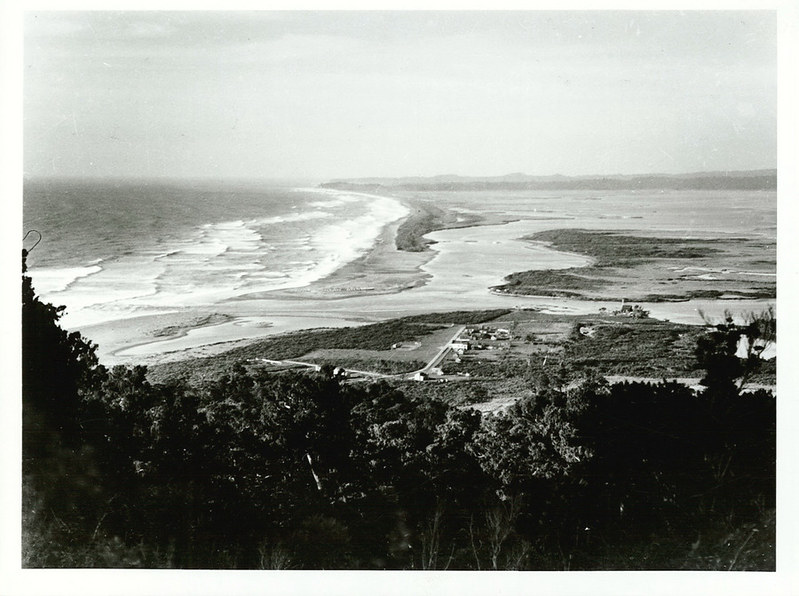
Categories
Essay

The Malodorous Mountain: A Contemporary Folklore

By Sayantan Sur

On a bleak wintertide morning in January, our story begins with a black taxi and a somnolent rider. The taxi was racing through a maze of concrete towards the southern part of the city when out of the blue, the silhouette of a towering mountain appeared. With a large flock of wings dancing around its crest, the mountain looked surreal. One would naturally be stupefied to come across this elevation as Delhi is supposed to be flat as a pancake. As we closed in, my initial shock was instantly replaced by a strong sense of revulsion, for the mountain turned out to be a ginormous pile of rubbish. This reeking pile, I would later find out, is infamously known as the mountain of garbage.

The mountain is currently as tall as the majestic Taj Mahal, and would soon outgrow the mausoleum. On blazing summer days, spontaneous fires erupt from the methane released from the dump. Encircling its slope, is a small slum of rag-pickers. The local inhabitants who continually breathe in the putrid air often develop severe respiratory diseases, allergies, and asthma. Discarded tires at the dumpsite accumulate rain-water and transform into a haven for mosquitoes. This dump at Ghazipur was instated in 1984 and was to be closed in 2002 when it had reached its capacity, but evidently, that did not happen. The mountain and its ailing people sum up the out-and-out failure of the capital’s waste management system and its lack of operational efficiency.

On average, Delhi produces 10,000 tonnes of waste per day, and less than half of it gets segregated. About 50% of this waste is composed of organic materials, which for the most part comes from individual households. To treat this heap of organic waste, Delhi has only two operational composting and zero vermi-composting plants. The number of such facilities undoubtedly need to be increased. Although organic wastes account for a large fraction of the total waste, it imposes a lesser threat than other inorganic wastes such as plastic.

Plastic wastes make up just about 10% of the total municipal solid waste in Delhi, despite the current blanket-ban on 50-micron plastics. Three fourth of the household garbages are wrapped in single-use polythene bags, which eventually end up in landfill sites. Delhi currently generates the largest quantity of plastic waste in India, which is truthfully shameful. These plastics are practically impossible to segregate at the landfill sites due to the lack of advanced equipment. The only recycling presently being done is by the rag-pickers, who risk their lives to rummage through the rotten dumps and sell the collected plastics to intermediary dealers.

Other countries, however, have addressed this very problem by using advanced scientific methods. Commercially available sorting machines can easily classify the plastic wastes from other garbages, which uncomplicate the task of recycling. These machines employ basic spectroscopy and x-ray techniques to perform macro-sorting, which is far more efficient than manual sorting. Macro-sorting involves the separation of plastic bottles and containers, while micro-sorting deals with smaller bits, such as chopped plastic flakes. The sink-float technique is one of the major methods used to perform micro-sorting; here the materials are deposited in a water-filled tank and subsequently, the lighter materials start to float while the heavy materials sink. This technique works only when the materials have different densities. The plastic wastes can also be used to fabricate usable products, such as hydrogen and carbon-nanotubes, by using a process called two-step pyrolysis. This process uses Ni-Fe (Nickel and Iron) as a catalyst under extreme temperatures, to produce high yields of hydrogen gas. This thermochemical method is remarkably energy-efficient and can be easily practiced to recycle our plastic wastes.

An alternative way to get rid of plastics is through bioremediation. It involves the usage of different microorganisms, which can consume and degrade certain environmental pollutants. Last year, a paper published in the journal, Environmental Pollution has discovered an entirely new species of plastic-eating bacteria (Ji et al. Env. Pol. 258, 113793; 2020). This bacteria, Mycobacterium neoaurum, is the first known bacteria identified to have the ability to degrade 2,6-DMP (2,6-dimethylphenol), which is a widely used plastic monomer. Consequently, M. neoaurum might prove to be a key candidate for the bioremediation of 2,6-DMP-contaminated areas.

Corresponding to this, another paper published in, Science of the Total Environment has unearthed a plastic-eating super worm in China (Yang et al. Sci Total Environ. 708, 135233; 2020) . The larvae of the worm, Zophobas atratus, was proven to be capable of degrading and mineralizing polystyrene. The worms were shown to survive near about a month on the Styrofoam diet alone. Each super worm was estimated to devour 0.58 mg Styrofoam per day, which is four times more than what mealworms can eat. These new findings can change the currents ways of recycling plastic but we have to bear in mind that these scientific methods can only be used when our waste is properly segregated and disposed of in the first place; if the biological wastes are mixed with inorganic wastes, then they become unusable for future use.

The present-day segregation and sorting happen under extremely hazardous conditions and its effectiveness is reasonably low as only valuable discards are segregated from the dumpsite which guarantees a comparatively greater economic benefit in the recycling market. So, it becomes our duty as civilized citizens to ensure that we sort our household trash at our homes and then only it will have a domino effect on the waste management process.

The mountain of garbage is not only a physical body, but it is a metaphor that can be applied to any city with poor garbage disposal facilities. Luckily for us, the final act is yet to be written, and only time will reveal that story.

.

Sayantan Sur is a doctoral fellow at the University of Delhi. He has published numerous scientific articles and has won 2019 AWSAR award for articulating best science story.

.

PLEASE NOTE: ARTICLES CAN ONLY BE REPRODUCED IN OTHER SITES WITH DUE ACKNOWLEDGEMENT TO BORDERLESS JOURNAL

Categories
Essay

Potable Water Crisis & the Sunderbans

By Camellia Biswas

Many projected climate change impacts, including sea-level rise, temperature increase, heavy rainfall, drought and cyclone intensity, is increasing yearly flooding, riverbank erosion, salinity intrusion, etc. These pose severe impediments to the socio-economic development of India, especially the coastal areas. The coastal area of India, especially the Bay of Bengal, is located at the tip of the northern Indian Ocean. It is frequently hit by severe cyclonic storms, generating long tidal waves aggravated by the shallow bay.

At least one major tropical cyclone strikes the Eastern/south-eastern coast each year with powerful tidal surges. The Chakraborty et al (2016, 13-19) report states almost 2.3 million people were affected by Cyclone Aila more than a decade ago in May 2009. Many people were stranded in flooded villages. The tidal surge was about 10-13metres in height. It washed away enormous number of households, lives, livestock, crops and all other resources of the affected region. Aila was not a powerful storm, but its heavy incessant rains and storm surges were enough to swamp the mouths of the Ganges in both Bangladesh and India (Biswas 2017).

Some islands in the Bay of Bengal and the mangrove forests of the Sundarbans region were wholly submerged underwater. This catastrophe happened within a brief period, which resulted in people becoming homeless, leaving their assets in the households. A tiny percentage of the affected people could take shelter in the nearby cyclone shelter or schools during the cyclonic event. However, in several discussions, the affected people criticised that most cyclone shelters were built post-Aila and schools had only ground floors, which was anyways inundated. Most people thus took refuge on elevated roads. The extreme flooding also resulted in thousands of people losing access to safe drinking water and exposure to floodwaters containing untreated wastewater, dead animals and fish.

Impacts on water systems and water quality are often not visualised as chronic damage to property or the landscape. And thus, most treatments to these problems are temporary and short-lived. Potable water scarcity is a cumulative problem in the coastal region of India, especially Sundarbans, as it is revolving saline water slowly. Climate-induced disasters like rainfall, cyclone and storm surge, flood etc., are making the situation worse. Coastal people gradually depend on groundwater due to surface water salinity. As a result, groundwater extraction is increasing day by day. For that reason, the shallow aquifer has also been contaminated by salinity intrusion.

I have witnessed the horrific situation of women and children wailing for drinking water and waiting for relief distribution while spending my summer holidays at my native house in Sundarbans. The 14-year-old me then was horrified by the helpless situation of my own people, my kin and kept wondering whether disaster management conditions would be better or worse in due course of time especially when it concerns marginal communities of Dalits and Adivasis.

The memories of Aila keep flashing back to these Sundarban islanders every time they are hit by a cyclone or post-cyclone flood. Some of the stories they shared with me during my doctoral fieldwork made me revisit my Aila memories. As a native researcher, it gave a new stance towards the importance of water beyond its economic value and enhancing communities’ socio-cultural ties. Water, which has often served as an agency to conflict and dispute, during Aila it stimulated the sense of brotherhood and togetherness among the Samsernagar village residents.

Flood Friendship Between India-Bangladesh

Samsernagar is the last village in West Bengal’s Sundarban, bordering Bangladesh by river Kalindi. During Aila, the embankments of Samsernagar broke, resulting in the inundation of the village with the high tide influx from Kalindi. It led to total ruination of the settlement in just a couple of minutes. Samsernagar was submerged in the water, and so were the tube-wells and ponds, which were the only source of drinking water. It is where the villagers from Bangladesh came as harbingers of help.

In the political map, Bangladesh and India are demarcated as two separate nations. However, for people in Samsernagar, their neighboring village will still be the Village Koikhali of Bangladesh. To better understand, I phoned one of my respondent’s relatives who lived on the other side and asked about their experience during Aila regarding the help they provided to the Samsernagar residents. Koikhali residents came to Samsernagar rowing on their boat with barrels of potable water and other essential aids like food, clothes and mats. From several discussion and information interaction, it can be inferred that Samsernagar still recognises their international neighbour’s gesture which didn’t let them die of drinking polluted water. This act showed how, on the one hand, the water acted as a demon to the villagers through flooding and on the other, the barrels of drinking water brought by the neighbouring villages of Bangladesh became a sign of camaraderie and community interest. It went beyond just a mere necessity to live. It showed us how two villages come together, ignoring the human-made international boundary.

The Dilemma of Drinking water Crisis

That this acute drinking water problem can turn into a chronic issue in events like Aila and similar flooding situations is given credence by the fact that underground water also becomes saline due to leaching and seepage. Even after the floodwater recedes, the tube well water remains undrinkable. Sittler (2017), in her study on ‘Floodwater and stormwater can contaminate your water well’ argues that regardless of where storm-water runoff occurs, like floods, it can carry harmful contaminants such as soil, animal waste, salt, pesticides, and oil, potentially impacting drinking water wells and water quality. When discussed these challenges with groundwater experts at Sundarbans, they pointed out that in the Hingalganj Block, where Samsernagar village is situated, many deep tube well weren’t rightly maintained. Excessive contaminant-laden run-off infiltrated these drinking water wells through and assessed that the well casings or caps may not have been completely watertight. Moreover, any potential contaminants into the well can pose at least a short-term risk to water quality and human health.

In 2009, many families in Sundarbans, out of desperation, consumed pond water undergoing some basic filtration, knowing that the pond water stank from carcasses of dead animals. As farmlands remain filled with saline water, paddy yield became meagre the same and following year. Affected people when interviewed spoke of the mismanagement of the state’s relief supply and its lack of providing safe water, on how the local administrations would run some basic filtration like boiling the contaminated water and distributing it. As a result, hundreds of villagers suffered from diarrhea two weeks after drinking contaminated water. According to UNICEF, 28 diarrheal deaths were registered, and over 85,000 cases were reported from the Aila-hit districts of West Bengal.

Water can be considered a symbolic element, a resource, a commercial product, or a service. The interconnections established and the value attributed to water usage serves to build norms and references that influence the decision-making process from individuals to higher levels of social organisation. When considering it a resource for life, its interests and values vary and change across cultures, communities, states, space and time. One may raise an inquiry that spaces like Sundarbans is surrounded by rivers and seas, and that’s presumably the reason why Sundarban locals might not feel impacted by the presence of noble metals in the water.

However, as Sundarban landscape has a mangrove ecosystem, the water quality in and around the area has been found to be of inferior quality (CGWB report, 2014-15). If also, post-Aila most deep wells that were reconstructed at the height of 8-10ft above flood level so that the runoff was less likely to introduce contaminants into these wells, slight amount of saline water still managed to seep into the groundwater. However, it is the persistent presences of high iron and arsenic in the wells within that should raise alarm. So, even though the region is surrounded by water, most of it is toxic. Thus, for the Sundarban islanders, continuous access to safe and potable water is an aspiration that continues a dream for the whole community.

REFERENCES:

.

Camellia Biswas is a doctoral candidate at the discipline of Humanities & Social science, IIT Gandhinagar. She is an Inlaks-RS conservation grantee for the year 2021-22. Her research specialises in Environmental anthropology, focusing on human- Nature Interaction in Indian Sundarban under the larger discourse of Climate disaster.

.

PLEASE NOTE: ARTICLES CAN ONLY BE REPRODUCED IN OTHER SITES WITH DUE ACKNOWLEDGEMENT TO BORDERLESS JOURNAL

Categories
Essay

Where Sands Drift Back in Time…

Shernaz Wadia explores Western Australia

The aquamarine Indian Ocean shimmered to our left on this sunny day along the drive up north from Perth. There was vague comfort in the thought that it connected us to distant India. This picturesque drive would take us to Lancelin, a small town about 129 kms. north of Perth, approximately an hour and half away. Its biggest attractions are the sand dunes and the sand boarding. As we drew closer to the small town, we passed by many small dunes They were so far from the ocean with tracts of shrub-land on both sides and the highway running through the middle that they seemed like freaks of nature.

From here it was another 3-km drive to the dunes. There was a car park at the entrance but we risked our jeep through the flat, stony terrain to park closer to the dunes and went the next bit on foot. The path was narrow. Having left all footwear in the car our bare soles were chafed walking the few meters of pebbly, coarse path to our destination. But voila! We rounded a bend and it seemed that someone had waved a magic wand!

Simply Stunning! Photo Courtesy: Daisy Wadia and Rajeev Ghodke

Snow white, wind-chiselled dunes rose up over silk soft sand that widened in an undulating carpet. The ocean glittered and foamed some distance away below an azure sky dotted with white clouds; and a wide, lush green strip acted as a barrier between the surf and the dunes. The snowy dunes stood lofty. Reaching the top could be quite a task with a sand board in hand as feet kept sinking into the cool sands! With effort, we managed the yielding surface as we climbed up a mound. Caps and hats blew off. Bare headed at the mercy of the cobalt sky, we lumbered up. But once on top, the panorama took our breath away more than the climb!

‘Have A Chat General Store’ on 104 Gingin Road in the town centre, hired out sand boards. Other than boards, there were buggies, quads, 4WD cars and motorcycles to zip up, down and around the dunes.

Sliding down appeared to be a lot of fun for adults and children alike but climbing back up the steep incline took the wind out of many. For those not quite physically fit, (which I wasn’t) this could be very daunting.

Sand Boarding. Photo Courtesy: Daisy Wadia and Rajeev Ghodke

Much as we would have loved to spend more time on the dunes, a merciless wind forced us to pack and leave. It blew sand into our eyes (we had sunglasses on), nose, ears, hair and even inside our well protected cell phones. The battery later had to be removed to blow out the fine grains. It was worth it, nonetheless.

Photo Courtesy: Daisy Wadia and Rajeev Ghodke

From the sand dunes we drove further north on this one day trip. Along the way, most of the vegetation was stunted. But flowering trees dotted the wayside to cheer us en route to the amazing desert of ancient limestone pillars, scattered across approximately 190 hectares, 60 meters above sea level and just a short distance away from the ocean. Coming upon this alien looking place, with its millennia old history, one’s reaction could only be of reverent awe. It was nature — raw and unrefined — a gateway into the unknown.

These limestone formations were within Nambung National Park, near the town of Cervantes. August to October was the best time to visit the Pinnacles. The weather was mild, wattles and wildflowers welcomed us. One could drive right into the desert, along a four-meter loop carefully demarcated with stones. There were delineated parking spaces where one could stop to roam among these pillars and enjoy a richer experience of the astounding landscape. They have been rightly nicknamed “The Rock Stars of the Outback”. These fragile structures demand to be treated with respect. The raw materials that went into forming these pillars were lime-rich sand and ancient sea-shells, but there are three theories regarding their formation and no consensus has been reached so far.

A diminutive view of the vast Pinnacles desert. Photo Courtesy: Daisy Wadia and Rajeev Ghodke

This millennia-old site, about 60 meters above sea level, evokes veneration. Thousands of the mystifying columns rise above a yellow shifting sand bed. Many of them daunt at 3.5 to 5 meters in height, some with jagged points and others mushroom-like with rounded, hard, calcrete caps that protect the frail formations. It is harder than the limestone below it and so takes longer to erode.

These Pinnacles and their surroundings are a very significant region for the traditional owners of the land, the aboriginal people. The aboriginals who inhabited this region were named the Nyoongar. A river called ‘Nambung’, meaning ‘crooked’, weaves through the region. The Pinnacles are sacred to the local tribe. During the wet season, the Nambung River made a chain of waterholes throughout the park, with the water flowing into the cave systems. These cave waterholes became essential for the survival of the tribe for hundreds of years.

There are many myths surrounding the region, with the local aboriginal people stating the large rock formations were the remains of fossilised ghosts. They were said to be young men who had wandered into the forbidden desert which was sacred and reserved for women. The gods punished them by burying them alive and leaving behind only their standing limestone figures.

It continues treated as a significant region for women, with many women groups gathering together in the desert to do traditional ceremonies, give birth, and camp beneath the stars.

The spectacular desert with its shrubbery is home to many native birds and animals like emus, black-shouldered kite, white-tailed black cockatoos, sand goannas, grey kangaroos, carpet pythons, bobtail lizards and more. Unfortunately we did not spot any of these. A visit to the Pinnacles Desert Discovery Centre, at the edge of the yellow sands gave us an idea of some of these splendid creatures through photos and taxidermy mounts. It also explained the geology of the formations and the cultural and natural heritage values of the area with soundscapes, videos and objects.

Photo Courtesy: Daisy Wadia and Rajeev Ghodke

Wandering among these ancient sage-like structures is to expand the margins of oneself and slide into a meditative trance; into a strange beyond. The ego slinks away; only deep awe fills the mind and spirit.

Lake Thetis

Photo Courtesy: Daisy Wadia and Rajeev Ghodke

As we drove back towards Perth, we made one more stop for a tryst with ‘Living Fossils” the modern versions of our Earth’s most ancient life-forms: living marine stromatolites. The lake has a circumference of 1.2 metres, with an easy walking path looping around it. A walk down a gravel path and then up a boardwalk and one reaches the lookout platform which has good, informative and instructive sign posts, like this one.

Photo Courtesy: Daisy Wadia and Rajeev Ghodke

Lake Thetis is one of the few places on earth where stromatolites or living fossils are to be found. They are built by microbes called cyanobacteria which are similar to the earliest organisms that produced oxygen for subsequent life forms. They have been growing here for about 3500 years. These rocklike formations teem with micro-organisms that are invisible to the human eye but these living communities of varied residents have population densities of 3000 per square metre! Stromatolites are layered, while their microbial cousins Thrombolites, which are also found here, are clotted structures.  

Fragile Stromalites. Photo Courtesy: Daisy Wadia and Rajeev Ghodke

The stromatolites are our only doorway into the emergence of life way, way, back in cavernous time. A small piece of stromatolite is encoded with biological activity that is thousands of years old. This community is threatened by nutrient enrichment and physical crushing, so visitors are requested to keep off these extraordinary forms.

.

Shernaz Wadia regards reading and writing as an inward journey. Her work has been published in various anthologies and e-journals. She sometimes dabbles in short Japanese forms of poetry too.

.

PLEASE NOTE: ARTICLES CAN ONLY BE REPRODUCED IN OTHER SITES WITH DUE ACKNOWLEDGEMENT TO BORDERLESS JOURNAL
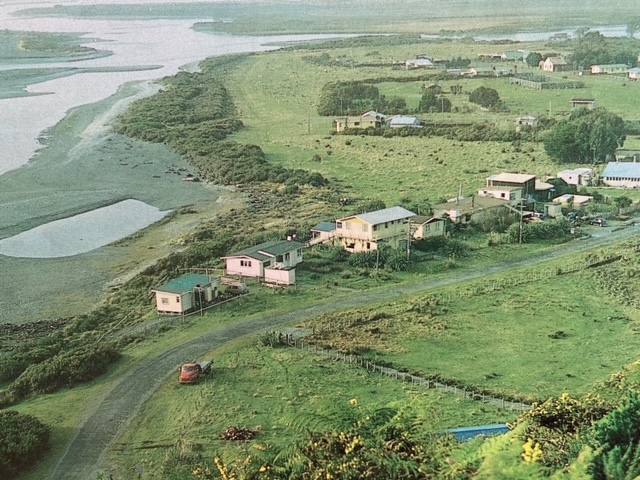
Categories
Essay

The Birth of Bangladesh & the University of Dhaka

Professor Fakrul Alam takes us through the Partitions of Bengal which ultimately led to the creation of Bangladesh, with focus on the role of Dhaka University.

In Dhaka University: the Convocation Speeches, a volume compiled with an introduction by Serajul Islam Choudhury in 1988, we read that the university was established by the British as a “splendid imperial compensation” for the Muslims of East Bengal (Choudhury, 26). They had wanted the current rulers of India to make up through it for the loss, they felt, they had suffered because of the reunion of Bengal in 1911. Delivering his inaugural speech as the Chancellor of Dhaka University (DU) in 1923, Lord Lytton had not only made this point but had also expressed the hope that it would soon become “the chief center of Muhammadan learning” in India and would “devote special attention to higher Islamic studies” (26). However, Lytton had ended his speech by urging graduands to conceive of the institution “as an Alma Mater in whose service the Muhammadan and the Hindu can find a common bond of unity” (Choudhury, 29). The subsequent history of the university reveals that while some of its future students would viewed it as a site for cultivating Islamic values and consolidating the Islamic heritage of the part of Bengal in which it was located, others would claimed it as a space where a democratic and secular notion of being Bengalis could be disseminated.

DU started playing a decisive role in Bangladeshi national identity formation almost as soon as the Islamic state of Pakistan was born. It became the center of the movement that would lead to the creation of the country born out of the ashes of East Pakistan in 1971. The key issue here was language and the catalyst was the insistence by the central government of Pakistan that Urdu should be the lingua franca of the country, regardless of the fact that only three percent of Pakistanis actually used it in their everyday lives. For two successive days on 5 and 6 December 1947, teachers and students of the university demonstrated on campus and the streets of Dhaka against the government decision and in favour of Bengali.

The Pakistani government, however, paid no heed to the protests and went ahead with its decision to impose Urdu as the sole official language of the country. In response to this ruling DU students mobilised on 26 February, 1948 to form an “All Party Language Committee of Action.” Not daunted, Mohammad Ali Jinnah, the Governor General of Pakistan, and identified as the “Father of the Country” by the official media, reiterated publicly while on a visit to Dhaka on the 21st of March that “the state language of Pakistan is going to be Urdu and no other language” (Islam, 224). When he made the same point in addressing the DU Special Convocation on the 22nd of March, Bengali students present at the convocation protested. On March 11, 1950 the Dhaka University Language Action Committee was formed. In essence, the movement that was being spearheaded by university students and that soon spread across East Pakistan, ultimately led to the break-up of Pakistan, a state built entirely on Islamist nationalism.

A direct outcome of the language movement was that the government that had been held responsible for bruising the Bengali consciousness was voted out of power in East Pakistan in 1954. Instead, a short-lived but popular coalition government that was viewed to be pro-Bengali took over up the administration of the province. Students had played a major part in the election and the tradition of student activism in the cause of Bangladeshi nationalism became very noteworthy in national politics from this point onwards.        

In retrospect, we can see the Pakistani period was one which had witnessed a continuous tussle between successive Pakistani regimes wielding state power to curb Bengali rights and impose an Islamist state at the expense of Bengali language and culture and Bengali nationalism. DU teachers and students played a crucial part in the confrontation. It was mostly because of them that the Pakistani state apparatus failed to suppress Bengalis and prevent them from expressing themselves. The campus was at the heart of activity that promoted an awareness of secularism and brandished democracy as a goal to be achieved in national life.

It was to be expected, then, that when the Pakistani state made one last desperate attempt to suppress Bengalis clamouring for full autonomy and democracy on March 26, 1971 they would do so by targeting DU and attempting to mow down Dhaka university faculty members and students ruthlessly. When the Pakistani government decided to postpone the National Assembly meet, where the Awami League had got an absolute majority and where they were in a position to claim self-rule for East Pakistan and dominate Pakistani politics for the first time in that nation’s history, the campus broke out once again in loud protest. On the 7th of March, when the Awami League’s chief, Sheikh Mujibur Rahman, gave his historic speech claiming full autonomy and threatening to launch an armed movement that would drive away the Pakistanis from East Pakistan forever, DU student leaders were at his side as he spoke in Ramna Park, which borders the university.

What happened on 26 March was nothing less than a calculated bid to blast DU to smithereens, murder student leaders and selected faculty members, and drive out all students from the campus for playing leading roles in the movement against the Pakistani state. The Pakistani Army was nothing short of murderous in attempting to neutralize dissent. Inevitably, DU bore the brunt of their initial fury. Anybody found in the university that night was mowed down and dorms, faculty residences and the DU Teacher’s Club were shot at indiscriminately. The Shaheed Minar was razed to the ground and Bangla Academy was subject to artillery fire. Even university non-teaching staff and cafeteria officials were not spared. Madhu’s canteen – the favorite haunt of student politicians throughout the sixties – was attacked and Madhu – the benign owner of the cafeteria – was murdered. The huge bot tree (banyan) which provided shade under which student leaders delivered speeches and from which they had given the declaration of independence on one of the turbulent March days – was blasted out of existence.

It was clear that the Army had decided that DU was the ultimate symbol of the unacceptable form Bangladeshi national identity formation was assuming. As Professor Serajul Islam Chowdhury observes in “Ekattor O Dhaka Visva-Bidyalaya (1971 & DU),” the university ambience encouraged people to not merely dream about freedom and equality but to create an environment where the dream seemed to come close to reality. Also, the University had been consistently a site of resistance in its efforts to impose a theocratic or monolingual state on Bengalis, as on-campus happenings from the time of Jinnah’s 1948 declaration about making Urdu the only state language and the protest movements of the fifties and sixties that culminated in the month-long protests of March 1971 demonstrated. The six-point program proposed by the Awami League for financial and political autonomy had been drafted by DU professors.

In the nine-month liberation war that followed the Pakistani army crackdown on DU and the rest of Bangladesh, the university once again became a microcosm of the country in that almost all of its entire faculty and students fled it. Academic activities came to a standstill and it became a campus bereft of students who had deserted it along with most of their teachers since they were unwilling to kowtow to the Pakistani design to create a quiescent institution run by quislings and were not inclined to impart or acquire education in line with proto-Islamist and/or totalitarian concepts of nationalism. Many students died in the course of the next nine months fighting for liberation or suspected of doing so. When the birth of Bangladesh seemed imminent at the end of the year, the Pakistani Amy and its local collaborators carried out a systematic search of faculty members on, and outside, the campus to murder the ones still around, holding them largely responsible for the breakup of the country they had not been able to prevent from cracking up.

When independence finally came to Bangladesh on December 16, it was fitting that the Pakistani Army would surrender in the open space adjacent to the university known as Ramna Park. The many teachers and students who had been murdered since March 26 as well as the resistance put up by them were later commemorated with structures erected all over the campus, the most prominent of them being the “Aporajeyo Bangla” or “Invincible Bengal” sculpture in front of Kala Bhabhan or the Arts faculty building, the martyrs plaque put up opposite the central mall, and the sculpted figures of the freedom fighters erected in front of the Teachers-Students Centre. December 14 became from then on the day when the DU Liberation War martyrs were to be ceremonially remembered and December 16 the day when DU faculty and staff joined the rest of the country in celebrating Victory Day.

Aporajeyo Bangla” or “Invincible Bengal” sculpture. Courtesy: Creative Commons

(First published in Daily Star, Bangladesh)

Fakrul Alam is an academic, translator and writer from Bangladesh. He has translated works of Jibonananda Das and Rabindranath Tagore into English and is the recipient of Bangla Academy Literary Award (2012) for translation and SAARC Literary Award (2012).

Categories
Essay

Poetry by George Freek

I LOOK AT DEATH 
(After Li Shangyin)

An icy wind cracks the trees.
Their once colourful leaves
are buried under deep snow.
I’m suddenly gripped by sadness.
Forever men have felt as I do.
With a sharp, swift blade,
it’s as if my guts were removed,
and I feel the hole it’s made.
I take no interest in combing my hair,
or tying my careworn shoes.
I gaze at the moon and the stars.
In that far off world,
they look safe and blessed.
But I know that they, too,
are fragile at best.  
I watch a solitary sparrow
shiver in a leafless tree.
He’s cold. He hasn’t been fed.
I shake my head, ashamed, 
and return to my comfortable bed.

Li Shangyin( 813-858) was a Tang Dynasty poet whose poetry had an imagistic quality. Courtesy: Creative Commons

George Freek’s poetry has recently appeared in The Ottawa Arts Review, Acumen, The Lake, The Whimsical Poet, Triggerfish and Torrid Literature.

.

PLEASE NOTE: ARTICLES CAN ONLY BE REPRODUCED IN OTHER SITES WITH DUE ACKNOWLEDGEMENT TO BORDERLESS JOURNAL