We salute Rabindranath Tagore (1861-1941) for his inspirational writing and ideology. Here, we have attempted to translate/transcreate his songs while retaining the essence of the spirit and flavour of his lyrics.
Gitabitan, houses 2232 songs by Tagore. Some of the songs on this page are a part of this collection.
Kothao Amar Hariye Jawa Nei Mana or Losing Myself invokes for us the joy of losing oneself in an imaginary world that the poet revels in… the result of the creative stillness he experiences in his mind…
Losing myself...(A translation/transcreation of Kothao Amar Hariye Jawa Nei Mana, 1939)
There is no bar to losing myself in an imaginary world.
I can soar high on the wings of a song in my mind.
Weaving fantasies into vast tracts of lands and unexplored oceans,
I lose my path in the distant shore of quietude —
I get acquainted with the champak blooms in the parul woods.
When the sun sets, I gather flowers in the sky amidst the clouds.
Mingling with the foam of the seven seas,
I reach the shores of faraway lands —
I knock at the closed doors of fairyland in my mind.
This song has been rendered in Bengali by Indranil Sen, a modern contemporary artiste
The poet as a visionary perceives the world in a different way, breaking class and caste barriers — he embraces humanity of all strata with affection. Here is a song about a young girl called Krishnokoli, who worked in fields and lived among cows, unable to follow the traditions of oborodh or purdah like genteel women because she had to work.
Krishnokoli(A translation/transcreation of Krishnokoli, 1900)
I call her Krishnokoli* though villagers call her dark.
On an overcast day, I saw in a field, a dark girl with dark deer eyes.
Her head was bare, her braid swung down her back.
Dark? However dark she is, I have seen her dark deer eyes.
The clouds closed in as two ebony cows lowed,
The dusky girl came out of the hut with hurried, uneasy steps.
She looked up with arched brows at the sky, heard the clouds rumble.
Suddenly, a gust from the East gambolled a wave through the rice crops.
Alone, I stood between the fields, there was no one else in the expanse.
Did our glances meet? That remains a secret between her and me.
Dark? However dark she is, I have seen her dark deer eyes.
They remind me of the kohl-clouds that collect in the North-east each summer,
Of the soft dark shadows that descend on the tamal grove when the rains start,
Of the happiness that unexpectedly fills my being on a monsoon night.
I call her Krishnokoli even if others call her by a different name.
I had seen her in Moynapara meadows, a dark girl with dark deer eyes.
She left her head uncovered as she had no leisure to be shy.
Dark? However dark she is, I have seen her dark deer eyes.
*Krishnokoli: An indigenous name of a flower in Bengal, also can be seen as associated with Krishna, the dark God. Koli in Bengali means bud.
This song has been rendered in Bengali by the legendary Suchitra Mitra (1924-2011)
Tagore, the multi-faceted, experimented with languages. Here is the transcreation of a song written originally in Brajabuli, a dialect based on Maithali that was popularised for poetry by the medieval poet Vidyapati. Composed in 1877. it became a part of Bhanusingher Padabali in 1884. This song draws from the lore of Radha and Krishna.
Against the Monsoon Skies…
(from Shaongaganeghorghanaghata, 1884)


Against the monsoon skies, heavy clouds wrack the deep of night.
How will a helpless girl go through the thick groves, O friend?
Crazed winds sweep by the Yamuna as clouds thunder loud.
Lightning strikes: the trees have fallen, the body trembles
In the heavy rain, the clouds shower a downpour.
Under the shaal, piyale, taal, tamal trees, the grove is lonely and quiet at night.
Where, friend, is he hiding in this treacherous grove
And enticing us with his wonderful flute calling out to Radha?
Put on a garland of pearls, a shithi* in my parting,
My odni* is flying as is my hair; tie a champak garland.

Don’t go in the deep of the night to the youth, O young girl.
You are scared of the loud clapping thunder, says Bhanu your humble server.

*shithi: Ornament worn in the parting of the hair.
*odni: A long stole or scarf
Song by Sourendro-Soumyojit, Dance by Priyanka
The creative stillness, or quietude, experienced by the maestro, takes him further into a perception of the world where he empathises with nature and feels the tides rush through his veins.
The sky is replete with sun and stars, the Earth, brimming with life -- In the midst of this universe, I have found my abode. Spellbound by the plenitude, songs awaken in my being.
The infinite, eternal waves that create planetary tides Resonate through the blood coursing in my veins.
As I walk to the woods, I step on the grass. Heady perfumes of flowers startle me into a rhapsody. Benefactions of joy anoint the universe.
I have listened, I have watched, I have poured my life into the Earth. Through knowing, I have sought the unknown. Spellbound by the plenitude, songs awaken in my being.
This song has been rendered by Srikanto Acharya, a modern day legend.
Tagore wrote intense and non-intense songs, though his rhapsodic connection with nature even tinge the lighter songs with a unique lyrical beauty. Here is a song that is often used to depict joie de vivre and plays beautifully on a piano as the tune borrows from the Scottish tune of ‘Ye Banks And Braes’. It is a part of a what is popularly known as a dance-drama, called Kal Mrigaya by the maestro himself. The story was based on an event from the Indian epic, Ramayana.
The Swaying Flowers
( from Phoole Phoole Dhole Dhole,1882)

The flowers sway in the soft breeze.
The river waves and gurgles as it flows.
The birds in bowers trill a tune
I cannot fathom the yearning that fills my being.
This song has been rendered by Sahana Bajpaie, a well-known singer and Tagore scholar
Rabindranath Tagore (1861 to 1941) was a brilliant poet, writer, musician, artist, educator – a polymath. He was the first Nobel Laureate from Asia. His writing spanned across genres, across global issues and across the world. His works remains relevant to this day.
(Most of the songs have been translated/transcreated solely on behalf of Borderless Journal by Mitali Chakravarty with feedback from Sohana Manzoor, Meenakshi Malhotra and Vatsala Radhakeesoon. Krishnokoli was improved further with advise from Aruna Chakravarti. Only ‘Against the Monsoon Skies…’ was first translated by Mitali Chakravarty and published in SETU).
.
PLEASE NOTE: ARTICLES CAN ONLY BE REPRODUCED IN OTHER SITES WITH DUE ACKNOWLEDGEMENT TO BORDERLESS JOURNAL
Devraj Singh Kalsi pays a poignant tribute to his late mother
There was no glint of pride, but a sparkle of joy lit up her eyes whenever she uttered the sentence: ‘My son stays with me’. Although many of her friends poked her to know why an overgrown kid was still living with his widowed mother instead of venturing out in the big, bad world in search of a lucrative future like their ambitious sons did, it gives me deep satisfaction that in the last thirty years we stayed away from each other for not more than thirty days. She surely deserved this privilege for nurturing a son with creative tendencies – even if the scale of his personal achievements was small.
Some of her friends wondered why I chose to remain a frog in the well. Some of her friends concluded it was my lack of potential to make it big in life. They expressed concern that the hopeless son should wake up and join the mainstream. Some of her close friends tried to find out whether the son was earning his bread and butter or not. The job profile as a copywriter working from home was something they could not understand a decade ago. Sometimes my mother mentioned advertising and writing but their clever minds read this as a mother’s cover-up attempt in defence of her incompetent son as all loving mothers try their best to hide the flaws of their children.
The pursuit of creative work to earn livelihood secured my mother’s approval and appreciation. She was glad I did not have to enter into compromises or indulge in unethical practices for career development. She was happy I did not need to degenerate into an opportunist or flatter people to realise my goals. She believed every single sentence or idea was a divine blessing meant to take care of the material needs. She loved the purity of this earning and always encouraged me to write with purity – never lower the quality of the output to earn more. My homage to her would remain insincere if the charming world of advertising blinds me with greed and I deviate from the path I have followed as long as she was alive. Was it my choice or her blessing? Something within makes me feel nervous.
Writing does not require relocation to a distant city. The dream of a writer is realised inside a room located anywhere – even if the writing space is found in a jungle. Driven by this conviction, I began to write and deliver good work so that there is no dearth of clients. Yes, the writing job made it possible to spend more time with mother. Besides, I did not have to undergo the hassles of commuting to work every day.
My mother was happy with this working model and quite surprised to find it real. She called it a royal business. Yes, with royalty indeed! However, when my first attempt at full-fledged creative writing did not fetch commercial success, my mother was disappointed. Perhaps she felt I was less qualified to aim so big. In hindsight, I wish I had written something better. This failure haunts me after her death. That she left this world with the feeling of failure. No success is going to reverse this reality. Even if I manage to write better now, my mother is not going to see it. When you realise the most important person in your life is not around, your urge to prove your worth dies young. But it does not mean I should quit creative writing. Whatever I write now will be a tribute to her – so keep writing with honesty and purity.
Her separation led to another separation. My mother wanted me to strengthen my attachment with God and religion and she often reminded me of the shortcoming. Since she was a very pious lady, I thought her prayers would take care of me for life. Moreover, since God had taken away one parent in my childhood, I always thought God was not going to deprive me of her presence. I always felt there was time for learning the Gurmukhi script from her. I regret not finding time to learn reading the Punjabi language. The Holy Granth Sahib had to be donated to the Gurudwara (Sikh temple) as I could not read the Gurmukhi script and daily readings are a must. The holy book could have remained at home had I been fluent. I hope to be fluent someday, and get it back home and conduct daily readings. My tribute to her includes this exercise in self-improvement.
Her humorous streak is something I have loved — her ability to laugh breathes into my work. I wish to acquire the strength to laugh during tough times, during health challenges. Few years ago, when a senior doctor referred her to a specific medical college, she made him break into a hearty laugh with her straight-faced query: ‘But why do you want college students to operate me? They will do experiments.’
Just before the pandemic began last year, she consulted an ophthalmologist who suggested cataract surgery would yield negligible improvement in her low vision (high myopia all her life). When he asked her to read the board, she said she could not read it. Then the doctor made some signs and she read those correctly. The doctor was confused and she could not suppress her laughter. The doctor admired her joviality despite her low vision.
After returning home, I asked her if she could read something on the board. She said she could read with some strain. Since her mood was bad after the doctor said the surgery would not lead to proper restoration of her vision, she was not interested in getting herself examined again. So, she preferred to end the exercise by saying she could not read at all.
A couple of years ago, she had hearing problems. When I took her to the ENT, she was asked to undergo audiometry tests. The result suggested she should get a hearing aid. When I told her to get one for the right ear, she said she does not need the device. It would obstruct the beauty of her earrings. She was always unwilling to wear the signs of old age. She disliked using a walking stick. She asked me to talk softly and she would hear distinctly. She lowered the volume of the TV and repeated the dialogues in the serial — to suggest her hearing was fairly good. One day she claimed to have overheard the gossip of the housemaids in the kitchen — she gave hints of revision in wages. A week later, they demanded a raise. She was surely hearing things right.
Over the years, gulab jamun was her favourite sweet but her diabetic status prevented her from having it. Everytime her sugar level was normal in a medical test report, she celebrated it by having one gulab jamun. It was her inimitable style.
When she fell down and hurt her head, she refused to call it a fall. Relatives called up to find out her condition. She called it a jump and broke into a laugh, making the other person feel lighter and less worried. This choice of words indicated her spirits were always high. When I am sick and dying, I hope I am able to keep my suffering to myself, to remain cheerful and positive and say that I am going to be fine with the change of seasons even if there is no spring in my life.
My mother always said Nanak Dukhiya Subh Sansar — other people should not be made sad — do not offload your grief on others. She urged me to bear it all alone. She had tremendous strength to bear her sorrows all her life. I am not sure whether I was also a source of adding sadness to her life. Maybe, I was also a big contributor because I chose a difficult life and deprived her of what her friends and relatives got so easily in life. People say she deserved a better life, a better home to live, a better son, a better future, a better old age. My tribute includes this regret and confession that she truly deserved a successful son.
.
Devraj Singh Kalsiworks as a senior copywriter in Kolkata. His short stories and essays have been published in Deccan Herald, Tehelka, Kitaab, Earthen Lamp Journal, Assam Tribune, and The Statesman. Pal Motors is his first novel.
PLEASE NOTE: ARTICLES CAN ONLY BE REPRODUCED IN OTHER SITES WITH DUE ACKNOWLEDGEMENT TO BORDERLESS JOURNAL.
Sohana Manzoor explores the social relevance of a dance drama by Tagore, Natir puja
Quite a few of Rabindranath Tagore’s dance dramas and poems develop around the idea of Buddhist philosophy that induces people to lead a simple life, to gain an understanding of the injustice and inequality prevailing in society, and to acquire knowledge and develop a deeper insight into the universe. Such a major problem reflected in Tagore’s work is the class and caste system of the Indian society.
It would be relevant to recall that one reason that Gautama or Buddha left home is because he recognised that the traditional religions practiced during his time were unable to absolve the dissatisfaction and frustration that abound in life. The class and caste system that divided and segregated people troubled him deeply. Little wonder that all the principal religions of the world rose for emancipation of people from such bondages.
Unfortunately, the corrupt human heart does not allow such practices to go unhindered. Even though at the root of any religious faith there is a high ideal to free people from evil practices and oppression, they also are used as ideological weapons to control mankind. In every age, therefore, figures like Christ and Buddha rise to remind humanity that there is a law beyond the one practiced through selfishness and pettiness of everyday life. Hence, peace and faith are required to be restored at the price of a sacrifice that shows the significance of selfless love, the futility of social class and caste. Actually, the truth is ever present, but sometimes it just takes one act to see that there is a truth higher than all the material wealth one can ever accumulate.
Tagore explored various perspectives of Buddhism in many of his works. Malini, Chandalika and Natir Puja are three dance dramas that deal with this theme. Natir Puja (Devotion of the Court-Dancer) has at its centre the pure soul of a mere dance-girl who is jeered at as a fallen woman, and who considers herself unworthy of even attending to the words of Buddha. But her humility reflects one of the core ideals of Buddhism and she is called upon by the devout followers of Buddha to perform the rituals of a priestess before the altar of Buddha. In the process, her devotion is preferred over the offerings of the royal princesses some of whom feel insulted.
One of them, the princess Ratnavali, takes measures to punish the court-dancer by throwing a choice before her — either to dance in front of the altar as an affront to Buddha, or to face death. The dance-girl Srimati accepts the royal order of dancing before the altar, but she succeeds in revealing herself as a devout follower of Buddha and embraces death. The storyline also focuses on the nature of the faith of Buddhism through the figure of Lokeswari, the wife of the former King, Bimbisar. Lokeswari’s only son Chitro had left home to follow the path of Buddha, and his mother, who used to be a follower of Buddha, emerges as a frenzied woman. She cannot accept that her only son had left home, and her husband renounced the throne when another son Ajatsatru wanted to be the King. For the first time in her life, she questions the validity of a belief that might want human beings to renounce all their precious possessions.
Through an intricate series of events Natir Puja unfolds and delves into several significant aspects of human dilemma. First, through the figure of Srimati and Lokeswari, the nature of devotion is explored. Second, the problem of caste system is brought out through characters such as Ratnavali who cannot accept that a lower caste man or woman could be considered more pious than the royal followers in the eyes of God. Third, that the gravest sinner could seek forgiveness and repentance is always a possibility.
Natir Puja is a tale elaborated from another longer poem by Tagore titled, “Pujarini” (The Worshipper). At the centre of both tales stands Srimoti, who claims to be “Buddher dashi,” or a handmaiden of Buddha. The term “dashi” should not be considered derogatory here but one that focuses on the nature of humility in Buddhism. The meaning of “Buddha” is teacher and in the traditional Vedic ideology, a teacher claims the highest status in society. Therefore, the chance of serving the teacher is indeed a privilege. And as Srimoti says, “My days of false modesty are over. I would not sing falsely, but you did not grasp what your eyes witnessed.” She points out how the faithful see and hear with their heart. The eyes might see, but they would not always recognise what they perceive.
Lokeswari, on the other hand, reminisces how once she was an ardent follower of Buddha, but it becomes clear from her words that she had thought more of distinction than salvation. And yet, Buddha preached freedom from avidya (darkness of ignorance and limiting of consciousness). A man living the life of avidya, spends his life in a spiritual slumber. Therefore, devotion to Buddha requires spiritual awakening, which Lokeswari fails to comprehend. Her very name, Lokeswari, actually suggests her dilemma — the Queen of the World — and naturally, she could not give up the ownership of the materialistic world. In the end, however, Lokeswari realises her error of judgment, and honours Srimoti’s sacrifice. After all, Srimoti is able to show that for faith and truth one should be ready to offer the highest price, one’s own life if necessary.
As a court-dancer, Srimoti might have received a lot of attention, but her position is still that of a high-class courtesan. There are quite a few references where the royal family members make fun of her. Even the elderly Queen Lokeswari scoffs at the idea that Srimoti might turn out to be a priestess of Buddha and the princesses will be her attendants: “Disciple of this dancing girl! That’s what will happen indeed! Now it’s up to the fallen woman to arise with words of salvation.”
From the onset, the Princess Ratnavali, too, makes fun of the calm and quiet nature of Srimoti who is frequently affronted by the princesses but rarely replies. It is almost as if Ratnavali senses her superior nature and takes her to task by insulting her in whatever way possible. The situation escalates when Srimoti is honoured by the Buddhist monks. At that point, Ratnavali makes snide remarks about the Bhikkhu Upali born of a barber family, or Sunado, the son of a milkman, or Sunit, an untouchable. She forgets that Buddhism is a faith that nullifies class and caste system. Her words also reveal that human psychology is deeply steeped in pettiness, jealousy and arrogance, and it takes sufferings and remorse to do away with them.
So, we come to the last point—the theme of repentance and forgiveness. The figure of Lokeswari is an everyman or woman. She is not an evil person, but nor is she convinced by the words of the bhikkhuni who attempts to make her see that there is a difference between the value of gold and that of the light. In today’s world this is where most of us stand. The materialistic ideology has taken over the ethical and philosophical aspects of life. As a result, we keep on asking for more and there is no end to our craving. In the process of worshipping Mammon, we overlook humanity and humility. We not only forget to look at the sufferings of other, but we choose to ignore them. Lokeswari’s humanity returns to her when Srimoti prepares to dance in front of Buddha’s altar. She offers her poison so that she dies before committing a sin. And when, Srimoti unfolds through her dancing that she never meant to insult Buddha but to honour him, once again Lokeswari joins her in reciting,
Buddham saranam gacchami (I submit to the Buddha for refuge)
Dhammam saranam gacchami (I submit to the Dhamma for refuge)
Sangham saranam gacchami (I submit to the Sangha for refuge.)
Even the Princess Ratnavali, who had insulted Srimoti earlier and is responsible for bringing out the royal order, finally kneels down before the dead body of the dance-girl to pay respect. The play ends with Ratnavali chanting the words of Buddha.
Tagore’s dance drama has played out beautifully to bring out a historical aspect of the Indian culture. The story of Bimbisar and his son Ajatsatru may not have been represented the way history records it, but the tale certainly brings out the tension and the hostility that poison the world at every age. The corrupt and selfish human heart tends to assume that property and wealth hold the key to success and happiness, but ends up in welcoming segregation, arrogance and jealousy. So, should we consider love, affection and sacrifice as mere human follies, or should we abandon the idealistic notions and consider wealth and control as our ultimate gain? Perhaps, the answer lies in the wasteland of our postmodern civilization, which has already sacrificed or butchered its saviours and is still waiting to be atoned.
Sohana Manzoor is Associate Professor, Department of English & Humanities, ULAB. She is also the literary Editor of The Daily Star, Bangladesh. This essay was first published inThe Daily Star.
.
PLEASE NOTE: ARTICLES CAN ONLY BE REPRODUCED IN OTHER SITES WITH DUE ACKNOWLEDGEMENT TO BORDERLESS JOURNAL
Mike Smithdrifts into nostalgia about mid-twentieth century while exploring a box of old postcards. What are the stories they tell?
In the days when I used to give live readings of short stories I was often asked where they came from. It’s a question writing buddies know better than to ask. Obviously, they already know that stories come from wherever you have found them. But to the non-writing reader it seems to be a mystery.
V.S.Pritchett said that they came from a ‘poetic impulse’, and life can and will prompt that impulse without warning. Even something as simple as looking at postcard can do the job. I was recently shown one such card, sent in the mid nineteen-thirties from Algiers. On the back it’s titled as number 12: Alger. Rue Bab-Azoun, and on the front of it carries a black and white photograph of a street scene. I’ve never been to Algiers, but the image evokes memories and associations with travellers’ tales, articles, TV shows and movies, and by no means all of them directly related to that city.
The image is full of life, locating itself at a precise moment in place and time by its buildings, its street furniture, its traffic, its advertising posters and its people, more than a dozen of them in several distinct groups. Each of those groups might imply a tale, and in combination a more complex one. That dead centre café with its two arches, ‘La Vieux Grenadier’ makes me think of Rick’s place in the film Casablanca. And could the ‘Au Grand Bon Marche’* up above it on the wall be an ironic comment? On the dapper man in the dark jacket and tie, his straw boater subtly tilted, his thumb stuck in his belt, say, as he strides towards us. Is he known to them, rejoining them perhaps after an assignation? And what about those two characters in white suits whom he has just passed? One of them is glancing across. Is it at him, and if so, why? Could be somebody’s brother, and the start of something. Or is his line of sight slightly ahead of the man, towards a couple partially obscured by the little knot of tourists nearer the foreground? Has something been done, or said? And who is the man standing on the back of the tram vanishing into the shadows? Has he just boarded at the stop? It is a stop, I’m sure, just close by that nearer group, because we can see the tracks reverting to single from double lines, that would form a passing loop for crossing vehicles. Further to the left there’s a mixed group: a man in robes reaching out, for what? Two men in solar topees: are they the police? Off duty soldiers? What sort of vehicle is it? Are they demanding to see papers? Is that luggage on the roof?
And on the far right, a couple, casually dressed. She is just visible behind him. They are heading towards the ‘Parfumerie’, if I have read the lettering on the wall above them correctly. They are moving quickly, I think, and with no eyes for the others in the scene.
Every still photograph catches a moment in time and place and holds it motionless, which, almost word for word, is what the writer Arthur Miller told us short stories do. Each picture is a segment of the arc of some imagined or remembered story, and for the would-be writer the trick might be – I offer no certainties – to know which segment: beginning, middle or end? So that the whole arc might be created.
And every momentary image brought to our eyes, upon the street or in a building, or from a vehicle, every sight and every sound, each whiff of wind off the sea, or waft of coffee from a café, each faint smell of smoke or blood from an alleyway or open door, offers us the same potential. And so, the answer to that question, asked or unasked, must always be: stories? They come from everywhere!
12: Alger. Rue Bab-Azoun. Snapshot of the postcard by Mike Smith
Where to start?
For I know only the ending of the story. That lies in the box of old postcards and photographs, of dinner menus and an itinerary of the liner, The Laconia. It was a Cunard Line ship and came to an unwanted fame a few years later when, in 1942 it was sunk by a German U-boat. A flotilla of German and Italian submarines attempted to rescue survivors, but were later bombed and strafed by American warplanes, forcing them to dive, sweeping those survivors into the sea.
The Mediterranean cruise recorded in those old postcards took place in the mid-nineteen thirties and was a honeymoon trip. The postcards show Algiers, Jerusalem, Valetta, and unknown views. Petra, city of the rock is in there. Photographs show bustling streets. Western tourists in period costume to us now, smile, raise glasses, chin-chin, gaze from balconies and terraces. The menus show us what they dined on, the itinerary, where and when they made landfall. They are printed on a stiff card, Art Deco in design and near to what we might think of as A5 in size, but which in those days would have carried what seems now a more Imperial label: crown quarto, small demy octavo.
There’s even a folding diagram of the ship: printed on flimsy paper but still good, even along the eighty-year-old folds. It shows the steel hull, the cabin walls (Not walls, an old naval friend mine would have corrected. Those are bulwarks, matey!).
The young bride was my mother in law’s mother. Her husband was an English farmer, a cut above her in class. She was a Londoner, a nurse, he a Norfolk country landowner. But tragedy struck. Before even the Laconia sank, he had died.
And through the twists and turns of life she’d kept the box of postcards and old photographs, and the dinner menus, the itinerary of their trip, the folded diagram of the ship, their cabin black-inked and arrowed in someone’s hand; perhaps hers, perhaps his.
I never met the lady. She died the year I met my wife, but I could weep for her now, knowing the ending of their story.
Glossary
Au Grand Bon Marche: Literal translation, a great bargain, French. Could also refer to a French Department store Le Bon Marche.
Parfumerie: A place where perfumes are sold. French.
.
Mike Smith lives on the edge of England where he writes occasional plays, poetry, and essays, usually on the short story form in which he writes as Brindley Hallam Dennis. His writing has been published and performed. He blogs at www.Bhdandme.wordpress.com
.
PLEASE NOTE: ARTICLES CAN ONLY BE REPRODUCED IN OTHER SITES WITH DUE ACKNOWLEDGEMENT TO BORDERLESS JOURNAL
This is an excellent debut. Within only a few pages I knew I was in the presence of a real poet. What I mean by this is that the author clearly has a true lyrical sensibility and is able to project it concisely, precisely and powerfully into the reader’s mind. There are many superb poems that exist that were written by authors without this sensibility. Those poets have relied on craft, luck or inspiration, or even the sheer momentum of originality, and everything has worked out for the best. But when we feel we are in the presence of a real poet we know that nothing is left to chance.
This doesn’t mean that the poems weren’t sweated over, rewritten, grappled with. I make no suggestion that poetry flows without any trouble from the pen of a real poet, but one thing is sure, which is that the reader of a real poet soon develops a deep faith in the author and is willing to go quite far on the poet’s future journey, no matter how tortuous the way turns out to be, without becoming discouraged. I found that reading the poems in this book filled me with confidence in the voice of the poet. I turned the pages trustingly rather than hopefully. The poet almost adopts the role of a guide, leading the reader, who is now a sort of pilgrim, into the mysterious territory of the work, guiding them safely to destinations that are also resolutions. And it is all very satisfying.
The range of the poems in this volume is impressive. There is a mystical tone to many, but others are pragmatic, grounded in this world, full of raw emotions transmuted into beautiful words by the alchemy of perfectly honed and tuned words, phrases, lines. The balance of these poems is a delight. They all inhabit their own length exactly, without wasted words or abrupt dislocations. There are poems about motherhood, wistfulness, daydreaming, human connections. So far, so good, but there is nothing in these themes, despite the wonderful treatment they are given here, that one can’t find in innumerable debut poetry collections. The book bursts out of the typical debut poet’s emotional restrictions when it deals with elements that are more fantastical. This is not to say that these wilder and more outward poems lack emotion. On the contrary, the emotion returns and surrounds them, but the effect is heightened. There is now adventure as well as introspection, action as well as feeling. I appreciate the blend, the variety, the vigour, the echoes of legends, tall tales, myths.
The poet has given permission for two poems from the collection to be quoted in full by me. The truth is that I could have opened the book at random and selected any two to justify my praise of this volume. There are no weak poems in the book at all, no fillers. But I have chosen two that align most closely with my own taste. The poet states that ‘Humans Become Fish’ was inspired by the artwork of an artist named Natalie Low but it reminds me of the first novel of one of my favourite writers, Inter Ice Age 4 by Kobo Abe. My second choice is the wonderfully evocative and melodic ‘Night Fantasy’, a sombre yet not unhappy nocturne.
– Rhys Hughes
2051: HUMANS BECOME FISH

We have learned to breathe underwater,
traded our salt-choked lungs for gills,
At first it was difficult, many died.
But slowly we trained ourselves
to become elemental,
Our filament fingers,
scraping the seaweed
from foamed faces,
became fine-feathered fins.
Last of all to go, was the legs,
We were loath to lose them,
but one day, after years of running
along the bottom of the ocean,
we found we could fly.
We flicked out new-grown tails,
somersaulted bubbles and swam,
Our pellucid eyes bulging,
Mouths an open question,
And made our homes
among the reeds and coral.

Lately we have lost all power of speech,
but find ourselves able instinctively
to feel the shoal’s clamour,
Our sleek armoury of scales
Streamlined to the flow.


NIGHT FANTASY

Last night, we were all at sea,
tossing and turning on the churning waves,
billowed up on the briny foam-flecked
spatter of a white-horse gallop,
we slipped into wet pillow worlds
where fronded whirlpools
sucked and stranded
the matchstick masts
of our promises and dreaming
and dashed them
cruelly on the
broken rocks of the night,

See how I lengthen my footsteps
along acres of untamed sands,
how the tides suck away at my prints,
until all that remains is a
splinter of moon dust;
shipwrecked
on the shallows
of your sleeping.
Rebecca Lowe
Rebecca Lowe is a journalist, poet and co-organiser of Talisman Spoken Word open mic and Swansea Poets for Peace. Her poem ‘Tick, Tick’ won the Bread and Roses 2020 Award. Her poetry has been featured on BBC Radio and published in many anthologies. Blood and Water is her debut poetry collection.
.
Rhys Hughes has lived in many countries. He graduated as an engineer but currently works as a tutor of mathematics. Since his first book was published in 1995 he has had fifty other books published and his work has been translated into ten languages.
.
PLEASE NOTE: ARTICLES CAN ONLY BE REPRODUCED IN OTHER SITES WITH DUE ACKNOWLEDGEMENT TO BORDERLESS JOURNAL
Title: The First Cell and the Human Costs of Pursuing Cancer to the last
Author: Azra Raza
Unless you are an oncologist, what would possess you to read a book on cancer?
Azra Raza’s unexpectedly well written book gives you the only reason you’ll need. Because it’s necessary.
Why? We go through life without thinking of death very much. Maybe this is a good thing. However, all of us shall die. And many of us shall develop or die of cancer. Whilst we may not wish to think about this during life, that she tells us is precisely why the progression of cancer treatment has been stymied. It’s not the only reason of course. There is more money in treatment than cures. But as long as we are all too busy to read on these subjects, we can be assured nothing will change and it really does need to change.
If you read the news, you’d be forgiven for believing cancer treatments have progressed and improved. After all we want to believe that don’t, we? But like any statistic, it can be inaccurate and miss the larger picture. Unfortunately, much as we want to be positive, we need to be realistic. The truth is cancer deaths have only lessened because of social change (less smoking, healthier lifestyles) and early detection (screening programs) and not because of the actual treatment.
The actual treatment (cut, poison, burn — surgery, chemotherapy, radiation) remains the most popular of choice for battling majority forms of cancer. We can all point to the notable exceptions but they make up a relatively small percentage. The vast percentage of cancer patients are given these options in varying forms.
Those cancers that do not necessarily kill, may not terminate lives. But it isn’t because of the treatment so much as the cutting out of, or sheer luck, that the cancer was caught in time. The treatment itself, if you are unlucky enough to have an advanced cancer, hasn’t changed much (with the exception of gene therapies that have been advancing but are not applicable for all cancers) since the 1950’s. Yes, that’s right, the 1950’s.
So, while doctors want to offer hope, they do so more out of a stubborn desire to ‘try anything’ rather than because the six months they may give a dying person, is really beneficial when you consider the sheer backbreaking cost (bankruptcy from medical costs being the number one reason) and very small gains (six months more of life and you have spent all your money on a treatment which only benefits Big Pharma). The unwillingness of doctors to give up, is admirable and very human (who wants to tell someone there is no hope?) but it brings with it, a false promise.
What’s the solution? Azra Raza’s solution is very simple but mostly overlooked. She believes from her own experience of watching her husband die of cancer despite her being an oncologist and researcher that we have to stop looking for the ‘magic pill’ and go back to basics. Let’s find out what causes cancer. Let’s intervene before cancer gets a foothold. Why are we only looking at how to treat the incurable? Why aren’t we looking at how to prevent it in the first place?
Raza points to a Westernized, masculinized perspectives in the medical world that makes true research very prohibitive, that research being done is drowned out by the lack of people who will be willing to take it to the next step, and a lack of funding. Without this, we cannot hope to change a decades old ‘tradition’ and yet, this tradition is causes enormous suffering. Every time Raza sees a new advertisement on TV for a ‘platinum-based treatment’ or something that offers ‘real hope’ to cancer survivors, she is acutely aware of the enormous price tag and literal months or weeks these treatments really offer patients. She asks; ‘Is throwing up every day in agony really worth spending your life savings on for a scant six weeks more of life?’
Of course, there are miracles. But Raza says, rather than looking at the outliers, we need to be honest about how many people with cancer have horrible odds and suffer hideously at the hands of an unchanging system that doesn’t really address the problem at its root.
“We have seen that the current cancer landscape is worse than it was in the 1970s. Even today 95 percent of experimental trials continue to fail…. By law the FDA can only take safety and efficacy data into account when reviewing a drug for approval, not its price-tag.”
So, if we were to do that, what would it look like? When someone is treated for cancer, doctors reverse engineer the tumour to see if the cancer is returning in the body, that way they can ‘detect’ returning cancer and treat it. What if we could do this before cancer exists in the body, by looking at biomarkers and other evidence that pre-dates the actual development of cancer, so that along with improved screening measures, we can stop cancer before it starts?
Once a cancer has metastasized, we are chasing our tails in many ways and while this can give a patient many years of life, just as often it does not. And rather than slashing and burning and causing more cancers, if traced prior to the onset, the ‘first cell’ can be a less invasive and less catastrophic method of treating or avoiding cancer where no ‘work-up’ costs a million dollars. The concept of ‘prolonging survival’ needs to be re-examined against the invariable suffering of those who are terminal.
As Raza says: “The very terms meant to empower end up detracting from the profound human experience of an individual facing mortality head-on in all its chaotic savagery, the physical suffering, anxiety, the grief…. The terminology of positive thinking also stigmatizes by indirectly blaming the victim.”
Additionally, we test on the wrong thing, by testing on animals we cannot hope to reproduce the effect a medication has on a human body. “I’m not saying all scientific research on animal models should be abandoned. What I am saying is that animal models are misleading and harmful for cancer drug development, because the disease cannot be reproduced in such simplistic, artificial systems.”
Using poetry from India and the Middle East, interspersed with recounting of real lives affected by cancer, Raza makes the unpalatable subject, readable. I cannot say this is easy reading, or that it will be a book many lay people read, but I’d hope more than cancer sufferers pick this up, because there is a real answer here, and it’s written with such compassion and intelligence, it’s as evocative and vital as the very treatments it considers.
I was so impressed with the bright star that is Azra Raza and her courage, compassion and bright mind. If more were like Raza, maybe we’d already be further along the road in offering long lives to those with cancer. We may instinctively wish to turn away from this subject and thus, this book. But if we do one thing for ourselves, we should read The First Cell and consider, if not for ourselves, for someone we love, if we are mindlessly ignoring the problem and thus, letting it perpetuate. We need to have this conversation and we have needed to have had it since the 1950s. Let’s be brave enough now. As Raza says:
“There is no activism without despair, no despair without hope. Despair can be as powerful an engine for change as hope.”
.
Candice Louisa Daquin is a Sephardi immigrant from France who lives in the American Southwest. Formerly in publishing, Daquin is now a Psychotherapist and Editor, having worked in Europe, Canada and the USA. Daquins own work is also published widely, she has written five books of poetry, the last published by Finishing Line Press called Pinch the Lock. Her website is www thefeatheredsleep.com
.
PLEASE NOTE: ARTICLES CAN ONLY BE REPRODUCED IN OTHER SITES WITH DUE ACKNOWLEDGEMENT TO BORDERLESS JOURNAL
(The raindrops fall drip drop, the tide rises in the river.)
Ratri looked at the small nakshi kantha on the wall. The letters were uneven as if they had been stitched by some unsteady hand. But the bright green leaves and the blue droplets were neatly embroidered. She never remembered it in the last seven years, and yet it had been so much a part of her childhood. She recalled tracing the letters on a small piece of cloth and bringing it to the old lady who was her great grandmother. She had given her a needle with dark red thread and Ratri had made her first embroidery. Her Boro Ma had stitched the leaves and raindrops. The piece had yellowed slightly over the years; Ratri felt numb and stricken.
Why didn’t she remember it all these years? Is it because she always avoided the prospect of coming home? Now the only person who loved her was gone. She looked around the room of her great-grandmother—it still had her smell, faint but it was that intoxicating smell of jarda, incense, and contentment. She noticed her prayer beads hanging by the clothes rack. She took in the peeling green distemper which the old lady preferred to any other colour. The walls of her room were always green. Once it was painted white by mistake and her Boro Ma was furious. “Are they planning to make me blind or something? I need the green to soothe my eyes.” Two days later the walls were repainted.
When Ratri was young, she always felt safe and happy around her great-grandmother. Her mother was a classical dancer with a busy rehearsal schedule and frequent performances. Her parents had separated when she was an infant. Her grandmother had a big family and was busy fussing around the household. Everybody was too busy—only Boro Ma had time for Ratri.
Ratri did not know how her mother smelled—that is, how she really smelled. She saw her from a distance when she was dressed to leave the house or returning from a show. When she entered a room, everyone noticed her, and she wore a tantalizing perfume that Ratri thought was mysterious—just like her. Many years later she recognized the perfume in a famous fashion house in London as Miss Dior. Sometimes she petted Ratri absentmindedly, in the same absent-minded way she petted the house cat Minni. She practiced early in the morning in a room downstairs. She had a beautiful figure and Ratri thought that she danced divinely. Her grandmother often joked that they must have had a baijee in the family tree, and her daughter Nazma had inherited the talent.
Even though she had been married before and had a small child, she had no dearth of suitors. Ratri clearly remembered the bevy of men who came to court her—as one courts a queen, without any expectation of return. They often brought presents for Ratri too. Nazma had a charming smile for everybody, a smile she used to practice before the mirror in her room. She was a consummate artist—everything she did was practiced and trained. Dancing was the only thing she cared about. There were times when Ratri tiptoed to the room where her mother practiced and stood outside the door to listen to the ringing of her anklets and the tak dhin dhin dha – tak dhin dhin dha—na tin tin ta—tete dhin dhin ta that accompanied the music her mother danced to. Some evenings, there were other dancers who joined her, and they danced together. Ratri remembered one night they were all rehearsing a Tagore dance-drama. She thought her mother was some princess or queen and she was ordering her attendants to summon somebody:
“Bol ge nogor paley mor naam kori, Shyama dakitechhe taray.”
(Tell them at the town centre taking my name that Shyama is calling out to you)
Ratri did not understand the words but was enchanted by the rhythm and the spectacle of the performance.
She did not notice Naina Auntie approaching. Her aunt found her entranced by the door and dragged her away. “What are you doing here, Pichchi? You know that your mom doesn’t like to be disturbed during rehearsal. Come with me!” Ratri turned toward her aunt, “She is sooo pretty! Is she a princess?” Naina laughed, “No, she is who she is. A court dancer.”
When Boro Ma heard about the incident, she looked at the child and commented in a stern voice, “Nazu should spend some time with Ratri. She needs to make time for her daughter.” Naina Auntie replied, “She looks so much like her father that Apa does not even want to look at her.”
Boro Ma shook her head. “She should have allowed him to take her then,” she said. “What is the point of keeping her and then neglecting her?”
Neglect.
Ratri had not known then what the word meant. But over the years, she grew up learning all its nuances. She survived because of Boro Ma, the only one person who actually cared. And yet, Ratri would eventually take her for granted, imagining that the old lady would always be there. The years went by so fast—the rainbow years of childhood, the reckless years of youth, and she wondered what she did with them.
*
“Boro Ma!” the little girl came running. The old woman was just done with her midday prayers and had opened her large closet. “Yes, my darling?” she smiled at the upturned face of her great granddaughter.
Usually, Ratri loved to sniff around her Boro Ma when she opened her closet. There were things from the past like her bridal sari that dated from before the Partition, and old embroidered pieces that she had made as a young woman. Curious little sandalwood boxes, and dainty silver trinkets tarnished with age. And there was that mysterious and intimate smell of incense and naphthalene. But today Ratri was too preoccupied to notice.
“Toton Uncle says that I cannot take on a big journey because I am a girl.” Ratri had a frown on her small forehead. “That’s not right, is it?” she asked.
“What do you think?” asked her great-grandmother.
“I think he is wrong. I plan to look for my prince rather than the prince searching for me,” pouted Ratri.
“A ha,” smiled Boro Ma, “so that’s what the journey is about!”
“Yes, but I want to take on the journey. I don’t like that the prince finds the sleeping beauty. Why can’t the princess go in search of the prince herself?” asked a rather peeved Ratri.
Naina, who was poring over a dense medical text, snapped the book shut and laughed out loud. “I guess you do have to look for your prince, Pichchi. No prince will be happy to find you. You are so dark!”
Boro Ma barked, “What kind of talk is that Naina? There are a lot of girls who are dark.”
“But not princesses,” said Naina. “Princesses are pretty and fair, while Ratri is—”
Before she could finish, the old lady intercepted coldly, “Draupadi, the most sought-after woman of ancient India was dark. And Ratri will be no stupid princess, you heard her. She has a mind of her own and will make her own choices when the time comes. Now get out of here before you utter any more nonsense.”
Naina left the room meekly, but Ratri was looking at her arms and legs which were rather dark compared to Naina’s and most of the people in the house. Even her Boro Ma was very fair despite her wrinkled skin.
She looked up at her Boro Ma. “Does dark mean ugly, Boro Ma?” she whispered. She hesitated a little before adding, “Is that why Ammu does not love me?”
“Who told you that your Ammu does not love you?” asked the old lady with a gleam in her eyes.
“Nobody,” replied Ratri. She looked at her feet and examined her toes. She did not want to say that she overheard one of her uncles talking to his wife. She said lamely, “Naina Auntie says that’s why I was named ‘Ratri,’ meaning ‘night.’”
Despite the arthritis in her joints, Boro Ma bent down and grasped the little girl’s face with both of her hands and lifted it toward her. Ratri looked at the liquid grey eyes of her great-grandmother. They were bright and somber.
“Listen, my pet, you are very beautiful. Your skin may not be as fair as your mother’s, but you are lovely just as you are. But even more important is that you are also very brave. You have a beautiful spirit. You want to make a journey of your own—how many little girls want to do that, do you think?” She got up slowly and smiled. “Now, run along and play. Don’t worry over silly things. And don’t listen to Naina.”
Ratri walked out into veranda with her coloring books. It occurred to her that Boro Ma did not actually contradict the notion that her mother did not love her.
*
A week after Ratri’s eighth birthday, her mother married again. She thought her mother had gone on some tour, but Nazma had actually left for her honeymoon, and then to live with her new husband. She had married a business magnate and launched a new life. Nazma had not informed Ratri and had not of course considered taking her to live with her and her new husband.
Ratri’s grandmother thought it odd that the girl did not ask even once about her mother. But Ratri already knew that her life would be different from all her cousins who lived with their parents and siblings. Most of her maternal uncles and aunts had married and moved out by then but visited frequently with their children. Only Toton Uncle and Naina Auntie still lived in the sprawling old British-era house in Lalbagh. Ratri lived there too, along with her grandmother and Boro Ma. She kept mostly to herself, held court in a sun-drenched roof top, and laughed with the birds. She had few friends at school. The only person she could actually share her thoughts with was her Boro Ma. And she did not miss her mother much even though she often wondered why her mother was not like other mothers. But the mysteriously beautiful woman she used to admire from a distance soon became a faded memory.
*
“Ratri, come down. You have a visitor,” yelled Naina from the bottom of the stairs. Their two-storied house was built in the 1920s and large enough to have once housed all six of Ratri’s uncles and aunts.
Ratri did not hear her the first time. She was buried with a pile of books, several guavas and pickles in the attic. The red tabby Minnie with her two kittens dozed nearby. It was afternoon and she was diving under the deep seas with Nautilus and Captain Nemo. She planned to make a painting of the blue ocean and Nemo’s submarine at some point. She was looking for more details when her aunt Naina called to wake her up from her reverie.
Naina yelled again, this time from the first-floor landing. “Ratri! Where are you? You have a visitor, I say!” Ratri thought she must be mistaken. Who on earth would come to visit her? “I’m coming!” she yelled back and dragged herself out of the sea.
She went all the way down to the ground floor. The drawing room, which was usually locked, was now resplendent with the light from a chandelier. Her grandmother and Toton Uncle were talking to somebody. They all turned to look at her and the visitor exclaimed, “Oh, there she is! She does not look like her mother at all.” He sounded surprised but not vexed as people usually were after finding that she did not resemble her gorgeous mother. She never told anybody about her mother, and nobody at school knew that the celebrated classical dancer Nazma Nehreen was Ratri’s mother.
Ratri looked at the stranger. He had a kind face, a slight stoop, and a touch of grey at the temples. She wondered if she had seen him before as his face seemed faintly familiar. He smiled and beckoned her, “Come here, child. Do you not know me?” Ratri made no reply but continued staring at him. She heard a voice behind her, the very familiar voice of her Boro Ma. “How can she know you when you never came to see her once in thirteen years?” She sounded brittle and hostile.
The gentleman stood up. “Nanu, you are still here, I see,” he said with a nervous smile.
“Yes, I am alive and well,” came the answer. Boro Ma entered the room and placed her hand on Ratri’s shoulder. “Why have you come? What do you want?” she asked.
“He has come to see Ratri, of course,” Toton uncle intervened. He smiled and looked at the stranger. “And perhaps take her with him too?”
Ratri was totally confounded. Why would an unknown man come to take her away? Who was he? He wasn’t her mother’s husband, she hoped. She did know that they had a daughter. Nazma came with the child once, a very pretty child in a frilly baby-pink dress. Ratri had seen them from afar and taken refuge in the attic. She wanted no part of their life. Perhaps her Boro Ma had said something stern, and Ratri never saw the child again. Even Nazma rarely visited anymore. She often sent her daughter costly dresses, but Ratri never even tried them on. Did they want her as a baby-sitter? she wondered.
Now she concentrated on this stranger who looked at her earnestly. At length, he said, “I am your father, Ratri.”
At first the words did not make sense to Ratri. Then she suddenly realized that this man was her father, her very own father whom she had never seen, not even in a photograph. A sudden sense of unreality seized her, and she was not sure who she was, or where. She seemed to be somewhere outside her own body.
Boro Ma spoke up, “And where were you all these years, Mahtab? Why are you here now?”
“I—I live in Cyprus,” Mahtab mumbled. “I have a small business there. I only returned to Bangladesh last week. But I came here as soon as I could.”
Ratri’s father seemed to diminish before her Boro Ma’s withering gaze. “I wanted to come before but couldn’t find the time. The business was growing …” He did not finish his sentence but looked at Ratri with an agonized expression. “Nazma made it clear that she did not want me to see Ratri…. But I have finally come. I want to re-establish a relationship with my daughter.”
Ratri could not understand the tight feeling in her chest. She whispered, “Abbu!”
“Yes, yes, I am your Abbu,” Mahtab took off his glasses, his eyes bright and wet with unshed tears. “Ma, you look exactly like my mother.” He held out his arms to Ratri and she found herself ensconced in arms full of love and longing.
They all sat together, and for the first time in her life Ratri felt that she might have a normal life like her cousins and classmates. She may not have her mother, but now she had her father. She suddenly realized why her father’s face seemed so familiar. It was because she looked like him.
Her grandmother cleared her throat and asked, “So, you have come to take Ratri away?”
Mahtab was still misty-eyed, and he said, “I have to figure out how to take her to Cyprus. She will need a passport first.”
Ratri looked at her Boro Ma and said falteringly, “I cannot just leave, right? I live here.”
Her Boro Ma said nothing. But her grandmother and Toton Uncle said in unison, “Come on, he is your father. And you need a proper family.”
When Mahtab left after dinner that night, Ratri felt very strange. Her father! Where was he all these years? And would she really be able to live with him? Like a regular child? She looked up Cyprus in an old atlas that belonged to her late grandfather. She imagined the blue waters of the Mediterranean, and warm sand between her toes.
When it was time for bed, she turned to her Boro Ma and asked, “Boro Ma, what are people like in Cyprus?”
Her Boro Ma did not say anything. After a while she said in a hoarse voice, “I don’t know. Let’s see how things go.” She turned on her side to face the wall and pretended to go to sleep.
*
Mahtab did not come the next day as he promised, but two days later. He seemed disheveled, but Ratri did not notice. She was overjoyed to see him. She sat beside him holding him by the arm and smiling broadly. And then her father said, “Ma, I’m afraid I can’t take you with me. You have to stay here for the time being. Maybe when you grow a little older…” he stopped seeing the ashen face of Ratri.
“Why?” asked Ratri. “Why can’t I go with you now?”
“You are too young,” said Mahtab lamely. “I will take you when you become eighteen.”
“But why?” asked a bewildered Ratri again.
Her father seemed to be on the verge of tears, “I have a family in Cyprus.”
Ratri snapped up to look at her father who seemed to have shrunk in stature. He looked at her imploringly, “Ma, I re-married and I have two sons. Since we don’t have a daughter, I thought Amalie would not object. I told her about you before and that I came to see you. She did not seem to mind then.”
Ratri sat stonily for a few seconds and then slowly disengaged her arms from her father’s. She slowly picked herself up and walked out of the room without looking back. She went straight to the attic.
She heard her great-grandmother on her way out, “That was cruel, Mahtab. Did you have to get her hopes up? Her mother never even looked at her. And you came to tell her of fatherly love, only to abandon her? Shame on both of you.”
Mahtab sat with his head bent.
Ratri never answered any of the letters she received from Cyprus. Even when her mother had cancer and wanted to see her long neglected daughter, she felt no urge to visit her. They were both strangers to her.
She was a rootless tree, she thought. She preferred to remain that way.
*
Ratri made it to the College of Fine Arts thanks to her Boro Ma. She loved that part of town with its tea stalls and flower shops, the imposing façade of the National Museum, and the mystique of the World War II era crater just behind the College itself. It was another world, quite apart from anything else in Dhaka, and even set apart from University of Dhaka’s main campus. By the time she was 17, she was sure that’s where she wanted to study.
Her uncles and aunts thought it was a terrible idea. “What is the point of studying art? Will she become an artist?” Ripon Uncle had asked disdainfully.
“I didn’t ask for your permission,” retorted Ratri.
“Sure,” jeered Maliha Auntie. “Who will pay for it do you think? It’s quite expensive—I hope you know that!”
“And all sorts of weird people go to Art College,” supplied a giggling Naina. “Do you know they often have nude models? And drugs too.”
Ratri felt indignant, but also helpless. “I will pay for her education,” her Boro Ma said quietly.
“You?” Toton Uncle gaped at her.
“Yes, I still have the money Ratri’s great grandfather left me. I also have some property in Faridpur. I will sell it all, if necessary,” she said with determination.
Suddenly, the room went quiet. Nobody missed the old lady’s use of “Ratri’s great grandfather” rather than “your grandfather.” Ratan Uncle, who was the eldest among his siblings and had been listening quietly to all arguments so far, finally said, “I think we all should contribute. She is our niece, after all. We have a duty toward her. Also ask Nazma. She has neglected Ratri too long.”
Ratri wondered why Ratan Uncle suddenly felt responsible. Didn’t they all think of her as an outcast and burden? She felt an immense gratitude toward Boro Ma. She was the one who always stood up for her. Ratri tried to swallow the lump in her throat. She did not cry when people humiliated or hurt her. But love was something she rarely had. And that made her cry.
*
Boro Ma was ill when Ratri got the scholarship to England. She was more than 90-years-old, and her body was starting to betray her. Ratri wondered if she should turn down the scholarship and stay with the old lady. But in her heart, she was already soaring high and wanted to get out of the old house which had become more prison-like than ever. Her uncles and aunts jeered at her artistic talents, her irregular habits and idiosyncratic tastes. Naina Auntie thought she could join a hippie camp. It was the early 2000s, and she wore kurtas and jeans instead of sarees or salwar kameezes, and hardly wore jewelry like other young women her age. She was good looking in her own way, even though she did not have her mother’s exquisite features or complexion. If anything, she tried to distance herself from her mother in every way possible.
Can one grow up and flourish somewhere without feeling any kind of attachment? Boro Ma was her only tie to this house. But even she was not enough to keep her here for the rest of her life. Her life would not really begin until she left, and her great-grandmother seemed aware of the fact.
“Go, my pet,” she said. “This is the chance of a lifetime. Don’t waste it.” She smiled as she added, “We’ll meet again when you return.”
Nobody came to see her off at the airport except their old driver. And Ratri was glad because she was not used to expressing emotion. She felt happy and free. Her palette and paintbrushes were all she needed. She had a new canvas before her, gloriously open to the sky and the horizon, and she would paint to heart’s content.
*
The next four years were the happiest in her life. She met people who took her as she was. There were no expectations except that she excelled in her work. She learned different techniques, experimented with various media, took part in contests and exhibitions, and even won acclaim as a young artist. Mahzabeen Nishat Ratri, the talented young artist from Bangladesh, she thought with pride.
That’s when she met Irfan. They often travelled together and participated in exhibitions jointly. Sometimes they were competitors, but eventually he became her adviser as he was twelve years older than her. She didn’t mind him being older—she felt he was more mature as a result. He had been through a lot in life, just as she had herself. When Irfan proposed, she readily accepted. He had told her about his previous marriage and why it had not worked. “I badly wanted a child. But all Shila wanted was her career,” he said.
Ratri understood. Her mother too only thought of her career. She had heard that even her half-sister, the baby girl she saw with her mother, had had a tough life. Nazma was too much of a careerist to give up anything for children. She sent her daughter to Shanti Niketan at the age of eight.
“O my pet! How are you? When will you come home?” She could hear Boro Ma crowing with joy and longing.
“Did you get my letter, Boro Ma? The one about getting an artist’s residency in France?”
“Of course! I’m so proud of you. But aren’t you coming to see me? I’m getting old,” she sighed.
“I’m planning to.” Ratri paused. “I will bring Irfan with me. We are getting married.”
The phone went quiet on the other end.
“Boro Ma—I told you about Irfan, remember? He is a great guy. You will like him, I promise.”
“He’s too old for you, my pet.” Boro Ma’s voice suddenly sounded like that of a stranger. “And he looks like a catfish. You won’t be happy with him.”
Ratri was dumbfounded. She had always been supportive of Ratri, not hurtful like the others. She tried to reason with the old lady. “Boro Ma, do looks really matter? I am not pretty either. But he is loving and supportive, and he genuinely cares.”
Her Boro Ma was unmoved by Ratri’s remonstrations. She said that she felt in her bones that Irfan was not to be trusted.
The next couple of days Ratri felt lost and depressed. Finally, she decided to tell Irfan about the conversation. Irfan was taken aback, but then he laughed out loud. “I think your Boro Ma is jealous,” he said.
“Boro Ma jealous?” Ratri thought that was the most ridiculous thing she had ever heard. But the more she thought about it, the more it made sense. After all, Boro Ma would no longer be the center of Ratri’s life, and perhaps it was natural for her to feel jealous. Poor Boro Ma!
Ratri felt awful, but proceeded through with the wedding plans, which she felt was her one chance at happiness.
She returned to Dhaka with Irfan and took him to see her relatives. Her uncles and aunts now appreciated her since she was starting to make a name for herself. The Bengal Gallery had invited her to take part in an exhibition later in the year, and she hoped to get a spot at the Alliance Française as well. One of her younger cousins even took her autograph. They all congratulated her—except Boro Ma. She simply looked at her and then turned to face the wall.
Ratri remembered the night after her father’s first visit. She had turned to face the wall at the prospect of Ratri’s departure. For the first time, Ratri wondered about the nature of Boro Ma’s love. Did loving someone mean to possess them, and not let go? She wondered if all love was like that.
*
A couple of days before their wedding, Irfan asked Ratri to take a walk with him and share a plate of fuchka at Shahbag. It was February, and the weather was cool and pleasant.
“I want you to meet someone very special,” he said smiling. On the grassy lawn in front of the College of Fine Arts, he beckoned to a young girl of about twelve. Ratri was sitting under a champak tree wearing a green saree with yellow sunflowers. She did not usually wear a saree, but that day she did.
“My daughter, Laboni,” he said. “She is the light of my life. And Laboni, this is Ratri. She is the lady I told you about.”
Ratri stared at the lanky young child-woman who stared back at her with open hostility. The girl turned to her father. “She is not pretty like you said, Papa,” she said.
Irfan apologized after Laboni had retreated into the Central Public Library that she frequented. Irfan and Ratri were walking from the TSC toward the Kala Bhaban. “She is young and sentimental. I hope you understand.”
It was early spring. Around them, the krishnachura trees blazed their vermilion blossoms, and the shonalu flowers hung like molten gold. They would be imprinted in her soul forever. The sound of her mother’s anklets flitted through her mind. Tak dhin dhin ta, the tablas intoned. The pain of rejection, the elusive happy family.
“Why didn’t you tell me about Laboni?” she asked.
“I was afraid. I thought you would not agree to marry me.”
“So, you deceived me.”
Irfan laughed a little uneasily. “You’ve missed so much love in your life, Ratri! I am sure you will understand her pain.”
“Yes,” Ratri agreed. “I do understand.”
Irfan was relieved. “I knew you would.”
“But you don’t understand either of us, Irfan. That’s the problem.” Ratri took a deep breath.
“What do you mean?” Irfan was taken aback.
“I was in her position once. That girl wants her father. But not her father’s new wife.” Ratri paused. She turned to look at Irfan. “And I want a man to love me wholeheartedly. Without being deceitful.” She took another deep breath and said, “Our marriage is off.”
“No!” Irfan gasped. “The wedding has already been announced, and all my friends and family have been invited. I cannot call it off now.”
“You are not calling it off. I am,” replied Ratri calmly.
“You are insane, Ratri!”
She shrugged. “All the more reason for you not to marry me.”
*
Nine years had passed since then. And she had tried not to remember.
Ratri sat in her old hole in the attic. The night sky was clear, and she could see stars even though tall buildings loomed over their old home. Buildings that had risen while she was away. Towering apartment complexes had replaced many of the old and crumbling homes. But a few remained, including this one.
Ratri had not gone back to live in the old house in Lalbagh after the breakup with Irfan. She taught at the College of Fine Arts and lived in a women’s hostel nearby. She withdrew into herself like a snail. She ate, slept, and worked like an automaton. If people gave her odd looks, she did not notice. When she won a scholarship to France two years later, she broke all her ties with her family.
Only last month she met an elderly lady at one of her exhibitions. “Your work is very moving, you know,” she said. “Oui,très émouvant. It shows your knowledge of the human soul.” Ratri was drawn into the pool of her liquid grey eyes. “You have a beautiful spirit.”
Ratri thanked the woman politely, but her world was crumbling. What knowledge did she have of the human soul or of its depths? “You have a beautiful spirit.” The words echoed from the faded corridors of the past. “Boro Ma!” the child in her cried out. And Ratri could hear her incessant sobs.
“She cried for you a lot during her last days. She kept on asking for you,” said Toton Uncle sadly. “She wanted only you. We did not have any contact information, Ratri. I understand you had no reason to remember us. But how could you forget your Boro Ma?”
Ratri looked at the small nakshi kantha. Boro Ma had asked that they give it to her when she came back. “She said she knew you would return, and she asked us to give it to you.”
Yes, of course, thought Ratri. Boro Ma was the mother she never had. How could she forget her? She whispered into the nakshi kantha, “Boro Ma! I am sorry. I was angry. I was so hurt. I am sorry, Boro Ma.”
She held the small nakshi kantha close to her chest and thought of the days when they did so many things together. Her body shook as spasms of overwhelming grief engulfed her entire being. The raindrops in the nakshi kantha melted before her eyes and finally Ratri cried.
Ma : An affectionate way of addressing someone younger, technically, mother.
Fuchka: A savoury snack
Oui,très émouvant : Yes, very moving. French
Sohana Manzoor is an Associate Professor at the Department of English & Humanities, ULAB. she is also the Literary Editor of The Daily Star. “Elusive” was first published in an anthology, It’s All Relative, in 2017.
.
PLEASE NOTE: ARTICLES CAN ONLY BE REPRODUCED IN OTHER SITES WITH DUE ACKNOWLEDGEMENT TO BORDERLESS JOURNAL
Akbar Barakzai was born in Shikarpur, Sindh in 1939. He is ranked amongst the proponents of modern Balochi literature. His poetry reflects the objective realities of life. Love for motherland, peace and prosperity and dignity of a man are the recurrent themes of his poetry. His love for human dignity transcends all geographical and cultural frontiers. Barakzai is not a prolific poet. In a literary career which spans over half a century, Barakzai has managed to bring out just two anthologies of his poems, but his poetry has depth and reaches out to human hearts with its profundity. Last year, Barakzai rejected the Pakistan Academy of Letters (PAL) award, quoting the oppressive policies meted out to his region by the government as the reason.
The Word

We begin with the word
With the word we end
Blessings and Salutations
To the Apostle of the word!

The word is God
The very existence
And the guiding ocean of time
The word brings forth
Freedom and providence
Prosperity and ruin
Mountains trembles with the fear of the word
Who could put out the ever-leaping flames of the word?
Don’t ever bury the word
In the chasm of your chest
Rather express the word
Yes speak it out!
The word is freedom
End of oppression
Light and radiance
Beauty and bliss
The word is Socrates’ free-spirited paramour
The ember glowing in Mansour’s fervent heart
The harbinger of a new dawn
Don’t ever bury the word
In the depth of your chest
Rather express the word
Yes, speak it out.
The Word brings forth
Freedom and providence.
Fazal Baloch is a Balochi writer and translator. He has translated many Balochi poems and short stories into English. His translations have been featured in Pakistani Literature published by Pakistan Academy of Letters and in the form of books and anthologies. Fazal Baloch has the translation rights to Barakzai’s works and is in the process of bringing them out as a book.
.
PLEASE NOTE: ARTICLES CAN ONLY BE REPRODUCED IN OTHER SITES WITH DUE ACKNOWLEDGEMENT TO BORDERLESS JOURNAL
For a woman whose dad used to run an IT firm for the longest time of her life, I’m terribly wary of technology. I crave for those simple days of the past when phones were just a tool attached to a wire, helping people keep in touch, rather than these modern day devices that keep track of where I go, what I do, how I spend my time, and use my personal data only to tell me later in the form of “suggestions” and “recommendations” what I should be doing next. Smart phones they are called; a phone so smart that it makes me feel dumb. Our lives are governed by Siris and Alexas who are so adept at everything, it renders us incompetent and useless. Our thumbs are so used to tapping away on our phones, scheduling, texting, uploading, playing, recording, Googling and navigating a gazillion apps that it twitches and shivers like an addict waiting for his next high when the phones are away from its reach.
Gone are those days when families shared snippets of their day and chatted animatedly over dinner time conversations. Big arguments and seemingly minor disagreements were sorted out by engaging in an open dialogue. But all that has changed now thanks to the technology enabled cold war. Twitter has become the battleground for the ‘war of the words’. No more talking things out person to person. Feelings, thoughts, emotions and personal opinions are communicated openly for the whole world to savour via Whatsapp, Facebook and Instagram posts that gets circulated for the thirsty minds waiting to catch the latest episode of ‘he said and she said!’. This practice is not just restricted to the rich and famous anymore.
Our generation is so dependent on technology that it relies on Whatsapp stories to communicate our feelings to the person we have an issue with. Powerfully moving quotes set on colourful backgrounds are used for this purpose. Nine times out of ten, the stories are pulled out as soon as the person for whom it was intended has seen and responded.
Can this not be done over a simple phone call? I guess not! It looks like we can’t thrive without the technology driven drama. On a personal note, I’m both amused and annoyed at the same time when I’m asked to like or comment on someone else’s (family and otherwise) post so that it gets maximum visibility, as if I was the one who was desperate for that post to be uploaded in the first place! When did likes and reach become a measure of personal success and a derivative of happiness? No doubt, more followers is an indication of rising popularity but does it bring greater fulfilment to one’s life?
I love my technology, when it delivers my favourite meals or the latest merchandise or captures beautiful moments through photos and videos in the flash of a second and it should stop there, but I see myself becoming a slave to my device too, voluntarily and involuntarily.
Just the other day, wanting to rescue myself from the general gloom and doom of a pandemic induced life, I happily entered a café that hung at its entrance, a large board with a quote advising us mortals against the use of smart phones and related devices. My happiness was short lived as I had to pull out my phone to use the QR code to access the menu and send my order across via an app to the kitchen. Oh, the irony!
Now once again on a self-imposed quarantine where my only source of consolation and relaxation is my phone, as I lay on my couch, venting out these thoughts in my head to no one in particular, not wanting to share them out loud in case it offends either or both Siri and Alexa waiting to pry in on my every word, (or worse, start sending me advertisements on how to protect my thoughts) I wonder, what will be the next shackle binding me further to the chains of technology!
Naomi Nair is a bibliophile who finds salvation in writing and looks to words to help her make sense of the world. Her book reviews and poetry can be read at simplybookalicious.blog.
.
PLEASE NOTE: ARTICLES CAN ONLY BE REPRODUCED IN OTHER SITES WITH DUE ACKNOWLEDGEMENT TO BORDERLESS JOURNAL
Poems inspired by snapshots of nature by Penny Wilkes
Necessity
If I’m hiding
search for me
in a spider’s dream
or the web of twilight.
You might find me
in shadows gone…
a ladybug on a lemony
sway of eucalpytus.
Consider me in
the moon’s crackle
above the pines.
I’m there just before
stars prickle
with the promise
of what we
need the most.
Memory’s Rhythm
Scenes tickle, rumble, roar
across the mind’s landscape,
While bird song soothes the breeze.
Solitary shadows sparked scrambles in
scenes of friendships’ foundations,
Collages mesh with fierce echoes.
Rose scents and tangerine recalled
times of immediacy where sunset
bore a backdrop for fireworks.
A box filled with toys enticed,
while eyes explored a roadway
winding into kinship sharing.
Magnolia branches climbed to the clouds,
brought bark stings against a knee,
marked how frustration does not delay.
Heart shapes amble and circle
across the page, as fingers clutch
a fountain pen in a cupped hand.
Beyond life’s aches and ashes
a smile uplifts to reveal mountain
moments do not relent to time.
.
Penny Wilkes served as a science editor, travel and nature writer and columnist. Along with short stories, her features on humour and animal behavior have appeared in a variety of publications. She has published an anthology of short stories, Seven Smooth Stones. Her poetry collections include:Whispers from the Land, In Spite of War, and Flying Lessons. She publishes a daily blog onThe Write Life:http://penjaminswriteway.blogspot.com/.
.
PLEASE NOTE: ARTICLES CAN ONLY BE REPRODUCED IN OTHER SITES WITH DUE ACKNOWLEDGEMENT TO BORDERLESS JOURNAL
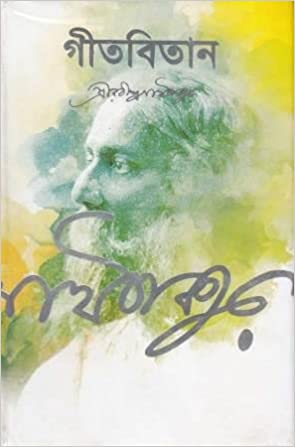
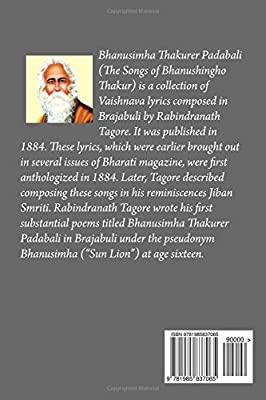
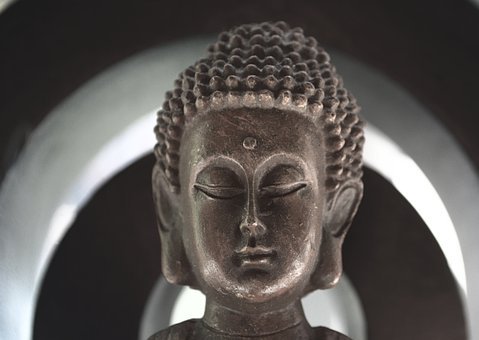




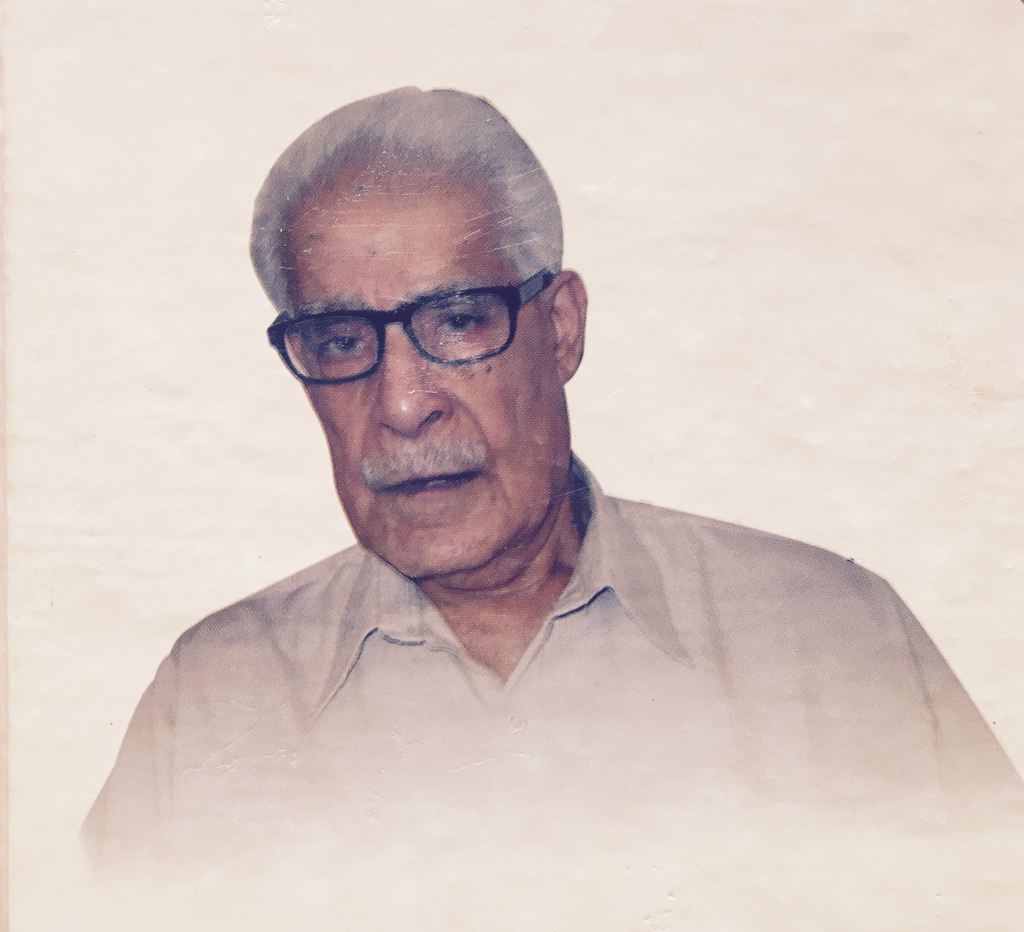



 Borderless