Categories
Musings of a Copywriter

Trees from My Childhood

By Devraj Singh Kalsi

Returning from school, dumping my school bag on the sofa, and rushing out to climb the litchi tree in the garden without changing out of my school uniform, was an everyday affair during the summer. The scenes flash in a carousel of slides before my eyes whenever I purchase a bunch of litchis from local fruit vendors. I cannot resist regaling them with lively tales of my adventures and expeditions during those fruit-bearing seasons that remain refreshing and fresh even after decades. 

While holding and admiring the colour and texture of litchis, I am prone to draw comparisons, celebrating the genetic superiority of the litchi tree from my past. Succulent nostalgia is inevitable as the litchis in my patch were rich in pulp, bereft of white worms creeping out during the peel-off process. 

Paying for the leaves and the litchis makes me lose my cool. The fruit vendors contend they do not sell litchis without leaves as their profit margin goes south. The delicate fruit has a low shelf life, which makes it worse for them. Keeping quiet, I pull off one litchi from the dangling bunch and peel it off in a single roll to show my expertise.  

I remember the long bamboo stick I used to twist the neck of a thick bunch to pull it in my direction, and the litchis fell on the white plastic sheet spread wide on the ground. I collected them all in a plastic tumbler and took them inside, inviting my parents to join me in the litchi feast. We sat on the red cemented floor and started peeling in silence. Although I never counted how many kilos I consumed, I am sure I gobbled up almost half the quantity within an hour. My parents never stopped me from having as much as I liked. Litchi was the first fruit that established my true love for fruits. I boasted in front of friends regarding my litchi consumption capacity. Some of them believed it, and some said it was untrue. Those who came over were surprised I was enjoying the bounty while they could only imagine such a royal privilege. 

People slot litchi based on region. For me, the litchi of my ancestral house in Bengal was the best variant though I never tried to find its origin or roots so long as it stood there. All that mattered was the bountiful harvest every year, and we distributed it in the neighbourhood. The leaves often crossed borders, and the branches spread out in several directions. The neighbours were kind enough to tolerate the intrusion and the extra chore of cleaning the fallen leaves as they loved getting bagfuls of litchis from us every season. They never complained, and we never objected if they plucked litchis from the branches spread out in their area across the boundary wall. The fruit cemented friendly ties as visitors and guests were gifted baskets full of litchis. We never sold the litchi fruit but distributed it as tokens of friendship. 

Making sacrifices for education is quite common. In my case, the litchi tree made the ultimate sacrifice. Axed to construct a study room for me. Today, when I have to buy litchis, I feel the curse of the litchi tree has befallen me. A study room built on the grave of a litchi tree is how it plays out in my mind. The episode haunts me. The insensitive axe that killed it now frightens me like the rising prices of the litchi fruit, reminding me of the best things I enjoyed for free. 

Another tree that played a stellar role in my early years was the mango tree planted on the day I was born. My father was in the process of planting the sapling when the news of my arrival reached him. It was nurtured well, like me, as if we were twins. He ensured the tree grew up well in the environment and the roots went deep, just as he wanted the cultural roots and the roots of decent upbringing to grow deeper in me. 

While mine was a doubtful case, the tree seemed happy in its place and grew up strong and tall very fast. During my childhood years, I sat beneath the cool shade and enjoyed the breeze. It started bearing fruit early, and my parents praised its qualities more than mine. Before the fruit-bearing season, I drew water from the hand pump and watered it. But I was told I should water it throughout the year. A good deed should not be limited to a selfish motive. To enjoy good fruit, I must nurture it around the year. Yes, the lesson was profound. The mango tree enabled me to catch it early in life. Whatever you do, work to achieve the goal with consistent efforts. 

The pressure to be result-driven was on me. It also generated a streak of jealousy. I did want to taste the home-grown mangoes and preferred the ones from the bazaar. When asked why I avoided the mango tree, I could not explain anything. But I began to accept its fruit with expressions that still did not indicate full approval. My critical views on the taste factor were forthcoming now and then. The mango tree perhaps heard the complaints and decided to improve its quality. With each passing year, the output became richer and tastier. I had nothing to complain about but render compliments. Soon bitterness made exit and I started plucking mangoes, storing them in boxes covered with hay to ensure quick ripening. 

The process of sharing it with neighbours gathered speed, just like in the case of the litchi tree. People began to compliment the taste. It was a matter of pride for my father who planted it. When asked, he did not specify the low-profile name of the variant. It was not the usual type available in the market like Himsagar or Langda, but it came with a rich taste and juicy pulp from some deeper pockets of a remote northern India town. 

While my grades left the scope for complaints and improvement in Science and Maths, the mango tree was the clear winner. I promised to beat the mango tree in performance without knowing the area of competition. Repeated failures came my way. I was disillusioned. But one truth stood out. My love of fruits was strong, and the mango tree drew me closer to nature.  

I started spending more time sitting and wondering about its journey into the future. The mango tree gave me the fruit I enjoyed aside from being the architect of my creative world. It gave me the idea of seed and its importance in writing. The seed of imagination grew. I began to learn valuable lessons outside the classroom. I began to search for the seed, to nurture it and develop it into a proper shape. My love for my writing got its first seed from the mango tree. I wrote my maiden short piece, a creative essay fashioned along those lines. I was inspired to add pulp and flesh out the idea well. The skin of the city as a character portrayed. Besides, adding a layer was also borrowed from the mango tree. The fruit imparted pleasure to the taste buds. I wanted to create something to deliver immense joy to those reading my creations and renditions.   

The mango tree and I found some common ground to compete. We were creating something beautiful for the taste buds and hoping consumers would relish the product — both the fruit of imagination and the mango fruit. Doing well in their ways. My writings drew praise from teachers and friends. The circle began to widen. I hoped my writing would become tasty like the mango relished by so many people worldwide.

While it was ambitious to find a large following of readers, I had found a purpose and direction to follow. I wanted my words to taste good as the mangoes in my garden. While the mango tree found early success, it has been a long, lonely struggle to find acceptance for my words – with natural sweetness added to the creative output. The lesson from the mango tree is to be rich like its fruit and have the same qualities in the writing output. Hopefully, one day my words will come closer to the sweet, rich, juicy taste of the mangoes that grew in my backyard.  

Devraj Singh Kalsi works as a senior copywriter in Kolkata. His short stories and essays have been published in Deccan Herald, Tehelka, Kitaab, Earthen Lamp Journal, Assam Tribune, and The Statesman. Pal Motors is his first novel.  


PLEASE NOTE: ARTICLES CAN ONLY BE REPRODUCED IN OTHER SITES WITH DUE ACKNOWLEDGEMENT TO BORDERLESS JOURNAL

Click here to access the Borderless anthology, Monalisa No Longer Smiles

Click here to access Monalisa No Longer Smiles on Kindle Amazon International

Categories
Notes from Japan

Superhero Sunday in Osaka

By Suzanne Kamata

Osaka Comic Convention. Courtesy: Suzanne Kamata

When my twenty-three-year-old daughter Lilia, who is deaf, sent me a text saying that she wanted to attend the Osaka Comic Convention, I messaged back “Go ahead!” I figured she would want to go with her friends, fellow manga and anime and Marvel movie enthusiasts. I am more of a literary-novel-type person, unfamiliar with the DC universe. My idea of a good time is reading a book of poetry with a cat on my lap. However, a week or so later, she repeated her desire, along with a GIF of a crying cat, fountains of tears gushing from its eyes. This was followed by three attempted video phone calls while I was at work.

“Do you want me to go with you?” I texted.

“Yes,” she replied.

Well, I could do this for her. On our mother-daughter trip to Paris several years back, she had put up with my dragging her (okay, pushing; she is a wheelchair user) to the Orsay Museum, even though she would have rather gone to the Concierge to look at a lock of Marie Antoinette’s hair. She had made concessions for me, so I could make some for her. Besides, I had never been to a comic convention before. It might be fun. At the very least, I could write about it.

I put her in charge of buying the tickets from the Japanese website. She sent me a screen shot: 25,000 per ticket. What? “That’s really expensive,” I texted her. “I’ll pay for it,” she texted back.

I later found out that admission was only 3,610 yen. The extravagant fees were for a photo opportunity with one of the celebrities who would be headlining the event. One of them played the role of Lilia’s favourite character in her favourite TV series. She had watched all ten episodes of all thirteen seasons, and regularly posted related fan art on her Instagram feed. She had purchased the chance to be in close proximity to the actor.

Sure, it was expensive, but research has shown that experiences are often ultimately more satisfying than things. I know that to be true myself. In Paris, we had a never-to-be-forgotten dinner at the top of the Eiffel Tower. When we went to Hawaii, on our last trip together pre-pandemic, we had gone on an open-door helicopter ride. For Lilia, having her photo taken with the celebrity would probably be just as thrilling. She had also bought a ticket for me.

I didn’t know much about the celebrity. In fact, I knew nothing. I had glimpsed him onscreen, occasionally, when Lilia was bingeing episodes of the show on our widescreen TV. I looked him up on Wikipedia. He had an impressive background. He’d started out in politics, had probably met President Obama, and then transitioned into entertainment. He had kids, whom he was concerned about feeding well. His wife was a university professor, like me, and he’d published a book of poetry, which I immediately ordered.

I started thinking about how I could make the most of this opportunity. As the author of several novels published by small presses, I was always looking for ways to promote my books. I knew that a celebrity endorsement – or even having a famous person be photographed while holding one’s novel – could bring attention to a book. Maybe I could get the celebrity to hold my book during the photo-op, and then I could post it on Instagram.

But then I went to the website for the Comic Con. I came across a notice that one of the celebrities who had been scheduled to appear in Tokyo in 2022, would not be coming after all. The message read, “Due to a last-minute personal issue,” the celebrity “is unable to travel and had to postpone his appearance at this year’s Tokyo Comic Con. He was looking forward to coming back to Japan and seeing everyone. He is deeply sorry and looks forward to coming back to Japan next year.” But the actor was not attending this year either. He had been run over by a snow plow a few months before and was still in recovery. (This was not mentioned on the website.)

Elsewhere on the website, I came across a list of exhibitors, food vendors, celebrity guests (seven men, one woman), and rules regarding the autograph and photo sessions. So many rules! We would not be allowed to hug the celebrities or touch them at all. We would not be allowed to take selfies or other photos with our own smartphones, or bring props (like a book?), or wear masks, or give gifts to the celebrities. Okay, so maybe I wouldn’t be able to ask the TV star to hold my book.

Since the Comic Convention started relatively early, Lilia and I stayed overnight at a nice hotel in Osaka. The next morning, I put on make-up and a pretty dress. I helped Lilia with her hair. We went down to the dining room for a gorgeous buffet breakfast – made-to-order omelettes, tiny French pastries, a big bowl of fresh lychee fruits, and other delights. Although I had splurged on accommodations, I thought that we would take public transportation to the convention site to save money. But that morning, on the third day of the event, the day of our scheduled photo op, rain poured down. We had forgotten to bring waterproof ponchos and umbrellas. I decided we’d go by taxi.

We hopped into a cab at the hotel. The driver was surprised when I mentioned the destination. “We’ll have to go by highway,” he said. That would mean toll fees. But at least we would get there on time, and we would be relatively dry.

The venue, Intex Osaka, was over a bridge on a small island with lots of boxy warehouses. At first, I was amazed by the lack of cars. And people. Were we even in the right place? I didn’t have enough cash on me for a taxi ride back to Osaka Station, and this driver didn’t appear to take credit cards. At last, we reached the huge convention center.

“This is it!” the driver said. Still, no people. He continued to drive around the building, rain spattering his windshield, until, to my relief, we came across some men in uniform waving orange batons, and then to the front, where a long stream of young people holding umbrellas flowed toward the entrance.

Once inside, Lilia flashed our tickets. After a cursory bag check, red paper Comic Con bracelets were fastened to our wrists. I grabbed a map, and tried to get my bearings, but Lilia whipped out her tablet, wrote something on it in Japanese, and showed it to one of the many attendants, a young man wearing a white surgical mask. She’d asked, “Where do we go for the celebrity photos?”

“I’ll show you,” the attendant said. “Follow me.” We scurried past cosplayers dressed up like Spiderman and the Joker and one woman dressed in green carrying a huge candy cane. Some people, not in costume were slurping noodles at a table near a food booth.

Cosplayers. Courtesy: Suzanne Kamata

The attendant indicated an area at the back of the building. We still had a couple of hours before our photo session. “So, we just come here at one fifteen?” I asked. We had an appointment, after all.

“You should get here early,” he said. “At least an hour before.”

I nodded. “Now, where is the Celebrity Stage?”

According to the program, another actor, famous to this crowd, at least, for his role in a movie based on an American comic book, would be participating in a Q and A session onstage in another twenty minutes. I figured we had plenty of time to find a good spot, but when we entered the enormous hall, I saw that all of the seats were filled. We were late.

“This way,” another attendant said, lifting the chain to the wheelchair-accessible area, just to the left of the stage.

We had a good view, but I couldn’t help thinking that at such an event in my native country, the United States, there would probably be a sign language interpreter. In Japan, there was almost never one, unless it was requested in advance. I did my best to interpret for my daughter.

In the program, the celebrity was pictured as bald and sleek. With his dark glasses, he appeared to be the epitome of cool. The man who ambled onto the stage, however, looked a bit scruffy, as off-duty actors often do. He had a beard, glasses, and a leather newsboy cap over his frizzy grey hair. One of his teeth was missing. He greeted the crowd in Japanese and was met with applause.

The emcee tried to engage him in conversation, but he was hard to pin down. He wandered around the stage, joking around. When asked a fan’s earnest question, “What special thing did you have to do to prepare for your role in the film?” he replied, “Nothing.” Later, he was asked if he would appear in another superhero movie. He rubbed his fingers together to indicate it would depend on how much money he was offered, and then, to demonstrate how little most actors actually earn, he took out a one-thousand-yen bill and ripped a tiny corner off. I imagined the horror of all of the frugal, hard-working people in the audience who would never do such a thing. The emcee gently admonished him for tearing money.

Finally, in true Japanese fashion, the emcee asked him to deliver a “special message” to his fans. The celebrity avoided responding to the request, at first, hopping off the stage, and peering into the camera, pretending to check his teeth. Again, “A message for your fans, please?” He got back onstage and adjusted the interpreter’s mic, before, at last, delivering his “message,” one Japanese word: “Hai.”

In this country where everyone was always so orderly and polite, I couldn’t help but be a bit embarrassed by his behaviour. I mean, I wouldn’t have shown up to a writer’s festival or an academic conference without thinking about what I would say. Then again, maybe his performance – and he was performing – was better than him sitting calmly in the chair, giving straight answers. Maybe the unpredictability of this mad genius was entertaining. Maybe just seeing this man who had brought beloved characters to life onscreen, live and in-person, and to be able to pay homage to him, was enough for his fans.

At about 12:10, after we had checked out the exhibitors’ tables and a display of manga posters, I suggested that we get in line for the photo session. Lilia eagerly rolled herself back to the spot we’d been shown to upon arrival. This time, we were early. Not only that, we were first in line. As we waited, Lilia composed a message to the celebrity on her smartphone. I figured that since she was deaf, the convention organisers would allow her to use her phone as a communication device.

A young woman in an orange kimono filed in behind us. More and more people followed. There were other cordoned-off rows for the other celebrities who would be signing autographs and posing for photos, including a Norwegian actor who was known for his role as a cannibal.

When we got closer to the appointment time, an attendant led us to another room, cordoned off like the immigration area of an international airport. Because my daughter uses a wheelchair, we got to take a shortcut. We were still at the head of the line. We were told to put all of our possessions into baskets – again, like the security line at the airport.

“My daughter is deaf,” I explained. “Is it okay if she hangs on to her phone? She just wants to show a few words to the celebrity.”

The attendant shook his head. “Talking to the celebrity is NG.” No good. Prohibited.

Regretfully, I explained what he’d said to my daughter. Lilia, who had also read all the rules on the website, was nonplussed. She put her phone away without complaint.

We stood there, waiting. Although I had the addict’s urge to check my email and scroll through social media, I left my phone in my bag. But I did reach for a notebook and pen.

“What are you doing?” my daughter asked.

“I’m just going to make a few notes,” I told her. “I might write an essay about this.”

“No, you can’t write an essay.” She made an “X” with her arms. No selfies, no touching the celebrity, no talking to the celebrity, and probably no writing about the celebrity.

“I think it’s okay to write an essay,” I said. I scribbled a few words then put the notebook and pen back into my bag.

I asked the attendant where the nearest subway or train station was, already thinking about how we would get home. My daughter asked me what we were talking about and then became irritated. I understood that she wanted me to focus on the celebrity, to think only about him, and what would happen when he arrived. I tried.

More and more people, mostly Japanese women, lined up behind us. I began to realise why the organisers didn’t allow conversation. If the celebrity had to engage in small talk with a hundred or more people, he would become exhausted. As it was, he’d have to smile non-stop for an hour or so. His cheeks would ache. But he would probably make a lot of money from doing this. I wondered how much of a cut he would actually get from the photo-op fees. I thought about all the times I had sat at a table in a bookstore or at a book festival, hoping to sell my novels, and no one had come. Yes, I envied the celebrity.

We waited and waited. The celebrity was late to the photo op. He was probably still signing autographs. Finally, we were led, just a few of us, including the young woman in the orange kimono, into a tented area with a backdrop. A photographer and team stood at the ready. My daughter began to tremble. She indicated that her heart was pounding: doki doki. I thought she was going to hyperventilate. We waited some more.

I wondered if this guy would be scruffy and irreverent like the actor onstage. I hoped not, for my daughter’s sake. We had been planning to have our photo taken together, the three of us, but at the last minute, Lilia changed her mind. She wanted to be in the photo alone with the celebrity. Fine with me.

“He’s coming soon,” someone said. “Please be patient.”

And then…at last…he entered the tent. He was dressed nicely in a blue collared shirt and black pants, a bit of stubble peppering his handsome, now familiar face, his hair neatly groomed.

Lilia’s hands flew to her flaming cheeks. She let out a squeal. The celebrity, and everyone else, were amused by her extreme excitement. He smiled at her as she pulled up next to him in her wheelchair. A piece of tape served as a divider: fan on one side, celebrity on the other. He stood there towering over her, with his aura of fame.

And then, Lilia’s favourite actor, the man who brought her most beloved fictional character to life, crouched down so that their heads were at the same level. He put his arm firmly around her shoulders. The woman behind me, no doubt as aware of the “no touching” rule as I was, gasped. The photographer clicked the shutter, and just like that, it was over. Lilia wheeled out of the way.

Next was my turn. I stepped up to the screen. The celebrity put his arm around me, and I smiled for the camera. “Thank you,” I said in a low voice and exited the tent.

By the time we gathered our belongings, the photos were already printed and ready to be picked up. In the first one, Lilia and the celebrity grinned widely. She held both thumbs up. His body leaned toward hers. They both looked cute. In the second photo, my hands hung down, my posture was stiff, the celebrity’s smile was a tad dimmer, and…my eyes were closed.

But it was okay. The celebrity would probably never see this unflattering, awkward version of me, or the hundreds of other photos taken at this and other Comic Cons. And at least I got an essay out of it. For my daughter, though, this has been the thrill of a lifetime — expensive, yes, but more precious than gold!

A cosplayer holding Suzanne Kamata’s The Baseball Widow. Courtesy: Suzanne Kamata

Suzanne Kamata was born and raised in Grand Haven, Michigan. She now lives in Japan with her husband and two children. Her short stories, essays, articles and book reviews have appeared in over 100 publications. Her work has been nominated for the Pushcart Prize five times, and received a Special Mention in 2006. She is also a two-time winner of the All Nippon Airways/Wingspan Fiction Contest, winner of the Paris Book Festival, and winner of a SCBWI Magazine Merit Award.

PLEASE NOTE: ARTICLES CAN ONLY BE REPRODUCED IN OTHER SITES WITH DUE ACKNOWLEDGEMENT TO BORDERLESS JOURNAL

Click here to access the Borderless anthology, Monalisa No Longer Smiles

Click here to access Monalisa No Longer Smiles on Kindle Amazon International

Categories
Poetry

The Raiders

By Rhys Hughes

Courtesy: Creative Commons
The raiders reach the crest of the dune
and rest their horses for a quarter hour
while they scowl down upon the town,
the clustered huts and a wooden tower,
dimly illumined by the crescent moon.

Their hooves will clatter like a shower
of barbarous arrows onto the tin crown
of the toy king, each rider keen to prune
with a cruel hook every troubled frown,
a demonstration of their ruthless power.

In both wine or music a man may drown,
the war god clearly demands some tune
to shake out the nectar from the flower,
and for all the petals that will be strewn
his laughter is that of the maddest clown.

Do not despair, give no thought to fears,
the isolated peaks must eternally gleam,
and when all the thunder is a faded hush
nothing shall appear as it now may seem,
and the whittling worlds require no years.

The stream of themes that flood my dream
wash clean the screams in a headlong rush
and I watch for eyes when the mist clears
that blink eyelids weighty enough to crush
every ironic invader with his iron scheme.

And now stony heads dent beds of plush,
tears dilute rum to the strength of beers,
half-defeated and lost they remain a team
and that is true despite those burning ears
that blush as cheeks in youth’s first flush.

Rhys Hughes has lived in many countries. He graduated as an engineer but currently works as a tutor of mathematics. Since his first book was published in 1995 he has had fifty other books published and his work has been translated into ten languages.

.

PLEASE NOTE: ARTICLES CAN ONLY BE REPRODUCED IN OTHER SITES WITH DUE ACKNOWLEDGEMENT TO BORDERLESS JOURNAL

.

Click here to access the Borderless anthology, Monalisa No Longer Smiles

Click here to access Monalisa No Longer Smiles on Kindle Amazon International

Categories
Stories

The Trial of Veg Biryani

By Anagha Narasimha

A cloud of dust erupted as the grand hall with chandeliers and decorated wall paintings was opened for the first time in a decade. The Council of Biryanis last gathered when they uncovered the advent of Biryani Ice-Cream and passed a unanimous resolution against it. Alas, if only the current controversy were as simple as that one! Biryanis have reigned over the entire region of India for the past one and a half centuries by adapting to the various cultures and traditions in this vast country. As the cliché goes, they have exhibited unity in diversity in the way they have stood the onslaught of noodles, momos, sushis, pizzas, burgers, etc. Yet, it is only now, in the era of social media, that their unity is truly being tested. Finally, they are faced with a bunch of conflicting views that have forced them to resolve it amicably before it takes the form of a full-fledged war.

The reason for the conflict was a simple tweet and the comments that ensued. One of the stand-up comedians, letting go of their fear of being jailed, took a dig at vegetable biryani. Their post read: The world now has 8 billion people and 0 veg (or vegetarian) biryanis”. Nowadays, a tweet is mightier than a tabloid front cover, and that stand-up comedian learnt it the hard way. Meat lovers cheered, vegetarians/vegans booed, and some even claimed their religious sentiments were hurt (stand-up comics keep finding new ways to get behind bars!). Out of nowhere, self-designated linguistic experts showed up in the comments section to provide gyaan[1] on the etymology of the word “Biryani”. There was no dearth of prime-time news hour debates and they all debated the existence of Veg Biryani as that’s what the Nation wanted to know. A combined effect of all these pushed Biryanis to an existential crisis, and they gathered in the grand hall to settle it once and for all by putting the Veg Biryani through trial.  

Mutton Biryani, the proud recipient of the “Most Popular Biryani Award”, sat at the centre of the table, displaying its aristocratic demeanour. Next to it, Beef Biryani sat thinking about the bleak future that lay ahead of it. It held a firm footing in certain parts; Whereas, had no existence, or even shunned because of its existence in other parts. Chicken Biryani sat opposite the Mutton Biryani, eyeing to replace the Mutton Biryani from being the most popular Biryani. Next to it, Fish Biryani sat with a smirk on its face, whose dominance in the coastal region was unparalleled (probably the reason behind the smirk).

While they were growing tired of the awkward silence, our central character, Veg Biryani, who does not command the same loyalty as that of his contemporaries, but manages to be in the good books of all, made its entrance.

“Do not tell me we are here because of the tweet of a buffoon!” Veg Biryani’s frustration knew no bounds.

Mutton Biryani, was ready with a reply in a sonorous voice, “We are afraid that is indeed the case.”

To which, Fish Biryani added, “We have entered the era of social media trial,” which elicited laughter from everyone.

Mutton Biryani quickly brought everyone back to the issue with its question, “So tell us why we should consider you a Biryani?”

For every “Why?” out there, the most convenient answer would be “Why not?” Veg Biryani started with the same. A few minutes of silence ensued, which forced Veg Biryani to elaborate. “The essence of Biryani is in the process of making it in layers. As long as you stick to the process, what you add to it is of no consequence.”

Chicken Biryani intervened: “That’s just one of the ways of cooking Biryani. You have the popular Biryanis originating from Tamil Nadu that aren’t layered.”

Beef Biryani added: “The Bengaluru’s beloved Donne Biryani isn’t layered.”

“So, put them on trial.” Veg Biryani ejaculated.

Mutton Biryani responded: “We are aware of the intersectionality and how different attributes such as place of origin, the type of rice, the spices, the aroma, and various other markers of difference intersect and reflect large social structures of gastronomic preference; However, our current issue is to decide whether meat is an essential and necessary requirement of Biryani?”

Veg Biryani wasted no time replying, “Well, in that case, you should answer that in the negative.”

Chicken Biryani responded, “We would be glad to do that once you present your argument.”

Veg Biryani tried everything at its disposal to not get furious and said, “What arguments are you asking for? This is a classic case of petitio principii[2]– your premises presume the very conclusion that you ask me to demonstrate. You define what amounts to a Biryani. You exclude me from the said definition. Then you ask me to prove why I must be considered a Biryani. This is preposterous.”

Beef Biryani, who was a mute spectator, could not resist its growing frustration at the fact that it had to lose out on a holiday to listen to this and muttered, “At the end of the day we all rely on some preposition which can neither be proved nor be disproved. Why can’t you skip to the part where you actually help us in deciding the issue at hand?”

Veg Biryani sighed and started, what seemed to be a long elaborated speech, “Traditionally…”

Which was cut short by Fish Biryani’s jape, “Traditionally there was no such thing as Veg Biryani.”

Ignoring the intended joke, Veg Biryani continued, “Traditionally, Biryani is supposed to be cooked with the bottom layer containing marinated meat, or any substitute, and the next layer consisting of rice along with all the spices. Remember what it means to be a Biryani. We always stood up to the grand ideals of inclusivity. Biryani finds a place in every household and on all occasions. It can embellish a royal feast, at the same time, satisfy the appetite of a common working human, yearning for comfort food. It can feature in the scintillating menu of a five-star restaurant, and at the same time, be the crowd puller in a small low-key food joint on the corner of a street. It is perhaps the only dish that can be served as breakfast, lunch, and dinner. Demographers refer to it as Omnipresent. It’s preferred all over India – North, South, East, West, and across all castes and religions. Secular in its letter and spirit. I beg you not to limit it to one particular strand of society by snatching away their Veg Biryani from them. Stay true to our vision – ‘Ghar Ghar Biryani Har Ghar Biryani[3].’

“Moreover, seventy per cent of Indians become vegetarians on Mondays or Thursdays or Saturdays. Some on all three days. And then there is Navratri, Shravana, Karthika[4], etc. etc. Don’t they deserve their Biryani during these long arduous days of staying a vegetarian? Do you want to further their suffering by making them feel like they are eating Pulao[5]?

“Now they are coming up with plant-based meat Biryani. How would you classify them? We are living in the era of neo-liberalisation. If you want to be truly global and compete with Pizzas and Burgers, you got to have Veg Biryani just like they have Veg Pizzas and Burgers. Especially when the whole world is going bonkers over veganism…”

Mutton Biryani interjected saying, “But the majoritarian sentiments are against it.”

Veg Biryani continued, “Since when did we start acting as per the majority?”

Fish Biryani said, “Ah, I’m not sure. But, my bet would be, when we accepted democracy.”

Veg Biryani replied, “Oh come out of the fantasy. When has the majority ever taken the right decision? That’s the reason we have this counsel. That is the reason why we have gathered here today.”

Mutton Biryani interjected, “All right. We have had enough. Let’s take a time out and get back in fifteen minutes with a decision.” Mutton Biryani walked out lighting a cigarette.

Veg Biryani, although, made an elaborate argument for inclusivity, somewhere felt it wasn’t convincing. That’s usually the case with ethos. You don’t let lengthy arguments cluttered with jargon cloud your judgment. It is the guiding principle differentiating truth from justification, which is embedded in all of us, where logic or reason holds little or no relevance. Veg Biryani was no different and was aware that the way to win the trial was not through sophisticated arguments. It was shrewd enough to know the politics that led to the trial and decided to play the same game as others in the trial. Chicken Biryani’s ambition to replace Mutton Biryani as the Most Popular Biryani was a piece of common knowledge and all that Chicken Biryani had to do was to push the right buttons to convert that ambition into animosity.

Veg Biryani, through highly reliable sources, got hold of a video clipping where Mutton Biryani displayed its contempt for Chicken Biryani openly. Mutton Biryani was heard saying, “Chicken Biryani was invented out of an accident. They invented it when one fine day there were more guests and they ran out of Mutton. Now this bugger wants to replace me. Biryani is synonymous with Mutton Biryani, and Chicken Biryani exists only because everyone can’t afford Mutton Biryani.” Veg Biryani made sure that the said video clipping reached Chicken Biryani’s mobile and they could hear Mutton Biryani and Chicken Biryani fighting over it outside. Fish Biryani, who was scrolling through social media, and Beef Biryani, who was going through account statements, were surprised that Mutton Biryani and Chicken Biryani were fighting over something as trivial as the result of this trial. Only Veg Biryani knew better and the fight reassured that its status as a Biryani continued un-besmirched. It had made a pact with Chicken Biryani and knew that Mutton Biryani would accede to Chicken Biryani’s demand to avoid a civil war.

Both, Mutton Biryani and Chicken Biryani entered the hall holding each other’s hand, with a hideous grin carved onto their countenance. Although Mutton Biryani wielded authority, it had no option but to pronounce Chicken Biryani’s verdict.

“It’s now time to put this squabble, masquerading as a trial, to rest. Whatever may be the dissensions, the practical needs and the ramification of denouncing the Veg Biryani from our closely-knit community, outweighs the trivial speculation as to the essential attributes of a Biryani; Wherefore, I declare that Veg Biryani…. remains a Biryani.”

Chicken Biryani was proud, Veg Biryani was relieved, and Mutton Biryani was dejected. As they all started to walk out, Fish Biryani proposed to make the concluding remarks. “Well, what I would like to say, gathering all the humility at my disposal, without an iota of intention to hurt anyone’s sentiment, while remaining steadfast to the ideals of truth and justice, upholding the true essence of Biryani, is… Crap! I forgot what I wanted to say…” None even waited to hear what Fish Biryani had to say as they were already at the door.

[1] knowledge

[2] Begging the question

[3] Translates to ‘Every home should have Biryani’.

[4] Festivals where some turn vegetarian

[5] The primary difference between a pulao and biryani is the method of preparation. Biryani is normally more spiced than a pulao.

.

Anagha Narasimha C N, an advocate by profession, is also a poet and writer. His poems in Kannada and English are published in various online journals and he is actively involved in playwriting and theatre production. 

PLEASE NOTE: ARTICLES CAN ONLY BE REPRODUCED IN OTHER SITES WITH DUE ACKNOWLEDGEMENT TO BORDERLESS JOURNAL

Click here to access the Borderless anthology, Monalisa No Longer Smiles

Click here to access Monalisa No Longer Smiles on Kindle Amazon International

Categories
Poetry

Poetry by Michael Lee Johnson

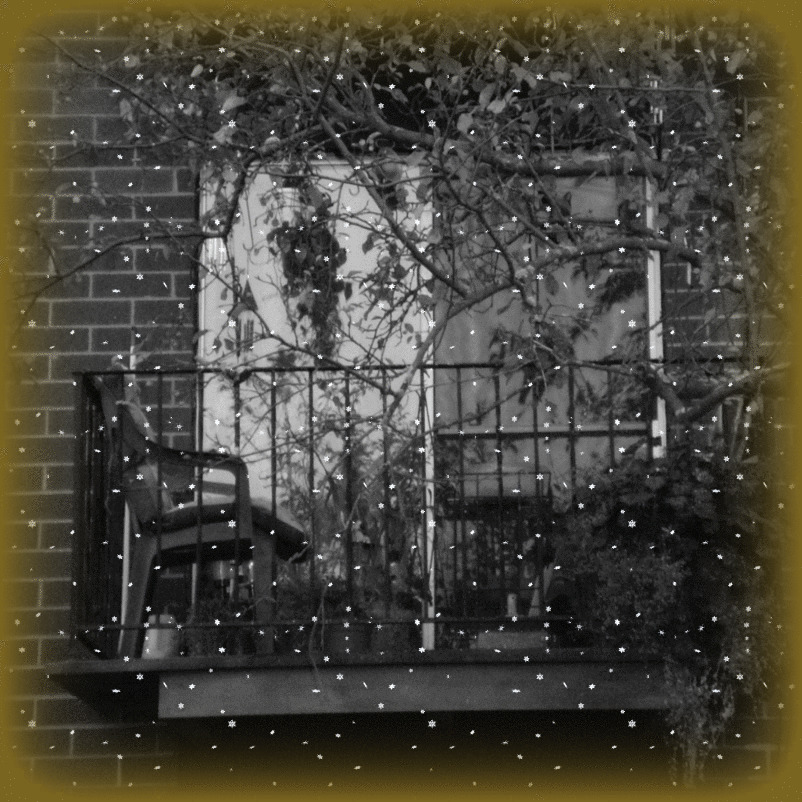
SUMMER IS DYING 
 
Outside, summer is dying into fall,
and blue daddy petunias sprout ears—
hear the beginning of night chills.
In their yellow window box,
they cuddle up and fear death together.
The balcony sliding door
is poorly insulated, and a cold draft
creeps into all the spare rooms. 
 
BOWL OF BLACK PETUNIAS 

If you must leave me, please
leave me for something special,
like a beautiful bowl of black petunias—
for when memories leak
and cracks appear
and old memories fade,
flowers rebuff bloom,
sidewalks fester weeds
and we both lie down
separately from each other 
for the very last time.
 
MEMORIES PAST
(Hillbilly Daddy)
 
I settle into my thoughts
zigzagging between tears
my fathers’ grave—
Tippecanoe River 
Indiana 1982.
Over now,
a hillbilly country
like the flow 
catfish memories 
raccoons in trees
coon dogs tracking
on the river bank,
the hunt.
Snapping turtles
in the boat
offline—
river flakes
to ice—
now covered
thick snow.

Michael Lee Johnson lived ten years in Canada during the Vietnam era. Today he is a poet in the greater Chicagoland area, IL.  He has 284 YouTube poetry videos. He is aa published poet in 44 countries, a song lyricist, has several published poetry books. He is editor-in-chief of 3 poetry anthologies, all available on Amazon, and has several poetry books and chapbooks. He has over 453 published poems. 

.

PLEASE NOTE: ARTICLES CAN ONLY BE REPRODUCED IN OTHER SITES WITH DUE ACKNOWLEDGEMENT TO BORDERLESS JOURNAL

Click here to access the Borderless anthology, Monalisa No Longer Smiles

Click here to access Monalisa No Longer Smiles on Kindle Amazon International

Categories
Poetry

Shadows

Poetry & translation from Korean by Ihlwha Choi

Courtesy: Creative Commons
Many shadows must surround a child for them to grow well.
They should have the shadow of their mother and father,
The shadows of their grandparents should be drawn like the sky's shadow,
The shadows of their aunts, uncles, and cousins,
The shadows of their elder and younger brothers,
All these shadows should be abundant like a harvest,
If there are shadows of their older sisters, older brothers,
It's like a cherry on top.

They should push, pull, turn them upside down,
Step on them, crumple them, and embrace them while playing.
They should fight, argue, dislike the shadows,
Then reconcile, shake hands again, and sit side by side to eat
While saying, "When did that happen?"
They should separate and come out,
And happily, grow alone, enduring solitude once again.

They must have the shadow of their mother and father,
But there are children without the shadow of their mother and father.
Some children lack their mother's shadow,
While others lack their father's shadow.
Without shadows, some children may experience fear.

Growing amidst various shadows, children seek another shadow.
Some seek the shadow of Einstein,
While others blend in with the shadow of Park Soo-geun.*
When essential shadows like the shadows of mother and father are absent,
Who should replace those shadows?
When I didn't have my father's shadow,
My grandfather's shadow stepped in and averted the crisis.
Even children without a grandfather's shadow
Could have their teacher as a substitute.
But there are children without even the shadow of their teacher.

Sometimes, it's difficult to find shadows no matter where you look.
In such cases, you can turn to books,
Because they are filled with shadows of love.
If you grow within those shadows, you will flourish.

*Park Soo-geun: Famous Korean painter

Ihlwha Choi is a South Korean poet. He has published multiple poetry collections, such as Until the Time When Our Love will Flourish, The Color of Time, His Song and The Last Rehearsal.

.

PLEASE NOTE: ARTICLES CAN ONLY BE REPRODUCED IN OTHER SITES WITH DUE ACKNOWLEDGEMENT TO BORDERLESS JOURNAL. 

Click here to access the Borderless anthology, Monalisa No Longer Smiles

Click here to access Monalisa No Longer Smiles on Kindle Amazon International

Categories
Review

Saudade for Sale?

Book Review by Rakhi Dalal

Title: The Wistful Wanderings of Perceval Pitthelm

Author: Rhys Hughes

Publisher: Telos Publishing

The cover image of this book, depicting kangaroo like feet fitted to a patch of land and carrying homes, hopping through what it seems like a desert is as incredible an image as the story that the book proceeds to tell. At first glance one wonders what kind of imaginative world the author has invented and given life to in these pages and where is this thing hopping to and why.

It doesn’t help that the subtitle line reads “The Absurdity of Existence and The Futility of Human Desire”. For as the book begins, we are flung into the realms of a fantastical world swathed up in saudade and encountering bizarre events. Incidents triggered by the bittersweet longings of human heart, which makes the absurdity seem plausible amidst the ludicrous.

Such is the allure of the words crafted by Rhys Hughes. Nimbly, he makes use of the elements of the fantastic, comic and absurd in a highly imaginative setting while focusing on the human condition brought about by an intense yearning for something unattainable or saudade. An English writer of speculative fiction, much like the narrator of this book is, Hughes employs inconceivable ingredients, making this book a fun riot in every sense. Having written nearly fifty books, more than nine hundred short stories and innumerable articles, his style assumes certain effortlessness, turning the reading experience of this book into a marvellous excursion.

The book begins with Perceval Pitthelm, the narrator, arriving in Portugal in the quest of finding a quiet place to live and write. He rents a most peculiar house which arouses his curiosity to know about its history. His search leads him to the former owner old Rogerio, a seller of saudade, who goes on to tell him the tale of the house, originally situated in the town of Kionga in Africa and transported along with the town to Portugal on big hopping legs coursing a journey through the deserts. And thus begins the fantastical tale which not only captivates the narrator but also suffuses his heart with a passionate desire to taste saudade.

The events that succeed set in motion an adventure, taking us onto a journey through sea and desert, by boat employing huge hands, submarines battling giant squidmills and rafters sliding across desert. We witness cheek trees whose petals flush furiously and are accompanied by sweet and painful strains of Fado singing. We behold the play of a cheek tree guitar by giant Django hands and ripping open of Fado singer Cristina into a mist. We bump into a Don Quixote like Captain of the submarine followed by his own Pancho Sanza, on their mission to free the human existence from giant squidmills. We meet Mustapha, the inventor of hopping legs; a cast away on the desert who wishes to have a revenge on the world but instead finds love and goes onto find a quiet place to settle. Towards the end, our narrator, now free from saudade, is left with a bottle of song and the tale he is left with to recount.  

The roller coaster of the ride that this book turns out to be is every bit delightful. In a subtle way, it does lead to contemplation upon the absurdity of human struggle to achieve the impossible whilst all that is needed is a little love and peace.

The book wraps up with a review of the works of Perceval Pitthelm by a reviewer who turns in a ruthless critique, a reviewer who is a large orange gargoyle with three eyes (invented of course by old Mustapha) and who has to write reviews for a living. This critique appears to be echoing Hughes’ own oeuvre of work and a quip on reviewers who put an eternal curse on the readers! A curse, if I may add, from which there is no respite for the readers who stand on the shore of his writing, intoxicated by the desire to delve into the unbelievable world conjured by him. 

Rakhi Dalal is an educator by profession. When not working, she can usually be found reading books or writing about reading them. She writes at https://rakhidalal.blogspot.com/ .

.

PLEASE NOTE: ARTICLES CAN ONLY BE REPRODUCED IN OTHER SITES WITH DUE ACKNOWLEDGEMENT TO BORDERLESS JOURNAL

Click here to access the Borderless anthology, Monalisa No Longer Smiles

Click here to access Monalisa No Longer Smiles on Kindle Amazon International

Categories
Poetry

Wafting in the Breeze

By Ananya Sarkar

A Question I Caught in the Air

What happens when an ordinary person falls in love
with an extraordinary person?
No, wait!
What happens when an extraordinary person falls in love
with an ordinary person?
Does the absurdity of the situation become reason enough
to make it incompletely complete?
Or completely incomplete?

Ananya Sarkar is a creative writer from Kolkata. Her work has been published in various ezines. She loves to go on long walks, cloud gaze and ponder upon miracles. She can be found on Instagram @just_1ananya and reached at ananya7891@gmail.com

.

PLEASE NOTE: ARTICLES CAN ONLY BE REPRODUCED IN OTHER SITES WITH DUE ACKNOWLEDGEMENT TO BORDERLESS JOURNAL

Click here to access the Borderless anthology, Monalisa No Longer Smiles

Click here to access Monalisa No Longer Smiles on Kindle Amazon International
Categories
Stories

Am I Enough?

By Sarpreet Kaur

The Call

“Hello”

“Hello, beta[1]. How are you?” a gentle voice of my mother came from the other end.

I started crying.

“Why are you crying? Everything alright na?”

“Maa, you know. Nothing is right. I can’t live like this anymore.” I answered through muffled sobs.

“Don’t you dare to say that word again. If your father hears, you know what will happen. Give it time. It is going to be alright.” she answered with an air of finality.

“How is Ajay?” she asked starting the ‘so-called normal conversation’.

“He is well.” I played along.

“Had your food?” she asked genuinely concerned.

“Yes.”

“How’s the weather nowadays?” she was out of things to talk about now.

“It’s better.” I replied

She concluded the call.

“Never even think about it and take care there is a viral fever around.”

Diary

Hey Diary. My name is Rumi. I am 29 years old. I work with a software company. I am married to a software engineer for the last three years. And I am sad. I have been sad for so long that I think I was born this way but I know that can’t be. I used to be happy. Every weekend I get a call from my mother. It is strictly weekends only as she doesn’t want to be an intrusion in her daughter’s happy married life. After every phone call, my heart shatters into million pieces and the shackles around my wrists tighten a little more. I thought my mother would be the one to have the key to these locks but ironically she pleaded with me to hide the shackles and even forced me to promise never to talk about it.

I know I am too old to be writing in a diary but I don’t have anyone to talk to. No one listens to me anymore. And a few people who listen, they judge me. They judge me at that very instant when I say ‘the word’. The same word that my mother asked me to never mention.

Divorce

I want to shout “I hate my life. I don’t want to live with him anymore. I want a divorce.”

But the voice never comes out. It trails off somewhere. Somewhere dark. Somewhere deep. Somewhere within me.

The Call

“Don’t take it to heart. Stop finding meaning in everything. You have a job. You have a house. You have a husband,” my mother continued the next weekend when she heard a weak hello from my side.

Then came the questions

“Does Ajay ever hit you?”

“No.”

“Does he stops you from working?”

“No.”

“Does he ask you to do something that you don’t want to?”

“No.”

“Then Rumi I don’t understand what is the problem?”

Silence from my side. She reiterated

“Tell me. What do you want?”

“Respect Maa. I want respect.” I answered surprising even myself.

“Huh.” She coughed a sly laughter.

And the line went dead…..

I guess my father must have come in the room.

Diary

“Is this the only way to live?” Tell me diary Is it? I will tell you what happened at lunch today.

Ajay came for lunch.

“Please set the table.” he said while washing his hands.

“The table is already set. I am just coming.” I replied from the kitchen.

When I came back, I saw that he had already started eating. I just stood there with empty plate in my hand. He was too busy on his phone to notice me.

Today is Friday and my mother is going to call again in a short while. The time of call is always between lunch and evening tea. My father is sleeping then you see. And she is going to ask, “Had good lunch? How is he?”

I want to tell her the truth but how will I? How will I tell her that he started eating without waiting for me? How can I explain it to her that he should have waited for me? How can I explain this to my mother? That mother who thinks that first the husband should eat. That mother who takes pride in waiting for her husband to finish the food before picking up her own plate. How can I explain to her when she thinks this is normal? How can I tell her that her normal is not my normal? I want to shout at her and ask her why was she so keen on giving me education? Education that put funny ideas like gender equality in my mind. That evil education that taught me that husband and wife should eat together. Why mother? Why? I also want to tell her about all other moments. All those moments that she thinks is normal and is not a big deal. But mother it is. It is a big deal when he forgets to introduce me to his colleagues. It is a big deal when he cancels movie plans without checking with me. It is a big deal when he is broodingly sitting on the bed by my side but when his friend calls he laughs, shares and smiles.

The Call

“You are still thinking about it and ruining your day. Why can’t you talk happily?” she was disappointed after listening to the same sad daughter voice.

“I am not happy. What part of it are you not able to understand?” I shouted and immediately realised it was impolite and mean. She doesn’t deserve this.

“I am sorry Maa. I really am.”

“It’s okay beta. Just talk to him once. Sometimes the most complex problems have the simplest solutions.”

“Yes Maa.”

Diary

I liked my mother’s advice. So I thought of giving it a go. I made tea. Gave one cup to him and took a sip from mine.

“How was your day?” I initiated

“It was good. How was your day?” he asked

“It was good.” I replied

A long silence.…….

Was it few second or few minutes. I can’t tell. But I can tell that it felt like a very, very, long time.

He made an effort this time —

“How is your new project coming along at work?”

“It’s going great. How are your new clients?”

“They are good.”

A long silence again………..

“We have to go to a wedding this weekend at your aunt’s place.” I informed

“Yes we have to.”

At last we picked our phones, took a sigh of relief and scrolled our evening away.

Diary today I realised something unusual. It is not only him. It’s me too. I also didn’t have anything to ask him. I tried to think. I tried to make a conversation. But my mind was blank. We don’t have anything in common nowadays. I wonder did he also rack his brains to find something to talk about? Was he also as tongue tied as I was?

The Call

“Beta divorcees are given no respect in society. You want respect na? Do you think divorcing will give you respect?” My mother replied in a hushed tone when I again committed the big mistake of saying the forbidden word.

“I know Maa.”

“Food done?”

“Yes Maa.”

“How’s health?”

“Good Maa.”

“Take care. Your father just came.”

“Bye maa.”

Diary

We went for dinner with our friends tonight. It was a good dinner — a fancy restaurant, soft lighting and calm ambience. We dressed up putting in all the efforts we could. We laughed with our friends reminiscing old times, had a good feast but I still came back with a heavy heart. Diary is there some problem with me? Is my mother right? Do I expect too much? I wanted him to complement me on my dress. I wanted him to hold my hand when we entered the restaurant. I wanted him to steal a few glances of my sweet neckline. I wanted a bigger connection diary.

Should I be happy and a little contented that we at least went for dinner?

Is it me?

Will it never be enough for me?

Do I want too much?

The Call

“Maa Is everything alright? Is papa fine?” It was unusual of her to call during a weekday and that too after 8 pm.

“Yes. Yes all good. My sister, your maasi, came today and she gave a wonderful solution to your problem.”

“What Maa?” I asked and instantly regretted.

“Have a kid and everything will be alright beta. Just have a kid. The relationship will improve and you will have a happy family then. Being a mother is the most rewarding thing. You will get all the happiness and respect that you seek from your kid then.”

“Like you are getting from me Maa.” I snapped and then realised that Ajay was looking directly at me. I was so startled when I saw my mother’s call at this hour that I forgot to get up and go out in the balcony like I usually do. I guess, he must have heard what she just said. My phone’s volume is always on blast and clearly audible to the person sitting next to me.

“Shit!” I muttered.

“Okay Maa. Good night now.”

No Mother No Diary Just Us

He looked at me. I looked at him. For the first time I could see that he wanted to talk. For the first time I was eager to talk to him. And we did. We talked. He talked keeping his ego aside and I talked keeping my self-respect at bay.

“Let’s get divorce.” he blurted out.

After a brief pause, he continued —

“I don’t want to bring a new life in this world. It’s a sad world. We made it sad. I. Sorry. I made you sad. You deserve happiness. I am not a bad person.”

He produced these bits and pieces. His eyes cast down, he played nervously with his ring finger.

“I am sorry. Really. You deserve all the happiness too. I am also not bad. We are…,”

I choked

“We are just different.” he completed.

That day he gave me the key to my shackles. Then he stretched his own arms in front of me and for the very first time in our whole married life I saw a big chain around his wrists holding on to an even bigger lock. Was I too blind till date to see his shackles? And then I felt something in my back pocket. It was the key to his lock. I smiled and handed it over.

Diary

Sometimes it just doesn’t work. There isn’t always a ‘Victim’ and a ‘Devil’ in a marriage. Sometimes it’s just a bad marriage. Sometimes it just doesn’t work. Today I give priority to happiness rather than some worldly opinions. If that makes me selfish then – Yes! I am selfish. I am selfishly happy. 

[1] Child

Sarpeet Kaur is a writer based out of Mayabunder, Andaman and Nicobar Islands. She has worked on many projects dealing with the islands. She likes to capture the colourful cultures of India, enigmatic human emotions and flawless nature in her words and lock them forever into bundles of pages.

PLEASE NOTE: ARTICLES CAN ONLY BE REPRODUCED IN OTHER SITES WITH DUE ACKNOWLEDGEMENT TO BORDERLESS JOURNAL. 

Click here to access the Borderless anthology, Monalisa No Longer Smiles

Click here to access Monalisa No Longer Smiles on Kindle Amazon International

Categories
Poetry

Naïve are the Phosphenes

By Saranyan BV

Naïve are the phosphenes

Asleep, when our eyes close,
It is not darkness as we imagine --
A night of timelessness and of starry wisdom unfolds,
In whose halcyon ambience,
Eyes link to ears to
Compose lilt-lyre music of intriguing feathers.
The mind is more alert than when we are awake.
The kind breeze throws up phantasmagorias.
The swank phosphenes,
Unlimited by and native to parameters of the iris’s womb,
Rove with infinite images,
Roving the planet and roving the universe,
Chariots of legitimacy, more beautiful than the colours of rain --
Naïve are the phosphenes, that we have seen, known and never embraced. 

Saranyan BV is poet and short-story writer, now based out of Bangalore. He came into the realm of literature by mistake, but he loves being there. His works have been published in many Indian and Asian journals. He loves the works of Raymond Carver.

.

PLEASE NOTE: ARTICLES CAN ONLY BE REPRODUCED IN OTHER SITES WITH DUE ACKNOWLEDGEMENT TO BORDERLESS JOURNAL

Click here to access the Borderless anthology, Monalisa No Longer Smiles

Click here to access Monalisa No Longer Smiles on Kindle Amazon International