Categories
Tagore Translations

Megh or Cloud by Rabindranath

Published in 1906, Megh (cloud) can be found in Tagore’s collection called Kheya (boat).

Adrift, without a beginning and an end, 
With an awning of black and white blend, 
        The sky is dressed whimsically.
We are all merely mounds,
Stacks of wafting clouds. 
    I think only of him and his whimsicality. 
We have no boundaries nor home,
We come and we are gone. 

Suns, planets, stars shine bright.
Though they are garlands of lights, 
        They remain tied to eternal tasks.
With permanence, they grace
Words illuminating a dark page. 
         We are merely like drafts—
 With myriad of colours filled, 
Re-written and erased at will. 

Sometimes, when we are free, 
We call out in a spree,
              Smiling without a reason.
Does our caprice create an illusion? 
The rain still falls without evasion. 
            The lightning is not a diversion. 
Only, my friend, we do not stay.
With the breeze, we drift in or float away. 

(This poem has been translated by Mitali Chakravarty with editorial support from Sohana Manzoor)

PLEASE NOTE: ARTICLES CAN ONLY BE REPRODUCED IN OTHER SITES WITH DUE ACKNOWLEDGEMENT TO BORDERLESS JOURNAL

Click here to access the Borderless anthology, Monalisa No Longer Smiles

Click here to access Monalisa No Longer Smiles on Kindle Amazon International
Categories
Poetry

Poetry by John Grey

FROM 2.A.M. TO YOU  

The night reads to me from its book of shadows.
Curtains rustle the song of the wind. From poplar
to grass shoots, the outside dabbles in the art of
the whistled weep, the passion of the scent.

What have I to be afraid of? Awake at 2.00 a.m.
and staring into blackness? That's when I'm at the
my most awake. So what if the moon pegs me for
a lunatic! I go crazy with scrutiny and reflection.

It's an indistinct country here and whatever retains
the most shape, rules. So the dresser is king.
The door is its queen. My arms, my hands, are the
curious princes. My wife sleeps on as the populace do.


LOOKING BACK

My memories are webs,
long after the spider has departed.
What I knew then,
I have a way of knowing now.

It’s woven loosely
so I get tangled now and then.
But the facts are there.
They float on the wind of my thinking.


HEREWITH, THE NIGHT

Routine entails shine, glitter, glimmer,
as stars glow with ancient flame
and the moon rises through cloud remnant,
a slow waltz with the earth’s turn
on a dark fire-specked dance floor.
 

CRYSTALS

When you examined the crystal 
in the antique shop, 
it turned your face in my direction.

That jewelry dish
selected various angles,
repositioned them,
joined these threads together,
aimed them delightfully at me.

I must have swallowed crystal
at some time in my life
because, at that same moment,
its manifold reflections
reassembled soul, heart, even mind,
in an odd vortex
that overwhelmed the lenses in my eyes.

Yes, when you and I first met, 
it was at the behest of allotropes. 
You remember things differently, 
more happenstance, 
less optical engineering.

John Grey is an Australian poet, US resident, recently published in Sheepshead Review, Stand, Poetry Salzburg Review and Hollins Critic. His latest books are Leaves On Pages, Memory Outside The Head and Guest Of Myself, available on Amazon. 

PLEASE NOTE: ARTICLES CAN ONLY BE REPRODUCED IN OTHER SITES WITH DUE ACKNOWLEDGEMENT TO BORDERLESS JOURNAL

Click here to access the Borderless anthology, Monalisa No Longer Smiles

Click here to access Monalisa No Longer Smiles on Kindle Amazon International

Categories
Poetry

Philosophical Fragments by Don Webb

Don Webb
Heraclitus wrote one long book on papyrus.
It is believed to be called On Nature.
The title page was destroyed, and much of the content during the burning of the library at Alexandria.
Recent efforts have restored some of the charred fragments.
For example, the famous couplet --
“War is the Father of All,
War is the King of All.”
Actually reads,
“War is the Father of All,
War is the King of All.
Just kidding!
War is Stupid.”

Don Webb teaches Special Education (High School English) by day and horror writing by night.  He has 25 published books, and around 100 published poems.  He likes cats, fireworks and Egyptian history.

PLEASE NOTE: ARTICLES CAN ONLY BE REPRODUCED IN OTHER SITES WITH DUE ACKNOWLEDGEMENT TO BORDERLESS JOURNAL. 

Click here to access the Borderless anthology, Monalisa No Longer Smiles

Click here to access Monalisa No Longer Smiles on Kindle Amazon International
Categories
Poets, Poetry & Rhys Hughes

Productivity

I am British and the British are a lazy race. This must be true because our own governments keep telling us it is. They have been saying the same thing for as long as I can recall. They never grow weary of loudly declaring it, despite the constant effort involved in berating us, thus contradicting the meaning of their message with the method of delivering it.

I think they mean that we should work harder for their benefit, so they can take the opportunity to be more lazy. Because, yes, they are just as indolent as the people they accuse of laziness, if not more so. If national characters really exist (I am not sure they do) then laziness is certainly part of ours. How can this be possible? We wandered the world invading and colonising and that requires drive and vigour, surely? Not necessarily. I suspect we did all that because it was an easier option. Less effort to take than make. But I wish we had been just a little lazier and not even bothered to take.

As the philosopher Emil Cioran pointed out, lazy people cause less trouble than busy ones. Almost all the artificial crises of history are the result of active, busy go-getters, whether they be warlords, emperors or irresponsible inventors. Another thinker, Paul Lafargue, published a book in 1883 called The Right to be Lazy which sets out comprehensive arguments as to how decreasing one’s own workload is the best way forward for the entire human race. This book ought to be read by everyone. It opens with an exquisite quote from Lessing, “Let us be lazy in everything except in being lazy.”

Laforgue suggests that the stated desire of socialist governments for ‘full employment’ is a mistake. More working hours means more servitude, misery and frustration. It might mean more pay too, but what is the use of pay when it is paid for in time? That is self-defeating. And the stated desire of conservative governments for ‘greater competition’ is also a mistake. Effective competition requires more work, and so we are back where we started, in a world where the only thing that radically different political systems agree on is that the innocent people they rule over should be toilers.

It is leisure time that is the fruit of progress, free space in which one can be creative, joyful or just peaceful. Automation is key to making the utopia happen, and when I was young we were promised a future of leisure in which computers would do all the hard thinking and robots all the heavy labour, and we could be released into freedom, visiting friends, taking siestas, writing poetry, composing music, or floating on our backs in the clouds thanks to silent anti-gravity motors and communing with birds and rainbows.

The promise was broken. Automation gave us more free time, but that free time was flooded with more work, at the urgings of the high lords of capitalism. And now the computers and robots write poems, compose music and create art, while we drudge and toil in ever worse conditions, with ever greater pressure on the hulls of our souls, as if we are organic submersibles sinking irreversibly into the deepest depths of the oceans of degradation. One day we must be crushed, a flattened populace, compressed to shadows on the seabed of our aspirations and dreams. The high lords will have triumphed.

Therefore, I regard the laziness of the British nation with affection. And yet I recently saw a map that has been produced from statistical data revealing that not all Britain is equally lazy. On the contrary, some regions are very productive indeed, over-productive in fact. I studied the map and saw that where I lived for many years was in one of the lazy zones. I heaved a sigh of relief. It is good to know that I did not fail to fit in with my environment back then. It reassures me, and we all need reassurance, even lazy people.

Map provided by Rhys Hughes

But my main reaction to viewing the map was to wonder how peculiar it must be to live right on the border that divides an over-productive zone from an under-productive one, especially with your left half in one zone and your right half in another. One of your legs and arms would be moving much faster than the other arm and leg, and presumably you would then rotate in a circle, as you paddled yourself around, which would mean all parts of you would take turns to be basted in both laziness and industriousness!

That was my first thought. But then I realised that I had been quite lazy in the details of my speculation. Actually, you would not rotate in a circle in that manner. You would rotate first one way, then back the other way, as different sides of your body came under the influence of the over-productive zone, and so you would move more like an alternating current than a windmill. Whether this would be an improvement or not, I do not know.

.

Rhys Hughes has lived in many countries. He graduated as an engineer but currently works as a tutor of mathematics. Since his first book was published in 1995 he has had fifty other books published and his work has been translated into ten languages.

.

PLEASE NOTE: ARTICLES CAN ONLY BE REPRODUCED IN OTHER SITES WITH DUE ACKNOWLEDGEMENT TO BORDERLESS JOURNAL

Click here to access the Borderless anthology, Monalisa No Longer Smiles

Click here to access Monalisa No Longer Smiles on Kindle Amazon International

Categories
Poetry

‘Poetry is a Recipe to Taste Life’

By Nivedita N

Poetry 

Poetry is a recipe to taste life
words, a ladle; silence, a bowl.

Blend what you hear, see, 
touch, feel and taste 
into a scrumptious paste
stir it with a ladle 
and pour into the bowl

Nivedita N is a poet from Hyderabad. She has been published in a few noted journals. Apart from poetry she enjoys cycling, cold coffee, and gallivanting around the gullies of Hyderabad in an auto rickshaw, her dream vehicle. She hopes to work as a postwoman someday.

PLEASE NOTE: ARTICLES CAN ONLY BE REPRODUCED IN OTHER SITES WITH DUE ACKNOWLEDGEMENT TO BORDERLESS JOURNAL

Click here to access the Borderless anthology, Monalisa No Longer Smiles

Click here to access Monalisa No Longer Smiles on Kindle Amazon International

Categories
Poetry

Veiled Defences

Poetry by Michael Burch

Courtesy: Creative Commons
VEILED

She has belief
without comprehension
and in her crutchwork shack
she is
much like us ...

tamping the bread
into edible forms,
regarding her children
at play
with something akin to relief ...				

ignoring the towers ablaze
in the distance
because they are not revelations
but things of glass,
easily shattered ...

and if you were to ask her,
she might say—
sometimes God visits his wrath
upon an impious nation
for its leaders’ sins,

and we might agree:
seeing her mutilations.

(Published by Modern War Poems)


DEFENCES

Beyond the silhouettes of trees
stark, naked and defenceless
there stand long rows of sentinels:
these pert white picket fences.

Now whom they guard and how they guard,
the good Lord only knows;
but savages would have to laugh
observing the tidy rows.

Michael R. Burch’s poems have been published by hundreds of literary journals, taught in high schools and colleges, translated into fourteen languages, incorporated into three plays and two operas, and set to music by seventeen composers.

PLEASE NOTE: ARTICLES CAN ONLY BE REPRODUCED IN OTHER SITES WITH DUE ACKNOWLEDGEMENT TO BORDERLESS JOURNAL

Click here to access the Borderless anthology, Monalisa No Longer Smiles

Click here to access Monalisa No Longer Smiles on Kindle Amazon International

Categories
Review

A Tribute to the Human Spirit

Book Review by Somdatta Mandal

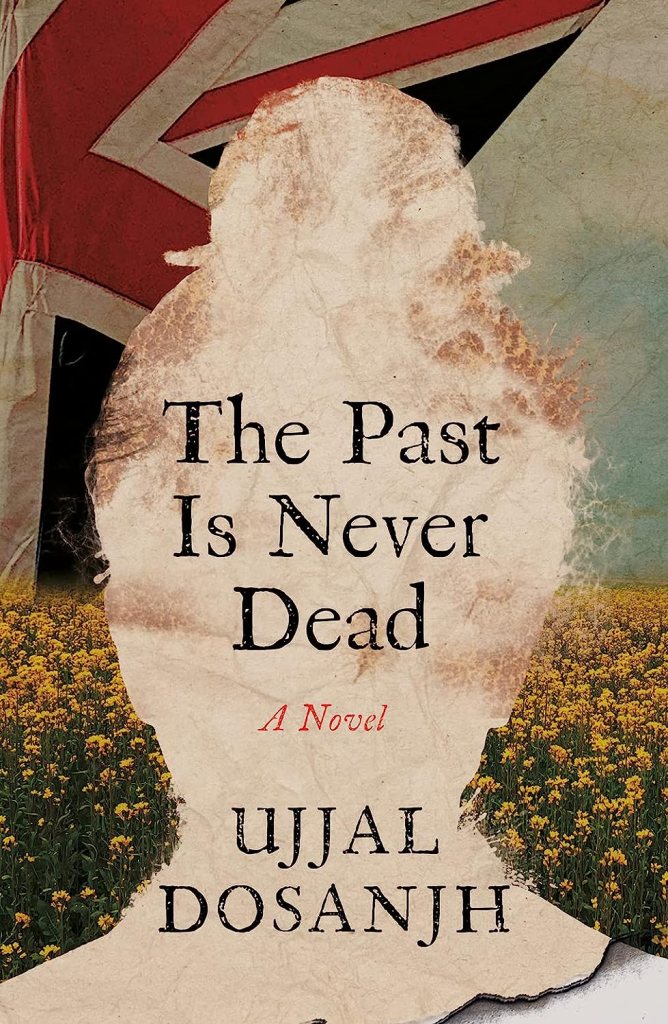
Title: The Past is Never Dead: A Novel

Author: Ujjal Dosanjh

Publisher: Speaking Tiger

Ujjal Dosanjh’s latest novel, The Past is Never Dead, sheds light on the stranglehold of caste on Punjabi Sikh immigrants in the UK – a unique perspective of caste violence in a faith outside of Hinduism, one that was born out of the noble teaching by Guru Nanak and his followers that every human being is equal in the eyes of God. Borrowing the prologue from William Faulkner’s famous statement, “The past is never dead. It is not even past,” Dosanjh makes it his project to challenge this idea about Sikhism, as he writes about a poor family that migrates to England soon after India’s independence in the hope of escaping the indignities of caste back home – only to be confronted by it again, and in the most horrifying ways possible, in a western foreign land, where caste is supposed to be an insignificant marker of identity.

In the year 1952, Kalu escaped Banjhan Kalan in Punjab’s Hoshiarpur for Bedford in the British Midlands, hoping to find a life of dignity that he had been denied because of his untouchable caste. He was in his late teens and had grown up believing in Sikhism’s tenet of equality preached by Guru Nanak and Ravidas, a principle the villagers never sincerely practised. They had maimed his father, accusing him of stealing a zamindar’s ox; they had thrown father and son out of a Quit India rally; they had mercilessly thrashed young Kalu himself for daring to enter a temple. He had never been allowed to forget—even by his schoolmates—that he was a Chamar, destined to skin dead cattle like his ancestors. His father Udho was determined to get his son out of this life of indignity and had said, “Son, I don’t want you to grow up a Chamar. You will never do what made my hands and feet like this.” Soon Udho borrowed money from a kind merchant, bribed the officials, got a passport and left for Britain.

England promised a new life of respect and opportunity. Udho laboured hard to give his son a college education and his wife a decent life that was denied to them back in India. The way Kalu and his mother ultimately bribed their way onto an earlier flight to escape from the powerful connections his propertied travel agents had, and who could create obstacles in their journey to Britain, speaks a lot about the plight of scores of rural people in the Punjabi villages who dreamt of building a new life in the West. But freedom was illusory. Kalu’s fellow expatriates had brought caste along when they came to that country, and he would be forced to adhere to its degrading rules just as he was in Banjhan.

Apart from the story of a rural Punjabi family’s search for better life, the novel is also a powerful depiction of the stranglehold of caste over Sikh immigrants in Britain. We have read about honour killings of Sikh women during the riots that took place after the Partition of India when family patriarchs forced their wives and daughters to jump into the well or commit suicide to avoid being kidnapped by the Muslims, but the horror behind the story of honour killing within the Sikh community in England based on caste differences is something terrifying. The construction of different gurdwaras in the same locality according to caste affiliations including local politics, enmity, and gruesome killings by the Jats, who considered themselves racially superior to the other Sikhs, expose the horror and obstinacy of caste even in the middle of the twentieth century, and is just unimaginable. Determined not to bend—as he had refused to do back home—Kalu fights back as he could not suffer indignity silently, but his resoluteness in the struggle puts him and his family at serious risk.

With many turns and twists in the storyline, including the abduction and death of his doctor wife, Kalu’s hair was shaved by his caste-hate-obsessed kidnappers as revenge for what they considered his audacity in describing a Jat’s daughter as mini bell unsuited to be married to his Jat friend. Eventually, he discards his hair; the act acknowledges the impotence of religion and religious symbols in the struggle for equality and against caste. In the end, through his indomitable will force, we find how Kalu manages to overcome all odds and contest for a MP seat in the Parliament as a Labour Party candidate under the name of Dr. Kalha Chamar — “He was done fleeing, escaping or dressing up caste in surnames, unshorn hair or turban.” The concluding paragraph of the novel which gives a positive message of hope for the future is worth quoting here:

“Angad made chai. Between the sips of chai, the humpbacked Banti, the limping Udho, the hairless Kalu and the adolescent Angad danced. When Robert, Janice and Gurbat knocked on the door to congratulate him, Udho Chamar and his son, Kalu Chamar MP, were standing with raised glasses, about to down neat double Johnnie Walkers.”

Though the story of Dosanjjh’s own life and the timeframe of the novel bear a lot of similarities with the incidents narrated in the story, he does not mention it to be an autobiography. Instead, he fills the novel with various other racist perspectives that the Sikhs in Britain still cannot steer clear of. So, he safely adds other issues and titles it “A Novel.” But how far some of the incidents narrated in the novel have moved him becomes clear when we read in an interview given to scroll.in where he states:

“It was emotionally quite exacting to write The Past Is Never Dead. The toll of the issues I wrote about has been a lifelong companion. Age has rendered me shameless enough for me to confess that I often cried as I wrote many parts of the novel…. The human incapacity to learn from the past astounds me. It aids us in veiling the past from ourselves and abets our continuing cruelty in the name of dumb tradition and comatose culture.”

The novel is surely worth reading and is strongly recommended as it pays tribute to the courage and tenacity of the human spirit and its capacity for hope despite all odds.

.

Somdatta Mandal, academic, critic and translator is a former Professor of English at Visva-Bharati, Santiniketan, India.

PLEASE NOTE: ARTICLES CAN ONLY BE REPRODUCED IN OTHER SITES WITH DUE ACKNOWLEDGEMENT TO BORDERLESS JOURNAL

Click here to access the Borderless anthology, Monalisa No Longer Smiles

Click here to access Monalisa No Longer Smiles on Kindle Amazon International
Categories
Poetry

‘A Stray Feather of Blue’

By Saranyan BV

Courtesy: Creative Commons
TUMBLED BELIEF

We sit on 
one side 
of the seesaw plank,
and think 
we have conquered: 
When you conquer 
one side alone --
Know ye 
Men of Destiny --
There is 
another side 
which needs defending.
Never sit on 
one side 
of the seesaw
and think 
you have arrived.
It’s like collecting
a stray feather of blue,
mistaking it
for an ostentation.

Courtesy: Creative Commons

Saranyan BV is poet and short-story writer, now based out of Bangalore. He came into the realm of literature by mistake, but he loves being there. His works have been published in many Indian and Asian journals. He loves the works of Raymond Carver.

.

PLEASE NOTE: ARTICLES CAN ONLY BE REPRODUCED IN OTHER SITES WITH DUE ACKNOWLEDGEMENT TO BORDERLESS JOURNAL

Click here to access the Borderless anthology, Monalisa No Longer Smiles

Click here to access Monalisa No Longer Smiles on Kindle Amazon International

Categories
Poetry

Poetry on Rain by Masud Khan

Translated from Bengali by Professor Fakrul Alam

Courtesy: Creative Commons
RAIN - 1 

It’s raining abroad now, in countries close by or far away. 
Occasionally a cold wind from some other land blows this way 
This summer evening brings with it sadness and beauty 
Blowing this way from some distant land!
 
A cold, cold wind keeps blowing
Slowly stirring desire, fomenting longing
For alien rituals on such an evening.
 
In the distance, in a riverbank ruled by beauty
In another land, wonderfully wet in the rain,
Lightning flashes time and again
Stirring desire for one’s lover steadily
Inevitably, on such an evening!
 
Towards my homeland
The cold wind keeps blowing
O my alien lover
Where could you be staying?

RAIN - 2
 
It’s raining
Over distant lands
Over Brahma’s world,
Over Rangpur and Bogra’s vast expanse
In alluvial plains,
The rain veils Burma’s evening fields
And keeps streaming down.
 
And below these lightning flashes,
At the rain-formed night’s third quarter
Radiant races
Spring up at home or abroad
Like hyperactive frogs leaping
Into the unknown.
 
Provoked by thunder and lightning’s violent outbursts, 
Allured by their promises,
In the thick veil 
And swirling stream,
In the darkness of the wet wind, 
In the eastern expanse, 
Underneath the sky
In vast and empty fields
Under the vast spread-out arum fields of the east, 
Incredibly, unformed new nations emerge --
Innumerable unsteady chaotic nations,
Restless, perturbed, incapable of standing up, 
Lending themselves to grotesque maps,
Forming unstable, quivering, permeable boundaries
Governed by ill-defined laws and dwarf impotent ombudsmen 
And armies marching past unimpressively,
They spring for no good reason
And seem destined to be doomed.
 
The night draws to a close. The rain too appears spent. 
When day’s first light breaks out,
Those nations that would thrive and grow
And glow with innumerable rituals and fast-spreading religions 
Feel their bodies disintegrating and disappearing
Under the vast spread-out arum fields of the east.
 
*Rangpur, Bogra— Two small cities in the northern part of Bangladesh

Masud Khan (b. 1959) is a Bengali poet and writer. He has, authored nine volumes of poetry and three volumes of prose and fiction. His poems and fictions (in translation) have appeared in journals including Asiatic, Contemporary Literary Horizon, Six Seasons Review, Kaurab, 3c World Fiction, Ragazine.cc, Nebo: A literary Journal, Last Bench, Urhalpul, Tower Journal, Muse Poetry, Word Machine, and anthologies including Language for a New Century: Contemporary Poetry from the Middle East, Asia, and Beyond (W.W. Norton & Co., NY/London); Contemporary Literary Horizon Anthology,Bucharest; Intercontinental Anthology of Poetry on Universal Peace (Global Fraternity of Poets); and Padma Meghna Jamuna: Modern Poetry from Bangladesh(Foundation of SAARC Writers and Literature, New Delhi). Two volumes of his poems have been published as translations, Poems of Masud Khan(English), Antivirus Publications, UK, and Carnival Time and Other Poems (English and Spanish), Bibliotheca Universalis, Romania.  Born and brought up in Bangladesh, Masud Khan lives in Canada and teaches at a college in Toronto.

Fakrul Alam is an academic, translator and writer from Bangladesh. He has translated works of Jibonananda Das and Rabindranath Tagore into English and is the recipient of Bangla Academy Literary Award (2012) for translation and SAARC Literary Award (2012).

PLEASE NOTE: ARTICLES CAN ONLY BE REPRODUCED IN OTHER SITES WITH DUE ACKNOWLEDGEMENT TO BORDERLESS JOURNAL

Click here to access the Borderless anthology, Monalisa No Longer Smiles

Click here to access Monalisa No Longer Smiles on Kindle Amazon International
Categories
Poetry

Strange New Home

Poetry by Heath Brougher

Outside the frame
                         is where we’re living now.
No big deal. Only a few will remember.

Outside the frame
                         is what we’re leaving in
on the outskirts and borders
of pastorals and self-portraits
of horses with broken legs.

The stallion paints as the bullet
rips through what will become
a headless space in a matter of milliseconds.

In the distance Beethoven’s “Ode to Joy”
can be heard resonating at a distorted frequency—
one that human ears can barely hear.

Hope is not lost though.

It’s still there — right
                          outside the frame.

Heath Brougher is the editor-in-chief of Concrete Mist Press as well as poetry editor for Into the Void Magazine. After spending the last four years editing the work of others, he is ready to get back into the creative driver seat. 

PLEASE NOTE: ARTICLES CAN ONLY BE REPRODUCED IN OTHER SITES WITH DUE ACKNOWLEDGEMENT TO BORDERLESS JOURNAL

Click here to access the Borderless anthology, Monalisa No Longer Smiles

Click here to access Monalisa No Longer Smiles on Kindle Amazon International