Categories
Stories

The Llama Story

By Shourjo

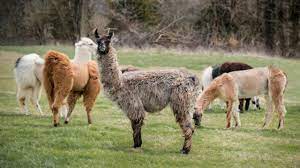
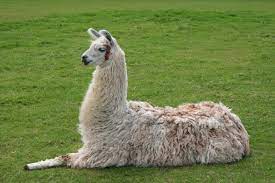
It was a typical day in the marketplace by the river. The streets were overflowing with people of all sorts; from small pedlars to petty thieves. Small shops lined the streets of the marketplace. The shops were filled to the brim with your typical day to day goods, such as vegetables, the very finest cuts of meats, and most importantly, llamas. After all, llamas are an essential part of a human’s existence. It simply would not be possible to go a day without a llama. They are man’s constant companions, their primary source of joy. Being a Llama myself (one of the finest by the way), I can confirm that my owner would have trouble managing his life without me. Unfortunately, all good things come to an end. My owner had the bright idea of selling me. I do pity him for making that decision. But I went along with it because he had become rather boring to live with over the years.

“We stock the finest llamas in town!” shouted my owner. “We guarantee their breath won’t stink and — ”

“HE’S A FILTHY LIAR! HIS LLAMAS ALWAYS STINK OF ROTTING FISH!” bellowed a hoarse voice from the left. “GOD KNOWS HE WHAT HE FEEDS THEM — BUY MY LLAMAS INSTEAD!”

That was awfully rude! Did this man not realise that a llama was standing right in front of him? Following this insensitive statement, I spat, showering the man’s own unclean face, as the llama did to Captain Haddock in one of the Tintin comics (yes, I can read, llamas are smarter than you think). In fact, Hergé (the guy who wrote Tintin) based that particular incident on something his llama did. That llama happened to be my cousin. Anyway, I was certain that I smelt better than a sack of rotting fish. I do put on the finest National Llama Association (NLA) approved llama cologne every day. Or rather, my owner, who was now trying to sell me, does. Unfortunately, the other stall owner was absolutely livid. He was drenched. He thrashed around on the street, like a fish out of water, letting out all sorts of expletives, that I do not wish to include in this account. This seemed to attract a large crowd.

“MY DEAR SIR, I SHALL HAVE YOU KNOW THAT MY LLAMA WAS PERFECTLY JUSTIFIED IN SPRAYING YOU WITH WATER FOR THE SLANDER YOU SPEAK! AND I SHALL HAVE YOU KNOW THAT I FEED MY LLAMAS THE HIGHEST QUALITY, NLA APPROVED, LLAMA FOOD!” roared my owner, in an attempt to drown the other’s screaming.

Humans never seem to grow up, do they? They make the biggest issues out of the smallest of problems. I mean, I gave the other man a free shower! He ought to be grateful when I come to think of it. How pathetic is it to fight over a llama? The argument went on, and soon enough, the two men threw punches at each other.  I watched along with everyone else, as my owner and the other man were rolling around on the floor, throwing punches at each other. It was quite entertaining to watch two fat men rolling around and punching each other. You see, this is why we stick around humans. They provide us with constant entertainment, and they stuff us silly with fantastic food (well the nicer ones do).

As the sky turned dark, the men began to tire, and the crowd began to thin. By moonrise, the two men were bloody, bruised, and covered in the centuries of filth from the streets.

“You won’t — You won’t… get— get away… tomorrow you will see…” panted my drained owner, as he collapsed and fell into a deep sleep.

The other man let out a sigh of exhaustion and slowly limped away. I’d imagine he went home.

The next morning, the two men were at it again; Trading punches only stopping occasionally to insult each other. As of then, they had yet to achieve anything. Unfortunately, I began to get terribly bored, as did the other man’s llamas. While the men were fighting, I quietly walked away from the men, toward the riverbank, and the other llamas followed suit. The river had the shimmering look of a great vat of mercury. And it was probably as toxic as mercury, given the amount of waste floating in the river. It was beautiful yet revolting. Just like my owner (and my cousin Llamius, who never seems to brush his teeth, though he has a great personality). Silvery fish could be seen floating on the water, upside down. The two men, in the marketplace, were still fighting over a petty topic, and yet, they took no heed of the destruction occurring just a few hundred metres away. Perhaps I ought to distance myself from him, as I cannot possibly knock wisdom into him, by being near him. My great-great-great-great grandfather Llilius (who happened to be one of the greatest llamas to live) failed to knock sense into Mozart. Shortly after Lilius did what he thought would knock wisdom into him, Mozart proceeded to write a six-part canon about faeces.

After a great deal of thought, I made my decision, and walked away, into the sunrise and the other llamas followed… Perhaps it was cruel to strip two men of their livelihoods, but it was the only way they could learn. 

Courtesy: Creative Commons

Shourjo writes mischievous music scores, computer codes and occasionally bizarre stories in English.

.

PLEASE NOTE: ARTICLES CAN ONLY BE REPRODUCED IN OTHER SITES WITH DUE ACKNOWLEDGEMENT TO BORDERLESS JOURNAL

Click here to access the Borderless anthology, Monalisa No Longer Smiles

Click here to access Monalisa No Longer Smiles on Kindle Amazon International

Categories
Poetry

Pinnacle by Ryan Quinn Flanagan

Courtesy: Creative Commons
Crest not bade me soul – not a more perfect sentence in the  
language. Tops! The pinnacle! I wasn't there yet, for the crest had  
not bade me. The shoulders of my shirt cinched down between  
drowsy hanging arms, revealing a scraggly dark patch of chest hair.  
If there were gifts left to give, they would come by those splintered  
brazen workbench hands. Unshuttered windows, that briny  
squawking clime of distant sea air. Great parapets of lost concealments.  
Bilging heels gong-rung together in startled splay.  
Suddenly, like banshees wailing across the moors – it came!  
"Christ hath bathed my soul," the beautiful voice sparkled. I looked  
up from the pew to find a priest standing over me. Cherub-faced  
and nipper drunk. A smile like fresh linens. A great light! – "Crest  
not bade me soul," I muttered inaudibly. His way was fine too

Ryan Quinn Flanagan is a Canadian-born author residing in Elliot Lake, Ontario, Canada with his wife and many bears that rifle through his garbage.  His work can be found both in print and online in such places as: Evergreen Review, The New York Quarterly, Borderless Journal, GloMag, Red Fez, and Lothlorien Poetry Journal

.

.

PLEASE NOTE: ARTICLES CAN ONLY BE REPRODUCED IN OTHER SITES WITH DUE ACKNOWLEDGEMENT TO BORDERLESS JOURNAL

Click here to access the Borderless anthology, Monalisa No Longer Smiles

Click here to access Monalisa No Longer Smiles on Kindle Amazon International
Categories
Poetry

Longings

By Vikas Sehra

         Your fingers tinker
          untouched corners
            of my skin.

             Lingering
           sloppy kisses
          wayward embraces

          While I melt in
        the traces of cusps
           left on me.

           Come back
           not today
        but in forever,

       Rested in longing,
     holding the ephemeral
     of us in each other.

Vikas Sehra is a researcher and aspiring poet residing in Hyderabad, India. His work has been published in Economic and Political Weekly and EKL Review among others.

PLEASE NOTE: ARTICLES CAN ONLY BE REPRODUCED IN OTHER SITES WITH DUE ACKNOWLEDGEMENT TO BORDERLESS JOURNAL

Click here to access the Borderless anthology, Monalisa No Longer Smiles

Click here to access Monalisa No Longer Smiles on Kindle Amazon International
Categories
Excerpt

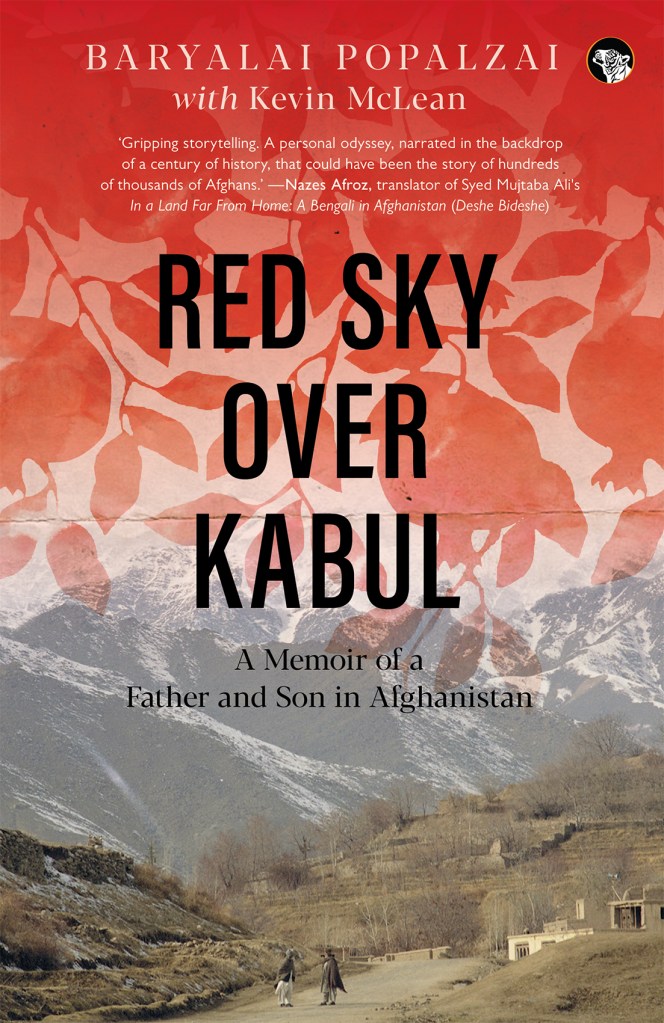
Red Sky Over Kabul

Title: Red Sky Over Kabul: A Memoir of a Father and Son in Afghanistan

Authors: Baryalai Popalzai and Kevin McLean

Publisher: Speaking Tiger Books

One
Kabul, Afghanistan, 4 October 1980

On a breezy October day, a kite-flying day, my cousin Kader surprised me with a visit. He looked much older than I remembered, his hair thinner, his once smooth face now lined with worry. He was a well-known political writer who had worked for the Ministry of Education before the Spring Revolution. He was also known for his short stories.

For generations, his family had been one of the most important families in Kabul. Kader looked at me with his deep-set black eyes and spoke in a frantic voice, ‘Bar, you must leave immediately. The National Security and Russian soldiers are now searching house to house. They’ve already searched half of your neighbourhood and they won’t stop. You must come to my house immediately. It’s the only place that will be safe for you now.’

I did not know what to think. Things were so bad now, I wondered if I could trust my own cousin. He could have given in to the Communists; or he could be telling me this because they were holding someone in his family hostage.

I hated the Russians for making me doubt him, and I hated myself for doubting him.

Tashakor (Thank you). I’ll be okay,’ I assured him. ‘I have a hiding place that the National Security will never find.’

But he was adamant. ‘You must come to my house. It’s the only place that will be safe for you now.’

‘I need time to think,’ I said, deflecting his request.

‘There’s no time!’ he said.

I told him, ‘I have to think of my wife and children, my father and mother. I’m the only one who can take care of them.’

‘You won’t be much use to them dead,’ he said.

‘That is true, Kader. But before I leave my family and go to your house, I must speak with my father.’

Kader just sighed. ‘God be with you.’

That night I lay on the floor, unable to sleep. I could hear the National Security guards in the street outside my house shouting at people, ‘What is the password for tonight?’ If there was no response, there would be the sound of gunfire and I would flinch as if the bullet had ripped through me.

As soon as the sun appeared, I went up to my father’s bedroom where he spent most of his time since losing his leg years before. I told him about Kader’s visit. ‘Things have changed,’ I said. ‘Every house is being searched now. They will even search the general’s house. I can no longer hide from these crazy people.’

‘So, you think you should go stay with Kader?’ Baba asked.

‘We don’t know who’s honest anymore,’ I replied. Then the words I had dreaded saying for so long escaped my lips.

‘The time has come for me to leave.’

Baba didn’t say anything at first. This unsettled me because my father was never at a loss for words. When he finally did speak, his voice was weak. ‘I was afraid it might come to this,’ he said. ‘I’ve spoken with Abbas. He agreed that when the time comes, he would go with you. I will get word to him. You can leave tomorrow at first light.’

When I told my mother, who I called Babu, her body shuddered, but her lips were silent. My mother had a habit of never sitting still when she was nervous. First, she paced back and forth in the room. Then she walked from one room to the other. Then from one house in our compound to another.

She returned to our living room and continued pacing back and forth until I could take it no longer.

‘Sit!’ I told her. But she never sat. My wife Afsana was asleep in another room with our two children. I couldn’t find the tongue to tell her. But I knew I must.

‘Afsana?’ I called, waking her.

Baleh? (Yes?)’

‘It’s not safe for me here anymore…I must leave tomorrow.’

‘What do you mean?’ she asked, panic rising in her voice.

‘Kader came to see me. Things have become too dangerous now. Abbas is coming for me in the morning. He’ll make sure I get out safely. I’ll send for you and the children as soon as I can.’

A painful silence followed. Afsana started to speak, but stopped. She knew there was nothing she could say or do now. We both lay awake all night.

As dawn approached, I went to say goodbye to my father.

He was sitting up in bed staring at nothing, his books and newspaper lying next to him, unread.

‘Ah, the time has come,’ he said. He seemed to be searching for something else to say; some last words of wisdom, some final advice from father to son. When he finally spoke, he spoke slowly, the words sticking in his throat, ‘Take care of yourself.’

I could not do this. ‘I won’t leave without taking you and Babu. I can’t leave without Afsana and the children,’ I said.

‘We’ll all go together!’

He was silent for a moment, his eyes never leaving my face. ‘Nay, you know that’s not possible,’ he said.

‘I can get friends to help us. They can take all your things. We’ll go to Jalalabad. Everything will be all right.’

‘Nay, Bar. It is not practical. I’m too old and weak to be moved. The Russians won’t bother Babu, or Afsana, or the children. We’ll be safe here. If we try to leave, none of us will survive. Things are very bad, but I still have my house and my writings. But it is true, you are no longer safe here, so you must leave to save yourself. Let’s pray that in a few months, things will change.’

‘If that is your wish,’ I gave in.

‘Say goodbye to me now,’ Baba said. ‘I’m afraid you won’t see me again.’

‘How can you say that?’ I protested, feeling the pain of those words as though he were already dead.

Extracted from Red Sky Over Kabul: A Memoir of a Father and Son in Afghanistan by Baryalai Popalzai and Kevin McLean. Published by Speaking Tiger Books, 2023.

ABOUT THE BOOK

 Red Sky Over Kabul is the deeply personal, moving and dramatic story of a royal Pashtun family—the Popalzais—intimately connected with Afghanistan’s history from the 1800s. After the Soviet invasion in 1980, the narrator, Baryalai—Bar—is forced to leave his beloved country as National Security guards carry out a house-to-house search for young men who refuse to fight for the Russians against their fellow Afghans. He flees to Pakistan, where he is imprisoned as a spy, eventually making his way to the US, to make a new life for himself. He returns twenty years later, to reclaim his family homes in Kabul and Jalalabad, only to find them occupied by drug dealers and warlords.

This memoir is as much a story of Bar as it is a story of Afghanistan: Bar’s father, Rahman, was tutor to Zahir Shah, who would become the last king of the country after the assassination of his father in 1933; Rahman Popalzai continued to serve Zahir as his advisor and confidant for 40 years. At the heart of this book is the relationship between a father and son—Rahman and Bar— who share a fierce love for their homeland, but whose paths diverge.

Red Sky Over Kabul is also a vivid portrait of a vanished Afghanistan—a world of kite flying, duck hunting and sitar lessons; a world lost to unending, horrific violence. But even in loss and tragedy, the human spirit finds hope and resilience—which is Afghanistan’s triumph, as it is Bar’s.

ABOUT THE AUTHORS

 Baryalai Popalzai was born in Kabul, Afghanistan in 1952. After the Russian invasion in 1980, he fled the country and eventually settled in San Diego. When the Taliban were ousted in 2002, Bar returned to Kabul for the first time in twenty years and has been returning a few times every year since then.

Kevin McLean received his JD from Boston University School of Law and practised law for many years in Boston and San Diego. He is the author of Crossing the River Kabul (2017).

PLEASE NOTE: ARTICLES CAN ONLY BE REPRODUCED IN OTHER SITES WITH DUE ACKNOWLEDGEMENT TO BORDERLESS JOURNAL

Categories
Poetry

Four Stanzas from Her Dream

By Afsar Mohammad

Art by Lakshmi

1

Out of her dream,

she walks gently

into this place giving it a name,

and framing its waters, dust,

spaces, hills and wild forests

 either in a square or a circle- she seizes a droplet of

every bit of nature into her womb to it

a belly, hands, eyes, ears and feet.

.

 Sooner or later, they deny her from head to toe —

2

One of these later days she looks in the mirror

and stares deep into her eyes to learn that nothing is similar

— everything differs so much from everything.

Out of her reality,

 she walks into this space giving it

a name and framing its skies, stars, black holes, moons

and several suns either flat or in a triangle.

                 — she jumps into an emptiness

 endless blankness and its dark, tiny holes —

3

Sooner or later, they all reject her every layer —

Out of her dream,

she sneaks out like a hole beautifully carved to fit several bodies

 and mould their hands, feet, eyes, ears and tired privacies.

4

She never stops dreaming,

as she is made simply

                                     to dream.

As such

                       she never

                                 sleeps either.

*

Poem 2:

The Making

broken pillars speak out

as winds gush through their flattened arms

a thought hanging down from nowhere

.

now my time to stretch the arms

to reach up,

as the ruins keep tumbling

.

never seen this home

in its entirety;

for me, it’s an empty village

deserted a while ago;

a swarm of words limp around me

.

now it’s my time to straighten

the body

to sew it nerve to nerve.

*

Poem 3:

into her arms

1

Sun-drenched layers play

with each other as waters ripple and fly within their little skies

this afternoon

I see you with a keen eye

as you surprise me.

.

gleaming and spreading onto the edges of the bluish horizon, you stretch your wet feet towards me and pushing me into you

–you hurl me back into several ages

2

we play at our convenient ages, and with our comfy tenderness, and toggle between childhood and adulthood, pulling hard to settle somewhere in-between

a game that never ends, but just begins again every time under the same burning sun, floating boats, flowing bodies, women turning white to brownish

3

and then

little Christs yearn to walk on water.

*

Click here to access Afsar Mohammad’s interview

Afsar Mohammad teaches at the University of Pennsylvania, and he has published five volumes of poetry in Telugu. His English poetry collection is forthcoming. He has also published a monograph with the Oxford University Press titled, The Festival of Pirs: Popular Islam and Shared Devotion in South India. His current work, Remaking History: 1948 Police Action and the Muslims of Hyderabad, has been published from Cambridge University Press.  His poetry collection, Evening with a Sufi, was published by Red River.

PLEASE NOTE: ARTICLES CAN ONLY BE REPRODUCED IN OTHER SITES WITH DUE ACKNOWLEDGEMENT TO BORDERLESS JOURNAL

Click here to access the Borderless anthology, Monalisa No Longer Smiles

Click here to access Monalisa No Longer Smiles on Kindle Amazon International

Categories
Musings of a Copywriter

The Lost Garden 

By Devraj Singh Kalsi

A balcony teeming with plants showcases the best efforts put in by flat owners to keep alive their connection with nature. Unlike those living in sprawling houses with plenty of open space to make a garden, flat residents have to live with a space crunch that makes them think of buying space-saving furniture all the time. It does not really matter whether the densely potted varieties in the balcony supply oxygen for an hour or not. The plants merely convey that the inmates carry a genuine love for nature, but the constraints of space in the cities prevent them from creating a full-fledged garden.

The other vital truth is that the miniature garden helps them assuage the guilt of causing environmental damage before the World Environment Day posters deliver ‘Save the Planet’ message every year. The air conditioner jutting out of the window next to the balcony garden proves they are equally culpable for impacting the planet’s health. But every inch of the balcony dotted with plants is the best frame that provides the opportunity to post candid pictures on social media and gather hundreds of likes for having green fingers despite the CFC generated by most air conditioners.  

In my ancestral home, I used to observe my father turn the soil every morning. As he worked with his garden tools, I took an interest in his hobby, thinking I would inherit his passion for the same. He created small beds, raised mounds of soil around tender plants to offer better support and strength, and watered them with a sprinkler with patience, making sure they were not too wet.

With the onset of winter, the saplings would be ready to deliver iridescent blooms and surprise us with their vibrant beauty. Pansies, dahlias, zinnias, carnations, roses, and petunias were some of the awesome floral feasts that occupied much of our garden beds though there were many others that were less popular and with scientific names that have elude my meory. As the first buds appeared, my parents would admire the lush garden and ask me to sit in front of those budding flowers with well-combed hair to strike a pose while my father clicked a series of random photographs.  

While I never found ample time to take up gardening, I made it a habit to water the plants in the evenings on alternate days after my tutorials. Slaking the thirst of others – whether humans, animals, birds or plants, gives the same kind of satisfaction. I was careful not to keep them thirsty for long and maintained a strict timeline for that – otherwise I would feel guilty and sleepless at night. If I would be absent for a few days, I would assign the duty to some other person. Along with plants, I was learning to be sensitive to others needs.

The blooming flowers generated the desire to possess beauty. I was told I should not pluck them but learn to admire them. It was another key lesson – to indulge in the appreciation of beauty instead of being ruthless about possessing the beautiful. Any piece of beauty, in any form, gets the same treatment. Admire instead of turning desperate to possess it or call it your own. Such treasure-worthy lessons last a lifetime. It is true nature teaches a lot many things to lead a good life. A garden full of colours of all varieties looked rich and tempting. My mother never plucked any of the flowers, never put them in a vase in the living room to make a statement. Such restraint amazed me. 

I was encouraged to plant some on my own – before the advent of the floral season. My initial reluctance petered out when I read many celebrities were pursuing it. The ones I planted were lucky if they survived. I felt sad and low when they did not survive. But when some of them bloomed well, negativity perished.

The first bloom made me glad and confident, encouraging me to look forward to planting more varieties the next year. The ones that perished were soon forgotten and my focus shifted to the survivors, wondering whether they found it easy to grow in their beds or if there was something I could have done better to ease their growth in the lush garden. 

My parents gave a nod of approval and okayed my efforts. It was deemed a good exercise to raise a garden, add manure or spray something and water them all.

After my father’s death, my mother brought saplings from the nearby nursery, expecting me to do what my father did. She would sit near the verandah and oversee the entire process. Her supervision continued and she derived satisfaction that she had managed to raise a child who was growing close to nature with each passing year. She was always the first person to spot the buds and had the habit of predicting the colours of the flowers before they bloomed. She conducted a tour of the garden every morning and would foretell which one would turn out to be yellow, red, or white. Most of the time, her guesses were right. It appeared I was under an expert. When the flowers bloomed, she would say such impeccable beauty is for the soul, as it makes you happy deep within.  

Blooming is so relevant a need for every creative person: to bloom with ideas that are fresh, appealing to the senses and fragrant. Tucking a flower in the vase in front of the writing desk is a serious effort to bring in visual freshness, and to feel positive. With creepers growing around, you feel the spread of ideas surround you, trying to reach higher and higher just like you keep trying to elevate your thoughts and consciousness. Even if the apartment does not offer a grand view of thirty feet-high Ashoka trees lined up outside my window, the mind’s eye still retains and cherishes its beauty while trying to find inspiration from the balcony garden, a poor substitute for the grandeur of the landed garden.

While living in an apartment does not offer a natural view, the truth is I am still writing and have yet to break up with nature. Whether memory continues to feed the imagination or the fear of writing without nature’s support leads to a premature loss of an intimate connection with nature will pan out in the coming years. Sometimes the loss agonises so much that one feels like writing tragedies especially if it is the death of loved ones. It remains to be seen what the permanent loss of a vast garden from my life brings forth. 

.

Devraj Singh Kalsi works as a senior copywriter in Kolkata. His short stories and essays have been published in Deccan Herald, Tehelka, Kitaab, Earthen Lamp Journal, Assam Tribune, and The Statesman. Pal Motors is his first novel.  


PLEASE NOTE: ARTICLES CAN ONLY BE REPRODUCED IN OTHER SITES WITH DUE ACKNOWLEDGEMENT TO BORDERLESS JOURNAL

Click here to access the Borderless anthology, Monalisa No Longer Smiles

Click here to access Monalisa No Longer Smiles on Kindle Amazon International

Categories
Poetry

Sleepless Thoughts

By Arya K S

My mind embroiders shapeless thoughts 
upon the fabric of my being, 
as my body crawls beneath 
the darkness of a velvet blanket.
Night dipped in a pale silvery moonlight,
I knew it was an eclipse 
where the moon reached for the earth,
where they became shadows of each other.
But the episodes of thoughts 
that flashed through my head,
refused to align with the matinee 
of the harsh, real world.
I yearned to doze off, 
to slip peacefully into a pool of serene sleep, 
to taste the nothingness of life.
The air infused with the scents of subtle lavender flames,
winked through the eyes 
of golden fairy light bulbs.
My eyes twinkled brighter!
A zillion poems have found their roots here, 
upon the barren soils of my empty,
at times tangled, heart.
A restless soul seeking refuge 
in the atoms of those weary limbs,
a coiled mind that yearned to unfurl its tales 
onto a blank white sheet.
Beads of sweat channelling maps, from the nape of my neck
to the deepest pores of sleeplessness. 
I listen to my whimpering heart, fluttering its wings
as if ensnared in a net of  ‘what ifs’. 
Motionless, I hold fast to a squishy pillow
and the cosy blanket that never offers any comfort.
Searching for a hand in vain, 
to pacify a delirious heart,
slowly...
at some odd hour in the vacuum of the night,
I fall asleep --
devoid of dreams, poems and memories --
With thoughts that beat louder than my heart!

Arya K S is a passionate writer from Kerala. Currently, she is pursuing her PG Diploma in English Teaching at EFL University, Hyderabad. Poetry is a cool breeze to her musing soul. You can find her on Instagram @letter_shore. Email: aryaksgem@gmail.com

PLEASE NOTE: ARTICLES CAN ONLY BE REPRODUCED IN OTHER SITES WITH DUE ACKNOWLEDGEMENT TO BORDERLESS JOURNAL

Click here to access the Borderless anthology, Monalisa No Longer Smiles

Click here to access Monalisa No Longer Smiles on Kindle Amazon International
Categories
Excerpt

The Blue Dragonfly

Title: The Blue Dragonfly – healing through poetry

Author: Veronica Eley

Publisher: Hidden Brook Press, Ontario

grey blanket					[from Prelude]

earliest memory
driving along
a country road
in the back seat
wrapped
in a grey blanket
in the dark

separation
the side bars
on the hospital bed
two years old
pneumonia

fifteen-year-old girl
raped
police declare
emotionally disturbed
wrapped
in a grey blanket
taken home

disturbed
turbulent
the waters
the waves, the waves
are big, mommy
the cold, grey ocean
is deep
I lean against the railing
of the White Star Cunard liner
seven years old

railings
grey blanket
grey, grey 


secret monsters				[from Presentation]

when I am dog tired
deep down below
an ambiguous voice
declares itself

blasphemous language
often, with a highly sexual content
pokes out its unseemly head
to scream and thrash about

language from a deep abyss
dirty tributaries
foul-mouthed monsters
who live in my
subterranean landscapes

loud mouthed
the desire to smash and hurt
to feed the monster within
to let out a little vengeful steam
is the only way to calm the beast

in some ways
I live a life of pretence
hidden
shameful
feeding the snake within
with disgusting morsels

 
the bodhisattva				[from Altered States]

she wanders through the streets
a heart as big
as the whole outdoors
warding off criticisms
from voices long
ago dead

how do you
lose
rolling the dice of
compassion?
the fashion in the 90s
: to give
politically/correctly

the knife of deconstruction
blasts
beliefs, values, ideals
the high-rise
terminology
-laden
hierarchical
transcendent, dualistic
world
crumbles (post
-modernized)
leaving us with
No Thing, powering our appetites
to violent
pornographies

karma
equals Choice
equals Action
equals Identity

where does this yearning
come from? the bodhisattva’s loving
compassion, undifferentiated
interconnective, doing
and undoing

do we have any
other choice?
in our best dress
our Sunday best
our best frame of mind
-- compassionate be

I exist between myself
and you


mother						[from Home]

eternal mother
conniving tributary peace strategies
love and replenishment
look to the sun
the bare branches
outlining our destinies

reaching to the heavens
rooted in fertile ground
our arms reach upward
bare, rough and brown
the colour of the earth

take care, dear mother
look to the sunset
the glorious colours
I will be thinking of you

About the Book

The Blue Dragonfly: healing through poetry is a verse narrative of trauma and recovery, 120 poems organized into three acts: Secret Monsters, The Bodhisattva, and Mother. Distinguished by an intense affectivity of language, its poetry of metaphor, repetition, and internal rhyme, “rotating / like a wind chime / inside my body,” communicates a trance-like account of trauma, therapy, and personal growth. Resistance to Western rationality – camouflaging crimes of incest and rape – is a major theme. The poet’s encounter with an Indian psychiatrist heralds the discovery of “a comrade spirit / a healer” from another continent. In time, the poet becomes the bodhisattva herself, a compassionate witness to her own and the bravely lived stories of others, a “red trauma reverberating around the world.” Trauma theory links such suffering to creative language, re-invoking Aristotle’s conception of metaphor as uniquely bound to tragedy (to make the unspeakable speak). Is poetry and its poem then merely a “work of art”? Or is it a linguistic “magical toolkit,” with purpose to build a common, practical humanity free from pain?

About the Author

Born 1950, Manchester UK, Veronica Eley is an Adult literacy instructor, Toronto, 1994-2011, Master of Education, OISE-UT, Toronto, 2002. She retired inDartmouth, Nova Scotia, 2016. Her first book of poetry was published in 2021. – Poetry came to the author late in life through journaling and therapy (1998-2016), when she learned to “stream the inner spirit, the unconscious,” in a “fluid connection between my soul, brain, pen and paper.” Poems would give structure and pace to her feelings, sparking her “creative remembering” and recovery from trauma. Ideas of synchronicity and flow, an attunement to nature, and the stories of her immigrant and refugee students provided a rich support for telling her own story. The author’s family had migrated to Nova Scotia in 1952. Dislocation shock, charismatic Catholicism, and the metempsychotic memory of the cotton mills would repose themselves in the youngest child. A “trinity of traumas” personal to her would follow. Now the small-press publication of her book, aided by her acutely poetic camera, accumulates readers. The author declines interviews, as “the poems speak for themselves.”

PLEASE NOTE: ARTICLES CAN ONLY BE REPRODUCED IN OTHER SITES WITH DUE ACKNOWLEDGEMENT TO BORDERLESS JOURNAL

Click here to access the Borderless anthology, Monalisa No Longer Smiles

Click here to access Monalisa No Longer Smiles on Kindle Amazon International

Categories
Poetry

Poetry by Kirpal Singh

THESE DAYS

see me here and there—
many say I do nothing:
well they may be right.

what I do is hear and absorb —
both the natural fresh air 
and the odour of foul chatter.
 
my people— sadly— live unaware 
my presence taken for granted,
and my preemptions denied.


MEETING WITH A STRANGER 

For some odd reason
I was halted in my tracts—
This strange man with nothing on
Wanted to know why I was dressed.

What could I say to him?
I smiled hoping he’d be satisfied.
But he persisted— “Why are you dressed?”

I smiled again and sheepishly said—
“Because being naked is a luxury, 
One, I can’t afford, really.”

He smiled again, this time ruefully,
And said very confidently—
“Understand, good Sir, understand 
The real meaning of the Fall.”

The Bard by Benjamin West (1738-1820)

Kirpal Singh is a poet and a literary critic from Singapore. An internationally recognised scholar,  Singh has won research awards and grants from local and foreign universities. He was one of the founding members of the Centre for Research in New Literatures, Flinders University, Australia in 1977; the first Asian director for the Commonwealth Writers’ Prize in 1993 and 1994, and chairman of the Singapore Writers’ Festival in the 1990s. He retired the Director of the Wee Kim Wee Centre.

PLEASE NOTE: ARTICLES CAN ONLY BE REPRODUCED IN OTHER SITES WITH DUE ACKNOWLEDGEMENT TO BORDERLESS JOURNAL

Click here to access the Borderless anthology, Monalisa No Longer Smiles

Click here to access Monalisa No Longer Smiles on Kindle Amazon International

Categories
Essay

Bankim Chandra Chattopadhyay’s Words for Would-be Writers

Bankim Chandra Chattopadhyay

Bankim Chandra Chattopadhyay’s Bangalar Nobbyo Lekhokdiger Proti Nibedon (a request to new writers of Bengali), translated and introduced by Abdullah-Al-Musayeb.

The essay was originally written by Bankim Chandra Chattopadhyay (1838-1894), the celebrated Bengali novelist, poet, and essayist. It was first published in Prachar[1] in 1885 and later included in his book Bibidho Probondho[2]. Although this essay is written in Sadhu Bhasa[3], it has an all-time universal appeal due to its significance and originality of thought. In this essay, Bankim offers some advice for the aspiring writers, which are as follows:

1. Do not write solely to achieve fame, as it may hinder your growth as a writer and prevent your writing from achieving the success you desire. If your writing is good, success and fame will come automatically.

2. It is advised to avoid writing only for monetary gain. Though in Europe many writers successfully earn money through their craft and produce quality work, we have yet to reach that stage. When you write for profit, there is a tendency to prioritise entertainment over substance. Writing may lose its relevance and fail to meet its objectives when it considers the reading preferences and tastes of the average reader.

3. Writing with the intention to benefit society and humanity or to create art is commendable. However, those who write solely for personal gain or malicious intent may be regarded as no better than petty merchants like hawkers.

4. Articles that are false, sacrilegious, slanderous or written for private interest should be avoided as they are not beneficial to the society. Using the pen for purposes other than promoting truth and upholding dharma[4] is a sin; therefore, literature should focus on these objectives.

5. Do not publish what you write immediately. Leave it for some time, revise it, and you will surely find many mistakes in the article. Poetry, drama, and novels achieve special excellence if they are kept unpublished for a few years and revised afterward. But this rule does not apply to those engaged in the work of literary periodicals. Hence, periodicals can be degrading for the writer.

6. Intervening in matters beyond one’s purview is universally frowned upon, yet it remains a common transgression in periodicals that defy this norm. 

7. Do not attempt to flaunt your knowledge, for actual knowledge reveals itself naturally and does not require overt demonstration. Endeavouring to display intellect can prove irksome to readers and undermine the work’s credibility. Although articles today often feature quotations in various languages like English, Sanskrit, French, and German, it is essential to refrain from quoting from languages you do not know properly or relying solely on the assistance from books.

8. Do not succumb to the allure of rhetoric and humour. Rhetoric or satire is sometimes required; if an author possesses these skills, they will arise spontaneously — if not, attempting to force them will prove unproductive. Nothing is as unappealing as an ill-timed or insincere use of rhetoric or a forced attempt at humour. 

9. A conventional rule in aesthetics is that rhetoric or satire considered pleasing should be avoided. While I do not endorse this rule, I recommend determining the value of such passages by reading them aloud to friends repeatedly. If the work fails to draw the audience, the author may hesitate to share it again and ultimately choose to delete it from the final product.

10. Simplicity and lucidity are the best ornaments of language. An ideal writer is one who possesses the ability to effortlessly convey ideas to their readers through the use of concise and lucid language. This is because the primary objective of writing is to clarify concepts for the target readership.

11. Do not imitate others. For in imitation, flaws are picked up instead of strengths. Don’t even entertain the thought that I’ll write in a particular style just because other English, Sanskrit, or Bengali writers have done so.

12. Do not write what you cannot prove. Evidence may not always be required but having it on hand is usually a good idea.

13. Bangla literature is considered to be the lifeline of Bengal. So, the development of Bangla literature will be expedited if Bengali authors adhere to these guidelines.

[1] Announcement

[2] Variety of Essays, published volume 1 in 1876 and volume 2 in 1892.

[3] Formal Bengali used mainly for writing.

[4] Values

Bankim Chandra Chattopadhyay (1838 –1894) was a lawyer, novelist, poet, essayist and journalist. He authored Anandamath (1882), one of the earliest landmark novels of modern Bengali literature. He wrote and composed the highly popular Vande Mataram (I Praise you Motherland), a song used to inspire activists during the Independence Movement. Chattopadhayay wrote fourteen novels and many serious, serio-comic, satirical, scientific and critical treatises in Bengali. He has also written a novel in English called Rajmohan’s Wife(1864).  He is referred to as the Sahitya Samrat (Literary Emperor) of Bengal

Abdullah-Al-Musayeb is an academic, researcher and translator. He can be reached at musayeb41@gmail.com

PLEASE NOTE: ARTICLES CAN ONLY BE REPRODUCED IN OTHER SITES WITH DUE ACKNOWLEDGEMENT TO BORDERLESS JOURNAL. 

Click here to access the Borderless anthology, Monalisa No Longer Smiles

Click here to access Monalisa No Longer Smiles on Kindle Amazon International