Categories
Review

Poetry as the Embodied Word: Notes on The Blue Dragonfly by Veronica Eley

Book Review by Christopher Marks

Title: The Blue Dragonfly: healing through poetry

Author: Veronica Eley

Publisher: Roger Langen, distributed by Ingram

On reading The Blue Dragonfly: healing through poetry, one has the impression that feeling itself has produced the work. Trepidation is sounded in the opening prayer, “saints and angels/protect me/from spilling/this cup of blood”, the prelude to the complex verse narrative that follows. The whole is organised into three main parts: ‘Secret Monsters,’ ‘The Bodhisattva,’ ‘Mother,’ each its own drama, with groups of poems forming subsidiary scenes under headings like ‘Childhood,’ ‘Altered States,’ ‘Memory.’

The framework neatly packages the author’s story into a beginning, middle, and end: trauma, intervention, and recovery. In real time, the poems arose in two great bursts of creativity, as if exploded from a star. They are the outcome of the poet’s journaling through the “tunnel of rooms” in her psyche. A small candle of poetry was held to each. It is this deep grounding in poetic language that gives the collection its true order. Arising in the liminal space between body and mind, the poet’s words arise as articulations of the wordless realm of feeling, instinct, and bodily sensations. Thus “uncomposed,” the poems re-enact the poet’s story rather than tell it. The reader is carried along in her “little boat,” drawn by the “undertow” of the poet’s past, as it “sails/the red rivers/of blood/in the/veins/and/arteries.”

The pre-embodied, pre-articulate vocality of language – her “cup of blood” – is at the heart of the collection. In an early poem, she compares her personality to “broken pieces of glass … rotating/like a wind chime/inside my body.” The body gives sound to sense. The mind listens as sound images record the mood-disordered turmoil of traumatic events:

when it rained
it hammered on the tin roof
horses’ hooves pounding on the track
the surf crashing
in and out
the recurring beat of a drum

This was “the soundtrack/for the birth of my first child,” she concludes; soon after, she carried her “swaddled newborn” down the “hardwood corridor” of the Home of the Guardian Angel, to be removed by the Sisters of Charity. Such cadences of language relax or arouse, harmonise or probe, the hidden world within. Repetitions like “my heart, my heart”; internal rhymes within and across poems; arpeggios of metaphor, as

layers of memory loss
like the crust
of the earth
the erosion
of a
riverbank
a rainforest
in distress

and multiple registers and tonalities covering the full gamut of emotion – all create a sustained sonorous weave of a body singing through pain.

Words derived in this way carry their own warrant of authenticity. The book reviewer for Trauma Psychology News, a publication of the American Psychological Association, says as much when she commends the work as a “remarkably convincing demonstration of the power of words”, observing that the long breakthrough poem, natural and man-made consequences, “cracks open new methods of figurative language to speak what cannot be said”. Other reviews point to this same intrinsic power of words to convey feeling, with descriptors like, ‘authentic,’ ‘searing,’ ‘vulnerable,’ ‘raw,’ ‘courageous.’ The word ‘beautiful’ also appears. The Blue Dragonfly is without doubt an absorbing example of scriptocatharsis, but it is also an achievement of art. As a fellow traveller and sometime poet, I understand the precious necessity of words for navigating a dark landscape. But it is poetic language, not authenticity alone, that gives words command over a reader. In this respect, words move from felt undergrounds toward a light source outside. Feelings become thought, things felt become seen. Through expressive language, private experience rises to a communal, sunlit space above, in an objectification of self and world.

The poetic enlightenment of the body (and its hidden pain) is achieved primarily through metaphor. “My life/is a room/that I have lived in/too long,” the poet writes. Starting as an interior space, as “silence/a space/dark and quiet,” each poem is itself a room. Metaphor reveals its contents. It is one of the pleasures of this book to see each room light up, as the protagonist plots her methodical path through the dispelling darkness. Trauma and unmeaning yield to new ways of seeing. Even a single image has the power to convey a story, as when a “little bird/with three-pronged feet,” seen outside her window, is described as a “microcosmic dinosaur.” Note the metaphorical flash, and how it resonates sympathy for her own survival. Two poems about her silver necklace show the personal distance she has travelled. In one, her necklace, of “sparkles, ice,” is “tight/to the point/of strangulation … reaching down/into the/depths of the earth … [where it] travels/down rivulets/into crystalline caves.” One hundred pages later, with winter ending, the necklace resurfaces as “an aura of protection/a token/of my truer self,” while “night stars/glitter … [and] snowflakes fall/uniquely … fairies skating/on a moonlit night.” Night has become day, aided by the language of light – candle, sun, or moon, or whatever glitters on the page. When the poet resolves at last “to climb out … of the deep/dark pit,” she carries with her a “a book/of poetry.”

Is poetry healing then? In his Poetics, Aristotle links poetry to pain as a purgative. The protagonist in Greek tragedy seeks relief from trauma. The chorus, a quasi-spectator, provides context and commentary for the audience, in chants and songs that dramatize contemplation. But it is poetic language, Aristotle emphasises, specifically metaphor, that moves the audience. Its ability to re-enact (or “imitate”) the protagonist’s painful circumstance draws others toward compassion (pity), relieving the sufferer of the isolation of her pain. In the resulting catharsis, fear and paralysis abate. In The Blue Dragonfly, the compassionate witness is the poet’s own psychiatrist, pseudonymised in the text as Pallavaraiyan. “Indian/from another continent,” he is the “stranger” whom she recognises as a “comrade spirit/a healer.” In their real-world encounter (as we learn from the foreword), he retained her for private therapy from professional curiosity. The creativity of her language had moved him to empathy. He was unable, however, to access her inner states through conventional therapy. Only when he discovered her poems did he gain insight into the turmoil of her mind. The poems then became the basis for a therapy that would last 17 years. Not surprisingly, in an unpublished commentary on her work, he describes her metaphors in terms similar to Aristotle, as “fresh, authentic, and beautiful.”

The literature on trauma and narrative recognises poetry as posing a challenge to trauma’s paralysing effect, like an in-woven mass on the brain, “tangled like vines … [in a] deep, dark pond.” In order to make it “speak,” the sufferer must unravel its “tight … interlocking barbwire.” The poet wrote 600 poems in this endeavour (of which 120 appear in the book). Readers should not look, however, for a concrete account of traumatic events. The poet’s focus is on the psychic impact of trauma. External events like incest, adumbrated partway through, cast an eerie shadow when one re-reads the section on childhood; but this only reinforces the psychological character of the work. The healing focus of her poetry is to re-imagine trauma in order to neutralise it. Psychic nuance also characterises the section on intervention, which restores personal agency to her life, and her subsequent post-traumatic growth. Her verse memoir is therefore a psychological record, with events occurring as states of mind. In its thoroughgoing attention to the stages of trauma and recovery, it is rare, and possibly unique, verse equivalent of the theory of trauma first presented by Judith Herman in her seminal work, Trauma and Recovery (1992).

It will not go amiss to conclude on the larger political and spiritual dimensions of the narrative, which, in related ways, express universal values. The author’s despair and outcry against her experience of rape is not confined to the incidents themselves. They carry as well an implicit yet unmistakable condemnation of the institutions of the police, judiciary, medical profession, and priesthood, which in her time she experienced as male. Her mother’s charismatic Catholicism internalised the institutional norms of permission which secretly or overtly blamed the victim. The poet’s cynicism and anger about this are apparent when she writes: “cross as symbol of suffering & affliction/cross as an excuse/cross over the bridge and see what’s on the other side/ (Little Flower) (Bear) (Monkey) (Pussy).” These words appear in the breakthrough poem already referenced, where she imagines herself “in a vaginal desert.” In the voice of an innocent yet knowing child, she issues a painful challenge to her mother’s view of the world. Before the poem fades out – losing consciousness, as it were – the poet has a vision that she will indeed find love, and that she and her mother will be reconciled.

This is the spiritual turning point in the narrative. Without quite realizing it, the poet/protagonist has crossed a psychological bridge to “the other side.” Three miracles await. The first is her experience of asylum. A prolonged stay in the psychiatric ward of a hospital provides refuge and support. Other patients, “monks praying for light,” form a community of suffering, all with stories not unlike her own. The second event is the encounter with the psychiatrist, someone “found … at the end of a long journey.” His compassionate, attentive gaze causes the paralysis of her trauma to relax its hold. As her feelings become unstuck, she senses the restoration of a “pulsation/in my robin’s breast.” She formulates this event as an effect of “the bodhisattva,” whom she conceives as a female spirit, who “wanders through the streets/a heart as big/as the whole outdoors.” The final miracle consists in her rising toward a newfound harmony with the world. She interprets this as synchronicity and flow in her own feelings. She has new access to the world, an immersive awareness of being both “outside in” and “inside out.” It is a stance of mindfulness that enables her to accept the risk of being and acting for herself. She is able to leave off “whispering a/little song” (inside therapy) and move toward the “greater surround/of movement and song” in the outer world.

In the last third of the book, catharsis lifts toward elation and wonder. Restored trust and a mastery of self has led to new sight. Appearances are revealed as but a window to a much greater reality, the visible world as but a veil for its secret beauty. “Free flowing/feelings” and thought fuse to sort out the “mise-en-scène”, to decode its patterns of connection and common humanity. This is “the miracle/of perception” which elicits her wonder. Protected by a new “harmony of body and soul,” her “guardian angel” – “he speaks without words/he comforts with touch” – she sets out on the final adventure. In the section on Memory, she re-imagines her past. Scenes from her childhood are re-visited, ghosts laid to rest, the metempsychotic history of the cotton mills acknowledged, mother forgiven. Healing, still fragile, is consolidated through moments of contemplative self-conversation, in rooms with “windows” to the natural world outside. The rhythms of time and space, of earth, sky, and animal life, are healing balms for her spirit. A red cardinal, “artistically contrasted to the/bleak surroundings” (of winter) is “a red lantern to light my way,” a promise of spring. The colours of a “changing sky” – pink, blue, fluorescent grey – tell their own story. While “across the street … [a] round/stained glass window/looking west” is a “bright yellow glow/a prayer.” It is the image of her confidant, the moon, whose “gold-yellow sanded beauty” reflects “the wholeness of round/the halfness of half” in a universe of “dark space” and “starlit nights.”

*Note on the Author: Veronica Eley was born 1950 in Manchester, England, the youngest of four children. Her family moved to Nova Scotia, Canada, in 1952. She worked as an adult literacy instructor in Toronto before retiring to Dartmouth, Nova Scotia, in 2016. The Blue Dragonfly: healing through poetry is her first book.

Christopher Marks is a retired teacher currently living with his cat Tigger in Mississauga, Ontario. He spent the last years of his professional life working with aboriginal students in the remote northern community of Moose Factory. He has published two collections of poetry, Something of Creation (White Mountain, 2008) and Further Up and Further In (Lyrical Myrical Press, 2012). His voice is that of the earnest spiritual seeker, following – wherever it might lead him – “the majestic trajectory of truth.”

PLEASE NOTE: ARTICLES CAN ONLY BE REPRODUCED IN OTHER SITES WITH DUE ACKNOWLEDGEMENT TO BORDERLESS JOURNAL

Click here to access the Borderless anthology, Monalisa No Longer Smiles

Click here to access Monalisa No Longer Smiles on Kindle Amazon International

Categories
Poetry

Flowing Rivers

By Thoyyib Mohammad

FLOWING RIVERS 

My eyes are flowing rivers,
Abundant, turbulent rivers.
They flowed in all directions
To nourish withered roots. 
They pour at all times
To endure shivering twigs.
Autumn passes, winter nears.
Oak trees whisper, secrets cross.
Still, the river flows from my eyes,
Yet, the tears fail to bloom flowers.
Time passes, frozen hearts,
Faded memory that yearn tears,
Tears strive to roots in their roots,
Roots draw the darkened shadows,
Shadows show arid rivers,
Arid rivers chant dreadful dreams,
Yet, the river is flowing!

Thoyyib Mohammad has been published several poems and short stories in English and Malayalam. His work mostly addressed human emotions, existence, and philosophical aspects. He is currently pursuing a Ph.D. at IIM Kashipur.

PLEASE NOTE: ARTICLES CAN ONLY BE REPRODUCED IN OTHER SITES WITH DUE ACKNOWLEDGEMENT TO BORDERLESS JOURNAL

Click here to access the Borderless anthology, Monalisa No Longer Smiles

Click here to access Monalisa No Longer Smiles on Amazon International

Categories
Slices from Life

Wayward Wayanad

Narratives and Photographs by Mohul Bhowmick

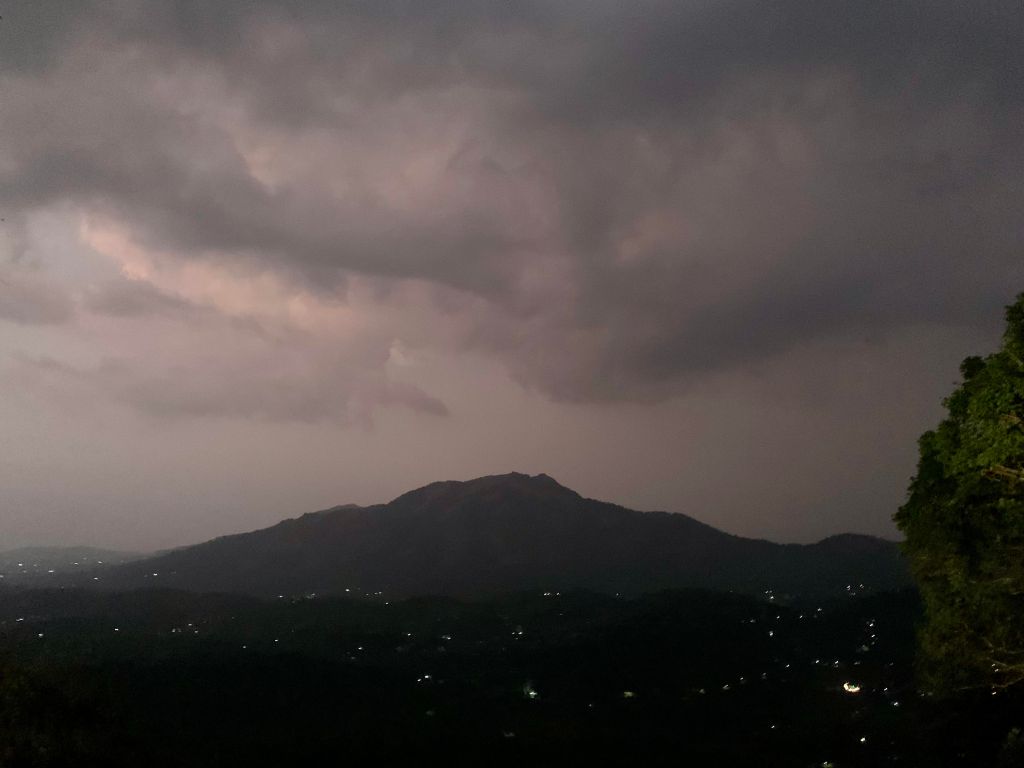
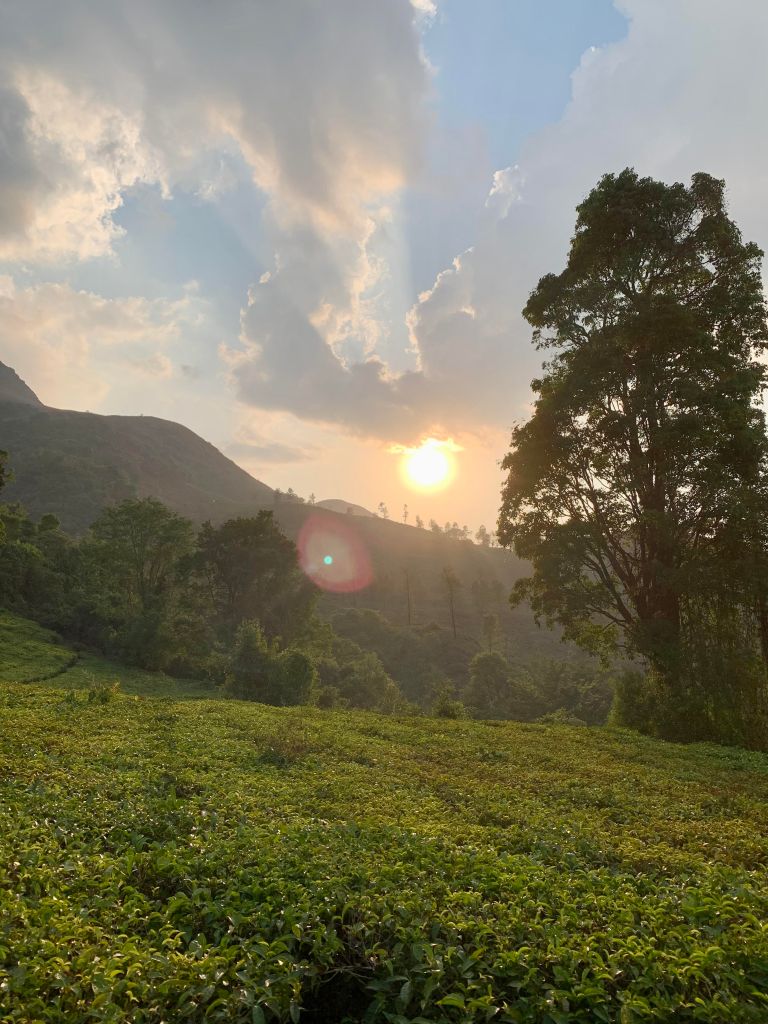
Chembra stands out imperceptibly in the background as the mist descends over its northern side. The driver of the rickety auto-rickshaw in which I make the topsy-turvy trip from Kalpetta settles to drop me at the backpacker’s hostel at Chembra’s foothills for 500 rupees. A vast tea estate stretches out for as far as the eye can see, and it is only when one edges closer to the property’s north-western precipice is any semblance of Wayanad encountered. 

Originally a hospital set up by the British in the 1920s, the hostel is a renovated colonial-style structure with a vast corridor that runs parallel to its rooms. I learnt much later that the tea estate that houses the hostel is spread over 700 acres. The fall to the northwest is spectacular, with hills in the lower range of the Western Ghats basking in the late evening sun as it makes its way down to the low-country orbs of Mysore and Chamarajanagar.

It is no surprise that one has to cross Bandipur to reach Wayanad in the first place; any easier and one would have been tempted to think that one was within the anonymity of civilisation.

*

Earlier in the day, the elephants that I spotted from an unobtrusive window on the bus from Mysore seemed triumphant and exultant — for what I did not know. The egret that sat contentedly upon the shoulders of a rather guileless water buffalo winked at me as I struggled to bring my camera out of the mishmash that my backpack had become. I was reminded of an older boy with whom I never got along in school and who often bullied me for the pancakes my mother painstakingly packed. 

*

I am forced to snap out of this reverie when my hostess reminds me that elephants were spotted at the southern expanses of the property a few days ago. She asks me to not step out after dark. In the common area boasting of a sit-out on a makeshift tree house, a motley crew from all hues of life rejoice at what appears to be a joint venture launched by a businessman from Bangalore and an engineer from Bombay. I join the pack and am welcomed by a loud cheer.

John, a chartered accountant who rode all the way from Coimbatore on his imported motorcycle, recounts having seen a leopard when turning in one of the several snaking curves when climbing from Kalpetta. He slurs as he articulates and his eyes appear bloodshot; I know only too well to separate the wheat from the chaff. Advait, a veterinarian from Anantapur, rebuffs everything that John says and vociferously advocates for an early dinner. He is, quite promptly, turned down.

*

The trek towards the peak of Chembra is made through the heartland of the eponymous forest range. Langurs peer out inadvertently while a flying squirrel makes an appearance from its cosmic abode. Catching sight of me and my companions’ incongruously sunscreened visages, it jumps shyly onto the double-storied Bo where it has made its home. Murali, the young forest officer who accompanies us jokes with Estelle, the German lady who quite fortuitously chooses to trek in her Birkenstock footwear, about sightings of bears in the vicinity but restrains himself when she turns ashen white. 

The heart-shaped lake peeks with unabashed curiosity as we huff and puff our way up to the midway point of the trek. To our great consternation, this is where we have to end our trip as the summit of the peak is sealed off by the government. A few years ago, Murali tells us, a group of nincompoops who made it to the summit lit a couple of cigarettes to celebrate. They did not, however, stub them when they were done. What happened next is well documented — a forest fire of gargantuan scale that wiped out about 60 hectares of forest land and claimed the lives of hundreds of wild animals. The summit has been off-limits to travellers ever since. 

The parched outcrops that surround the lake by no means diminish the panorama that lies to the west. A faint countenance of the vast fields of tea and paddy which fortify the district of Wayanad is visible through the mist. It is almost noon, but my companions and I find no reason to shed our coats. Specks of Mohit Chauhan’s Phir Se Ud Chala[1] fill the air; it feels as if Chembra herself has come to life. 

It is not exactly wise, but we surrender to the lure of lying down on the grass and bask, cocooned by the benevolent gaze of Chembra. Dark clouds brew overhead but Begum Akhtar reassures us in her palliative voice, and it is not before the first drops fall on my forehead that I alert the others over our predicament. Unsurprisingly, I find that most of my friends had nodded off, obliged by the exercise and the accompanying iridescent breeze. 

*

The descent, as always, is trickier than the climb, and we take refuge from the rain under a giant rock midway. The shelter is insubstantial for a group of ten, and we end up getting soaked to the skin anyway. Murali, rather ingeniously, offers his service raincoat to Estelle. Much to his chagrin, she declines, and continues unabated in her soaking t-shirt, Nike track pants and Birkenstocks. Someone mentions a childhood spent in the Bavarian Alps…

Dry leaves fall from the trees — these untimely showers ensure that they are not held on to their material comforts for long — and the fauna we encountered on the way up seemed to have disappeared. The langurs call out occasionally, but the mynahs respond in dulcet tones of their own. 

Drenched to the core yet alive beyond measure, the rain loses significance as we meander down the trail. Consciousness makes itself felt in every cell of my body as I lumber past the sludge and try to find a foothold on the wet tracks. Awake to the moment and mindful of not slipping — essentially holding my life in my hands — I experience a pacifying sense of tranquillity that I normally associate with timing a straight drive back past the bowler on a cloudy afternoon at the Gymkhana.

Damp pathways mark our way back to the hostel. On the way, an appetising breakfast of puttu and kadala curry[2] is sought to calm our nerves. A gulp of tea, brewed from the plants of the estate on which our hostel stands, soothes and brings some warmth back into our bodies. After that, we sleep all afternoon. The 1980s restaurant at this point serves as a reputable hotbed for the exchange of accounts as fellow travellers make their way upcountry for further investigation. Krishnagiri, Edakkal, Banasura and even Ooty, among other places, feature on their itinerary. Buses out of Meppadi take the circuitous route towards Sultan Bathery via Kalpetta. A few companions remain as I make the hike back to the hostel. 

Last vestiges of the raindrops from earlier in the day cling on with pride on the tea leaves. Seen from a distance as we walk up the bend onto the track that leads to the hostel’s gates, it appears as if the leaves have shed tears of their own. 

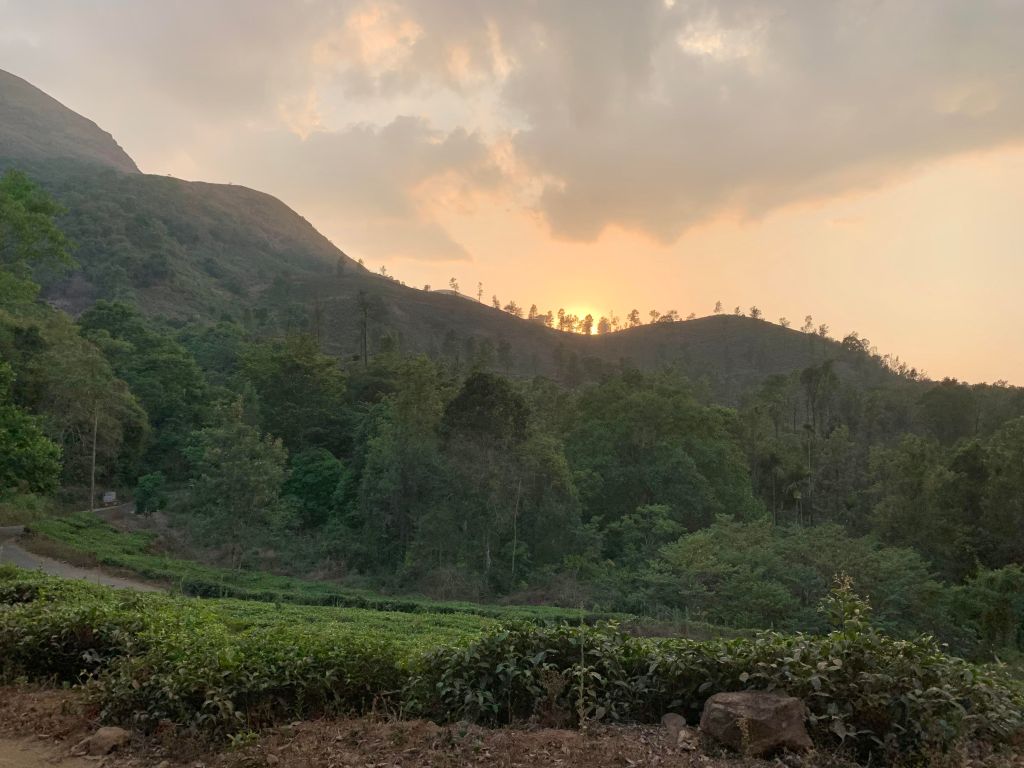
The sky turns a dull shade of orange, almost as if playing testament to friendships made and attachments uncovered. I am content enough to watch the sunset over the lower Western Ghats as another pre-monsoon drizzle wafts in. Someone mentions a fresh batch of pazham pori[3] being made in the kitchen. I scramble down the tree house to beat the rush.

[1] Song from Bollywood movie, Rockstar. Translates to: He flew again

[2] Local fare. Rice cake and spicy chick pea curry

[3] Banana Fritters

Mohul Bhowmick is a national-level cricketer, poet, sports journalist, essayist and travel writer from Hyderabad, India. He has published four collections of poems and one travelogue so far. More of his work can be discovered on his website: www.mohulbhowmick.com.

PLEASE NOTE: ARTICLES CAN ONLY BE REPRODUCED IN OTHER SITES WITH DUE ACKNOWLEDGEMENT TO BORDERLESS JOURNAL. 

Click here to access the Borderless anthology, Monalisa No Longer Smiles

Click here to access Monalisa No Longer Smiles on Kindle Amazon International
Categories
Poetry

Poetry by Stuart McFarlane

Written on 8th July 2021

JOE  
                                                                                                                     I hear you’re looking for Joe.
He’s not what he was, you know.

They took him away in the night.
He won’t get any worse – but he might.
All you can do is hope and pray,
for miracles do happen, they say.
But you know Joe, he never did God,
always found it all a bit odd.
‘So who made the virus?’ he’d sometimes ask. 
You can’t see God’s face. He’s wearing a mask.
He’s not said a word since the ICU.
They said they’d let me know of anything new.
So here I sit; I sit by the phone.
I wait for the call he’s on his way home.
I wait; I watch the clock on the wall.
I watch the light die; and darkness fall.
                  
I hear you’re looking for Joe.
He’s not what he was, you know.


THOUGHTS ON CORONAVIRUS 

Bacteria, they say, are alive.                                                                                              Coronavirus, they say, is alive                                                                                                                       and, yet, not alive.                                                                                                                                    Its only purpose on this Earth                                                                                                                      is to replicate itself as fast                                                                                                                      as it can.                                                                                                                                                    It’s so small it almost isn’t there.                                                                                                           And, yet, it’s there. It’s everywhere.                                                                                                                It’s very minuteness is it’s strength.                                                                                                                       It manifests a fierce impulse                                                                                                                       to survive.                                                                                                                                                      And to survive, it kills. 
Yet it doesn’t know it kills.                                                                                                                                    It doesn’t know, it doesn’t know.                                                                                                         It doesn’t know, it doesn’t know,                                                                                                                      it doesn’t know.                                                                                                                            Deep down, deep inside our body cells,                                                                                        it wages sub-atomic warfare;                                                                                                                          it’s murderous motivation unfathomable.                                                                                                 A million more – it doesn’t care.                                                                                                                       It doesn’t care, it doesn’t care.                                                                                                                        It doesn’t care, it doesn’t care,                                                                                                                                   it doesn’t care.   

Stuart McFarlane is now semi-retired. He taught English for many years to asylum seekers in London. He has had poems published in a few online journals.                                                                                                                    

.

PLEASE NOTE: ARTICLES CAN ONLY BE REPRODUCED IN OTHER SITES WITH DUE ACKNOWLEDGEMENT TO BORDERLESS JOURNAL

Click here to access the Borderless anthology, Monalisa No Longer Smiles

Click here to access Monalisa No Longer Smiles on Amazon International

Categories
Excerpt

Whispers of the Heart

Title: Whispers of the Heart – Not Just A Surgeon: An Autobiography

Author: Dr Ratna Magotra

Publisher: Konark Publishers

A noteworthy incident occurred at Northcote Nursing Home that garnered attention in my favour. Dr L.H. Hiranandani (widely known as LH), was an acclaimed head and neck surgeon. He was known internationally for his expertise in performing radical neck resections and for the remarkable speed with which he conducted surgeries. He wielded significant influence in both medical and social circles, and routinely performed surgeries on his private patients at Northcote.

One day, a highly distinguished lawyer from Madras (Chennai) underwent a neck cancer operation at Northcote, with me assisting LH during the procedure. As was his practice, LH completed the surgery swiftly and left for his clinic. Meanwhile, the patient had been transferred to his private room, while I was tending to my remaining duties on the floor. As part of my routine, I made rounds to check on the patients who had undergone surgery.

Upon entering the lawyer’s room, I was taken aback by the sight of him struggling to breathe. His hand felt cold and clammy, and his pulse was feeble. Although he remained conscious, he appeared extremely restless even as I tried to reassure him. It became evident that he was choking, and I realised that unless something was done, his life would slip away. Unfortunately, I was uncertain about the specific course of action needed to save him. While the nurse had attempted suction and increased the oxygen supply through a face mask, these measures appeared ineffective. The patient’s breathing grew shallower, and his lips and nails began to turn blue. It became increasingly obvious to me that blood clots were obstructing his airway, and simply increasing oxygen flow would not suffice. Private patients received distinct treatment compared to those in public hospitals. In this setting, resident doctors were not authorised to make decisions independently and were required to follow the consultant’s instructions.

Unfortunately, I couldn’t afford the delay involved in contacting the consultant, as the process would have entailed routing the call through the telephone exchange, involving operators at both ends and resulting in a significant loss of valuable time.

I recalled reading about tracheostomy (creating an opening in the windpipe) during my undergraduate studies, though I had never witnessed the procedure being done (ENT surgeons usually performed tracheostomies). Acting on instinct and without hesitation, I reached for a scalpel from the emergency tray and made a decisive incision in the middle of the patient’s neck. There were substantial blood clots surrounding and compressing the trachea. As soon as this pressure was released, there was a dramatic transformation in the patient’s condition, and his breathing improved considerably. I carefully removed the blood clots both from within and around the trachea using suction before inserting a tracheostomy tube. To my immense relief, there was significant improvement, and the patient’s lips and nails regained their natural colour. He was soon breathing comfortably, and so was I. Assured of his well-being, I promptly requested blood from the blood bank and decided it was time to inform LH, the operating surgeon.

The patient had stabilised, narrowly escaping from the clutches of death. Now, I had to confront the repercussions of my actions because I had essentially performed a minor operation without obtaining permission from the consultant. Additionally, I had neither informed the patient’s family about the procedure, nor had I obtained their written consent. The list of mistakes was growing longer, and LH’s reputation in the city was significant enough to potentially impact my future prospects in Bombay.

In the midst of this emotional turmoil, I made a call to LH. His clinic was situated near the Regal Theatre, in close proximity to Northcote. He arrived swiftly at the hospital. LH was known for his predilection for taking the stairs rather than the elevator, and I could distinctly hear his brisk footsteps and booming voice as he inquired, ‘What happened? Who did this?’ I, as the sole resident doctor and with no alibi, not that any was necessary, stood there, anxious and unsure of what would transpire next.

When LH entered the room, the lawyer, now fully conscious and aware of the ordeal he had gone through, managed a weak smile. I expected LH to explode, and I stood there with a numb mind, waiting for the inevitable. To my astonishment, LH rushed towards me and, to my surprise and that of others, nurses and hospital personnel gathered there, embraced me in his characteristic, effusive manner. He repeatedly and profusely thanked me for displaying presence of mind during the crisis, which could have cost the lawyer his life. He appreciated that his patient had been saved. Overwhelmed with relief, I could have collapsed, but there was still work to be done.

The patient was swiftly transported to the OR, where we located and ligated the bleeding vessel responsible for the incident. We also revised and secured the tracheostomy, this time by a qualified ENT surgeon, LH himself. Subsequently, the patient was shifted to his room. As he was leaving, LH discreetly handed me an envelope in my hands containing crisp currency notes. Sentimental as I was, I left the envelope and its contents untouched for several years. I knew that two lives had been saved that day!

Word of the incident spread quickly to Nair Hospital, where LH held an honorary professorship in ENT surgery. Several consultants from Nair Hospital, who regularly operated at Northcote, inundated me with congratulations. I had every reason to be pleased. The incident had generated immense goodwill.

(This excerpt from Dr Ratna Magotra’s ‘Whispers of the Heart – Not Just A Surgeon: An Autobiography’ has been published with permission from Konark Publishers, New Delhi)

About the Book

This book provides a captivating glimpse into the journey of a cardiac surgeon, illuminating the story of a small-town girl who, as an outsider, struggled to get a foothold in an intensely competitive field. Her eventual triumph serves as a poignant representation of an earlier generation of Indians post-Independence, showcasing their resilience through both triumphs and tribulations.

Throughout the narrative, the author shares her personal philosophy on the practice of medicine and addresses the evolving landscape of societal norms, encouraging readers to pause and reflect. While she doesn’t make exceptions for being a female cardiac surgeon in a predominantly male speciality, her narrative serves as a powerful source of motivation for women aspiring to break barriers in any field.

This book also sheds light on the transformation of healthcare in contemporary India, with the author playing a significant role in its development. Additionally, it delves into facets of her life beyond the medical realm, including her enriching travels and impactful social activism.

About the Author

After completing her MBBS at Lady Hardinge Medical College in New Delhi, Dr Ratna Magotra pursued Master’s degrees in general surgery and cardiothoracic surgery from Bombay University (now known as University of Mumbai) while working at BYL Nair Hospital in the city. She further honed her skills through training at Guy’s Hospital in the UK and the Texas Heart Institute in Houston, USA.

Dr Magotra’s illustrious career led her to become a professor and head of the Cardiovascular and Thoracic Surgery Department at the prestigious GS Medical College and King Edward Memorial Hospital in Mumbai. Despite her demanding role, she remained committed to issues beyond medicine, both as a department head and as a practising paediatric cardiac surgeon. Her outstanding contributions to the field have earned her numerous accolades, including the Lifetime Achievement Award from the Indian Association of Cardiovascular-Thoracic Surgeons in 2017, a testament to her exceptional expertise.

PLEASE NOTE: ARTICLES CAN ONLY BE REPRODUCED IN OTHER SITES WITH DUE ACKNOWLEDGEMENT TO BORDERLESS JOURNAL

Categories
Poetry

The White-Coloured Book

Poem by Quazi Johirul Islam, translated from Bengali by Professor Fakrul Alam

Perhaps you never ever noticed me
Reading this book day after day,
Or seen me looking from cover to cover
For other books in it, single-mindedly.

Tick tock the body clock kept beating.
Day would end and evening descend,
Time after time to the old page I’d return,
And yet I could never ever finish reading;

I had dipped in a river with no water at all,
I’d keep going down and down and still feel
I’d lost all sense of where I was—east or west;
This drying river would swallow me up whole!

A little later, all traces of the evening will disappear.
A shock will paralyse this desert-like land,
But the book will get stuck in the midst of the sand,
Perhaps, only for someone to lift it with his hand!

If you manage to take the book up in your hand,
No letter of the alphabet anywhere in it you’d see,
For this book full of white pages you took from the sand
Was the favourite reading matter of poet Jalal Uddin Rumi!   

Quazi Johirul Islam has been writing for over 3 decades. He has published more than 90 books, 39 of them are collections of poetry. His travelogues are very popular. He has been with United Nations, has traveled all over the world, worked in conflict zones, his bag is full of colourful experiences. In 2023, Quazi was awarded Peace Run Torch Bearer Award by Sri Chinmoy Centre, New York. He has also received many awards and honours in Bangladesh, India and abroad.

Fakrul Alam is an academic, translator and writer from Bangladesh. He has translated works of Jibonananda Das and Rabindranath Tagore into English and is the recipient of Bangla Academy Literary Award (2012) for translation and SAARC Literary Award (2012).

PLEASE NOTE: ARTICLES CAN ONLY BE REPRODUCED IN OTHER SITES WITH DUE ACKNOWLEDGEMENT TO BORDERLESS JOURNAL

Click here to access the Borderless anthology, Monalisa No Longer Smiles

Click here to access Monalisa No Longer Smiles on Kindle Amazon International
Categories
Stories

The Monk Who Played the Guitar

Short story by S Ramakrishnan, translated from Tamil by T Santhanam

It was Malavika who sent me the video of the monk who plays guitar. Malavika is my daughter. She is pursuing fashion designing course in Kingston University, England. Her desires and interests are a puzzle to me. Some days ago, she sent a recording of a poem by William Blake in her voice. After that, she sent a photo of her carrying a placard in a demonstration against global warming. As clouds change to forms unimaginable, her interests keep on changing. After watching a butterfly, she had sent her impressions in writing. It seemed as though it was from a seasoned writer. 

Children who leave home for far off places, in a sense, leave us. She was no longer the girl she was in Chennai. The new country and new environment have changed her. The changes are reflected in her appearance and deeds. My wife did not like these alterations. Below the video of the monk who played guitar, she had given the caption: “Music is Meditation”. I could not understand her. At the age of twenty-two, I thought she would be fondly giving herself to worldly pleasure. But she was immersed in meditation, agitation and museum visits.

In the video sent by Malavika, the monk must have been about thirty years old. His head was tonsured. He wore a robe coloured orange. His ears were slightly big. He had a sharp nose and small lips where a smile was frozen. It was hard to find out if he was a Nepali or a foreigner. On his left arm, was tattooed the image of Buddha.

It was funny to see a Monk with a guitar. The image we have formed about saints and the looks of current day saints are not alike. Perhaps, we refuse to update that image. Perhaps, the meaning of sainthood has changed.

The musical piece was given the title “Falling flowers”. From the way he was playing, it seemed as real as the blossomed cherry leaves falling gently. The normal rapidity and gush associated with guitar music was not there. Like an insect that moves in the water, his fingers moved on the guitar strings. Music tunes to the past more easily than photographs. A small piece of music is enough to take us back to our school days.

I saw the video once or twice. I felt the urge to listen to it again and again. While listening at night, I felt as if the fragrance of incense was wafting into the vacant spaces of my heart. I found His name was Limang Tolma while searching for his other videos. There were hundreds of musical pieces by him. All of them were only seven minutes long. Evidently, he played the guitar for only seven minutes in a day. That too under the sal tree in Coben Monastery seated on a stool. Hundreds of people from various countries pour in to listen to his performance. All this I gathered while browsing the internet. His music was melodious and sweet. Why did he play for seven minutes only at each stretch was beyond comprehension.

To know more about Limang Dolma, I called Malavika on her mobile. She sent a message that she was observing silence for the past five days. Why this silence? Tongue can be tied down. But the mind? 

I told my wife. She responded that she had scolded Malavika and that was why she was doing this.

I could not understand. What was the skirmish between mother and daughter? I sent a message to Malavika asking her how long her silence would continue. “God only knows,” was her reply.

As I am a senior executive in an automobile company, I had to conduct two to three meetings in a day. My blood pressure sometimes would rise after returning from these meetings.Sometimes, I would have a headache too. At times, the meetings would last for ten hours. After the meeting, I would feel as if somebody has placed a pile of iron on my shoulders. I would feel sick, wondering why we could not conduct our work without talking, discussing or fighting.

One day, before the commencement of the meeting, I started to listen to the monk’s guitar music from my cell phone rather impulsively. I closed my eyes for seven minutes as though I was in a deep meditation. It was as pleasant a feeling as a moist breeze caressing my body. There was peace in my heart and an exhilaration I had never known before. On that day, I could sense the change in my voice and the way I was moving towards a solution. Somehow the officials of the sales department seemed to understand this. After the conclusion of the meeting while coming down in the lift, Amarnath said, “There was something new in your speech today. You spoke like a Zen Master.”

“Yes” I nodded approvingly with a smile. I was just wondering how a small piece of music could bring such a tremendous change in me.

I wanted to know more about Limang Dolma. Searching through the internet I was more and more astonished. The real name of Limang Dolma is Christopher Cane. He was born in Milan. He had pursued Anthropology. After coming into contact with a Buddhist monk, he has embraced Buddhism and become a monk in the Buddhist Monastery. He plays the guitar only under the tree of the monastery and nowhere else. Young people throng to him. They listen to his music. Some of them stay there for days together to savour his music. They wear T-shirts bearing his image with the words, “Buddha plays Guitar”. In an interview, a young lady asks him. “All saints in India hold one or other instruments. Why does Buddha not play any instrument nor is seen holding one?”

“He himself is a musical instrument. One who knows how to tune himself finds no need for a musical instrument. In the same way, Nature tunes itself. Is there any tune better than what the water plays?”

“Why do you play only for seven minutes?”

“Seven is the symbol of consciousness in Buddhism.”

“Seven minutes is not enough for us. Can’t you play more?”

“Will you take honey in a gulp? Is a spoonful not enough?” he asks.

I admired Limong Dolma fo his speech, poise and the way he handled guitar. I too felt like wearing a T-shirt bearing his image. I sent the video of Limang Dolma to some of my friends asking them to listen to his music. Only Mohan Muralidharan, a neurologist and my school mate, sent a reply saying that a man from Turkey played better than the monk and shared the video. Why should one musician be compared to another? Can’t this foolishness be avoided?

I called Mohan and blurted out my irritation. He said in a mocking tone, “You’re aging. That is why you listen to a monk playing the guitar. Music should make us feel young. It should twinge our nerves. You have never touched a musical instrument in your entire life. Can you whistle atleast?”

Mohan was right. I haven’t even played the mouth organ which many played during my school days.

I felt like owning a guitar. The same evening, I went to a musical store in Leo mall. I showed the video of Limang Dolma and asked for a guitar like the one in the video. The face of the girl at the counter brightened. “Limang Dolma?” she asked. I felt glad that she too has listened to the music. She brought a guitar from inside. I told her, ” I don’t know how to play guitar. This is for my daughter.”

The girl told with a smile, “Limang Dolma was a thief. He was in prison. After his release, he became a Monk. People say he speaks to Buddha through his music.”

“Really!”

“I overheard two girls talk of it when they came to purchase a guitar.”

“Do you believe that?”

“I believe it partially.”

“Which part?”

“That he speaks to Buddha,” she smiled.

She looked like my daughter when she smiled. Perhaps for young girls Buddha is a different personality. May be, the Buddha known by the ones who have crossed fifty years like me and the Buddha these young girls adore are not the same.

When I brought guitar home, my wife chided me.

“Why have you brought this? Who will play?”

“Just let it be,” I responded.

“Is it a show piece to be kept just like that?” she asked.

I did not reply.

I placed the guitar in Malavika’s room close to her bed. I had a feeling that Malavika had returned. I sent that night the picture of guitar to Malavika by WhatsApp. She sent an emoji of two clapping hands. Also, she sent a message “We are going to visit Limang Dolma.” 

Though I felt happy, I was eager to know who was the other in the ‘We’. I did not venture to ask Malavika. Instead, I asked, “When?” She did not respond.

After five days, she sent a picture to me. She was among the hundreds of youngsters before Limang Dolma, as he was playing the guitar. My eyes were cast on a young man with long hair, not on Limang Dolma. The young man hung his arms around Malavika’s shoulder.

Who was this fellow? How long had she known him? I could not see his face properly. I widened the image. An European face. Perhaps was he also a musician?  I thought of asking Malaviika. But I curbed that thought and went on to ask about the musical event, as I called her. She was full of cheer. She told me,” Listening to Dolma’s music, one feels like a kite fluttering in the air. I do not know what to say. Flying to heaven.”

“I read somewhere that he was a thief,” I said.

” Oh, that’s a myth constructed by magazines. When asked about this, Dolma says raindrops do not have a past. Jonah and myself were in the Monastery for three days. Wonderful experience!”

A question arose on my mind as to who Jonah was. I was not sure whether to ask her or not. Why wouldn’t she talk about him?

I asked, “Is Jonah a musician?”

“Dad, how do you know? Indeed, he is. He plays the guitar well. It was he who introduced me to Dolma’s music.”

“Is Jonah your classmate?”

“No, he works in a bar where I hold a part time job.”

“You didn’t tell me,” I pretended to be angry.

“Dad, don’t tell Mom about this.”

“About your working in bar?” I asked deliberately.

“About Jonah too?” she laughed. As she was so laughing, she seemed to be some other young girl. After she hung up, I was thinking about Jonah. Was he a good person or bad? Was he also a thief earlier? Or could he be a drug addict? Who were his parents? Was he in love with Malavika? Had I become old? Was Mohan right? I

 admired a Monk playing guitar somewhere. But I do not like Jonah who also plays guitar. Why? I was perplexed. Suppose if Limong Dolma put his arm around the shoulder of my daughter, would I dislike him too? I was confused.

Two days later, Malavika forwarded a video of Limang Dolma downloaded in her phone. Limong Dolma walked as though he was floating in the air. He sat under the tree. Peace was on his face as he tuned the guitar — the same music that I savoured earlier. No longer did I feel close to that music. Somehow, instead of Limang, Jonah’s face came before me. I felt as if a bitterness had settled down on my tongue.

The same night, Malavika called me. Before my asking anything, she said, ” After visiting Limang Dolma, I do not feel like listening to his music again”

 “Why?” I asked as if I did not know anything.

“I do not like it any more just the way I suddenly liked it before.”

“How is Jonah?” I asked intentionally.

“Do not talk about him. I hate him. I hate whatever he introduced to me.”

Inwardly I was happy.

” Any problem? Shall I talk to Jonah?”

“Why should you talk to him? The days I moved with him, it was a nightmare. Daddy, why do you not rebuke me?”

“You are not a kid, after all.”

“But you think of me as a kid only. You don’t know me as Mom does.”

I was flummoxed. I could hear Malavika sobbing for the first time ever. I did not know how to console her. I hurriedly gave the phone to my wife. She started walking towards the kitchen with her words of consolation. What has transpired between her and Jonah? Why was she weeping? I could not make out. At the same time, I was happy that she disliked the world she created for herself and moved back towards my world. A thought arose that she was coming home. I asked my wife what Malavika had said.

“That boy is not good. I told her from the beginning itself. But she did not pay heed.”

“Did you know about Jonah before?”

“She told me six months back. I scolded her saying that your Dad will not like this. I have spoken to Jonah also.”

“To Jonah? You?”

“Yes, I could not understand a bit of what he spoke.”

“What is the problem now?”

“It’s over. No use talking about it!”

I could not understand what happened. But Malavika had been closer to her mother than to me. She had shared everything with her mother. I was pained at this. Why then did she asked me not to tell her mother? Why this drama? Children after growing up, treat their father as a plaything. The daughter I know is now the girl I do not know. I could not reconcile myself to this.

I heard the guitar music of the monk that night. I was more attracted to the tree than to the music.

Leaves do not stay on the tree for long. When a leaf falls, the tree does not reach out to catch it. When falling leaves sail along the wind, the trees can do nothing but look at them in silence. Somehow, the music stirred a grief in me.

As I prepared to leave for office next morning, I saw my wife keeping the guitar next to dustbin. What was the fault of the guitar after all?

” What are you going to do with this?” I asked.

“Anish told me, he will take it. What do we do with this? Malavika does not want it any more.”

I nodded giving the impression that she was right. But I felt sorry while doing that.

.

S. Ramakrishnan is an eminent Tamil writer who has won the Sahitya Akademi Award in the Tamil Language category in 2018. He has published 10 novels, 20 collections of short stories, 75 collections of essays, 15 books for children, 3 books of translation and 9 plays. He also has a collection of interviews to his credit. His short stories are noted for their modern story-telling style in Tamil and have been translated and published in English, Malayalam, Hindi, Bengali, Telugu, Kannada and French. 

T Santhanam is a retired Bank Executive in Bangalore, India. He has a passion for literature with a special affinity for poetry. He writes poetry in Tamil. He is also a blogger.

.

PLEASE NOTE: ARTICLES CAN ONLY BE REPRODUCED IN OTHER SITES WITH DUE ACKNOWLEDGEMENT TO BORDERLESS JOURNAL

Click here to access the Borderless anthology, Monalisa No Longer Smiles

Click here to access Monalisa No Longer Smiles on Kindle Amazon International
Categories
Poetry

Solace in a Café

By Padmanabha Reddy

I have spread my dreams under your feet;
Tread softly because you tread on my dreams.*
 
So, you again want to walk
In these streets of powdered chalk,
Where nothing more than old trees
With ripened fruits lie in the winter freeze?
 
Do I know... Do I know
What lies here below the snow?
 
There is still time for the yellow walls,
The office shawls, and the colourful balls,
To close for the day and open tomorrow
When the lights come back from sorrow.
 
There are people on these tables
Beside the stables and mighty fables
Watching us through the crooked panes;
Let us walk away before they come again.
 
Do I know... Do I know
What lies here below the snow?
 
The legs, the hands, the mouth
The nose, the crimson rose,
The sound of lightning bows,
Everything's a dream, I suppose.
Perhaps I'd been better at home
Taking to my hair with that wooden comb.
 
I am done now... Sitting at the balcony
Watching the stars and people in myriad bars.
I'm not Diomedes or Odysseus,
Or Apollo stopping the charge of bows.
I'm Dolan, sitting on this table,
Amidst the foul winds, and living in a fable.
 
Do I know... Do I know
What lies here below the snow?
 
Perhaps I am better with this spoon
Whirling, Twirling, and Swirling the coffee
Till the last cube of life leaves me.
 
Do you still want to walk
In these streets of powdered chalk,
Where nothing more than old trees
With ripened fruits lie in the winter freeze?
 
Let us go then walking, talking
About Dolan, and not Odysseus,
About Hector, and not Achilles,
About me, and not you,
Before he comes by and kills us.
 
* ‘Aedh Wishes for the Cloths of Heaven’ by WB Yeats (1865 – 1939)

Padmanabha Reddy is a postgraduate student of English at Delhi University. He has a self-published novel, titled I Heard an Owl Scream. that has been felicitated by the Department of Language and Culture, Government of Telangana.

.

PLEASE NOTE: ARTICLES CAN ONLY BE REPRODUCED IN OTHER SITES WITH DUE ACKNOWLEDGEMENT TO BORDERLESS JOURNAL

Click here to access the Borderless anthology, Monalisa No Longer Smiles

Click here to access Monalisa No Longer Smiles on Kindle Amazon International

Categories
Essay

Where Eagles Soar

Narratives and photographs by Ravi Shankar

Langkawi

Most passengers got down from the bus at Alor Setar, Kedah, north Malaysia. Binaya, my travel companion, shifted to the front seat of the double decker and later I followed him. It was after eight thirty in the evening and the road had become narrower. After driving on the six lane E1 expressway for most of the day, the narrower road looked confining. Traffic had also reduced. We got an excellent driver’s eye view of the road. One of the benefits of a double decker is the opportunity that you can pretend to be the driver. Malaysia’s northern most state of Perlis seemed different from the larger ones to the South. It was around nine-thirty at night when we reached the Kuala Perlis bus terminal. It was a short walk to our hotel near the jetty.

The Deepavali holidays had just begun and the exodus from Kuala Lumpur to various hometowns was in full swing. The expressway was packed with cars and our drive north was a slow crawl. The InterCity bus service (a private bus operator) used a double decker for this trip though the lower deck had been stripped of seats and used only for luggage and cargo. The seats were comfortable and the drive smooth though extremely slow due to the traffic.

Next morning, we had a traditional Malay breakfast of nasi lemak (rice cooked in coconut milk), fried anchovies and kueh (traditional cakes) along with teh tarikh (boiled and frothed tea). Pouring tea from a great height from one mug to another is a traditional South Indian way of cooling the drink and generating a thick head of foam. Tea shops do this with an extravagant flourish. We walked around the jetty and waited for our midday ferry to Langkawi.

The process of boarding the ferry was smooth and organised. We were seated right at the front. Roro ferries that could carry cars were approaching Kuala Perlis from Langkawi. The sea was calm, and the islands of Langkawi appeared after half an hour. The ferry went round the island and eventually approached the town of Kuah. Kuah is the district headquarters of Langkawi. There is the iconic Langkwai eagle statue near the jetty. The jetty was modern, and we took a taxi to our hotel located near Cenang Beach (Pantai Cenang in Malay).

Cenang Beach

The main island of Langkawi is surprisingly large, and taxis are the main means of transport. Cenang beach is popular with travellers. We were staying at the Cenang Langkwai House near Cenang beach. The room was spacious and well-equipped. Considerable thought had gone into the arrangements, and we had a pleasant stay. The first day I had noodles with prawns for lunch, and I was pleasantly surprised by their freshness and taste. Sea food was plentiful and enjoyable. Binaya was not comfortable with sea fish and preferred freshwater delicacies. I could understand his perspective as I always preferred sea fish and found freshwater fishes not very much to my liking. We dined in a large restaurant that was a few minutes’ walk from our hotel. One evening I tried mussels (delicious) while on another occasion I had laksa (Laksa is a spicy noodle dish popular in Southeast Asia. Laksa consists of various types of noodles, most commonly thick rice noodles, with toppings such as chicken, prawn, or fish).

My good friends, Naveen and Sunil, had recommended that we take the island-hopping tour. We booked the tour for the next morning. Langkawi is also famous for duty-free shopping and Binaya wanted to purchase a suitcase. The prices, however, were not lower than those in KL. Eventually I ended up purchasing some excellent chocolates at the Cenang Mall. Our stay was made sweeter!

Early next morning we walked down to the main thoroughfare to have roti canai is a South Indian flatbread dish popular in Malaysia). We waited on the white sands of Cenang Beach for our transportation to the tour jetty. Each boat had about 24 passengers and was well organised. Everyone had to wear life jackets while on the boat. We had our photos taken and this was our introduction to this Langkawi custom. The tour lasts for around four hours and covers three main islands south of the main island. Our first stop was the Pulau Dayang Bunting, where we entered a geopark to hike up the hills to a lake. The trail was well maintained. Humidity was the main problem. After the mandatory photo, we continued to the lake. The tiles on the water, like elsewhere in Langkawi, were made of a floating material stays afloat on lakes and seas but depresses slightly under your weight. Both of us were quiet and we were missing the energy and dash of Sunil, our friend from Monash University, Malaysia.    

Island Hopping

We continued to Pulau Singa Besar to watch eagles feed from boats. Pulau means island in Malay though it brought images of the fragrant rice dish to our minds. We continued to Pulau Beras Basah and the sandy beaches and the turquoise waters took me back in time to one happy island, Aruba. There were colourful beach huts and paragliding was available for more adventurous souls. The ride back to the main island was short and we could see a docked cruise ship in the distance. Our photo had been converted into a souvenir (a small plate on which the photo was printed). We had lunch at our morning restaurant. Binaya had nasi goreng (fried rice) while I had the all-day breakfast. This was a good deal and consisted of two pieces of toast with butter, two fried eggs, a chicken sausage, and baked beans. Binaya tried out different geographical varieties of nasi goreng from Pattaya to Cina to USA.

After lunch we went to the Underwater World. The aquarium has themed sections like tropical rain forest, subantarctic climate, and marine life sections among others. The main attractions were the seal show and the penguins. The seal performed a variety of tasks and received a treat after completing each successful task. This is mentioned as the largest aquarium in Malaysia. The one at KL has a spectacular underwater tunnel and you can watch marine life swim by all around you.

Langkawi means reddish brown eagle in the Malay language and is believed to be the place of Garuda. The islands have been a part of the Kedah sultanate for over two millennia. The islands have a geological history going back to over 550 million years. Langkawi is thought to have been cursed for seven generations in the early 18th century by Mahsuri, a woman who was falsely accused of adultery and executed unjustly. Langkawi was occupied by the Kingdom of Siam and became a part of Malaysia after the Anglo-Siam treaty. The islands were a sleepy backwater and were developed into a major tourist destination by Dr Mahathir Mohamed.

The next morning, we travelled to the cable car toward the north of the island. The Deepavali holidays brought many to the island. The tourist infrastructure’s good, and we did not experience crowds and long waiting times. The Langkawi sky cab provides an aerial link from the Oriental Village at Teluk Burau to the peak of Gunung Machinchang, which is the location of the Langkawi Sky Bridge. The total length is 2.2 km, with a journey time from the base to the top of around 15 minutes. It was officially opened in 2003. We were comparing this to the Manakamana cable car in Nepal. This one is longer and steeper. The elevation between the base and the middle station is said to be the steepest in the world. There were delightful views of the bay and the surrounding islands as we moved slowly toward the top. The Skybridge is a major attraction and is among the longest free span and curved bridge in the world. There are a few glass sections that allow you to look down into the valley. The views were majestic, and the bridge is around 660m above sea level. There is also a sky glide option with a comfortable cabin style vehicle that carries visitors from the top station to the sky bridge.

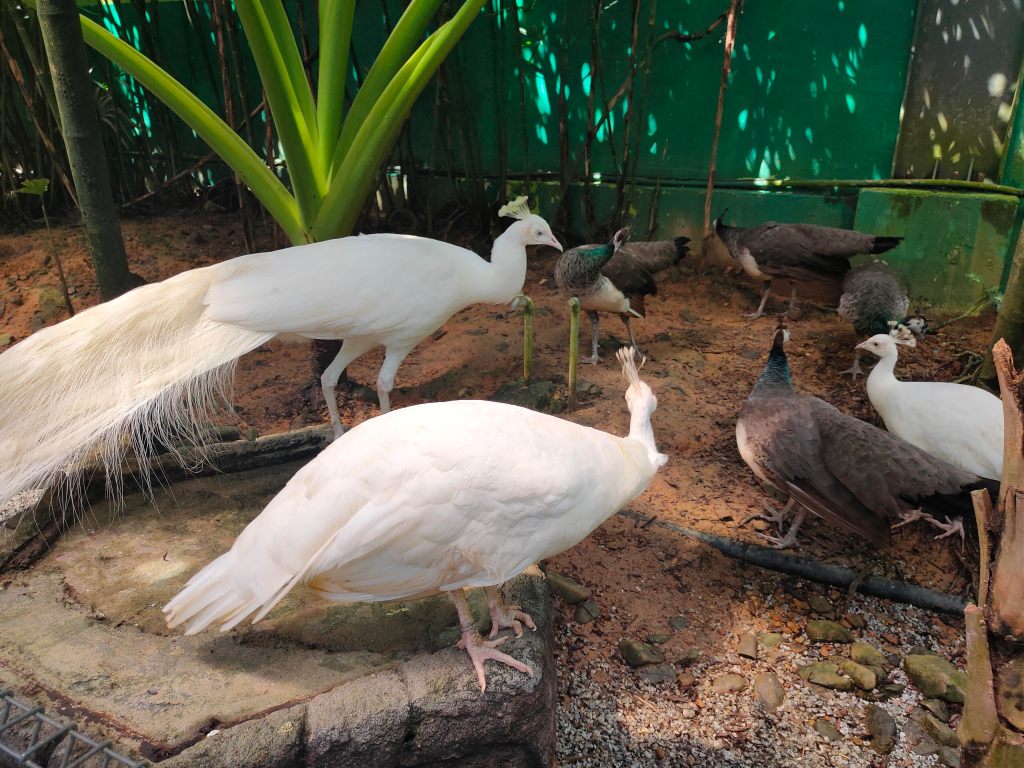
We took a taxi to the Langkawi Wildlife Park. Malaysia has some delightful animal parks and the one at Langkawi offers close encounters with animals. The animals are used to visitors and there are plenty of opportunities to touch, pet and feed them. Trained handlers were at hand. I was reminded of ‘Farm in the City’ at KL constructed around a similar theme. The covered walking path meanders through animal enclosures and the peafowls reminded me of the KL Bird Park. Feeding the small birds, the tortoises, deer, and the rabbits is a highlight of the visit. Like at other attractions there is a mandatory photo, and the exit is always through a duty-free shopping complex. That evening we had a spectacular thunderstorm. Being to the north the rains may be more seasonal at this tropical paradise.

The next morning, we had to depart back to routine life. We reached very early for our flight back to KL. We watched passengers boarding Air Asia, Malaysian Airlines and Scoot flights to Penang, KL and Singapore. Air Asia is a dominant player in the Southeast Asian market. The flights are cheap and usually fly on time. The aircrafts, however, may be older and the leg space is limited.

We had a pleasant break at one of Malaysia’s major tourist destinations. There are many attractions here that we are yet to experience. Time was limited and we did not want to rush ourselves from attraction to attraction during a leisurely break. We plan to return one day to the oldest land in Malaysia, 550 million years in the making as proudly proclaimed by the site Naturally Langkawi!

Dr. P Ravi Shankar is a faculty member at the IMU Centre for Education (ICE), International Medical University, Kuala Lumpur, Malaysia. He enjoys traveling and is a creative writer and photographer.

.

PLEASE NOTE: ARTICLES CAN ONLY BE REPRODUCED IN OTHER SITES WITH DUE ACKNOWLEDGEMENT TO BORDERLESS JOURNAL

Click here to access the Borderless anthology, Monalisa No Longer Smiles

Click here to access Monalisa No Longer Smiles on Kindle Amazon International

Categories
Poetry

A Dream

By Kumar Bhatt

A DREAM

'How are
Your In-laws, Husband,
Parents, Children, Home and You? '
He asked in a cascade.

If he had
Put me first in the list,
I would have forgotten myself
When he came to the end
Of his long inquiry
That drills into my life.

I hardly know him,
Going by the number of words
Exchanged between us.
He is not close enough to me to ask me anything more than,
'How are you? '

Everyone has parents.
But he just assumes
That I have in-laws,
a husband, children and home!

He has a weakness
for assuming.

He was a stranger
But he felt intimate.
And I told him about
My dream.
It was a modest dream,
Almost trivial as dreams go,
But precious to me
Nonetheless.

Most dreams
Are like bubbles.
They burst
After floating for a while.
Only a few
Are like drops of rain
That make it to the ground
On the sands in a desert.

I assume
He wanted to ask me
About my dream.

If he had
The courage to ask,
I would have told him,
My dream was
Like that drop of rain.

Kumar Bhatt  is a retired professor of Physics interested in everything in general. After retirement in 2002, he has been trying to learn to write. He lives in Ahmedabad.

.

PLEASE NOTE: ARTICLES CAN ONLY BE REPRODUCED IN OTHER SITES WITH DUE ACKNOWLEDGEMENT TO BORDERLESS JOURNAL

Click here to access the Borderless anthology, Monalisa No Longer Smiles

Click here to access Monalisa No Longer Smiles on Kindle Amazon International