Categories
Stories

The Stranger

By Jeena R. Papaadi

I was sure I had kept a ten rupee coin ready. But, when he came around a second time, I was still fumbling. I looked up at him, embarrassed, shame-faced, and quickened my search. My hand travelled the same paths within my handbag that it had toured a few seconds ago, again encountering nothing.

He had no reaction. He had been at this job fa​r too long. Seen far too many people. Heard far too many excuses. Listened impatiently to far too many stories. He looked away and moved on. Destiny would bring him back though. He would persevere until my journey ended. Then I would be erased from his mind and some other deviant passenger without exact change, with a bagful of tales, would take my place.

I gave up and pulled out a hundred rupee note. Something you should never wave at a city bus conductor. I was doing the unthinkable. I had no choice. My ten rupee coin had vanished within the folds of my bag, liberating itself from its inevitable fate. With one hand grabbing the railing for dear life as the bus dashed across the city, this was the best I could do. If one could pause life long enough, one would admire the lesson in philosophy thus presented before oneself. But one was busy going rather red before the conductor’s stern gaze.

No change, I muttered, my words and eyes dripping with apology.

He could shout. He could yell. He could ask me to leave the bus. No, he couldn’t, but he certainly could make us believe he had enough power in the world to extinguish our lives with one flick of his hand. No wonder small children aspired to be bus conductors.

He decided against violence and sighed deeply. The burden of the entire human race rested on his shoulders that morning.

Out of nowhere, a hand appeared between the conductor and me, with a sparkling, crisp ten rupee note crackling between the fingers. My eyes fell on it and on the hand holding it, and traced it back to the man who owned both. 

For one long instant, all eyes of the people on the bus – except the driver, luckily – were on the man with the receding hairline and he began to look a tad uncomfortable at the attention. 

It’s okay, he said, seeing me hesitate. It’s okay.

Now all pairs of eyes transferred themselves to me because it was my turn. He was offering to pay my ticket, to save me from the hundred rupee note embarrassment and possible eviction from the bus. 

The conductor, still expressionless, leaning against a seat, immune to the insane race of the bus, waited for my response. To take the money or not to take it? He didn’t have all the time in the world. He had tickets to dispense and other things to do, I’m sure.

You can pay me back later, said the ten-rupee-note-man. Or not, he added hastily. 

So I nodded, unsure of the etiquette and expectations in such a situation. I wasn’t taught how to behave when a stranger on a random bus showed generosity or kindness. Should I accept it? Should I be offended? Should I presume that he had ulterior motives? Should I refuse and go back to unearth my delinquent ten rupee coin? Or stubbornly insist that the conductor give me exact balance for my hundred?

The conductor sighed again. I was wasting his time more than the ten rupees demanded. 

Everyone, and the bus itself, seemed to be holding their breath. I had to satisfy them all.

I took the ten rupee note, and handed it to the conductor whose patience was fast wearing thin, fairly certain that whatever I chose at this moment, I was going to regret later.

The situation defused, and everyone exhaled and went back to their own businesses of staring out the window, as the vehicle shot across the city.

I turned to my saviour and said, I’ll buy you tea. 

He had an easy smile, one that makes you want to see it again. Oh, that won’t be necessary. But if you insist…

My eyes did insist, I suppose.

People seated next to this developing scene of action were listening without appearing to, some clearly appearing to, and hopping to conclusions on where this could lead.

I’ll get my change for hundred too, I explained, showing the note. This was mostly for the benefit of the listeners.

Of course, he said.

We now had a solid reason to have tea together. 

So we got down at the stop where the ten rupees had led, and found a tea shop nearby. He was easy to talk to, easy to confide in, easy to befriend. He did not bore me to death with his stories, like most men did. He knew when he lost me, when to stop and when to pay attention.

One week later, we had dinner together. The strangeness had passed and we were comfortable as though we had been married for years. 

And then it happened, on the third date… When he lost himself and I was abandoned, the gaps began to reappear, and the cracks which were merely glossed over, never fixed, broke open.

Just as it was when we had been married.

Another failed experiment. Come, let’s be strangers again…

If you change nothing, nothing would change.

.

Jeena R. Papaadi is an author of fiction and poetry. Her articles and stories have appeared in several publications including The Hindu Open page, Kitaab, European Association of Palliative Care, Aksharasthree, etc.

.

PLEASE NOTE: ARTICLES CAN ONLY BE REPRODUCED IN OTHER SITES WITH DUE ACKNOWLEDGEMENT TO BORDERLESS JOURNAL

Click here to access the Borderless anthology, Monalisa No Longer Smiles

Click here to access Monalisa No Longer Smiles on Kindle Amazon International
Categories
Poetry

Resilient

By Juairia Hossain

I am young, yet the fire burns bright,
They doubt my steps, they mock my flight.
Too small, too soon, they laughed, they swore,
But I walked ahead and asked for more.

Through sleepless nights, through silent pain,
Through dreams that bled in endless rain.
Alone I stood, alone I cried,
Yet never once let dreams subside.

They turned away, they called me weak,
Now they return, their voices bleak.
Not with scorn, but laced with spite,
For I dared to chase my light.

Once they sneered—"You’ll never rise,"
Now they watch with jealous eyes.
For age they mocked, now age they fear,
The path was hard, but I am here.

A wise voice whispered, firm yet kind,
"Hard roads are short, but test the mind.
If you endure, if you push through,
No force on earth can hinder you."

And so I walk, unchained, unbowed,
No need for praise, no fear of crowd.
For every scar, for every fight,
Has carved my soul in fearless light.

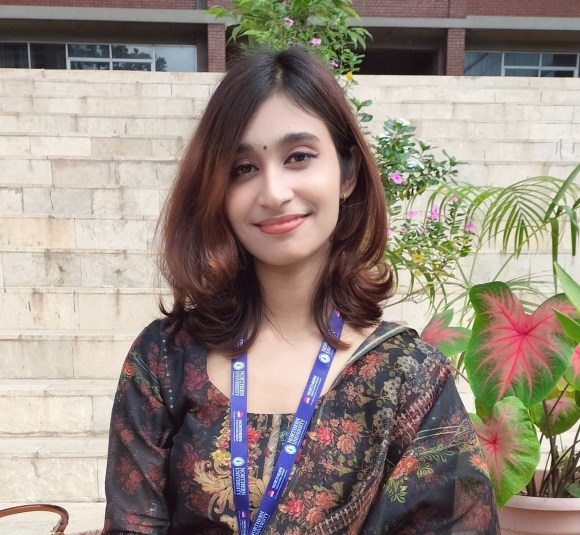
Juairia Hossain is an undergraduate student of English Language and Literature at the Department of English, Northern University Bangladesh. She is passionate about writing and regularly contributes to various online newspapers and magazines.

.

PLEASE NOTE: ARTICLES CAN ONLY BE REPRODUCED IN OTHER SITES WITH DUE ACKNOWLEDGEMENT TO BORDERLESS JOURNAL

Click here to access the Borderless anthology, Monalisa No Longer Smiles

Click here to access Monalisa No Longer Smiles on Kindle Amazon International
Categories
Musings

Hope Lies Buried in Eternity

By Farouk Gulsara

I learnt early that life is never fair. They say time and tide wait for no man, moving along their own trajectory. 

I heard money solves all problems or at least eases the pain of tough times. There was a time I ventured into saving mode. I started my own piggy bank, dropping in a coin almost daily into a plastic-mould chick figurine. I patted myself on the back as the clink of coins became louder and louder. It was not much, but every jingle reminded me of the value of money and the comfort it would provide me one day. The trouble was that my sisters were equally pleased that my coffers were filling to the brim. They began needling out coin after coin to finance their addiction of buying little treats. I felt frustrated. I knew saving was hard, but I never expected reaching my goal to be so difficult. My sisters’ malfeasance came to light one day when I noticed that the piggy bank had been displaced away from its usual place, tucked behind my nice shirts. That was when I confronted my sisters. 

In my eyes, I did nothing wrong. Instead of admonishing my sisters and compensating for my loss, Amma claimed it was my fault. She taught me the harsh truths of life. It was my responsibility to safeguard my property, not anyone else’s. After that realisation, I sought out other ways to save money.

Then, I had a new group of friends. I joined a competitive group of classmates who wanted to excel academically. I thought that would be easy. I devoted all my time to studying and paying attention in class. It seemed easy, but it was a different story when the examination results were released. It was the class jester, for whom everything was a joke, who came out on top. Another valuable lesson I learnt was not just to study hard, but to study smart.

As I grew older and the screaming radio became a constant background to my daily life, I realised that the world was not a peaceful place. On one hand, songs promised a tranquil world of apple trees and honeybees[1]; from the same country, they sent tanks and bombs to annihilate each other. It seemed that the Vietnam War would never end. Peace in the Middle East was merely a pipe dream. 

Amidst all that, a hippie song emerged, envisioning a world without boundaries, an airspace free from control, and a peaceful existence [2]. It instilled a sense of hope that life might indeed have something to look forward to after all. The image of two figures dressed entirely in white playing a white grand piano remains permanently etched in my mind as the beacon of hope that one day everything will be all right. And life went on. 

After many years of burning the midnight oil and reaping bitter seeds, its sweet fruit finally emerged. Yet, all my classmates who were partying and living life to the full had already gained a head start in their careers. They had ascended the ladders of their professions and were cruising around in flashy cars, while I was starting as an intern with little to show except a few letters behind my name. The competitive streak within me, however, reassured me that academic excellence is superior to the acquisition of wealth.

I continued my healing work, convincing myself that what I was doing would be returned in kind and that I would receive blessings of a different kind. As time passed, I realised that those were merely comforters to soothe a colicky baby. The old adage ‘health is wealth’ was a fallacy. In the real world, wealth buys health, just as one gets justice with all the money one can afford to pay for legal services. The youthful cry of ‘Can’t Buy Me Love’ [3] was another lie. Money buys everything, and it feels better to cry in a BMW than by the footpath of the street. 

So, there I was, thinking that if I were to follow the ways prescribed by the elders, I would be all right. “Tell no lies.” They said. “Speak only the truth!” Then there were people who made lying— or they would call it ‘bending the truth’— the pillar of their profession. “Don’t be materialistic, look at humanity!” Tell that to the stockholders who do not take it kindly when the conglomerate shows high praises and blessings but announces no monetary returns in dividends. For one thing, even big countries help each other not for altruistic reasons but for geopolitical and economic interests. There is no such thing as a free lunch. Everything comes with its encumbrances. 

I was advised not to fight back but to turn the other cheek. Yet, behind my back, the world has regarded me as a fall guy, and I was merely a useful idiot—someone they could blame for all their wrongdoings because I was naïve enough to admit my mistakes. Now my friends urge me to strike before the other party draws first blood and to never admit to any wrongdoings. 

As human beings, we yearn for a world without conflict. We all desire peace of mind—a world where everyone follows a single prescribed path, where everything falls into place, a utopia in which one person sees another not by the colour of their skin or the tunic they wear, but by the strength of their character. Most prayers we offer to a higher being invariably end with ‘Peace on Earth’ or ‘Happiness for All’. Prayers like ‘Sarve Bhavantu Sukhinaha‘ [4] and ‘Om Shanti‘ [5] assume that everyone can have things their way at one given time, creating a win-win situation. Such a situation can only exist in our imagination. Regardless of what everyone else says, life is a zero-sum game. For someone to win, another must lose, somewhere, somehow. For the lion colony to be happy, a goat must be sacrificed. Contentment is achieved when we acknowledge our limitations and accept that sometimes things do not go in our favour. Outcomes may improve if we recognise that we can only do so much.

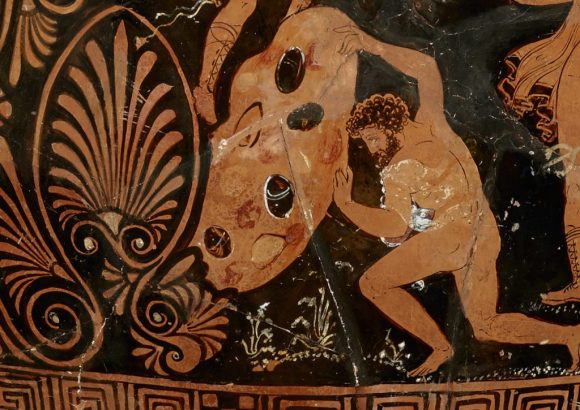
An Earth without conflict is a pipe dream. The natural course of events is entropy interspersed with instances of chaos and order. One can choose to adopt a nihilistic view of our existence and do nothing, or be like Sisyphus [6] — resigned to the fact that we are in a hopeless situation — but strive to find joy in setting small targets and achieving modest successes, filling our hearts with laughter and happiness during the lull before the storm, and endeavour to leave a better future for the next generation.

When everyone found it impossible to carry a big load, the human mind devised the wheel. When the greener pastures across the lake obsessively stirred the curious, it took one brave young man with the imagination to make a raft of fallen tree trunks. Hope springs eternal in the human breast[7]. The change we want the world to embody starts with the man in the mirror. Numerous social experiments have repeatedly shown that doing a kind gesture is contagious. One good turn deserves another. No good deed remains unreturned. We can try. 

Sisyphus: From Public Domain

[1]  A verse from The New Seekers’ “’I’d Like To Teach the World to Sing” became a jingle for Coca-Cola later.

[2] John Lennon’s most successful solo single, ‘Imagine’, envisions a world of peace without materialism, without borders separating nations, and without religion.

[3] The Beatles’ 1964 hit ‘Can’t Buy Me Love’ is a McCartney composition that naively preaches that true love cannot be bought. In the later stages of his life, McCartney discovered the hard way that divorce, without a pre-nuptial agreement for someone of his stature, could be financially draining. Money can’t buy love, but falling out of it can be costly.

[4] Sanskrit for ‘May all be happy’

[5] Sanskrit for ‘Peace’

[6] In Greek mythology, Sisyphus was a shrewd king. The gods condemned him to roll a boulder up a hill for eternity, only to see it roll down again after reaching the summit. Albert Camus, in his book ‘The Myth of Sisyphus,’ implies that Sisyphus was happy. He found performing and completing the act itself meaningful. He gave meaning to the meaningless.

[7] “Hope springs eternal in the human breast,” an excerpt from Alexander Pope’s poem “An Essay on Man.”

.

Farouk Gulsara is a daytime healer and a writer by night. After developing his left side of his brain almost half his lifetime, this johnny-come-lately decided to stimulate the non-dominant part of his remaining half. An author of two non-fiction books, Inside the twisted mind of Rifle Range Boy and Real Lessons from Reel Life, he writes regularly in his blog, Rifle Range Boy.

.

PLEASE NOTE: ARTICLES CAN ONLY BE REPRODUCED IN OTHER SITES WITH DUE ACKNOWLEDGEMENT TO BORDERLESS JOURNAL

Click here to access the Borderless anthology, Monalisa No Longer Smiles

Click here to access Monalisa No Longer Smiles on Kindle Amazon International
Categories
Poetry

Dinosaurs Peeping over Prison Walls

 By Saranyan BV

From Public Domain
I don’t have to pinch myself to check if I  am alive   --                                                                                             Together we tread this ochre path in a convoy of mortuary vans.
We have no issues over stopping at the gas stations now and then for refuelling.
Most of us rush to the rest rooms, a wise guy buys sachets of glucose at the counter --orange flavour,
He tucks the stuff into his backpack and settles down in his black van, the sachets come with plastic straws which do not decay.
I button up my trousers and board mine.
The map on dash board shows the route,
The blue line does not show the destination though.
I get this funny feeling the place is pretty close, not more than few months.
It would be a calm place, a camp cot kind of thing,
Or at least a hard-surfaced concrete bench
And a place to wash with tap water.
The needlessness for God is now clear in the glare of evening twilight
Like fish spread on the beach sand of truth.
Fish cannot close eyes, God seem to have made them that way.
There is some kind of curiosity left on arc of their eyes.
It makes me wonder what have I lived for?
I gloat over my prayers, the rituals I performed day in and day out,
The images trail like ocean clouds in the river of blue sky.
My piety seem unreal at this point of time, all my piety
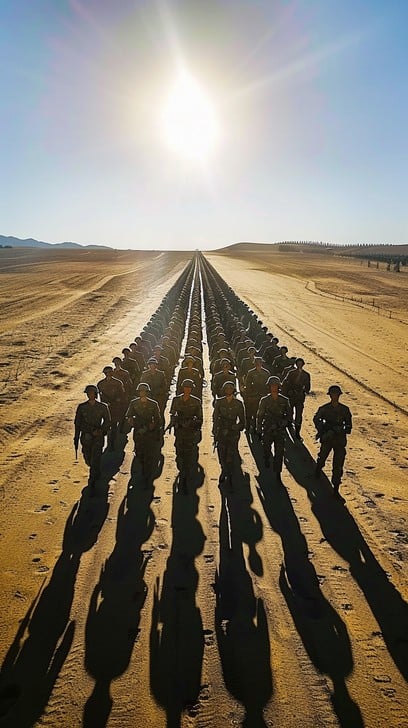
The vans stop at the toll gate following sombre lane discipline,
The wise old man’s van too stops, CO2 from it spews next to mine.
He lifts and shows one of the sachets,
Takes a small sip from it and explains over the window,
“Time and energy is all misspent”, then takes a large sip,
His eyes squint to see where the straw enters the small hole.
I see his Adam’s apple rising and levelling, “Piety is of no use after we pass brother, it always come to that, all things in our life.”

“Belief in afterlife is stupid”, I tell the old man to keep the conversation going.
“I never had a chance to ask dinosaurs how it came into extinction.”
He likes the way I speak with perennial eyes, offers me a sachet through the window and expresses alignment,
“True, the last of the dinosaurs died 65 million years ago. You know if the dinosaur had souls, those too would have died.”
This way he tries to prove souls hang around though eventually they die.
I think he invests in the concept of soul to prolong his own life after death.
His ticketing is done, the van starts ahead.
My soul died at birth, the inevitability of death sticks on the wall
Like residue of the gums left by Bollywood posters,
Snatched and eaten by the city bovines.
My mom told me that the only protein city cows get is from the glue,
She also kept telling that milk of the city cows smell of the wheat adhesive.
Mom is gone and she won’t be watching, all that she has taught too is gone.
It is not about God or religion or even atheism,
It’s about us, the dinosaurs peeping over the prison walls.

Saranyan BV is poet and short-story writer, now based out of Bangalore. He came into the realm of literature by mistake, but he loves being there. His works have been published in many Indian and Asian journals. He loves the works of Raymond Carver.

.

PLEASE NOTE: ARTICLES CAN ONLY BE REPRODUCED IN OTHER SITES WITH DUE ACKNOWLEDGEMENT TO BORDERLESS JOURNAL

Click here to access the Borderless anthology, Monalisa No Longer Smiles

Click here to access Monalisa No Longer Smiles on Kindle Amazon International
Categories
Review

How Resilient are Forests, Rivers and Animals?

Book Review by Rakhi Dalal

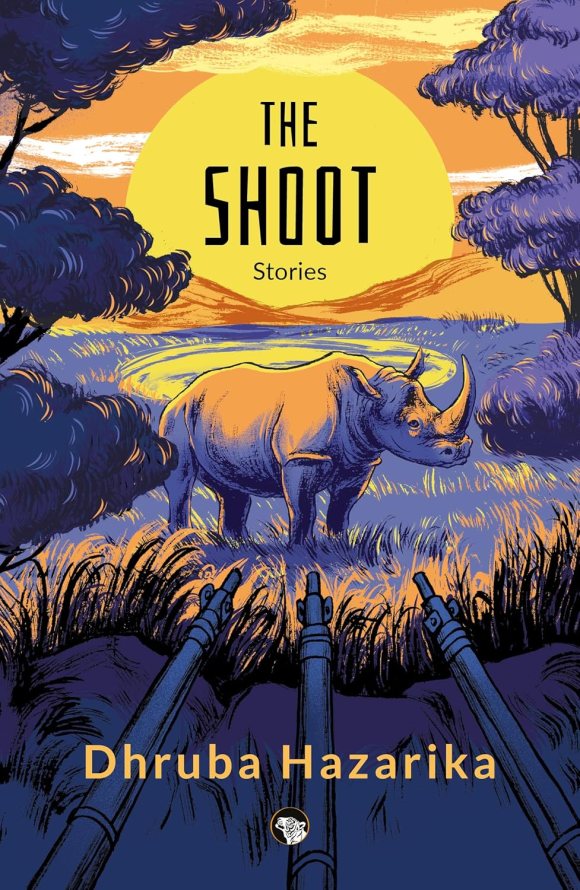
Book Title: The Shoot: Stories

Author: Dhruba Hazarika

Publisher: Speaking Tiger Books

Dhruba Hazarika is a novelist, short-story writer and columnist. The Shoot is his fourth published book, the previous three being two novels and another collection of stories. He has also been a columnist for 40 years, writing for The TelegraphThe Sentinel and The Assam Tribune. He divides his time between Guwahati and Shillong.

In The Shoot, Dhruba Hazarika offers a remarkable collection of seventeen stories set largely in the landscapes of Assam, where the lines between the human and the wild blur with lyrical precision. These are stories in which rivers, forests, and animals are not merely setting or backdrop, but players in a drama as emotional as it is elemental as we can see in the titular story. Through a careful balance of violence and tenderness, Hazarika conjures a world where the rawness of nature mirrors the inner lives of his characters, and where the most subtle gestures—a bird taking flight, a child stroking an injured animal—carry quiet revelations.

The collection is defined by this tension: the everyday friction between cruelty and compassion, solitude and connection. Hazarika’s Assam is not a romanticised escape into the natural world, but a lived-in, at times harsh territory where poachers and foresters share space with schoolchildren and aging widows. Yet amid the reality of rifles, hunting dogs, and worn-out boots, there is also grace—brief but luminous moments of understanding between humans and animals, or between people themselves.

The story, ‘The Hunt’, anchors the collection in this interplay of brutality and regret. A group of men set out into hills to hunt a deer. The thrill of the chase and the shared camaraderie are abruptly fractured when they confront the full weight of what they’ve killed—a doe carrying unborn fawns. It is a moment as visceral as it is symbolic, capturing how deeply the act of taking life reverberates, especially when one is already grieving. The story unfolds with a slow, almost meditative pace, allowing space for both awe and horror.

In ‘Elephant Country’, a herd of elephants blocks the only road to a village. As the local magistrate faces pressure to use force to reach the village because a woman is in labour, the narrative unfolds with quiet tension, exploring the fragile boundary between human authority and the natural world’s quiet resistance. While the elephants stand as a living barricade, guarding newborns in their midst, the magistrate’s ultimate decision—not to intervene—signals a moment of alignment of human instincts with nature. It is a moment when the animal and human worlds come into uneasy but essential dialogue—reminding us that the miracle of life demands not dominance, but deference.

Another story, ‘Ghostie’, revolves around a group of boys who mercilessly torment a stray dog. The tale, told with an unflinching gaze, does not moralise but instead allows the violence to unfold naturally, in all its thoughtless cruelty. What lingers is not just the fate of the dog, but the haunting change in the narrator—who comes to see, far too late, the cost of such disregard. Here again, Hazarika proves masterful in using small, personal episodes to hint at larger truths: the slow erosion of innocence, the gradual awakening of empathy.

One of Hazarika’s most distinctive strengths lies in his depiction of the natural world. Forests, rivers, birds, and animals are not incidental; they pulse with presence and meaning. A snow-white egret momentarily lifts the spirits of a tired clerk. A solitary crow returns night after night to the same veranda, evoking a sense of memory and mourning. These encounters are never mystical in a fantastical sense, but they carry the weight of the intangible—grief, love, regret, and occasionally, hope.

Woven through many of the stories is an awareness of the political and cultural fabric of Northeast India. Hazarika never foregrounds these themes, yet the region’s complex history—its insurgencies, its marginalisation, its uneasy relationship with mainstream Indian narratives—simmers beneath the surface. There is a sense of a land both remote and familiar, with its own rhythms, codes, and forms of resistance. The occasional reference to tribal customs, local deities, or community rituals further grounds the stories in their specific cultural soil.

Hazarika writes with a light, unobtrusive touch. His sentences are lean and quiet, yet they resonate. He gives space to silence, to gesture, to the unsaid. The characters, too, are often defined more by what they withhold than by what they reveal. A doctor mourning his wife, a boatman with a flute, a young boy who can’t understand his own cruelty—these are not heroic figures, but deeply human ones, faltering and flawed.

Amid the more solemn tales, there are a few that flirt with whimsy or absurdity. These diversions offer tonal contrast without ever straying too far from the book’s central themes. Even the lighter moments carry a trace of melancholy, as if joy in Hazarika’s world is always tinged with loss.

This is not just a collection about the Northeast or about the wilderness. It is about what it means to be tender in a world that wounds, and what it means to live ethically in the shadow of violence—whether that violence is inflicted on others, on animals, or on ourselves. In that sense, The Shoot is both rooted and universal, intimate and expansive.

Rakhi Dalal is an educator by profession. When not working, she can usually be found reading books or writing about reading them. She writes at https://rakhidalal.blogspot.com/ .

.

PLEASE NOTE: ARTICLES CAN ONLY BE REPRODUCED IN OTHER SITES WITH DUE ACKNOWLEDGEMENT TO BORDERLESS JOURNAL

Click here to access the Borderless anthology, Monalisa No Longer Smiles

Click here to access Monalisa No Longer Smiles on Kindle Amazon International

Categories
Poetry

Losing the Light

By Ryan Quinn Flanagan

From Public Domain
LOSING THE LIGHT 

The humming Coke machine, and I have lost the light.
The driving rains outside, and a most terrible truth.
The swelling of wet cardboard and that whoosh of darting high beams by the curb.
And tucked inside the asbestos house, I watch ceiling particles come to rest on the floor tile.
Leaning back in a chair made to brave its own hind legs.
A coke from the machine beside me, half-flat and half-finished.
The mistrustful eyes of the shop proprietor all over me.
I want to tell him the succubus train left her kisses three stations ago,
but he wouldn't understand. I want to keep him apprised of any sudden menu changes.
I want him to know of that Russian who made X-rays into records
and smuggled them to the masses. Paid the hospitals for the discards,
and handmade them into bootlegs of all the best banned American music.
I want to show him all the strange patterns on the soles of my shoes,
but the gophers of the earth have dug holes throughout my body.
A tiny troll with purple hair, taped to the back of the register.
And $1.50 slices of lukewarm pizza
under glass.
From Public Domain

Ryan Quinn Flanagan is a Canadian-born author residing in Elliot Lake, Ontario, Canada with his wife and many bears that rifle through his garbage.  His work can be found both in print and online in such places as: Evergreen Review, The New York Quarterly, Borderless Journal, GloMag, Red Fez and Lothlorien Poetry Journal

PLEASE NOTE: ARTICLES CAN ONLY BE REPRODUCED IN OTHER SITES WITH DUE ACKNOWLEDGEMENT TO BORDERLESS JOURNAL

Click here to access the Borderless anthology, Monalisa No Longer Smiles

Click here to access Monalisa No Longer Smiles on Amazon International

Categories
Notes from Japan

The Tent

By Suzanne Kamata

From Public Domain

Japan is generally considered a safe country with a low crime rate. I feel comfortable walking around our neighbourhood alone, in the dark. In fact, I usually go for a walk in the evening after dinner, when night has already fallen. My walking course is mostly along sidewalks, generally well-lit, and the roads are well-traveled. Part of my usual course goes through a tunnel which is across the street from a large shopping mall.

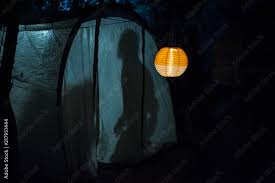
I’d never had any concerns until a couple of months ago when I discovered a tent in the corner of the tunnel. How odd! Once or twice, I’d come across skateboarding teens, but never anyone who seemed to be living there. I couldn’t tell if anyone was inside, cuddled up within canvas. It was zipped shut, and malodourous. I hurried past, hoping it would be gone the next day, but it was still there.

While Japan is a very safe country, bad things sometimes do happen here. There was the guy who dressed up like the Joker and lit a fire on a Tokyo subway on Halloween. There was the woman who killed her neighbors by poisoned curry. Every now and then, some knife-wielding psycho starts slashing strangers in a crowd.

I mentioned the tent to my husband. He thought it was strange, too.

“But there is a camera in the tunnel,” I said.

‘It’s just for show,” he countered. “It’s probably not activated.”

“Maybe I should tell the police,” I said. After I had thought about it, though, I changed my mind. Maybe someone was fleeing an abusive home. Maybe an elderly person who couldn’t make rent was holed up inside. Even though I suspected the worst — some crazed criminal lying in wait — it was possible that there was a perfectly good explanation.

Nevertheless, I avoided going for a walk for the rest of the week. A few days later, I decided that it would probably be safe if I crossed the road instead of going through the tunnel. I set out after dark, as usual, but when I got to the crosswalk before the tunnel, I waited for the light. I saw a patrol car parked on the other side of the road, and two policemen waiting to cross. Maybe I should tell them about the tent, I thought. But I said nothing. We crossed paths without a word.

As I watched them, I realised that they already knew about the situation in the tunnel. That’s where they were headed. I observed as they made their way to the tent and peered at it. I felt sure that everything would be back to normal the next day.

But it wasn’t.

The next time I drove by, I noticed that the tent was still standing. Maybe no one had been inside of it when the police officers dropped by to check it out. Maybe they had left it standing out of consideration for the person who was using it for shelter. Or maybe it was more of a trap, so that they could catch the person when they came back.

At any rate, I was relieved that the police were aware of the tent, and that I no longer had to feel conflicted about whether or not I called them. I continued to cross the road instead of going through the tunnel.

A couple of weeks later, my husband and I had dinner with a friend who often went jogging. She knew about the tent, too, and remarked on how odd it was. No one seemed to know what was going on. I’d heard of out-of-work men sleeping on scraps of cardboard in a Tokyo park, but there were no homeless people in our small town. Not that I knew of, anyway.

Finally, my husband came back from a visit to the shopping mall one evening. He told me that he’d seen a police car and an ambulance near the tent. After that, it was gone. I scanned the local newspaper the next day and watched the evening news, but no one mentioned the tent in the tunnel. Maybe I would never find out what had happened.

I thought of other potentially scandalous events that had never been reported — a preschool teacher knifed by her ex-boyfriend on school grounds, a principal who’d hung himself in his office — and I realised that many things were kept under wraps.

I was reminded not to take my personal safety for granted. It also occurred to me that while people in small towns often complain that everyone knows everyone else’s business, the folks in the small town where I lived were good at keeping each other’s secrets, too.

.

Suzanne Kamata was born and raised in Grand Haven, Michigan. She now lives in Japan with her husband and two children. Her short stories, essays, articles and book reviews have appeared in over 100 publications. Her work has been nominated for the Pushcart Prize five times, and received a Special Mention in 2006. She is also a two-time winner of the All Nippon Airways/Wingspan Fiction Contest, winner of the Paris Book Festival, and winner of a SCBWI Magazine Merit Award.

PLEASE NOTE: ARTICLES CAN ONLY BE REPRODUCED IN OTHER SITES WITH DUE ACKNOWLEDGEMENT TO BORDERLESS JOURNAL

Click here to access the Borderless anthology, Monalisa No Longer Smiles

Click here to access Monalisa No Longer Smiles on Amazon International

Categories
Poetry

Found in Translation: Soubhagyabanta Maharana’s Poetry

Five Odia poems by Soubhagyabanta Maharana  have been translated by Snehaprava Das

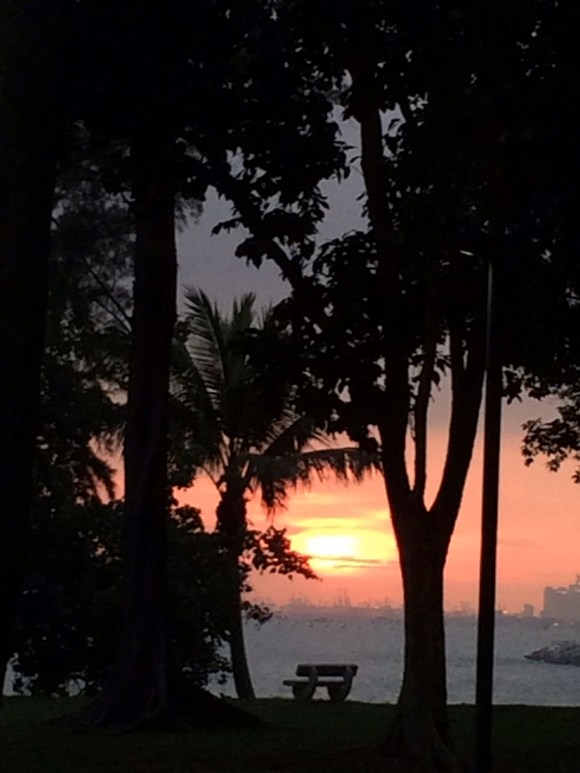
SUNSET: A SYMBOL 

To bridge the agelessly waiting gap
Between an unvoiced luminosity and a vibrant darkness
Sunset is a magic silence,
An indulging over the wispy interlapping
Of light and shadow.

It is an ancient oil-painting
On the old drawing sheet of the sky by a
Bohemian, invisible artist who fills the earth
With a spectrum of the melody of
An unforgettable twilight.

Sunset is the gentle thump of
Disembodied dancers’ feet, tripping
To the rhythm of witch-chanting
On a phantom, ashy-pale stage.

A lifetime that had glowed like a fake sun
In the crimson smile of the earth
Slowly turns black,
And on the black canvas of the sky
Painted in scatters are millions of sparkling stars.

Sunset is a Truth,
A promise of a melodious, bright morning
That the sun dreams of
Slumbering in the palanquin of the night.

SILENCE BETWEEN WORDS

Like a lone, saffron-robed monk
The silence hiding between the words, waits
Keeping awake in secret,
Hoping to get free
from the mysterious chains of mystic incantations.

The bewildering crowd of thoughts stuck between
One word and another,
Before even the mystery of the meaning is unraveled
Confuses the interpreting.

And the silence is left alone,
Weeping, elegizing the loss --
A dumb witness to the unwarranted death of words.

Because the silence does not reveal itself
In happiness,
A sorrow lives permanently in the palpitations
Of the poet’s heart
To bring the un-wilting flowers of poetry
Molded from the poet’s blood into blooming
in their vivid, picturesque charm.

In the unshackled voice of the poet
words and silence seek a nerve center,
in a sensitive, ultimate moment of love
to melt into each other.

Who else other than a poet could gauge
The depth of the silence hidden
In the koel’s song
To bridge the gap between life and death?

A VILLAGE THAT WAS: SKETCHING NOSTALGIA

No one was there waiting eagerly
To meet my shadow,
No one to lament the loss of a village
That was there once.
The smell of love in the wet mud
Has faded with the passage of time.
The melody of spring in the soft breeze,
The shadow of a rainbow on the face of water
Have disappeared too.

The day when I left the village,
A fleeting cloud played hide and seek
In my book-satchel.
The fragrance of the lotus in the village-pond
That wished to caress fondly
The vibrance of childhood on my face
Missed me.
The name of that village lives in me.
A village crowded with forests of Mahula
And throbbing with the song of Adivasis
Dancing in the shadows of the Sal --
The village where rings the rhythm of my birth-cries
in a straw-thatched hut --
the name of that village, has melted into my breath.

A deep sadness pricks me though
That just as I understood the village
I lost my way to it,
Before I could trace the lotus-pond
And inhale its fragrance.
The smoke the factories emitted
Choked me midway,
As I went on narrating the nostalgia
I was left with just myself.
Alone.
While I searched for dreams
Painted in rural shades,
I lost my own self in the pale horizon
Of a smoky, grey sky.

DECLARATION

I gathered the ardour of that missing warmth
From the ashes of a decadent sun
To charge the cold blood that run in my veins.
I gathered the exotic smell of blinking stars
To add years to my life.

My skeletal frame that resembles
some ancient sculptor has a voice.
It can speak, and it can hide
from the eyes of the world
the pain it writhes under,
lest someone use its vulnerability
and sign a sworn statement for befriending
its invisible blood, flesh and sinews.

In every corner of my body that is caged,
In the prison of the elements,
Love sojourns.
And the intimate voice of my shadow-self
Has reached up to the planets and beyond.

The primeval tale of my century-old wait
Has sheltered in the feeble gaze of my eyes
May be, I am designed to stand as
The enemy of Time.
It was perhaps designed so,
That my victory march, with the bugle blowing
Will be declared a glorious success
Against a different backdrop.

RELATIONSHIP: ANOTHER HORIZON

It feels odd at times
To play the hero in
The brief interlude between
Ignorance and innocence.
There are times when a relationship
Founded on poisoned, defiled trust
Tastes sweet.
In the dark sanctum of bitter animosity,
A beguiling god assumes a friendly form
And embraces to overwhelm you
with his gratifying blessings.

Only a fake hero would nurture
The overpowering urge to
Flaunt himself in vain glory on the
Dazzling stage of civility.
It is he who fosters a brazen wish
To draw a line on the water,
And to wish for the moon
In a moonless night-sky.
True friendship is where
The sapling of love grows
Its green foliage
To reach a lofty height
And brings life to fruition.
It’s like a faint streak of light
That illumines a blind alley at night.

A heart bathed in that love
Becomes more sacred than a shrine,
More craved than the potion of immortality.
It is the comfort an orphan child enjoys,
Sleeping inside a cozy culvert
In the chilly night of the month of the Pausha*.

*December- January
Soubhagyabanta Maharana

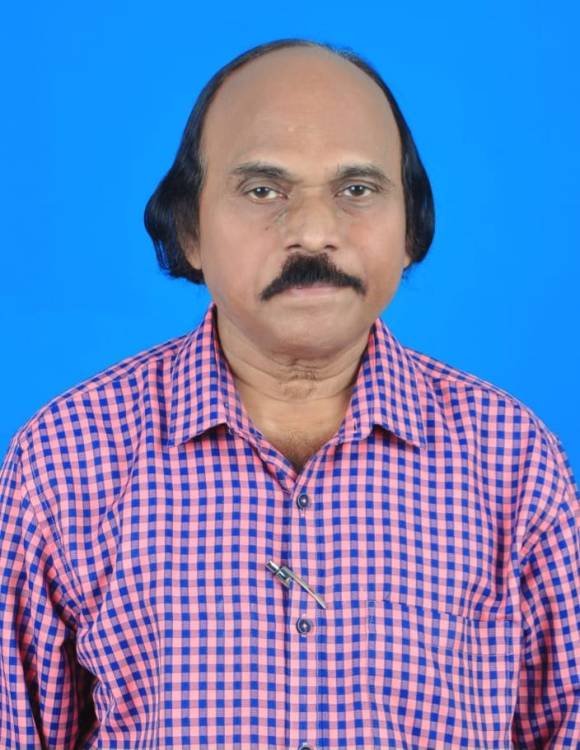
Soubhagyabanta Maharana (b.1951) in the  Bolangir town, Odisha, is a prominent bilingual poet, critic and translator of Odia and English.  He is an awardee of Odisha Sahitya Akademi for poetry in 2010 along with many prestigious literary awards. He has to his credit nineteen poetry collections  and  six essay collections on modern Odia poetry.

Dr.Snehaprava Das, is a noted writer and a translator from Bhubaneswar, Odisha. She has five books of poems, three of stories and thirteen collections of translated texts (from Odia to English), to her credit. 

PLEASE NOTE: ARTICLES CAN ONLY BE REPRODUCED IN OTHER SITES WITH DUE ACKNOWLEDGEMENT TO BORDERLESS JOURNAL

Click here to access the Borderless anthology, Monalisa No Longer Smiles

Click here to access Monalisa No Longer Smiles on Kindle Amazon International

Categories
Bhaskar's Corner

Can Odia Literature Connect Traditional Narratives with Contemporary Ones?

By Bhaskar Parichha

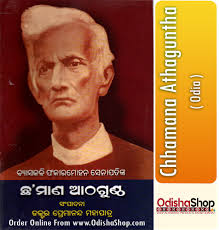
Odia literature is characterised by a profound tradition of classic narratives, with notable examples such as Fakir Mohan Senapati’s timeless Chha Mana Atha Guntha[1].  This literary corpus is further enhanced by an array of mythological and folk narratives that hold significant importance in the cultural legacy of Odisha.

These narratives persist through time because they reflect universal human experiences, encompassing themes such as land, power, family, and morality, all while being intricately linked to the historical context and cultural identity of the region. They serve not only as stories but also as reflections of society, having been shaped and refined over the years.

Readers are consistently attracted to these literary works for reasons similar to those that draw us to the writings of Shakespeare or the epic narrative of the Mahabharata: their themes are enduring, and the insights they provide remain pertinent. Similarly, publishers and curators, even at the national level, often revisit these classic tales, a trend that is entirely justifiable.

However, it is the transition to contemporary matters that strikes a significant chord. Odia literature has been progressing, albeit perhaps not as prominently or visibly as certain other Indian literary landscapes. Modern voices are addressing current issues—urban isolation, the influence of technology, caste relations, and environmental deterioration. The change is evident, yet it remains less pronounced than it has the potential to be.

What accounts for this? There may be multiple reasons.

The literary tradition of Odisha is profoundly embedded in its heritage. Classic literature is not only revered and taught but frequently eclipses modern works. Both publishers and readers exhibit a conservative inclination, preferring established texts. This trend is not unique to Odia literature; for example, Tolstoy remains a central figure in Russian literary discourse. As a result, this inclination obstructs the acknowledgment of new authors.

Modern Odia literature faces considerable challenges in its distribution. In contrast to Bengali or Tamil literature, which benefits from larger urban readerships and established translation networks, Odia books often struggle to reach broader audiences.

While digital platforms are making significant strides in this domain, the overall development is still sluggish. Without a strong market, numerous authors may opt to concentrate on more conventional themes that are viewed as more commercially viable.

The demographic composition of Odisha is primarily rural, where numerous readers find a stronger connection with stories that delve into village life or ethical dilemmas, as opposed to genres like cyberpunk or themes focused on existential angst. Although there are urban Odia authors, their readership is frequently limited in range. As a result, contemporary themes may seem alien to those who maintain a deep bond with traditional cultural settings.

The literary language of Odia typically possesses a formal tone, significantly influenced by its classical roots. This can lead to a conflict with modern terminology and global themes, posing challenges for writers who wish to innovate without jeopardising their connection to the audience. In contrast, languages such as Hindi and Malayalam readily incorporate colloquial expressions, which thrive in contemporary literature.

Nonetheless, modern Odia literature is dynamic and progressing. Short story writers are exploring a variety of topics including religion, science fiction, feminism, leftist ideologies, and climate change. Prominent authors such as Sarojini Sahu, Satya Mishra, Rabi Swain, Sadananda Tripathy, Jyoti Nanda, Bhima Prusty, Janaki Ballabh Mohapatra, Ajaya Swain, Biraja Mohapatra, Sujata Mohapatra and young writers like Debabrata Das  are actively investigating these contemporary themes. Publications like Kadambini, Rebati, and Katha are offering platforms for these creative narratives.

Despite this, the main obstacle remains the need to improve visibility. Social media and over-the-top (OTT) platforms have the potential to revolutionise this landscape—just picture an Odia adaptation of Black Mirror[2]!

There is an immediate need for greater investment in Odia storytelling to effectively bridge the gap between traditional and modern narratives.

.

[1] Six acres and a Third, a novel by Fakir Mohan Senapati(1843-1918) published in 1902

[2]Black Mirror is a British dystopian science fiction television anthology series that started in 2011 and is still on the run.

.

Bhaskar Parichha is a journalist and author of Cyclones in Odisha: Landfall, Wreckage and ResilienceUnbiasedNo Strings Attached: Writings on Odisha and Biju Patnaik – A Political Biography. He lives in Bhubaneswar and writes bilingually. Besides writing for newspapers, he also reviews books on various media platforms.

.

PLEASE NOTE: ARTICLES CAN ONLY BE REPRODUCED IN OTHER SITES WITH DUE ACKNOWLEDGEMENT TO BORDERLESS JOURNAL

Click here to access the Borderless anthology, Monalisa No Longer Smiles

Click here to access Monalisa No Longer Smiles on Amazon International

Categories
Poetry

Poems by Vern Fein

Vern Fein

BOSOM BUDDY

My seven-year-old grandson
is his own best friend.
Has many school buddies
but plays for hours
with his creative self—
art work, Star Wars structures,
films movies on his IPad,
imitates Michael Jackson dances—
never afraid to be alone.

In my childhood, I rode imaginary horses.
Smoky, my invisible steed,
wherever he would gallop.
Then, my green and white Schwinn—
named Los Cappacaros from a Western
about some cool bandits—
took me into my teens.

Imagination
as a childhood playmate,
such a fine gift.


CONVALESCENCE

My dog leaps into
a mellowing life.
Her leg buckles to surgery.
Too young to put down,
she breaks my heart,
a helpless creature,
beautiful big black
eyes, a forlorn quiz.

In my old age, I come alive
to pet and whisper
into her perked ears
why she now lives in a cage
unable to chase
her squirrel foes,
attack the garbage truck
at the back fence,
protect me from the neighbour dog.

In her convalescence
that will never make sense to her
she fills my limited lifetime
as if it will go on forever.

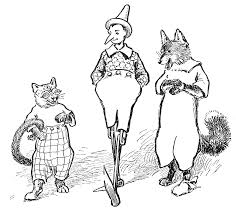
PINOCCHIO

Pinocchio’s nose began to grow.
The cat and the fox whiskered him over.
“What’cha got boy?”
He doesn’t know his nose has grown.
He thinks they want the pennies in his pocket,
the hat Gepetto made him.
Fox says: “What a great nose. How’d you do that?”
He touches his nose and scares his hand.
“I don’t know,” he stammers.
Cat says: “Tell the truth!”

From Public Domain

Vern Fein has published over 300 poems and short prose pieces in over 100 different sites. His second poetry boo, Reflection on Dots, was released late last year. 

.

PLEASE NOTE: ARTICLES CAN ONLY BE REPRODUCED IN OTHER SITES WITH DUE ACKNOWLEDGEMENT TO BORDERLESS JOURNAL

Click here to access the Borderless anthology, Monalisa No Longer Smiles

Click here to access Monalisa No Longer Smiles on Kindle Amazon International