Categories
Tagore Translations

‘Asha’ by Rabindranath Tagore

Asha or Hope is a poem from Tagore’s collection, Kalpana (Imagination, 1900).

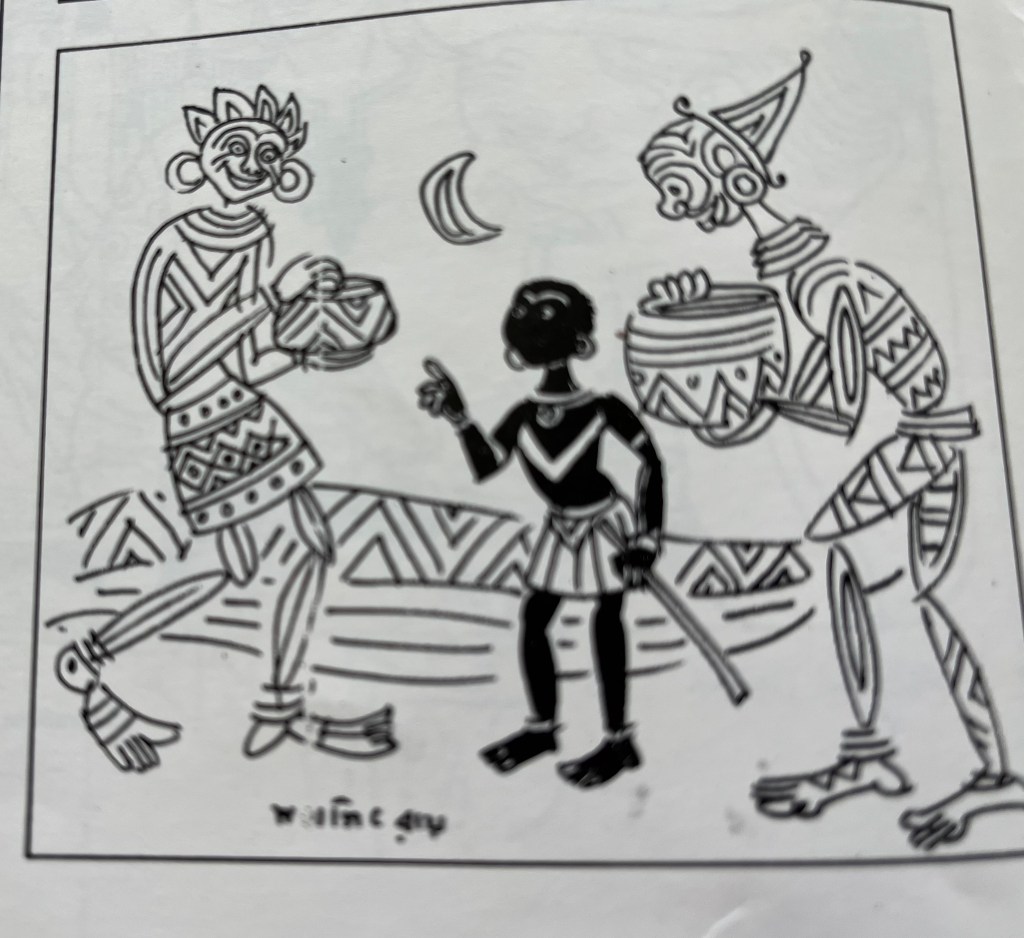
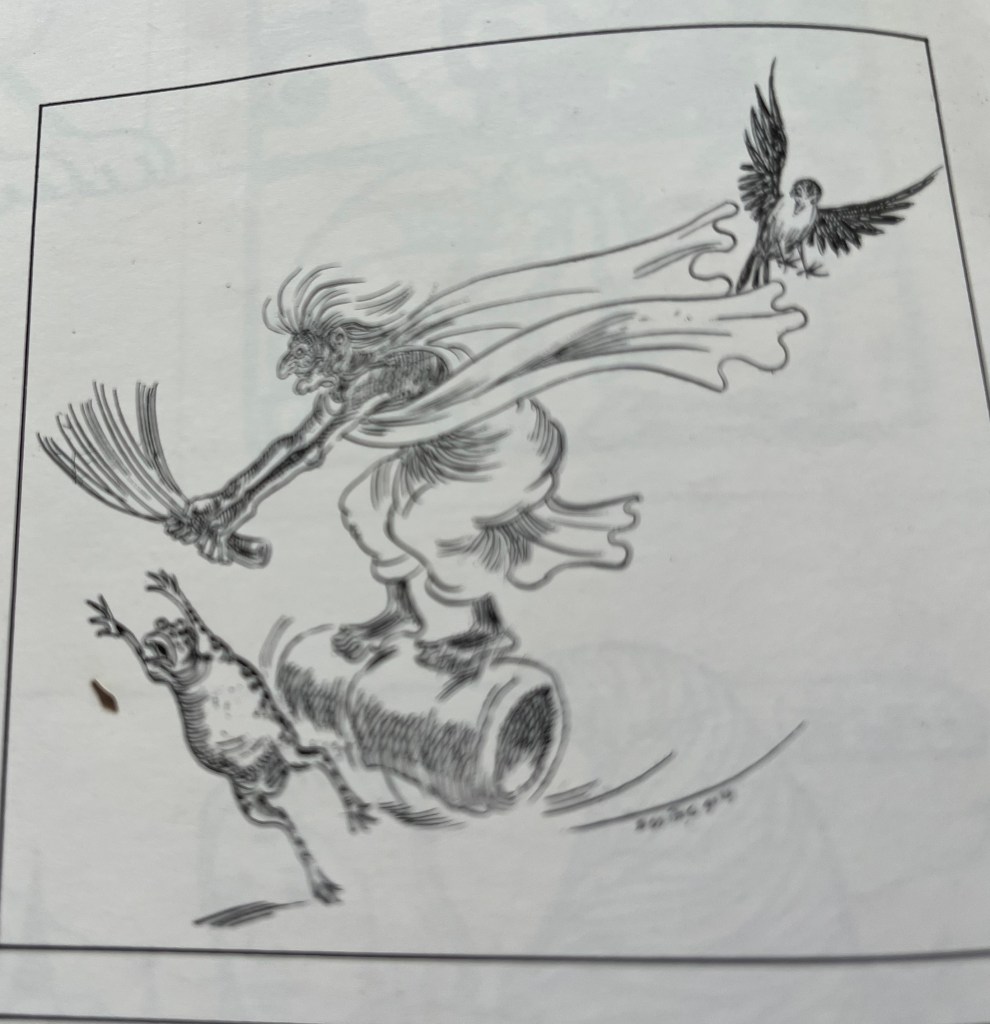
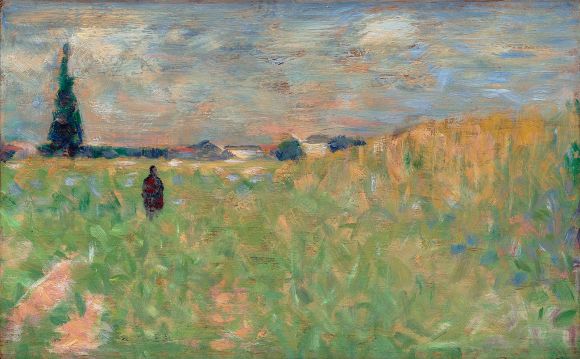
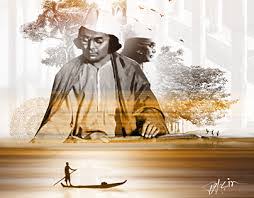
Art by Sohana Manzoor
HOPE

When the sun set on my life,
You welcomed me, O mother of mine.
Opening the doors of your inner sanctum,
You planted a kiss on my temples,
Lit a timeless lamp at my bedside. My neck
Was with a string of thorny blooms decked
To honour my songs. It hurt, it burnt —
Till taking off the wreath, you plucked
Each thorn off with your own hands,
Washed the dust. That garland —
With blooms now clean and white —
You draped on me as your eternal child.
My eyes opened as tears streamed.
I woke up to find it was only a dream!

This poem has been translated from Bengali by Mitali Chakravarty with editorial input from Sohana Manzoor.

.

PLEASE NOTE: ARTICLES CAN ONLY BE REPRODUCED IN OTHER SITES WITH DUE ACKNOWLEDGEMENT TO BORDERLESS JOURNAL

Click here to access the Borderless anthology, Monalisa No Longer Smiles

Click here to access Monalisa No Longer Smiles on Kindle Amazon International
Categories
Nazrul Translations

Nazrul Lyrics Translated by Fakrul Alam

Professor Fakrul Alam translates two songs by Nazrul on social isssues from Bengali

Born in united Bengal, long before the Partition, Kazi Nazrul Islam (1899-1976) was known as the  Bidrohi Kobi, or “rebel poet”. Nazrul is now regarded as the national poet of Bangladesh though he continues a revered name in the Indian subcontinent. In addition to his prose and poetry, Nazrul wrote about 4000 songs.

Arise O Woman

Arise, o woman, arise flaming!
Arise, daubing your forehead blood-red,
Everywhere unfold your flaming tongue.
Dance wildly—excited, inspired.
Arise, hapless, maligned snake,
Awake, kindling the world aflame!
Burn briskly, o fume-filled smoky one,
Arise, mothers, daughters, brides, wives, nieces.
Arise prostitutes, cast out, exiled ones
With the tidal force of the Ganges, arise,
Down-trodden ones. Streaking clouds with lightning
Arise, aroused by Durga, the ever-triumphant one.
‘Arise O Woman’ performed in Bengali
Two Flowers on One Leafstalk 

Hindu and Muslim -- two flowers on one leafstalk --
Muslim its jewelled eyes, Hindu its heart and soul!
In the lap of their mother, the same sky is reflected,
Where sunlight and moonlight alternately sway.
Within their bosoms the same blood courses
While the same navel string binds the twain.
We breathe the same earth mother’s air
And drink the same earth mother’s water.
In her bosom, the same fruits and flowers grow.
In the soil of the land are burial sites quite akin --
Doesn’t matter if one is called Gore -- the other Shoshan!
We call out to our mothers in the same language.
We sing for them songs strung in similar tunes!
‘Two Flowers on one Stalk’ performed in Bengali

Fakrul Alam is an academic, translator and writer from Bangladesh. He has translated works of Jibonananda Das and Rabindranath Tagore into English and is the recipient of Bangla Academy Literary Award (2012) for translation and SAARC Literary Award (2012).

PLEASE NOTE: ARTICLES CAN ONLY BE REPRODUCED IN OTHER SITES WITH DUE ACKNOWLEDGEMENT TO BORDERLESS JOURNAL

Click here to access the Borderless anthology, Monalisa No Longer Smiles

Click here to access Monalisa No Longer Smiles on Amazon International

Categories
Nazrul Translations

The Day of Annihilation: An Essay on Climate Change by Kazi Nazrul Islam

Translated from Bengali by Radha Chakravarty

A very wise, experienced scientist has recently decided that the day our world will be annihilated (we may call it pralay or roz-qayamat) is not really as far away as we think. Let us discuss this, keeping in mind all the discussions on the subject that have been unfolding over the last few years.

In the last half-century, it has been observed that the floating icebergs in the South Polar region are expanding continuously. Edmund Smitharth, captain of The Edmont, first sighted an iceberg 580 feet high. Subsequently, Mr Scott saw an iceberg even higher than 600 feet. But a sailor aboard The Edgenta discovered, even in the ocean, a floating iceberg higher than 1000 feet, and that left the whole world wonderstruck. It was later calculated that this iceberg was 9612 feet thick: in other words, it was more than a mile and three-quarters wide.

In the southern hemisphere, the number of gigantic iceberg-clusters has been steadily increasing. And it is for this reason that the temperatures in the South Polar regions are rising tremendously. The remote floating iceberg-clusters in the North have created extreme cold weather in South Africa and South America. Other places can’t compare with these regions when it comes to freezing temperatures. Buenos Aires has recently experienced a snowfall. The country had never witnessed a snowfall before.

What does all this mean? In the opinion of Professor Lewis and other great scientists, the second Great Flood or Great Destruction of our Earth is imminent. Even if the whole world is not destroyed, there is no doubt that at least part of it will be annihilated.

The vast, sky-high ice-cap that covers the South Pole is 1400 miles in length. There is no knowing how many hundred miles wide it might be! Now, what will be the result of this continuous, unbearable warming of the atmosphere at the South Pole? Everyone knows that ice melts when heated. Hence, on account of the extreme heating of the South Pole, those thousands and thousands of giant iceberg clusters covering immense expanses of space will break and dissolve, and a mass of waves, surging sky-high, like the Himalayas in motion, will spread in all directions, drowning everything in their wake. First of all, the low-lying parts of the world, the southern continents will be afflicted by this great deluge.

In ancient times, our ancestors were terrified of comets, for they did not know what comets are. Our forefathers of subsequent generations had acquired more knowledge on this subject, but they too were very afraid of comets and considered them inauspicious. For they believed that the head of such comets was solid, hence a chance collision when passing so close to Earth might destroy the whole world.

Now we have got to know that the comet is not a solid unit, but vaporous like the mist. Hence, if by chance the odd comet does collide with Earth, it would not smash a deep crater into any part of our planet, nor would it fling us out of Earth’s gravitational field.

But the famous French astrologer Monsieur Camilles Flammarionhas arrived at a dreadful conclusion. It is his belief that the vaporous tail of the comet is full of poisonous gases, and hence, if the comet once comes into contact with Earth, all life on our planet will be extinguished by those toxic gases, in a single instant. The beauty, flavour and fragrance of  planet Earth will be wiped out forever!

The complete chemical explanation for the creation of comets is not yet within our grasp, but everyone can easily apprehend that the comet surely loads its tail with gas. This gas can easily suck the nitrogen from our Earth’s atmosphere, and if that were to happen, it would spell death for us, no matter what! It was not for nothing that our forebears disliked this thing called a comet so intensely! As the saying goes, ‘He appeared on the horizon of my destiny like a comet!’ For the fortunes of Earth, too, the comet is indeed inauspicious and harmful.

Anyway, if the comet sucks nitrogen from the air, then we will receive only oxygen. True, oxygen enhances blood circulation and physical as well as mental efficiency, but then, pure oxygen can be terribly dangerous. Hence, if we receive only volatile oxygen when we breathe, our body temperature will continue to rise, and eventually, we will burn to ashes.

In the Coal Age, the atmosphere of our Earth was heavily loaded with carbonic acid. In those times, humans could not have tolerated that air. Only fish and reptilian creatures survived in flowing waters and still air. Gradually, with the vast, extensive growth of plants, trees and vegetation, that poisonous still air began to disappear, the sky grew clear, and thus did this atmosphere become suitable for warm-blooded creatures.

At present, the human race is terribly busy mining coal and utilizing it. Do you know what age this coal belongs to? It can only be the legacy of that age many hundreds of thousands of eons ago when the atmosphere was full of carbonic acid, and of the trees and vegetation of those times, for even now, it is only the wild trees and vegetation that can absorb that carbonic acid.

Every lump of coal, every matchstick that is lit, depletes, daily, the oxygen that is vital for us. A famous English scientist has recently announced that the world’s supply of oxygen is continuously being dissipated, and therefore the air is also steadily becoming polluted. Hence the day is nigh when everything on earth will be transformed into the life forms of the age of carbonic acid.

Human beings will gradually become smaller and more fragile, until they begin to resemble Lilliputians and ultimately, they will become completely extinct! And then, it will end as it all began! In other words, just as fish and reptiles were the only life forms at the beginning, so also, in the future, the avatars of those humongous giant-fish and giant-reptiles will flourish again here, their health and vigour restored. Even the very thin, long, humble reptilian creatures of the prehistoric age, such as earthworms and snakes, will rule again over our mounds and ant-hills, in very large numbers.

If the human race gives up the harmful over-use of coal that we see today (just burning coal is wasting 1600 million tonnes of oxygen per year), and subsequently, if they manage with electricity as a substitute for coal, then we will again be forced to fall into the abyss of a new threat! In other words, whatever path you take, death is inevitable. We are caught between the devil and the deep blue sea!

The gradual transformation of the environment over time has become noticeable. Thunderbolts—especially, the incidence of thunderbolts in winter—are continually increasing. And the reason is simple: it is the clash between the electricity of the earth and that of the sky that is causing this barrage of thunderbolts! So, what is the way out? That is why, perhaps, Pannamoyi has already sung, as if to predict the future: “moribo moribo sakhi, nischoyei moribo!” (“I will die, I will die, O friend, for sure I will die!”)

Suppose, for instance, if we were to increase the current pressure on the atmospheric electricity a hundredfold or a thousandfold. Would flowers ever bloom again in basanta, the season of spring? Will new green leaves appear? Will the ardent downpour of varsha, the rainy season, ever moisten the earth’s bosom again? No, no, they wouldn’t! Instead, it is the thunderbolts that would become the regular daily occurrences on our Earth.  Struck by hundreds of thunderbolts every day, the earth would be torn apart. An astute meteorological scientist says, “Yes, yes, that is what will happen, ultimately!” How horrifying! What we should do now is, to convince ourselves, collectively, that the gentleman’s words are untrue, and he has misinterpreted the situation. Look at Sujji Mama—Surya the sun, our maternal uncle—our source of life and light! He not only creates light and heat, but is also the progenitor of electric power. And he the only mama we have, who will move circumspectly, to maintain the balance of this mysterious unknown force of nature. Long live Mama!

At present, Sujji Mama’s power is so tremendously forceful, that if all his rays and brilliance were to fall solely upon this poor earth of ours, then in just a minute and a half, the giant ice-mountains I spoke of earlier would all melt down and begin to boil. And if it lasted another eleven seconds, the vast ocean stretches of this world would all dry up, the earth’s surface cracking open to reveal yawning chasms.

But even Sujji Mama is growing diffident, and shrinking day by day. We don’t know yet how much mass his giant bodyloses, little by little, each day. Professor Burns vehemently declares that this shrinking of Sujji Mama is progressing at a very rapid pace. So rapid that we can’t even hazard an approximate guess. In a very short time, observing the reduction in the sun’s heat, we will be able to understand whether it is actually shrinking or not.

Shrinking to a smaller and smaller size in this manner, when Sujji Mama gives up the ghost—in other words, when he ceases to exist— it is terrifying to even imagine what the plight of planet Earth will be. All the water will freeze and become harder than stone, but it will be a fine sight—dazzling as a diamond! This air, which we can’t see at present, will then descend in a shower of giant drops. These will again collect in the cavernous spaces, and turn into lakes clearer than glass, but waveless, indifferent, unruffled! For no breeze will blow then, after all. In the harshness of the merciless cold, the whole Earth will then become frozen, still, immobile. Only fog and a dim mistiness will remain.

The sun will gradually turn red, and remain the same hue of red all day. Just like a half-cooled, burning, molten iron mass! In the daytime itself, the whole sky will fill with even brighter stars! Let us pray to Allah the Great!

[From Selected Essays by Kazi Nazrul Islam. Translated by Radha Chakravarty. New Delhi: Penguin Random House & Nazrul Centre for Social and Cultural Studies, 2024. Published with permission from Penguin Random House India}

Born in united Bengal, long before the Partition, Kazi Nazrul Islam (1899-1976) was known as the  Bidrohi Kobi, or “rebel poet”. Nazrul is now regarded as the national poet of Bangladesh though he continues a revered name in the Indian subcontinent. In addition to his prose and poetry, Nazrul wrote about 4000 songs.

Radha Chakravarty is a writer, critic, and translator. She has published 23 books, including poetry, translations of major Bengali writers, anthologies of South Asian literature, and critical writings on Tagore, translation and contemporary women’s writing. She was nominated for the Crossword Translation Award 2004 and the Pushcart Prize 2020. 

.

PLEASE NOTE: ARTICLES CAN ONLY BE REPRODUCED IN OTHER SITES WITH DUE ACKNOWLEDGEMENT TO BORDERLESS JOURNAL

Click here to access the Borderless anthology, Monalisa No Longer Smiles

Click here to access Monalisa No Longer Smiles on Amazon International

Categories
Poetry

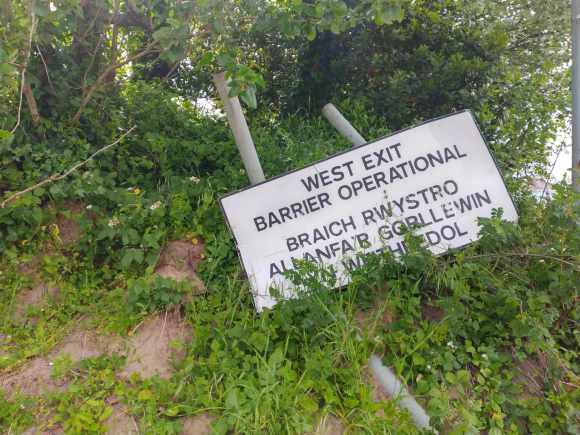
West Exit Barrier

Photograph and Poem by Rhys Hughes

West Exit Barrier Operational,
declares the sign,
but I ask you: is this really the
best way to ease
my considerable stress?

I am a carrier for a postal outfit.
Dressed in a vest
and shorts and little else,
I confess to feeling
vexed by the implications.
The package I carry contains
something sensational.

Dare I risk passing under such
a rickety barrier?
Don’t look now but my precious
cargo has come all the way from
Lucknow in India,
and I am supposed to deliver it
safely to Ludlow,
a town on the border of Wales.

But the West Exit Barrier doesn’t
look to me as operational
as it claims to be
and I find this fact worrying.

What’s the point of hurrying if I
run into a trap?
My package is full of sweets
from the streets
of the City of Nawabs, wrapped
carefully and warily.

Shahi Tukda, Sheermal, Nawabi
Zafrani Kheer, Makhan Malai,
Kali Gajar ka Halwa…

All as pleasing to the famished
eye as they are
to the drooling mouth.

I suspect an ambush ahead.
Some villain with a craving for
sweets intends to
knock me over the head
and render me unconscious.

Then he will loot my package
and gorge himself
and in my unplanned sleep I
will dream that I am
forging ahead on my mission.

But when I awake with a skull
as heavy as lead,
throbbing and wobbling on my
aching neck,
it will become apparent that I
failed to fulfil
my vow to my regular clients.

I promised to defend
their sweets with all my might!
What a sight it will be
if I am found asprawl,
able only to crawl, victim of an
outrageous robbery!

What should I do
to assure the safety of delights
that can be chewed?
I might as well open the parcel
and eat them myself
just to keep them out of the hands
of the scoundrels
who plan to steal and scoff them.

Then the sweets
will be safe for eternity
in my stomach and the West Exit
Barrier will hold no
terrors for me, operational or not.

Yes, that’s the best
solution to the difficulty I face.
Waste not, want not.

With maximum grace
I devour the lot
and now my vest no longer fits
me: I slump in
satisfied torpor, a justified hero,
chomping jaw
swollen slightly, adjacent to the
West Exit Barrier,
and I no longer care about how
operational it is.

Rhys Hughes has lived in many countries. He graduated as an engineer but currently works as a tutor of mathematics. Since his first book was published in 1995 he has had fifty other books published and his work has been translated into ten languages.

.

PLEASE NOTE: ARTICLES CAN ONLY BE REPRODUCED IN OTHER SITES WITH DUE ACKNOWLEDGEMENT TO BORDERLESS JOURNAL

Click here to access the Borderless anthology, Monalisa No Longer Smiles

Click here to access Monalisa No Longer Smiles on Kindle Amazon International
Categories
Stories

The Last Metro

By Spandan Upadhyay

The platform was empty. My footsteps echoed back at me as if mocking this sterile, hollow space. I had been here a thousand times before, but never like this—never in the aftermath of such a disaster. 9:30pm, and the metro hadn’t shown up yet. I sat down, unsure of where else to be. The evening had been a slow car crash — every minute at that poetry reading had scraped away at my dignity. Each time I glanced up from my notebook, I caught the same expression on people’s faces, that slightly bored politeness, the kind reserved for an artist you’ll never remember.

I loosened the strap of my satchel and rubbed my shoulder, trying to push the night out of my mind, but it stuck, like the words of my poems, lingering. Why had I called them ‘Words Left Unspoken’? It seemed so pretentious now, as if I was grasping for some profound truth when, really, they were just words no one cared to listen to. I saw my reflection in the mirror on the platform. Green kurta, brown sandals and black rimmed glasses, I didn’t really command much attention. Why would anyone care to listen to me anyway?

I glanced around the station. It felt unreal, like some purgatory where time stretched on forever, with nothing to look forward to. The fluorescent lights flickered, and the only sound was the occasional distant rattle of a train that would never come. Or at least it felt like it.

This city, Kolkata—it was once a place where artists mattered, where poets walked down College Street with a cup of tea in one hand and a burning idea in the other. Now? Now, the city didn’t care about poetry. It cared about money, about practicality, about getting from one station to the next as fast as possible.

I checked my phone again. Though there wasn’t really much to check. The poetry circle WhatsApp group was silent, like the station itself. No one had said a word about my performance. Probably because they were all too busy posting Instagram stories from some hipster café by now.

My eyes wandered to the far end of the platform. That’s when I saw her.

She was standing under one of the dim lights, a woman in her late forties, maybe early fifties, her face lined with age and fatigue. She had a basket of flowers slung over her arm—wilting roses, chrysanthemums, marigolds, all tired-looking, much like their owner. I’d seen her here before, always in the same spot. She was a fixture of the station, but I’d never paid much attention.

Tonight, though, there was something about her that pulled at me, maybe because she seemed as out of place as I felt.

I stood up, more out of curiosity than anything else, and walked toward her. My footsteps sounded loud in the silence, but she didn’t seem to notice.

“Flowers at this hour?” I asked, my voice echoing off the walls.

She glanced at me, her eyes sharp, measuring me up. “Metro or no metro, people still need flowers. Weddings, funerals, who cares? Life goes on.”

Her voice was raspy, like someone who’d spent years yelling into the wind. And yet, there was something calm about her. Resigned. It felt familiar.

I shrugged. “Strange place to sell them, though.”

She didn’t look at me this time, just adjusted the flowers in her basket, fingers working methodically. “It’s quieter down here. Besides, I’m not here for the regular crowd. I’m here for people like you.”

“Like me?” I frowned.

“Late. Alone. Waiting for something that’s probably not coming.”

The words hit me like a slap, sharper than I expected. There was a tired smile on her lips when she finally looked up, and in her eyes, I saw something I didn’t want to acknowledge—recognition.

I smirked, though I didn’t feel like it. “I guess that makes two of us then.”

She chuckled softly. It was a strange sound, not of amusement but of knowing. She leaned back against the wall, the flowers now forgotten at her side. “You’re one of those types, aren’t you? The ones who think too much.”

I should’ve been offended, but I wasn’t. She was right. I was one of those types. I lived inside my own head more than I lived in the real world. “I suppose I am.”

Silence enveloped us, thick and uncomfortable, but I didn’t move away. Maybe it was because I had nowhere else to go, or maybe it was because this was the first time in a long while that someone had spoken to me without the usual pretence. The usual platitudes.

“What about you?” I asked, breaking the silence. “What’s your story?”

Her eyes flicked to me again, and for a moment, I regretted asking. It sounded cheap, like I was trying to force a connection where there wasn’t one. But she didn’t seem to mind. If anything, the question seemed to amuse her.

“My story?” she repeated, almost as if tasting the words. “My story is this city. I came here when I was a girl, like so many others. Thought I’d find something—maybe love, maybe money. Instead, I found nothing. Just a city that takes everything and gives you nothing back.”

I nodded, though I wasn’t sure why. I wasn’t anything like her. I wasn’t scraping by selling flowers at a metro station. But her words felt true, as if they could just as easily be mine.

“I know that feeling,” I said quietly, more to myself than to her.

She tilted her head, her eyes narrowing slightly. “Do you? What did the city take from you?”

I swallowed. How do you explain to someone that the city hadn’t taken anything tangible? It hadn’t taken my house or my livelihood. It had taken my belief, my sense of purpose. It had eroded me slowly, bit by bit, rejection after rejection.

“I wanted to be a poet,” I said, almost ashamed of how small that sounded in comparison. “But it turns out, poetry doesn’t pay the bills.”

The woman smiled — a slow, tired smile, but a smile nonetheless. “Ah, poetry. That’s a different kind of hunger.”

She stood up straight then, looking at me with something like pity in her eyes. “And has the city fed that hunger? Or has it starved you?”

I felt my throat tighten, that familiar ache creeping up again. The answer was obvious, but saying it aloud would make it too real.

“Starved me,” I whispered.

She nodded, as if she already knew. As if that was the only answer she had ever expected. “This city has a way of doing that,” she said softly. “But you’re still here, aren’t you? Still waiting.”

I couldn’t look at her anymore. The sound of a train rumbled in the distance, but it didn’t matter. I wasn’t waiting for the metro. Not anymore.

*

The rumble of the approaching train faded, leaving only the familiar, dead silence behind. I stared at the woman, still leaning against the grimy wall, and realised how little I knew about her—this strange fixture of the metro station who spoke with such familiarity about a city I thought I understood.

I glanced at her basket of wilting flowers. The roses, once bright and promising, now drooped sadly, much like everything else in this place. I wanted to ask her something more meaningful, but I wasn’t sure where to start. Every time I opened my mouth, it felt like I was playing a part in a scene I hadn’t rehearsed for.

“How long have you been selling flowers?” I asked, almost awkwardly, knowing it wasn’t the right question, but asking it anyway.

She looked at me, then down at the basket as if only just remembering the flowers were there. “Long enough,” she replied with a wry smile. “It’s been… what, twenty years?”

“Twenty years?” I repeated, surprised. “At this station?”

She chuckled, shaking her head. “Not here, no. I used to sell near Howrah Bridge. It was better business back then. People actually bought flowers to take home. Now, people are too busy for things like that. They’re always in a rush—running to catch a train, running to get home. Nobody stops anymore. But down here, there’s time. The waiting… it slows everything down.”

Her words struck me in a way I hadn’t expected. The waiting—it was something I knew all too well. I wasn’t just waiting for the metro; I had been waiting for years, for something that never came. For recognition, for understanding, for someone to care about the words I scribbled on pages night after night.

“You said you came here when you were young. What brought you to Kolkata?” I asked, sensing there was more to her story than just flowers.

She hesitated, her eyes shifting toward the empty tracks. For a moment, I thought she wouldn’t answer. But then she sighed, the weight of the years settling into her voice. “A man,” she said simply. “A musician. He played the harmonium—beautifully, like he could make the city itself sing. I followed him here, thinking we’d make a life together. I was just a girl, then. What did I know?”

The way she said it—so matter-of-fact, without a trace of bitterness—made it seem like she had long ago accepted the futility of it all. But I could hear something else beneath her words, a kind of nostalgia wrapped in pain. Her story wasn’t unfamiliar; I had heard versions of it before. Hell, I had lived it, in my own way.

“What happened to him?” I asked, not sure if I was overstepping.

She smiled, but it didn’t reach her eyes. “What happens to all men like that? He left. One day, he just… disappeared. No note, no goodbye. Just gone. I waited for him—days, weeks—but I knew. Deep down, I knew he wasn’t coming back.”

She let the words hang in the air between us. I didn’t know what to say. What could I say? There was no way to ease that kind of loss. It wasn’t the kind you could fix with words. It just stayed with you, like a dull ache you learned to live with.

I shifted uncomfortably, memories of my own failed relationships creeping in, uninvited. I had been left before, too. Not in such a dramatic way, but in small, gradual steps. I had been with someone once—Megha, a girl who loved art, who loved the idea of poetry as much as I did. We would sit together in the old cafés of College Street, drinking endless cups of tea, talking about books and writing and the meaning of life.

But my ambition had killed it. She grew tired of waiting for me to be someone, tired of the rejection letters, the endless nights where I’d stay up writing instead of being with her. She had wanted a future, something stable, something real. I couldn’t give her that. I couldn’t be practical. And so, just like the woman’s musician, Megha had left.

I cleared my throat, trying to push the memory away. “Why did you stay here? In the city, I mean. After he left?”

She looked at me, surprised by the question. “Where else was I supposed to go?” Her voice was soft, as though the answer should have been obvious. “Once you come to this city, it doesn’t let you leave. Not really.”

I nodded, understanding more than I wanted to admit. Kolkata did that to people. It pulled you in with its promises of art, of culture, of something greater than yourself. But once you were here, it chewed you up and spit you out. And yet, you stayed. You stayed because there was something about this place, something that kept you hoping, even when you knew better.

“I stayed because this is where everything happened,” she continued, her voice barely above a whisper. “This is where I loved, where I lost. And I figured if I left, it would all disappear, like it had never happened. The city… it holds the memories.”

She looked away then, her gaze drifting toward the tracks again, as if waiting for something that wasn’t coming.

I understood her in a way I didn’t expect to. I had stayed for the same reason. I had stayed because leaving would mean admitting that none of it had mattered—my poems, my dreams of becoming something more than just another face in the crowd. As long as I stayed, I could pretend that maybe, one day, things would change. Maybe one day, someone would listen.

The sound of another train rumbled faintly in the distance, but neither of us moved.

*

I stayed quiet for a while, letting her words sink in. The idea that Kolkata held memories—it was strange how true that felt. The city never let you forget. Every street corner had a history, every old café carried the weight of conversations long past. And if you had been here long enough, like I had, those memories started piling up on you, like layers of dust on an old book you no longer bothered to open.

The woman shifted, the flowers rustling in her basket. She wasn’t looking at me anymore; her eyes were somewhere far away, back in whatever time she was remembering.

“We used to walk,” she said suddenly, her voice softer now, almost wistful. “All over the city. He used to play his harmonium on the ghats by the river, you know. I thought… I thought we’d stay like that forever.”

I could almost picture it: her and this mysterious musician, strolling through the old streets of Kolkata, full of hope, maybe even a kind of reckless love. The kind of love that felt invincible when you were young, when the world hadn’t yet shown you its teeth.

“And you believed in him,” I said, not as a question, but as a statement. Because of course she did. That’s what love did—it made you believe, even in the most absurd dreams.

She nodded. “Yes. I believed in him. I believed that the music would carry us through. I believed in the city, too. I thought this was the kind of place where people like us could thrive, where art mattered.”

Her words echoed something I had thought once. Maybe still did, deep down.

“And now?” I asked.

She didn’t answer right away. Her fingers traced the edge of one of the wilted flowers, and for a moment, I thought she wasn’t going to say anything. But then she looked up, her eyes meeting mine. “Now, I don’t know. I think… maybe I was wrong. Maybe this city only cares about those who already have something. If you come here with nothing, you leave with even less.”

That hit me hard. I thought of all the nights I had spent in tiny cafés, hunched over my notebook, scribbling out poems with the belief that this city—the same one that had raised writers like Tagore and Ghosh — would eventually recognise me. I thought of all the open mikes I had attended, all the rejection letters I had collected over the years. The city had taken my words, my effort, and it had given me nothing in return.

But, like her, I had stayed. I had stayed because I didn’t want to believe I was wrong. I didn’t want to admit that maybe this city wasn’t what I had imagined it to be.

I rubbed my face, trying to shake off the feeling that was creeping up on me. “I used to believe too,” I said quietly. “When I first came here… I thought Kolkata was the place where dreams happened. I thought it would embrace me.”

I wasn’t sure why I was telling her this. I hadn’t even said it out loud to myself before. But there was something about the way she spoke, the way she seemed to understand without judgment, that made it easier to confess.

She didn’t respond, but there was a look in her eyes that said she understood.

“I came here to be a poet,” I continued, feeling the weight of those words more heavily than I had before. “I thought I had something to say, you know? I thought people would listen.” I laughed, though there was no humour in it. “But the city doesn’t care. No one listens. They just… move on. Poetry doesn’t matter to them.”

“Poetry matters,” she said softly, surprising me. “It’s just that most people don’t realise it does.”

I wanted to believe her. I really did. But it was hard, after all these years. I couldn’t even remember the last time someone had genuinely cared about what I had written.

The silence between us thickened, and I found myself drifting back to a time when things were different. The early days, when I had first arrived in Kolkata. I remembered the excitement, the feeling that the city was alive with possibilities. I had been younger then, full of optimism. And I hadn’t been alone.

There was Megha.

The memory of her came back so suddenly, it was like a punch to the gut. I hadn’t thought about her in a long time—not really. Not in any meaningful way. But now, in this quiet station, with this woman who reminded me too much of lost things, Megha’s face rose to the surface.

I could see her as clearly as if she were standing in front of me: dark hair that always fell into her eyes, a quick, teasing smile, the way she’d sit across from me in a café, her hands wrapped around a cup of tea, listening intently as I read her some new poem I was working on. She had loved words as much as I did. Or at least, that’s what I had thought.

We had met during my first year in the city. She was a literature student at Presidency, full of fire and ideas, always debating something, always questioning. She was the kind of person who seemed like she could change the world if she wanted to. And for a while, I thought we could change it together.

We spent hours in each other’s company, walking through the narrow lanes of College Street, visiting the old bookstalls, talking about poetry and art like they were the only things that mattered. I had never felt so alive, so full of potential. With Megha, everything seemed possible.

But ambition has a way of turning on you.

I had wanted to be a poet so badly, wanted to make my mark in the world of letters. I spent every waking moment writing, trying to create something that would last. I thought Megha understood, but slowly, I could feel her slipping away. She grew tired of waiting for me to “make it,” tired of the uncertainty, the nights where I chose my poems over her. She wanted stability, something I couldn’t give.

The end had been slow, like a candle burning itself out. One day, she was just… gone. She hadn’t left like the woman’s musician, without a word. But when she said goodbye, I knew it wasn’t just the end of us—it was the end of the belief that love could coexist with art. Not for me, at least.

“Are you thinking about someone?” the woman’s voice broke through my thoughts, pulling me back to the present.

I blinked, surprised that she had noticed. “Yeah. Someone I lost.”

She nodded, as if she knew that feeling all too well. “Funny how they never really leave us, isn’t it? Even when they’re gone, they stay here.” She tapped her chest lightly, right where her heart was.

I didn’t reply. I didn’t need to. The station was silent again, except for the faint hum of the city above us, always moving, always forgetting.

The air felt heavy with all the things we hadn’t said yet. The train wasn’t coming, but neither of us seemed to care anymore. I glanced at the woman — this flower seller who seemed to know the city better than anyone I’d ever met — and wondered how many stories like mine she had heard over the years, how many late-night conversations had she had with strangers, all of us waiting for something.

“It’s funny,” I said, breaking the silence again. “I’ve been in Kolkata for years now, but I still feel like a stranger. Like the city doesn’t really belong to me.”

She looked at me, her expression unreadable. “The city doesn’t belong to anyone.”

Her words settled over me like a cold wind. Maybe that was the truth I had been avoiding all this time. Kolkata wasn’t mine. It wasn’t anyone’s. It just was, moving forward with or without us. And yet, somehow, I had convinced myself that it owed me something.

“I guess I’ve been waiting for it to recognise me,” I said, feeling a little foolish even as the words left my mouth. “Like, if I just wrote the right poem, if I just found the right words, then maybe…”

“Then maybe you’d matter,” she finished for me.

I nodded. There was no point in denying it. That’s exactly what I had been chasing—validation, recognition, something to prove that my words weren’t just disappearing into the void. But the truth was, no matter how many poems I wrote, no matter how many nights I spent scribbling away in dimly lit cafés, the city didn’t care.

She sighed, her shoulders sinking a little as she leaned against the wall. “This place… it makes you think you’re special. It makes you believe you’re destined for something more. But it’s just a city. It’s not listening.”

Her words hit harder than I expected. For years, I had clung to the idea that Kolkata was different—that it was a city that nurtured art, that it understood poets and dreamers. But the truth was, Kolkata wasn’t a living thing. It was just a backdrop. The stories we told ourselves about it were just that—stories.

“Do you ever regret it?” I asked. “Staying here, I mean.”

She didn’t answer right away. Instead, she looked down at the wilting flowers in her basket, running her fingers over the petals as if considering their fate.

“Regret?” she echoed, almost to herself. “I don’t know. I think, after a while, regret doesn’t mean much. You just… accept things. You stop fighting.”

There was a kind of peace in her voice, but it wasn’t the kind I wanted. It was the peace of someone who had given up on the fight. And that scared me.

“I don’t want to stop fighting,” I said, the words coming out more forcefully than I intended. “I don’t want to just… accept that this is all there is.”

She smiled softly, but there was something sad in it. “Then don’t. But the city won’t fight with you. It doesn’t care. You’re the only one who does.”

That was the hardest part to accept—that the city wasn’t an adversary or a friend. It wasn’t anything. All these years, I had been projecting my own desires onto it, waiting for it to give me something that it had never promised.

I ran a hand through my hair, frustration gnawing at me. “I don’t know. Maybe I’ve just been deluding myself this whole time.”

“Maybe,” she said simply. “Or maybe you’re just waiting for the wrong thing.”

I frowned. “What do you mean?”

She looked at me, her dark eyes sharp, searching. “You’re waiting for the city to recognize you. But what if that’s not what matters? What if… it’s about finding someone who sees you, instead?”

Her words lingered in the air between us, and for a moment, I didn’t know what to say. It wasn’t something I had thought about before. I had always assumed that if I could just succeed—if I could just make a name for myself—then everything else would fall into place. But what if I had been chasing the wrong thing all along?

“Someone who sees me…” I repeated quietly.

She nodded. “Isn’t that what we all want? To be seen, to be heard? Not by the world, but by one person who understands.”

Her words brought back the memory of Megha again. She had seen me once, hadn’t she? She had believed in me, in my poetry, in my passion. But I had let her slip away, too caught up in my own ambitions to realise that she had been the one who understood me.

I swallowed, the weight of that realisation settling in. All these years, I had been chasing after something abstract—recognition from a city, from an audience that didn’t even know me. But maybe what I had needed all along was something simpler. Someone to see me. Really see me.

“Did he see you?” I asked, my voice barely above a whisper. “The musician?”

Her eyes flickered with something I couldn’t quite place—pain, maybe, or longing. “He did. For a while.”

She didn’t say anything more, and I didn’t push. There was no need. I could tell by the way she looked at me, by the way her hand absently touched the petals of the flowers, that it was a wound she still carried. A wound that had never fully healed.

The sound of another distant train rumbled through the station, but it was faint, almost like a ghost passing through. We both stood there, lost in our own thoughts, the silence between us heavy but comfortable.

I felt something shift inside me, like a door that had been locked for years had finally creaked open. I didn’t know what was on the other side yet, but for the first time in a long while, I felt like maybe… just maybe, I was ready to find out.

*

The low rumble of the metro echoed through the station, growing louder with each passing second. But neither of us moved. The sound seemed distant, like a reminder that time was still flowing, even though it felt like we had stepped outside of it for a while.

I glanced at the woman. She wasn’t looking at me, or at the approaching train. Her eyes were fixed somewhere just past the tracks, as though she could see something I couldn’t. Maybe she was thinking about her musician. Maybe she was thinking about the life she’d imagined but never had. Whatever it was, I felt like I shouldn’t disturb her.

The train arrived, its brakes screeching as it slowed to a stop. The doors opened with a mechanical hiss, and for a moment, I considered getting up, walking toward the train, letting this conversation fade into memory like so many other late-night encounters in this city.

But I didn’t move.

I didn’t want to leave just yet. Not until I figured out why this conversation—this woman—had gripped me so intensely. I felt like there was still something left unsaid, something hanging in the air between us.

The woman turned her head slightly, her eyes meeting mine, and for the first time since we started talking, I saw a flicker of emotion there. Not just the weariness she had shown earlier, but something else. Something deeper.

“You’re not getting on the train,” she said, not as a question but as a statement.

“No,” I replied quietly. “Neither are you.”

She smiled faintly. “No. I guess not.”

We sat there for a few moments longer, the train doors still open, inviting us in, but neither of us made a move. The platform was empty except for us now. Everyone else had either left or never showed up. It was just the two of us, waiting for something we couldn’t quite name.

Finally, the doors slid shut, and the train began to pull away, leaving the station once again in silence.

“Why didn’t you get on?” I asked her, genuinely curious.

She shrugged, her gaze returning to the empty tracks. “I wasn’t waiting for the train.”

I frowned. “Then what were you waiting for?”

She didn’t answer right away, and for a moment, I thought she wouldn’t. But then she looked at me again, and this time, there was something in her expression that made my chest tighten.

“I’m not waiting for anything,” she said softly. “Not anymore.”

Her words hung in the air, heavy with finality. I didn’t know what she meant, not fully, but something in the way she said it made me feel like she had already made peace with whatever it was she had been waiting for all those years.

I wanted to ask her more—to pry open the door she had just cracked, to understand what lay behind her cryptic words. But I couldn’t. I felt like asking would break whatever fragile connection we had built, and I wasn’t ready to lose that yet.

Instead, I turned the conversation back to something I understood—something that had been gnawing at me since we started talking.

“Do you ever think about why we create art?” I asked, almost to myself. “I mean, why we bother with it at all? When no one’s listening, when no one cares, why do we keep going?”

She tilted her head, considering my question. “I don’t know,” she admitted. “But maybe it’s because we’re afraid of disappearing. Of being forgotten.”

I nodded slowly, the truth of her words sinking in. That was it, wasn’t it? The fear of being invisible. The fear that if we stopped creating, stopped putting pieces of ourselves into the world, we would just vanish.

“Maybe,” I said. “But sometimes it feels like we’ve already disappeared.”

She smiled at that, a small, sad smile. “Maybe we have. But it doesn’t stop us, does it?”

“No,” I said, shaking my head. “It doesn’t.”

We sat in silence for a while, the hum of the empty station filling the space between us. I thought about all the poems I had written, all the nights spent hunched over my notebook, convinced that the next line, the next stanza, would be the one that finally made people see me. I thought about Megha, about how I had pushed her away in my pursuit of something that had never materialised.

And then I thought about this woman, sitting here beside me, selling flowers at a metro station in the dead of night. She had loved, she had lost, and yet she had stayed. Not because the city had given her anything, but because… well, maybe because she had nowhere else to go. Or maybe because leaving would have meant giving up on the idea that this place still held something for her.

“What will you do now?” I asked her, unsure if I was talking about tonight or her life in general.

She glanced down at her basket of flowers, then back at me. “I’ll go home. Get some sleep. Tomorrow, I’ll come back here and sell more flowers. And the day after that.”

Her words were simple, matter-of-fact, but there was a weight to them that I couldn’t quite shake. It was like she had accepted her place in the world, and I wasn’t sure if that was comforting or terrifying.

“And you?” she asked, her eyes locking onto mine. “What will you do?”

I didn’t have an answer. Not a real one, anyway. I could say I’d keep writing, keep chasing the dream of being a poet in a city that didn’t care. But suddenly, that felt hollow. I wasn’t sure I believed in it anymore—not the way I had when I first came here.

“I don’t know,” I admitted. “I guess I’ll just… keep waiting.”

She nodded, as if that made perfect sense. “We all wait for something. Sometimes, we don’t even know what it is until it’s too late.”

The station fell quiet again, and I realized that this was it. This was the moment when I had to leave, when the night would end and I’d go back to my small, cramped apartment and try to make sense of everything that had happened. But something still held me there, some invisible thread connecting me to this woman and her basket of wilted flowers.

“I don’t even know your name,” I said, almost an afterthought.

She smiled—a real smile this time, not the sad, resigned ones from earlier. “It doesn’t matter,” she said. “Names are just another thing the city forgets.”

I opened my mouth to argue, to tell her that names did matter, that they were part of what made us real, what made us seen. But before I could say anything, the faint sound of another train approaching echoed through the station.

This time, I knew I had to go.

I stood up, slinging my satchel over my shoulder. “Goodbye,” I said, though it didn’t feel like enough.

She didn’t say anything, just nodded, her smile fading as the train grew louder. I turned and walked toward the platform, the noise of the approaching metro filling the space behind me. I didn’t look back, though I wanted to.

As the train doors opened and I stepped inside, I realised something strange. I had come here tonight feeling more lost and disconnected than ever, and yet now, leaving this woman behind, I felt a sense of closure. Like something had ended, even if I wasn’t sure what.

The doors slid shut, and the train began to move. I leaned back against the seat, staring out at the dark tunnel ahead. I didn’t know where I was going. But for the first time in a long while, that didn’t bother me.

.

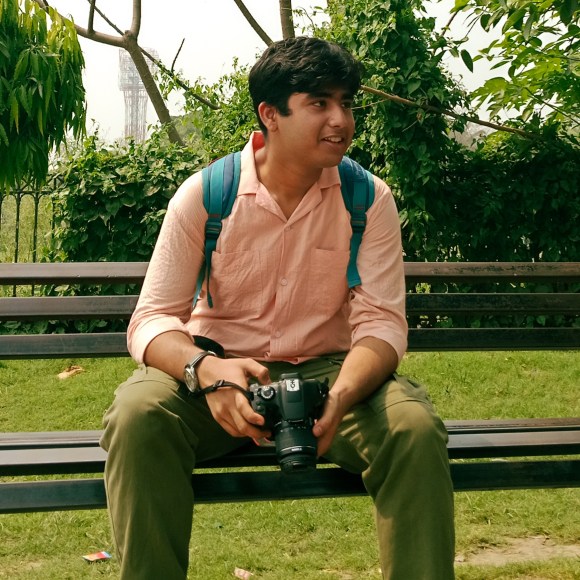
Spandan Upadhyay is a new writer whose work captures the vibrant nuances of everyday life. With a deep appreciation for the human experience, Spandan’s stories weave together subtle emotions and moments of introspection. Each of his stories invite readers into a world where ordinary occurrences reveal profound truths, leaving a lasting impact.

.

PLEASE NOTE: ARTICLES CAN ONLY BE REPRODUCED IN OTHER SITES WITH DUE ACKNOWLEDGEMENT TO BORDERLESS JOURNAL. 

Click here to access the Borderless anthology, Monalisa No Longer Smiles

Click here to access Monalisa No Longer Smiles on Kindle Amazon International
Categories
Poetry

Found in Translation: Bipin Nayak’s Poetry

 Five Odia poems by Bipin Nayak have been translated by Snehaprava Das

WITHIN 

An equestrian within me
Mounts an unbridled horse
And plays a violin.
A boatman inside me
Crosses an imaginary river
Again, and again
In a non-existent boat.

Within me, there is a wayfarer
That refuses to
Travel the trodden road
And takes a turn.

A lake ripples in me,
Waiting futilely
To lose itself in the sea,
And a waterfall
Leaps noisily from above
To wet the rocks.

A cloud floats within me,
All of a sudden,
Flashes a lightning smile
And goes back to sleep.

In me, a cowherd
Returns home in the twilight
Painted in the colours of sunset
And lights a kerosene lamp.

A camel inside me
Sags under a sack-load of salt,
But trudges across the sands
Dreaming of a lush meadow.

A mother in me conceives words,
Bleeds in labour,
Nourishes the vulnerable words
With love and care
And watches them grow…

PAPER BIRD

My woes pull your neck longer.
My beloved words become the air
To stuff your insides.
I forge your wings from
The crumpled paper of my dreams,
And mold your beak with my kisses,
Paint you in the colour
Of my solitary nights….
Trim you with
All my fears and frustrations.
Because I could not
Make a paper-boat of you
To sail in the muddy puddle,
I lift you up
To fly across
The monsoon sky.
When you climb a little higher
Into the air
And are drenched out of shape,
I, a naked child,
Stand here in the rain, look up and cry!

THE MAKING

I pick a few bones of my hardest grief,
Scoop some blood
Oozing red to create.

I fix a face of smoke or a patch of weepy cloud
Mold a nose from the wafting breeze.
I fix a pair of eyes, like day and night,
There in the face.
In one of them, I put a tornado,
A bird in the other.
With flowers of joy and grief,
I shape the lips.
The body I try to make
Out of a river that hides under it,
A fire and a perpetually vain desire
To reach the sea or a desolate jungle.
I design the limbs from a
Lingering surge of green.
All these efforts
Are but only to replicate
What has been made before.
I set afloat
Because it has been set to drift
Much before…
And because it has sprinkled
A cosmic fervour across
A secret sanctum inside me,
To bring a god to life,
I worship it!
I keep trying to create and re-create inside me
Because it has made me much before that!


A SKY AS I AM

I have set out to paint a sky of my own --
A sky that is exactly as I am!
And for that I have picked up
Some nomadic dreams, a sunset,
I have collected the blood of flowers,
The tune of a stream that has flown away,
The chirping of orphan birds,
The layers of moss spread over
A decrepit piece of rock-writing.
I have scooped up
A handful of ash from the debris of
Perished time,
And a wild storm that had retreated
After having blown me away.
I took out the wet melody from a violin and
the primeval music of the insect,
throbbing inside the grass.
From the reminisces stuck in the sinews
I have gathered a few scattered sighs,
And from the darkness, the mysteries of nights,
I have got warmth from dreams,
Sin from pollen grains.
With these elements beside me
And a canvas in shreds,
I sit down to paint a sky of mine
A sky that is exactly as I am!

LET THEM SING

Let them sing a song.
I do not mind
If my wound heals them,
Or my tears make them glow,
And my blood paints them crimson.

My quick breathing flits about, but
I do not mind if someone plays a flute
Blowing into the holes of my bones
And sings through the lips
Borrowed from me.

Let them sing, why must I mind it?
The lips are not mine. Nor is the song!


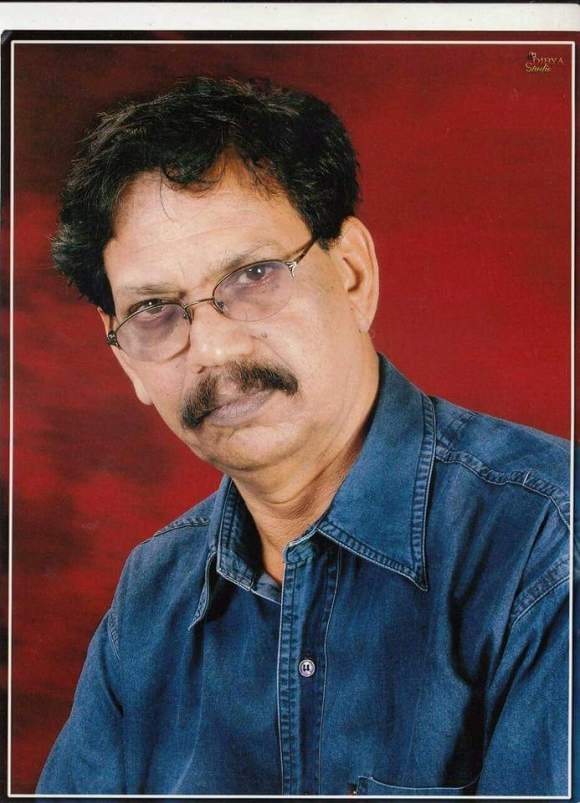
Bipin Nayak

Bipin Nayak (1950), a bold and engaging voice in the literary scenario of modern Odisha, is a trend setter who explored new possibilities for Odia poetry. One of the most significant postmodernist and minimalist poet in Odia, Nayak is a believer in the artefact of words than the meaning and medium. For him poetry is an aesthetic exploration through the fragile, fluid words which could be liberated from its conventional canons and connotations. There is a distinct undertone of metaphysical too in his poetry that hovers over the slim divide between the real and the surreal. Bipin Nayak is a pioneer in Odia auto-fiction writing. His ‘Jatra ra Ketoti Pada’[1], an unprecedented experimental work, that challenges the conventional style through a blending of prose and poetry and does not conform to any traditional literary genre. Besides being the recipient of the prestigious Odisha Sahitya Akademi award the poet has received several accolades for his contribution to Odia literature. Significant amongst them are the Bishuba Jhankar Purashkar, Akhila Mohan Kabita Sammana, Sachivalaya Lekhaka Parishada Sammana and Sammana from Kalinga Sahitya Samaja. He has been widely published in Hindi, Bengali and also in English and has adorned the pages of Indian Literature, Kavya Bharati and other prestigious journals. His major works include Swarachitra (The Painted voice) that fetched him the Odisha Sahitya Akademi award, Nija Nija Barnabodha Apustaka, Sadaja, Bidagdha Bichara, Band Ghara ra Basna.         

[1] Translates to ‘how many steps are there in a journey’

Dr.Snehaprava Das, is a noted writer and a translator from Bhubaneswar, Odisha. She has five books of poems, three of stories and thirteen collections of translated texts (from Odia to English), to her credit. 

PLEASE NOTE: ARTICLES CAN ONLY BE REPRODUCED IN OTHER SITES WITH DUE ACKNOWLEDGEMENT TO BORDERLESS JOURNAL

Click here to access the Borderless anthology, Monalisa No Longer Smiles

Click here to access Monalisa No Longer Smiles on Kindle Amazon International

Categories
Review

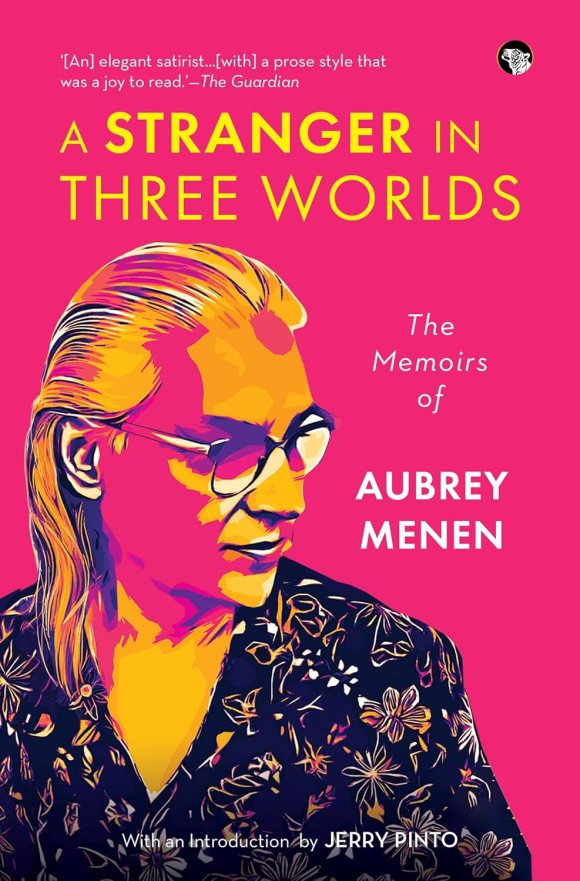
A Stranger in Three Worlds

Book Review by Bhaskar Parichha

Title: A Stranger in Three Worlds: The Memoirs of Aubrey Menen

Author: Salvator Aubrey Clarence Menen

Publisher: Speaking Tiger Books

Salvator Aubrey Clarence Menen (April 22, 1912 – February 13, 1989) was a British author, novelist, satirist, and theatre critic. Born in London to Irish and Indian parents, he studied at University College, London, before becoming a drama critic and stage director. During World War II, he was in India, organising pro-Allied radio broadcasts and editing film scripts for the Indian government.

After the war, he returned to London and worked in an advertising agency’s film department, but the success of his debut novel, The Prevalence of Witches (1947), led him to write full-time. Menen’s satirical works explore themes of nationalism and the cultural contrast between his Irish-Indian heritage and his British upbringing.

Menen, a remarkably gifted author who frequently goes unnoticed, adeptly delves into the intricate themes of identity, nationality, and the sense of belonging. He does so with his signature blend of irony and profound insight in his two acclaimed autobiographical pieces. A Stranger in Three Worlds: The Memoirs of Aubrey Menen is an exceptional autobiographical account that spans multiple continents. Menen’s writing is noted for its irony, insight, and a nuanced exploration of themes such as belonging and the quest for the self in a multicultural context.

Menen’s life narrative is defined by his experience as an outsider, or a ‘stranger,’ within the three distinct cultures of England, Ireland, and India. This position of being an outsider enables him to keenly observe and critique the social and cultural norms prevalent in each society with remarkable clarity and humor.

 The memoir explores the inherent tensions and contradictions that arise from possessing multiple, often conflicting, identities, as well as the difficulties of establishing a coherent sense of self when one does not entirely belong to any particular group.

The book’s narrative style is marked by irony and a keenly humorous outlook on the absurdities of the social conventions and biases he encounters across these cultures. His insights are both deeply personal and widely relatable, resonating with anyone who has navigated the complexities of multicultural or diasporic identity.

The essays featured in Dead Man in the Silver Market, originally published in 1953, analyse themes of jingoism, social class, and the absurdities associated with national pride, intertwining personal stories with sharp social critique.

Written shortly after World War II, his irreverent insights into English society, colonial history, and human nature continue to resonate powerfully in contemporary discourse. ‘The Space within the Heart’, authored in 1970, presents a more personal and philosophical exploration of existence, love, and self-awareness.

Infused with humour and gentle satire, it contemplates the essence of the soul, drawing from the Upanishads and European literary traditions. Menen’s seemingly straightforward yet deeply impactful writing encourages readers to transcend rigid identities and appreciate the fluidity inherent in the human experience.

With an introduction by Jerry Pinto, this omnibus edition functions as a memoir, offering personal reflections and experiences, while simultaneously serving as a critique of imperialism, examining its impacts and consequences.

Furthermore, it thoroughly explores the intricacies of identity, rendering it an exceptional piece of literature that is both informative and captivating, prompting readers to engage in deep reflection on its themes.

.

Bhaskar Parichha is a journalist and author of Cyclones in Odisha: Landfall, Wreckage and ResilienceUnbiasedNo Strings Attached: Writings on Odisha and Biju Patnaik – A Political Biography. He lives in Bhubaneswar and writes bilingually. Besides writing for newspapers, he also reviews books on various media platforms.

.

PLEASE NOTE: ARTICLES CAN ONLY BE REPRODUCED IN OTHER SITES WITH DUE ACKNOWLEDGEMENT TO BORDERLESS JOURNAL

Click here to access the Borderless anthology, Monalisa No Longer Smiles

Click here to access Monalisa No Longer Smiles on Amazon International

Categories
Poetry

Stricken by Red Rain: Poems by Jim Bellamy

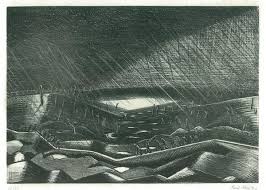
Art by Paul Nash (1889-1946)
HOW NOW DO DEAD KINGS LAUGH WHILE STRICKEN BY RED RAIN
(a villanelle that doubles as a song)

In twilight's hush, where shadows softly sway,
How now do dead kids laugh while stricken by red rain?
Their echoes drift, as if they still had play.

The crimson drops like petals fall, betray
The innocence that once danced on this plain.
In twilight's hush, where shadows softly sway,

The laughter's gone, yet memories stay,
A haunting tune, a bittersweet refrain.
How now do dead kids laugh while stricken by red rain?

They ran with joy, not knowing of dismay,
Nor thought their laughter would become such pain.
In twilight's hush, where shadows softly sway,

The sky weeps blood, the earth cannot contain
The sorrow of the young ones we've slain.
How now do dead kids laugh while stricken by red rain?

So hear their mirth, in ghostly disarray,
A chilling laughter, under skies arcane.
In twilight's hush, where shadows softly sway,
How now do dead kids laugh while stricken by red rain?


WHERE ONCE BLUE MIDNIGHT BURNS


Where once blue midnight burns, what then for babes midscream?
In dreams, they clutch at stars now far beyond their gleam.
The night's cold lullaby, where shadows dance unseen.

The moon, a silent witness to the quiet, keening theme,
Whispers through the willows, a soft and silver stream.
Where once blue midnight burns, what then for babes midscream?

The sky, a tapestry of wishes and of dream,
Holds tight the secrets of the heart, a vault supreme.
The night's cold lullaby, where shadows dance unseen.

What tales will be told of the light that once did beam,
When innocence was cradled in the arms of esteem?
Where once blue midnight burns, what then for babes midscream?

The stars, like sentinels, their steady gazes deem
To guard the slumbering youth from the world's harsh regime.
The night's cold lullaby, where shadows dance unseen.

So sing the babes a song of time, a flowing ream,
And rock them gently 'neath the midnight's azure seam.
Where once blue midnight burns, what then for babes midscream?
The night's cold lullaby, where shadows dance unseen.


TODAY, ALL SWEETHEARTS

Today, all sweethearts will blossom in a glass cage,
Where whispers cling like ivy to the walls.
That gaols all fevers under vows, sage.

In crystal confines, love's eternal stage,
Each heartbeat etched upon the pane, it calls.
Today, all sweethearts will blossom in a glass cage.

With every breath, they sketch a new page,
Inked with passion, as twilight softly falls.
That gaols all fevers under vows, sage.

Their touch, through glass, a timeless adage,
A dance of shadows, love's tender brawls.
Today, all sweethearts will blossom in a glass cage.

And though the world may change, turn, and age,
Their sealed ardor never stalls.
That gaols all fevers under vows, sage.

So let the lovers their pure wars wage,
For in this prison, love enthralls.
Today, all sweethearts will blossom in a glass cage,
That gaols all fevers under vows, sage.

Jim Bellamy was born in a storm in 1972. He studied hard and sat entrance exams for Oxford University. Jim has a fine frenzy for poetry and has written in excess of 22,000 poems. Jim adores the art of poetry. He lives for prosody.

.

PLEASE NOTE: ARTICLES CAN ONLY BE REPRODUCED IN OTHER SITES WITH DUE ACKNOWLEDGEMENT TO BORDERLESS JOURNAL

Click here to access the Borderless anthology, Monalisa No Longer Smiles

Click here to access Monalisa No Longer Smiles on Amazon International

Categories
Essay

Reminiscences from a Gallery: The Other Ray

Dolly Narang muses on Satyajit Ray’s world beyond films and shares a note by the maestro and an essay on his art by the eminent artist, Paritosh Sen

My trunk call from Delhi to Calcutta booked one day before finally materialised.  This was way back in 1990 when trunk calls were the fastest mode of communication. In a coarse voice, the operator demanded a response from the deep, modulated voice on the other end. ‘Satyajit Ray hai[1]?’ she asked, her tone sharp with impatience.

I could hear the legendary filmmaker’s composed response to the operator’s gruff, abrupt tone.  I winced at her brusqueness feeling helpless to intervene and apologise.

When she connected me, I introduced myself to Satyajit Ray and ventured to share my idea of an  exhibition that would showcase a lesser-known yet equally fascinating facet of his oeuvre—his drawings, film sketches, graphic design and more. A visual archive that, though rarely seen by the public, was as significant as his cinematic legacy. He was initially apprehensive—modest about this body of work and uncertain about how it would be received

This initial conversation was followed by a series of follow-up exchanges over trunk calls,  over several months. Each call felt like a step closer to realising the exhibition. I would book trunk calls in the urgent category request for PP (person to person) as they took less time to materialise.  PP calls were specifically for the person whose name was specified.  Still, patience was essential.

Ray, to my surprise and admiration, always answered the phone himself. No secretary, no assistant screening the calls. The simplicity and humility was endearing.

I had first shared the idea of the exhibition with Paritosh Sen one of India’s master painters and a friend of Ray’s of an exhibition of a lesser known yet fascinating facet of Ray’s genius: children illustrations, detailed film sketches, designs for book and magazine covers, typeface designs, his diverse portfolio of graphic work.   Paritoshda, as I affectionately called him who mentored and guided  me as I began my journey into the art world, not only approved of the idea but took it upon himself to speak to Ray, whom he knew personally.  Following the introduction through Paritoshda, I pursued  the idea with the legend.

During the first phone call, I briefly spoke about my concept— an exhibition that would focus  on his rarely seen visual art. His immediate response was  hesitant and guarded, “These are very small works on paper just a few inches in length and width.” he said. “They would be of no interest.”  I ventured  that this was a unique and a first time view into his visual legacy and the size would not take away from the impact.  He further expressed his doubt  about his graphic work having any resonance beyond Bengal, in North India. I   further submitted that his artistic genius and versatility has an appeal beyond Bengal. This exhibition would give a rare insight into the work and thought process of not only the deeply respected and admired film maker that we all know but also of Satyajit Ray the illustrator, the graphic designer, along with revealing the meticulous and detailed planning into his films.

I hoped to bring this body of work — into public view for the first time. The idea was to get  people to see another Ray — not the filmmaker behind the camera, but the artist behind the pen and brush.

I remember Ray had explained that he had a  busy schedule and preoccupied with the editing of Ghare Baire. After several months  of trunk calls and waiting, I booked another urgent, person to person call. Finally the breakthrough I was waiting for, “ Come next week,” he said. His doubts of an exhibition having been cleared through the intervention of Paritoshda and somewhat through my persuasion.   

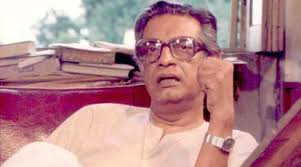
 As I boarded the Indian Airlines flight to Calcutta the following week, a surge of excitement gripped me. I was given a morning time to meet him at his residence: 1/1  Bishop Lefroy Road. I arrived with some trepidation. Standing outside this tall imposing door, I rang the bell. Soon, I found myself face to face with the master who opened the door himself—his tall, commanding presence matched only by his deep, well-modulated baritone voice greeting me warmly. He led me into his much photographed studio/workplace. He was looking comfortable and relaxed in a white kurta pajama. In contrast to his majestic yet simple presence,  I was nervous and hoping it was well masked.

Thereafter, began a series of visits to his flat. Each time the door was opened by the master himself. And I would be led into his study teeming with books lining the teak wood book shelves.   

He would sit  in a comfortable looking swivel chair with a brown rexine cover, the corners of which were slightly frayed.   Opposite him and within a comfortable arms reach was a small work table with jars tightly packed with paint brushes, pen, pencils.   Here is where he did his drawings to create his vast and varied visual legacy of set design, costume design, make up instructions, graphic design, children’s illustrations for the monthly children’s magazine, Sandesh, started by his grandfather,  He also designed the covers for Sandesh, more books and magazine covers.  

Making of the exhibition

 Working alongside him to sort through his drawings was an enriching and memorable experience—one that offered rare insight into his creative mind. Each meeting felt like a step closer to the exhibition becoming a reality.  I noticed  his interest was slowly growing and he was participating in the selection with increasing enthusiasm and a discerning eye.   He approved some while some he felt need not be exhibited. Our meetings would stretch till lunch time until he was gently summoned by his wife, Bijoyadi, to take his lunchbreak.  He would extend the search and wrapped up a little beyond lunch time. I too was cautious not to overstep limits.

As he began to look in his study, he unearthed these miniature treasures on paper tucked between  books or between their pages, resting on tall teakwood bookshelves. Some were found under sofa cushions. He remembered that many were with his cousin Lila Majumdar[2] and that he would have to ask her. As he delved deeper into his collection he remarked, “I had forgotten I have done all this work.”

During  few initial meetings, I would address him as Mr. Ray, which was beginning to feel formal and somewhat awkward. So I asked if there was another way I could address him.

“Manik,” he asserted. “Everyone calls me Manik.”

From that moment on, I called him Manikda. These recollections return to me vividly as I write this piece.

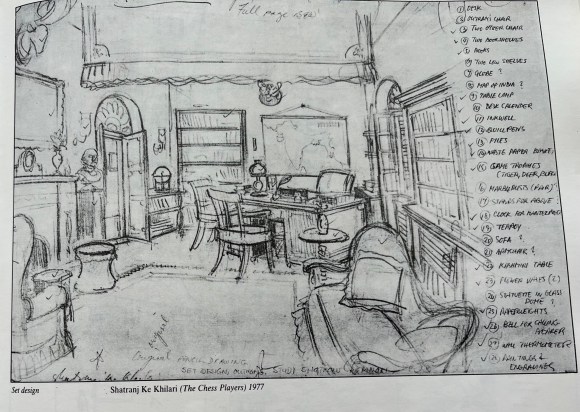
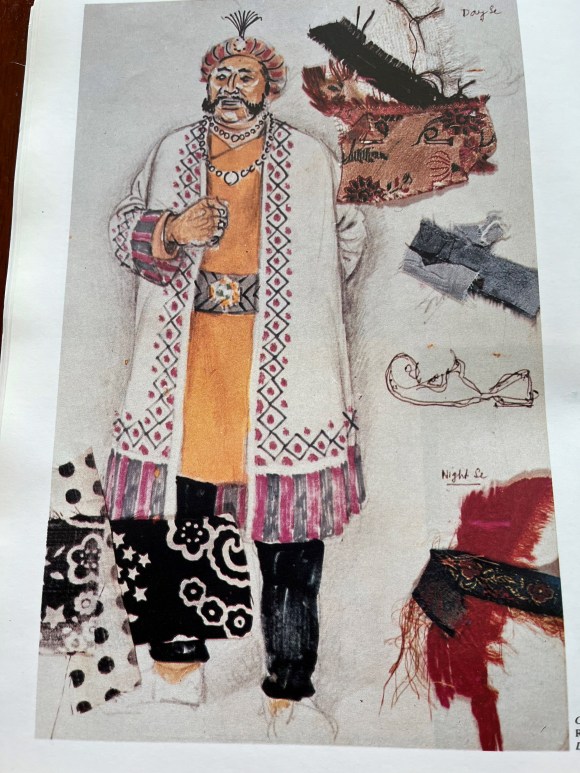
We turned our attention to his iconic crimson books, neatly stacked in his study. These well-known volumes are a treasure of Ray’s meticulous preparatory work—filled with detailed sketches for his films, costume and set designs, makeup instructions for his makeup artist, architectural notes, and an astonishing range that gave glimpses into his thought and work process.

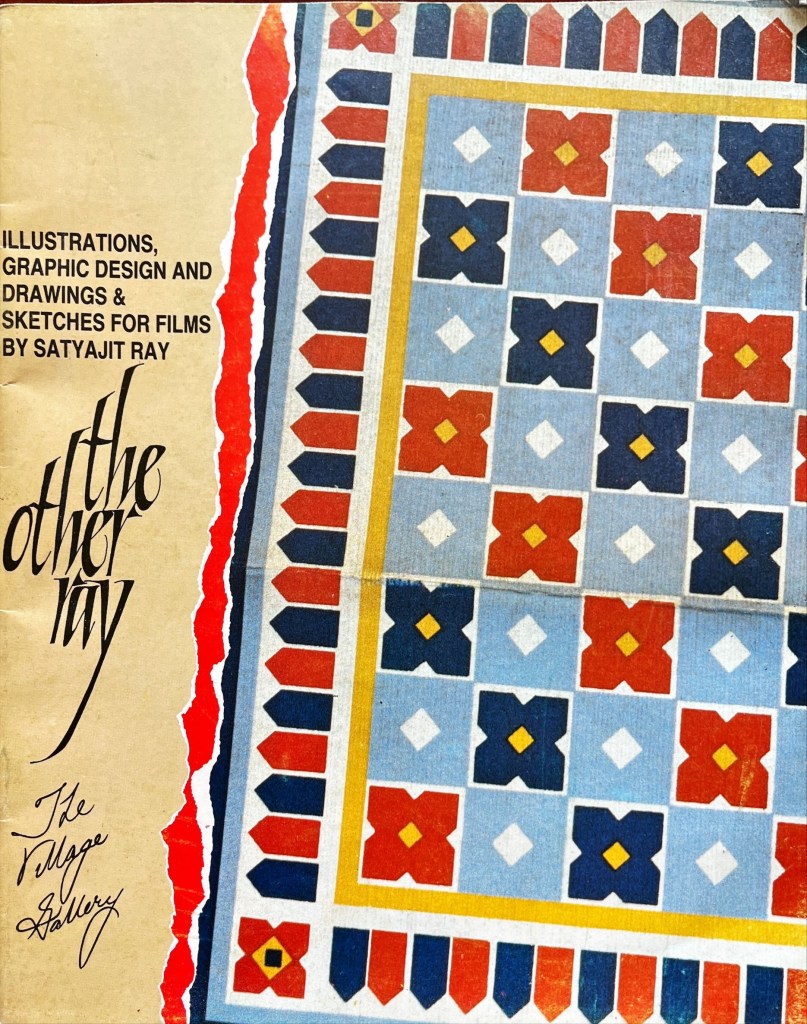
Sourced from the brochure provided by Dolly Narang

We did not want to remove any drawings from these precious notebooks. He selected the drawings that he liked and decided he would ask Nemai Ghosh (1934-2020), his close associate and long-time photographer, to photograph them for the exhibition.

Several drawings, having come loose from the notebooks, were used in their original. We did not want to remove any drawings which were firmly in  place in these volumes. Ray  identified  the drawings that appealed to him and Ghosh photographed them.

Part two of the exhibition was titled “Drawings and Sketches For Films’ and it comprised of both originals and the photographs by Nemai Ghosh  of the drawings chosen by Ray.

I nudged him further and asked if there was anything else he might suggest from his visual repertoire. 

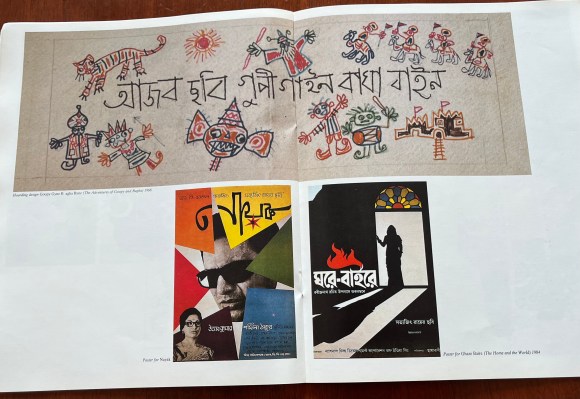
He thought of his film posters. The ones readily available in his flat were  posters of Nayak and Ghare Baire, which were loaned for the exhibition. He was particularly eager to include the poster of Devi, but after searching, he discovered he only had one copy and was reluctant to part with it.

Top: Hoarding of Ray’s film Goopy Gyne Bagha Byne (1969). Below:: Film posters of Nayak(Actor, 1966) and Ghore Baire (Home and the World, 1984). Sourced from the brochure provided by Dolly Narang

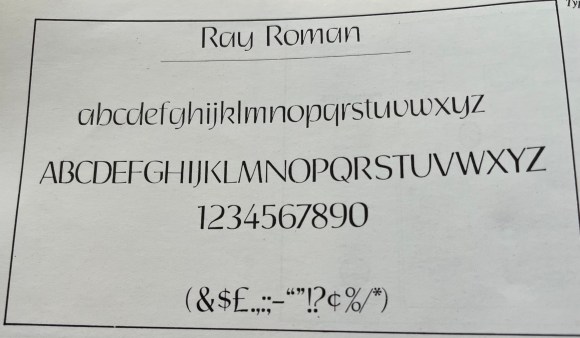
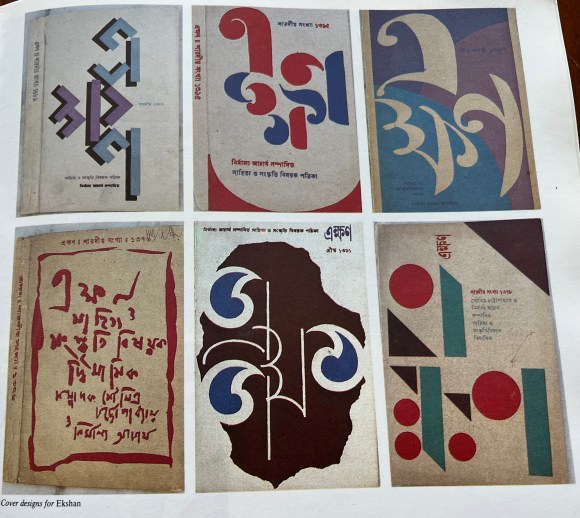
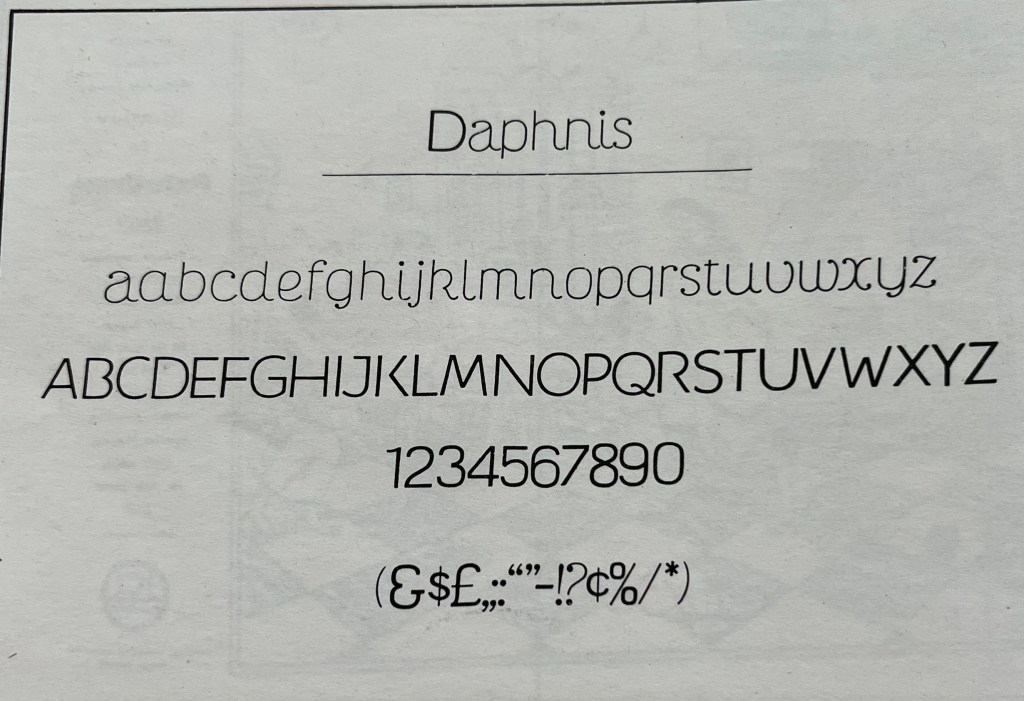
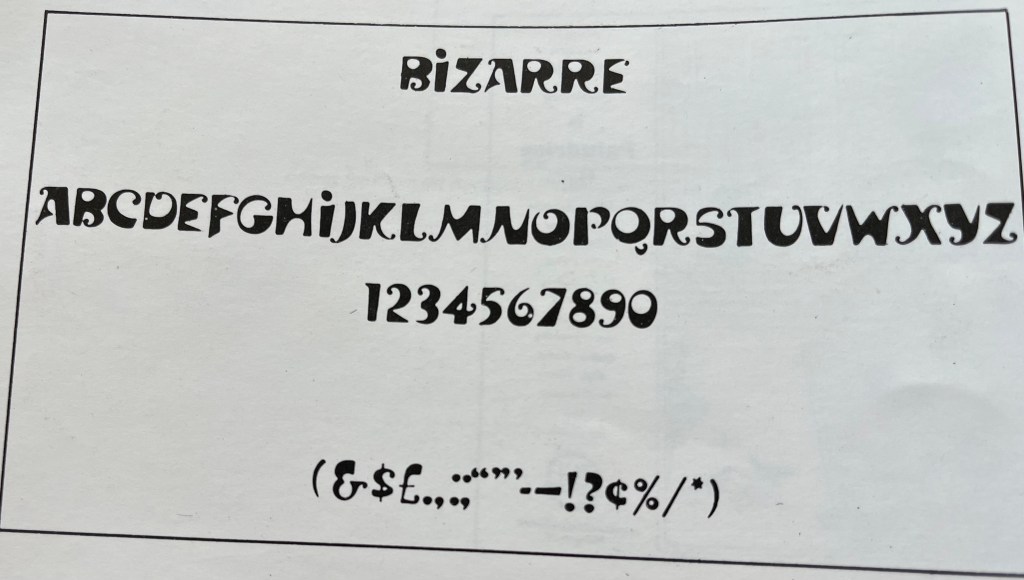
 We tried to include artworks which would represent the different aspects of his visual repertoire.  It seemed there was no end — typefaces he had designed, advertising campaign when he worked for D.J.Keymer.   While searching he realised he did not have the originals of the typefaces he had designed but fortunately they had been preserved in the photographs taken  by Nemai Ghosh.  Later Paritoshda told me that he was given an award for  the typeface by an American foundry and named it after him, Ray Roman.  

Provided by Dolly Narang

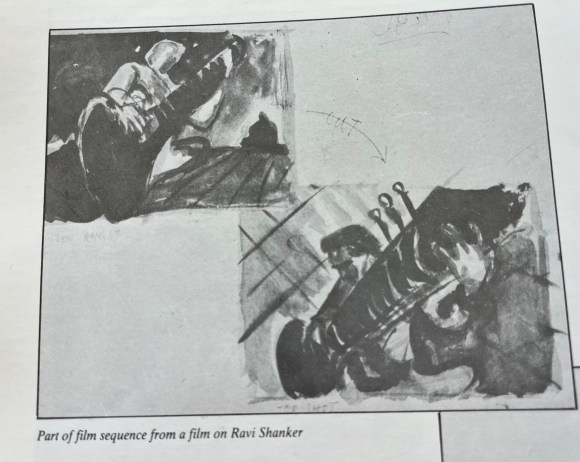
An album was discovered containing a silent film he had conceptualised on paper but never brought to life—a silent film on Ravi Shankar with his music in the background.  The album, composed of monochromatic black watercolours, was photographed by Nemaida. It drew great interest, offering a first-ever glimpse into a project that was never realised.

Paritoshda advised  that Ray had composed music for many of his films.  A tape with his compositions was playing continuously and softly in the background at the exhibition.

The exhibition was presented in two parts each had a duration of three weeks.  Part one was devoted to his Graphic design, drawing and part two was about his preparatory sketches for films.

I requested Paritoshda to write an article for the exhibition catalogue, to which he graciously agreed. He penned an insightful essay which was appreciated by Ray himself as well as by fellow artists, critics, and visitors who found his insights both illuminating and deeply  engaging.  When I asked him for his suggestion for a  title for the exhibition, he thoughtfully suggested  — “The Other Ray” — a title both fitting and meaningful.

With the socio-political upheavals around us in Delhi, it wasn’t easy—cataloguing, printing invitation cards, framing, arranging transport to distribute the invitations.  Invitation cards from our mailing list of  over one  thousand had to be hand delivered.

I asked Manikda for names of his friends and associates who he would like invitations to be sent to.  His list included names both in  India and abroad.

About a week before the event, I visited AIFACS[3] to put up a poster for the exhibition. To my surprise and delight, sitting in one of the exhibition halls was none other than M.F.Husain himself. It felt like a godsend—an unexpected opportunity to personally invite him.

He was visibly excited upon hearing about the exhibition and expressed  interest in seeing the artworks immediately wherever they were.   I explained that the pieces were still at home and would be better appreciated once they were displayed on the gallery walls.  But he was insistent—he wanted to see them right away.   We got into my car and drove to my house. Husain viewed the works in thoughtful silence moving from work to work, looking at each with great interest. After perusing them keenly he settled  at the dining  table and began reminiscing about his association with Ray – a moment as historic as it was moving, etched forever in my memory. 

I was not prepared with either a tape recorder or a camera to record this memorable encounter. Fortunately, The Illustrated Weekly, under editor Pritish Nandy, later published his reflections in an article spread over two pages with several illustrations of his graphic work.

Opening to the Public

When the exhibition finally opened at The Village Gallery in New Delhi’s quaint Hauz Khas Village it was received with great enthusiasm and acclaimed  by both critics and the public

 Visitors from all walks of life came to see the “ The Other Ray”.  For many, it was a revelation. The same legendary filmmaker who had given the world The Apu Trilogy had also crafted whimsical illustrations for children, designed  book jackets,  created typefaces. It was exciting for them to get a peek into his creative process as a filmmaker through his detailed film sketches.   

 I made another trunk call to inform him that the article in the brochure by Paritosh Sen had been chosen for The India Magazine’s cover story.   The next day, when I spoke to him again and offered to send him a copy of the magazine, he responded with excitement. He said he couldn’t wait and had already gone to the market to buy a copy for himself.

Once the exhibition—having stirred great excitement in the art world—came to an end, it was finally time to take it down. The last few days were deeply moving. Visitors lingered, often spending long hours in the gallery, reluctant to leave, as if trying to hold on to the experience a little longer. The space was filled with quiet reflection and enriched by heartfelt exchanges.

Looking back, organising this exhibition remains one of the most fulfilling experiences of my life. What I cherish is the memory of the many hours spent in his study carefully selecting the works for the exhibition.  It was a collaborative process, he was open to my suggestions yet he became more and more involved as he delved deeper into his graphic work.

An idea, carefully nurtured, took shape as an exhibition. What was especially fulfilling about the exhibition was how it brought to light a lesser-known facet of Ray’s creative genius—his remarkable visual imagination, his penchant for details, his industriousness. Until this exhibition, only a few of his sketches had appeared in articles and books, leaving much of this work largely unseen. The display offered audiences a rare and intimate glimpse into his visual world as well as his work and thought process, making it especially significant.

The final step was to return the works. I personally placed each delicate sheet into thin plastic sleeves, compiled them into a portfolio, and flew to Calcutta to return them to the master. True to his dignified demeanour, he received the compilation with quiet pleasure. He expressed both satisfaction and a hint of surprise at the enthusiastic response the exhibition had received. I took the liberty of asking him if I could keep as a memento two works from each part of the exhibition. He readily agreed and asked me to choose. I selected one black white illustration for Sandesh and credit title from his film Sonar Kella (The Golden Fort, 1974) .  One more request —  Could he sign these please? To which he graciously agreed.

As I took my leave, I shared a  thought—could we perhaps work on a sequel to The Other Ray? He received the idea warmly, but unfortunately, it never came to fruition. He soon became immersed in Agantuk (The Stranger, 1991), and not long after, his health began to decline.

As I write this, memories come rushing back, and I find myself tempted to echo Manikda’s words of my experience  that  “I had forgotten I had done all this work.”

Costume designed and sketched by Ray for Hirak Rajar Deshe (In the Country of the Diamond King, 1980) Sourced from the brochure provided by Dolly Narang
Ray’s Note in the Brochure:

My grandfather was, among other things, a self-taught painter and illustrator of considerable skill and repute, and my father — also never trained as an artist — illustrated his inimitable nonsense rhymes in a way which can only be called inspired. It is, therefore, not surprising that I acquired the knack to draw at an early age.

Although I trained for three years as a student of Kalabhavan in Santiniketan under Nandalal Bose, I never became a painter. Instead, I decided to become a commercial artist and joined an advertising agency in 1943, the year of the great Bengal famine. Not content with only one pursuit, I also became involved in book designing and typography for an enterprising new publishing house.

In time I realised that since an advertising agency was subservient to the demands of its clients, an advertising artist seldom enjoyed complete freedom.

This led me to the profession of filmmaking where, in the 35 years that I’ve been practising it, I have given expression to my ideas in a completely untrammelled fashion.

As is my habit, along with filmmaking, I have indulged in other pursuits which afford me the freedom I hold so dear. Thus, I have been editing a children’s magazine for thirty years, writing stories for it and illustrating them, as well as illustrating stories by other writers.

While preparing a film, I’ve given vent to my graphic propensities by doing sketches for my shooting scripts, designing sets and costumes, and even designing posters for my own films.

Since I consider myself primarily to be a filmmaker and, secondarily, to be a writer of stories for young people, ·I have never taken my graphic work seriously, and I certainly never considered it worthy of being exposed to the public. It is entirely due to the tenacity and persuasiveness of Mrs. Narang that some samples of my graphic work are now being displayed. Needless to say, I’m thankful to Mrs. Narang; but, at the same time, I must insist that I do not make any large claims for them.

Ray’s signature: Sourced from the brochure provided by Dolly Narang

 SATYAJIT RAY

The Consummate Artist by Paritosh Sen (1918-2008)

(Republished from the brochure of “The Other Ray” exhibition)

It was the summer of 1945. I was holding my third one-man show and my first in Calcutta. On the third day of the exhibition, Prithwish Neogy (a brilliant scholar, now heading the Department of Asiatic Art at the Honolulu University) entered the exhibition hall accompanied by an extraordinarily tall and swarthy young man. I had known Prithwish earlier. The latter was introduced to me as Satyajit Ray. I was vaguely aware of him as the only son of the late Sukumar Ray, the creator of a unique body of nonsense rhymes and humorous prose remarkable for their originality of vision and an extremely sharp intellect and imaginative power. Satyajit was also known as the grandson of Upendra Kishore Ray, one of the inventors of half-tone block making, a pioneering creator of a sizeable body of children’s literature and the founder of the well-known children’s magazine, Sandesh, and a painter of no mean talent either.

Satyajit was then doing a course in painting in Santiniketan under the very able guidance of Benode Behari Mukherjee, a great artist and an equally great teacher. Besides, Ray had also the unique opportunity of coming in close contact with Nandalal Bose, the guru of both Benode Behari and Ram Kinkar, undoubtedly the foremost sculptor of contemporary India.

Earlier he had also received the blessings and affection of Rabindranath Tagore. Although he did not complete the art course in Santiniketan, the experience of being surrounded by these great artists and the unique rural setting of the Santhal Parganas, as portrayed by these artists and the poet, enabled Ray to appreciate nature in all its diverse and glorious manifestations and opened his eyes to the mysteries of creation. This single unprecedented and cherished experience helped him to formulate his ideas about the visual world and to unlock doors of visual perceptions. Added to this was his study and understanding of the classical and folk art, dance and music of our country. The magnificent collection of books in the Santiniketan library of world art and literature also helped him to widen his horizon. It was here that he read whatever books were available on the art of cinema. The seeds of a future design artist and a filmmaker were simultaneously sown here.

Having lost his father early in life, the need for earning a livelihood assumed enough importance to make him leave Santiniketan prematurely and look for a job in the field of advertising art or, as it is better known in modern parlance, graphic design. A latent talent is bound to make its presence felt sooner or later, whatever be the chosen field. As Tagore said in one of his early verses, “Flowers in bloom may remain hidden by leaves but can they hide their fragrance?” Satyajit Ray was appointed by the then D.J. Keymer (now known, as Clarion Advertising Services Ltd.) as a visualiser-cum-designer, often executing the finished design or an entire campaign himself.

Together with two of his contemporaries, O.C. Ganguli and Annada Munshi, Ray was trying to evolve certain concepts not only in illustrations but also in typography which would give their design an overall Indian look. One recalls those highly distinctive newspaper and magazine ads, the magnificent calendars, posters, cinema slides and what not of the late ’40s and ’50s not without a certain nostalgia. If my memory does not fail, I think some of the works of these three artists were even published in Penrose Annual and elsewhere. Here it may be worthwhile to bear in mind that the style evolved by these three artists made a welcome departure from the dull academicism and the stereotypes being practised by most of the advertising agencies of those times. The freshness and vigour displayed in their approach was readily appreciated both by their employers and their clients. Ray was particularly strong in the difficult area of figure drawing, an area in which many graphic designers were found singularly wanting.

Although he was soon to move away from commercial art to embrace his new-found love of filmmaking, he would continue to remain an illustrator of the first order as would be evident from his emergence as a story-teller in the two popular genres of detective and science fiction. (Not many outside Bengal know that Ray’s literary output is in no way less than that of his cinema and that most of his books have already run into thirty to thirty-five editions). He has not only been illustrating his own stories, but over the years he has been designing the covers of his grandfather’s once defunct children’s magazine Sandesh, revived by him nearly two decades ago, which also carried many illustrations by him. But in my opinion his most cherished field is calligraphy, whether that be of the pen or brush variety.

This art he imbibed from his guru Benode Behari Mukherjee. Over the years he had also been studying the art of typography with the scrutinising eye of a highly creative calligrapher. The result has been a series of innovations in both Bengali and English lettering evolved for posters, banners and book covers. These very original works gave a tremendous fillip to graphic design in general and book, magazine and record covers in particular, especially in Bengal. The books Ray designed for the now defunct Signet Press of Calcutta way back in the early ’50s set new trends and were considered as models for book production both in terms of page layout, typography and jacket design, the last being his chosen field where, as I said earlier, his innovations have known no bounds. The covers of the well-known literary magazine Ekshan, which he has been designing for many years, to give only one instance, bear ample testimony to his apparently playful but significant experiments with the forms of three Bengali letters which constitute the name of the magazine. The wide variety of his inventiveness is one of his great achievements in the field of cover design.

Cover designs for Ekshan. Sourced from the brochure provided by Dolly Narang

Then there are the posters, banners and slides he designed for his own films. These too were eye openers and instant trend setters. Who can ever forget the huge banners and billboards of the Apu trilogy put up at important street junctions of Calcutta! Their freshness of ideas, design concepts and calligraphy were not to be missed even by men and women in the street. Simultaneously with his creative outburst in the art of cinema, his creativity in graphic design reached new heights. What was remarkable was the fact that Ray imminently succeeded in investing all these works with a highly distinctive Indian flavour derived from his awareness of our folk traditions (especially 19th century Bengali book illustrations and woodcut prints of decorative lettering) both in their linear vigour and simplicity as well as in ornamentation.

One of the most outstanding examples of this approach was the publicity material he designed for Devi. The underlying theme of the title expresses itself forcefully both in the highly imaginative design of the lettering and the image. Their fusion is perfect. Not many graphic designers have been as type conscious as Ray. He personifies the printing designer’s gospel “type can talk”. That a letter or a printing type is not only a sign but an image by itself, and if appropriately employed can have immense communicative power and is capable of expressing a whole range of human emotions was known to Ray from the very beginning of his career.

In the enormous range of Roman printing types there are many in the humanist tradition in their simple aesthetic charm, warmth of feeling as well as in their highly elegant but delicate anatomical details. There are also those which are severe, powerful and cold but nonetheless are highly attractive in their own ways.

It is often overlooked by most readers that a letter’s structure and anatomy can be reminiscent of things in the visible world, both natural and man-made. Some can have the gentle rhythm of the rise and fall of a female form, others may have the majestic look of a well-designed edifice-just to give only two similes. Ray not only bore all these considerations in mind but used his calligraphic knowledge, skill and innovative power to their full advantage when he designed the three printing types called Ray Roman, Daphnis and Bizarre for an American type foundry nearly two decades ago.

Not many of us know the infinite patience, rigours, discipline and the endless process of trial and error involved in designing a whole series of a printing type. That, in spite of his other demanding preoccupations, he found enough time to design three complete sets of types bears ample proof of his diligence and perseverance and his passionate love for the world of types. Those of us who have known him over the past decades are profoundly admiring of the fact that he is a workaholic in the best sense of the term. His diverse creative output is staggering and would put many a man half his age to shame.

In the ’40s, I met Satyajit periodically as I worked as an art master in Indore. One of the high points of my visits to Calcutta during the long summer or the short winter holidays was to frequent his ground-floor apartment in South Calcutta. It was at his place I first listened to TS Eliot’s recital in the poet’s own voice of The Waste Land which was just brought out by HMV (now known as EMI). It was on such visits I would also have an opportunity to listen to his latest collection of records of European classical music. And it was also on one of such occasions I first heard him toying with the idea of making a film based on Rabindranath Tagore’s novel, Home and the World, a project which was abandoned soon after and was finally realised nearly four decades later.

It was not before1 returned home in 1954 after a five years’ stint in Paris that I came to know of his intense involvement with the making of Pather Panchali[4]. I vividly remember to this day the excitement with which he described it to me and invited me to a screening of the rushes. He brought out all the sketches and doodles he made along with side notes in Bengali not only of the dress, props and characters in the script but also very quick but masterly sketches of frames of each of the sequences, camera movements, etc. I remember asking him why he thought it necessary to make such careful preparations before shooting. To which his quick but significant reply, “One of the foremost but very difficult things in filmmaking is to determine the placement of the camera.” He was equally quick to point out that this is only the first part of shooting a movie and not stills.

Those of us who watched him in action know only too well that although there is always a professional cameraman present in his unit, in reality he becomes the cameraman himself. The visual richness of a film is as important to him as a story well told — the one being inseparable from the other. This is the most distinctive feature of his artistic achievements in all his films.

Ray is a lyricist of the highest order. From his first film Pather Panchali to his latest Shakha Prashakha[5], this lyrical bend binds all his films together in the form of an oeuvre and finds full fruition in his most recent work.

Some of the imperceptibly slow camera movements in this film are sheer poetry. Although not yet released, I had the opportunity of seeing it twice, and apart from anything else, I as a painter was bowled over by its visual richness and its consummate technical finesse. I have reasons to say this. Whenever I see a movie, I try to see it through the lens of the camera and having witnessed many film shootings of some of Ray’s films, it has become a habit with me to follow the movements with great fascination. Thus, it helps me greatly to enjoy watching a film from the aesthetic and technical viewpoint.

I am sure that in order to achieve maximum artistic quality Ray finds the preliminary exercises made primarily in pen and ink very useful. These small and simple sketches, evidently done in quick succession, have all the spontaneity and vigour of something impeccably visualised and bear the unmistakable stamp of a born lyricist. Their linear treatment, unorthodox positioning on paper and an apparent insouciance, at any rate, in my eyes, are the products of a highly creative mind and are designed to meet the needs of a fastidious aesthete.

Among the sketches, one comes across portraits of many of the characters in his films in various moods and postures. These could easily be rated as some of his best works in this group. Only someone with consummate skill can bring out the full characterisation in a postage-stamp format with utmost economy and clarity. The lines which define the contours and other details of the figures are free flowing, sure and firm, the result of years of practice both with the pen and the brush.

One of the most interesting exhibits in the present collection is the album containing one of his earliest essays in visualisation of a film project — the documentary he once wanted to make on Ravi Shankar playing the sitar and on the tabla accompaniment. Ray showed it to me as early as 1954. It is possible that the inspiration came from his viewing Uday Shankar’s ballet film, Kalpana (Imagination) ­-– a film which he studied frame by frame by taking scores of stills in the dark theatre where the film was released. He showed me the entire series one by one and pointed out among other things the unusual camera angles, the dramatic lighting, the magic of black and white, especially in the close-ups of both the dancers and the tabla playing. Although the Ravi Shankar film was never released, I think Ray thoroughly enjoyed the exercise and learnt a lot from it.

Sourced from the brochure provided by Dolly Narang

This, along with numerous sketches and doodles related to his films, will ever be regarded as something unique in the history of filmmaking in our country.’ Only a few’ and they can be counted on one’s fingers, in world cinema have been such gifted artists too like Eisenstein, Kurosawa, Fellini and a few others. The Village Gallery should be congratulated for presenting to us “The Other Ray – the Consummate Artist.”

[1] Is Satayjit Ray there?

[2] Lila Mazumdar ( 1908-2007, a well-known Bengali writer of children’s stories) 

[3] The All India Fine Arts and Crafts Society

[4] Song of the Road,1955

[5] Branches of a Tree, 1990

Dolly Narang, a gallerist, has conceptualised  innovative  pathbreaking exhibitions. A recent student of sculpture, she has the satisfaction of experiencing both personal and spiritual evolution as a Pranic healer and as a grandmother. 

.

PLEASE NOTE: ARTICLES CAN ONLY BE REPRODUCED IN OTHER SITES WITH DUE ACKNOWLEDGEMENT TO BORDERLESS JOURNAL

Click here to access the Borderless anthology, Monalisa No Longer Smiles

Click here to access Monalisa No Longer Smiles on Kindle Amazon International

Categories
Poetry

Awakened from Sleep by George Freek

AWAKENED FROM SLEEP

The dead would gather
somewhere to discuss life,
but death is an absolute,
and remains forever mute.
In my mirror I see a stranger,
who has arrived at an age,
when illusions are lost,
like the messages in books
he read in his childhood.
A small fraction of truth
passed over his head obscurely,
like clouds passed on a night,
when an ordinary day dawned,
and like so many others,
was misspent or misread.
There was no hurry or bother,
a bright future still lay ahead.
This was a time of long summers,
with no thoughts
of the soon forgotten dead,
but thoughts of love
that would never die instead.
A Summer Landscape by Georges Seurat(1859-1891) From Public Domain

George Freek’s poetry has recently appeared in The Ottawa Arts Review, Acumen, The Lake, The Whimsical Poet, Triggerfish and Torrid Literature.

PLEASE NOTE: ARTICLES CAN ONLY BE REPRODUCED IN OTHER SITES WITH DUE ACKNOWLEDGEMENT TO BORDERLESS JOURNAL

Click here to access the Borderless anthology, Monalisa No Longer Smiles

Click here to access Monalisa No Longer Smiles on Amazon International