
Categories
Musings

A Journey through Pages


By Odbayar Dorj

Before I ever stepped into a classroom, I had already learned to read and write. Over twenty years ago in Mongolia, children typically started school at the age of eight. But I began a year earlier—at seven—already recognising the letters and words on the page.

I don’t remember exactly how I learned, but I do recall asking my mother, who worked at a school dormitory, to bring me a copy of the Tsagaan Tolgoi (Alphabet Book) from the school library. With the help of my grandparents, I memorized all 35 letters and began reading. Because my mother worked at a school, we often visited the homes of her coworkers. On one such visit, we stopped by the home of the school librarian, Mr. Bayaraa. I remember flipping through one of the literature books for older students and seeing a drawing of a giant with one eye standing before frightened people in a cave. Later, I realised it must have been The Odyssey. From that moment on, I was fascinated. I longed to read every book I could find—especially those with pictures and stories.

When I finally started school, I couldn’t wait to dive into books. But the first-grade routine quickly wore me down: we spent most of our time copying words neatly into our notebooks. Then our family moved from the countryside to the city, and I transferred to a new school. By fourth grade, I was enrolled in a class called Reading and Writing, which would later become Literature. It was my favorite subject. Our teacher encouraged us to borrow books from the school library and read outside of class. That was, without a doubt, the most exciting homework I’d ever been given.

Still, getting into the school library wasn’t easy. Our school operated in two shifts, and my classes were in the morning—from 8:00 to 11:00. I lived nearby and could be home in under five minutes. My grandmother always had lunch ready, usually a warm bowl of bantan. Those were some of my happiest moments.

In the afternoons, I would walk back to school and try to visit the library. But the teacher on duty at the entrance always interrogated me: “Where are you going? Who are you meeting?” I explained that I just wanted to visit the library. Even after getting permission, I often found a sign on the door that read: “Closed for internal work.” Many times, I left disappointed. The librarian never opened the door.

Everything changed when I entered junior high school and gained the independence to ride buses. I started visiting the National Public Library named after D. Natsagdorj. It took about thirty minutes by bus, and I could only afford to go once or twice a week. The library was mostly empty, except for a few elderly men reading newspapers. It used the old Soviet-era catalog system, which was difficult to navigate. Instead, I approached the librarian directly and told her the kinds of books I liked. She always picked something out for me, and even though I never knew what it would be, the anticipation became one of my favorite parts of the week. I spent many summer days in the tiny reading room, lost in stories. When the fall semester began and university students returned, seats became scarce. They, too, relied on public libraries for study space.

By the time I entered high school, our school librarian had changed. Finally, we were allowed to use the library after classes. It had a wide range of books—both Mongolian and international literature. It felt like a dream come true.

Years later, in 2020, my daughter started school. In Mongolia, we celebrate the moment children finish learning their 35 letters with a Tsagaan Tolgoi celebration—a joyful milestone that marks the beginning of reading and writing. Sadly, due to COVID, my daughter never got to experience that celebration. More than that, she never even had a chance to experience a library. Unlike my school, hers didn’t even have a library corner. Due to overcrowding, the library space had been converted into a classroom. After textbooks were distributed during the first few weeks of the school year, the “library” served no other purpose.

As a mother and a former student, I couldn’t help but feel heartbroken by this quiet loss.

Now, as I study in Japan, I’ve started volunteering as an English teacher for first- to fourth-grade students at a local elementary school. It was my first time being at a Japanese school not as a visitor, but as a teacher. Two retired female teachers welcomed me warmly and introduced me to the principal. I would start teaching on May 1st. Even though my Japanese was limited, I felt their kindness beyond words.

We visited the classroom—a spacious room, half of it open for movement and activities. I was shown the storage room where they kept teaching materials, including flashcards. I was given two weeks to prepare. I was thrilled—not just to be working, but to finally be using my professional skills.

I reviewed every flashcard, thinking carefully about how to incorporate them into my lessons. I created a 12-week lesson plan and excitedly prepared for my first class.

But the first class didn’t go as I imagined. Sixteen students joined the English club, and as soon as I started speaking in English, some children looked surprised. Because I am Mongolian and physically resemble Japanese people, many often assume I am Japanese. The students seemed confused—some even asked if I was pretending or acting, wondering why a “Japanese-looking” person was speaking to them in English. I had prepared fun activities like Simon Says and The Alphabet Song, hoping to create a lively atmosphere, but without help from the two retired teachers, it was hard to hold their attention. Somehow, I made it through the class, but I left feeling defeated.

Thankfully, the teachers encouraged me: “Don’t be discouraged,” they said. “Especially with first graders—it’s only been a month since they started school.”

I spent the following week stressed and unsure. How could I communicate with children from another culture? How could I teach kids of different ages and learning levels?

There’s a Mongolian saying: “If God doesn’t know, ask a book.” I realised books were my only hope.

Just like the times I hesitated to enter unfamiliar spaces in Japan, I found myself nervous about entering the university’s children’s library. But I gathered courage, walked in, and soon found myself surrounded by picture books in English.

There were so many beautiful titles—more than I had ever imagined. I felt I was more excited than the children. Since then, finding the right book for my students has become my favourite part of lesson planning. I spend hours reading reviews, flipping through pages, and selecting stories that are both accessible and engaging.

At the same time, I couldn’t help but reflect on how lucky Japanese children are. Back in Mongolia, many children grow up without ever experiencing a library. And here I am, surrounded by cozy furniture and shelves filled with books, just a few steps away from the classroom.

Every week, I arrive an hour early to prepare for class. Right next to my classroom is the school’s library—bright, welcoming, and full of choices. Sometimes I see the first graders visiting with their teacher, eagerly choosing books and settling into child-sized chairs to read. And I think of my daughter. I feel sad—not only because I miss her, but because I know she doesn’t have access to a space like this. At her school in Mongolia, there is no library—not even a reading corner. Watching these children enjoy books so freely makes me wish my daughter could experience the same joy and comfort that comes from being surrounded by stories.

I remember my childhood dream: to one day have a small children’s library of my own. A place where I could read aloud to children, draw with them, fold origami, and spend quality time. That dream has only grown stronger.

In Mongolia, there are very few children’s book authors. Most publishers produce simplified versions of Disney movies or classic tales, often filled with too much text to engage young readers. Finding the right book for my daughter has always been a challenge. That’s when I began to dream—not just of reading books, but of writing one myself. After all, books hold countless lives, stories, and dreams. They are entire worlds we can live in.

I miss my daughter very much. I often make a list of things we could do together—places I want to show her if she ever comes here, places I want to go with her. I especially dream of going to the library with her, choosing and reading books together. I want to read aloud to her the book I think is the most beautiful, and then watch what she imagines, what she draws, and what she creates after reading it.

Sitting here in my university’s children’s library, I felt like I became a child again, and I found myself wishing that children everywhere in the world could have access to a library like this—one that sparks their imagination. That’s when I began writing this essay.

Because libraries are not just buildings filled with books—they are spaces where children begin to dream. I hope that one day, more schools in Mongolia will make room for those dreams. And until then, I’ll keep turning pages, teaching stories, and imagining that little library I still dream of—for my daughter, and for so many others like her.

Odbayar Dorj is an international student from Mongolia currently studying in Japan. Her writing reflects on cultural identity, personal memory, and the power of connection across borders and generations.

.

PLEASE NOTE: ARTICLES CAN ONLY BE REPRODUCED IN OTHER SITES WITH DUE ACKNOWLEDGEMENT TO BORDERLESS JOURNAL

Click here to access the Borderless anthology, Monalisa No Longer Smiles

Click here to access Monalisa No Longer Smiles on Amazon International
Categories
Poetry

Fragments by Karim Dashti

Translated from Balochi by Fazal Baloch

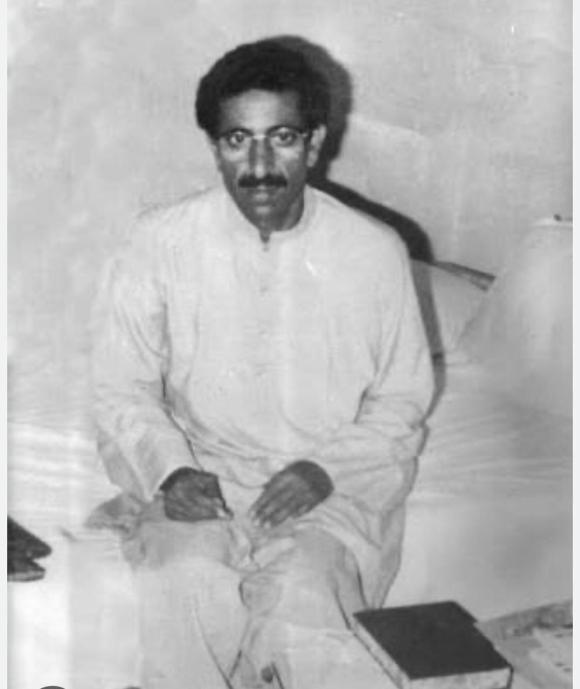
Karim Dashti (1939-1984) is a prominent Balochi poet. What sets Karim apart from other modern Balochi poets is his skeptical and somewhat nihilistic approach that are implied in his ghazals. Abruptnessis one of the main characteristics of his tone—hardly any Balochi poet employs such abruptness, especially when dealing with themes related to divinity. Most of Karim’s verses enshrine deep philosophical reflections on existence and are rich with emotional intensity. These ghazal-couplets1 have been taken from Dil Zareet Bolan published by Balochi Academy, Quetta, in 2009.

(1)
To the Lord’s throne
No grievances I ever bear,
For, never seek a Master
Who lends you no ear.

(2)
Of God’s fierce wrath
Every preacher warns me --
Would that there were some Gods
Who promised peace and harmony.

(3)
He commands—
All unfolds by His decree,
Then why must we carry
The weight of sins, endlessly?

(4)
They say all have a Master
In this vast domain,
Where is my Lord
For I’m bound in chains?

(5)
Behold, even in death,
Karim’s grandeur prevails.
Even in the depth of the grave,
His majesty never pales.

(6)
Forgive me, the tale was long indeed,
And I was eager to leave.
Had I known how the end would unfold,
For life, I’d not have endured such grief!

(7)
Life has tormented me, O Karim,
What the hell is this, after all?
If it’s love, let it unfold;
If it’s wrath, let it fall.

(8)
The houris, the wine, and the Tuba—
For none a thought I ever bear.
In a humble hut, I find my peace—
O, do not banish me from there.


(9)
With her each stride,
A lively melody unfolds,
Sangeen is God’s eternally melodious flute.

(10)
Deprived of your sight,
I left the world in grief.
Now don’t hurry to my grave with a trailing veil.
  1. The translation has not retained the couplet format. ↩︎

Fazal Baloch is a Balochi writer and translator. He has translated many Balochi poems and short stories into English. His translations have been featured in Pakistani Literature published by Pakistan Academy of Letters and in the form of books and anthologies. Fazal Baloch has the translation rights to Karim Dashti’s works. 

.

PLEASE NOTE: ARTICLES CAN ONLY BE REPRODUCED IN OTHER SITES WITH DUE ACKNOWLEDGEMENT TO BORDERLESS JOURNAL

Click here to access the Borderless anthology, Monalisa No Longer Smiles

Click here to access Monalisa No Longer Smiles on Kindle Amazon International

Categories
Review

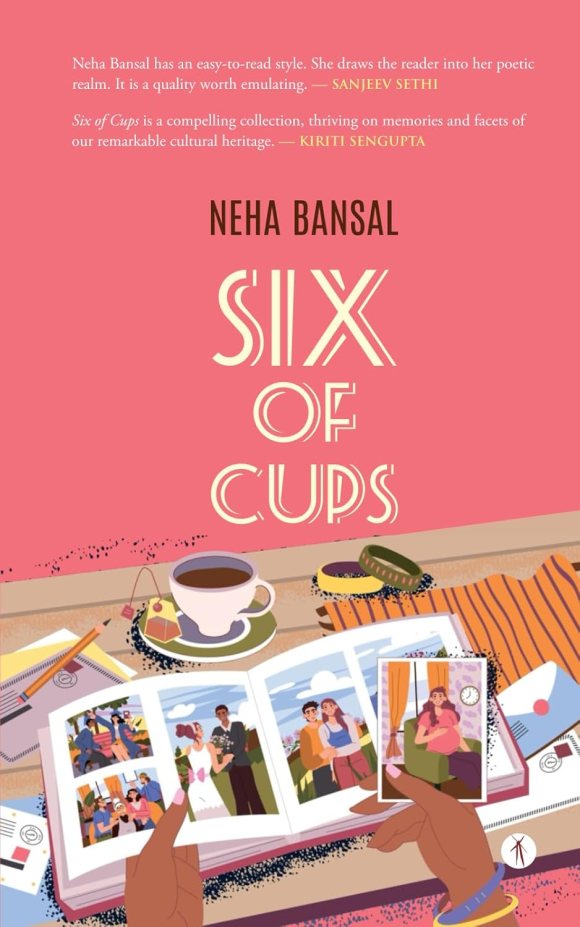
Six of Cups

Book Review by Gowher Bhat

Title: Six of Cups

Author: Neha Bansal

Publisher: Hawakal Publishers

Some books speak in metaphors. Some shout their brilliance. Some want to be dissected, reviewed, analysed like puzzles. But Six of Cups isn’t that kind of book. It doesn’t ask you to do much. It just wants you to sit with it.

Neha Bansal’s poems don’t pretend. They don’t try to be clever. They don’t need you to clap. What they ask for is something quieter — your stillness, maybe. Your memory. They speak softly. Almost like they’re afraid of waking something in you. And maybe that’s exactly what they do.

This is a collection of fifty poems. Simple on the surface. But like most simple things, they carry weight. Not the kind that crushes. The kind you forgot you were holding until you’re reminded.

Reading Six of Cups is like finding an old sweater at the back of your closet. You didn’t even know you were missing it. But the moment you hold it, you’re somewhere else. In another time. Another house. Another life.

The title itself comes from the tarot — a card about childhood, nostalgia, kindness, innocence. The poems live in that space. They revisit things that aren’t just personal, but also collective such as homemade meals, festivals, sibling fights, old TV serials, chalk-smeared hands, and monsoon evenings. There’s a familiarity here that doesn’t feel manufactured. You don’t get the sense that Neha Bansal is trying to be nostalgic. She just is.

There’s a poem about Doordarshan[1]. It doesn’t try to explain the significance. It just takes you there — back to the old wooden cabinet TV, the warm static before the signal settled, the family crowding around the screen. It doesn’t say much and yet it says everything.

‘Sibling Squabbles’ is a small miracle. It captures that strange love we carry for the ones who shared our roof, our food, our secrets. The kind of love that includes shouting, pushing, sulking. But also defending each other, silently. Even now.

‘Paper Boat’ and ‘Mint Chutney’ — two more standouts don’t indulge in poetic imagery. Instead, they lean into the senses. The tartness of raw mango on your tongue. The wet smell of monsoon earth. The steam of evening tea. You read them and you’re not just reading. You’re smelling things. Tasting them. Hearing the old kitchen door creak open.

Neha Bansal is an Indian Administrative Services officer. It’s an unexpected background for a poet, maybe. Bureaucracy is about order. Poetry, one imagines, is about chaos. But in these poems, there’s order in the chaos. There’s discipline, but not rigidity. Every word is chosen carefully. Nothing feels excessive. Nothing is wasted. She writes like someone who listens closely to the world, to people, to memory. Maybe that’s what makes her poetry so honest. Her poems for people who’ve lived. People who remember the smell of their mother’s shawl. People who know the comfort of routine — boiling milk, folding bedsheets, watching Ramlila in the open field. They’re for the ones who’ve carried small hurts for years and never said a word.

There’s a kind of sacred quiet in this collection. That might be its most remarkable trait. In a time when poetry is often loud, performative, and built for clicks, these poems resist the noise. They’re not dramatic. They don’t climax. They settle in. They let silence speak.

In one of the most moving pieces, Neha Bansal writes about an old family tradition — Janmashtami, the celebration of Lord Krishna’s birth. But it’s not about religion. It’s about her grandmother drawing tiny footprints with rice flour. The quiet anticipation of the festival. The waiting. The softness of belief, not its spectacle. It’s in those tiny footprints that the poem finds its magic. You can almost see them fading slowly on the tiled floor.

These poems understand that memory is not a highlighted reel. It’s a soft murmur. A drawer that squeaks when you open it. A spoon stirring something warm. A phrase you haven’t heard in years but still know by heart. Neha Bansal knows that nostalgia isn’t about grandeur. It’s about the details we almost miss.

Her form is mostly free verse. But that doesn’t mean it’s careless. She knows how to pause — where to breathe. The white space around her lines isn’t empty. It holds meaning. A kind of emotional residue. You finish a poem, and it doesn’t end. It lingers. Like the scent of someone who just left the room.

There’s no poetic ambition here and that’s its strength. These poems don’t ask to be poetry. They just are. And that’s why they work. You trust them. You feel at home in them.

I thought of my own home while reading these pages. Kashmir. The long winters. My grandmother in her worn pheran, roasting cornflakes and walnuts on an old iron tawa, her hands, cracked and slow. The hush of mornings. No urgency. Just living.

That’s what Six of Cups reminded me of — the art of simply being. And how much that art is vanishing now.

Some poems mention festivals like Lohri, Janmashtami, Diwali. They present them as they are — domestic, lived-in, full of ordinary magic. For those unfamiliar, there’s a glossary at the end. But the real understanding happens not through translation, but emotion. Neha Bansal doesn’t lean on metaphor much. And when she does, it’s light. A passing breeze, not a storm. She doesn’t build complex imagery. But she does ask you to notice. In a world of scrolling, skimming, glancing — she’s saying, “Stop. Look. Listen.”

Even the titles of her poems have that simplicity: ‘Old Shawls’, ‘Grandmother’s Halwa’, and ‘First Rain’. They sound like diary entries. And in a way, they are. Only they’re not just her diary — they become ours too.

The brilliance of Six of Cups is that it democratises poetry. It makes it accessible again. You don’t need a theory. You need memory. You need feeling. That’s it. If you’ve ever missed someone or some place or even some version of yourself — you’ll get this.

And maybe that’s the beauty of it. It doesn’t want to be studied. It wants to be remembered. Like an old friend. Like a childhood street. Like a scent you can’t name but know in your bones.

The last poem in the collection doesn’t try to wrap everything up. There’s no neat ending. It just… fades out. The way light fades at dusk. Slowly. Gently. Without warning.

You close the book and feel something that isn’t quite sadness. It’s quieter than that. Maybe it’s the feeling of being seen. Or the feeling of remembering something small that meant something big. You sit with it for a while. You let it settle.

Six of Cups is not a loud voice. It’s a warm room. A soft light. A hand reaching back, not to pull you into the past, but to remind you it’s still with you. That you are made of it.

And maybe that’s what poetry should be sometimes — not a performance but a presence.

[1] Official Indian TV channel

Gowher Bhat is a published author, columnist, freelance journalist, and educator from Kashmir. He writes about memory, place, and the quiet weight of things we carry. His work often explores themes of longing and belonging, silence and expression. He believes the smallest moments hold the deepest truths.

PLEASE NOTE: ARTICLES CAN ONLY BE REPRODUCED IN OTHER SITES WITH DUE ACKNOWLEDGEMENT TO BORDERLESS JOURNAL

Click here to access the Borderless anthology, Monalisa No Longer Smiles

Click here to access Monalisa No Longer Smiles on Amazon International
Categories
Poetry

Watch You Walk

By Laila Brahmbhatt

WATCH YOU WALK 

I watch you walk
the street we once shared.
You toss away a paper
the one I gave you,
scribbled with your silly jokes.
It’s been a long day
with thoughts about you.
I must sleep
so I can think some more.
When I think of you,
I don’t miss you.
I miss our laughter.
I’m still laughing
at those jokes.
But you can’t hear me.
To hear,
one must be awake

Laila Brahmbhatt, a Kashmiri/Jharkhand-rooted writer and Senior Immigration Consultant in New York, has published haiku and haibun in several international journals, including Cold Moon Journal and Failed Haiku.

.

PLEASE NOTE: ARTICLES CAN ONLY BE REPRODUCED IN OTHER SITES WITH DUE ACKNOWLEDGEMENT TO BORDERLESS JOURNAL

Click here to access the Borderless anthology, Monalisa No Longer Smiles

Click here to access Monalisa No Longer Smiles on Kindle Amazon International

Categories
Stories

Misjudged

By Vidya Hariharan

“This is Judge G.K.’s house”, the constable informed his senior officer as they were waiting for the front door of the apartment to open in response to their knock. He blew on his cupped fingers.  “I have come here many times. They serve the best coffee. I hope they give us some now,” he continued, on meeting his colleague’s questioning look. “A strict but fair man. He retired a few years ago. He must be about seventy now.”

It wasn’t the Judge who opened the door and welcomed them in, but his diminutive wife. “I presume you have come to meet the Judge,” saying this, she ushered them cheerfully into a terrace. At the end of it was a hot house full of flowering plants and a giant of a man reclining in a chair, eyes shut enjoying the apricity of the winter sun. His eyes snapped open at their approach. Nothing old about those black eyes, thought the inspector. He and the constable sat down on the chairs indicated. It was humid inside the glass cabin, but pleasant after the outside chill. 

Namaste1, sir. We are here about a hit and run that happened last night”, began the inspector.

“You want my nephew then”, the Judge interrupted.  

“Janu, call that Vinay”, said the Judge to his wife, who had entered bearing glasses of water on a tray.

Turning to the inspector, he said, “He’s my sister’s son. He’s staying with me till he finds a job.” The Judge shook his head sadly. “Lazy to the core. Stays in bed all day with his laptop and his phone. When he does step out, he’s gone all day and sometimes all night. Last night he came home late, I am sure. He has an Engineering degree. Hope he lands a job soon,”he continued.

The inspector set his glass down on the centre table. At that moment a young man came in. He was in flannel long pants and a Nirvana T-shirt. Short and slim, he looked almost like a schoolboy. He eyes were heavy with sleep and as he entered the room he was suppressing a yawn.

“These policemen are here to arrest you”, the Judge said, closing his eyes. The young man looked startled.  

 “Are you Vinay?” the inspector asked. The lad nodded.

“Sir, the reason we are here is this: Last night a car knocked down an old woman near the flyover at around midnight. The driver didn’t stop. You were nearby, and you took the victim to the hospital,” said the inspector.

“Yes, sir,” said Vinay.

“The victim…,” said the inspector.

The constable referring to a folder he held open in his hands, said, “Srimati Deepaben Goradia. Age 82.”

“Yes”, continued the inspector, “The victim regained consciousness this morning. She doesn’t recall much except being hit from behind and being in great pain, before she fainted.”

“Yes, sir”, said Vinay, “I saw a woman lying huddled in the middle of the road while I was returning home after watching a movie at Aurora theatre last night. At first, I thought it was a bundle fallen from a vehicle, a tempo or truck or something. It was really cold last night, and dark, I was hurrying home. Then when I went closer, I recognised Deepa ji.”

“How did you know it was her?” asked the constable.

“Well, I tutor her grandson who lives in the US. I teach him calculus. Online,” said Vinay, glancing at his aunt, who smiled at him encouragingly.

“Oh, I see,” said the inspector, glancing at the Judge, “You stay up late because of the time difference.”

“Yah,” said Vinay, giving in to his yawn.

“How did you trace Vinay?” asked the Judge’s wife, Janaki.

“I gave my name and address at the hospital front desk, mami2,” said the boy.

“Yes. And it’s a good thing you did. Mrs. Goradia’s family is very grateful to you. So is the police force. It was very kind of you to take care of her. In this weather and at her age, she would not have survived without your timely assistance. We need more people like you in this world. Most people would not have bothered to help,” said the inspector, standing up and shaking Vinay’s hand.

The constable handed a small plaque to the Inspector. “For your kindness and presence of mind, the Police Force would like to award you with this plaque. We have instituted this recently to thank and recognise the citizens who help others selflessly.” The Inspector stood up and gave the plaque to Vinay. The constable had the camera ready to click a commemorative pic. “We will upload this pic on our website with a message,” he informed them.

“Thank you, sir. I only did what any one else would have done,” said Vinay.

“I don’t think you need to worry about this young man, sir,” said the inspector turning to the judge. “We’ll take your leave now.”

Vinay accompanied the policemen to the door and let them out.

About to turn the key in the ignition, the inspector turned to his junior, and said, “Sometimes we are fair to others but judge our own family harshly.”

“No coffee,” said that stalwart, morosely.

  1. Namaste is a respectful way of greeting in India. ↩︎
  2. Aunt: Mother’s brother’s wife ↩︎


Vidya Hariharan is an avid reader, traveller, published poet and teacher.  Currently she resides in Mumbai.

PLEASE NOTE: ARTICLES CAN ONLY BE REPRODUCED IN OTHER SITES WITH DUE ACKNOWLEDGEMENT TO BORDERLESS JOURNAL

Click here to access the Borderless anthology, Monalisa No Longer Smiles

Click here to access Monalisa No Longer Smiles on Amazon International

Categories
Poetry

Rain and You

By Shamim Akhtar

RAIN AND YOU 

On the glass pane of frozen desires,
little droplets of rain start to gather in playful haste.
Briefly they linger, dance, and knock into one another,
then fall carelessly down in eternal ecstasy.
From behind a closed window, quietly I stand and watch —
I don’t mind getting drenched in memories for a while

Dr. Shamim Akhtar is an Assistant Professor in the Department of Management at ICFAI University, Mizoram. A researcher, writer, and a passionate poet explores themes of memory, longing, and the human condition. His work reflects a blend of lyrical sensitivity and deep introspection.

.

PLEASE NOTE: ARTICLES CAN ONLY BE REPRODUCED IN OTHER SITES WITH DUE ACKNOWLEDGEMENT TO BORDERLESS JOURNAL

Click here to access the Borderless anthology, Monalisa No Longer Smiles

Click here to access Monalisa No Longer Smiles on Kindle Amazon International

Categories
Essay

It Doesn’t Rain in Phnom Penh

By Mohul Bhowmick

Phnom Penh: From Public Domain

Blank faces welcome me in Phnom Penh. That the people smile at all is a miracle; years of haggard living, tortured upbringing, and painful deprivations have reduced this golden city of Indochina to one filled with figurative corpses. What America could not achieve, Pol Pot did in a flash and years of oppression turned into that of a blood-filled regime that the Mekong did not even try to wash away. For all its salubriousness, this river, among the greatest in the world, stood by and watched its children be consumed by an ephemeral fire that could only be extinguished in 1979.

Then the Vietnamese intervened, returning only after being loathed by almost everyone in Cambodia. The former, among other benedictions, took apart whatever little credibility the Democratic Kampuchea (Khmer Rouge) government had amassed in three and a half years in power. Pol Pot’s name, quite naturally, does not feature on the political billboards and hoardings that seem to have made themselves inconspicuous in Phnom Penh today. The national dish, Amok, made of fish or several vegan accoutrements to serve the European traveller, takes up the spot left by those of the beggars in the parking spot north of the royal palace.

As I sip my umpteenth sugarcane juice, fortified with cubes of ice that may have once come out of Tibet, I wonder whether the king curls his lips in distaste seeing the beggars and rag-pickers waiting outside the golden gates of his palace. But the official line in Cambodia is that Sihamoni is a staunch Buddhist who likes the occasional bit of Czech opera, and all my thoughts of irreverence — born out of weeks of living in Indochina — flush down the confluence of the Mekong and the Tonle Sap while looking past Sisowath Quay to the east.

This river, the lifeblood of Indochina, had once emerged as a trickle in Tibet, and I am perplexed by the lack of cohesion it shows while merging with the Tonle Sap, which also shares its name with a large freshwater lake in Siem Reap. During the monsoon season, the Mekong forces the Tonle Sap to reverse its water with such gushing force that the latter is left with no choice but to flood itself with fish.

It doesn’t rain in Phnom Penh; I had heard this phrase before but am accosted with it with painful lucidity for the first time when visiting the Tuol Sleng primary school that served, for years, as a torture centre for the Khmer Rouge. Had it rained on the frangipani-filled lush gardens of the school — belittling the despair and agony that went on inside — I would not have noticed. I envy the frangipani blooms and their ability to distance themselves from such emotions as those that afflict men. Outside, a survivor of the Khmer Rouge years sells his story for a few pennies; recognition from the foreigner seems more validating to him than acceptance from his countrymen, who have long forgotten his ordeals. I am told that a McDonald’s might soon open across the street.

When encountering the fabled ‘baby-killing tree’ in the ignominious Killing Fields in Cheoung Ek outside Phnom Penh, there is a numbing sensation which I have scarcely felt before. The tears fall heavier than the unseasonal rains I would have wished to encounter in Phnom Penh; it was not too long ago when I could have claimed that I had not cried in ten years. That this tree is also a Pipal, a cousin of the one under which Sakyamuni attained enlightenment, seems a cruel joke to me. That there is still some sign of life on it, populated by the innumerable butterflies and twittering sparrows, exacerbates this feeling all the more.

Angkor[1], a few days later, seems resplendent at dawn, but I am unable to escape the reality that the men who built this monument had also given birth to the reality that the Khmer Rouge would later become. Indeed, Pol Pot was known for his selective readings of the classics of the Khmer kingdom of Angkor — if building this city was possible, anything was, even his vastly unerudite idea of returning the country to a year ‘zero’, doing away with the market economy, abolishing money and persecuting intellectuals for wearing spectacles.

The rain that evades me in Phnom Penh finally catches up with me in Angkor Wat; unable to make a visit early one morning on a bicycle in a thunderstorm through the black jungle, I remain rooted to my guesthouse and eventually fall asleep.

On my first visit to Angkor Wat, I am stunned by the intricacies and details that seem to have permeated every angle of Khmer design. The frescoes on the walls and the images on the gates of the large temple complex depict wars fought and construction projects undertaken; for all its virility in eventually losing its grasp over modern-day Cambodia, the Hindu-Buddhist Khmer kingdom — of whose ilk Jayavarman VII had been, and whose predecessor Suryavarman II had ordered this temple made in 1150, at first as a tribute to Vishnu, and eventually, a mausoleum for himself — was remarkable in its aesthetic sensibilities. 

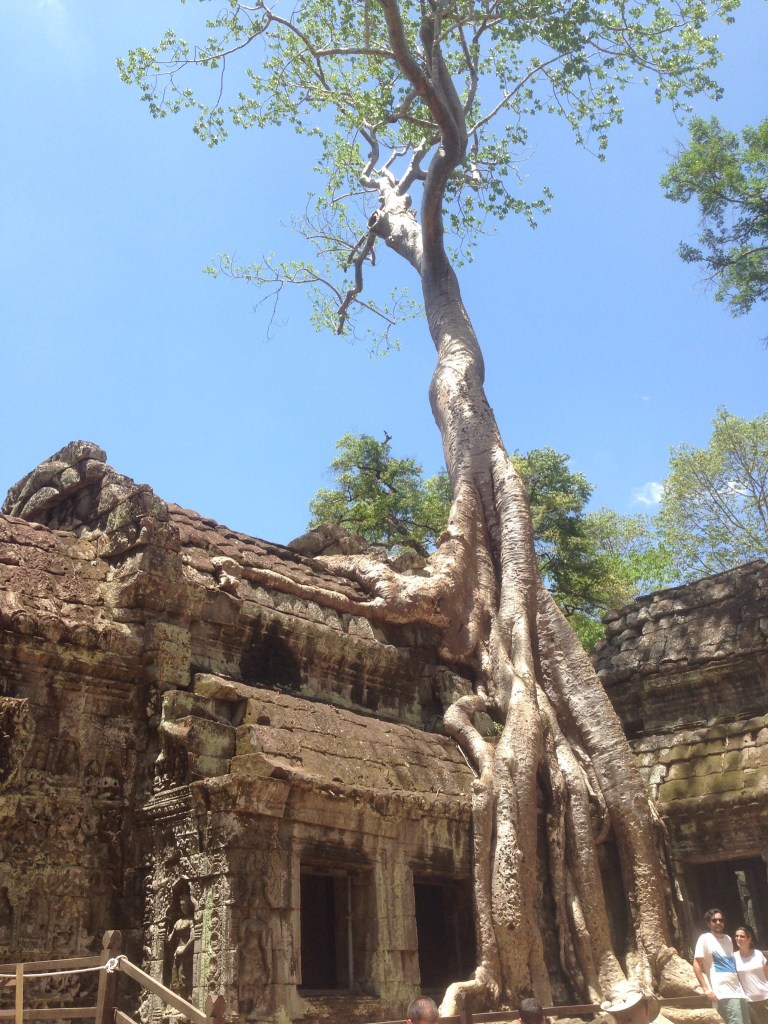
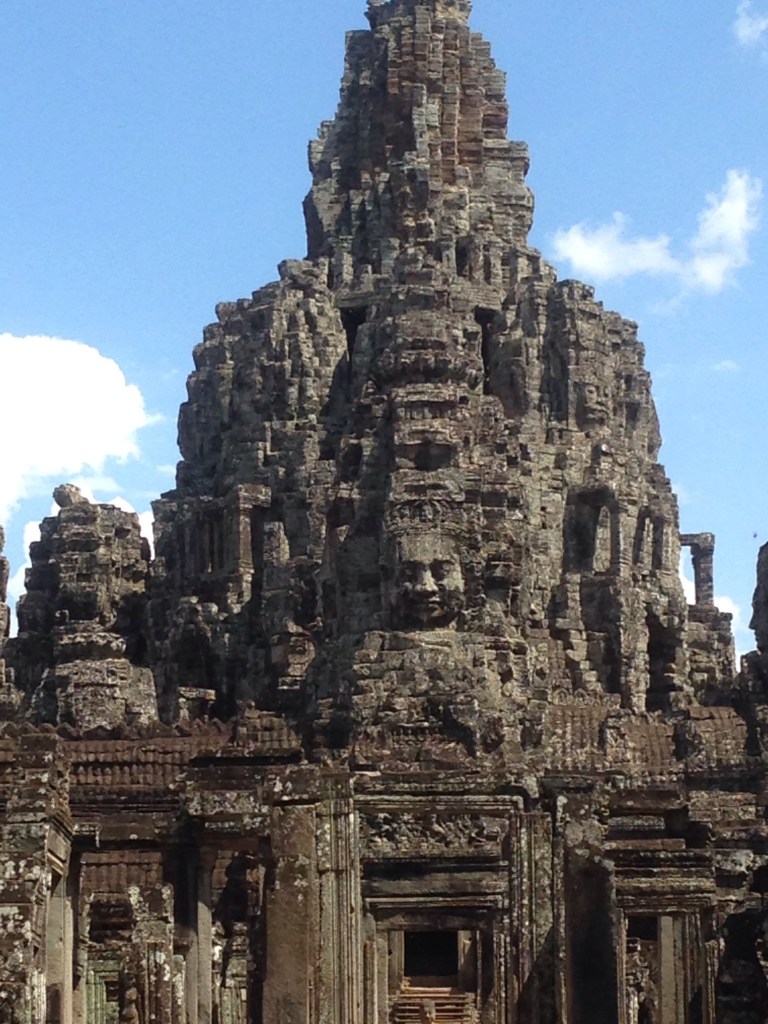
The several other temples in the area, including the great Bayon, Ta Phrom and Prasat Preah Khan — not to mention the gigantic meadows located in the heart of the old city of Angkor Thom — attract and drive my senses even as I struggle to cycle on flat roads in the deadening midday heat. The meadows, which feature statues of elephants attired in regal resplendence, remind me of a time simpler than this, when a thousand parasols could be had for cheap and held over the head of the king. The climate of Indochina, I surmise, may not have been too different from what it is now; I look yonder for concrete jungles mimicking the ones that seem to have sprung up choc-a-bloc in west Hyderabad, but encounter only lush blackness.

In effect, understanding Khmer society or the part of it which is shown to the visitor, is a challenging affair unless one undertakes a voyage of the heart that infrequently involves short-changing between lives of a different kind. The Mekong, which makes no appearance in Siem Reap, slithers away from the intemperate nature one finds in Angkor.

When I walk past Sisowath Quay one night under a moonless sky, I am reminded of my own idea of happiness, which seems to have been torn to shreds on this journey; a group of middle-aged Khmer men, devoid of languor in this dark hour and well-fortified with Angkor, the brew and not the temple, beckon me over to join in their game of sai[2]. It is then that I know it is time to put the killing tree to bed. For now.

[1] Angkor Wat is in the city of Siem Reap

[2] Played with the foot with a shuttlecock-like structure

Mohul Bhowmick is a national-level cricketer, poet, sports journalist, essayist and travel writer from Hyderabad, India. He has published four collections of poems and one travelogue so far. More of his work can be discovered on his website: www.mohulbhowmick.com.

PLEASE NOTE: ARTICLES CAN ONLY BE REPRODUCED IN OTHER SITES WITH DUE ACKNOWLEDGEMENT TO BORDERLESS JOURNAL. 

Click here to access the Borderless anthology, Monalisa No Longer Smiles

Click here to access Monalisa No Longer Smiles on Kindle Amazon International

Categories
Poetry

The Rain Was Laughing Sideways

By Ryan Quinn Flanagan

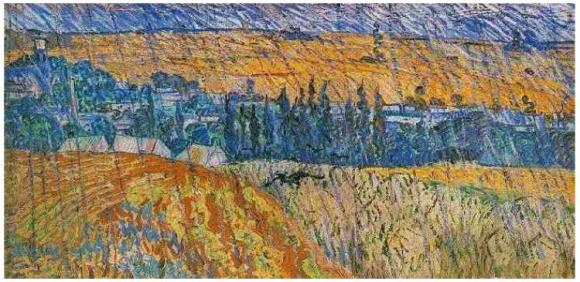
Rain-Auvers, Painting by Vincent van Gogh (1853-1890). From Public Domain
THE RAIN WAS LAUGHING SIDEWAYS(2) 

Looking down into the box,
back on everything,
back through
that wonderful maze
of things.

And it seems
that the rain was laughing
sideways.

Pernicious alligators
climbing up out of
New York bathrooms.

Though I have never been
the way of that buxom bridge.

Not once across the fancied millennia.

It's more of a faraway thing.
The teeming thunderous clap.

An inner drive
to ceremonial drums,
can you see it?

Back through
through the alluvial plain
with a walking stick
of hungry crows.

To stand over dirty shave water
with that new face.

To smile
like a king
of many well-kissed
things.

Ryan Quinn Flanagan is a Canadian-born author residing in Elliot Lake, Ontario, Canada with his wife and many bears that rifle through his garbage.  His work can be found both in print and online in such places as: Evergreen Review, The New York Quarterly, Borderless Journal, GloMag, Red Fez, and Lothlorien Poetry Journal

.

PLEASE NOTE: ARTICLES CAN ONLY BE REPRODUCED IN OTHER SITES WITH DUE ACKNOWLEDGEMENT TO BORDERLESS JOURNAL

Click here to access the Borderless anthology, Monalisa No Longer Smiles

Click here to access Monalisa No Longer Smiles on Kindle Amazon International

Categories
Excerpt

The Eleventh Commandment

Title: The Eleventh Commandment And Other Very Short Fictions  

Author: Rhys Hughes

 Publisher: Recital Publishing

Taurus

“What sign do you think the minotaur is?”

This was an unexpected question from above. I turned my head and saw him three floors above, leaning out of his window. I was watering the flowers in their boxes on the balcony and I stood up slowly and stretched. Then I paid serious attention to the question and finally said, “Taurus.”

He nodded. It was the obvious answer, but his nod was ironic and it was clear he was disagreeing with me. It occurred to me that maybe the body of the minotaur and his head would have different birthdays and be born under two different signs, but I was in no mood for riddles and shrugged.

“Do you suppose he was attracted to women or cows?”

“I beg your pardon?”

“The minotaur! Were his amorous desires determined by his human mind or his bovine physicality? I can’t work it out.”

“You seem very interested in the details of his life.”

“Don’t be absurd, he never lived.”

“Yes, he was a myth only.”

“Nonetheless, he was born under the sign of Taurus.”

“But that’s what I said earlier.”

“Oh, did you? I misheard. I thought you said ‘torus’, which as we both know is a geometrical shape and not a zodiac sign.”

My neighbour was a joker, of this I was certain now. I wondered why we hadn’t interacted until this moment. I spend a lot of time on my balcony and he must have seen me there. I leaned on the railings and looked down on the city. The old alleys and narrow streets were like a maze. The thread that would lead a lost traveller out again was made from air, only the wind.

It was perfectly possible for the minotaur to have escaped the labyrinth by chance, from wandering at random, and in this case Theseus would have found it empty when he ventured inside, but for the sake of saving face his story wouldn’t change. Nobody could dispute that he slew the creature. Yet the monster was free, making his way in a world where he must always be alone.

No woman could want him, nor any cow. Never settling down, he would voyage to the edge of the known world and who can say what he would do when he reached it? Sit on his haunches and wait, I guess.

My neighbour had a man’s head, not that of a bull, so he couldn’t be the minotaur, as I briefly suspected when he asked me a third question, “Who does he support in a bullfight, the beast or the matador?” and I said, “The answer depends less on the fact he’s a hybrid than on his sense of justice.”

“Meaning what exactly?”

“Anyone with a sense of justice supports the bull.”

“I am his descendant, you see.”

“How is that feasible?”

“Somewhere on this remarkable planet of ours he must have met a woman with a cow’s head. Over many generations the bovine aspects weakened. All that remains is my unusual stomach. I don’t complain.”

Before I could raise an objection, he added wistfully:

“A shame I don’t exist.”

In the Den with Daniel

Daniel Day-Lewis is the best actor in the world. You know this. Everyone else knows this. Your wife knows it when you kiss her on the cheek before you set off for work. Your fellow commuters know it on the underground train that is always crowded at this time of the morning. Your colleagues in the office know it when you arrive. When you sit at your desk and switch on your computer you can’t imagine how the simple truth could be different. He is the best actor in the world. There can be no argument.

He is more than an actor and this is why he is so magnificent. He inhabits his roles, he refuses to regard the characters he plays as separate from himself. He becomes those characters, absolutely without doubt or hesitation. He puts aside his own identity for the duration of the making of a film. He lives his role, no matter how uncomfortable, even when cameras aren’t rolling. This is the supreme commitment to an art form and you admire him immensely. We all admire him. He is a marvel, a genius.

Whether he is playing a dramatic villain in remarkable circumstances or an ordinary man in an everyday situation, he is utterly convincing, not only to his fellow actors and the audiences of cinemas, but even to himself. When he plays a role, the role vanishes. The character is suddenly real, no less solid than I am. I am strolling the office floor today, chatting with the employees. I do this from time to time, to make them feel at ease. I approach your own desk. You swivel your chair and wait for me to speak.

“You have a wife, a child, a mortgage on a house. I have been asked by my superiors to make cuts to the workforce. I don’t wish to do this. I know it will be difficult for any employee who is forced into redundancy. But I have my quota to fulfil. Jobs will be lost. You need to prove that you are invaluable. That is the only way you can secure your future here. Do you understand? Prove you are irreplaceable. Do this for me. Be irreplaceable, I am begging you. Please don’t make it easy for me to dismiss you.”

And you nod, but I see in your eyes that you have given up. At the end of the day, you rise from your desk to begin the journey home. You are descending the stairs and hear the words, “Finished,” from above. Suddenly you remember that you are Daniel Day-Lewis, that your office job is fictional, the woman you call your wife is a fellow actor, your child doesn’t exist. It was an act all along, brilliant, inspired, relentlessly perfect.

But you wonder. How can you be certain that Daniel Day-Lewis himself isn’t just a character in another film?

Beyond the Edge

A man was crouching on the path that runs along the side of the river, and as I approached him I saw he was moving a chess piece in the dust. It was a white knight. I was almost on top of him before he paused and turned to look up at me. Then I asked him what he was doing and he replied that he was playing a game of boardless chess. It had started in a distant city on a regular board, like most chess games, but frustrated with the limited area on which the entire struggle was expected to progress, he had agreed with his opponent to allow pieces to move beyond the boundary squares when necessary. And that is what had occurred.

“My knight kept going,” he added, “off the edge and along the streets and out of the city, and I didn’t have a desire to turn him around and head back to the board. So here we are, and the game continues, or at least I’m assuming it does, many years later. My opponent might have resigned by now and gone home; or he may have captured my king in my absence and defeated me without me knowing; or he too could be wandering the world with a piece in his hand, moving it across the invisible squares of the land until a stranger stops to ask him about it.”

I laughed and bade him have a good day, then I rode around him with due care and cantered towards the small town I saw looming ahead, milky smoke issuing from the chimneys of its houses. As I entered the town and reached the main square, I saw two men playing chess outside a café, and I wondered what might happen if the white knight also came this way and became involved in their game, an unexpected and accidental ally to one side, capturing black pieces as it wandered across the board. The incident could incite a real fight between these players and the newcomer, a three-way battle that would mean broken teeth.

If only that migrating knight was half black and half white, like many actual horses in the world, bloodshed could be avoided. A piebald chess piece is surely neutral. I was tempted to return to the river path and warn the fellow of the hazard ahead, but I had vowed never to retrace my steps. I was fleeing a battle and I too was a knight that had ventured beyond the edge of his board and kept going. Unlike the man crouched in the dust, I had taken precautions, for I had stopped at an abbey and bought a flagon of the darkest ink from the brothers in the scriptorium and had painted on my white stallion the stripes of salvation.

About the Book

Rhys Hughes’ unique observational, aphoristic humour abounds in this collection of artfully crafted, extremely short stories. A perennial master of invention, Hughes explores our perceptions of humanity, mining truths beneath the clutter of culture with incisive wordplay and trademark wit.

Hughes has arrayed eighty-eight narrative gems into three groups, The Zodiacal Light, Beyond Necessity, and The Ostraca of Inclusion-clever new takes on mythology, history, and science. A thirteenth star sign, minotaurs and gorgons, a dog ventriloquist, gears and cogs, a clock-wrestling octopus — all are semantic Möbius strips where fantasy and philosophy are seamlessly melded as only Hughes can do; both thought provoking and entertaining.

About the Author

Rhys Hughes was born in Wales but has lived in many different countries. He began writing at an early age and his first book, Worming the Harpy, was published in 1995. Since that time he has published more than fifty other books and his work has been translated into twelve languages. He recently completed an ambitious project that involved writing exactly 1000 linked short fictions. He is currently working on a novel and several new collections of prose and verse.

.

PLEASE NOTE: ARTICLES CAN ONLY BE REPRODUCED IN OTHER SITES WITH DUE ACKNOWLEDGEMENT TO BORDERLESS JOURNAL

Click here to access the Borderless anthology, Monalisa No Longer Smiles

Click here to access Monalisa No Longer Smiles on Kindle Amazon International

Categories
Poetry

Mist of the Hills

By Amarthya Chandar

Amarthya Chandar
MIST OF THE HILLS

Tonight, I'll go into the mist
For there is no rain
And I'll feel the cold sting
While I wait for you.
You come like a flash of light
That goes away faster than it came.
I know it's a dream,
For I cannot find you anymore.
I'd give up tomorrow for a moment
If it had but you in it.
I don't want the world to see me,
For I fear the tears that rush
From voids that do not fill.
Now come on horseback
Take my sorrows away with the wind.
Drown them or ride them away.
I'll keep the calm you leave me.
Ride into the tide already,
For I know it's a dream
And the mist awaits me.

Amarthya Chandar is a wildlife biologist with a lifelong passion for poetry, who finds the fusion of environmental elements with everyday feelings and emotions enthralling.

.

PLEASE NOTE: ARTICLES CAN ONLY BE REPRODUCED IN OTHER SITES WITH DUE ACKNOWLEDGEMENT TO BORDERLESS JOURNAL

Click here to access the Borderless anthology, Monalisa No Longer Smiles

Click here to access Monalisa No Longer Smiles on Amazon International