We waft across the seas singing a happy song with the breeze! What a lovely world it is full of colour and festivities! Festivals from all over the world hop into this page — festivals through October and November. The fabulous Ms Sara will flit around the world on a festive spree through Deepavali, Durga Puja and Halloween and stories and writing around them.
Thank you for the lovely introduction. Hey everyone, your best friend Sara here! What a time of the year, for celebrations ! We will start with the one closest. Diwali or Deepavali, the festival of lights.
Poetry
Eight year old Nirav Prakash from Kolkata shares his excitement for this amazing festival, in both words and pictures.
Bright And Booming!
Oh this is a beautiful festival of lights, On this day, all friends and relatives unite. We eat chocolates and sweetmeats with delight, Decorate each corner with lamps and candle lights. And enjoy firework all through the night, I love Diwali, the festival of light.
I am a firecracker, I go “Boom,” After making a mess, mother needs to broom, My uncle loves me the most, who will soon be a groom. I burst high up in the sky with the sound kaboom, And my pet hides like a cartoon in my room, I am a firecracker, I love to “Boom!”
Ibrahim Abdulkader likes to play table tennis and loves playing with his NERF guns and doing nerfwar with friends.
Oh ! I Cannot Wait For Diwali
Diwali is the festival of lights No dark nights , everywhere it is bright Sparkles, crackers and fireworks at height Brightens our hearts and souls with delight.
.
Colourful new clothes we all wear Girls with pony tails and decorated hair Diyas I light, to decorate the windows and doors Mom makes a beautiful rangoli to adorn the floor.
.
No darkness and evil fills the night Happiness shines with all its might Think of those who know not what it is to enjoy Together we can fill their hearts with lots of joy.
.
Oh ! I cannot wait for Diwali Wishing everyone a Happy Diwali .
While Durga Pooja was celebrated last month, nine year old Sruthika Murali from Kerala shared this creative poem on what would happen if Durga were to come alive.
Sruthika is an ardent reader and quite imaginative. She jots down few lines once in a while in her diary. She likes to observe things around us.
When Durga Comes Alive…
When Durga comes alive,
She will kill the evil ones and give us peace.
When Durga comes alive,
The trees will shiver and the floor will shake.
.
When Durga comes alive,
She will be strong and very big,
.
But really she is calm and quiet.
When Durga comes alive,
We should join our hands and pray.
And now Halloween, which was different this year because of the lockdown. But we had friends who could spook us out with their stories and poems! Nine year old Arunava Sengupta from Delhi, is doing just that. All set?
Arunava Sengupta enjoys reading books, painting, singing, playing cricket, badminton, cycling and watching TV. He goes to Manava Bharati India International School, Delhi and is a student of Jabberwocky Speech and Drama
What A Spooky, Spooky Night!
On a dark and spooky night, This day, everyone gets a FRIGHT!! Your lights are blinking, is it a shock? Oh, what a spooky, spooky night.
.
A little rumble, a little creak Your muscles are missing! You are weak! A light is shining , it is so very bright Oh, what a spooky, spooky night!
.
Your door is banging! Somebody’s knocking! Your lock is stuck, preventing you from opening! A log was brought! The door was down! Why it was me, dressed as a hound!
.
“Mom!” I said. “I loved the outing!” “Now I’ll go to bed. Tomorrow is Halloween! I need some rest.”
.
So he slept. His mask was beside him. He’ll be bright the next day. Not dim.
Stories
And now we bring you stories around these festivals. Here is one by twelve year old Vania from Kolkata keeping our spirits high in the Durga Pooja festival, with her fantastic tale!
Vania is a student of Modern High School For Girls, Kolkata. She is an avid reader and loves writing. During this lockdown, she has also published two books on Amazon Kindle.
Warrior Durga AKA The Female Alpha
Adorned with gold accessories, I leaped down to earth on my beloved pet lion, ten weapons in my ten hands — each weapon symbolising a different trait — the sword for wisdom, trident for peace and so on.
But…. silence greeted me. No one was out! There was no hustle bustle of the early Puja crowd and not even the cawing of a crow.
Something had to be done, I decided. I called together a meeting.
“We need to do something about this virus,” said Lord Brahma.
“I will make the oceans churn and froth till then,” Lord Indra claimed.
“And I will make it rain,” said Lord Indra.
“No, no! That will ruin the humans’ life even more!” objected Parvati.
“What shall we do? Without making people miserable?” Lord Shiva added as an afterthought.
I fiddled with my arrow. It had been more than half a year since this coronavirus had entered the humans’ life, inflicting damage and misery all around.
And worse? Durga Puja, my festival was just around the corner! Durga Puja is supposed to be a time of strength, joy and unity. Not a time of sadness and torture!
And even worse? Brahma, Vishnu, Shakti, Shani, Indra — all had tried. But they failed.
“We’ve got to put an end to this,” I agreed.
“How Durga? You can’t kill a virus with your trishul!” Vishnu, my brother said.
It was true — but if Mahishasura could be killed, then why couldn’t this virus?
“What if we do it together? It might be possible then..,” I suggested.
“Yes… I agree. We should give it a try..” Saraswati said.
Slowly the Gods rose up from their thrones. I knew then that coronavirus would have to look out now.
Here is 12 year old Suhani Khemka taking us back to an exciting time, when she organised a Halloween party with friends.
How My Own Halloween Party Spooked Me!
We stood behind the wall waiting for her to come and hoping that our plan would work out flawlessly. My friend, Scarlett got so frightened on hearing the name of ghosts that her heart missed a beat. My friends and I knew how to take full advantage of this.
We had made an ingenious plan which we thought would succeed. We had completely used up our brains in preparing everything needed for our master plan to run smoothly. We stitched white cloth until it was perfect as costumes for ghosts.
The next thing we did, was call Scarlett, coaxing her to come over to my house for a Halloween party which was difficult due to her disrelish for the festival. With everything set, we were full of excitement and waited to get a nice chortle the next day.
On Halloween’s day, my friend and I stood behind the wall in our own stitched ghost costumes with the lights switched off. We lit candles and waited — waiting for Scarlett’s footsteps to approach. There was a sound. We played the spooky music and slowly shook from side to side, back to front, trying to whoosh the way we had practiced.
Not hearing any yell, we picked up a candle up to see who it was. On the sight of a black ghost, my friend and I squealed as a chill ran down our spine, until someone turned on the lights. From beneath the black costume, Scarlett and my mother revealed themselves.
A rib-tickling scene it was for my mother, who had heard our plan and played the prank back on us. Scarlett was on cloud nine laughing, whereas we with our heads down, went out of the room exasperated. The events of the day made us pledge not play such a prank again when adults are around.
Six year old Parva Patel from Ahmedabad has a wonderful story that underlines not every dracula is bad. Here is a interesting take on the classic tales.
Dracula Prince and Rapunzel
Somewhere in the middle of long long ago, there was a Dracula Kingdom and it was ruled by a very cruel king.
But there was a ray of hope in the kingdom when the Queen gave birth to a son. They called him Blade.
Years later, when Blade was trying to visit human land, the king tried to stop his son. He said, “Never go into the human world because they are clever and can betray you, like I was betrayed once.”
But instead of listening to his father Blade went into the human world because he was mischievous. He climbed up an old tree to see the view of the human land. And just while getting down, he fell down but his fangs got stuck in the branch of the tree. He was crying for help and just then a brave girl who was hunting in the forest, heard his voice. She was the brave princess of human land.
Her name was Rapunzel.
She was shocked to see a dracula. But she decided to help him. She immediately saved him and told him that his father was wrong. All humans are not bad just like all draculas are not bad.
So Blade went to his dad and told him about what had happened in the forest.
The king understood and said that he wanted to meet Rapunzel. When Rapunzel came to Dracula Kingdom, the king and queen thanked her for saving their son’s life. The king also said sorry for hurting humans and misunderstanding them.
Blade and Rapunzel became best friends and helped draculas and humans whenever they were in trouble.
Essays
Dusshera celebrates the victory of Ram over Ravan, symbolic of evil. Seven year old Darshali Agarwal from Bhilwara, Rajasthan remembers the excitement that entails Dusshera for many parts of the country- watching Ram Lila, burning of giant effigy of Ravana, enjoying the fare in massive grounds, and a very important lesson for us.
Darshali Agarwal is a 7 year old girl with an ever smiling face. She loves to read and listen to bedtime stories.
Why I Love Dusshera
I love Dusshera because it is a very exciting festival.On this day, I get to see a very big statue of Ravana in a big ground. He looks so beautiful decorated with colourful papers and glitters. Most amazing thing is his ten heads.
Wow, a man with ten heads!
On this day, I enjoy the fun fair with my family. And I really jump with joy when Ravana burns and the crackers pop out of it.
Sorry Ravana. We burn you. But my mom told me that one has to pay for their wrong deeds. It is not just you, but a message to burn all the bad thoughts inside us.Thank you dear King of Lanka, because of you, we enjoy a fun filled day called Dusshera. Also it makes us all think, even if for a day, about how we can let go of the bad in us.
Effigy of Ravana burning and exploding with sparklers. Courtesy: Wiki
6 year old Shreyansh Desai from Vadodara shares this sweet write up about what Diwali celebrations in his family are like. He is a student of Cygnus World School, Vadodara.
Oh, The Excitement Around Diwali Vacations!
Diwali is my favorite festival.
Somethings around us change around Diwali season like cold weather, clouds and not to forget the excitement around Diwali vacations.
Houses are decorated with colourful lights, candles and diya. We start shopping for new clothes and fire works. We go to Dahod, Gujarat to meet and celebrate Diwali with my grandparents.. My cousins and I enjoy together during Diwali break.
Delicious food, fire works and family fun are all about Diwali. How can I forget to mention Diwali homework?
This time is a bit different. We will not meet all relatives and go to the temple, due to corona but this time we spread love.
Happy Diwali and Thanksgiving from Sara and her friends! Enjoy the festivals in a new, different way this year… Adieu till next time.
Teresa Rehman, an award-winning journalist, speaks of her journalistic journey. Click here to read.
Santosh Bakaya, an academic and writer who has written a book on Gandhi in verse, speaks of Gandhi and Gandhian beliefs. Click here to read.
Stories
The Literary Fictionist
Sunil Sharma travels through pages of a classic with ease and aplomb demystifying literary lore to unravel the identity of a man that never was in his story, In Search of Lewis Carroll. Click here to read.
Rhys Hughes introduces us to the delights of doodling poetry in his new book with a name that I would not dare to pronounce, Corybantic Fulgours. Click here to see his creations.
Reviews
India Dissents: Edited by Ashok Vajpeyi, reviewed by Debraj Mookerjee who finds, ‘To read India Dissents is in a way therefore an attempt to try and rediscover India’s soul.’ Click here to read.
Gandhi & Aesthetics: Edited by Tridip Suhrud, the nine essays are a fitting tribute to the inventive beauty of Gandhiji and its wide-ranging applicability in present-day society… says reviewer Bhaskar Parichha. Click here to read.
Review of Santosh Bakaya’s Ballad of Bapu by Moinak Dutta. Click here to read.
Nivedita Sen‘s review of Sukumar Ray‘s Habber Jabber Law translated by Arunava Sinha. How non-nonsensical are the nonsense verses of Sukumar Ray and has it been lost in translation? Click here to read.
Translations
Abhagi’s Heaven, a poignant story bySaratchandra Chattopadhyay translated by Sahitya Akademi winner Aruna Chakravarti. Click here to read.
An Eternal Void, a Balochi story by Munir Ahmed Badini translated by Fazal Baloch. Click here to read.
From the conflict ridden state of Kashmir, RayeesAhmed writes of hope and restoration of peace. He translates his own poem, Ab tak Toofan or The Storm that Rages, from Urdu to English. Click here to read.
An Entreatywritten by Hem Bishwakarma, translated from Nepali by the poethimself. Click here to read
Ms Sara’s Selections
Our young people’s section hosted by Bookosmia. Click here to read.
That is what Gandhi believed and this month, we celebrate this soul who would have loved a world without borders but was forced to be part of drawing boundaries that still lead to violent dissensions and bloodshed. Gandhi himself dissented but with non-violence.
This I understood well when I completed reading MyExperiments with Truth from cover to cover. In the process, I uncovered a man who despite his idiosyncrasies had a lot to offer the world — his outlook and his persistence, his organisational skills, his ability to analyse a solution, his ability to forgive, his presence of mind.
I wonder how many of us understand his ultimate weapons Satyagraha, action based on truth, and ahimsa or non-violence. Is that why often our protests are ineffective as opposed to his protests, only some of his worked in his estimation, like the ones in South Africa? Because people listened and learnt his system. But what happened in India? Bapu’s autobiography cleared up much for me, though only a small portion of the book is devoted to his life in India. He was in South Africa for twenty-one years. I, perhaps, have understood a bit on what he said about protest, about a practitioner of Satyagraha, a Satyagrahi:
“A Satyagrahi obeys the laws of society intelligently and off his own free will, because he considers it to be his sacred duty to do so. It is only when a person has thus obeyed the laws of society scrupulously that he is in a position to judge as to which particular rules are good and just which are unjust and iniquitous. Only then does the right accrue to him to the civil disobedience of certain laws in well-defined circumstances. My error lay in my failure to observe this necessary limitation. I had called on the people to launch upon civil disobedience before they had does qualified themselves for it, and this mistake seem to me of Himalayan magnitude.”
(An AutobiographyorMy Experiments with Truth, Penguin, Pg423)
Gandhi realised his error and withdrew civil disobedience. But I wonder if every protester across the world understands this definition or accrues more to Malcolm X’s school of getting one’s way by “any means necessary”, a reflection that I borrow from the interview of the writer who wrote Gandhi’s life in ballad form, Santosh Bakaya. The other interview we are carrying is of a journalist who upholds the truth — perhaps someone who Gandhi might have admired, like he did Mrs Besant or Gangaben Majumdar (the woman who helped him realise his dream of Khadi) — Teresa Rehman. An award-winning media person, she has spoken of her journey as a “reporter” or a “chronicler” of people’s lives.
This month we had given a call for writings on Gandhi and humour. Some of the responses were a pleasantly surprised. It was amazing to have a surprise essay from New Zealand by Keith Lyons. I only understood what an impact Bapu has had all over the world after reading Lyons’s essay. This time our essay section is filled with writing on Gandhi — Rakhi Dalal’s essay on the relevance of Gandhian values in the present context and Dustin Pickering’s essay, again on My Experiments with Truth, Gandhi’s autobiography. He has even managed to apply some of Gandhi’s outlook to American politics.
Pickering has also given us a spoof on Trump in the future, which brings a smile to your lips as does Bakaya’s spoof on Gandhi and Martin Luther King Jr in Heaven. We have lot of stories this time, flash fiction and otherwise, few exhibiting Gandhian values. Our fiction columnist, Sunil Sharma has given us a story that revolves around finding the creator of Alice. Also centring around the theme of Alice’s Wonderland is a review we carry on a translation by Arunava Sinha of Sukumar Ray’s Haw Jaw Bo Ro Lo ( Habber Jabber’s Law in English) by an academic who has worked on Bengali Children’s literature, Nivedita Sen.
The other reviews are that of Bhaskar Parichha — essays brought out on Gandhi as part of his sesquicentennial celebrations last year — and Moiank Dutta, who has given a glowing review of Bakaya’s the Ballad of Bapu. Debraj Mookerjee has reviewed a book called India Dissents and has identified Gandhi as the giant of all dissenters. Here is what he says, and I do not think I could have said it better: “He (Gandhi) was a devout Hindu who was secular to a fault, and against the evils inherent in Hindu society. It is precisely because of this that Gandhi was so successful in mobilising India both politically and socially.”
Varied thoughts on a man who is a major contributor to world change, thought and philosophy with his simplicity and stubbornness have been captured in Borderless this month.
We have a couple of musings on Bapu too, including one which attempts to bridge gaps between the different ‘castes’ in New Delhi.
Our columnist, Devraj Singh Kalsi, has given us his trademark poignant cum humorous non-fiction down the memory lane. Veering more towards humour is our book excerpt of Rhys Hughes new book, Corybantic Fulgours. Do pause by to see what this humorist has to say on evolving a new form of artistic expression, that started out with a doodle any one of us could attempt but leads up to an impossibly named book! More humour in verse has been provided by Mauritian poet, Vatsala Radhakeesoon. We are absolutely delighted that she and Hughes have agreed to contribute humour to Borderless on a monthly basis.
Poetry has an interesting collection this time with three Korean poets, mouthing values that sound like those of Tagore and Gandhi! We also have poetry on and around Gandhi. A poem in which the very well-known Nabina Das reflects on the universality of Shaheen Bagh in being a meeting ground for all believers in democracy would have almost been Gandhian in intent but is it? I leave you to decide for yourself.
Sara’s Selections for young people has a range from butterflies to Gandhi, thanks to Nidhi Mishra and Archana Mohan of Bookosmia. They gave a call for young people to write on Gandhian values too and some of the pieces have been amazing.
Our translations this month have housed a pièce de résistance — Saratchandra’s short story, ‘Abhagi’s Heaven’, translated by no less than Akademi Award winner, Aruna Chakravarti. And we have Fazal Baloch with a translated story from Balochistan. The interesting feature we have had in translations is that two poets from Nepal and Kashmir have translated their own poetry in their respective languages to English!
I leave you all now to discover for yourselves the rest of the magic provided by writers and I thank you all contributors and readers for making Borderless a part of your lives and thoughts!
A poignant story bySaratchandra Chattopadhyay translated by Sahitya Akademi winner, Aruna Chakravarti
Sarat Chandra Chatterjee (1876-1938)
Only seven days of fever and Thakurdas Mukhopadhyay’s wife passed away….
Old Mukhopadhyay moshai*, grown extremely wealthy from a flourishing business in rice and paddy, had four sons and three daughters — all with children of their own. Sons-in-law, grandchildren, neighbours and servants filled the rooms in a measure that befitted not a house of death but of jubilation. Men, women and children from the entire village crowded at the gates in the hope of catching a glimpse of the splendid funeral procession which would accompany the dead woman to her final resting place. Her weeping daughters lined her parting with sindoor and covered her feet with alta*. Her daughters-in-law dressed her in a resplendent new sari and adorned her brow with sandal paste. Then, wiping the last traces of dust from her feet with their sari ends, touched them reverently to their foreheads. Flowers, garlands and basil leaves, clouds of fragrant incense smoke and the resounding clamour and bustle turned the day of mourning into a joyous replica of the one, fifty years ago, when the mistress of the great house had first set out on her ceremonial journey to her husband’s home.
Bidding a last farewell to his companion of nearly a lifetime old Mukhopadhyay moshai dashed away the tears from his eyes with a surreptitious hand and assuming a serene expression tried to comfort the weeping women.
And now the magnificient cortege started on its way to deafening cries of Bolo Hari Hari Bol*! As soon as it left the gates the assembled crowd of villagers scrambled after it. Only one woman hung back. She had stood apart from the rest all this while and now she followed fearfully keeping a discreet distance from the others. This pale shadowy creature was Kangali’s mother.
She had been on her way to the weekly haat* with a few aubergines she had picked from the bushes outside her hut when the marvellous spectacle caught her eyes, leaving her spellbound. She forgot the aubergines bundled in a corner of her sari. Forgotten, too, were her hopes of selling them and coming home with a few coins. Brushing away the tears from her streaming eyes she followed the crowd to the cremation ghat that stood on a bank of the Garud river. Standing on a mound, a little way off, she looked on with eager eyes at the huge wooden logs, stacks of sandal wood, ghee, honey, camphor and incense that lay beside the bier. She dared not go any closer. She was an untouchable, a Duley by caste, and even her shadow was shunned by the others.
She looked on stoically as the preliminary rituals were being performed but when the body was lowered on the wide platform, she could hold herself in no longer. A sob tore through her throat. A wild desire rose in her. She wanted to rush towards the alta covered feet and touch them to her head. Curbing the impulse with difficulty she gazed at the scene unfolding before her eyes. How beautiful it was! The high-born lady in her priceless sari, her parting thick with sindoor and her fair feet smothered in alta. Her eldest son took up the bunch of flaming jute stalks, purified by the chants of the priests, and touched them to his mother’s lips to the tumultuous cries of Bolo Hari Hari Bol rising from hundreds of throats. Kangali’s mother was so moved that tears poured down her cheeks. “Ma*!” she called out to the dead woman, hands folded in reverence, “What great good fortune is yours! You are on your journey to Heaven leaving behind a grieving husband, sons and daughters, grandchildren, kinsmen, dependents and servants. You are a queen and I a lowly creature not fit to touch your feet. Still, waft a blessing towards me before you go. Grace me with the boon that I too, like you, may receive my last fire from Kangali’s hands.” Fire from a son’s hand! Her limbs trembled with ecstasy at the thought. Ah! the beauty of it. The glory of it! Her breast heaved with powerful feelings.
Standing on the mound Kangali’s mother strained her eyes on the newly lit pyre from which a column of smoke rose spiralling towards the sky. It stung her eyes rendering her vision blurred and hazy; playing tricks with it. She saw a tiny chariot, she could swear to it, at the tip of the bluish grey swirl just where it met the sky. Exotic images were etched in gold on the sides. The crest was entwined with flowering vines. There was someone sitting within. She could not see her face bur recognized her easily from the wide parting filled with sindoor; the feet covered with alta. She gazed at the woman in awe and adoration.
“Ma!” She felt a tug at her sari. A boy of about fourteen stood by her side looking at her with bewildered eyes. “Why are you standing here? When will you do the cooking?”
“I will, in a while, son. Look!” She pointed to the sky. “Can you see the chariot? Our chaste and holy mistress, our Bamun Ma*, is sitting in it. It is taking her to Heaven.”
“What chariot? Where?” Kangali’s eyes turned to the pointing finger. “That’s smoke,” he said dismissively. “Smoke from the pyre. You’ve gone crazy Ma.” Then, pouting like a child, he muttered, “It’s hours past noon. Don’t you know I am hungry?” Seeing his mother’s eyes fill up with tears, he added, “Why do you weep because the Brahmin lady is dead? What is it to you?”
Now Kangali’s mother came to her senses. She realised how foolish it was to stand for hours in the cremation ground shedding tears over someone else’s death when her own son went hungry. Besides, a mother’s tears brought bad luck to her children. Wiping her cheeks with a furtive hand she tried to smile, “Why should I weep son? My eyes are watering from the smoke and…”
“Watering from the smoke indeed! You were crying.”
The mother fell silent. Taking Kangali’s hand she climbed down the bank and took a few dips in the river. Making her son do the same she returned home with him. A small sigh escaped her. She would have liked to watch the beautiful ceremony to the end. But fate had ordained otherwise.
Parents are often injudicious in their choice of names for their children. The Creator smiles at their foolishness and dismisses it with the contempt it deserves. But sometimes He is angered and decides to teach the inane mortal a lesson. Then the name so carelessly given turns into a symbol of the innocent child’s fate. From birth to death she hears her name ringing in her ears; jeering, mocking, reminding her of what she can expect.
Kangali’s mother was a young woman. She hadn’t lived long in the world. But she had spent her years, few as they were, tottering under the weight of her name and its implications. Her mother had died in giving her birth. Her father, enraged at the bereavement of which she was the cause, had named her Abhagi — the ill-fated one. Hers had been a childhood with no mother and a father who spent all his time fishing in the river and hobnobbing with his friends with never a thought for the little girl left at home. Yet the tiny creature had not only survived she had grown to womanhood and, in course of time, given birth to Kangali. The man who had married her went by the name of Rasik Bagh. But Bagh, the tiger, had another tigress and one fine day he picked up his things and moved to the village in which she lived, leaving Abhagi alone with her infant son.
That son was now in his fifteenth year. He had just started learning to weave bamboo slips into mats and baskets. Abhagi yearned for the day when he would be earning enough to support them both. “Just another year or so,” she told herself frequently her heart lifting at the thought, “and my troubles will be over…”
.
Kangali ate his meal and went to the pond to wash his hands and rinse his mouth. Returning, he was surprised to see his mother putting away the leftovers in an earthen bowl.
“Why Ma!” he cried out, “Aren’t you going to eat?”
“The day is almost done,” Abhagi muttered, “I’m not hungry anymore.”
“Hunh!” Kangali snorted in disbelief, “Not hungry anymore! You haven’t kept anything for yourself. That’s the truth. Isn’t it?”
It was a trick Abhagi often played when there wasn’t enough food for them both. Kangali knew it. He insisted on examining the rice pot and found there was enough left for one person. And now, convinced that she really wasn’t hungry, he smiled contentedly and came and sat in her lap. It was an odd thing for a boy of fifteen to do but Kangali had been sickly for a large part of his infancy and boyhood and Abhagi had kept him physically close. Unable to romp and frolic with other boys he derived all his pleasure from his mother’s stories and the little games she played with him. Now, twining his arms around Abhagi’s neck and touching her cheek to his he got a shock. “Why Ma!” he exclaimed. “You’re burning with fever!” Then, with a tinge of anger in his voice, he added, “Why did you have to stand in the sun all those hours? And bathe in the river on top of it? What’s there to see in a burning corpse?”
“Chhi Baba*!” Abhagi scolded gently putting her hand on his lips. “You shouldn’t use those words. They are sinful. It was not a burning corpse. It was our chaste and pure mistress, our revered Bamun Ma, going to heaven in a golden chariot.”
“What nonsense Ma! As if people go to heaven in golden chariots!”
“I saw it with my own eyes Kangali. She was sitting in the chariot. Her feet were crimson with alta. Everyone saw it.”
“Everyone saw it?”
“Everyone.”
Kangali leaned against his mother’s breast, lost in thought. He believed his mother. He had been reared from infancy to have implicit faith in her. If she said she had seen this extraordinary spectacle and that others had seen it too, who was he to doubt her? “Then,” he said thoughtfully, “you will go to Heaven too. I heard Bindi’s aunt saying to Rakhal’s mother only the other day, ‘There’s not another woman in our Duley clan as chaste and pure as Kangali’s mother.’”
Abhagi was silent.
“When Baba* left you,” the boy continued slowly, hesitantly, “so many men tried towoo you to marry them. ‘No,’ you said, ‘Why should I take another husband? I have my Kangali. He’ll grow up and take care of me.’” Then, his eyes filling up with tears, he added, “What would have become of me, Ma, if you went away with another man? I would have starved to death.”
Abhagi put her arms around her son and pressed him to her bosom. “Ma go*!” she murmured thinking of those terrible days when the elders of the village were advising her, ceaselessly, to take another husband. But it wasn’t only advice that had been showered on her. She had been pressurized in so many different ways! She had been coaxed and cajoled, warned and threatened. Her ears had been filled with forebodings of her bleak future; of Kangali dying of starvation. But she hadn’t been intimidated. She had clung to her resolve. Kangali saw the tears streaming down his mother’s cheeks and felt his own eyes burn.
“Do you want to lie down Ma? Shall I make up the bed?” he asked gently. Abhagi made no reply. Kangali rolled out the mat and spread a kantha* over it. Plucking a pillow from the machan*, he smoothed it carefully and laid it down. The, taking his mother by the hand, he made her lie down.
“You needn’t go back to work today,” Abhagi said to her son. “Stay with me.”
The idea of skipping work and staying at home appealed to Kangali. But there was a hint of caution in his voice as he said, “They won’t give me the two paisa for today if I…”
“Never mind.” Abhagi smiled. “Come and lie down beside me. I’ll tell you a story.”
Kangali needed no further invitation. Dropping down on the bed he curled his body against his mother’s. “Tell the story of the rajputra and the kotalputra*. And the flying horse,” he said resting his cheek against hers.
Abhagi began her tale of the prince and the policeman’s son and their adventures with the winged horse. It was an old fairytale, heard over and over again, in her childhood. But after a few minutes the two protagonists vanished from her story. As did the horse. She started weaving a web of fantasy that was entirely her own; something she hadn’t heard from anyone at any time in her life. The higher her fever rose, the faster the hot blood pounded in her veins, the more impassioned the telling became and the more intricate her magic web of words. She spun tale after tale, without rest or respite, each more wonderful than the last. Kangali trembled with excitement and goose bumps broke out all over his slight frame. He pushed closer to his mother’s breast and twined his arms around her neck.
And now the sun started dipping in the west. The falling shadows fell faster and pervaded the earth. Dusk crept into Abhagi’s hut. But she did not rise to light the lamp or carry out the last duties of the day. Mother and son lay locked in an embrace, her voice crooning in his ears; sending shivers of thrill down his spine. It was the same story with variations, repeated over and over again. The story of the Brahmin lady’s death. Of the magnificent procession that had accompanied her to her last resting place. Of the chariot in which she had sat on her way to Heaven…her feet crimson with alta. Of her weeping husband bidding her farewell after touching the dust of his feet to her brow. The fervent cries of Bolo Hari Hari Bol as her sons lifted the bier on their manly shoulders. And then…then…the final triumph! Receiving her last fire from the hand of her eldest son…
“That fire was no ordinary fire, son.” Abhagi explained, her breath coming hotter and faster. “It was Hari Himself! And the smoke rising up to the sky was not smoke. It was the chariot of heaven. Kangalicharan! Baba amaar*!” She cried out in an excess of emotion.
“Why Ma?”
“If you light my pyre with your own hands, I’ll go to Heaven too like Bamun Ma.”
Her words made Kangali uncomfortable. “Jah*!” he said, “You shouldn’t say such things.” But, Abhagi went on as though she hadn’t heard him. “No one will look down upon me then. No one will shun me for my low birth. Oof!” Her face was flushed with excitement and her fevered breath came in gasps. “Fire from my son’s hand! Ah the glory of it! The chariot will have to come down for me. No one can stop it…for all that I am a poor untouchable…”
“Don’t talk like that Ma,” Kangali put his hand on her mouth. “It frightens me.”
“And Kangali,” Abhagi pushed it gently away and continued on her own train of thought. “Get hold of your father when my time comes and bring him here. Tell him he must give me the dust of his feet before I go. And…and my parting must be filled with sindoor and my feet lined with alta. But…but who will do all that for me? You will, won’t you Kangali? You are my son and my daughter. You are all I have.” Bursting into tears she kissed his cheek and laid her wet fevered face against his hair.
And now the drama of Abhagi’s life was nearing curtain call. Only the final scene was left. There hadn’t been much to the play. Her thirty years on the earth hadn’t been remarkable in any way. And neither was her end.
Kaviraj Moshai, the only ayurvedic practitioner in these parts, lived in another village. Kangali ran all the way, fell at his feet and begged him to come and see his mother. Met with a stony silence he went back home, pawned the bell metal pitcher out of which they drank water and paid him his fee of one rupee. Still the great man did not deign to come. He handed Kangali a few pellets of medicine instead.
Instructing him to grind them in a physician’s pestle and mortar, mix the powder with ginger extract, honey and the juice of basil leaves, he told him to feed the potion to his mother in small doses.
Abhagi was amazed at what her son had done. “Why did you pawn the pitcher without asking me Baba?” she rebuked him gently. Then, taking the pellets from his hand she touched them to her forehead and threw them into the kitchen fire. “If I’m fated to live I’ll do so anyway,” she said, “Has anyone in our Bagdi Duley community ever taken a physician’s medicine?”
Two or three days passed. Abhagi’s neighbours heard of her illness and came to see her. They left without any offers of help. But each one knew of a remedy guaranteed to cure the ailing woman. “Water in which a deer’s horn has been soaked just can’t fail,” one of them told Kangali. Another proposed burning cowrie shells and mixing the ash with honey. But the shells could not be ordinary ones. They had to be knuckled cowries. The mixture, fed to the patient, would bring instant relief.
Poor Kangali ran helter skelter in search of these articles till Abhagi caught him by the hand and forced him to stop. “If what the physician gave me was of no use, how can deer’s horn and cowrie shells cure me? Give over running here and there and come and sit by me.”
“But you didn’t take the pellets Kaviraj Moshai gave!” Kangali’s face crumpled like that of a child. “You threw them in the fire. How can you get well if you refuse everything?”
“I’ll get well. Don’t worry. Now wipe your eyes and listen to me. Put the pot on the hearth and boil some rice. Then sit by me and eat it. That will give me more comfort than any remedy in the world.”
Kangali rubbed his eyes with the edge of his dhuti and rose to obey his mother. For the first time in his life he was cooking his own meal. But he could do nothing right. His fire wouldn’t burn properly, his rice boiled down to a mush because he didn’t know how to drain the starch and he spilt half of it when trying to transfer it to his kanshi. Abhagi watched him with an ache in her heart. Once she even tried to rise from her bed, but her head swam and fell back on the pillow.
After the boy had gulped down some of the rice he had cooked, she called him to her side and tried to teach him how it had to be done. But her voice choked in her throat and she couldn’t speak.
Next morning Ishwar, the village barber, came to check Abhagi’s pulse. He was good at this and the villagers sent for him whenever anyone was seriously ill. Taking Abhagi’s limp wrist between his fingers he frowned in thought. Then, sighing and shaking his head, he left the house. Abhagi understood what that meant. But the knowledge brought no fear. When everyone had gone, she whispered in Kangali’s ear, “Go to him now and bring him here. Tell him…”
“Who Ma?”
“Your… you know who. He…who has moved to the other village.”
“Baba?”
Abhagi was silent. Kangali gazed on her face for a few moments and asked sadly, “Why would he come here Ma?”
“Tell him…tell him… that all I want is the dust of his feet. Nothing else.”
Kangali rose to go. Abhagi clutched his hand and said, “Weep and plead a little, son. Tell him Ma is going…” Then, pausing for a few moments, she added, “And on your way back, stop at the barber’s house and ask his wife for a little alta. She is a kind woman and loves me. She will give it to you.”
Abhagi was only partially conscious when Rasik Bagh arrived the next morning. The shadow of death lay dark on her face. Her eyes seemed to have seen whatever there was to see in this world and was opening out to another… a strange, uncharted, faraway world. Kangali wiped his cheeks and cleared his throat. “Wake up Ma,” he shook her gently by the arm, “Baba is here. You wanted the dust of his feet…”
Perhaps the mother heard. Perhaps she didn’t. But the intense desire, hidden deep within her soul, shook her out of her somnolence. The dying woman moved her feeble arm to the edge of the bed and opened her palm. Rasik gazed at her with bewildered eyes. He hadn’t, in his wildest imaginings, thought that the dust of his feet had any value; that anyone could desire it above all else in the world. He stood immobile with shock till Bindi’s aunt, who stood by his side, prompted gently. “Come Baba. Give the poor girl a little dust from your feet.”
Rasik moved forward. His head teemed with thoughts and his chest felt tight with guilt. He had taken this woman as his wedded wife but had given her nothing. Not love, not protection, nor any means of sustenance. He had deprived her of everything that was her due without a thought. Yet she, even on her death bed, wanted nothing from him but the dust of his feet. Rasik Duley burst into tears.
“Such chastity and steadfastness are not to be seen even among Brahmin and Kayastha women,” Rakhal’s mother exclaimed. “Why she had to be born amongst us is beyond me! But a task lies before you Baba,” she turned her eyes on Rasik, “You must arrange a cremation for her. Fire from Kangali’s hand! She has yearned for it throughout her illness. It’s almost as if death is nothing to her if only…”
The Creator who had chalked out the destiny of Abhagi, the ill-fated one, may or may not have heard the words. But they pierced young Kangali’s heart with the sharpness of an arrow.
The day passed and part of the night. Who knows if the chariot of heaven comes down to claim the souls of untouchables! Perhaps they are expected to hobble to their destinations, footsore and weary, in the darkness of night. Whatever be the truth, Abhagi did not wait for the dawn. She left the world before the sky had paled.
There was a wood apple tree growing outside Abhagi’s hut. Borrowing an axe from one of the neighbours, Rasik Duley proceeded to cut some branches from it. But before he could strike a single blow the zamindar’s guard came rushing to the scene. Landing a thundering slap on Rasik’s cheek he yanked the axe from his hand. “Saala!” he shouted, “How dare you touch this tree? Is it your father’s property?” Rasik rubbed his cheek ruefully without saying a word. But Kangali could not keep silent. “My mother planted this tree with her own hands darwanji*,” he protested, “why do you hit Baba?” Mouthing a string of abuses the zamindar’s retainer advanced aggressively. He raised a hand to strike Kangali but dropped it. He had remembered just in time that the boy’s mother had died, and he had, in all probability, touched the corpse.
His curses and threats had, in the meantime, brought some of the neighbours running to the scene. All of them admitted that it was wrong of Rasik to have cut the tree without taking the zamindar’s permission. But they entreated darwanji to use his kind offices and obtain the consent. It had been the dead woman’s earnest desire, they told him, that her body be cremated. She had expressed this wish, over and over again, to everyone who had visited her during her illness. But all these pleas fell on deaf ears. “Don’t try these tricks with me,” the Bihari stalwart waved them away like flies. “I know what I must do.”
The zamindar was not a local man and did not live in the village. But he kept a cutcherry here from which the business of the estate was conducted, and justice dispensed to the tenants. But being an absentee landlord, all magisterial power and responsibility had been vested in the person of the steward Adhar Rai. Now, while the neighbours were still begging and pleading with the durwan Kangali ran, not stopping for breath, all the way to the cutcherry. He had heard that the lesser minions of the estate were corrupt and expected bribes for everything they did. But if the story of this gross injustice reached the zamindar’s ears redress would surely follow. Thus he reasoned. But alas! Young and inexperienced Kangali hadn’t a clue to the true nature of the Bengali zamindar and his appointed officials. Trembling with grief and anxiety the newly bereaved, motherless boy dashed up the steps and stood before the lord and master of the cutcherry.
Adhar Rai had just concluded his morning prayers and eaten a light breakfast in preparation for the day. Coming out on the veranda he was shocked and angered to see the apparition before him. “Ke re?” he thundered, “Who are you?”
“I’m Kangali. Durwanji has beaten my father.”
“Rightly served. He must have defaulted on the rent.”
“No, Babu moshai*. My mother died last night, and my father was cutting the tree in front of our house when…” Unable to go on Kangali burst into tears. At this Adhar Rai lost his temper. “What are you doing here if your mother’s dead?” he snapped. “Get off those steps and stand in the yard.” Inwardly he shivered with alarm. The boy must have touched the corpse before coming to the cutcherry. Who knew if he had touched anything here? “Ore!” he called out to a servant. “Bring a pot of cowdung water and sprinkle it on the steps and veranda. The whole place is polluted.” Then, turning to Kangali, he asked. “What caste are you?”
Thoroughly frightened by now Kangali ran down the steps and answered meekly, “We are Duley Babu moshai.”
“A Duley’s corpse.” Adhar Rai muttered thoughtfully. “Where’s the need for wood then?”
“My mother wanted a cremation. ‘You must light my pyre with your own hands,’ she said to me over and over again. All the neighbours know. Why don’t you ask them Babu moshai? Everyone heard her…”
“If you want to cremate your mother you must leave five rupees in the cutcherry. That’s the price of the tree. Can you do it?”
Kangali knew he couldn’t. He had pawned the last vessel in the house, the brass kanshi from which he ate his rice, for one rupee to buy his mourning scarf. He shook his head. “No,” he said softly. Adhar Rai bared his teeth in a grimace. “Then go bury the corpse on the bank of the river as befits your caste. How dare your father raise an axe to the zamindar’s tree? Is it his father’s property? Good for nothing wretch! Rogue! Scoundrel!”
“But the tree grows in our yard Babu moshai. My mother planted it with her own hands.”
“Hunh! Planted it with her own hands… Pandey!” Adhar Rai called out to the guard. “Take the boy by the scruff of his neck and throw him out of the cutcherry.”
Pandey, in the manner of all faithful retainers, acted even before the words had left his master’s lips. Giving the boy a hard shove, he threw him to the ground mouthing a stream of curses for good measure. Kangali stood up, shook the dust from his dhuti and walked slowly away. His eyes were blank. What had he done to deserve such treatment? He hadn’t a clue.
Adhar Rai saw the expression on the boy’s face but it didn’t make a dent in his conscience. He was made of sterner stuff. Dusting his hands as at a job well done, he called out to the clerk. “Paresh! Find out if the father has defaulted on the rent. If so, go to his house and confiscate his household goods. Brass vessels, fishing nets…whatever you find. The bastard might try to escape.”
There were just two days left for the sraddha*. Old Mukhopadhyay moshai was busy supervising the arrangements. His wife’s last rites were to be conducted with all the pomp and fanfare owing to her as a rich man’s wife and the mother of many sons. There was a lot of work to be done.
“Thakur moshai*!” Kangali came and stood before him. “My mother’s dead.”
“Who are you?” The old man’s brow furrowed, “What do you want?”
“I’m Kangali. My mother asked me to cremate her.”
“Then go ahead and do it.”
Kangali stood silent not knowing what to say. The story of his treatment at the cutcherry had made the rounds, in the meantime, and many of the villagers were aware of it. “I think he wants a tree,” one of the men standing by ventured to explain, following it up with details of the boy’s encounter with Adhar Rai.
“What audacity!” Mukhopadhyay moshai cried out in shock, “Wants a tree indeed! That too at a time when I need all the wood I can find for my own event! Just two days are left for the sradhha. I’m neck deep in my own troubles and the brat sails in demanding a tree. Jah! Jah! You’ll get nothing here. Try your luck elsewhere.” The old man walked away with a furious clacking of wooden clogs.
Bhattacharya moshai, the family priest, was sitting a little distance away making lists of the articles he would need for the last rites. Looking up at the boy he said, “Cremation has not been prescribed for members of your caste. All you need to do is set alight a twist of dry grass, touch the flame to the mouth of the corpse then bury it on a bank of the river.”
In the middle of this scene Mukhopadhyay moshai’s eldest son walked in. He had been allotted several tasks by his father and he was rushing about seeing to them. He heard the priest’s ruling and observed caustically, “Do you see Bhattacharya moshai? How low born buggers want to ape the upper castes these days? Such are the times we live in.” He hastened out of the room without waiting for an answer.
Kangali stood silent for a while. The last two and a half hours had turned him from an eager, trusting child to an adult. A wise, wary, discerning adult. Head bowed, he walked away, came home and sat by his dead mother.
Now the men and women of the community took over. A pit was dug on the left bank of the Garud river and Abhagi’s body lowered into it. Rakhal’s mother took a knot of burning straw and put it in Kangali’s hand. Then, taking it in hers, she guided the flame towards the mouth of the corpse. That done the straw was thrown away and earth piled on her till every trace of Abhagi was obliterated.
The men sweated and toiled shoveling earth into his mother’s grave but Kangali had no eyes for them. He stood at a little distance his gaze fixed on the thrown away knot of straw. The flame had died down, but a tiny wisp of smoke still rose from it. Up and up it went… a faint thin wisp of bluish smoke. Kangali stared at it with eyes of stone.
*moshai — an honourific title
*Sindoor…alta — sindoor is a red powder used in the parting by a married woman . Alta is a dye used to colour the feet red
*Bolo Hari hari bol — a chant taken up by funerals asking people to take Krishna’s name. Literally, chant Krishna… Krishna chant
*Ma — mother
*Haat — market
*ghat — riverside
*Bamun Ma — Brahmin mother
*Chhi Baba — Shame son (baba is used for father and sometimes used for son as a term of endearment as here)
*Ma go — an expletive expressive of emotional agitation.
*kantha — rug made of old rags
*machan — a shelf
*rajputra…kotalputra — prince…the policeman’s son
*Baba amar — son of mine
*Jah — expletive than means don’t or no
*dhuti or dhoti — a cloth worn as a garment instead of a trouser.
*Kanshi — a brass plate
*Baba — father
*Saala — swine
*durawanji — a respectful way of addressing a durwan, security guard
*Babu moshai — sir
*Sraddha — last rites
*Thakur moshai — Lordship
Sarat Chandra Chattopadhyayor Sarat Chandra Chatterjee (15 September 1876 – 16 January 1938), was a Bengali novelist and short story writer of the early 20th century. Most of his works deal with the contemporary social practices that prevailed in Bengal. He often addressed social ills with his writing and in that sense was a reformer in his heart.
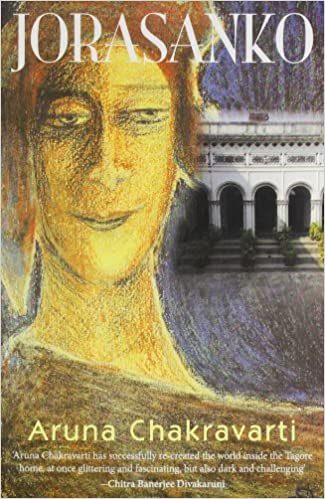
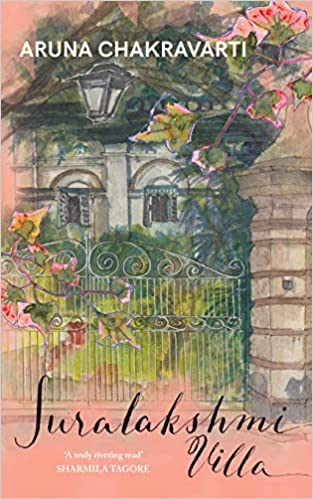
Aruna Chakravarti (India) has been the principal of a prestigious women’s college of Delhi University for ten years. She is also a well-known academic, creative writer and translator with fourteen published books on record. Her novels, The Inheritors,Jorasanko, Daughters of Jorasanko, have sold widely and received rave reviews. Suralakshmi Villa is her fifteenth book. She has also received awards such as the Vaitalik Award, Sahitya Akademi Award and Sarat Puraskar for her translations.
.
PLEASE NOTE: ARTICLES CAN ONLY BE REPRODUCED IN OTHER SITES WITH DUE ACKNOWLEDGEMENT TO BORDERLESS JOURNAL.
i want to write about shaheen bagh but i’m not able to write about shaheen bagh they say there’re thousands in shaheen bagh burqas and bindis tell stories in shaheen bagh but alas, i don’t live in shaheen bagh thousands brave the cold in shaheen bagh there’re songs flowing in shaheen bagh the shamiana is lucky to be in shaheen bagh it guards the women sleeping in shaheen bagh dupattas become swords in shaheen bagh hands clap and cheer in shaheen bagh tea cups brew rebellion in shaheen bagh the community kitchen serves freedom in shaheen bagh flags and placards dot all of shaheen bagh tasbih and slogans hold hands in shaheen bagh fairies and djinns watch over shaheen bagh narrating the magic tales of shaheen bagh oh, it’s an alif laili shaheen bagh where schehrezade wakes up in shaheen bagh from breastfeeding infants sleeping in shaheen bagh the toothless amma in nineties sing in shaheen bagh their beauty lights up the streets of shaheen bagh when rulers balk at the chants from shaheen bagh naani-daadis dare modi in shaheen bagh the “aaeen (Constitution)” shines in shaheen bagh yes, azaadi lives in shaheen bagh it wants a country of post offices in shaheen bagh who are those that don’t know shaheen bagh? only those murderers who rampaged shaheen bagh! i’ve been dreaming each night of shaheen bagh though i’ll barely know the sorrow of shaheen bagh just because they hurt my friends in shaheen bagh i want to be now called shaheen bagh although i cannot write of shaheen bagh i say, turn this country into shaheen bagh!
.
Nabina Dasis a poet and writer based in Hyderabad. She has published three books of poetry, one short fiction collection, and one novel. In the age of Coronavirus, she tackles here the questions of isolation already experienced while she grew up in Guwahati, Assam, among ginger roots and swamp dragonflies.
.
PLEASE NOTE: ARTICLES CAN ONLY BE REPRODUCED IN OTHER SITES WITH DUE ACKNOWLEDGEMENT TO BORDERLESS JOURNAL.
Disclaimer: The opinions expressed are solely that of the authorand not of Borderless Journal.
ABalochi story by Munir Ahmed Badini translated by Fazal Baloch
Munir Ahmed Badani
A fortnight after my elder brother’s death, heavy rain deluged our town. For two consecutive days, violent winds blew across the town and the sky remained engulfed in dark clouds. It was so dark that days appeared like nights. Clouds hung so low that it appeared rain would burst forth at any minute. But it did not for two days.
Our house was in mourning. During the day my mother along with the womenfolk of the neighborhood, wailed and mourned the death of her beloved son, and at night she offered prayer for his departed soul. When we went to bed, she would stay for a while at our beds and intonate some sacred lines and blow her breath one by one upon us. Before retiring to her bed, she would walk over to have an eye on the Holy Quran again. But she could not get to sleep out of grief and constantly recalled her son who at a young age had fallen seriously ill and eventually would breath his last while in pain. I noticed that during his illness my mother showed a great amount of courage but as soon as he breathed his last, she almost collapsed. She wept incessantly.
I was quite young then, and often stayed awake late at night. I couldn’t fathom my mother’s grief which I wished to share. I hoped his memory would stay forever with us. At the same time, I solaced myself that one day life would return to its normal rhythm and happiness would make it back to our house. It seemed a far cry though.
I was quite hopeful that the heavy rain would wash off our grief and sorrows. My father too was shaken by the grief but unlike my mother, he held back his tears. Indeed, the death of my brother hit our house like an earthquake and rendered everything meaningless for us.
At night, towns-elders came to see my father. They chattered and puffed at the hookah*. I noticed my father’s absentmindedness. I knew he was shaken by the grief. I heard anguished groans coming from his room in the late hours of the night. I couldn’t sleep properly. I desperately wished for something miraculous to turn our sorrows into happiness.
At times some unusual events dragged us back to life again. For example, at times our goatherd failed to return late in the evening. We anxiously waited for him to show up. And then my mother would dispatch our servant to trace him outside. My father himself went out to enquire of neighbors as well. Seeing him taking an interest in something after my brother’s death made me very happy. I assumed that he was finally managing to get over the grief of having lost a son.
Thus, after the heavy rain, I was hopeful that this torrent would wash off everything even our grief and sorrows.
Initially the clouds remained suspended in the sky for two days. First it drizzled lightly but soon the rain gained momentum and relentlessly poured down for seven days and nights at a stretch. Water flooded the land.
My father along with other farmers went to the fields to protect the crops and yield from the flood while my mother held the Holy Quran in her hands and sought God’s mercy. I was happy to see that she too had finally succeeded to get over the shock. I thought life was finally back to its routine. At the same time, I feared that this heavy rain would lead to unimaginable losses. But, as of then, I was not able to forget my brother. Despite this heavy rain and flood, his memory continued to haunt me.
Last time when it rained, he was with us, reduced to a skeleton though. Yet we hoped that he would recuperate sooner or later. We never thought he would leave us forever.
But nobody can avert life’s course. The worst had happened. My brother was dead. Now all I wanted to see was for life to return to its routine path. I pinned all hope on the rain and it partially helped us to divert our attention. His memory was making lesser inroads to our minds.
It was night and my father had not returned from the fields. My mother asked the helper to go after him. Carrying a lamp in hand, he went towards the fields. I sneaked out stealthily and followed him. I remember the sky was covered with dark clouds and it was still raining intermittently. We had left our homes behind and were on the way to our fields. By the graveyard, I noticed the servant stopped and talked to someone. It was my father. I heard his words clearly:
“No matter if the flood sweeps away my fields and crops, but all I want is to save the graveyard from the flood”.
I was shocked.
From that day I was convinced that there was nothing that could wipe my brother’s grief off our hearts.
*Hookah — an oriental pipe that passes the smoke through an attached container of water before it is inhaled.
.
Munir Ahmed Badini is known as the most prolific fiction writer ever appeared on the horizon of Balochi literature. So far he has authored over a hundred Balochi novels and three anthologies of short stories. Recently he was awarded the Kamal-e-Fun Award by the Pakistan Academy of Letters. It is the highest award for the recognition of lifetime achievements in the field of literature.
Fazal Baloch is a Balochi writer and translator. He has translated several Balochi poems and short stories into English. His translations have been featured in Pakistani Literature published by Pakistan Academy of Letters in 2017 and Silence Between the Notes — the first ever anthology of Partition Poetry published by Dhauli Books India in 2018. His upcoming works of translation include Why Does the Moon Look So Beautiful? (Selected Balochi Short Stories by Naguman) and God and the Blind Man (Selected Balochi Short Stories by Minir Ahmed Badini).
.
PLEASE NOTE: ARTICLES CAN ONLY BE REPRODUCED IN OTHER SITES WITH DUE ACKNOWLEDGEMENT TO BORDERLESS JOURNAL.
Sujata Sen lived alone in an apartment with only books to keep her company. She was a senior government official in her late fifties and was due to retire in a few years time. A frail woman with a disability, she walked with the help of crutches. As a child, she had contracted polio which left her with feeble legs. She was mild-mannered and genial, always eager to help others and well liked by her neighbours.
Up until she was almost fifty years old, Sujata Sen lived in her ancestral home with an extended family comprising of two brothers, their wives and children. Her father died when she was young and her mother soon after. Being the eldest, she had to take care of her brothers who were minors when they were thus orphaned. She was academically inclined and after university, she had secured a well-paid government job. Her brothers however were lazy and apathetic and never got too far in the pursuit of academics. Even at the stage when they were married and had children of their own, they did not seek out regular employment or have substantial incomes.
Sujata never married and ungrudgingly shouldered the burden of running the family for many years. She paid for the education of her brothers’ children and took care of other expenses. As the saying goes, fruits don’t fall far from the tree, Sujata’s nephews and nieces turned out indolent and ill-mannered brats who demonstrated a total lack of respect towards her. Life with her extended family was proving to be stressful and demeaning. With advancing age, she found herself unable to cope with the situation. She decided to move out and live by herself. That was when she purchased a small apartment in a quiet neighbourhood and moved there with all her belongings which comprised of a small amount of furniture and many books.
The apartment where Sujata lived was an hour’s drive from her office. Her disability made it difficult for her to avail of public transport such as buses or subway trains. She never owned a car and never learnt to drive. She had an arrangement with a taxi driver who lived in the vicinity. He picked her up from home every morning and dropped her at her office. He would also pick her up from her office and drop her home every evening. In exchange, he charged a little extra over the regular fare but she did not mind. The arrangement worked well for both of them.
The taxi driver was called Satish Prasad and he drove a yellow Ambassador cab, a make ubiquitous to the streets of Kolkata. He was from a neighbouring state and had come to the city at an early age as a migrant worker and never left. A lanky fellow with sunken eyes, a life of struggle was etched on his face as prominently as the ravines of the Chambal valley. He was in his mid-forties and had little education. He chewed gutka* all day and murmured under his breath while driving his car. He lived in a decrepit one-room house with his widowed mother, wife and three children.
The neighbourhood where he lived was a sketchy one but the rent was low and that was all he could afford. He didn’t make enough money from his taxi to live a comfortable life, just enough to put food on the table. A large part of his earnings went to the bank every month as repayment towards the loan he had taken to purchase his taxi. To make matters worse, a new phenomenon had taken over the city, app-based taxi services. One could book a cab from an app on their smart phones. A few clicks and a taxi would be waiting at the doorstep. Convenient! The rise in popularity of such cabs increased competition for conventional yellow taxis and his income dwindled further. Satish had only hatred for app-based cabs and often felt the urge of crashing into one with his old Ambassador in a fit of rage.
Misfortune often strikes when one’s already deep in the gutter and misfortune struck Satish like a bolt of lightning, sudden and fierce. His eldest child, a ten-year-old boy, had been diagnosed with a tumour and surgical intervention was an immediate necessity to save his life but that was not all, the cost of the procedure was far beyond anything he could afford. He had no one to borrow the money from or no other means to acquire it. All he could do was spend sleepless nights, tossing around on the bed like a ship at sea in stormy weather.
Sujata was perceptive and noticed something amiss with Satish during her regular morning ride to the office. He seemed distracted and his murmuring under his breath had intensified. On hearing of the situation with the child, she was concerned and offered to loan him the amount. Satish was thankful to hear that and felt a momentary sense of relief but the respite was short-lived and by evening, his worries were back to haunt him. A loan is a loan, something he would have to repay. He was hardly able to keep up with the monthly instalments on his car loan. The prospect of sinking deeper into debt made him cold.
Desperation soon turned to darkness and he started having twisted thoughts. Diabolical schemes inundated his mind. The focus of his thoughts now turned to Sujata Sen and her offer of the loan. If she was so concerned, the lady could have just given him the money and not a loan, after all, she was senior government official with a fat salary and no one to care for in the whole world. Why was life so unjust — people who need it have little money, and people who don’t, have more than they require.
Sinister thoughts kept circling in his mind like vultures in the sky over a dying animal. What if he took the money and didnot pay it back? She lived all alone. He could sneak into her apartment at night with ease. He could pick the lock on the entry door. She knew about his difficulties and would be suspicious of him if he stole the money so he would take care of her too. He could do that; she was a frail woman, a cripple. He could strangle her, suffocate her… at this point he did not want to think this through any further, he would do what needed to be done to save his child.
It was the night of the new moon and people at a nearby temple could be heard worshipping the goddess Kali. Satish picked the lock and crept into Sujata Sen’s apartment as he had planned. She wasn’t home, possibly at some neighbour’s place. He hid in a corner and lay in wait. She arrived soon after, had dinner and went to bed with a book and fell asleep in some time. The reading lights were still on.
Satish approached her bed with caution and stood there, her face visible in the reading light. His form like an ominous shadow gazed down at her. His heart pounded louder than the drums they were playing at the Kali temple. His grip was strong from years of clutching the steering wheel of his car and his palms were coarse as sandpaper. He had to place his hands on her slender neck, clench his teeth and squeeze. It would be over in a minute. His mind was in frenzy and his body…strangely unresponsive! His hands felt heavy as rocks and would not be lifted. He froze! He muttered a curse; he could not do it, he could not kill. He fell on his knees and sat beside the bed. He buried his face in his coarse palms as tears rolled down his face and time stood still for him. After a while, the feeling of being weighed down was gone and he could move again. He left the room, as softly as a feather drifting to the ground.
Sujata Sen was ready for office the next morning but Satish was nowhere to be found. She tried to call him on his cell phone but the calls went unanswered. She had never been late for office and today wasn’t going to be an exception. For the first time in her life, she booked an app-based cab. It was easy, just a few clicks. The cab arrived on time, the ride was comfortable, the car was of a new make, the engine barely audible and she did not mind the fare which was slightly higher than the usual rate. Satish did not arrive the next day either or any other day since and his cell phone was always unreachable. Sujata thought about it for a few days but life moves on and app cabs served her purpose well. Just a few clicks, truly convenient! More than a year had gone by and it was now a familiar routine for her.
It had been a long day at the office and Sujata Sen was ready to leave for home. As usual, she had booked a cab using her cell phone and was on the sidewalk waiting for the cab to arrive. It was a white sedan, a new model and the car was in excellent condition. As she was about to open the door and get into the car, the driver disembarked and came up to assist her, perhaps due to the fact that she had crutches.
To her great surprise, it was Satish, he was driving an app cab now. Once inside, Sen could not contain her curiosity, “Satish, where have you been, I tried to call you so many times? I even asked around! How’s your son?”
“He underwent the surgery. He is better now Madam,” replied Satish.
“I am truly relieved to hear that. I pray that he may have a long and healthy life.”
“With your blessings Madam…”
“And your yellow Ambassador cab, where’s that? You always hated app cabs and now you’re driving a new model yourself,” asked Sujata.
“Madam, it is fate, destiny! In my desperation, I took a loan from some bad people, loan sharks, at a high rate of interest, for my child’s treatment and had to pay them back all the money I borrowed and the interest or else they would harm me and my family. I had no money left to pay the bank. The recovery agents from the bank arrived one morning and hauled my taxi away. Since then, I drive this app cab. It belongs to a businessman who owns a fleet of cars. I get a fixed salary every month and a bonus once a year. I have no loans to repay. It is much better this way Madam, I sleep better at night, I am happy!” replied Satish.
Sujata was surprised at the turn of events and asked, “I did tell you that you could borrow the money from me! You would not have to pay an interest and you could repay the money at your convenience, I would never chase you for repayments. Why didn’t you come to me?”
Satish nodded his head knowingly and smiled, “I was foolish Madam and life had a lesson in store for me!”
As the taxi pushed forward along congested roads, Sujata noticed that Satish was not as absent minded as before and no longer murmured under his breath while driving. His life seemed to have taken a turn for the better.
Avijit Roy is a software developer by profession and runs a software firm but apart from what he does for a living, he is a passionate storyteller. The forms of expression he prefers for telling a story are film making, photography, music and writing although he has only recently started making attempts at getting his work published. He has participated and won a few accolades at photography contests and written, directed and shot a short film which played at several festivals. In the past, he was part of a jazz fusion band where he played the guitar. He is also a loving husband and a caring father to a daughter.
.
PLEASE NOTE: ARTICLES CAN ONLY BE REPRODUCED IN OTHER SITES WITH DUE ACKNOWLEDGEMENT TO BORDERLESS JOURNAL.
Thirty years ago, she boiled an egg in it for her husband who died a week later. There is no link between his untimely demise and the egg boiler, but it was special because the last egg her husband ate was boiled in that egg-boiler. It was respected as an important kitchen appliance and showcased in the cabinet like a trophy. Every year it was taken out for a customary wash, but no egg was boiled in it. She wiped it clean with a soft cloth and plugged it in just once to check whether it blinked red or not. She was happy that the egg boiler was still alive and blinking.
I was not fond of having boiled eggs, so I never used it. But sometimes I wonder how she would have reacted in case I had tried to boil an egg in it. Maybe, get hysterical and call it sacrilegious. Maybe, dub it inauspicious to use anything belonging to the deceased. This seemed unlikely because I have defied many superstitious practices and still managed to escape her outburst. Isn’t there hypocrisy in the fact that the possessions of the deceased are classified as valuables and disposables? Ever seen a gold ring belonging to the deceased getting dumped in a trashcan by the roadside or tossed into the bowl of a beggar on the streets? Mighty inheritors of family wealth relinquishing their right to inheritance.
Several items belonging to my late father have fascinated me for various reasons. I have used them with the proud feeling of inheritance, without traces of guilt. I did not fear his ghost would stake an ownership claim or force me to surrender those items – as brigands do at gunpoint. Monkeying around wearing his monkey cap during winter for the past twenty years has been a regular indulgence. I have walked down desolate streets in the dark without feeling the spooky chills. Encountered stray dogs and feline creatures but they did not lose composure in front of my covered face. My jovial spirits did not let them sense any paranormal activity around me.
The camera was one of his prized possessions that conveyed his immortal passion for images, so I did not let it go. More than a tribute to the artist, the camera helped me learn the ropes of photography. On a bright sunny day, I took it out from the snug corner of his almirah where it was kept wrapped in a bath towel with naphthalene balls for company. A historic day that marked my tryst with photography. I did not find any attention-seeking ghost in the viewfinder when I focused on beautiful women walking down the street. No phantom chiding me for ogling at them with my father’s camera. Deep within, I felt my father would be blessing me with flashes of creativity to click models of international repute someday.
There were many neckties in my father’s wardrobe. I kept the silk ones with me and gave the rest to the gardener who found an easy way to become a Sahib in his locality. I wanted to wear a necktie during job interviews, hoping to derive confidence from his symbolic presence, to help me sail through smoothly. When I got rejected in interviews despite wearing my father’s necktie, I realised his necktie was not a source of blessings anymore. Perhaps I should attend wild parties wearing his necktie and seek the attention of lissome beauties instead. The casually dressed guys were devilishly cooler to flirt with while those in formals were looked at with cold prejudice – as salesmen selling water-purifiers and chimneys.
Another irresistible item belonging to my father was the fancy denim jacket he was gifted by his sister from Canada. Since it was in mint condition, I kept it aside while my mother donated all his clothes to the elderly guard with six grown-up sons. When it was discovered in my almirah, she did not recognise it or maybe she pretended not to recognise it. Her strategy to overlook where she did not wish to interfere explained her response.
She had lost the ground to criticise me for being attached to my father’s worldly possessions. She used his leather suitcase for long-distance travel even after his death. She could claim it was hers because it was also used when both of them travelled together. Probably the shared memories related to the suitcase made her feel safe during long journeys – as both of them carried their clothes in that suitcase. When she opened it for packing her items, I saw her using half the space while the other half was left vacant. She was still following the rule of giving equal space to her partner even though he was not around.
Dumped in her dark, unlit storeroom was an aluminum trunk full of letters and sepia photographs of the dead. I had seen many of them during my childhood days and had faint memories. She kept those photographs and letters away from my reach. She followed a balanced classification of good and painful memories. Many times, I wanted to see the stuff, but she refused to grant me access. She kept it locked as if the simple act of privacy would keep the past locked as well.
She believed the son follows the father and so she kept his beer mugs and wine glasses in the cabinet. She was surprised when I turned out to be the first teetotaller in the family. After I confirmed I was not going to try it ever in my life even if I was spurned in matters of love, she was relieved and merrily gifted the entire set to the cook.
Twenty years of attachment is quite a long period and I can say it is largely over for me. During a recent clean-up drive, I tried discarding the egg-boiler but was strongly opposed by her. I told her I do not eat boiled eggs so there was no point in retaining the egg boiler as a relic from the past. She tried to make me understand by emphasizing that I have to buy a new one in case I changed my mind later. This was certainly an example that established her attachment was still far from over.
.
Devraj Singh Kalsiworks as a senior copywriter in Kolkata. His short stories and essays have been published in Deccan Herald, Tehelka, Kitaab, Earthen Lamp Journal, Assam Tribune, and The Statesman. Pal Motors is his first novel.
.
PLEASE NOTE: ARTICLES CAN ONLY BE REPRODUCED IN OTHER SITES WITH DUE ACKNOWLEDGEMENT TO BORDERLESS JOURNAL.
Rinku is travelling in a train for the first time. The commotion outside doesn’t seem to bother her. Her Appa* has managed to make her stand beside the window inside the small room. There is something written on the door, but she cannot read and doesn’t sweat the details anyway. She has never been to a school. Her Appa says she is too precious to go to one. And the way her neighbour Partik shrieks in the morning, she is certain that school is not a good place.
Oblivious of the fact that there are no seats inside, at least not the ones you get in an actual compartment, she stands there holding the iron bars with seven fingers. No, five fingers and two thumbs. The remaining three fingers wrapped around her tikat*. Appa says it’s not the train, but the tikat that will take them to the place they were going. The tation* is a delight to watch. It’s like thousand spaces merged into one, each different from the other yet blending somehow. That so many people chose to wear red that day, she grunts in disapproval. She never liked red.
Not that she always hated red. It was her favourite colour last year for full three months. But then, things can’t stay the same, can they? It is even more difficult with colours. Her red ball had stopped being fascinating and Partik had got a yellow car. Yellow paved way to green only a month later when he wouldn’t let her touch the car.
Now she has decided that she will never ask Appa for a car. He was right. This train is so much bigger than the cars that ply on the road. No wonder Appa hated driving the car for Saheb*. But being the nice man that he is, he still did. Maybe the Saheb didn’t know how to drive. She also finds it strange that Saheb’s wife cannot cook. Partik’s mother has to go to their place for cooking lest they starve — poor family!
Ever since he came home yesterday, Appa had started packing frantically. His face was swollen. Just like Rinku’s when she is sulking. Appa’s hand was bleeding too. Another reason not to like red. She didn’t mind leaving the place. It was not their home, Appa had told her. She doesn’t remember what her home looked like. There might have been a television. Maybe not. She was sure there were trees. She would miss playing with Partik though.
The train has started racing between the tracks. A sense of exhilaration has engulfed Rinku. She wished Partik could see her inside the train and she could see the look on his face. Everything is perfect. Well, near perfect. Only if the train was not red.
.
*Appa — Father
*Tikat — Ticket
*Tation– Station
*Saheb — Boss
Mehak Nain is a government servant. An avid reader herself, she loves to read books with her six-year -old. The views expressed above are personal.
.
PLEASE NOTE: ARTICLES CAN ONLY BE REPRODUCED IN OTHER SITES WITH DUE ACKNOWLEDGEMENT TO BORDERLESS JOURNAL.
People pour a bundle of money into drugstores or clinics
As they don’t lose the fat on their belly;
Is it Okay to do so
Among parents, brothers and sisters with one blood?
It is said that last summer,
Even houses to lay their body down became like the sea water
Owing to the indiscriminate bombing of the sky;
Where do they sleep
And can they eat even any porridge?
.
Cry, the fat Southern land.
Cry on your knees
Not making any excuses.
Don’t you hear the groan
Of your starved parents, brothers and sisters?
Cry for South Korea
North Korean land,
Those whom you trampled with military boots
Shedding cannonballs
With your blood of hatred
More than sixty years ago:
Who were they to you?
.
Those living in the South
Whom you want to burn
Through the fire sea
As your blood of anger hasn’t cooled
Although they send rice to you:
Who are they to you?
.
The bitter enemies
Whom you want to kill
With missiles and nuclear bombs
Gnashing your teeth:
What kind of mistake did they make?
.
Until when will your great leader be bragging
A strong and prosperous country,
And the Earthly paradise,
While the people are bawling out
Due to their starvation
As days go by?
.
Cry, the northern land.
Cry beating your heart,
Not making any excuses.
Be young children
And cry your eyes out
Looking at the blue sky.
.
Wansoo Kim has a Ph. D. in English Literature from the graduate school of Hanguk University of Foreign Studies. He was a lecturer at Hanguk University of Foreign Studies and an adjunct professor at Incheon Junior College for about 20 years. He has published 5 poetry books, one novel, and one book of essays. One poetry book, “Duel among a middle-aged fox, a wild dog and a deer” was a bestseller in 2012, one page from the book of Letters for Teenagers was put in textbooks of middle school (2011) and high school (2014) in South Korea, and four books (Easy-to-read English Bible stories, Old Testament(2017), New Testament(2018) and Teenagers, I Support your Dream”) were bestsellers. He was granted a Rookie award for poetry at the magazine of Monthly Literature Space in South Korea, and the World Peace Literature Prize for Poetry Research and Recitation, presented in New York City at the 5th World Congress of Poets(2004). He published poetry books, “Prescription of Civilization” and “Flowers of Thankfulness“ in America.(2019), received Geum-Chan Hwang Poetry Literature Prize in Korea(2019) and International Indian Award(literature) from WEWU(World English Writer’s Union)(2019).
.
PLEASE NOTE: ARTICLES CAN ONLY BE REPRODUCED IN OTHER SITES WITH DUE ACKNOWLEDGEMENT TO BORDERLESS JOURNAL.