Categories
Stories

Chameleon Boy

By Kieran Martin

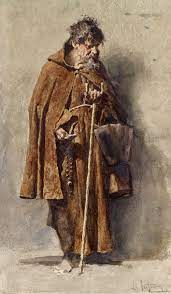
Courtesy: Creative Commons

T was a kid who lived next to Jake. He hung around with us a lot, but then, he hung round with a lot of people. Looking back, I’m not sure how he managed to fit us all in.

There’s not a thing you could say about T himself. You might only talk about the places you found him, and the people you found him with. I first saw him when he was nine years old. He was in a sandpit with a bunch of year one kids: average age about five and a half. As I waited for my brother to put on his shoes I listened to their chatter, and it threw me: T was much older than the others. He had their babble.

A couple of weeks later I saw him talking with some year seven kids, out by the bike stands. It took me a while to realise it was the same person. This time, he sounded like a twelve year old. I doubt whether anyone noticed that he was much younger, or that the things he said made no sense. He sounded right, and he looked right.

The only time T didn’t resemble those around him was when he slept. And he slept a lot. We had no name for the thing T did but it was clearly exhausting. During the night his mother would creep into his room and put a few drops of cologne behind his ear. It was a strange fragrance to the people who live here: in the mix of smells around a school, from dogs, packed lunches, wet jerseys and sweat. The smell of T’s Baltic perfume was never noticed.

One day T’s dad walked past the kitchen to hear his wife singing a pop song in English. He waited while she finished, then his car backed out of the driveway never to return. T was gone too, and within six months the smell of Baltic cologne left him.

Soon, no one on this earth was able to pick T out in a crowd. Even when that crowd was very, very small.

His dad never intended to take him away. T had fallen asleep in a warm spot at the back of the wagon. He’d been mistaken for the dog.

In later years, T gained some colour and the people around him stamped a shape that didn’t leave him through the early hours of morning.

He became a keen gardener, lying near the raised beds with one arm deep in the soil, slowly leaking colour down to the roots of their yellow and white roses.

.

Kieran Martin wrote a couple of short pieces 14 years ago when living in a very small town. He also writes lyrics, essays and code. His sons taught him how to narrate; one of the many gifts they came to him with.

.

PLEASE NOTE: ARTICLES CAN ONLY BE REPRODUCED IN OTHER SITES WITH DUE ACKNOWLEDGEMENT TO BORDERLESS JOURNAL

Categories
Poetry

Languages Lost & Found

By Luis Cuauhtémoc Berriozabal 

TWO LANGUAGES 

Long ago I spoke only
one language. Then,
in another country,
I learned to speak another.

Honest, it is as if I learned 
overnight. I was afraid in
a week I would speak more
of the new language
because I had to keep up.

It was easy at seven years 
old. For weeks I did not tell
anyone. It was not right
to keep the secret. One day
I laughed at a joke in the new
language and I was found out.

The years went by and I
learned big words I seldom 
use. I have learned to have
a short memory.  The more
you keep inside, the better.

I was American in both countries.
Some people do not know that.


GO ON PRETENDING 

I go on pretending 
I have one more day
promised. I close my
eyes imagining this
heart will never falter.

I do not plan to lose
or fall short on my
bets. Like the fountain 
of youth lying beyond.
It is not far from reach.

I go on pretending 
there will be a next chance.
Lying on my deathbed 
I am far from concerned.
I do not let death in.


YOU ARE ZERO 

Does it have to get so personal?
Stop coming around to my location.
I completed my sentence. You do
not own my undivided attention.

I have real plans that includes just me.
My status is lone wolf if you need to
know. Do I have to repeat myself?
I will mail you a copy of my emancipation.

Take my name out of your mind and mouth.
I do not care to share my time with you.
I do not want to get into it. You are not
a part of my life anymore. You are zero.

If none of this resonates, you must be
a bigger head case than you ever been.
I need to be getting on and this is where
I get off. You get on with your life as well.

Luis Cuauhtémoc Berriozábal is a Mexican-born author, who resides in California and works in the mental health field in Los Angeles. His poems have appeared in Blue Collar Review, Kendra Steiner Editions, and Unlikely Stories.

.

PLEASE NOTE: ARTICLES CAN ONLY BE REPRODUCED IN OTHER SITES WITH DUE ACKNOWLEDGEMENT TO BORDERLESS JOURNAL

Categories
Poetry

The Room on the Roof

Dr Kisholoy Roy pays a tribute to Ruskin Bond’s writing

THE ROOM ON THE ROOF

Seasons come and go.
Years come and go.
People come and go.
A creator metamorphoses.
The Room on the Roof stands witness.

Scores of characters transpired
on myriads of pages.
The typewriter keeps talking.
An author’s creativity's realised.
The Room on the Roof stands witness.

Grandfather, grandmother and the Maharani.
Susanna, Binya, Rusty and Ranji.
The Woman on Platform No.8 and
The Girl from Copenhagen.
Endearing characters, unforgettable stories.
The Room on the Roof stands witness.

The Angry River and The Hidden Pool.
The Cherry Tree and The Lagoon.
Rain in the Mountains and
The Prospect of Flowers.
Keeps an author engaged and moving.
The Room on the Roof stands witness.

Ostrich, parakeets, cats and mongrels.
Snake, crocodiles, leopards and tigers.
They all had tales to tell.
With the readers,
they went down well.
The Room on the Roof stands witness.

Accolades here and there.
Aficionados everywhere.
Characters, stories and books roll in.
One finds this Lone Fox Dancing.
The Room on the Roof stands witness.

Dr Kisholoy Roy is a PhD in Management with several years of teaching experience at the PG level. He is a published author of several books on management and has also authored fictions and books on cricket and cricketers listed on Amazon and other online bookstores. He has two published poetry collections titled ‘Thoughts of a Novice Poet’ and ‘Perspectives’.

.

PLEASE NOTE: ARTICLES CAN ONLY BE REPRODUCED IN OTHER SITES WITH DUE ACKNOWLEDGEMENT TO BORDERLESS JOURNAL

Categories
Essay

A Tasmanian Adventure: Bushwhacking in East Pillinger

Photographs and narrative by Meredith Stephens

Few would have heard of the mining township of East Pillinger on the west coast of Tasmania, not only because it was abandoned in 1900, but also because there is no road access. That’s why my traveling companions Alex, Luke, Verity, and I decided to sail there.

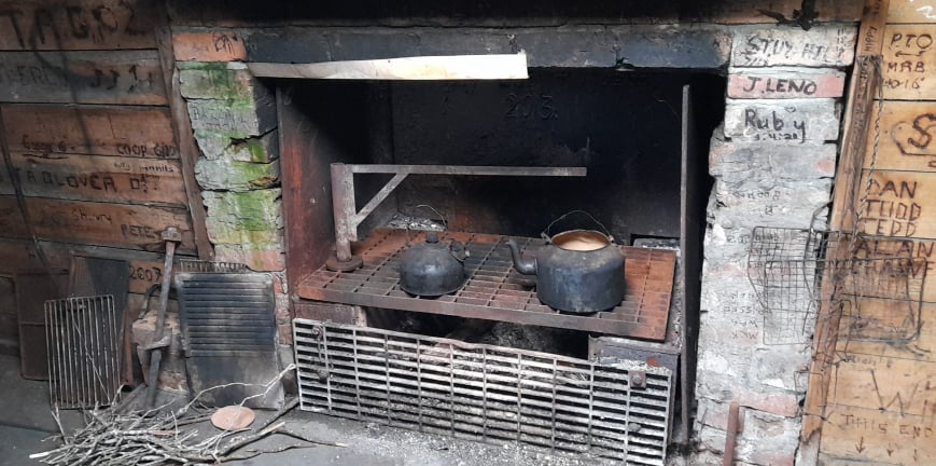
We took our dinghy to the shore of this abandoned mining town. Near the wharf there was a hut containing six bunks with decaying mattresses, a fireplace with a blackened kettle sitting on it, and current magazines sealed inside a plastic box for visitors to peruse.

Next we decided to hike along the site of the former railway. There was a trail through a rainforest. Moss and lichen grew on the trees which yawned into the sky. The trail progressively deteriorated and we had to start bushwhacking. A previous hiker had affixed orange and pink ribbons to the trees and stretched ropes at chest height across the creeks. We had to walk across the logs crossing the creeks while holding onto the ropes. We kept our eyes fixed on the ground to avoid deep holes on the path.

“I can’t do this, Alex,” I complained.

“You’ll be fine. You’ve got good balance,” he countered.

Finally, we reached the site of another wharf, and ruins of the former town of East Pillinger. The ruin of the former brick-making kiln was covered in lichen, and all that remained of a former train carriage was a few wooden planks clinging together.

I was proud of having bushwhacked this far, but did not fancy bushwhacking back. Alex and Luke offered to hike back and bring the dinghy to us on the wharf. First, they hiked back to the nearest point on the shore to the boat. Then they swam to the boat. Alex lowered the kayak from the boat into the water and made his way to the dinghy. Then he tied the dinghy to the kayak, and motored back to Verity and me at the other wharf. Verity and I walked to the end of the wharf as soon as we could hear Alex’s motor. Once he arrived we clambered down the ladder into the dinghy and then motored back to the boat.

Although I complained at the time as I tried to bushwhack along the overgrown trail in my city coat only propelled by Alex’s encouragement, I look back fondly at this opportunity to visit this deserted and barely accessible landscape. It was sobering to realise how quickly nature could reclaim a once thriving town in just over one hundred and twenty years. Mosses crept over disappearing paths, brick structures crumbled, and we were left imagining the lives of those who lived and worked here until the beginning of the twentieth century.

* Bushwhacking is a term used in Australia and North America to describe living or travelling in the wild or uncultivated country.

Meredith Stephens is an applied linguist from South Australia. Her work has appeared in Transnational Literature, The Muse, The Font – A Literary Journal for Language Teachers, The Journal of Literature in Language Teaching, The Writers’ and Readers’ Magazine, Reading in a Foreign Language, and in chapters in anthologies published by Demeter Press, Canada.

PLEASE NOTE: ARTICLES CAN ONLY BE REPRODUCED IN OTHER SITES WITH DUE ACKNOWLEDGEMENT TO BORDERLESS JOURNAL

Categories
Review

Rising

Book review by Bhaskar Parichha

Title: Rising: 30 Women Who Changed India’

Author: Kiran Manral

Publisher : Rupa Publications

Several books have been brought out on Indian women, coinciding with International Women’s Day this year. These books, in their own style tell the story of how women have shattered glass ceilings and have ventured into what had been perceived earlier as ‘men’s domains’. 

In today’s India, women exercise their right to vote, contest for Parliament and Assembly, seek appointment in public office and compete in other spheres of life with men. This inclusivity shows women enjoy more liberty and equality than a hundred years ago. They have gained the freedom to participate in affairs of the country, whether it is science, technology, finance and or even defense.


Rising: 30 Women Who Changed India by Kiran Manral looks at what moulded these women: the challenges they faced, the influences they had, the choices they made and how they negotiated around or broke boundaries that sought to confine them, either through society or circumstances. The book is an ode to inspirational women who transformed India in a variety of ways. It is a chronicle of valiant achievers and also a depiction of stories about those who swam against the tide. 

From diverse backgrounds and different generations, they have risen through sheer grit, determination, bolstered with passion, and are, today, names to look up to, to be mentioned as examples to the next generation, giving them courage to reach out to their dreams. From politics to sport, from the creative and performing arts to cinema and television, from business leaders to scientists, legal luminaries and more, this book features the stories of these much celebrated, fabulous women: Sushma Swaraj, Sheila Dikshit, Fathima Beevi, Mahasweta Devi, Amrita Sher-Gil, Amrita Pritam, Sonal Mansingh, Lata Mangeshkar, Anita Desai, M.S. Subbulakshmi, Harita Kaur Deol, Madhuri Dixit, Bachendri Pal, Rekha, Chhavi Rajawat, Karnam Malleswari, Shailaja Teacher, Hima Das, Naina Lal Kidwai, Shakuntala Devi, P.T. Usha, P. V. Sindhu, Ekta Kapoor, Kiran Bedi, Mary Kom, Menaka Guruswamy, Tessy Thomas, Aparna Sen, Kiran Mazumdar-Shaw and Gayatri Devi, among others. 

Mumbai- based Kiran Manral is a writer, author and novelist. In previous avatars, she has been a journalist, researcher, festival curator and entrepreneur. A recipient of  multiple awards such as the Women Achievers Award by Young Environmentalists Association in 2013 and the International Women’s Day Award 2018 from ICUNR, Kiran has authored  a couple of fictions and non-fictions too. Her interests are eclectic. 

Writes Kiran in the introduction: “Every story is replete with takeaways, lessons to be learnt, not just professionally but otherwise too. These women have lived life on their own terms, becoming a beacon of hope to many others, women and men alike. If after learning about these inspirational women, a young girl, anywhere in the country thinks to herself that could be me! 1f she can do it, so can I, this book would have served its purpose.”

About Fathima Beevi she writes: “Even before the phrase ‘glass ceiling’ entered common parlance, we had a female judge in the Supreme Court already smash it. With a quiet efficiency that defined her career, on 6 October 1989, M. Fathima Beevi became the first female judge in the Supreme Court, a position she held till her retirement on 29 April 1992.For all her achievements, she remains an enigma, shunning the spotlight and living a quiet life in her hometown post her retirement. Her photographs show a determined expression: her head firmly covered with her saree’s pallu, spectacles lodged on the bridge of her nose and her matter-of-fact demeanour.” 

Written in a crispy style loaded with factoids, the book makes for an enthralling read. The story of Hima Das — who rose from obscurity to international acclaim, a journey that took her from a small village in Assam to the podium of international athletic meets — is as absorbing as realistic. 

 “There’s an iconic photograph that encapsulates Hima Das. Her eyes are twinkling with joy, she’s holding the Indian flag aloft behind her, an Assamese gamusa (a piece of red and white cloth, a cultural identifier) draped around her neck. It had been a long journey from the muddy fields she started training in back in her village near Dhing, in Assam. Back then, she ran barefoot. Basic running shoes was an indulgence, branded shoes were a dream. She ran first for her school, then her district, and when she reached the state level, she got her first pair of real sports shoes. They were an ordinary pair of running shoes, but she wrote ‘Adidas’ on them, along with its logo. One day, she would be able to buy herself a pair of Adidas shoes. Years later, Adidas would name an entire line of shoes after her, but she had to earn that, through struggle, sweat and blood.’ 

On 31 August 2019, Amrita Pritam was commemorated by Google, her centenary birth anniversary, with a doodle. It wrote: “Today’s Doodle celebrates, one of history’s foremost female Punjabi writers, who dared to live the life she imagines.”

Kiran says in her book: “In her writings and her life, she leaves behind a legacy for women writers in India which urges them to defy social constructs and constraints, challenge them, and to live and write as she did — unencumbered.”  

The book about thirty most successful women makes for an interesting read.It is a glorious tribute to the womenfolk who have shattered all maximums and have spurred others to claim individual space.

.

Bhaskar Parichha is a journalist and author of UnbiasedNo Strings Attached: Writings on Odisha and Biju Patnaik – A Political Biography. He lives in Bhubaneswar and writes bilingually. Besides writing for newspapers, he also reviews books on various media platforms.

.

PLEASE NOTE: ARTICLES CAN ONLY BE REPRODUCED IN OTHER SITES WITH DUE ACKNOWLEDGEMENT TO BORDERLESS JOURNAL

Categories
Poetry

Advantage Intruder

By Ron Pickett

ADVANTAGE INTRUDER

The sun edges over the cluttered horizon.
The cell towers, eucalyptus and large water tank are comforting.
The sun slowly fills the dark.
Life is safe and warm and good – for now.
The sun slides below the western horizon in Kyiv and darkness returns.
 
The dark brings its special unseen terrors.
The rumble and rattle of distant rockets and bombs.
The roar of jets and the throb of helicopters.
Flashes of light fill the night sky but there are no storms in the distance.
The earth trembles: the people quiver.
Daylight is ten long hours away, we who have been there remember, and shudder.
 
There are patches of dirty snow on the ground
On trees and shrubs and the Peoples Friendship Arch
And under the rubble of bombed buildings.
The snow is marked by the black stains of explosions and the red stains.
The snow will melt with the coming of spring, but the stains will remain.
The stains are physical and psychological and deep.
 
Dark is the province of the predator.
Dark is a comforting cover for the aggressor.
Dark is the source of fear and anguish for the weak.
This predator is man who can see in the dark.
To see at night is a huge advantage.
Advantage intruder.

Ron Pickett is a retired naval aviator with over 250 combat missions and 500 carrier landings. His 90-plus articles have appeared in numerous publications. He enjoys writing fiction and has published five books: Perfect Crimes – I Got Away with It, Discovering Roots, Getting Published, EMPATHS, and Sixty Odd Short Stories.

.

PLEASE NOTE: ARTICLES CAN ONLY BE REPRODUCED IN OTHER SITES WITH DUE ACKNOWLEDGEMENT TO BORDERLESS JOURNAL
Categories
Stories

The Faithful Wife

A Balochi folktale translated by Fazal Baloch

Courtesy: Creative Commons

Once there lived a king who had a son. With the passage of time, the prince grew into a young man.  The king thought that before he shut his eyes forever, the prince should be married off. He expressed his desire to his son who responded with his choice. He wanted to marry a princess of a distant land. The next day, the king summoned his vizier and told him what the prince desired. Moreover, he said that he would pay as much dower as they asked for.

The vizier sent a messenger to the king for the purpose. The king gave his consent. The messenger returned to his country with the good news. The prince was married with great pomp and splendour. A few days after their marriage, the king brought his daughter-in-law to the palace. She was beautiful and well-mannered.

Days passed by. One day the king breathed his last and his son subsequently ascended the throne and became the king. But he loved his wife so much that he did not pay much attention to the affairs of his kingdom. At last, he abdicated his throne to live a happy and peaceful life with his beautiful wife. Soon he ran out of his wealth and become so poor that he had nothing left. A few days later his wife turned to him and said, “By sitting idle at home we will die of hunger. You should do something or engage yourself in a business”. He replied, “First, I can’t live without you. Separation from you will rend my heart. Second I’m not well-versed in any craft. There is however a desire in my heart to conduct some trade but I don’t have any capital for it”.

“Don’t worry I will finance you,” his wife told him.

“How come?” asked the husband.

“Take all my jewels and sell them off and bring me the sum you receive for them.”

The husband did what his wife had told him. The wife then advised him to buy goods with the money and board a ship. Thus he loaded the goods on a ship and returned to his wife and asked her, “What should I do next?”

She gave him a flower and said, “Whenever you feel sorrowful for me, just look at the flower. It will ease off your sorrows”.

He put the flower into his pocket, boarded the ship and set on his journey. After journeying for many days and night he finally landed in a distant country. He anchored the ship in the harbour. Meanwhile, the soldiers arrived and demanded duties. He paid the duty for the ship but surprised the soldiers saying that he had something else on him but neither was he going to pay any duty for it nor show it to them.

“How strange! What is it?” a soldier asked him but he refused to reveal.

When the soldiers continued to insist, he at last told them that it was the flower given by his wife. The soldiers took him to the king’s court and told the king about the flower he was keeping with him. The king turned to him and asked him sarcastically, “Oh, you think your wife is such a good woman that you can live by her token?”

“Yes, I think so” was his reply.

“If we produce your wife here at our court, what would you say?”

“If you think you can convince her to come here, I will give her to you”, he told the king. Then he turned to the court and said, “A man or two could go and try to persuade his wife to come.”

Two young men, one was king’s own son and the other was the vizier’s, presented themselves for the adventure. After making necessary preparations, they set out on their journey.

Meanwhile, the man sought permission to sell his goods. The king granted permission happily.

The king’s and vizier’s son traveled long and finally reached the city where the wife of the king who was now a merchant lived. There they ran into an old lady who invited them to her cottage. They asked the old woman to go to the merchant’s wife and tell her that the son of a king was desperate to see her. Initially she refused but when the prince gave her a sack full of gold coins, the old woman hurried to merchant’s wife and conveyed her prince’s message. At first she made excuses but when the old woman gave her no rest she at last said, “Ask the prince to visit me at night”.

The old woman told the prince what she had been told by the merchant’s wife. In the evening, the prince spruced himself up and took leave of his friend, the vizier’s son and left for his desired destination.

When he reached there, the woman pointed towards the bathroom and said, “Go there and refresh yourself. I do the same. Then we will have a conversation. We’ve a long night ahead”.

The moment the prince entered the bathroom, the woman locked the door from outside. Two days later, when the prince failed to return, the vizier’s son grew anxious about him. He wondered if someone had done him ill or he had gone somewhere. The next night he decided to see the woman and ask her about the prince. But when his eyes fell on her, he forgot the prince and thought that it would be a lucky hit if he managed to trick her.

He told her that he had been desperate to see her and would be much obliged if she would spare some moments to talk to him. The woman told him to do what she had asked the prince the other night. When he entered the bathroom she locked it from the outside. Now the prince and vizier’s son both lay locked in the bathroom. Six or seven days later she sent for a carpenter and asked him to make two giant sixed boxes in which a man could sleep easily. He also asked the carpenter to make two holes on the side of the each box.

The carpenter went off and made the boxes as she had ordered him. She then summoned two men who owned camels. She instructed them thus, “I have locked two men in the bathroom, put them in these two boxes, load them on the camels”.

When they were all done she asked the camel owners to follow her. She fed them water and food through the holes in the boxes. After travelling for many days and night, they finally reached the land of the king who wished to have her in his court. Upon reaching there, she rented a quarter and placed the two boxes there. She locked the house and went out. On her way to the city, she encountered the kotwal or the police chief of the city. He inquired her: “Who are you?”

“I am a courtesan”, she replied.

“Don’t you know courtesans are not allowed to move around freely in this city? I wouldn’t let you wander like this.”

“Is there any way that I could be spared?” She asked the kotwal.

“If you visit my home in the evening, I will let you go,” the kotwal put the condition before her.

“Of course I will come. This is what I do. But being a servant of the king you have always people around you. If any of your sentries or soldiers catches the sight of me, it will bring ruin to your reputation. I have rented a house in the corner of the city. It is better we meet there”.

Thus, the kotwal let her go.

The Imam of the mosque was the next she encountered. He asked her:

“Who are you?”

“I am a courtesan,” she replied.

“I seek refuge from the Holy Lord! Don’t you know such impure women are not allowed to roam freely in this city? I will take you to the king”.

“Please for God’s sake, let me go,” she pleaded.

“If you visit me in the evening I will let you go,” he told her.

“Of course, I will come. This is what I do. But as you are the Imam of the entire city, whether it is death or marriage people will come to you to perform the rituals. If someone saw me with you, it would tarnish your dignity and honor. I have rented a house in the corner of the city. It is better we meet there”.

Hence the Imam let her go.

She then ran into the vizier who inquired: “Who are you?”

“I am a courtesan”, she replied.

“The king has banned the movement of courtesans in the city. I will take you to the king”.

“Is there any way that I may be spared?” she asked the vizier.

“Yes, if you come at my home near king’s palace tonight, then I will leave you,” said the vizier.

“Of course, I will come. This is what I do. But as you are the vizier, if king sends someone for you and he happens to catches the sight me with you it will dent your dignity. I have rented a room in the city. It is better we meet there”.

The vizier agreed and let her go.

At last she bumped into the king himself. He asked her: “Who are you?”

“I am a courtesan,” she replied.

“In my kingdom sinful women like you are not allowed. I will put you in the prison”.

“I am a poor woman. Let me earn a livelihood. Take pity on me,” she pleaded.

“No, I can’t,” the king replied.

“Isn’t there any way that I may be spared?” she asked the king earnestly.

“Yes, there is but one condition. If you accept it I will let you go the very instant”.

“What is it”?

“If you come at my palace in the evening, I will let you go,” said the king.

“Of course I will. This is what I do. But as you are the king of the land, if someone saw me with you; it would stain your honour and esteem. I have rented a house in the corner of the city. It is better we meet there”.

Thus the king was agreed to see her at her house. He noted down the details of the location and told her that he would pay her a visit at her place that night.

The woman returned to her quarter. At dusk she cooked herself a dinner. She was just done with her meal when someone knocked at the door. She got up and opened the door. The kotwal was standing outside. She let him in. He had barely seated himself when someone again knocked at the door. The kotwal pleaded with the woman:

“For God sake hide me somewhere.”

“There is no such place in the house where I could hide you, but I have an idea,” replied the woman.

“What is the idea?” the kotwal instantly asked her.

“I will give you a sack of grain and you grind the content in the quern. Thus, nobody will suspect you”.

The kotwal agreed.

She opened the door and found the mullah standing outside. She welcomed him. The mullah had just started the conversation with the woman, when someone knocked at the door again. The mullah grew worried, and he begged to the woman saying: “Pray hide me somewhere”.

“There is no such place in the house where I could hide you but I have an idea”, replied the woman.

“What is the idea?” the mullah asked her trembling.

“You should bend down on your knees, and I will place the water-pitchers on your back,” said the woman.

The mullah consented and she placed two water-pitchers on his back and strolled out of the room.

She opened the door and let the vizier in. The vizier had barely stepped into the house, when there was a knock on the door again. The vizier turned to the woman and urged her: “Please hide me somewhere”.

“There is no such place in the house where I could hide you but I have an idea,”replied the woman.

“What is the idea?” The vizier asked her in an earnest voice.

“You should snuggle against the wall and I will place the lamp on your head. It will be dark beneath the lamp and nobody will notice your presence,” said the woman.

The vizier did what the woman told him. She placed the lamp on his head and left the room.

She opened the door and to her surprise she found the king himself standing before her. She courteously greeted him and conducted him into the house. Then she went and unlocked the two giant boxes. A moment later she excused herself and said: “Let me take a bath to refresh myself before I join you”.

The king granted her the permission, and she stole out of the door and started her journey back home.

Back in the house, the king kept waiting for her. When after a long time she failed to show up, the king decided to ask the maidservant who was grinding the grain. Hence he walked over there and he was astonished to discover that instead of a maidservant it was the kotwal grinding the grains. When the kotwal saw the king there he smiled and said: “Thank God! I’m not alone. His Majesty too has been tricked by the woman”.

The vizier also felt relieved and so did the mullah. The king said that since they had been tricked by the woman, they would take away the two boxes of the woman. The king went forward and opened one box and but instead of any finery or jewelry he found his own son lying in the box. The king lost his temper saying, “I spit on your face. You damn coward!”

The prince turned to his father and said, “I was made a captive away from home, but I curse you for you all have been tricked in your own kingdom.”

The king asked him about vizier’s son. The prince told him that he was lying in the next box. They all broke the door and sheepishly went to the merchant and sought his forgiveness for they couldn’t bring his wife into the palace. The king presented him a shipload of silver and gold.At last he reached his home. He felt very proud to have a clever woman as his wife who with her shrewdness not only protected her own honour but also did not let any stain spoil her husband’s dignity. Thus, she remained honoured and exalted in the eyes of both her husband and God.

(This folktale was originally featured in Balochi in Geedi Kessah-5, compiled by Mahmood Mari published by Balochi Academy Quetta in 1979. Fazal Baloch has the translation rights of this collection.)

Fazal Baloch is a Balochi writer and translator. He has translated many Balochi poems and short stories into English. His translations have been featured in Pakistani Literature published by Pakistan Academy of Letters and in the form of books and anthologies.

.

PLEASE NOTE: ARTICLES CAN ONLY BE REPRODUCED IN OTHER SITES WITH DUE ACKNOWLEDGEMENT TO BORDERLESS JOURNAL

Categories
Nature's Musings

Studies in Blue and White

Narrative and Photography by Penny Wilkes

Often I have chased a black phoebe or osprey for a photo or pursued a line for a poem. When I continue along the path, the poem will show itself, or the bird will lead me to another discovery. 

Today the sea's the energy 
races to build its heights.
THE COLOUR BLUE


What if
midmorning sky
sneaks into café tableware
tricked by the colour blue.
Clouds dance on plates
grazing the toast and jelly
until breezes vacuum
the crumbs
sending clouds back
to where
they are supposed
to belong. 
MASQUERADE IN WHITE

A goblet of milk mantled in twilight.
In an instant a leg shifts to bent elbow post.
The other stretches without a riffle of water
as the egret bows to its reflection.
Immersed in the river’s scent of leather,
the white’s neck eases into a question mark,
or surges like a sprinter at the tape.
Alert to movements of cricket, frog or fin.
Once eyes capture a whisker of fish,
egret searches within a sunlight filament.
Beak arrows, dips beneath the river glitter,
tosses a nibble to the air and catches it.
Twirling from a cottonwood, a leaf engages
the river rustler who turns to statue.
A shift and wings rise in silk banners over rock pates
while feathers ruffle reflections into sequins.
The egret alights on a branch, shivers in spiral,
stretches to preen and fluff each plume.
On legs of silk, it wings toward 
a turret of branches to design the sky.

.

Penny Wilkes,  served as a science editor, travel and nature writer and columnist. An award-winning writer and poet, she has published a collection of short stories, Seven Smooth Stones. Her published poetry collections include: Whispers from the Land, In Spite of War, and Flying Lessons. Her Blog on The Write Life features life skills, creativity, and writing:  http://penjaminswriteway.blogspot.com/ . Her photoblog is @: http://feathersandfigments.blogspot.com/

.

PLEASE NOTE: ARTICLES CAN ONLY BE REPRODUCED IN OTHER SITES WITH DUE ACKNOWLEDGEMENT TO BORDERLESS JOURNAL

Categories
Poetry

The Wasp in the Practice Room

By David Francis

Courtesy: Creative Commons.
THE WASP IN THE PRACTICE ROOM 


It’s taken three days
to discover
how the wasp came
into this room.

The vents.

I watch the wasp walking
upside-down on the ceiling.
I rather admire him.
I keep a respectful distance.

I’ve spent hours before,
snaring insects into cups --
feeling that a noble course
in a day of dying seconds.

I have a conscience.
Acute by depression of force,
I have no urge to hurt tiny living
beings.

But my brother, a child,
comes to this room, mornings.
He plays a special drum
I gave to him.
In fact, I made it for him.

I must kill the wasp.
I can’t catch him.
He has his arguments in his stinger.
No one likes to feel that
in his tired flesh.
I revel in the phenomenon
of the soul.
My thoughts are resolute;
I must kill the wasp and
I do so.
My soul, however, hates nature.
It is dissatisfied with
situations, events.

The soul is skeptical
of lesser evils.
The soul doubts.

David Francis has produced seven music albums, Always/Far: a chapbook of lyrics and drawings, and Poems from Argentina (Kelsay Books).  He has written and directed the films, Village Folksinger
(2013) and Memory Journey (2018).  He lives in New York City. 

.

PLEASE NOTE: ARTICLES CAN ONLY BE REPRODUCED IN OTHER SITES WITH DUE ACKNOWLEDGEMENT TO BORDERLESS JOURNAL

Categories
Essay

Beg Your Pardon…

By Ratnottama Sengupta

Just the other day a news item reported that more than Rs 1 lakh was recovered from a beggar who died in Bengal. And some years ago the national media had widely circulated the story about a beggar who died in Mumbai leaving more than Rs 1 crore.

In the silent movie Pushpak (1987), Kamal Haasan, an unemployed graduate living in a ramshackle lodge, tries to show off in front of a roadside beggar and is humbled to discover the beggar has accumulated more money than him. In Dosti (Friendship,1964), blind Ramu and crippled Mohan sing and play the harmonica — one, to collect the fees for his friend’s school education; the other for his friend’s medical treatment in hospital when his nurse sister is ashamed to recognise a beggar as her kin.


*


Tear jerkers? Well, Charles Dickens did not romanticise child labour, domestic violence, and – most significantly — recruitment of innocent children in pickpocketing and begging. In Oliver Twist (1837-39), he depicted the cruel treatment of orphans and exposed their exploitation in London of the 19th century.

Such was the impact of the classic that my generation did not entertain beggars, especially if they were children seeking money. This, of course, had degenerated into employing ‘Chhotu’s’ or small children to sell sundry items — pens, tissue boxes, dusters — at busy traffic lights of the Indian Capital, such as ITO and Moolchand Crossings. And such was the disdain towards begging that my son Devottam, then only ten, once burst into tears because I refused to buy their stuff. “At least they are working and not begging, Mom!” he had pleaded in favour of the child.

Nabendu Ghosh, who had scripted Chanda Aur Bijli (1967), the Hindi version of Oliver Twist, did not romanticise such lives either. In story after story he portrayed the underbelly of urban life: the beggar Judhistir in ‘Down the Stairs’; pickpockets in ‘Khumuchis’; a man who smuggles opium in the belly of his dead child in ‘Jibika’ (Living); a man who strangled his child when he could not provide for him in  ‘Kanna’ (Howl); pimps and prostituted women in ‘Dregs’, ‘It Happened One Night’, ‘Anchor’; a rioter who reforms in ‘Gandhiji’; a whole bunch of thugees in ‘Shei Sab Kritantera’ (Those Gods of Death).

He encapsulated the story of their descent in society without glorifying their actions or condemning their lives.
Small wonder that 15 years ago, when Nabendu Ghosh had turned 90, celluloid legend Mrinal Sen had said, “As a writer and a creative individual, Nabendu Ghosh has never believed evil is man’s natural state. Along with his characters, he has been confronting, fighting and surviving on tension and hope.”
This observation made me look anew at the protagonists of Baba’s stories and novels. And I realised that continually the writer was “exploring the greyer areas of ethical dilemmas,” as it was recently underscored. Few of his ‘heroes’ were ‘Rama’ and fewer still were ‘Ravana’ . If anything, there’s a constant overlap of the good and the evil in every single human, I now believe with him.

*


I am aware that West Bengal, the state I now live in, has had the highest number of beggars in the last census. As a journalist, I am also aware that people who exhibit their debilitating diseases — blindness, amputated limbs, leprosy or even gender discrimination — especially near tourist attractions, can be ‘revolting’ for some. I was once told point blank by a European friend living in America, “I know they do it because they have few other options but, while on a holiday, I don’t want to be burdened by their woes.”
The Tourism wing of the Indian government had, therefore, made an attempt to clear out beggars from tourist attractions such as Taj Mahal. Indeed, a new law was also considered to make it a crime for beggars — and touts — to touch tourists in Agra. This is perfectly understandable, especially in a post-COVID world.
But sympathy of the entire world has always been with the men and women who sit with the names of their country of origin to silently beg as they are refugees from war-torn zones. Ukraine today; Afghanistan yesterday; Syria the day before; Turkey Bosnia Romania Cambodia Vietnam…
And where have I not seen them? In New York and in London, I’ve seen them just as I have in Paris and Berlin, Moscow and Prague, in Myanmar and Bangkok, Beijing and Tokyo too!

*


You might say, in the East, it is a religious practice. And the practice of giving alms cuts through barriers of religion. This act of giving to destitutes, compulsarily or from generosity of spirit, was meant to enable the receiver to become self-content. But more importantly, it was enjoined that the giver should feel humbled that he has got a chance to be of service to humanity. And through this giving, he was also earning merit — it would get him respect, reputation, and in the long run, secure him a place in another world.

Centuries ago Buddha’s bhikshus were ordained to live off only what they earned by way of charity — food or any other object of necessity donated by a grihast, an ordinary householder. This is why, even during the pandemic, Thailand saw its Buddhist monks go on the daily rounds to collect alms. Monks, having sacrificed their all and severed connection with their families, are not to engage in farming nor save anything — they are to live off only the barest. 

What’s more, they were not to collect more than what they would consume in a day, and they were not to keep anything for the next day. Because? Attachment was a hindrance to nirvana, detachment paved the path to salvation. Life without belongings is life without attachment – and total willingness to give was the sharpest weapon to saw through attachment.

Monks and mendicants are not contained by any religious order. Jains, Jews, Christians, Mohammedans — all have rules for giving written into the practice of the faith. Zakat, the compulsary act of giving in Islam, is said to purify the soul. Lent is a period of giving for Catholics. In churches money was placed at the altar to signify it belonged to God — and was to be used for the welfare of all. Thus many educational and medical institutions came to be established through such offerings.

I have grown up seeing bhikshus, sanyasis, pirs — all mendicants — outside temples in Kolkata’s Kalighat and Dakhshineswar, in Banaras and Puri, outside cosmopolitan Mumbai’s Haji Ali and Mount Mary too just as I have always encountered them at railway stations and heard them singing in the local trains of India’s financial capital: “Tum ek paisa dogey, Woh dus lakh degaa / You give me a penny, and God in heaven will grant you a fortune…”

*

That brings me to a couple of other practices, like street performances, and passing the hat around. What should I make of street performers who have been around — and still are — in ancient civilisations? Even today, and in major cities of the world, I see people perform rope tricks, acrobatics, music, dance — in public places, for gratuities. In many tribal belts dating back to antiquity, the rewards came in the form of food or other gifts. In so many corners of my country a bandar (monkey) or a bhalu (bear), is taken around to dance to the music of dafli (tambourine). And at the end of the performance the madari (juggler) collects whatever is offered or donated by the bystanders. Should I also include the snake charmer in this lot?

This form of ‘public performance’ rejuvenated itself in subsequent years into Street Theatre and even at the turn of the last century it continued to thrive in outdoor public places if only as agitprop. Dressed in eye catching costumes and with no props they would show up outside shopping centres, car parks, in Delhi’s Mandi House area or near the busy ITO Crossing, drawing attention with their physical action, perhaps mime, and vocal delivery with no voice amplification. Be it in university campuses or street corners performers — commissioned, or fired by ideology — would show up unannounced, and gather coins and notes dropped in the hat by audiences.

Yes, they too were drawing upon the attention, care, sympathy of their viewers to eke out a living. And yes, they too passed the hat although the expression — as perhaps the act itself — came into existence when a group of friends tried to collect money for a gift. So where do we draw the line to separate them from beggars?

*

As far as my limited knowledge goes, only four countries have legislated to impose an explicit ban on begging: Greece, Hungary, Italy and Romania. On the other hand, in Germany and Italy, such bans are unconstitutional.

Interestingly, I recently learnt that beggars in China have moved with the times and become tech savvy. “They park themselves near tourist attractions and subways with QR codes in their begging bowls to accept donations via Alibaba Group’s Alipay or Tencent’s WeChat Wallet,” the report said.

And why not? Internationally it has become a modern world practice to seek money via the Internet. Request help for medical care or for animal shelter, on birthdays gift for a cause,  to pay for disaster management, or for school trips. Aren’t these all within the purview of Bhiksha – the Sanskrit word to denote begging for a grant of a boon, that is, something desired?

That’s why Ravana of Ramayan, dressed as a beggar, stood outside Rama’s kutir in Panchavati and hailed to Sita: “Bhiksham dehi!*”

*In Ramayana, Ravana came to Rama’s kutir or hut during his fourteen years of exile and said: ‘Bhiksham Dehi – please offer me alms.’  

Ratnottama Sengupta, formerly Arts Editor of The Times of India, teaches mass communication and film appreciation, curates film festivals and art exhibitions, and translates and write books. She has been a member of CBFC, served on the National Film Awards jury and has herself won a National Award. Ratnottama Sengupta has the rights to translate her father, Nabendu Ghosh.

.

PLEASE NOTE: ARTICLES CAN ONLY BE REPRODUCED IN OTHER SITES WITH DUE ACKNOWLEDGEMENT TO BORDERLESS JOURNAL